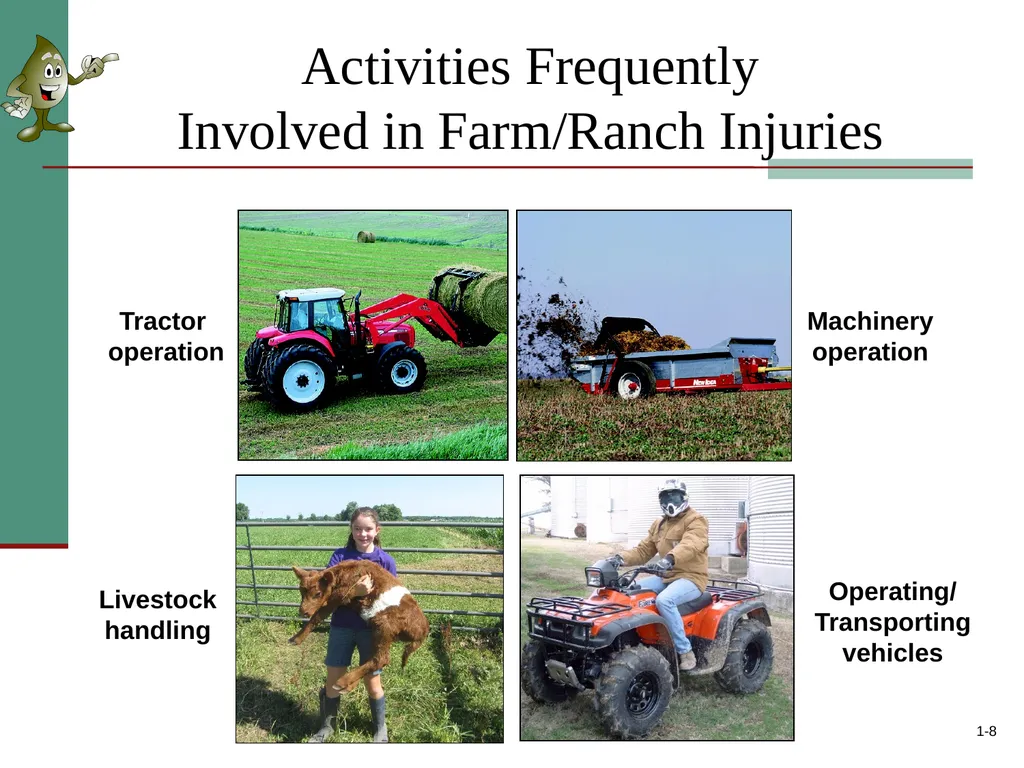
1-1 Gearing Up for Safety - Production Agriculture Safety Training for Youth Lesson One: General Farm and Ranch Safety Overview 1-2 Lesson One Outline Fatality rankings in industry Farm and ranch hazards Hazardous agricultural equipment
"1-1 Gearing Up for Safety - Production Agriculture" is the property of its rightful owner. Permission is granted to
download and print the materials on this website for personal, non-commercial use only, and to display it
on your personal computer provided you do not modify the materials and that you retain all copyright
notices contained in the materials. By downloading content from our website, you accept the terms of this
agreement.
Presentation Transcript
01
1-1 Gearing Up for Safety - Production Agriculture Safety Training for Youth Lesson One: General Farm and Ranch Safety Overview<br>
02
1-2 Lesson One Outline Fatality rankings in industry
Farm and ranch hazards
Hazardous agricultural equipment
Hazards to youth
Operator characteristics
Machine characteristics Potential machine hazards
Environmental characteristics
Safe machinery operators
Hazards Occupations Order in Agriculture requirements<br>
03
Agriculture today vs. 50-100 years ago How was farming different 50 to 100 years ago? Activity 1-3 What affect have these changes had on agricultural safety/injuries?<br>
04
Agriculture today vs. 50 to 100 years ago 1-4 Past Today<br>
05
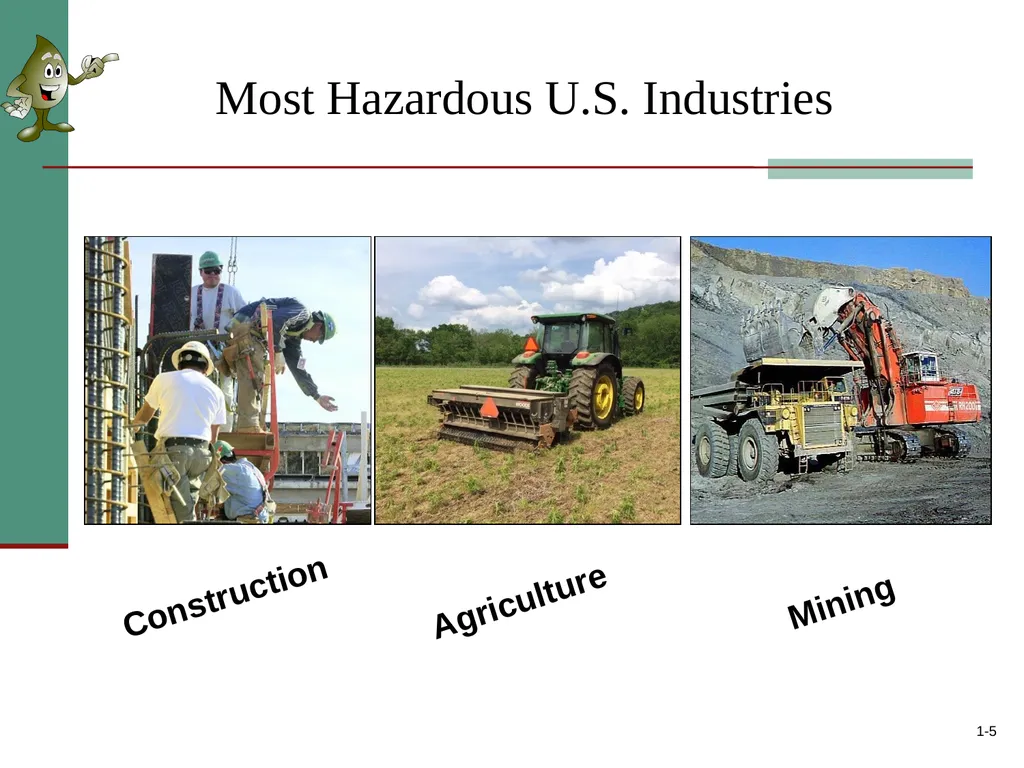
1-5 Most Hazardous U.S. Industries<br>
06
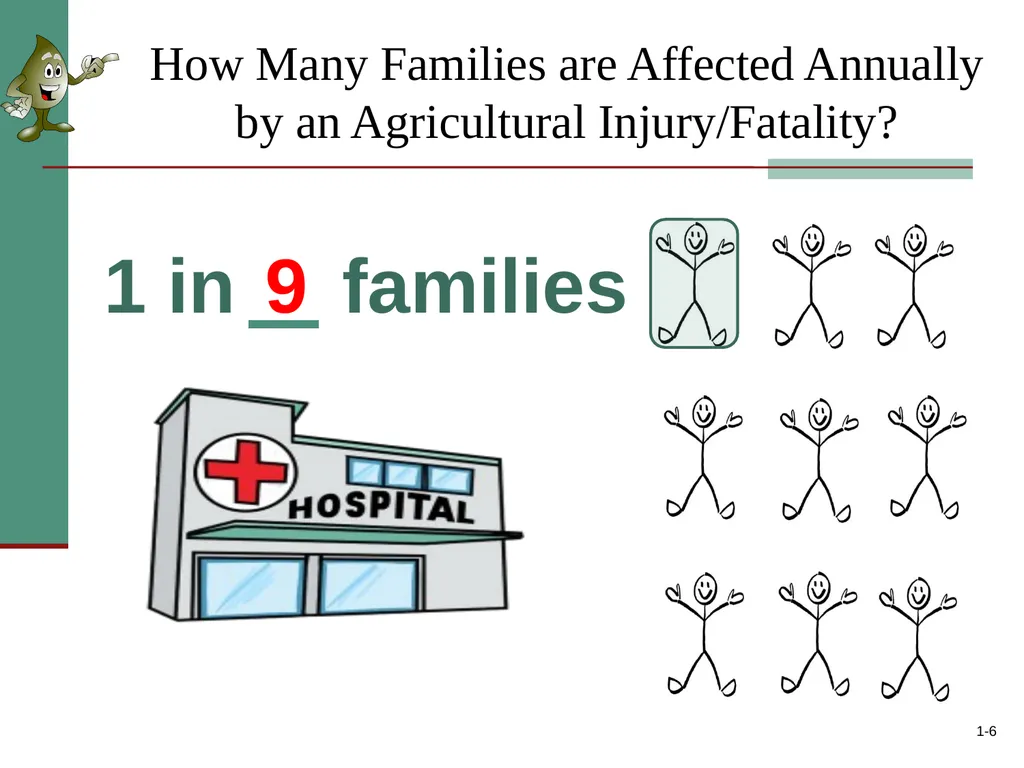
How Many Families are Affected Annually by an Agricultural Injury/Fatality? 1 in families 1-6 9<br>
07
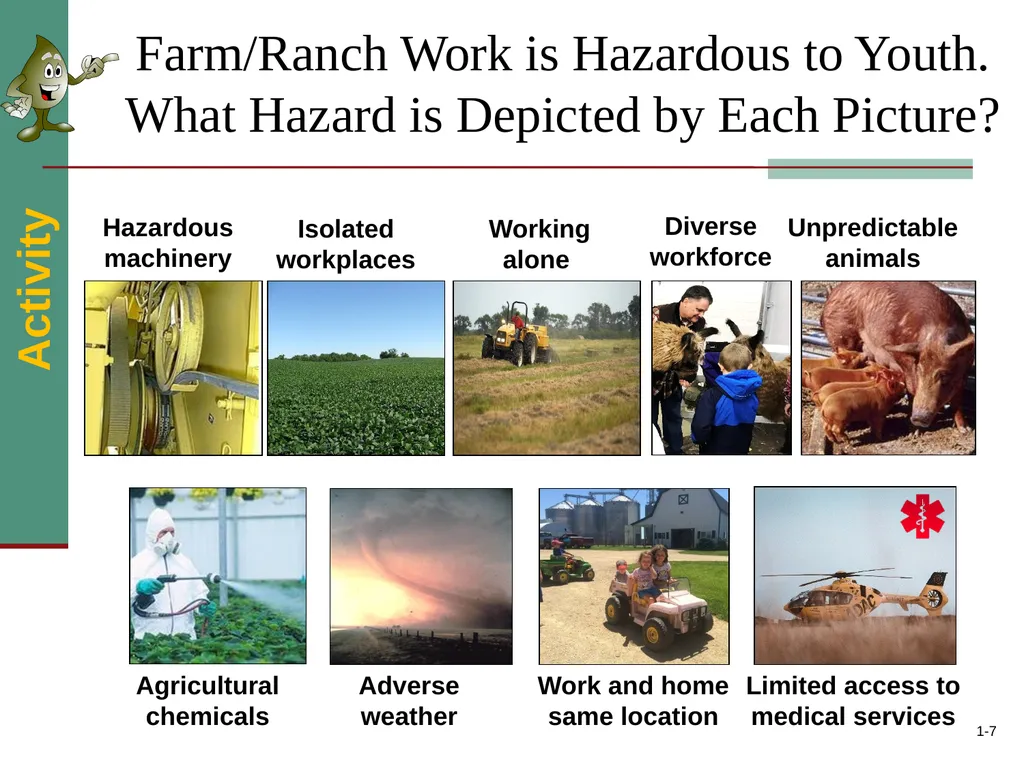
1-7 Farm/Ranch Work is Hazardous to Youth. What Hazard is Depicted by Each Picture? Hazardous machinery Unpredictable animals Agricultural chemicals Isolated workplaces Working alone Adverse weather Work and home same location Limited access to medical services Diverse workforce Activity<br>
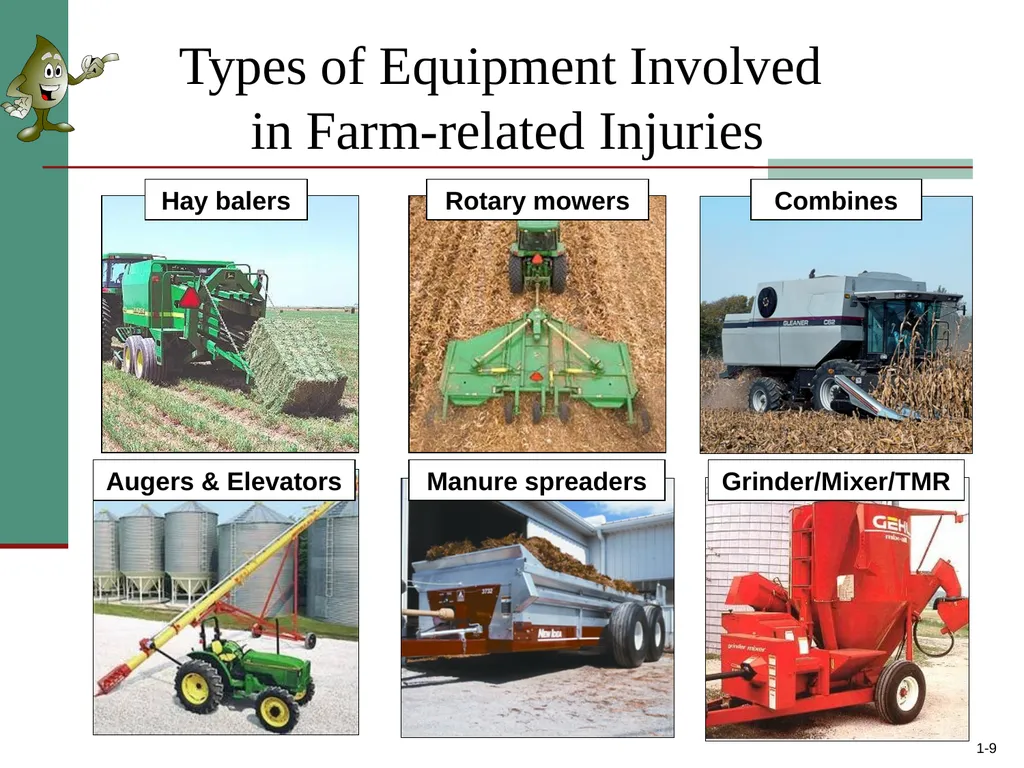
1-9 Types of Equipment Involved in Farm-related Injuries Hay balers Rotary mowers Augers & Elevators Manure spreaders Combines Grinder/Mixer/TMR<br>
10
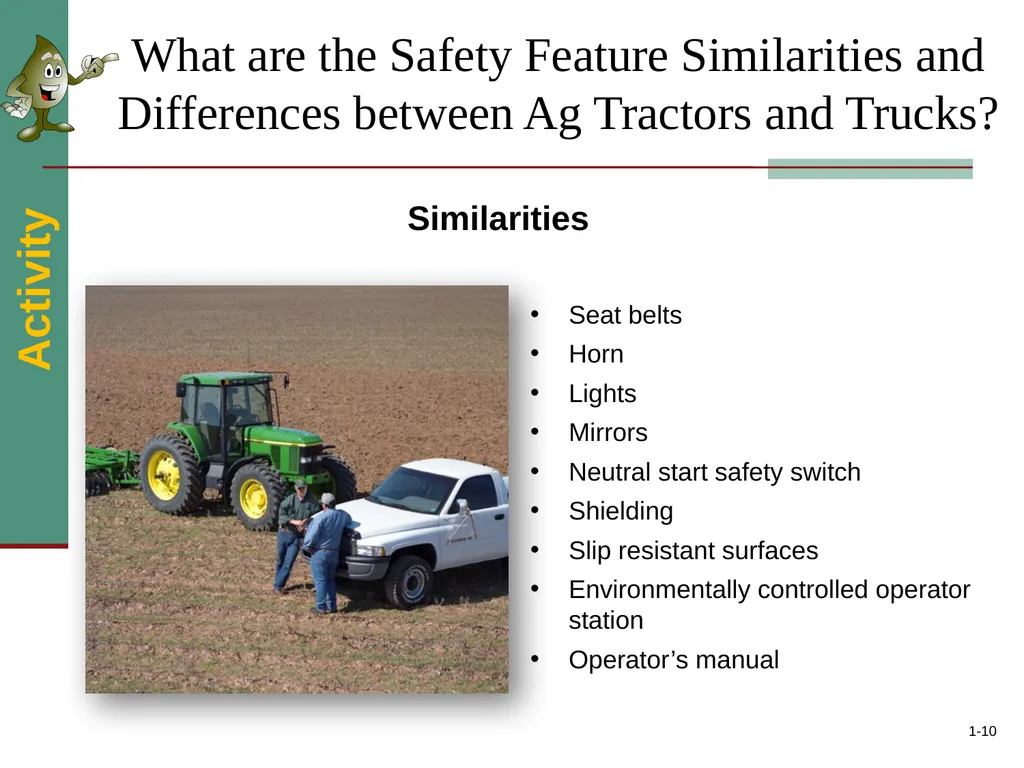
1-10 Activity Seat belts
Horn
Lights
Mirrors
Neutral start safety switch
Shielding
Slip resistant surfaces
Environmentally controlled operator station
Operator’s manual Similarities What are the Safety Feature Similarities and Differences between Ag Tractors and Trucks?<br>
11
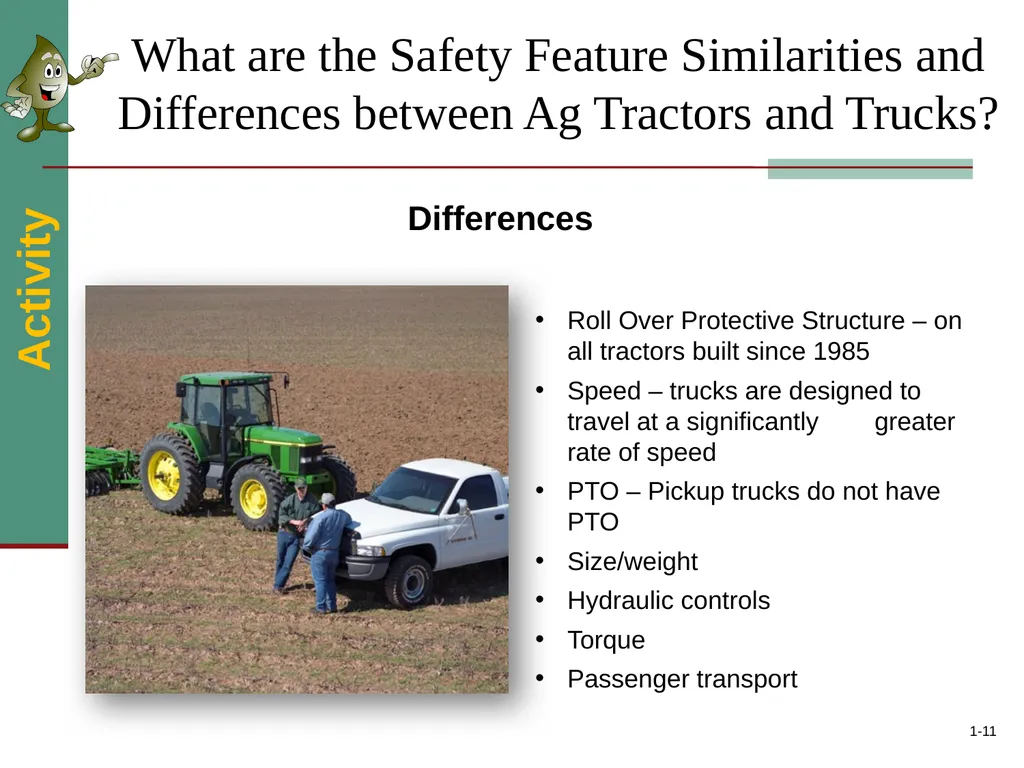
1-11 Activity Roll Over Protective Structure – on all tractors built since 1985
Speed – trucks are designed to travel at a significantly greater rate of speed
PTO – Pickup trucks do not have PTO
Size/weight
Hydraulic controls
Torque
Passenger transport Differences What are the Safety Feature Similarities and Differences between Ag Tractors and Trucks?<br>
12
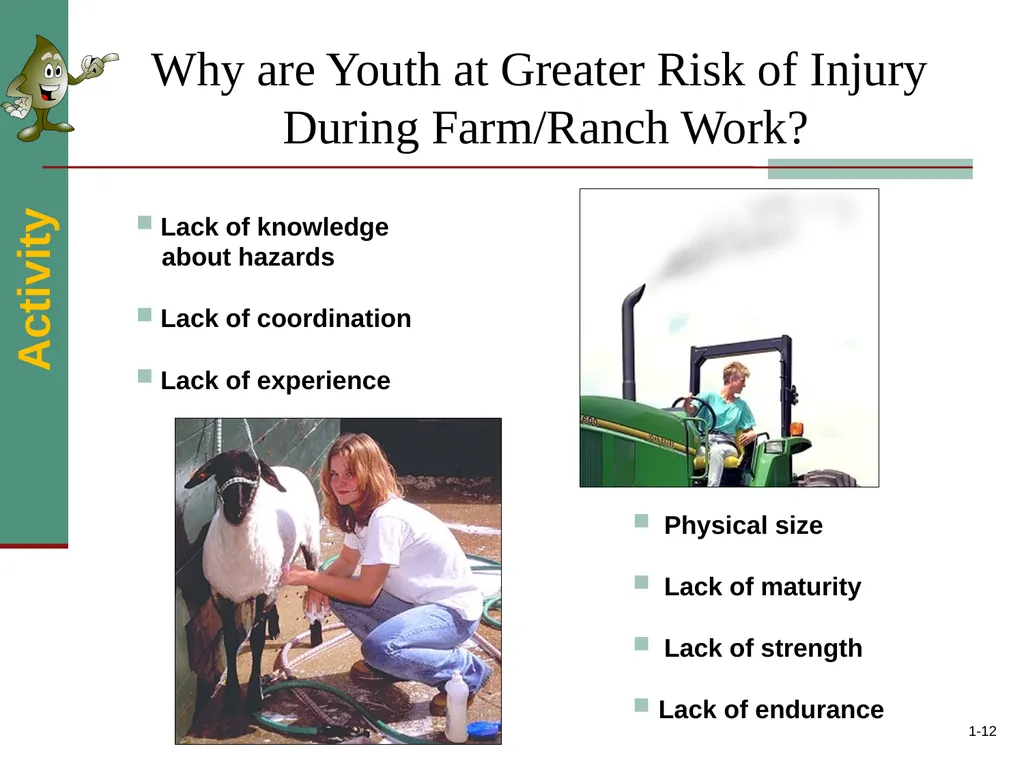
1-12 Why are Youth at Greater Risk of Injury During Farm/Ranch Work? Lack of knowledge
about hazards
Lack of coordination
Lack of experience Physical size
Lack of maturity
Lack of strength
Lack of endurance Activity<br>
13
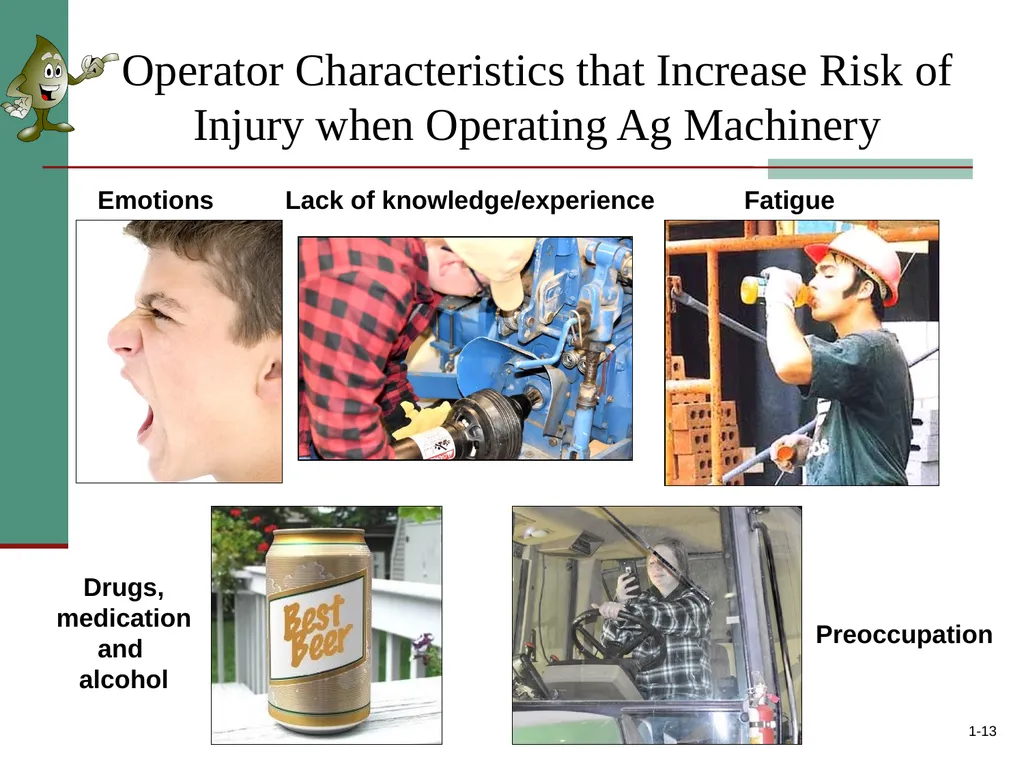
1-13 Operator Characteristics that Increase Risk of Injury when Operating Ag Machinery Emotions Fatigue Drugs, medication and
alcohol Preoccupation Lack of knowledge/experience<br>
14
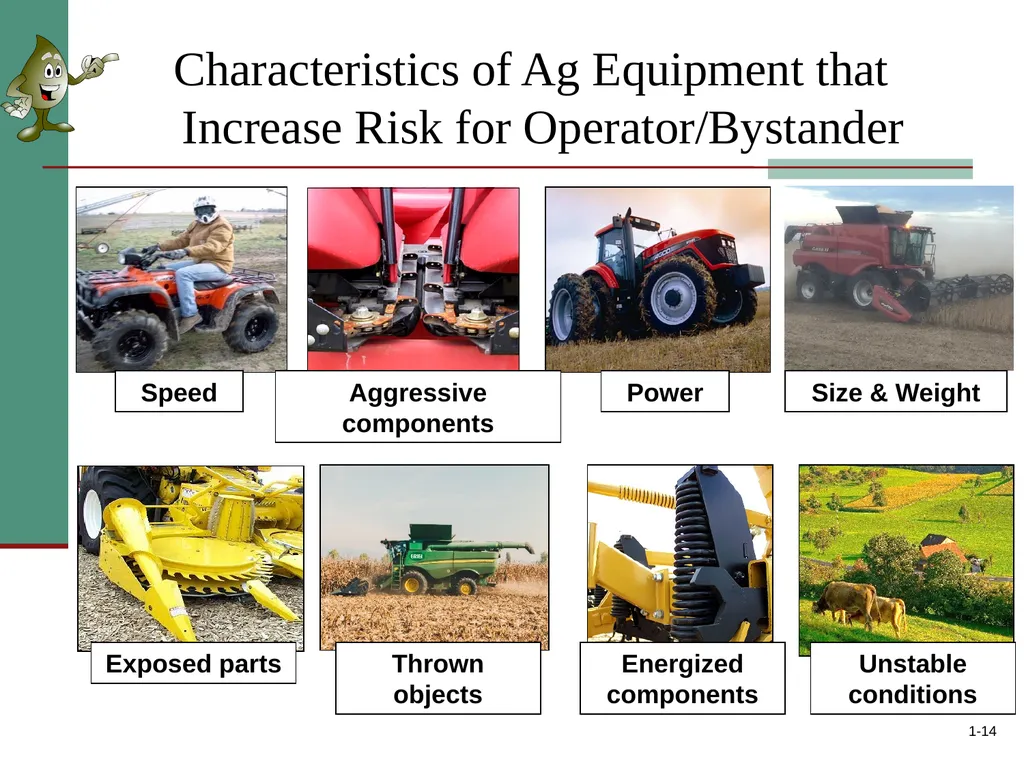
1-14 Characteristics of Ag Equipment that Increase Risk for Operator/Bystander Power Speed Exposed parts Aggressive components Size & Weight Energized components Thrown objects Unstable conditions<br>
15
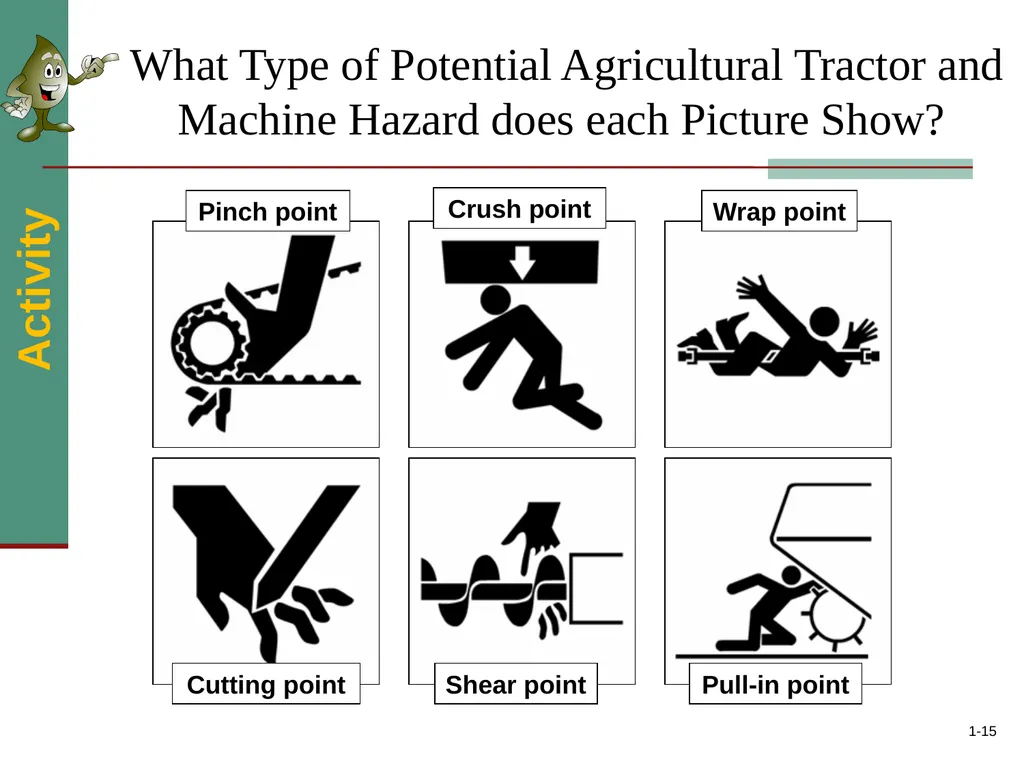
1-15 What Type of Potential Agricultural Tractor and Machine Hazard does each Picture Show? Wrap point Crush point Pinch point Pull-in point Shear point Cutting point Activity<br>
16
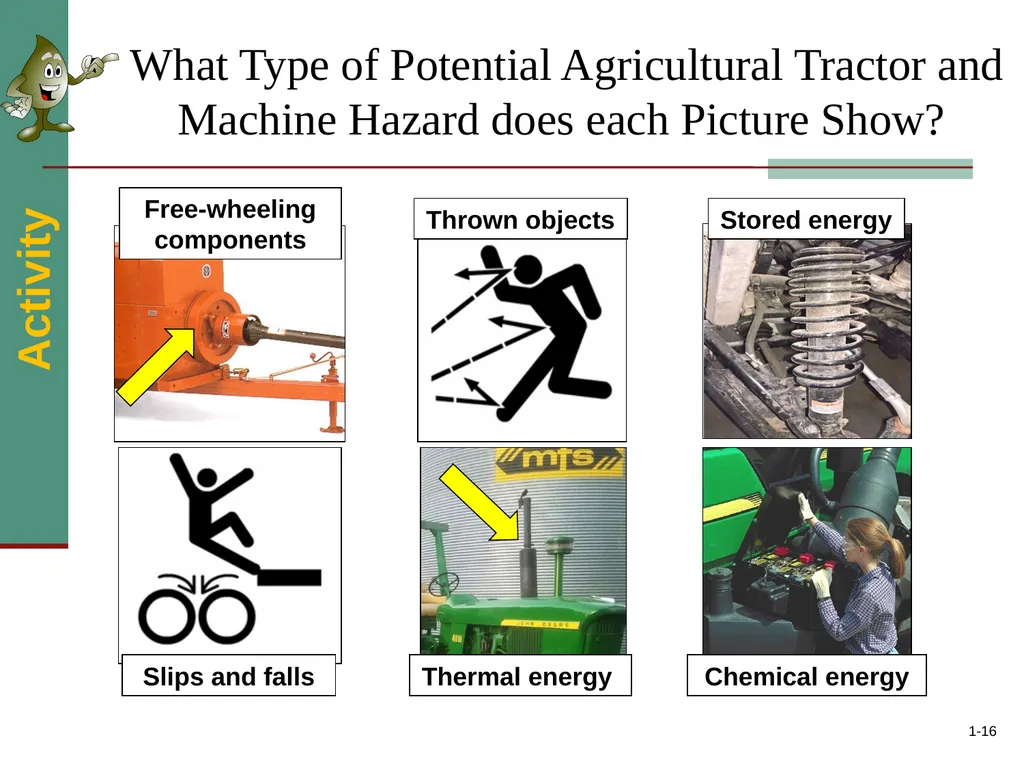
1-16 Free-wheeling
components Slips and falls Chemical energy Thrown objects Activity Thermal energy Stored energy What Type of Potential Agricultural Tractor and Machine Hazard does each Picture Show?<br>
17
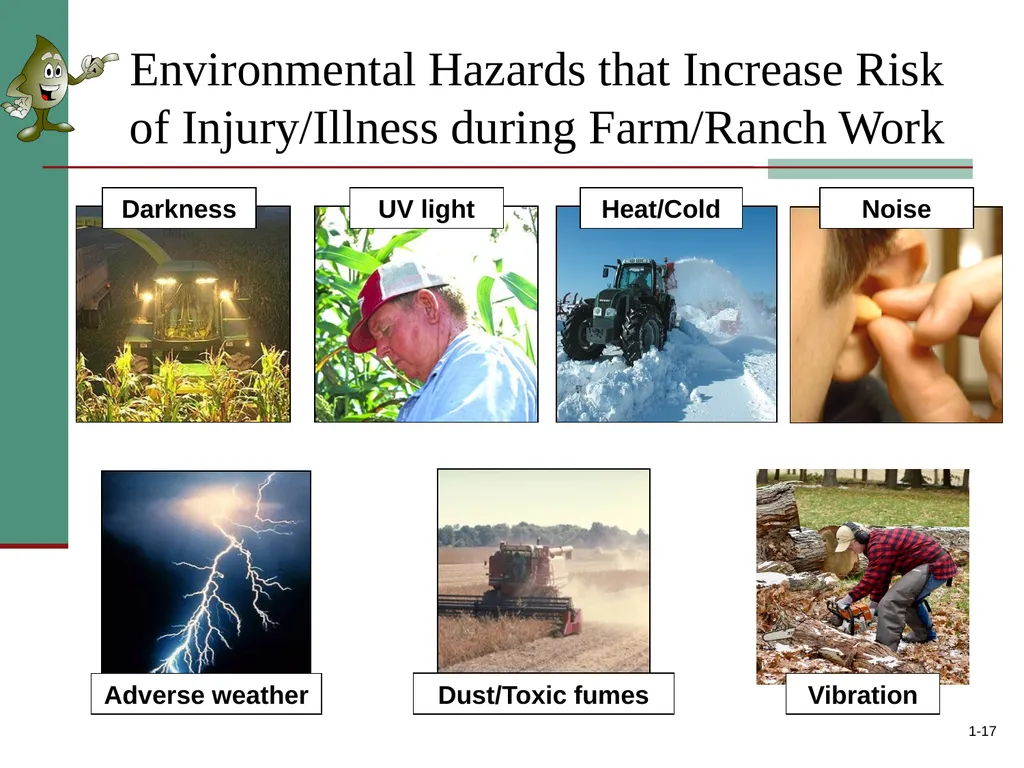
1-17 Environmental Hazards that Increase Risk of Injury/Illness during Farm/Ranch Work Darkness Adverse weather UV light Dust/Toxic fumes Heat/Cold Noise Vibration<br>
18
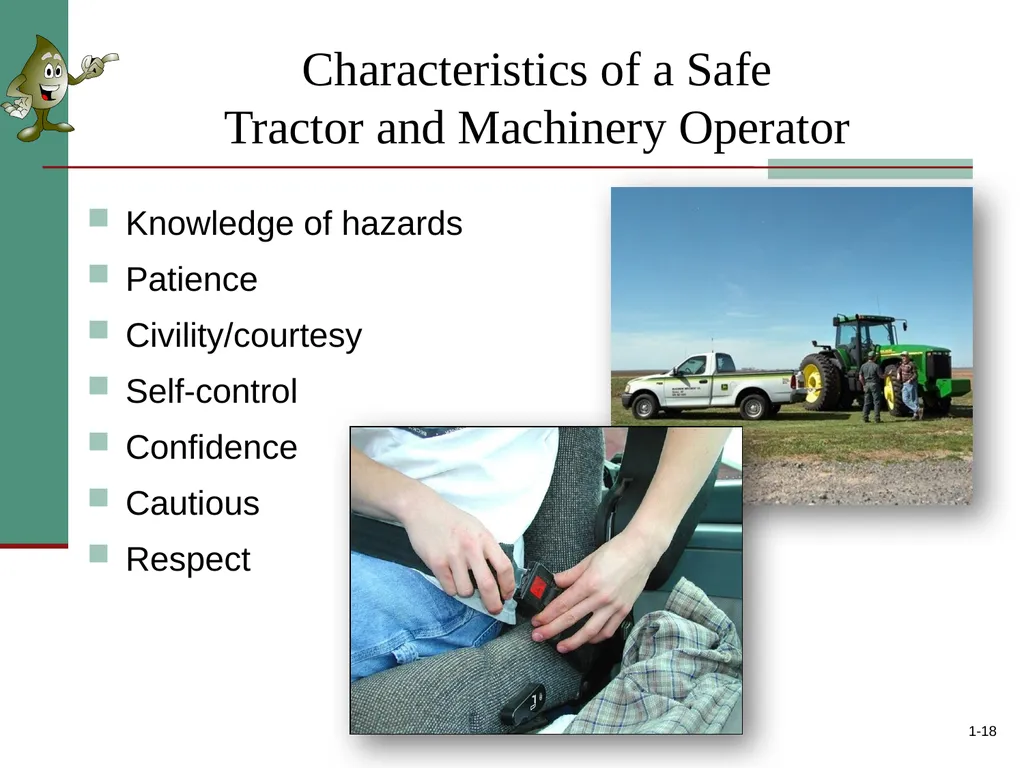
1-18 Characteristics of a Safe Tractor and Machinery Operator Knowledge of hazards
Patience
Civility/courtesy
Self-control
Confidence
Cautious
Respect<br>
19
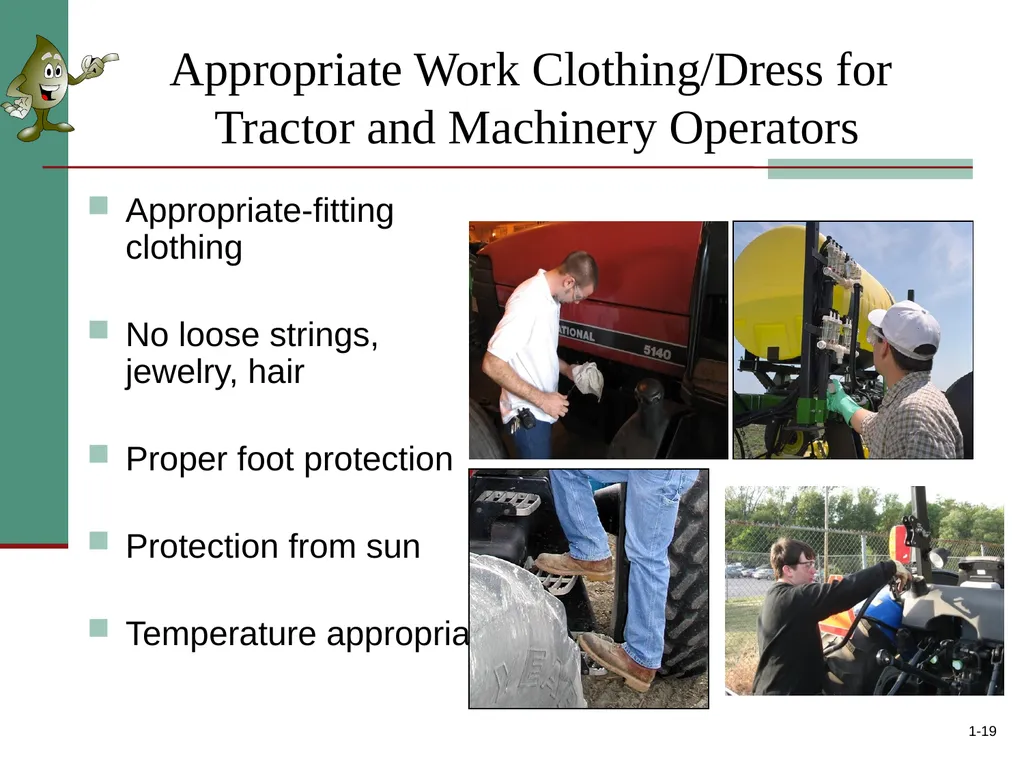
1-19 Appropriate Work Clothing/Dress for Tractor and Machinery Operators Appropriate-fitting clothing
No loose strings, jewelry, hair
Proper foot protection
Protection from sun
Temperature appropriate<br>
20
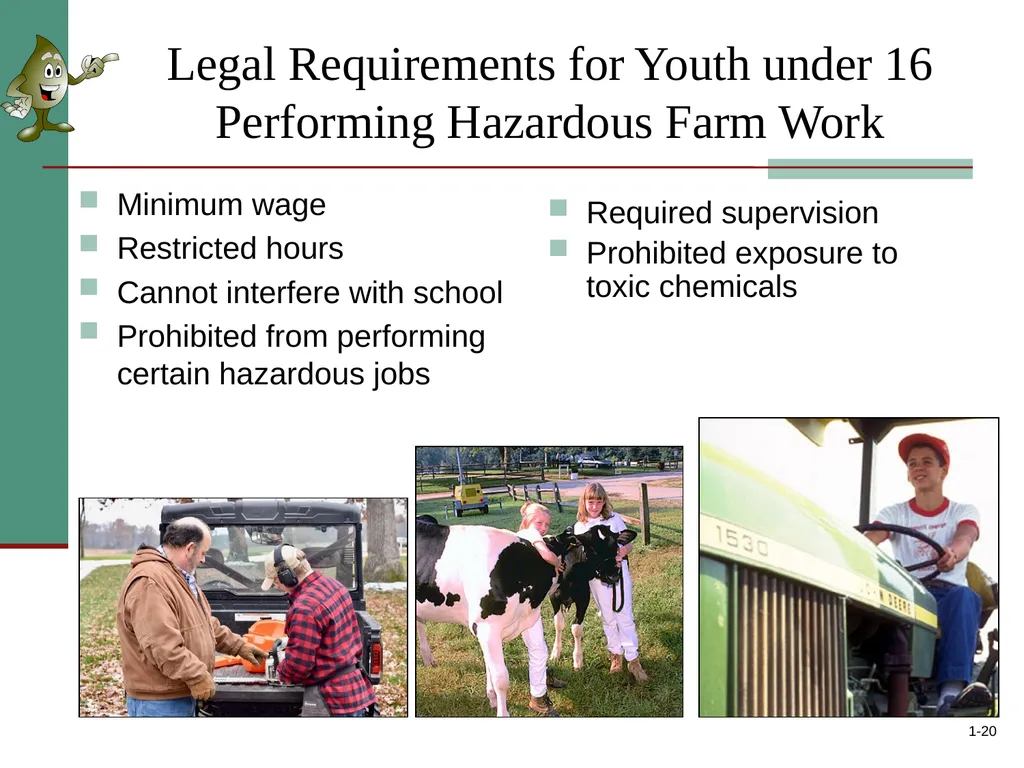
1-20 Legal Requirements for Youth under 16 Performing Hazardous Farm Work Minimum wage
Restricted hours
Cannot interfere with school
Prohibited from performing certain hazardous jobs Required supervision
Prohibited exposure to toxic chemicals<br>
21
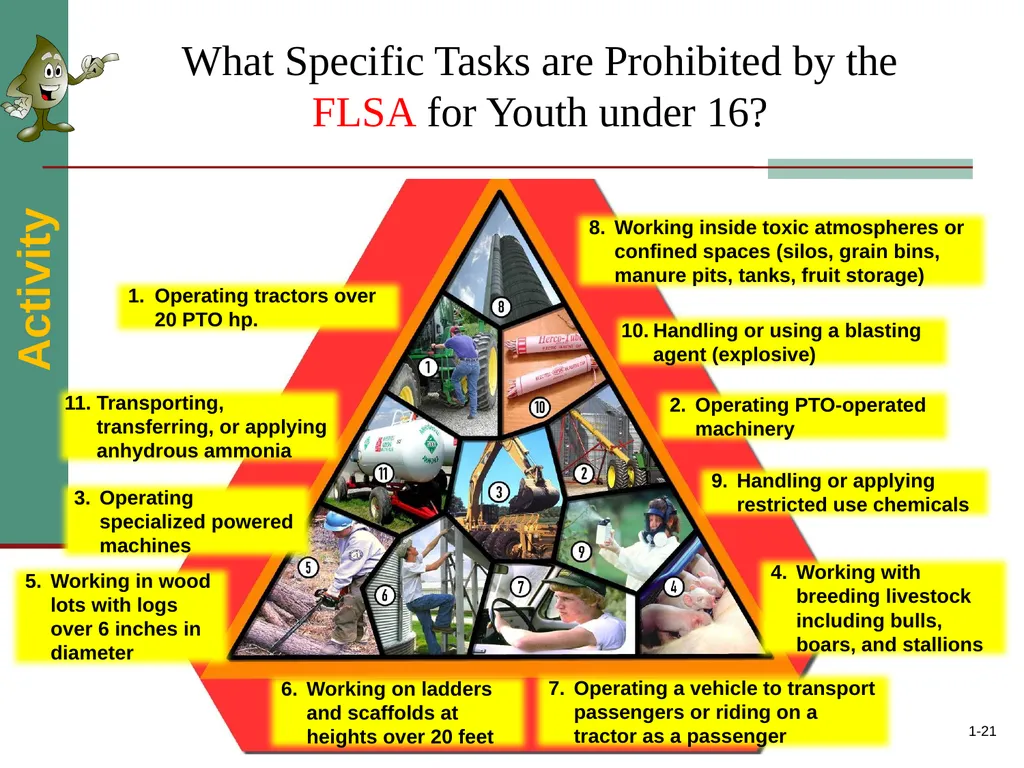
1-21 What Specific Tasks are Prohibited by the FLSA for Youth under 16? Operating tractors over 20 PTO hp. Operating PTO-operated machinery Operating specialized powered machines Working with breeding livestock including bulls, boars, and stallions Working in wood lots with logs over 6 inches in diameter Working on ladders and scaffolds at heights over 20 feet Operating a vehicle to transport passengers or riding on a tractor as a passenger Working inside toxic atmospheres or confined spaces (silos, grain bins, manure pits, tanks, fruit storage) Handling or applying restricted use chemicals Handling or using a blasting agent (explosive) Transporting, transferring, or applying anhydrous ammonia Activity<br>
22
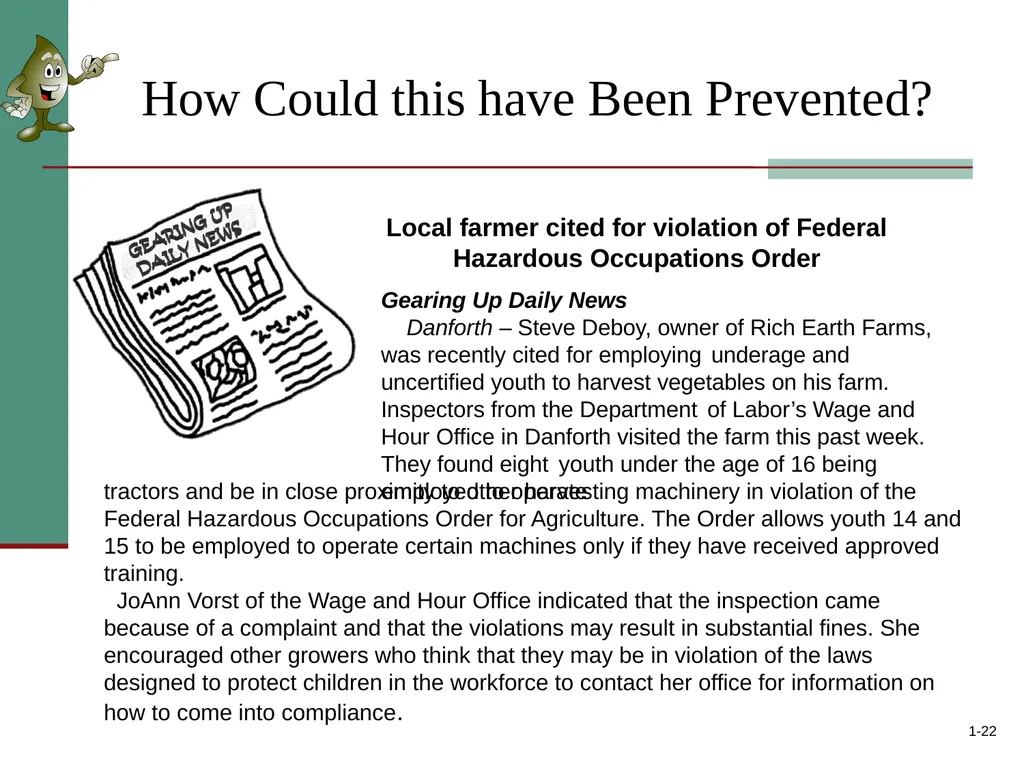
1-22 How Could this have Been Prevented? Local farmer cited for violation of Federal Hazardous Occupations Order
Gearing Up Daily News
Danforth – Steve Deboy, owner of Rich Earth Farms, was recently cited for employing underage and uncertified youth to harvest vegetables on his farm. Inspectors from the Department of Labor’s Wage and Hour Office in Danforth visited the farm this past week. They found eight youth under the age of 16 being employed to operate tractors and be in close proximity to other harvesting machinery in violation of the Federal Hazardous Occupations Order for Agriculture. The Order allows youth 14 and 15 to be employed to operate certain machines only if they have received approved training.
JoAnn Vorst of the Wage and Hour Office indicated that the inspection came because of a complaint and that the violations may result in substantial fines. She encouraged other growers who think that they may be in violation of the laws designed to protect children in the workforce to contact her office for information on how to come into compliance.<br>