
1 Subject : Orthopedic and Neurovascular Nursing
T
Published · 61 slides · 0 views

1 / 1





Description
1 Subject : Orthopedic and Neurovascular Nursing Subject code : BNNS6274 Topic : CARE OF PATIENTS WITH MUSCULOSKELETAL CONDITIONS (AUTO-IMMUNE) Rheumatoid Arthritis Ankylosing Spondylitis Systemic Lupus Erythematosus TOPICS By the end of
Related Topics
Share
Embed code
Download this presentation From Below
"1 Subject : Orthopedic and Neurovascular Nursing" is the property of its rightful owner. Permission is granted to download and print the materials on this website for personal, non-commercial use only, and to display it on your personal computer provided you do not modify the materials and that you retain all copyright notices contained in the materials. By downloading content from our website, you accept the terms of this agreement.
Presentation Transcript
01
1 Subject : Orthopedic and Neurovascular Nursing
Subject code : BNNS6274 Topic : CARE OF PATIENTS WITH MUSCULOSKELETAL
CONDITIONS
(AUTO-IMMUNE)<br>
Subject code : BNNS6274 Topic : CARE OF PATIENTS WITH MUSCULOSKELETAL
CONDITIONS
(AUTO-IMMUNE)<br>
02
Rheumatoid Arthritis
Ankylosing Spondylitis
Systemic Lupus Erythematosus TOPICS<br>
Ankylosing Spondylitis
Systemic Lupus Erythematosus TOPICS<br>
03
By the end of the session, students will be able to :
Define the diseases
Describe the etiology of the diseases.
Explain the clinical manifestations of the diseases.
Outline the investigations required to confirm diagnosis of diseases.
Explain the management of the diseases.
Plan the nursing care for the diseases. LEARNING OUTCOMES<br>
Define the diseases
Describe the etiology of the diseases.
Explain the clinical manifestations of the diseases.
Outline the investigations required to confirm diagnosis of diseases.
Explain the management of the diseases.
Plan the nursing care for the diseases. LEARNING OUTCOMES<br>
04
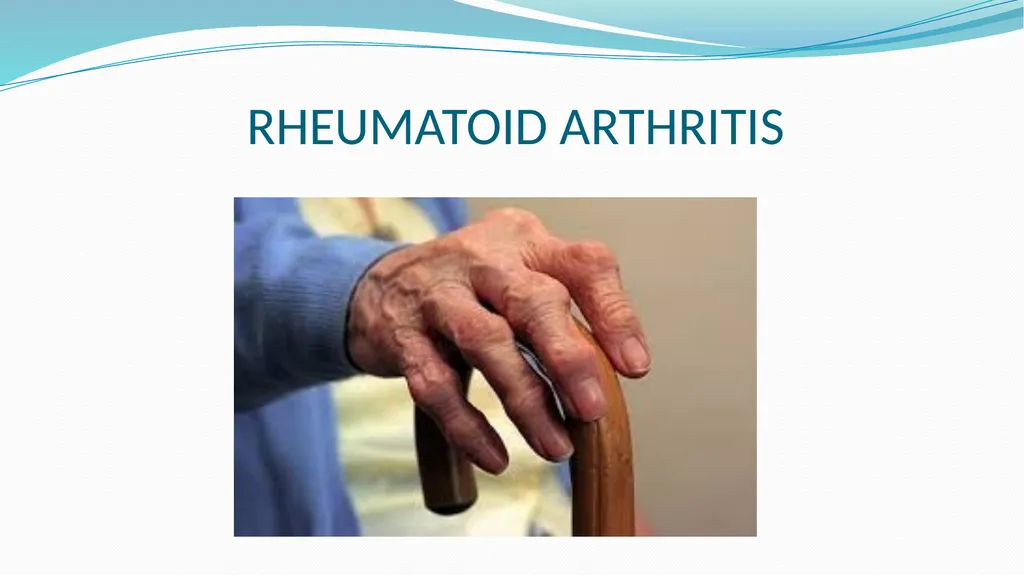
RHEUMATOID ARTHRITIS<br>
05
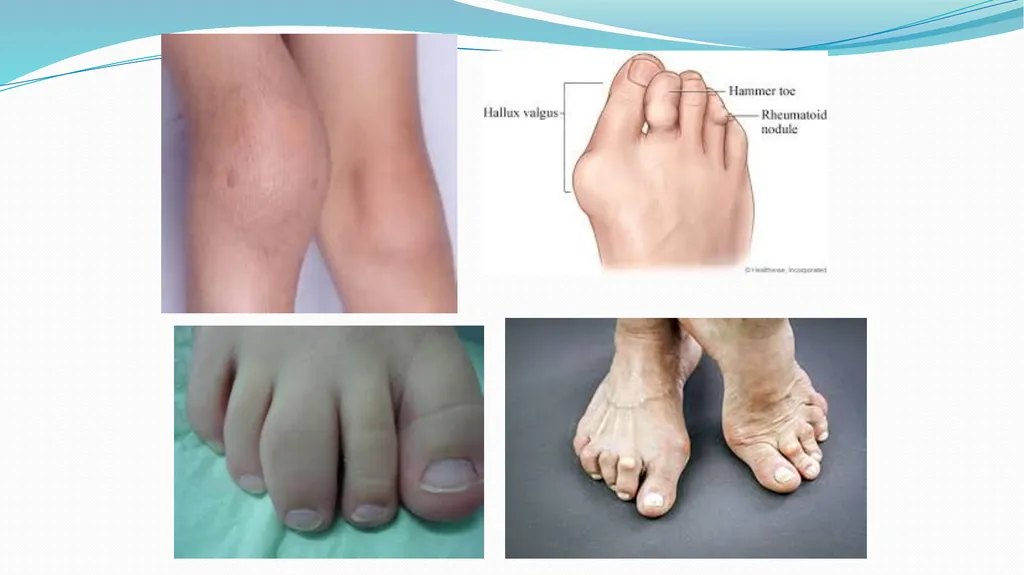
chronic, systemic autoimmune disease, where the immune system attacks the host’s tissue
Inflammation of the connective tissue
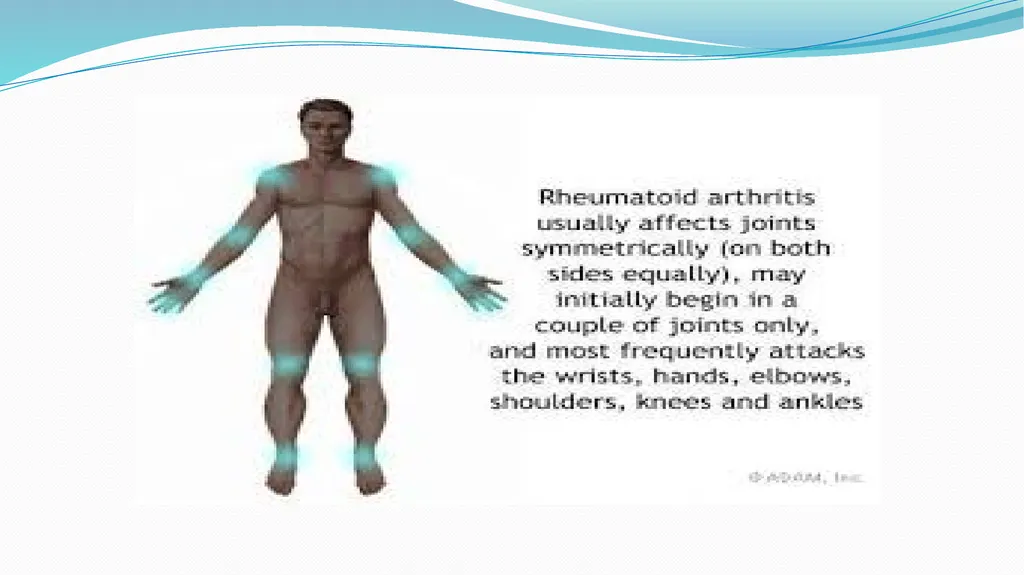
Inflammation of the joints (may attack eyes, lungs, heart)
Can have flare up of disease then remissions
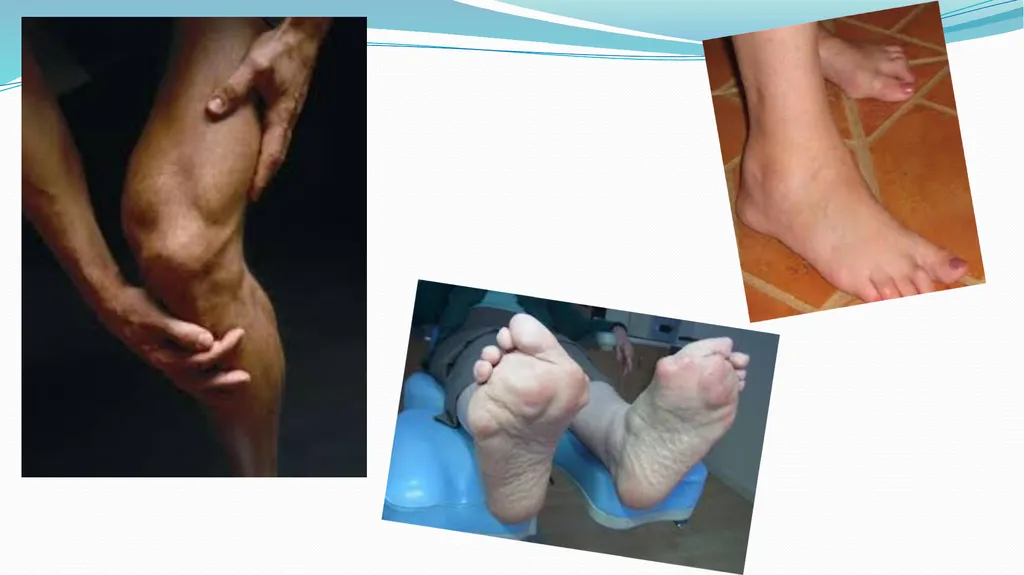
The tendons and ligaments that hold the joint together may weaken and stretch –causing the joint to eventually lose its shape and structure RHEUMATOID ARTHRITIS<br>
06
Idiopathic
Gender – female above age 60
Autoimmunity
Secondary cause
Infection (Epstein-Barr virus)
Trauma
Genetic
Emotional stress
Smoking & obesity Etiology<br>
Gender – female above age 60
Autoimmunity
Secondary cause
Infection (Epstein-Barr virus)
Trauma
Genetic
Emotional stress
Smoking & obesity Etiology<br>
07
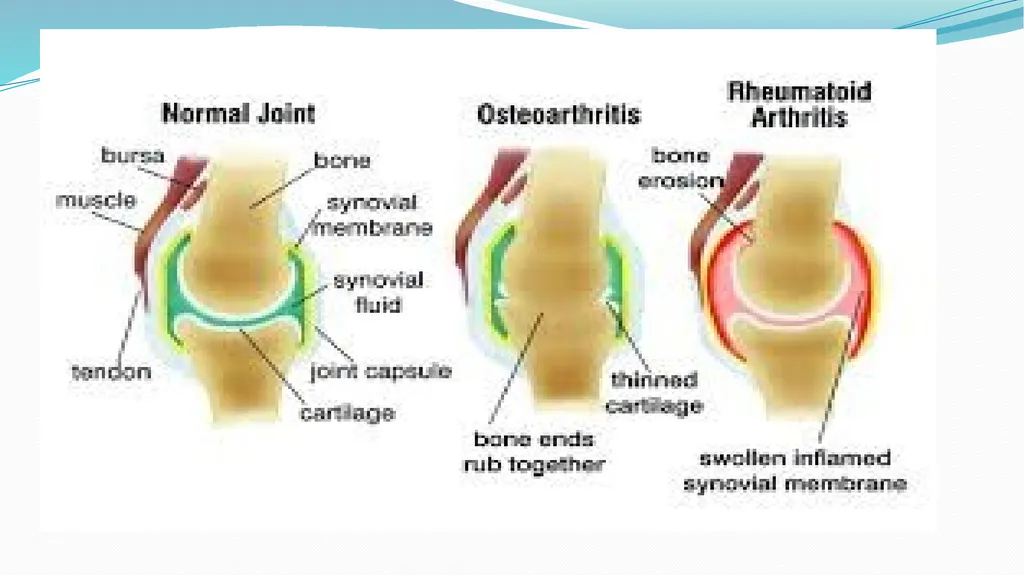
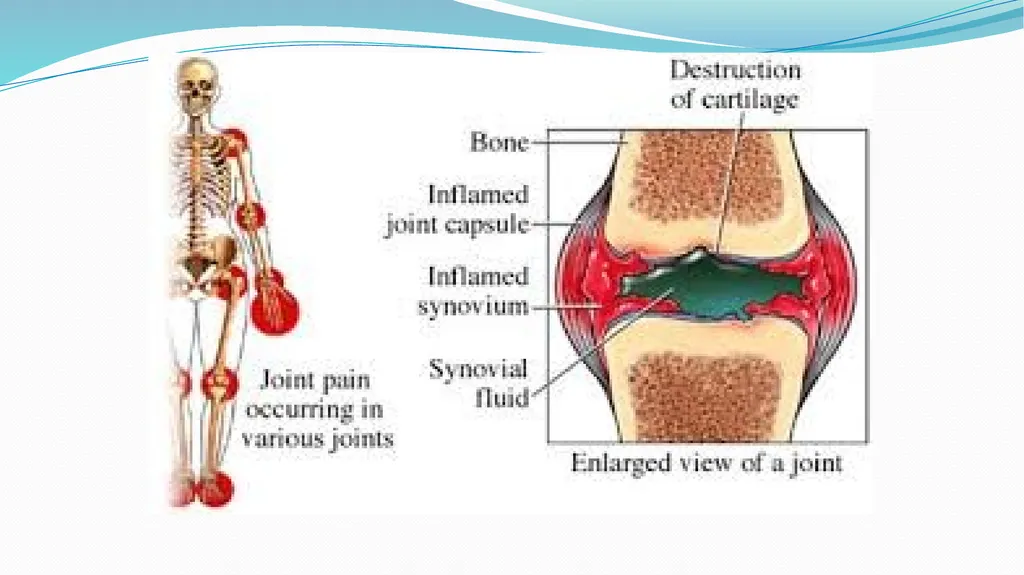
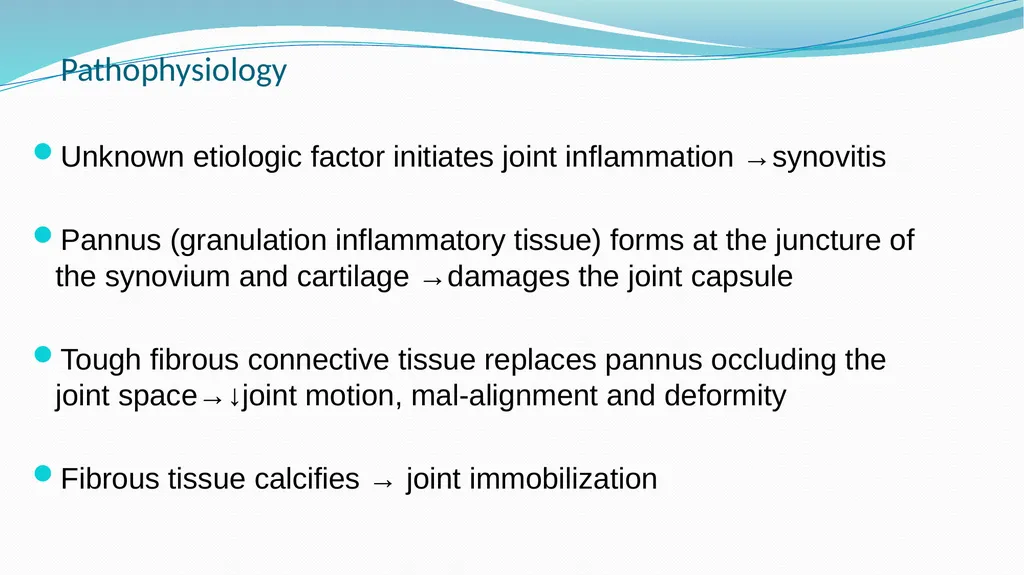
Unknown etiologic factor initiates joint inflammation →synovitis
Pannus (granulation inflammatory tissue) forms at the juncture of the synovium and cartilage →damages the joint capsule
Tough fibrous connective tissue replaces pannus occluding the joint space→↓joint motion, mal-alignment and deformity
Fibrous tissue calcifies → joint immobilization Pathophysiology<br>
08
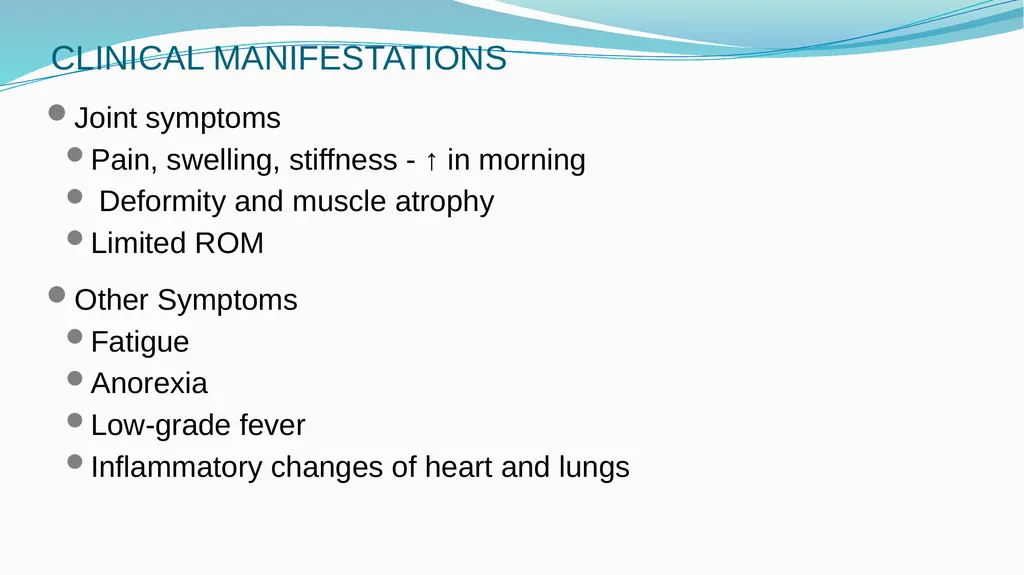
Joint symptoms
Pain, swelling, stiffness - ↑ in morning
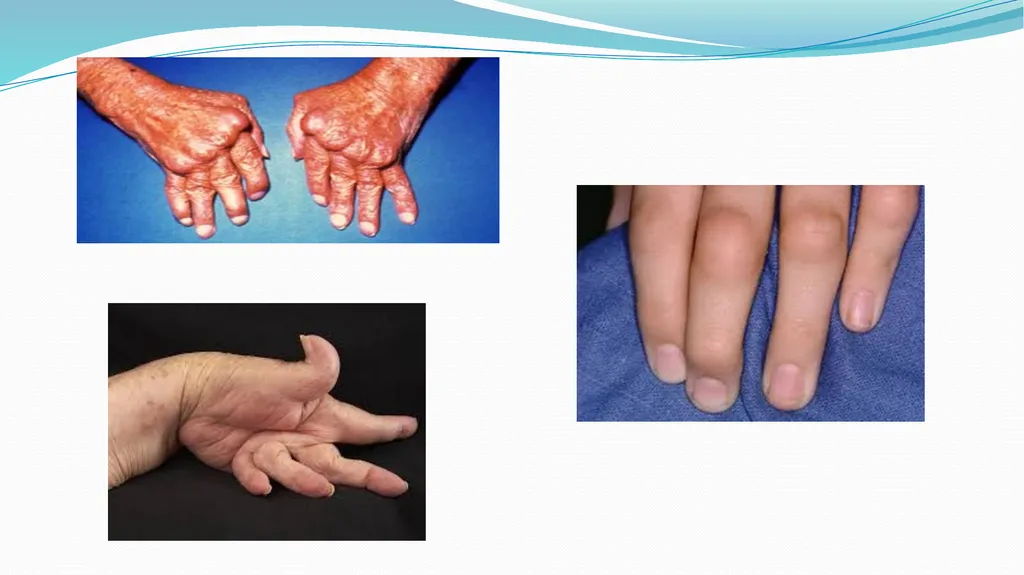
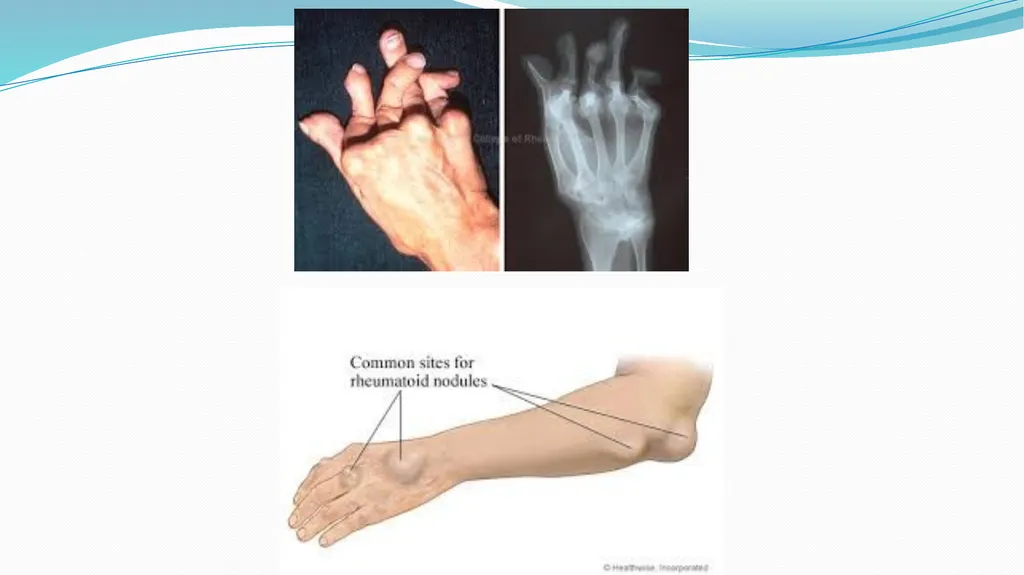
Deformity and muscle atrophy
Limited ROM
Other Symptoms
Fatigue
Anorexia
Low-grade fever
Inflammatory changes of heart and lungs CLINICAL MANIFESTATIONS<br>
Pain, swelling, stiffness - ↑ in morning
Deformity and muscle atrophy
Limited ROM
Other Symptoms
Fatigue
Anorexia
Low-grade fever
Inflammatory changes of heart and lungs CLINICAL MANIFESTATIONS<br>
09
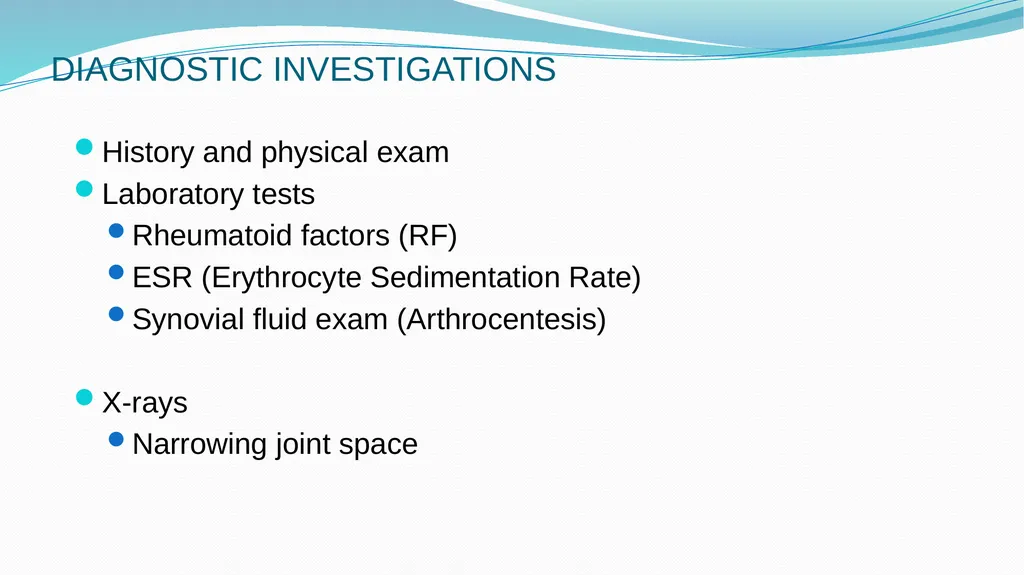
History and physical exam
Laboratory tests
Rheumatoid factors (RF)
ESR (Erythrocyte Sedimentation Rate)
Synovial fluid exam (Arthrocentesis)
X-rays
Narrowing joint space DIAGNOSTIC INVESTIGATIONS<br>
Laboratory tests
Rheumatoid factors (RF)
ESR (Erythrocyte Sedimentation Rate)
Synovial fluid exam (Arthrocentesis)
X-rays
Narrowing joint space DIAGNOSTIC INVESTIGATIONS<br>
10
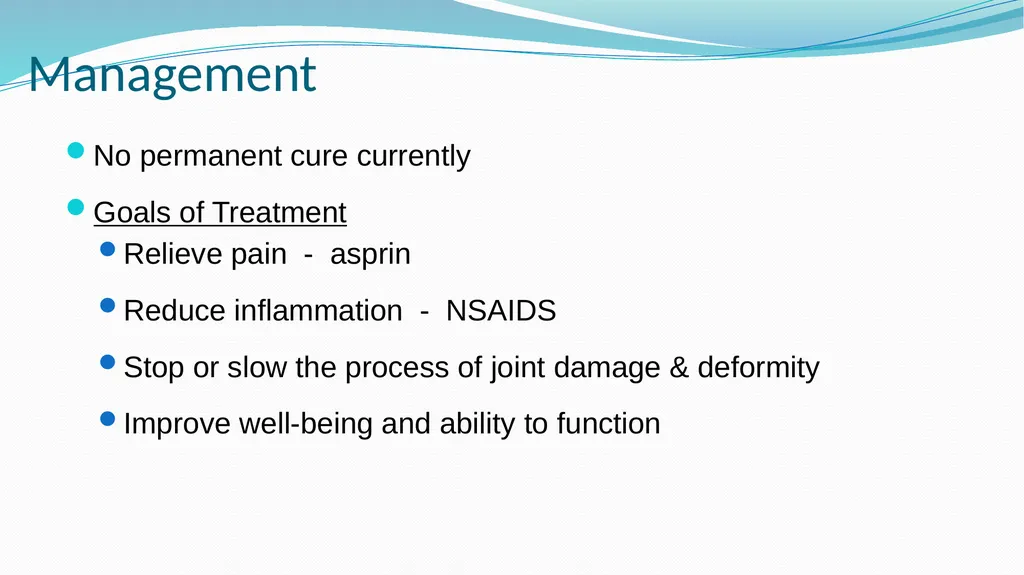
No permanent cure currently
Goals of Treatment
Relieve pain - asprin
Reduce inflammation - NSAIDS
Stop or slow the process of joint damage & deformity
Improve well-being and ability to function Management<br>
Goals of Treatment
Relieve pain - asprin
Reduce inflammation - NSAIDS
Stop or slow the process of joint damage & deformity
Improve well-being and ability to function Management<br>
11
Medications
NSAIDS
Steroids (oral or intra-articular)
immunosuppressants :
- cyclosporine (Neoral, Sandimmune, Gengraf)
- azathioprine (Imuran, Azasan)
- cyclophosphamide (Cytoxan). Management<br>
NSAIDS
Steroids (oral or intra-articular)
immunosuppressants :
- cyclosporine (Neoral, Sandimmune, Gengraf)
- azathioprine (Imuran, Azasan)
- cyclophosphamide (Cytoxan). Management<br>
12
Disease-modifying antirheumatic drugs (DMARDs) DMARDs can slow the progression of the RA and prevent permanent damage to the joints and other tissues by interfering with the overactive immune system
most effective if used from early stage - effects in 4 to 6 months
E.g.
leflunomide (Arava)
methotrexate (Rheumatrex, Trexall)
hydroxychloroquine (Plaquenil).<br>
most effective if used from early stage - effects in 4 to 6 months
E.g.
leflunomide (Arava)
methotrexate (Rheumatrex, Trexall)
hydroxychloroquine (Plaquenil).<br>
13
Tumor necrosis factor-alpha inhibitors (TNF-alpha inhibitors) The body produces tumor necrosis factor-alpha (TNF-alpha) - an inflammatory substance.
TNF - alpha inhibitors prevent inflammation & reduce pain, morning stiffness, and swollen or tender joints – improvement in 2/52
Eg: Enbrel , infliximab (Remicade) & adalimumab (Humira).<br>
TNF - alpha inhibitors prevent inflammation & reduce pain, morning stiffness, and swollen or tender joints – improvement in 2/52
Eg: Enbrel , infliximab (Remicade) & adalimumab (Humira).<br>
14
Surgery
Joint replacement
Tendon reconstruction /repair – for loose or ruptured tendons
Sinovectomy - removal of the inflamed synovium as it causes pain. Surgical Management<br>
Joint replacement
Tendon reconstruction /repair – for loose or ruptured tendons
Sinovectomy - removal of the inflamed synovium as it causes pain. Surgical Management<br>
15
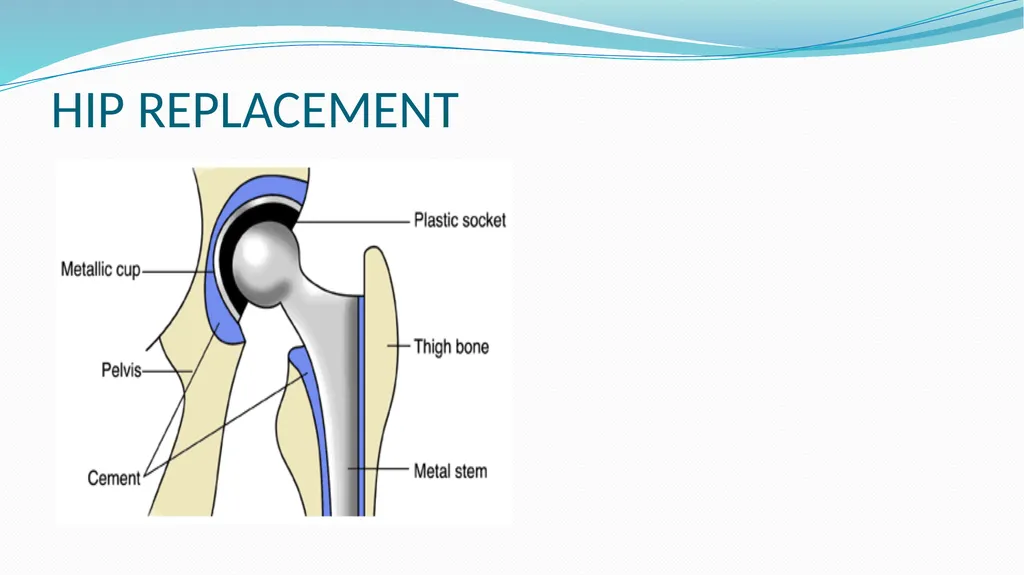
HIP REPLACEMENT<br>
16
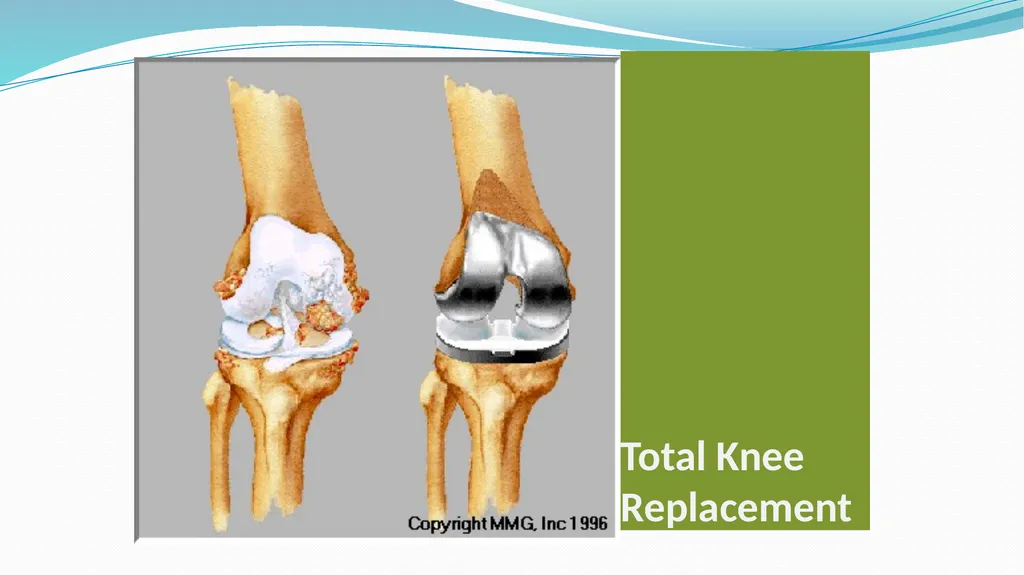
Total Knee Replacement<br>
17
Candidate selection
Significant relief of pain
Good return to ADL
Best results with PT program for re-strengthening muscles
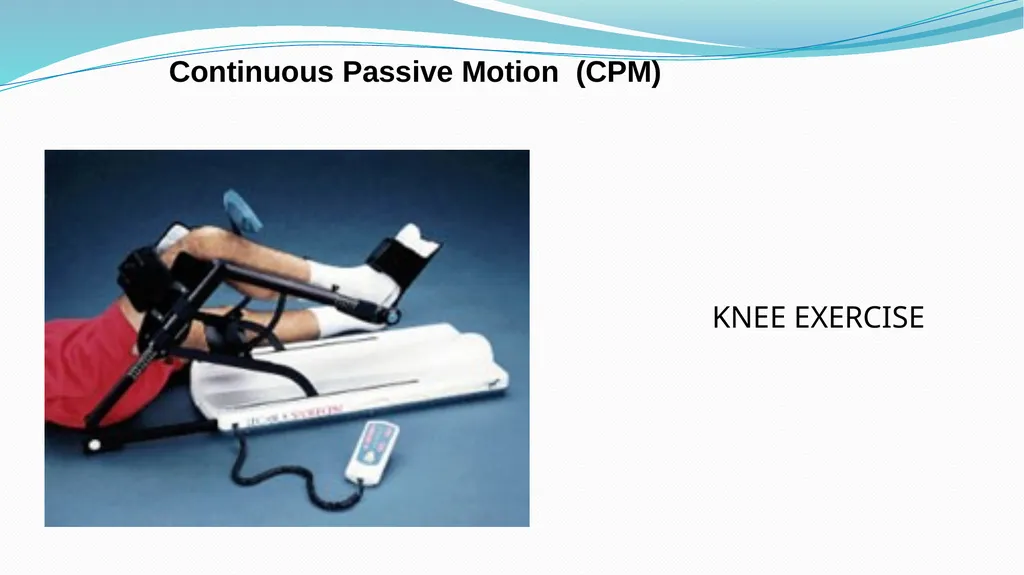
Post op CPM - Continuous Passive Motion Total Joint Replacement<br>
Significant relief of pain
Good return to ADL
Best results with PT program for re-strengthening muscles
Post op CPM - Continuous Passive Motion Total Joint Replacement<br>
18
KNEE EXERCISE Continuous Passive Motion (CPM)<br>
19
Rest
Splint
Medicine usage
Analgesic
NSAID & antacid
Steroid
Sedative
Physiotherapy
ADL
Stress management
Occupational therapy
Diet
Operation -sinovectomy, tendon repair, arthroplasty. HEALTH EDUCATION<br>
Splint
Medicine usage
Analgesic
NSAID & antacid
Steroid
Sedative
Physiotherapy
ADL
Stress management
Occupational therapy
Diet
Operation -sinovectomy, tendon repair, arthroplasty. HEALTH EDUCATION<br>
20
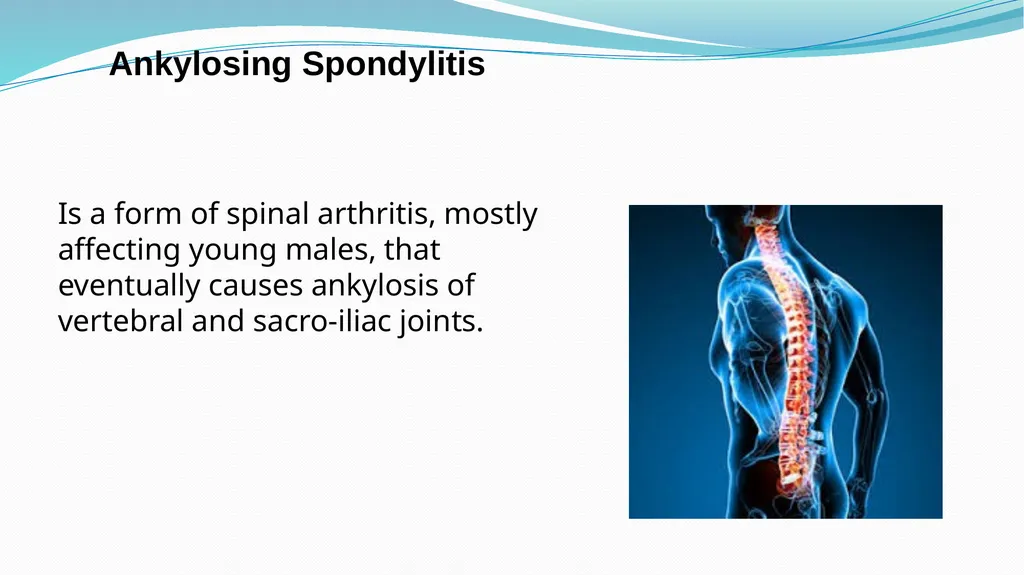
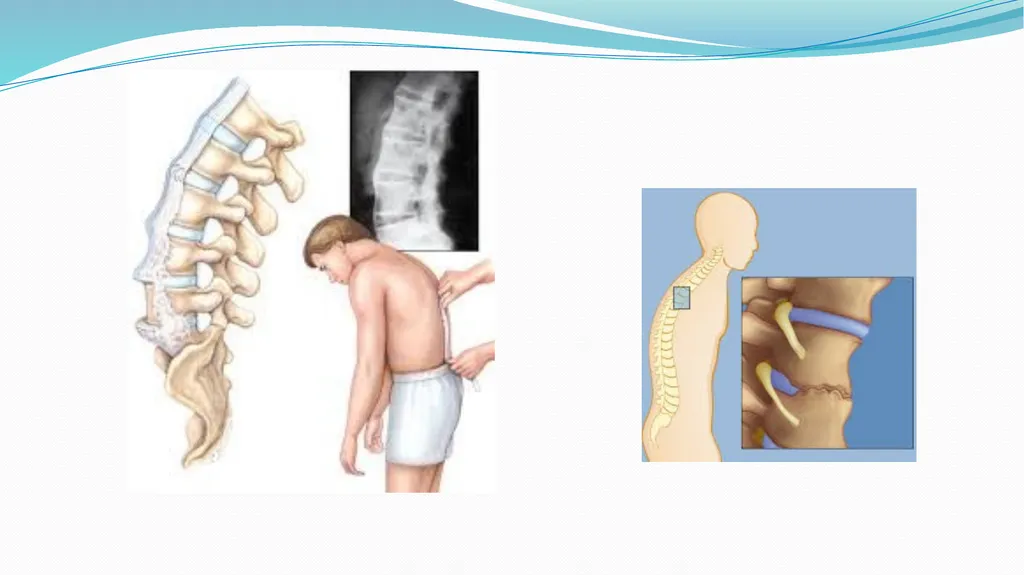
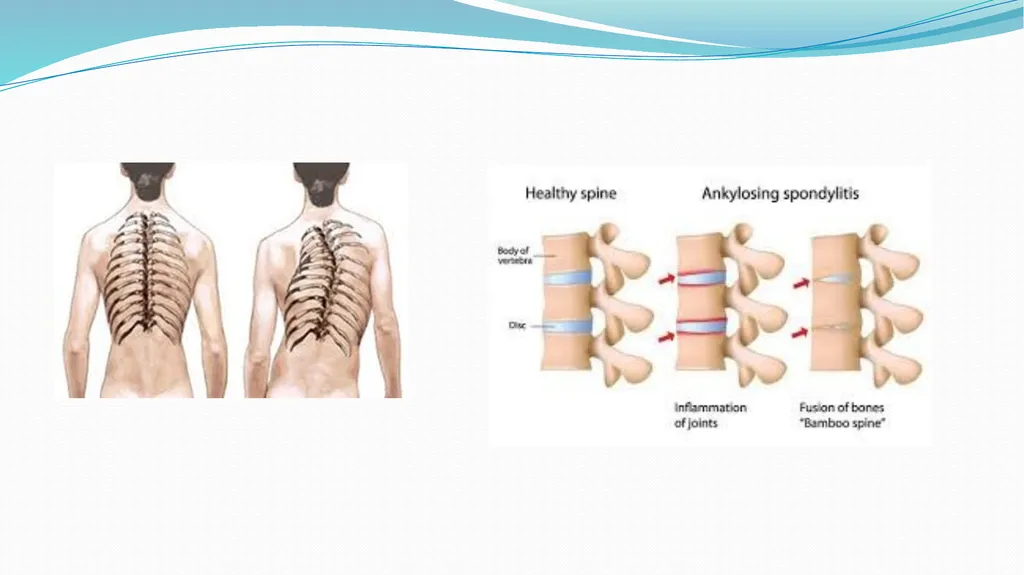
Is a form of spinal arthritis, mostly affecting young males, that eventually causes ankylosis of vertebral and sacro-iliac joints. Ankylosing Spondylitis<br>
21
Angkylos-bent (Greek)
Spondylous-spine
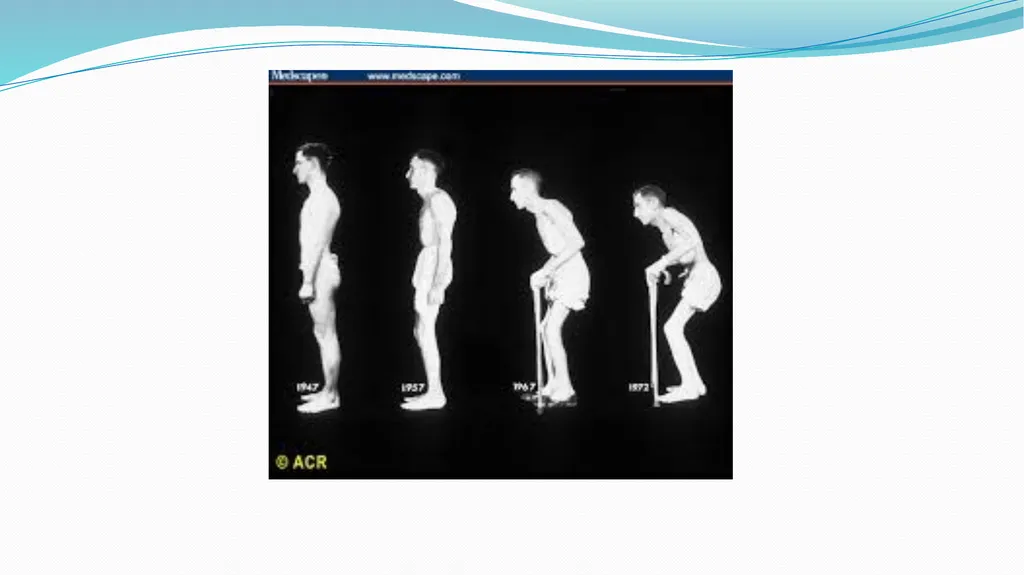
Chronic, systemic inflammatory disorder of the axial skeleton
Sacroiliitis – main clinical manifestation
Strong genetic predisposition - HLA-B27 Ankylosing Spondylitis<br>
Spondylous-spine
Chronic, systemic inflammatory disorder of the axial skeleton
Sacroiliitis – main clinical manifestation
Strong genetic predisposition - HLA-B27 Ankylosing Spondylitis<br>
22
Inflammation originates in ligamentous and capsular sites of attachment to bones (enesthitis)
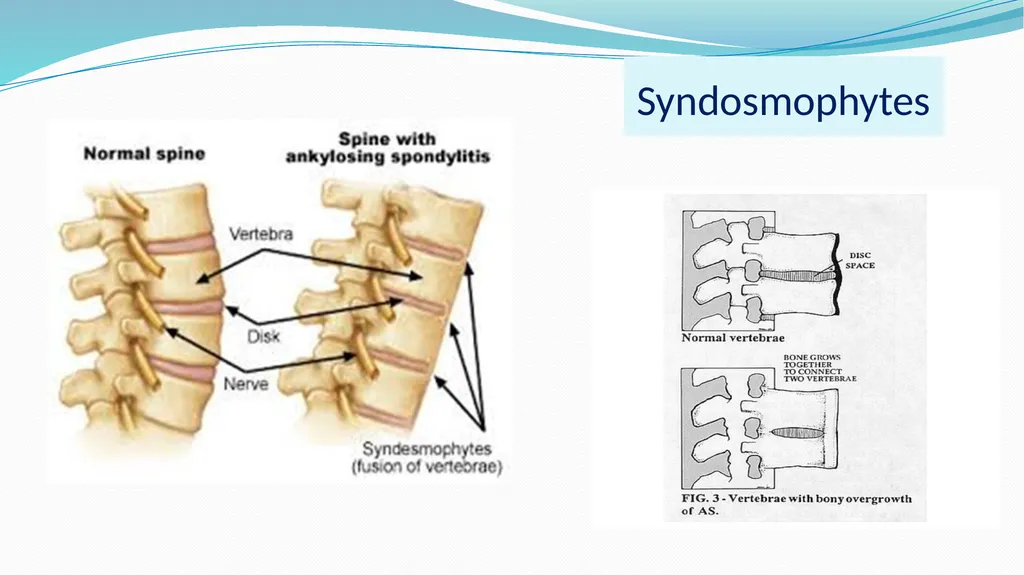
Inflammatory process results in gradual fibrosis and bony ankylosis Ankylosing Spondylitis<br>
Inflammatory process results in gradual fibrosis and bony ankylosis Ankylosing Spondylitis<br>
23
Begins in late adolescence or early adulthood
Male : Female 3:1
Divided into skeletal and extra-skeletal manifestations
Primary-no evidence of Reiter’s, Psoriasis, IBD
Secondary - +evidence of above Ankylosing Spondylitis<br>
Male : Female 3:1
Divided into skeletal and extra-skeletal manifestations
Primary-no evidence of Reiter’s, Psoriasis, IBD
Secondary - +evidence of above Ankylosing Spondylitis<br>
24
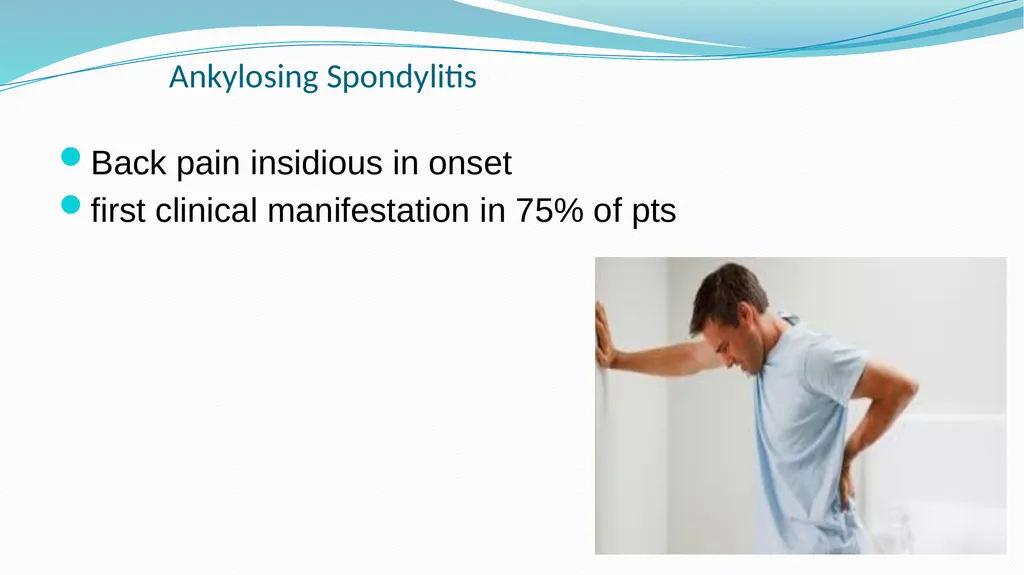
Back pain insidious in onset
first clinical manifestation in 75% of pts Ankylosing Spondylitis<br>
first clinical manifestation in 75% of pts Ankylosing Spondylitis<br>
25
Pain is quite severe and aggravated by coughing, sneezing or sudden twisting
Pain is felt deep in gluteal region and hard to localize
Worsens after prolonged periods of inactivity CLINICAL MANIFESTATIONS<br>
Pain is felt deep in gluteal region and hard to localize
Worsens after prolonged periods of inactivity CLINICAL MANIFESTATIONS<br>
26
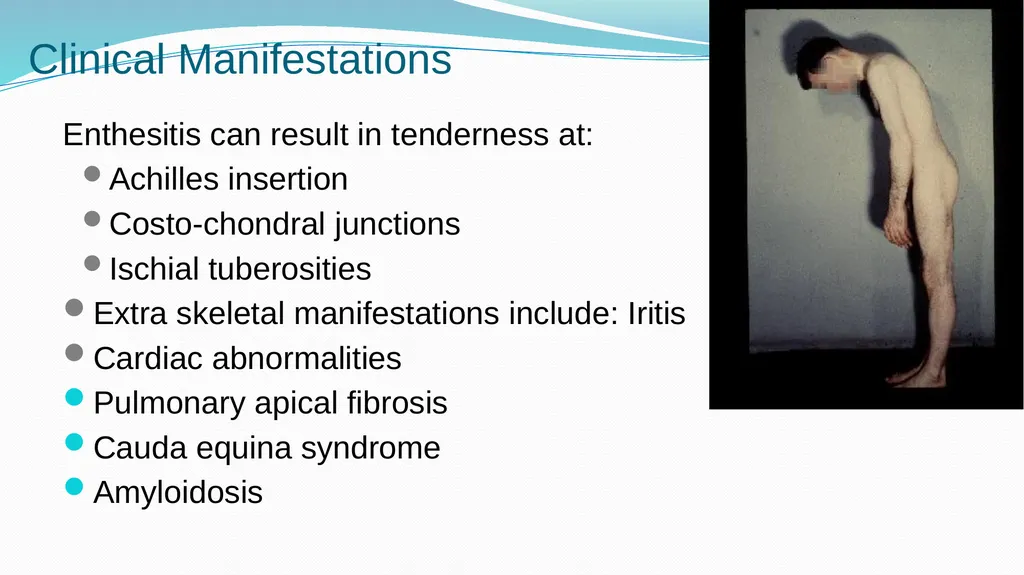
Enthesitis can result in tenderness at:
Achilles insertion
Costo-chondral junctions
Ischial tuberosities
Extra skeletal manifestations include: Iritis
Cardiac abnormalities
Pulmonary apical fibrosis
Cauda equina syndrome
Amyloidosis Clinical Manifestations<br>
Achilles insertion
Costo-chondral junctions
Ischial tuberosities
Extra skeletal manifestations include: Iritis
Cardiac abnormalities
Pulmonary apical fibrosis
Cauda equina syndrome
Amyloidosis Clinical Manifestations<br>
27
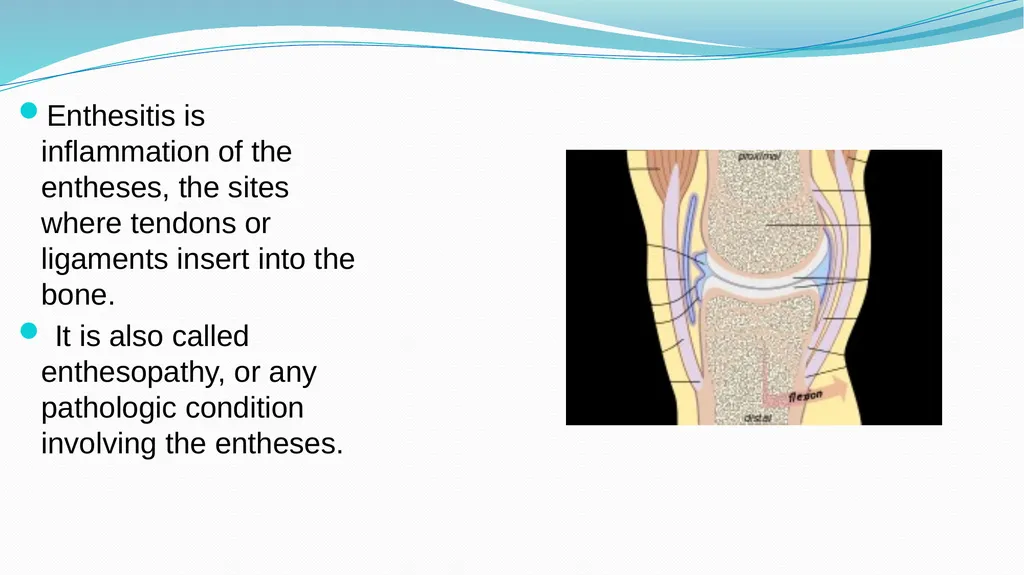
Enthesitis is inflammation of the entheses, the sites where tendons or ligaments insert into the bone.
It is also called enthesopathy, or any pathologic condition involving the entheses.<br>
It is also called enthesopathy, or any pathologic condition involving the entheses.<br>
28
Syndosmophytes<br>
29
Lab
HLA B-27 +ve - in majority of patients
Acute phase reactants
Mild increase Alk Phos
Mild anemia DIAGNOSTIC INVESTIGATIONS<br>
HLA B-27 +ve - in majority of patients
Acute phase reactants
Mild increase Alk Phos
Mild anemia DIAGNOSTIC INVESTIGATIONS<br>
30
First Line
NSAID’s
Second Line
Sulfasalazine
Methotrexate
Antibiotics – if infection Management<br>
NSAID’s
Second Line
Sulfasalazine
Methotrexate
Antibiotics – if infection Management<br>
31
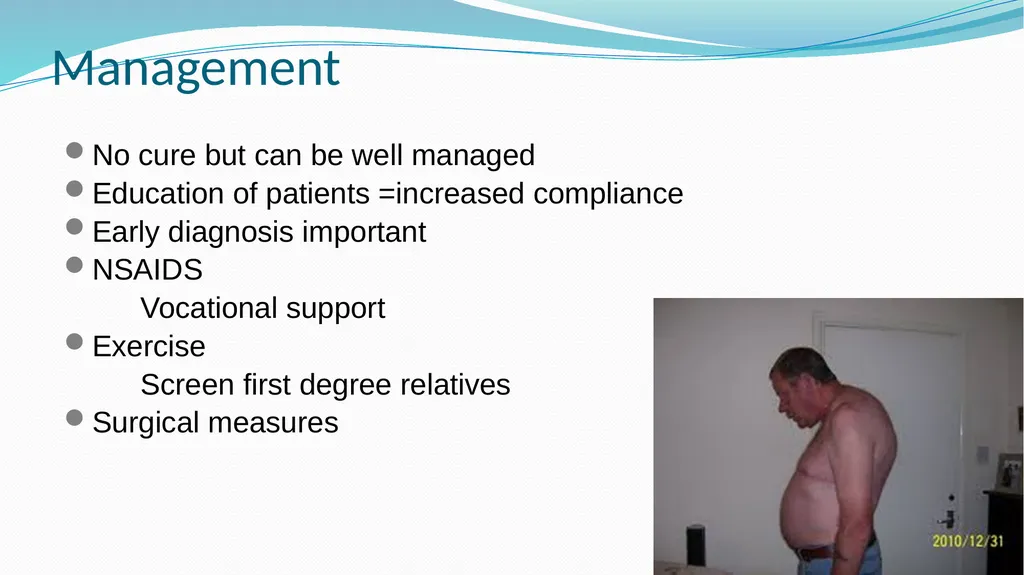
No cure but can be well managed
Education of patients =increased compliance
Early diagnosis important
NSAIDS
Vocational support
Exercise
Screen first degree relatives
Surgical measures Management<br>
Education of patients =increased compliance
Early diagnosis important
NSAIDS
Vocational support
Exercise
Screen first degree relatives
Surgical measures Management<br>
32
DEFINITION
SLE is an autoimmune disease in which the host’s body immune system attacks healthy tissue .
It can affect the skin, joints, kidneys, brain, and other organs. Systemic Lupus Erythematosus (SLE)<br>
SLE is an autoimmune disease in which the host’s body immune system attacks healthy tissue .
It can affect the skin, joints, kidneys, brain, and other organs. Systemic Lupus Erythematosus (SLE)<br>
33
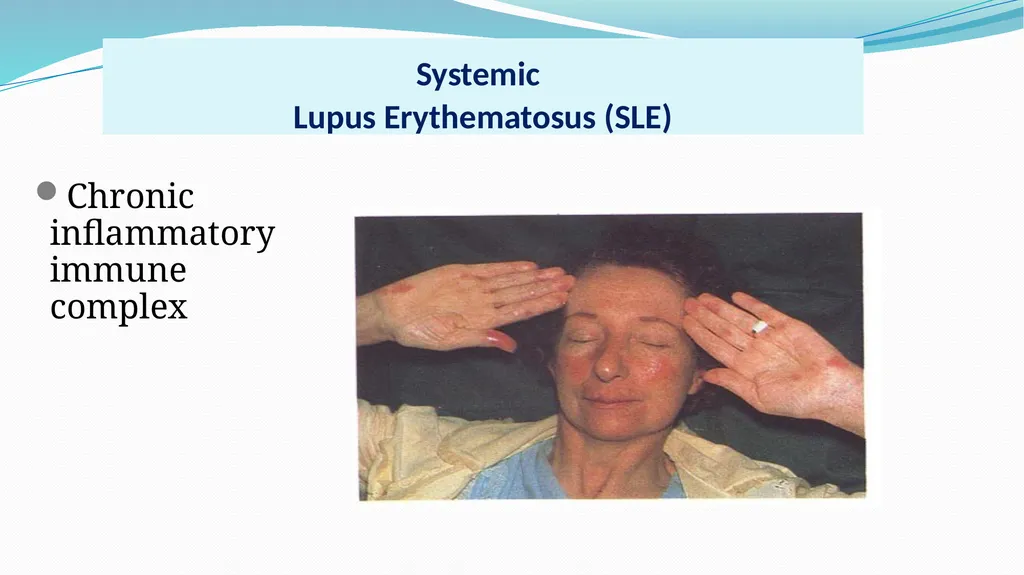
Chronic inflammatory immune complex Systemic
Lupus Erythematosus (SLE)<br>
34
Autoantibodies
tissue damage in multiple organs
Reaction to some medications (procainamide, hydralazine) causes a syndrome similar to lupus Pathophysiology<br>
tissue damage in multiple organs
Reaction to some medications (procainamide, hydralazine) causes a syndrome similar to lupus Pathophysiology<br>
35
Symptoms vary from person to person, and may come and go.
Almost everyone with SLE has joint pain and swelling.
Some develop arthritis - The joints of the fingers, hands, wrists, and knees are often affected. Clinical Manifestations<br>
Almost everyone with SLE has joint pain and swelling.
Some develop arthritis - The joints of the fingers, hands, wrists, and knees are often affected. Clinical Manifestations<br>
36
Classical photosensitive butterfly rash
Vasculitic lesions of the hands & feet (or Raynard’s phenomenon
Profound tiredness
Arthralgia or even arthritis
? Alopecia
Oral ulcers less common than in adults Clinical Manifestations<br>
Vasculitic lesions of the hands & feet (or Raynard’s phenomenon
Profound tiredness
Arthralgia or even arthritis
? Alopecia
Oral ulcers less common than in adults Clinical Manifestations<br>
37
Pericarditis
Pleuritis
Pulmonary vasculitis or haemorrhage
Some present initially with renal involvement
9-45% cases in children present with some cerebral involvement
Other CNS symptoms :
- chorea, seizures, CVA, cranial neuropathy + visual loss
- functional psychosis, personality disorder, & memory alteration
headaches & depression) Clinical Manifestations<br>
38
FBC ()
Raised ESR
Raised ANA
Lumber puncture
Electroencephalogram (EEG)
Magnetic resonance imaging (MRI)
Computed tomography (CT)
Skin biopsy DIAGNOSTIC INVESTIGATIONS<br>
Raised ESR
Raised ANA
Lumber puncture
Electroencephalogram (EEG)
Magnetic resonance imaging (MRI)
Computed tomography (CT)
Skin biopsy DIAGNOSTIC INVESTIGATIONS<br>
39
also called “Lupus glomerulonephritis”
Develops in 1/3 of lupus pts (50% in adults within 1 year of diagnosis)
15 to 20% will require RRT (renal replacement therapy)
Proteinuria - 45 to 65% will develop nephrotic syndrome
associated fluid retention, weight gain, oedema
microscopic haematuria in 90% of patients Lupus Nephritis<br>
Develops in 1/3 of lupus pts (50% in adults within 1 year of diagnosis)
15 to 20% will require RRT (renal replacement therapy)
Proteinuria - 45 to 65% will develop nephrotic syndrome
associated fluid retention, weight gain, oedema
microscopic haematuria in 90% of patients Lupus Nephritis<br>
40
Treatment There is no cure for SLE as yet.
The goal of treatment is to control symptoms.
Severe symptoms that involve the heart, lungs, kidneys, and other organs.<br>
The goal of treatment is to control symptoms.
Severe symptoms that involve the heart, lungs, kidneys, and other organs.<br>
41
Anti-inflammatory drugs
Corticosteroids
Anti-malarial drugs
Immunosuppressive RX
Symptomatic therapy Drug Therapy<br>
Corticosteroids
Anti-malarial drugs
Immunosuppressive RX
Symptomatic therapy Drug Therapy<br>
42
Reduce inflammation & pain
Particularly effective for low-grade fever, fatigue, arthritis & pleurisy
NSAID’s = salicylates (asprin, ibuprofen) Anti-inflammatory Drugs<br>
Particularly effective for low-grade fever, fatigue, arthritis & pleurisy
NSAID’s = salicylates (asprin, ibuprofen) Anti-inflammatory Drugs<br>
43
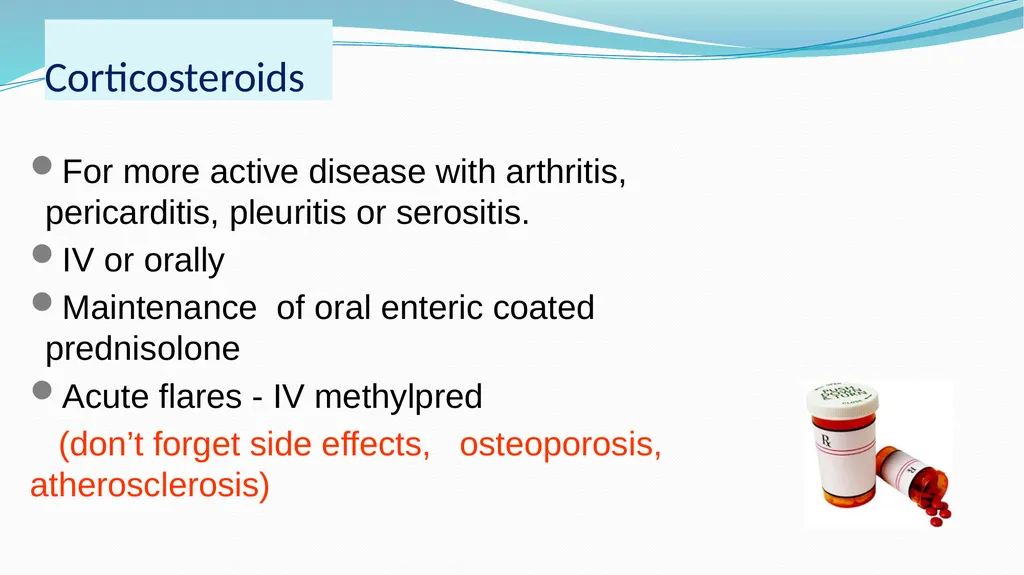
For more active disease with arthritis, pericarditis, pleuritis or serositis.
IV or orally
Maintenance of oral enteric coated prednisolone
Acute flares - IV methylpred
(don’t forget side effects, osteoporosis, atherosclerosis) Corticosteroids<br>
IV or orally
Maintenance of oral enteric coated prednisolone
Acute flares - IV methylpred
(don’t forget side effects, osteoporosis, atherosclerosis) Corticosteroids<br>
44
Particularly effective against arthritis, skin rashes & mouth ulcers
Hydroxychlorquine (Plaquenil) may take 4-6 months before a benefit is seen
Side effects = Harm foetus, gastric symptoms, rashes, darkening of skin, muscle weakness, retinal damage
Eye exam before drugs commenced, then 6 monthly Anti-malarial Drugs<br>
Hydroxychlorquine (Plaquenil) may take 4-6 months before a benefit is seen
Side effects = Harm foetus, gastric symptoms, rashes, darkening of skin, muscle weakness, retinal damage
Eye exam before drugs commenced, then 6 monthly Anti-malarial Drugs<br>
45
Which agent? When ? + still controversial
Azathioprine
Cyclophosphamide in severe cases, (&
IV Cyclophos monthly for 6 months, followed by infusions 2-3 monthly for 2 years
Methotrexate Immunosuppressive Agents<br>
Azathioprine
Cyclophosphamide in severe cases, (&
IV Cyclophos monthly for 6 months, followed by infusions 2-3 monthly for 2 years
Methotrexate Immunosuppressive Agents<br>
46
The outcome for people with SLE has improved in recent years. Many people with SLE have mild symptoms depends on how severe the disease is.
The disease tends to be more active:
During the first years after diagnosis
In people under age 40
Many women with SLE can get pregnant and deliver a healthy baby. A good outcome is more likely for women who receive proper treatment and do not have serious heart or kidney problems. However, the presence of SLE antibodies raises the risk of miscarriage. Prognosis<br>
47
Some pts with SLE have abnormal deposits in the kidney cells - called lupus nephritis - may go on to develop kidney failure and need dialysis or a kidney transplant.
SLE can cause other damage including:
Thrombus in arteries of veins of the legs, lungs, brain, skin, or intestines
Destruction of red blood cells -- anemia Complications<br>
SLE can cause other damage including:
Thrombus in arteries of veins of the legs, lungs, brain, skin, or intestines
Destruction of red blood cells -- anemia Complications<br>
48
Pericarditis (fluid around the heart)
Myocarditis (inflammation of the heart)
Endocarditis (inflammation of the endocardium)
Pleural effusion and damage to lung tissue
Pregnancy - miscarriage
Stroke
Severe thrombocytopenia
Vasculitis (Inflammation of the blood vessels) Complications<br>
Myocarditis (inflammation of the heart)
Endocarditis (inflammation of the endocardium)
Pleural effusion and damage to lung tissue
Pregnancy - miscarriage
Stroke
Severe thrombocytopenia
Vasculitis (Inflammation of the blood vessels) Complications<br>
49
Get adequate rest.
Use stress-reduction techniques.
Avoid exposure to sunlight; use sunscreen.
Involve friends and family in care. Report fever, chills, anorexia, or symptom worsening to health care provider immediately.
Never stop taking medications without physician advice Client Teaching for Systemic Lupus Erythematosus<br>
50
REFERENCES Brunner, L. S., & O'Connell Smeltzer, S. C. (2010). Brunner & Suddarth's Textbook of
Medical-surgical Nursing (12th ed.). Philadelphia: Wolters Kluwer
Health/Lippincott Williams & Wilkins.
LeMone, P. T., Burke, K. M., Bauldoff, G., & Gubrud, P. (2014). Medical-Surgical
Nursing: Clinical Reasoning in Patient Care (6th ed.). New Jersey: Pearson.<br>
Medical-surgical Nursing (12th ed.). Philadelphia: Wolters Kluwer
Health/Lippincott Williams & Wilkins.
LeMone, P. T., Burke, K. M., Bauldoff, G., & Gubrud, P. (2014). Medical-Surgical
Nursing: Clinical Reasoning in Patient Care (6th ed.). New Jersey: Pearson.<br>
51
Thank you<br>