04
Why Burkholderia? Both have been “weaponized”
B. mallei and B. pseudomallei highly infectious as aerosol
No vaccine
Classified as Tier 1 biological threat agents
Are moderately easy to disseminate
Mortality rate for untreated glanders (B. mallei) is high.
B. pseudomallei has a low infectious dose.
Due to rarity of both diseases in the US experience in diagnosis and treatment is limited. Require special diagnostic capacity and enhanced disease surveillance<br>
05
Disease Caused by Burkholderia General symptoms - fever, malaise, muscle aches, chest pain, weight loss, night sweats, headache
Nothing distinctive or characteristic – patient history, especially travel history, is very important
Bacteria considered in differential diagnoses: Mycobacterium tuberculosis, Yersinia spp., Brucella spp.<br>
06
Burkholderia mallei Zoonotic agent—causes glanders in equids, humans and other mammals
Glanders - infection through abrasions of skin, penetrating wounds, mucous membrane contact, inhalation, ingestion
incubation 1-14 days
Cutaneous - lesions with localized lymphadenopathy
Systemic - pneumonia with or without bacteremia, bacteremia may result in lesions in liver or spleen
Enzootic in North Africa, Middle East, Turkey, Central and South America, Asia
Risk factors where enzootic—horse caretakers, veterinarians, slaughterhouse workers
Risk factor in this country--laboratorian<br>
07
Burkholderia pseudomallei Soil and ground water saprophyte--etiologic agent of melioidosis
Melioidosis (B. pseudomallei) – a glanders-like disease, infection through abrasions of skin, penetrating wounds, mucous membrane contact, inhalation, ingestion
Incubation 2-5 days, months, years (can reoccur years later)
Endemic in Southeast Asia and northern Australia, Central America
Risk factors where endemic—diabetes, alcoholism, renal impairment, penetrating wounds
Risk factor in this country--laboratorian<br>
08
Sentinel Laboratory Procedures for Burkholderia spp. In a Sentinel Laboratory, you could encounter these organisms in:
Bone marrow or whole blood
Sputum or bronchoscopically obtained specimans
Tissue Specimens (biopsies, abscess aspirates ) and wound swab
Urine<br>
09
Sentinel Laboratory Procedures for Burkholderia spp. Gram stain
Culture characteristics
Hemolysis
Oxidase
Catalase
Indole
Polymyxin B or Colistin resistance
Motility
Growth at 42°C
Susceptibility - Amoxicillin-clavulanate , Penicillin<br>
10
Burkholderia mallei
GLANDERS<br>
11
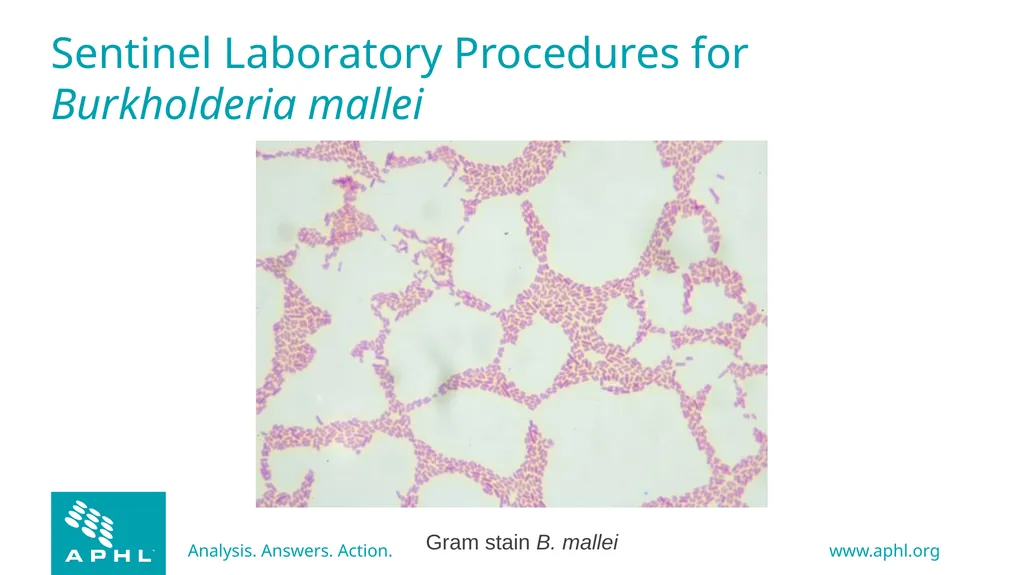
Gram stain morphology
Small, straight or slightly curved Gram-negative coccobacilli
Cells are arranged in pairs, parallel bundles, or Chinese-letter form Sentinel Laboratory Procedures for Burkholderia mallei<br>
12
Gram stain B. mallei Sentinel Laboratory Procedures for Burkholderia mallei<br>
13
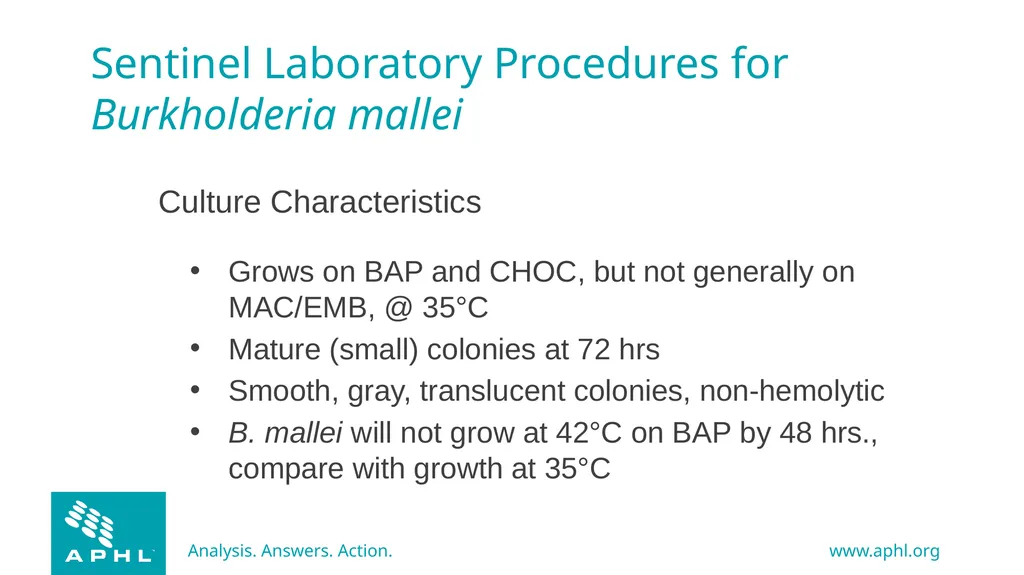
Culture Characteristics
Grows on BAP and CHOC, but not generally on MAC/EMB, @ 35°C
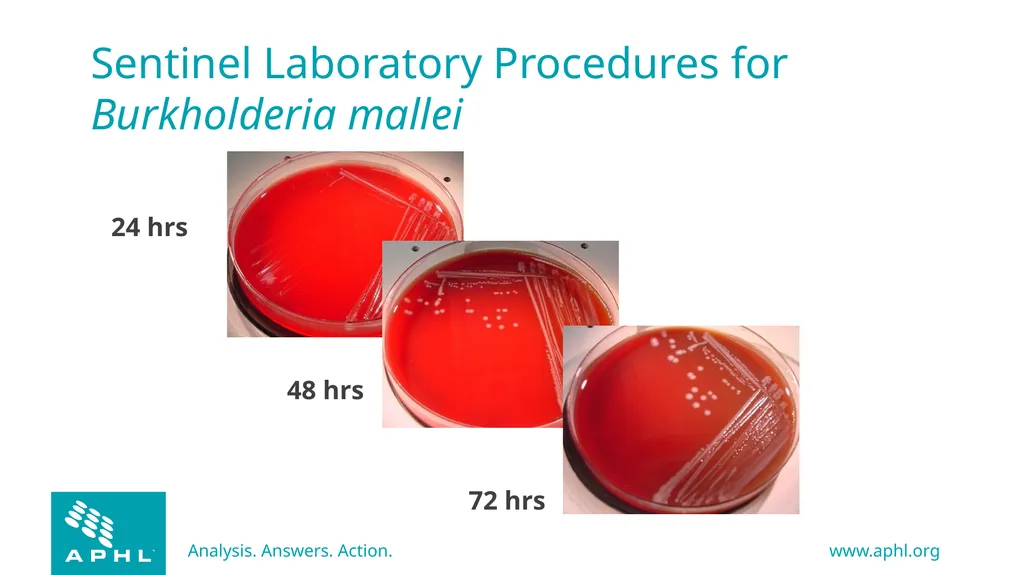
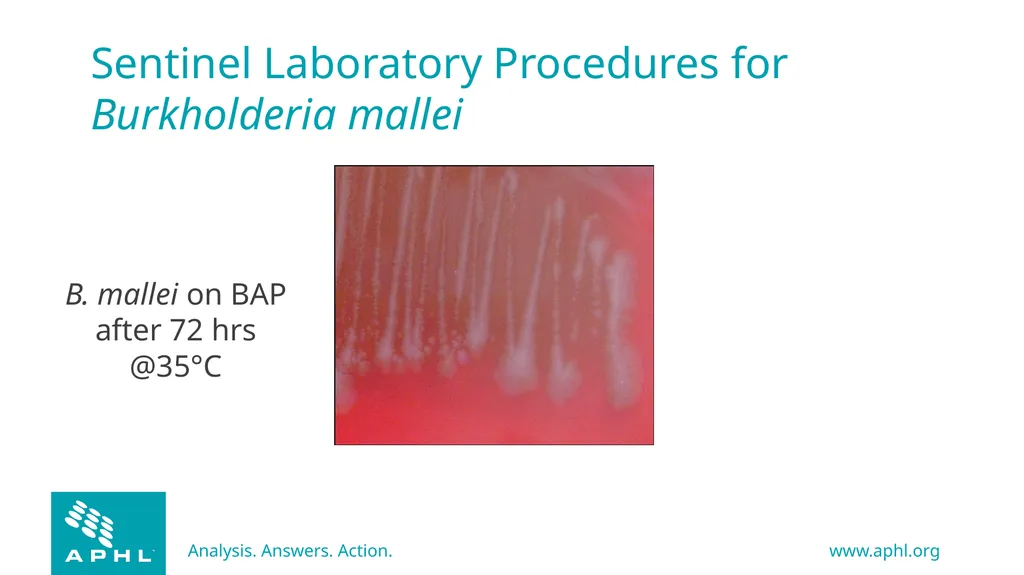
Mature (small) colonies at 72 hrs
Smooth, gray, translucent colonies, non-hemolytic
B. mallei will not grow at 42°C on BAP by 48 hrs., compare with growth at 35°C Sentinel Laboratory Procedures for Burkholderia mallei<br>
14
72 hrs 48 hrs 24 hrs Sentinel Laboratory Procedures for Burkholderia mallei<br>
15
72 hrs B. mallei on BAP after 72 hrs @35°C Sentinel Laboratory Procedures for Burkholderia mallei<br>
16
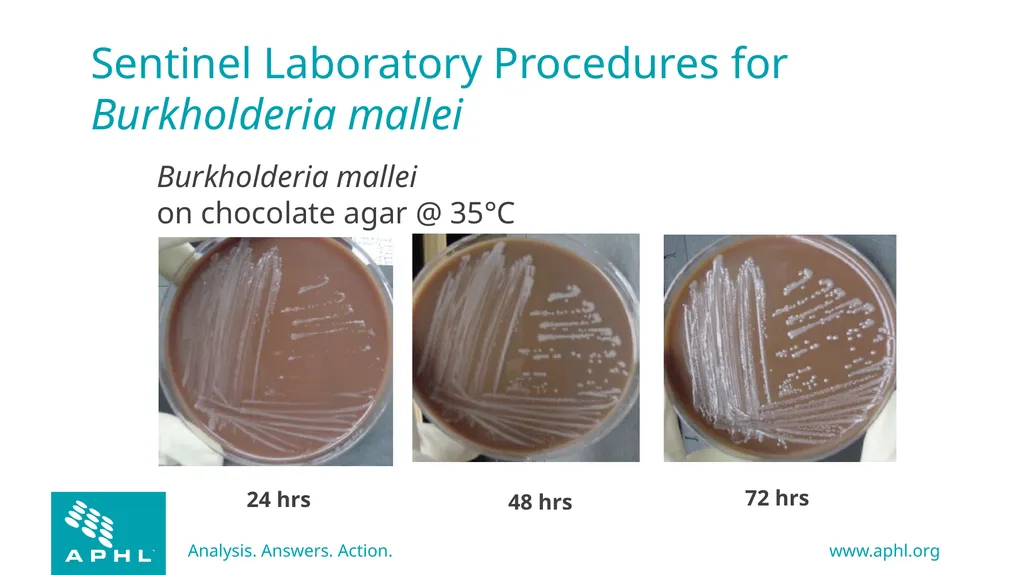
Culture on CHOC at 35°C
Burkholderia mallei – slow growth, mature colonies by 48 to 72 hrs Sentinel Laboratory Procedures for Burkholderia mallei<br>
17
24 hrs 48 hrs 72 hrs Burkholderia mallei
on chocolate agar @ 35°C Sentinel Laboratory Procedures for Burkholderia mallei<br>
18
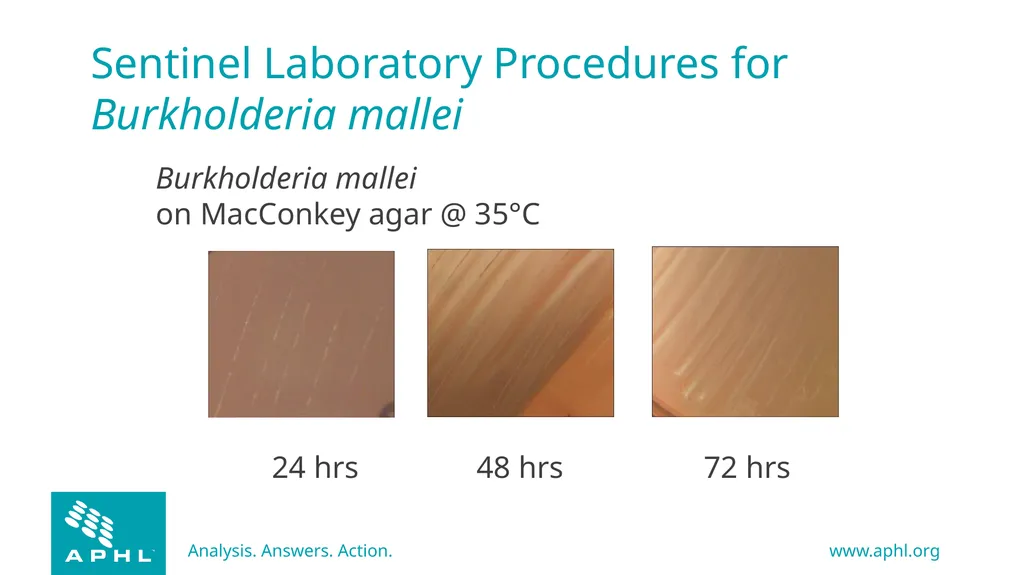
Culture on MAC at 35°C
-Burkholderia mallei – no growth, or very
small @ 72 hrs Sentinel Laboratory Procedures for Burkholderia mallei<br>
19
24 hrs 48 hrs 72 hrs Burkholderia mallei
on MacConkey agar @ 35°C Sentinel Laboratory Procedures for Burkholderia mallei<br>
20
Screening Tests
Oxidase
Catalase
Spot indole
Colistin resistance
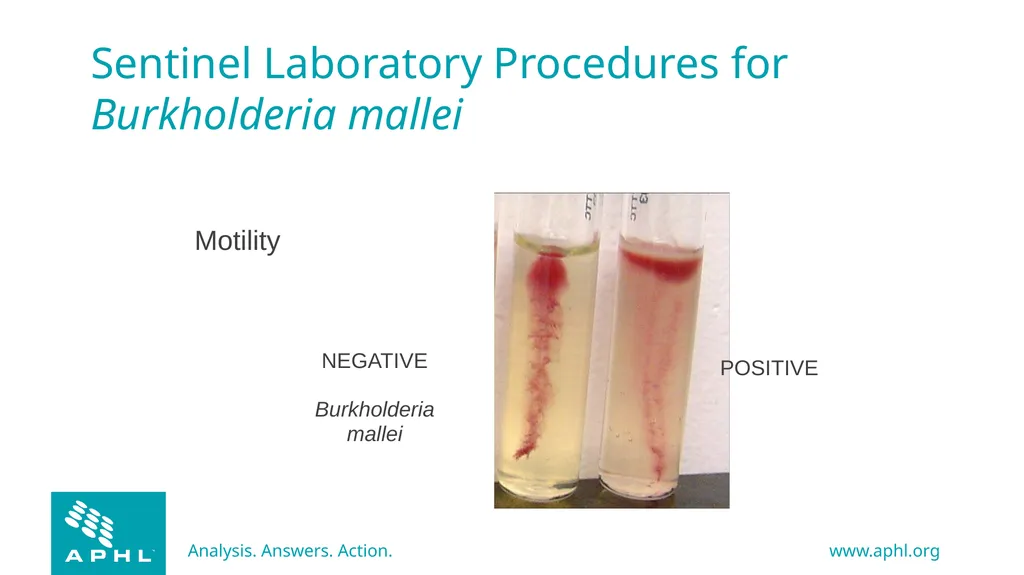
Motility – using medium with TTC
Susceptibility - Amoxicillin-clavulanate, Penicillin Sentinel Laboratory Procedures for Burkholderia mallei<br>
21
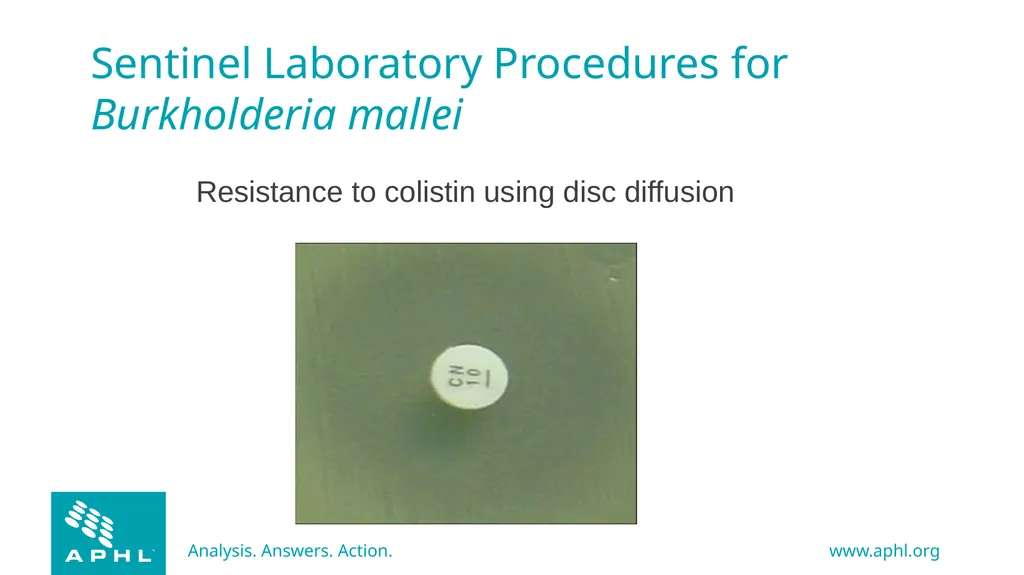
Resistance to colistin
Using KB disk diffusion assay
Zone / no zone on BAP, Chocolate, or Mueller-Hinton
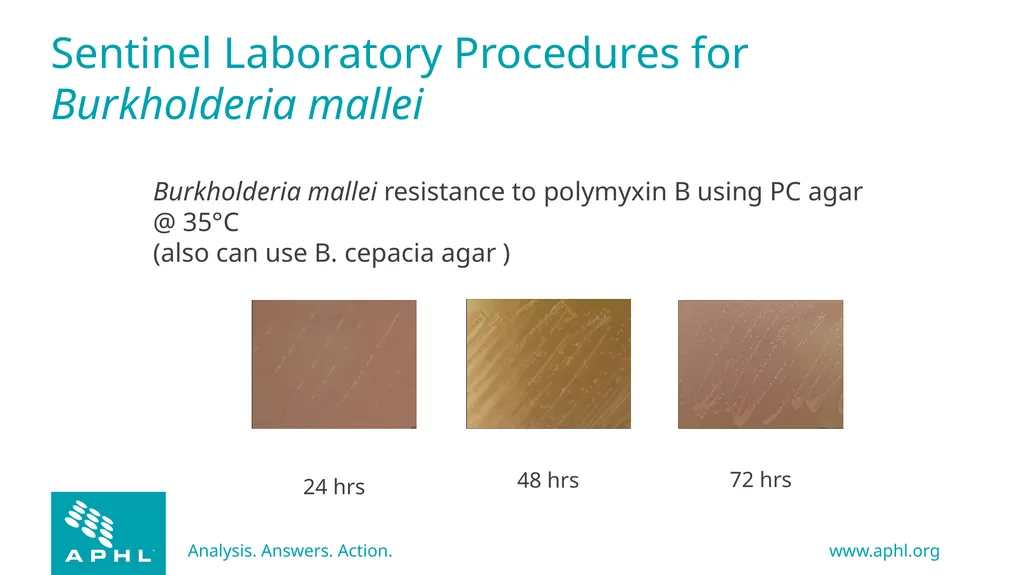
Growth / no growth on: PC agar, BC agar (without gentamicin),Thayer-Martin agar Sentinel Laboratory Procedures for Burkholderia mallei<br>
22
Resistance to colistin using disc diffusion Sentinel Laboratory Procedures for Burkholderia mallei<br>
23
24 hrs 48 hrs 72 hrs Burkholderia mallei resistance to polymyxin B using PC agar @ 35°C
(also can use B. cepacia agar ) Sentinel Laboratory Procedures for Burkholderia mallei<br>
24
Motility POSITIVE NEGATIVE
Burkholderia
mallei Sentinel Laboratory Procedures for Burkholderia mallei<br>
25
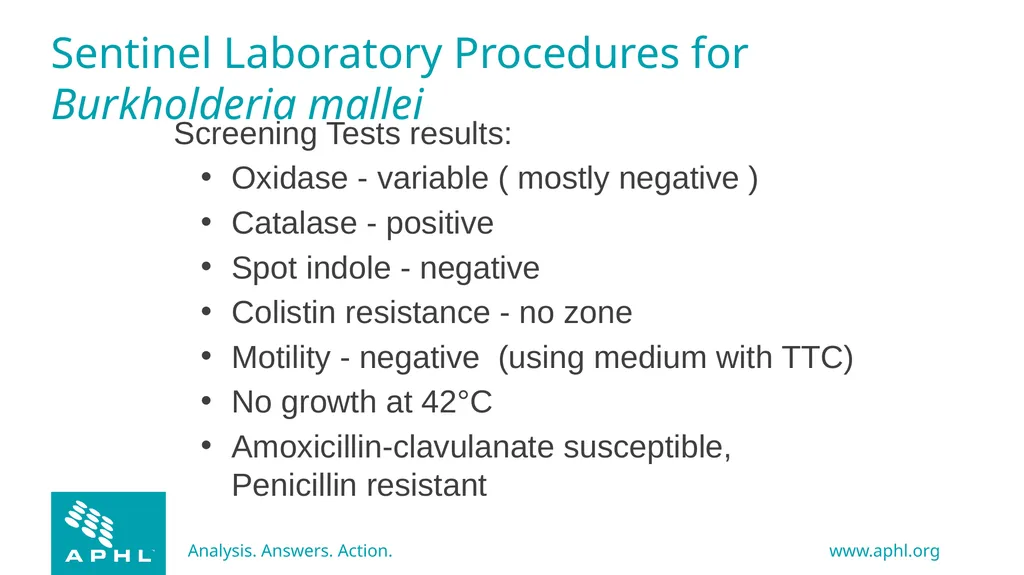
Screening Tests results:
Oxidase - variable ( mostly negative )
Catalase - positive
Spot indole - negative
Colistin resistance - no zone
Motility - negative (using medium with TTC)
No growth at 42°C
Amoxicillin-clavulanate susceptible, Penicillin resistant Sentinel Laboratory Procedures for Burkholderia mallei<br>
26
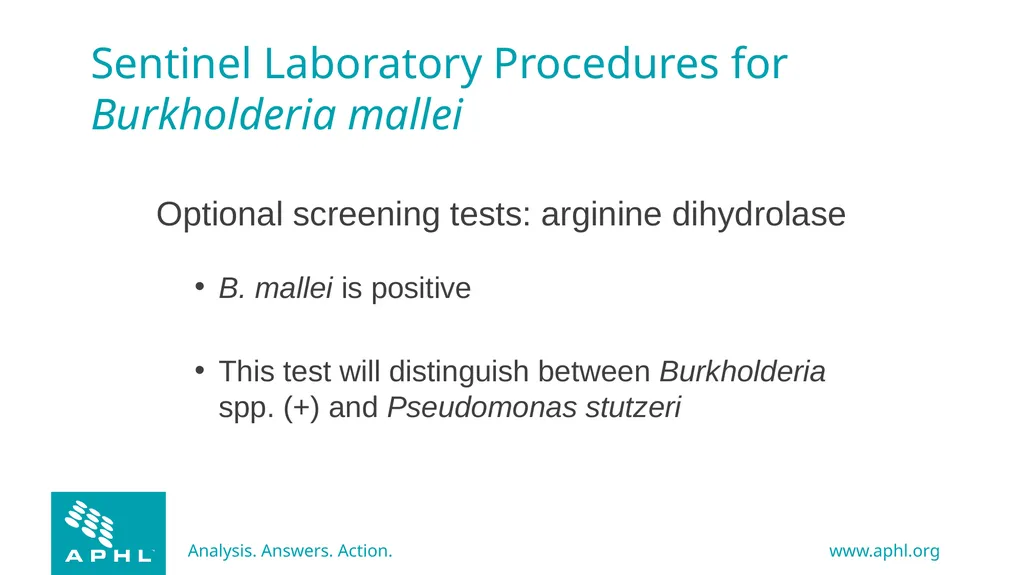
Optional screening tests: arginine dihydrolase
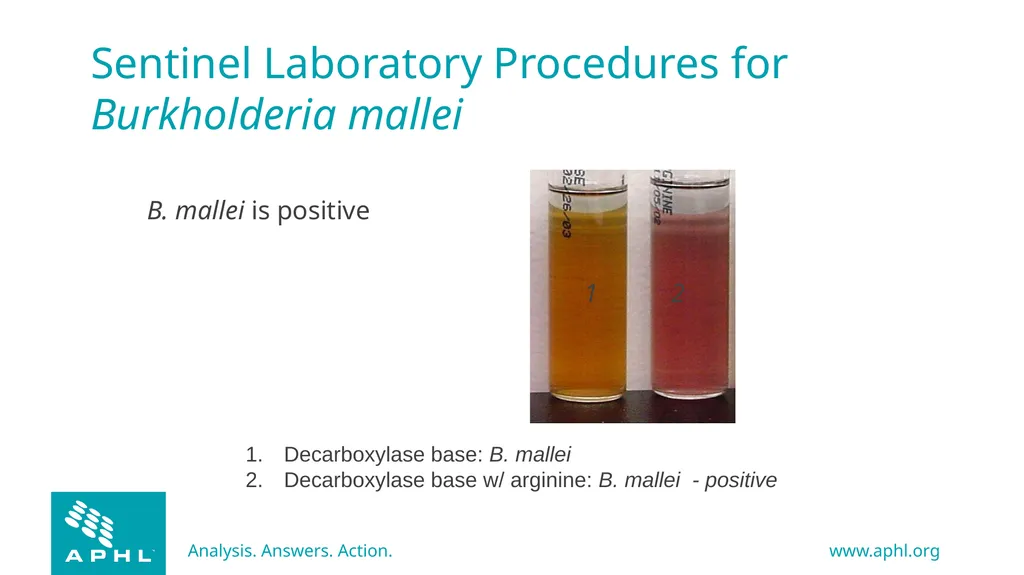
B. mallei is positive
This test will distinguish between Burkholderia spp. (+) and Pseudomonas stutzeri Sentinel Laboratory Procedures for Burkholderia mallei<br>
27
Decarboxylase base: B. mallei
Decarboxylase base w/ arginine: B. mallei - positive 1 2 B. mallei is positive Sentinel Laboratory Procedures for Burkholderia mallei<br>
28
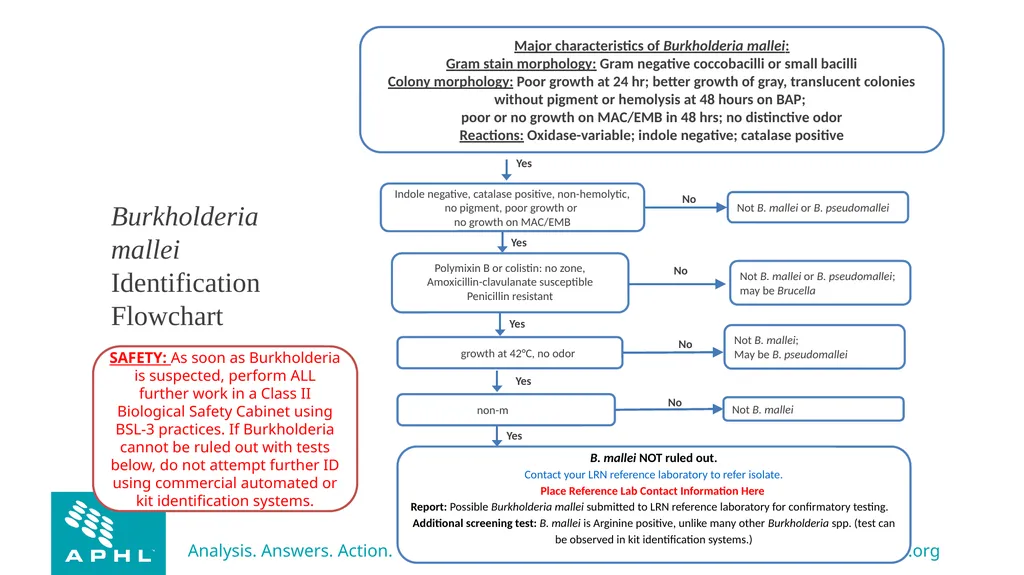
Major characteristics of Burkholderia mallei:
Gram stain morphology: Gram negative coccobacilli or small bacilli
Colony morphology: Poor growth at 24 hr; better growth of gray, translucent colonies without pigment or hemolysis at 48 hours on BAP;
poor or no growth on MAC/EMB in 48 hrs; no distinctive odor
Reactions: Oxidase-variable; indole negative; catalase positive Indole negative, catalase positive, non-hemolytic, no pigment, poor growth or
no growth on MAC/EMB Polymixin B or colistin: no zone,
Amoxicillin-clavulanate susceptible
Penicillin resistant No growth at 42°C, no odor non-motile? Not B. mallei or B. pseudomallei Not B. mallei or B. pseudomallei; may be Brucella Not B. mallei;
May be B. pseudomallei Not B. mallei SAFETY: As soon as Burkholderia is suspected, perform ALL further work in a Class II Biological Safety Cabinet using BSL-3 practices. If Burkholderia cannot be ruled out with tests below, do not attempt further ID using commercial automated or kit identification systems. Burkholderia mallei �Identification Flowchart B. mallei NOT ruled out.
Contact your LRN reference laboratory to refer isolate.
Place Reference Lab Contact Information Here
Report: Possible Burkholderia mallei submitted to LRN reference laboratory for confirmatory testing.
Additional screening test: B. mallei is Arginine positive, unlike many other Burkholderia spp. (test can be observed in kit identification systems.)<br>
29
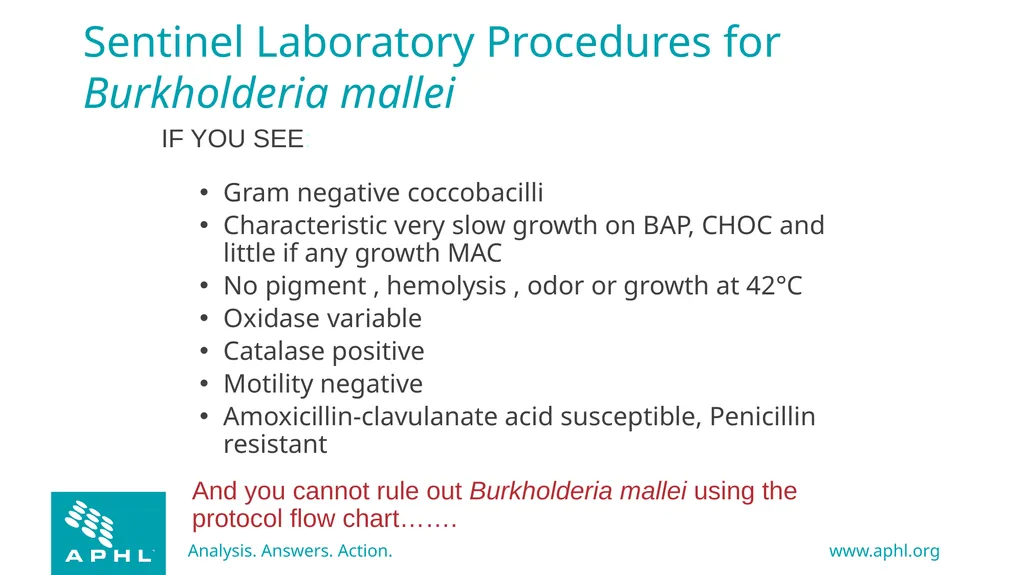
Sentinel Laboratory Procedures for Burkholderia mallei IF YOU SEE:
Gram negative coccobacilli
Characteristic very slow growth on BAP, CHOC and little if any growth MAC
No pigment , hemolysis , odor or growth at 42°C
Oxidase variable
Catalase positive
Motility negative
Amoxicillin-clavulanate acid susceptible, Penicillin resistant
And you cannot rule out Burkholderia mallei using the protocol flow chart…….<br>
30
CONTACT YOUR LRN
reference laboratory<br>