04
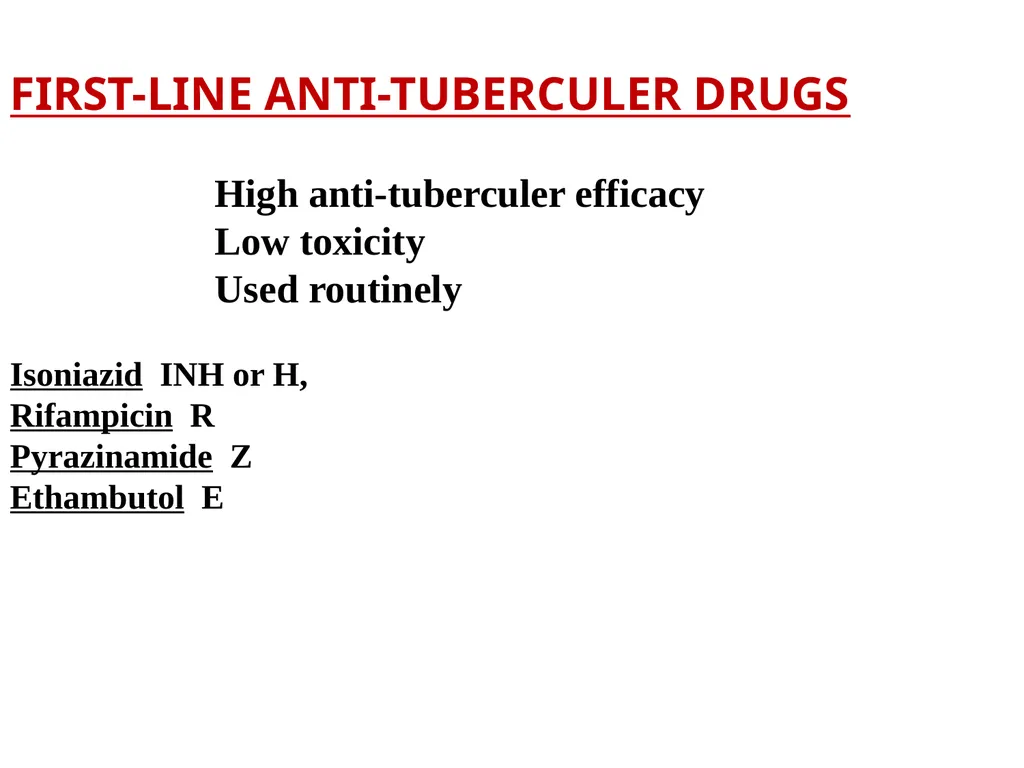
FIRST-LINE ANTI-TUBERCULER DRUGS:-
High anti-tuberculer efficacy
Low toxicity
Used routinely
Isoniazid INH or H,
Rifampicin R
Pyrazinamide Z
Ethambutol E<br>
05
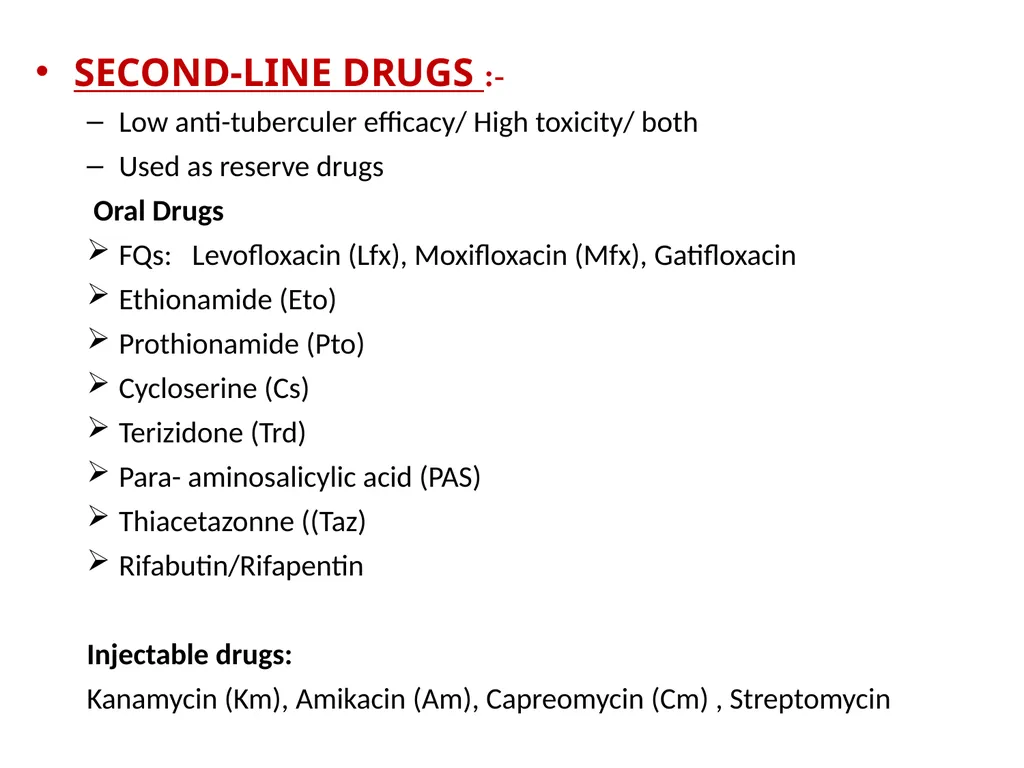
SECOND-LINE DRUGS :-
Low anti-tuberculer efficacy/ High toxicity/ both
Used as reserve drugs
Oral Drugs
FQs: Levofloxacin (Lfx), Moxifloxacin (Mfx), Gatifloxacin
Ethionamide (Eto)
Prothionamide (Pto)
Cycloserine (Cs)
Terizidone (Trd)
Para- aminosalicylic acid (PAS)
Thiacetazonne ((Taz)
Rifabutin/Rifapentin
Injectable drugs:
Kanamycin (Km), Amikacin (Am), Capreomycin (Cm) , Streptomycin<br>
06
Newer Antitubercular drugs
Bedaquiline
Delamanid
Repurposed Antitubercular drugs
Linezolid (Lzd), Clofazimine (Cfz), Amoxicillin- Clavulanic acid (Amoxi-clav), Imepenam+ Cilastatin, Meropenam<br>
07
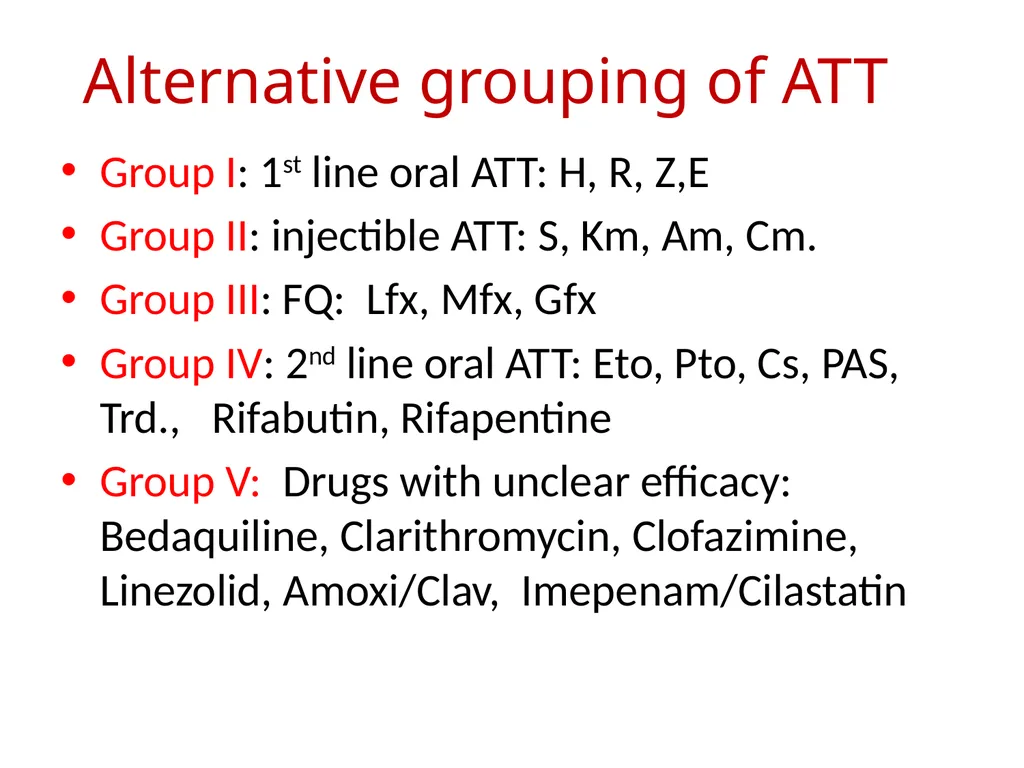
Alternative grouping of ATT Group I: 1st line oral ATT: H, R, Z,E
Group II: injectible ATT: S, Km, Am, Cm.
Group III: FQ: Lfx, Mfx, Gfx
Group IV: 2nd line oral ATT: Eto, Pto, Cs, PAS, Trd., Rifabutin, Rifapentine
Group V: Drugs with unclear efficacy: Bedaquiline, Clarithromycin, Clofazimine, Linezolid, Amoxi/Clav, Imepenam/Cilastatin<br>
08
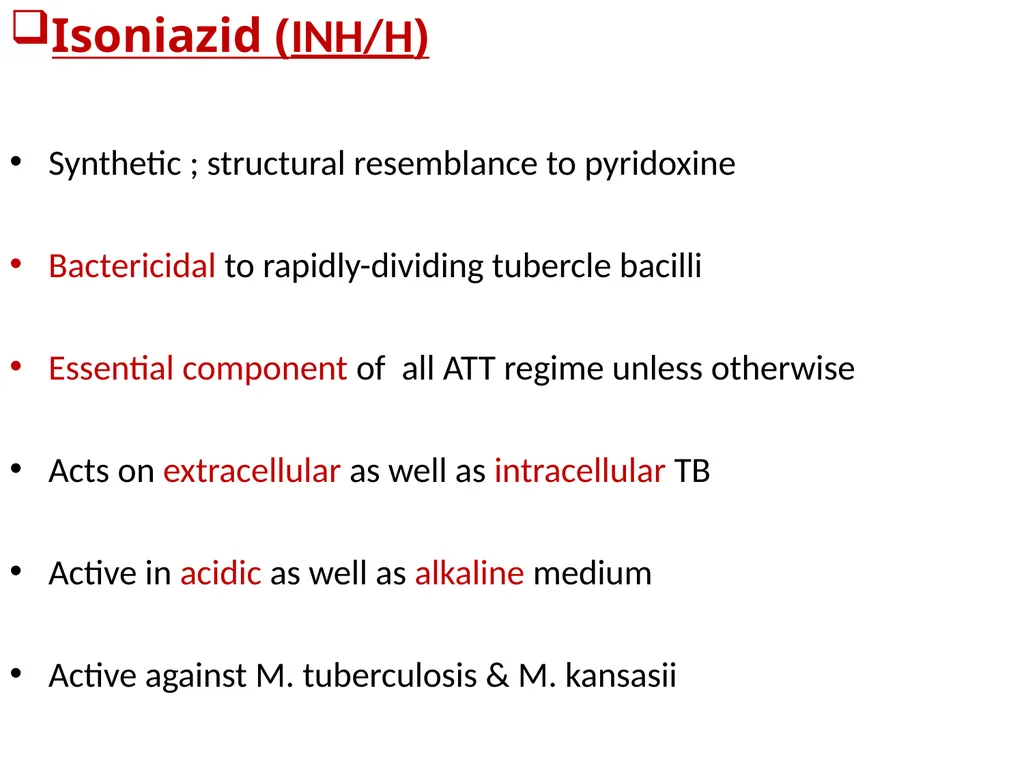
Isoniazid (INH/H)
Synthetic ; structural resemblance to pyridoxine
Bactericidal to rapidly-dividing tubercle bacilli
Essential component of all ATT regime unless otherwise
Acts on extracellular as well as intracellular TB
Active in acidic as well as alkaline medium
Active against M. tuberculosis & M. kansasii<br>
09
MOA:-
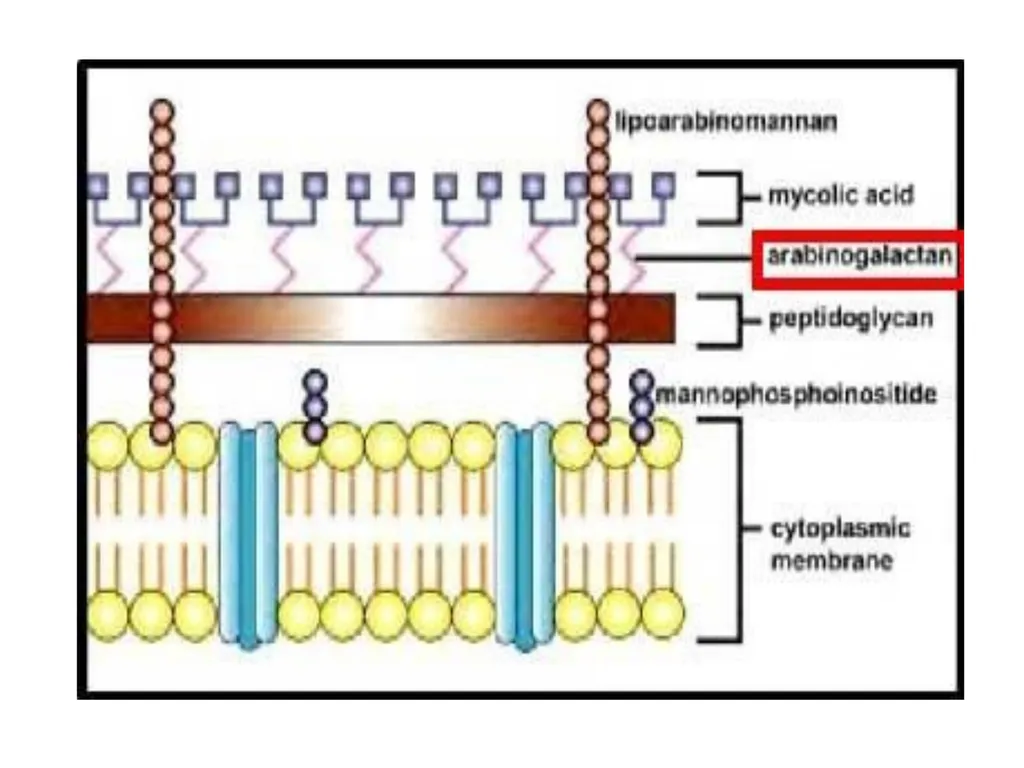
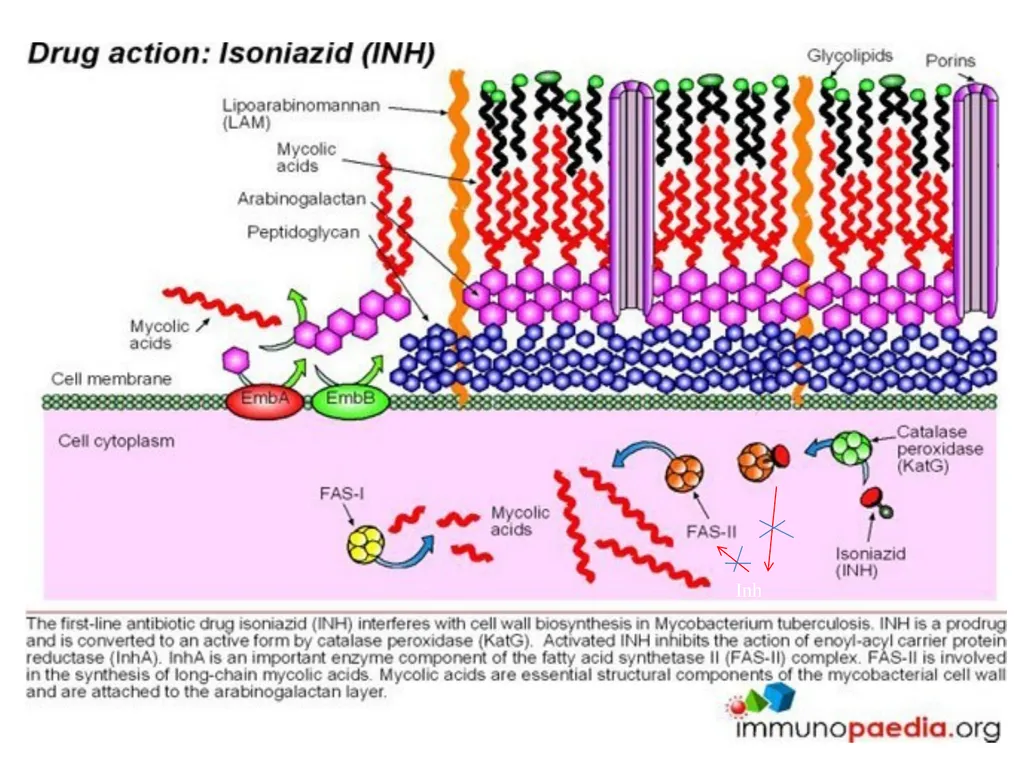
Inhibits the synthesis of mycolic acid, unique fatty acid component of mycobacterial cell wall
INH by catalase peroxidase (Kat G) converts to active form → inhibits enoyl acyl carrier protein reductase (inh A ) therby inhibits FAS II involved in long chain mycolic acid synthesis
Adduct with NADP inhibits DHFRase thereby inhibits DNA synthesis<br>
11
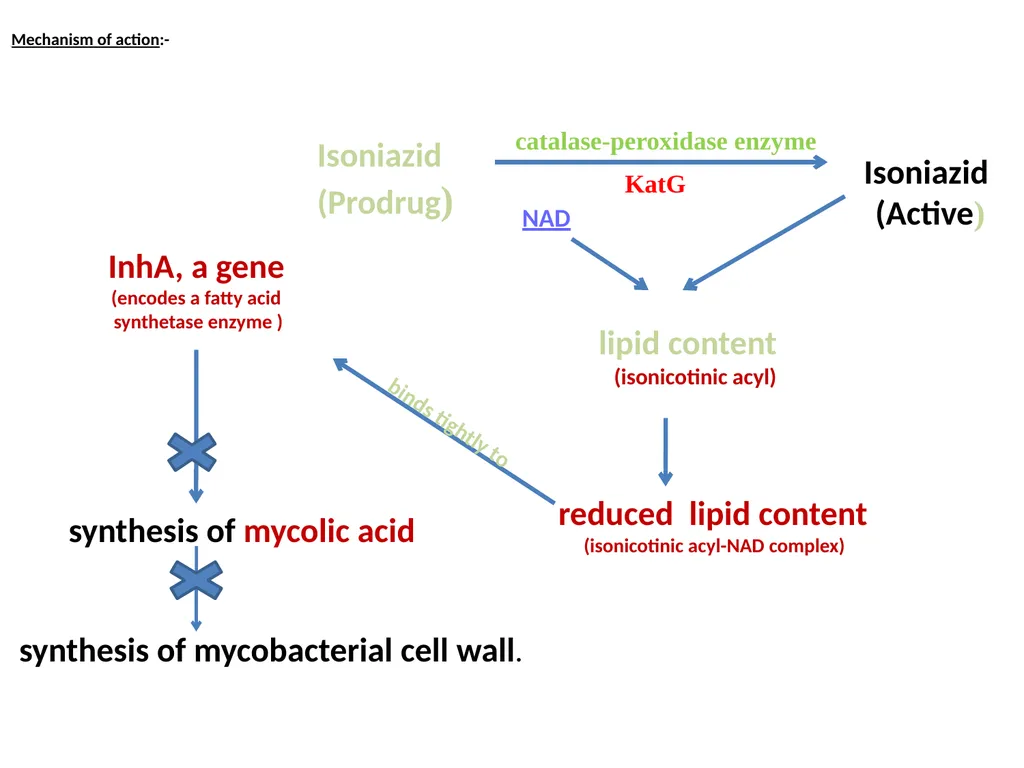
Mechanism of action:- Isoniazid
(Prodrug) Isoniazid
(Active) catalase-peroxidase enzyme KatG lipid content
(isonicotinic acyl) reduced lipid content
(isonicotinic acyl-NAD complex) InhA, a gene
(encodes a fatty acid
synthetase enzyme ) synthesis of mycolic acid synthesis of mycobacterial cell wall. NAD binds tightly to<br>
12
Resistance :
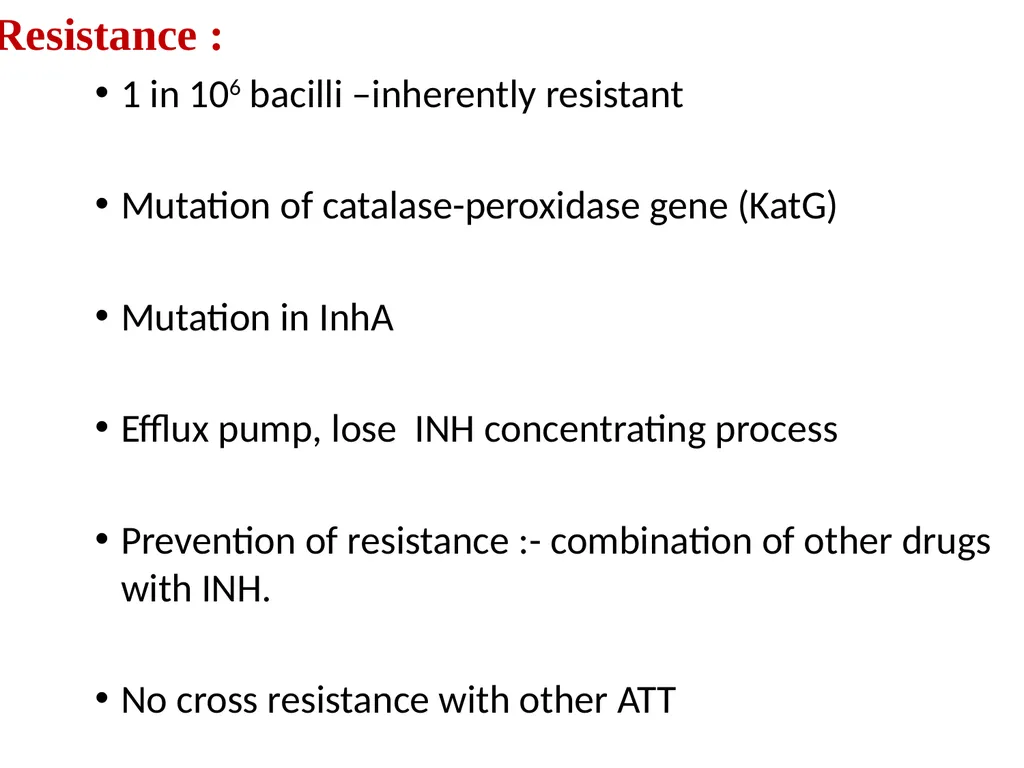
1 in 106 bacilli –inherently resistant
Mutation of catalase-peroxidase gene (KatG)
Mutation in InhA
Efflux pump, lose INH concentrating process
Prevention of resistance :- combination of other drugs with INH.
No cross resistance with other ATT<br>
13
Pharmacokinetics:-
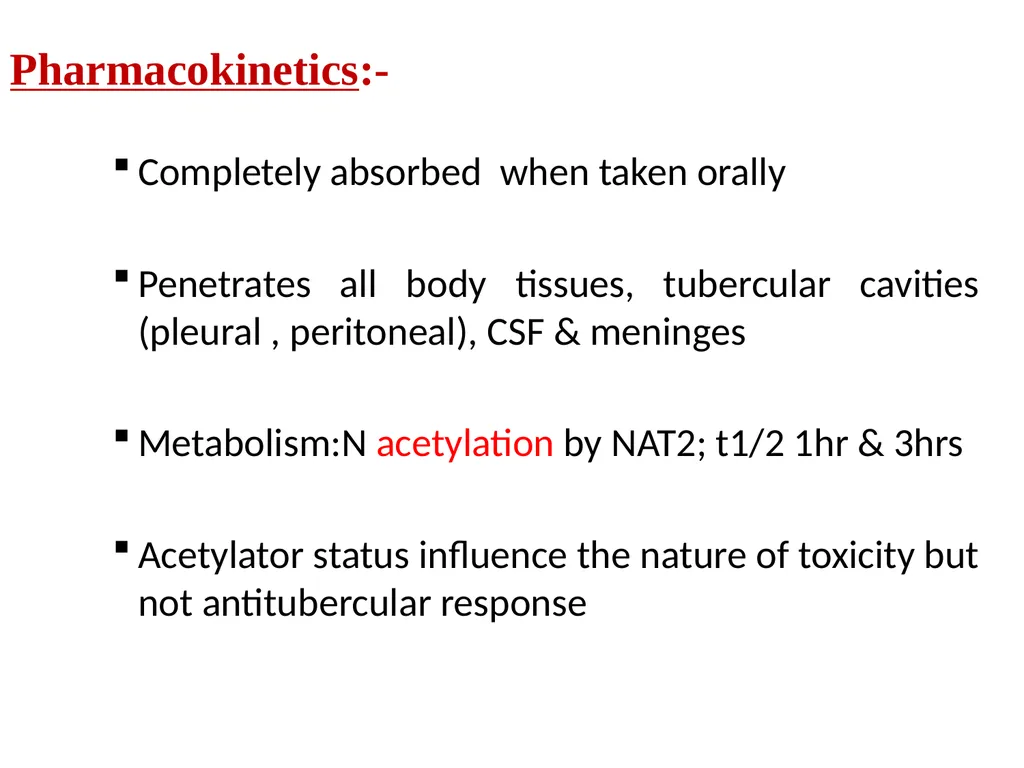
Completely absorbed when taken orally
Penetrates all body tissues, tubercular cavities (pleural , peritoneal), CSF & meninges
Metabolism:N acetylation by NAT2; t1/2 1hr & 3hrs
Acetylator status influence the nature of toxicity but not antitubercular response<br>
14
Adverse effects:-
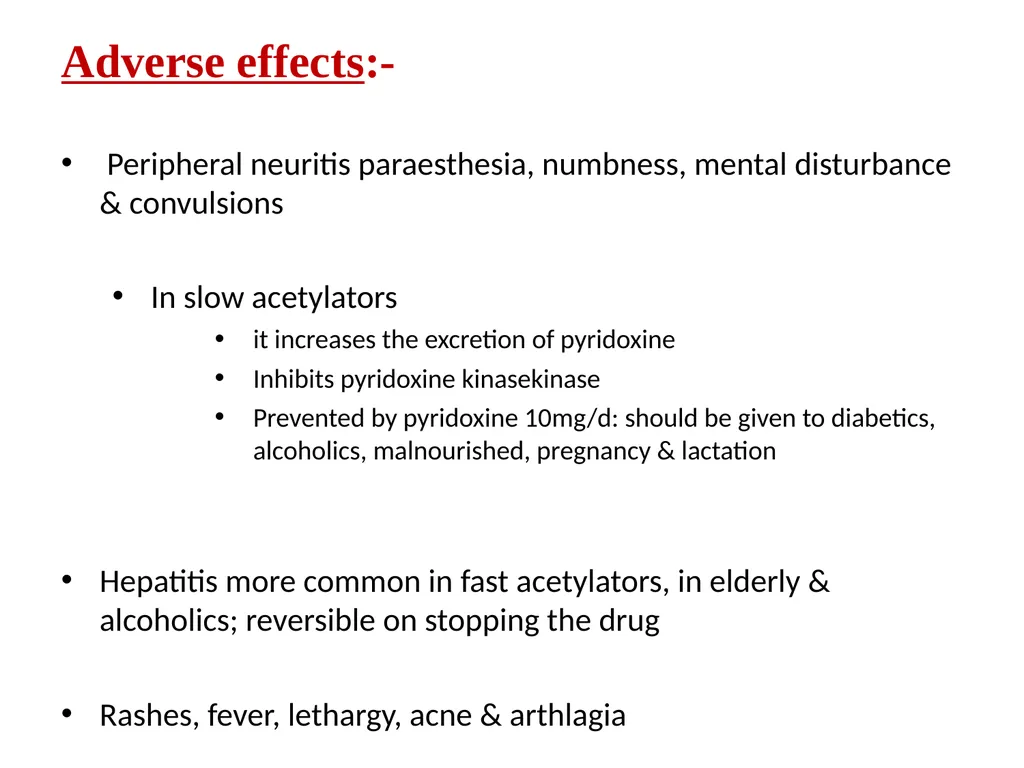
Peripheral neuritis paraesthesia, numbness, mental disturbance & convulsions
In slow acetylators
it increases the excretion of pyridoxine
Inhibits pyridoxine kinasekinase
Prevented by pyridoxine 10mg/d: should be given to diabetics, alcoholics, malnourished, pregnancy & lactation
Hepatitis more common in fast acetylators, in elderly & alcoholics; reversible on stopping the drug
Rashes, fever, lethargy, acne & arthlagia<br>
15
INTERACTIONS:-
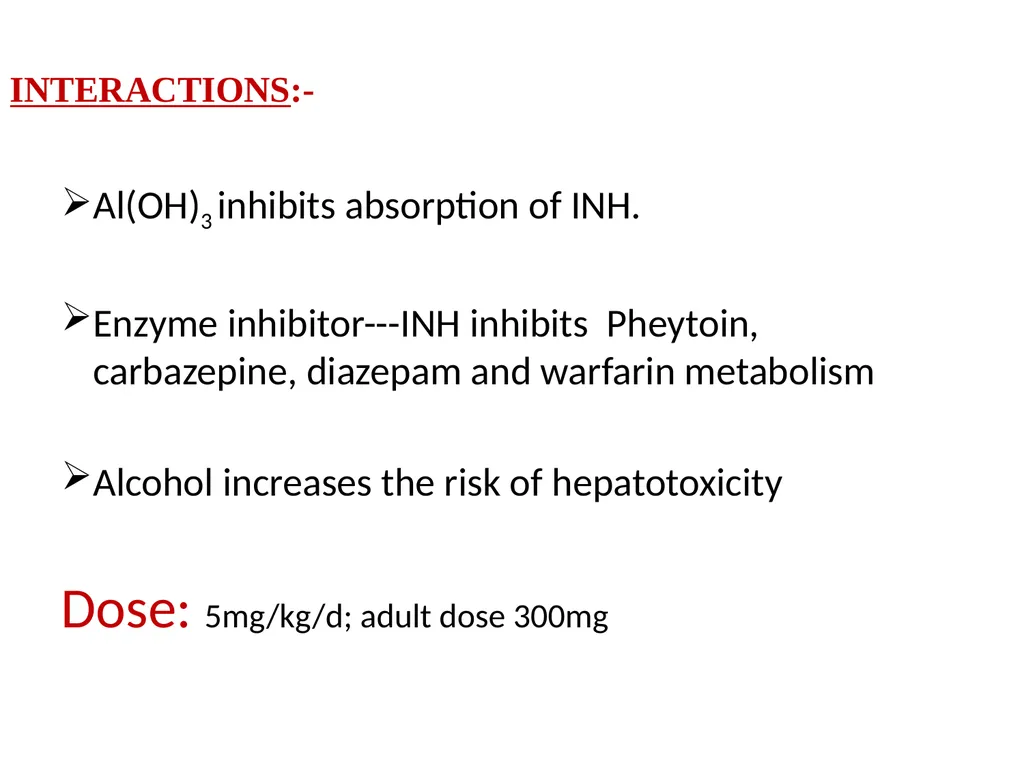
Al(OH)3 inhibits absorption of INH.
Enzyme inhibitor---INH inhibits Pheytoin, carbazepine, diazepam and warfarin metabolism
Alcohol increases the risk of hepatotoxicity
Dose: 5mg/kg/d; adult dose 300mg<br>
16
RIFAMPICIN
bactericidal drug of the rifamycin group
Semisynthetic derived from streptomyces mediterranei
Spectrum: M. tuberculosis, M. leprae, S. aureus, N. meningitidis, H. influenzae, Brucella & Legionella.
as efficacious as INH and better than all other drugs, bactericidal action covers all subpopulations, but acts best on spurters (slowly dividing)
Both extra- and intracellular organisms are affected.
good sterilizing and resistance preventing actions<br>
17
Mechanism of action
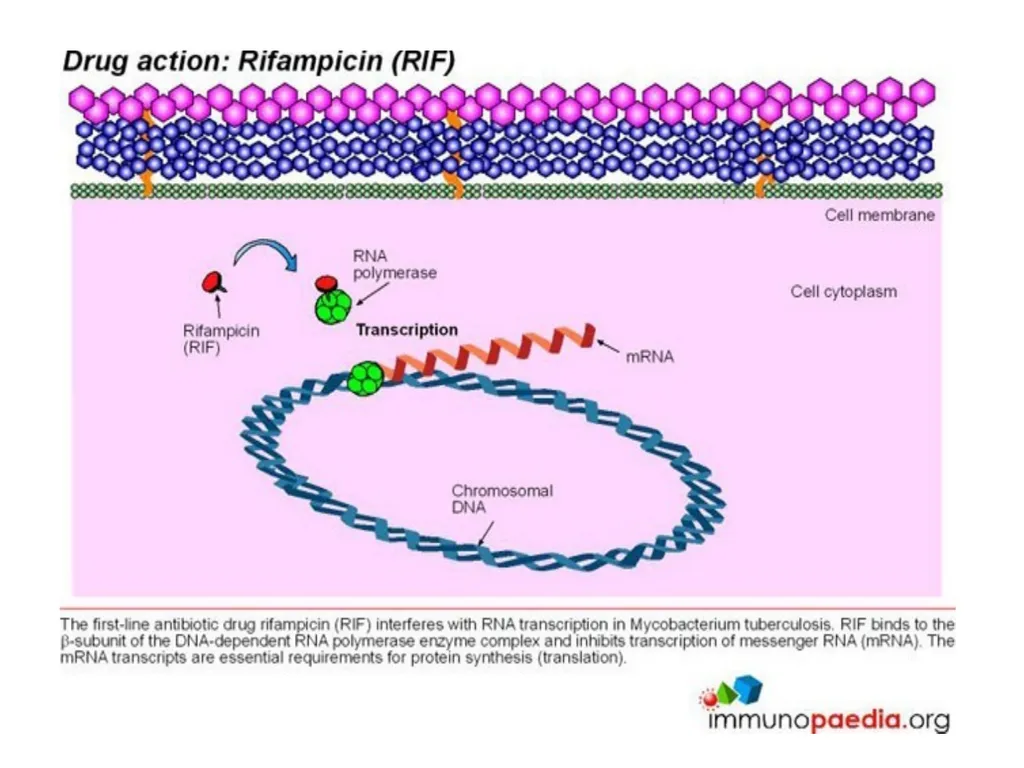
Inhibits DNA-dependent RNA polymerase by binding its beta-subunit, thus preventing transcription to RNA and subsequent translation to proteins.
Mammalian RNA polymerase does not avidly bind rifampin.<br>
18
Resistance –
Incidence of resistant TB is less than 10-7 Mutation in repoB gene ( β subunit of RNA polymerase)
Prevention of resistance :- combination
No cross resistance with other ATT
Pharmacokinetics:-
Completely absorbed when taken orally, food ↓ absorption
Penetrates cavities , caseous mass, placenta & meninges
Metabolized in liver, undergo enterohepatic circulation
t1/2=2—5 hours, Excreted in bile, potent enzyme inducer<br>
19
Adverse effects :
Hepatitis, dose related, jaundice ; is reversible on discontinuation
Respiratory syndrome - breathlessness
Cutaneous syndrome – flushing, pruritus, rash, redness and watering of eyes
Abdominal syndrome - nausea, vomiting, abdominal cramps with or without diarrhoea
Flu syndrome - with chills, fever, headache, arthralgia & malaise
urine and tears----orange-red in color<br>
20
USES:-
TB
Leprosy
Prophylaxis of meningococcal & H.Influenzae meningitis– carrier state
2nd line drug for MRSA, diptheroids & legionella
Combination of doxycycline and rifampicin--- brucellosis<br>
21
INTERACTIONS:-
Rifampicin enzyme-inducer (such as CYP2C9 and CYP3A4) ------ increasing the metabolism of many other drugs
Warfarin
Oral contraceptives
Corticosteroid
Sulfonylureas
Theophylline
HIV protease inhibitor<br>
22
PYRAZINAMIDE (Z)
Pyrazine derivative of nicotinamide
Tuberculocidal, More active in acidic medium
Acts on intracellular TB & inflammatory sites
Highly effective during 1st two months of t/t, ↓ Duration
Good sterilizing activity
MOA:-
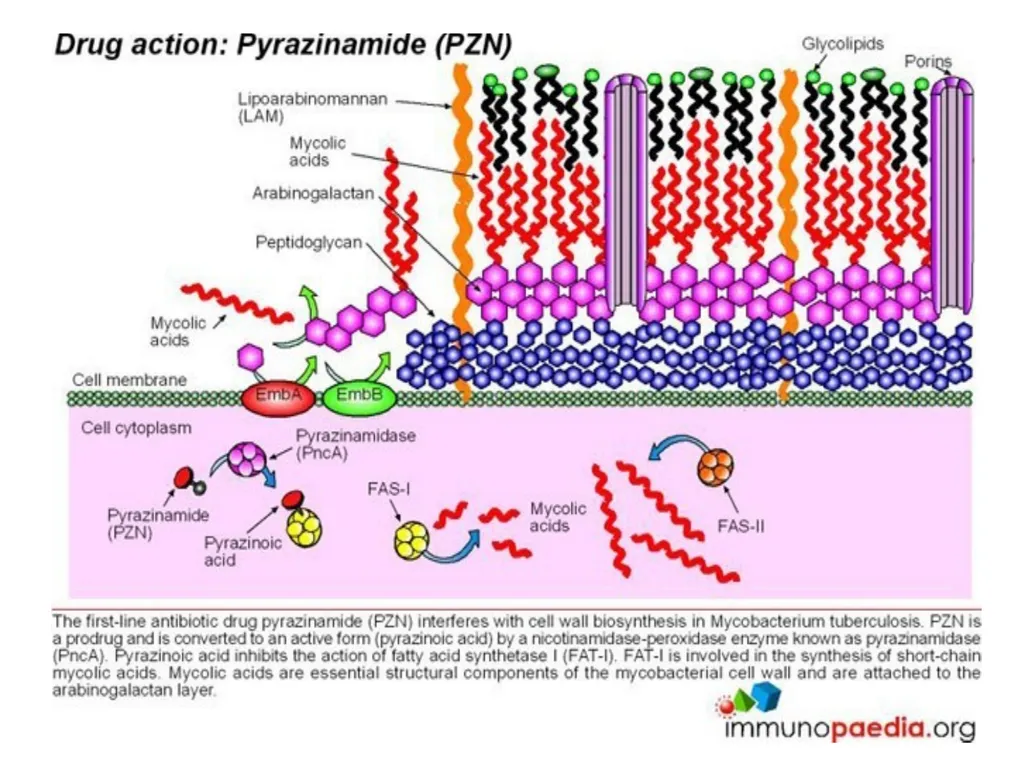
Inhibits mycolic acid synthesis
Disrupts cell membrane & its transport function
Resistance –
Mutation in pncA gene
Rapid development of resistance<br>
23
Pharmacokinetics:-
Completely absorbed when taken orally
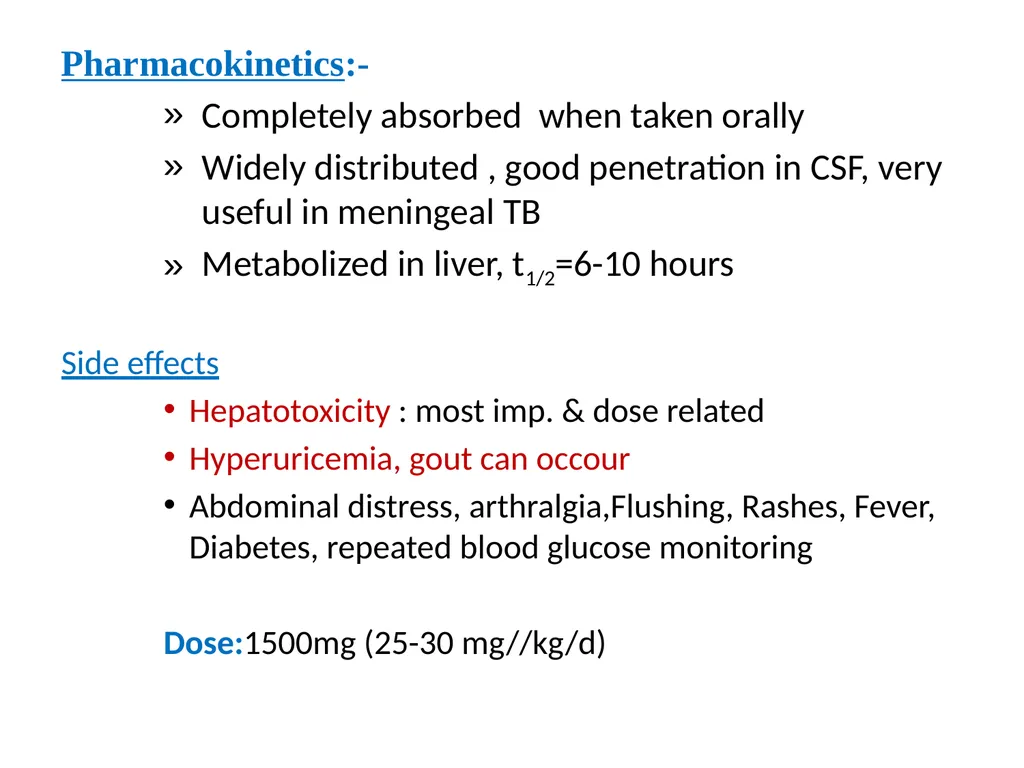
Widely distributed , good penetration in CSF, very useful in meningeal TB
Metabolized in liver, t1/2=6-10 hours
Side effects
Hepatotoxicity : most imp. & dose related
Hyperuricemia, gout can occour
Abdominal distress, arthralgia,Flushing, Rashes, Fever, Diabetes, repeated blood glucose monitoring
Dose:1500mg (25-30 mg//kg/d)<br>
24
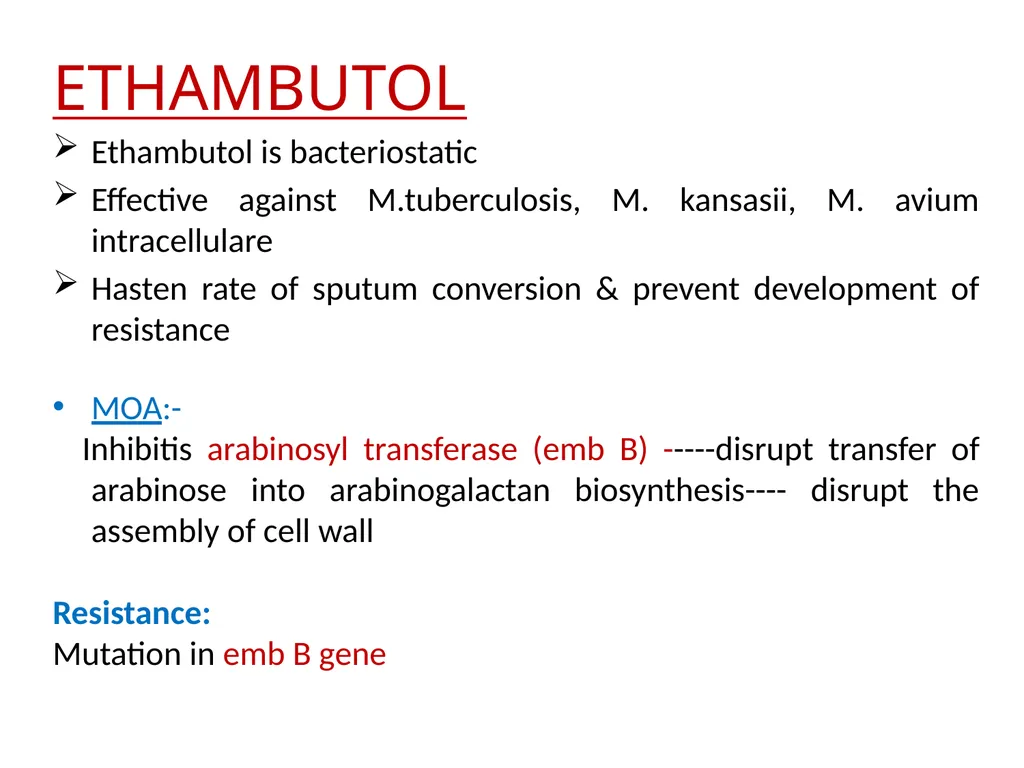
ETHAMBUTOL
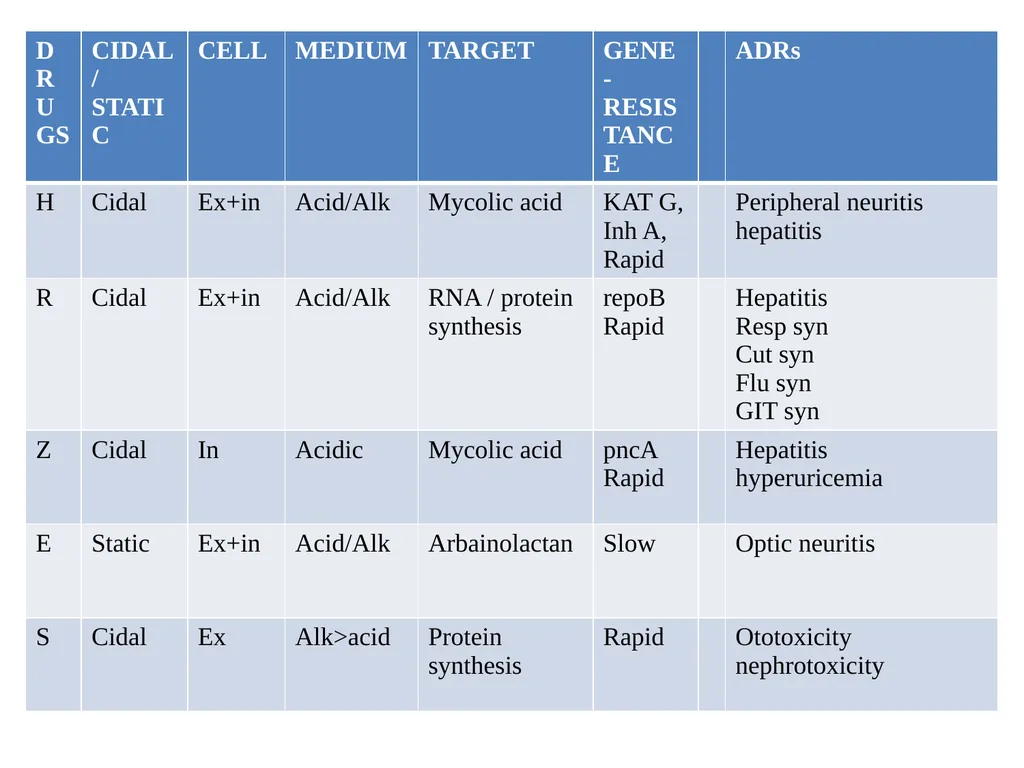
Ethambutol is bacteriostatic
Effective against M.tuberculosis, M. kansasii, M. avium intracellulare
Hasten rate of sputum conversion & prevent development of resistance
MOA:-
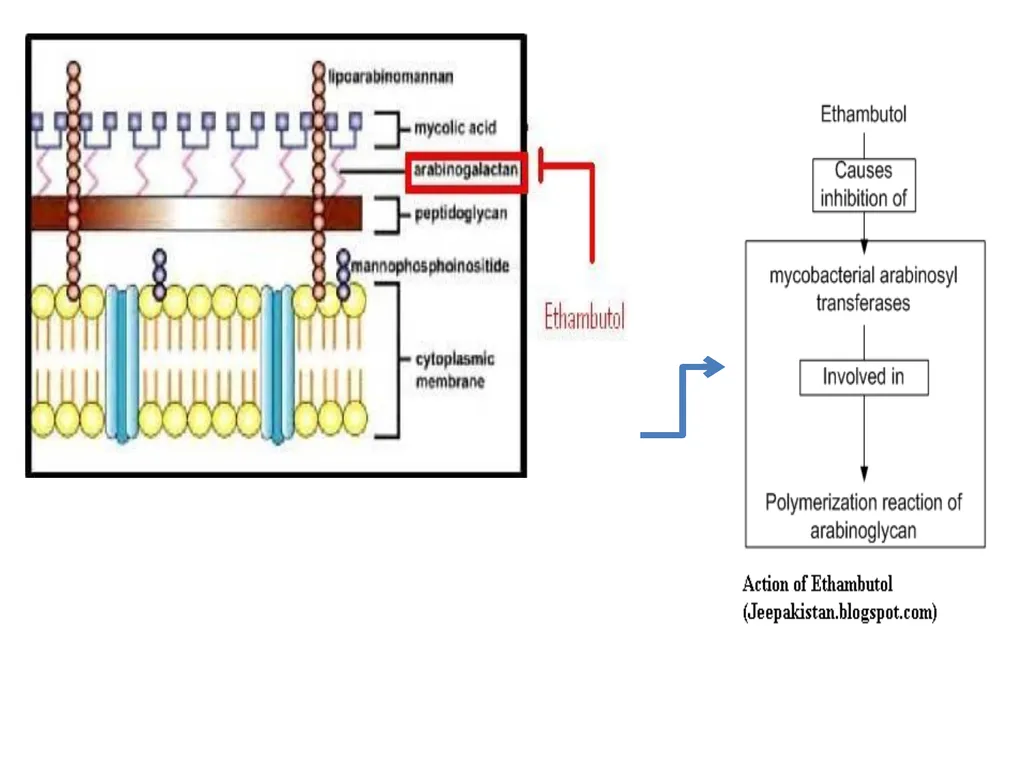
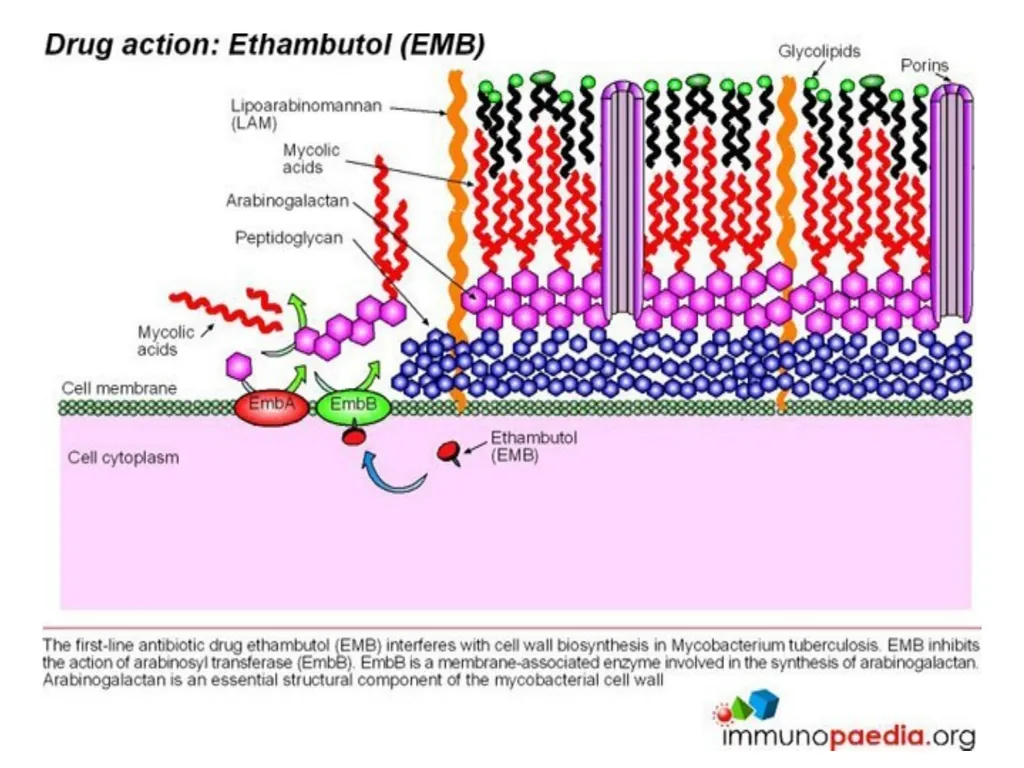
Inhibitis arabinosyl transferase (emb B) -----disrupt transfer of arabinose into arabinogalactan biosynthesis---- disrupt the assembly of cell wall
Resistance:
Mutation in emb B gene<br>
25
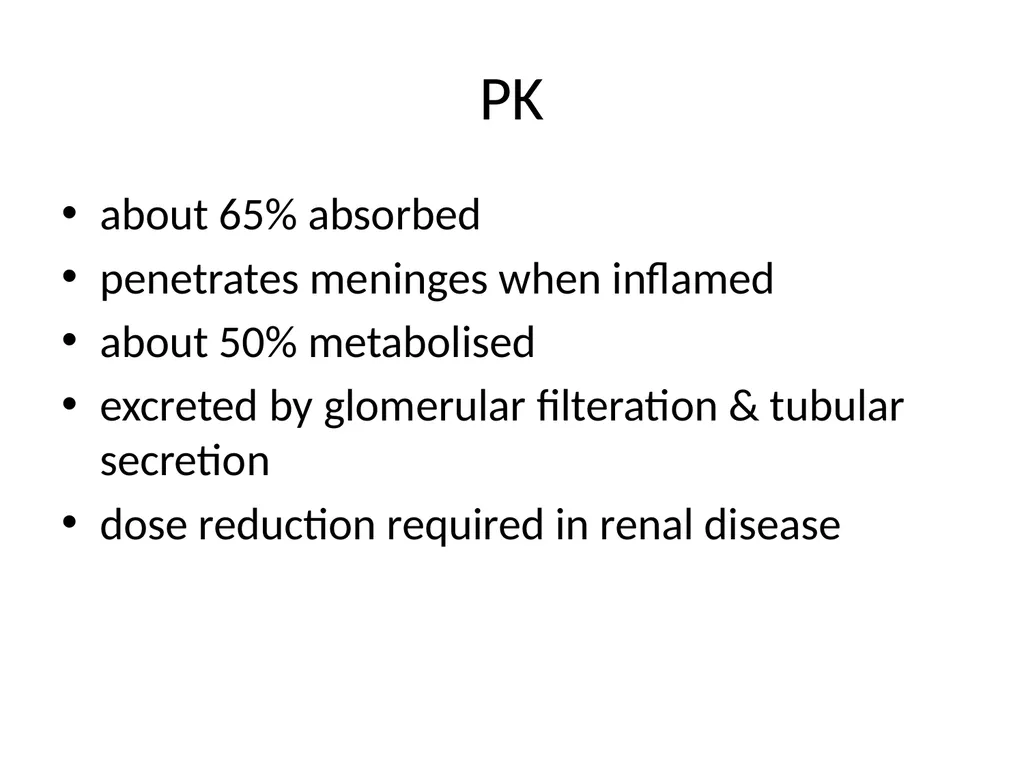
PK about 65% absorbed
penetrates meninges when inflamed
about 50% metabolised
excreted by glomerular filteration & tubular secretion
dose reduction required in renal disease<br>
26
Adverse effects
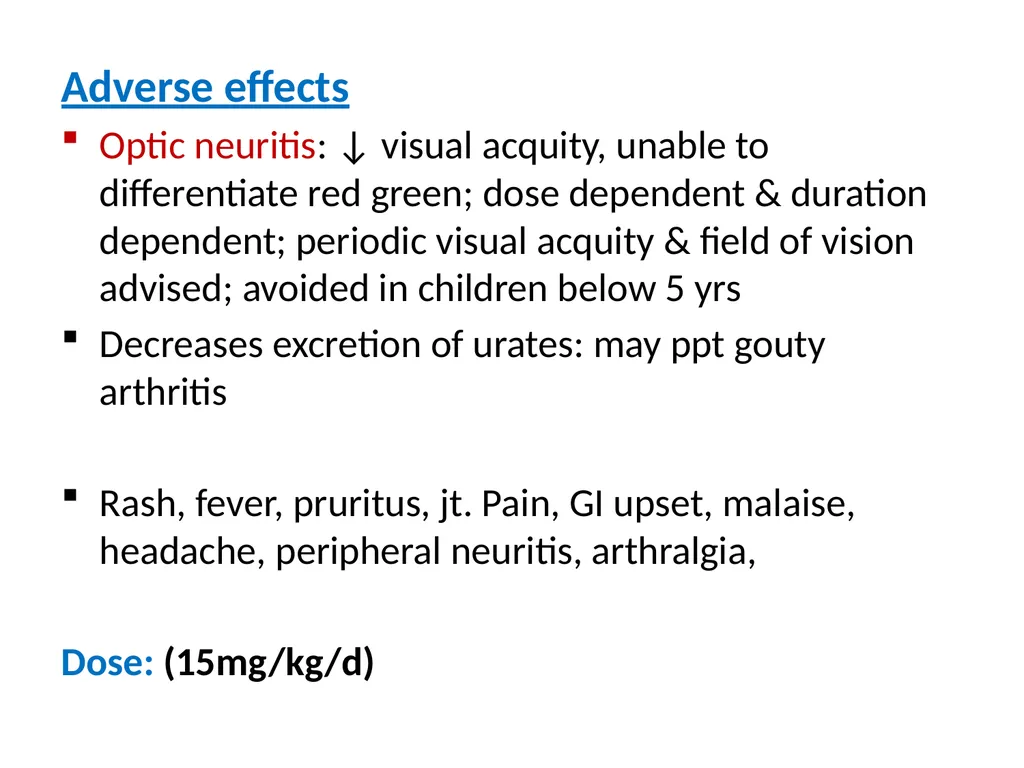
Optic neuritis: ↓ visual acquity, unable to differentiate red green; dose dependent & duration dependent; periodic visual acquity & field of vision advised; avoided in children below 5 yrs
Decreases excretion of urates: may ppt gouty arthritis
Rash, fever, pruritus, jt. Pain, GI upset, malaise, headache, peripheral neuritis, arthralgia,
Dose: (15mg/kg/d)<br>
27
BIOLOGY OF TUBERCULAR INFECTION:-
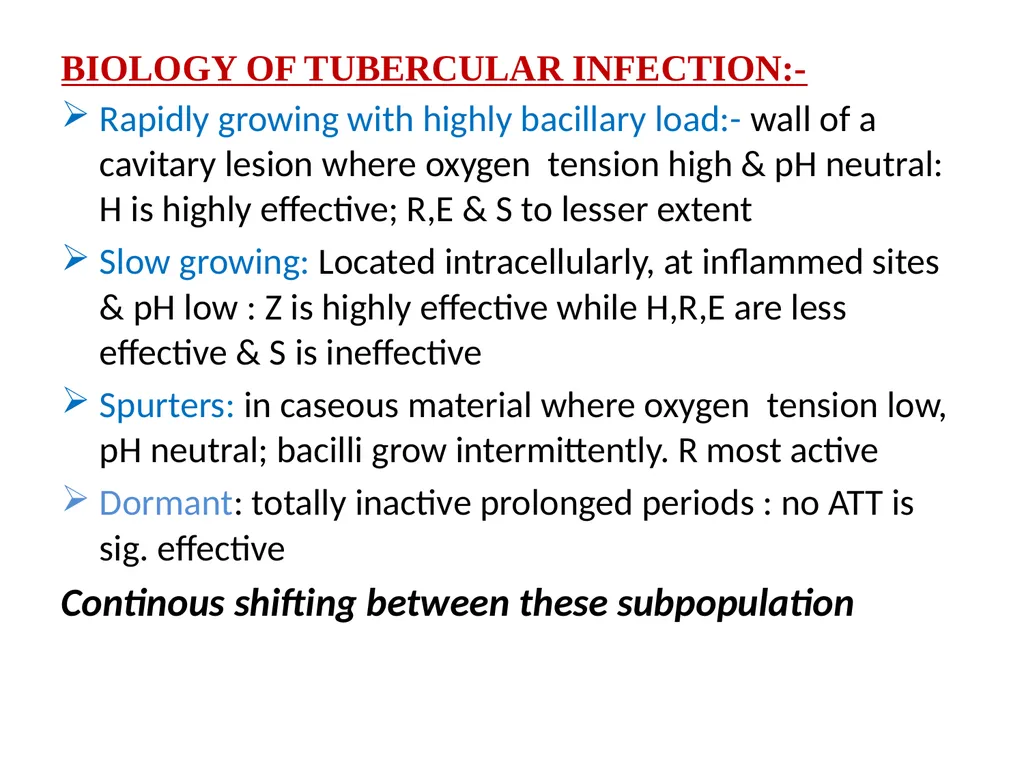
Rapidly growing with highly bacillary load:- wall of a cavitary lesion where oxygen tension high & pH neutral: H is highly effective; R,E & S to lesser extent
Slow growing: Located intracellularly, at inflammed sites & pH low : Z is highly effective while H,R,E are less effective & S is ineffective
Spurters: in caseous material where oxygen tension low, pH neutral; bacilli grow intermittently. R most active
Dormant: totally inactive prolonged periods : no ATT is sig. effective
Continous shifting between these subpopulation<br>