
ATM for Concrete Mix Designs Rich Giessel, ADOT&PF
KB
Published · 34 slides · 0 views

1 / 1

Description
ATM for Concrete Mix Designs Rich Giessel, ADOTPF ATM 530 ATM 530 Concrete Mix Design by Maximum Aggregate Density Scope This method describes the Maximum Aggregate Density Mix Design procedure for determining the optimum proportions for
Related Topics
Share
Embed code
Download this presentation From Below
"ATM for Concrete Mix Designs Rich Giessel, ADOT&PF" is the property of its rightful owner. Permission is granted to download and print the materials on this website for personal, non-commercial use only, and to display it on your personal computer provided you do not modify the materials and that you retain all copyright notices contained in the materials. By downloading content from our website, you accept the terms of this agreement.
Presentation Transcript
01
ATM for Concrete Mix Designs Rich Giessel, ADOT&PF<br>
02
ATM 530 ATM 530 Concrete Mix Design by Maximum Aggregate Density
Scope
This method describes the Maximum Aggregate Density Mix Design procedure for determining the optimum proportions for Portland Cement Concrete both with and without supplemental cementitious materials.<br>
Scope
This method describes the Maximum Aggregate Density Mix Design procedure for determining the optimum proportions for Portland Cement Concrete both with and without supplemental cementitious materials.<br>
03
Significance Concrete proportions, properties and performance depend on the aggregate that forms most of the matrix of this composite material. Many proportioning methods have been used historically to produce concrete. This method utilizes the maximum aggregate density procedure.<br>
04
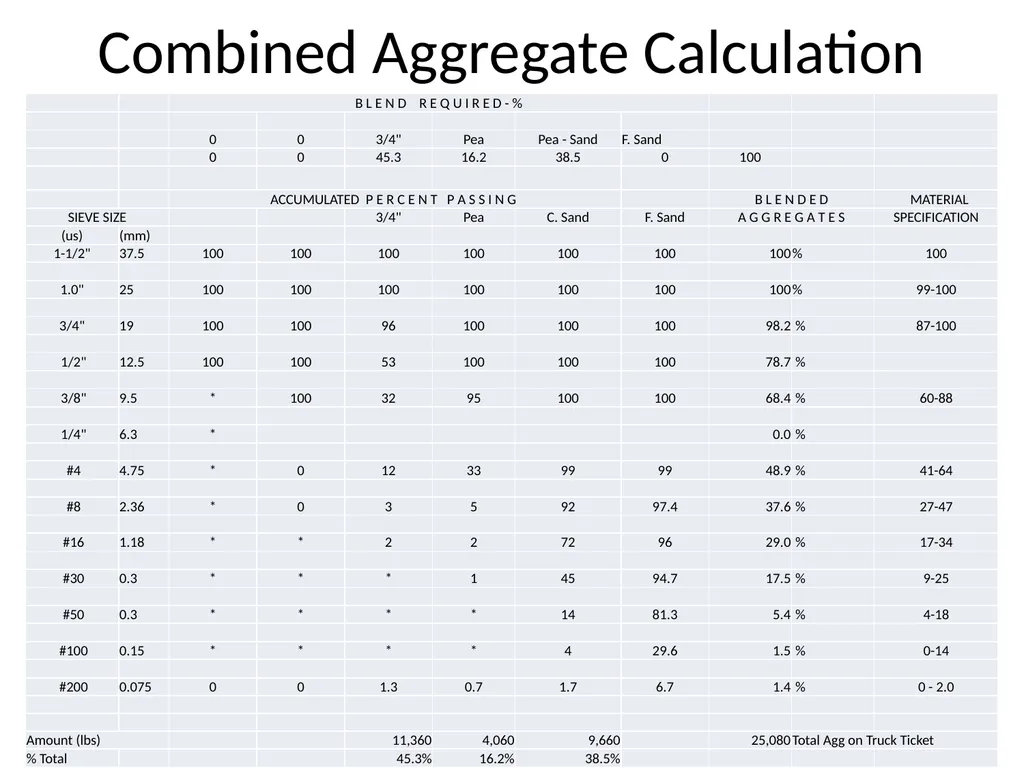
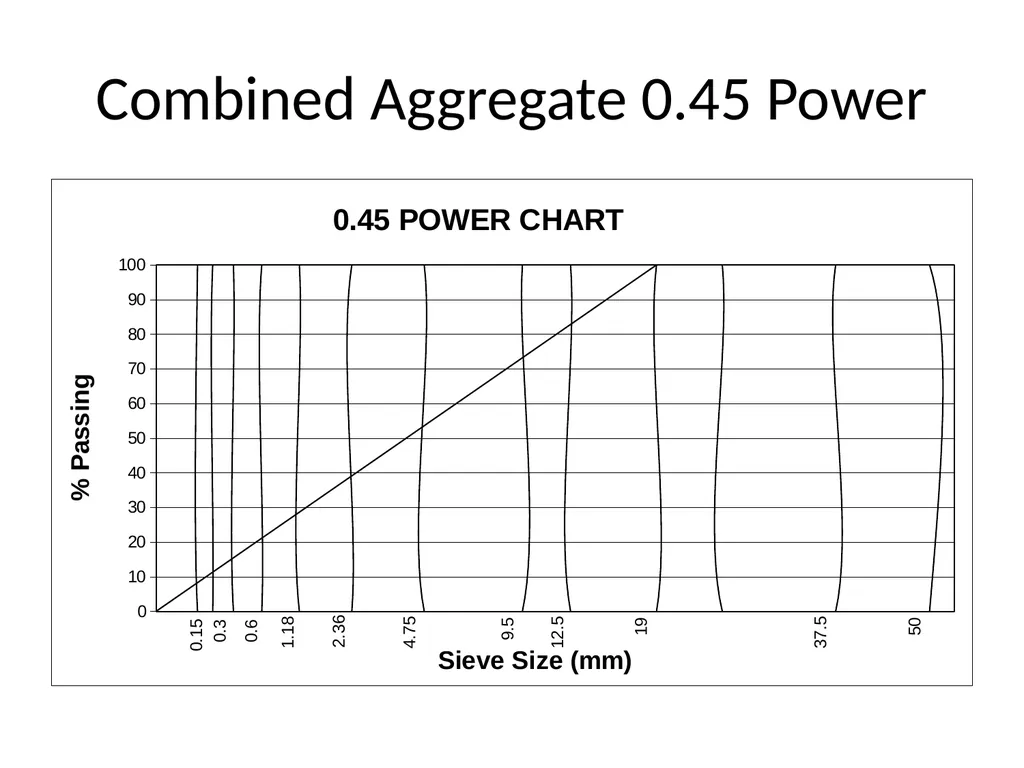
Combined Aggregate Gradation Combined Aggregate gradations that plot near the maximum density line on a gradation curve typically require less cementitious material and produce concretes with lower shrinkage than concretes that use open-graded aggregate mixtures.<br>
05
Critical Aggregate Properties Aggregate properties important to concrete mix design include; absorption, apparent, bulk SSD, and bulk specific gravity of each fine & coarse aggregate. Sodium Sulfate Soundness or Freeze/Thaw durability, Deleterious particles, Aggregate hardness (for pavements)
ASR is almost never a problem in Alaska<br>
ASR is almost never a problem in Alaska<br>
06
Cementitious Materials Cementitious materials acceptable for concrete shall include; Portland Cement, Class C and F Fly Ash, Ground, Granulated Blast Furnace Slag (GGBF), Silica Fume, and Meta-Kaolin.<br>
07
Admixtures Admixture materials acceptable for concrete shall include, water-reducers, surfactants, viscosity modifiers, air-entrainment, crack reducers, shrinkage reducers, accelerators, retarders, water proofers, surface sealers and hardeners.<br>
08
Fibers Fiber materials are acceptable for reinforcement, shrinkage and crack control in concrete and shall include; steel, stainless steel, synthetic, and alkali-resistant cellulose fibers.<br>
09
Internal Curing Internal curing materials include; expanded shale clay or slate fine aggregates, alkali-resistant cellulose, super-absorbent polymers, and naturally occurring aggregates of volcanic origin meeting ASTM C1761.<br>
10
Apparatus Ovens and hot plates thermostatically controlled to maintain the various required temperatures within ± 3°C (5°F).
Fresh Concrete Testing equipment for Slump, Air, Unit Weight, and Temperature, AASHTO T 119, T 152, T 121, and T 309 respectively.
Water bath with temperature control sensitive to ± 0.2°C (0.5°F) at 23°C (73.4°F) per AASHTO T 85.
Balance or scale: Capacity sufficient for the principal sample mass, readable to 0.1 percent or 0.1 g of the total sample mass and meeting the requirements of AASHTO M 231.
Sieve shaker meeting the requirements of WAQTC FOP for AASHTO T 27/T 11.
Specimen molds, either 4x8” or 6x12” with lid that conform to ASTM C470.
Compression Testing machine meeting the requirements of ASTM C39 and referenced documents.
Surface Resistivity testing apparatus meeting the requirements of AASHTO TP 95.
Restrained Shrinkage testing apparatus meeting the requirements of ASTM C1581.<br>
11
Proportioning Concrete Determine the volume of voids in the combined SSD aggregate.
Determine required entrained air content for exposure conditions and maximum aggregate size.
Determine if fiber reinforcement will be required.
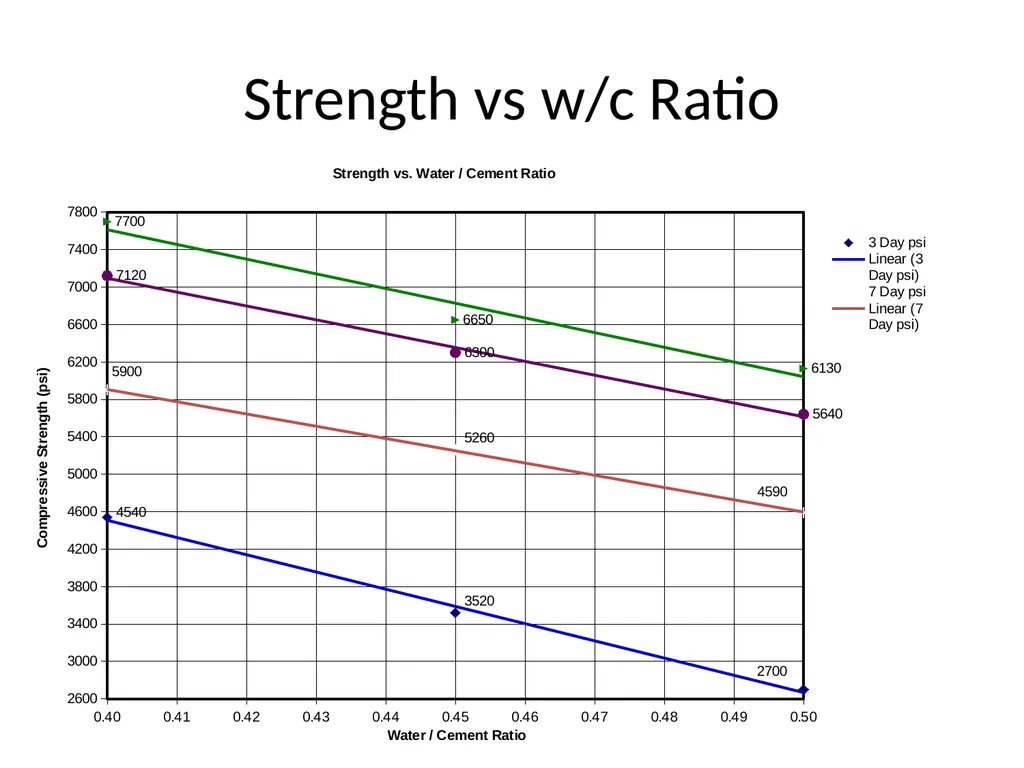
Select w/c ratio based on compressive strength requirements.
Calculate volume of paste required to fill remaining voids and provide desired workability.
Calculate admixture volumes required to produce required entrained-air content and workability.<br>
12
Trial Batches, Minimum of 3 or 5? A minimum of three trial batches for no-air concrete and five trial batches for air-entrained will be required to establish w/c vs. strength and air vs. strength relationships. Typically it is best to begin with no-air concrete to establish w/c vs. strength relationship. If done well and the middle no-air batch falls near the optimum w/c ratio then that batch may also be used in establishing the air vs. strength relationship provided the additional batches are made at the same w/c ratio. The two subsequent air-entrained batches should be made near the upper and lower limits of the specified air content.<br>
13
First Trial Batch Prepare first trial batch and check for workability, under-sanded or over-sanded, entrained-air content.
This may require multiple “First” trial batches<br>
This may require multiple “First” trial batches<br>
14
Subsequent Trial Batches If first trial batch mix parameters are satisfactory then proceed with two additional trial batches with same volume of paste but higher and lower cement contents (lower and higher w/c ratios respectively)
Make sure high w/c mix falls below minimum compressive strength and lower w/c ratio exceed f’cr.
If the initial trial batch is not near the middle of w/c range then prepare a fourth batch near the optimum w/c ratio.
For air-entrained concrete you will need at least two additional trial batches at optimum w/c ratio to produce the % Air vs. Strength curve.<br>
15
Fresh Concrete Properties Test for:
Temperature
Slump (flow if SCC mix)
Wet unit weight
Entrained-air content<br>
Temperature
Slump (flow if SCC mix)
Wet unit weight
Entrained-air content<br>
16
Preparing Concrete Test Specimens for High Performance Concrete Cast one set of restrained shrinkage specimens for each trial batch per ASTM C1581. Measure and record all data for each set of specimens and include it in mix design report.
Cast 15 test cylinders (4x8)<br>
Cast 15 test cylinders (4x8)<br>
17
Test Cylinders Cast 15 each 4x8” or 10 each 6x12” test cylinders for compressive strength testing of each trial batch.
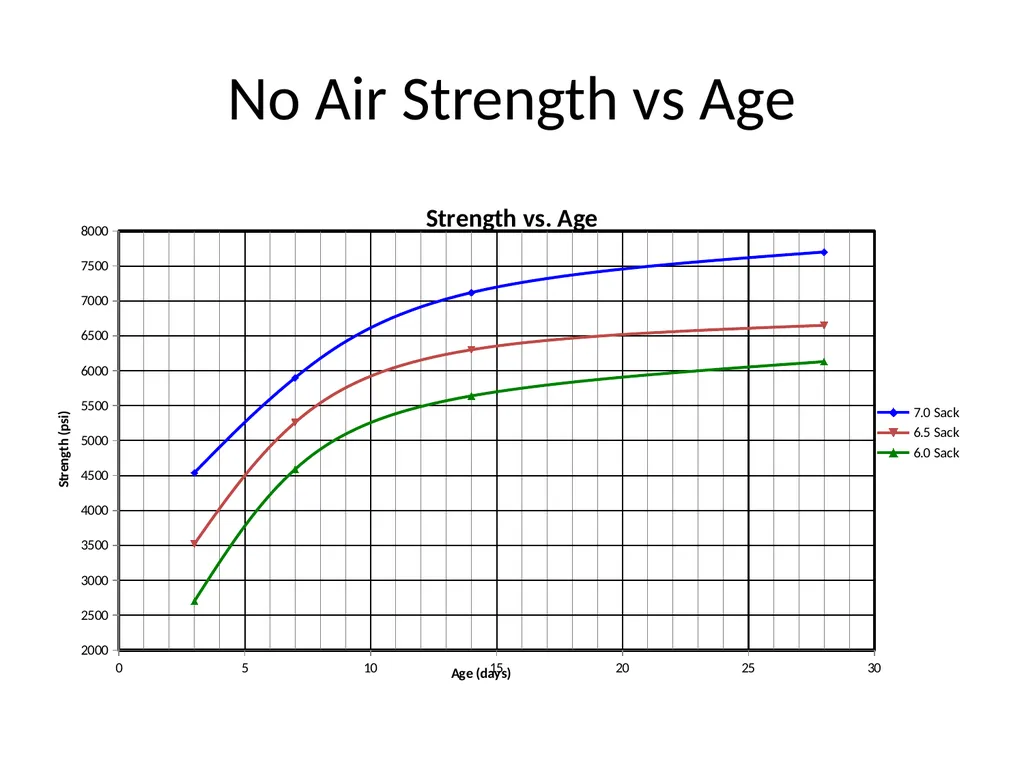
For Type I/II cement break 3each 4x8” or 2 each 6x12” specimens at 3, 7, 14, 28 days and hold three specimens for possible break at a later age. (Note: High fly ash content concretes may continue to gain significant strength for several years. Additional test specimens should be cast for these mixes as compressive strength at 56 days, 90 days, 1 year and 2 years may be significant.)
For Concrete made with Type III cement break 3each 4x8” or 2 each 6x12” specimens at 1,2, 3, 7 days and hold three specimens for possible break at a later age.<br>
18
Curing of Specimens Cure compressive and flexural specimens in fog room or water bath as specified in ASTM C511<br>
19
Hardened Concrete Properties Remove test specimens from molds 24 ± 4 hours after casting. Determine hardened unit weight of all specimens by soaking test specimens in 230 C water for 15 minutes then weighing in water followed by weighing in air at SSD.
Immediately prior to compression testing determine the Resistivity of each specimen by AASHTO TP 95. Record resistivity for each specimen, average each set of readings and include data in mix design report.
When flexural strength is required cast three beams in accordance with ASTM C78. Test at the required age and include data in mix design report.<br>
20
Graphing Test Results Graph the 28 day compressive strength vs. w/c ratio for the no-air trial batches.
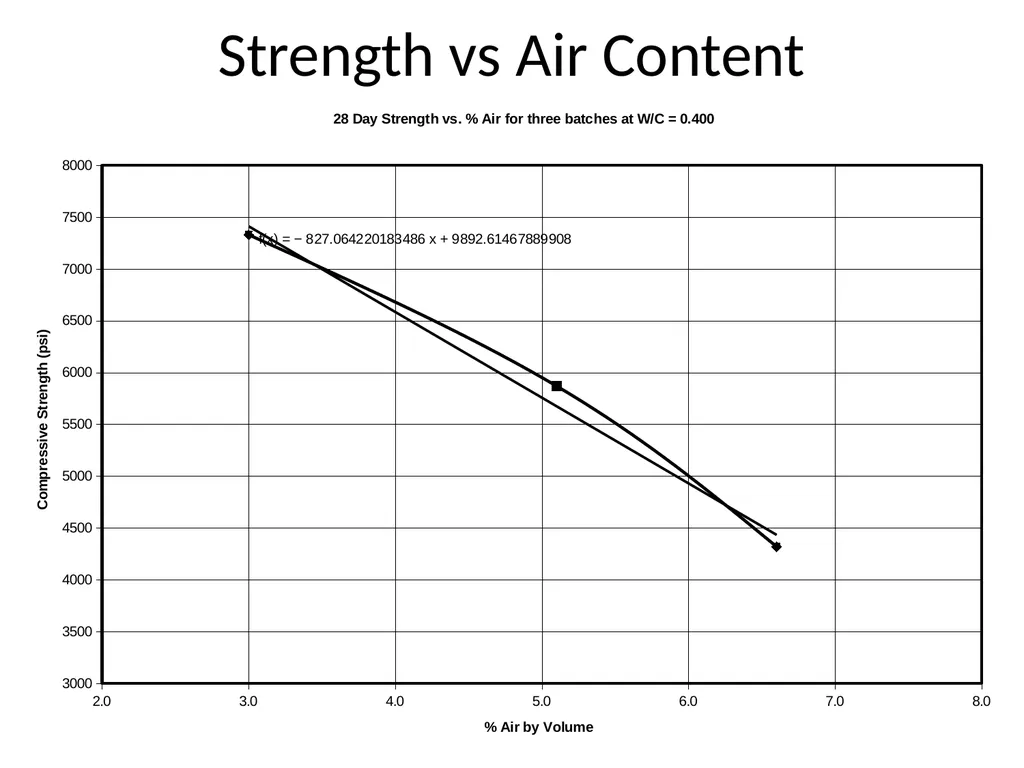
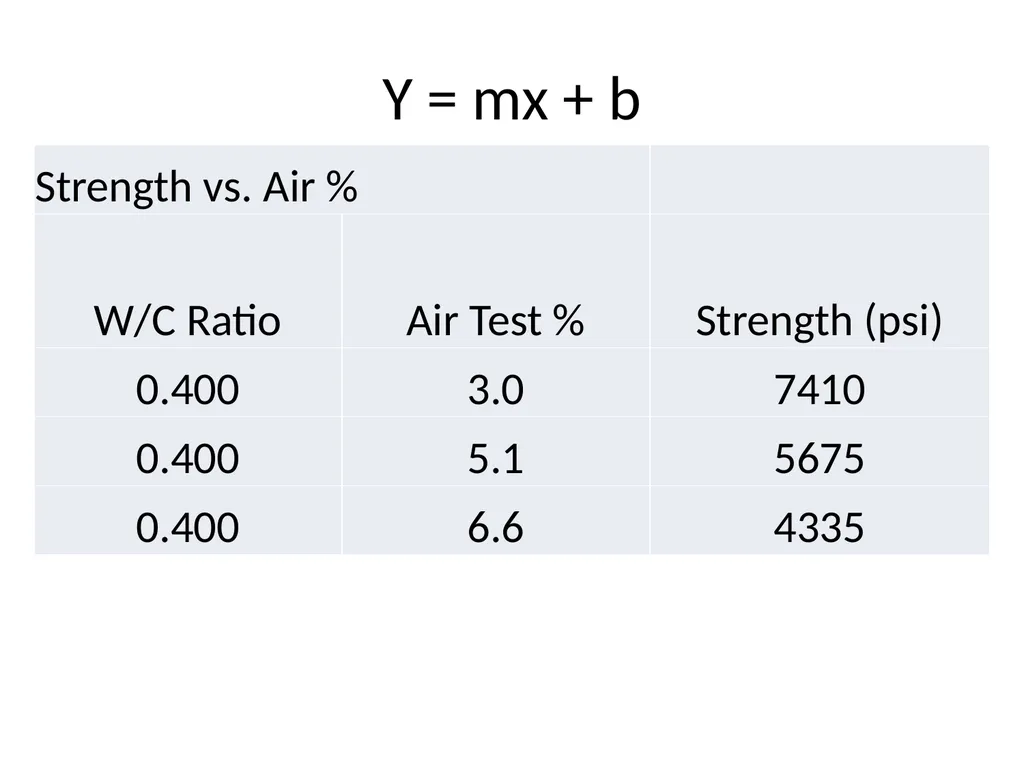
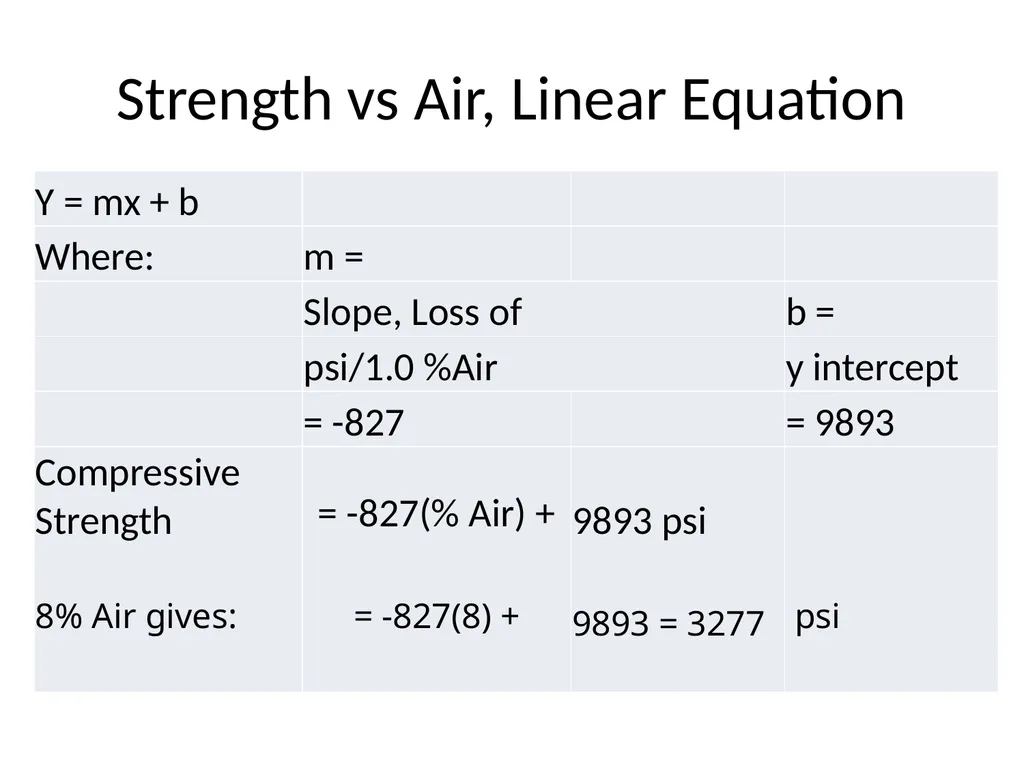
Graph the 28 day compressive strength vs. air content and provide the linear equation for the data.
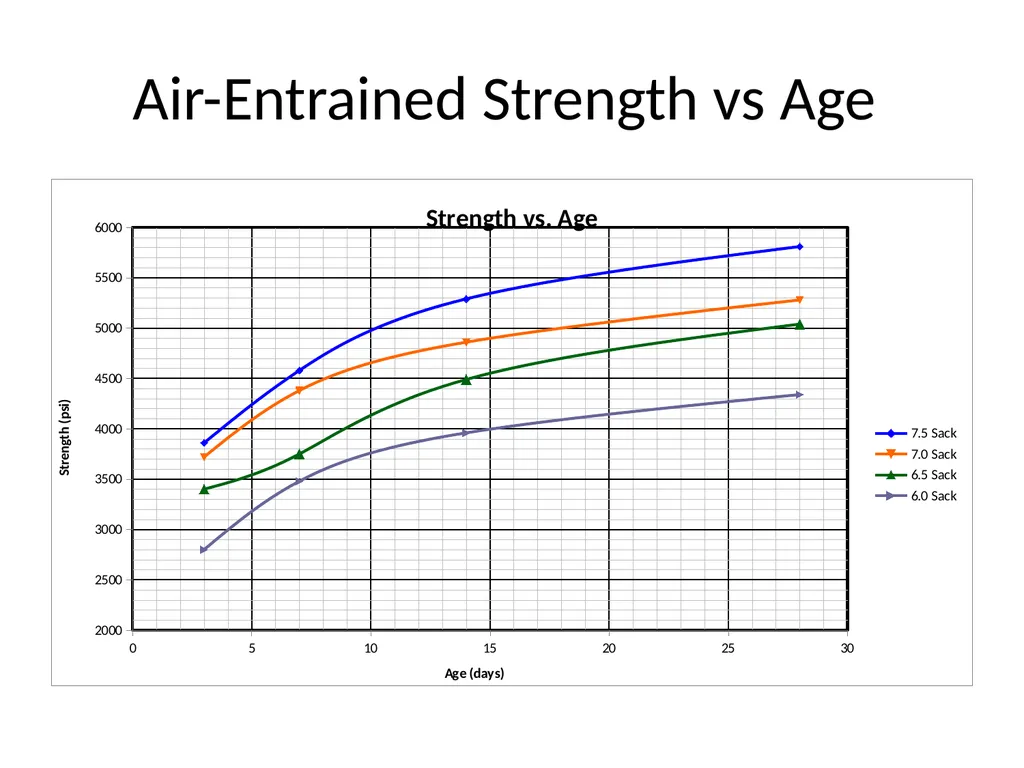
Graph the age vs. compressive strength for the trial batch that falls nearest to the optimum mix design.<br>
Graph the 28 day compressive strength vs. air content and provide the linear equation for the data.
Graph the age vs. compressive strength for the trial batch that falls nearest to the optimum mix design.<br>
21
Determine Optimum w/c Ratio From 28 day compressive strength vs. air content equation compute loss of strength from no-air test values to optimum air content.
From the graph of compressive strength vs. w/c ratio adjusted by compressive strength loss due to optimum air content, select w/c ratio that will give mix with required f’cr. This will provide the proportions for a Proof Batch at the selected mix design proportions. (DOT&PF typically requires materials for a proof batch to verify concrete mixes made from material without a previous history.)<br>
From the graph of compressive strength vs. w/c ratio adjusted by compressive strength loss due to optimum air content, select w/c ratio that will give mix with required f’cr. This will provide the proportions for a Proof Batch at the selected mix design proportions. (DOT&PF typically requires materials for a proof batch to verify concrete mixes made from material without a previous history.)<br>
22
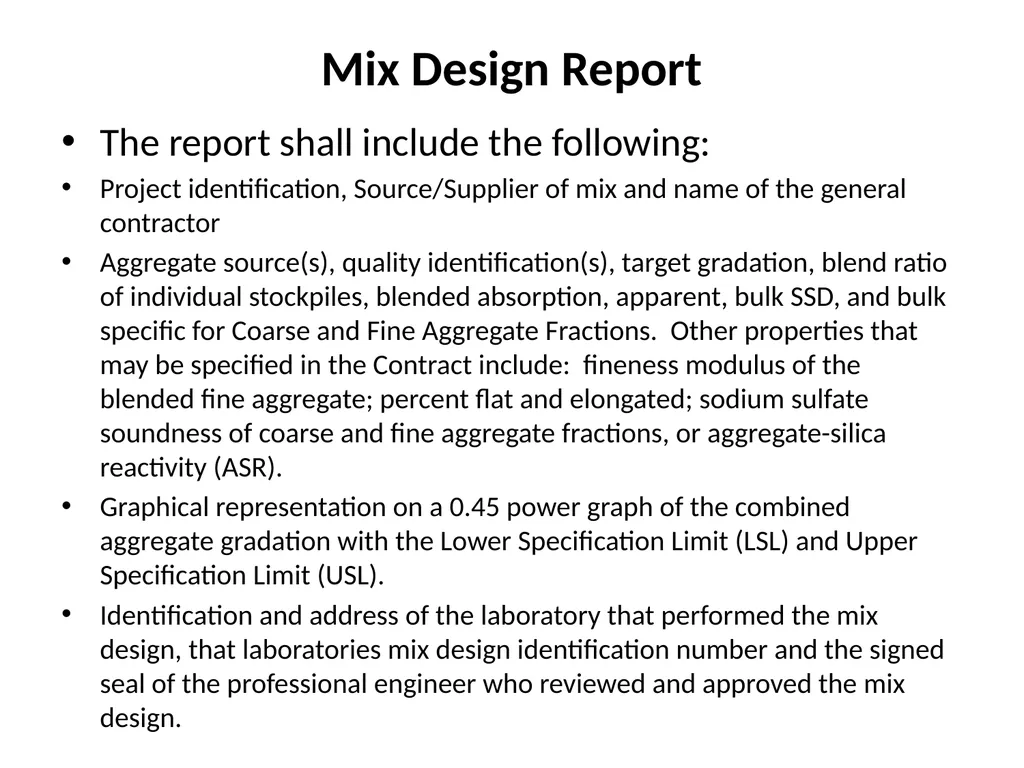
Mix Design Report The report shall include the following:
Project identification, Source/Supplier of mix and name of the general contractor
Aggregate source(s), quality identification(s), target gradation, blend ratio of individual stockpiles, blended absorption, apparent, bulk SSD, and bulk specific for Coarse and Fine Aggregate Fractions. Other properties that may be specified in the Contract include: fineness modulus of the blended fine aggregate; percent flat and elongated; sodium sulfate soundness of coarse and fine aggregate fractions, or aggregate-silica reactivity (ASR).
Graphical representation on a 0.45 power graph of the combined aggregate gradation with the Lower Specification Limit (LSL) and Upper Specification Limit (USL).
Identification and address of the laboratory that performed the mix design, that laboratories mix design identification number and the signed seal of the professional engineer who reviewed and approved the mix design.<br>
23
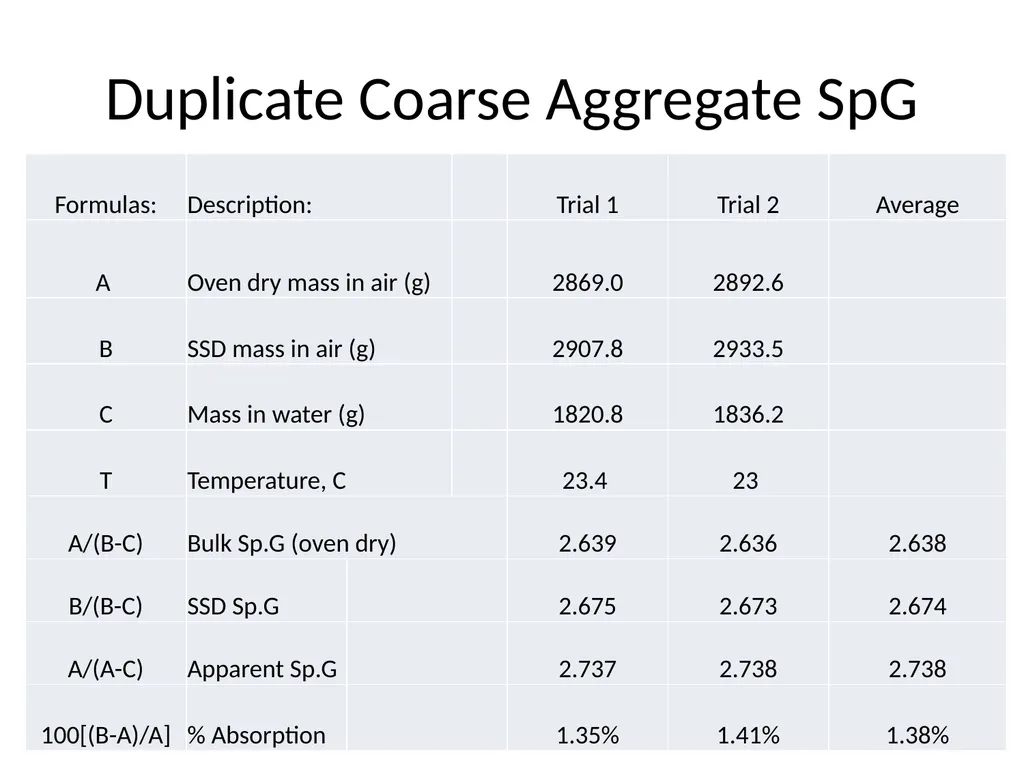
Duplicate Coarse Aggregate SpG<br>
24
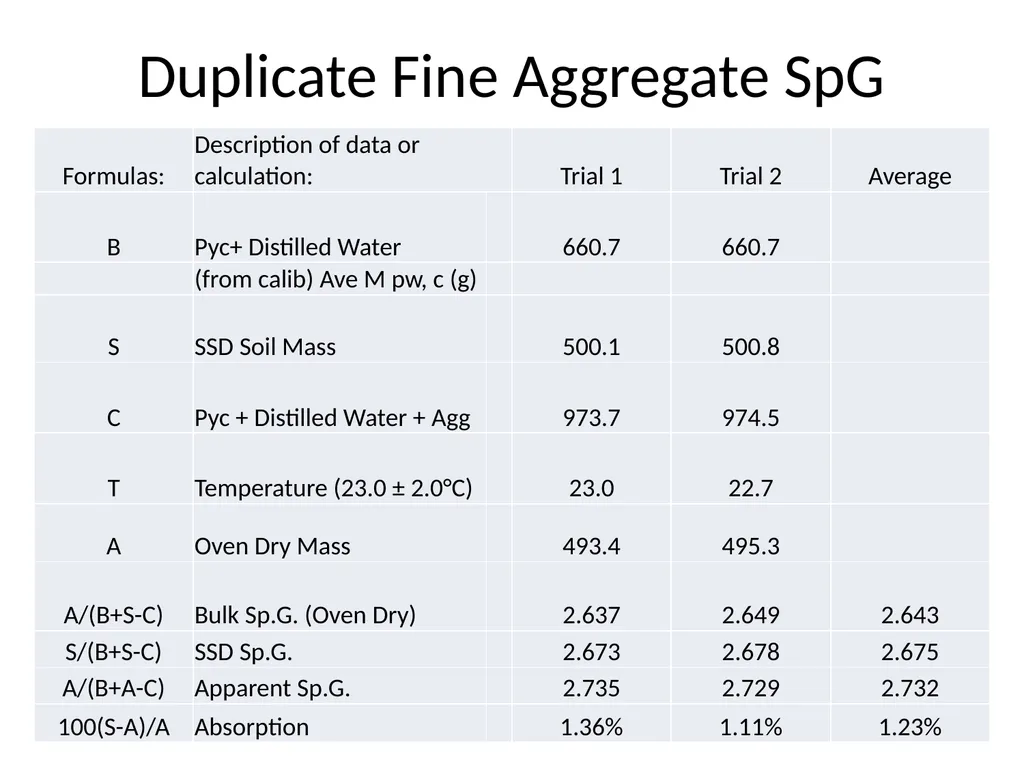
Duplicate Fine Aggregate SpG<br>
25
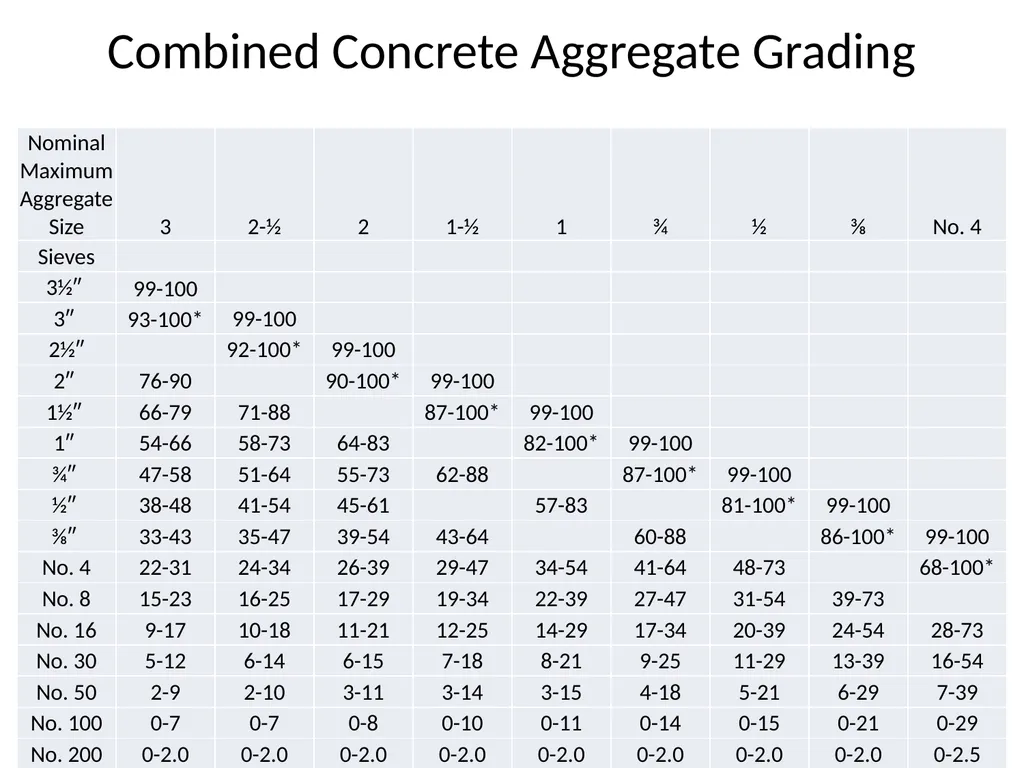
Combined Concrete Aggregate Grading<br>
26
Combined Aggregate Calculation<br>
27
Combined Aggregate 0.45 Power<br>
28
Strength vs w/c Ratio<br>
29
No Air Strength vs Age<br>
30
Strength vs Air Content<br>
31
Y = mx + b<br>
32
Strength vs Air, Linear Equation<br>
33
Air-Entrained Strength vs Age<br>
34
Thank You<br>