
AUBURN HOSPITAL AUDIT PRESENTATION MAY 2025 Dr R
TF
Published · 37 slides · 0 views

1 / 1


Description
AUBURN HOSPITAL AUDIT PRESENTATION MAY 2025 Dr R Veraiahgari Dr A Shvartsbart Supervised by Dr Melissa Chin INTRODUCTION Sip Til Send is a district-wide fluid fasting protocol for patients undergoing elective and emergency surgery Aim
Related Topics
Share
Embed code
Download this presentation From Below
"AUBURN HOSPITAL AUDIT PRESENTATION MAY 2025 Dr R" is the property of its rightful owner. Permission is granted to download and print the materials on this website for personal, non-commercial use only, and to display it on your personal computer provided you do not modify the materials and that you retain all copyright notices contained in the materials. By downloading content from our website, you accept the terms of this agreement.
Presentation Transcript
01
AUBURN HOSPITAL AUDIT PRESENTATION MAY 2025
Dr R Veraiahgari & Dr A Shvartsbart
Supervised by Dr Melissa Chin<br>
Dr R Veraiahgari & Dr A Shvartsbart
Supervised by Dr Melissa Chin<br>
02
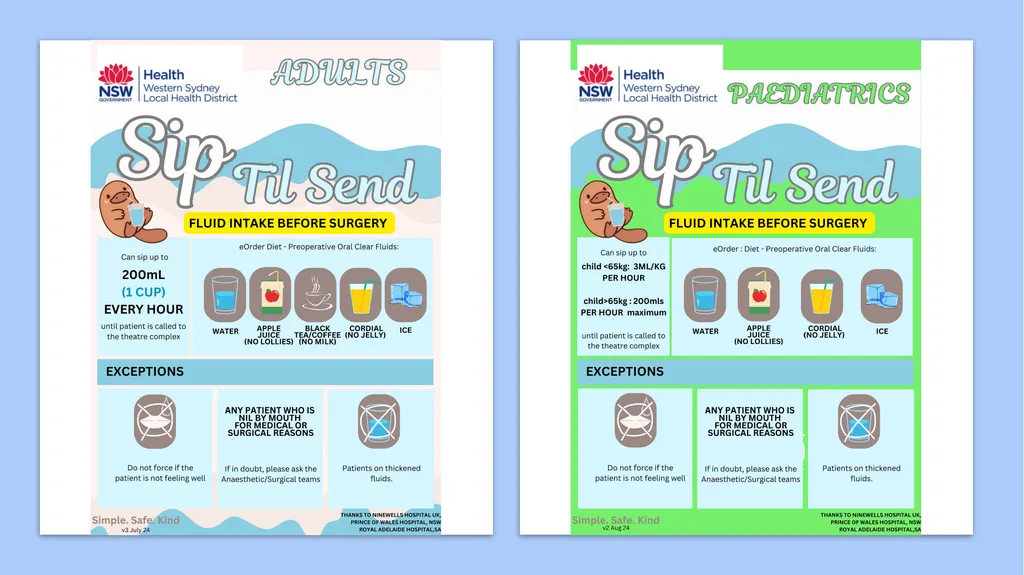
INTRODUCTION ‘Sip Til Send’ is a district-wide fluid fasting protocol for patients undergoing elective and emergency surgery
Aim to understand staff compliance with ‘Sip Til Send’ guidelines at Auburn Hospital
Audit components
Retrospective data audit
Survey
Talk components
Summary of audit results & recommendations
Education<br>
Aim to understand staff compliance with ‘Sip Til Send’ guidelines at Auburn Hospital
Audit components
Retrospective data audit
Survey
Talk components
Summary of audit results & recommendations
Education<br>
03
AUDIT<br>
04
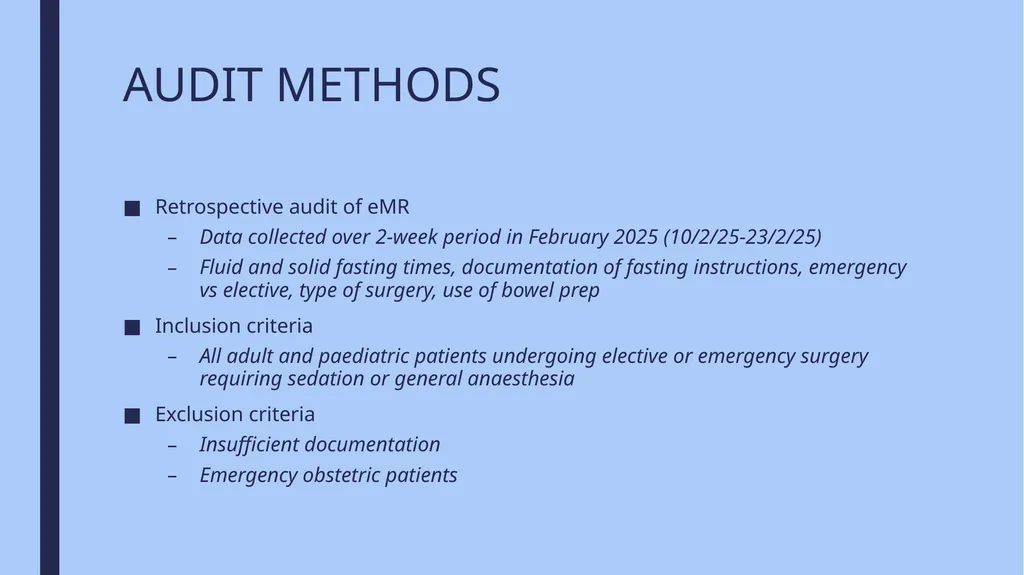
AUDIT METHODS Retrospective audit of eMR
Data collected over 2-week period in February 2025 (10/2/25-23/2/25)
Fluid and solid fasting times, documentation of fasting instructions, emergency vs elective, type of surgery, use of bowel prep
Inclusion criteria
All adult and paediatric patients undergoing elective or emergency surgery requiring sedation or general anaesthesia
Exclusion criteria
Insufficient documentation
Emergency obstetric patients<br>
05
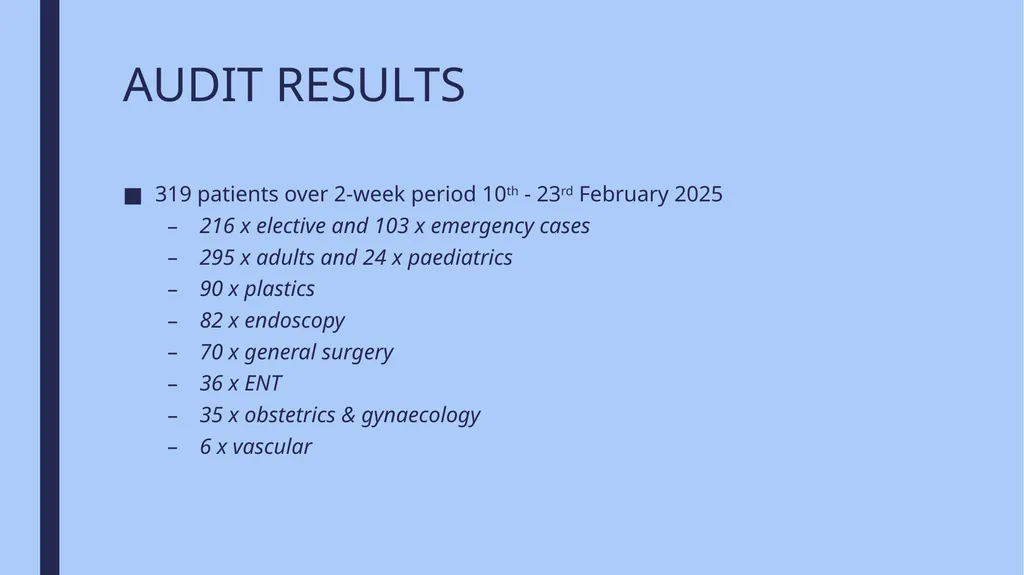
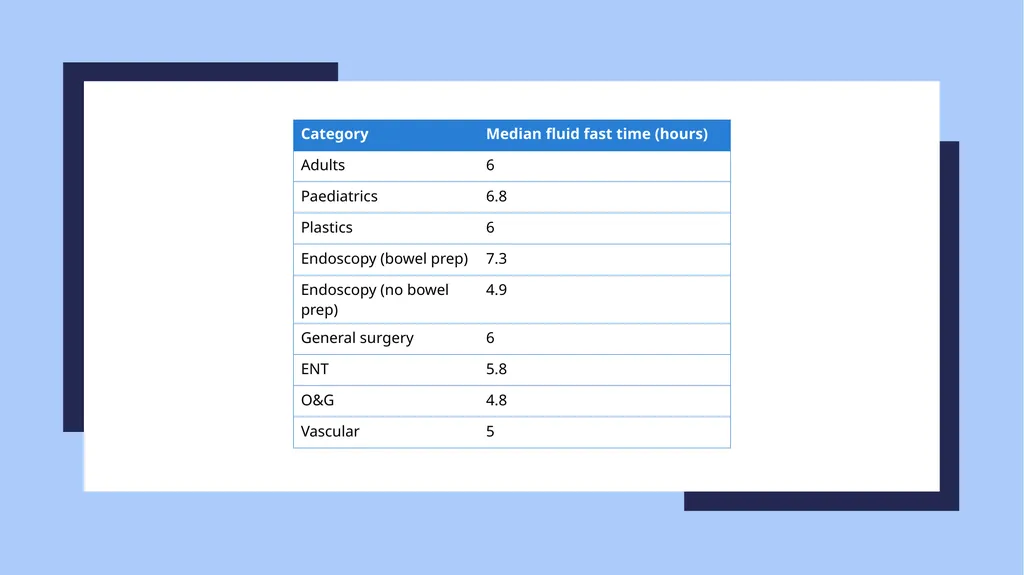
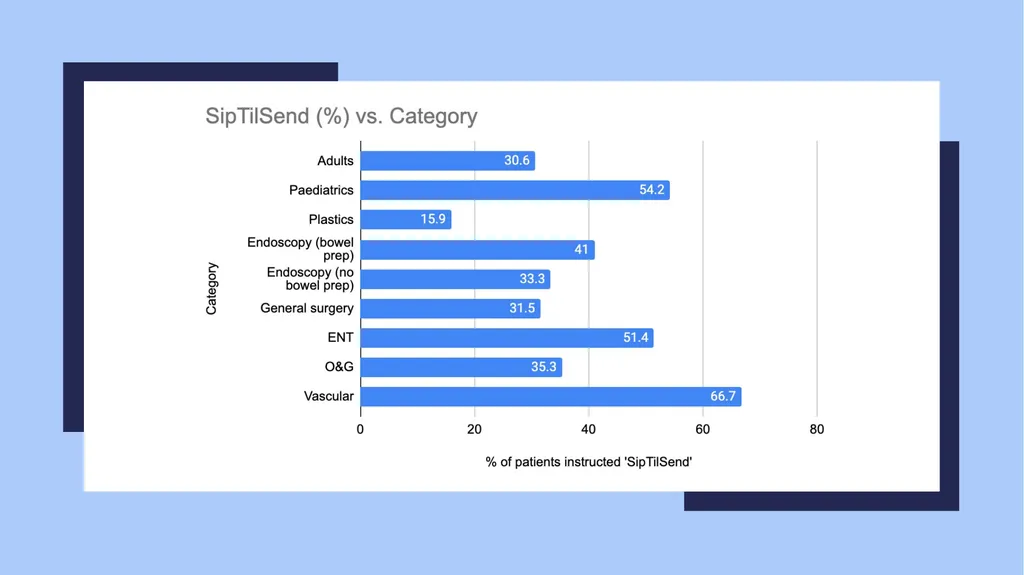
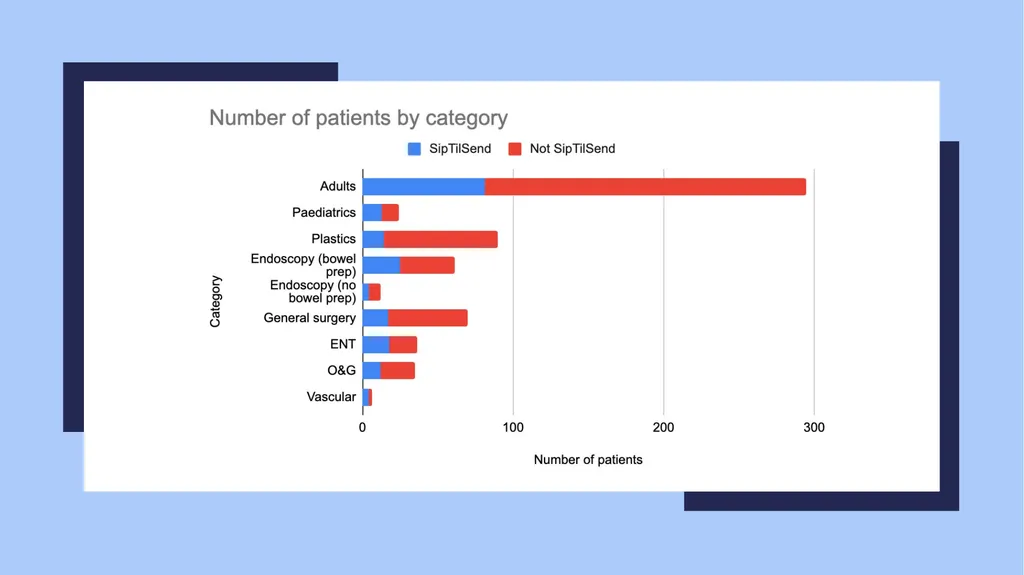
AUDIT RESULTS 319 patients over 2-week period 10th - 23rd February 2025
216 x elective and 103 x emergency cases
295 x adults and 24 x paediatrics
90 x plastics
82 x endoscopy
70 x general surgery
36 x ENT
35 x obstetrics & gynaecology
6 x vascular<br>
216 x elective and 103 x emergency cases
295 x adults and 24 x paediatrics
90 x plastics
82 x endoscopy
70 x general surgery
36 x ENT
35 x obstetrics & gynaecology
6 x vascular<br>
06
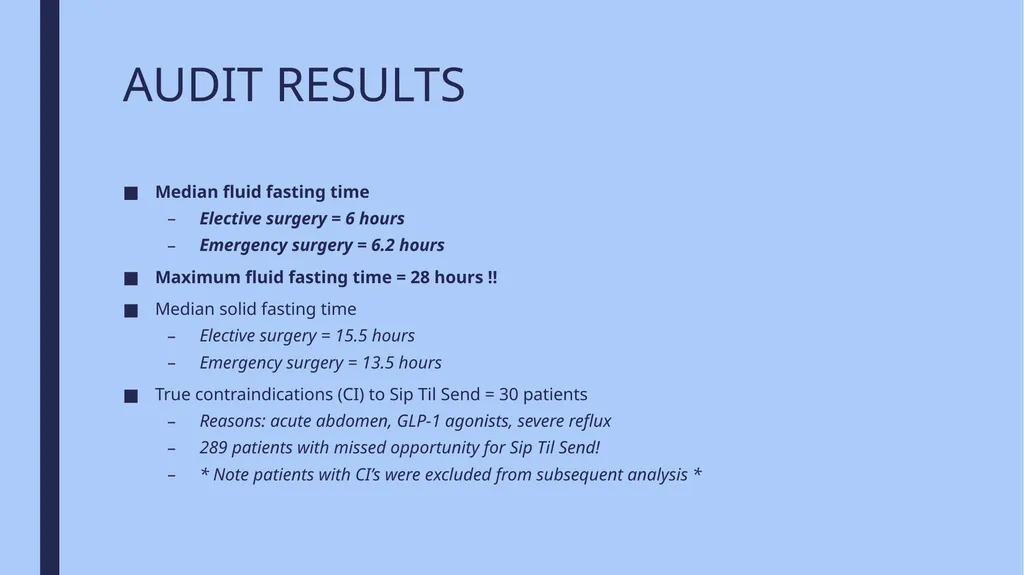
AUDIT RESULTS Median fluid fasting time
Elective surgery = 6 hours
Emergency surgery = 6.2 hours
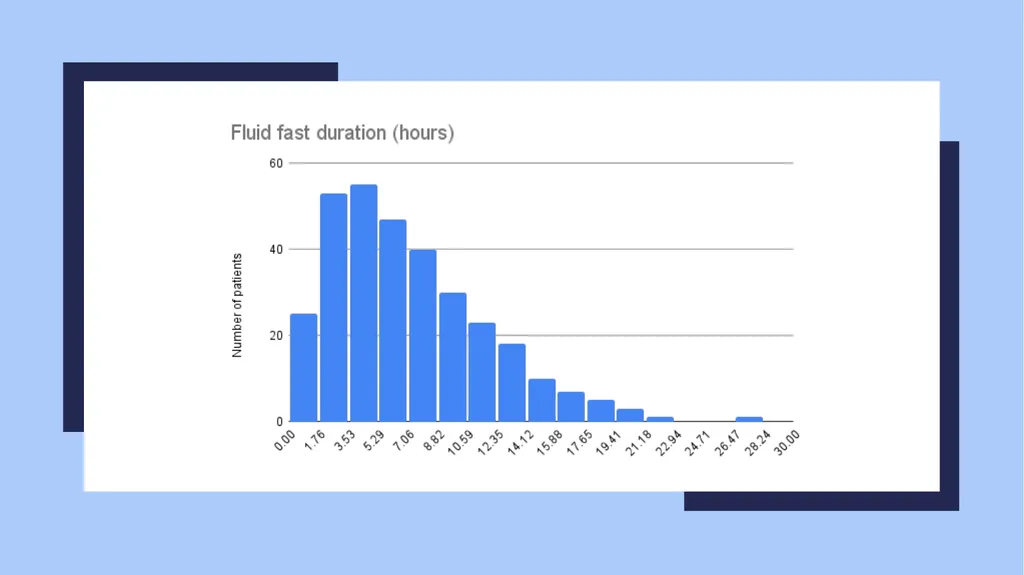
Maximum fluid fasting time = 28 hours !!
Median solid fasting time
Elective surgery = 15.5 hours
Emergency surgery = 13.5 hours
True contraindications (CI) to Sip Til Send = 30 patients
Reasons: acute abdomen, GLP-1 agonists, severe reflux
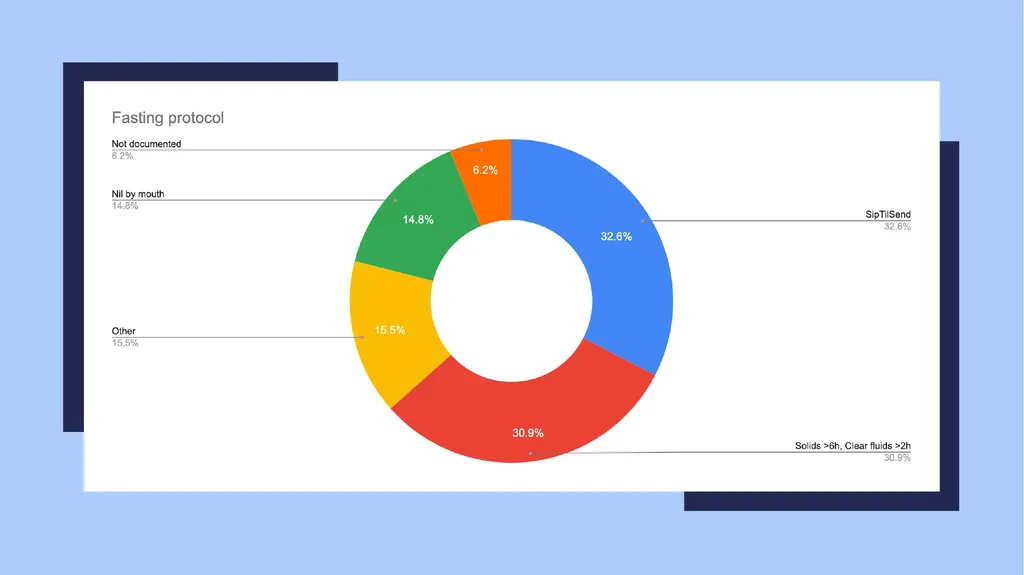
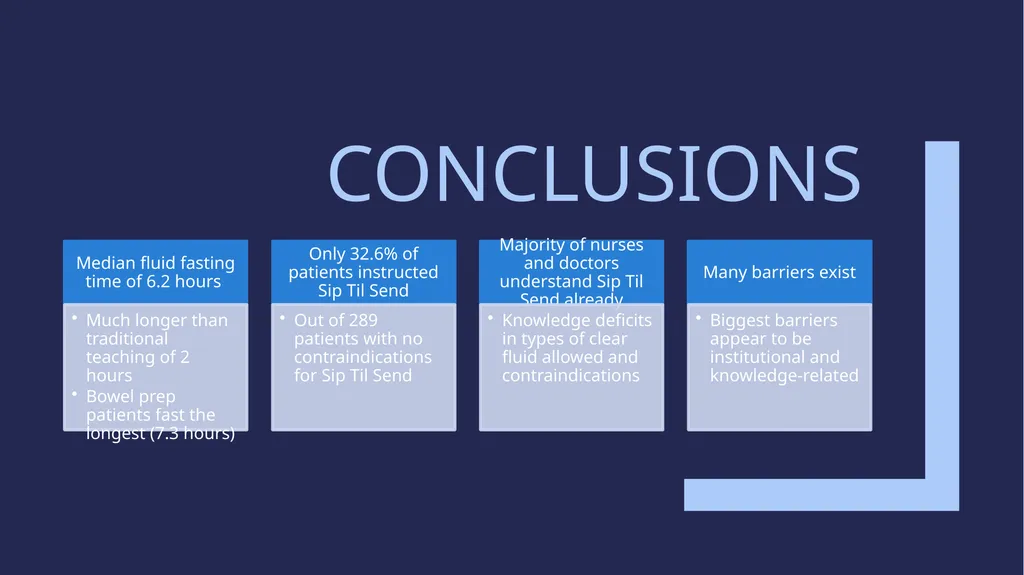
289 patients with missed opportunity for Sip Til Send!
* Note patients with CI’s were excluded from subsequent analysis *<br>
07
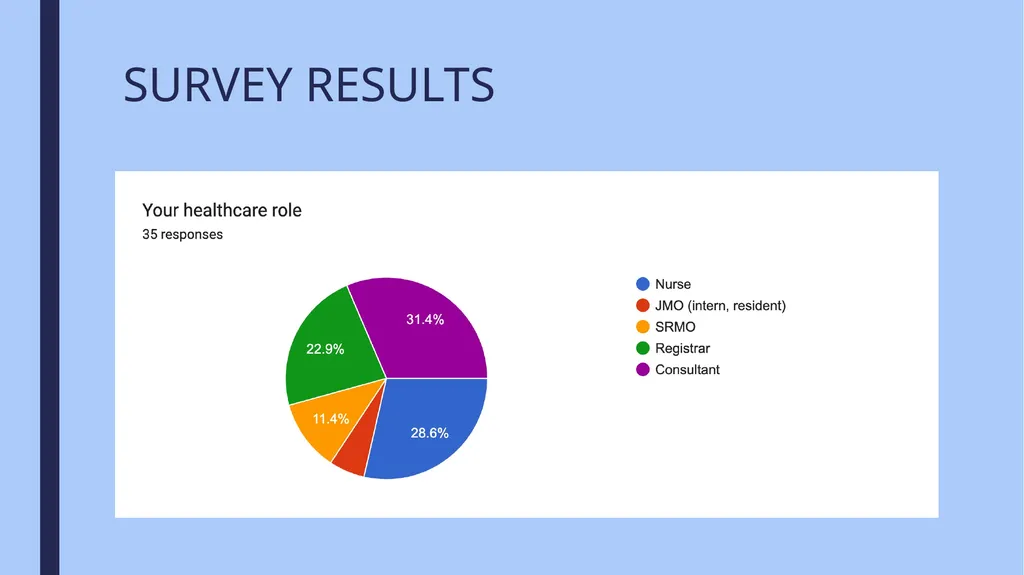
SURVEY RESULTS<br>
08
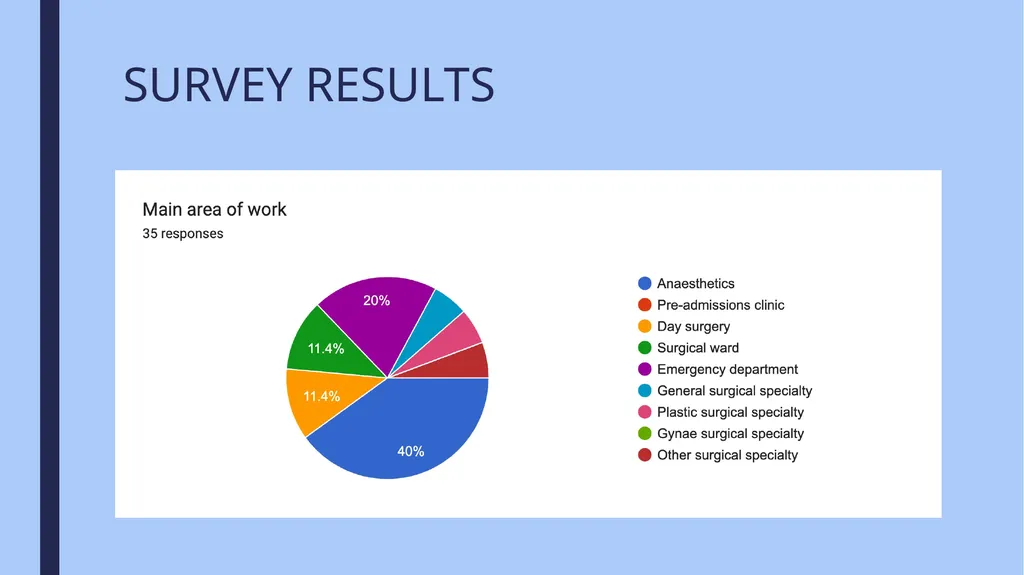
SURVEY RESULTS<br>
09
SURVEY RESULTS
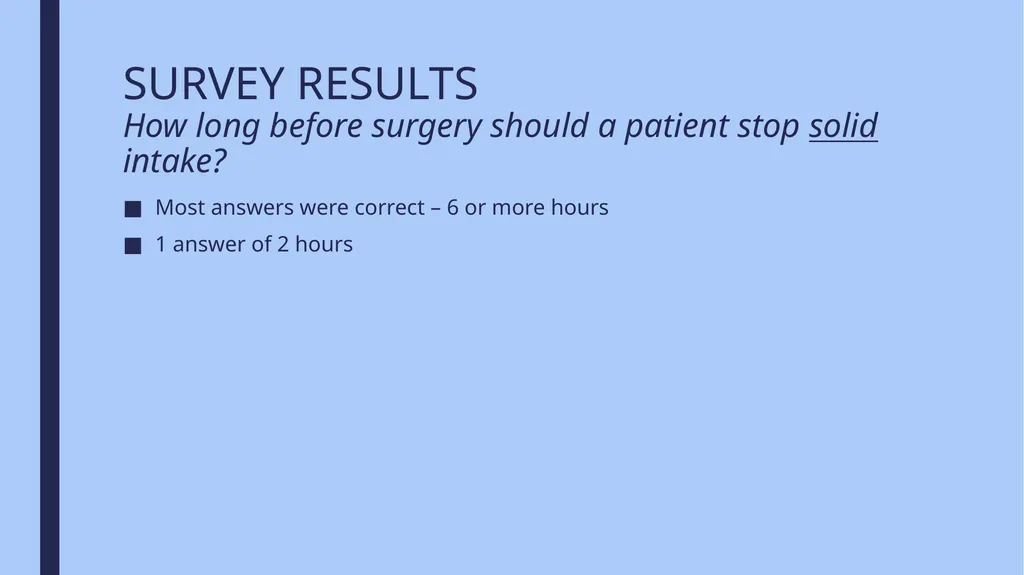
How long before surgery should a patient stop solid intake? Most answers were correct – 6 or more hours
1 answer of 2 hours<br>
1 answer of 2 hours<br>
10
SURVEY RESULTS
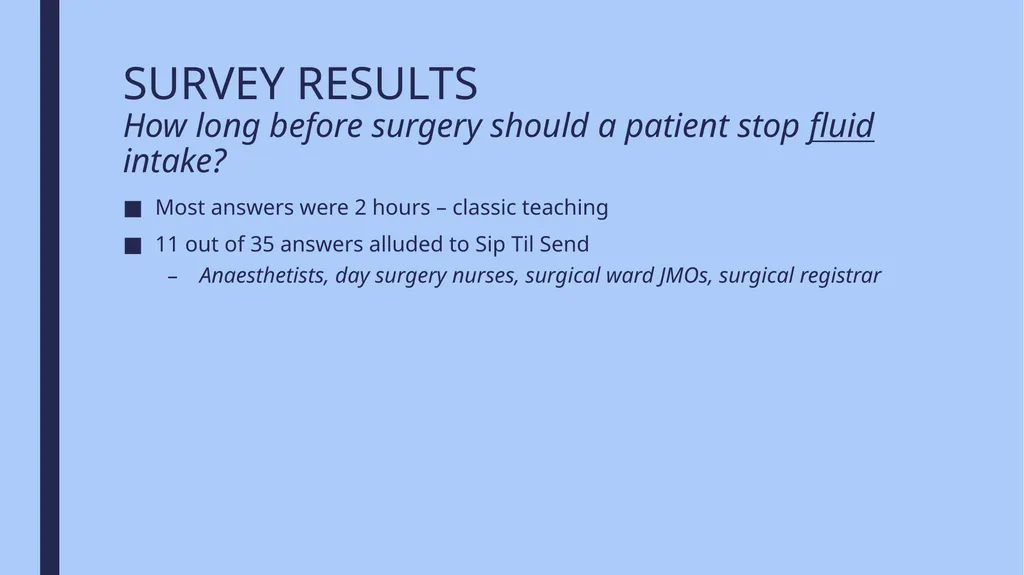
How long before surgery should a patient stop fluid intake? Most answers were 2 hours – classic teaching
11 out of 35 answers alluded to Sip Til Send
Anaesthetists, day surgery nurses, surgical ward JMOs, surgical registrar<br>
11 out of 35 answers alluded to Sip Til Send
Anaesthetists, day surgery nurses, surgical ward JMOs, surgical registrar<br>
11
SURVEY RESULTS<br>
12
SURVEY RESULTS<br>
13
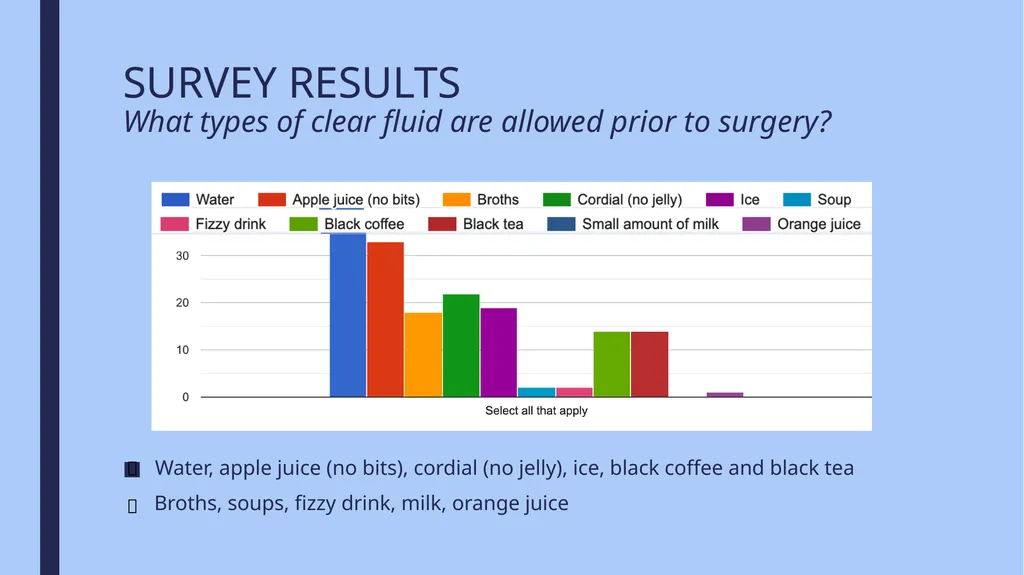
SURVEY RESULTS
What types of clear fluid are allowed prior to surgery? Water, apple juice (no bits), cordial (no jelly), ice, black coffee and black tea
Broths, soups, fizzy drink, milk, orange juice ✅ ❌<br>
Broths, soups, fizzy drink, milk, orange juice ✅ ❌<br>
14
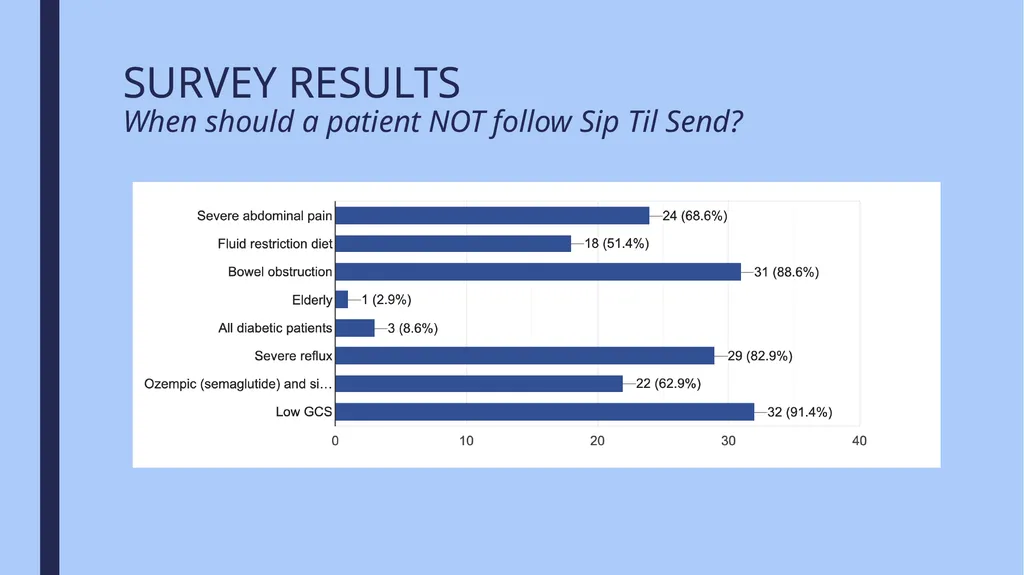
SURVEY RESULTS
When should a patient NOT follow Sip Til Send? Most answers were 2 hours – classic teaching
11 out of 35 answers alluded to Sip Til Send
Anaesthetists, day surgery nurses, surgical ward JMOs, surgical registrar<br>
11 out of 35 answers alluded to Sip Til Send
Anaesthetists, day surgery nurses, surgical ward JMOs, surgical registrar<br>
15
SURVEY RESULTS
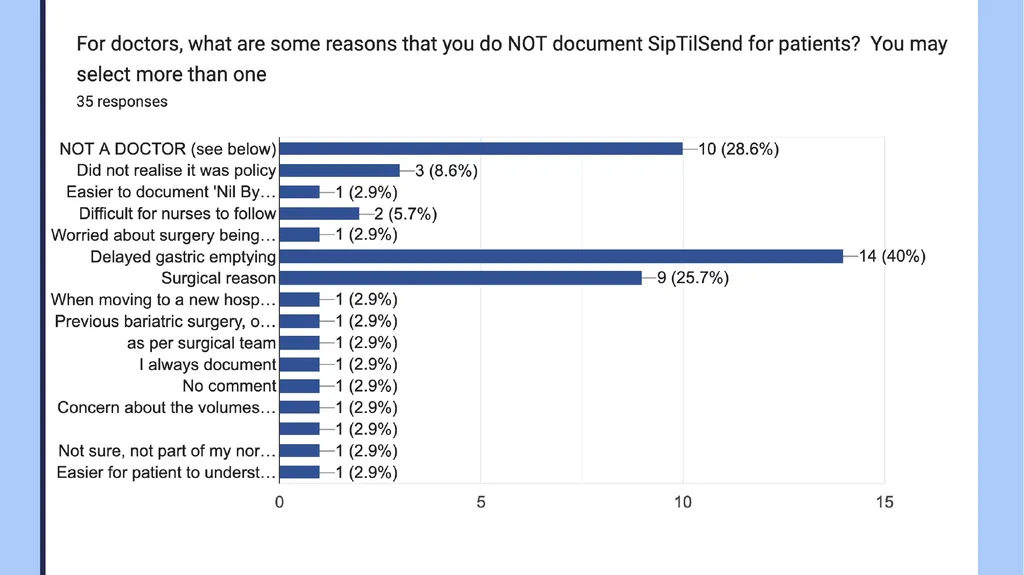
Reasons why doctors do not document Sip Til Send<br>
16
SURVEY
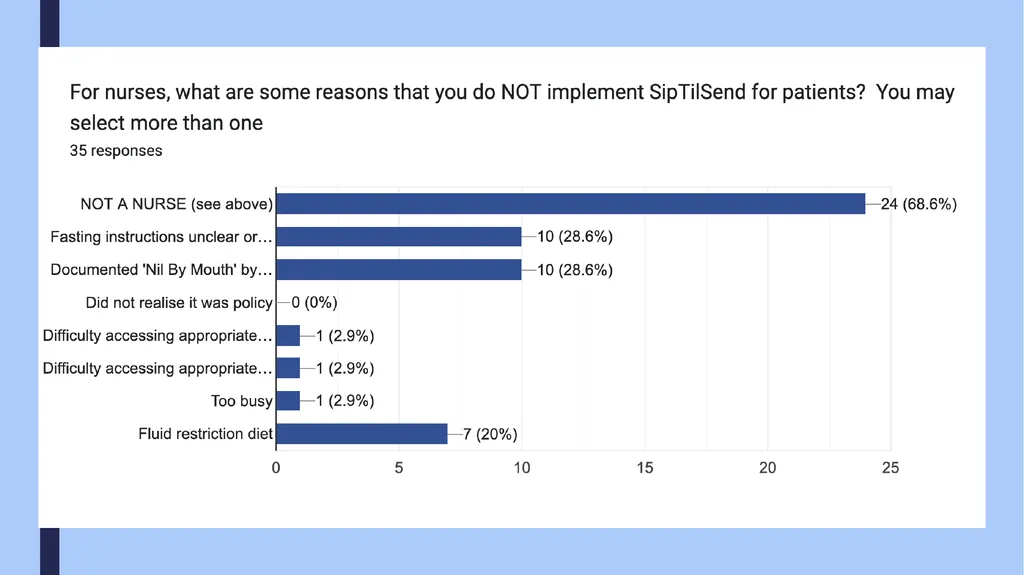
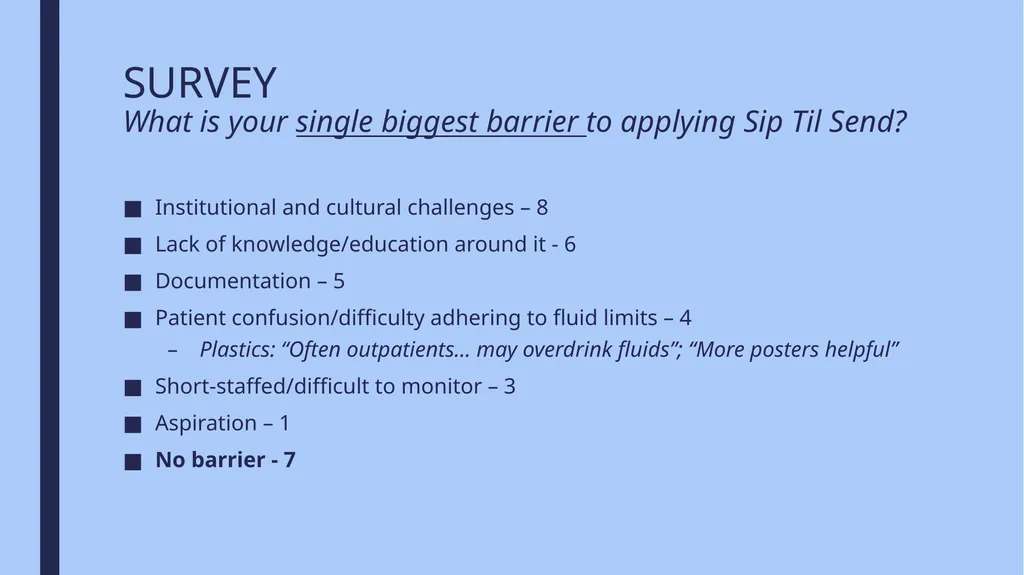
What is your single biggest barrier to applying Sip Til Send? Institutional and cultural challenges – 8
Lack of knowledge/education around it - 6
Documentation – 5
Patient confusion/difficulty adhering to fluid limits – 4
Plastics: “Often outpatients… may overdrink fluids”; “More posters helpful”
Short-staffed/difficult to monitor – 3
Aspiration – 1
No barrier - 7<br>
Lack of knowledge/education around it - 6
Documentation – 5
Patient confusion/difficulty adhering to fluid limits – 4
Plastics: “Often outpatients… may overdrink fluids”; “More posters helpful”
Short-staffed/difficult to monitor – 3
Aspiration – 1
No barrier - 7<br>
17
BARRIERS
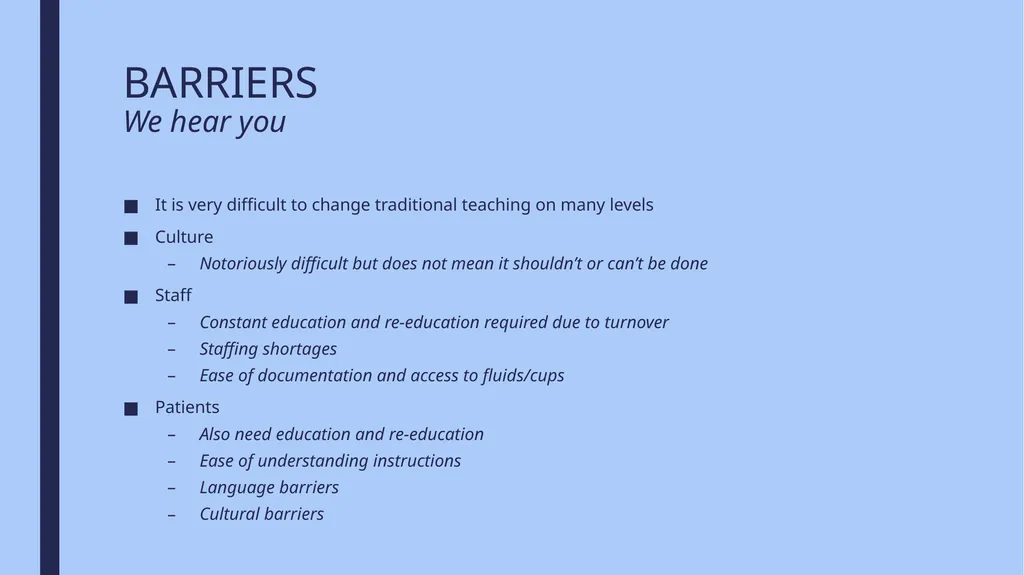
We hear you It is very difficult to change traditional teaching on many levels
Culture
Notoriously difficult but does not mean it shouldn’t or can’t be done
Staff
Constant education and re-education required due to turnover
Staffing shortages
Ease of documentation and access to fluids/cups
Patients
Also need education and re-education
Ease of understanding instructions
Language barriers
Cultural barriers<br>
18
CONCLUSIONS<br>
19
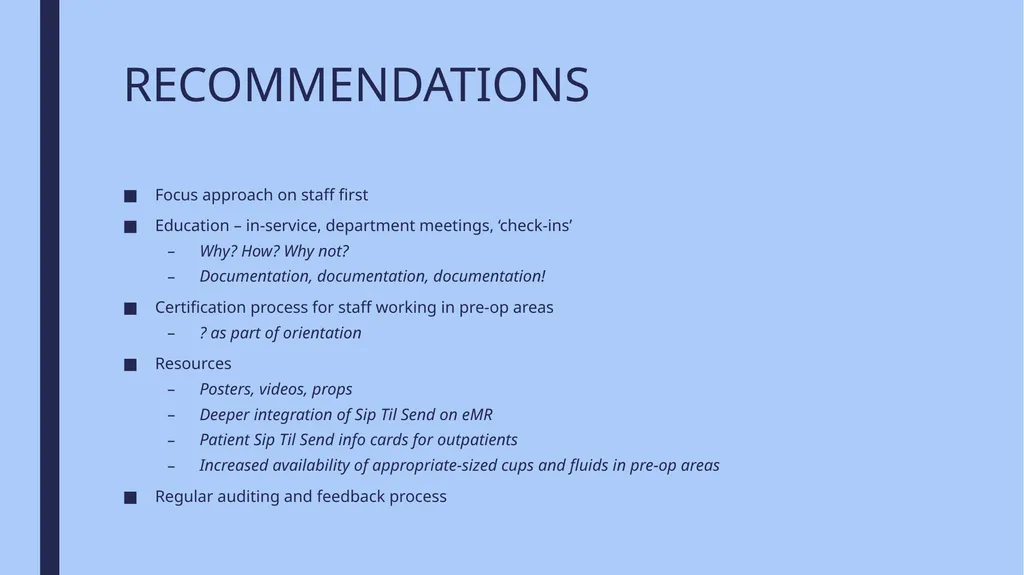
RECOMMENDATIONS Focus approach on staff first
Education – in-service, department meetings, ‘check-ins’
Why? How? Why not?
Documentation, documentation, documentation!
Certification process for staff working in pre-op areas
? as part of orientation
Resources
Posters, videos, props
Deeper integration of Sip Til Send on eMR
Patient Sip Til Send info cards for outpatients
Increased availability of appropriate-sized cups and fluids in pre-op areas
Regular auditing and feedback process<br>
20
Education<br>
21
Who said “fast from midnight?” originated in the 1950s
came from Mendelson who noted the aspiration of solid gastric contents in obstetric patients
“seemed like a good idea” and was thus instituted across the board<br>
came from Mendelson who noted the aspiration of solid gastric contents in obstetric patients
“seemed like a good idea” and was thus instituted across the board<br>
22
BACKGROUND
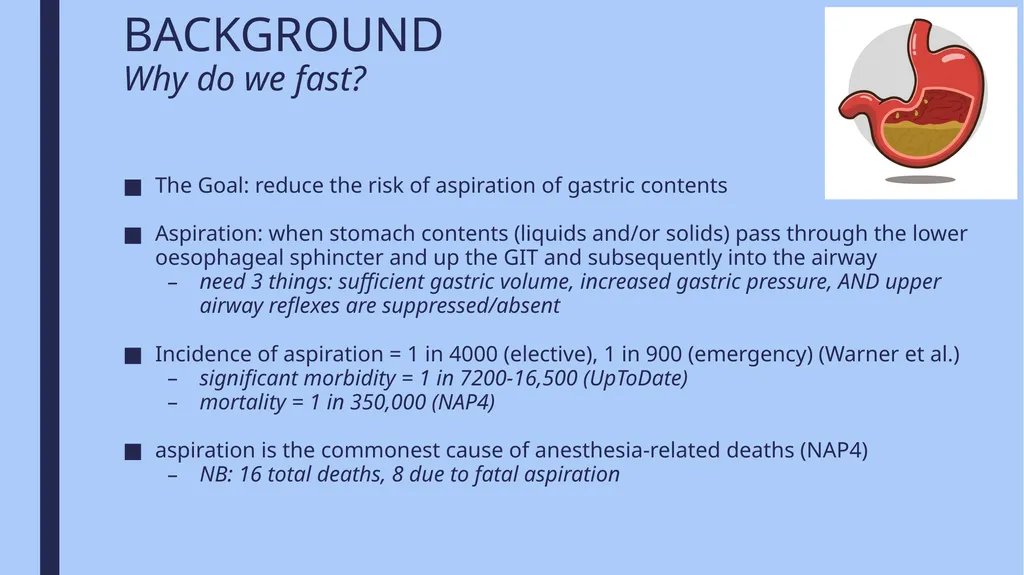
Why do we fast? The Goal: reduce the risk of aspiration of gastric contents
Aspiration: when stomach contents (liquids and/or solids) pass through the lower oesophageal sphincter and up the GIT and subsequently into the airway
need 3 things: sufficient gastric volume, increased gastric pressure, AND upper airway reflexes are suppressed/absent
Incidence of aspiration = 1 in 4000 (elective), 1 in 900 (emergency) (Warner et al.)
significant morbidity = 1 in 7200-16,500 (UpToDate)
mortality = 1 in 350,000 (NAP4)
aspiration is the commonest cause of anesthesia-related deaths (NAP4)
NB: 16 total deaths, 8 due to fatal aspiration<br>
23
BACKGROUND
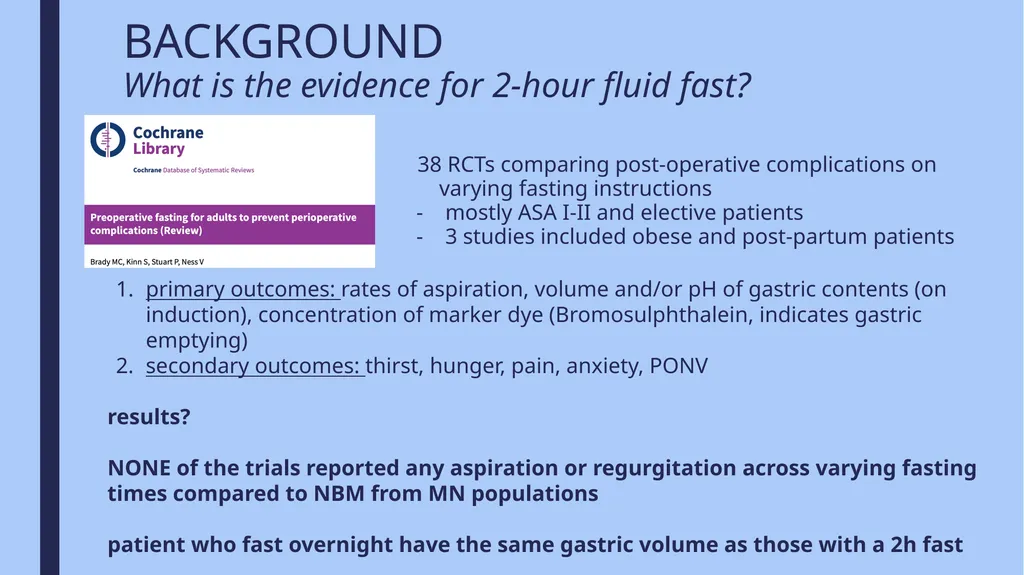
What is the evidence for 2-hour fluid fast? 38 RCTs comparing post-operative complications on varying fasting instructions
mostly ASA I-II and elective patients
3 studies included obese and post-partum patients primary outcomes: rates of aspiration, volume and/or pH of gastric contents (on induction), concentration of marker dye (Bromosulphthalein, indicates gastric emptying)
secondary outcomes: thirst, hunger, pain, anxiety, PONV
results?
NONE of the trials reported any aspiration or regurgitation across varying fasting times compared to NBM from MN populations
patient who fast overnight have the same gastric volume as those with a 2h fast<br>
24
BACKGROUND
Why is excessive fasting bad? patient discomfort (hunger, thirst)
dehydration resulting in
hypotension (particularly during anaesthesia)
difficult cannulation / multiple attempts
metabolic disorders i.e ketoacidosis
electrolyte disturbance
renal impairment
post-operative insulin resistance
increased post-operative nausea + vomiting
increased patient anxiety<br>
25
BACKGROUND
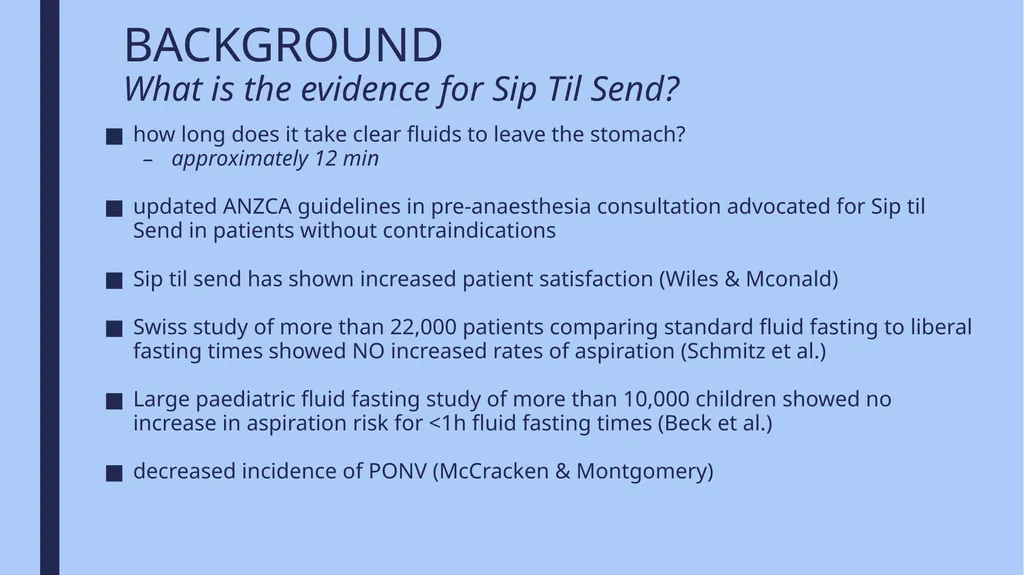
What is the evidence for Sip Til Send? how long does it take clear fluids to leave the stomach?
approximately 12 min
updated ANZCA guidelines in pre-anaesthesia consultation advocated for Sip til Send in patients without contraindications
Sip til send has shown increased patient satisfaction (Wiles & Mconald)
Swiss study of more than 22,000 patients comparing standard fluid fasting to liberal fasting times showed NO increased rates of aspiration (Schmitz et al.)
Large paediatric fluid fasting study of more than 10,000 children showed no increase in aspiration risk for <1h fluid fasting times (Beck et al.)
decreased incidence of PONV (McCracken & Montgomery)<br>
26
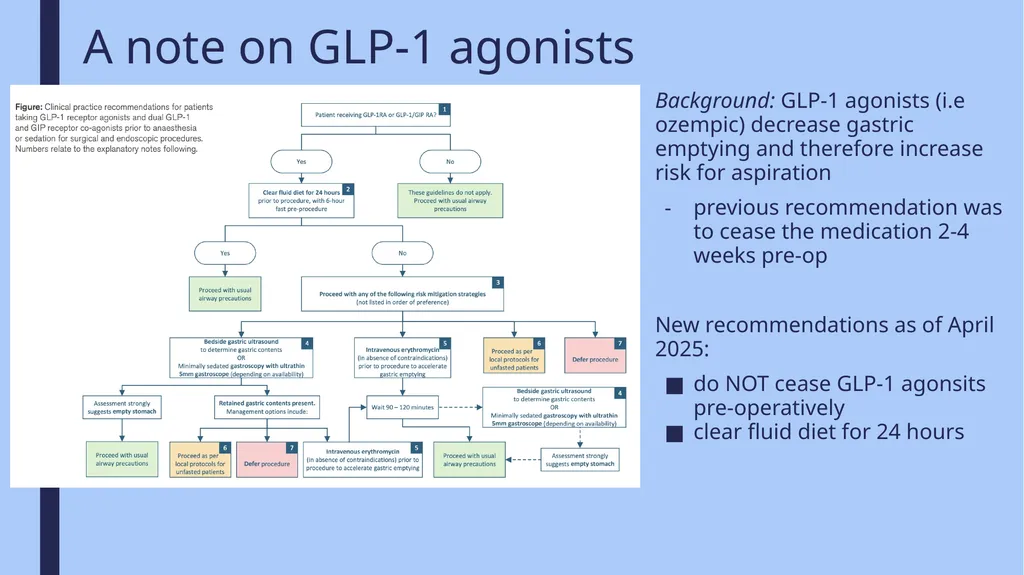
A note on GLP-1 agonists Background: GLP-1 agonists (i.e ozempic) decrease gastric emptying and therefore increase risk for aspiration
previous recommendation was to cease the medication 2-4 weeks pre-op
New recommendations as of April 2025:
do NOT cease GLP-1 agonsits pre-operatively
clear fluid diet for 24 hours<br>
previous recommendation was to cease the medication 2-4 weeks pre-op
New recommendations as of April 2025:
do NOT cease GLP-1 agonsits pre-operatively
clear fluid diet for 24 hours<br>
27
WAIT SO…
WHAT IS SIP TIL SEND?
WHAT SHOULD I TELL MY PATIENTS?<br>
28
EDUCATION
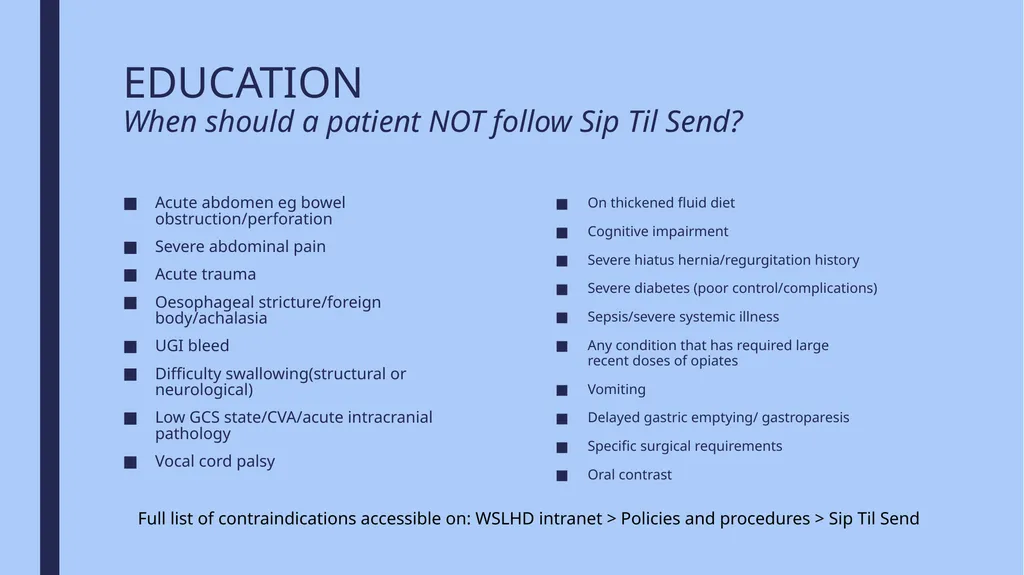
When should a patient NOT follow Sip Til Send? Acute abdomen eg bowel obstruction/perforation
Severe abdominal pain
Acute trauma
Oesophageal stricture/foreign body/achalasia
UGI bleed
Difficulty swallowing(structural or neurological)
Low GCS state/CVA/acute intracranial pathology
Vocal cord palsy On thickened fluid diet
Cognitive impairment
Severe hiatus hernia/regurgitation history
Severe diabetes (poor control/complications)
Sepsis/severe systemic illness
Any condition that has required large recent doses of opiates
Vomiting
Delayed gastric emptying/ gastroparesis
Specific surgical requirements
Oral contrast Full list of contraindications accessible on: WSLHD intranet > Policies and procedures > Sip Til Send<br>
29
Thank you for listening &
HAPPY SIPPING! Any questions?<br>
30
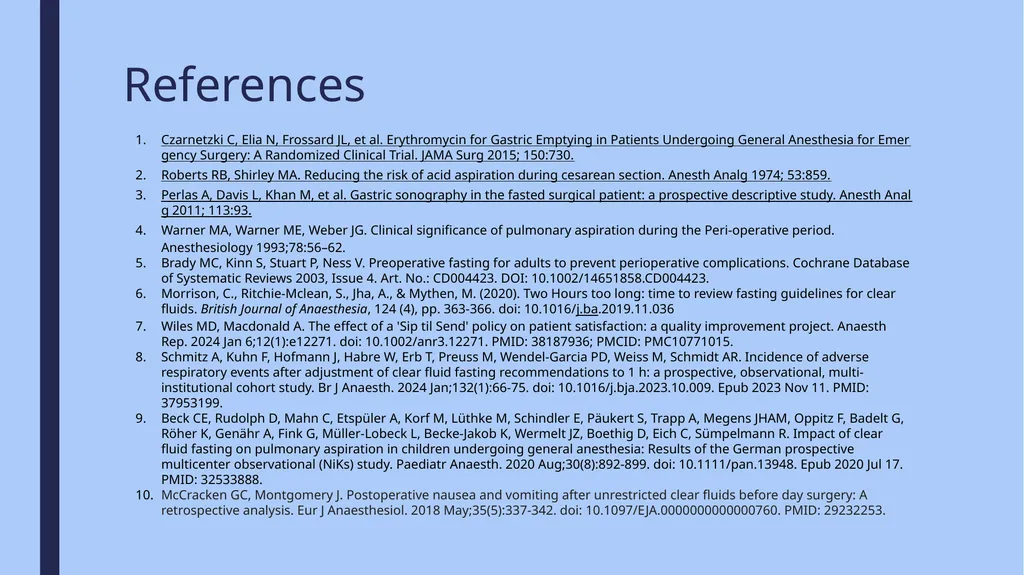
Czarnetzki C, Elia N, Frossard JL, et al. Erythromycin for Gastric Emptying in Patients Undergoing General Anesthesia for Emergency Surgery: A Randomized Clinical Trial. JAMA Surg 2015; 150:730.
Roberts RB, Shirley MA. Reducing the risk of acid aspiration during cesarean section. Anesth Analg 1974; 53:859.
Perlas A, Davis L, Khan M, et al. Gastric sonography in the fasted surgical patient: a prospective descriptive study. Anesth Analg 2011; 113:93.
Warner MA, Warner ME, Weber JG. Clinical significance of pulmonary aspiration during the Peri-operative period. Anesthesiology 1993;78:56–62.
Brady MC, Kinn S, Stuart P, Ness V. Preoperative fasting for adults to prevent perioperative complications. Cochrane Database of Systematic Reviews 2003, Issue 4. Art. No.: CD004423. DOI: 10.1002/14651858.CD004423.
Morrison, C., Ritchie-Mclean, S., Jha, A., & Mythen, M. (2020). Two Hours too long: time to review fasting guidelines for clear fluids. British Journal of Anaesthesia, 124 (4), pp. 363-366. doi: 10.1016/j.ba.2019.11.036
Wiles MD, Macdonald A. The effect of a 'Sip til Send' policy on patient satisfaction: a quality improvement project. Anaesth Rep. 2024 Jan 6;12(1):e12271. doi: 10.1002/anr3.12271. PMID: 38187936; PMCID: PMC10771015.
Schmitz A, Kuhn F, Hofmann J, Habre W, Erb T, Preuss M, Wendel-Garcia PD, Weiss M, Schmidt AR. Incidence of adverse respiratory events after adjustment of clear fluid fasting recommendations to 1 h: a prospective, observational, multi-institutional cohort study. Br J Anaesth. 2024 Jan;132(1):66-75. doi: 10.1016/j.bja.2023.10.009. Epub 2023 Nov 11. PMID: 37953199.
Beck CE, Rudolph D, Mahn C, Etspüler A, Korf M, Lüthke M, Schindler E, Päukert S, Trapp A, Megens JHAM, Oppitz F, Badelt G, Röher K, Genähr A, Fink G, Müller-Lobeck L, Becke-Jakob K, Wermelt JZ, Boethig D, Eich C, Sümpelmann R. Impact of clear fluid fasting on pulmonary aspiration in children undergoing general anesthesia: Results of the German prospective multicenter observational (NiKs) study. Paediatr Anaesth. 2020 Aug;30(8):892-899. doi: 10.1111/pan.13948. Epub 2020 Jul 17. PMID: 32533888.
McCracken GC, Montgomery J. Postoperative nausea and vomiting after unrestricted clear fluids before day surgery: A retrospective analysis. Eur J Anaesthesiol. 2018 May;35(5):337-342. doi: 10.1097/EJA.0000000000000760. PMID: 29232253. References<br>