
B.M.S College of Engineering Department of Machine
MT
Published · 33 slides · 0 views

1 / 1
Description
B.M.S College of Engineering Department of Machine Learning Nature Inspired Computing UNIT 01 Introduction to NIC Prof. VARSHA R Asst. Prof, Dept. of MEL, BMSCE Introduction Nature Inspired Computing Nature Inspired Computing is a study of
Related Topics
Share
Embed code
Download this presentation From Below
"B.M.S College of Engineering Department of Machine" is the property of its rightful owner. Permission is granted to download and print the materials on this website for personal, non-commercial use only, and to display it on your personal computer provided you do not modify the materials and that you retain all copyright notices contained in the materials. By downloading content from our website, you accept the terms of this agreement.
Presentation Transcript
01
B.M.S College of Engineering
Department of Machine Learning Nature Inspired Computing
UNIT 01
Introduction to NIC
Prof. VARSHA R
Asst. Prof, Dept. of MEL, BMSCE<br>
UNIT 01
Introduction to NIC
Prof. VARSHA R
Asst. Prof, Dept. of MEL, BMSCE<br>
02
Introduction<br>
03
Nature Inspired Computing Nature Inspired Computing is a study of computing which takes the inspirations from the mother nature.
Nature-Inspired Computing refers to a field of computational techniques and algorithms that draw inspiration from natural processes and biological systems. This approach seeks to model and replicate the strategies found in nature to solve complex problems, optimize solutions, and enhance machine learning.
It has been realized that many of the hard problems can be solved if we observe the nature. we look to the principle of the nature species to talk of nature inspired computing , nature based religions and computational intelligence.<br>
04
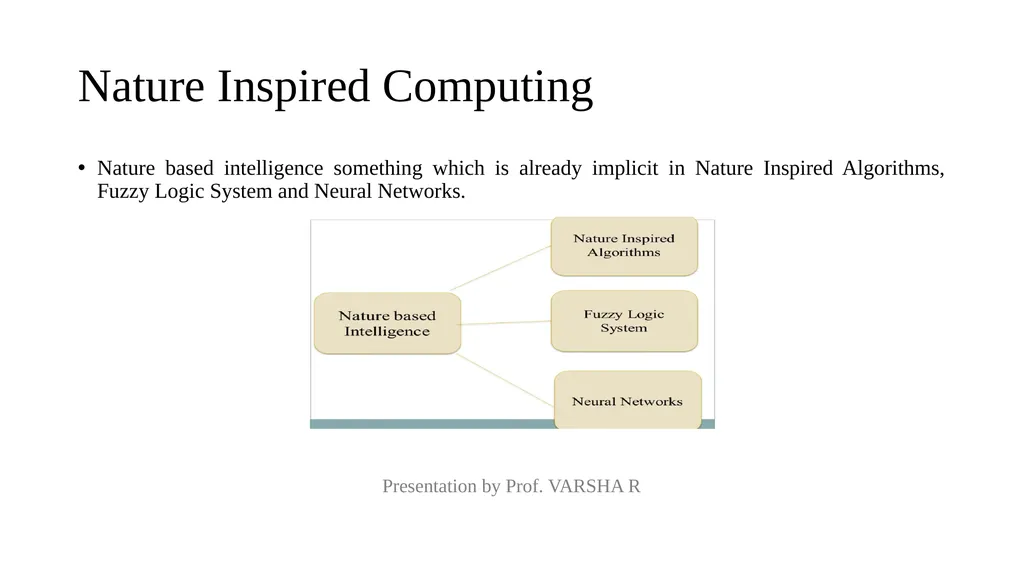
Nature Inspired Computing Nature based intelligence something which is already implicit in Nature Inspired Algorithms, Fuzzy Logic System and Neural Networks.<br>
05
How we get the Inspiration from the Nature to Solve the real life Problems? We need to understand that every problem comes with a solution. The only thing is we need to look at more closer to the problem, we need to understand the very carefully. How we can do this ?
We have to broaden our design, we need to understand the principle of nature, we need to widen our knowledge then only we can be able to understand the problem closely and we can find that the nature has a fantastic and excellent solution for the problem.
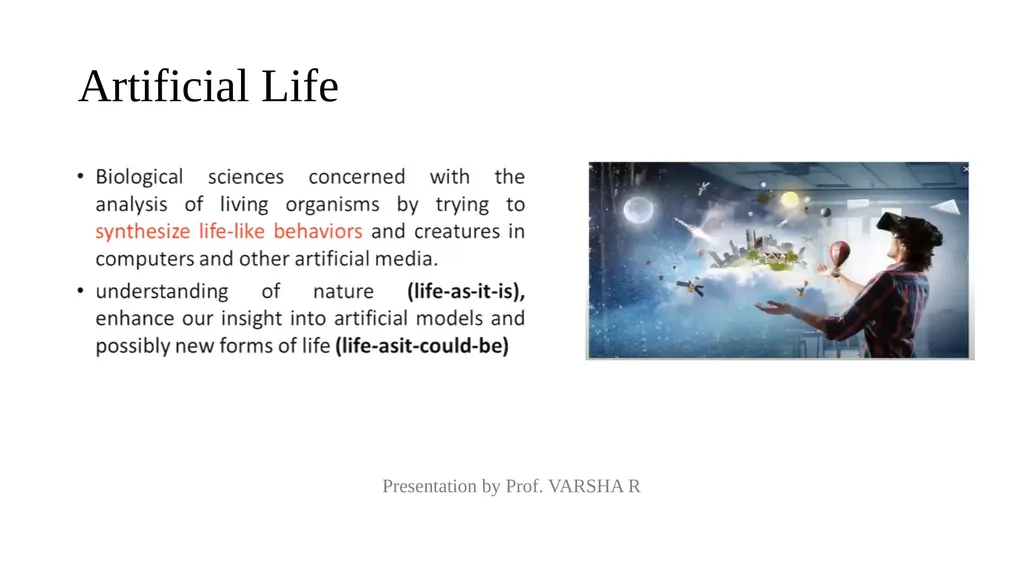
In computational Intelligence we talk about the artificial life.
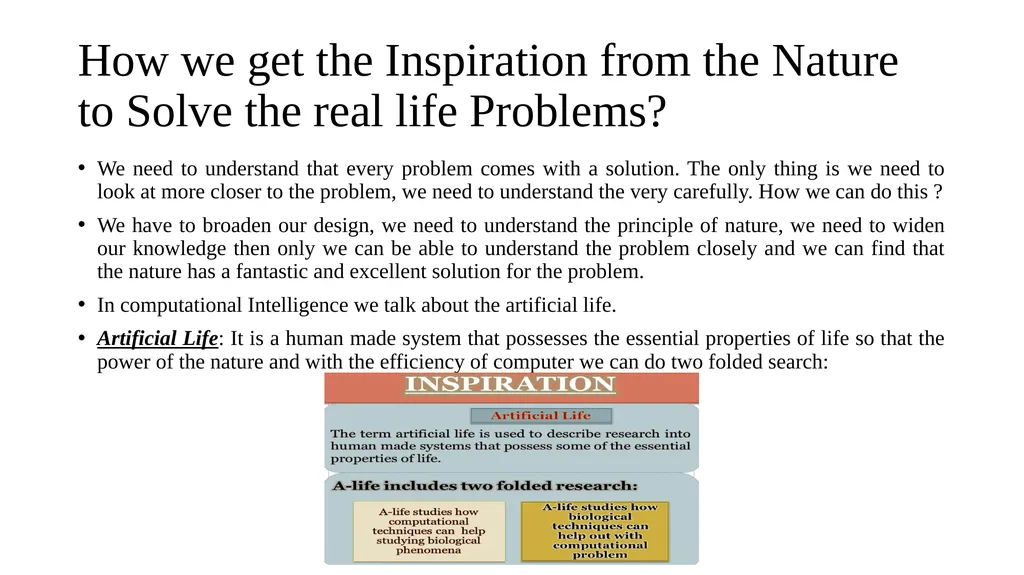
Artificial Life: It is a human made system that possesses the essential properties of life so that the power of the nature and with the efficiency of computer we can do two folded search:<br>
06
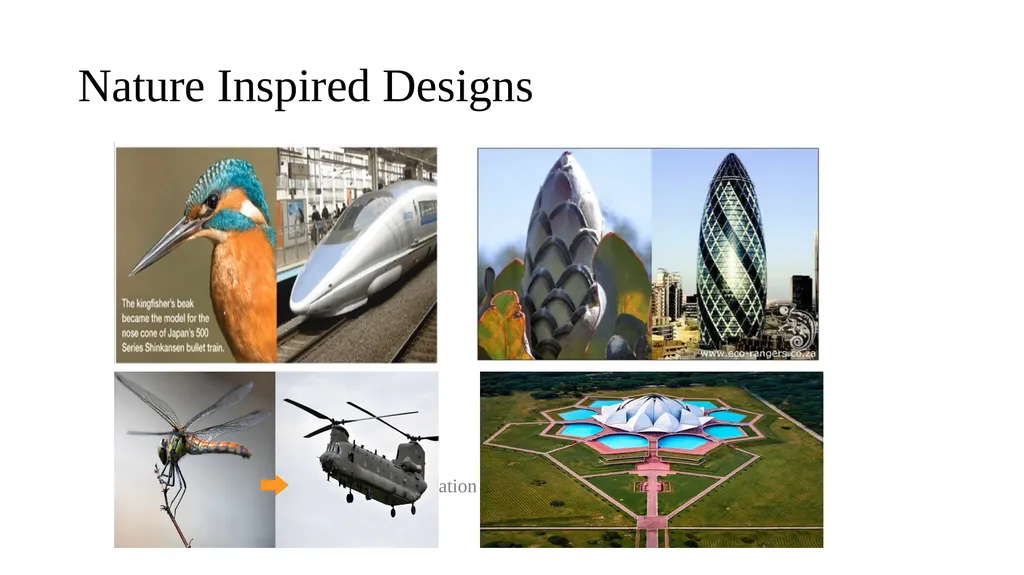
Nature Inspired Designs<br>
07
Philosophy Nature as a Teacher: Nature's processes have evolved over billions of years, resulting in highly optimized solutions for survival, adaptation, and resource management. This perspective views nature as a mentor for developing algorithms and systems.
Interconnectedness and Complexity: Natural systems operate on principles of interconnectedness and complexity. Understanding these relationships is vital for developing systems that are both robust and adaptive, mirroring the complexity found in ecosystems.
Sustainability and Ethics: There’s a strong ethical component in recognizing the impact of technological developments on the environment. This philosophy advocates for sustainable practices that respect natural systems and promote ecological balance.<br>
08
Outcomes Related to Nature
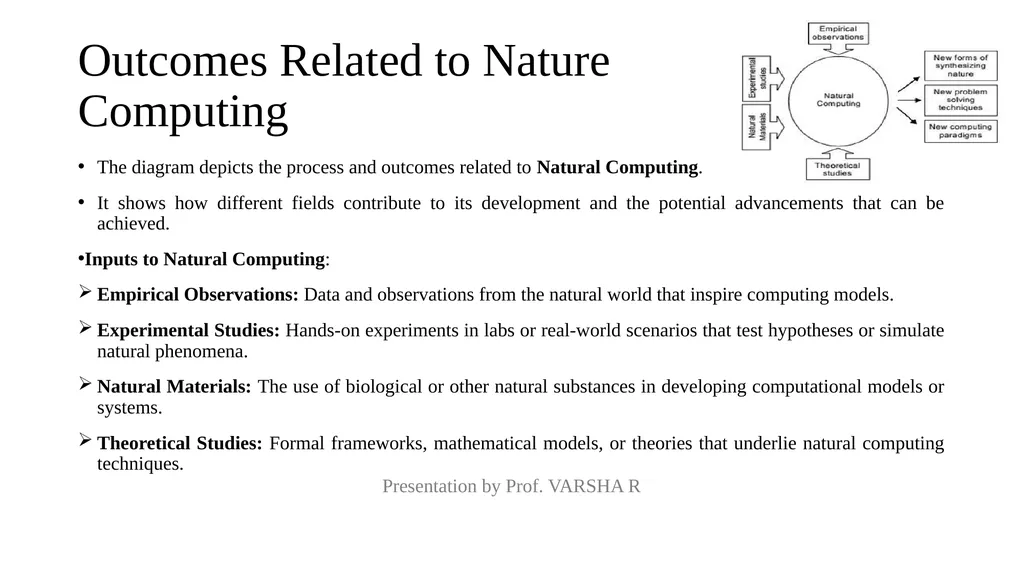
Computing The diagram depicts the process and outcomes related to Natural Computing.
It shows how different fields contribute to its development and the potential advancements that can be achieved.
Inputs to Natural Computing:
Empirical Observations: Data and observations from the natural world that inspire computing models.
Experimental Studies: Hands-on experiments in labs or real-world scenarios that test hypotheses or simulate natural phenomena.
Natural Materials: The use of biological or other natural substances in developing computational models or systems.
Theoretical Studies: Formal frameworks, mathematical models, or theories that underlie natural computing techniques.<br>
09
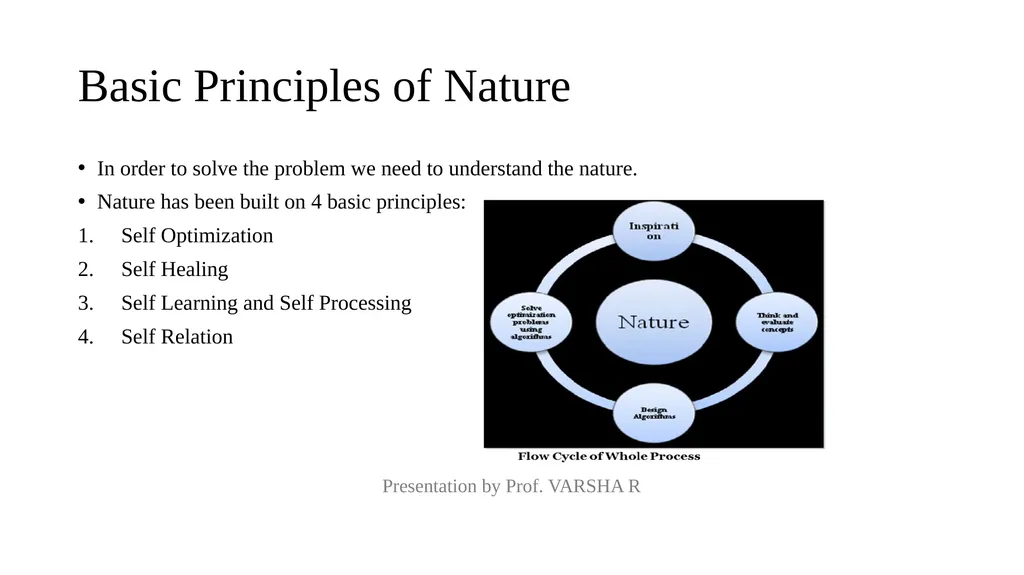
Basic Principles of Nature In order to solve the problem we need to understand the nature.
Nature has been built on 4 basic principles:
Self Optimization
Self Healing
Self Learning and Self Processing
Self Relation<br>
Nature has been built on 4 basic principles:
Self Optimization
Self Healing
Self Learning and Self Processing
Self Relation<br>
10
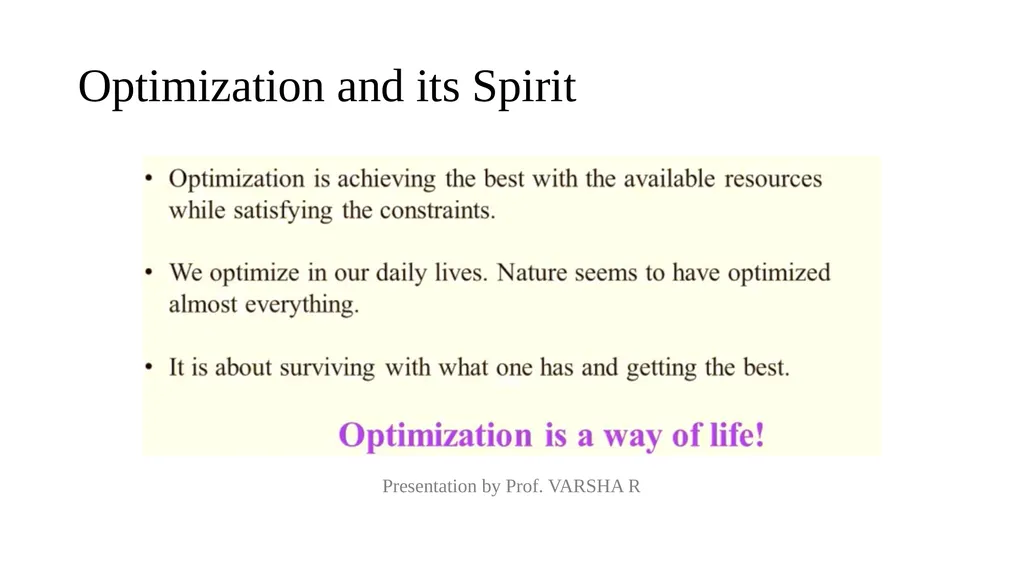
Optimization and its Spirit<br>
11
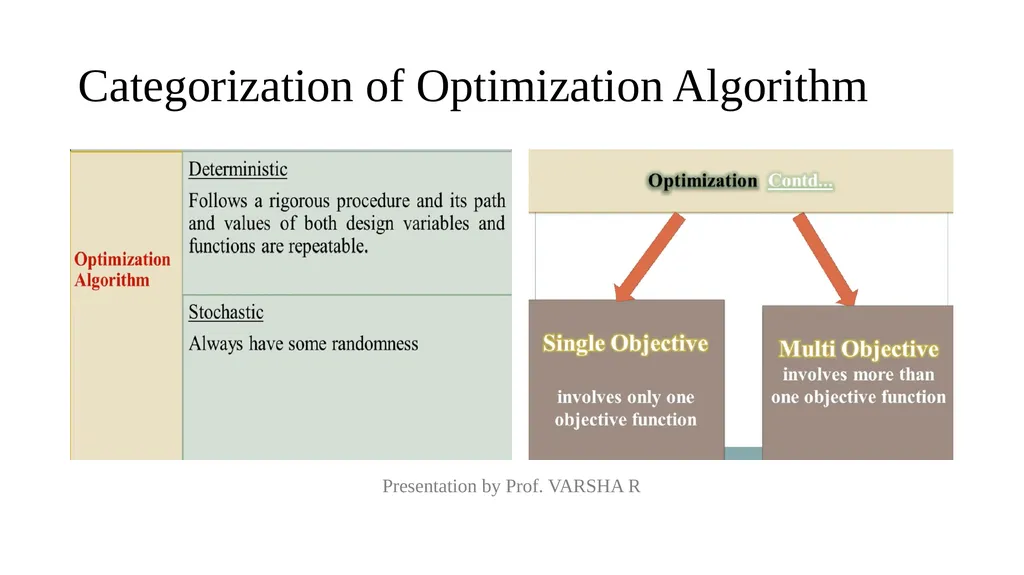
Categorization of Optimization Algorithm<br>
12
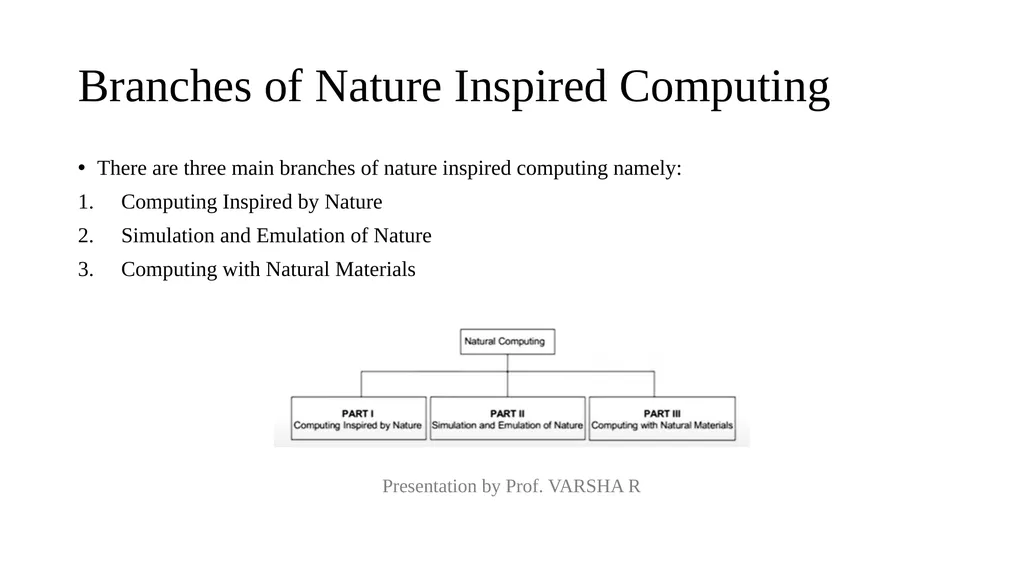
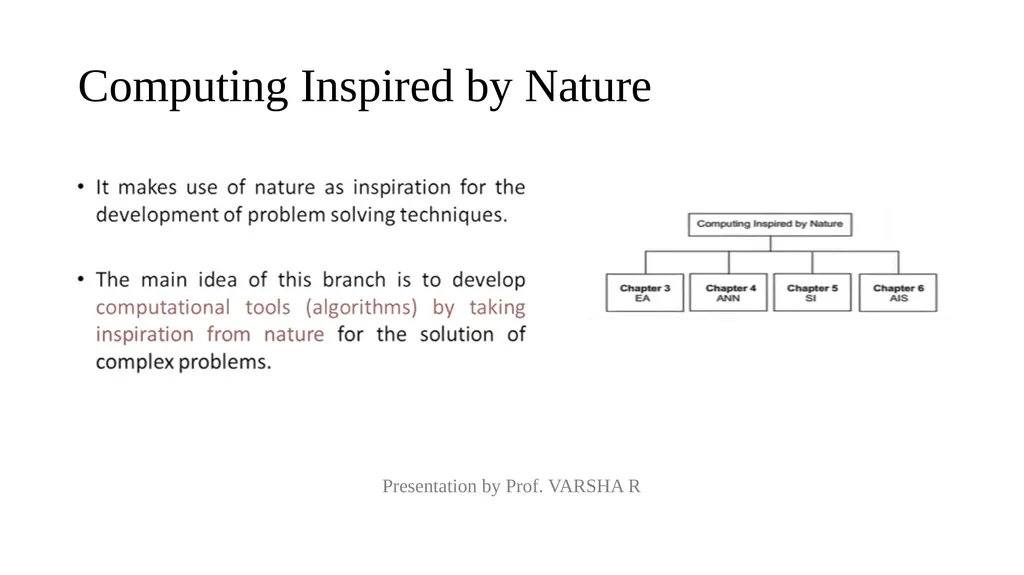
Branches of Nature Inspired Computing There are three main branches of nature inspired computing namely:
Computing Inspired by Nature
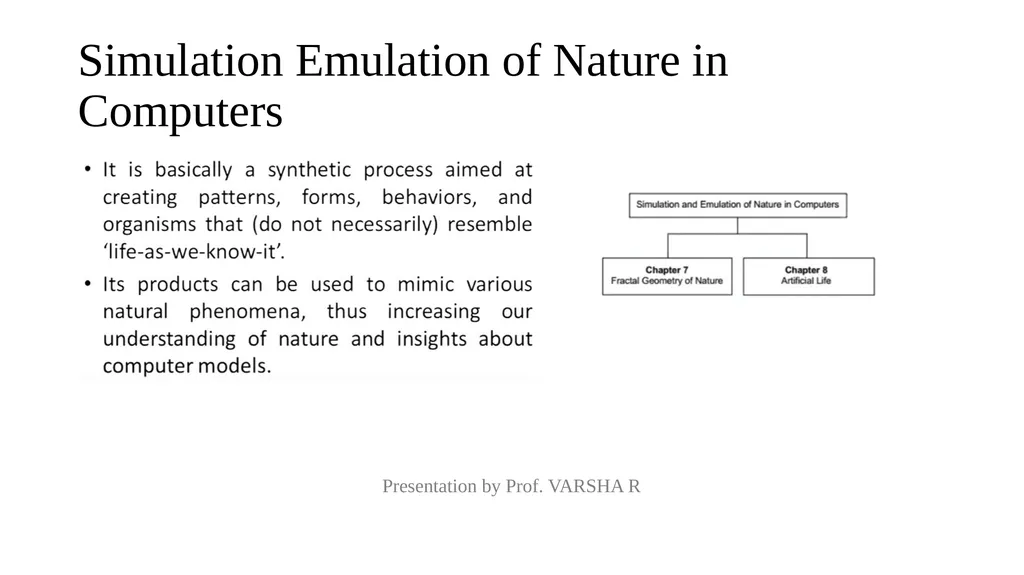
Simulation and Emulation of Nature
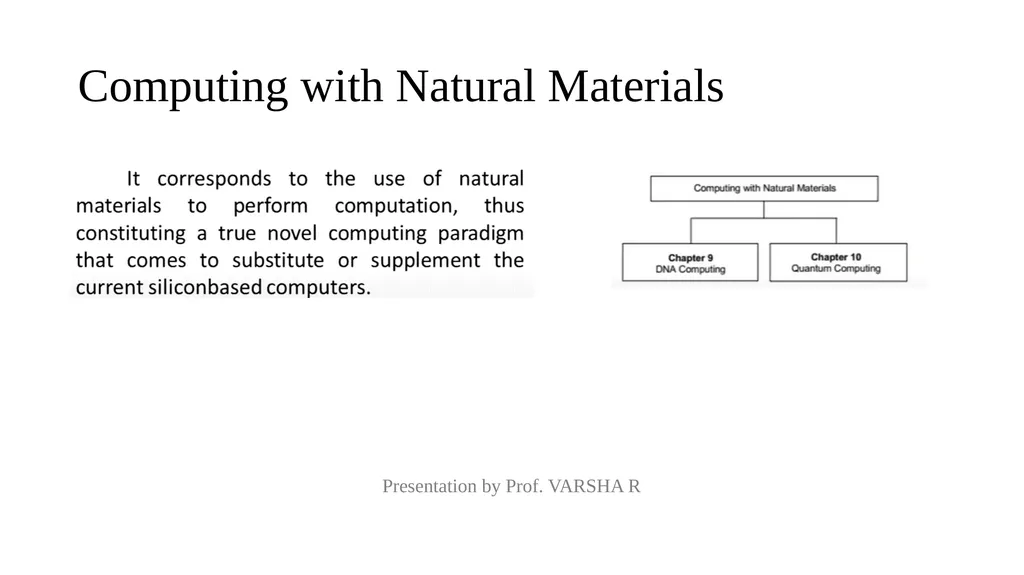
Computing with Natural Materials<br>
Computing Inspired by Nature
Simulation and Emulation of Nature
Computing with Natural Materials<br>
13
Computing Inspired by Nature<br>
14
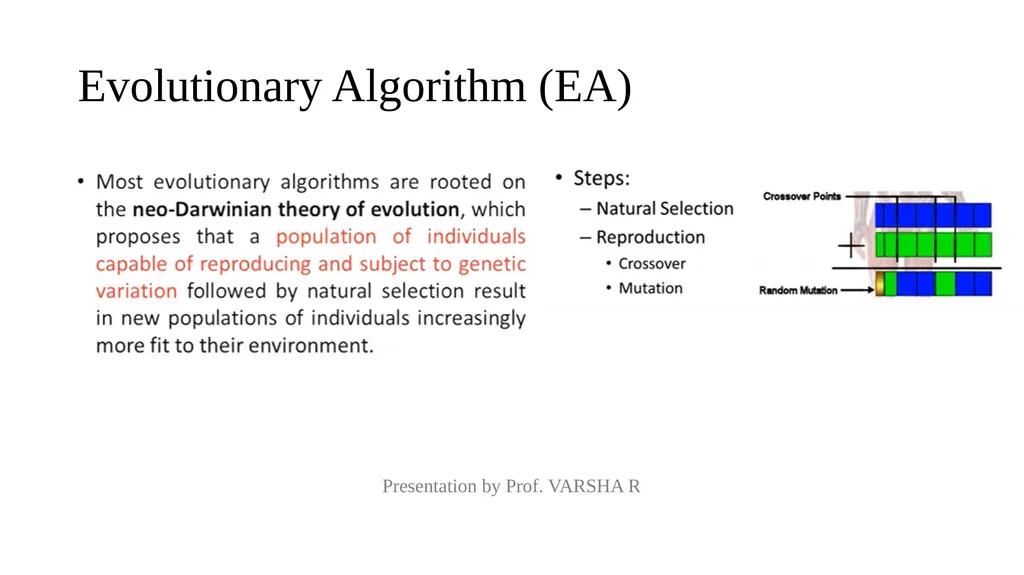
Evolutionary Algorithm (EA)<br>
15
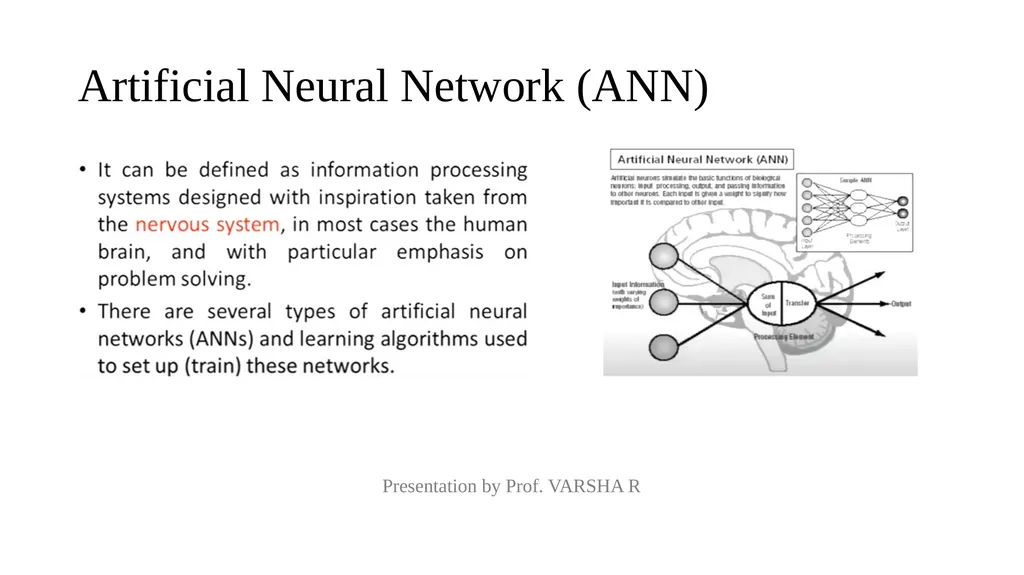
Artificial Neural Network (ANN)<br>
16
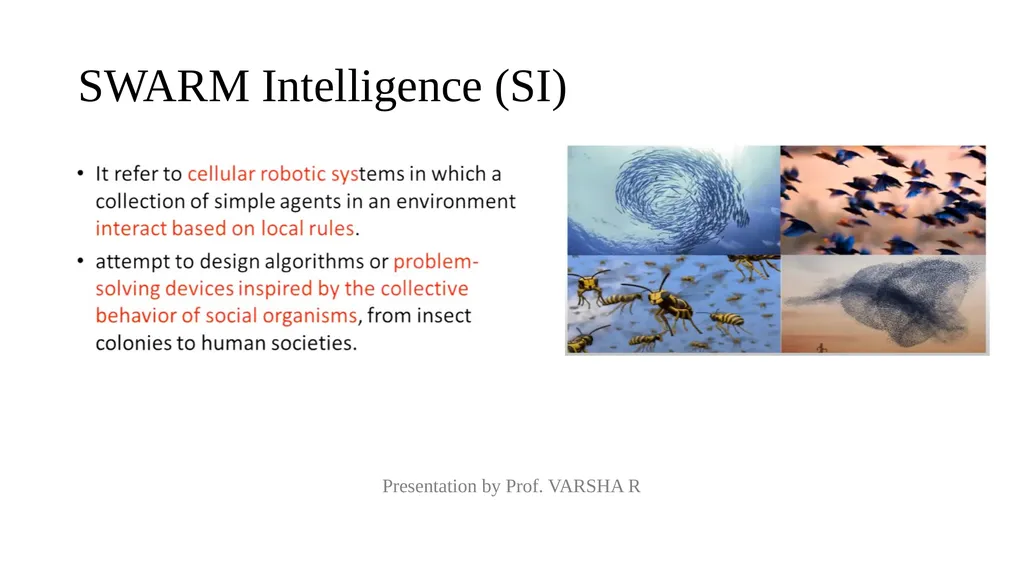
SWARM Intelligence (SI)<br>
17
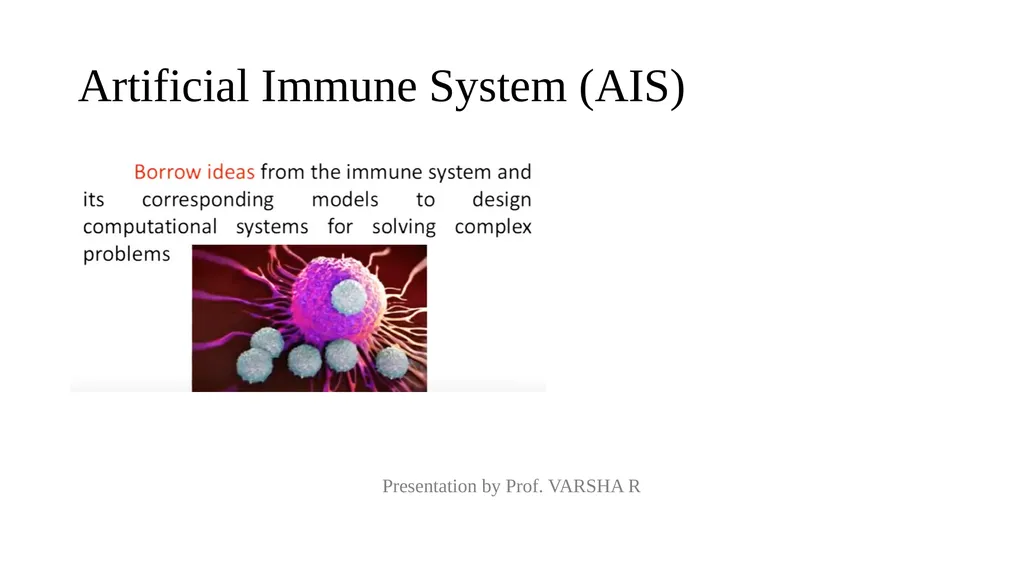
Artificial Immune System (AIS)<br>
18
Simulation Emulation of Nature in Computers<br>
19
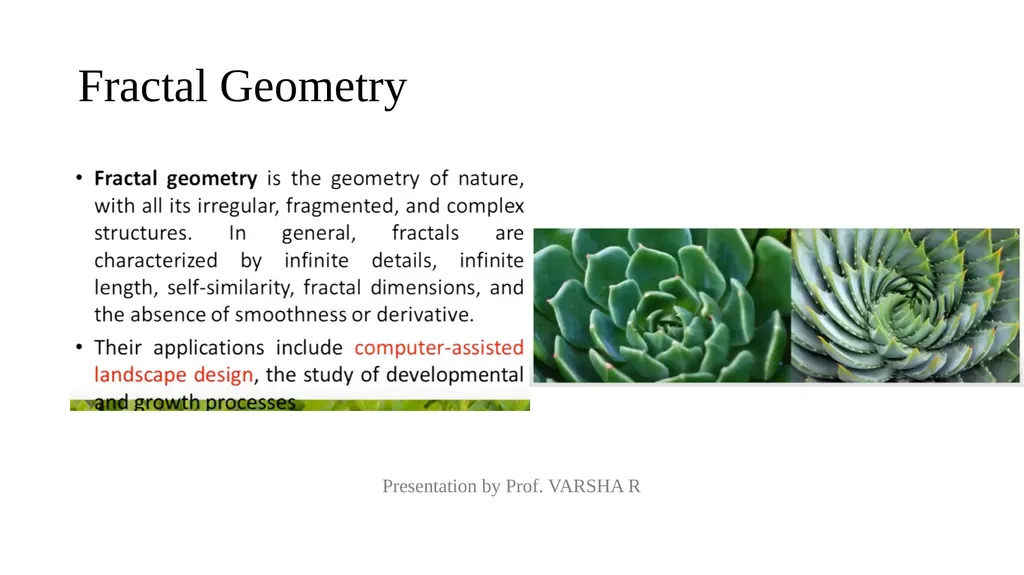
Fractal Geometry<br>
20
Artificial Life<br>
21
Computing with Natural Materials<br>
22
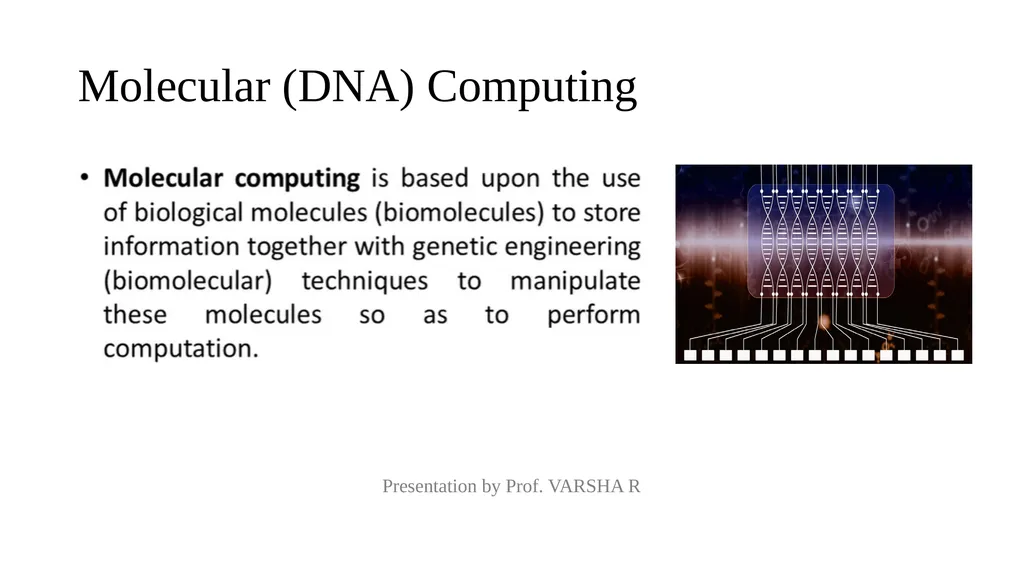
Molecular (DNA) Computing<br>
23
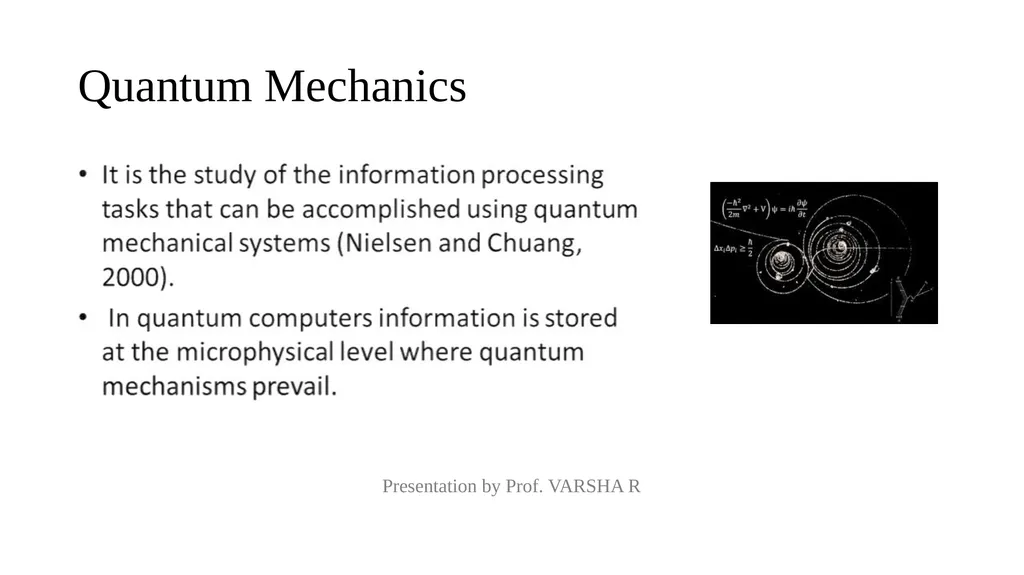
Quantum Mechanics<br>
24
Individuals Individuals: In algorithms inspired by biological evolution, like Genetic Algorithms (GAs) or Particle Swarm Optimization (PSO), an individual represents a single possible solution. The term originates from biological evolution, where each organism (or individual) has a set of characteristics (genes). For example:
In Genetic Algorithms, an individual corresponds to a chromosome, which is a potential solution encoded as a sequence of values.
In Particle Swarm Optimization, each particle is considered an individual that explores the search space.<br>
In Genetic Algorithms, an individual corresponds to a chromosome, which is a potential solution encoded as a sequence of values.
In Particle Swarm Optimization, each particle is considered an individual that explores the search space.<br>
25
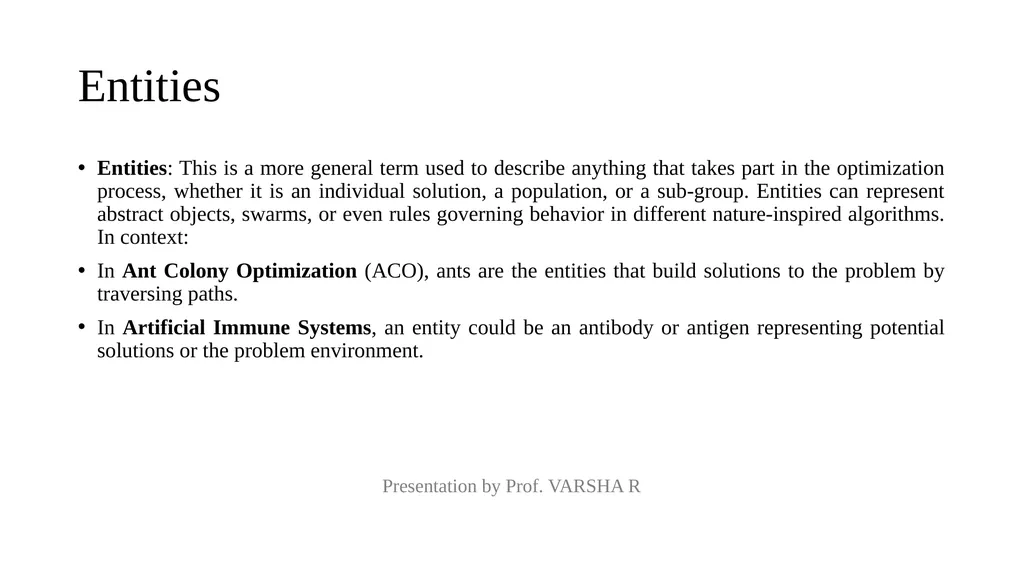
Entities Entities: This is a more general term used to describe anything that takes part in the optimization process, whether it is an individual solution, a population, or a sub-group. Entities can represent abstract objects, swarms, or even rules governing behavior in different nature-inspired algorithms. In context:
In Ant Colony Optimization (ACO), ants are the entities that build solutions to the problem by traversing paths.
In Artificial Immune Systems, an entity could be an antibody or antigen representing potential solutions or the problem environment.<br>
In Ant Colony Optimization (ACO), ants are the entities that build solutions to the problem by traversing paths.
In Artificial Immune Systems, an entity could be an antibody or antigen representing potential solutions or the problem environment.<br>
26
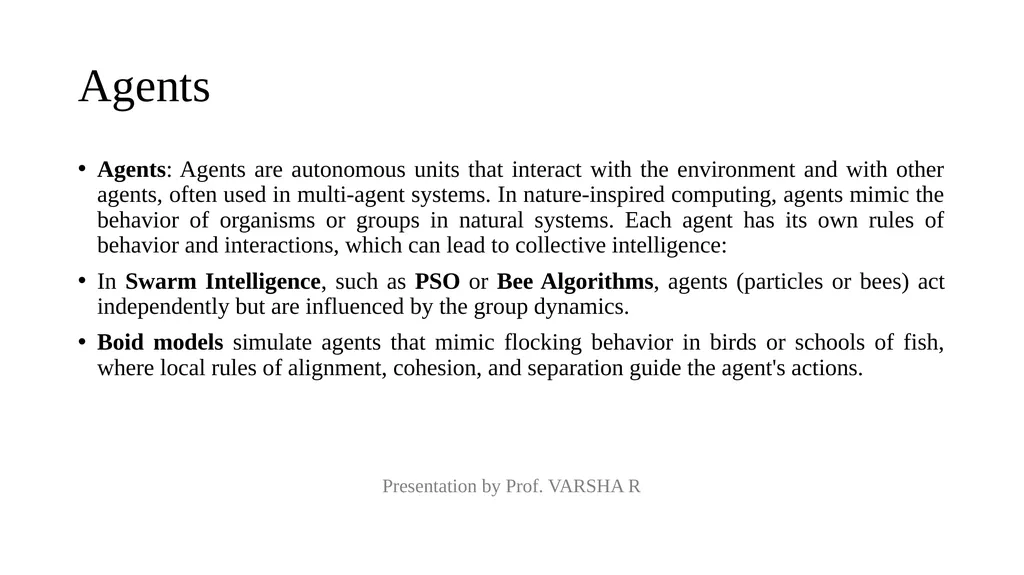
Agents Agents: Agents are autonomous units that interact with the environment and with other agents, often used in multi-agent systems. In nature-inspired computing, agents mimic the behavior of organisms or groups in natural systems. Each agent has its own rules of behavior and interactions, which can lead to collective intelligence:
In Swarm Intelligence, such as PSO or Bee Algorithms, agents (particles or bees) act independently but are influenced by the group dynamics.
Boid models simulate agents that mimic flocking behavior in birds or schools of fish, where local rules of alignment, cohesion, and separation guide the agent's actions.<br>
27
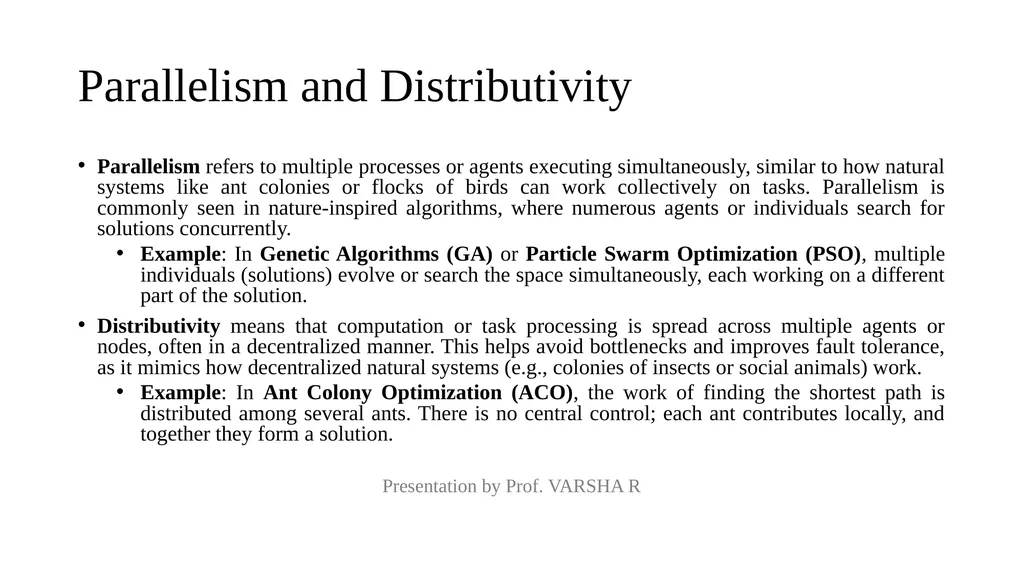
Parallelism and Distributivity Parallelism refers to multiple processes or agents executing simultaneously, similar to how natural systems like ant colonies or flocks of birds can work collectively on tasks. Parallelism is commonly seen in nature-inspired algorithms, where numerous agents or individuals search for solutions concurrently.
Example: In Genetic Algorithms (GA) or Particle Swarm Optimization (PSO), multiple individuals (solutions) evolve or search the space simultaneously, each working on a different part of the solution.
Distributivity means that computation or task processing is spread across multiple agents or nodes, often in a decentralized manner. This helps avoid bottlenecks and improves fault tolerance, as it mimics how decentralized natural systems (e.g., colonies of insects or social animals) work.
Example: In Ant Colony Optimization (ACO), the work of finding the shortest path is distributed among several ants. There is no central control; each ant contributes locally, and together they form a solution.<br>
28
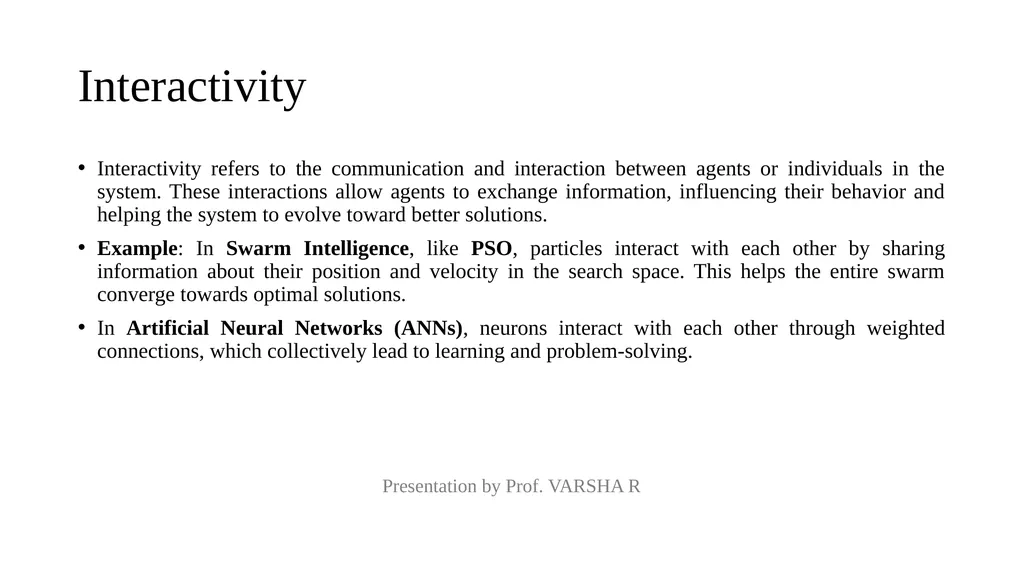
Interactivity Interactivity refers to the communication and interaction between agents or individuals in the system. These interactions allow agents to exchange information, influencing their behavior and helping the system to evolve toward better solutions.
Example: In Swarm Intelligence, like PSO, particles interact with each other by sharing information about their position and velocity in the search space. This helps the entire swarm converge towards optimal solutions.
In Artificial Neural Networks (ANNs), neurons interact with each other through weighted connections, which collectively lead to learning and problem-solving.<br>
29
Adaptation Adaptation refers to the ability of agents or the system as a whole to adjust to changes in the environment or to improve performance over time. Nature-inspired systems are highly adaptive, often using feedback loops or learning mechanisms to refine their behavior.
Example: In Evolutionary Algorithms (EAs), individuals adapt to their environment through evolutionary operators like mutation, selection, and crossover, gradually improving their fitness in each generation.
In Machine Learning, algorithms adapt through continuous learning, such as using feedback from the environment or through reinforcement learning strategies.<br>
30
Feedback Feedback refers to the process where the output or result of an agent’s action influences future actions. Positive feedback can reinforce certain behaviors, while negative feedback may suppress others, leading to dynamic changes in the system.
Example: In Ant Colony Optimization (ACO), ants lay pheromones on paths they take. As more ants follow a successful path, more pheromones are laid, which positively reinforces that path for other ants.<br>
Example: In Ant Colony Optimization (ACO), ants lay pheromones on paths they take. As more ants follow a successful path, more pheromones are laid, which positively reinforces that path for other ants.<br>
31
Self Organization Self-Organization describes a system's ability to spontaneously organize itself without central control, emerging from the local interactions of its agents. Self-organization allows nature-inspired algorithms to create order and structure from seemingly random or decentralized behaviors.
Example: In Swarm Intelligence, individual agents (e.g., particles, birds, ants) follow simple rules, and through their interactions, a global structure or solution emerges.<br>
Example: In Swarm Intelligence, individual agents (e.g., particles, birds, ants) follow simple rules, and through their interactions, a global structure or solution emerges.<br>
32
Complexity Complexity in nature-inspired systems arises from the combination of large numbers of simple interactions between agents. These systems often exhibit non-linear behaviors, where small changes in one part of the system can lead to significant, unpredictable outcomes.
Example: Flocking algorithms, based on the Boids model, where simple rules applied by each agent (bird) lead to complex behaviors, like flocking formations, without explicit coordination.<br>
Example: Flocking algorithms, based on the Boids model, where simple rules applied by each agent (bird) lead to complex behaviors, like flocking formations, without explicit coordination.<br>
33
Emergence Emergence refers to the process where complex structures or behaviors arise from simple rules followed by individual agents. The emergent behavior is not explicitly programmed but results from the local interactions of agents. This principle is central to nature-inspired computing.
Example: In Genetic Algorithms, the complex behavior of an optimized solution emerges from the interactions of genetic operators like mutation, crossover, and selection over many generations.
In Swarm Intelligence, the behavior of the entire swarm (e.g., finding an optimal solution or performing a complex task) is an emergent property of the simple rules followed by individual agents.<br>