Cancer Pain Management: Specialized Care Dr. David Flamer, MD FRCPC Assistant Professor, University of Toronto Department of Anesthesia and Pain Management Co-Director, Cancer Pain Clinic, Princess Margaret Hospital Associate Director,
"Cancer Pain Management: Specialized Care Dr. David" is the property of its rightful owner. Permission is granted to
download and print the materials on this website for personal, non-commercial use only, and to display it
on your personal computer provided you do not modify the materials and that you retain all copyright
notices contained in the materials. By downloading content from our website, you accept the terms of this
agreement.
Presentation Transcript
01
Cancer Pain Management: Specialized Care Dr. David Flamer, MD FRCPC
Assistant Professor, University of Toronto
Department of Anesthesia and Pain Management
Co-Director, Cancer Pain Clinic, Princess Margaret Hospital
Associate Director, Wasser Pain Management Clinic, Mount Sinai Hospital
david.flamer@uhn.ca<br>
02
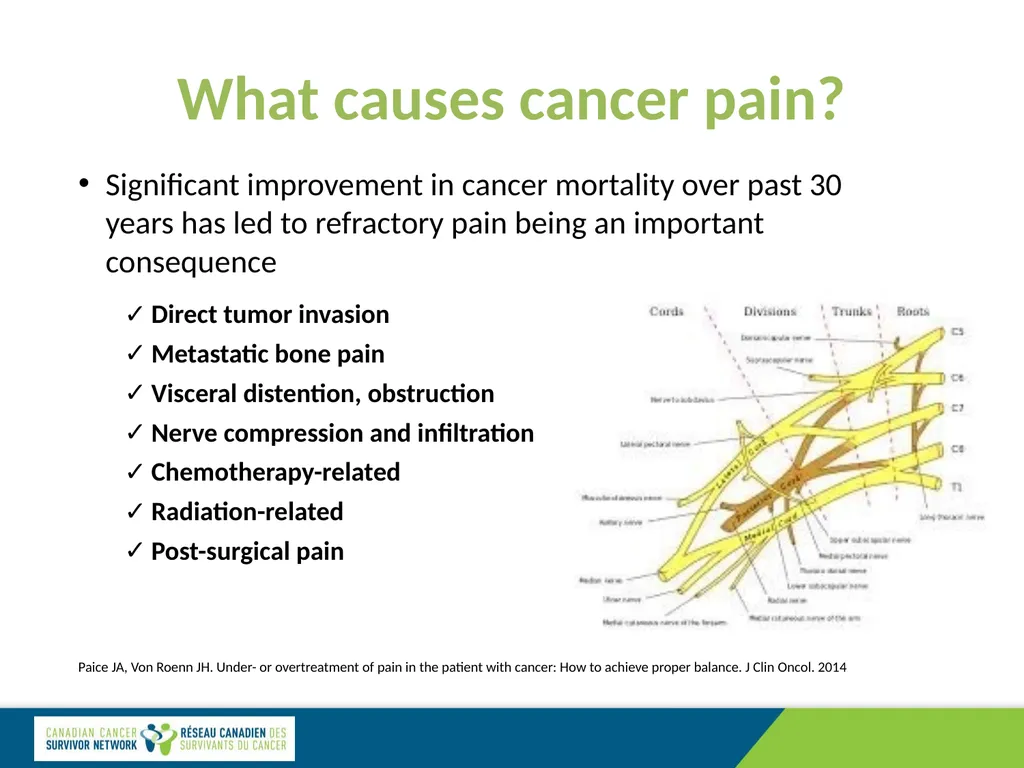
Significant improvement in cancer mortality over past 30 years has led to refractory pain being an important consequence Direct tumor invasion
Metastatic bone pain
Visceral distention, obstruction
Nerve compression and infiltration
Chemotherapy-related
Radiation-related
Post-surgical pain Paice JA, Von Roenn JH. Under- or overtreatment of pain in the patient with cancer: How to achieve proper balance. J Clin Oncol. 2014 What causes cancer pain?<br>
03
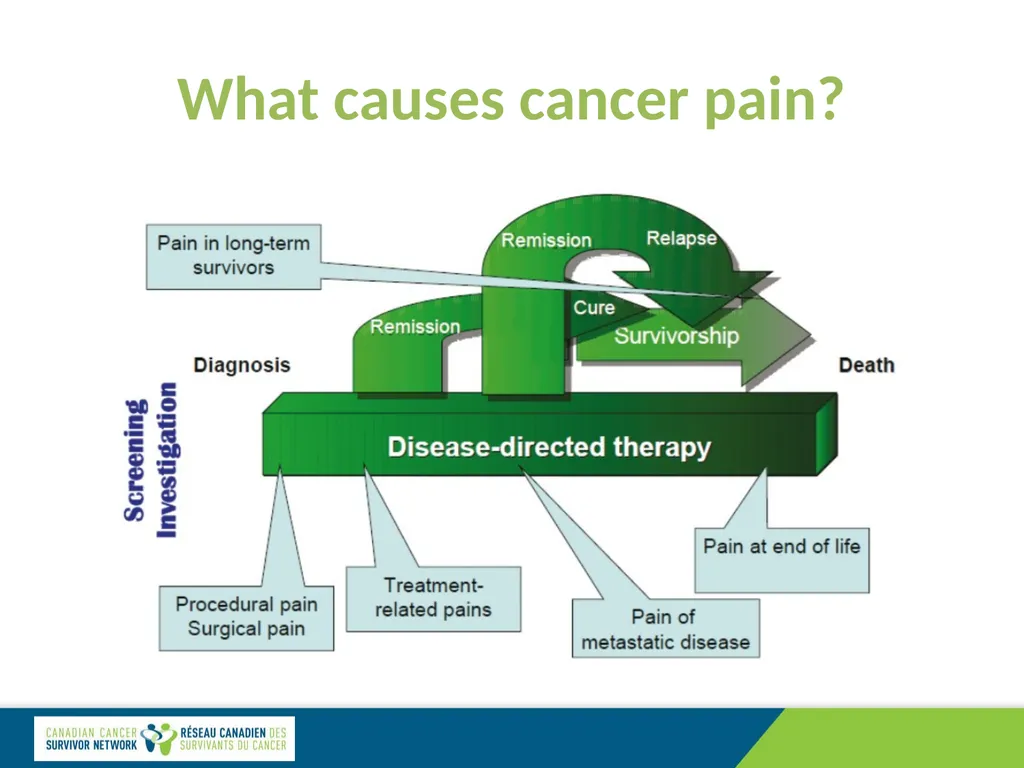
What causes cancer pain?<br>
04
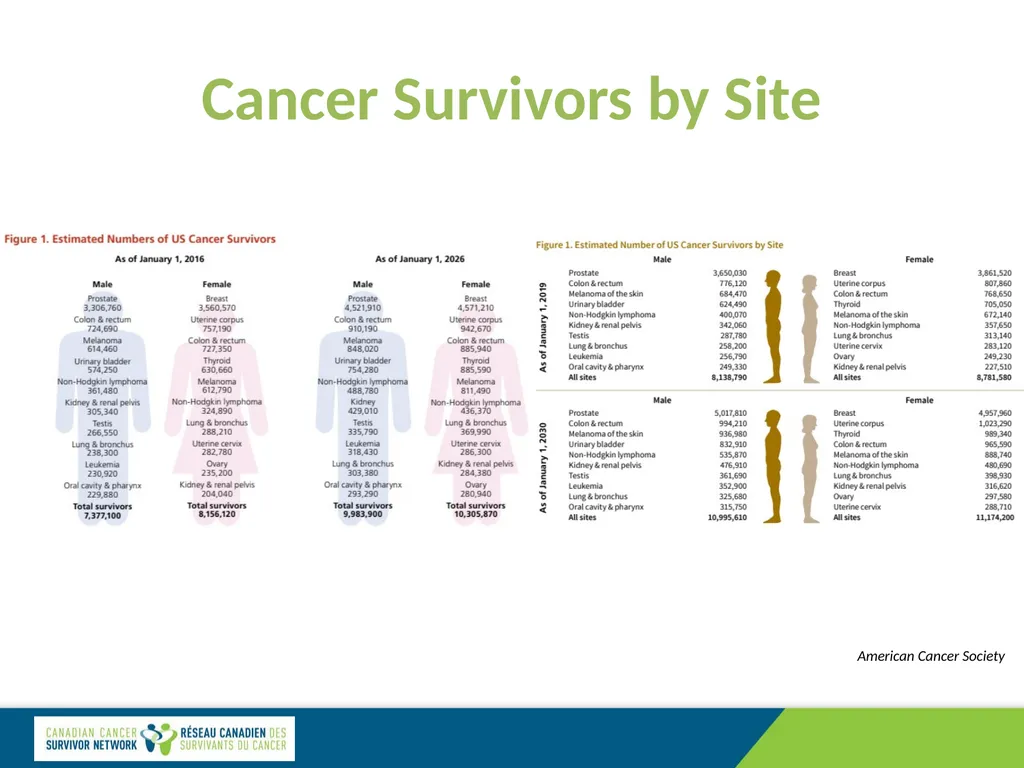
American Cancer Society Cancer Survivors by Site<br>
05
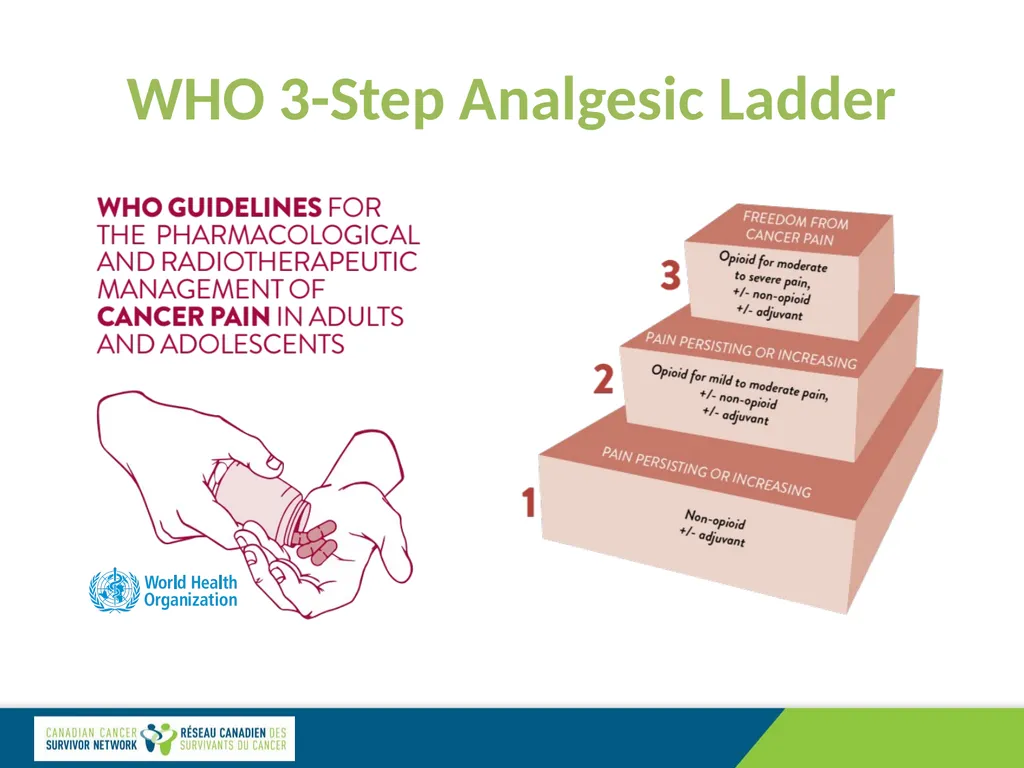
WHO 3-Step Analgesic Ladder<br>
06
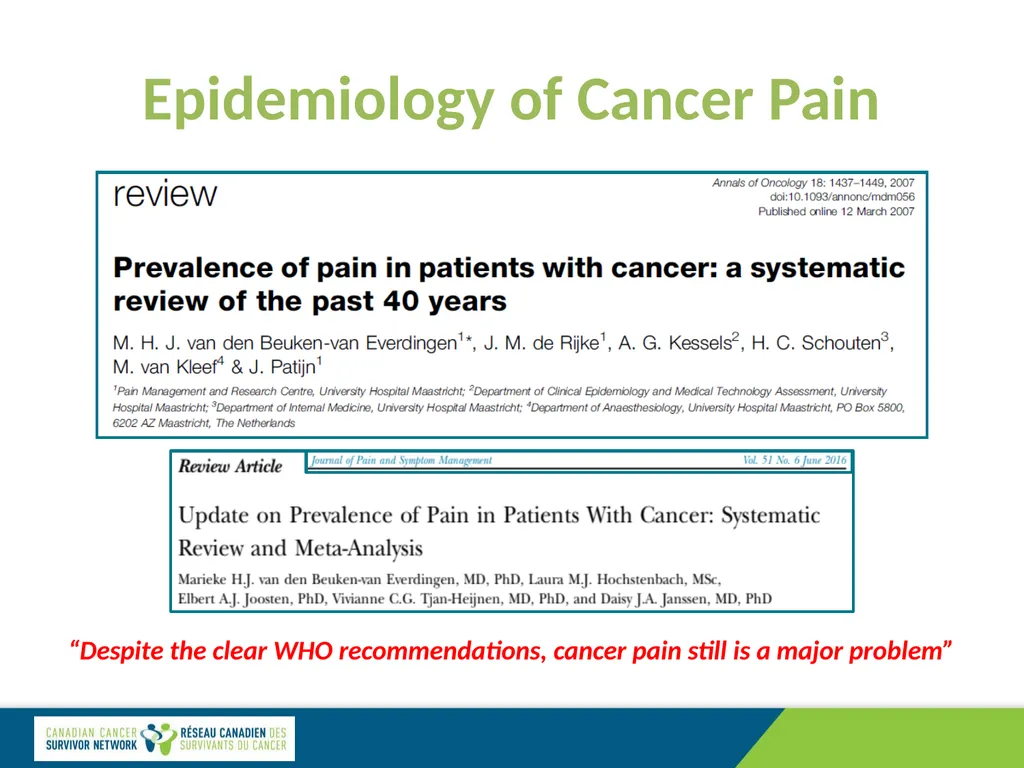
“Despite the clear WHO recommendations, cancer pain still is a major problem” Epidemiology of Cancer Pain<br>
07
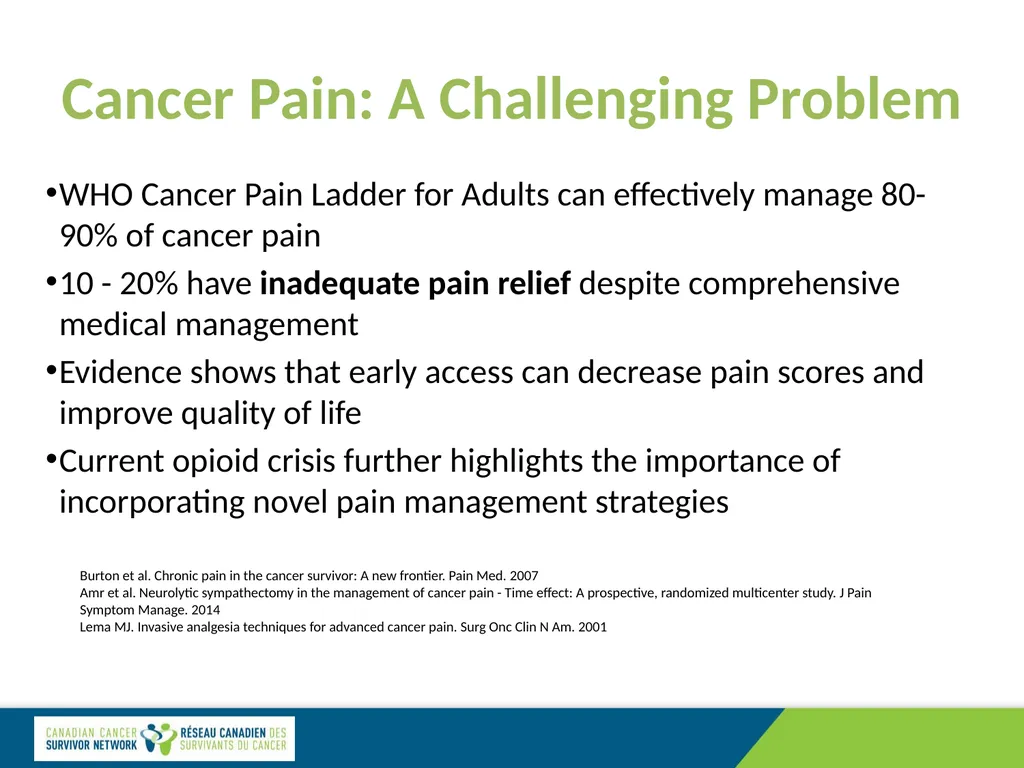
WHO Cancer Pain Ladder for Adults can effectively manage 80-90% of cancer pain
10 - 20% have inadequate pain relief despite comprehensive medical management
Evidence shows that early access can decrease pain scores and improve quality of life
Current opioid crisis further highlights the importance of incorporating novel pain management strategies Burton et al. Chronic pain in the cancer survivor: A new frontier. Pain Med. 2007
Amr et al. Neurolytic sympathectomy in the management of cancer pain - Time effect: A prospective, randomized multicenter study. J Pain Symptom Manage. 2014
Lema MJ. Invasive analgesia techniques for advanced cancer pain. Surg Onc Clin N Am. 2001 Cancer Pain: A Challenging Problem<br>
08
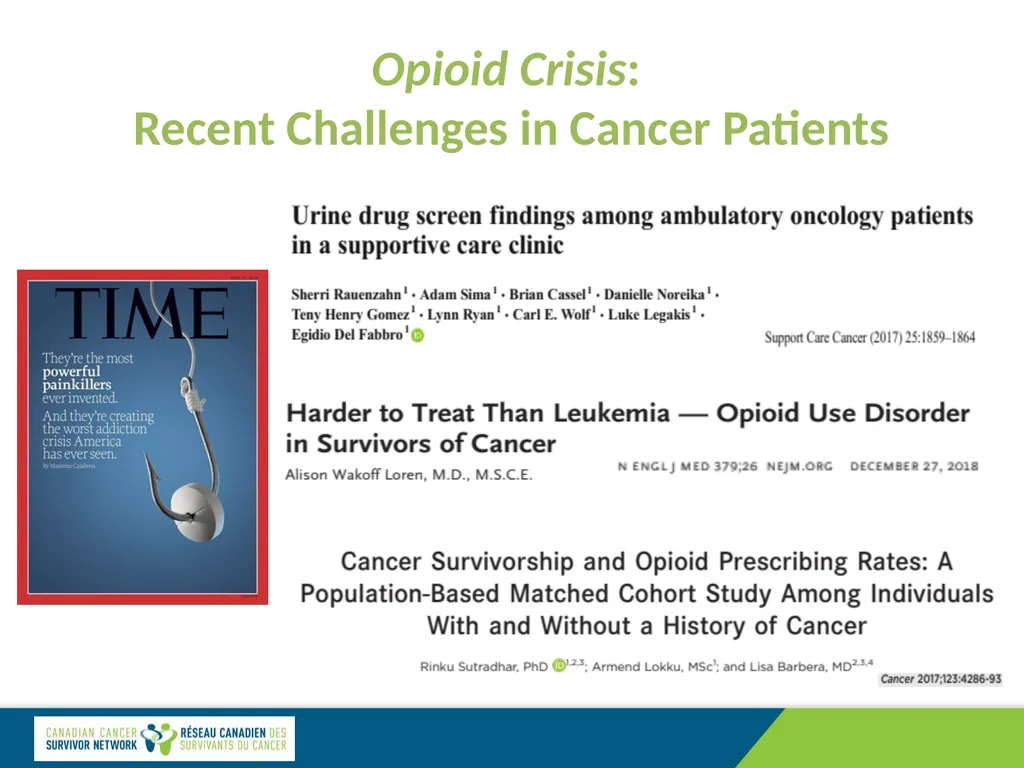
Opioid Crisis: Recent Challenges in Cancer Patients<br>
09
Distinctive features of cancer pain:
Unique causes and overlapping types of pain
Severity is dynamic and fluctuates throughout treatment
Both acute and chronic pain concerns
Differing goals of care (palliative vs not)
Multiple specialists, multiple medical co-morbidities, complex medications Cancer Pain ≠ Chronic Pain<br>
10
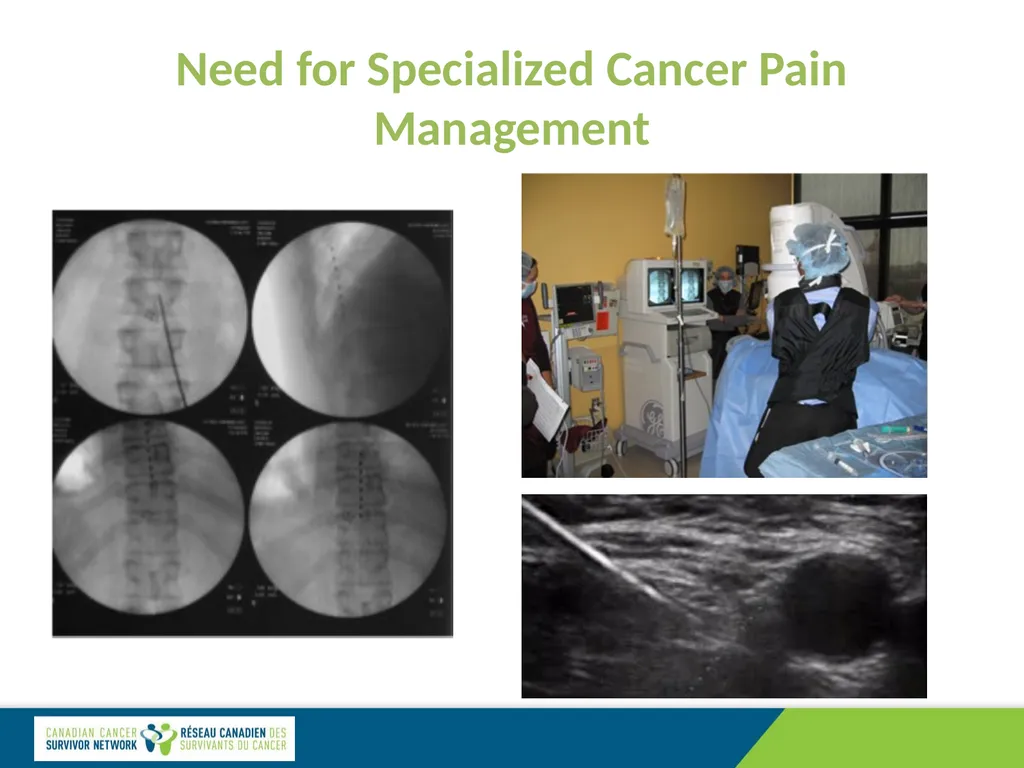
Need for Specialized Cancer Pain Management<br>
11
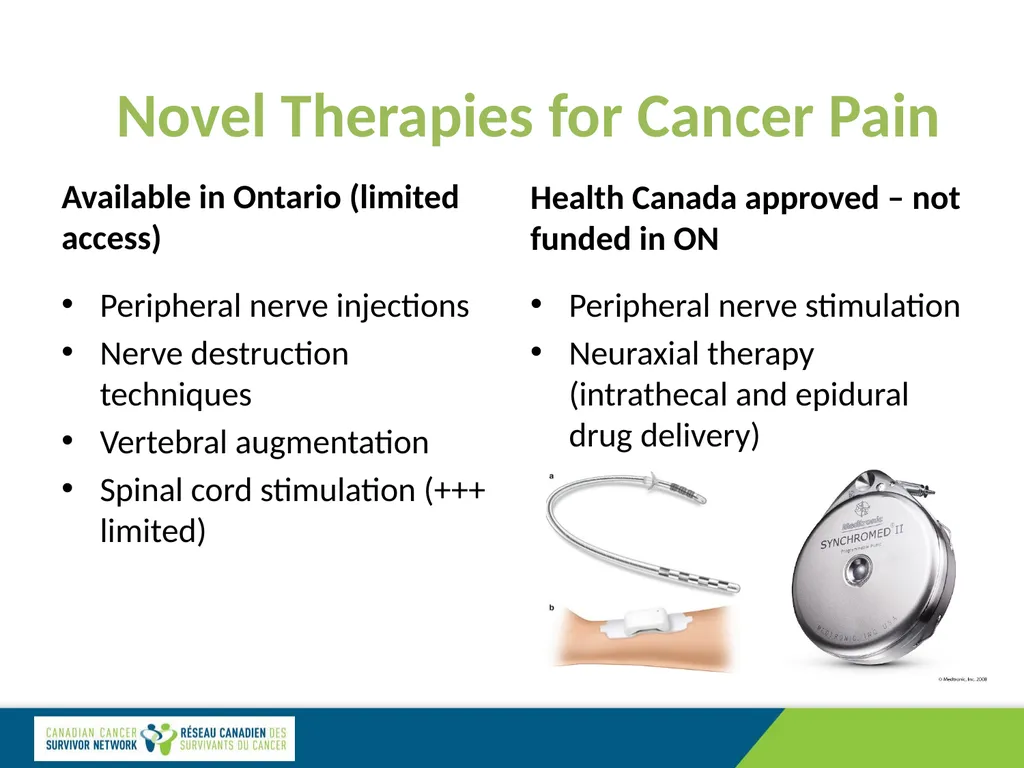
Available in Ontario (limited access) Peripheral nerve injections
Nerve destruction techniques
Vertebral augmentation
Spinal cord stimulation (+++ limited) Health Canada approved – not funded in ON Peripheral nerve stimulation
Neuraxial therapy (intrathecal and epidural drug delivery) Novel Therapies for Cancer Pain<br>
12
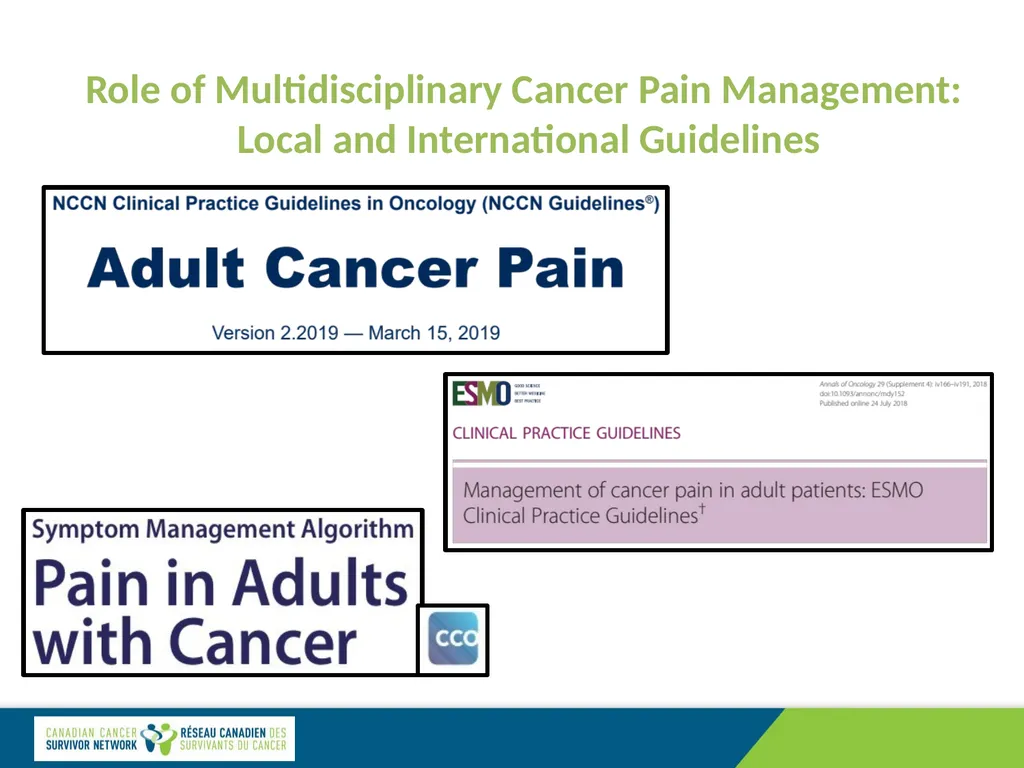
Role of Multidisciplinary Cancer Pain Management:
Local and International Guidelines<br>