CAR T-cell Therapy What is CAR T-cell therapy? Car-T Cell Therapy is Chimeric Antigen Receptor T Cell Therapy and is a type of immunotherapy used to treat cancer. What is immunotherapy? Immunotherapy is a treatment that uses the bodys own
"CAR T-cell Therapy What is CAR T-cell therapy?" is the property of its rightful owner. Permission is granted to
download and print the materials on this website for personal, non-commercial use only, and to display it
on your personal computer provided you do not modify the materials and that you retain all copyright
notices contained in the materials. By downloading content from our website, you accept the terms of this
agreement.
Presentation Transcript
01
CAR T-cell Therapy<br>
02
What is CAR T-cell therapy? Car-T Cell Therapy is Chimeric Antigen Receptor T Cell Therapy and is a type of immunotherapy used to treat cancer.<br>
03
What is immunotherapy? Immunotherapy is a treatment that uses the body’s own immune system to fight cancer
Immunotherapy improves the body’s defense against infections and cancer, which improves the body’s ability to detect and kill cancer cells<br>
04
Where do CAR T-cells come from? Lymphocytes are a type of white blood cell that are part of the immune system and include B lymphocytes, T lymphocytes, and natural killer cells
T lymphocytes (T-cells) are used in CAR T-cell therapy
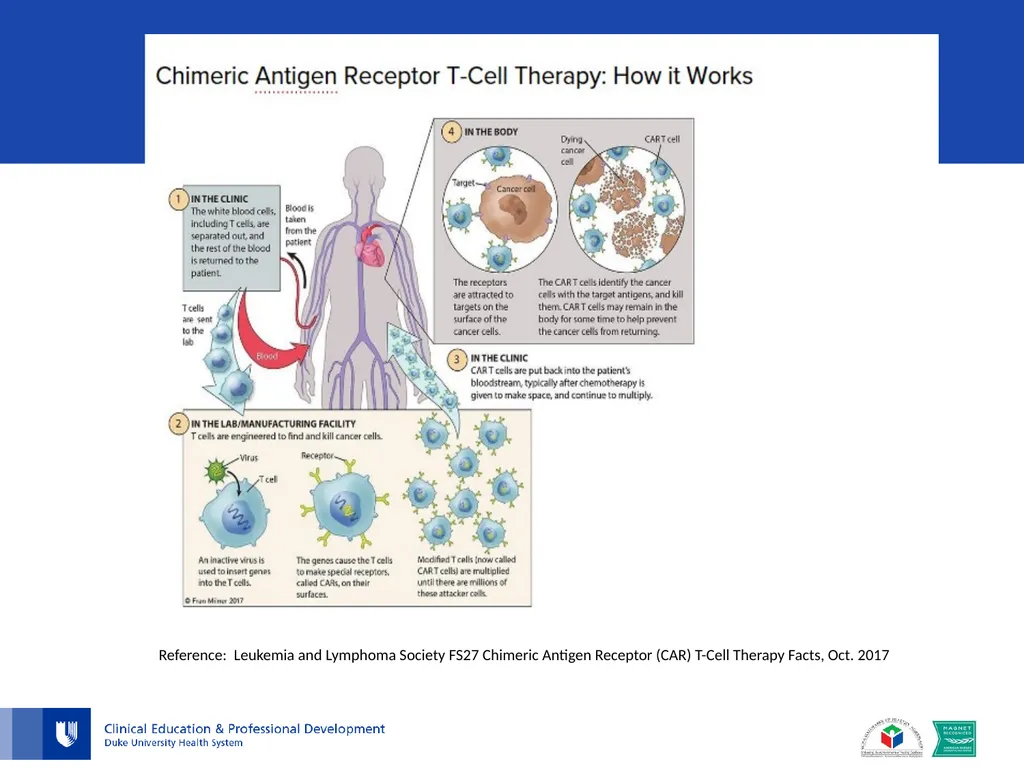
T-cells are collected from the patient’s blood using apheresis
After t-cells are collected, they are sent to a lab to be genetically engineered, which involves introducing DNA to produce chimeric antigen receptors (CARs) on the surface of the cells, which allows the t-cells to recognize an antigen on a cancer cell
The genetically engineered cells are then multiplied and frozen to be sent back to the hospital where the patient is being treated<br>
05
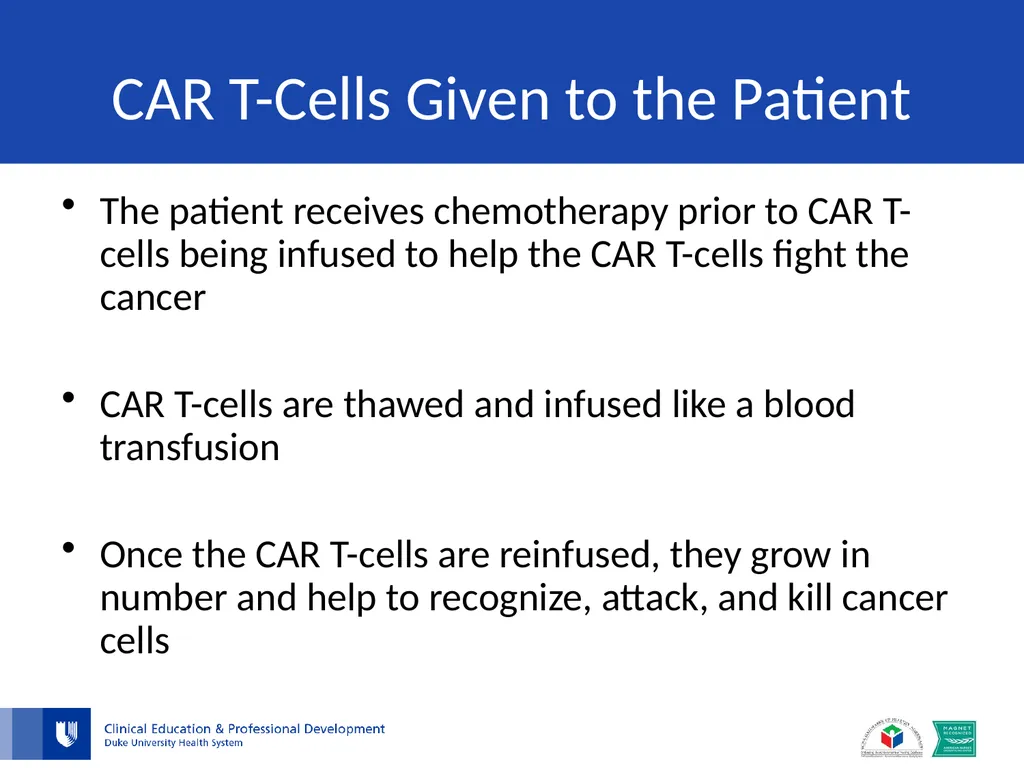
CAR T-Cells Given to the Patient The patient receives chemotherapy prior to CAR T-cells being infused to help the CAR T-cells fight the cancer
CAR T-cells are thawed and infused like a blood transfusion
Once the CAR T-cells are reinfused, they grow in number and help to recognize, attack, and kill cancer cells<br>
06
Reference: Leukemia and Lymphoma Society FS27 Chimeric Antigen Receptor (CAR) T-Cell Therapy Facts, Oct. 2017<br>
07
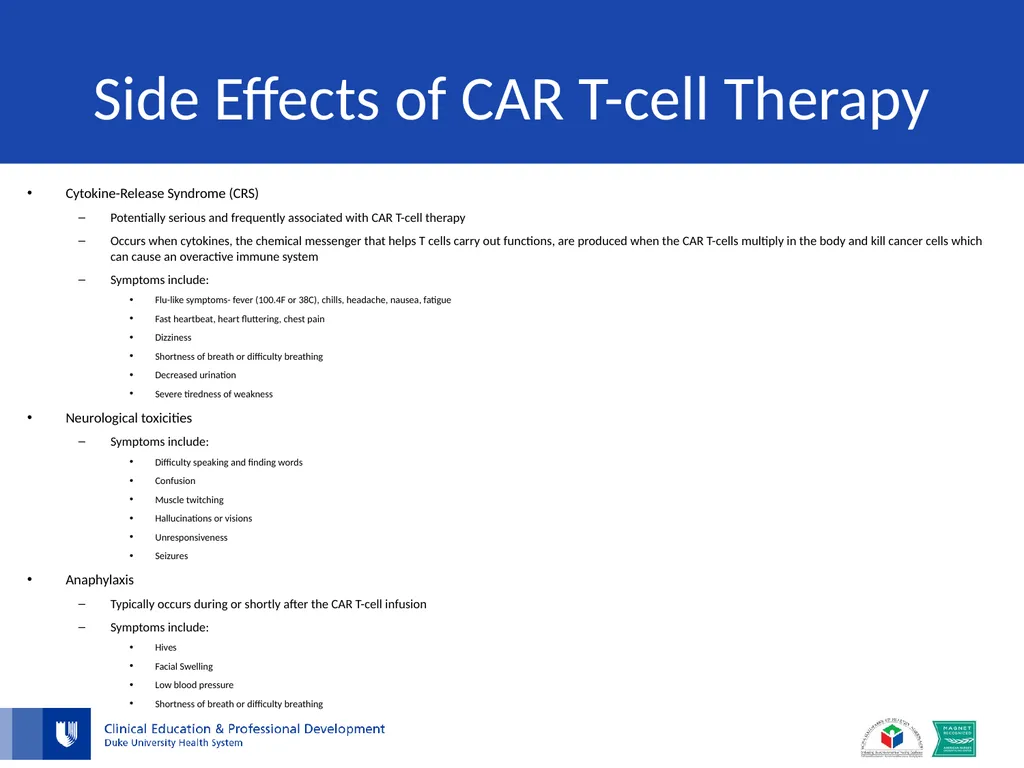
Side Effects of CAR T-cell Therapy Cytokine-Release Syndrome (CRS)
Potentially serious and frequently associated with CAR T-cell therapy
Occurs when cytokines, the chemical messenger that helps T cells carry out functions, are produced when the CAR T-cells multiply in the body and kill cancer cells which can cause an overactive immune system
Symptoms include:
Flu-like symptoms- fever (100.4F or 38C), chills, headache, nausea, fatigue
Fast heartbeat, heart fluttering, chest pain
Dizziness
Shortness of breath or difficulty breathing
Decreased urination
Severe tiredness of weakness
Neurological toxicities
Symptoms include:
Difficulty speaking and finding words
Confusion
Muscle twitching
Hallucinations or visions
Unresponsiveness
Seizures
Anaphylaxis
Typically occurs during or shortly after the CAR T-cell infusion
Symptoms include:
Hives
Facial Swelling
Low blood pressure
Shortness of breath or difficulty breathing<br>
08
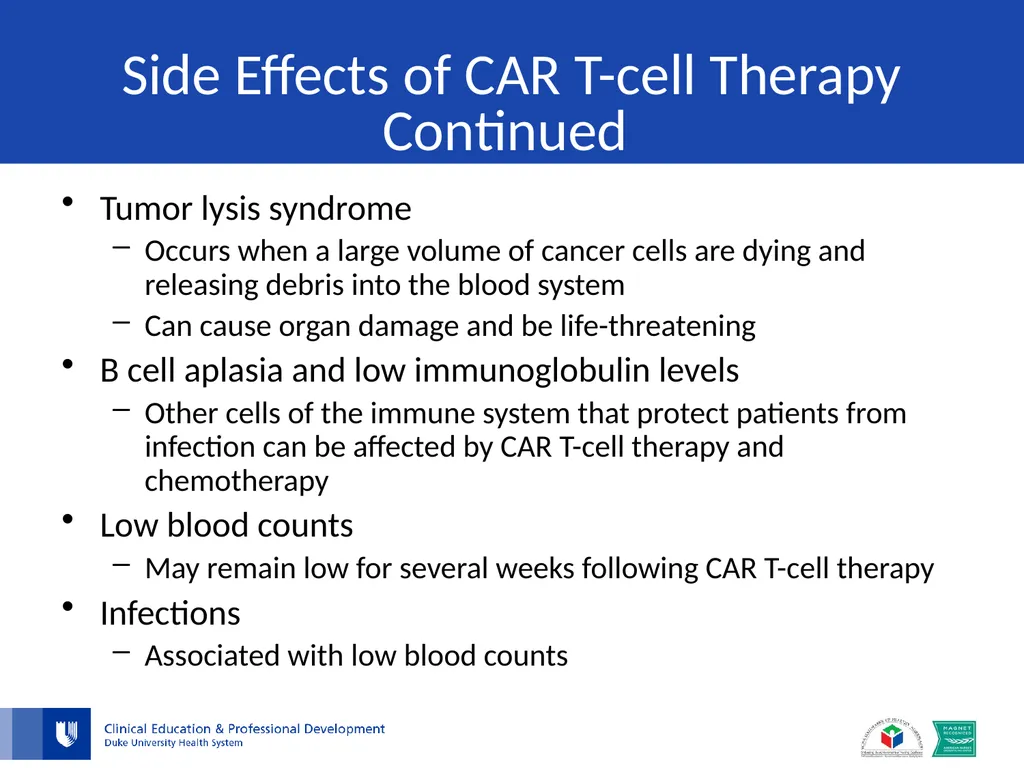
Side Effects of CAR T-cell Therapy Continued Tumor lysis syndrome
Occurs when a large volume of cancer cells are dying and releasing debris into the blood system
Can cause organ damage and be life-threatening
B cell aplasia and low immunoglobulin levels
Other cells of the immune system that protect patients from infection can be affected by CAR T-cell therapy and chemotherapy
Low blood counts
May remain low for several weeks following CAR T-cell therapy
Infections
Associated with low blood counts<br>
09
Cytokine Release Syndrome and Treatment Cytokine Release Syndrome (CRS) can occur 1 to 21 days following CAR T-cell infusion
Patients experiencing CRS may need treatment in the intensive care unit
CRS may require treatment with a drug called Tociluzumab, this drug helps to calm the immune response of the body<br>
10
Nursing Considerations Monitor the patient
Educate the patient
Side Effects
Symptoms
Management of side effects and symptoms
What to do if side effects or symptoms occur:
Notify health care team immediately
Monday-Friday 8AM-6PM call the ABMT Clinic at 919-668-6548
Night and Weekend call 919-684-8111 and ask for “THE HEMATOLOGIC MALIGNANCIES PHYSICIAN ON CALL”
If medical emergency, call 911
If patient is told to go to the Emergency Department, remind them to bring the PINK card that identifies them as a CAR T-cell patient and the wallet card<br>