
Caring for Transgender and Gender Diverse Patients
CB
Published · 83 slides · 0 views

1 / 1









Description
Caring for Transgender and Gender Diverse Patients Charlie E. A. Borowicz, MPH, MSW Steven R. Wolfe, DO, MPH, FAAFP, AAHIVS Annual AHN APP Conference 2023 October 14, 2023 Objectives Define gender identity, gender incongruence and gender
Related Topics
Share
Embed code
Download this presentation From Below
"Caring for Transgender and Gender Diverse Patients" is the property of its rightful owner. Permission is granted to download and print the materials on this website for personal, non-commercial use only, and to display it on your personal computer provided you do not modify the materials and that you retain all copyright notices contained in the materials. By downloading content from our website, you accept the terms of this agreement.
Presentation Transcript
01
Caring for Transgender and Gender Diverse Patients
Charlie E. A. Borowicz, MPH, MSW
Steven R. Wolfe, DO, MPH, FAAFP, AAHIVS Annual AHN APP Conference 2023 October 14, 2023<br>
Charlie E. A. Borowicz, MPH, MSW
Steven R. Wolfe, DO, MPH, FAAFP, AAHIVS Annual AHN APP Conference 2023 October 14, 2023<br>
02
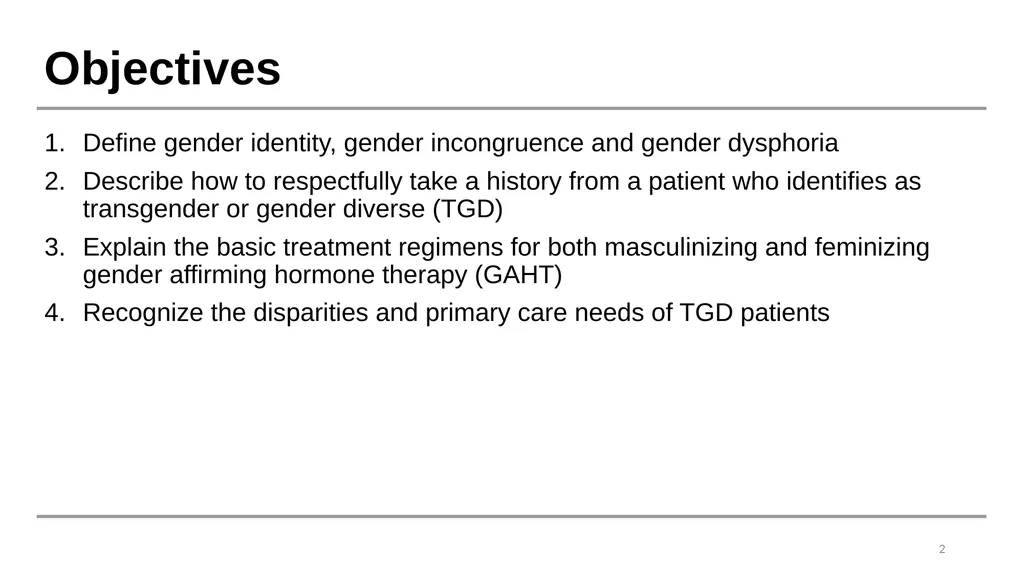
Objectives Define gender identity, gender incongruence and gender dysphoria
Describe how to respectfully take a history from a patient who identifies as transgender or gender diverse (TGD)
Explain the basic treatment regimens for both masculinizing and feminizing gender affirming hormone therapy (GAHT)
Recognize the disparities and primary care needs of TGD patients 2<br>
Describe how to respectfully take a history from a patient who identifies as transgender or gender diverse (TGD)
Explain the basic treatment regimens for both masculinizing and feminizing gender affirming hormone therapy (GAHT)
Recognize the disparities and primary care needs of TGD patients 2<br>
03
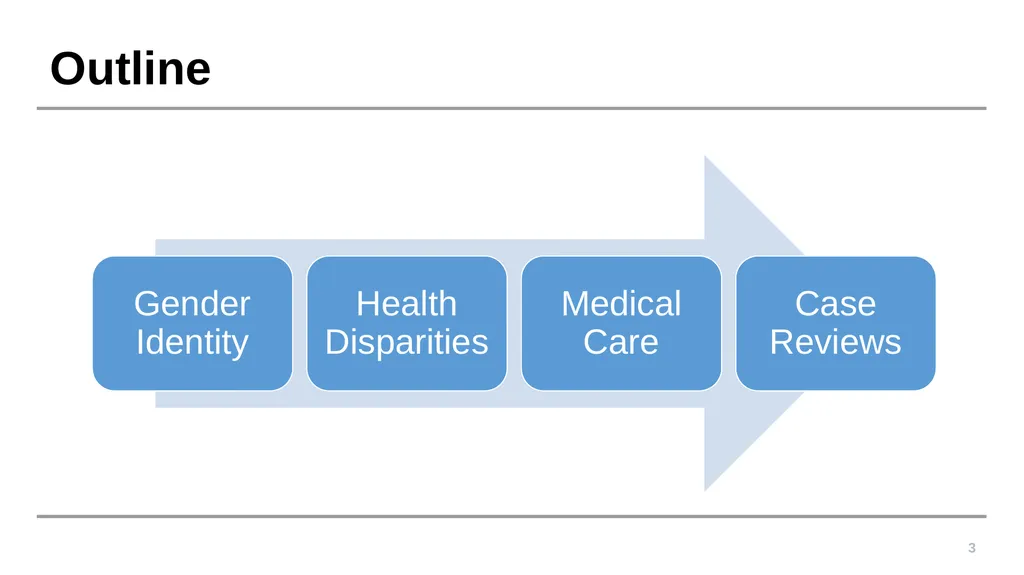
3 Outline<br>
04
Gender Identity<br>
05
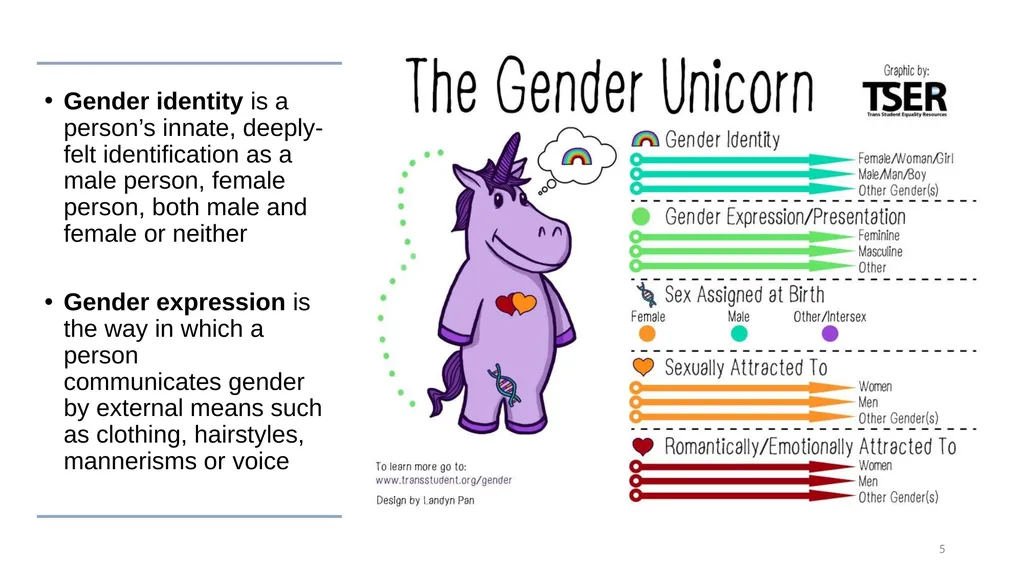
Gender identity is a person’s innate, deeply-felt identification as a male person, female person, both male and female or neither
Gender expression is the way in which a person communicates gender by external means such as clothing, hairstyles, mannerisms or voice 5<br>
Gender expression is the way in which a person communicates gender by external means such as clothing, hairstyles, mannerisms or voice 5<br>
06
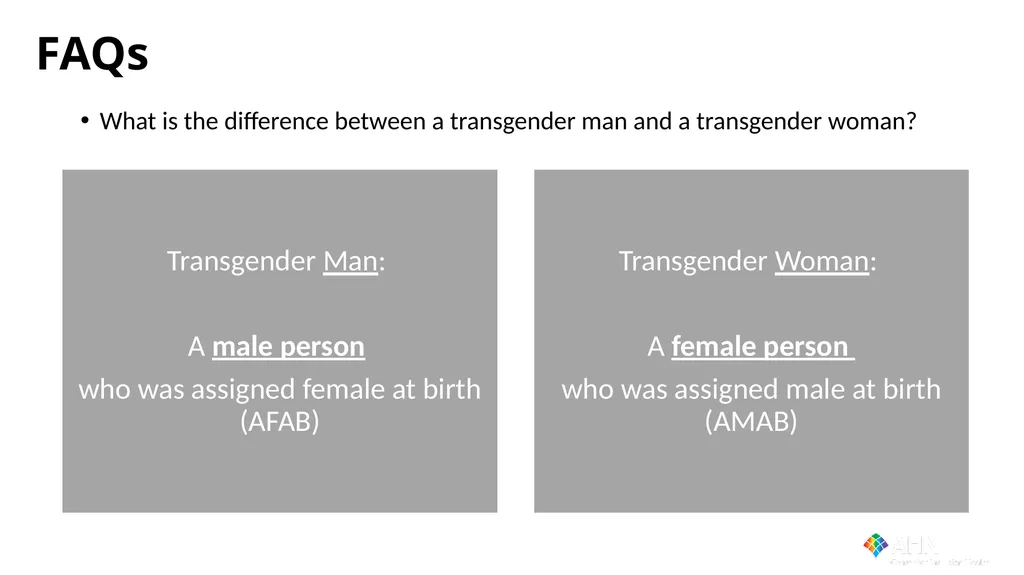
FAQs What is the difference between a transgender man and a transgender woman?<br>
07
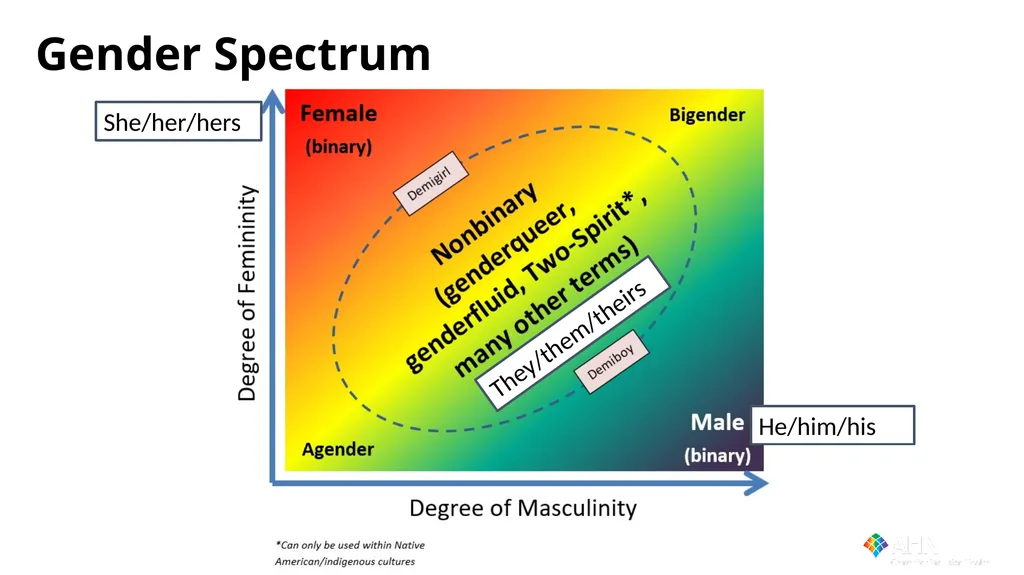
Gender Spectrum He/him/his She/her/hers They/them/theirs<br>
08
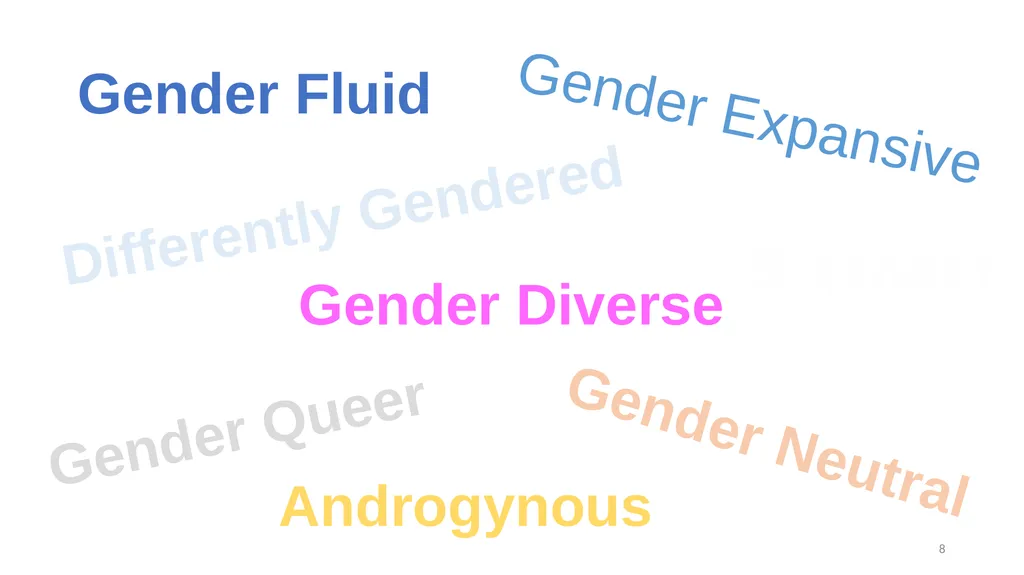
Gender Expansive Differently Gendered Gender Queer Gender Neutral Gender Fluid Bigender Androgynous Gender Diverse 8<br>
09
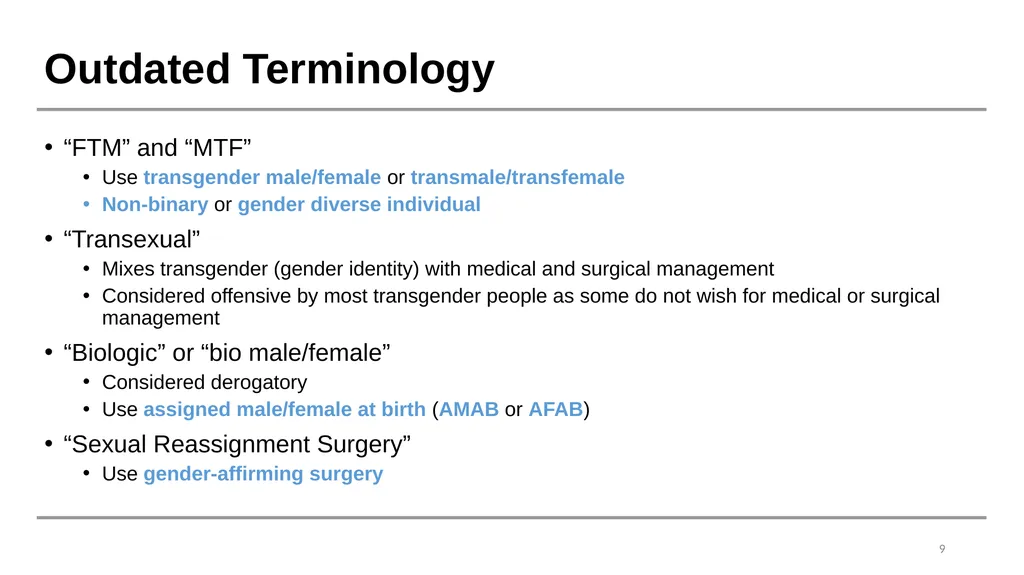
Outdated Terminology “FTM” and “MTF”
Use transgender male/female or transmale/transfemale
Non-binary or gender diverse individual
“Transexual”
Mixes transgender (gender identity) with medical and surgical management
Considered offensive by most transgender people as some do not wish for medical or surgical management
“Biologic” or “bio male/female”
Considered derogatory
Use assigned male/female at birth (AMAB or AFAB)
“Sexual Reassignment Surgery”
Use gender-affirming surgery 9<br>
10
Transgender and Gender Diverse Umbrella Intersex
Reproductive or sexual anatomy that doesn’t fit the typical definitions of female or male
E.g.: XXY, androgen insensitivity syndrome, hypospadias, adrenal hyperplasia
1:100 births in aggregate; the individual conditions associated with the intersex variations tend to be much rarer
Eunucks /’yōōnɘks/
Assigned male at birth (AMAB) and wish to eliminate masculine physical features, masculine genitals, or genital functioning. They also include those whose testicles have been surgically removed or rendered nonfunctional by chemical or physical means
Not addressed today due to time limitations 10 Hughes et al. 2007
Blackless et al 2000<br>
11
Bottom line… Ask the patients
what name and pronouns they use
and use them 11<br>
what name and pronouns they use
and use them 11<br>
12
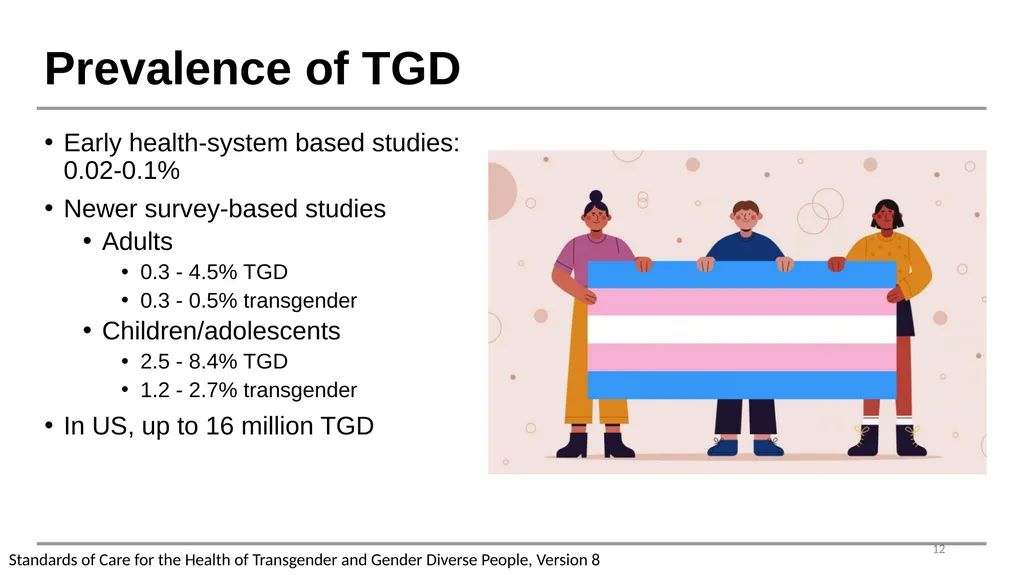
Prevalence of TGD Early health-system based studies: 0.02-0.1%
Newer survey-based studies
Adults
0.3 - 4.5% TGD
0.3 - 0.5% transgender
Children/adolescents
2.5 - 8.4% TGD
1.2 - 2.7% transgender
In US, up to 16 million TGD Standards of Care for the Health of Transgender and Gender Diverse People, Version 8 12<br>
Newer survey-based studies
Adults
0.3 - 4.5% TGD
0.3 - 0.5% transgender
Children/adolescents
2.5 - 8.4% TGD
1.2 - 2.7% transgender
In US, up to 16 million TGD Standards of Care for the Health of Transgender and Gender Diverse People, Version 8 12<br>
13
Health Disparities<br>
14
2015 U.S. Transgender Survey > 1171 respondents from PA
30% reported at least one negative experience in the past year with medical providers
Being refused treatment
Being harassed or assaulted
Having to teach the provider how to care for them
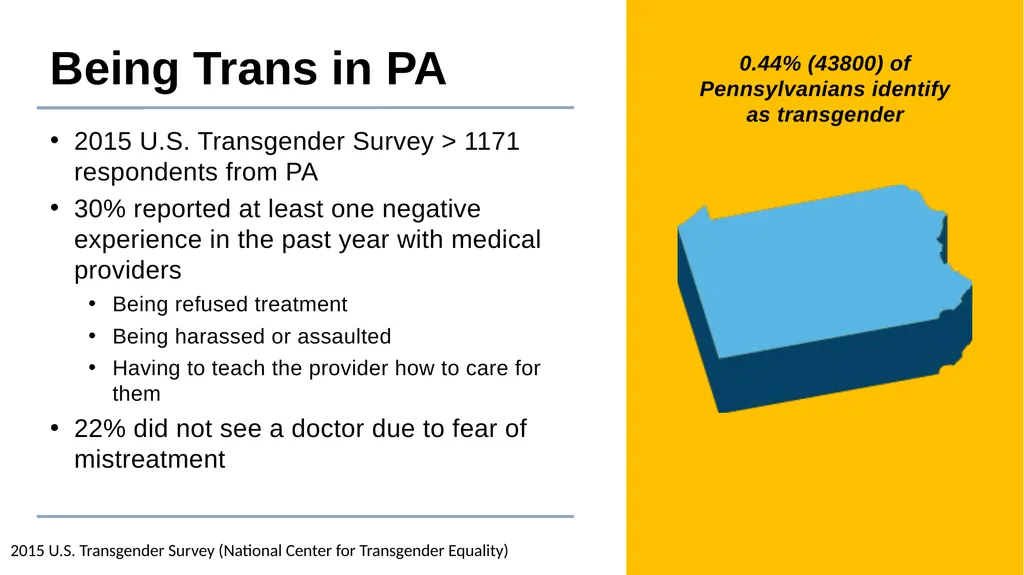
22% did not see a doctor due to fear of mistreatment Being Trans in PA 2015 U.S. Transgender Survey (National Center for Transgender Equality) 0.44% (43800) of Pennsylvanians identify as transgender<br>
15
Social Determinants of Health 46% verbally harassed in the last year
9% physically assaulted in the last year
24% lifetime experience of severe intimate partner violence
15% unemployed: 3x general population
29% living in poverty: 2x general population
30% lifetime homelessness 2015 U.S. Transgender Survey (National Center for Transgender Equality) 15<br>
9% physically assaulted in the last year
24% lifetime experience of severe intimate partner violence
15% unemployed: 3x general population
29% living in poverty: 2x general population
30% lifetime homelessness 2015 U.S. Transgender Survey (National Center for Transgender Equality) 15<br>
16
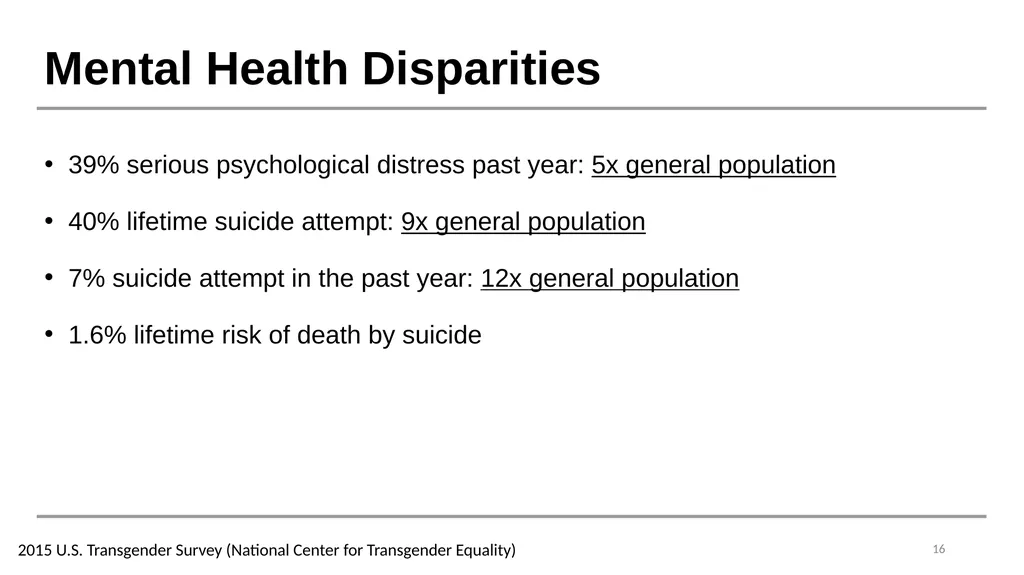
Mental Health Disparities 39% serious psychological distress past year: 5x general population
40% lifetime suicide attempt: 9x general population
7% suicide attempt in the past year: 12x general population
1.6% lifetime risk of death by suicide 2015 U.S. Transgender Survey (National Center for Transgender Equality) 16<br>
40% lifetime suicide attempt: 9x general population
7% suicide attempt in the past year: 12x general population
1.6% lifetime risk of death by suicide 2015 U.S. Transgender Survey (National Center for Transgender Equality) 16<br>
17
Inclusivity<br>
18
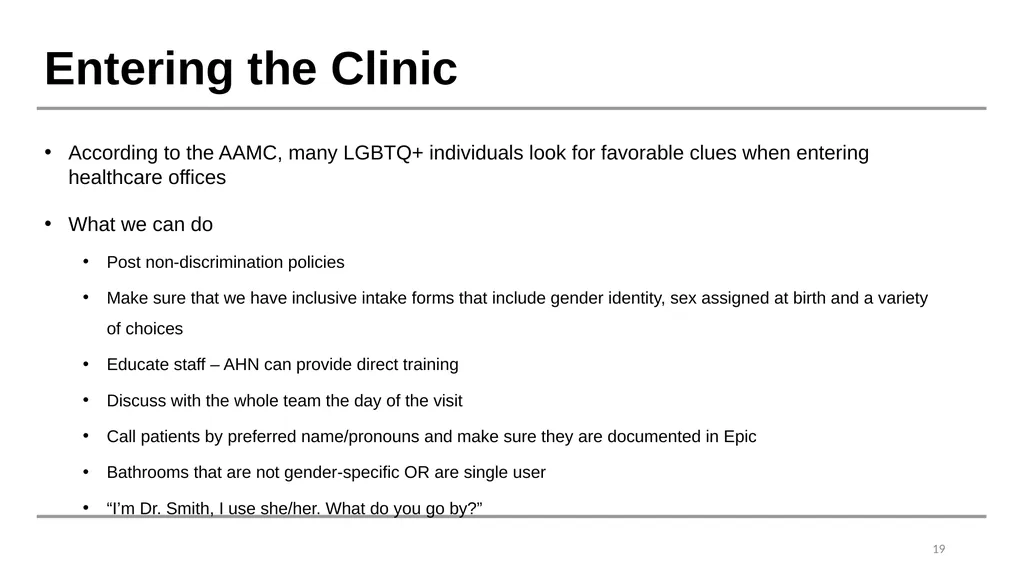
Entering the Clinic According to the AAMC, many LGBTQ+ individuals look for favorable clues when entering healthcare offices
What we can do
Post non-discrimination policies
Make sure that we have inclusive intake forms that include gender identity, sex assigned at birth and a variety of choices
Educate staff – AHN can provide direct training
Discuss with the whole team the day of the visit
Call patients by preferred name/pronouns and make sure they are documented in Epic
Bathrooms that are not gender-specific OR are single user
“I’m Dr. Smith, I use she/her. What do you go by?” 19<br>
19
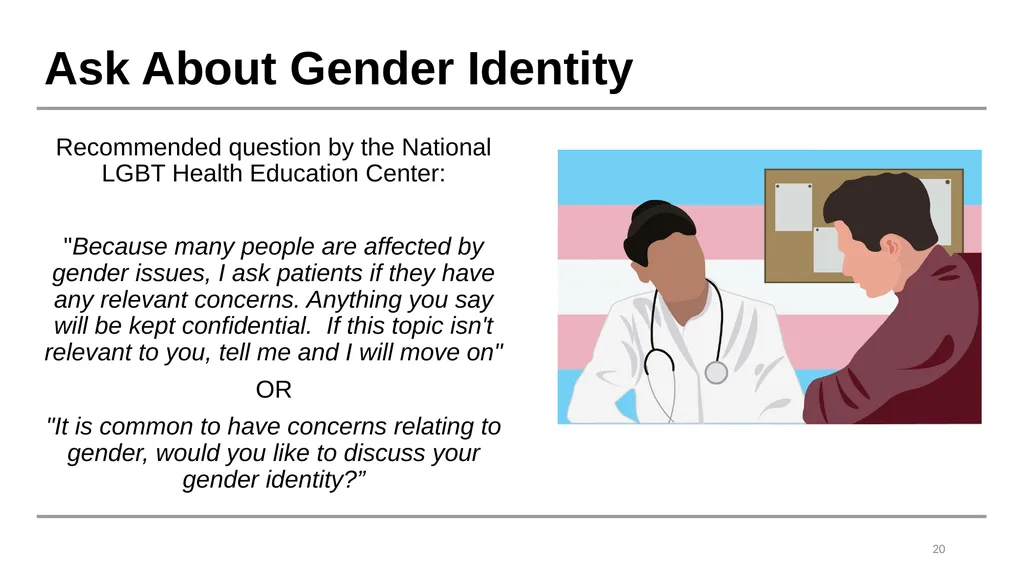
Ask About Gender Identity Recommended question by the National LGBT Health Education Center:
"Because many people are affected by gender issues, I ask patients if they have any relevant concerns. Anything you say will be kept confidential. If this topic isn't relevant to you, tell me and I will move on"
OR
"It is common to have concerns relating to gender, would you like to discuss your gender identity?” 20<br>
20
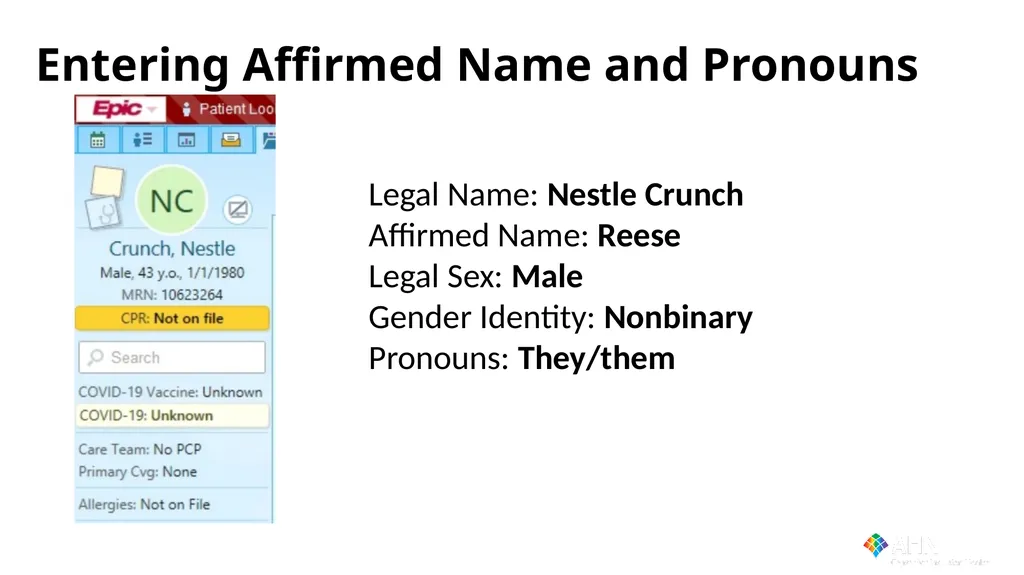
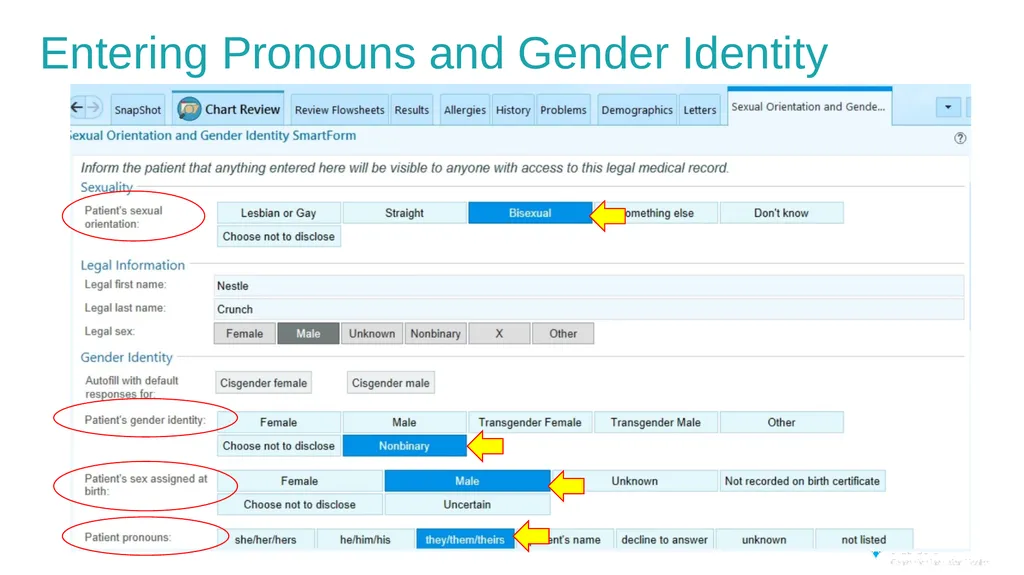
Entering Affirmed Name and Pronouns Legal Name: Nestle Crunch
Affirmed Name: Reese
Legal Sex: Male
Gender Identity: Nonbinary
Pronouns: They/them<br>
Affirmed Name: Reese
Legal Sex: Male
Gender Identity: Nonbinary
Pronouns: They/them<br>
21
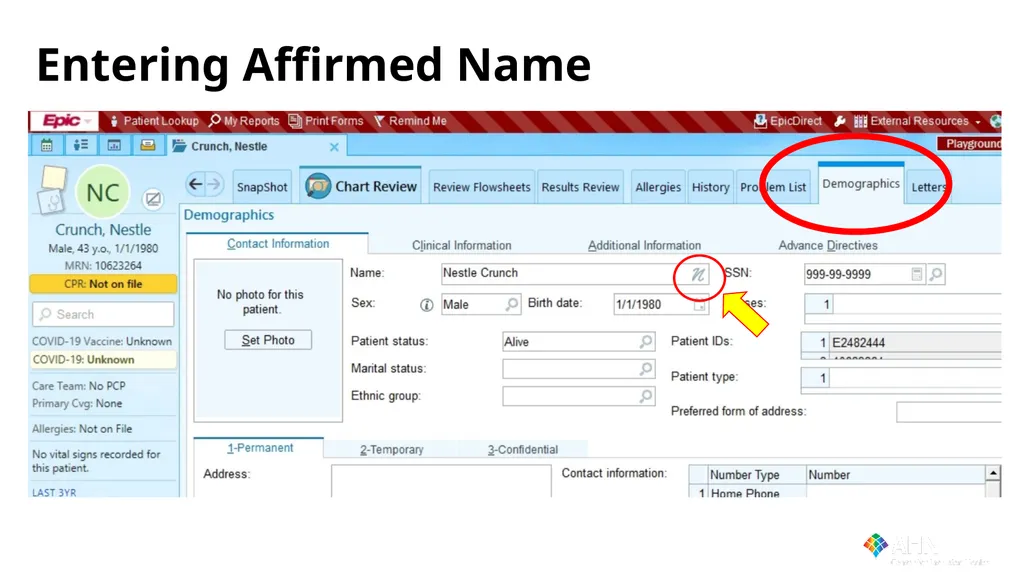
Entering Affirmed Name<br>
22
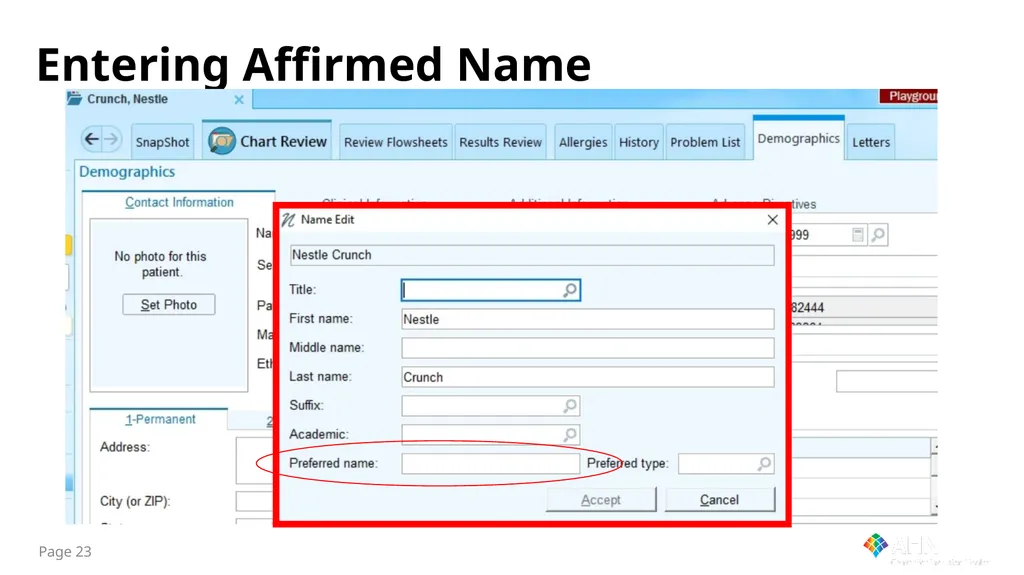
Page 23 Entering Affirmed Name<br>
23
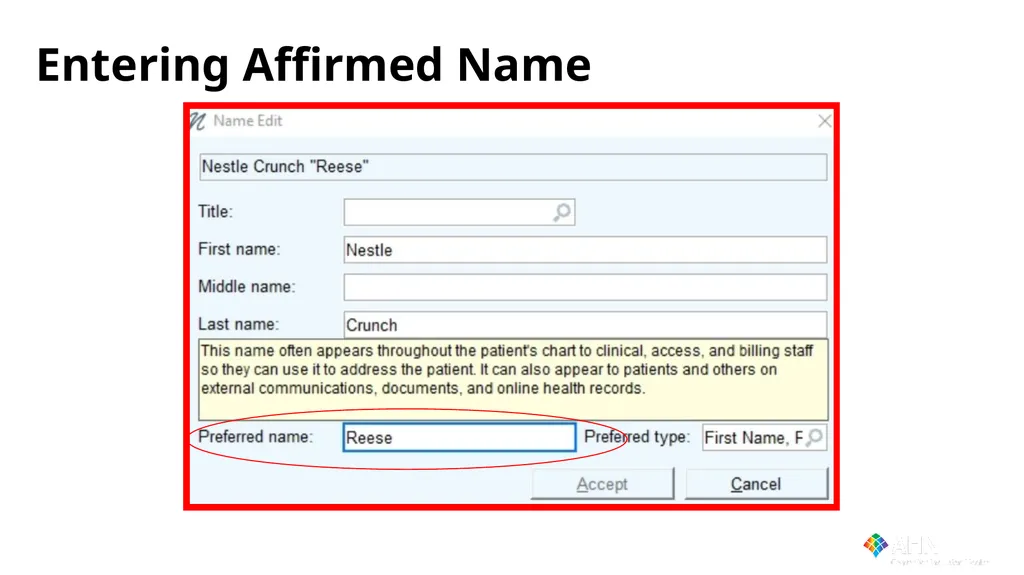
Entering Affirmed Name<br>
24
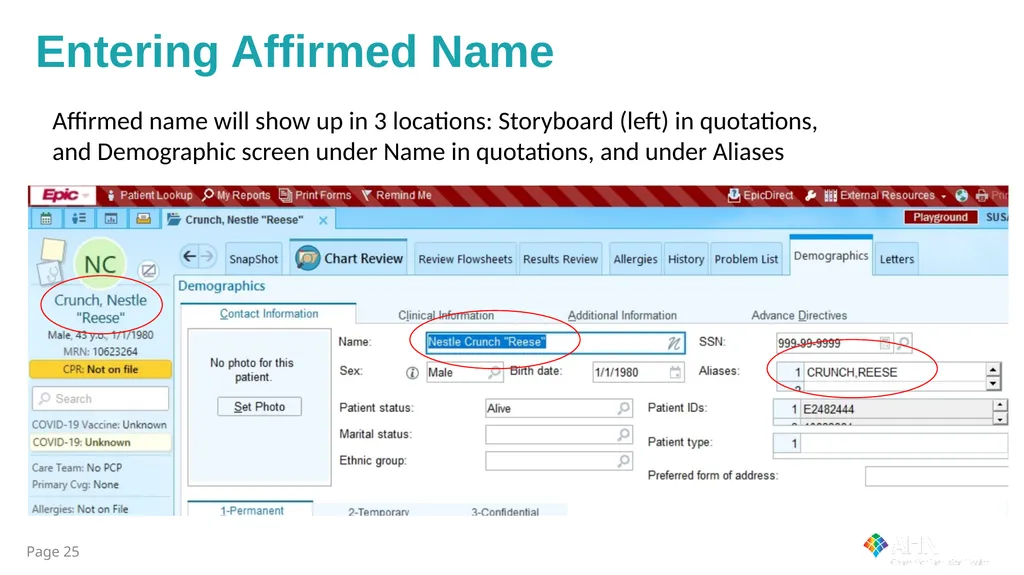
Page 25 Entering Affirmed Name Affirmed name will show up in 3 locations: Storyboard (left) in quotations, and Demographic screen under Name in quotations, and under Aliases<br>
25
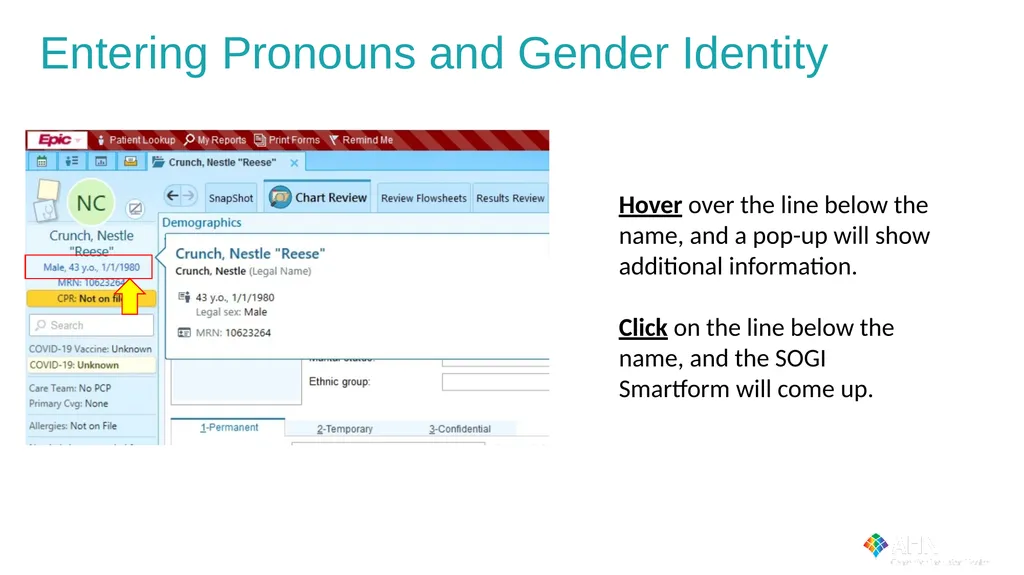
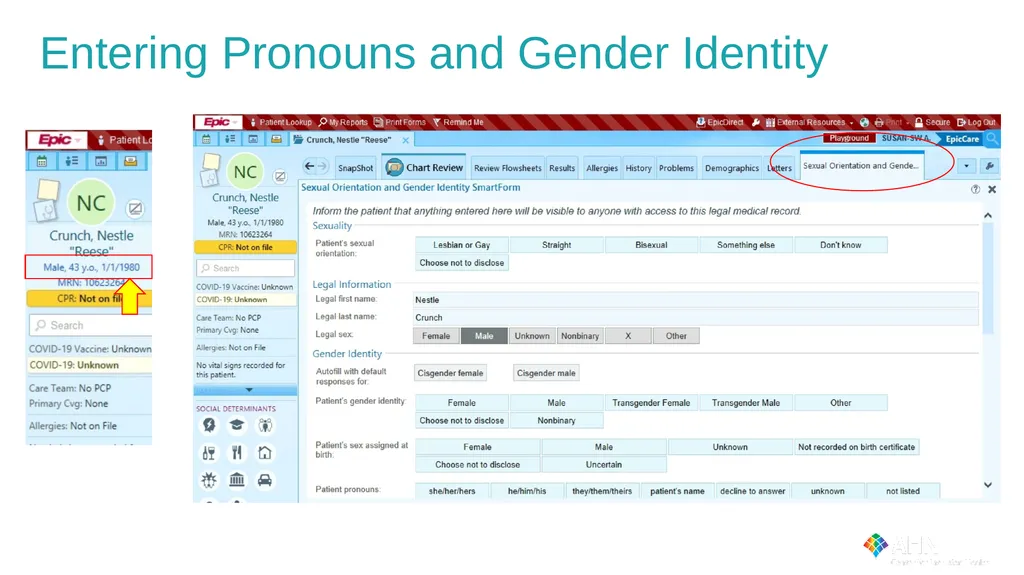
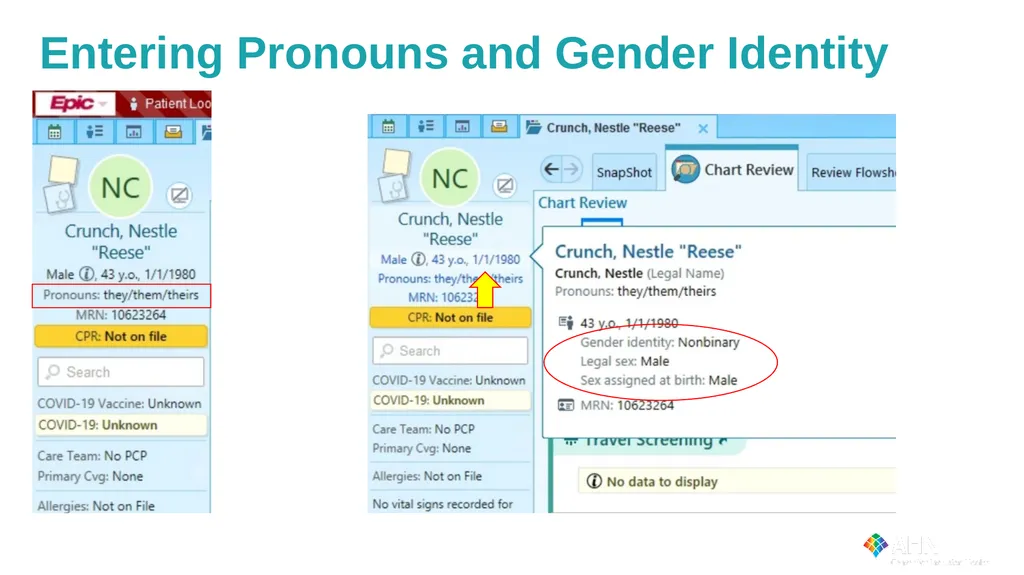
Entering Pronouns and Gender Identity Hover over the line below the name, and a pop-up will show additional information.
Click on the line below the name, and the SOGI Smartform will come up.<br>
Click on the line below the name, and the SOGI Smartform will come up.<br>
26
Entering Pronouns and Gender Identity<br>
27
Entering Pronouns and Gender Identity<br>
28
Entering Pronouns and Gender Identity<br>
29
Documentation in Epic Ask for preferred name and pronouns
When typing or dictating use preferred name and pronouns throughout note
Reflect the patient’s language and use the same terms
Discuss confidentiality: OK to discuss what parts of conversation will be documented in the chart and the one’s they would prefer would not be documented
Clarify unfamiliar terms
Apologize and take responsibility for making mistakes 30s<br>
30
History and Diagnosis<br>
31
Gender Dysphoria: DSM-V Marked and sustained incongruence between one’s experienced/expressed gender and assigned gender
Communicates the emotional distress
Associated with clinically significant distress or impairment in social, occupational, or other important areas of functioning
Removes the stigma of “disorder” previously in DSM-4
Remember not all gender diverse people have gender dysphoria 32<br>
Communicates the emotional distress
Associated with clinically significant distress or impairment in social, occupational, or other important areas of functioning
Removes the stigma of “disorder” previously in DSM-4
Remember not all gender diverse people have gender dysphoria 32<br>
32
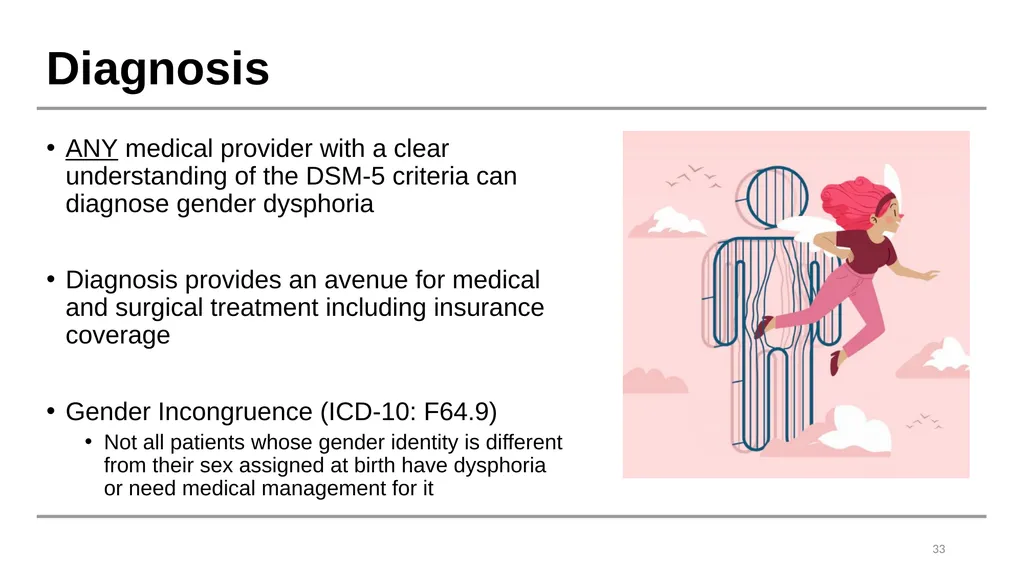
Diagnosis ANY medical provider with a clear understanding of the DSM-5 criteria can diagnose gender dysphoria
Diagnosis provides an avenue for medical and surgical treatment including insurance coverage
Gender Incongruence (ICD-10: F64.9)
Not all patients whose gender identity is different from their sex assigned at birth have dysphoria or need medical management for it 33<br>
Diagnosis provides an avenue for medical and surgical treatment including insurance coverage
Gender Incongruence (ICD-10: F64.9)
Not all patients whose gender identity is different from their sex assigned at birth have dysphoria or need medical management for it 33<br>
33
Gender History Taking Use open-ended questions
“Tell me about your journey with gender”
Assess previous gender-affirming medical and/or surgery treatments (GAMST)
Many patients have had experiences with providers asking unnecessary questions out of curiosity
Assess goals – everyone is different
What changes or characteristics are important to them
Gender-affirming medical treatment
Gender affirming surgeries
Understand the patient’s expectations 34<br>
34
Sexual History Taking Use open-ended questions
“What types of partners do you have?”
“Do you have multiple partners?”
Use gender-neutral words to ask about relationship partners
“Partner”, “significant other”, “spouse”
“Are you in a relationship?” or “Do you live with anyone?”
Avoid: “Are you married?” or “Do you have a boy/girlfriend?”
Be especially sensitive when discussing genitals
Can ask what patients prefer to call their anatomy; review SOGI together
Watch word choice when assessing pregnancy risk
“Do you have penetrative sex with anyone who produces sperm?” 35<br>
35
How Do We Treat? Gender Affirmation (gender transition) – process of recognizing, accepting, and expressing one’s gender identity
Proven benefit for dysphoria symptoms, suicidal ideation, QOL, sexual function, and more
Medically necessary and effective for dysphoria (AMA, WPATH)
Systematic review of 7928 transgender patients who underwent gender affirming surgeries showed regret at 1% (n=77 patients)
Survey of surgeons who treated between 18,000 and 27,000 patients showed regret rates at 0.2-0.3% Plast Reconstr Surg Glob Open 2021
Annals of Translational Medicine 2021 36<br>
36
Treatment Options Social: clothing, hair, name or gender marker change
Binding
Facial/body hair removal
Voice modification
Genital tucking/packing
Gender-affirming medical treatment
Gender-affirming surgical treatment 37<br>
Binding
Facial/body hair removal
Voice modification
Genital tucking/packing
Gender-affirming medical treatment
Gender-affirming surgical treatment 37<br>
37
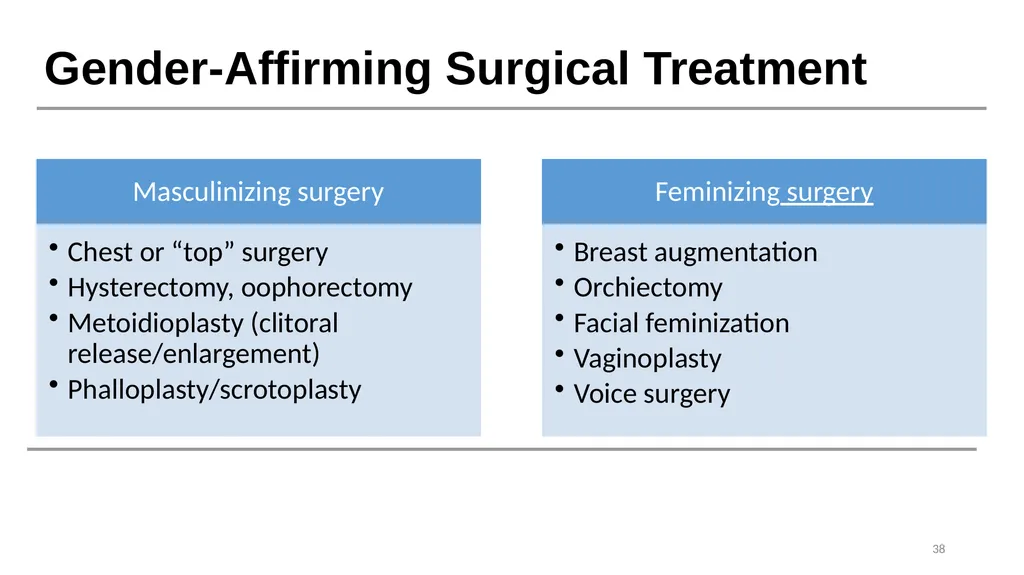
Gender-Affirming Surgical Treatment 38<br>
38
Gender-Affirming Medical Treatment<br>
39
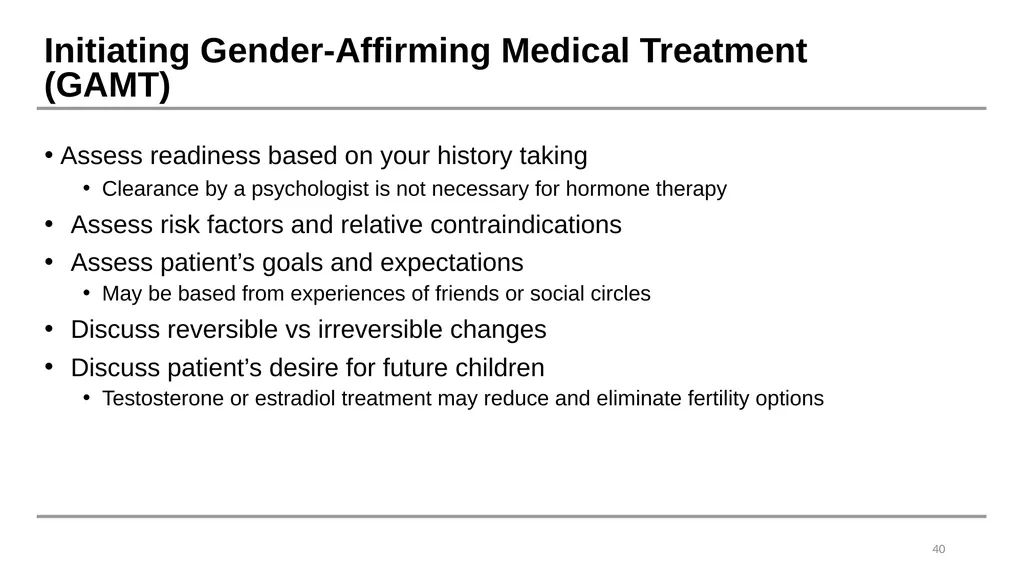
Initiating Gender-Affirming Medical Treatment (GAMT) Assess readiness based on your history taking
Clearance by a psychologist is not necessary for hormone therapy
Assess risk factors and relative contraindications
Assess patient’s goals and expectations
May be based from experiences of friends or social circles
Discuss reversible vs irreversible changes
Discuss patient’s desire for future children
Testosterone or estradiol treatment may reduce and eliminate fertility options 40<br>
40
Adolescent Consideration 41<br>
41
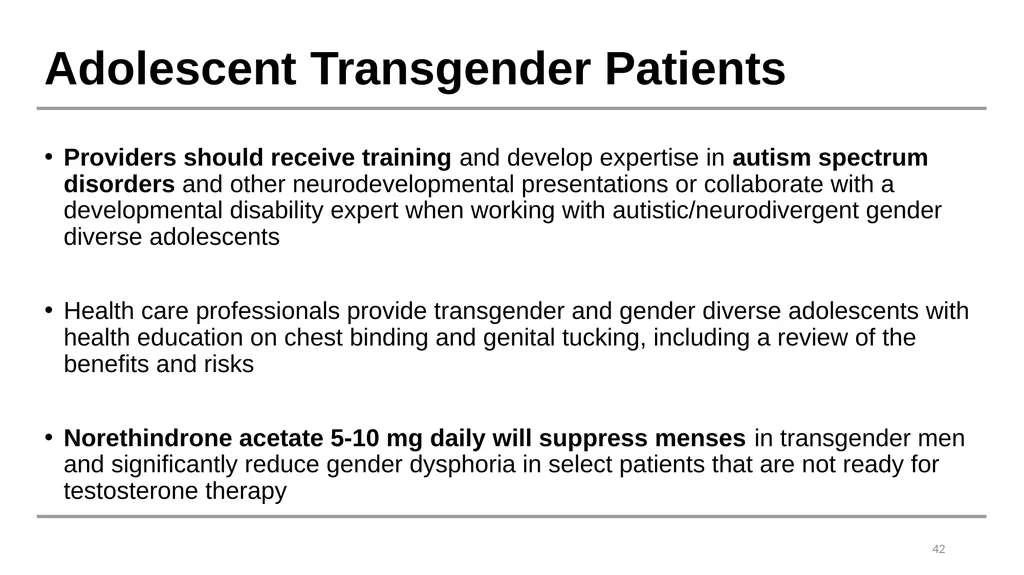
Adolescent Transgender Patients Providers should receive training and develop expertise in autism spectrum disorders and other neurodevelopmental presentations or collaborate with a developmental disability expert when working with autistic/neurodivergent gender diverse adolescents
Health care professionals provide transgender and gender diverse adolescents with health education on chest binding and genital tucking, including a review of the benefits and risks
Norethindrone acetate 5-10 mg daily will suppress menses in transgender men and significantly reduce gender dysphoria in select patients that are not ready for testosterone therapy 42<br>
42
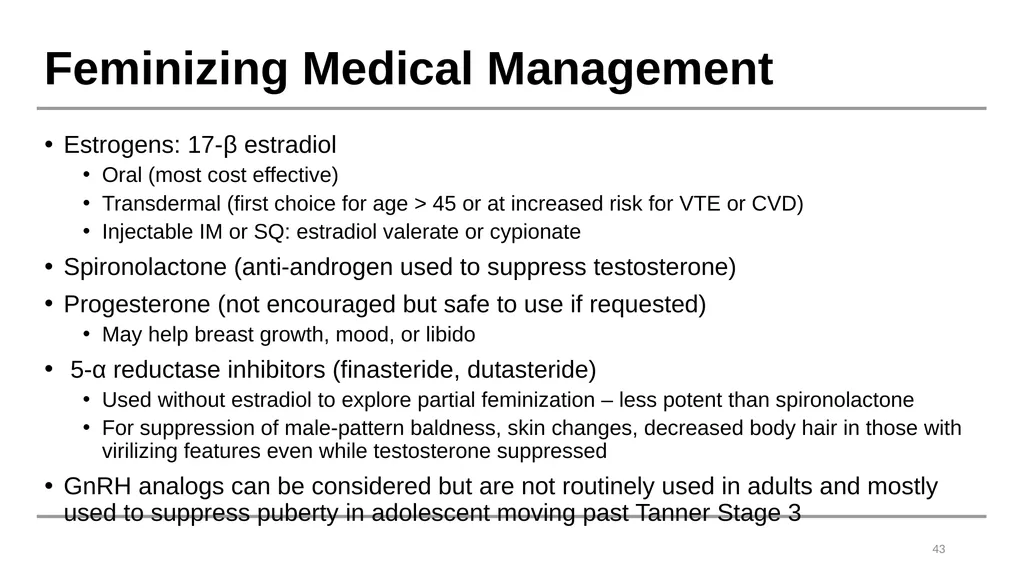
Feminizing Medical Management Estrogens: 17-β estradiol
Oral (most cost effective)
Transdermal (first choice for age > 45 or at increased risk for VTE or CVD)
Injectable IM or SQ: estradiol valerate or cypionate
Spironolactone (anti-androgen used to suppress testosterone)
Progesterone (not encouraged but safe to use if requested)
May help breast growth, mood, or libido
5-α reductase inhibitors (finasteride, dutasteride)
Used without estradiol to explore partial feminization – less potent than spironolactone
For suppression of male-pattern baldness, skin changes, decreased body hair in those with virilizing features even while testosterone suppressed
GnRH analogs can be considered but are not routinely used in adults and mostly used to suppress puberty in adolescent moving past Tanner Stage 3 43<br>
43
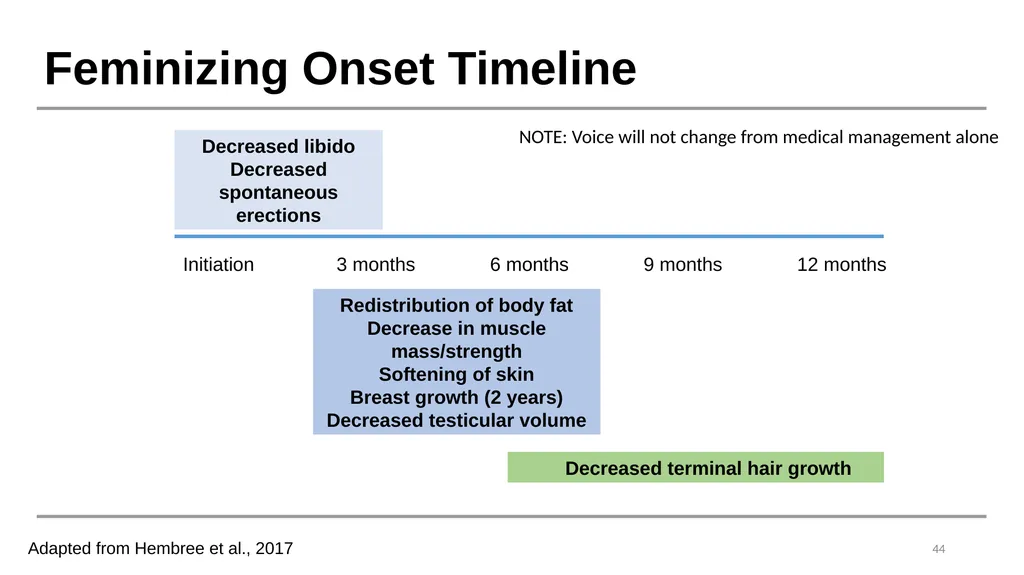
Feminizing Onset Timeline Initiation 3 months 6 months 9 months 12 months Decreased terminal hair growth Redistribution of body fat
Decrease in muscle mass/strength
Softening of skin
Breast growth (2 years)
Decreased testicular volume Decreased libido
Decreased spontaneous erections Adapted from Hembree et al., 2017 44 NOTE: Voice will not change from medical management alone<br>
Decrease in muscle mass/strength
Softening of skin
Breast growth (2 years)
Decreased testicular volume Decreased libido
Decreased spontaneous erections Adapted from Hembree et al., 2017 44 NOTE: Voice will not change from medical management alone<br>
44
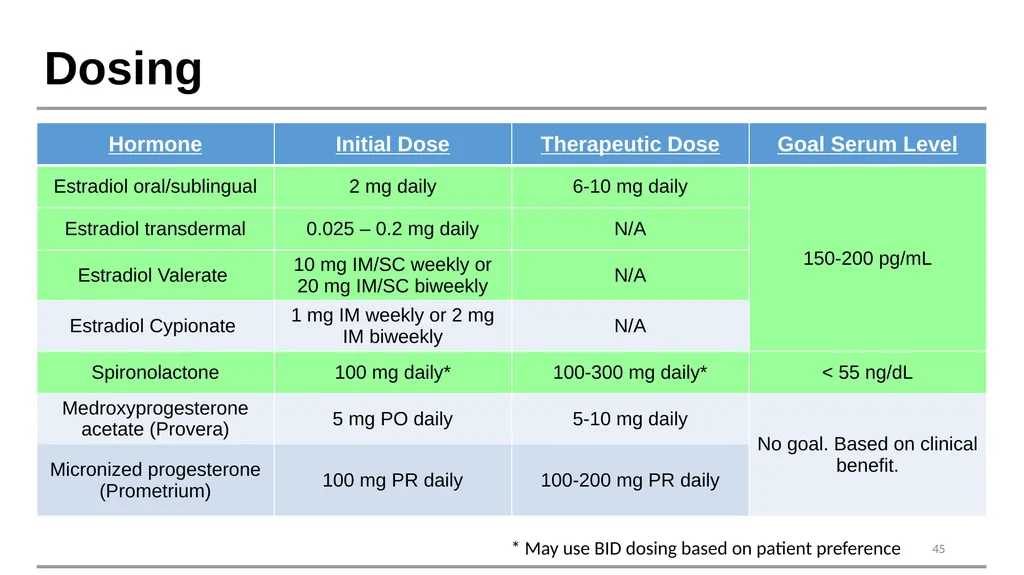
Dosing 45 * May use BID dosing based on patient preference<br>
45
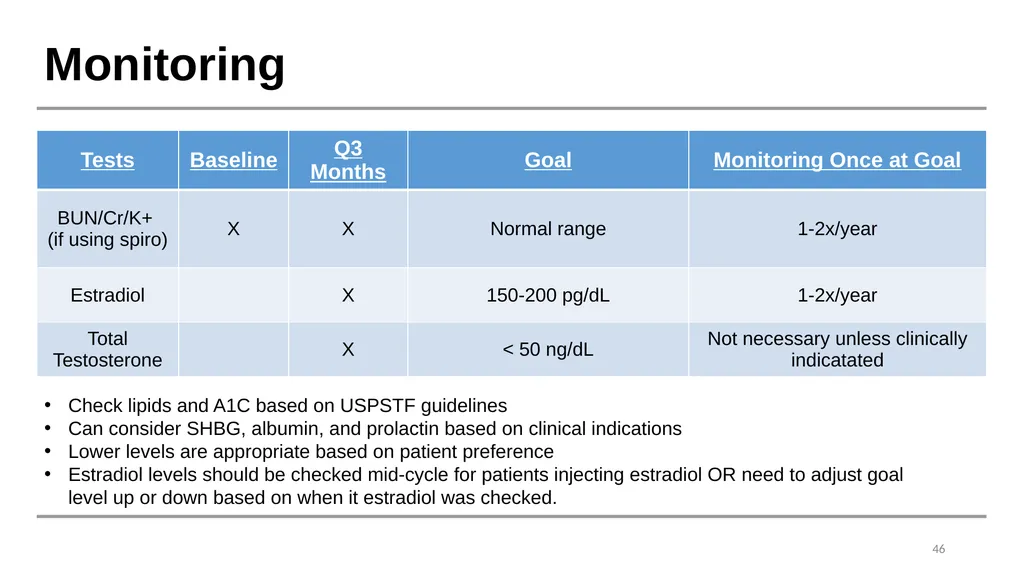
Monitoring Check lipids and A1C based on USPSTF guidelines
Can consider SHBG, albumin, and prolactin based on clinical indications
Lower levels are appropriate based on patient preference
Estradiol levels should be checked mid-cycle for patients injecting estradiol OR need to adjust goal level up or down based on when it estradiol was checked. 46<br>
Can consider SHBG, albumin, and prolactin based on clinical indications
Lower levels are appropriate based on patient preference
Estradiol levels should be checked mid-cycle for patients injecting estradiol OR need to adjust goal level up or down based on when it estradiol was checked. 46<br>
46
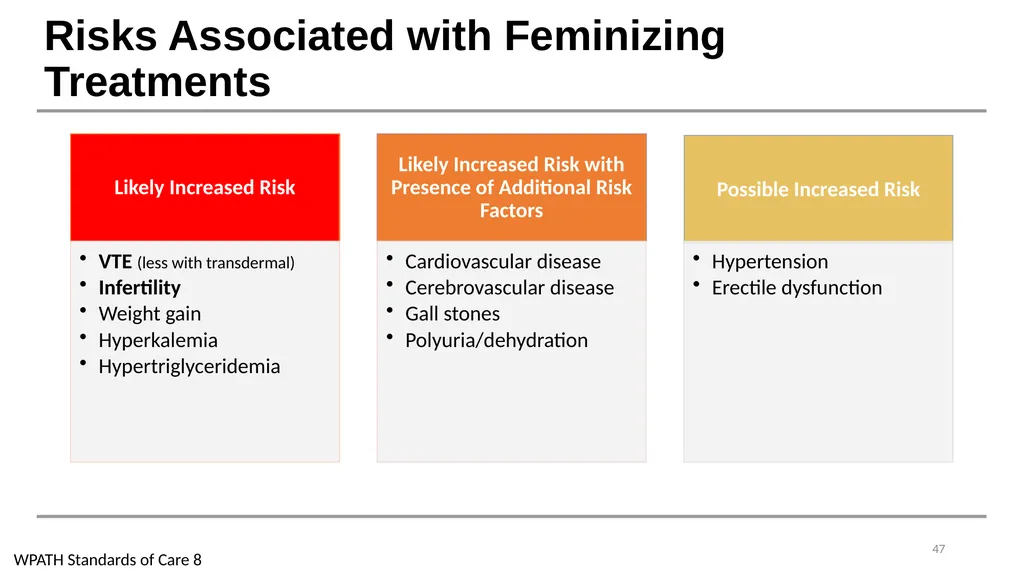
WPATH Standards of Care 8 Risks Associated with Feminizing Treatments 47<br>
47
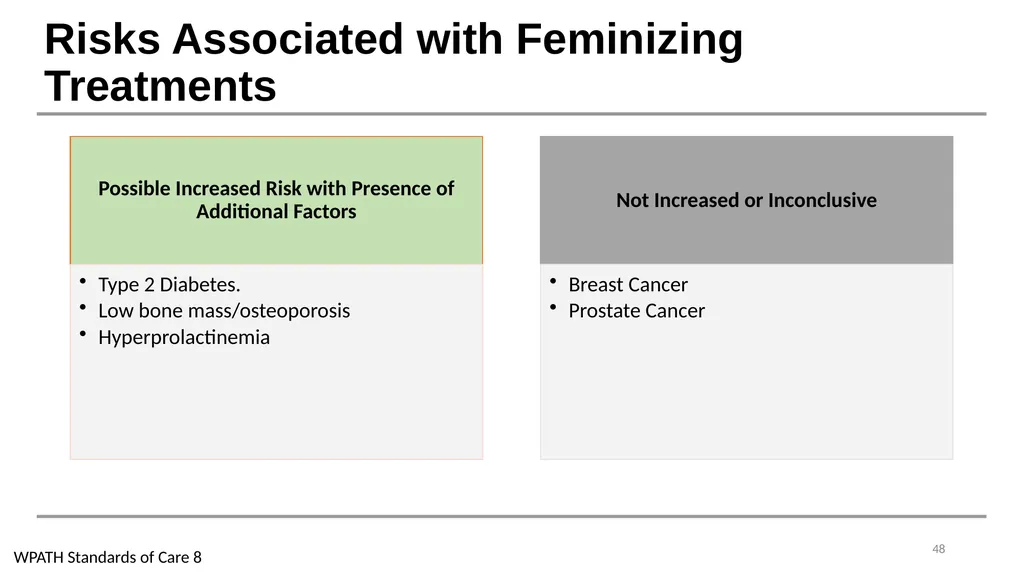
WPATH Standards of Care 8 Risks Associated with Feminizing Treatments 48<br>
48
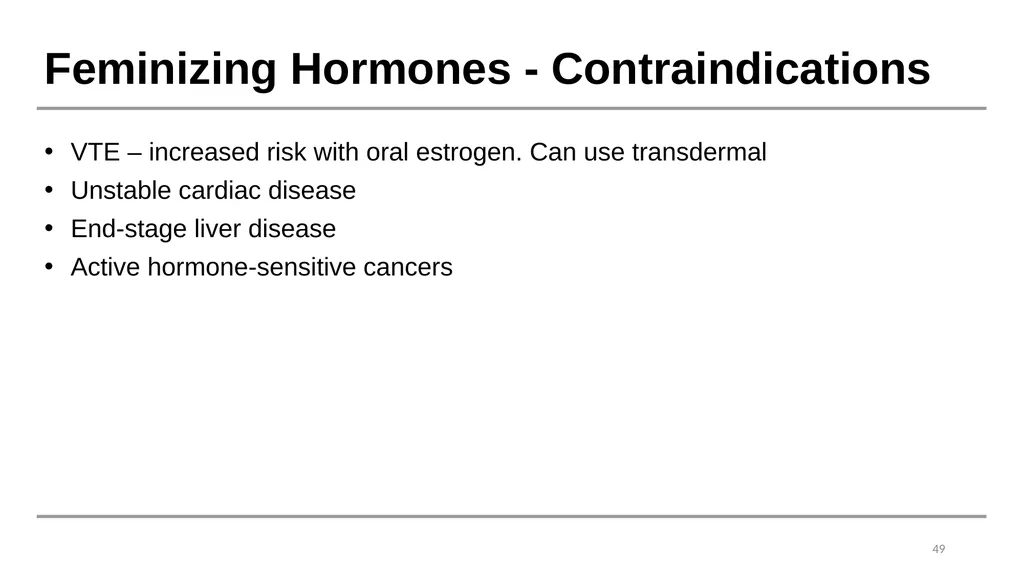
Feminizing Hormones - Contraindications VTE – increased risk with oral estrogen. Can use transdermal
Unstable cardiac disease
End-stage liver disease
Active hormone-sensitive cancers 49<br>
Unstable cardiac disease
End-stage liver disease
Active hormone-sensitive cancers 49<br>
49
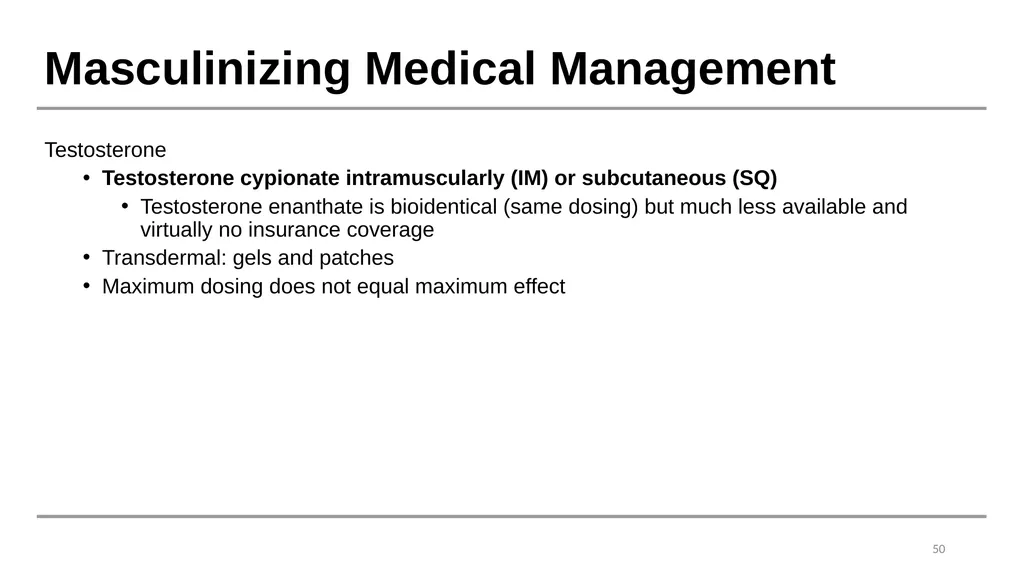
Masculinizing Medical Management Testosterone
Testosterone cypionate intramuscularly (IM) or subcutaneous (SQ)
Testosterone enanthate is bioidentical (same dosing) but much less available and virtually no insurance coverage
Transdermal: gels and patches
Maximum dosing does not equal maximum effect 50<br>
Testosterone cypionate intramuscularly (IM) or subcutaneous (SQ)
Testosterone enanthate is bioidentical (same dosing) but much less available and virtually no insurance coverage
Transdermal: gels and patches
Maximum dosing does not equal maximum effect 50<br>
50
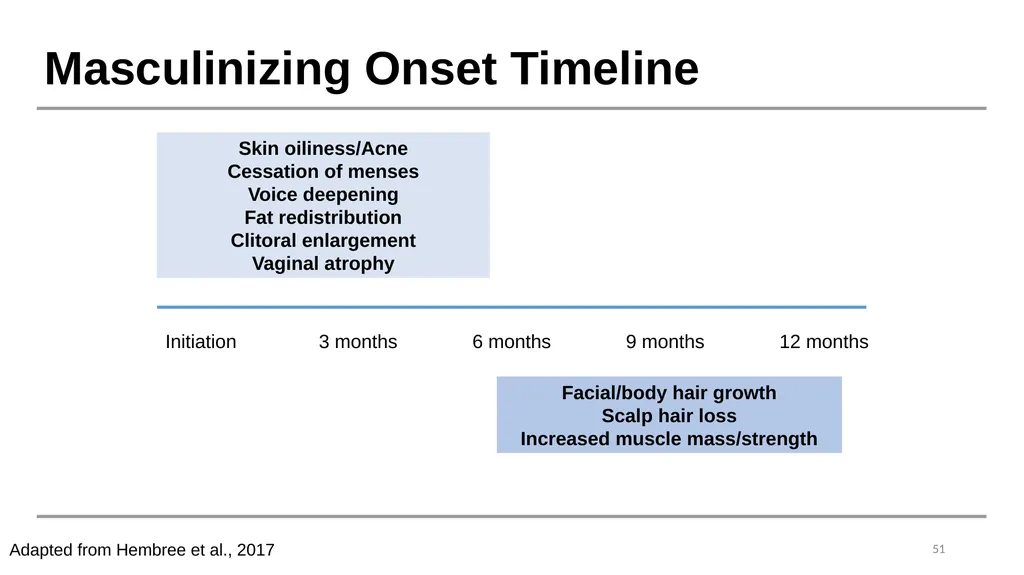
Masculinizing Onset Timeline Initiation 3 months 6 months 9 months 12 months Facial/body hair growth
Scalp hair loss
Increased muscle mass/strength Skin oiliness/Acne
Cessation of menses
Voice deepening
Fat redistribution
Clitoral enlargement
Vaginal atrophy Adapted from Hembree et al., 2017 51<br>
Scalp hair loss
Increased muscle mass/strength Skin oiliness/Acne
Cessation of menses
Voice deepening
Fat redistribution
Clitoral enlargement
Vaginal atrophy Adapted from Hembree et al., 2017 51<br>
51
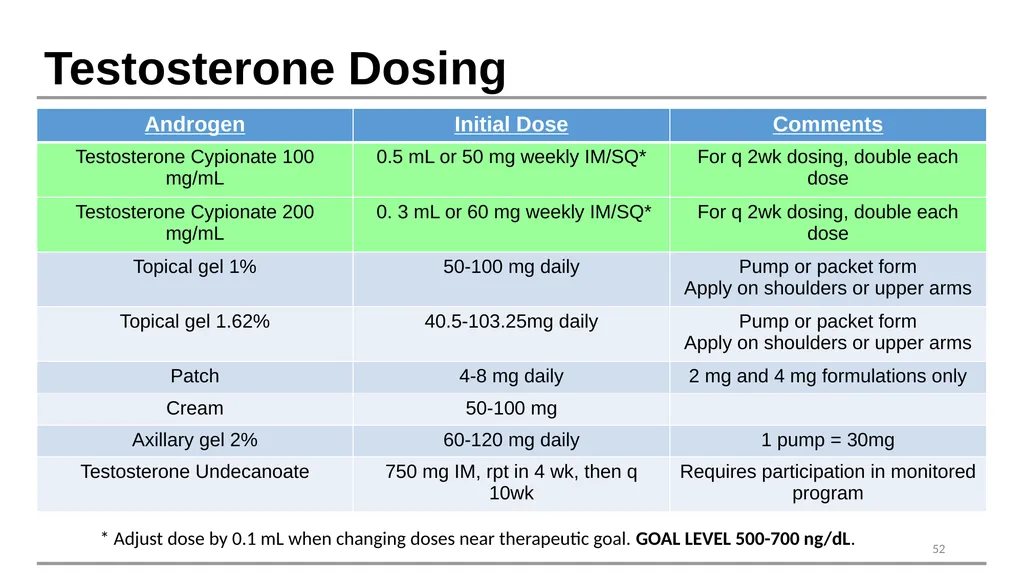
Testosterone Dosing 52 * Adjust dose by 0.1 mL when changing doses near therapeutic goal. GOAL LEVEL 500-700 ng/dL.<br>
52
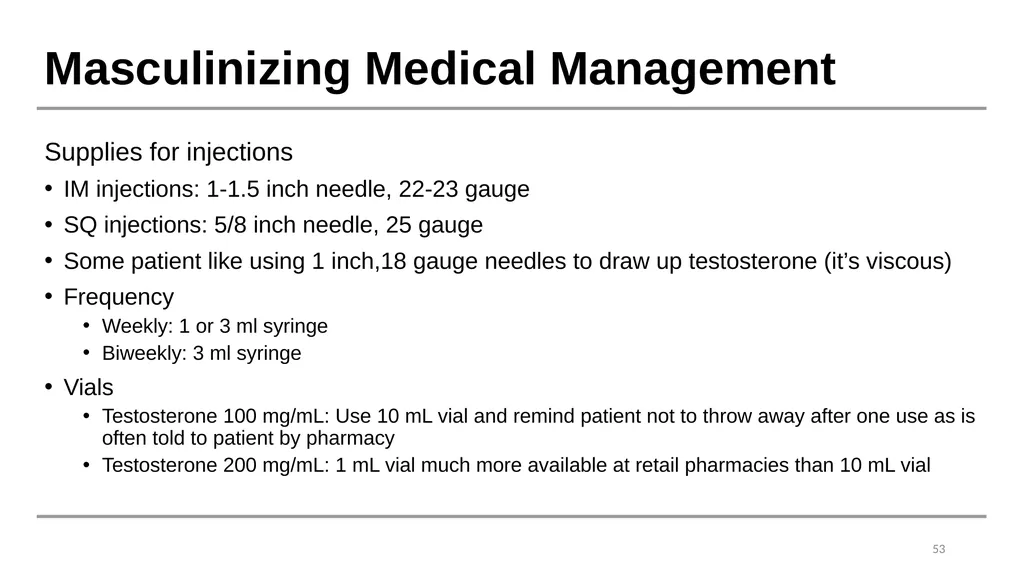
Masculinizing Medical Management Supplies for injections
IM injections: 1-1.5 inch needle, 22-23 gauge
SQ injections: 5/8 inch needle, 25 gauge
Some patient like using 1 inch,18 gauge needles to draw up testosterone (it’s viscous)
Frequency
Weekly: 1 or 3 ml syringe
Biweekly: 3 ml syringe
Vials
Testosterone 100 mg/mL: Use 10 mL vial and remind patient not to throw away after one use as is often told to patient by pharmacy
Testosterone 200 mg/mL: 1 mL vial much more available at retail pharmacies than 10 mL vial 53<br>
53
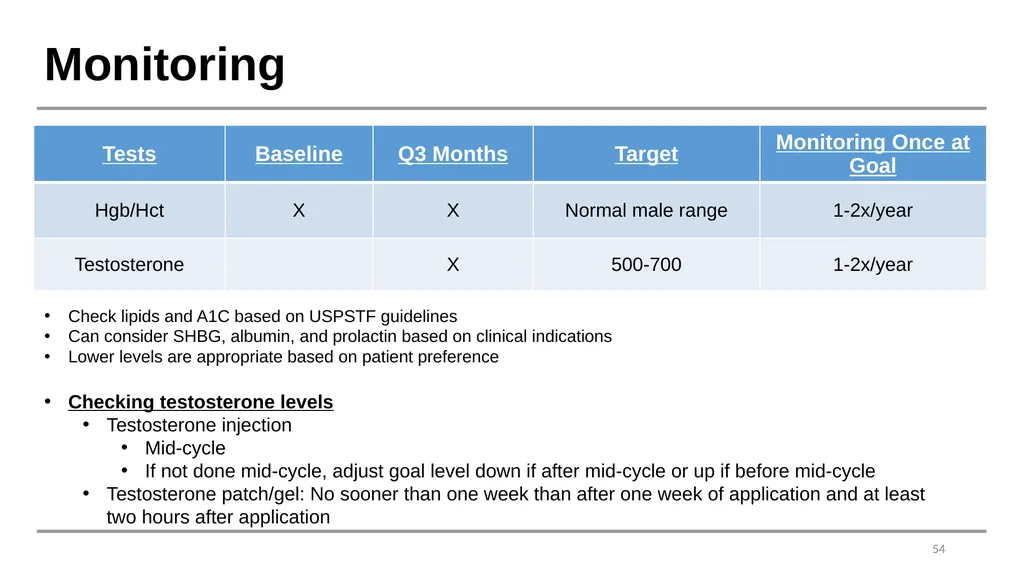
Monitoring Check lipids and A1C based on USPSTF guidelines
Can consider SHBG, albumin, and prolactin based on clinical indications
Lower levels are appropriate based on patient preference
Checking testosterone levels
Testosterone injection
Mid-cycle
If not done mid-cycle, adjust goal level down if after mid-cycle or up if before mid-cycle
Testosterone patch/gel: No sooner than one week than after one week of application and at least two hours after application 54<br>
54
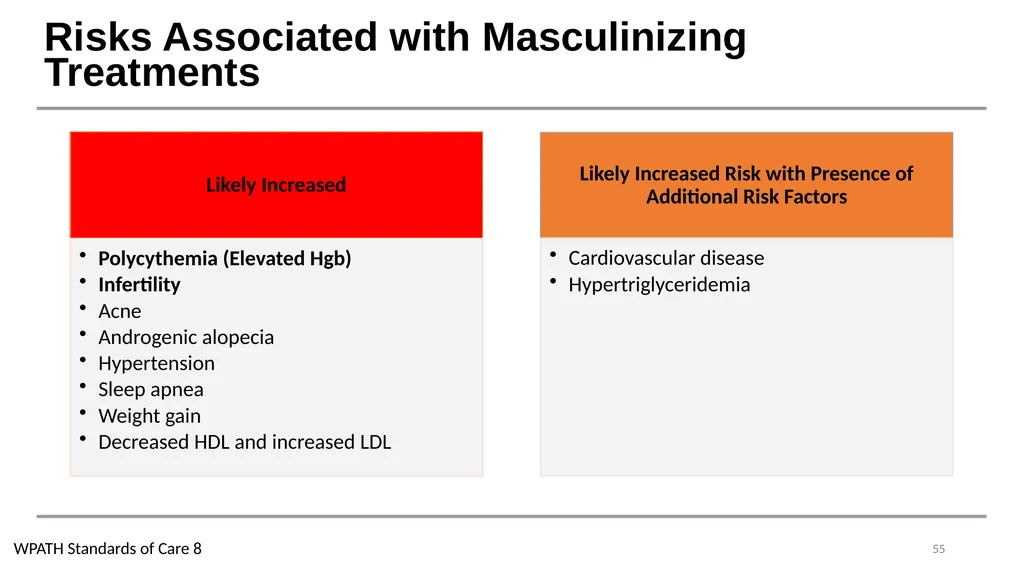
WPATH Standards of Care 8 Risks Associated with Masculinizing Treatments 55<br>
55
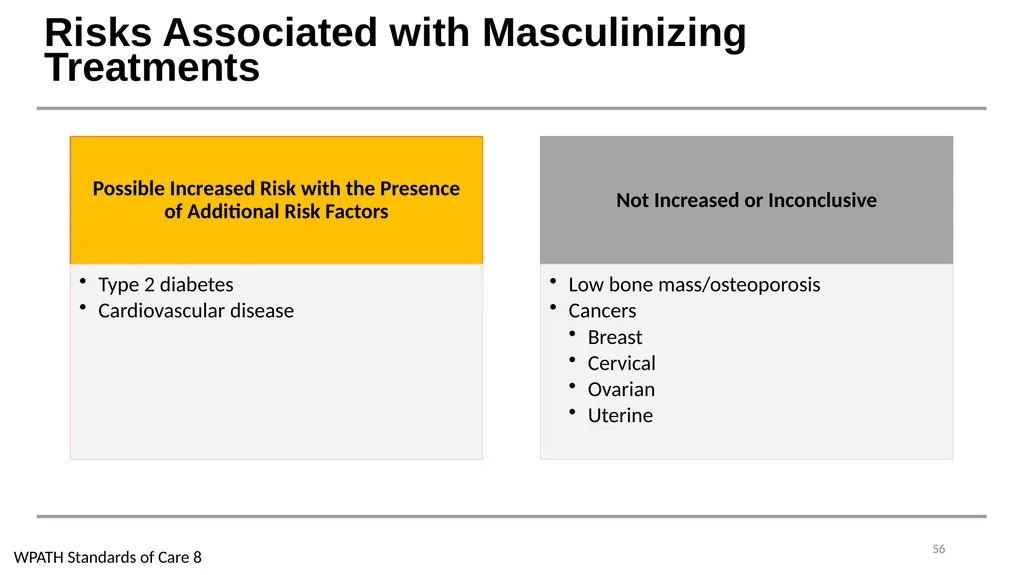
WPATH Standards of Care 8 Risks Associated with Masculinizing Treatments 56<br>
56
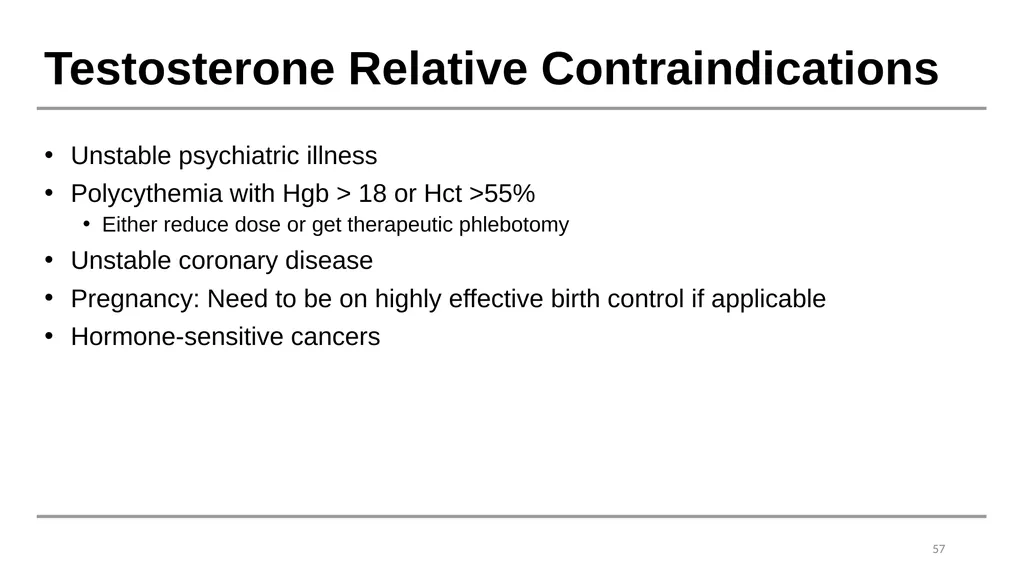
Testosterone Relative Contraindications Unstable psychiatric illness
Polycythemia with Hgb > 18 or Hct >55%
Either reduce dose or get therapeutic phlebotomy
Unstable coronary disease
Pregnancy: Need to be on highly effective birth control if applicable
Hormone-sensitive cancers 57<br>
Polycythemia with Hgb > 18 or Hct >55%
Either reduce dose or get therapeutic phlebotomy
Unstable coronary disease
Pregnancy: Need to be on highly effective birth control if applicable
Hormone-sensitive cancers 57<br>
57
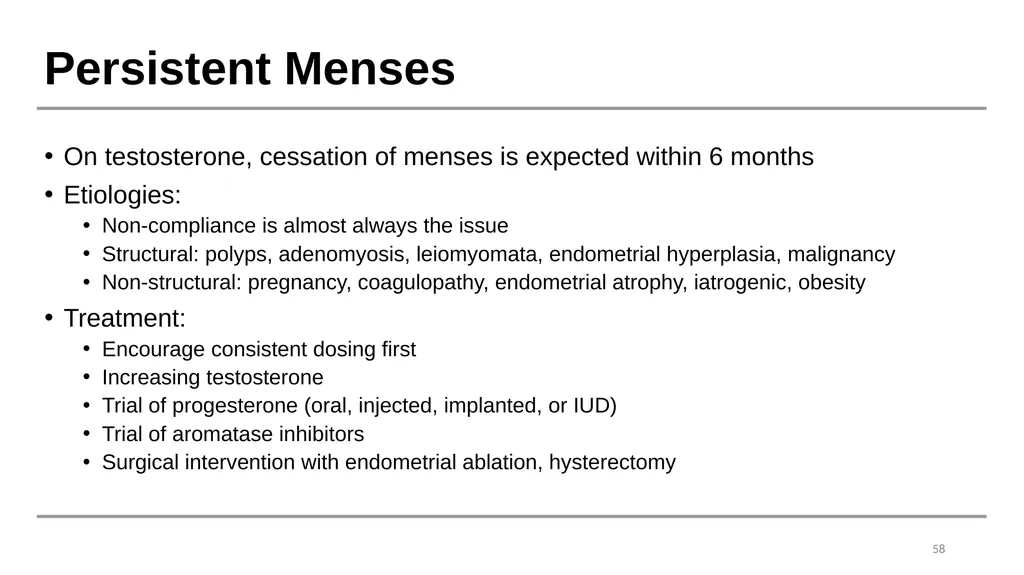
Persistent Menses On testosterone, cessation of menses is expected within 6 months
Etiologies:
Non-compliance is almost always the issue
Structural: polyps, adenomyosis, leiomyomata, endometrial hyperplasia, malignancy
Non-structural: pregnancy, coagulopathy, endometrial atrophy, iatrogenic, obesity
Treatment:
Encourage consistent dosing first
Increasing testosterone
Trial of progesterone (oral, injected, implanted, or IUD)
Trial of aromatase inhibitors
Surgical intervention with endometrial ablation, hysterectomy 58<br>
58
Preventative Care<br>
59
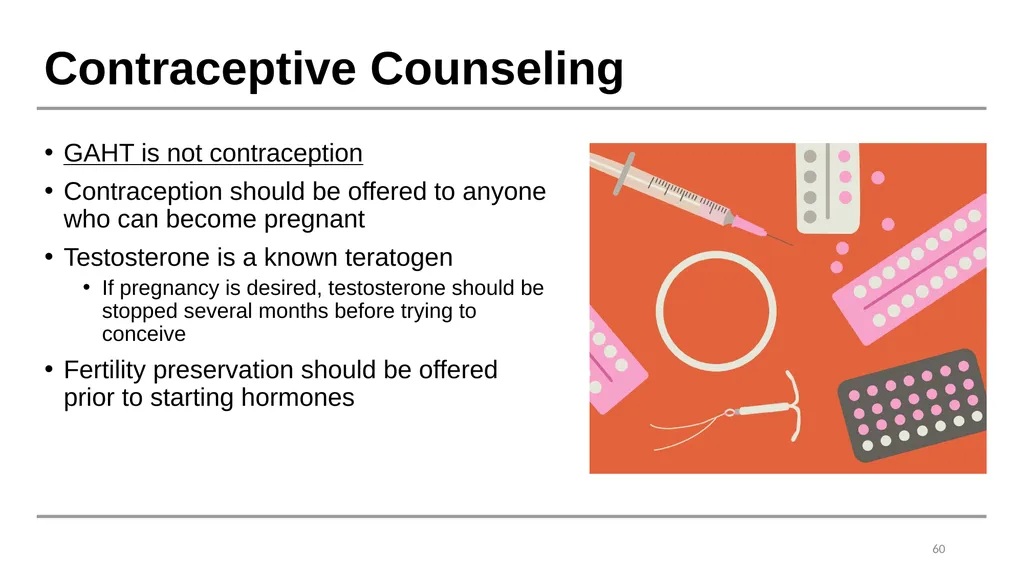
Contraceptive Counseling GAHT is not contraception
Contraception should be offered to anyone who can become pregnant
Testosterone is a known teratogen
If pregnancy is desired, testosterone should be stopped several months before trying to conceive
Fertility preservation should be offered prior to starting hormones 60<br>
Contraception should be offered to anyone who can become pregnant
Testosterone is a known teratogen
If pregnancy is desired, testosterone should be stopped several months before trying to conceive
Fertility preservation should be offered prior to starting hormones 60<br>
60
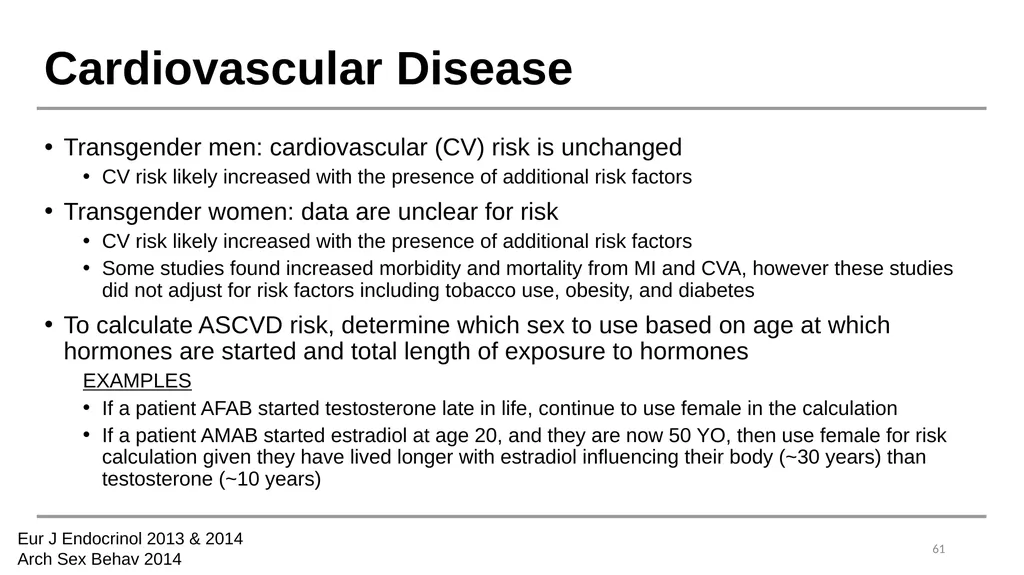
Cardiovascular Disease Transgender men: cardiovascular (CV) risk is unchanged
CV risk likely increased with the presence of additional risk factors
Transgender women: data are unclear for risk
CV risk likely increased with the presence of additional risk factors
Some studies found increased morbidity and mortality from MI and CVA, however these studies did not adjust for risk factors including tobacco use, obesity, and diabetes
To calculate ASCVD risk, determine which sex to use based on age at which hormones are started and total length of exposure to hormones
EXAMPLES
If a patient AFAB started testosterone late in life, continue to use female in the calculation
If a patient AMAB started estradiol at age 20, and they are now 50 YO, then use female for risk calculation given they have lived longer with estradiol influencing their body (~30 years) than testosterone (~10 years) Eur J Endocrinol 2013 & 2014
Arch Sex Behav 2014 61<br>
CV risk likely increased with the presence of additional risk factors
Transgender women: data are unclear for risk
CV risk likely increased with the presence of additional risk factors
Some studies found increased morbidity and mortality from MI and CVA, however these studies did not adjust for risk factors including tobacco use, obesity, and diabetes
To calculate ASCVD risk, determine which sex to use based on age at which hormones are started and total length of exposure to hormones
EXAMPLES
If a patient AFAB started testosterone late in life, continue to use female in the calculation
If a patient AMAB started estradiol at age 20, and they are now 50 YO, then use female for risk calculation given they have lived longer with estradiol influencing their body (~30 years) than testosterone (~10 years) Eur J Endocrinol 2013 & 2014
Arch Sex Behav 2014 61<br>
61
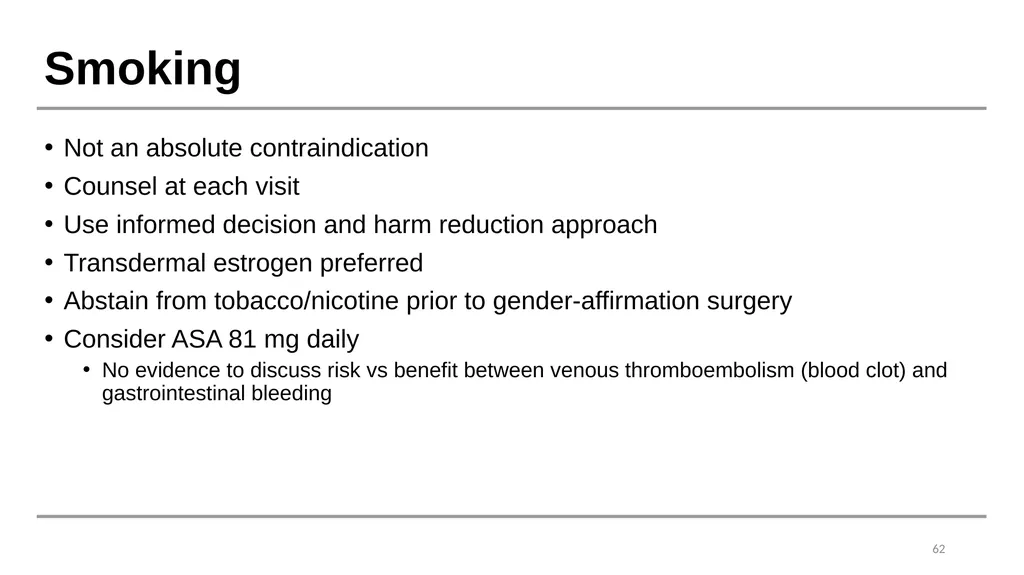
Smoking Not an absolute contraindication
Counsel at each visit
Use informed decision and harm reduction approach
Transdermal estrogen preferred
Abstain from tobacco/nicotine prior to gender-affirmation surgery
Consider ASA 81 mg daily
No evidence to discuss risk vs benefit between venous thromboembolism (blood clot) and gastrointestinal bleeding 62<br>
62
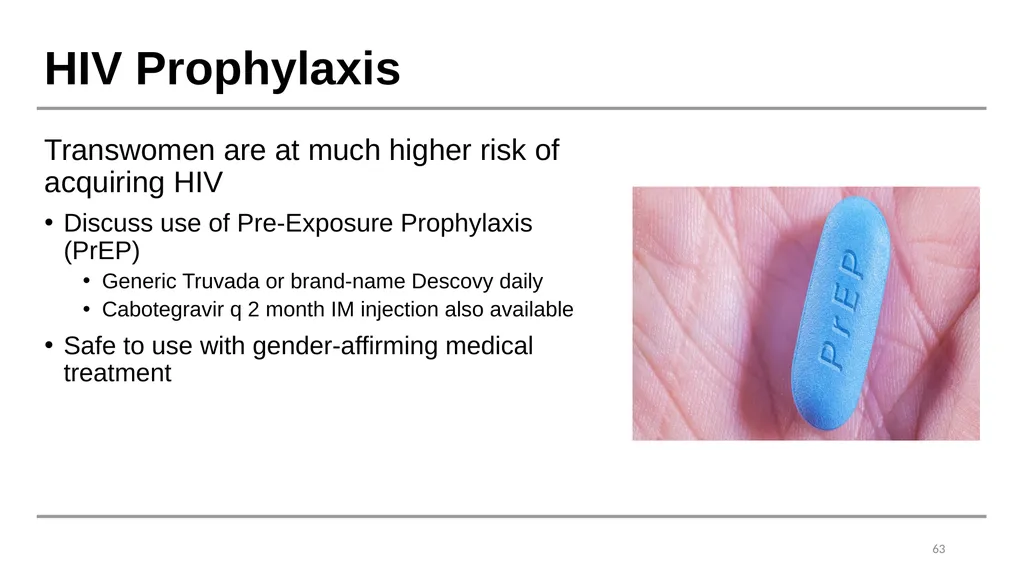
HIV Prophylaxis Transwomen are at much higher risk of acquiring HIV
Discuss use of Pre-Exposure Prophylaxis (PrEP)
Generic Truvada or brand-name Descovy daily
Cabotegravir q 2 month IM injection also available
Safe to use with gender-affirming medical treatment 63<br>
Discuss use of Pre-Exposure Prophylaxis (PrEP)
Generic Truvada or brand-name Descovy daily
Cabotegravir q 2 month IM injection also available
Safe to use with gender-affirming medical treatment 63<br>
63
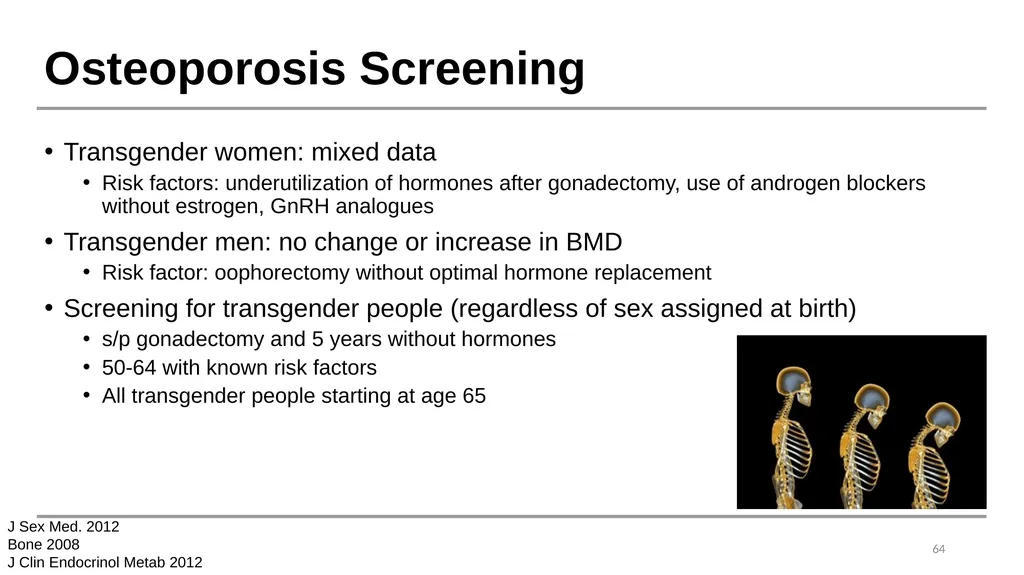
Osteoporosis Screening Transgender women: mixed data
Risk factors: underutilization of hormones after gonadectomy, use of androgen blockers without estrogen, GnRH analogues
Transgender men: no change or increase in BMD
Risk factor: oophorectomy without optimal hormone replacement
Screening for transgender people (regardless of sex assigned at birth)
s/p gonadectomy and 5 years without hormones
50-64 with known risk factors
All transgender people starting at age 65 J Sex Med. 2012
Bone 2008
J Clin Endocrinol Metab 2012 64<br>
64
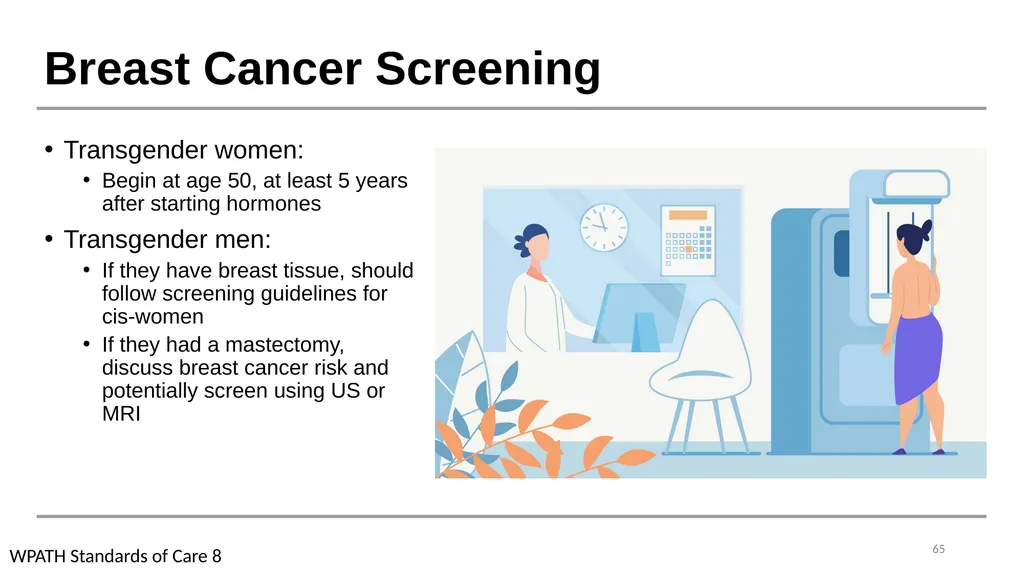
Breast Cancer Screening Transgender women:
Begin at age 50, at least 5 years after starting hormones
Transgender men:
If they have breast tissue, should follow screening guidelines for cis-women
If they had a mastectomy, discuss breast cancer risk and potentially screen using US or MRI 65 WPATH Standards of Care 8<br>
Begin at age 50, at least 5 years after starting hormones
Transgender men:
If they have breast tissue, should follow screening guidelines for cis-women
If they had a mastectomy, discuss breast cancer risk and potentially screen using US or MRI 65 WPATH Standards of Care 8<br>
65
Cervical Cancer Screening Transgender men are less likely to be current on cervical cancer screening
As long as someone has a cervix, the recommendations are the same as for cis-women
Pap smears on transgender men have a ten-fold higher incidence of an unsatisfactory result compared to cis-women
Preliminary research on self-collected vaginal samples for HPV compared to clinician obtained samples show promise
Very appropriate for transmen who have a lot of gender dysphoria with pelvic exams Am J Prev Med 2014
J Gen Intern Med 2014
Pediatr Infect Dis 200
Can Med Assoc J 2000 66<br>
66
Prostate/Testicular Cancer Screening Prostate cancer in transgender women
Likely lower risk than in cis-men
Same screening recommendations as cis-men
Testicular cancer in transgender women
Likely lower risk than in cis-men 67<br>
Likely lower risk than in cis-men
Same screening recommendations as cis-men
Testicular cancer in transgender women
Likely lower risk than in cis-men 67<br>
67
Questions<br>
68
Case Review<br>
69
Case #1: Initiating transfeminine treatment 22 YO obese transfeminine patient (she/her) AMAB presents to your office for initiation of GAHT. She has a PMH of gender dysphoria and depression for which she has seen a therapist for the past 2 years. She has no significant PSH. She reports good social support and is excited to start hormone therapy.
1. Which labs should be drawn today?
For GAMT: BMP
For obesity: LFTs, A1C and lipids 70<br>
1. Which labs should be drawn today?
For GAMT: BMP
For obesity: LFTs, A1C and lipids 70<br>
70
Case #1: Initiating transfeminine treatment 2. What GAMT should be started?
Spironolactone (anti-androgen) 100 mg daily or 50 mg BID, titrate 50 mg Q3 months until goal therapeutic testosterone level < 55
(max: 300 mg daily)
Estradiol
2 mg daily, titrate 2 mg Q3 months until estradiol therapeutic goal ~ 150-200 (max: 10 mg daily)
Estradiol valerate 10 mg IM/SC weekly or 20 mg IM/SC biweekly
3. How often should she monitored and what blood work is needed?
Check BMP and estradiol Q3 months for the first year and until estradiol therapeutic goal then q 6-12 months afterwards
Check total testosterone until testosterone < 55, then stop
AHN Core Lab: Check testosterone only and value will return in one day
If you order total and free testosterone, the test will be sent out and take several days to return 71<br>
71
Case #1: Transfeminine follow-up Patient returns in 3 months for a follow-up appointment. She had her 3 month labs drawn prior to presenting to clinic. Her estradiol level is 75 pg/ml and her testosterone levels is 100 ng/dl. She reports feeling more tearful at times during the day, decreased libido, a few episodes of galactorrhea and weight gain specifically around hips. She denies dizziness.
1. Should we adjust hormone dosage today?
Goal estradiol level is 150-200 pg/ml, testosterone level < 55 ng/dl. But lower targets can be used based on patient goals
Increase spironolactone to 150 mg daily or 75 mg BID
Increase estradiol by 2 mg
Low-quality evidence noted better breast development with slow graduation upward of oral estradiol 72<br>
72
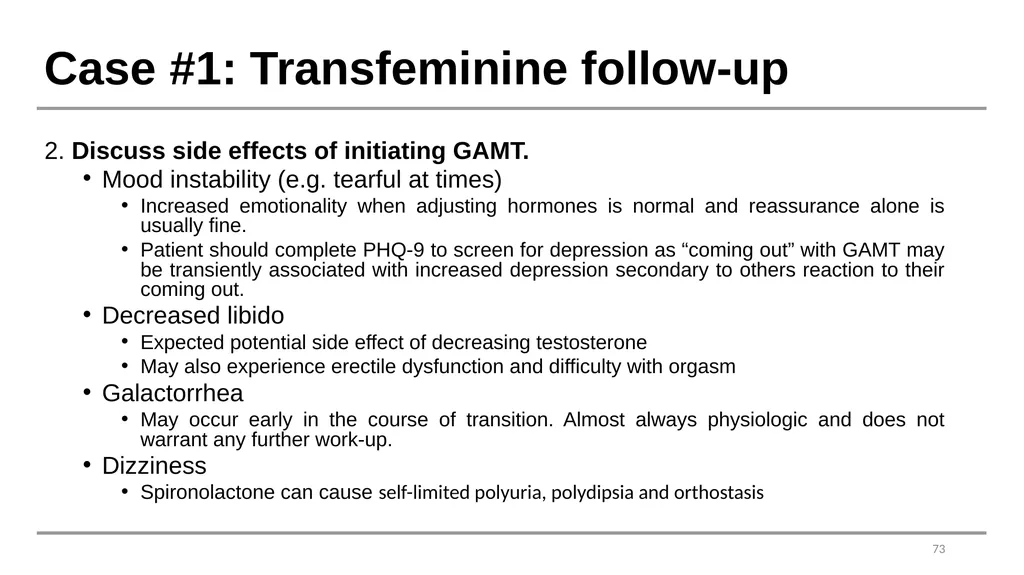
Case #1: Transfeminine follow-up 2. Discuss side effects of initiating GAMT.
Mood instability (e.g. tearful at times)
Increased emotionality when adjusting hormones is normal and reassurance alone is usually fine.
Patient should complete PHQ-9 to screen for depression as “coming out” with GAMT may be transiently associated with increased depression secondary to others reaction to their coming out.
Decreased libido
Expected potential side effect of decreasing testosterone
May also experience erectile dysfunction and difficulty with orgasm
Galactorrhea
May occur early in the course of transition. Almost always physiologic and does not warrant any further work-up.
Dizziness
Spironolactone can cause self-limited polyuria, polydipsia and orthostasis 73<br>
73
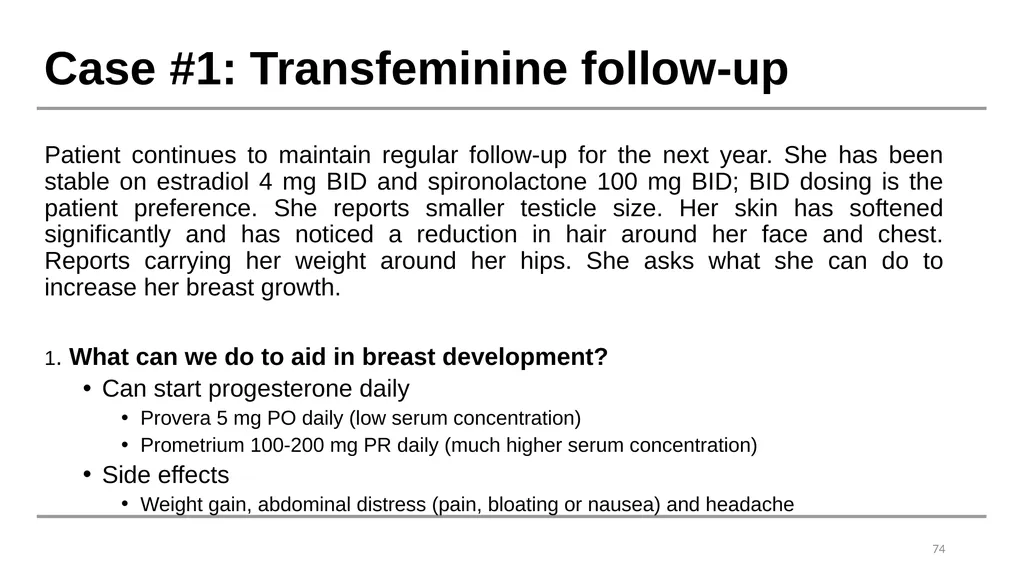
Case #1: Transfeminine follow-up Patient continues to maintain regular follow-up for the next year. She has been stable on estradiol 4 mg BID and spironolactone 100 mg BID; BID dosing is the patient preference. She reports smaller testicle size. Her skin has softened significantly and has noticed a reduction in hair around her face and chest. Reports carrying her weight around her hips. She asks what she can do to increase her breast growth.
1. What can we do to aid in breast development?
Can start progesterone daily
Provera 5 mg PO daily (low serum concentration)
Prometrium 100-200 mg PR daily (much higher serum concentration)
Side effects
Weight gain, abdominal distress (pain, bloating or nausea) and headache 74<br>
1. What can we do to aid in breast development?
Can start progesterone daily
Provera 5 mg PO daily (low serum concentration)
Prometrium 100-200 mg PR daily (much higher serum concentration)
Side effects
Weight gain, abdominal distress (pain, bloating or nausea) and headache 74<br>
74
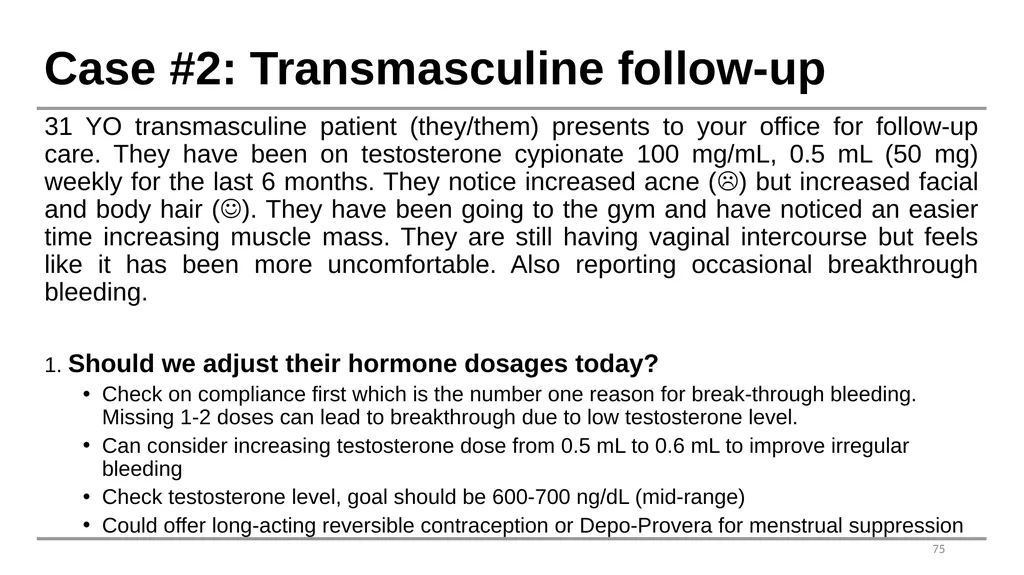
Case #2: Transmasculine follow-up 31 YO transmasculine patient (they/them) presents to your office for follow-up care. They have been on testosterone cypionate 100 mg/mL, 0.5 mL (50 mg) weekly for the last 6 months. They notice increased acne () but increased facial and body hair (). They have been going to the gym and have noticed an easier time increasing muscle mass. They are still having vaginal intercourse but feels like it has been more uncomfortable. Also reporting occasional breakthrough bleeding.
1. Should we adjust their hormone dosages today?
Check on compliance first which is the number one reason for break-through bleeding. Missing 1-2 doses can lead to breakthrough due to low testosterone level.
Can consider increasing testosterone dose from 0.5 mL to 0.6 mL to improve irregular bleeding
Check testosterone level, goal should be 600-700 ng/dL (mid-range)
Could offer long-acting reversible contraception or Depo-Provera for menstrual suppression 75<br>
75
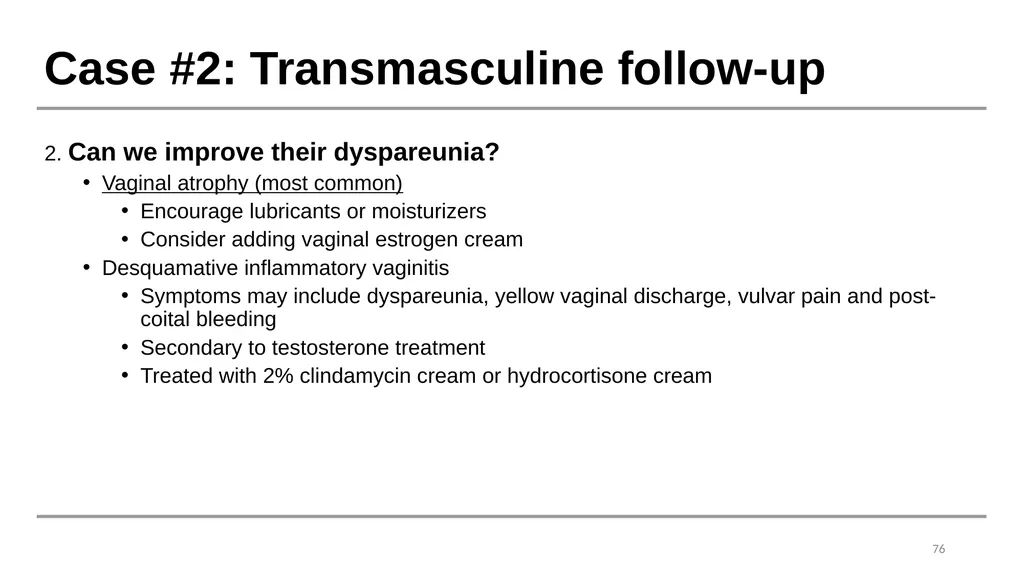
Case #2: Transmasculine follow-up 2. Can we improve their dyspareunia?
Vaginal atrophy (most common)
Encourage lubricants or moisturizers
Consider adding vaginal estrogen cream
Desquamative inflammatory vaginitis
Symptoms may include dyspareunia, yellow vaginal discharge, vulvar pain and post-coital bleeding
Secondary to testosterone treatment
Treated with 2% clindamycin cream or hydrocortisone cream 76<br>
76
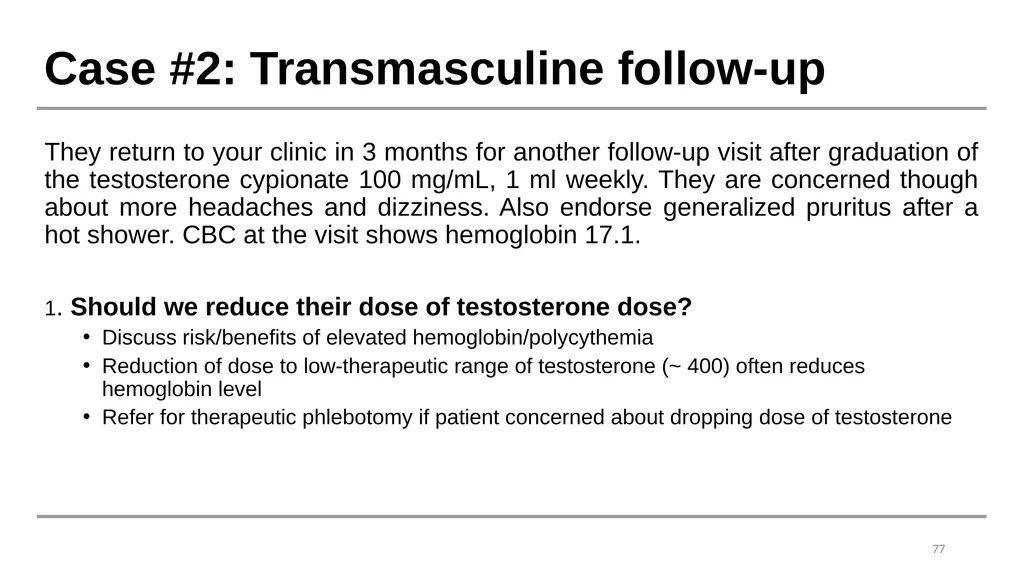
Case #2: Transmasculine follow-up They return to your clinic in 3 months for another follow-up visit after graduation of the testosterone cypionate 100 mg/mL, 1 ml weekly. They are concerned though about more headaches and dizziness. Also endorse generalized pruritus after a hot shower. CBC at the visit shows hemoglobin 17.1.
1. Should we reduce their dose of testosterone dose?
Discuss risk/benefits of elevated hemoglobin/polycythemia
Reduction of dose to low-therapeutic range of testosterone (~ 400) often reduces hemoglobin level
Refer for therapeutic phlebotomy if patient concerned about dropping dose of testosterone 77<br>
77
Additional Resources<br>
78
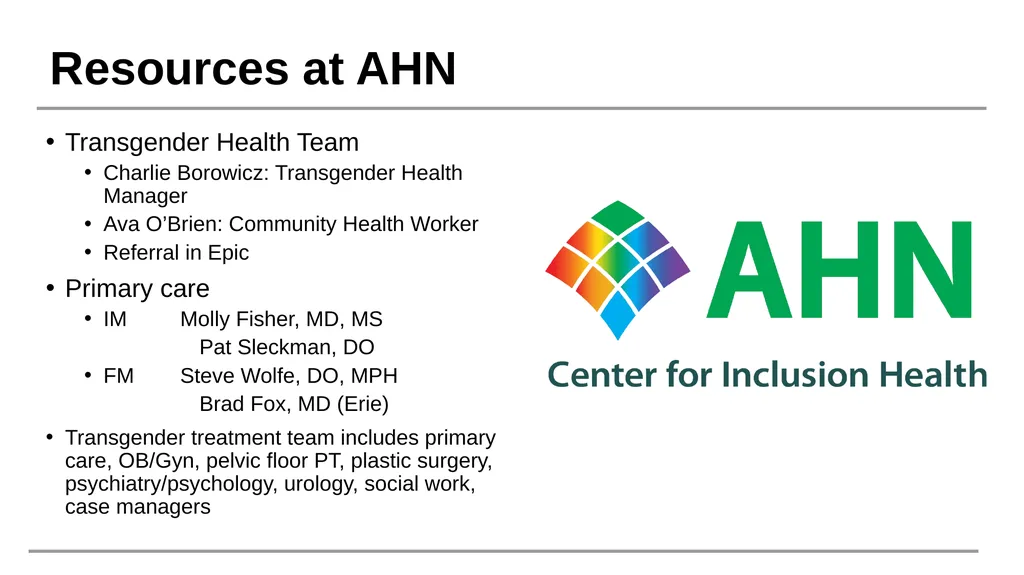
Resources at AHN Transgender Health Team
Charlie Borowicz: Transgender Health Manager
Ava O’Brien: Community Health Worker
Referral in Epic
Primary care
IM Molly Fisher, MD, MS
Pat Sleckman, DO
FM Steve Wolfe, DO, MPH
Brad Fox, MD (Erie)
Transgender treatment team includes primary care, OB/Gyn, pelvic floor PT, plastic surgery, psychiatry/psychology, urology, social work, case managers<br>
79
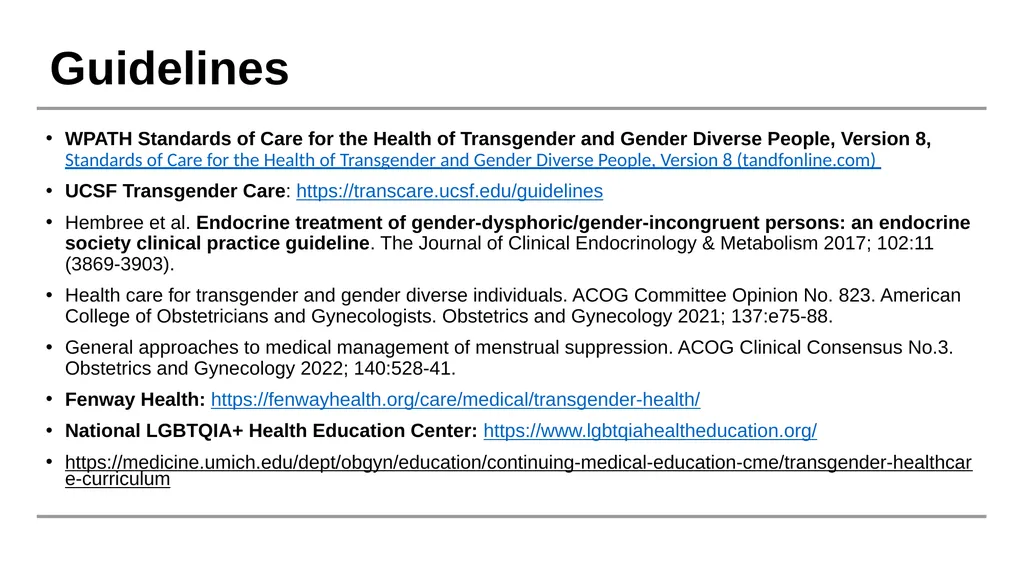
Guidelines WPATH Standards of Care for the Health of Transgender and Gender Diverse People, Version 8, Standards of Care for the Health of Transgender and Gender Diverse People, Version 8 (tandfonline.com)
UCSF Transgender Care: https://transcare.ucsf.edu/guidelines
Hembree et al. Endocrine treatment of gender-dysphoric/gender-incongruent persons: an endocrine society clinical practice guideline. The Journal of Clinical Endocrinology & Metabolism 2017; 102:11 (3869-3903).
Health care for transgender and gender diverse individuals. ACOG Committee Opinion No. 823. American College of Obstetricians and Gynecologists. Obstetrics and Gynecology 2021; 137:e75-88.
General approaches to medical management of menstrual suppression. ACOG Clinical Consensus No.3. Obstetrics and Gynecology 2022; 140:528-41.
Fenway Health: https://fenwayhealth.org/care/medical/transgender-health/
National LGBTQIA+ Health Education Center: https://www.lgbtqiahealtheducation.org/
https://medicine.umich.edu/dept/obgyn/education/continuing-medical-education-cme/transgender-healthcare-curriculum<br>
80
81<br>
81
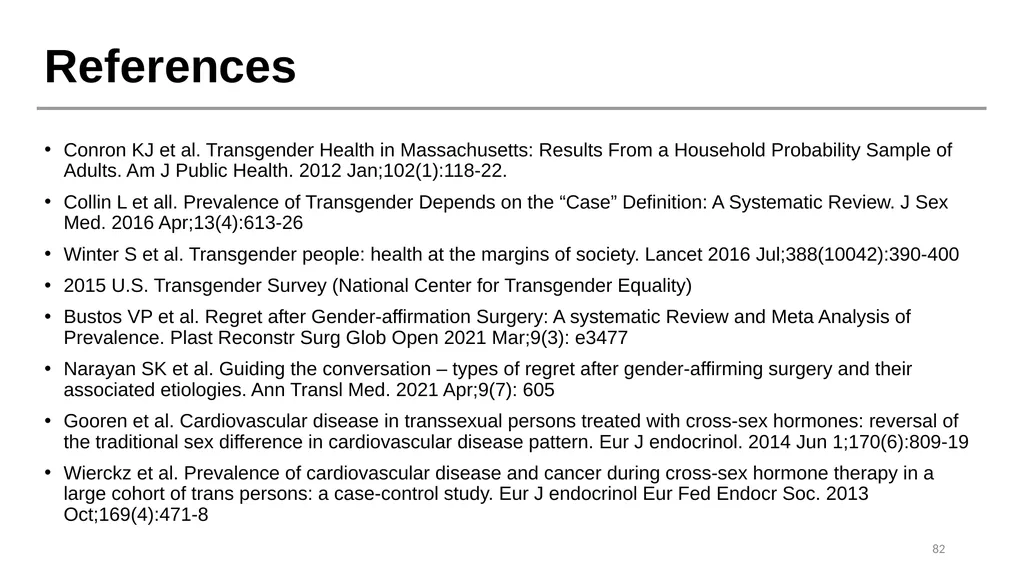
References Conron KJ et al. Transgender Health in Massachusetts: Results From a Household Probability Sample of Adults. Am J Public Health. 2012 Jan;102(1):118-22.
Collin L et all. Prevalence of Transgender Depends on the “Case” Definition: A Systematic Review. J Sex Med. 2016 Apr;13(4):613-26
Winter S et al. Transgender people: health at the margins of society. Lancet 2016 Jul;388(10042):390-400
2015 U.S. Transgender Survey (National Center for Transgender Equality)
Bustos VP et al. Regret after Gender-affirmation Surgery: A systematic Review and Meta Analysis of Prevalence. Plast Reconstr Surg Glob Open 2021 Mar;9(3): e3477
Narayan SK et al. Guiding the conversation – types of regret after gender-affirming surgery and their associated etiologies. Ann Transl Med. 2021 Apr;9(7): 605
Gooren et al. Cardiovascular disease in transsexual persons treated with cross-sex hormones: reversal of the traditional sex difference in cardiovascular disease pattern. Eur J endocrinol. 2014 Jun 1;170(6):809-19
Wierckz et al. Prevalence of cardiovascular disease and cancer during cross-sex hormone therapy in a large cohort of trans persons: a case-control study. Eur J endocrinol Eur Fed Endocr Soc. 2013 Oct;169(4):471-8 82<br>
82
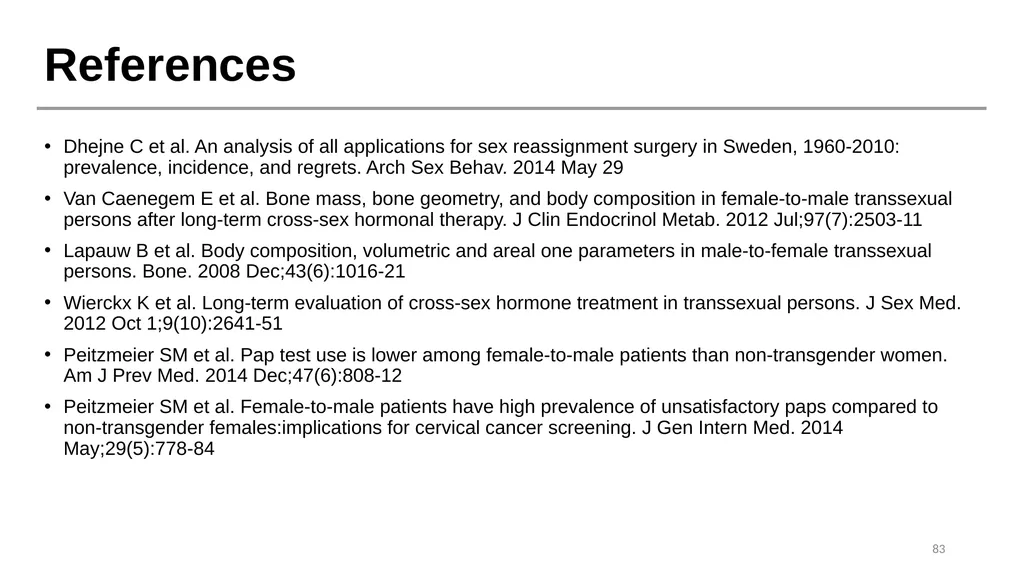
References Dhejne C et al. An analysis of all applications for sex reassignment surgery in Sweden, 1960-2010: prevalence, incidence, and regrets. Arch Sex Behav. 2014 May 29
Van Caenegem E et al. Bone mass, bone geometry, and body composition in female-to-male transsexual persons after long-term cross-sex hormonal therapy. J Clin Endocrinol Metab. 2012 Jul;97(7):2503-11
Lapauw B et al. Body composition, volumetric and areal one parameters in male-to-female transsexual persons. Bone. 2008 Dec;43(6):1016-21
Wierckx K et al. Long-term evaluation of cross-sex hormone treatment in transsexual persons. J Sex Med. 2012 Oct 1;9(10):2641-51
Peitzmeier SM et al. Pap test use is lower among female-to-male patients than non-transgender women. Am J Prev Med. 2014 Dec;47(6):808-12
Peitzmeier SM et al. Female-to-male patients have high prevalence of unsatisfactory paps compared to non-transgender females:implications for cervical cancer screening. J Gen Intern Med. 2014 May;29(5):778-84 83<br>
83
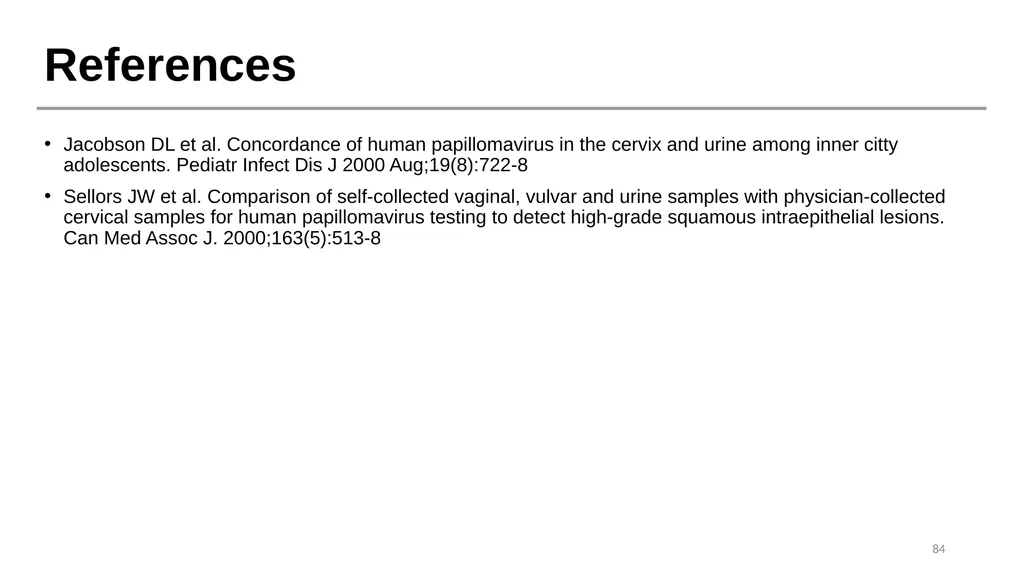
References Jacobson DL et al. Concordance of human papillomavirus in the cervix and urine among inner citty adolescents. Pediatr Infect Dis J 2000 Aug;19(8):722-8
Sellors JW et al. Comparison of self-collected vaginal, vulvar and urine samples with physician-collected cervical samples for human papillomavirus testing to detect high-grade squamous intraepithelial lesions. Can Med Assoc J. 2000;163(5):513-8 84<br>
Sellors JW et al. Comparison of self-collected vaginal, vulvar and urine samples with physician-collected cervical samples for human papillomavirus testing to detect high-grade squamous intraepithelial lesions. Can Med Assoc J. 2000;163(5):513-8 84<br>