04
The assessment of menopausal women is a vital aspect of women's health care, aimed at understanding and managing the physical, emotional, and psychological changes associated with menopause.
As women transition through perimenopause, menopause, and post menopause, they may experience a range of symptoms such as hot flashes, irregular menstruation, mood changes, sleep disturbances, and urogenital issues.<br>
05
A comprehensive assessment involves a holistic approach, taking into account the woman’s medical history, menstrual history, lifestyle factors, and current symptoms, as well as evaluating cardiovascular, skeletal, and reproductive health.
It may also include blood tests, bone density scans, and mental health evaluations depending on individual needs.<br>
06
Early and thorough assessment allows health professionals to provide personalized care, offer appropriate counseling, initiate preventive measures, and, if necessary, prescribe treatments such as hormone replacement therapy (HRT) or non-hormonal alternatives.
This ensures better quality of life and promotes healthy aging in women undergoing menopause<br>
07
A thorough assessment of menopausal women involves collecting detailed information about symptoms, physical and emotional health, lifestyle, and risk factors for conditions like osteoporosis and cardiovascular disease.
The goal is to provide a holistic and individualized approach to managing menopause and promoting long-term well-being.<br>
08
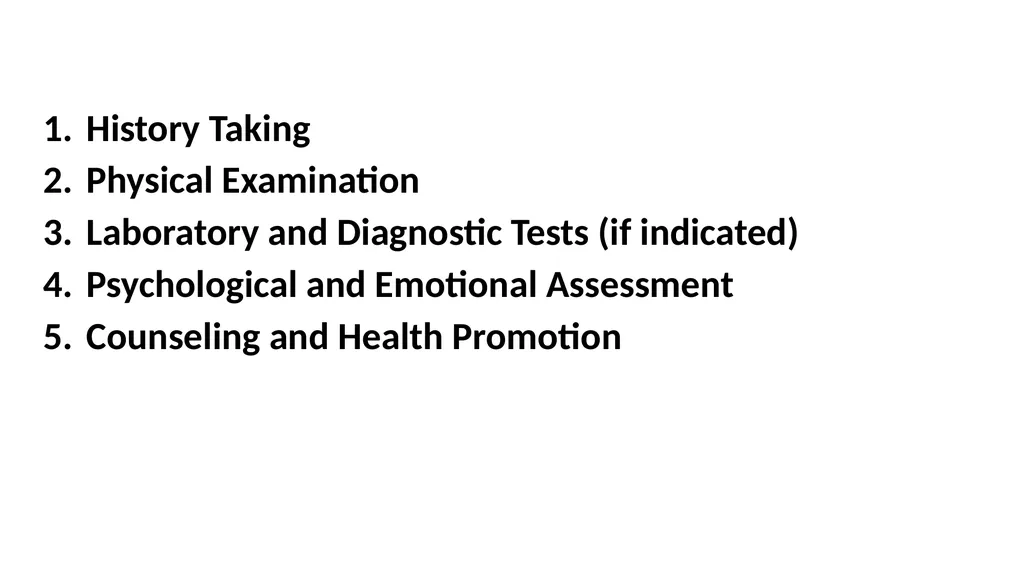
History Taking
Physical Examination
Laboratory and Diagnostic Tests (if indicated)
Psychological and Emotional Assessment
Counseling and Health Promotion<br>
09
History Taking
a. Menstrual and Reproductive History
Age of onset of menopause (or current symptoms)
Menstrual irregularities or cessation
History of pregnancies, childbirth, or contraceptive use<br>
10
b. Menopausal Symptoms (using a symptom checklist or scale)
Hot flashes
Night sweats
Vaginal dryness or discomfort during intercourse
Mood swings, anxiety, depression
Sleep disturbances
Memory or concentration difficulties
Urinary symptoms (frequency, urgency, incontinence)<br>
11
c. Medical and Surgical History
Chronic illnesses (e.g., diabetes, hypertension)
History of cancers (especially breast, ovarian, or uterine)
Previous surgeries (e.g., hysterectomy, oophorectomy)
Risk assessment of: Diabetes, Hypertension, Deep vein thrombosis, Thyroid dysfunction Liver disease, Osteoporosis, Arthritis, Climacteric depression, Dementia Cancers in general, breast, cervical , endometrial, ovarian<br>
12
d. Family History
Osteoporosis
Cardio/cerebrovascular disease
Breast or ovarian cancer
Osteoporosis/fractures
Dementia, Cancer
Current medication including OTC medications,
Social & Personal history
Tobacco/alcohol use.<br>
13
e. Lifestyle Assessment
Diet and nutrition
Exercise habits
Smoking, alcohol use
Stress levels and coping mechanisms
Sexual activity and function<br>
14
Gynecological facts:
Bleeding pattern or LMP,
Past surgery (eg: hysterectomy/ oophorectomy)
Current use of hormonal therapy +/- contraceptive needs
Dietary History
Sleep History
Sexual History
PMS,
Postnatal depression,<br>
15
2. Physical Examination
a. General Examination
Vital signs (blood pressure, heart rate)
Height and weight (BMI)
Waist-hip ratio
Physical fitness
Pelvic examination (+/- Pap Smear)
Breast examination
Thyroid Examination,<br>
16
b. Systemic Examination
Cardiovascular: Check for hypertension, murmurs
Musculoskeletal: Look for signs of osteoporosis (posture, back pain)
Skin and Hair: Thinning, dryness, changes in texture
Breast Examination: Check for lumps, changes in size/texture
Pelvic Examination:
Assess vaginal atrophy, discharge, or prolapse<br>
17
3. Laboratory and Diagnostic Tests (if indicated)
Complete blood picture
Urine test routine
Hormone levels (FSH, LH, estradiol) – not always necessary
Lipid profile – to assess cardiovascular risk<br>
18
Ct….
Blood glucose or HbA1c – for diabetes risk
Thyroid function tests – if symptoms overlap with thyroid disorders
Bone mineral density scan (DEXA) – for osteoporosis risk
Pap smear and mammogram – per age and screening guideline.
Transvaginal ultrasound<br>
19
Follicle stimulating hormone (FSH) in a blood test-
To diagnosis the levels of hormones in particular follicle stimulating hormone (FSH) in a blood test.
A high FSH level is consistent with menopause, as it indicates that the ovaries are no longer functioning and secreting enough hormones such as oestrogen.
Further targeted investigations are done depending on the risks of a disease suspected on history and clinical examination
FSH level: 40 milli IU or more<br>
20
4. Psychological and Emotional Assessment
Screen for depression and anxiety
Assess impact on quality of life, work, and relationships
Explore support systems and coping strategies<br>
21
5. Counseling and Health Promotion
Educate about normal menopausal changes
Discuss symptom management (lifestyle changes, HRT, alternatives)
Promote healthy eating, exercise, and stress reduction
Encourage routine screening (e.g., mammograms, bone density)<br>
22
Conclusion
The assessment of menopausal women should be individualized, respectful, and comprehensive, taking into account physical, emotional, and social aspects. It enables early intervention, empowers women with knowledge, and improves their quality of life during and after the menopausal transition.<br>