04
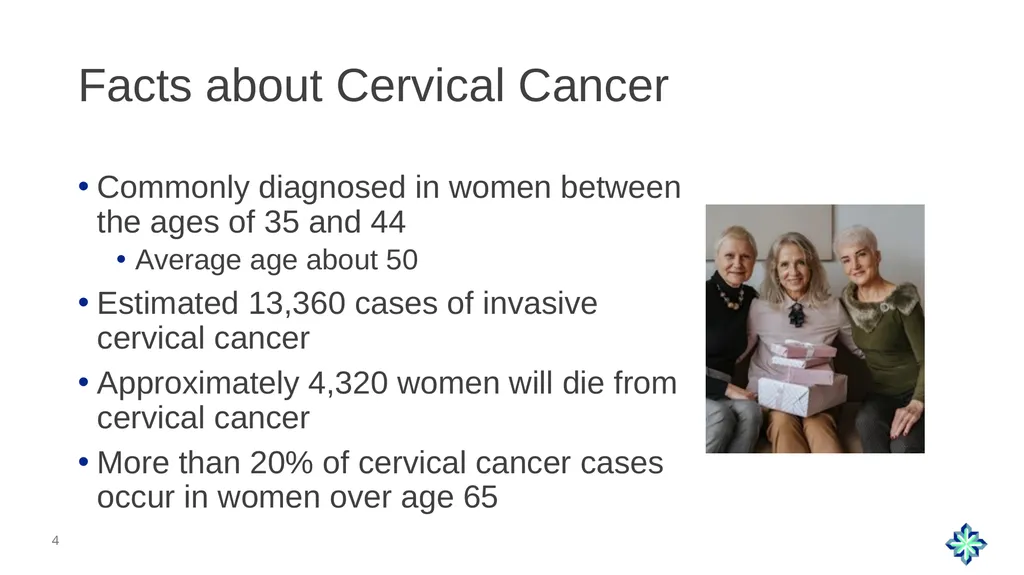
Facts about Cervical Cancer Commonly diagnosed in women between the ages of 35 and 44
Average age about 50
Estimated 13,360 cases of invasive cervical cancer
Approximately 4,320 women will die from cervical cancer
More than 20% of cervical cancer cases occur in women over age 65<br>
05
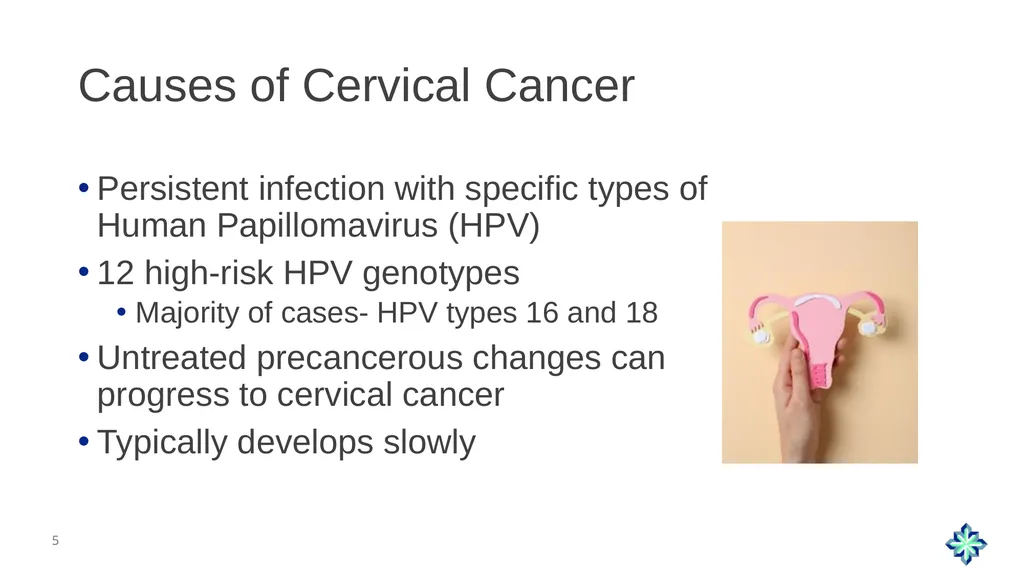
Causes of Cervical Cancer Persistent infection with specific types of Human Papillomavirus (HPV)
12 high-risk HPV genotypes
Majority of cases- HPV types 16 and 18
Untreated precancerous changes can progress to cervical cancer
Typically develops slowly<br>
06
Types of Cervical Cancer Squamous cell carcinoma
Typically develop from squamous epithelial cells that line ectocervix
Adenocarcinoma
Develops from glandular cells of the endocervix Mixed carcinoma or adenosquamous carcinoma
Features of both squamous cell carcinoma and adenocarcinoma
Cancers from other cell types within the cervix
Very rare<br>
07
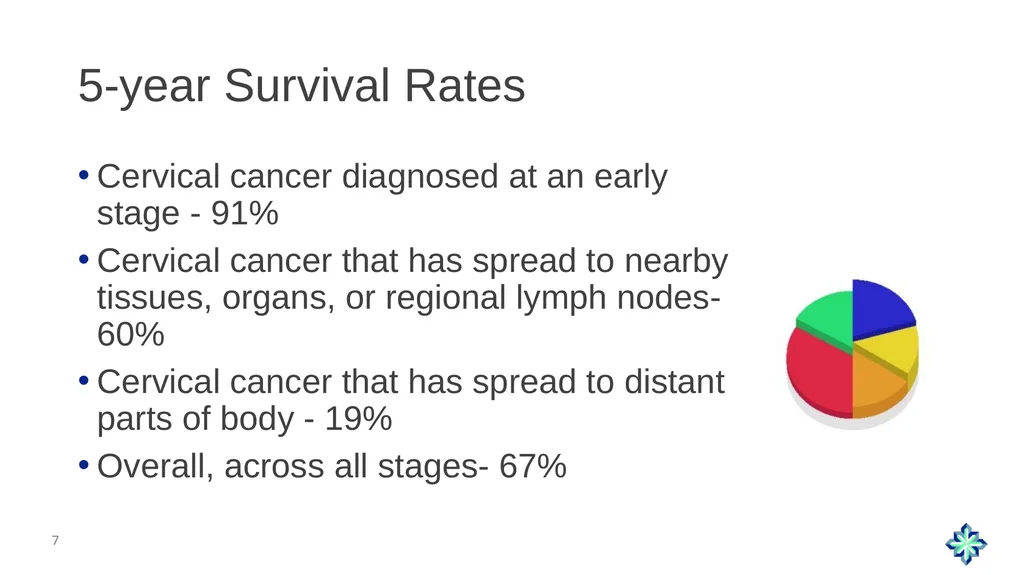
5-year Survival Rates Cervical cancer diagnosed at an early stage - 91%
Cervical cancer that has spread to nearby tissues, organs, or regional lymph nodes- 60%
Cervical cancer that has spread to distant parts of body - 19%
Overall, across all stages- 67%<br>
08
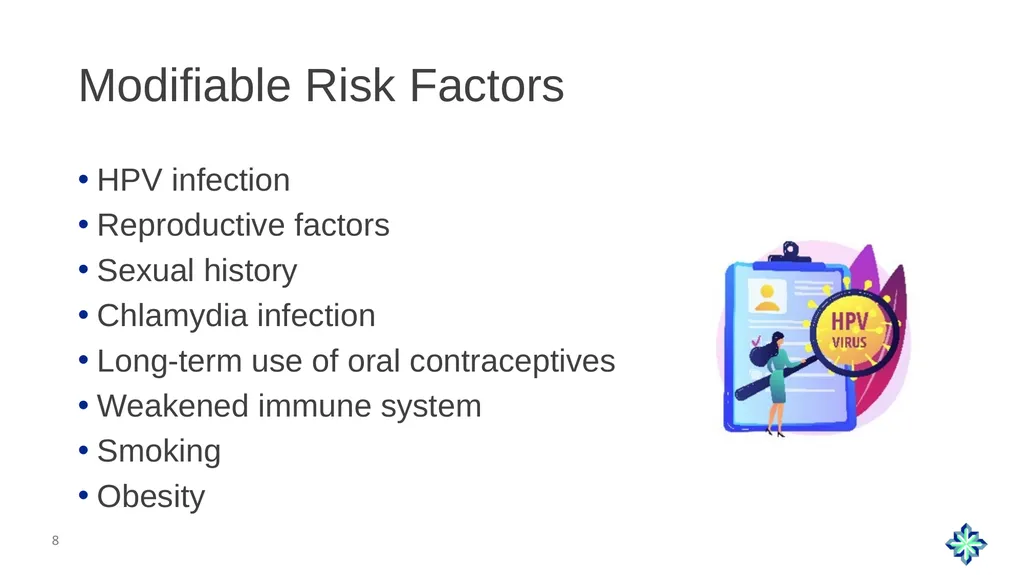
Modifiable Risk Factors HPV infection
Reproductive factors
Sexual history
Chlamydia infection
Long-term use of oral contraceptives
Weakened immune system
Smoking
Obesity<br>
09
Non-Modifiable Risk Factors Diethylstilbestrol (DES) exposure
Rare
Family history
Race and ethnicity<br>
10
Symptoms Early stages – often asymptomatic
Early stages
Vaginal bleeding
Vaginal discharge
Pelvic pain or discomfort during sex Advanced stages
Any of early-stage cancer symptoms
Difficulty with urination and defecation
Dull ache or pain in back
Abdominal pain
Swelling of legs
Fatigue<br>
11
Screening and Other Tests<br>
12
Diagnosis Review of medical and family history
Pelvic exam
Pap test
HPV test<br>
13
Results of Pap Test Normal or negative
No abnormal cell changes
Unclear or ASCUS
Unable to determine whether the cervical cells are normal or abnormal Abnormal
Changes in cervical cells detected
Unsatisfactory
Did not meet quality standards for proper cervical cell analysis<br>
14
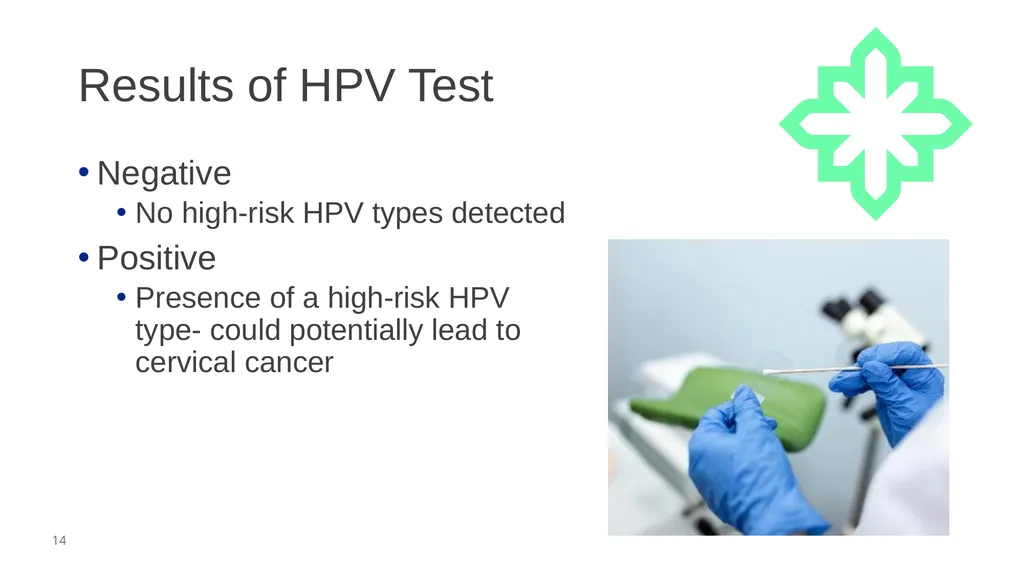
Results of HPV Test Negative
No high-risk HPV types detected
Positive
Presence of a high-risk HPV type- could potentially lead to cervical cancer<br>
15
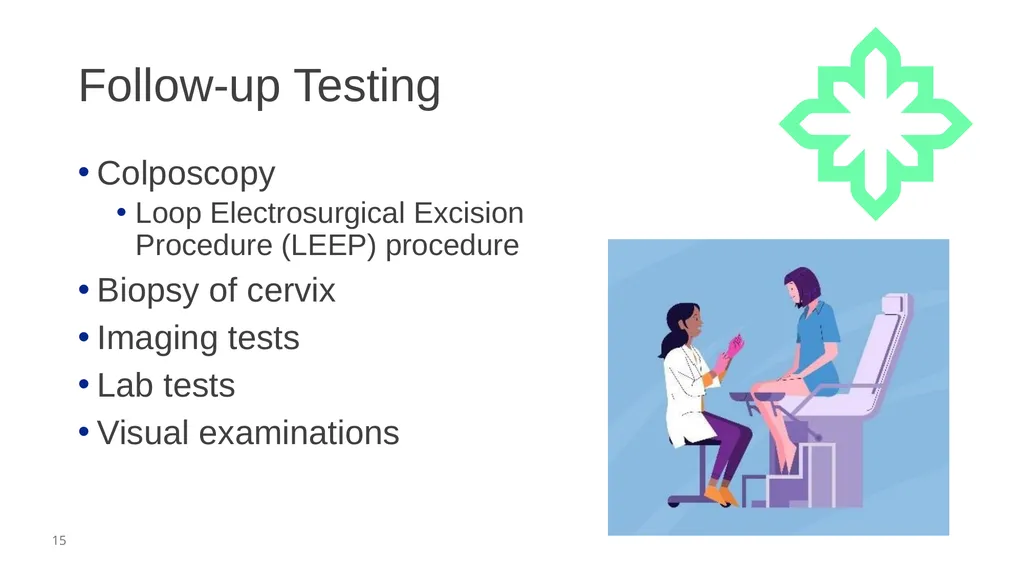
Follow-up Testing Colposcopy
Loop Electrosurgical Excision Procedure (LEEP) procedure
Biopsy of cervix
Imaging tests
Lab tests
Visual examinations<br>
16
Staging and Treatment<br>
17
Staging Stage I
Confined to cervix with no spread to lymph nodes
Stage II
Spread to upper two-thirds of vagina or tissues surrounding the uterus
Stage III
Spread to lower third of vagina and/or pelvic walls
May spread to regional lymph nodes Stage IV
Metastasized beyond the pelvis
May invade nearby structures like the bladder or rectum
Can also metastasize to distant parts of the body<br>
18
Treatment Surgery
Radiation therapy
Chemotherapy
Targeted drug therapy
Immunotherapy<br>
19
Prevention Cervical cancer screening
Pap test
HPV test
Cervical cancer screening after 65
Three consecutive normal Pap test
Two consecutive normal Pap tests with HPV testing HPV vaccination
Gardasil
Lifestyle changes
Condoms
Intrauterine device
Healthy diet
Not smoking<br>
20
Eligibility and Coverage<br>
21
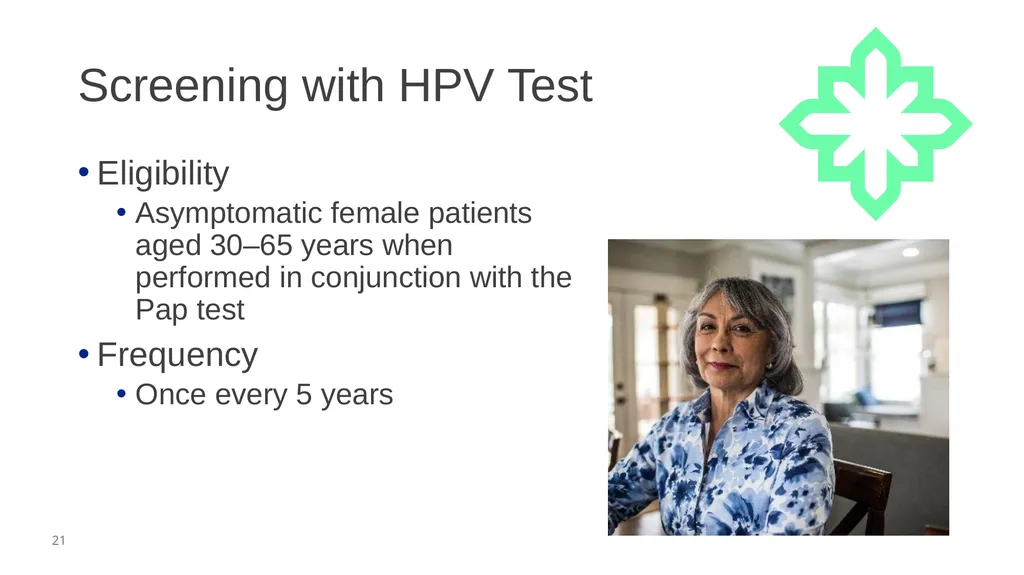
Screening with HPV Test Eligibility
Asymptomatic female patients aged 30–65 years when performed in conjunction with the Pap test
Frequency
Once every 5 years<br>
22
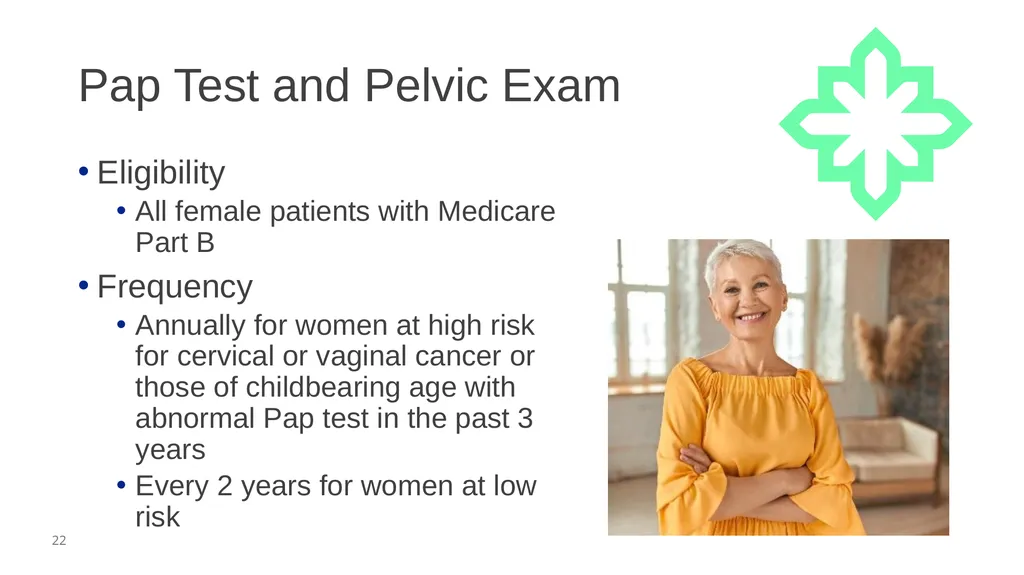
Pap Test and Pelvic Exam Eligibility
All female patients with Medicare Part B
Frequency
Annually for women at high risk for cervical or vaginal cancer or those of childbearing age with abnormal Pap test in the past 3 years
Every 2 years for women at low risk<br>
23
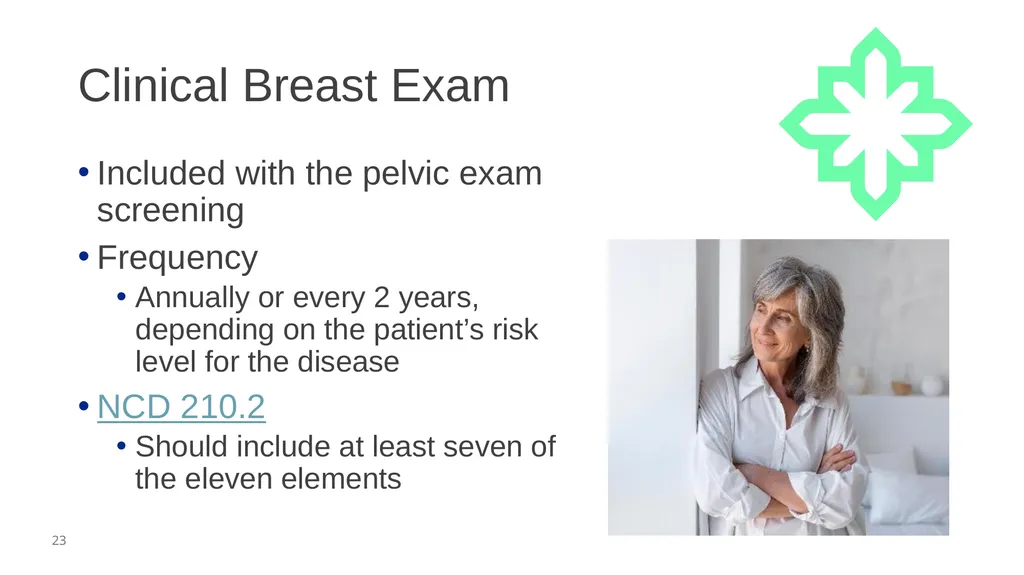
Clinical Breast Exam Included with the pelvic exam screening
Frequency
Annually or every 2 years, depending on the patient’s risk level for the disease
NCD 210.2
Should include at least seven of the eleven elements<br>
24
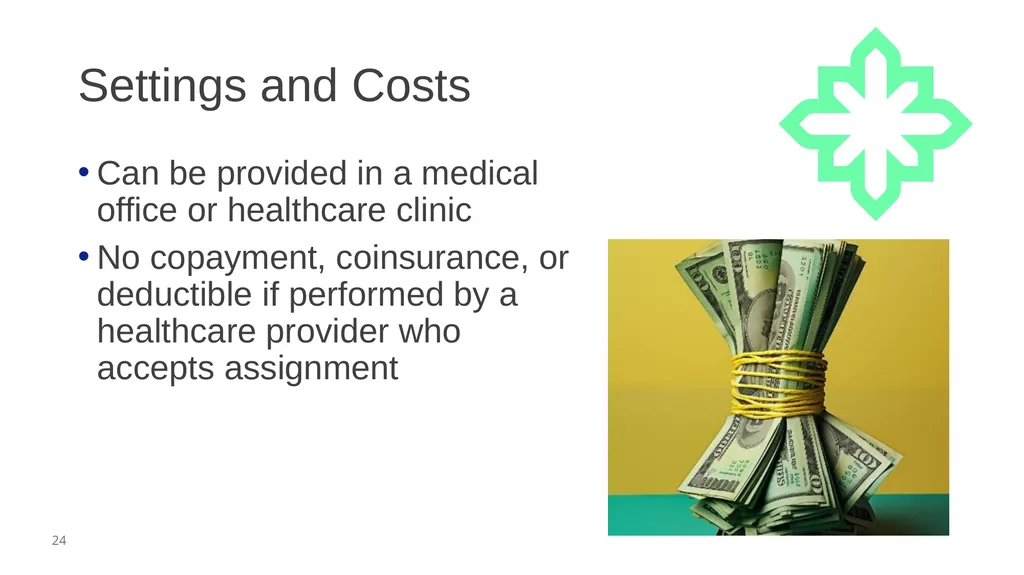
Settings and Costs Can be provided in a medical office or healthcare clinic
No copayment, coinsurance, or deductible if performed by a healthcare provider who accepts assignment<br>
26
Cervical Cancer Screenings Date service was provided
Office visit notes for date of service
Signed and dated physician or qualified non-physician practitioner order
Test results and documentation of any follow-up care or counseling given
Documentation to support the medical necessity<br>
27
Pelvic and Clinical Breast Exam Date service was provided
Office visit notes for date of service
Signed and dated physician or qualified non-physician practitioner order
Documentation of any follow-up care and/or counseling given
Documentation to support the medical necessity<br>
28
Review of Today’s Webinar During today’s webinar, we
Provided background information about cervical cancer
Discussed screening and tests as well as treatment options and strategies for prevention of cervical cancer
Reviewed the Medicare Part B coverage criteria<br>
29
CMS Resources MLN006559 Medicare Preventive Services
NCD 210.2 Screening Pap Smears and Pelvic Examinations for Early Detection of Cervical or Vaginal Cancer
NCD 210.2.1 Screening for Cervical Cancer with Human Papillomavirus (HPV)<br>
30
Additional Resources American Cancer Society – Cervical Cancer Stages
NIH National Cancer Institute (Cancer.gov) –Cervical Cancer Stages
WPS - Encore: Preventive Services: Women's Health (billing presentation)<br>
31
Questions and Answers<br>
32
Survey Let us know what you think!
Take time to complete our survey now.
Survey link in chat
Redirect after closing webinar<br>
33
Thanks for attending!<br>
34
Disclaimers This material is a tool to assist the provider community. Medicare rules change often. Access CMS’ website for current coverage, regulations and rulings.
The basis for answers given today rely on facts given in the question. Medicare rules determine final coverage.
Do not record the event as CMS does not allow this for profit making purposes.<br>