Characteristics of Life Pre-AP Biology: Unit 1 Topic 1 Objectives: I can tell the difference between organisms and nonliving things I can list and explain the characteristics all living things share I can explain why some things are
"Characteristics of Life Pre-AP Biology: Unit 1" is the property of its rightful owner. Permission is granted to
download and print the materials on this website for personal, non-commercial use only, and to display it
on your personal computer provided you do not modify the materials and that you retain all copyright
notices contained in the materials. By downloading content from our website, you accept the terms of this
agreement.
Presentation Transcript
01
Characteristics of Life Pre-AP Biology: Unit 1 Topic 1 Objectives:
I can tell the difference between organisms and nonliving things
I can list and explain the characteristics all living things share
I can explain why some things are considered nonliving, even though they meet some characteristics of life<br>
02
What is biology? Biology is the study of life
Bio = life ; ology = study of
Biologists recognize that all living things share certain characteristics. They use these characteristics to classify things as living, nonliving, or once-living (dead).<br>
03
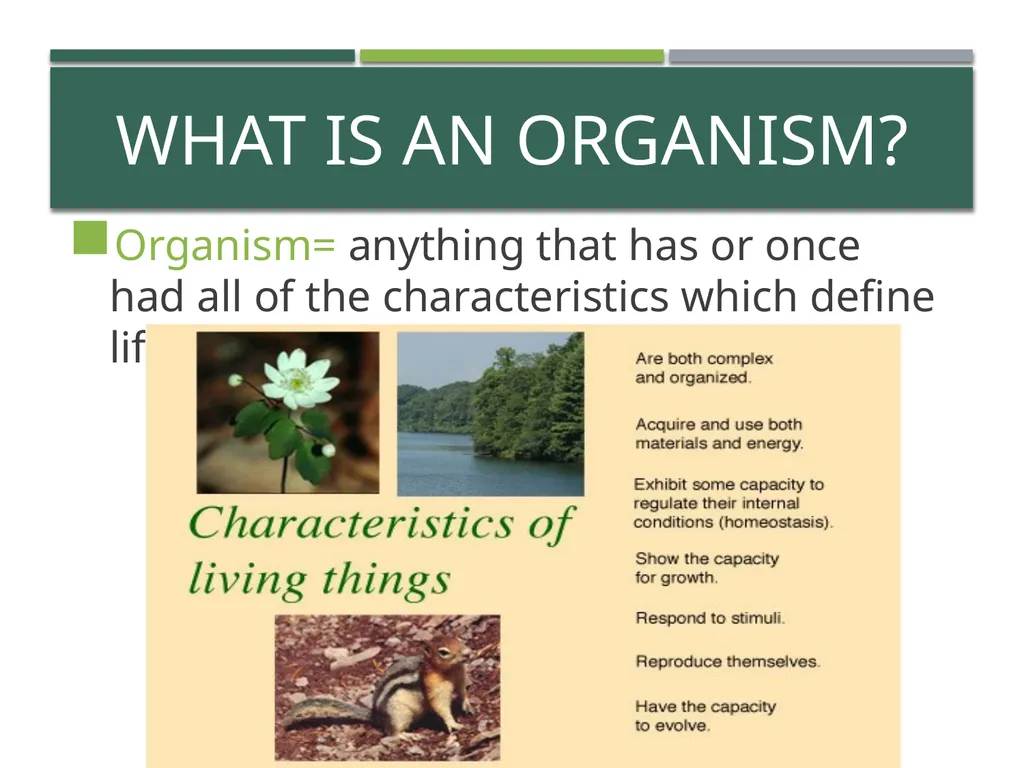
What is an organism? Organism= anything that has or once had all of the characteristics which define life<br>
04
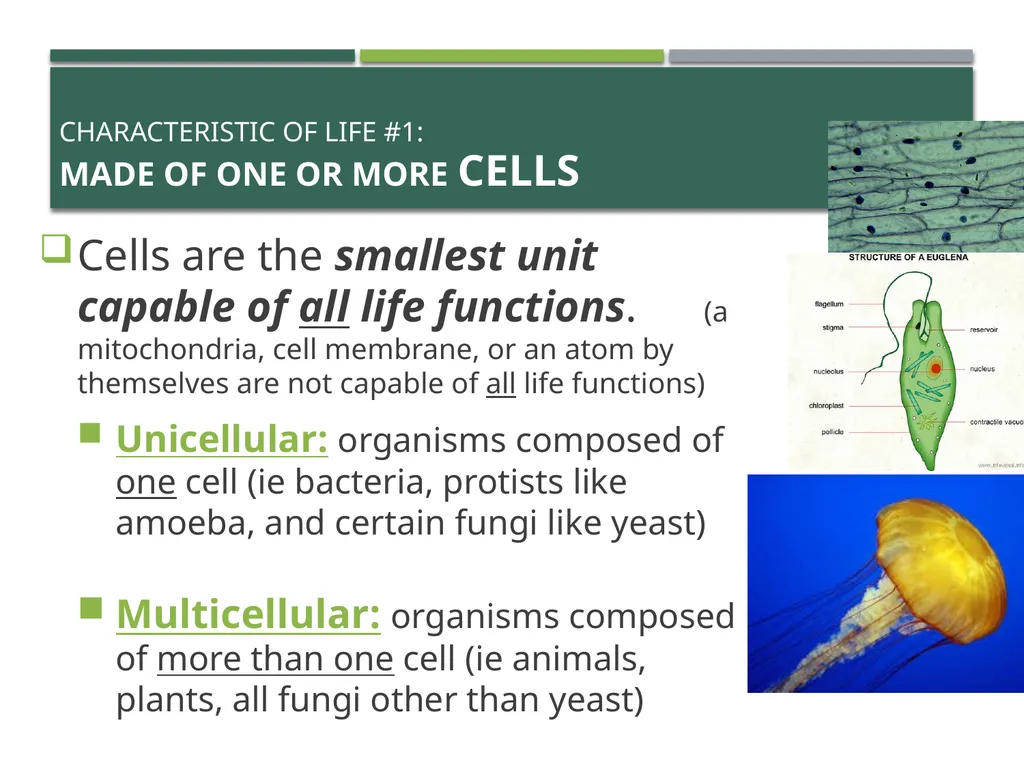
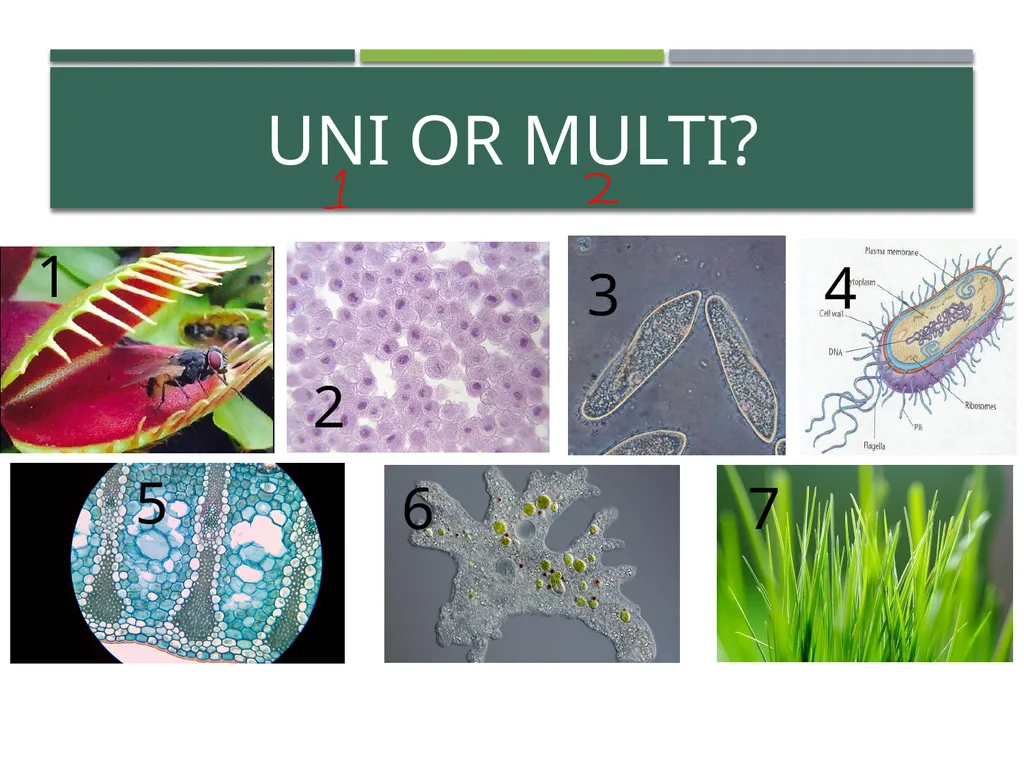
Characteristic of life #1: Made of One or more Cells Cells are the smallest unit capable of all life functions. (a mitochondria, cell membrane, or an atom by themselves are not capable of all life functions)
Unicellular: organisms composed of one cell (ie bacteria, protists like amoeba, and certain fungi like yeast)
Multicellular: organisms composed of more than one cell (ie animals, plants, all fungi other than yeast)<br>
05
Uni or multi? 1 2 3 4 5 6 7<br>
06
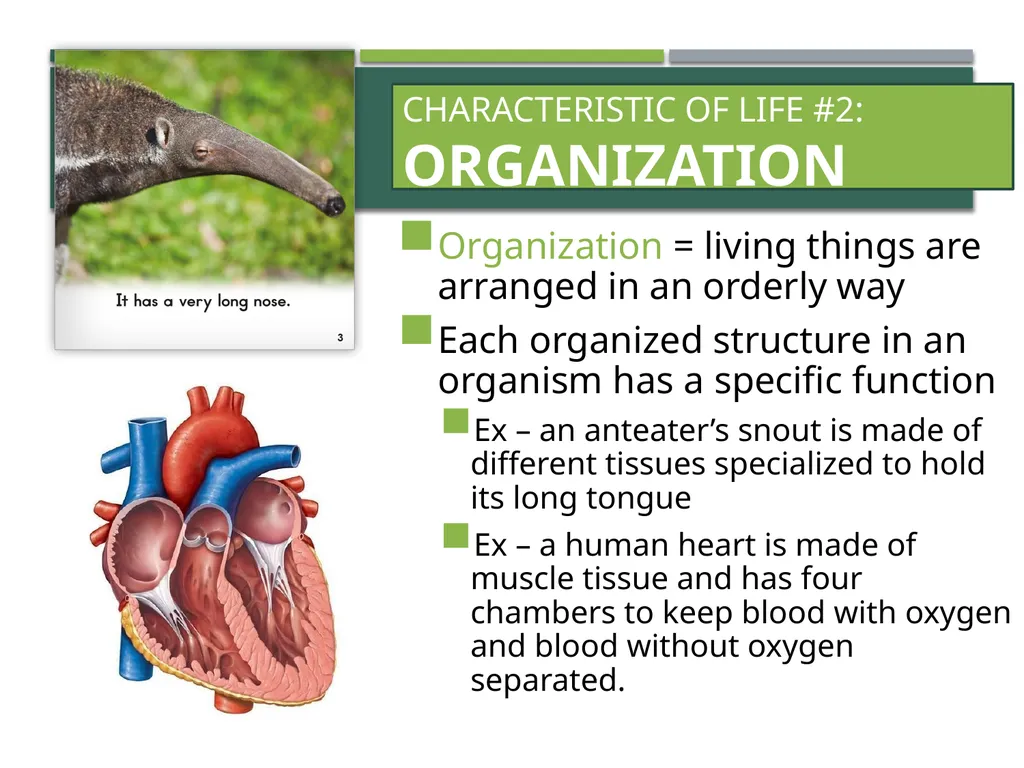
Organization = living things are arranged in an orderly way
Each organized structure in an organism has a specific function
Ex – an anteater’s snout is made of different tissues specialized to hold its long tongue
Ex – a human heart is made of muscle tissue and has four chambers to keep blood with oxygen and blood without oxygen separated. Characteristic of life #2: organization<br>
07
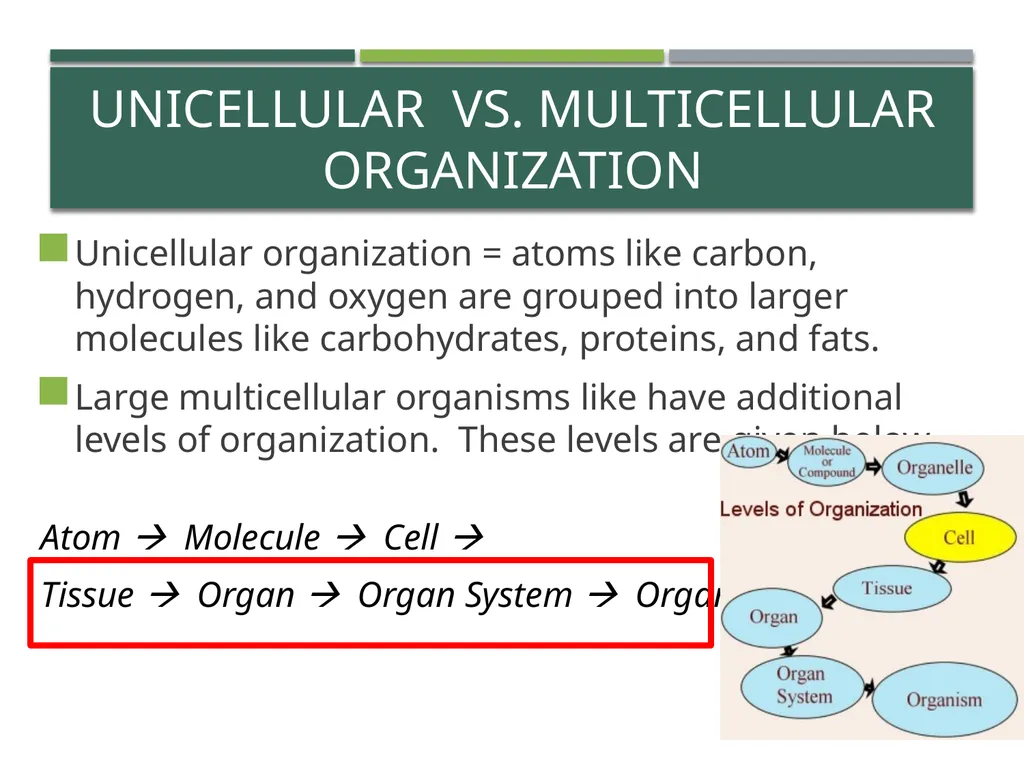
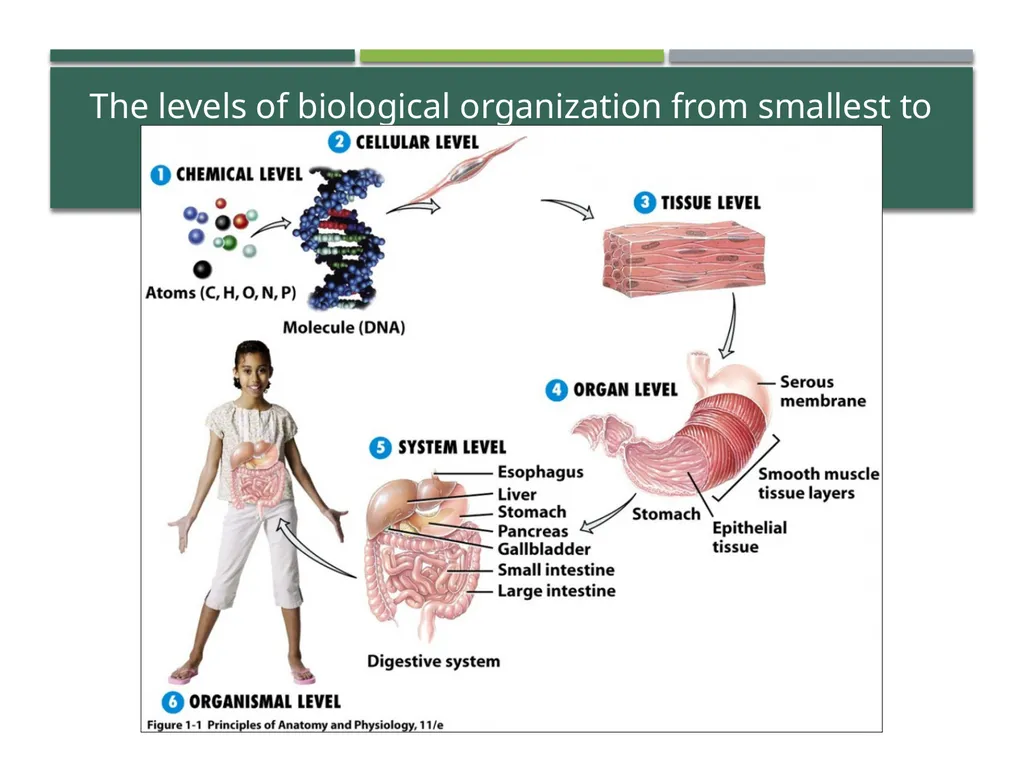
unicellular vs. multicellular organization Unicellular organization = atoms like carbon, hydrogen, and oxygen are grouped into larger molecules like carbohydrates, proteins, and fats.
Large multicellular organisms like have additional levels of organization. These levels are given below.
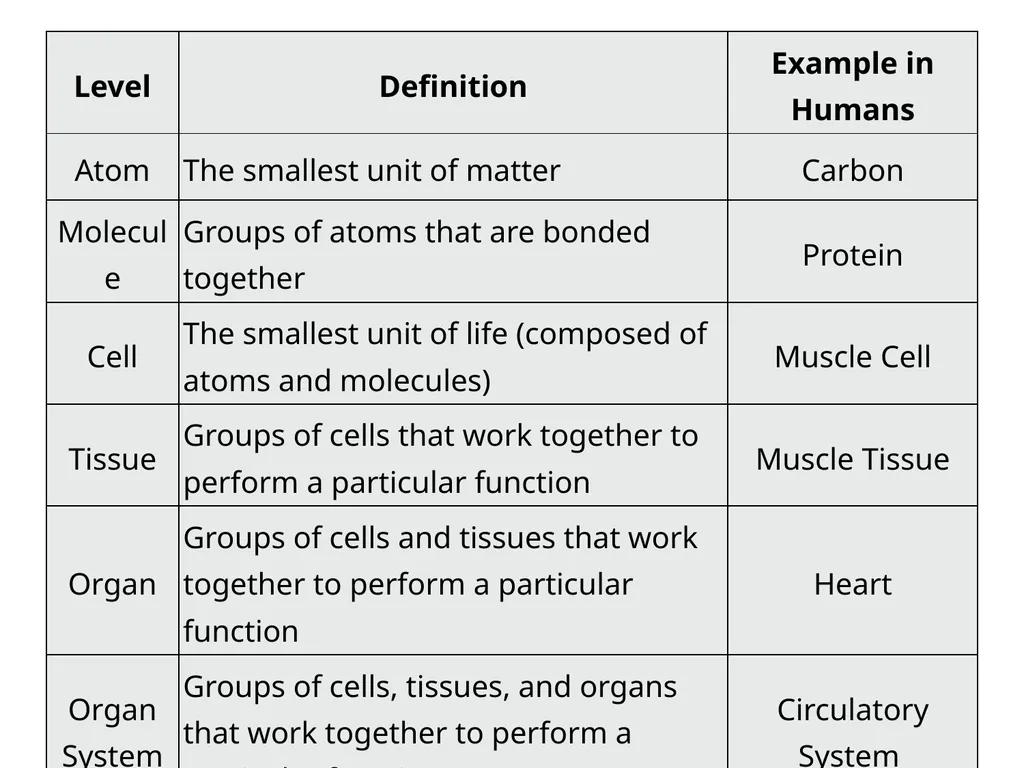
Atom Molecule Cell
Tissue Organ Organ System Organism<br>
08
The levels of biological organization from smallest to largest are:<br>
09
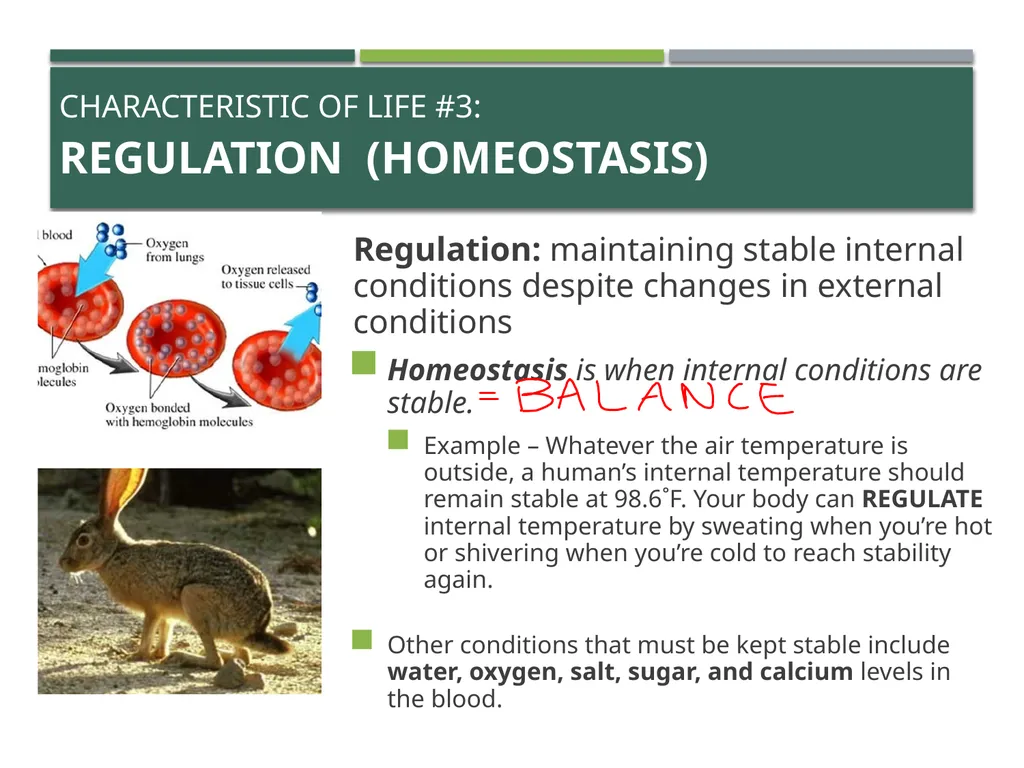
Characteristic of life #3: Regulation (Homeostasis) Regulation: maintaining stable internal conditions despite changes in external conditions
Homeostasis is when internal conditions are stable.
Example – Whatever the air temperature is outside, a human’s internal temperature should remain stable at 98.6˚F. Your body can REGULATE internal temperature by sweating when you’re hot or shivering when you’re cold to reach stability again.
Other conditions that must be kept stable include water, oxygen, salt, sugar, and calcium levels in the blood.<br>
10
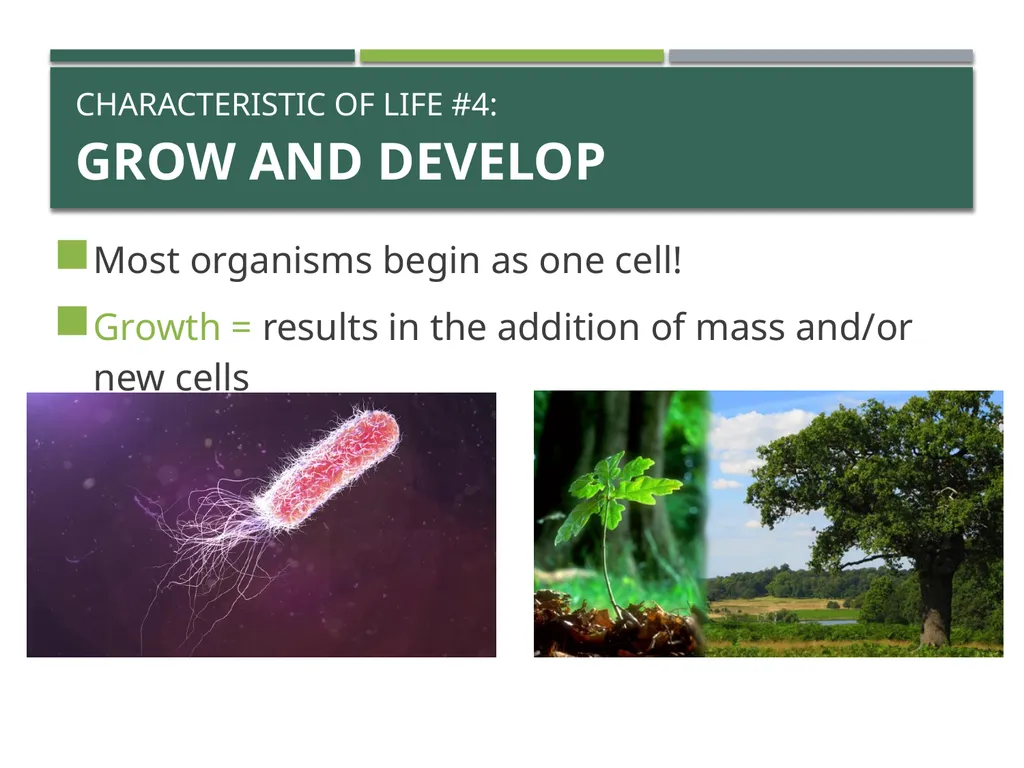
Characteristic of life #4: grow and develop Most organisms begin as one cell!
Growth = results in the addition of mass and/or new cells<br>
11
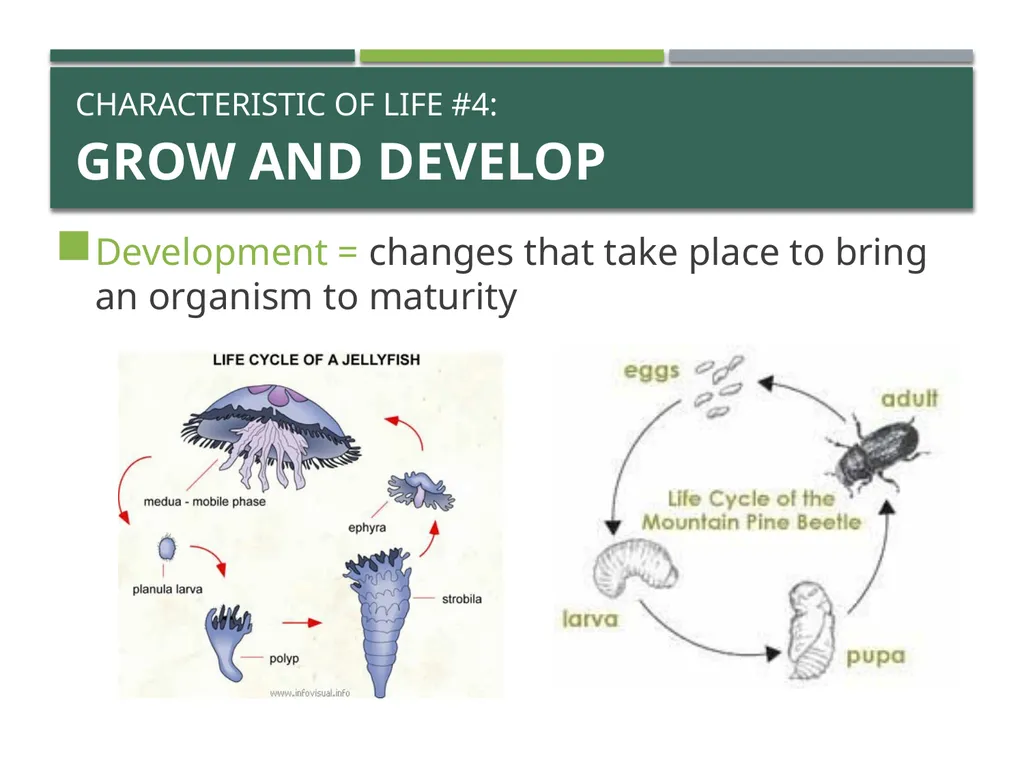
Characteristic of life #4: grow and develop Development = changes that take place to bring an organism to maturity<br>
12
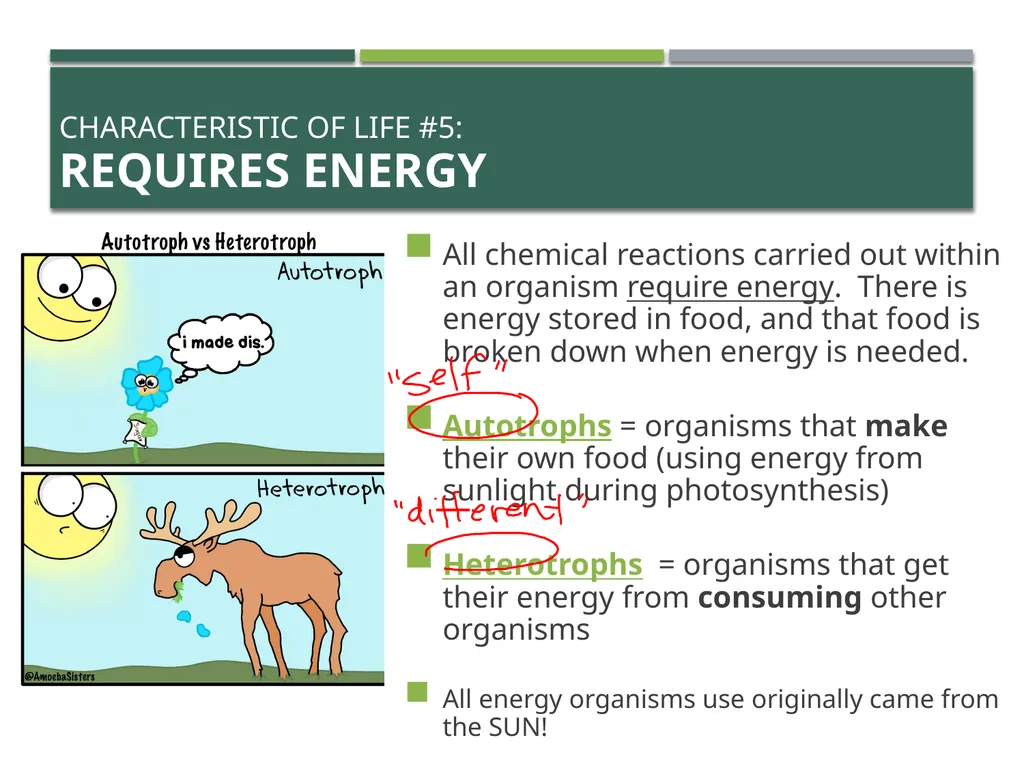
Characteristic of life #5: Requires ENERGY All chemical reactions carried out within an organism require energy. There is energy stored in food, and that food is broken down when energy is needed.
Autotrophs = organisms that make their own food (using energy from sunlight during photosynthesis)
Heterotrophs = organisms that get their energy from consuming other organisms
All energy organisms use originally came from the SUN!<br>
13
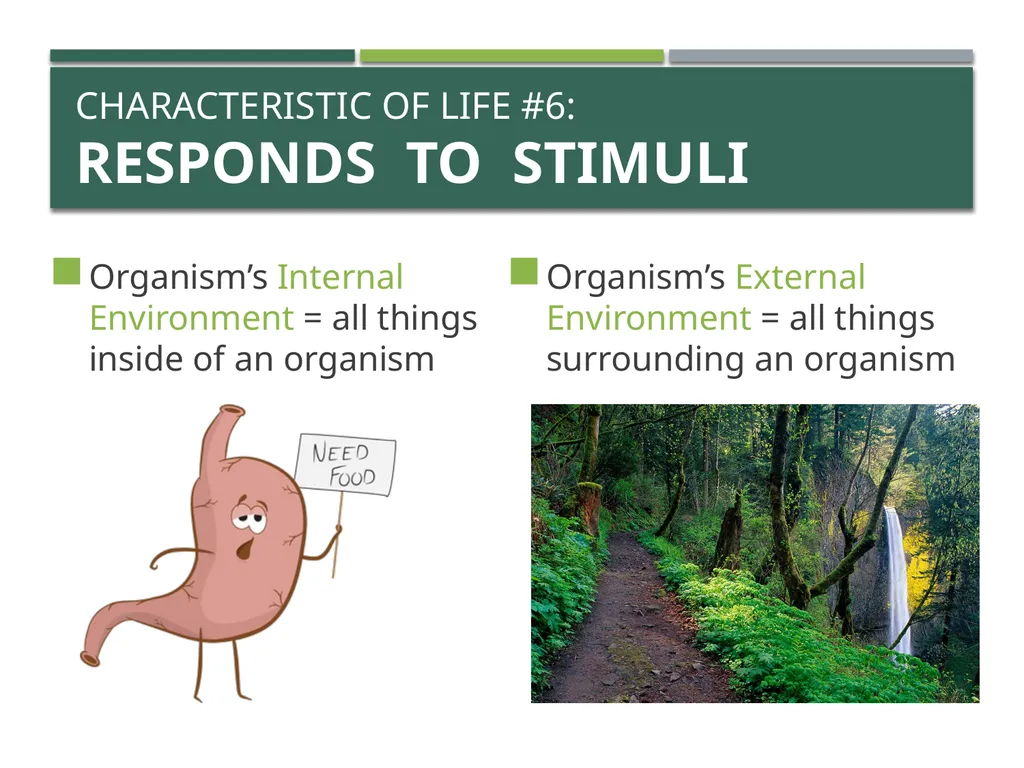
Characteristic of life #6: Responds to stimuli Organism’s Internal Environment = all things inside of an organism Organism’s External Environment = all things surrounding an organism<br>
14
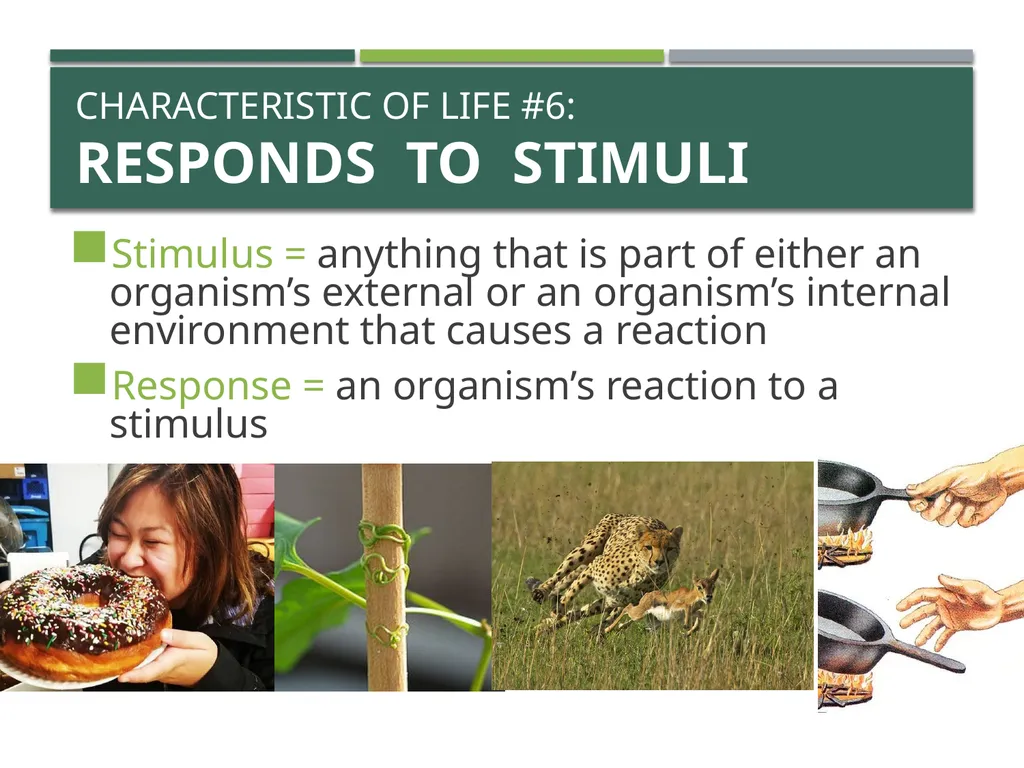
Characteristic of life #6: Responds to stimuli Stimulus = anything that is part of either an organism’s external or an organism’s internal environment that causes a reaction
Response = an organism’s reaction to a stimulus<br>
15
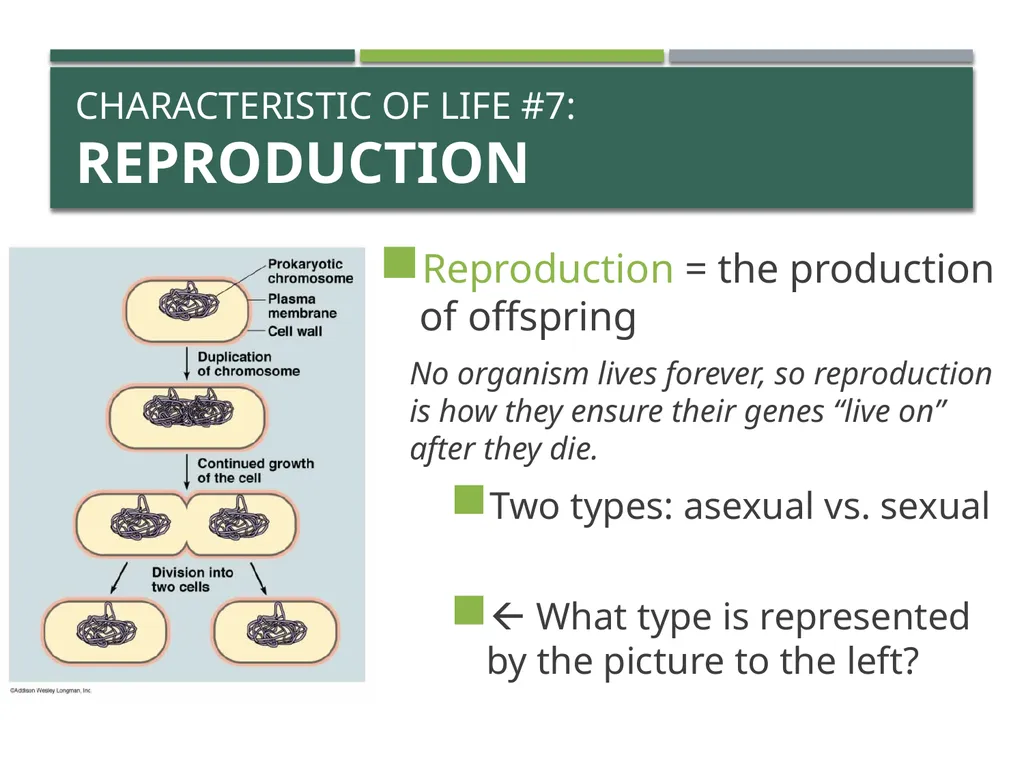
Characteristic of life #7: Reproduction Reproduction = the production of offspring
No organism lives forever, so reproduction is how they ensure their genes “live on” after they die.
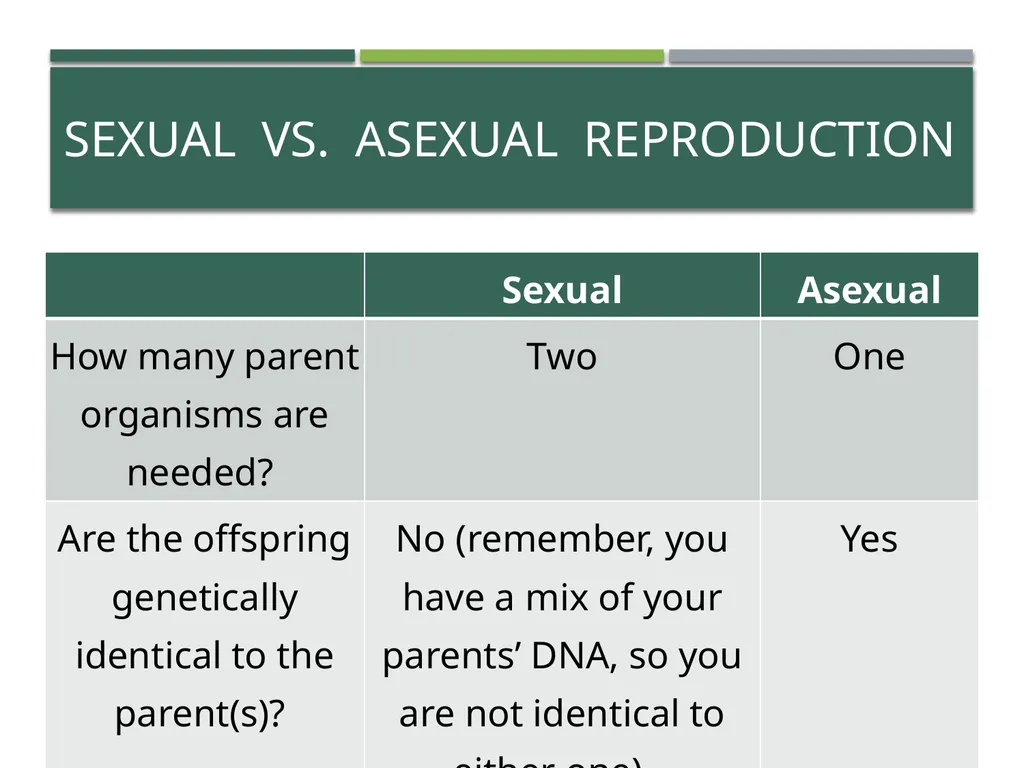
Two types: asexual vs. sexual
What type is represented by the picture to the left?<br>
16
Sexual vs. asexual reproduction<br>
17
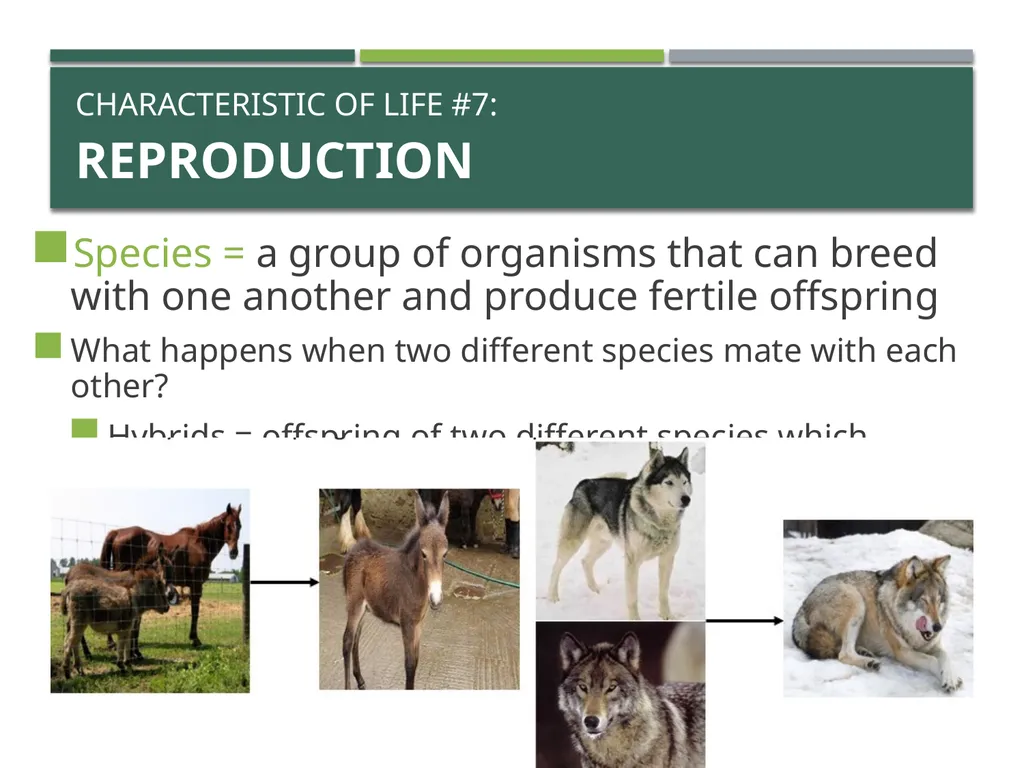
Characteristic of life #7: Reproduction Species = a group of organisms that can breed with one another and produce fertile offspring
What happens when two different species mate with each other?
Hybrids = offspring of two different species which interbreed<br>
18
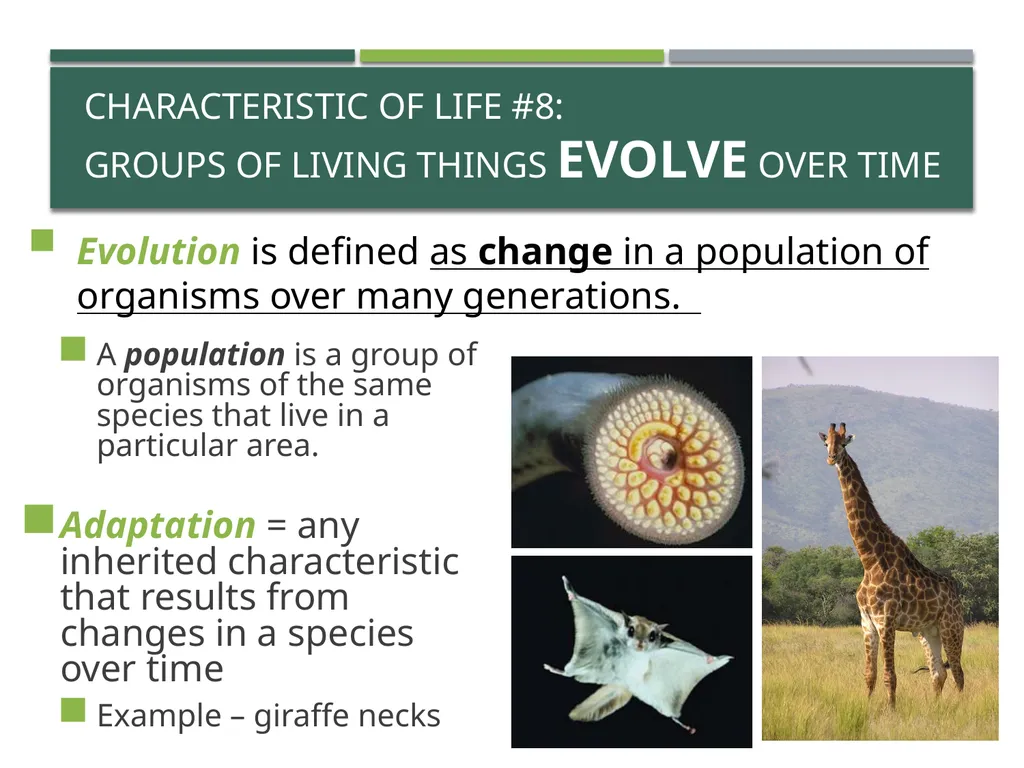
Characteristic of life #8: Groups of living things Evolve OVER TIME A population is a group of organisms of the same species that live in a particular area.
Adaptation = any inherited characteristic that results from changes in a species over time
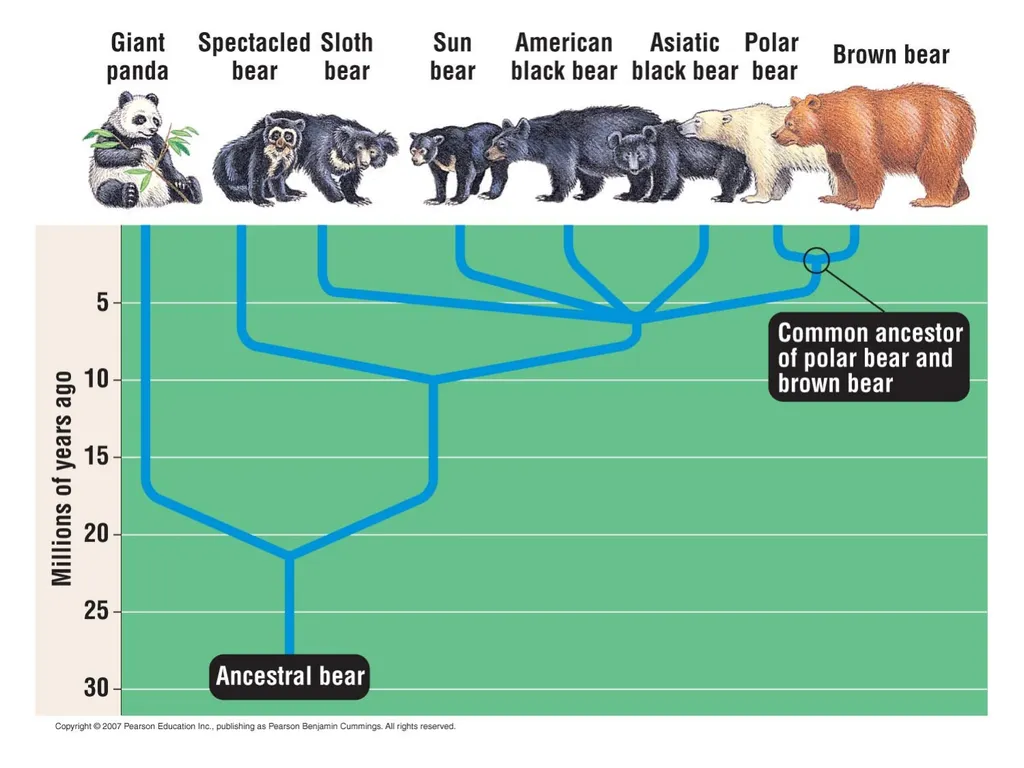
Example – giraffe necks Evolution is defined as change in a population of organisms over many generations.<br>
19
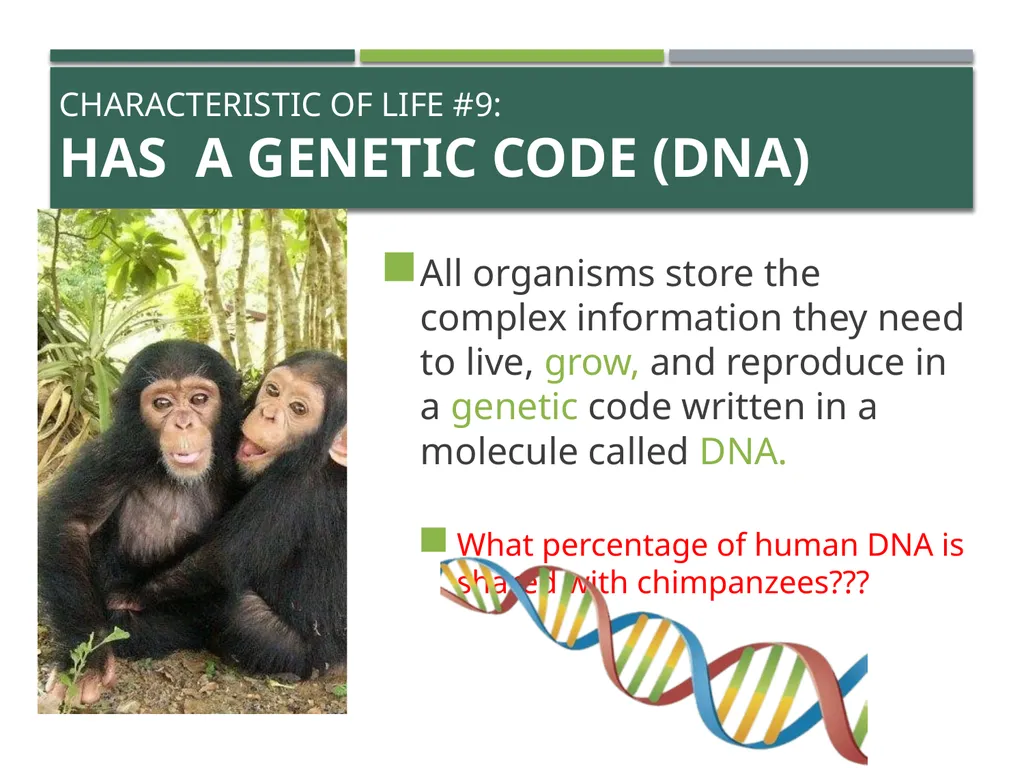
Characteristic of life #9: Has a genetic code (DNA) All organisms store the complex information they need to live, grow, and reproduce in a genetic code written in a molecule called DNA.
What percentage of human DNA is shared with chimpanzees???<br>
20
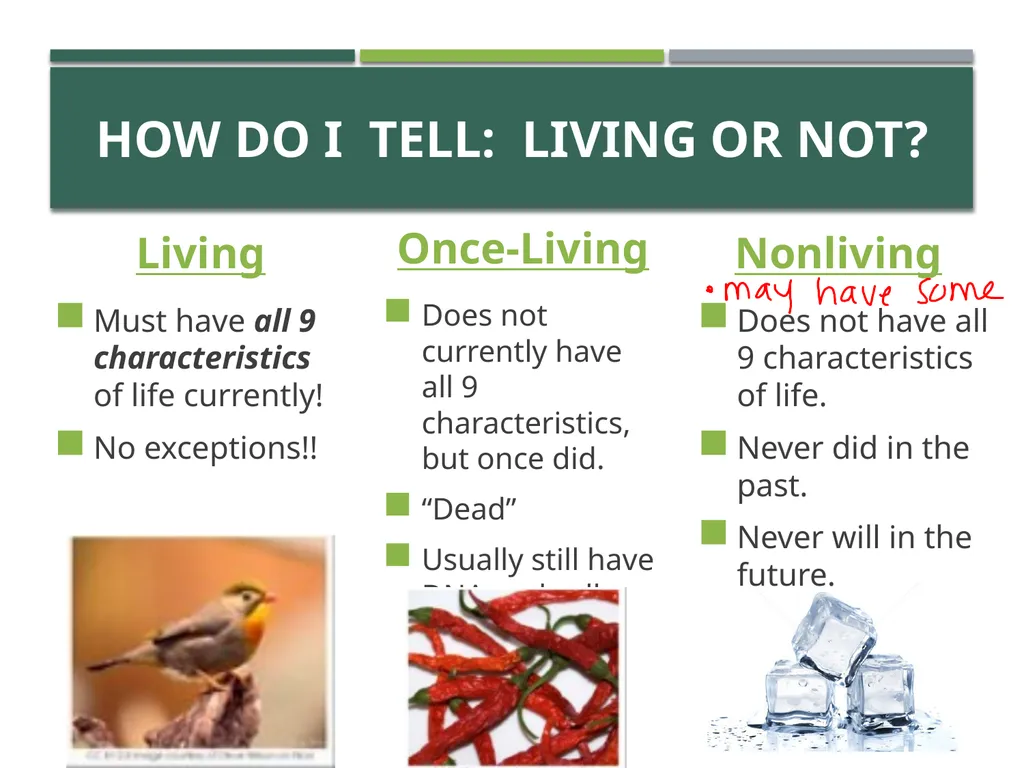
How do I tell: Living or not? Must have all 9 characteristics of life currently!
No exceptions!! Living Once-Living Nonliving Does not currently have all 9 characteristics, but once did.
“Dead”
Usually still have DNA and cells. Does not have all 9 characteristics of life.
Never did in the past.
Never will in the future.<br>