
Climate-Smart Agriculture Federica Matteoli
MT
Published · 17 slides · 0 views

1 / 1

Description
Climate-Smart Agriculture Federica Matteoli Natural Resources Officer Climate and Environment Division Food and Agriculture Organization of the United Nations (FAO) Why the agriculture sectors need Climate-Smart Agriculture more than ever
Related Topics
Share
Embed code
Download this presentation From Below
"Climate-Smart Agriculture Federica Matteoli" is the property of its rightful owner. Permission is granted to download and print the materials on this website for personal, non-commercial use only, and to display it on your personal computer provided you do not modify the materials and that you retain all copyright notices contained in the materials. By downloading content from our website, you accept the terms of this agreement.
Presentation Transcript
01
Climate-Smart Agriculture Federica Matteoli
Natural Resources Officer
Climate and Environment Division
Food and Agriculture Organization of the United Nations (FAO)<br>
Natural Resources Officer
Climate and Environment Division
Food and Agriculture Organization of the United Nations (FAO)<br>
02
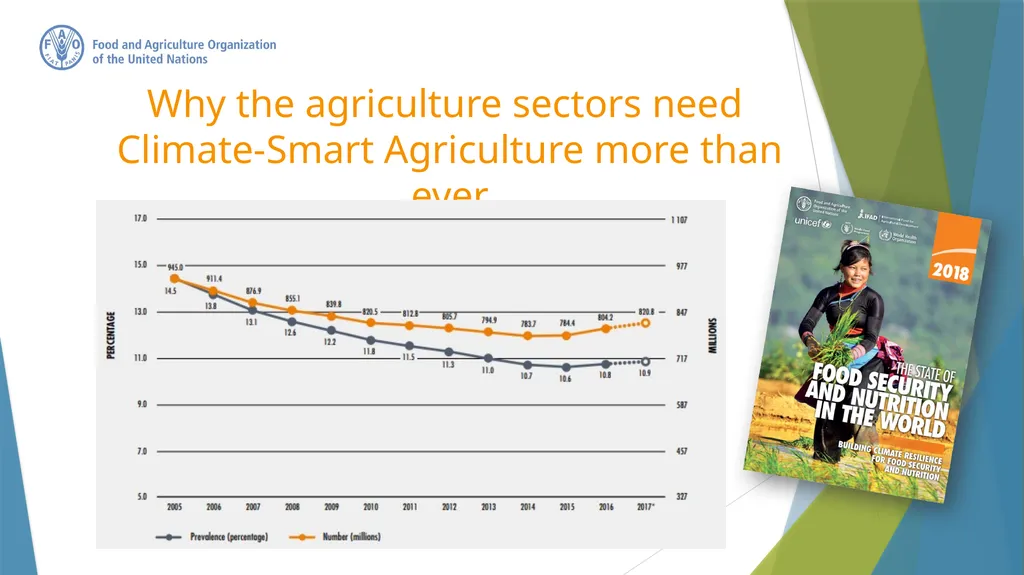
Why the agriculture sectors need
Climate-Smart Agriculture more than ever<br>
03
CSA More relevant than ever Recent developments in the UNFCCC process have brought agriculture fully into global climate change negotiations and positioned CSA as a highly strategic initiative:
First, the relevance of CSA is reflected very clearly in the large number of countries that include agriculture in their Nationally Determined Contributions— both as regards adaptation and mitigation— under the Paris Climate Accord.
Then, at COP23 in Bonn in November 2017, negotiators reached a landmark agreement to have the Subsidiary Body for Science and Technological Advice (SBSTA) and the Subsidiary Body for Implementation (SBI) review issues associated with agriculture by using workshops and technical expert meetings.<br>
04
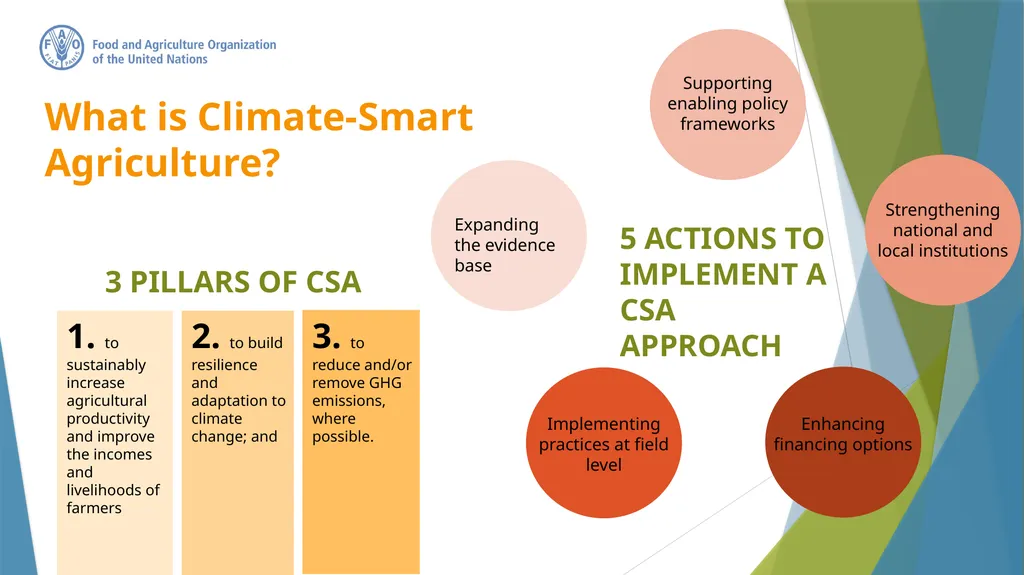
What is Climate-Smart Agriculture? 1. to sustainably increase agricultural productivity and improve the incomes and livelihoods of farmers 3 PILLARS OF CSA 2. to build resilience and adaptation to climate change; and 3. to reduce and/or remove GHG emissions, where possible. 5 ACTIONS TO IMPLEMENT A CSA APPROACH Expanding the evidence base Supporting enabling policy frameworks Strengthening national and local institutions Enhancing financing options Implementing practices at field level<br>
05
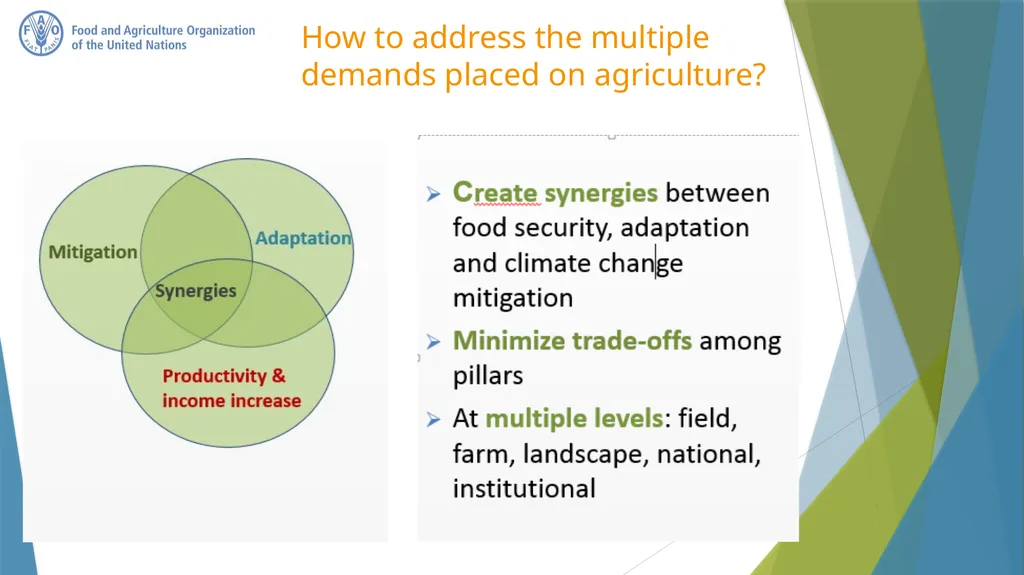
How to address the multiple
demands placed on agriculture?<br>
06
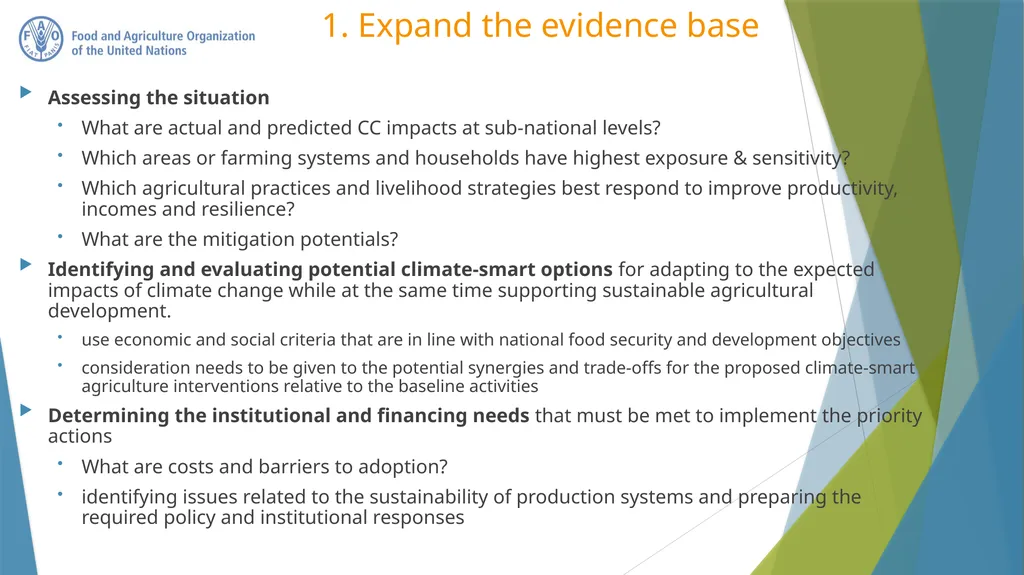
1. Expand the evidence base Assessing the situation
What are actual and predicted CC impacts at sub-national levels?
Which areas or farming systems and households have highest exposure & sensitivity?
Which agricultural practices and livelihood strategies best respond to improve productivity, incomes and resilience?
What are the mitigation potentials?
Identifying and evaluating potential climate-smart options for adapting to the expected impacts of climate change while at the same time supporting sustainable agricultural development.
use economic and social criteria that are in line with national food security and development objectives
consideration needs to be given to the potential synergies and trade-offs for the proposed climate-smart agriculture interventions relative to the baseline activities
Determining the institutional and financing needs that must be met to implement the priority actions
What are costs and barriers to adoption?
identifying issues related to the sustainability of production systems and preparing the required policy and institutional responses<br>
07
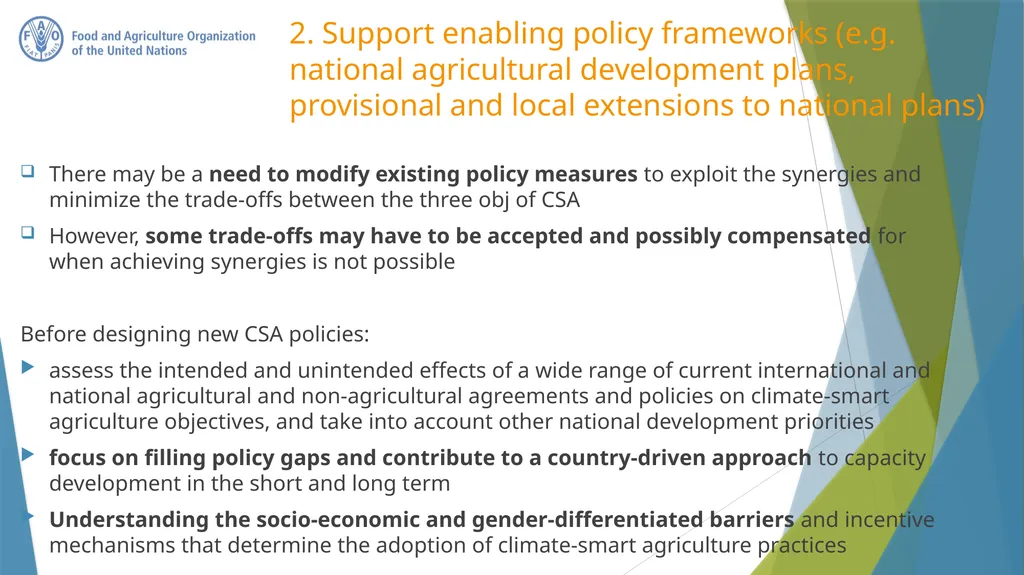
2. Support enabling policy frameworks (e.g. national agricultural development plans, provisional and local extensions to national plans) There may be a need to modify existing policy measures to exploit the synergies and minimize the trade-offs between the three obj of CSA
However, some trade-offs may have to be accepted and possibly compensated for when achieving synergies is not possible
Before designing new CSA policies:
assess the intended and unintended effects of a wide range of current international and national agricultural and non-agricultural agreements and policies on climate-smart agriculture objectives, and take into account other national development priorities
focus on filling policy gaps and contribute to a country-driven approach to capacity development in the short and long term
Understanding the socio-economic and gender-differentiated barriers and incentive mechanisms that determine the adoption of climate-smart agriculture practices<br>
08
3. Strengthen national and local institutions Increase cross-sectoral dialogues to enhance coordination between institutions dealing with agricultural, climate change, social protection, food security and other issues at the local, national and international levels.
These dialogues can take the form of dedicated workshops to consider emerging policies, or presentations and discussions among standing committees or public sector bodies involved in policy formation.
Build the capacities of national policy makers to participate in international policy fora on climate change and agriculture, and reinforce their engagement with local government authorities.<br>
09
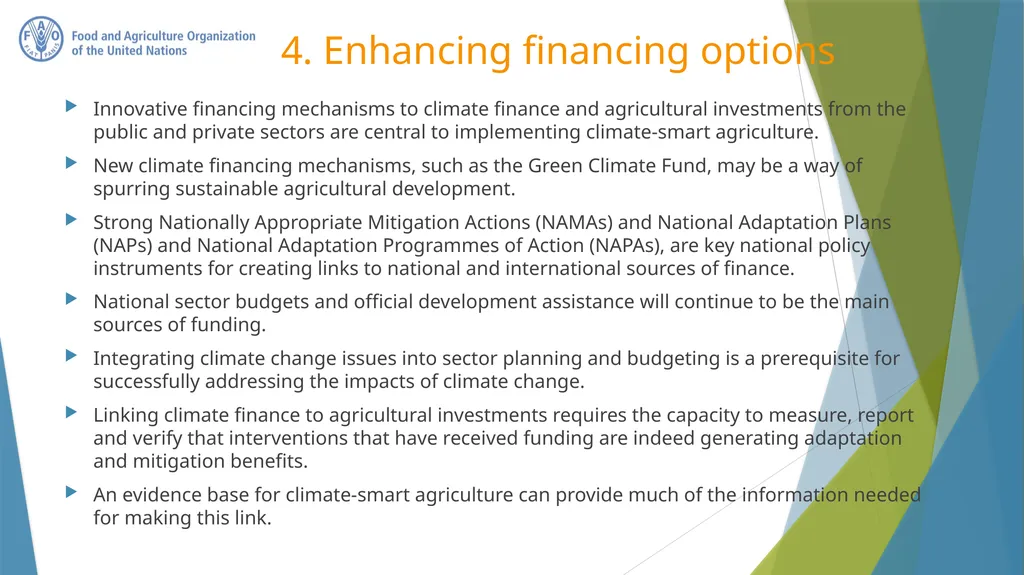
4. Enhancing financing options Innovative financing mechanisms to climate finance and agricultural investments from the public and private sectors are central to implementing climate-smart agriculture.
New climate financing mechanisms, such as the Green Climate Fund, may be a way of spurring sustainable agricultural development.
Strong Nationally Appropriate Mitigation Actions (NAMAs) and National Adaptation Plans (NAPs) and National Adaptation Programmes of Action (NAPAs), are key national policy instruments for creating links to national and international sources of finance.
National sector budgets and official development assistance will continue to be the main sources of funding.
Integrating climate change issues into sector planning and budgeting is a prerequisite for successfully addressing the impacts of climate change.
Linking climate finance to agricultural investments requires the capacity to measure, report and verify that interventions that have received funding are indeed generating adaptation and mitigation benefits.
An evidence base for climate-smart agriculture can provide much of the information needed for making this link.<br>
10
5. Implementing practices in the field Farmers, pastoralists, foresters and fisherfolk are the primary custodians of knowledge about their environment, agricultural ecosystems, crops, livestock, forests, fish and local climatic patterns.
Efforts to adapt a climate-smart agriculture approach to a specific setting must take into account local producers’ knowledge, requirements and priorities.
Local project managers and institutions can engage with agricultural producers to identify suitable climate-smart agriculture options that can be easily adopted and implemented.<br>
11
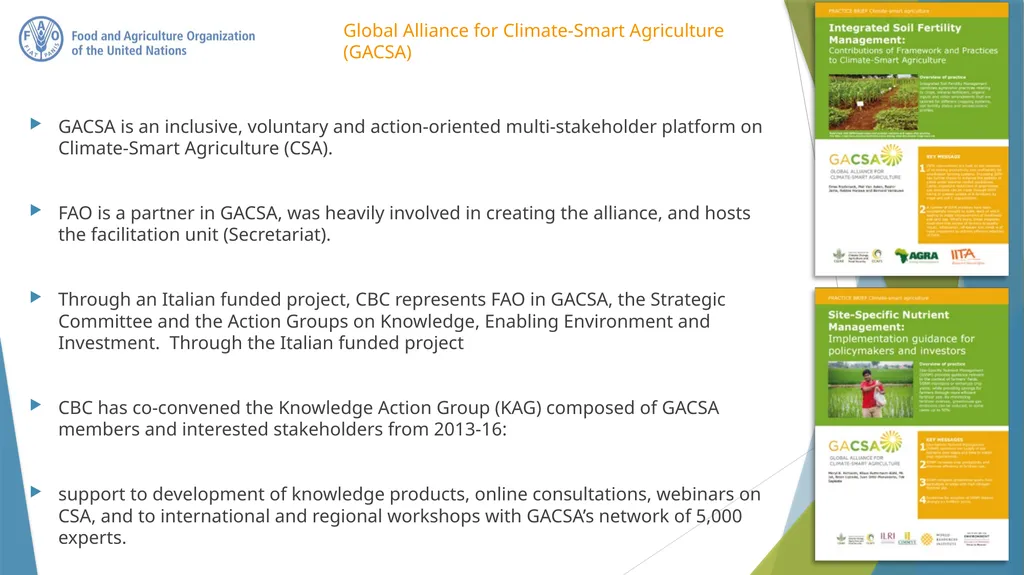
Global Alliance for Climate-Smart Agriculture (GACSA) GACSA is an inclusive, voluntary and action-oriented multi-stakeholder platform on Climate-Smart Agriculture (CSA).
FAO is a partner in GACSA, was heavily involved in creating the alliance, and hosts the facilitation unit (Secretariat).
Through an Italian funded project, CBC represents FAO in GACSA, the Strategic Committee and the Action Groups on Knowledge, Enabling Environment and Investment. Through the Italian funded project
CBC has co-convened the Knowledge Action Group (KAG) composed of GACSA members and interested stakeholders from 2013-16:
support to development of knowledge products, online consultations, webinars on CSA, and to international and regional workshops with GACSA’s network of 5,000 experts.<br>
12
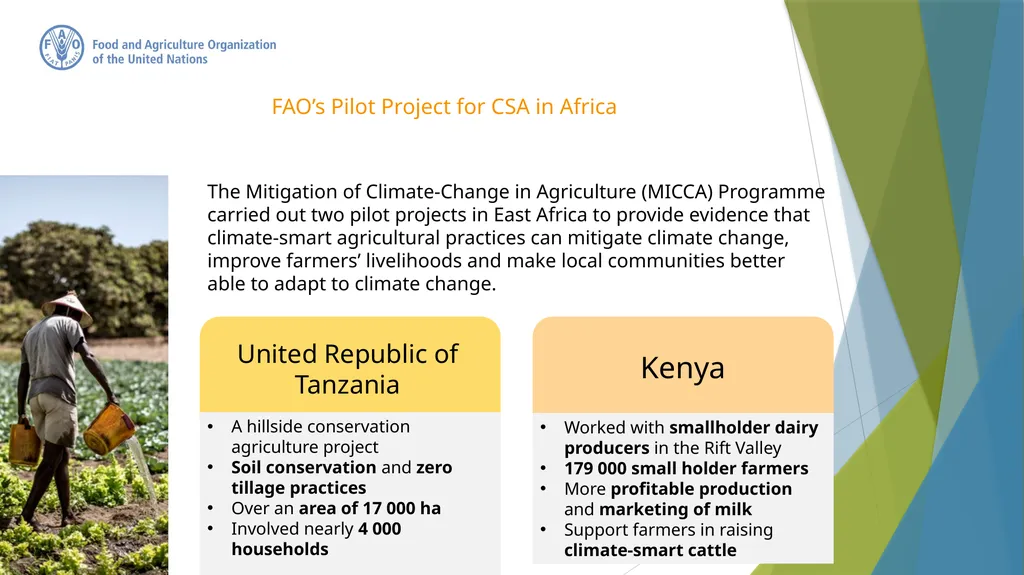
FAO’s Pilot Project for CSA in Africa The Mitigation of Climate-Change in Agriculture (MICCA) Programme carried out two pilot projects in East Africa to provide evidence that climate-smart agricultural practices can mitigate climate change, improve farmers’ livelihoods and make local communities better able to adapt to climate change. United Republic of Tanzania Kenya A hillside conservation agriculture project
Soil conservation and zero tillage practices
Over an area of 17 000 ha
Involved nearly 4 000 households Worked with smallholder dairy producers in the Rift Valley
179 000 small holder farmers
More profitable production and marketing of milk
Support farmers in raising climate-smart cattle<br>
Soil conservation and zero tillage practices
Over an area of 17 000 ha
Involved nearly 4 000 households Worked with smallholder dairy producers in the Rift Valley
179 000 small holder farmers
More profitable production and marketing of milk
Support farmers in raising climate-smart cattle<br>
13
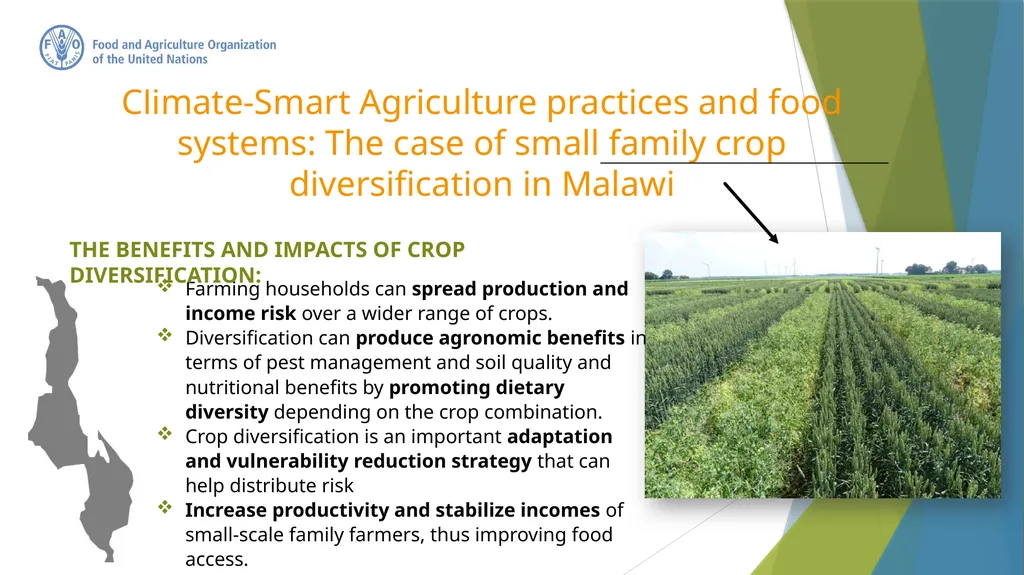
Climate-Smart Agriculture practices and food systems: The case of small family crop diversification in Malawi Farming households can spread production and income risk over a wider range of crops.
Diversification can produce agronomic benefits in terms of pest management and soil quality and nutritional benefits by promoting dietary diversity depending on the crop combination.
Crop diversification is an important adaptation and vulnerability reduction strategy that can help distribute risk
Increase productivity and stabilize incomes of small-scale family farmers, thus improving food access. THE BENEFITS AND IMPACTS OF CROP DIVERSIFICATION:<br>
14
Alternate wetting and drying for more efficient rice farms in Vietnam Food and income: AWD maintains productivity & lowers water use and emissions. Reduced input use (water, fertilizers, insecticides) decreases costs and thus raises incomes.
Adaptation: Reducing water use by up to 30% through AWD enables rice farmers in areas with growing water stress to continue to cultivate rice without adverse impacts on yield.
Mitigation: AWD decreases the methane emissions by around 50% from rice cultivation<br>
Adaptation: Reducing water use by up to 30% through AWD enables rice farmers in areas with growing water stress to continue to cultivate rice without adverse impacts on yield.
Mitigation: AWD decreases the methane emissions by around 50% from rice cultivation<br>
15
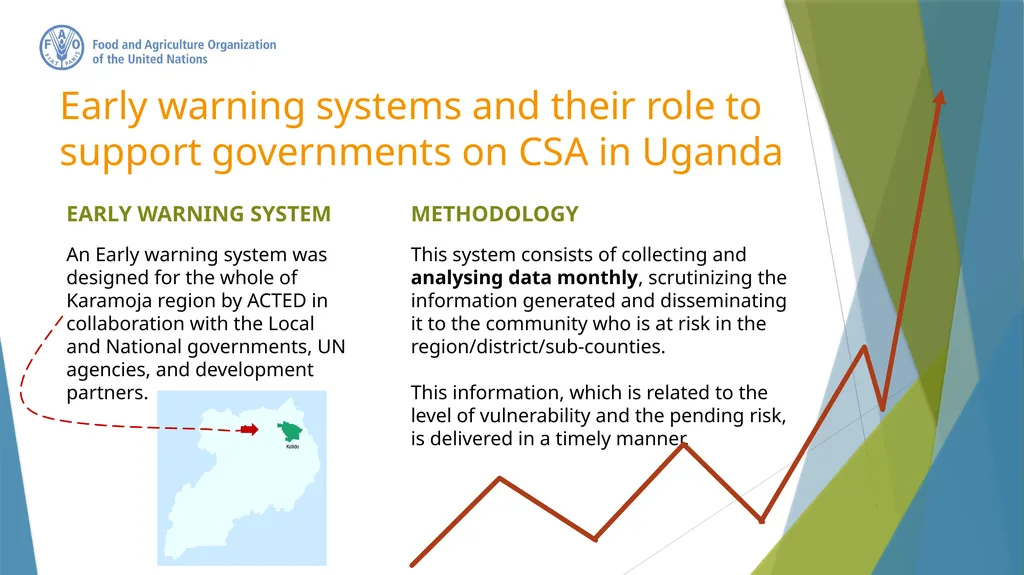
Early warning systems and their role to support governments on CSA in Uganda An Early warning system was designed for the whole of Karamoja region by ACTED in collaboration with the Local and National governments, UN agencies, and development partners. This system consists of collecting and analysing data monthly, scrutinizing the information generated and disseminating it to the community who is at risk in the region/district/sub-counties.
This information, which is related to the level of vulnerability and the pending risk, is delivered in a timely manner. EARLY WARNING SYSTEM METHODOLOGY<br>
This information, which is related to the level of vulnerability and the pending risk, is delivered in a timely manner. EARLY WARNING SYSTEM METHODOLOGY<br>
16
Information Communication Technology
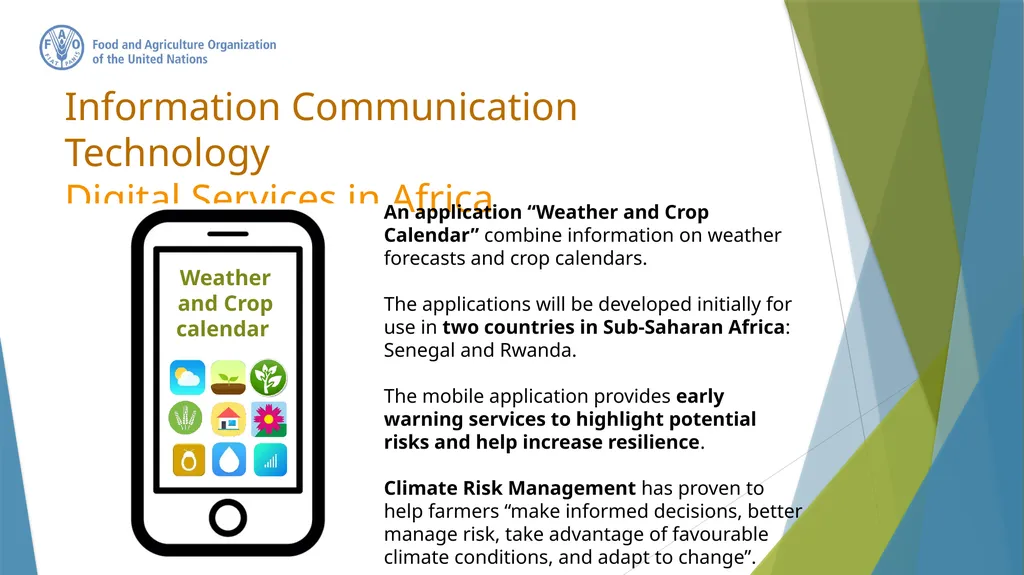
Digital Services in Africa Weather and Crop calendar An application “Weather and Crop Calendar” combine information on weather forecasts and crop calendars.
The applications will be developed initially for use in two countries in Sub-Saharan Africa: Senegal and Rwanda.
The mobile application provides early warning services to highlight potential risks and help increase resilience.
Climate Risk Management has proven to help farmers “make informed decisions, better manage risk, take advantage of favourable climate conditions, and adapt to change”.<br>
17
Thank you!<br>