Clinical management of rape and intimate partner violence in emergencies Training curriculum for health workers Presentation slides Welcome and introductions Session 0. 0.2 Welcome UNFPA 0.3 Turn to your neighbour: What is your name? What
"Clinical management of rape and intimate partner" is the property of its rightful owner. Permission is granted to
download and print the materials on this website for personal, non-commercial use only, and to display it
on your personal computer provided you do not modify the materials and that you retain all copyright
notices contained in the materials. By downloading content from our website, you accept the terms of this
agreement.
Presentation Transcript
01
Clinical management of rape and intimate partner violence in emergencies
Training curriculum for health workers Presentation slides<br>
Turn to your neighbour:
What is your name?
What does your name mean or signify in your culture?
What is your institutional affiliation? Introductions Hello What is your name? 0.4<br>
05
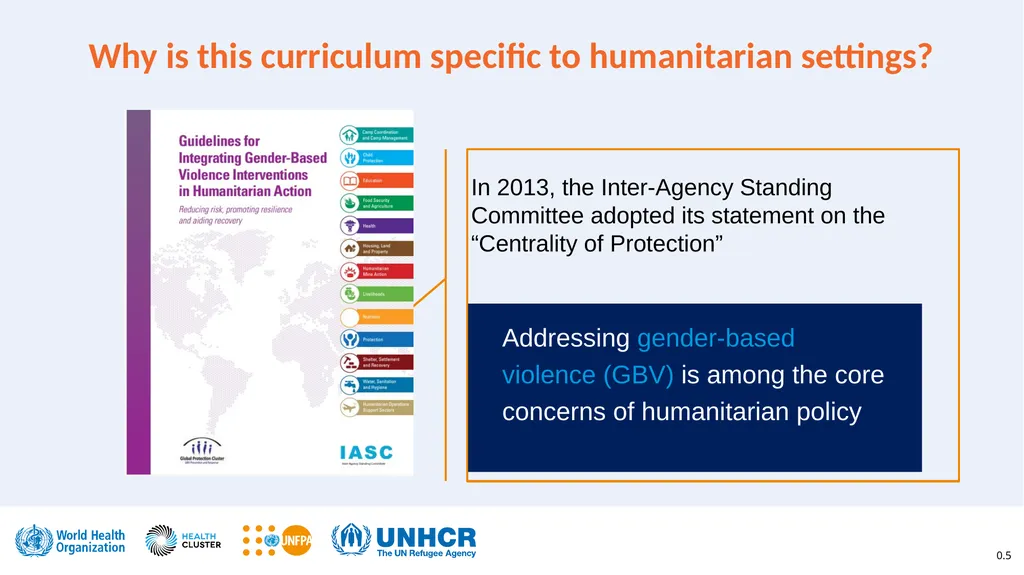
Why is this curriculum specific to humanitarian settings? In 2013, the Inter-Agency Standing Committee adopted its statement on the “Centrality of Protection” Addressing gender-based violence (GBV) is among the core concerns of humanitarian policy 0.5<br>
06
Caring for survivors of sexual violence is part of the minimum initial services package (MISP) for sexual and reproductive health (SRH) 0.6<br>
07
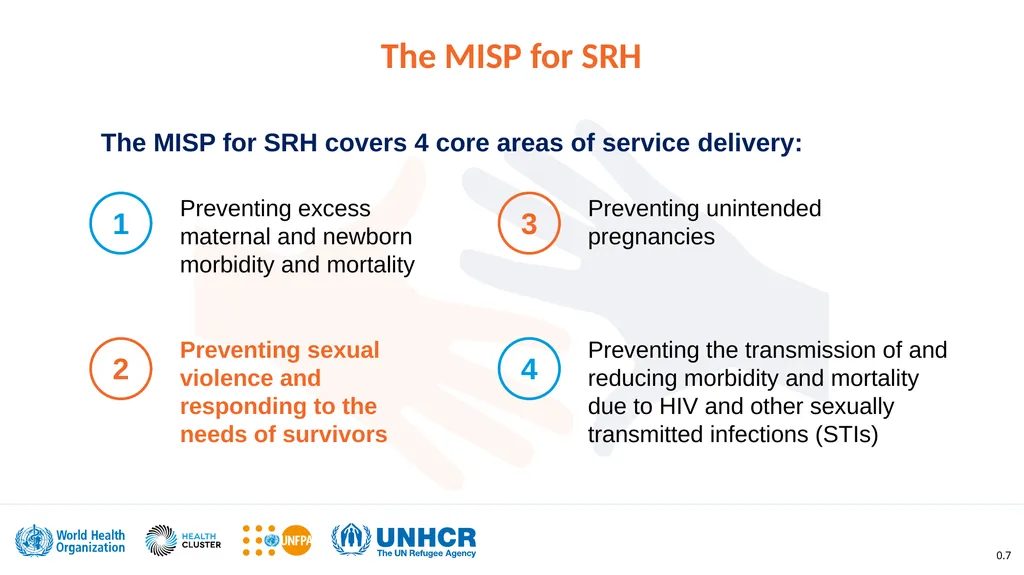
The MISP for SRH covers 4 core areas of service delivery: The MISP for SRH Preventing the transmission of and reducing morbidity and mortality due to HIV and other sexually transmitted infections (STIs) Preventing excess maternal and newborn morbidity and mortality Preventing unintended pregnancies Preventing sexual violence and responding to the needs of survivors 0.7<br>
08
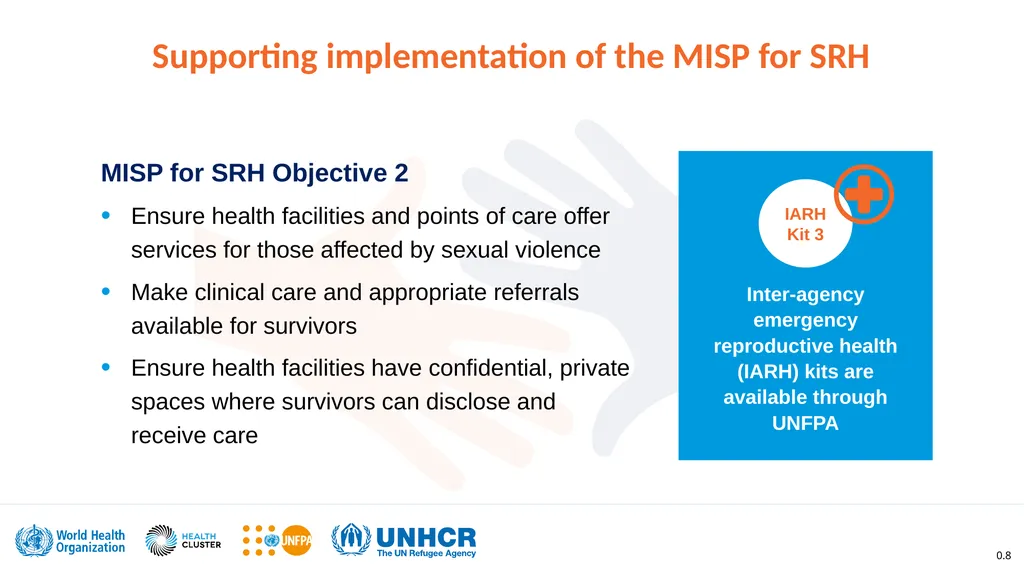
MISP for SRH Objective 2
Ensure health facilities and points of care offer services for those affected by sexual violence
Make clinical care and appropriate referrals available for survivors
Ensure health facilities have confidential, private spaces where survivors can disclose and receive care Inter-agency emergency reproductive health (IARH) kits are available through UNFPA IARH Kit 3 Supporting implementation of the MISP for SRH 0.8<br>
09
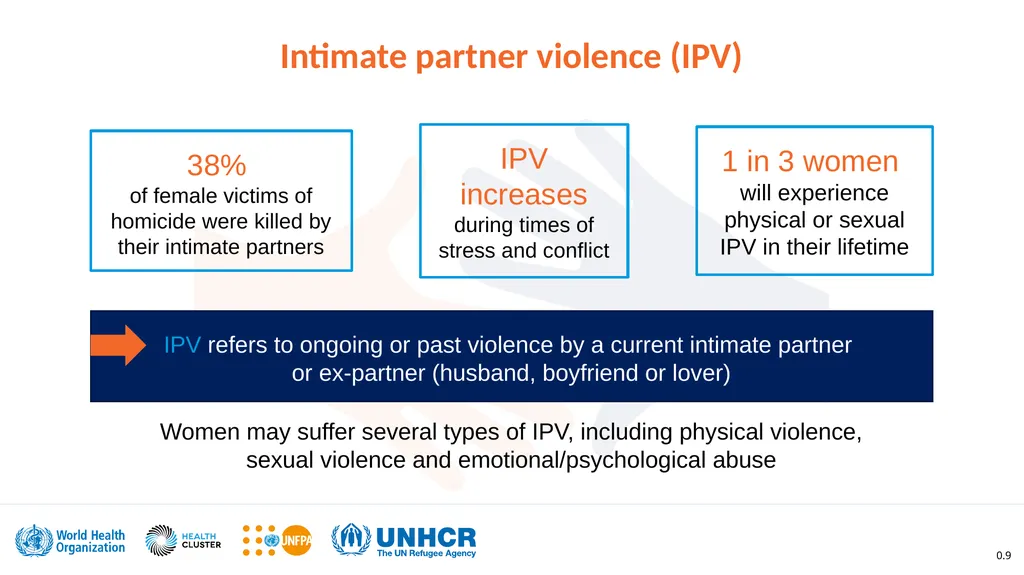
IPV refers to ongoing or past violence by a current intimate partner or ex-partner (husband, boyfriend or lover)
Women may suffer several types of IPV, including physical violence, sexual violence and emotional/psychological abuse 1 in 3 women
will experience physical or sexual IPV in their lifetime IPV increases during times of stress and conflict 38%
of female victims of homicide were killed by their intimate partners Intimate partner violence (IPV) 0.9<br>
10
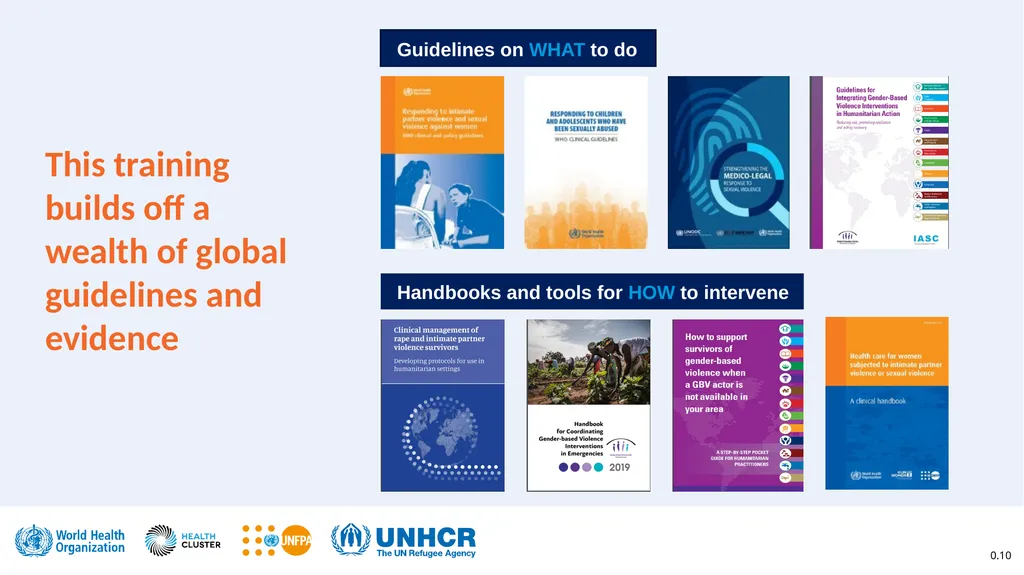
Guidelines on WHAT to do Handbooks and tools for HOW to intervene This training builds off a wealth of global guidelines and evidence 0.10<br>
11
Why a humanitarian-specific curriculum? You’ve been trained to provide first-line support for GBV in the course of your work as an SRH clinical officer. You are well acquainted with the LIVES approach to providing first-line support and are comfortable making referrals to the One Stop Centre housed within the district hospital. However, the facility manager has called an all-staff meeting this morning to share the news that there was significant damage to the district hospital from flash flooding and mudslides over the past 2 days. The One Stop Centre, pharmacy, registration building and one inpatient ward are all unusable. The hospital is only receiving critical care referrals. 0.11<br>
12
Why a humanitarian-specific curriculum? As the physician at the local health centre, you are accustomed to treating rape survivors and feel confident in your knowledge of when to offer post-exposure prophylaxis (PEP) for HIV and emergency contraception, and how to treat any lacerations or other physical injuries.
You are summoned to a briefing by the district health coordinator to discuss the conflict that is taking place just over the border, and the increasing number of refugees who have been showing up at the health centre. As part of the briefing, the district coordinator shares that he has received a report that a wave of refugees is expected to arrive in the district in the next 2–3 days. There are many injured individuals and some of the most acutely sick and injured are being transported ahead by aid vehicles. Aid worker reports note that there are indications of mass rape among survivors, including men and children. 0.12<br>
13
At the end of this training, participants will have achieved the following objectives Demonstrate general knowledge of sexual violence and IPV as a public health problem Demonstrate behaviours and understand values contributing to safe and supportive services Demonstrate clinical skills appropriate to one’s scope of practice to respond to sexual assault and IPV Demonstrate knowledge of how to access resources and support for patients and for oneself in crisis 0.13<br>
Instructions Fears and motivations in a hat Exercise 0.1 Write down one fear or worry you have about providing care to survivors
Write down one thing that motivates you to provide high-quality, survivor-centred care
Place the pieces of paper in the respective hats being passed around 0.17<br>
18
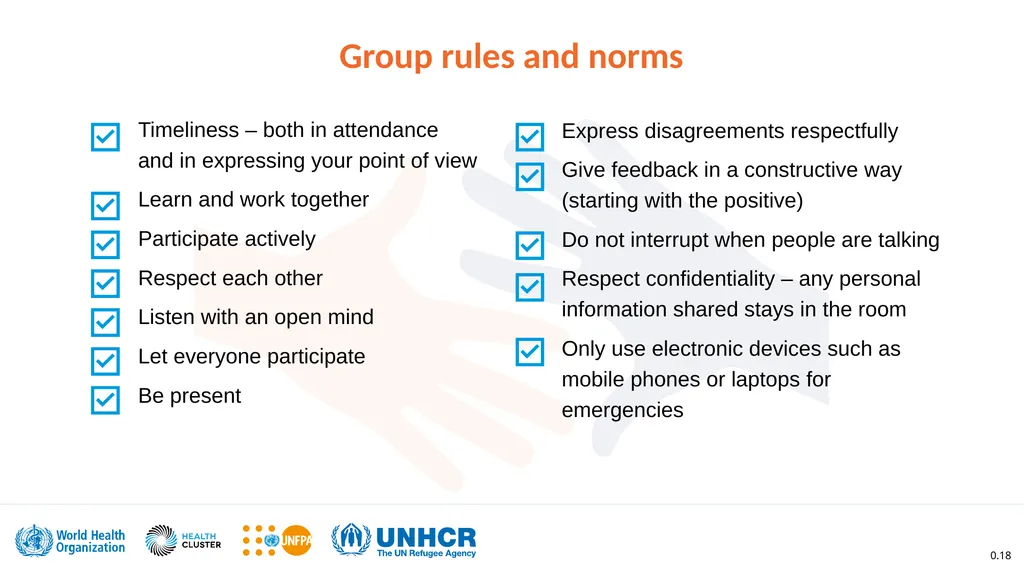
Timeliness – both in attendance and in expressing your point of view
Learn and work together
Participate actively
Respect each other
Listen with an open mind
Let everyone participate
Be present Express disagreements respectfully
Give feedback in a constructive way (starting with the positive)
Do not interrupt when people are talking
Respect confidentiality – any personal information shared stays in the room
Only use electronic devices such as mobile phones or laptops for emergencies Group rules and norms 0.18<br>
19
Many health workers have concerns about talking about GBV, particularly IPV, with their patients. They may feel inadequate to respond to violence.
Many of us are passionate about providing care and ensuring health and justice for our clients. This positive energy can fuel how we apply this training in our clinical practice.
Providing survivor-centred, first-line sexual violence and IPV support is an essential service during humanitarian emergencies. Key points 0.19<br>