
College of Veterinary Science & Animal Husbandry
MJ
Published · 42 slides · 0 views

1 / 1
Description
College of Veterinary Science Animal Husbandry U.P. Pt. Deen Dayal Upadhyaya Pashu Chikitsa Vigyan Vishwavidyalaya Evam Go-Anusandhan Sansthan (DUVASU), Mathura - 281001 (U.P.) Dr. Muneendra Kumar Assistant Professor Department of Animal
Related Topics
Share
Embed code
Download this presentation From Below
"College of Veterinary Science & Animal Husbandry" is the property of its rightful owner. Permission is granted to download and print the materials on this website for personal, non-commercial use only, and to display it on your personal computer provided you do not modify the materials and that you retain all copyright notices contained in the materials. By downloading content from our website, you accept the terms of this agreement.
Presentation Transcript
01
College of Veterinary Science & Animal Husbandry
U.P. Pt. Deen Dayal Upadhyaya Pashu Chikitsa Vigyan
Vishwavidyalaya Evam Go-Anusandhan Sansthan
(DUVASU), Mathura - 281001 (U.P.) Dr. Muneendra Kumar
Assistant Professor
Department of Animal Nutrition 1 muneendra82@gmail.com Unit-4 Class link: meet.google.com/gbf-rehf-gtb<br>
U.P. Pt. Deen Dayal Upadhyaya Pashu Chikitsa Vigyan
Vishwavidyalaya Evam Go-Anusandhan Sansthan
(DUVASU), Mathura - 281001 (U.P.) Dr. Muneendra Kumar
Assistant Professor
Department of Animal Nutrition 1 muneendra82@gmail.com Unit-4 Class link: meet.google.com/gbf-rehf-gtb<br>
02
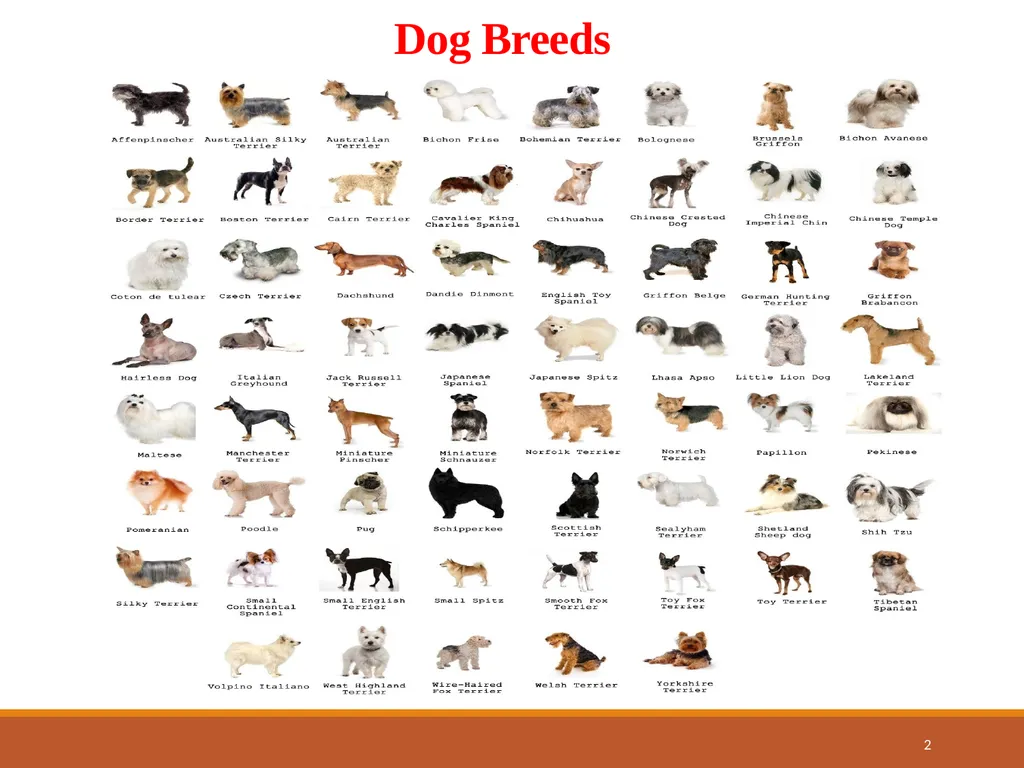
Dog Breeds 2<br>
03
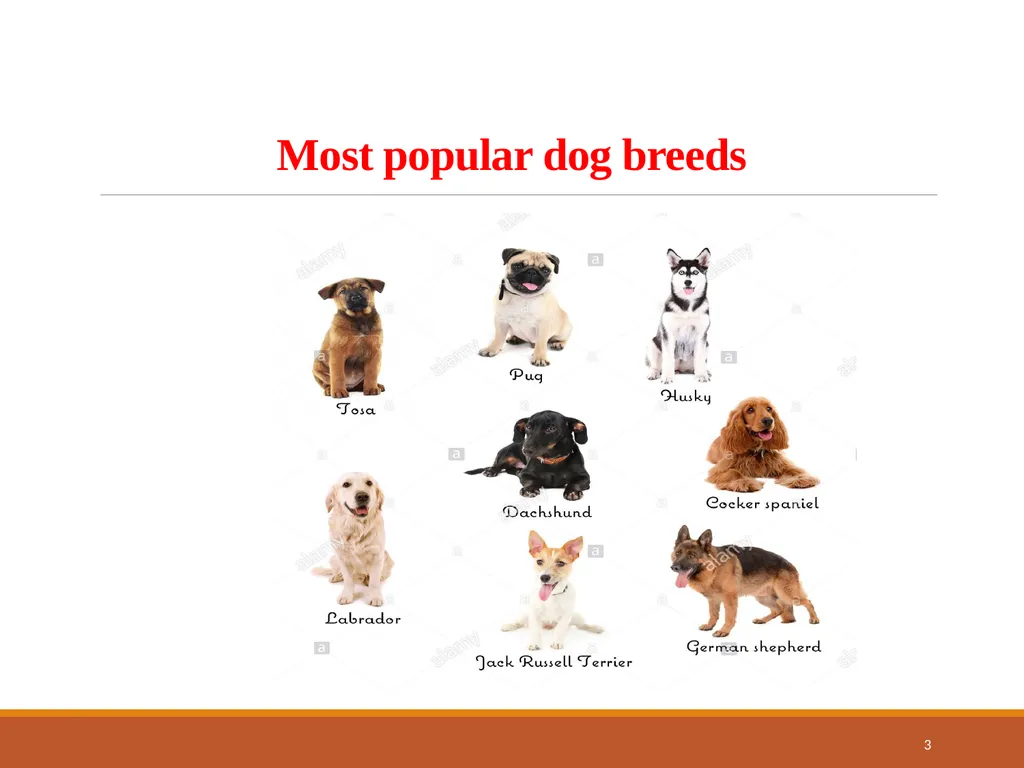
3 Most popular dog breeds<br>
04
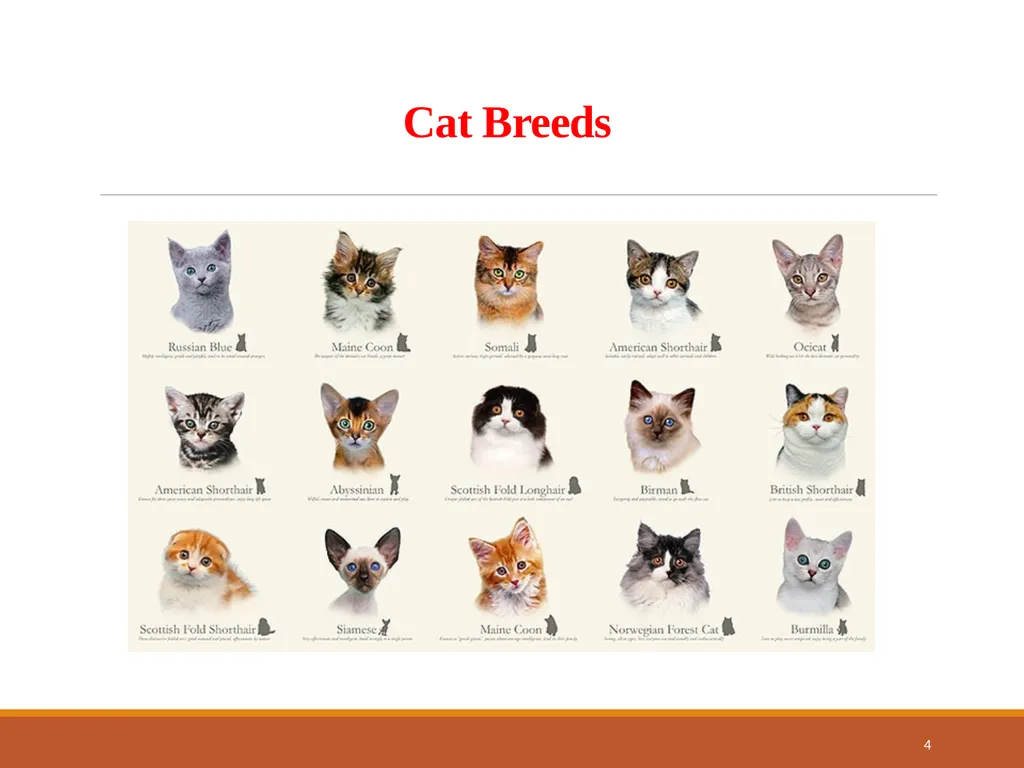
4 Cat Breeds<br>
05
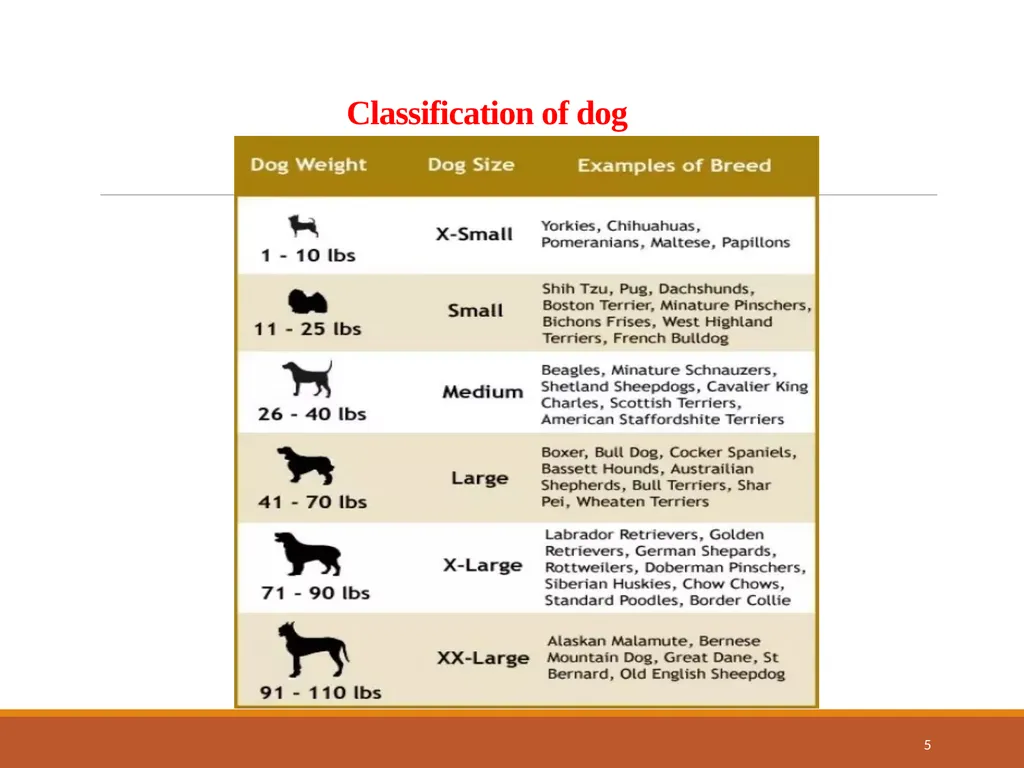
Classification of dog 5<br>
06
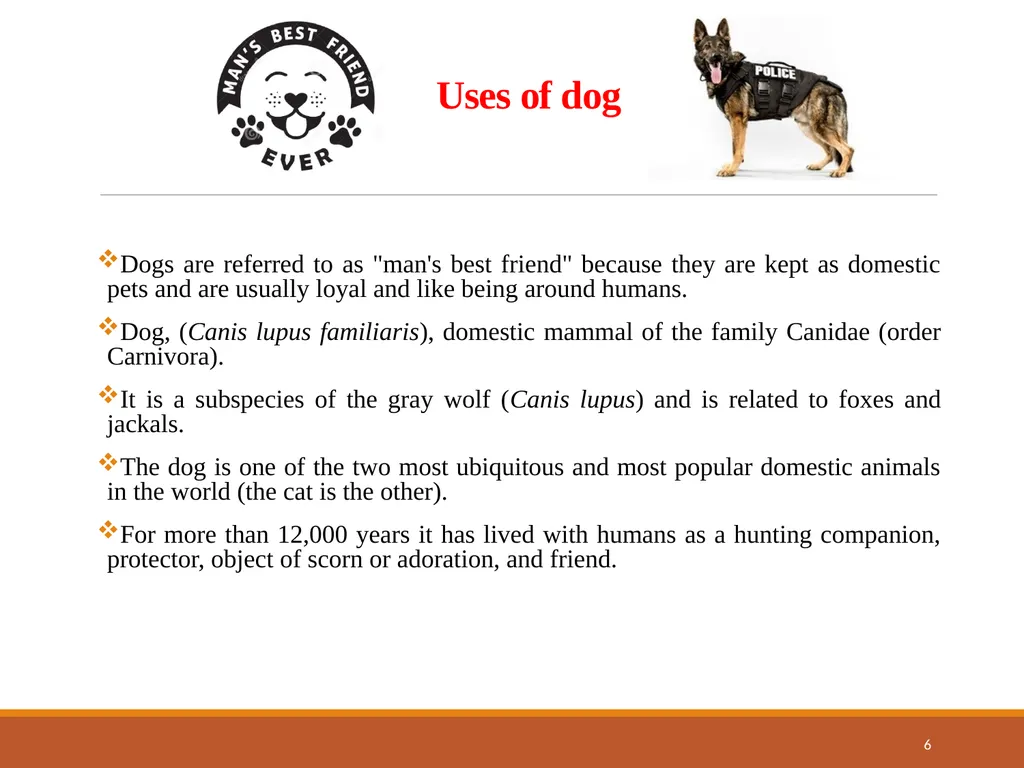
Uses of dog Dogs are referred to as "man's best friend" because they are kept as domestic pets and are usually loyal and like being around humans.
Dog, (Canis lupus familiaris), domestic mammal of the family Canidae (order Carnivora).
It is a subspecies of the gray wolf (Canis lupus) and is related to foxes and jackals.
The dog is one of the two most ubiquitous and most popular domestic animals in the world (the cat is the other).
For more than 12,000 years it has lived with humans as a hunting companion, protector, object of scorn or adoration, and friend. 6<br>
07
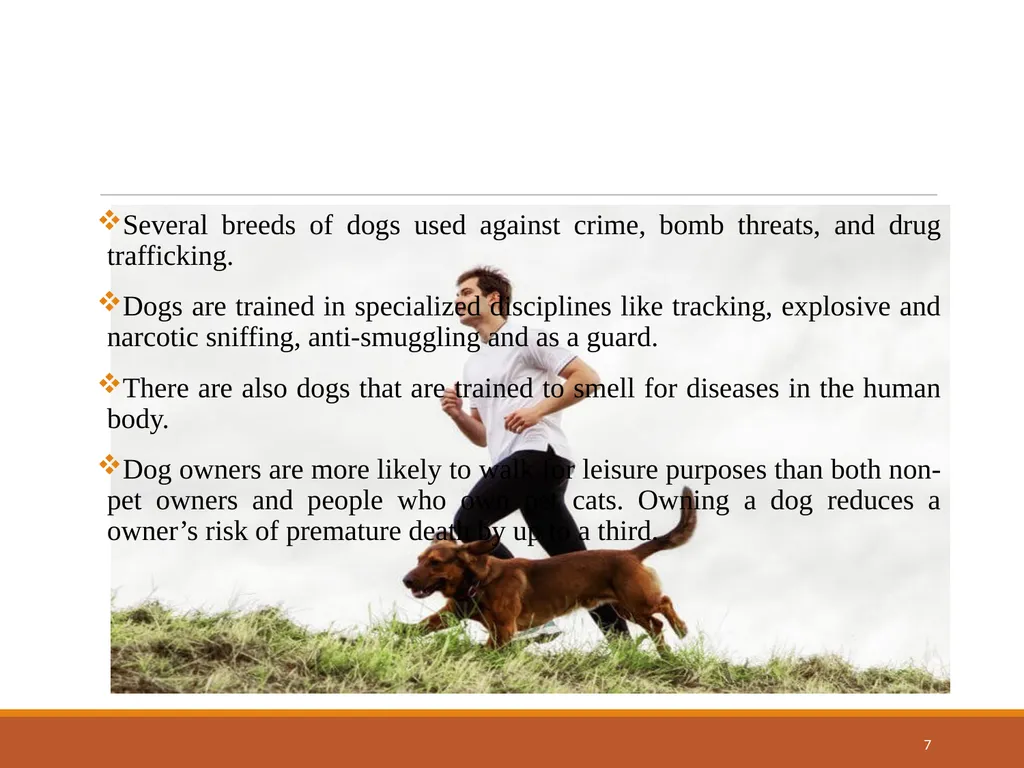
7 Several breeds of dogs used against crime, bomb threats, and drug trafficking.
Dogs are trained in specialized disciplines like tracking, explosive and narcotic sniffing, anti-smuggling and as a guard.
There are also dogs that are trained to smell for diseases in the human body.
Dog owners are more likely to walk for leisure purposes than both non-pet owners and people who own pet cats. Owning a dog reduces a owner’s risk of premature death by up to a third.<br>
08
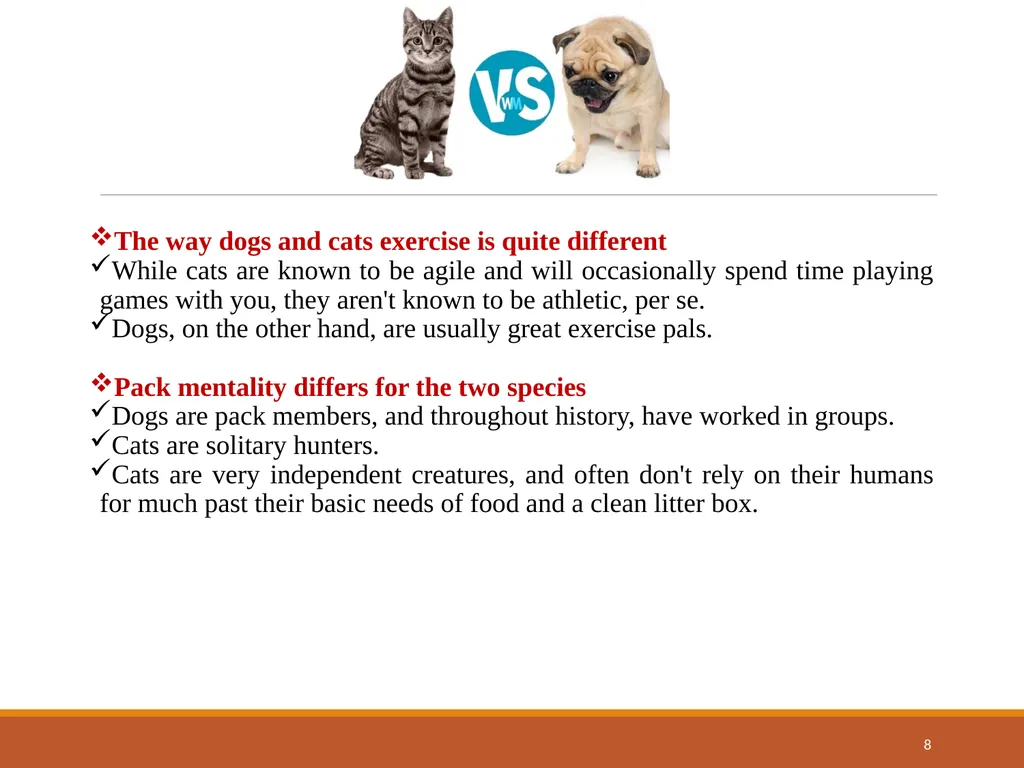
8 The way dogs and cats exercise is quite different
While cats are known to be agile and will occasionally spend time playing games with you, they aren't known to be athletic, per se.
Dogs, on the other hand, are usually great exercise pals.
Pack mentality differs for the two species
Dogs are pack members, and throughout history, have worked in groups.
Cats are solitary hunters.
Cats are very independent creatures, and often don't rely on their humans for much past their basic needs of food and a clean litter box.<br>
09
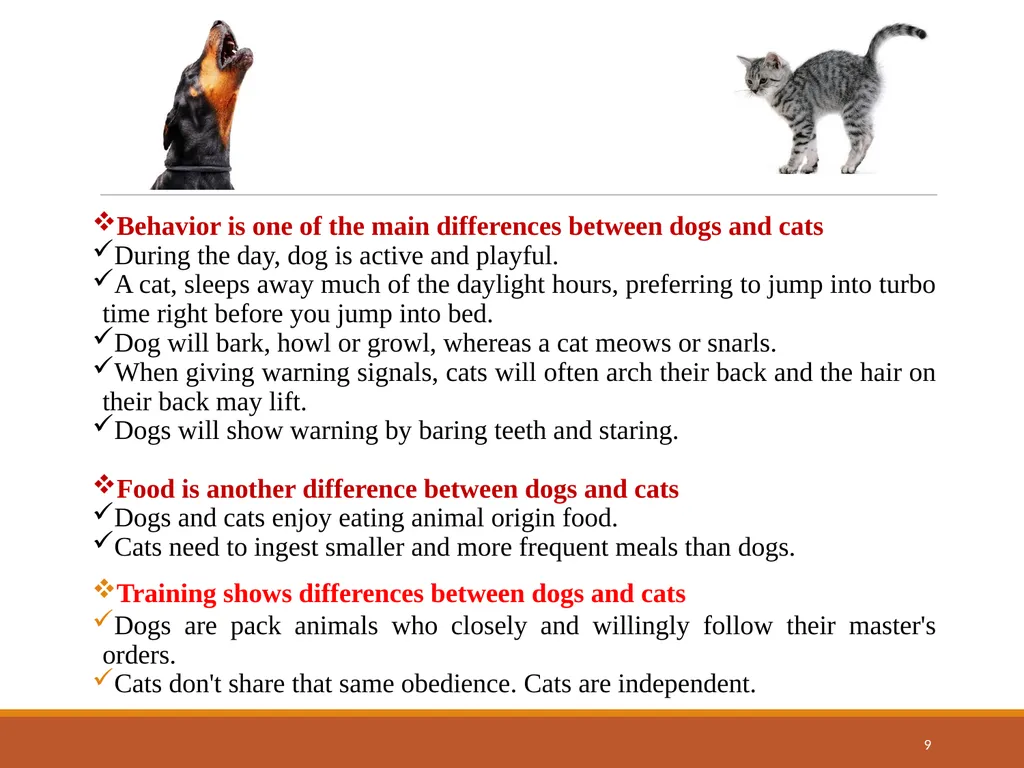
Behavior is one of the main differences between dogs and cats
During the day, dog is active and playful.
A cat, sleeps away much of the daylight hours, preferring to jump into turbo time right before you jump into bed.
Dog will bark, howl or growl, whereas a cat meows or snarls.
When giving warning signals, cats will often arch their back and the hair on their back may lift.
Dogs will show warning by baring teeth and staring.
Food is another difference between dogs and cats
Dogs and cats enjoy eating animal origin food.
Cats need to ingest smaller and more frequent meals than dogs.
Training shows differences between dogs and cats
Dogs are pack animals who closely and willingly follow their master's orders.
Cats don't share that same obedience. Cats are independent. 9<br>
10
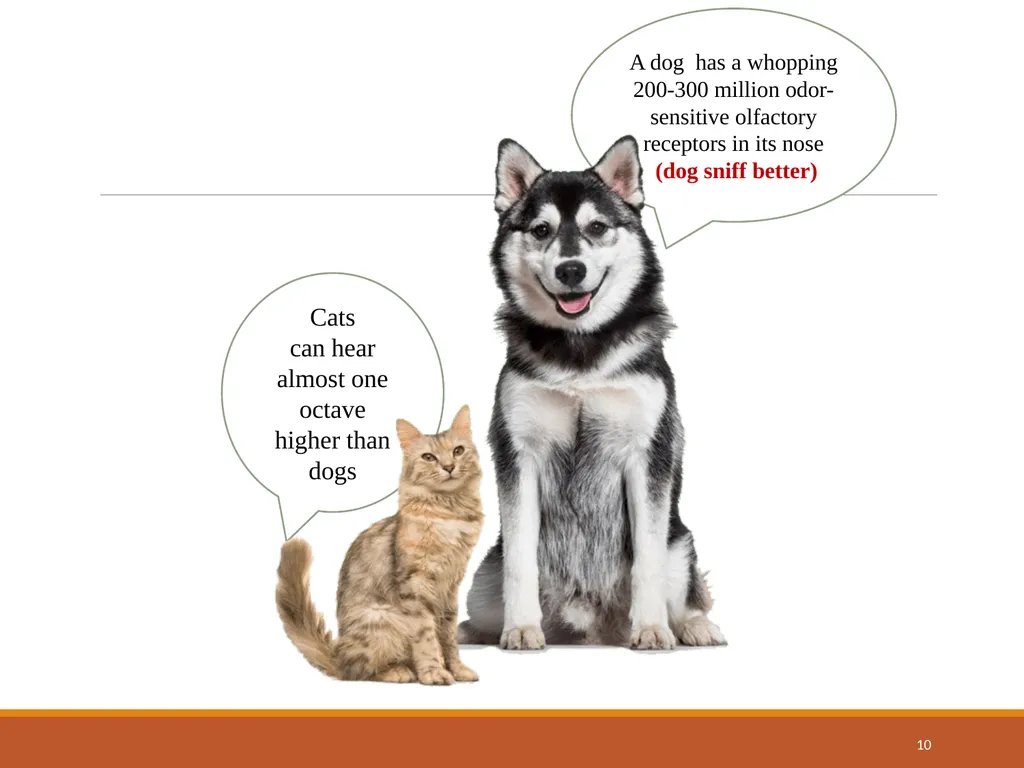
10 A dog has a whopping 200-300 million odor-sensitive olfactory receptors in its nose
(dog sniff better) Cats can hear almost one octave higher than dogs<br>
(dog sniff better) Cats can hear almost one octave higher than dogs<br>
11
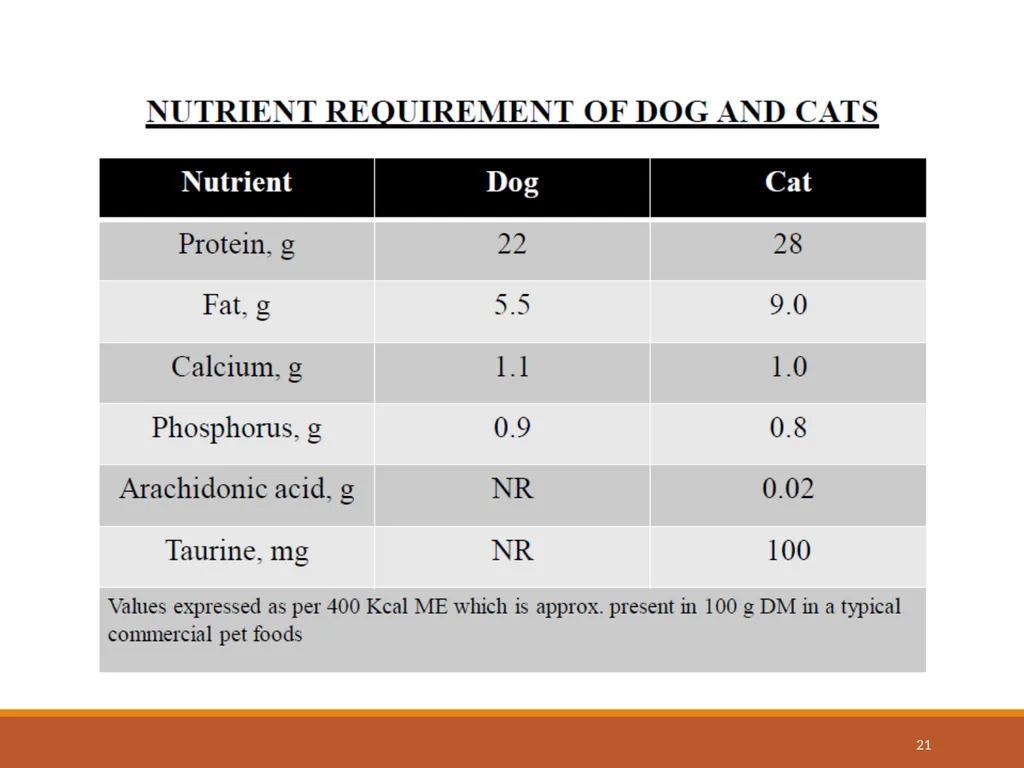
11 Cats vs. Dogs: Differences in Nutritional Needs As obligate carnivores, cats need nutrients found in animal-based ingredients, such as muscle and organ meat, to survive.
As semi-carnivores, dogs can easily adopt to vegetarian diet.
Cats have a higher requirement than dogs for dietary protein.
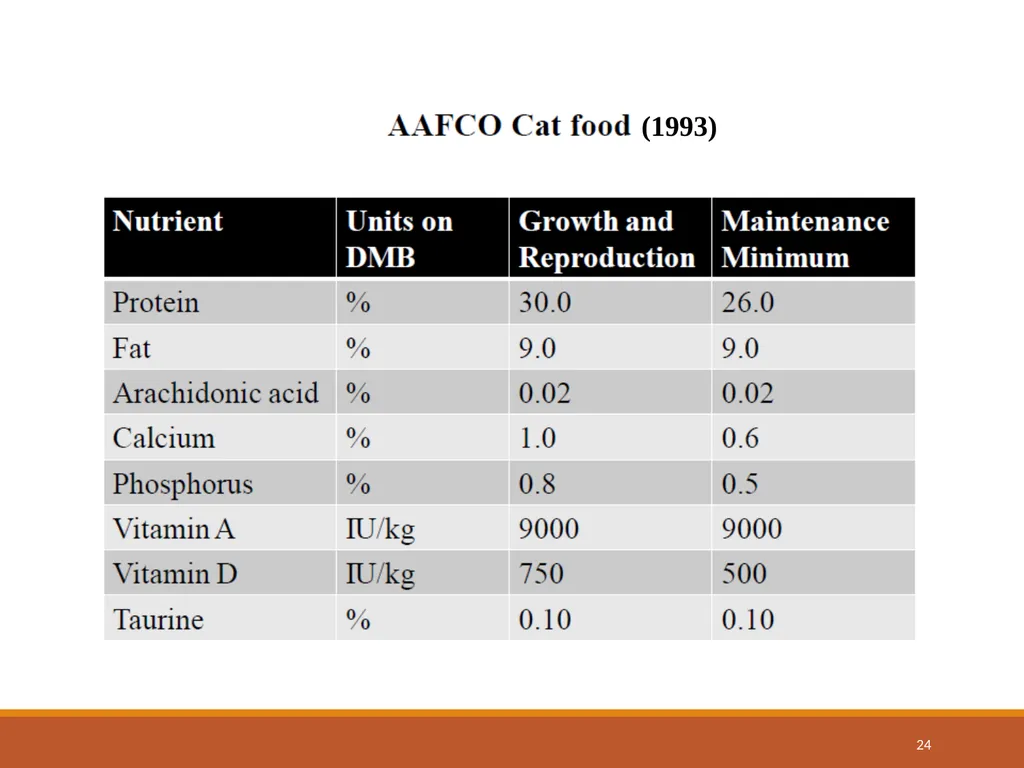
Cats have higher needs for many fat and essential fatty acid. Arachidonic acid is an essential fatty acid that cats cannot manufacture, while dogs are able.
Cats cannot make the active form of vitamin A or adequate quantities of niacin.
In contrast, dogs possess the metabolic processes to convert the pre-vitamin forms of these compounds into their active forms.<br>
12
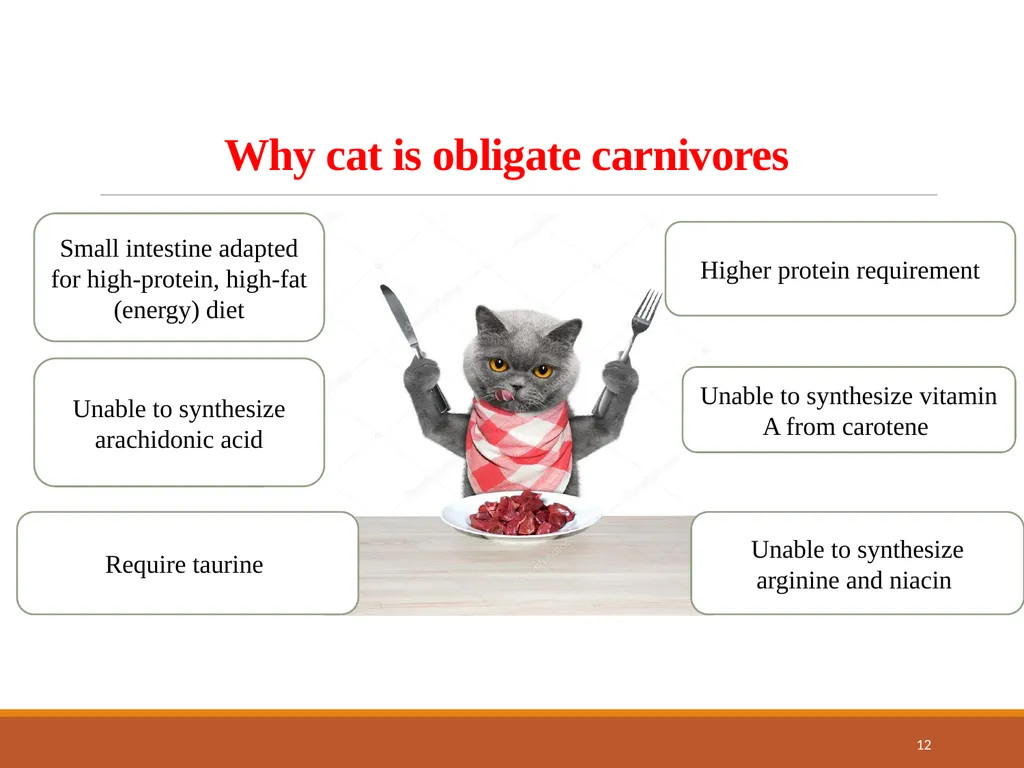
12 Why cat is obligate carnivores Small intestine adapted for high-protein, high-fat (energy) diet Unable to synthesize arachidonic acid Require taurine Higher protein requirement Unable to synthesize arginine and niacin Unable to synthesize vitamin A from carotene<br>
13
Cat is unable to synthesize arachidonic acid from linoleic acid (lack of Δ6 desaturase).
This means cat has a requirement for animal fat and this is one of the factors contributing to the nature of the cat as an obligate carnivore.
Limited ability of the feline liver to synthesize taurine from S- containing amino acid (lack of cysteine dioxygenase and cysteine sulfinic acid decarboxylase).
Further more, cat use taurine for the conjugation with cholic acid (bile acid) to form taurocholic acid (other use glycine for conjugation with cholic acid-glycocholic acid). Therefore, large amount of taurine excreted in bile. 13<br>
14
This is another factors contributing to the nature of the cat as an obligate carnivore.
Taurine is found in high amount in tissue like muscle, retina, CNS and heart.
Taurine deficiency results into impaired reproduction, feline central retina degeneration (FCRD) and dilated cardiomyopathy in cat.
Cat being obligate carnivore use much of protein in a normal meat diet to meet its energy requirement.
Enzymes that deaminate protein in liver (hepatic transminase and PEP carboxykinase) have a very high activity. 14<br>
15
The cat lack the enzyme necessary to cleave beta-carotene in vitamin A (dioxygenase).
Therefore cat depends on a animal origin dietary source of preformed vitamin A.
This is another factors contributing to the nature of the cat as an obligate carnivore.
In most of the cats and some of the adult dogs digestive disturbances observed with intake of milk greater than 0.6-1 g lactose/kg BW/day (equivalent to 10-20 ml milk/kg BW)
This is due to lactose intolerance (inability to digest lactose due to lack of β-galactosidase in the intestine). 15<br>
16
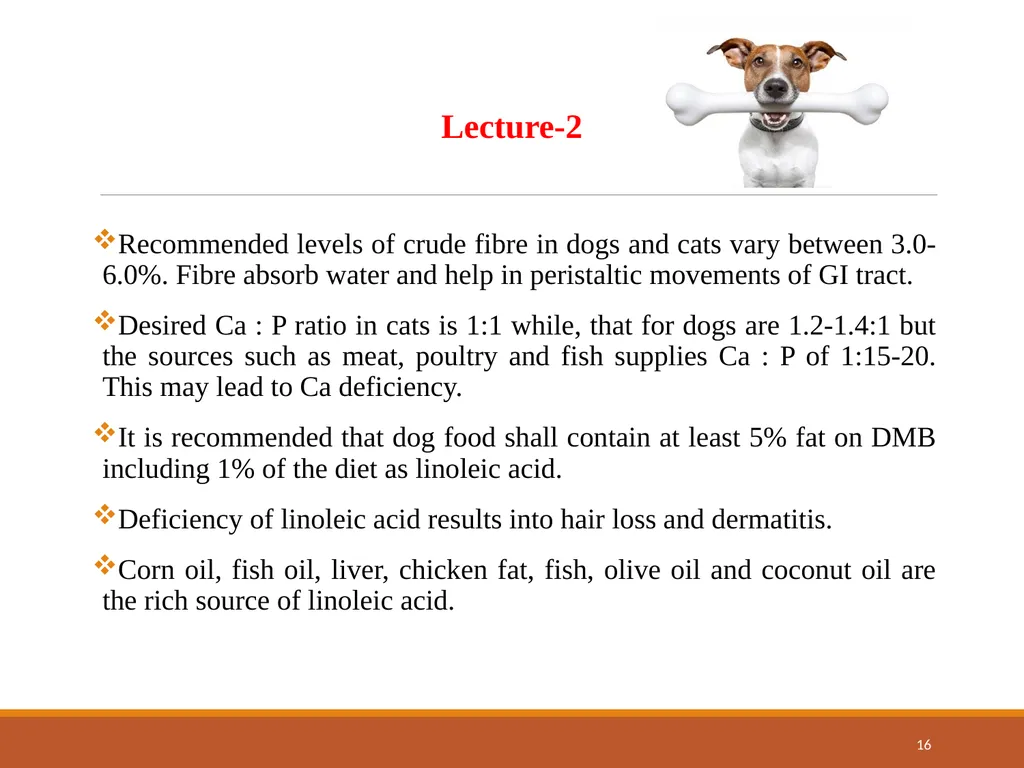
Recommended levels of crude fibre in dogs and cats vary between 3.0- 6.0%. Fibre absorb water and help in peristaltic movements of GI tract.
Desired Ca : P ratio in cats is 1:1 while, that for dogs are 1.2-1.4:1 but the sources such as meat, poultry and fish supplies Ca : P of 1:15-20. This may lead to Ca deficiency.
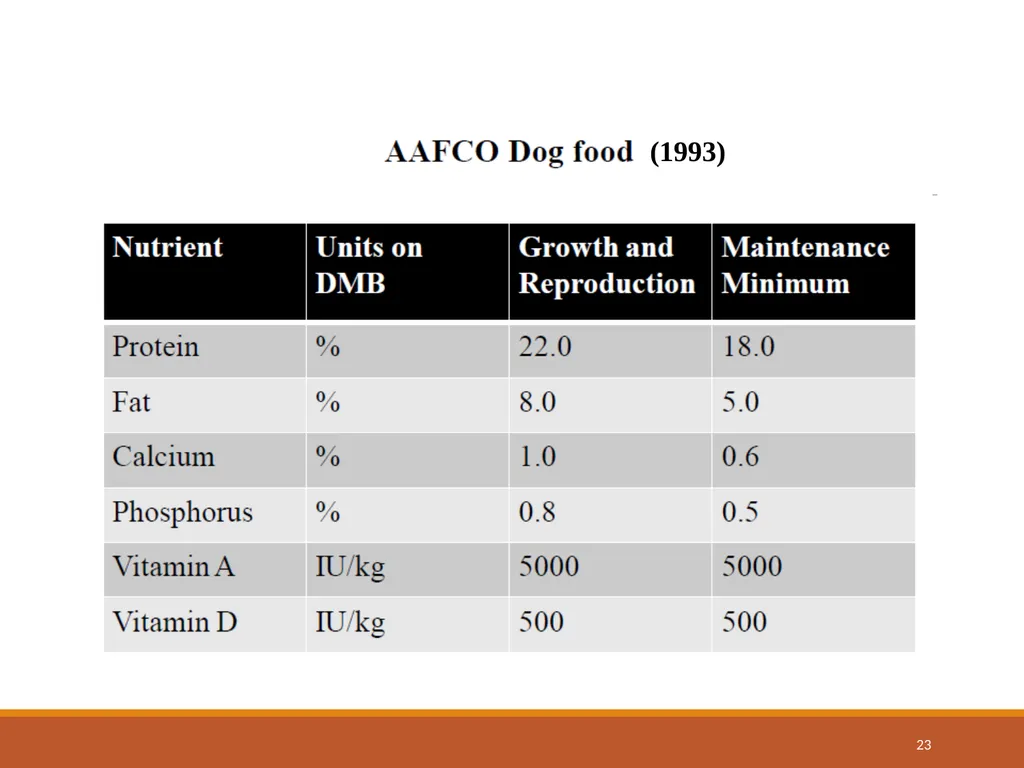
It is recommended that dog food shall contain at least 5% fat on DMB including 1% of the diet as linoleic acid.
Deficiency of linoleic acid results into hair loss and dermatitis.
Corn oil, fish oil, liver, chicken fat, fish, olive oil and coconut oil are the rich source of linoleic acid. 16 Lecture-2<br>
17
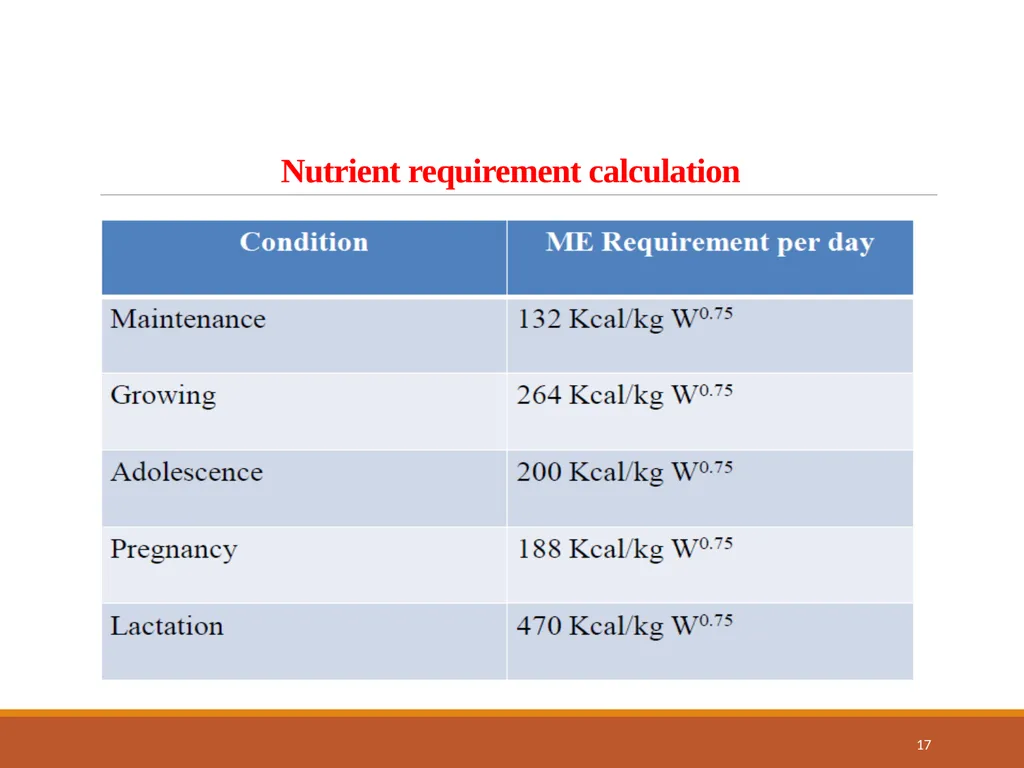
17 Nutrient requirement calculation<br>
18
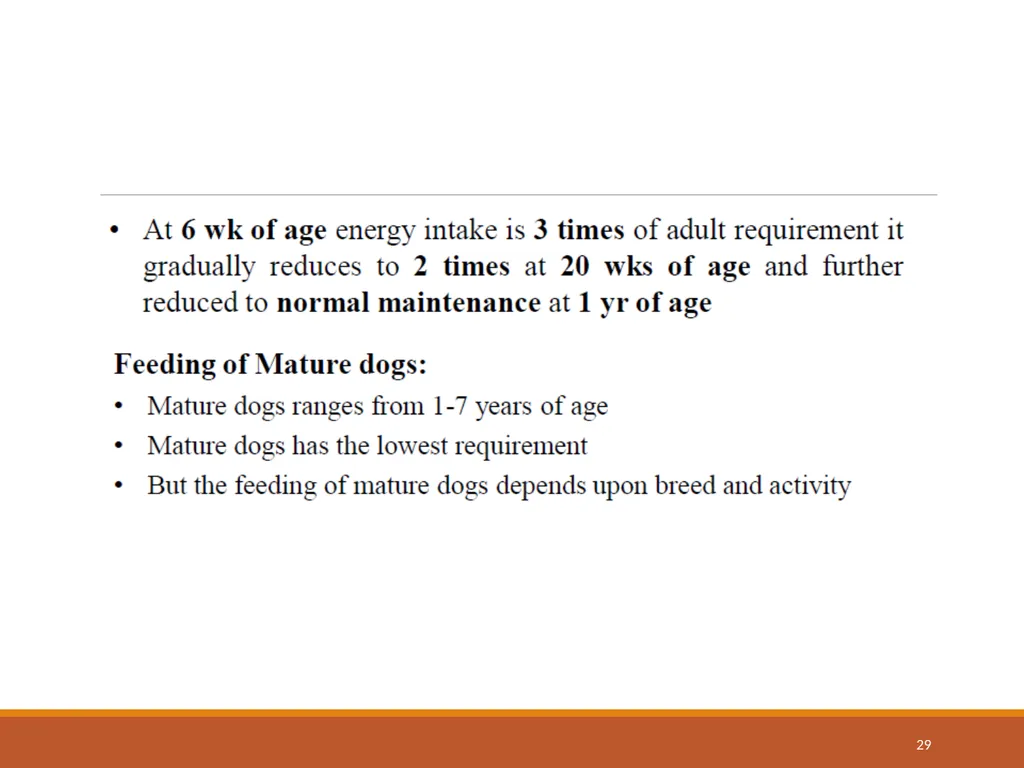
18 Growing puppies require about 2 times as much energy per kg metabolic body weight as adult dog of the same breed.
Energy requirement of the normal pregnant bitch are only slightly more than its maintenance requirement for the first two third of the gestation.
During the last one third of the gestation, energy requirement may increase to as much as 150-160% of preconception value.
Energy demand in lactating bitch is 3 or more times higher than maintenance requirement.
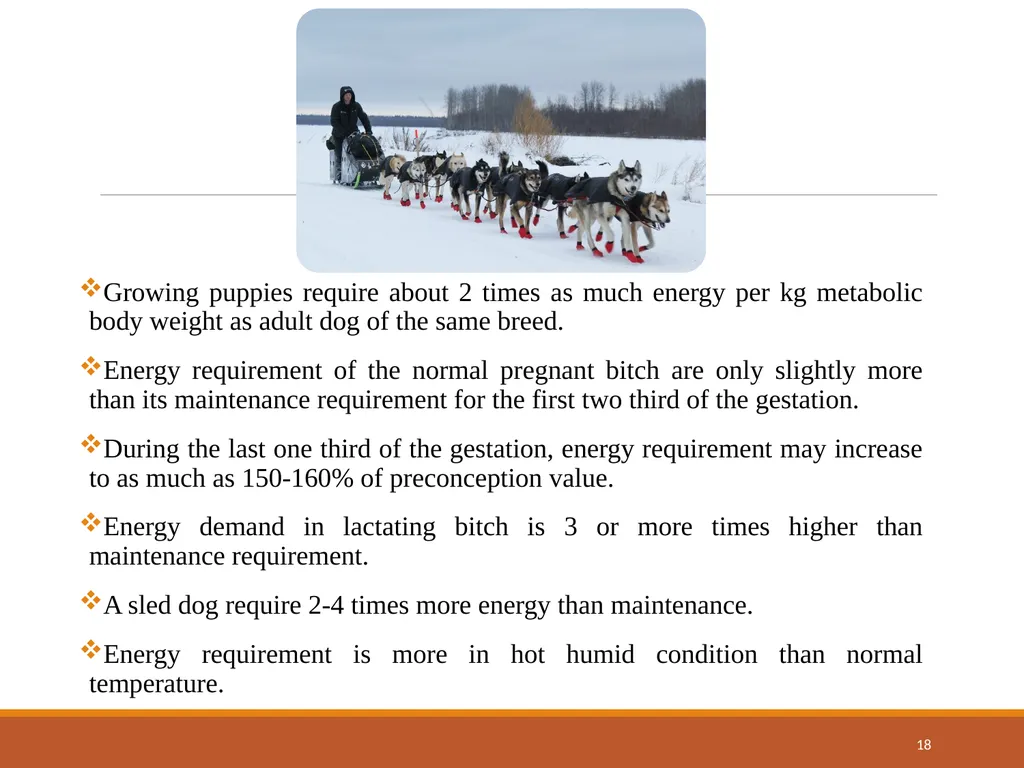
A sled dog require 2-4 times more energy than maintenance.
Energy requirement is more in hot humid condition than normal temperature.<br>
19
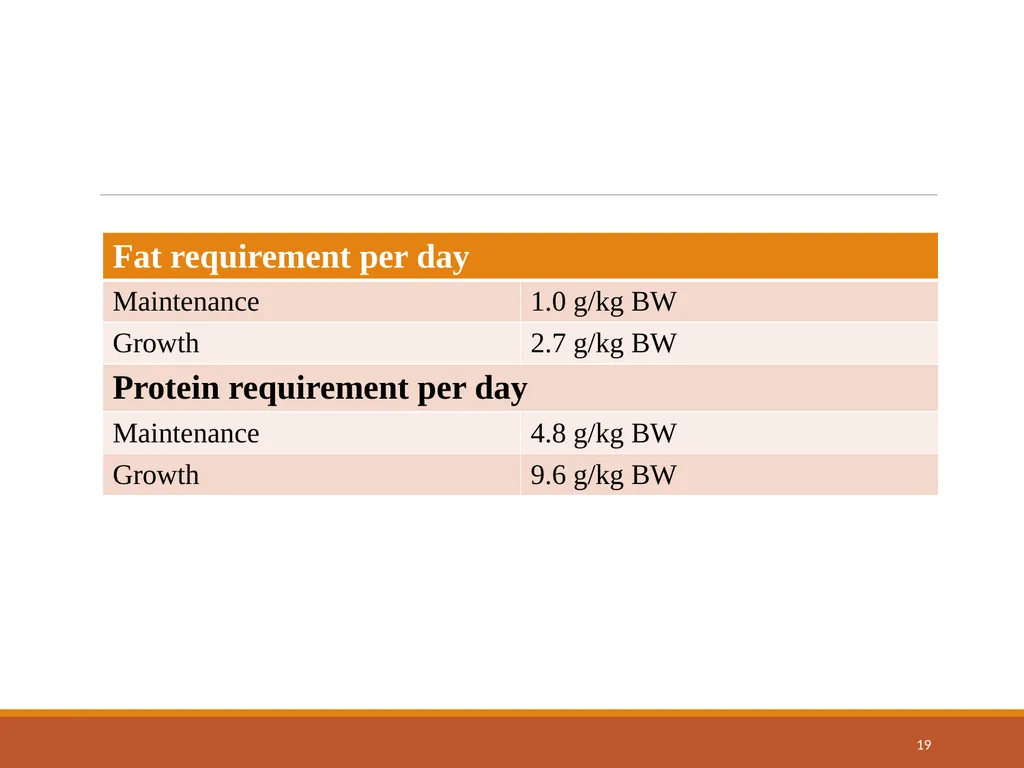
19<br>
20
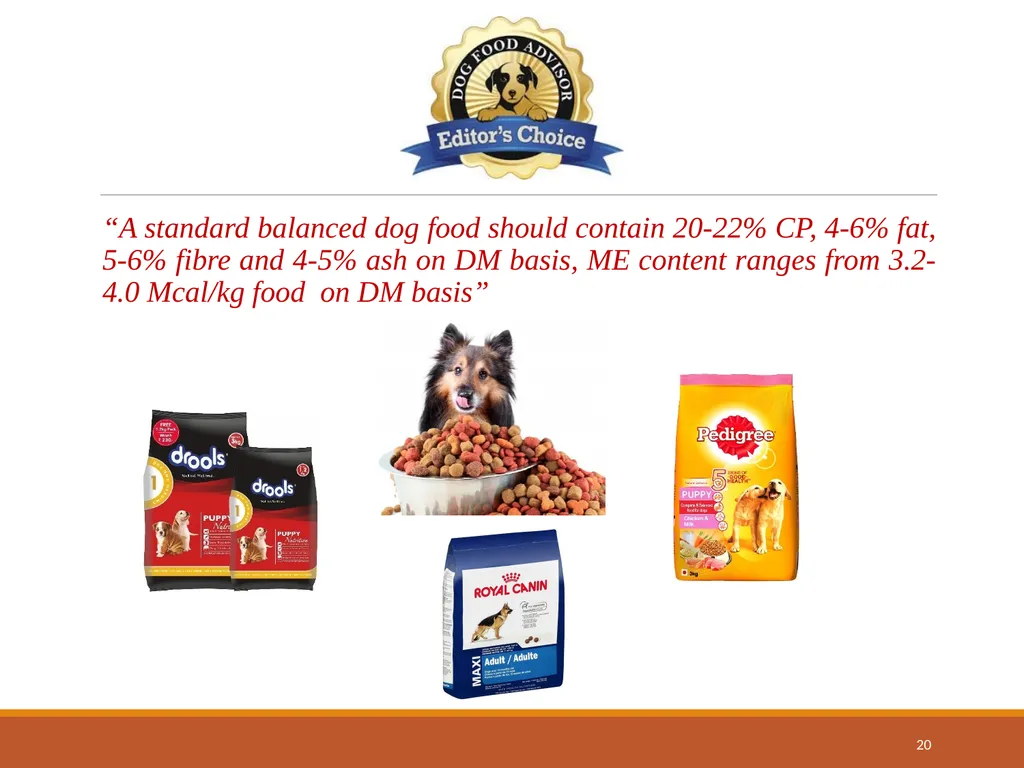
“A standard balanced dog food should contain 20-22% CP, 4-6% fat, 5-6% fibre and 4-5% ash on DM basis, ME content ranges from 3.2-4.0 Mcal/kg food on DM basis” 20<br>
21
21<br>
22
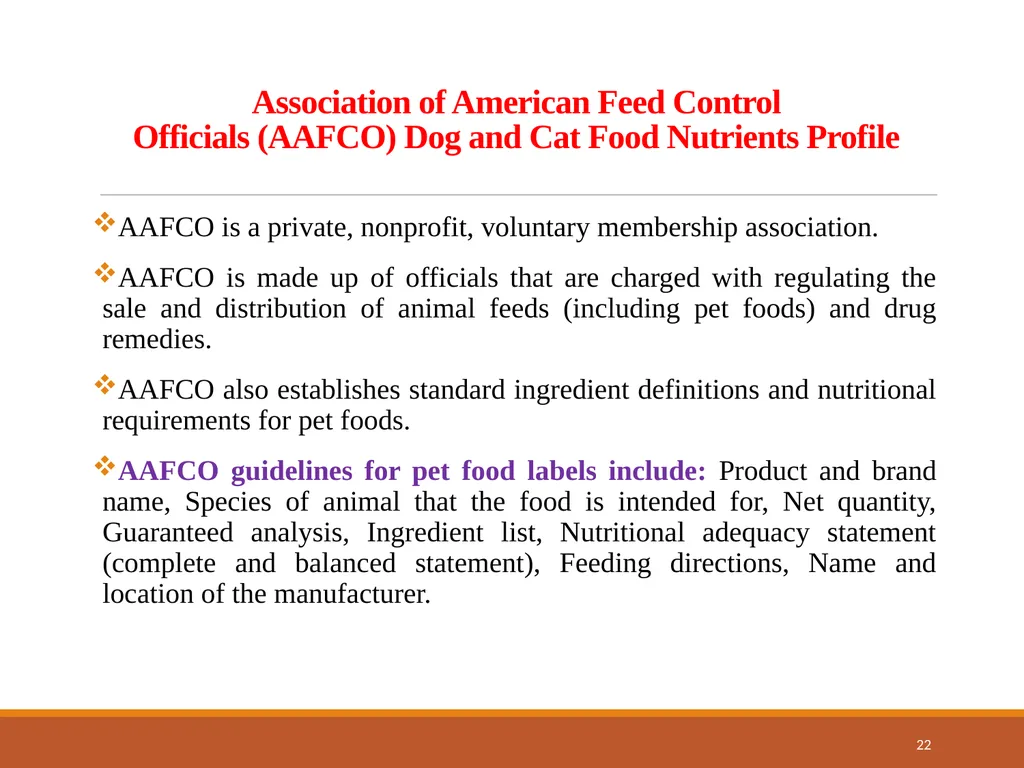
Association of American Feed Control Officials (AAFCO) Dog and Cat Food Nutrients Profile AAFCO is a private, nonprofit, voluntary membership association.
AAFCO is made up of officials that are charged with regulating the sale and distribution of animal feeds (including pet foods) and drug remedies.
AAFCO also establishes standard ingredient definitions and nutritional requirements for pet foods.
AAFCO guidelines for pet food labels include: Product and brand name, Species of animal that the food is intended for, Net quantity, Guaranteed analysis, Ingredient list, Nutritional adequacy statement (complete and balanced statement), Feeding directions, Name and location of the manufacturer. 22<br>
23
23 (1993)<br>
24
24 (1993)<br>
25
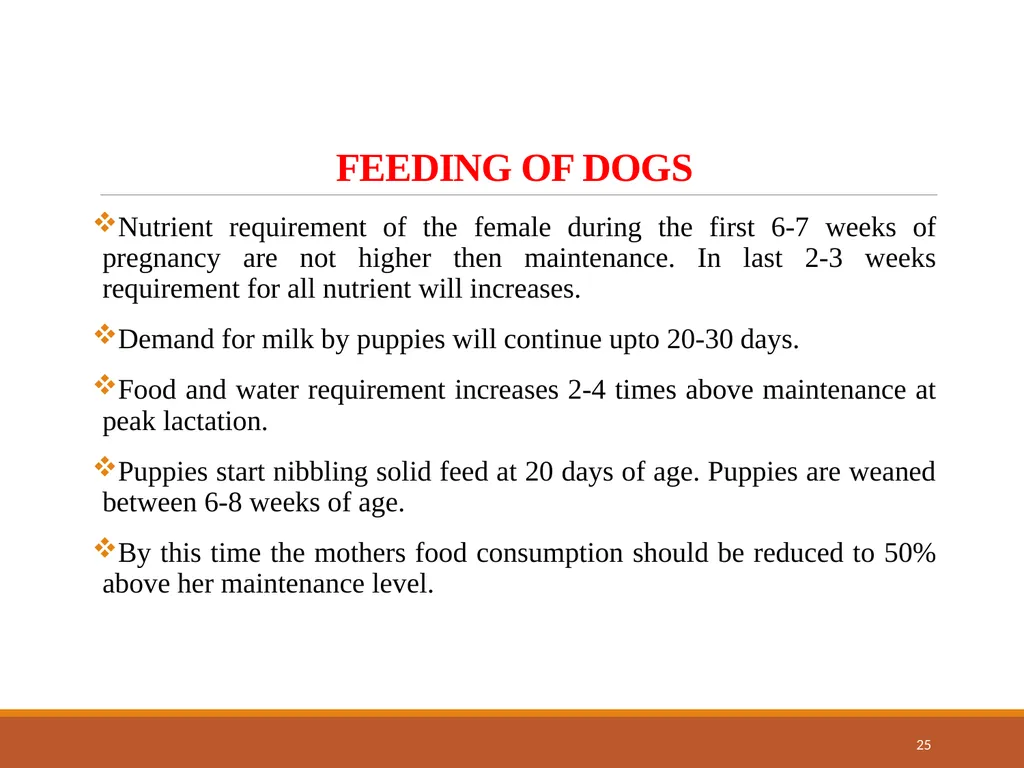
FEEDING OF DOGS Nutrient requirement of the female during the first 6-7 weeks of pregnancy are not higher then maintenance. In last 2-3 weeks requirement for all nutrient will increases.
Demand for milk by puppies will continue upto 20-30 days.
Food and water requirement increases 2-4 times above maintenance at peak lactation.
Puppies start nibbling solid feed at 20 days of age. Puppies are weaned between 6-8 weeks of age.
By this time the mothers food consumption should be reduced to 50% above her maintenance level. 25<br>
26
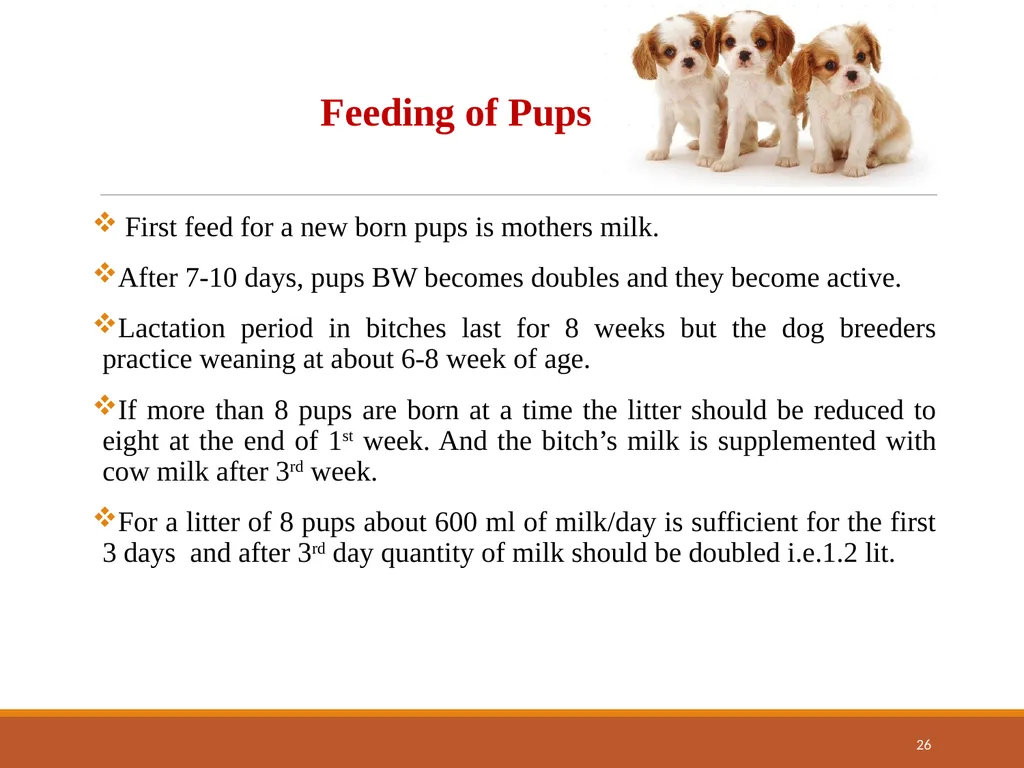
First feed for a new born pups is mothers milk.
After 7-10 days, pups BW becomes doubles and they become active.
Lactation period in bitches last for 8 weeks but the dog breeders practice weaning at about 6-8 week of age.
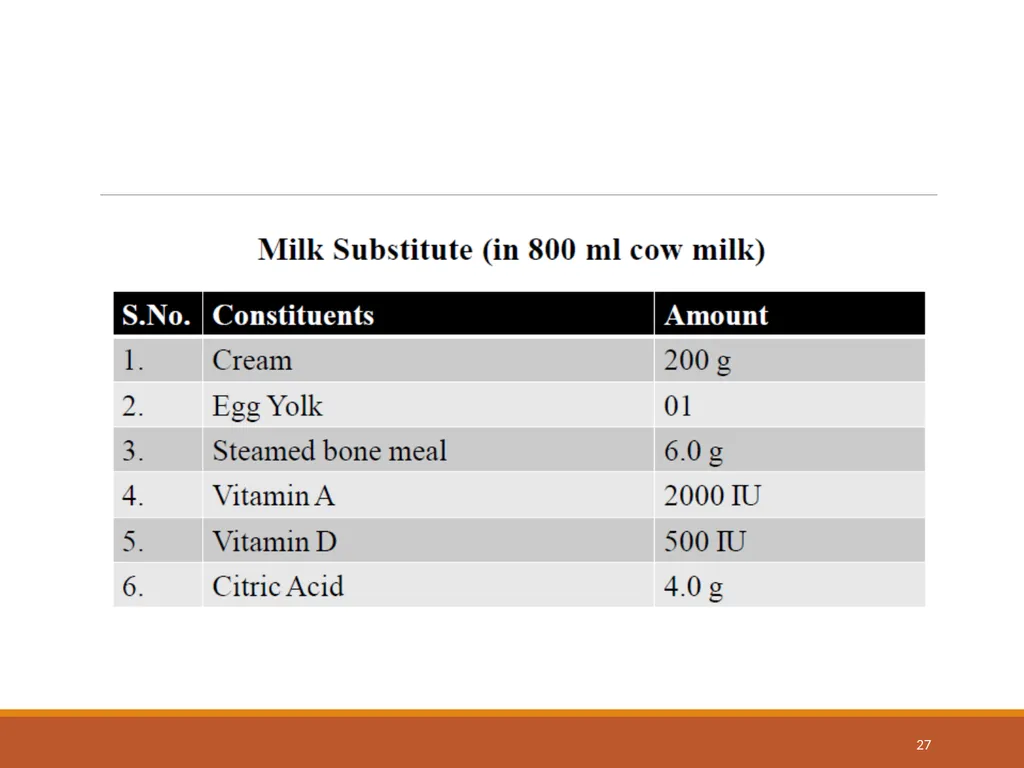
If more than 8 pups are born at a time the litter should be reduced to eight at the end of 1st week. And the bitch’s milk is supplemented with cow milk after 3rd week.
For a litter of 8 pups about 600 ml of milk/day is sufficient for the first 3 days and after 3rd day quantity of milk should be doubled i.e.1.2 lit. 26 Feeding of Pups<br>
27
27<br>
28
28<br>
29
29<br>
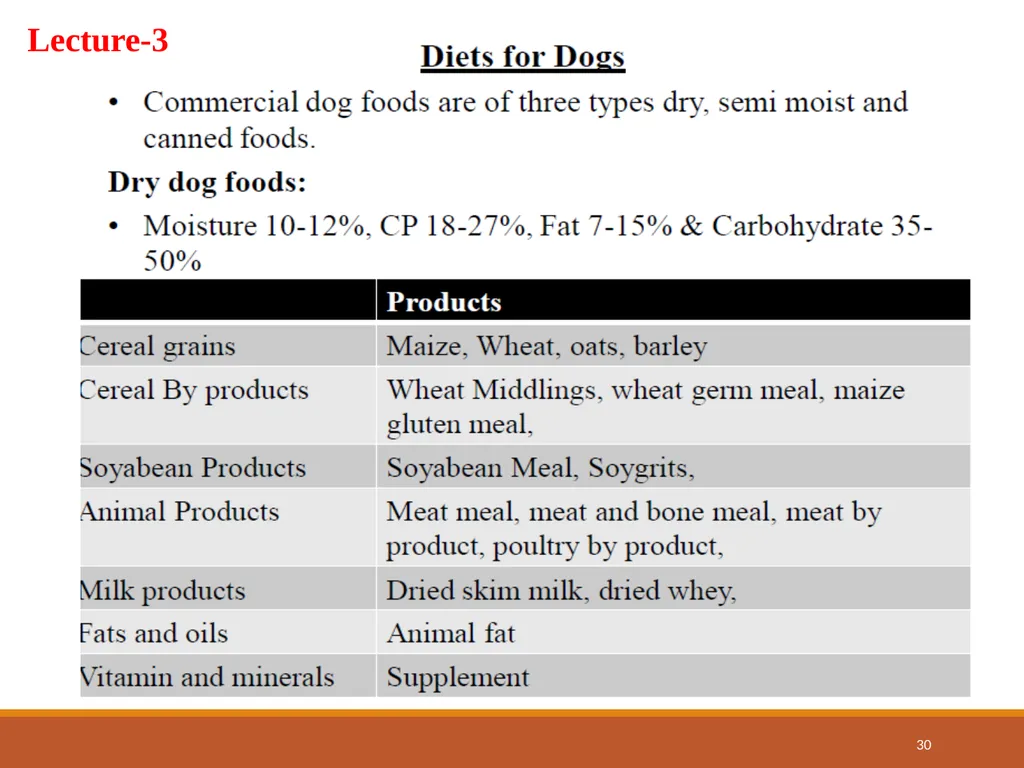
30
30 Lecture-3<br>
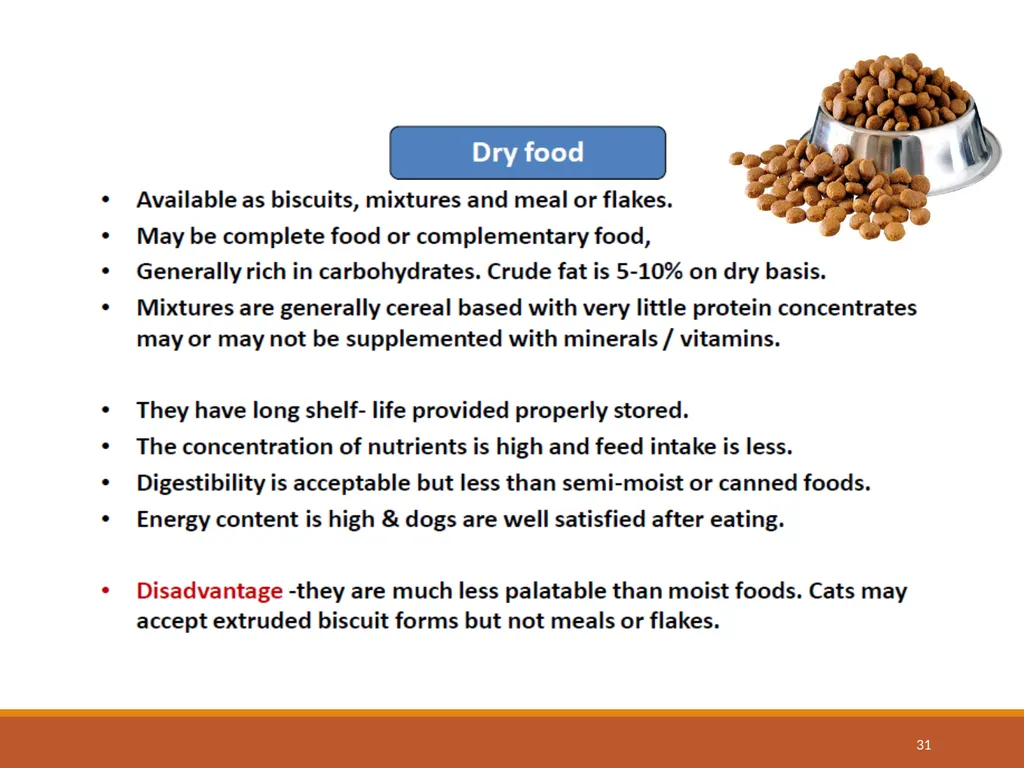
31
31<br>
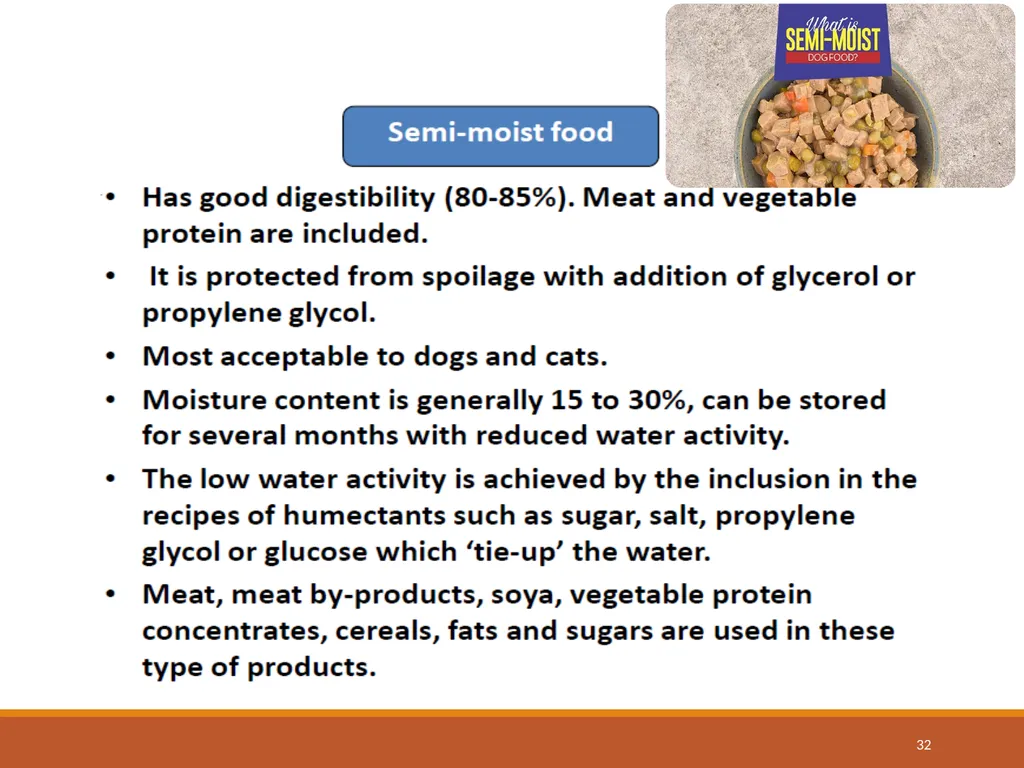
32
32<br>
33
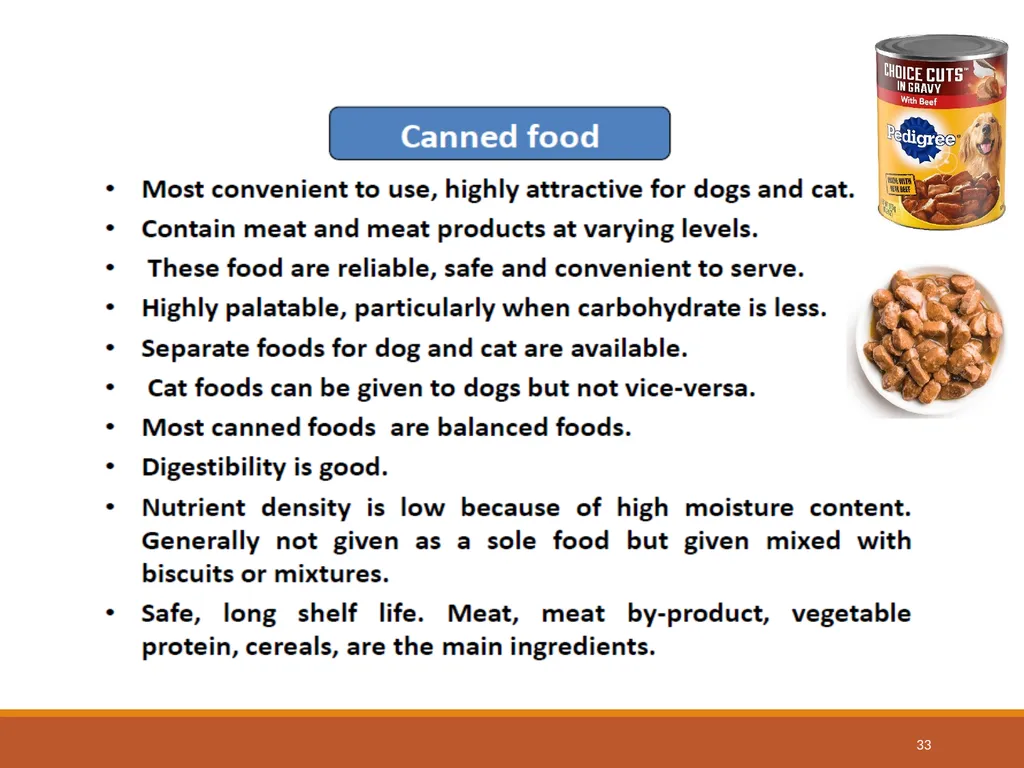
33<br>
34
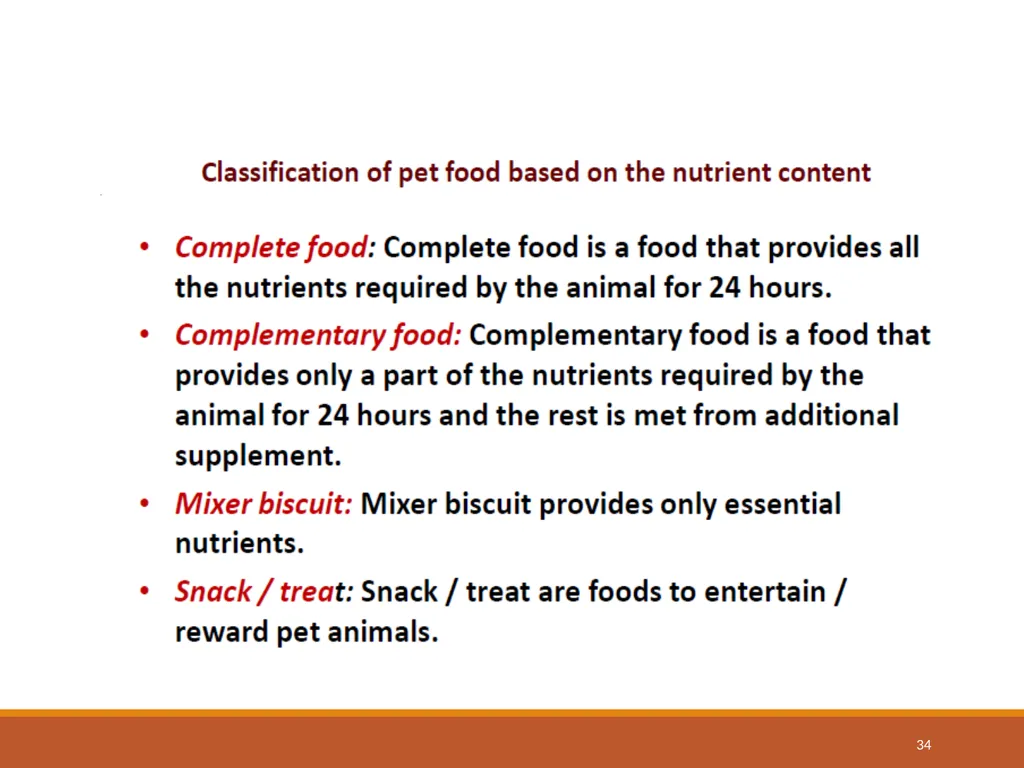
34<br>
35
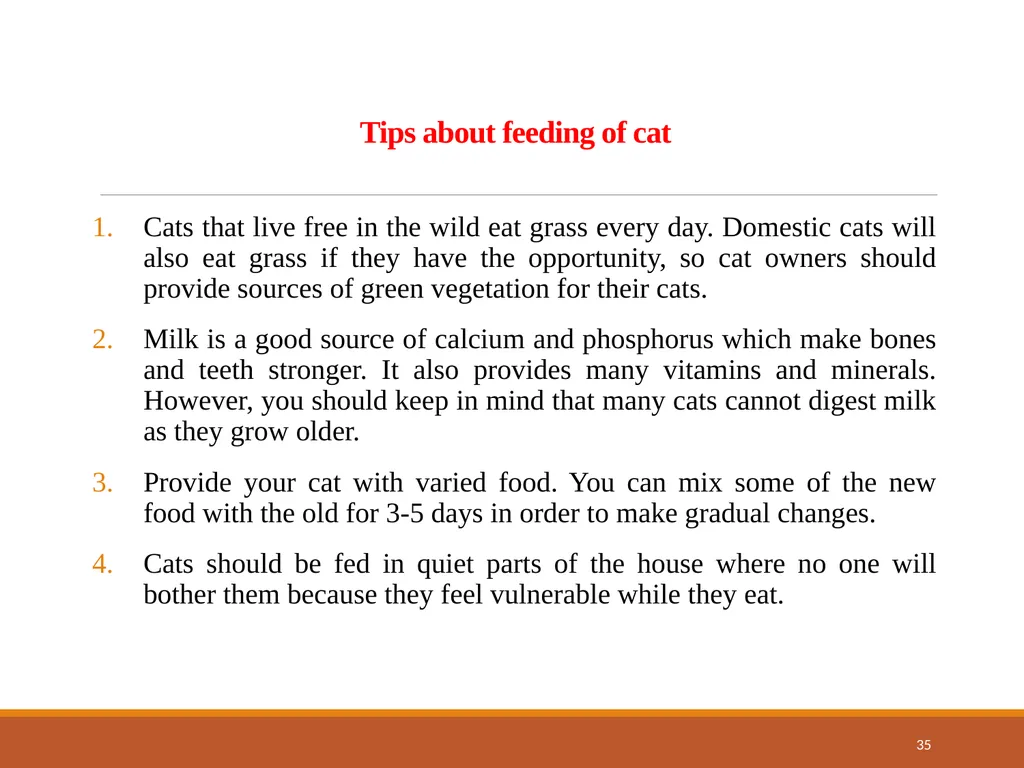
Tips about feeding of cat Cats that live free in the wild eat grass every day. Domestic cats will also eat grass if they have the opportunity, so cat owners should provide sources of green vegetation for their cats.
Milk is a good source of calcium and phosphorus which make bones and teeth stronger. It also provides many vitamins and minerals. However, you should keep in mind that many cats cannot digest milk as they grow older.
Provide your cat with varied food. You can mix some of the new food with the old for 3-5 days in order to make gradual changes.
Cats should be fed in quiet parts of the house where no one will bother them because they feel vulnerable while they eat. 35<br>
36
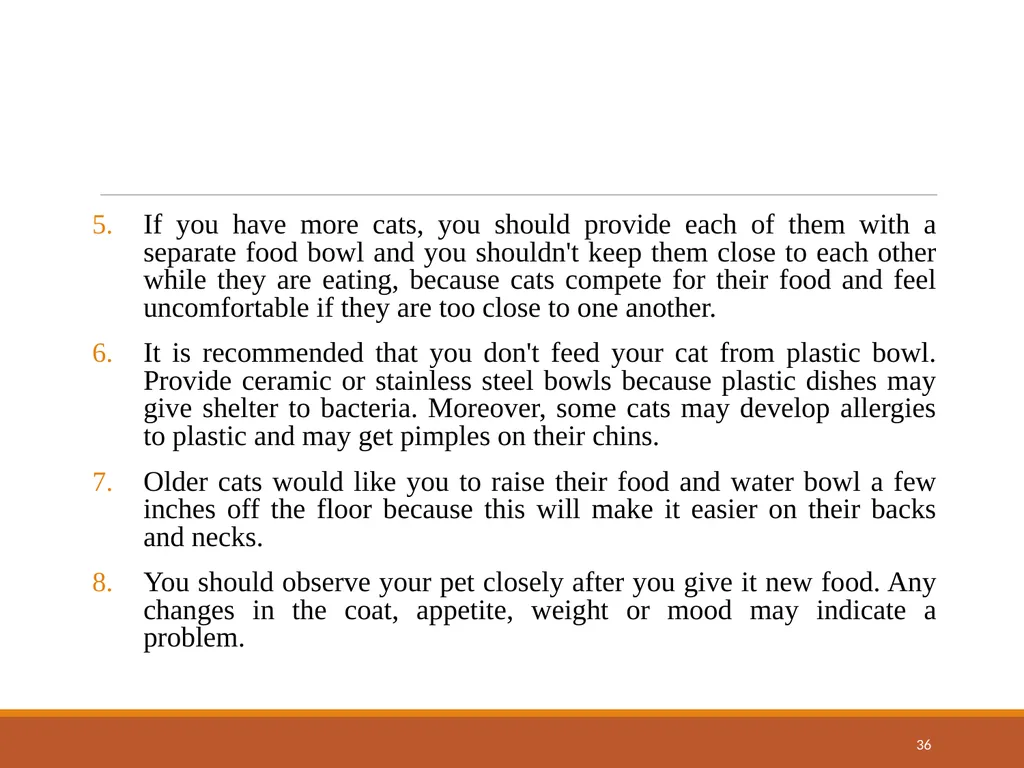
If you have more cats, you should provide each of them with a separate food bowl and you shouldn't keep them close to each other while they are eating, because cats compete for their food and feel uncomfortable if they are too close to one another.
It is recommended that you don't feed your cat from plastic bowl. Provide ceramic or stainless steel bowls because plastic dishes may give shelter to bacteria. Moreover, some cats may develop allergies to plastic and may get pimples on their chins.
Older cats would like you to raise their food and water bowl a few inches off the floor because this will make it easier on their backs and necks.
You should observe your pet closely after you give it new food. Any changes in the coat, appetite, weight or mood may indicate a problem. 36<br>
37
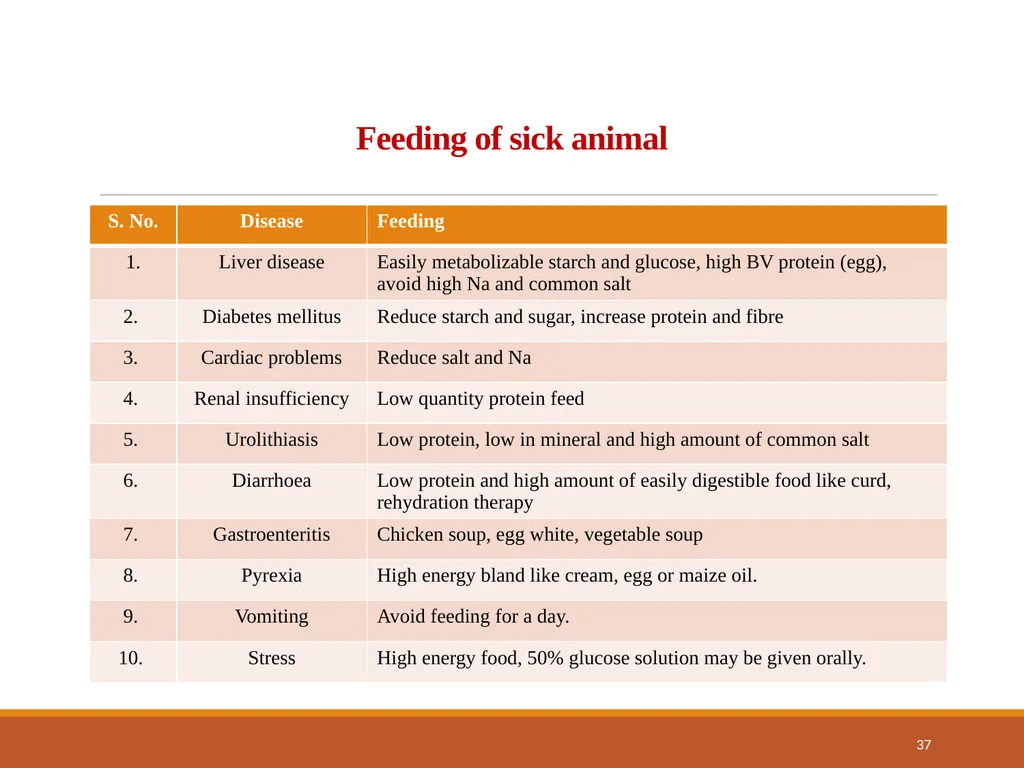
Feeding of sick animal 37<br>
38
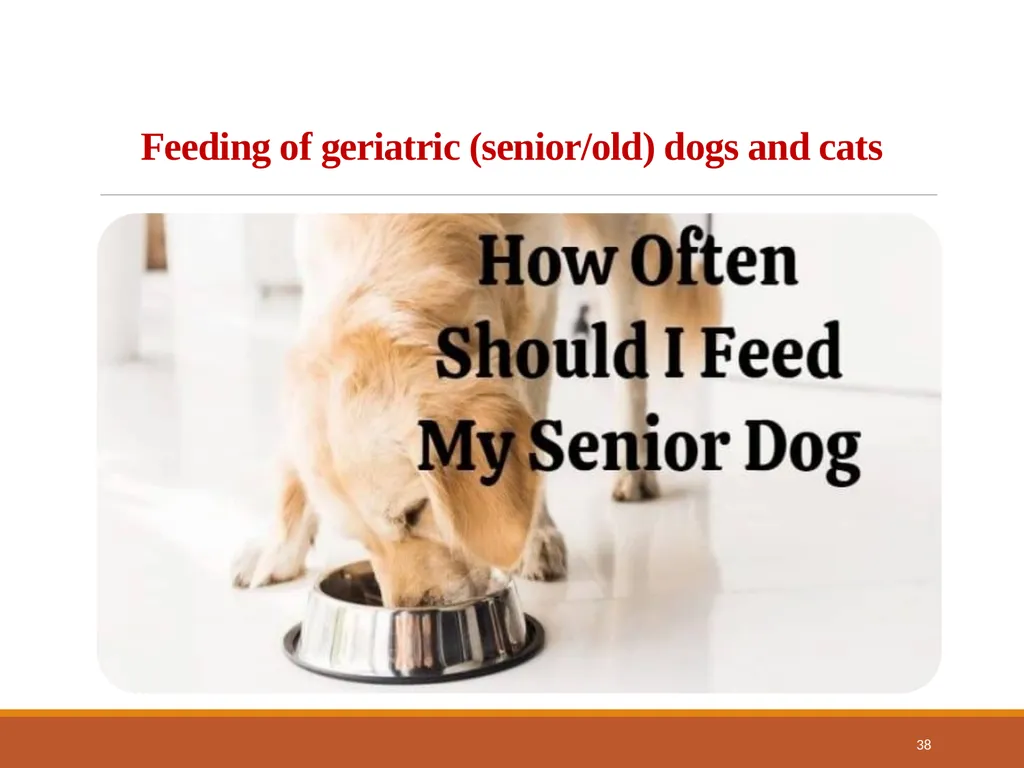
38 Feeding of geriatric (senior/old) dogs and cats<br>
39
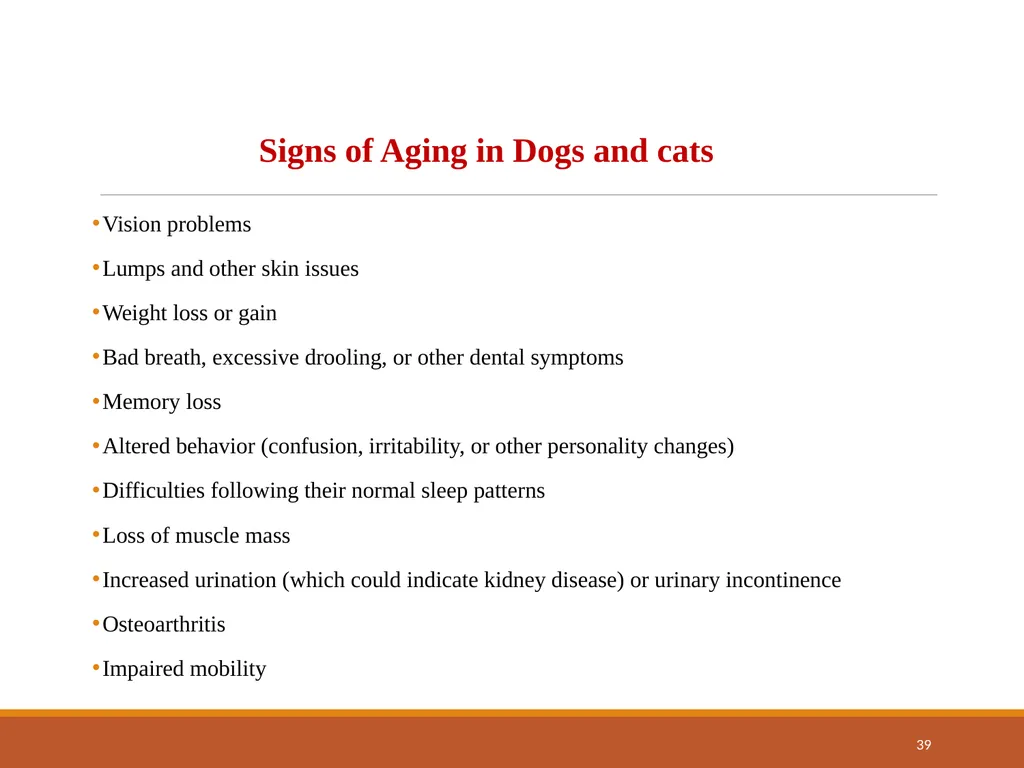
Vision problems
Lumps and other skin issues
Weight loss or gain
Bad breath, excessive drooling, or other dental symptoms
Memory loss
Altered behavior (confusion, irritability, or other personality changes)
Difficulties following their normal sleep patterns
Loss of muscle mass
Increased urination (which could indicate kidney disease) or urinary incontinence
Osteoarthritis
Impaired mobility 39 Signs of Aging in Dogs and cats<br>
40
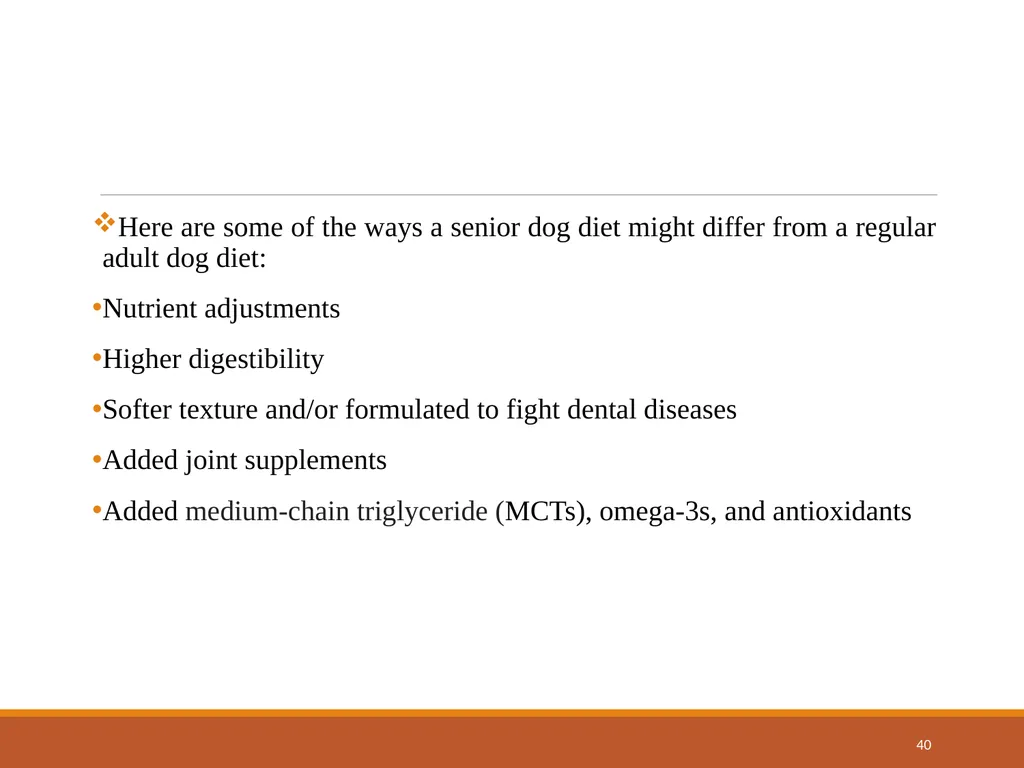
Here are some of the ways a senior dog diet might differ from a regular adult dog diet:
Nutrient adjustments
Higher digestibility
Softer texture and/or formulated to fight dental diseases
Added joint supplements
Added medium-chain triglyceride (MCTs), omega-3s, and antioxidants 40<br>
Nutrient adjustments
Higher digestibility
Softer texture and/or formulated to fight dental diseases
Added joint supplements
Added medium-chain triglyceride (MCTs), omega-3s, and antioxidants 40<br>
41
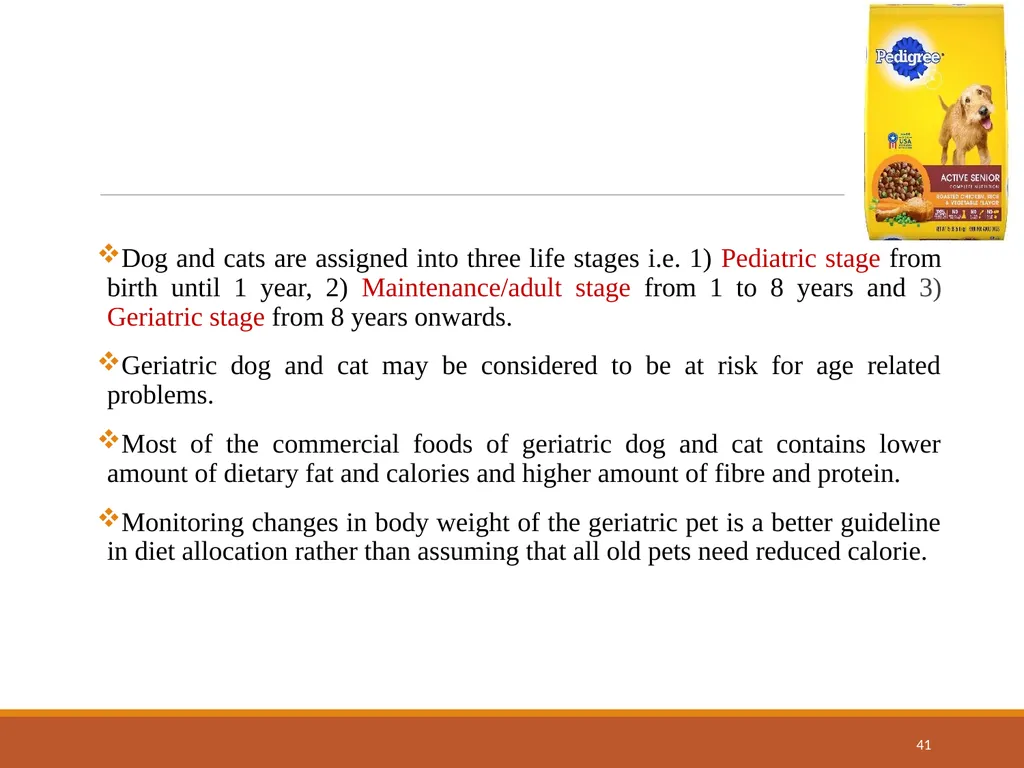
Dog and cats are assigned into three life stages i.e. 1) Pediatric stage from birth until 1 year, 2) Maintenance/adult stage from 1 to 8 years and 3) Geriatric stage from 8 years onwards.
Geriatric dog and cat may be considered to be at risk for age related problems.
Most of the commercial foods of geriatric dog and cat contains lower amount of dietary fat and calories and higher amount of fibre and protein.
Monitoring changes in body weight of the geriatric pet is a better guideline in diet allocation rather than assuming that all old pets need reduced calorie. 41<br>
42
Dr. Muneendra Kumar, Assistant Professor, Department of Animal Nutrition, DUVASU, Mathura 42<br>