
Considerations with the Adoption of Biosimilars
EM
Published · 60 slides · 0 views

1 / 1






Description
Considerations with the Adoption of Biosimilars James G. Stevenson, PharmD, FASHP Professor, University of Michigan College of Pharmacy President, Visante, Inc. Disclosure James Stevenson, PharmD, FASHP, has served as a consultant for
Related Topics
Share
Embed code
Download this presentation From Below
"Considerations with the Adoption of Biosimilars" is the property of its rightful owner. Permission is granted to download and print the materials on this website for personal, non-commercial use only, and to display it on your personal computer provided you do not modify the materials and that you retain all copyright notices contained in the materials. By downloading content from our website, you accept the terms of this agreement.
Presentation Transcript
01
Considerations with the Adoption of Biosimilars James G. Stevenson, PharmD, FASHP
Professor, University of Michigan College of Pharmacy
President, Visante, Inc.<br>
Professor, University of Michigan College of Pharmacy
President, Visante, Inc.<br>
02
Disclosure James Stevenson, PharmD, FASHP, has served as a consultant for Pfizer. He is a stock holder and receives financial compensation from Visante Inc.<br>
03
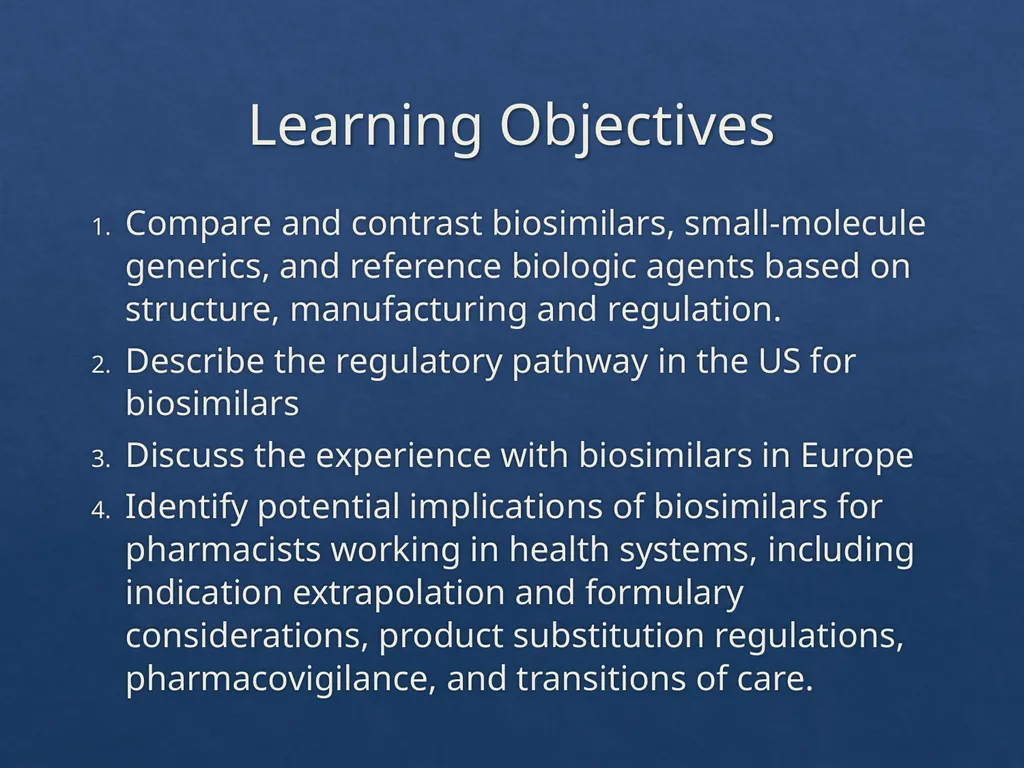
Learning Objectives Compare and contrast biosimilars, small-molecule generics, and reference biologic agents based on structure, manufacturing and regulation.
Describe the regulatory pathway in the US for biosimilars
Discuss the experience with biosimilars in Europe
Identify potential implications of biosimilars for pharmacists working in health systems, including indication extrapolation and formulary considerations, product substitution regulations, pharmacovigilance, and transitions of care.<br>
04
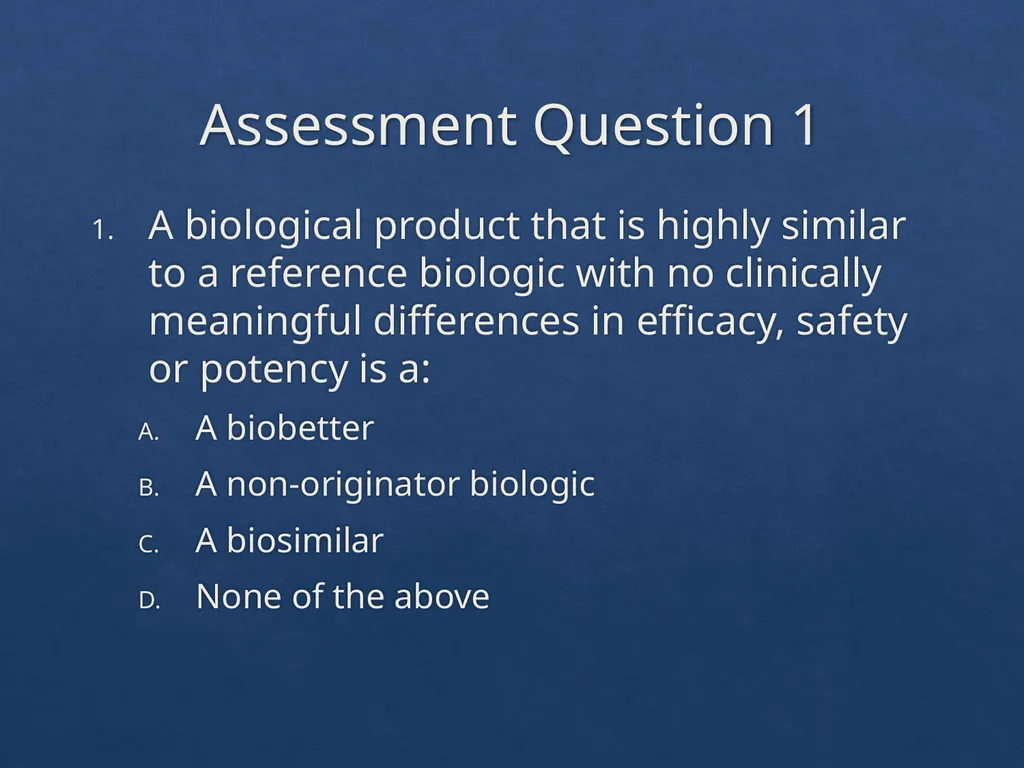
Assessment Question 1 A biological product that is highly similar to a reference biologic with no clinically meaningful differences in efficacy, safety or potency is a:
A biobetter
A non-originator biologic
A biosimilar
None of the above<br>
A biobetter
A non-originator biologic
A biosimilar
None of the above<br>
05
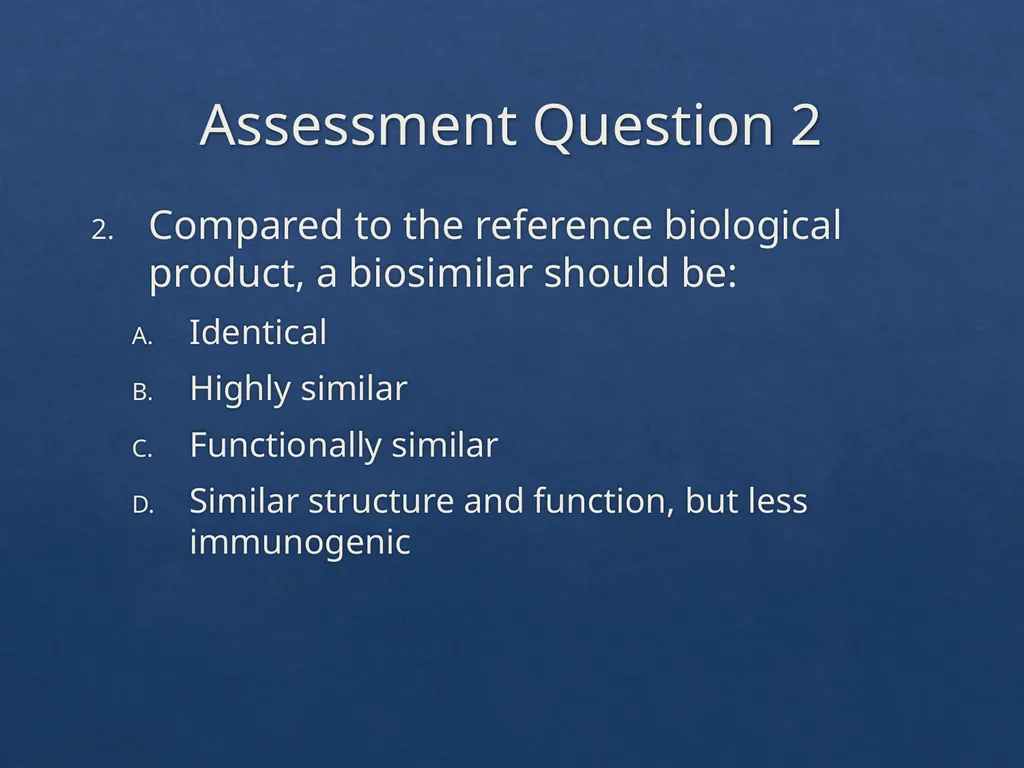
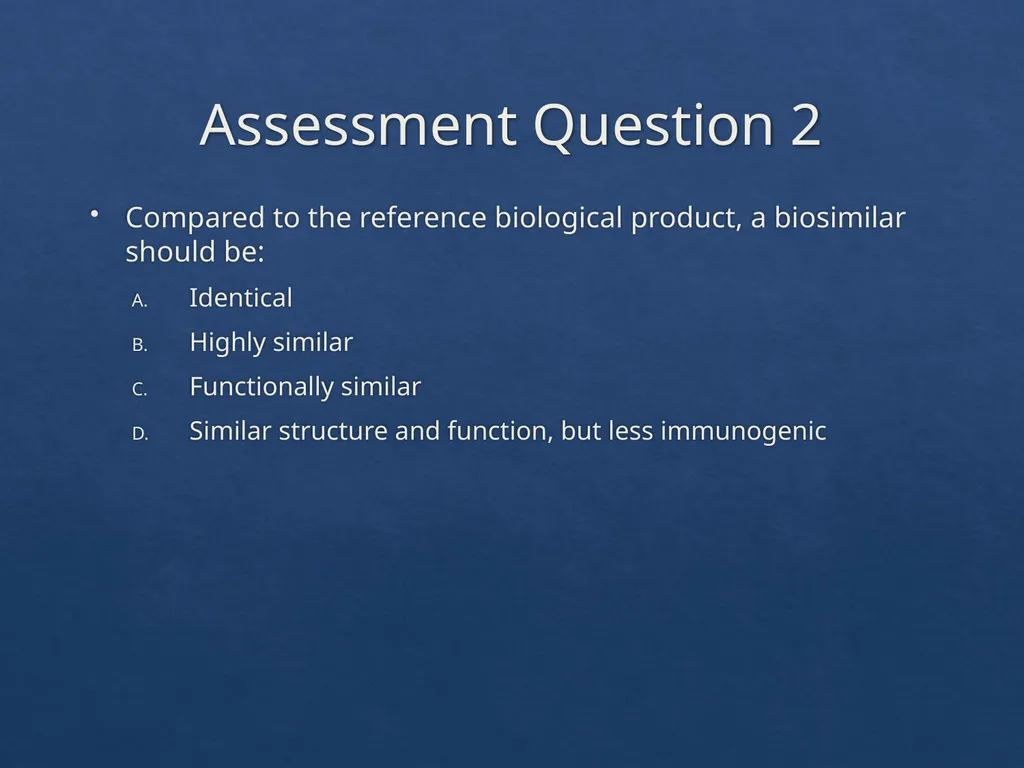
Assessment Question 2 Compared to the reference biological product, a biosimilar should be:
Identical
Highly similar
Functionally similar
Similar structure and function, but less immunogenic<br>
Identical
Highly similar
Functionally similar
Similar structure and function, but less immunogenic<br>
06
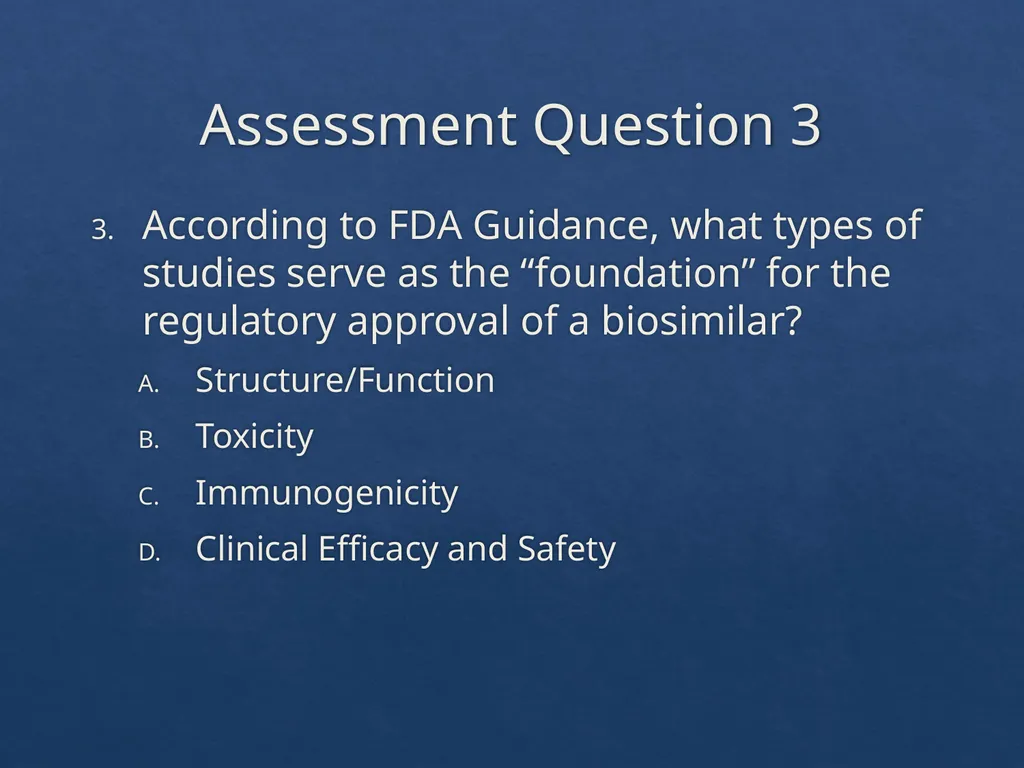
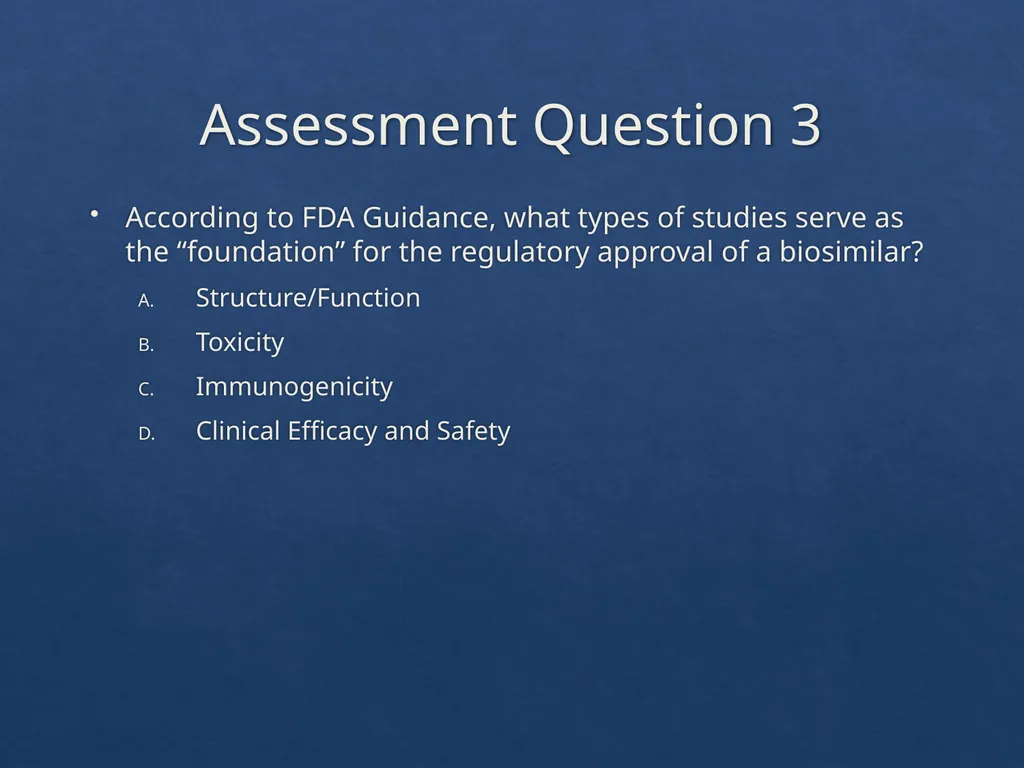
Assessment Question 3 According to FDA Guidance, what types of studies serve as the “foundation” for the regulatory approval of a biosimilar?
Structure/Function
Toxicity
Immunogenicity
Clinical Efficacy and Safety<br>
Structure/Function
Toxicity
Immunogenicity
Clinical Efficacy and Safety<br>
07
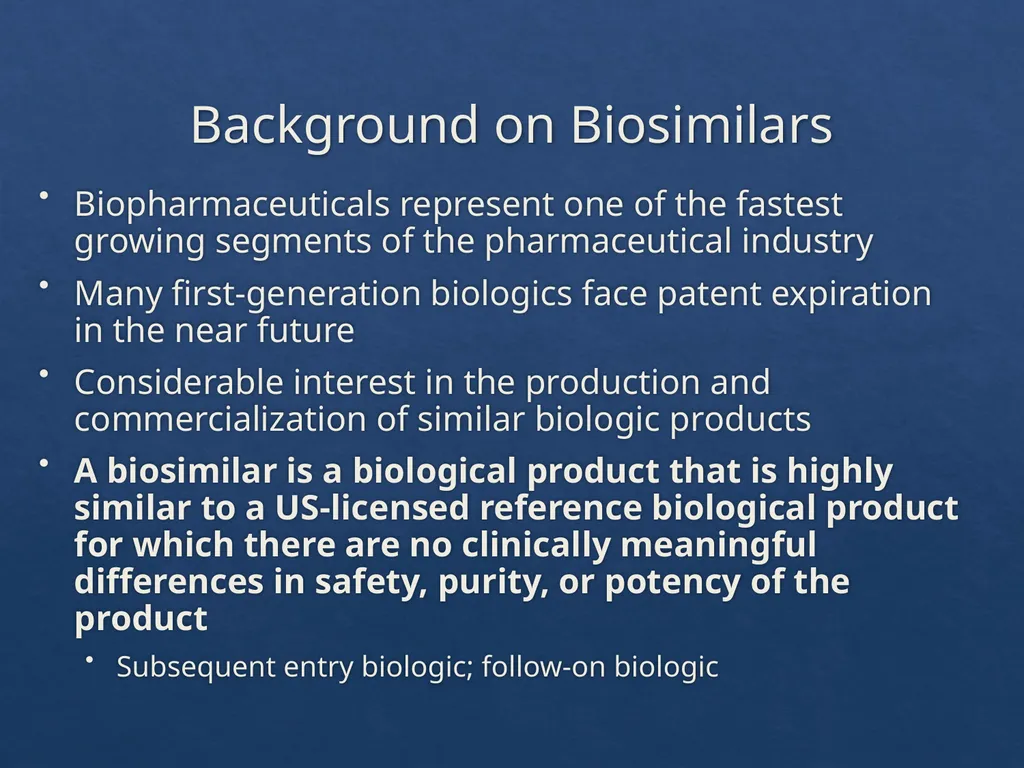
Background on Biosimilars Biopharmaceuticals represent one of the fastest growing segments of the pharmaceutical industry
Many first-generation biologics face patent expiration in the near future
Considerable interest in the production and commercialization of similar biologic products
A biosimilar is a biological product that is highly similar to a US-licensed reference biological product for which there are no clinically meaningful differences in safety, purity, or potency of the product
Subsequent entry biologic; follow-on biologic<br>
08
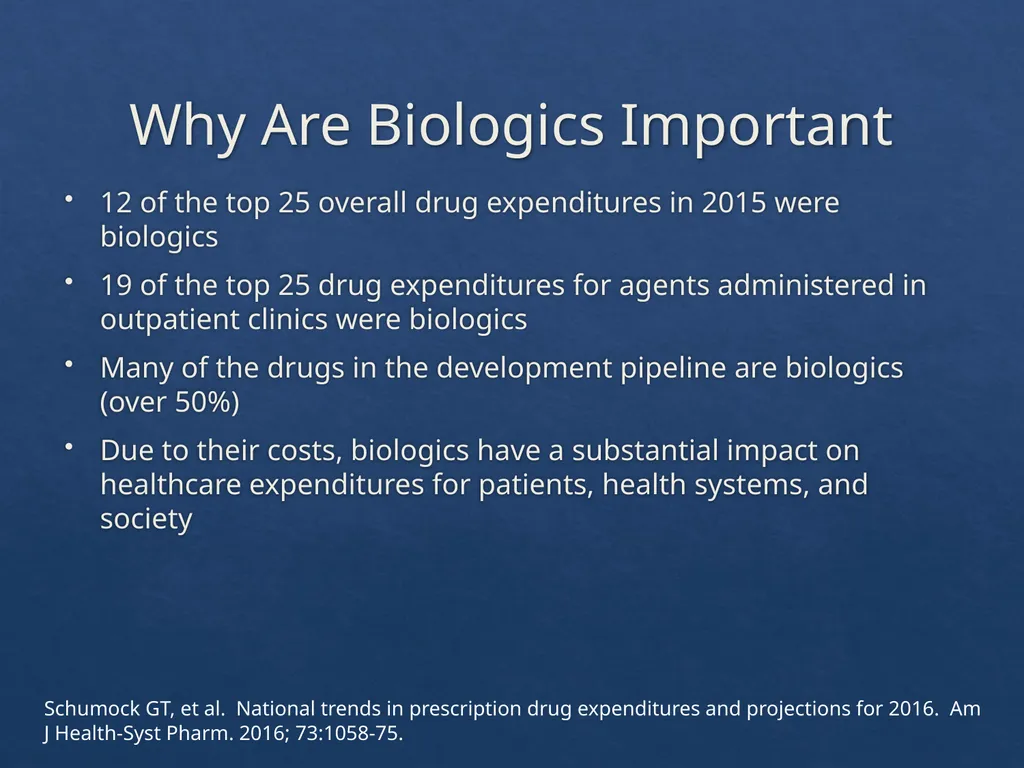
Why Are Biologics Important 12 of the top 25 overall drug expenditures in 2015 were biologics
19 of the top 25 drug expenditures for agents administered in outpatient clinics were biologics
Many of the drugs in the development pipeline are biologics (over 50%)
Due to their costs, biologics have a substantial impact on healthcare expenditures for patients, health systems, and society Schumock GT, et al. National trends in prescription drug expenditures and projections for 2016. Am J Health-Syst Pharm. 2016; 73:1058-75.<br>
09
How are biologics different than traditional small molecule drugs?<br>
10
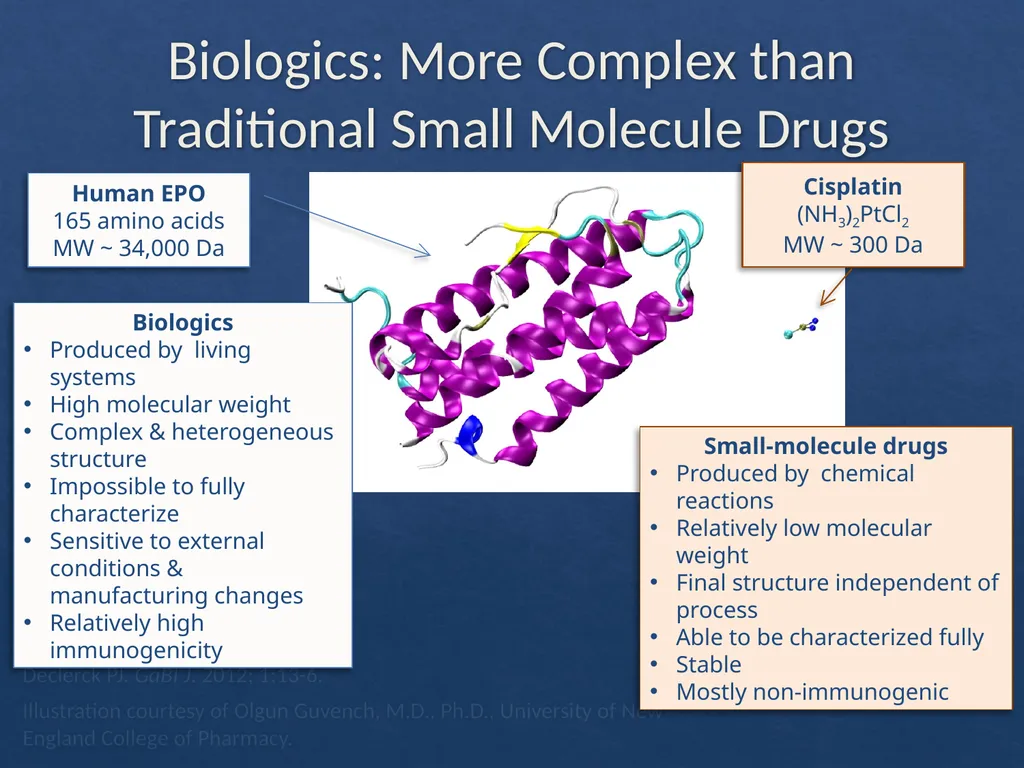
Biologics: More Complex than Traditional Small Molecule Drugs Declerck PJ. GaBI J. 2012; 1:13-6.
Illustration courtesy of Olgun Guvench, M.D., Ph.D., University of New England College of Pharmacy. Human EPO
165 amino acids
MW ~ 34,000 Da Cisplatin
(NH3)2PtCl2
MW ~ 300 Da Biologics
Produced by living systems
High molecular weight
Complex & heterogeneous structure
Impossible to fully characterize
Sensitive to external conditions & manufacturing changes
Relatively high immunogenicity Small-molecule drugs
Produced by chemical reactions
Relatively low molecular weight
Final structure independent of process
Able to be characterized fully
Stable
Mostly non-immunogenic<br>
11
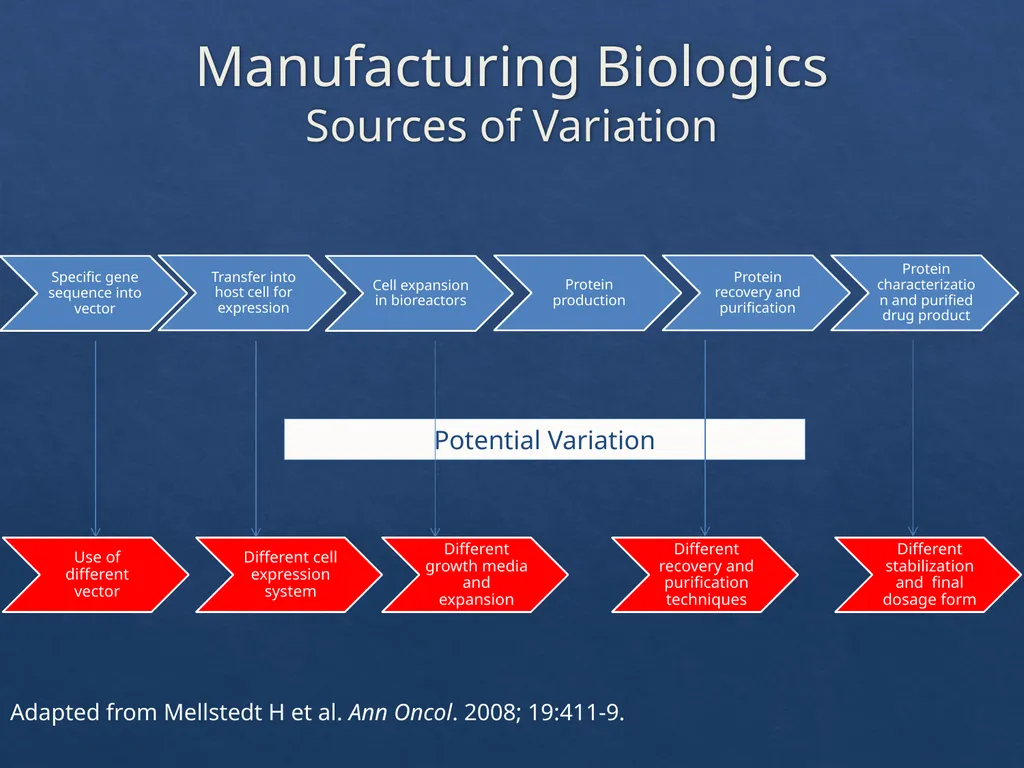
Manufacturing Biologics
Sources of Variation Potential Variation Adapted from Mellstedt H et al. Ann Oncol. 2008; 19:411-9.<br>
12
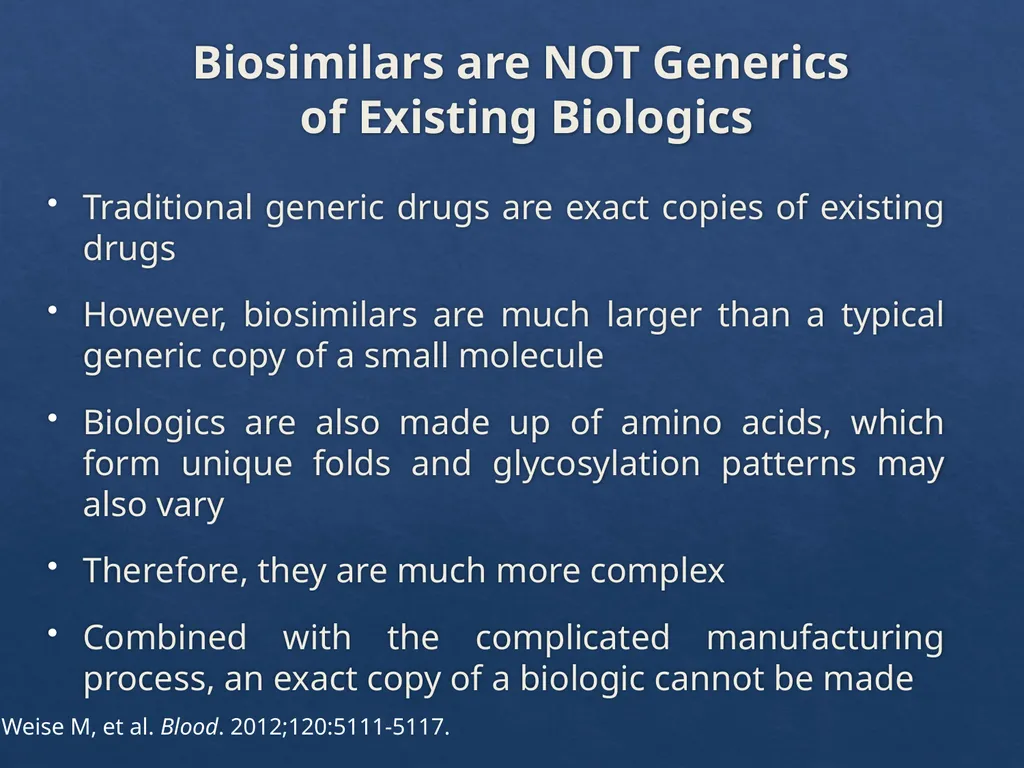
Biosimilars are NOT Generics
of Existing Biologics Traditional generic drugs are exact copies of existing drugs
However, biosimilars are much larger than a typical generic copy of a small molecule
Biologics are also made up of amino acids, which form unique folds and glycosylation patterns may also vary
Therefore, they are much more complex
Combined with the complicated manufacturing process, an exact copy of a biologic cannot be made Weise M, et al. Blood. 2012;120:5111-5117.<br>
13
I’ve heard that there is variability in the manufacturing processes, even for reference products. How does that relate to biosimilars?<br>
14
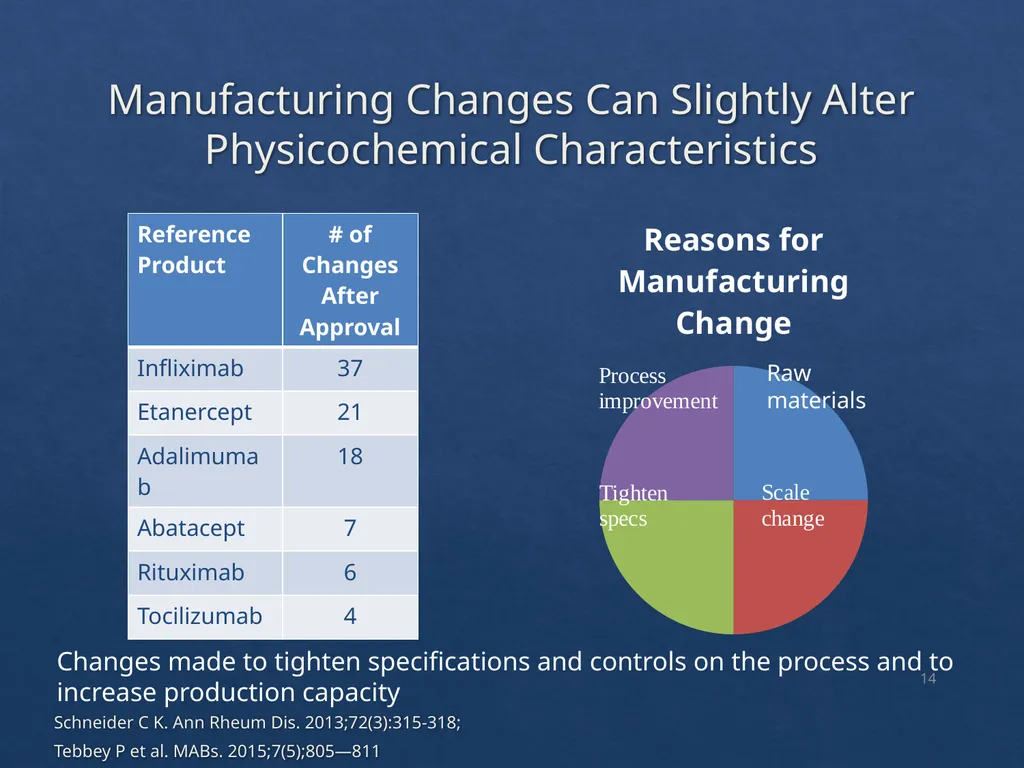
Manufacturing Changes Can Slightly Alter Physicochemical Characteristics 14 Schneider C K. Ann Rheum Dis. 2013;72(3):315-318;
Tebbey P et al. MABs. 2015;7(5);805—811 Raw materials Changes made to tighten specifications and controls on the process and to increase production capacity<br>
Tebbey P et al. MABs. 2015;7(5);805—811 Raw materials Changes made to tighten specifications and controls on the process and to increase production capacity<br>
15
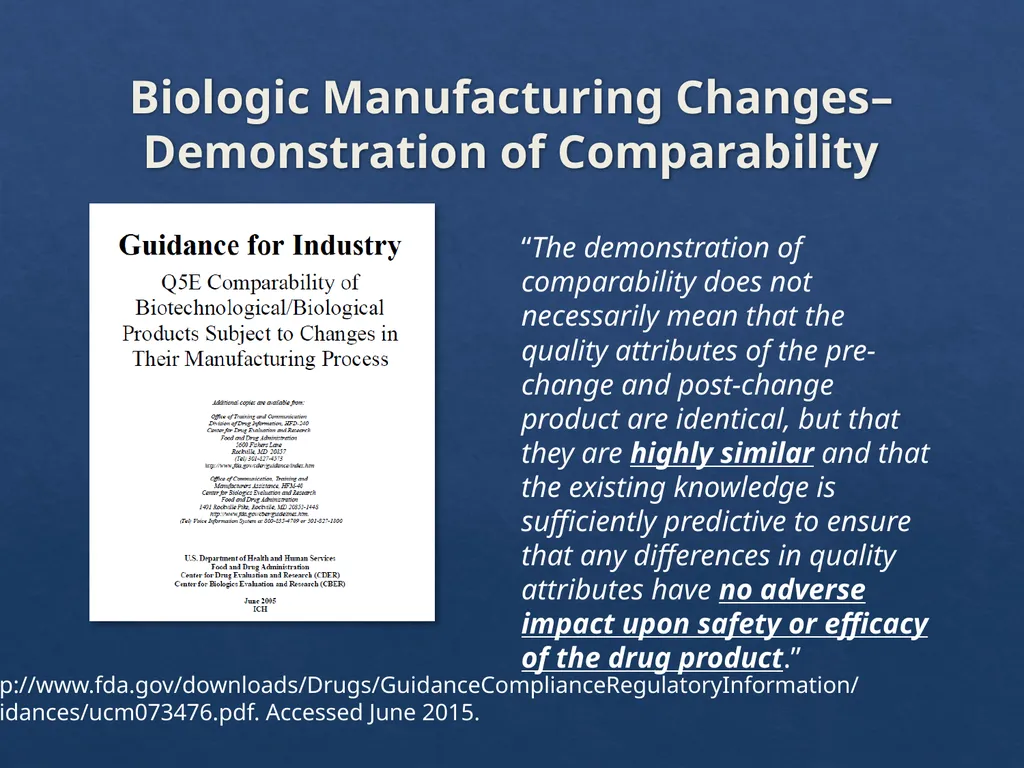
Biologic Manufacturing Changes–Demonstration of Comparability http://www.fda.gov/downloads/Drugs/GuidanceComplianceRegulatoryInformation/
Guidances/ucm073476.pdf. Accessed June 2015. “The demonstration of comparability does not necessarily mean that the quality attributes of the pre-change and post-change product are identical, but that they are highly similar and that the existing knowledge is sufficiently predictive to ensure that any differences in quality attributes have no adverse impact upon safety or efficacy of the drug product.”<br>
Guidances/ucm073476.pdf. Accessed June 2015. “The demonstration of comparability does not necessarily mean that the quality attributes of the pre-change and post-change product are identical, but that they are highly similar and that the existing knowledge is sufficiently predictive to ensure that any differences in quality attributes have no adverse impact upon safety or efficacy of the drug product.”<br>
16
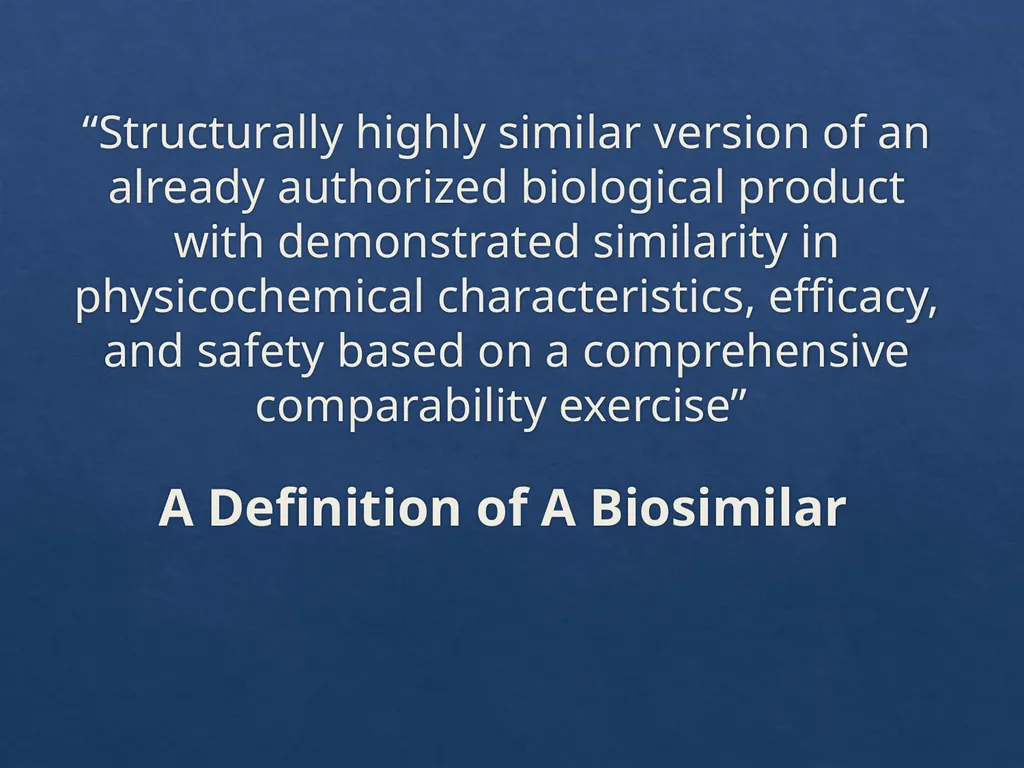
“Structurally highly similar version of an already authorized biological product with demonstrated similarity in physicochemical characteristics, efficacy, and safety based on a comprehensive comparability exercise” A Definition of A Biosimilar<br>
17
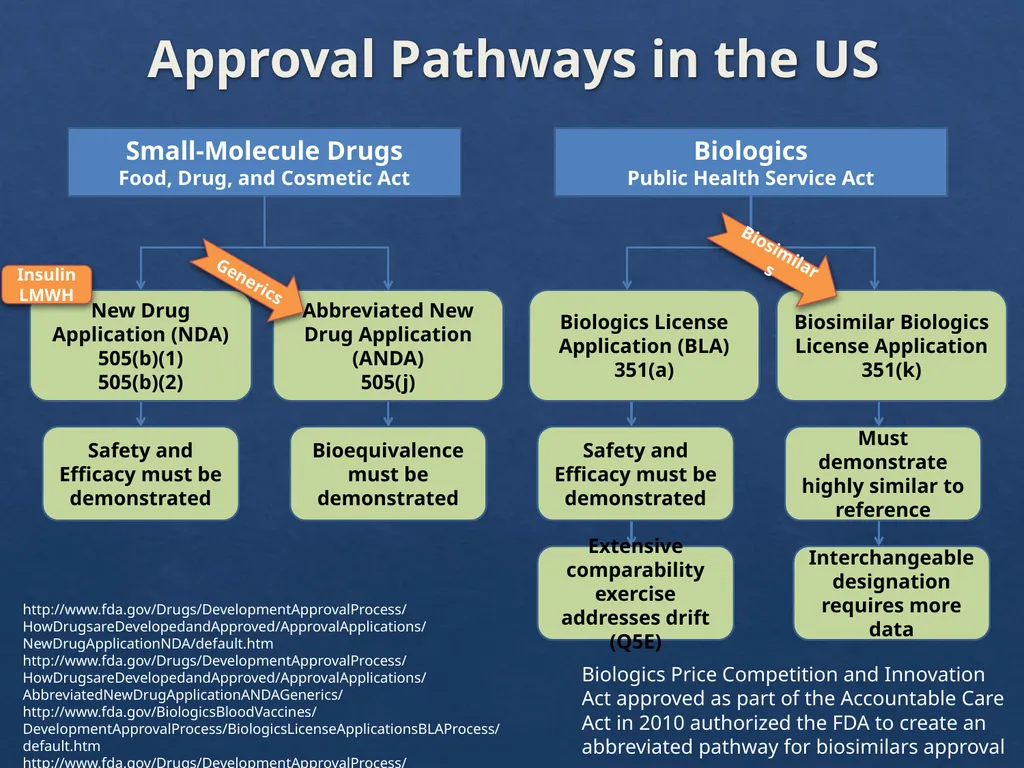
Approval Pathways in the US Small-Molecule Drugs
Food, Drug, and Cosmetic Act Biologics
Public Health Service Act New Drug Application (NDA)
505(b)(1)
505(b)(2) Safety and Efficacy must be demonstrated Abbreviated New Drug Application (ANDA)
505(j) Bioequivalence must be demonstrated Biologics License Application (BLA)
351(a) Safety and Efficacy must be demonstrated Extensive comparability exercise addresses drift (Q5E) Biosimilar Biologics License Application 351(k) Must demonstrate highly similar to reference Interchangeable designation requires more data Generics Biosimilars Insulin LMWH Biologics Price Competition and Innovation Act approved as part of the Accountable Care Act in 2010 authorized the FDA to create an abbreviated pathway for biosimilars approval http://www.fda.gov/Drugs/DevelopmentApprovalProcess/HowDrugsareDevelopedandApproved/ApprovalApplications/NewDrugApplicationNDA/default.htm
http://www.fda.gov/Drugs/DevelopmentApprovalProcess/HowDrugsareDevelopedandApproved/ApprovalApplications/AbbreviatedNewDrugApplicationANDAGenerics/
http://www.fda.gov/BiologicsBloodVaccines/DevelopmentApprovalProcess/BiologicsLicenseApplicationsBLAProcess/default.htm
http://www.fda.gov/Drugs/DevelopmentApprovalProcess/HowDrugsareDevelopedandApproved/ApprovalApplications/TherapeuticBiologicApplications/Biosimilars/ucm241720.htm<br>
18
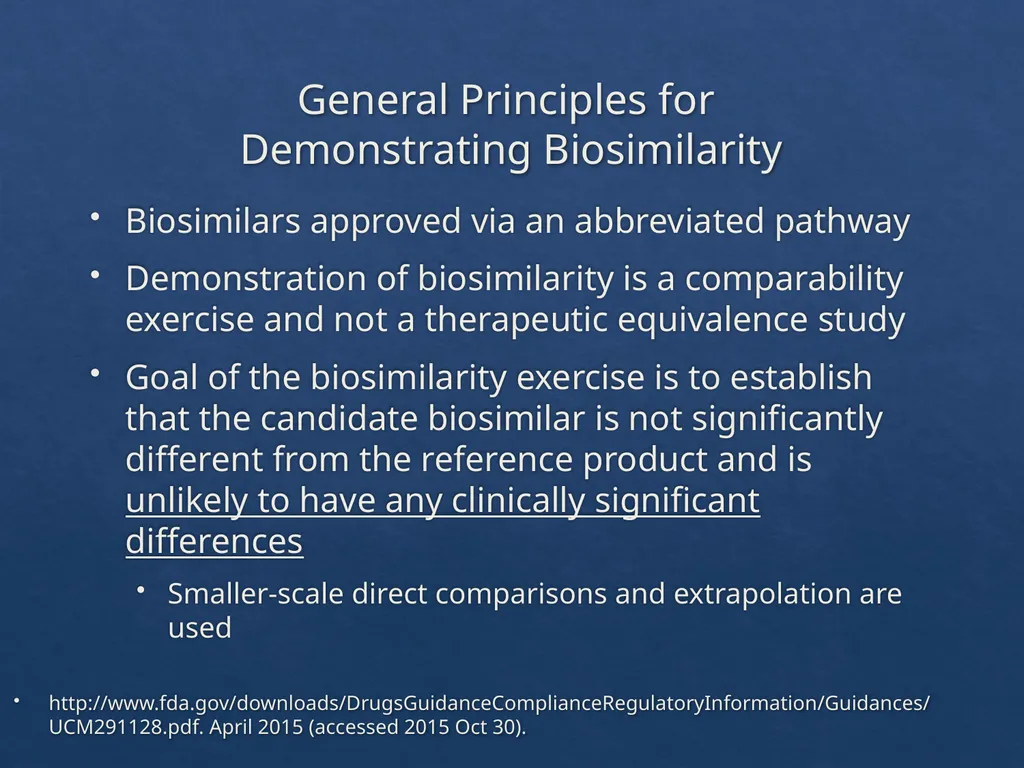
General Principles for
Demonstrating Biosimilarity Biosimilars approved via an abbreviated pathway
Demonstration of biosimilarity is a comparability exercise and not a therapeutic equivalence study
Goal of the biosimilarity exercise is to establish that the candidate biosimilar is not significantly different from the reference product and is unlikely to have any clinically significant differences
Smaller-scale direct comparisons and extrapolation are used http://www.fda.gov/downloads/DrugsGuidanceComplianceRegulatoryInformation/Guidances/UCM291128.pdf. April 2015 (accessed 2015 Oct 30).<br>
19
According to FDA guidance, what types of studies serve as the "foundation" for the development and approval of a biosimilar?<br>
20
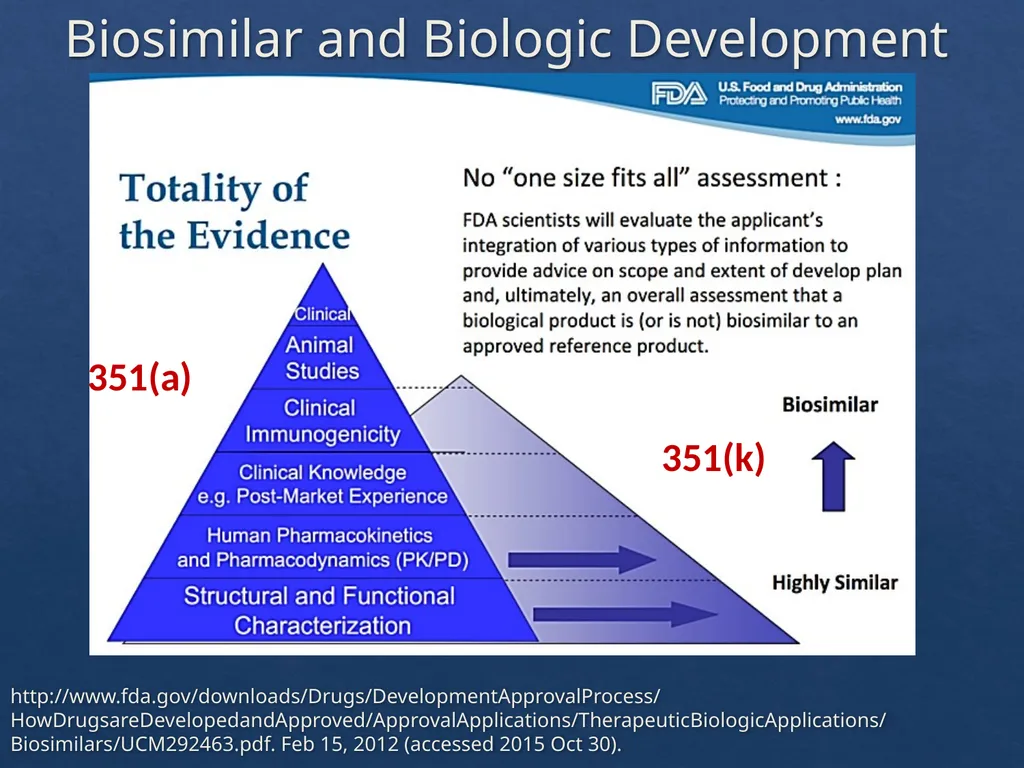
Biosimilar and Biologic Development http://www.fda.gov/downloads/Drugs/DevelopmentApprovalProcess/HowDrugsareDevelopedandApproved/ApprovalApplications/TherapeuticBiologicApplications/Biosimilars/UCM292463.pdf. Feb 15, 2012 (accessed 2015 Oct 30). 351(a) 351(k)<br>
21
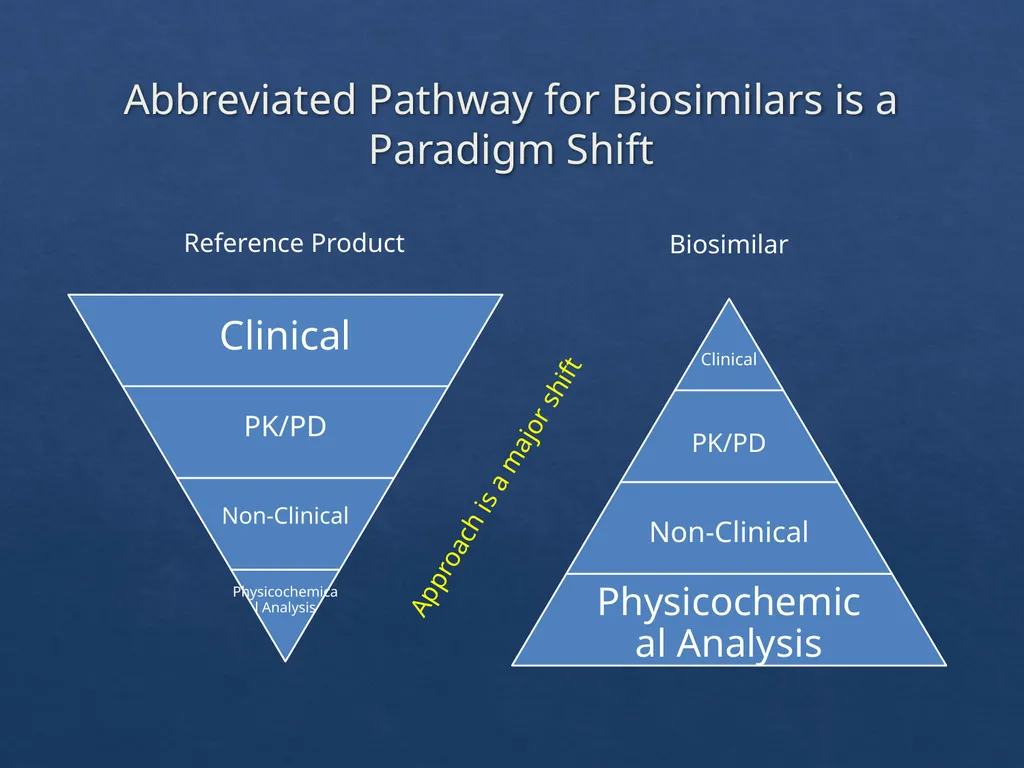
Abbreviated Pathway for Biosimilars is a Paradigm Shift Reference Product Biosimilar Approach is a major shift<br>
22
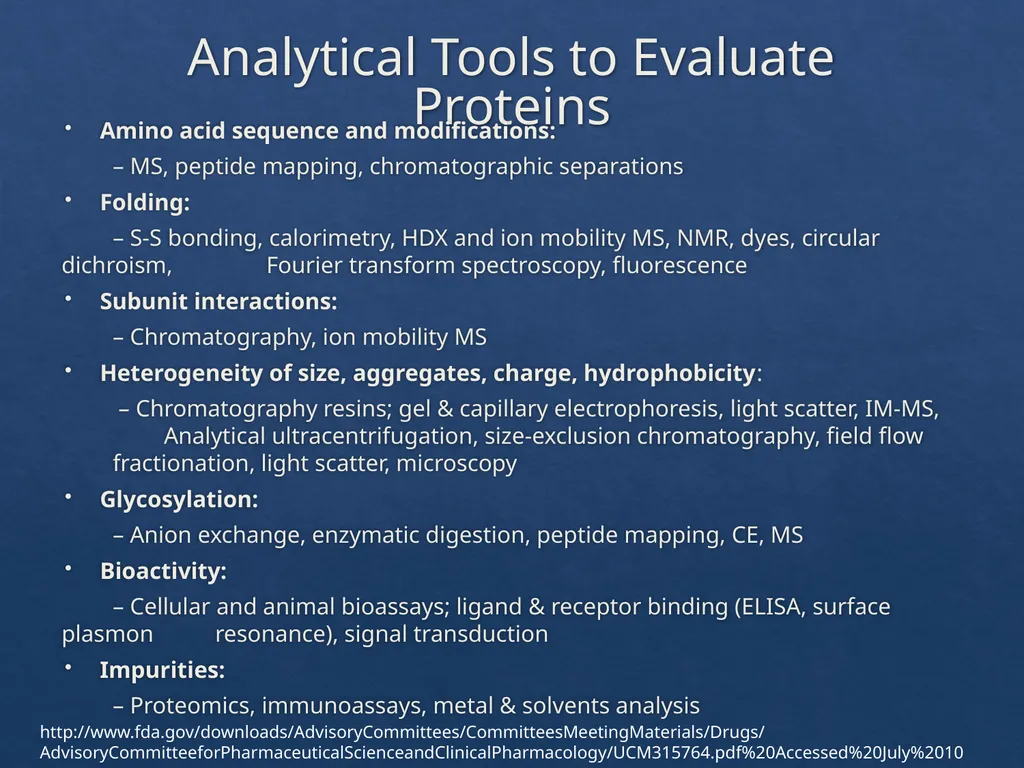
Analytical Tools to Evaluate Proteins Amino acid sequence and modifications:
– MS, peptide mapping, chromatographic separations
Folding:
– S-S bonding, calorimetry, HDX and ion mobility MS, NMR, dyes, circular dichroism, Fourier transform spectroscopy, fluorescence
Subunit interactions:
– Chromatography, ion mobility MS
Heterogeneity of size, aggregates, charge, hydrophobicity:
– Chromatography resins; gel & capillary electrophoresis, light scatter, IM-MS, Analytical ultracentrifugation, size-exclusion chromatography, field flow fractionation, light scatter, microscopy
Glycosylation:
– Anion exchange, enzymatic digestion, peptide mapping, CE, MS
Bioactivity:
– Cellular and animal bioassays; ligand & receptor binding (ELISA, surface plasmon resonance), signal transduction
Impurities:
– Proteomics, immunoassays, metal & solvents analysis http://www.fda.gov/downloads/AdvisoryCommittees/CommitteesMeetingMaterials/Drugs/AdvisoryCommitteeforPharmaceuticalScienceandClinicalPharmacology/UCM315764.pdf%20Accessed%20July%2010<br>
23
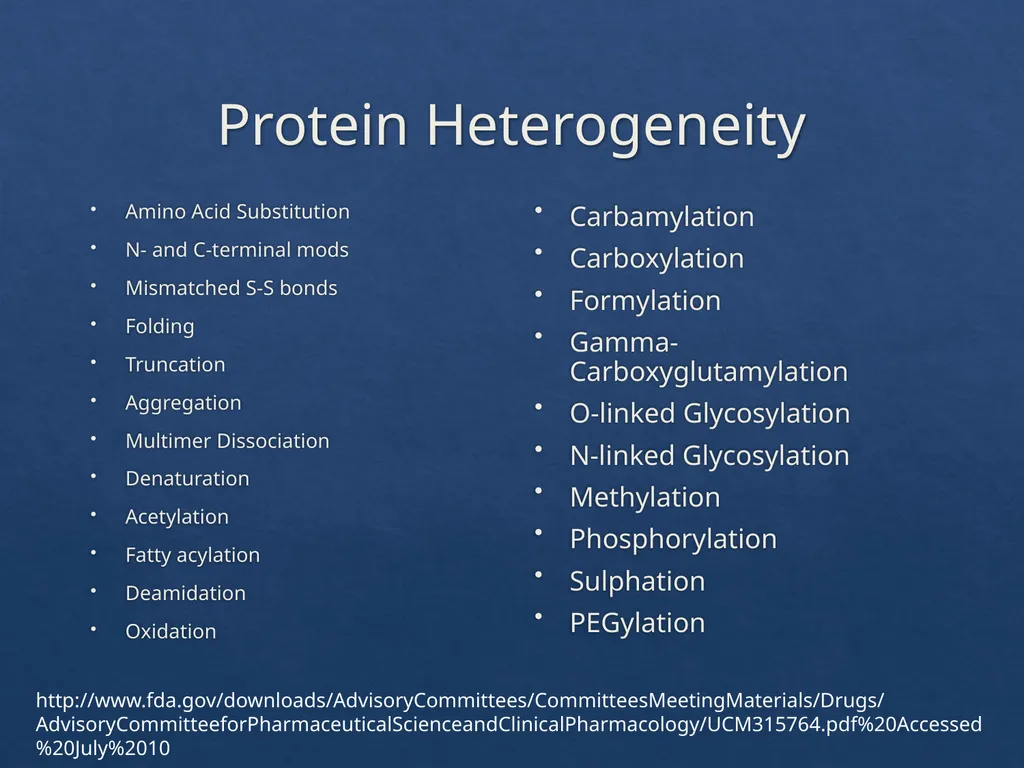
Protein Heterogeneity Amino Acid Substitution
N- and C-terminal mods
Mismatched S-S bonds
Folding
Truncation
Aggregation
Multimer Dissociation
Denaturation
Acetylation
Fatty acylation
Deamidation
Oxidation Carbamylation
Carboxylation
Formylation
Gamma-Carboxyglutamylation
O-linked Glycosylation
N-linked Glycosylation
Methylation
Phosphorylation
Sulphation
PEGylation http://www.fda.gov/downloads/AdvisoryCommittees/CommitteesMeetingMaterials/Drugs/AdvisoryCommitteeforPharmaceuticalScienceandClinicalPharmacology/UCM315764.pdf%20Accessed%20July%2010<br>
24
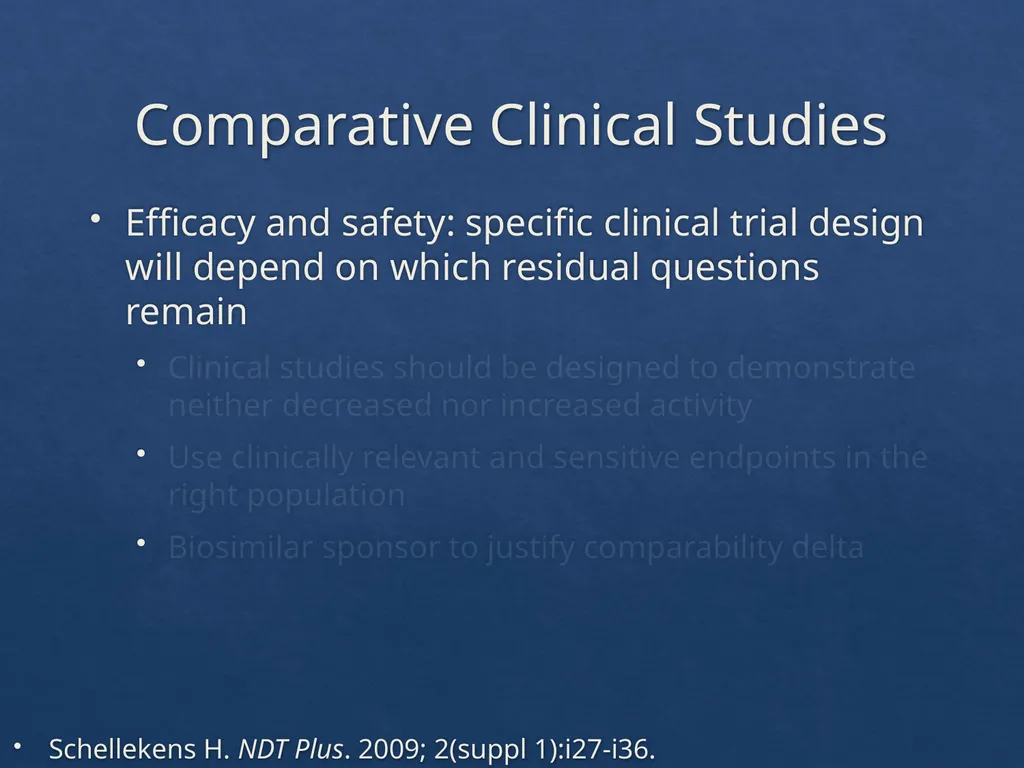
Comparative Clinical Studies Efficacy and safety: specific clinical trial design will depend on which residual questions remain
Clinical studies should be designed to demonstrate neither decreased nor increased activity
Use clinically relevant and sensitive endpoints in the right population
Biosimilar sponsor to justify comparability delta Schellekens H. NDT Plus. 2009; 2(suppl 1):i27-i36.<br>
Clinical studies should be designed to demonstrate neither decreased nor increased activity
Use clinically relevant and sensitive endpoints in the right population
Biosimilar sponsor to justify comparability delta Schellekens H. NDT Plus. 2009; 2(suppl 1):i27-i36.<br>
25
I have heard a lot about the issue of extrapolation. What are the important considerations for extrapolation of indications with biosimilars?<br>
26
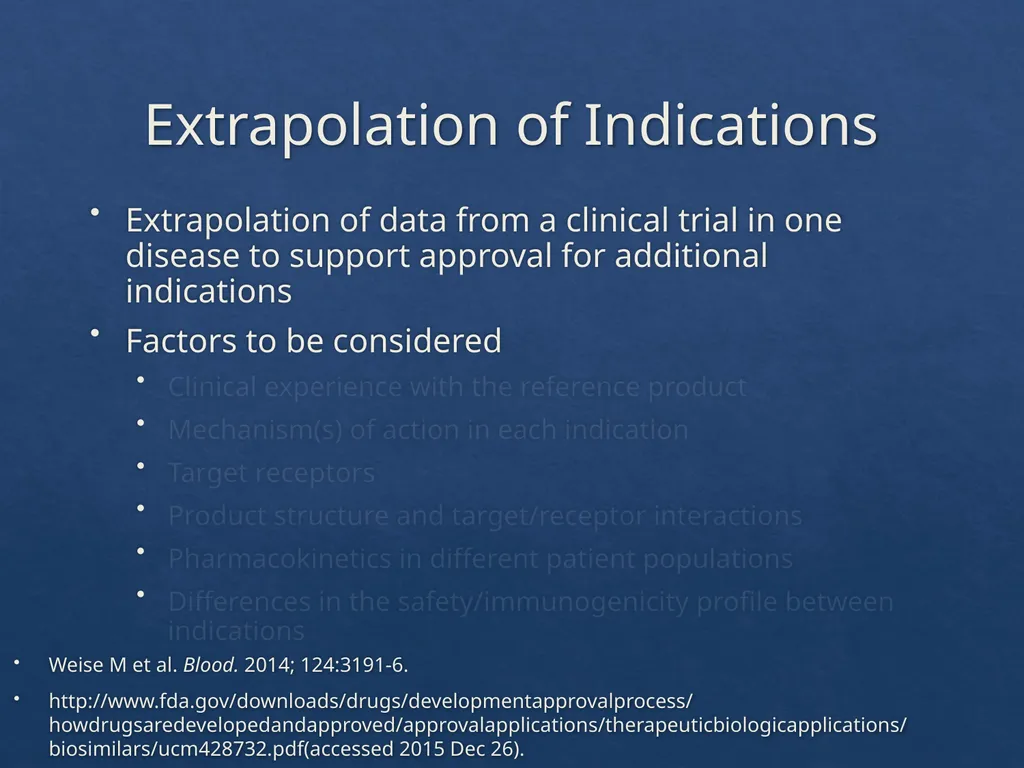
Extrapolation of Indications Extrapolation of data from a clinical trial in one disease to support approval for additional indications
Factors to be considered
Clinical experience with the reference product
Mechanism(s) of action in each indication
Target receptors
Product structure and target/receptor interactions
Pharmacokinetics in different patient populations
Differences in the safety/immunogenicity profile between indications Weise M et al. Blood. 2014; 124:3191-6.
http://www.fda.gov/downloads/drugs/developmentapprovalprocess/howdrugsaredevelopedandapproved/approvalapplications/therapeuticbiologicapplications/biosimilars/ucm428732.pdf(accessed 2015 Dec 26).<br>
27
I’ve heard that biosimilars have been available for some time in Europe. What has been their experience?<br>
28
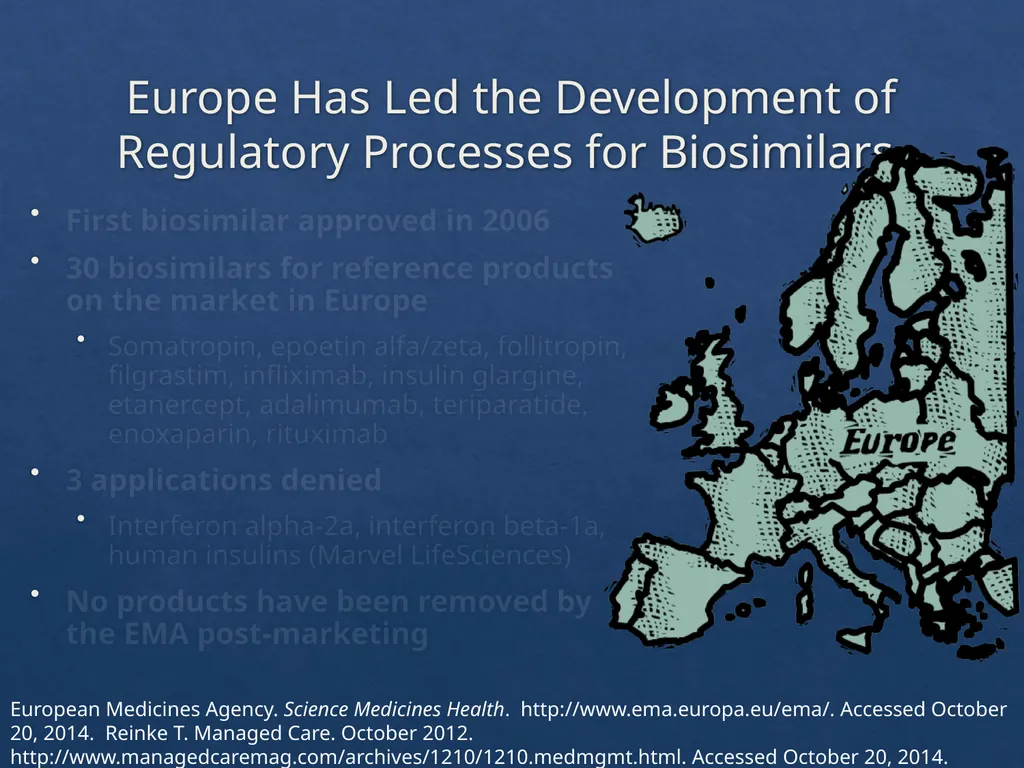
Europe Has Led the Development of Regulatory Processes for Biosimilars First biosimilar approved in 2006
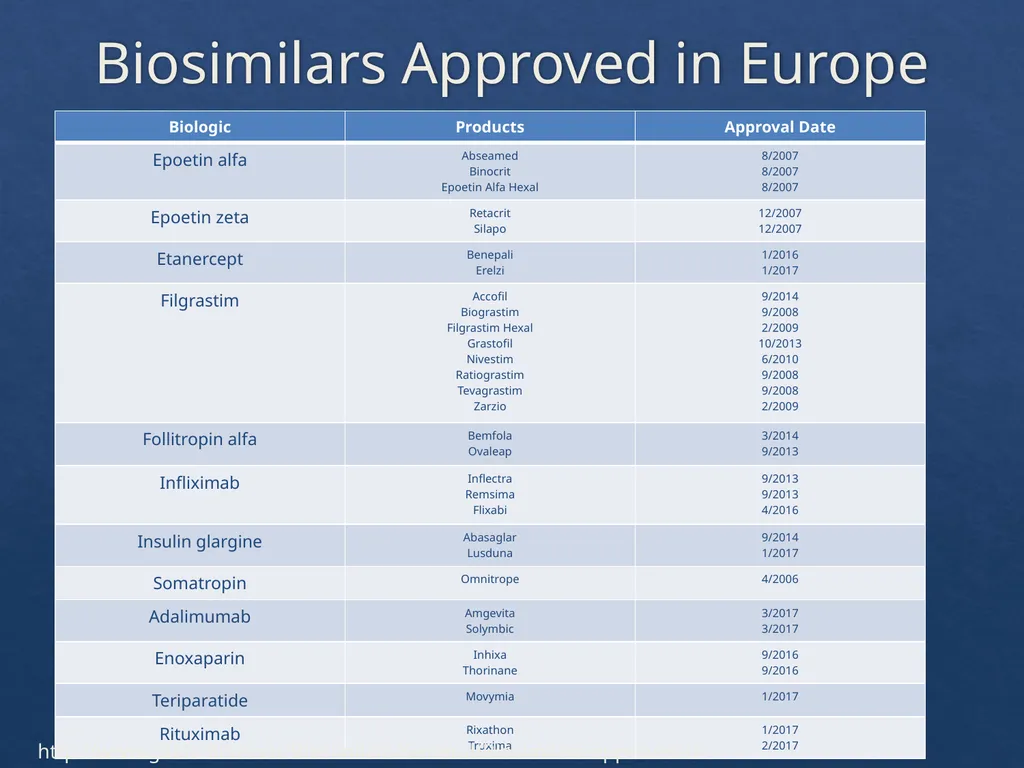
30 biosimilars for reference products on the market in Europe
Somatropin, epoetin alfa/zeta, follitropin, filgrastim, infliximab, insulin glargine, etanercept, adalimumab, teriparatide, enoxaparin, rituximab
3 applications denied
Interferon alpha-2a, interferon beta-1a, human insulins (Marvel LifeSciences)
No products have been removed by the EMA post-marketing European Medicines Agency. Science Medicines Health. http://www.ema.europa.eu/ema/. Accessed October 20, 2014. Reinke T. Managed Care. October 2012. http://www.managedcaremag.com/archives/1210/1210.medmgmt.html. Accessed October 20, 2014.<br>
29
Biosimilars Approved in Europe http://www.gabionline.net/Biosimilars/General/Biosimilars-approved-in-Europe<br>
30
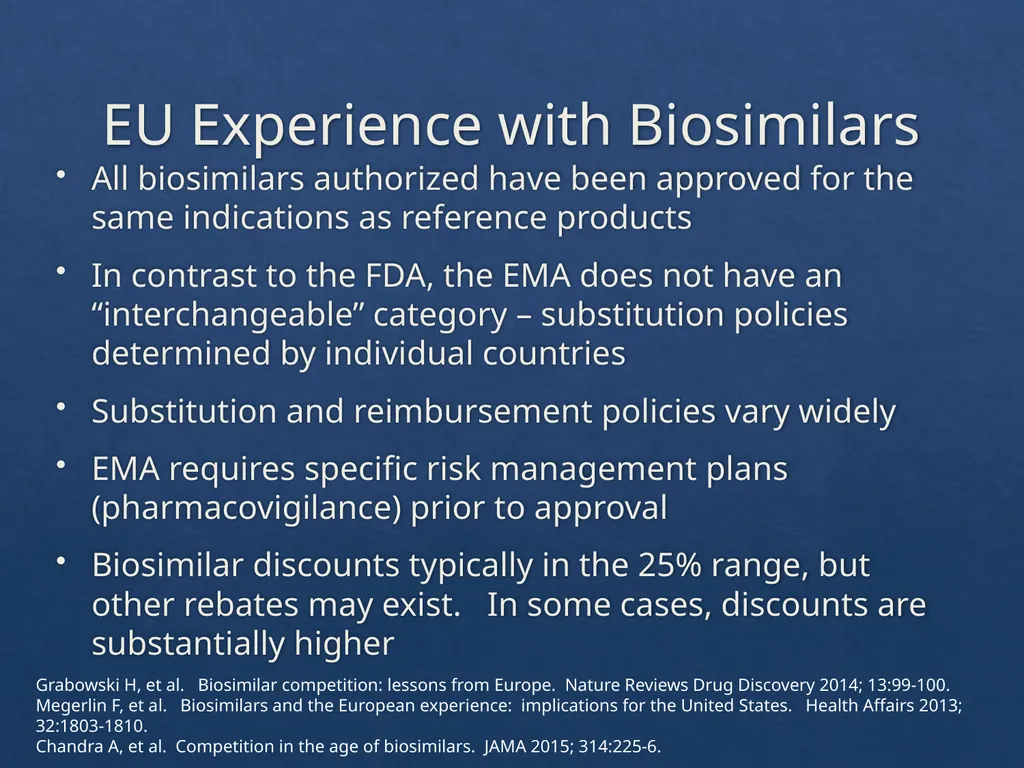
EU Experience with Biosimilars All biosimilars authorized have been approved for the same indications as reference products
In contrast to the FDA, the EMA does not have an “interchangeable” category – substitution policies determined by individual countries
Substitution and reimbursement policies vary widely
EMA requires specific risk management plans (pharmacovigilance) prior to approval
Biosimilar discounts typically in the 25% range, but other rebates may exist. In some cases, discounts are substantially higher Grabowski H, et al. Biosimilar competition: lessons from Europe. Nature Reviews Drug Discovery 2014; 13:99-100.
Megerlin F, et al. Biosimilars and the European experience: implications for the United States. Health Affairs 2013; 32:1803-1810.
Chandra A, et al. Competition in the age of biosimilars. JAMA 2015; 314:225-6.<br>
31
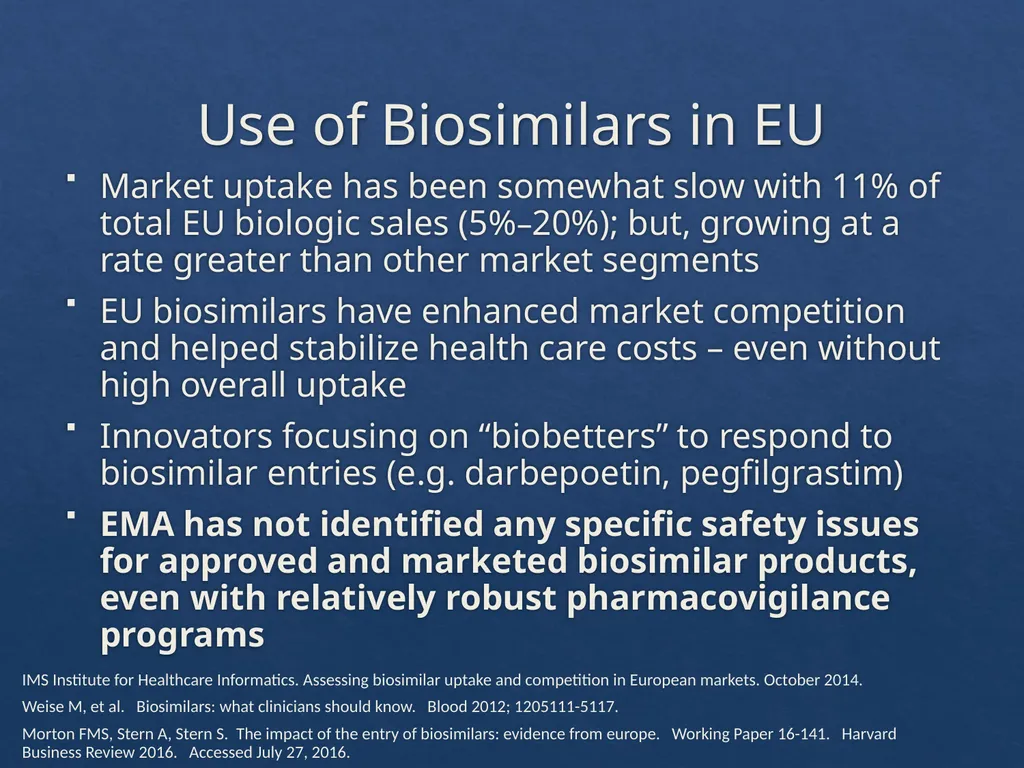
Use of Biosimilars in EU Market uptake has been somewhat slow with 11% of total EU biologic sales (5%–20%); but, growing at a rate greater than other market segments
EU biosimilars have enhanced market competition and helped stabilize health care costs – even without high overall uptake
Innovators focusing on “biobetters” to respond to biosimilar entries (e.g. darbepoetin, pegfilgrastim)
EMA has not identified any specific safety issues for approved and marketed biosimilar products, even with relatively robust pharmacovigilance programs IMS Institute for Healthcare Informatics. Assessing biosimilar uptake and competition in European markets. October 2014.
Weise M, et al. Biosimilars: what clinicians should know. Blood 2012; 1205111-5117.
Morton FMS, Stern A, Stern S. The impact of the entry of biosimilars: evidence from europe. Working Paper 16-141. Harvard Business Review 2016. Accessed July 27, 2016.<br>
32
As of today, which biosimilars have been approved for use in the US? Which are nearing approval?<br>
33
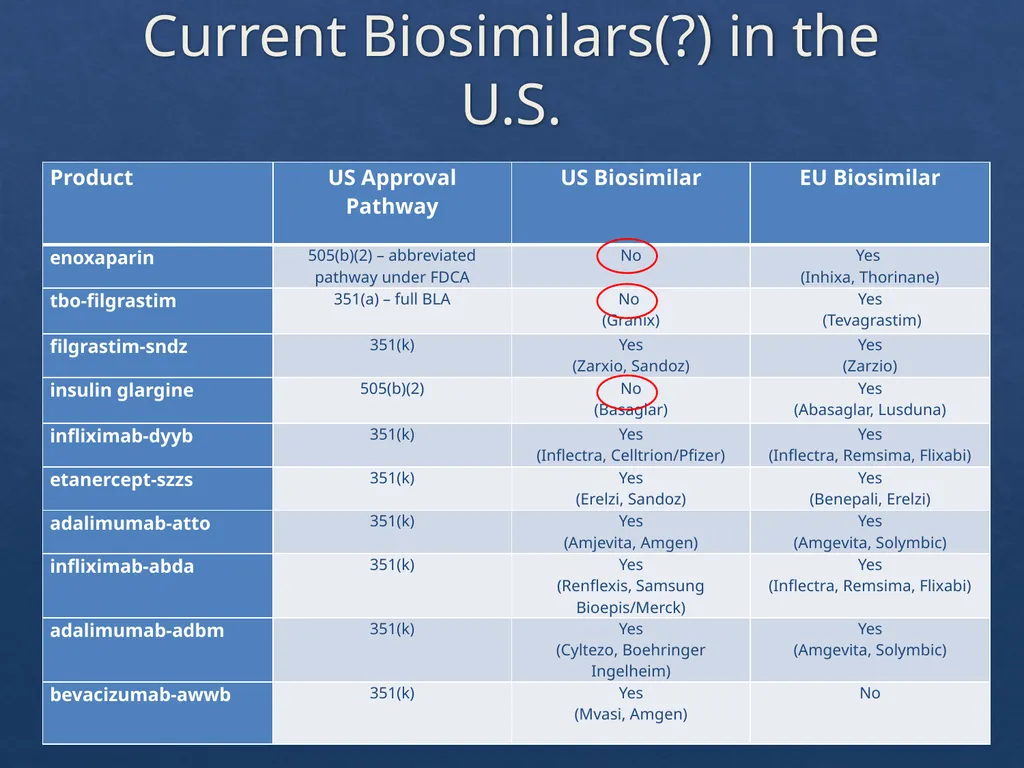
Current Biosimilars(?) in the U.S.<br>
34
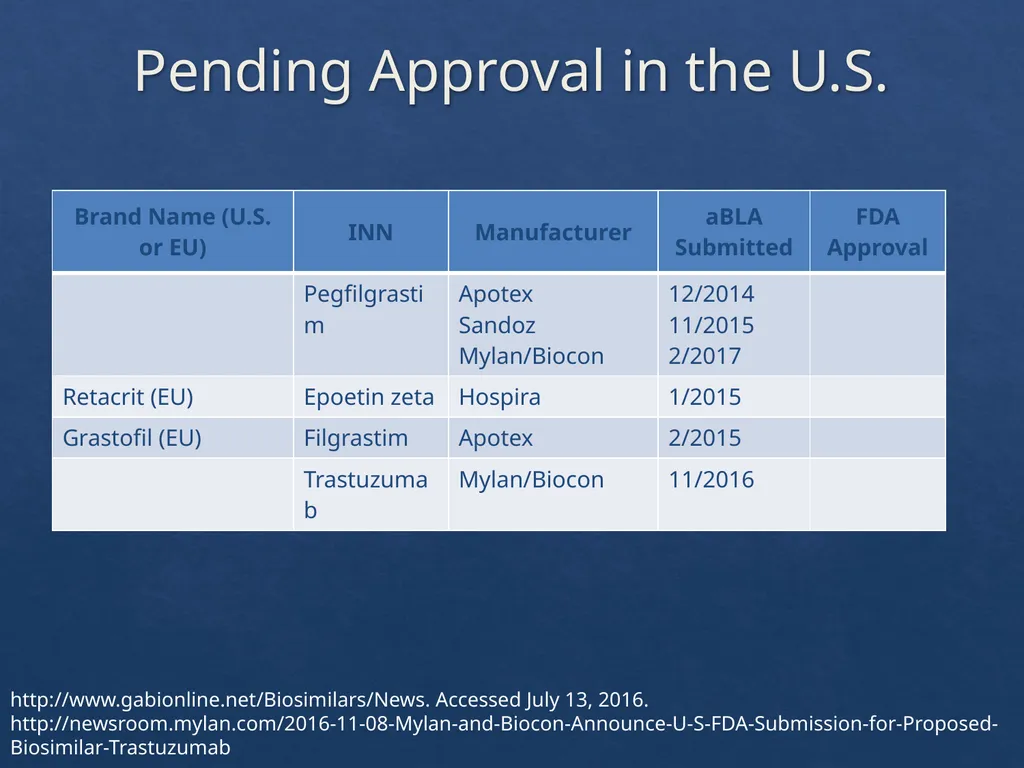
Pending Approval in the U.S. http://www.gabionline.net/Biosimilars/News. Accessed July 13, 2016.
http://newsroom.mylan.com/2016-11-08-Mylan-and-Biocon-Announce-U-S-FDA-Submission-for-Proposed-Biosimilar-Trastuzumab<br>
http://newsroom.mylan.com/2016-11-08-Mylan-and-Biocon-Announce-U-S-FDA-Submission-for-Proposed-Biosimilar-Trastuzumab<br>
35
What should we expect/consider about the adoption of biosimilars in formularies, drug plans?<br>
36
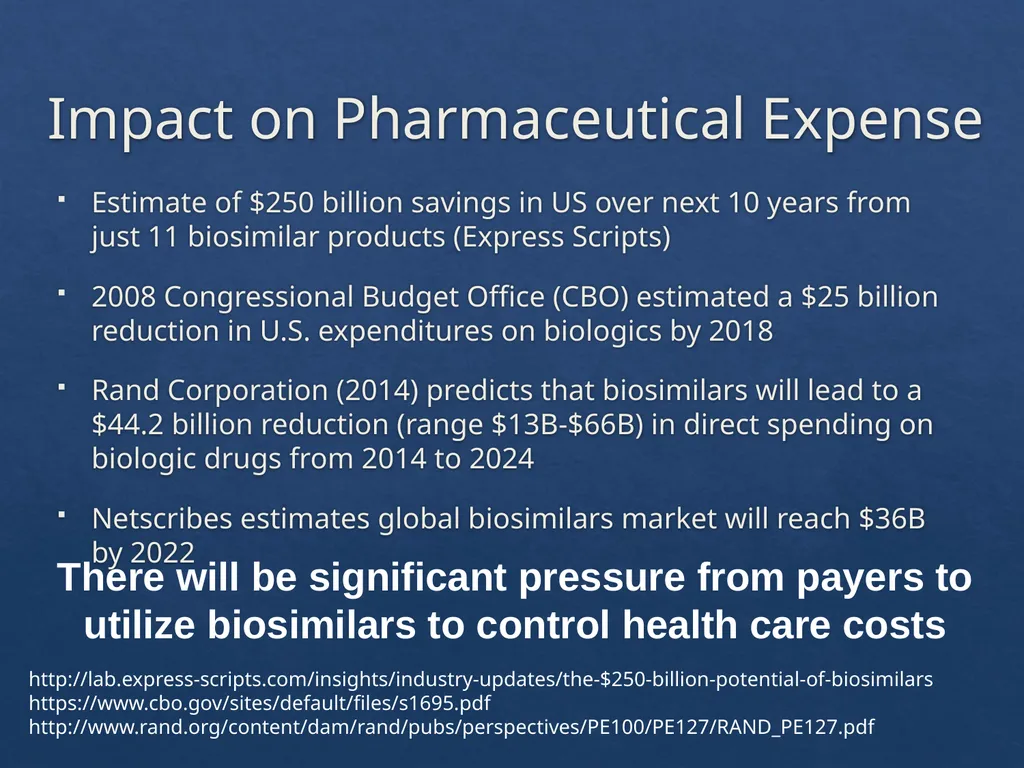
Impact on Pharmaceutical Expense Estimate of $250 billion savings in US over next 10 years from just 11 biosimilar products (Express Scripts)
2008 Congressional Budget Office (CBO) estimated a $25 billion reduction in U.S. expenditures on biologics by 2018
Rand Corporation (2014) predicts that biosimilars will lead to a $44.2 billion reduction (range $13B-$66B) in direct spending on biologic drugs from 2014 to 2024
Netscribes estimates global biosimilars market will reach $36B by 2022 There will be significant pressure from payers to utilize biosimilars to control health care costs http://lab.express-scripts.com/insights/industry-updates/the-$250-billion-potential-of-biosimilars
https://www.cbo.gov/sites/default/files/s1695.pdf
http://www.rand.org/content/dam/rand/pubs/perspectives/PE100/PE127/RAND_PE127.pdf<br>
37
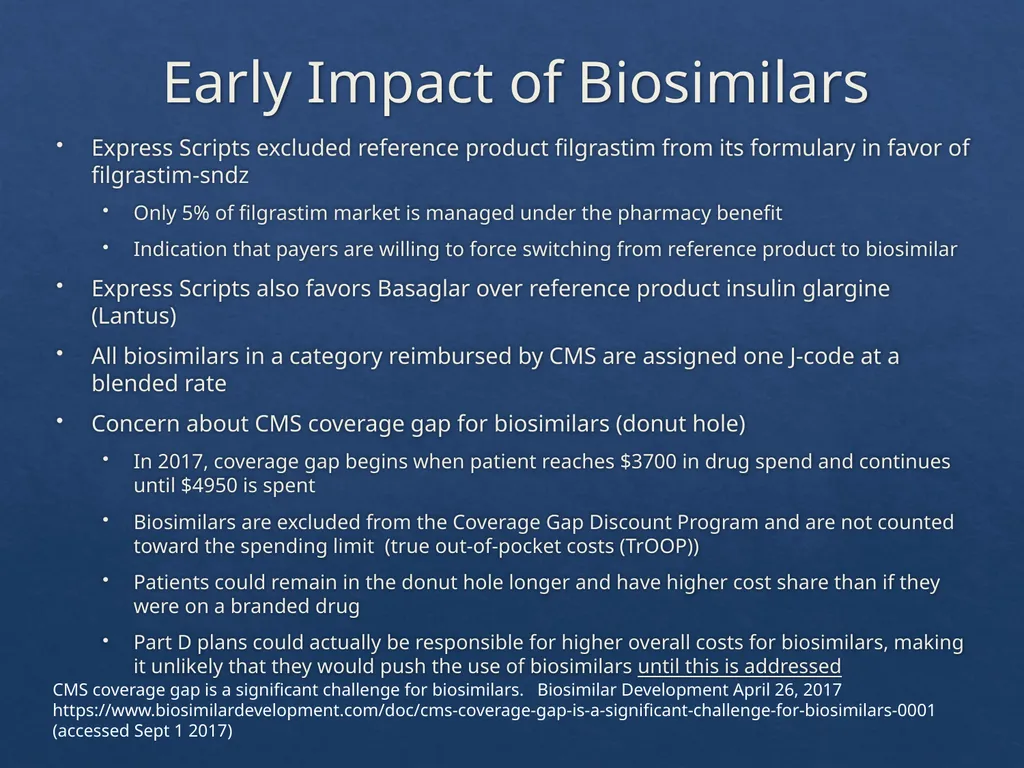
Early Impact of Biosimilars Express Scripts excluded reference product filgrastim from its formulary in favor of filgrastim-sndz
Only 5% of filgrastim market is managed under the pharmacy benefit
Indication that payers are willing to force switching from reference product to biosimilar
Express Scripts also favors Basaglar over reference product insulin glargine (Lantus)
All biosimilars in a category reimbursed by CMS are assigned one J-code at a blended rate
Concern about CMS coverage gap for biosimilars (donut hole)
In 2017, coverage gap begins when patient reaches $3700 in drug spend and continues until $4950 is spent
Biosimilars are excluded from the Coverage Gap Discount Program and are not counted toward the spending limit (true out-of-pocket costs (TrOOP))
Patients could remain in the donut hole longer and have higher cost share than if they were on a branded drug
Part D plans could actually be responsible for higher overall costs for biosimilars, making it unlikely that they would push the use of biosimilars until this is addressed CMS coverage gap is a significant challenge for biosimilars. Biosimilar Development April 26, 2017 https://www.biosimilardevelopment.com/doc/cms-coverage-gap-is-a-significant-challenge-for-biosimilars-0001 (accessed Sept 1 2017)<br>
38
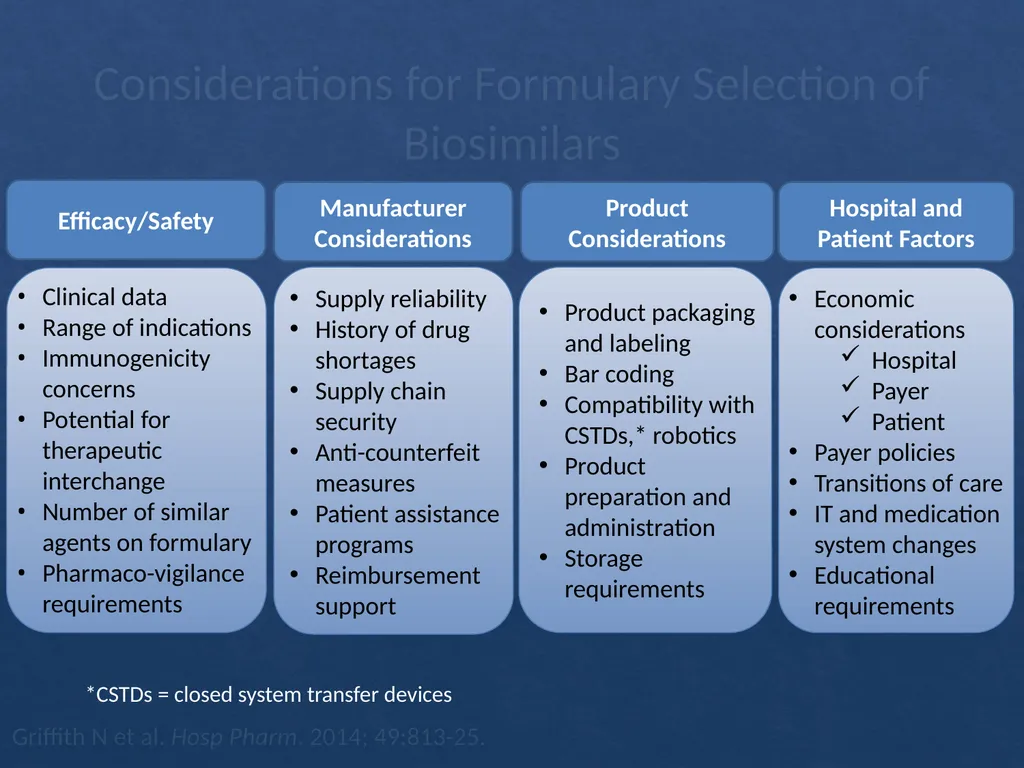
Manufacturer Considerations Considerations for Formulary Selection of Biosimilars Griffith N et al. Hosp Pharm. 2014; 49:813-25. Clinical data
Range of indications
Immunogenicity concerns
Potential for therapeutic interchange
Number of similar agents on formulary
Pharmaco-vigilance requirements Supply reliability
History of drug shortages
Supply chain security
Anti-counterfeit measures
Patient assistance programs
Reimbursement support Product packaging and labeling
Bar coding
Compatibility with CSTDs,* robotics
Product preparation and administration
Storage requirements Economic considerations
Hospital
Payer
Patient
Payer policies
Transitions of care
IT and medication system changes
Educational requirements Efficacy/Safety Product Considerations Hospital and Patient Factors *CSTDs = closed system transfer devices<br>
39
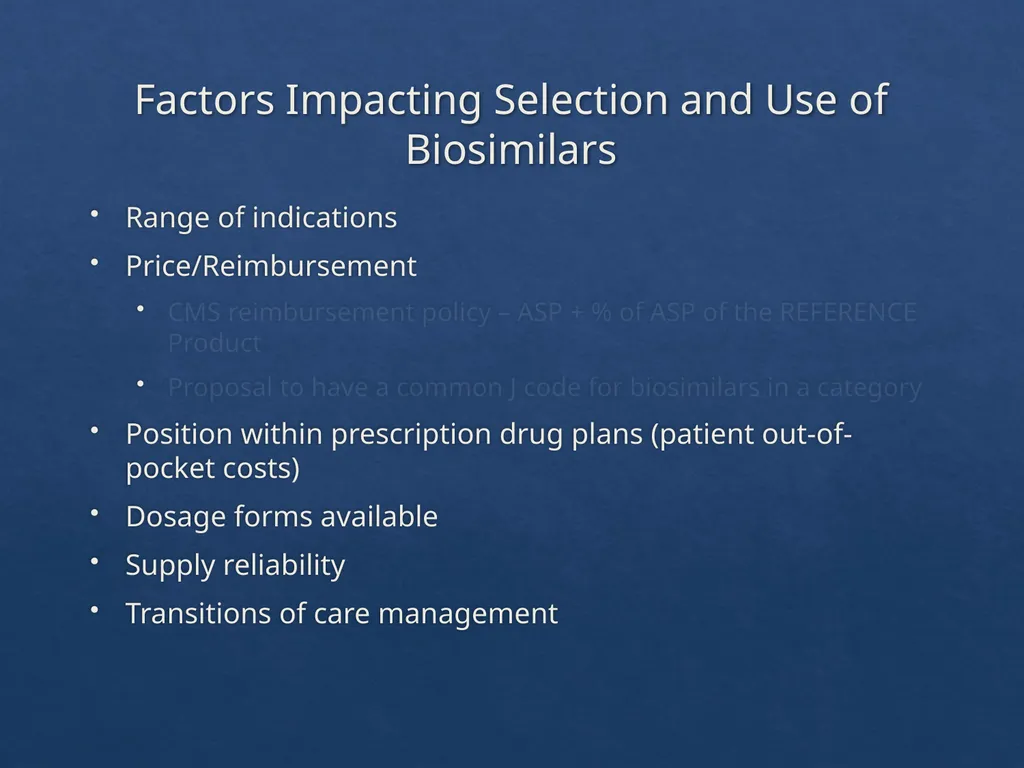
Factors Impacting Selection and Use of Biosimilars Range of indications
Price/Reimbursement
CMS reimbursement policy – ASP + % of ASP of the REFERENCE Product
Proposal to have a common J code for biosimilars in a category
Position within prescription drug plans (patient out-of-pocket costs)
Dosage forms available
Supply reliability
Transitions of care management<br>
Price/Reimbursement
CMS reimbursement policy – ASP + % of ASP of the REFERENCE Product
Proposal to have a common J code for biosimilars in a category
Position within prescription drug plans (patient out-of-pocket costs)
Dosage forms available
Supply reliability
Transitions of care management<br>
40
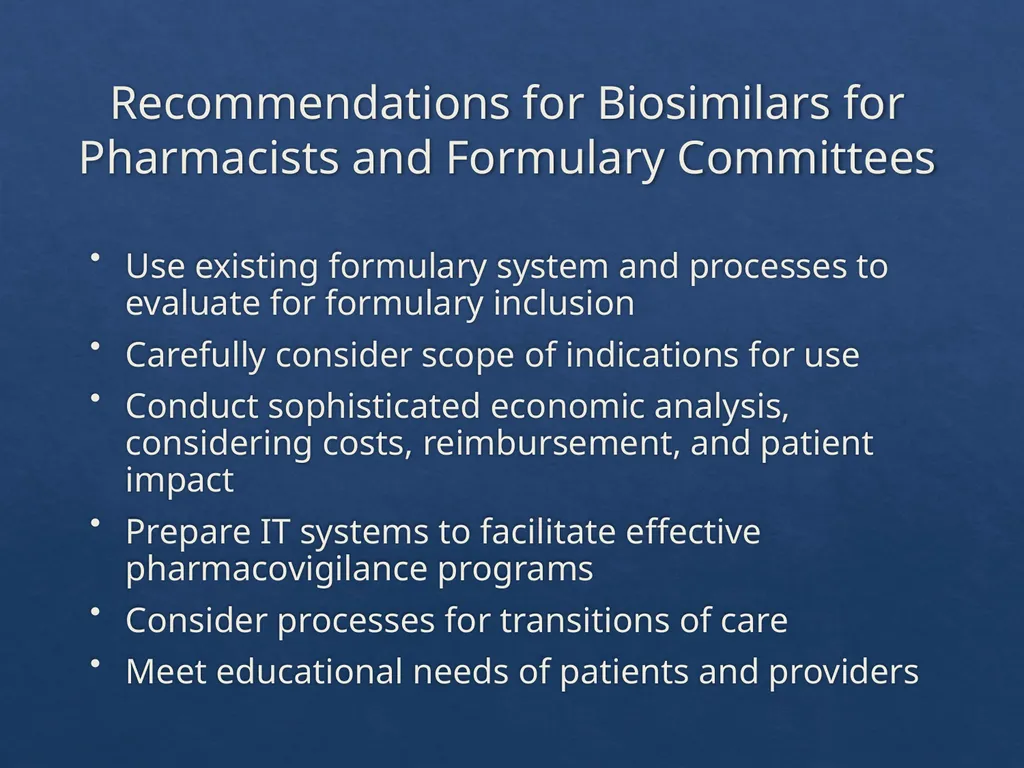
Recommendations for Biosimilars for Pharmacists and Formulary Committees Use existing formulary system and processes to evaluate for formulary inclusion
Carefully consider scope of indications for use
Conduct sophisticated economic analysis, considering costs, reimbursement, and patient impact
Prepare IT systems to facilitate effective pharmacovigilance programs
Consider processes for transitions of care
Meet educational needs of patients and providers<br>
41
What are the rules around substitution of a biosimilar for a reference biological product?<br>
42
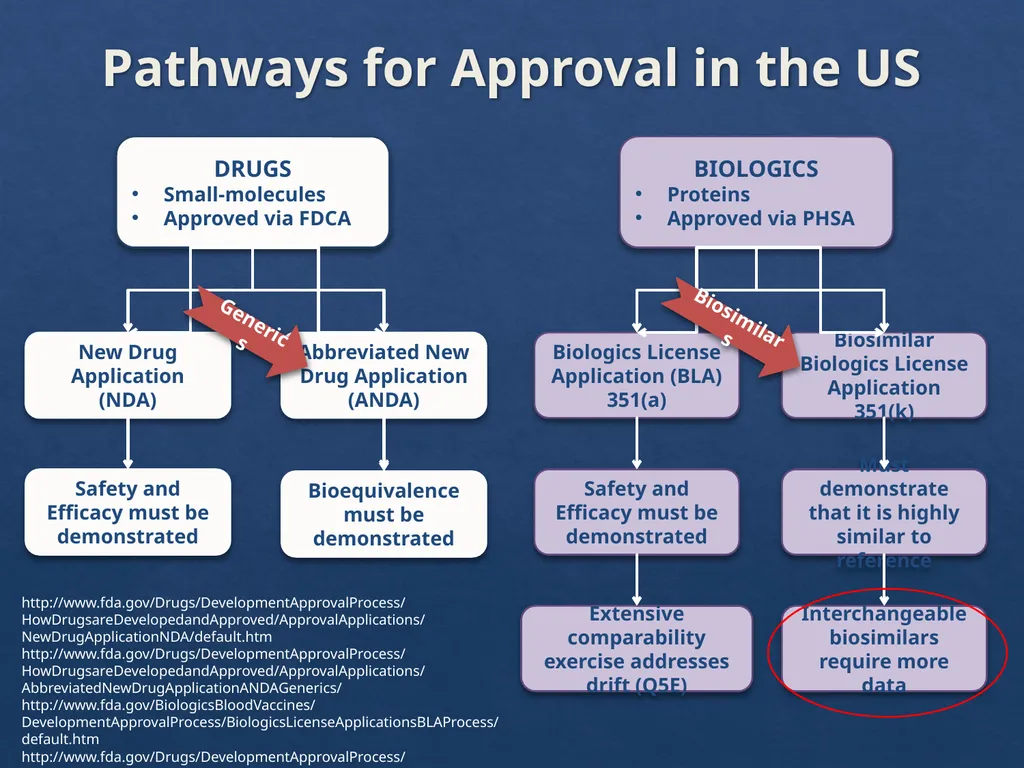
Pathways for Approval in the US DRUGS
Small-molecules
Approved via FDCA BIOLOGICS
Proteins
Approved via PHSA New Drug Application
(NDA) Safety and Efficacy must be demonstrated Abbreviated New Drug Application
(ANDA) Bioequivalence must be demonstrated Biologics License Application (BLA)
351(a) Safety and Efficacy must be demonstrated Biosimilar Biologics License Application 351(k) Must demonstrate that it is highly similar to reference Interchangeable biosimilars require more data Extensive comparability exercise addresses drift (Q5E) Generics Biosimilars http://www.fda.gov/Drugs/DevelopmentApprovalProcess/HowDrugsareDevelopedandApproved/ApprovalApplications/NewDrugApplicationNDA/default.htm
http://www.fda.gov/Drugs/DevelopmentApprovalProcess/HowDrugsareDevelopedandApproved/ApprovalApplications/AbbreviatedNewDrugApplicationANDAGenerics/
http://www.fda.gov/BiologicsBloodVaccines/DevelopmentApprovalProcess/BiologicsLicenseApplicationsBLAProcess/default.htm
http://www.fda.gov/Drugs/DevelopmentApprovalProcess/HowDrugsareDevelopedandApproved/ApprovalApplications/TherapeuticBiologicApplications/Biosimilars/ucm241720.htm<br>
43
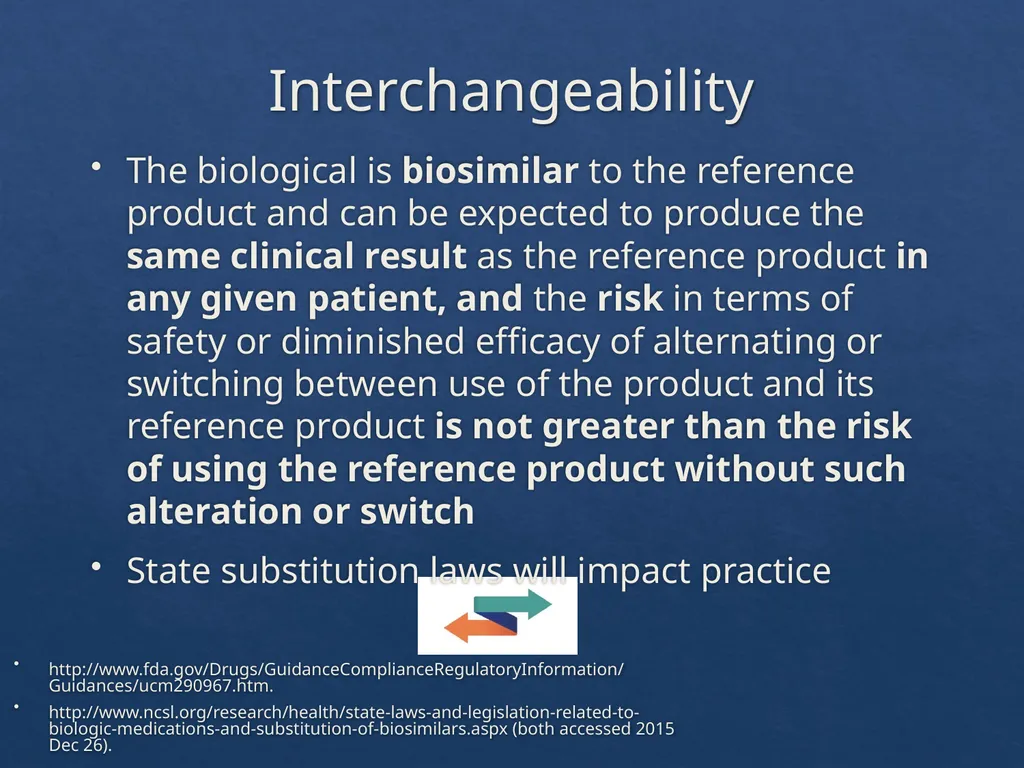
Interchangeability The biological is biosimilar to the reference product and can be expected to produce the same clinical result as the reference product in any given patient, and the risk in terms of safety or diminished efficacy of alternating or switching between use of the product and its reference product is not greater than the risk of using the reference product without such alteration or switch
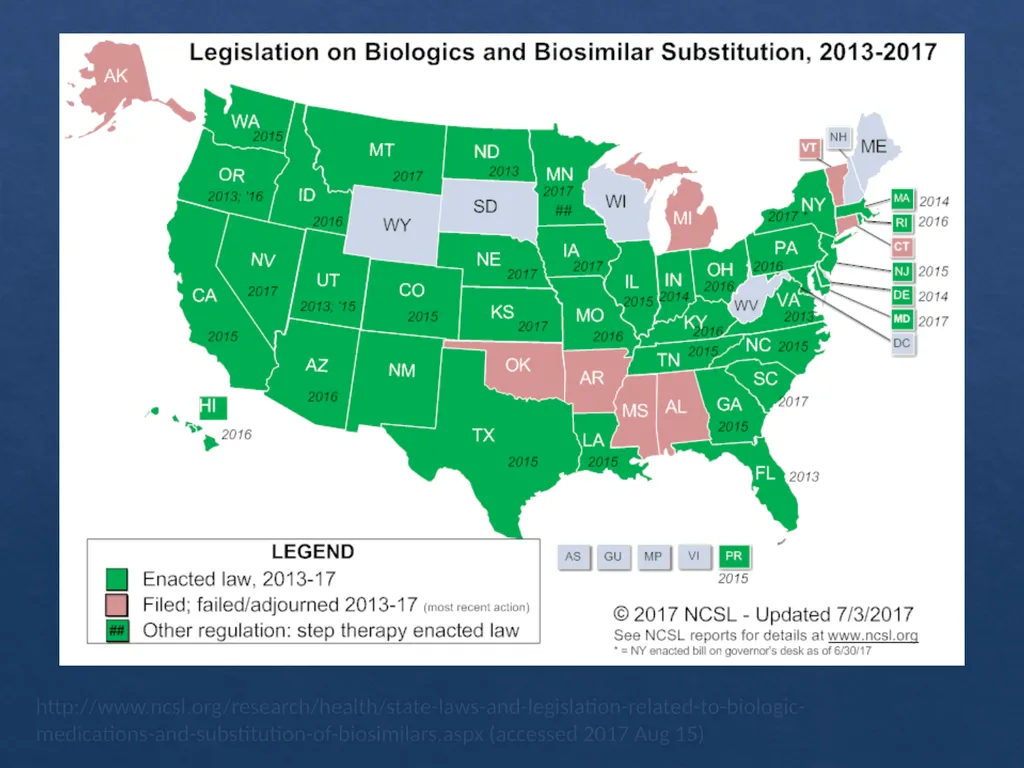
State substitution laws will impact practice http://www.fda.gov/Drugs/GuidanceComplianceRegulatoryInformation/Guidances/ucm290967.htm.
http://www.ncsl.org/research/health/state-laws-and-legislation-related-to-biologic-medications-and-substitution-of-biosimilars.aspx (both accessed 2015 Dec 26).<br>
State substitution laws will impact practice http://www.fda.gov/Drugs/GuidanceComplianceRegulatoryInformation/Guidances/ucm290967.htm.
http://www.ncsl.org/research/health/state-laws-and-legislation-related-to-biologic-medications-and-substitution-of-biosimilars.aspx (both accessed 2015 Dec 26).<br>
44
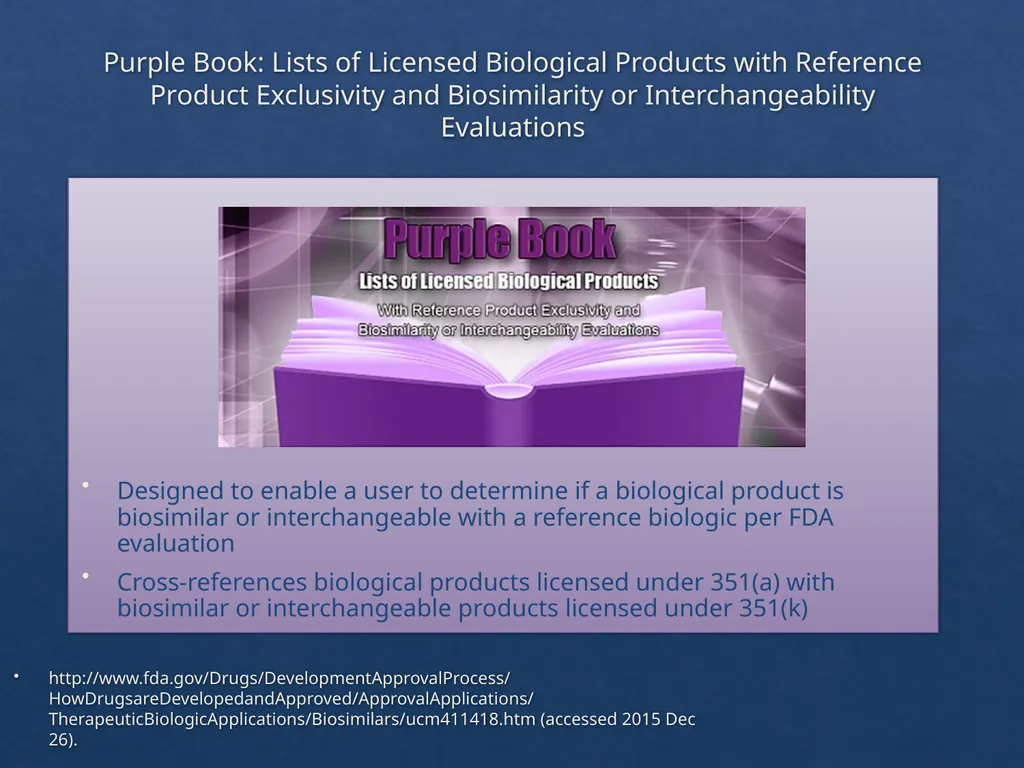
Purple Book: Lists of Licensed Biological Products with Reference Product Exclusivity and Biosimilarity or Interchangeability Evaluations Designed to enable a user to determine if a biological product is biosimilar or interchangeable with a reference biologic per FDA evaluation
Cross-references biological products licensed under 351(a) with biosimilar or interchangeable products licensed under 351(k) http://www.fda.gov/Drugs/DevelopmentApprovalProcess/HowDrugsareDevelopedandApproved/ApprovalApplications/TherapeuticBiologicApplications/Biosimilars/ucm411418.htm (accessed 2015 Dec 26).<br>
Cross-references biological products licensed under 351(a) with biosimilar or interchangeable products licensed under 351(k) http://www.fda.gov/Drugs/DevelopmentApprovalProcess/HowDrugsareDevelopedandApproved/ApprovalApplications/TherapeuticBiologicApplications/Biosimilars/ucm411418.htm (accessed 2015 Dec 26).<br>
45
http://www.ncsl.org/research/health/state-laws-and-legislation-related-to-biologic-medications-and-substitution-of-biosimilars.aspx (accessed 2017 Aug 15)<br>
46
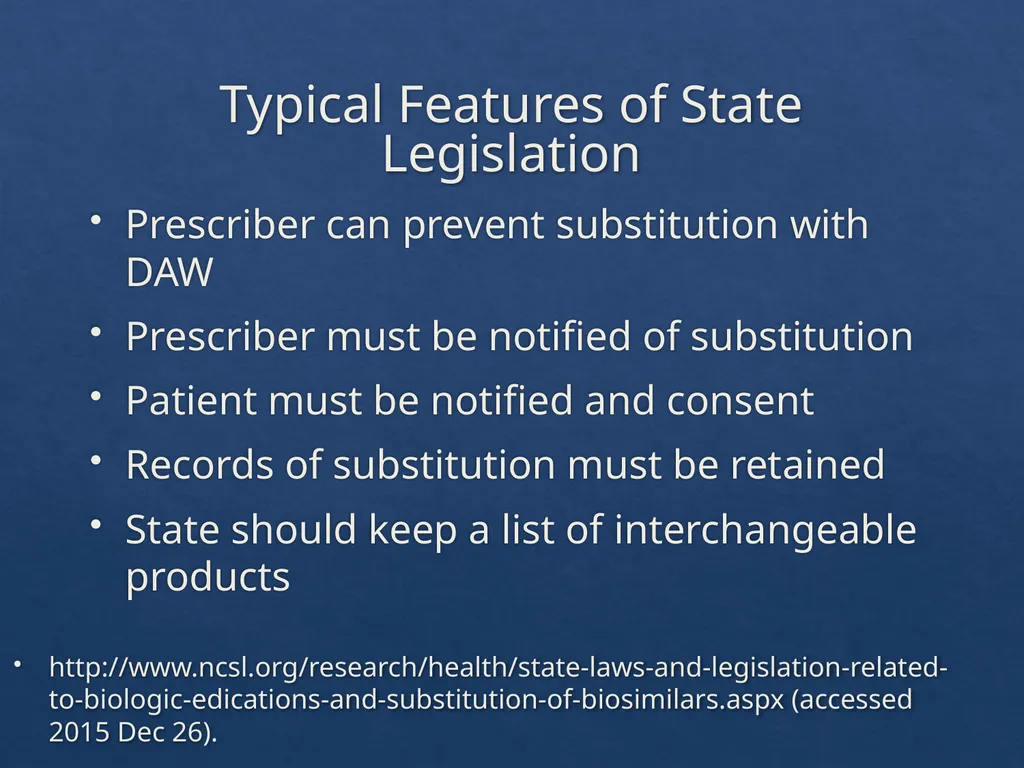
Typical Features of State Legislation Prescriber can prevent substitution with DAW
Prescriber must be notified of substitution
Patient must be notified and consent
Records of substitution must be retained
State should keep a list of interchangeable products http://www.ncsl.org/research/health/state-laws-and-legislation-related-to-biologic-edications-and-substitution-of-biosimilars.aspx (accessed 2015 Dec 26).<br>
47
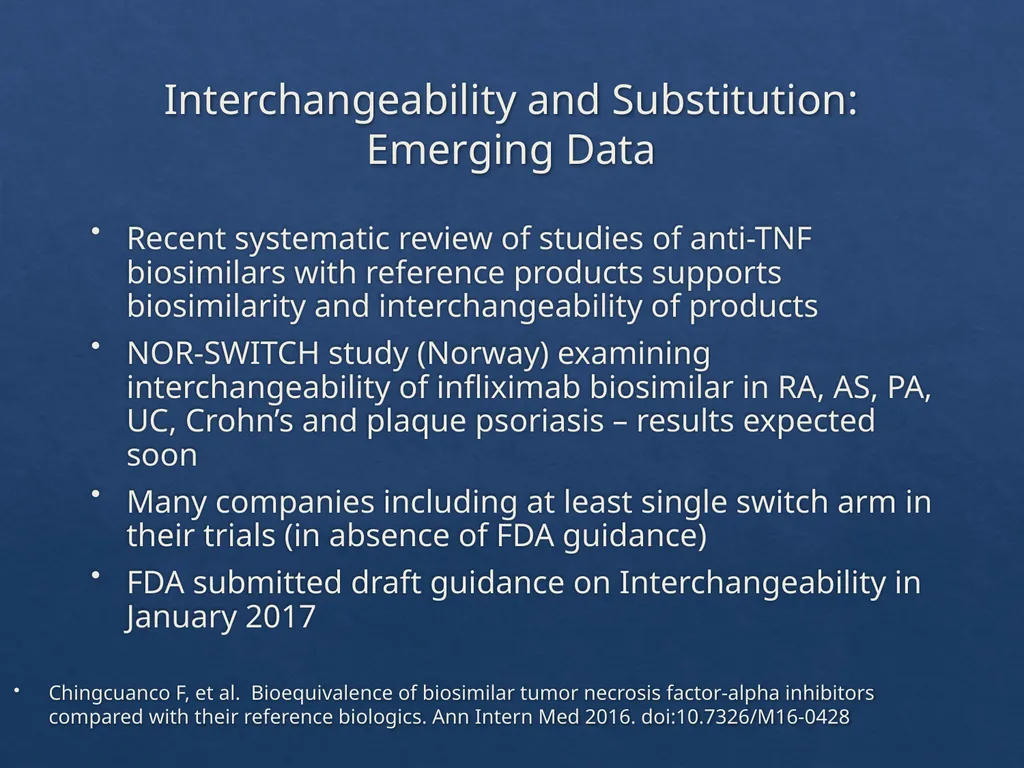
Interchangeability and Substitution: Emerging Data Recent systematic review of studies of anti-TNF biosimilars with reference products supports biosimilarity and interchangeability of products
NOR-SWITCH study (Norway) examining interchangeability of infliximab biosimilar in RA, AS, PA, UC, Crohn’s and plaque psoriasis – results expected soon
Many companies including at least single switch arm in their trials (in absence of FDA guidance)
FDA submitted draft guidance on Interchangeability in January 2017 Chingcuanco F, et al. Bioequivalence of biosimilar tumor necrosis factor-alpha inhibitors compared with their reference biologics. Ann Intern Med 2016. doi:10.7326/M16-0428<br>
48
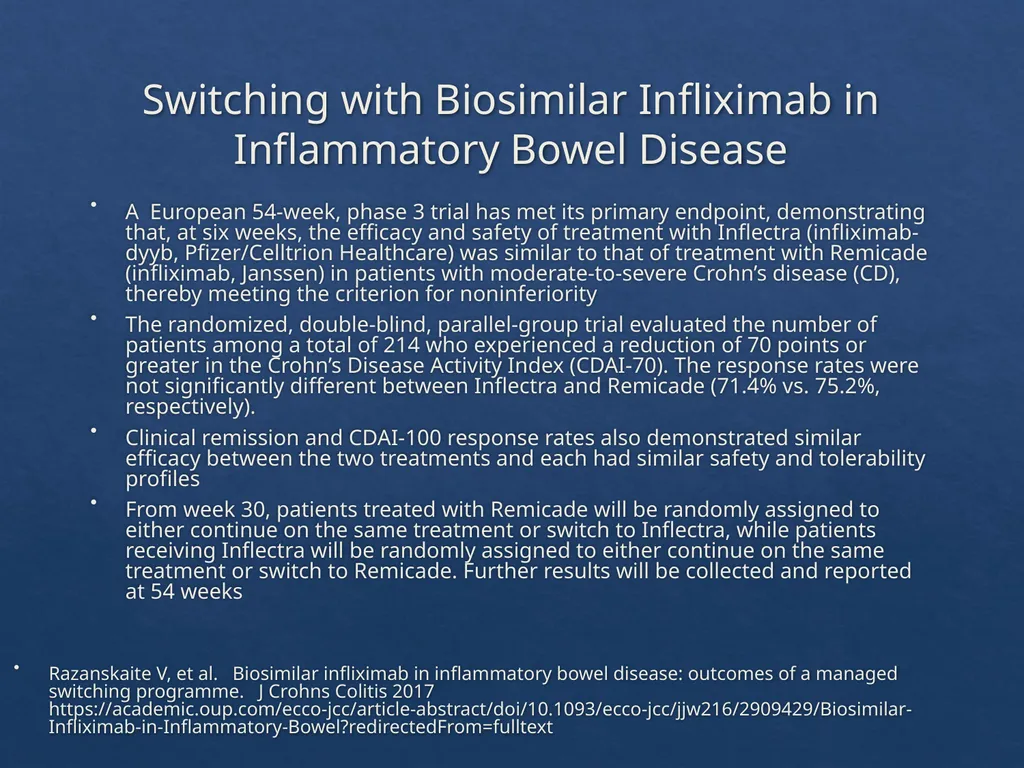
Switching with Biosimilar Infliximab in Inflammatory Bowel Disease A European 54-week, phase 3 trial has met its primary endpoint, demonstrating that, at six weeks, the efficacy and safety of treatment with Inflectra (infliximab-dyyb, Pfizer/Celltrion Healthcare) was similar to that of treatment with Remicade (infliximab, Janssen) in patients with moderate-to-severe Crohn’s disease (CD), thereby meeting the criterion for noninferiority
The randomized, double-blind, parallel-group trial evaluated the number of patients among a total of 214 who experienced a reduction of 70 points or greater in the Crohn’s Disease Activity Index (CDAI-70). The response rates were not significantly different between Inflectra and Remicade (71.4% vs. 75.2%, respectively).
Clinical remission and CDAI-100 response rates also demonstrated similar efficacy between the two treatments and each had similar safety and tolerability profiles
From week 30, patients treated with Remicade will be randomly assigned to either continue on the same treatment or switch to Inflectra, while patients receiving Inflectra will be randomly assigned to either continue on the same treatment or switch to Remicade. Further results will be collected and reported at 54 weeks Razanskaite V, et al. Biosimilar infliximab in inflammatory bowel disease: outcomes of a managed switching programme. J Crohns Colitis 2017 https://academic.oup.com/ecco-jcc/article-abstract/doi/10.1093/ecco-jcc/jjw216/2909429/Biosimilar-Infliximab-in-Inflammatory-Bowel?redirectedFrom=fulltext<br>
49
I’ve seen a lot of opinions about the naming of biosimilars. Why the interest in this? What is the FDA guidance?<br>
50
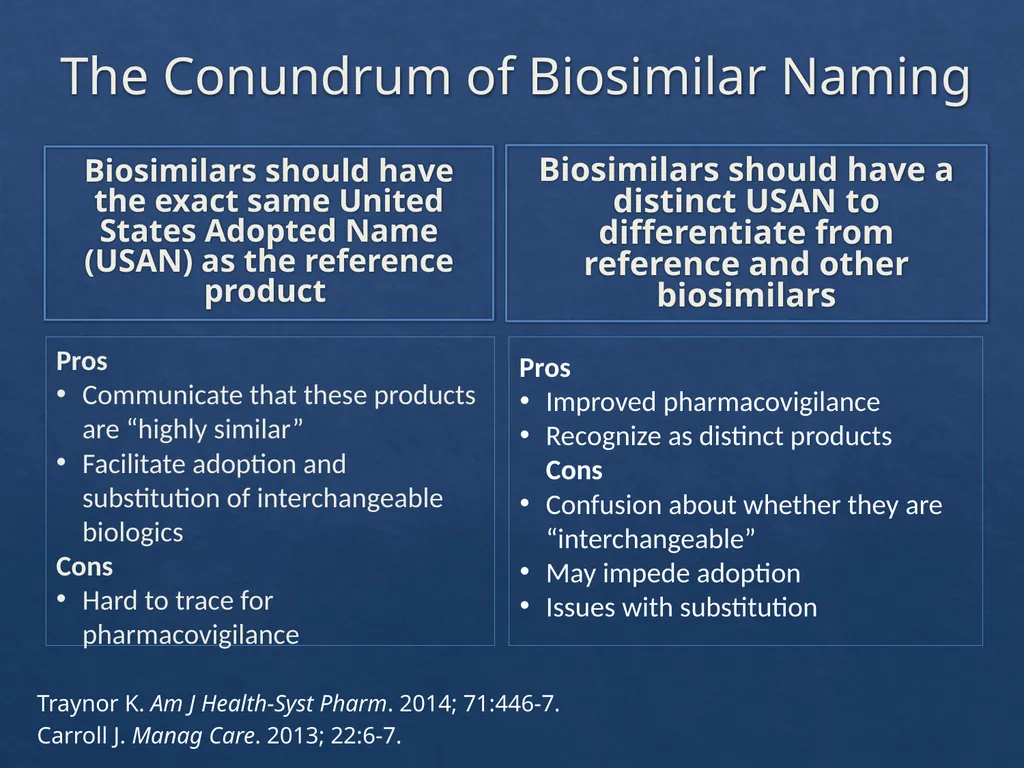
The Conundrum of Biosimilar Naming Biosimilars should have the exact same United States Adopted Name (USAN) as the reference product Biosimilars should have a distinct USAN to differentiate from reference and other biosimilars Pros
Communicate that these products are “highly similar”
Facilitate adoption and substitution of interchangeable biologics
Cons
Hard to trace for pharmacovigilance Pros
Improved pharmacovigilance
Recognize as distinct products
Cons
Confusion about whether they are “interchangeable”
May impede adoption
Issues with substitution Traynor K. Am J Health-Syst Pharm. 2014; 71:446-7.
Carroll J. Manag Care. 2013; 22:6-7.<br>
51
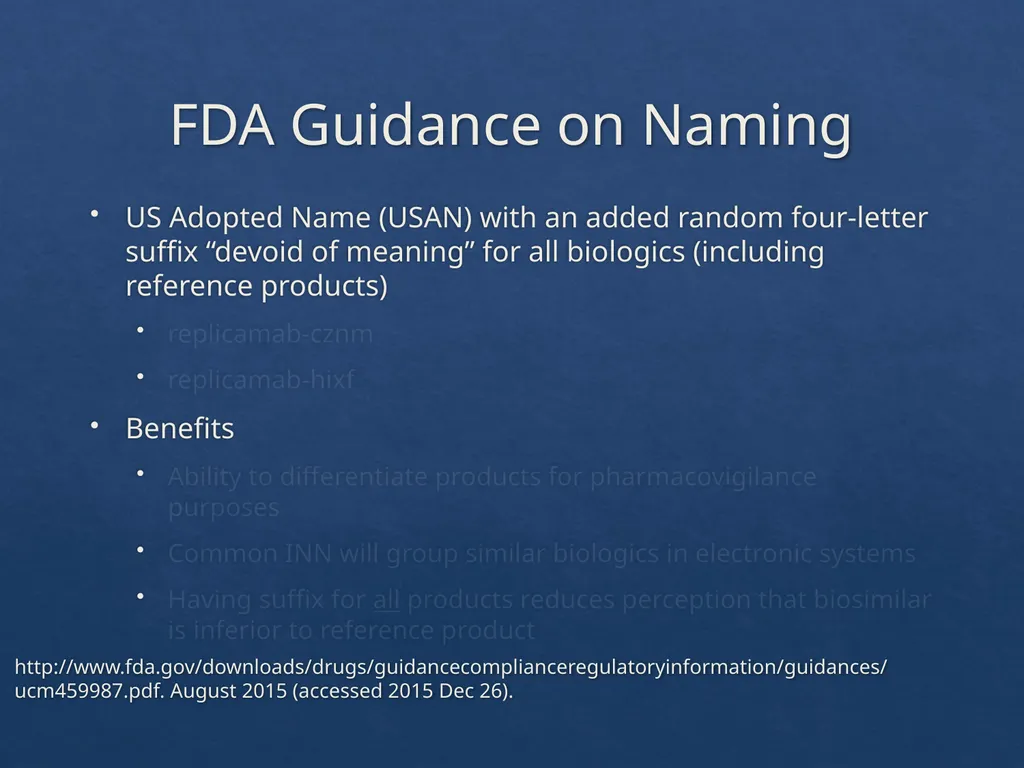
FDA Guidance on Naming US Adopted Name (USAN) with an added random four-letter suffix “devoid of meaning” for all biologics (including reference products)
replicamab-cznm
replicamab-hixf
Benefits
Ability to differentiate products for pharmacovigilance purposes
Common INN will group similar biologics in electronic systems
Having suffix for all products reduces perception that biosimilar is inferior to reference product http://www.fda.gov/downloads/drugs/guidancecomplianceregulatoryinformation/guidances/ucm459987.pdf. August 2015 (accessed 2015 Dec 26).<br>
52
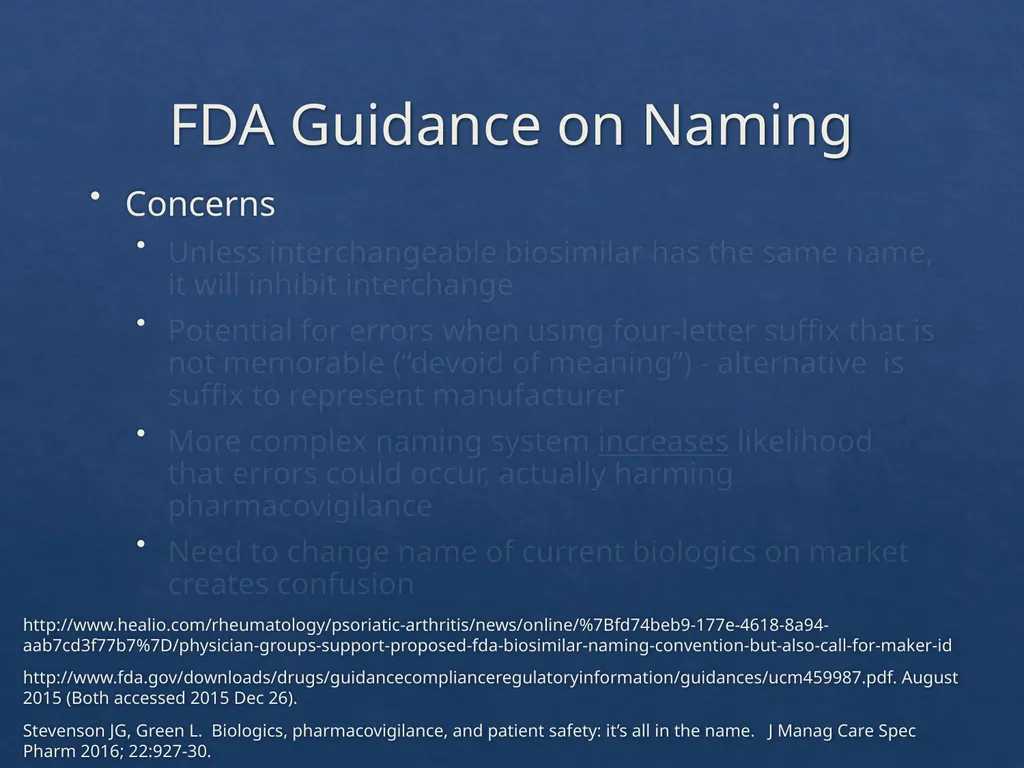
FDA Guidance on Naming Concerns
Unless interchangeable biosimilar has the same name, it will inhibit interchange
Potential for errors when using four-letter suffix that is not memorable (“devoid of meaning”) - alternative is suffix to represent manufacturer
More complex naming system increases likelihood that errors could occur, actually harming pharmacovigilance
Need to change name of current biologics on market creates confusion http://www.healio.com/rheumatology/psoriatic-arthritis/news/online/%7Bfd74beb9-177e-4618-8a94-aab7cd3f77b7%7D/physician-groups-support-proposed-fda-biosimilar-naming-convention-but-also-call-for-maker-id
http://www.fda.gov/downloads/drugs/guidancecomplianceregulatoryinformation/guidances/ucm459987.pdf. August 2015 (Both accessed 2015 Dec 26).
Stevenson JG, Green L. Biologics, pharmacovigilance, and patient safety: it’s all in the name. J Manag Care Spec Pharm 2016; 22:927-30.<br>
53
Resources for Pharmacists and Technicians ASHP Resource Center on Biosimilars
http://www.ashp.org/menu/PracticePolicy/ResourceCenters/Emerging-Sciences/Biosimilars.aspx (accessed 2016 July 30).
American Journal of Managed Care Resource Center
http://www.ajmc.com/resource-center/biosimilars (accessed 2016 July 30).
Academy of Managed Care Pharmacy Resource Center
https://www.biosimilarsresourcecenter.org/ (accessed 2016 July 30)
Lucio SD, Stevenson JG, Hoffman JM. Biosimilars: implications for health-system pharmacists. Am J Health-Syst Pharm. 2013; 70:2004-17.
Stevenson JG, Popovian R, Jacobs I, et al. Biosimilars: practical considerations for pharmacists. Ann Pharmacother 2017; 51:590-602.<br>
54
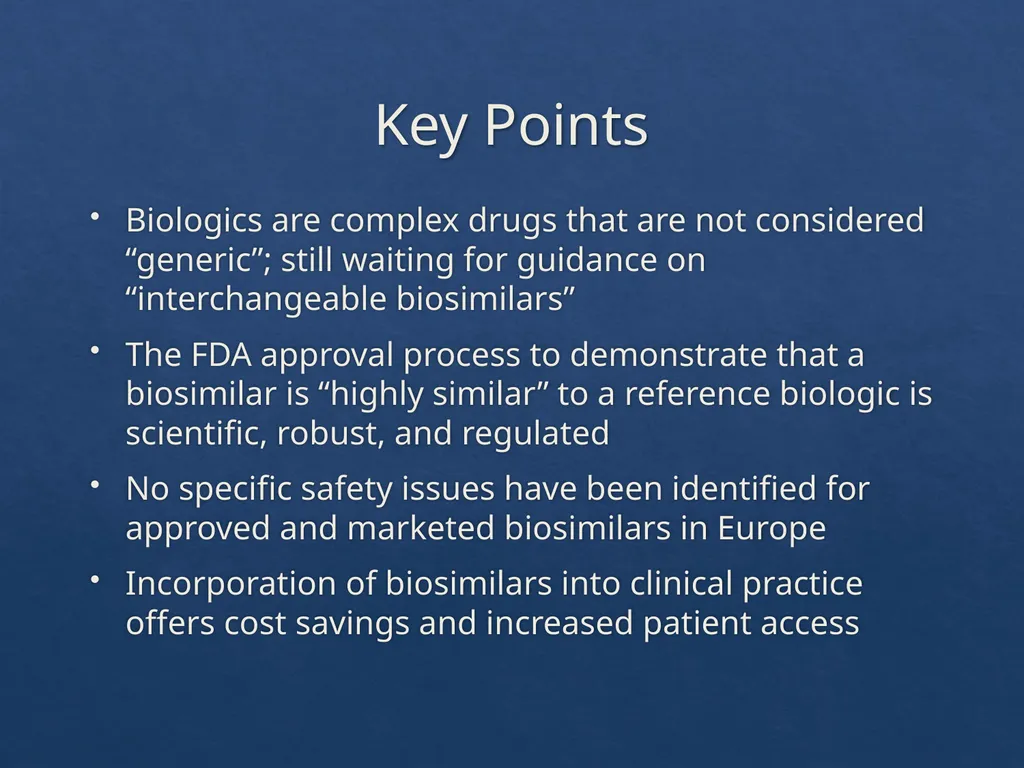
Key Points Biologics are complex drugs that are not considered “generic”; still waiting for guidance on “interchangeable biosimilars”
The FDA approval process to demonstrate that a biosimilar is “highly similar” to a reference biologic is scientific, robust, and regulated
No specific safety issues have been identified for approved and marketed biosimilars in Europe
Incorporation of biosimilars into clinical practice offers cost savings and increased patient access<br>
55
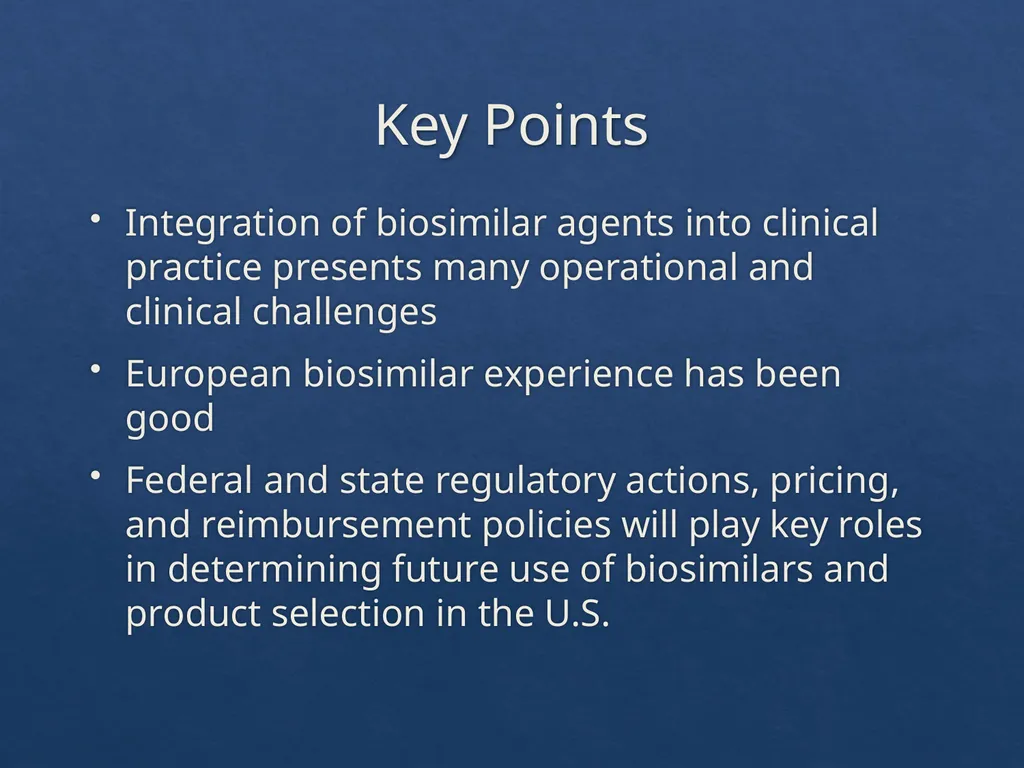
Key Points Integration of biosimilar agents into clinical practice presents many operational and clinical challenges
European biosimilar experience has been good
Federal and state regulatory actions, pricing, and reimbursement policies will play key roles in determining future use of biosimilars and product selection in the U.S.<br>
European biosimilar experience has been good
Federal and state regulatory actions, pricing, and reimbursement policies will play key roles in determining future use of biosimilars and product selection in the U.S.<br>
56
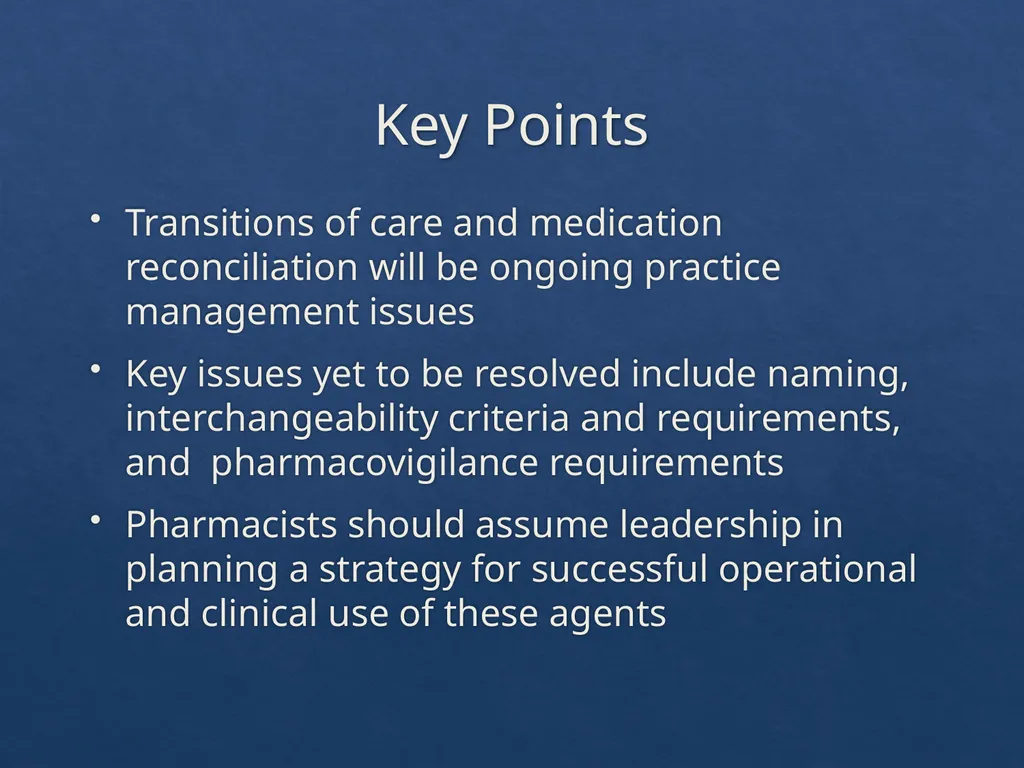
Key Points Transitions of care and medication reconciliation will be ongoing practice management issues
Key issues yet to be resolved include naming, interchangeability criteria and requirements, and pharmacovigilance requirements
Pharmacists should assume leadership in planning a strategy for successful operational and clinical use of these agents<br>
Key issues yet to be resolved include naming, interchangeability criteria and requirements, and pharmacovigilance requirements
Pharmacists should assume leadership in planning a strategy for successful operational and clinical use of these agents<br>
57
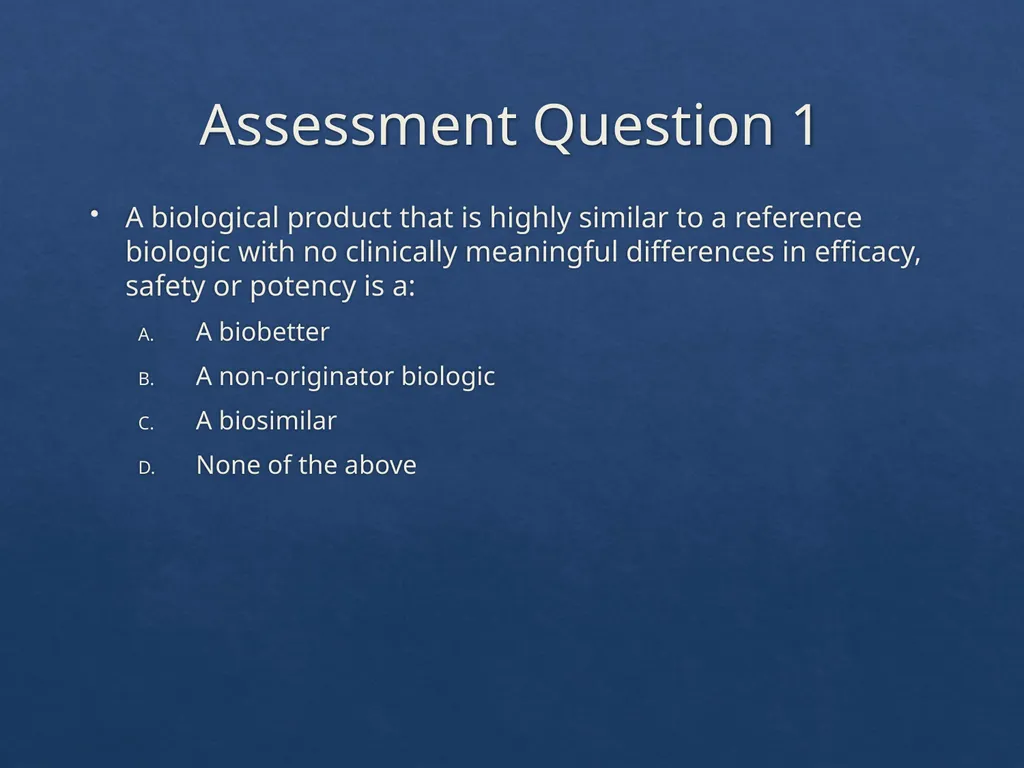
Assessment Question 1 A biological product that is highly similar to a reference biologic with no clinically meaningful differences in efficacy, safety or potency is a:
A biobetter
A non-originator biologic
A biosimilar
None of the above<br>
A biobetter
A non-originator biologic
A biosimilar
None of the above<br>
58
Assessment Question 2 Compared to the reference biological product, a biosimilar should be:
Identical
Highly similar
Functionally similar
Similar structure and function, but less immunogenic<br>
Identical
Highly similar
Functionally similar
Similar structure and function, but less immunogenic<br>
59
Assessment Question 3 According to FDA Guidance, what types of studies serve as the “foundation” for the regulatory approval of a biosimilar?
Structure/Function
Toxicity
Immunogenicity
Clinical Efficacy and Safety<br>
Structure/Function
Toxicity
Immunogenicity
Clinical Efficacy and Safety<br>
60
Questions<br>