
Cow’s Milk Protein Allergy: How to Wean Your Baby
YM
Published · 31 slides · 0 views

1 / 1

Description
Cows Milk Protein Allergy: How to Wean Your Baby milk free and reintroduce dairy Paediatric Dietitians, GRH 0300 422 5506 Outline of Session What is Cows Milk Protein Allergy? Symptoms and Diagnosis Lactose Intolerance or CMPA? Treatment
Related Topics
Share
Embed code
Download this presentation From Below
"Cow’s Milk Protein Allergy: How to Wean Your Baby" is the property of its rightful owner. Permission is granted to download and print the materials on this website for personal, non-commercial use only, and to display it on your personal computer provided you do not modify the materials and that you retain all copyright notices contained in the materials. By downloading content from our website, you accept the terms of this agreement.
Presentation Transcript
01
Cow’s Milk Protein Allergy:
How to Wean Your Baby milk free and reintroduce dairy Paediatric Dietitians, GRH
0300 422 5506<br>
0300 422 5506<br>
02
Outline of Session What is Cow’s Milk Protein Allergy?
Symptoms and Diagnosis
Lactose Intolerance or CMPA?
Treatment of Cow’s Milk Protein Allergy
Food Labelling
Cow’s Milk Free Weaning (Meal Ideas)
Introduction Of Other Common Allergenic Foods
Cow’s Milk Free Alternative Products
Reintroducing Cow’s Milk Back Into The Diet
Meeting Calcium Requirements & Vitamins and Minerals<br>
03
What is Cows milk allergy (CMPA) CMPA is an abnormal response by the bodys immune system in which proteins in a food(in this case cows milk) are recognised as a potential threat . This can then cause the immune system to become ‘sensitised’. When this happens, there is potential that when cow’s milk is consumed the immune system remembers this protein and may react to it by producing allergic symptoms. (Allergy UK)<br>
04
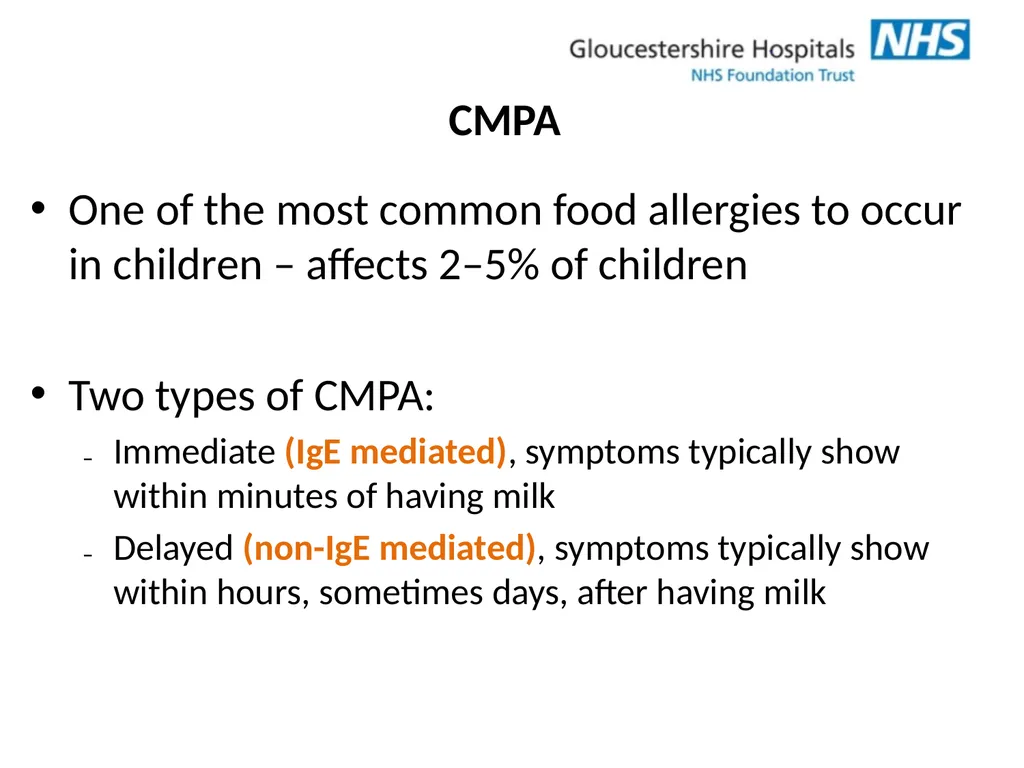
CMPA One of the most common food allergies to occur in children – affects 2–5% of children
Two types of CMPA:
Immediate (IgE mediated), symptoms typically show within minutes of having milk
Delayed (non-IgE mediated), symptoms typically show within hours, sometimes days, after having milk<br>
Two types of CMPA:
Immediate (IgE mediated), symptoms typically show within minutes of having milk
Delayed (non-IgE mediated), symptoms typically show within hours, sometimes days, after having milk<br>
05
Symptoms of Cow’s Milk Protein Allergy Diarrhoea or constipation, stomach ache, nausea, reflux or vomiting, blood or mucus in stools, wind, discomfort with feeding
Itchy skin rashes & eczema
Runny or blocked nose
Swelling of the face, eyes, lips
Swallowing or breathing difficulties (rare)<br>
Itchy skin rashes & eczema
Runny or blocked nose
Swelling of the face, eyes, lips
Swallowing or breathing difficulties (rare)<br>
06
Diagnosis of Cow’s Milk Protein Allergy Dependent on type of allergy Immediate reactions
(IgE mediated) Delayed reactions
(non-IgE mediated) Blood tests (RAST test)
Skin prick test Food exclusion &
reintroduction<br>
(IgE mediated) Delayed reactions
(non-IgE mediated) Blood tests (RAST test)
Skin prick test Food exclusion &
reintroduction<br>
07
Sure its CMPA? What is Lactose Intolerance? Body cannot digest the sugar in cow’s milk (lactose)
Often confused with cow’s milk protein allergy
An intolerance, not an allergy
Very rare – affects 1% of UK population
Can be temporary following an upset tummy/ gastro bug/antibiotics
Symptoms are very similar to cow’s milk protein allergy:
Diarrhoea, nausea & occasional vomiting, wind, tummy ache<br>
08
Breastfeeding Symptoms from non-IgE CMPA in exclusively breastfed babies is uncommon so its not a reason to stop
If your baby’s symptoms only began when you introduced a top-up infant formula try to revert back to breastfeeding/EBM only if possible
Non-IgE mediated CMPA can only be diagnosed through an elimination diet, followed by the reintroduction of cow’s milk into the breastfeeding mother’s diet (to confirm a return of symptoms).<br>
09
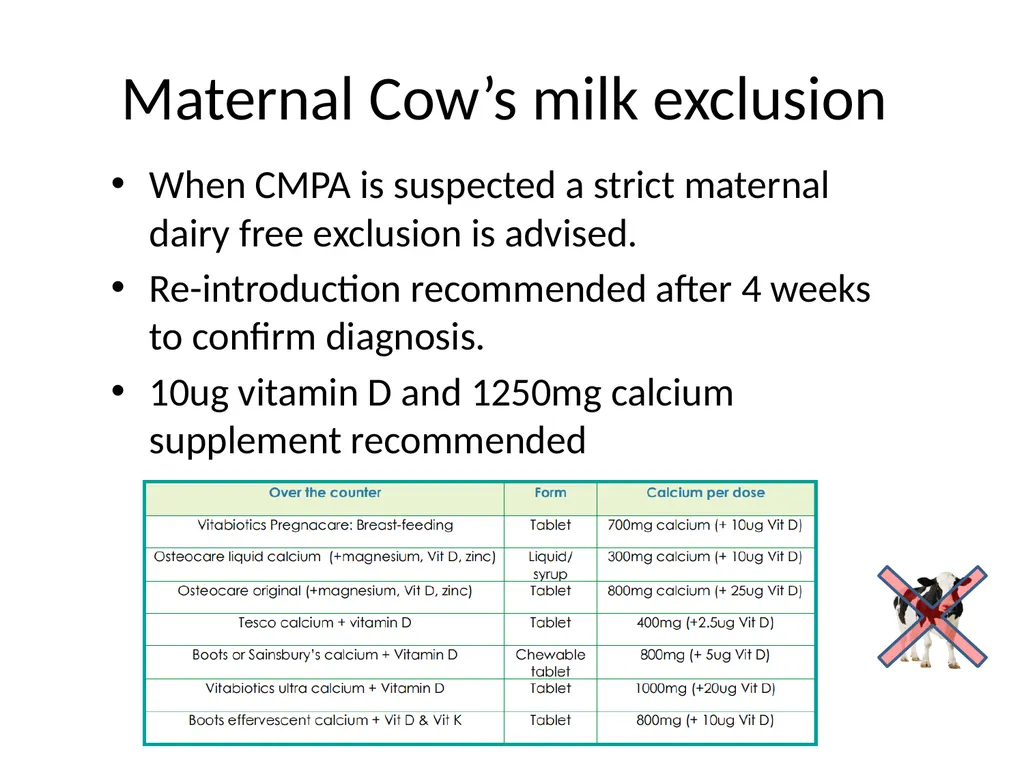
Maternal Cow’s milk exclusion When CMPA is suspected a strict maternal dairy free exclusion is advised.
Re-introduction recommended after 4 weeks to confirm diagnosis.
10ug vitamin D and 1250mg calcium supplement recommended<br>
Re-introduction recommended after 4 weeks to confirm diagnosis.
10ug vitamin D and 1250mg calcium supplement recommended<br>
10
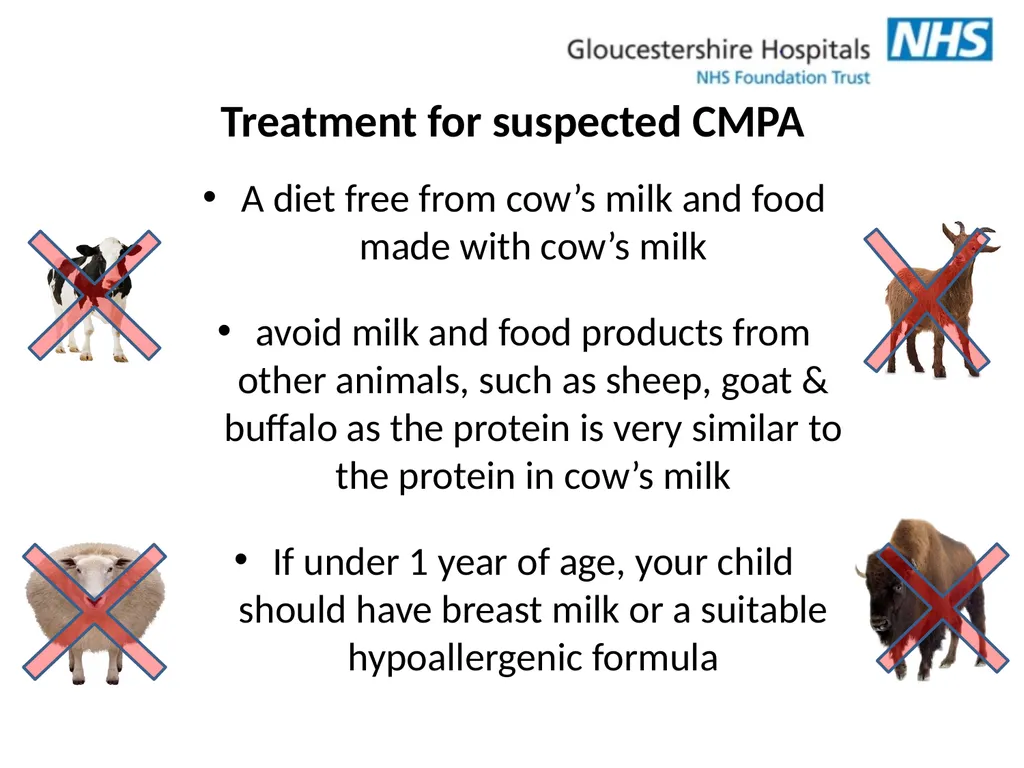
Treatment for suspected CMPA A diet free from cow’s milk and food made with cow’s milk
avoid milk and food products from other animals, such as sheep, goat & buffalo as the protein is very similar to the protein in cow’s milk
If under 1 year of age, your child should have breast milk or a suitable hypoallergenic formula<br>
avoid milk and food products from other animals, such as sheep, goat & buffalo as the protein is very similar to the protein in cow’s milk
If under 1 year of age, your child should have breast milk or a suitable hypoallergenic formula<br>
11
Soya Soya products can be introduced from 6 months of age.
There is a 50% chance that if your child has a CMPA they may react to soya. Symptoms will be similar.
If you suspect this then a 2 week period of avoidance with re-introduction is recommended.<br>
There is a 50% chance that if your child has a CMPA they may react to soya. Symptoms will be similar.
If you suspect this then a 2 week period of avoidance with re-introduction is recommended.<br>
12
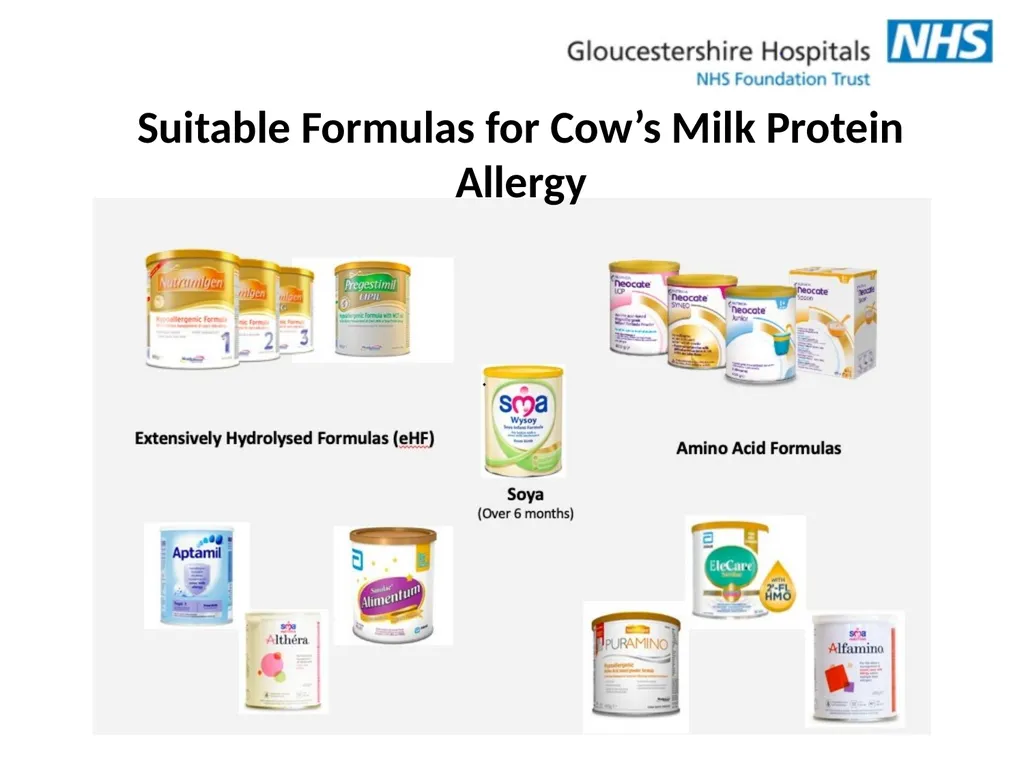
Suitable Formulas for Cow’s Milk Protein Allergy<br>
13
To follow a CM free diet, it is important to check food labels:
Pre-packed food
allergens are emphasised on the label, e.g. skimmed milk powder, hydrolysed casein (Milk), cream (from milk)
Foods without packaging/food served whilst you are out
written or verbal information on allergens needs to be provided by staff
‘May contain’ warnings
food may be contaminated with an allergen by accident
The law only covers allergens used as ingredients, not allergens that may be present following accidental contact
For medicines, always check with your pharmacist Food Labelling<br>
14
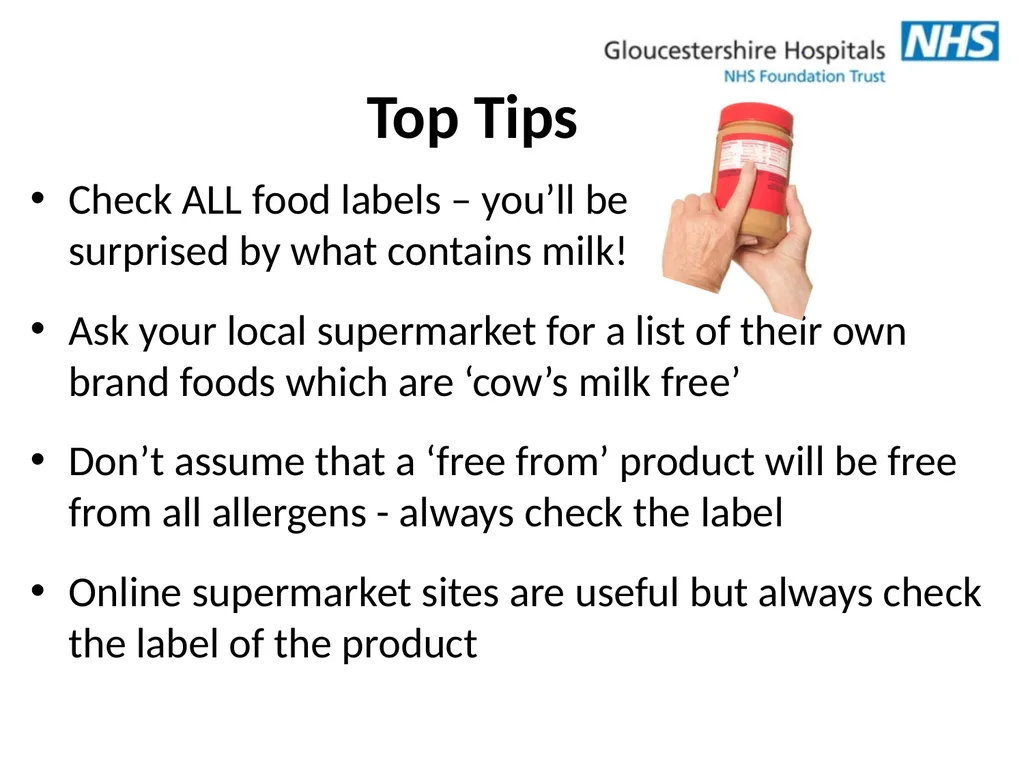
Check ALL food labels – you’ll be surprised by what contains milk!
Ask your local supermarket for a list of their own brand foods which are ‘cow’s milk free’
Don’t assume that a ‘free from’ product will be free from all allergens - always check the label
Online supermarket sites are useful but always check the label of the product Top Tips<br>
Ask your local supermarket for a list of their own brand foods which are ‘cow’s milk free’
Don’t assume that a ‘free from’ product will be free from all allergens - always check the label
Online supermarket sites are useful but always check the label of the product Top Tips<br>
15
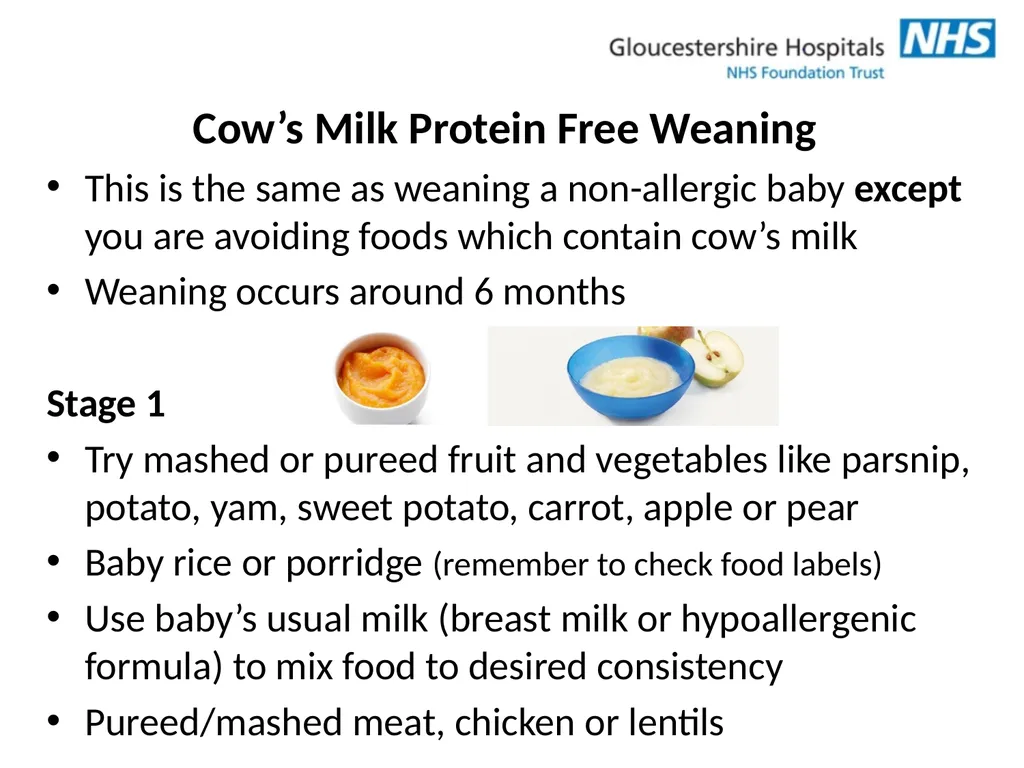
Cow’s Milk Protein Free Weaning This is the same as weaning a non-allergic baby except you are avoiding foods which contain cow’s milk
Weaning occurs around 6 months
Stage 1
Try mashed or pureed fruit and vegetables like parsnip, potato, yam, sweet potato, carrot, apple or pear
Baby rice or porridge (remember to check food labels)
Use baby’s usual milk (breast milk or hypoallergenic formula) to mix food to desired consistency
Pureed/mashed meat, chicken or lentils<br>
16
Stages 2 & 3 – Meal Ideas
Breakfast
Cow’s milk free breakfast cereal/porridge with milk substitute
Toast fingers with cow’s milk protein free spread
Pancakes made with milk substitute
Main meals
Baked beans or scrambled egg on toast
Meat/chicken or fish with potato/rice and vegetables
Pasta with a tomato, roasted vegetable sauce or cow’s milk free white sauce. Can add cow’s milk free cheese.
Flaked fish poached in a milk substitute, mashed potato & vegetables
Shepherd’s Pie using cow’s milk free substitutes
Omelette using soya milk & cheese alternative<br>
17
Puddings
Fruit
Cow’s milk free yoghurts, desserts, ice cream, custard (serve with fruit)
Rice pudding, semolina or custard made with milk alternative
Milk jelly using milk alternatives
Finger food/snacks
Raw vegetable sticks
Dried fruit/small pieces of soft, ripe fruit
Cow’s milk free cheese cubes/slices
Breadsticks or hummus
Crumpets/bagels/pittas/cheese scone made with cheese alternative
Sandwiches with egg/tuna/chicken/ham/cow’s milk free cheese spread<br>
18
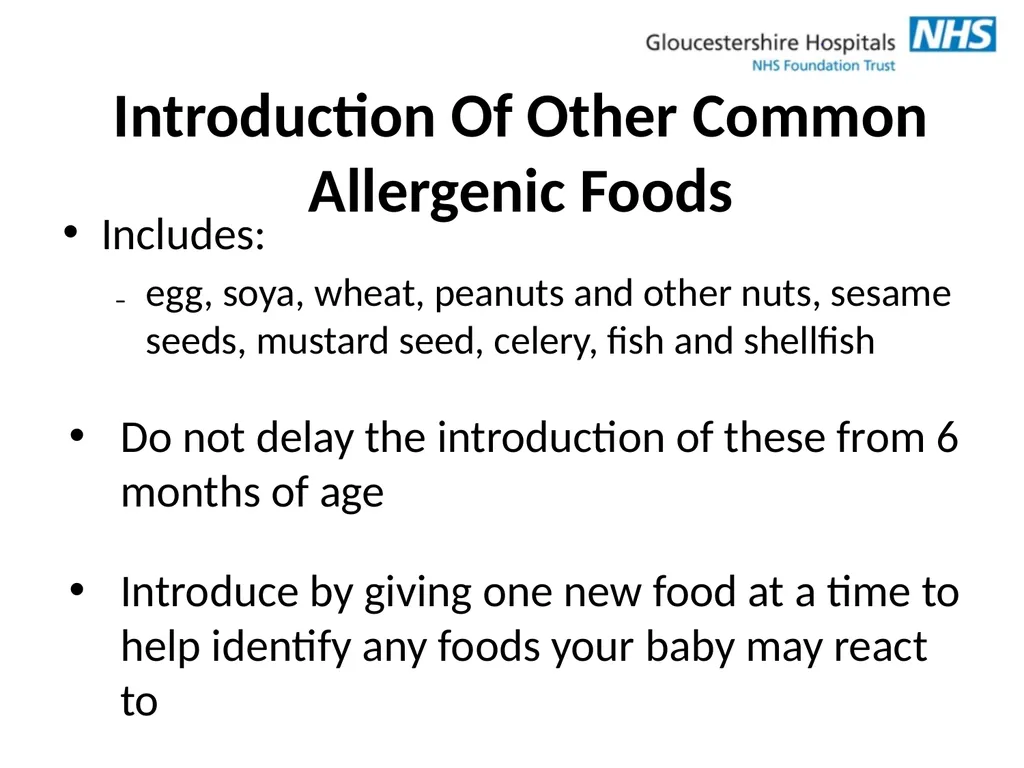
Introduction Of Other Common Allergenic Foods Includes:
egg, soya, wheat, peanuts and other nuts, sesame seeds, mustard seed, celery, fish and shellfish
Do not delay the introduction of these from 6 months of age
Introduce by giving one new food at a time to help identify any foods your baby may react to<br>
egg, soya, wheat, peanuts and other nuts, sesame seeds, mustard seed, celery, fish and shellfish
Do not delay the introduction of these from 6 months of age
Introduce by giving one new food at a time to help identify any foods your baby may react to<br>
19
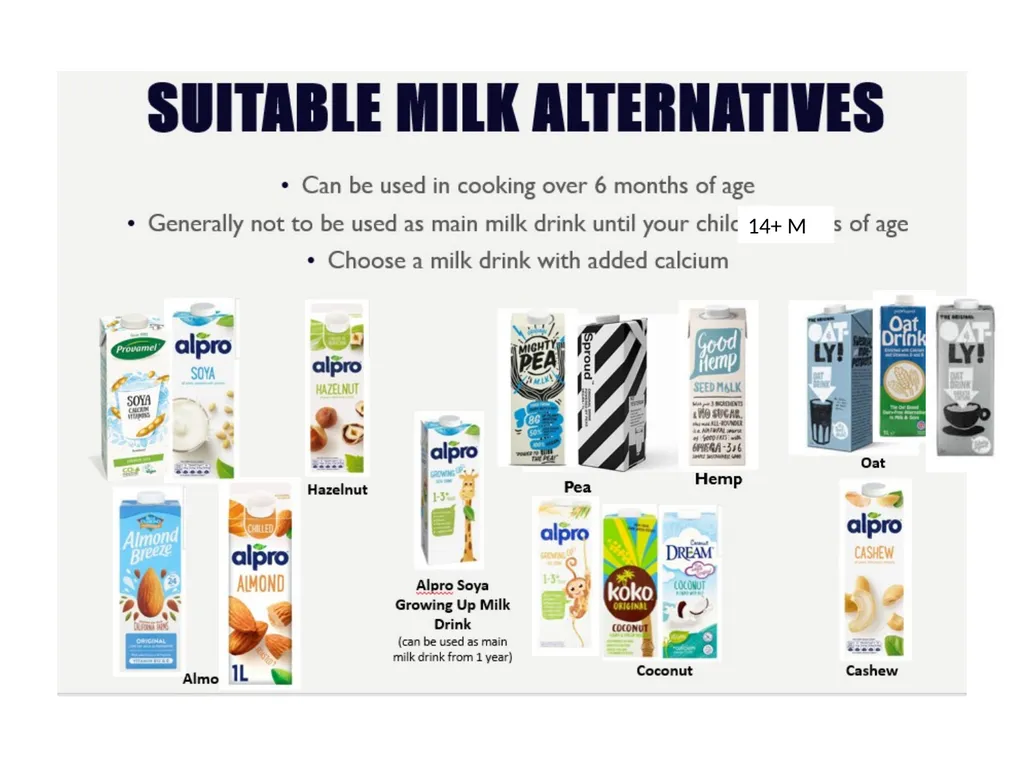
14+ M<br>
20
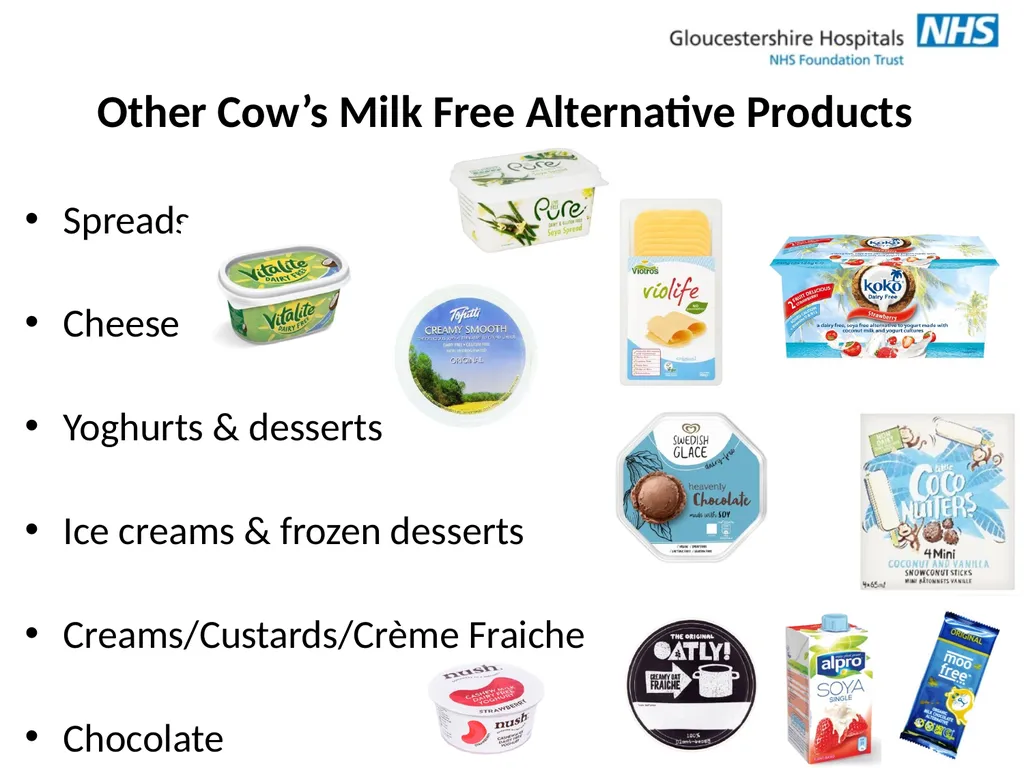
Other Cow’s Milk Free Alternative Products Spreads
Cheese
Yoghurts & desserts
Ice creams & frozen desserts
Creams/Custards/Crème Fraiche
Chocolate<br>
Cheese
Yoghurts & desserts
Ice creams & frozen desserts
Creams/Custards/Crème Fraiche
Chocolate<br>
21
Will My Child Grow Out Of Their Cow’s Milk Protein Allergy? Some children with mild to moderate non-IgE mediated cow’s milk protein allergy will grow out of it by their first birthday
Most children will grow out of their allergy between 1 and 3 years of age
Some may take longer than this or may not grow out of it<br>
Most children will grow out of their allergy between 1 and 3 years of age
Some may take longer than this or may not grow out of it<br>
22
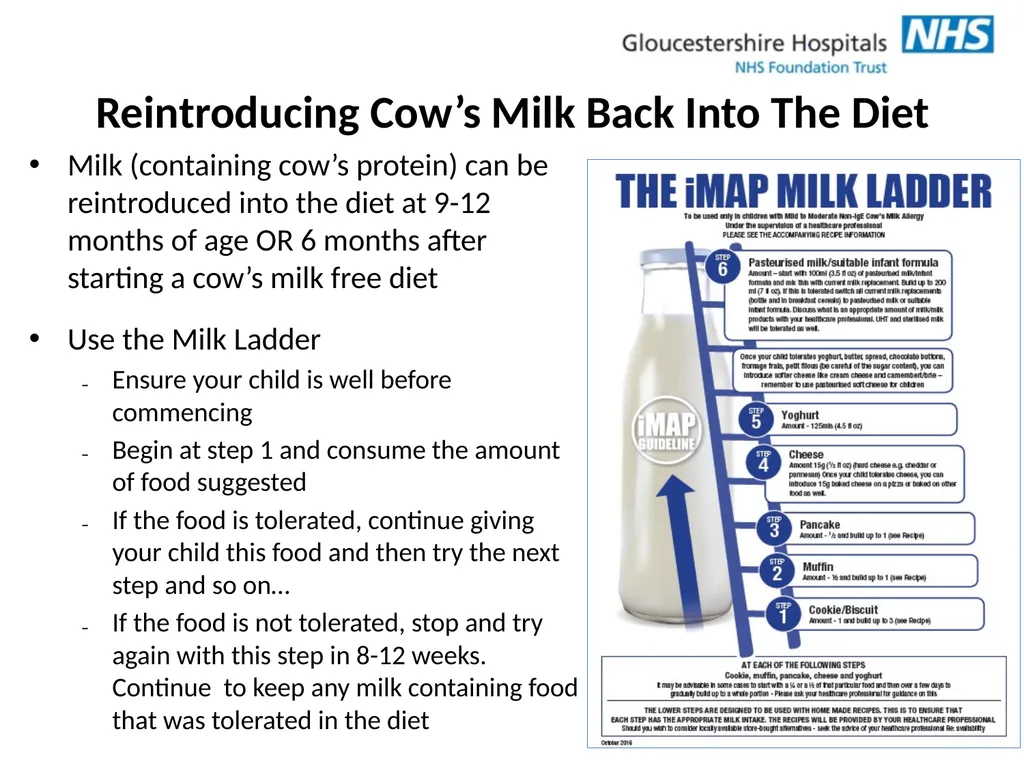
Reintroducing Cow’s Milk Back Into The Diet Milk (containing cow’s protein) can be reintroduced into the diet at 9-12 months of age OR 6 months after starting a cow’s milk free diet
Use the Milk Ladder
Ensure your child is well before commencing
Begin at step 1 and consume the amount of food suggested
If the food is tolerated, continue giving your child this food and then try the next step and so on…
If the food is not tolerated, stop and try again with this step in 8-12 weeks. Continue to keep any milk containing food that was tolerated in the diet<br>
23
Meeting Calcium Requirements Important to ensure that your child is receiving enough calcium when following a cow’s milk protein free diet
Breastfeeding mums who are following a cow’s milk protein free diet may need a calcium supplement
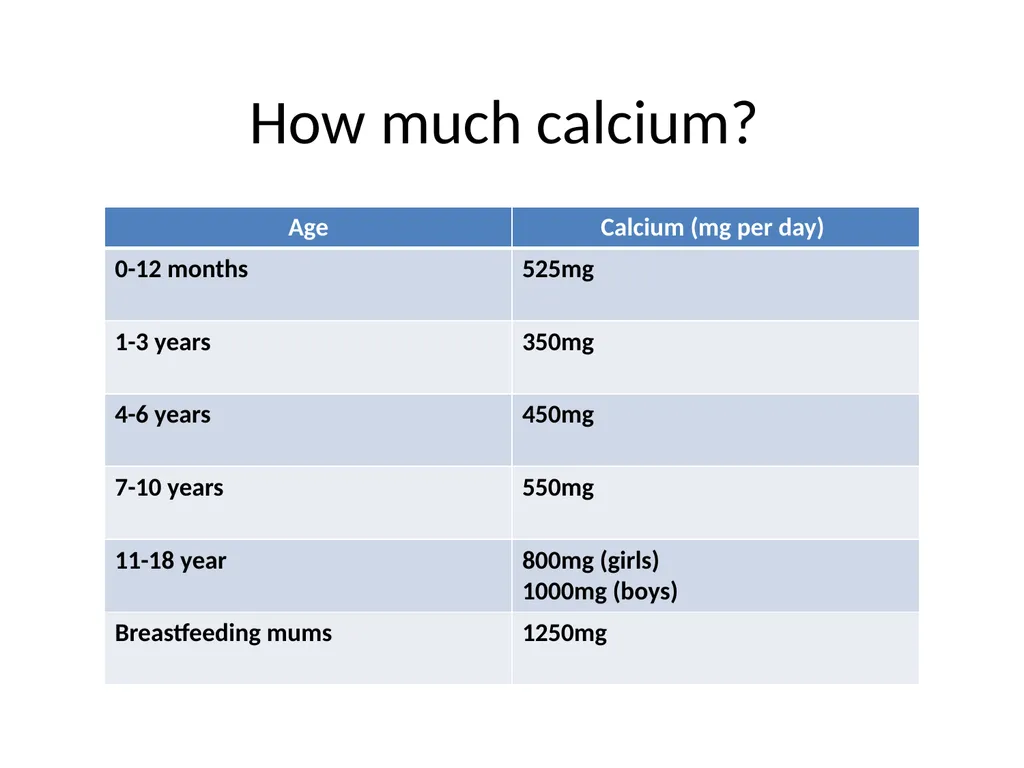
Calcium requirements change with age
Use foods fortified with calcium to help meet requirements, e.g. cow’s milk protein alternatives<br>
Breastfeeding mums who are following a cow’s milk protein free diet may need a calcium supplement
Calcium requirements change with age
Use foods fortified with calcium to help meet requirements, e.g. cow’s milk protein alternatives<br>
24
How much calcium?<br>
25
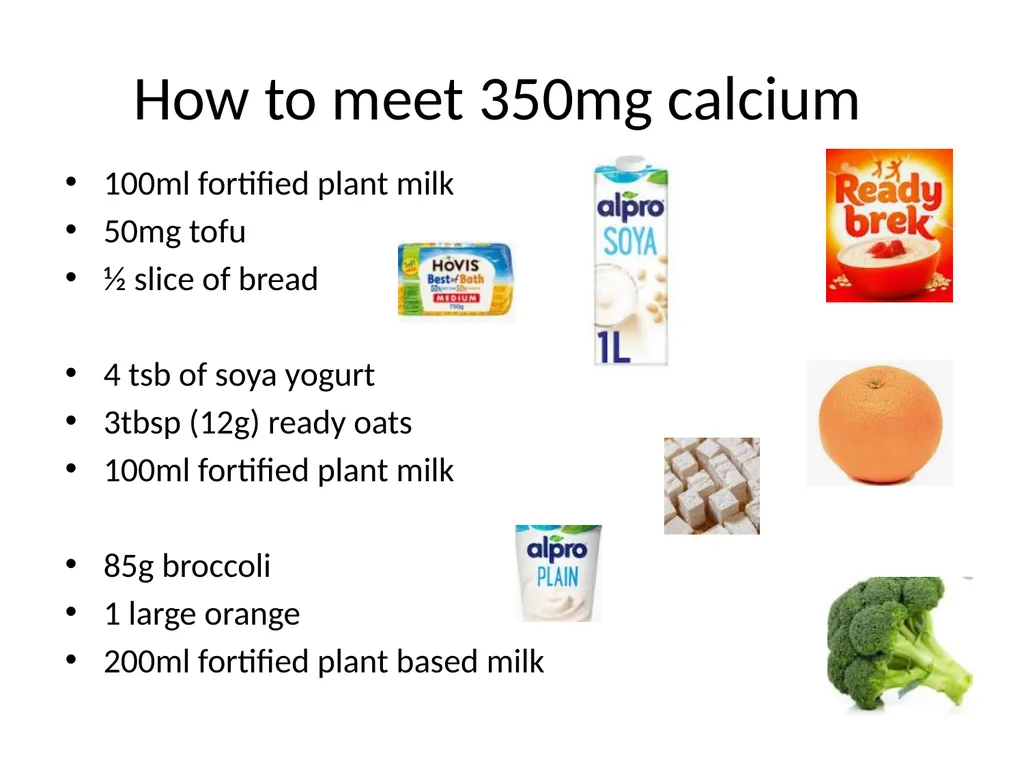
How to meet 350mg calcium 100ml fortified plant milk
50mg tofu
½ slice of bread
4 tsb of soya yogurt
3tbsp (12g) ready oats
100ml fortified plant milk
85g broccoli
1 large orange
200ml fortified plant based milk<br>
50mg tofu
½ slice of bread
4 tsb of soya yogurt
3tbsp (12g) ready oats
100ml fortified plant milk
85g broccoli
1 large orange
200ml fortified plant based milk<br>
26
Vitamins for Children The government recommends:
ALL children aged 6 months to 5 years are given vitamin supplements containing vitamins A, C & D
Babies who are breastfed are given a daily vitamin D supplement from birth
Babies who are formula fed, who are getting more than 500ml (about a pint) of formula per day do not need extra vitamins<br>
ALL children aged 6 months to 5 years are given vitamin supplements containing vitamins A, C & D
Babies who are breastfed are given a daily vitamin D supplement from birth
Babies who are formula fed, who are getting more than 500ml (about a pint) of formula per day do not need extra vitamins<br>
27
Useful Links For support
Allergy UK www.allergyuk.org
NHS Choices www.nhs.uk
British Dietetic Association www.bda.org.uk
For recipes (cooking with cow’s milk free alternatives)
www.oatly.com
www.alpro.com
www.kokodairyfree.com
www.provamel.com
www.tofutti.com
www.violifefoods.com<br>
Allergy UK www.allergyuk.org
NHS Choices www.nhs.uk
British Dietetic Association www.bda.org.uk
For recipes (cooking with cow’s milk free alternatives)
www.oatly.com
www.alpro.com
www.kokodairyfree.com
www.provamel.com
www.tofutti.com
www.violifefoods.com<br>
28
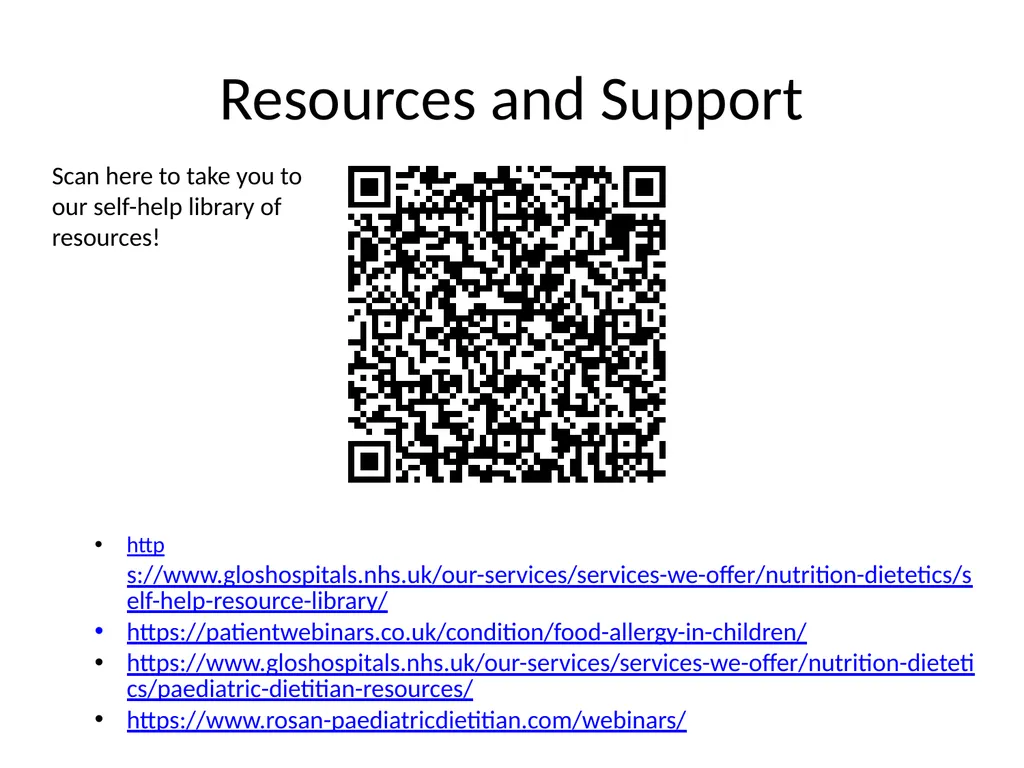
Resources and Support https://www.gloshospitals.nhs.uk/our-services/services-we-offer/nutrition-dietetics/self-help-resource-library/
https://patientwebinars.co.uk/condition/food-allergy-in-children/
https://www.gloshospitals.nhs.uk/our-services/services-we-offer/nutrition-dietetics/paediatric-dietitian-resources/
https://www.rosan-paediatricdietitian.com/webinars/ Scan here to take you to
our self-help library of resources!<br>
https://patientwebinars.co.uk/condition/food-allergy-in-children/
https://www.gloshospitals.nhs.uk/our-services/services-we-offer/nutrition-dietetics/paediatric-dietitian-resources/
https://www.rosan-paediatricdietitian.com/webinars/ Scan here to take you to
our self-help library of resources!<br>
29
Breastfeeding support Local NHS Breastfeeding support service (details in your baby’s red book) - a good first stop.
2. Breastfeeding support telephone lines:
National Breastfeeding Helpline – 0300 100 0212.
Association of Breastfeeding Mothers – 0300 330 5453.
National Childbirth Trust (NCT) – 0300 330 0700.
3. La Leche League (0345 120 2918) provides very useful information on breastfeeding on their website, you can find a local group that may be able to also support you. www.laleche.org.uk
4. The Breastfeeding Network provides support for breastfeeding and have drop in centres and provide telephone support.
https://www.breastfeedingnetwork.org.uk/breastfeeding-support/<br>
30
Breastfeeding support 5. Breastfeeding support group for children with cow’s milk allergy:
https://www.facebook.com/groupsCMPASforBreastFeeding/
6. The NHS also has support websites:
https://www.nhs.uk/conditions/pregnancy-and-baby/benefits-breastfeeding/
https://www.nhs.uk/conditions/pregnancy-and-baby/problems-breastfeeding/
7. GPs can access information on www.gpifn.org.uk to support you through your breastfeeding journey.
8. First Steps Nutrition - https://www.firststepsnutrition.org/eating-well-infants-new-mums
9. Start4Life Breastfeeding Friend – an NHS supported Facebook group that offers advice day or night.<br>
31
Thank you for listening
That was A LOT of information
Any questions? If you are concerned that your child has multiple allergies or losing weight you can opt in for a 1:1 appointment by calling the dietitians on 0300 422 5506.<br>
That was A LOT of information
Any questions? If you are concerned that your child has multiple allergies or losing weight you can opt in for a 1:1 appointment by calling the dietitians on 0300 422 5506.<br>