
DEPRESSION IN CHILDREN AND ADOLESCENTS
PC
Published · 33 slides · 0 views

1 / 1
Description
DEPRESSION IN CHILDREN AND ADOLESCENTS INTRODUCTION NORMAL DEVELOPMENT: INFANCY, CHILDHOOD AND ADOLESCENCE Adapted by Uttara Chari Julie Chilton Chapter A.2 Companion PowerPoint Presentation Nancy G Guerra, Ariel A Williamson Beatriz
Related Topics
Share
Embed code
Download this presentation From Below
"DEPRESSION IN CHILDREN AND ADOLESCENTS" is the property of its rightful owner. Permission is granted to download and print the materials on this website for personal, non-commercial use only, and to display it on your personal computer provided you do not modify the materials and that you retain all copyright notices contained in the materials. By downloading content from our website, you accept the terms of this agreement.
Presentation Transcript
01
DEPRESSION IN CHILDREN AND
ADOLESCENTS INTRODUCTION NORMAL DEVELOPMENT: INFANCY, CHILDHOOD AND ADOLESCENCE Adapted by Uttara Chari & Julie Chilton Chapter A.2 Companion PowerPoint
Presentation Nancy G Guerra,
Ariel A Williamson &
Beatriz Lucas-Molina<br>
ADOLESCENTS INTRODUCTION NORMAL DEVELOPMENT: INFANCY, CHILDHOOD AND ADOLESCENCE Adapted by Uttara Chari & Julie Chilton Chapter A.2 Companion PowerPoint
Presentation Nancy G Guerra,
Ariel A Williamson &
Beatriz Lucas-Molina<br>
02
The “IACAPAP Textbook of Child and Adolescent Mental Health” is available at the IACAPAP website http://iacapap.org/iacapap-textbook-of-child-and-adolescent-mental-health
Please note that this book and its companion power point are:
- Free and no registration is required to read or download it
- This is an open-access publication under the Creative Commons Attribution Non-commercial License. According to this, use, distribution and reproduction in any medium are allowed without prior permission provided the original work is properly cited and the use is non-commercial.<br>
03
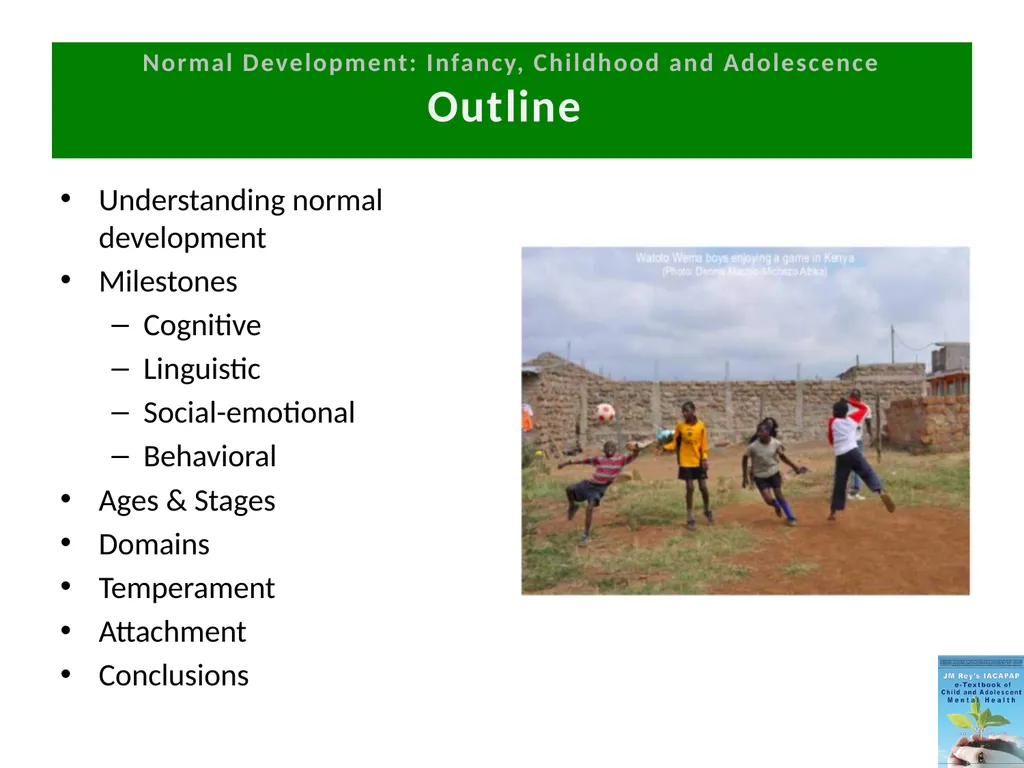
Normal Development: Infancy, Childhood and Adolescence
Outline Understanding normal development
Milestones
Cognitive
Linguistic
Social-emotional
Behavioral
Ages & Stages
Domains
Temperament
Attachment
Conclusions<br>
Milestones
Cognitive
Linguistic
Social-emotional
Behavioral
Ages & Stages
Domains
Temperament
Attachment
Conclusions<br>
04
Normal Development: Infancy, childhood and adolescence
Defining Normal Development “Average or ‘on-time’ growth based on the attainment of specific physical, cognitive, linguistic, social-emotional, and behavioral milestones across specific stages”
What is likely
Based on population averages
Historical, cultural, international variations<br>
What is likely
Based on population averages
Historical, cultural, international variations<br>
05
Normal Development: Infancy, childhood and adolescence
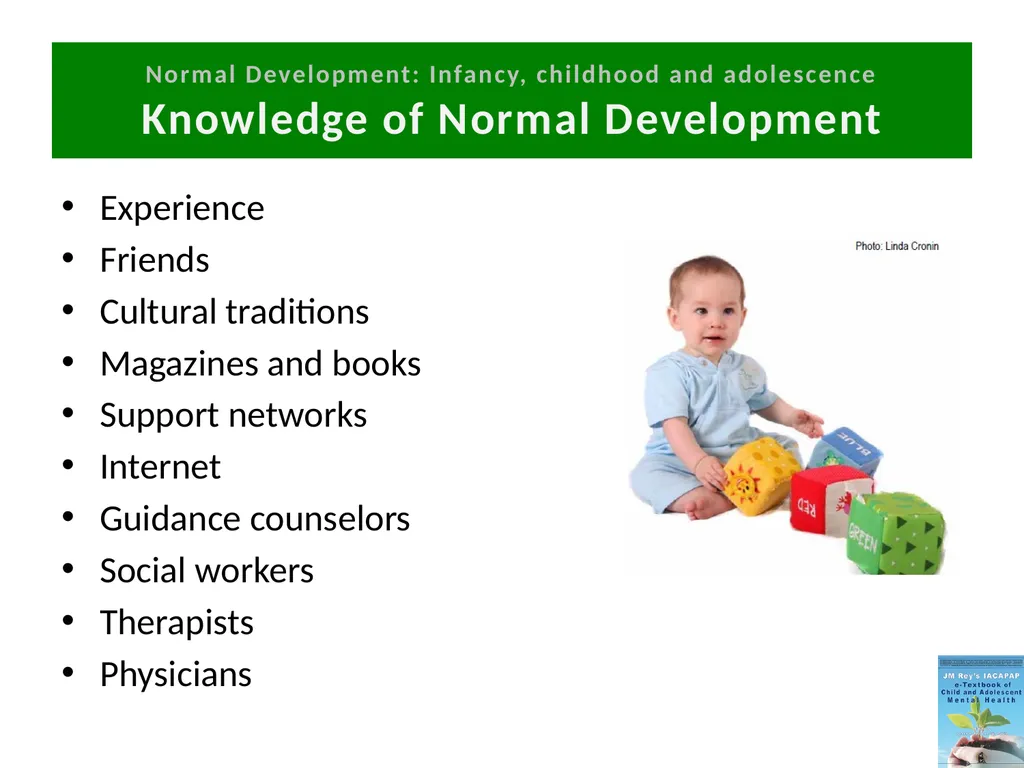
Knowledge of Normal Development Experience
Friends
Cultural traditions
Magazines and books
Support networks
Internet
Guidance counselors
Social workers
Therapists
Physicians<br>
Friends
Cultural traditions
Magazines and books
Support networks
Internet
Guidance counselors
Social workers
Therapists
Physicians<br>
06
Normal Development: Infancy, childhood and adolescence
Understanding Normal Development Key Developmental Principles:
Nature versus nurture
Developmental timing and plasticity
Sequencing and variation in development
Critical and sensitive periods
Culture and context<br>
Nature versus nurture
Developmental timing and plasticity
Sequencing and variation in development
Critical and sensitive periods
Culture and context<br>
07
Normal Development: Infancy, childhood and adolescence
Nature vs Nurture Genes and biology
Life experiences: family, school, peer group, community, culture
Recent evidence: interplay of both over time
Family, twin and adoption studies
DNA analyses: Trisomy 21, alcoholism
Environmental factors: parenting styles, socioeconomic status, neighborhood characteristics
Temperament and intelligence
Non-shared environment<br>
08
Normal Development: Infancy, childhood and adolescence
Developmental Timing and Plasticity Sequencing and variation
Dynamic process
Continuous and discontinuous
Continuum as normal timeframe
Heterogeneous rates within normal
Deviation may not be meaningful
Malleable traits and skills early on<br>
Dynamic process
Continuous and discontinuous
Continuum as normal timeframe
Heterogeneous rates within normal
Deviation may not be meaningful
Malleable traits and skills early on<br>
09
Normal Development: Infancy, childhood and adolescence
Critical and Sensitive Periods Developmental studies
Genie, age 13
Feral children
Optimal windows of opportunity
Critical periods for specific functions
Vision
Language
Sensitive periods when skills easiest to acquire
Second language<br>
Genie, age 13
Feral children
Optimal windows of opportunity
Critical periods for specific functions
Vision
Language
Sensitive periods when skills easiest to acquire
Second language<br>
10
Normal Development: Infancy, childhood and adolescence
Culture and Context Average population rates vary:
Race
Ethnicity
Culture
Historical era
Community
Socioeconomic status
Less Variable:
Physical and cognitive domains
Skills and behaviors: cooing, babbling, speech initiation, abstract reasoning<br>
Race
Ethnicity
Culture
Historical era
Community
Socioeconomic status
Less Variable:
Physical and cognitive domains
Skills and behaviors: cooing, babbling, speech initiation, abstract reasoning<br>
11
Normal Development: Infancy, childhood and adolescence
Understanding Normal Development Age Specific Milestones:
Physical
Cognitive
Linguistic
Social-emotional
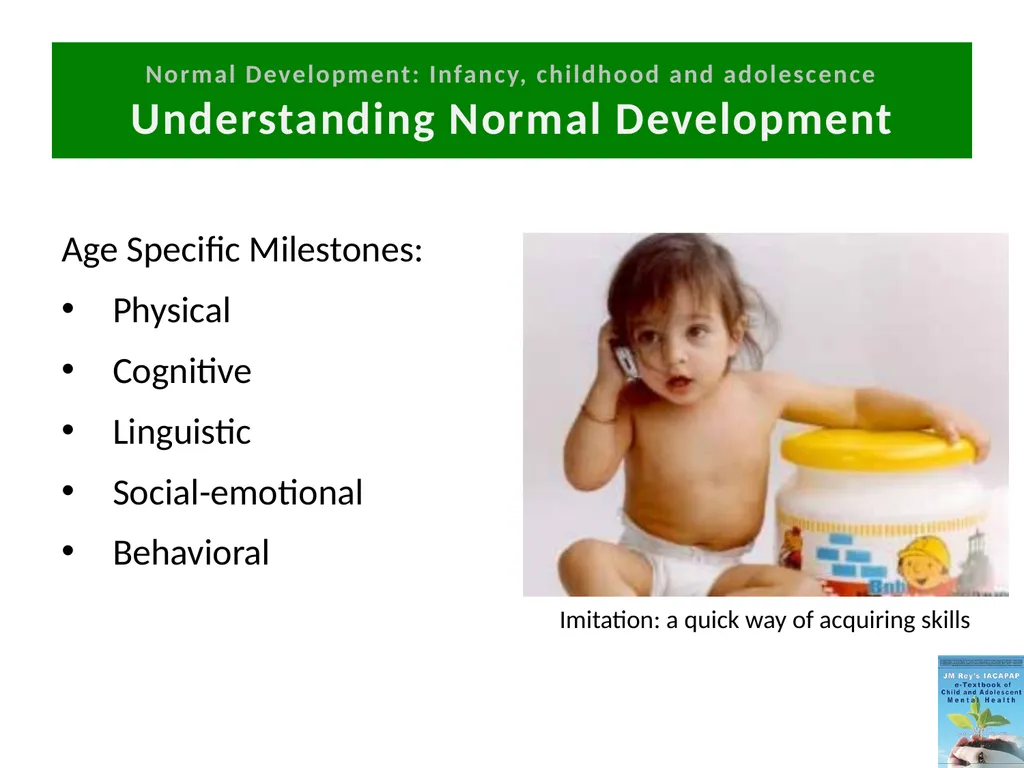
Behavioral Imitation: a quick way of acquiring skills<br>
Physical
Cognitive
Linguistic
Social-emotional
Behavioral Imitation: a quick way of acquiring skills<br>
12
Normal Development: Infancy, childhood and adolescence
Stages of Development Infancy: 0 to 2 years
Toddler/Preschool: 2 to 5 years
Childhood: 6 to 11 years
Adolescence: 11 to 18 years
Emerging adulthood: 19 to 29 years<br>
Toddler/Preschool: 2 to 5 years
Childhood: 6 to 11 years
Adolescence: 11 to 18 years
Emerging adulthood: 19 to 29 years<br>
13
Normal Development: Infancy, childhood and adolescence
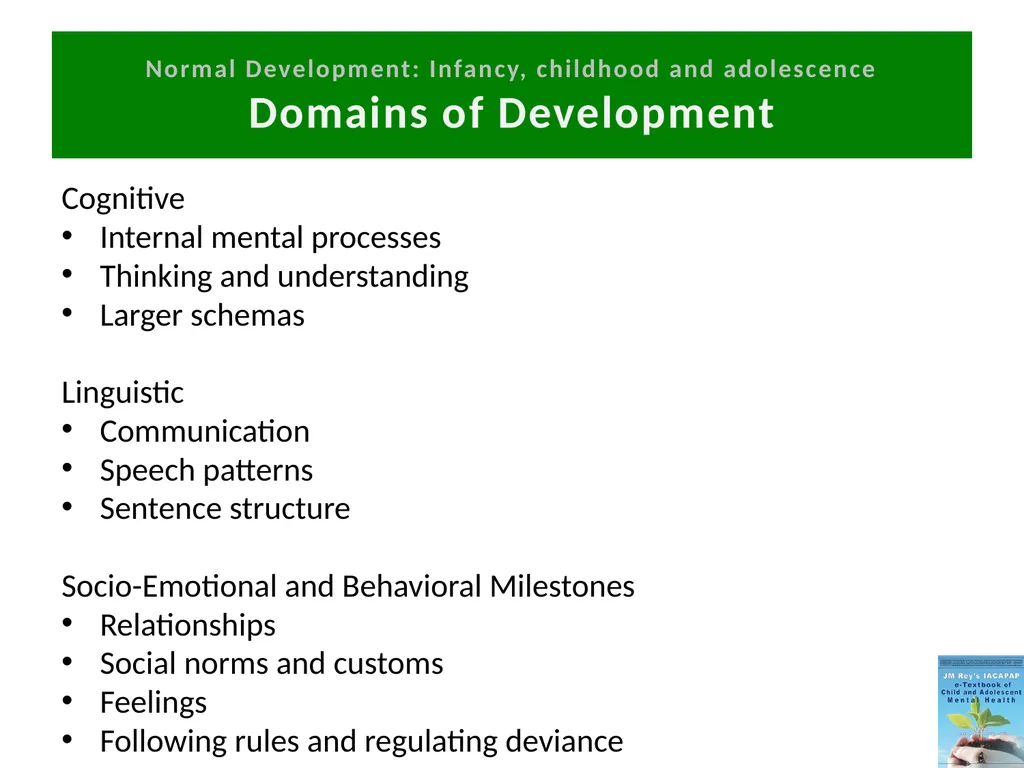
Domains of Development Cognitive
Internal mental processes
Thinking and understanding
Larger schemas
Linguistic
Communication
Speech patterns
Sentence structure
Socio-Emotional and Behavioral Milestones
Relationships
Social norms and customs
Feelings
Following rules and regulating deviance<br>
Internal mental processes
Thinking and understanding
Larger schemas
Linguistic
Communication
Speech patterns
Sentence structure
Socio-Emotional and Behavioral Milestones
Relationships
Social norms and customs
Feelings
Following rules and regulating deviance<br>
14
Normal Development: Infancy, Childhood and Adolescence
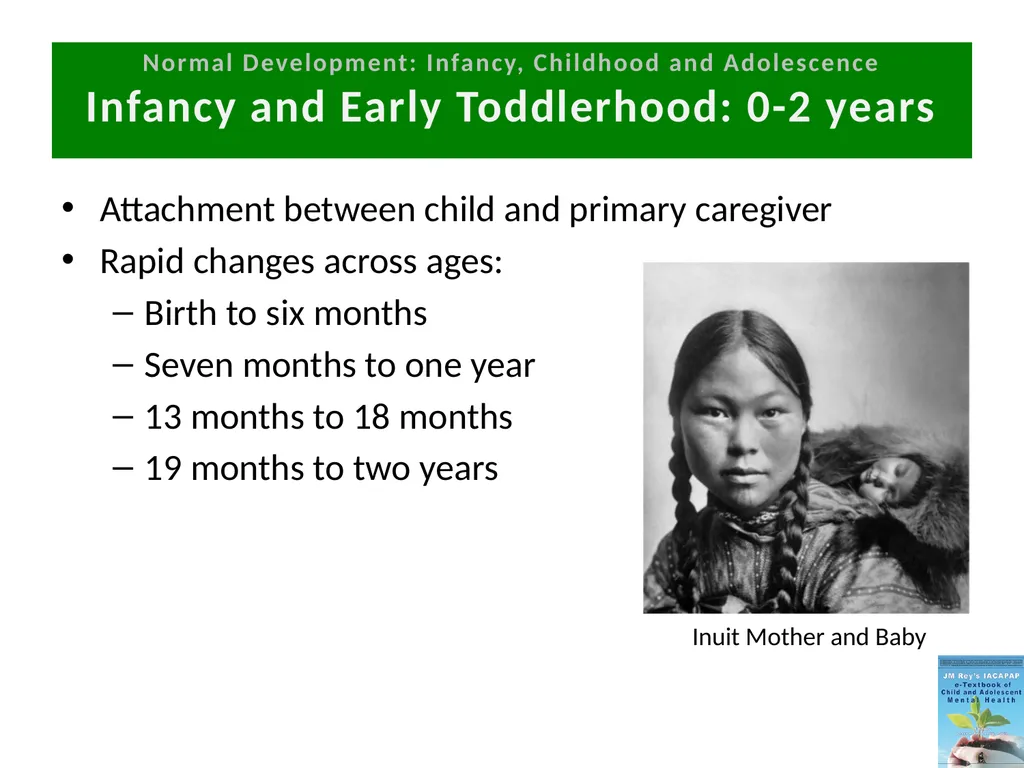
Infancy and Early Toddlerhood: 0-2 years Attachment between child and primary caregiver
Rapid changes across ages:
Birth to six months
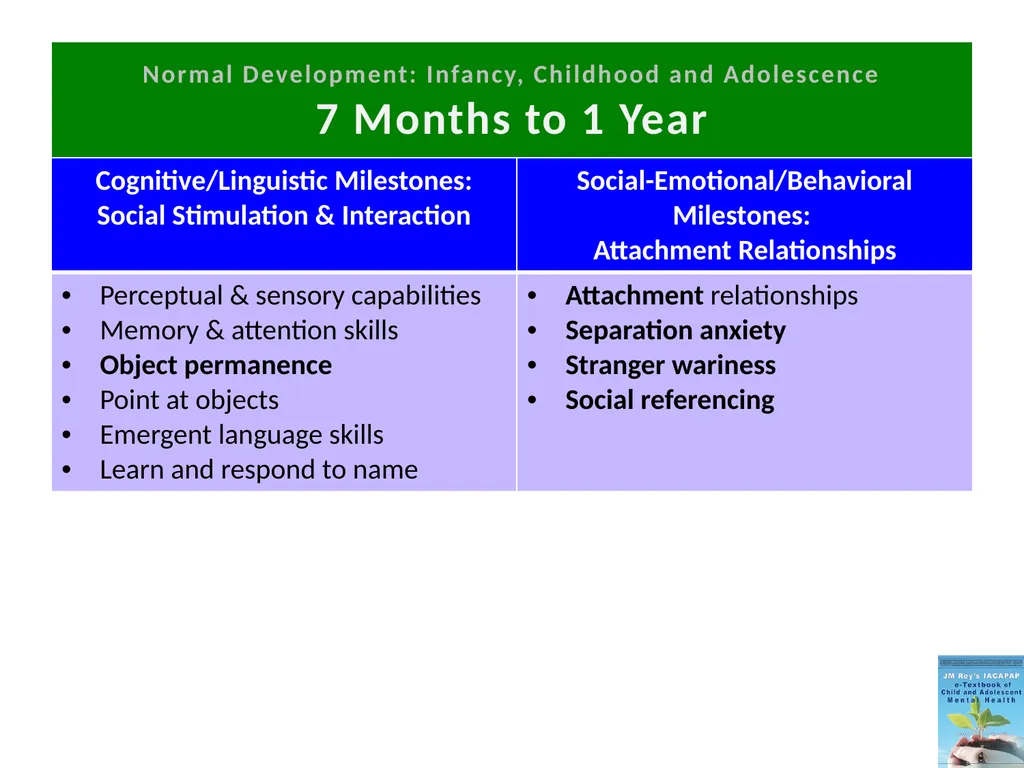
Seven months to one year
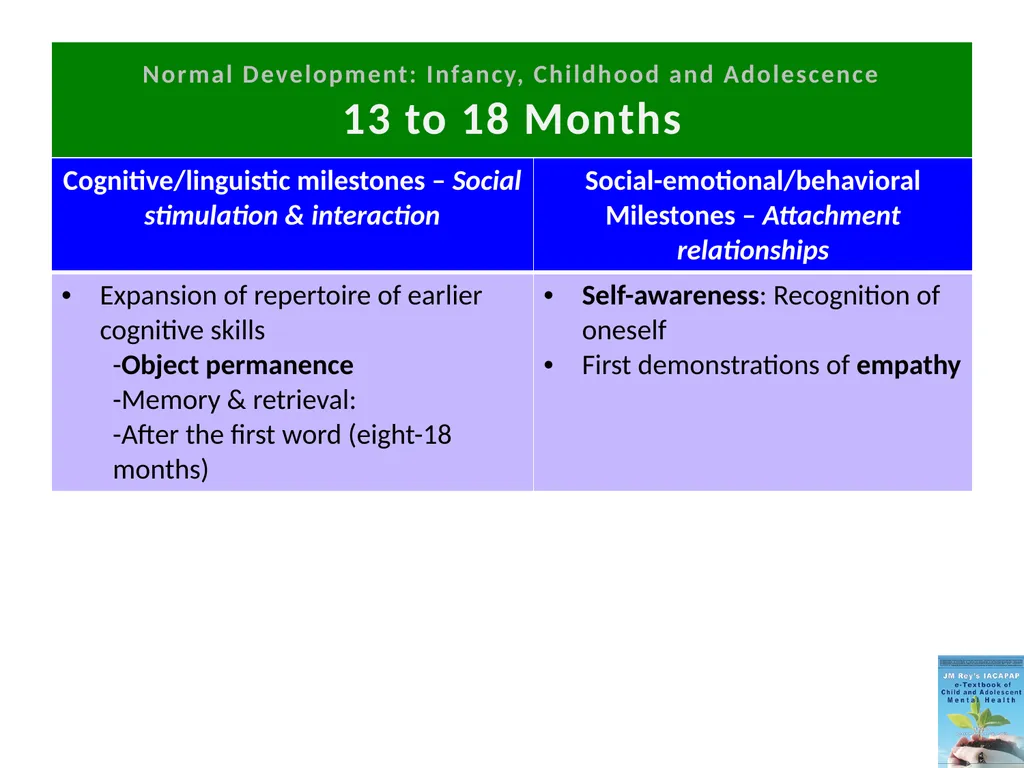
13 months to 18 months
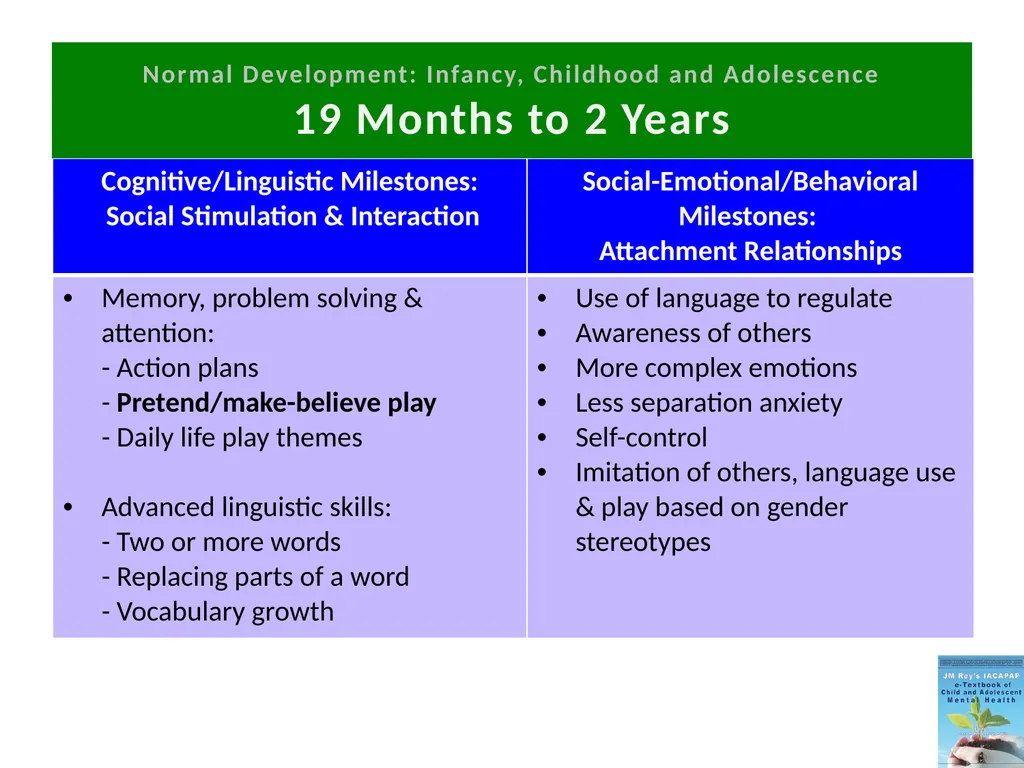
19 months to two years Inuit Mother and Baby<br>
Rapid changes across ages:
Birth to six months
Seven months to one year
13 months to 18 months
19 months to two years Inuit Mother and Baby<br>
15
Normal Development: Infancy, Childhood and Adolescence
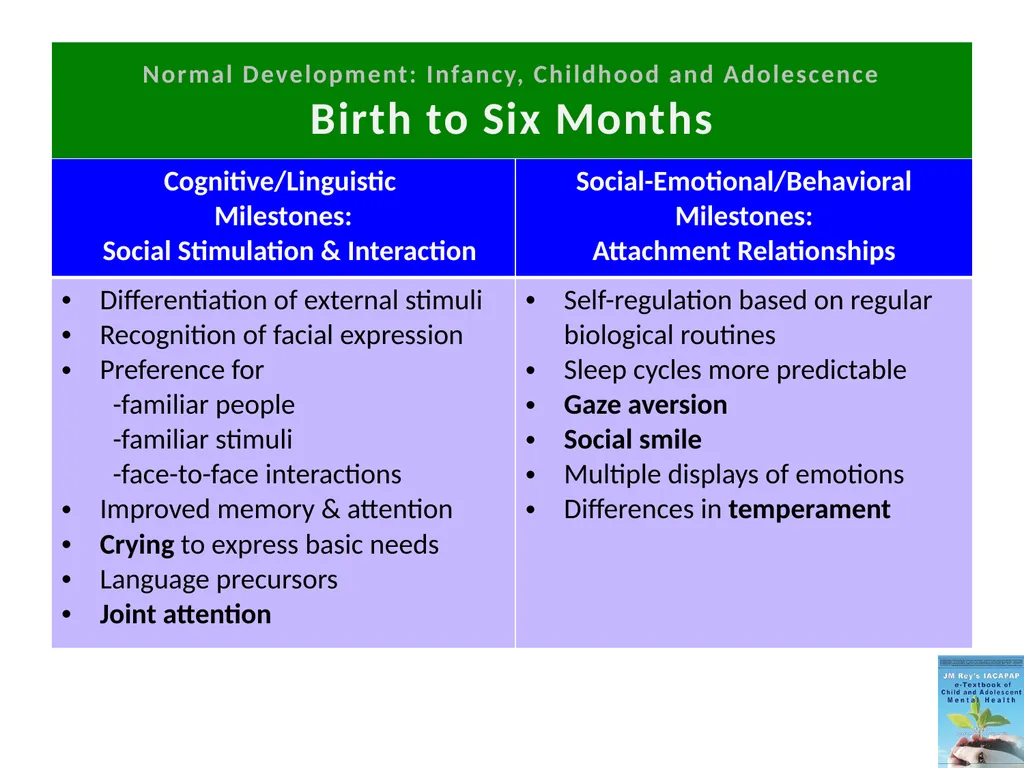
Birth to Six Months<br>
16
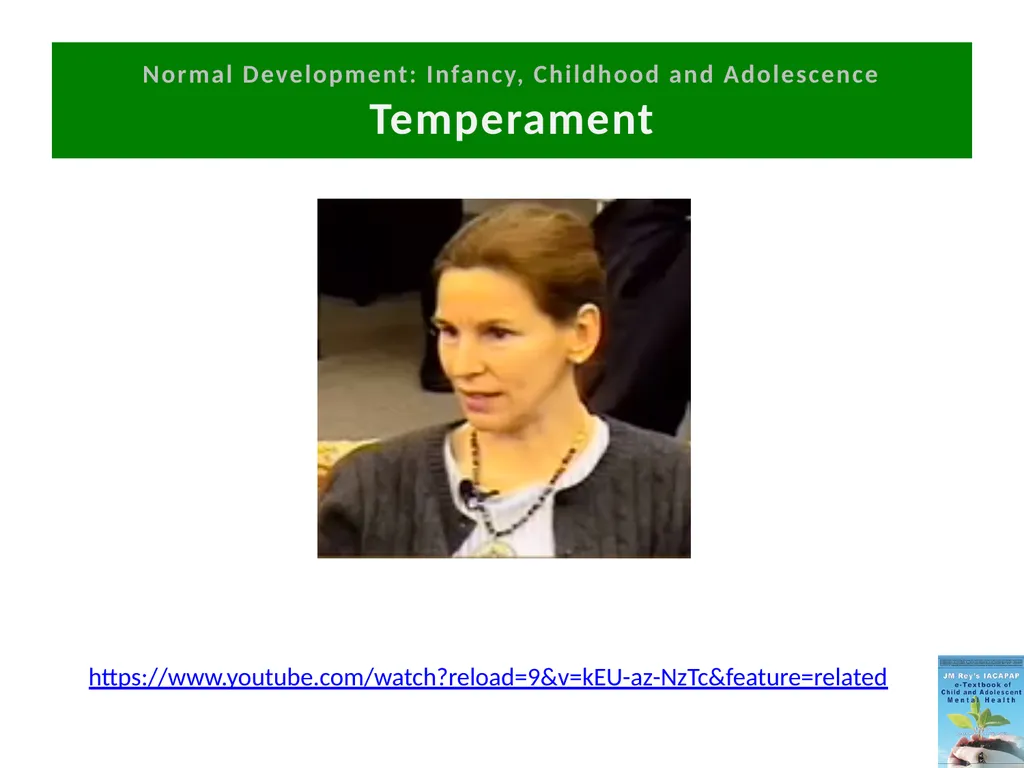
https://www.youtube.com/watch?reload=9&v=kEU-az-NzTc&feature=related Normal Development: Infancy, Childhood and Adolescence
Temperament<br>
17
Normal Development: Infancy, Childhood and Adolescence
7 Months to 1 Year<br>
18
Normal Development: Infancy, Childhood and Adolescence
13 to 18 Months<br>
19
Normal Development: Infancy, Childhood and Adolescence
19 Months to 2 Years<br>
20
Normal Development: Infancy, Childhood and Adolescence
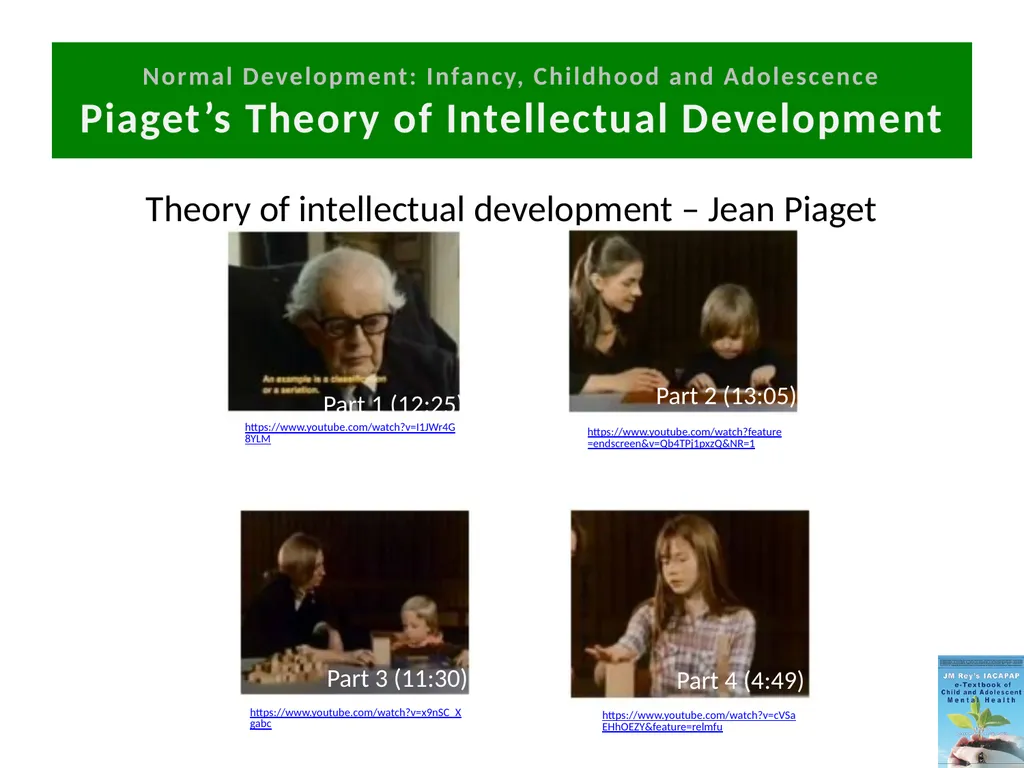
Piaget’s Theory of Intellectual Development Theory of intellectual development – Jean Piaget Part 1 (12:25) Part 2 (13:05) Part 3 (11:30) Part 4 (4:49) https://www.youtube.com/watch?v=I1JWr4G8YLM https://www.youtube.com/watch?feature=endscreen&v=Qb4TPj1pxzQ&NR=1 https://www.youtube.com/watch?v=x9nSC_Xgabc https://www.youtube.com/watch?v=cVSaEHhOEZY&feature=relmfu<br>
21
Normal Development: Infancy, Childhood and Adolescence
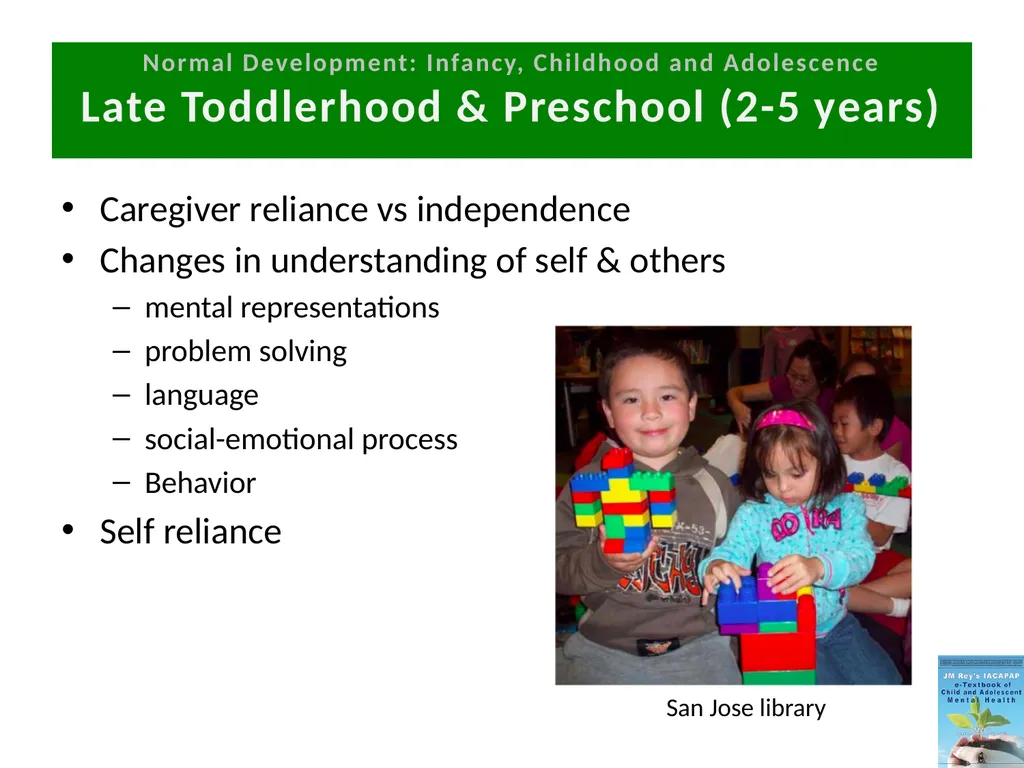
Late Toddlerhood & Preschool (2-5 years) Caregiver reliance vs independence
Changes in understanding of self & others
mental representations
problem solving
language
social-emotional process
Behavior
Self reliance San Jose library<br>
Changes in understanding of self & others
mental representations
problem solving
language
social-emotional process
Behavior
Self reliance San Jose library<br>
22
Normal Development: Infancy, Childhood and Adolescence
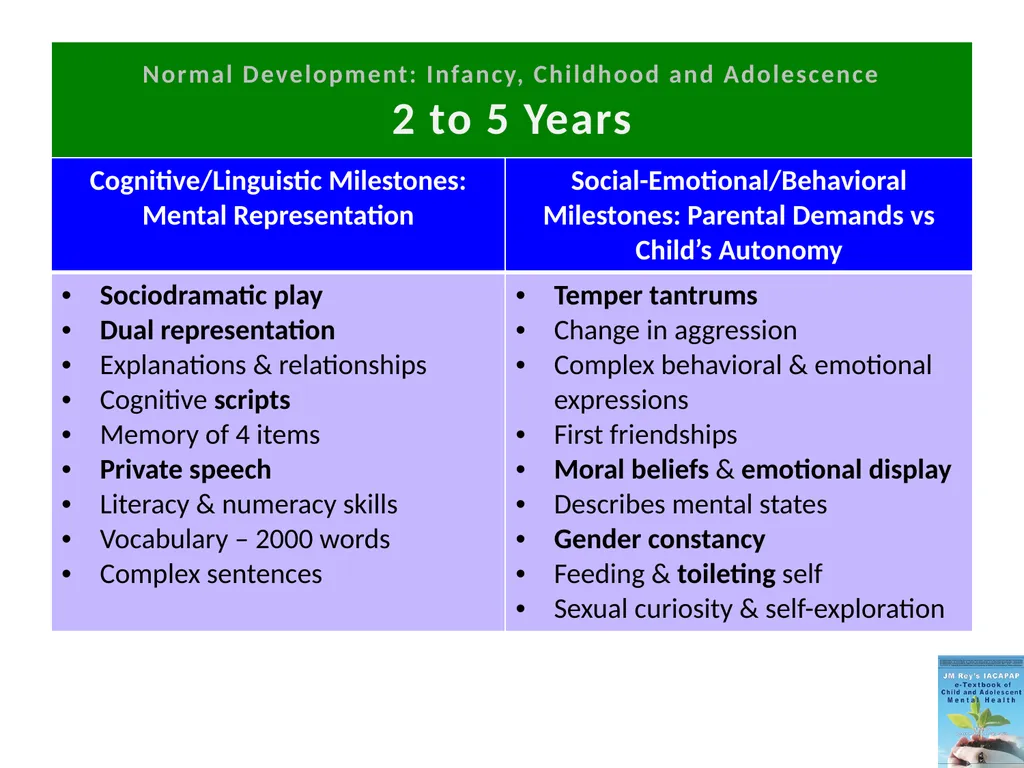
2 to 5 Years<br>
23
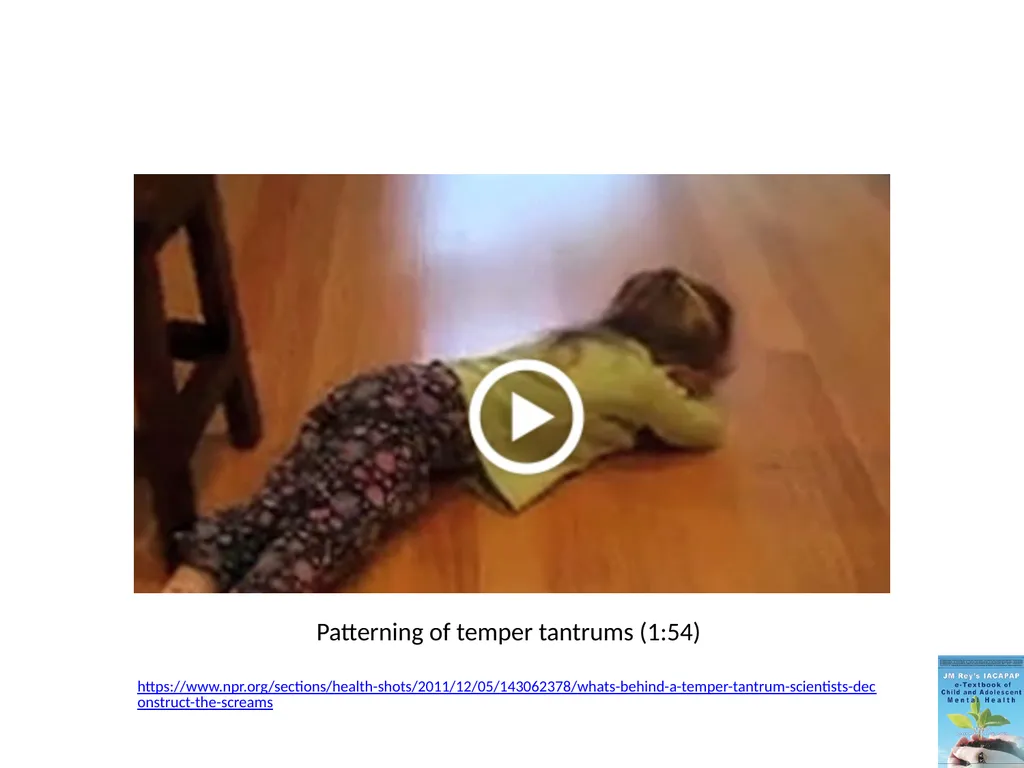
Patterning of temper tantrums (1:54)
https://www.npr.org/sections/health-shots/2011/12/05/143062378/whats-behind-a-temper-tantrum-scientists-deconstruct-the-screams<br>
https://www.npr.org/sections/health-shots/2011/12/05/143062378/whats-behind-a-temper-tantrum-scientists-deconstruct-the-screams<br>
24
Normal Development: Infancy, Childhood and Adolescence
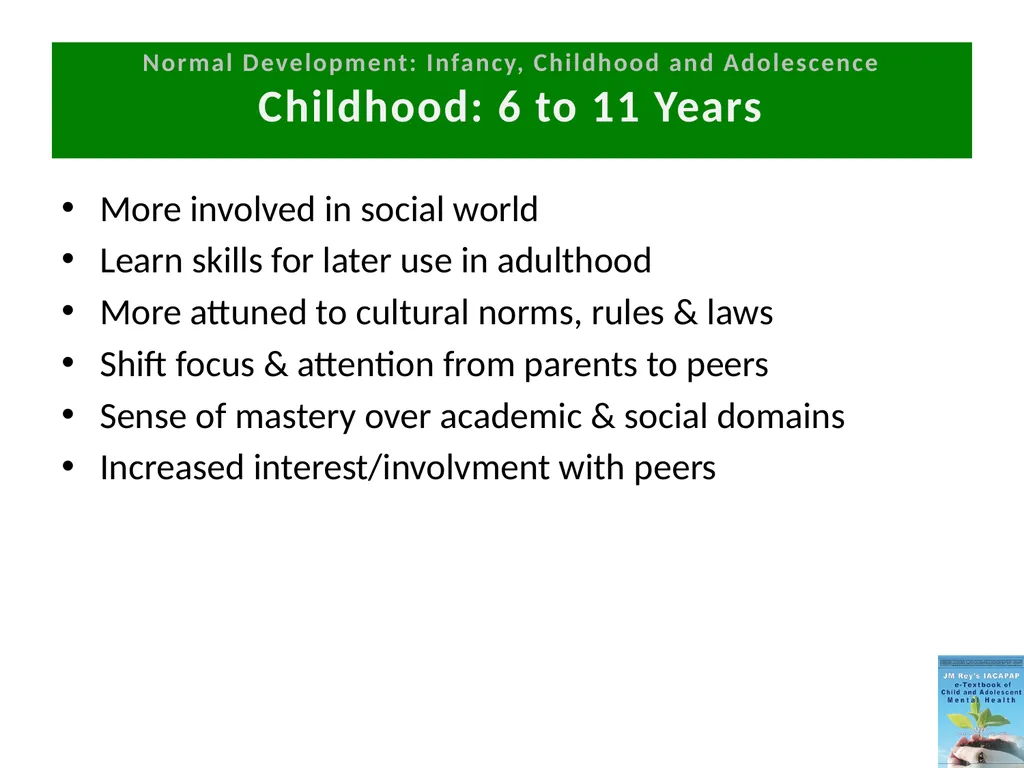
Childhood: 6 to 11 Years More involved in social world
Learn skills for later use in adulthood
More attuned to cultural norms, rules & laws
Shift focus & attention from parents to peers
Sense of mastery over academic & social domains
Increased interest/involvment with peers<br>
Learn skills for later use in adulthood
More attuned to cultural norms, rules & laws
Shift focus & attention from parents to peers
Sense of mastery over academic & social domains
Increased interest/involvment with peers<br>
25
Piaget’s stages of intellectual development (6:18)
https://www.youtube.com/watch?v=TRF27F2bn-A&feature=related Normal Development: Infancy, Childhood and Adolescence Piaget’s Stages of Intellectual Development<br>
https://www.youtube.com/watch?v=TRF27F2bn-A&feature=related Normal Development: Infancy, Childhood and Adolescence Piaget’s Stages of Intellectual Development<br>
26
Normal Development: Infancy, Childhood and Adolescence
Childhood: 6 to 11 Years More involved in social world
More attuned to cultural norms, rules & laws
Shift focus & attention from parents to peers
Sense of mastery over academic & social domains
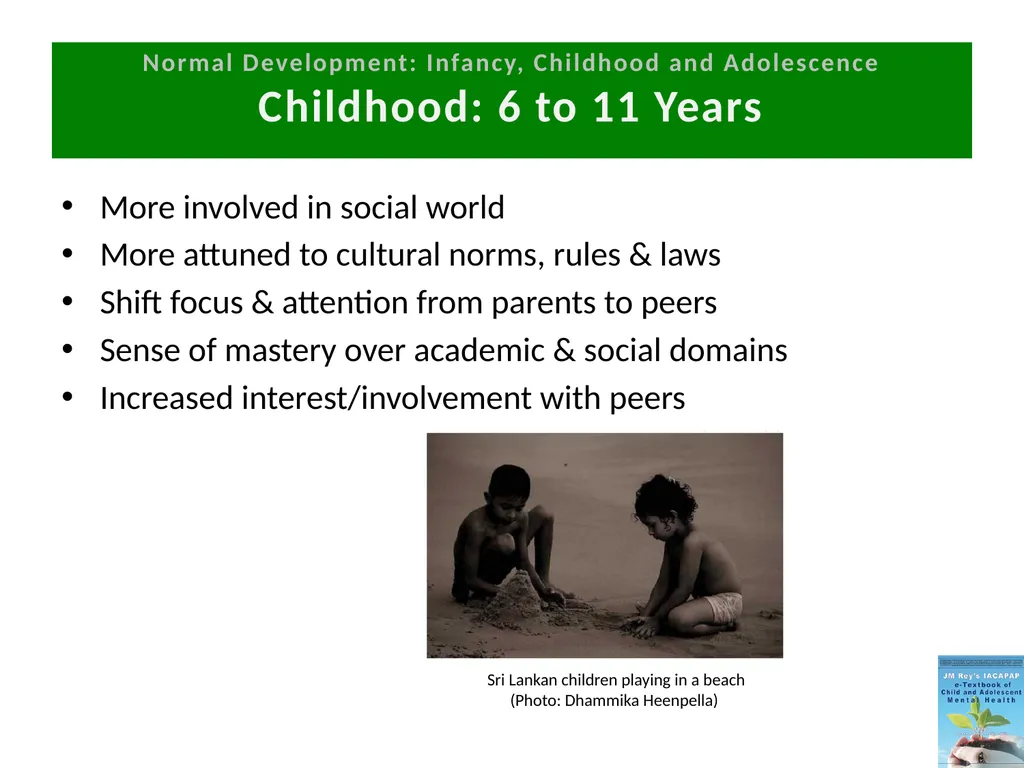
Increased interest/involvement with peers Sri Lankan children playing in a beach (Photo: Dhammika Heenpella)<br>
More attuned to cultural norms, rules & laws
Shift focus & attention from parents to peers
Sense of mastery over academic & social domains
Increased interest/involvement with peers Sri Lankan children playing in a beach (Photo: Dhammika Heenpella)<br>
27
Normal Development: Infancy, Childhood and Adolescence
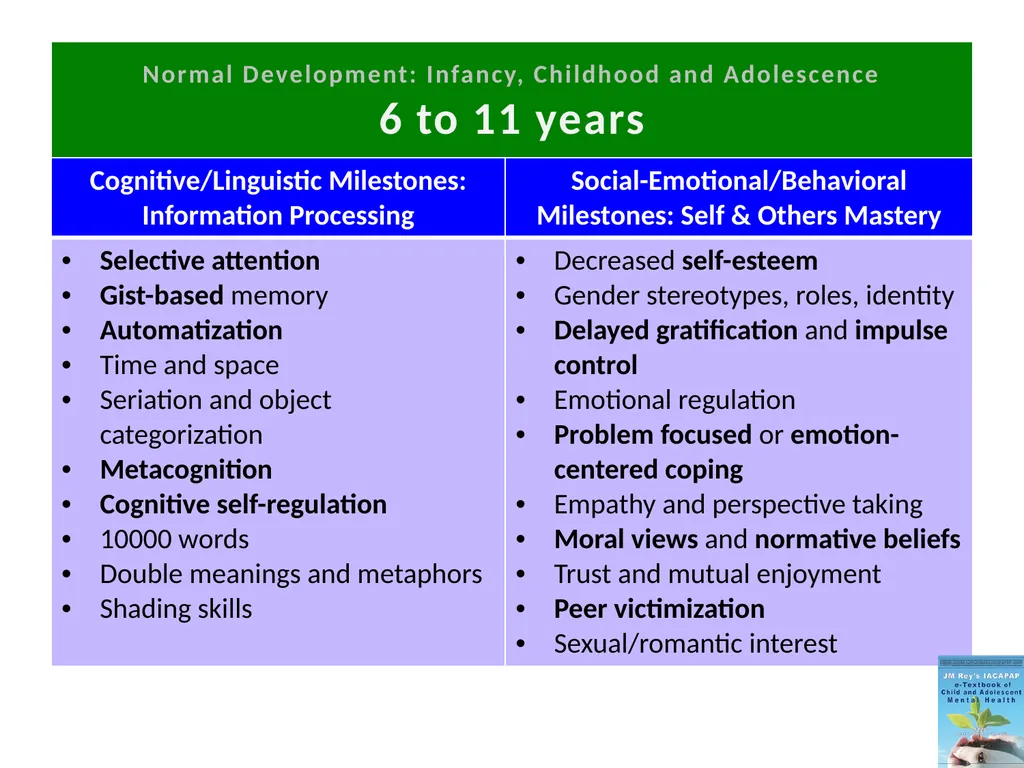
6 to 11 years<br>
28
Normal Development: Infancy, Childhood and Adolescence
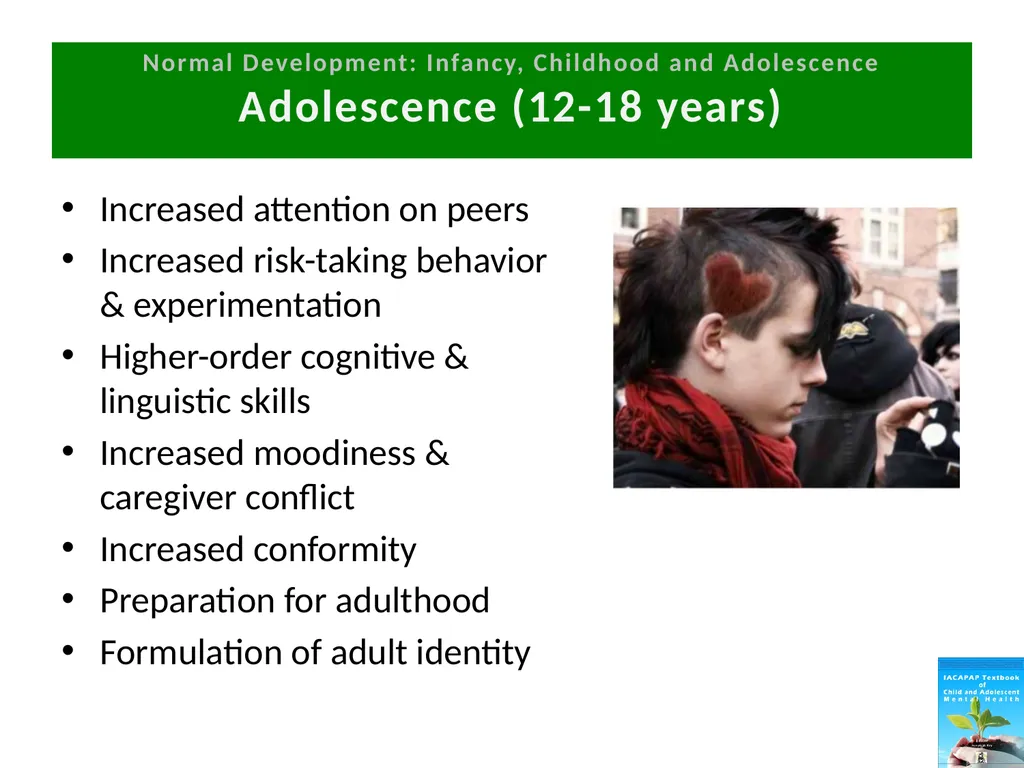
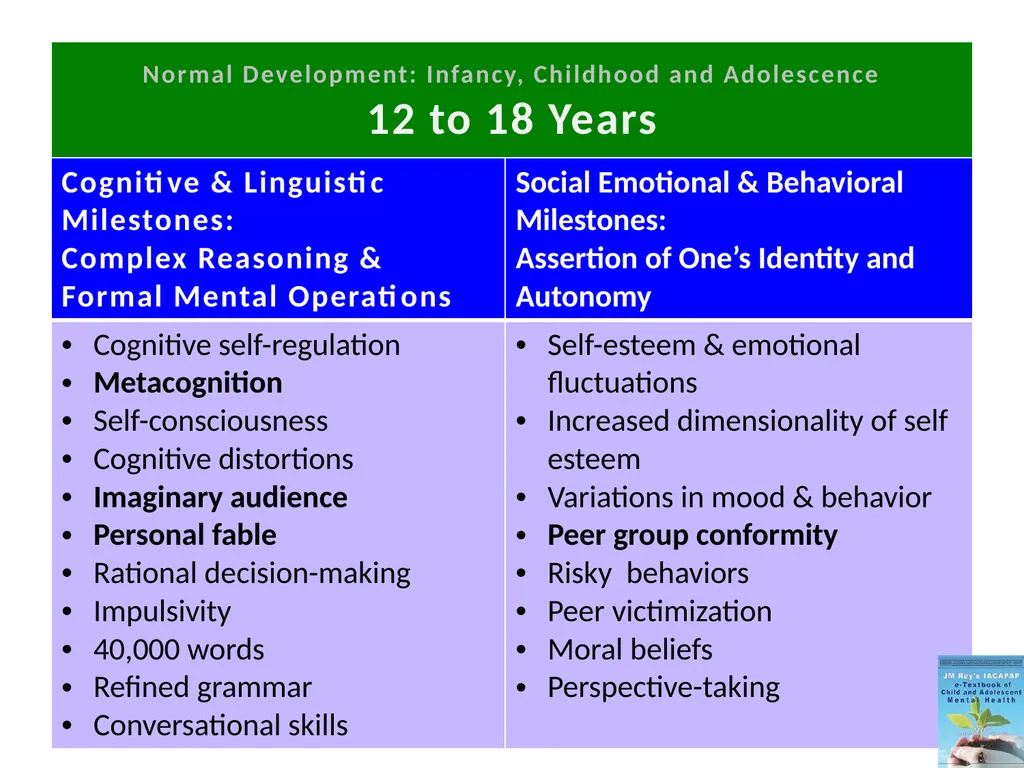
Adolescence (12-18 years) Increased attention on peers
Increased risk-taking behavior & experimentation
Higher-order cognitive & linguistic skills
Increased moodiness & caregiver conflict
Increased conformity
Preparation for adulthood
Formulation of adult identity<br>
Increased risk-taking behavior & experimentation
Higher-order cognitive & linguistic skills
Increased moodiness & caregiver conflict
Increased conformity
Preparation for adulthood
Formulation of adult identity<br>
29
Normal Development: Infancy, Childhood and Adolescence
12 to 18 Years<br>
30
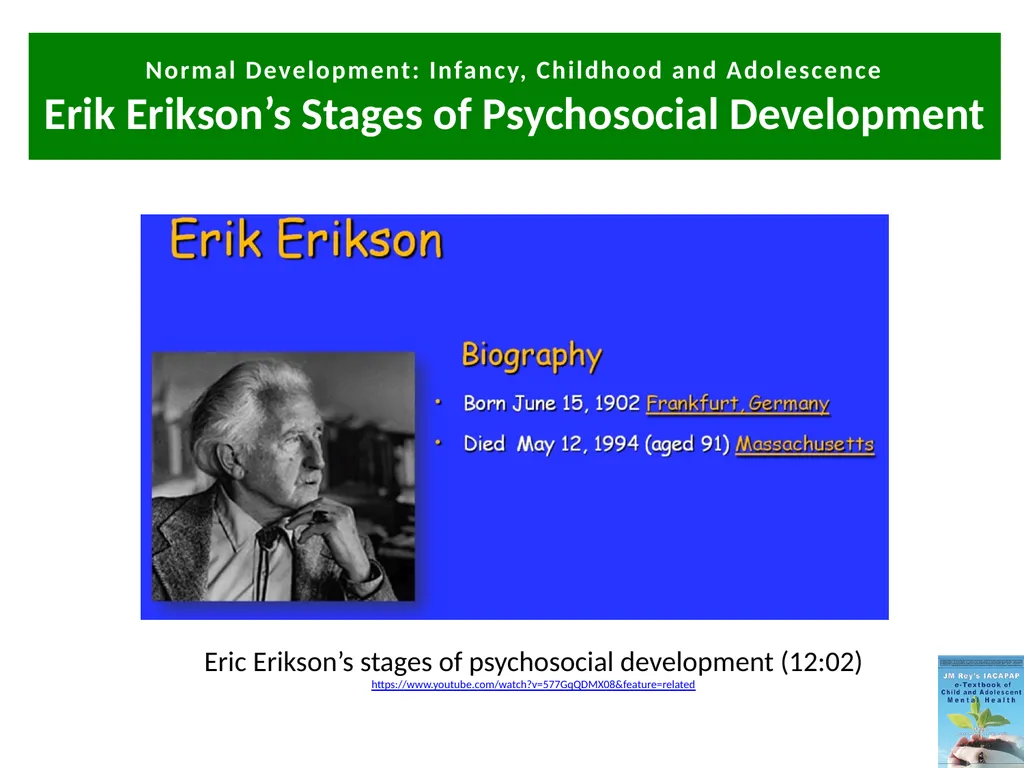
Eric Erikson’s stages of psychosocial development (12:02)
https://www.youtube.com/watch?v=577GqQDMX08&feature=related Normal Development: Infancy, Childhood and Adolescence Erik Erikson’s Stages of Psychosocial Development<br>
https://www.youtube.com/watch?v=577GqQDMX08&feature=related Normal Development: Infancy, Childhood and Adolescence Erik Erikson’s Stages of Psychosocial Development<br>
31
Normal Development: Infancy, Childhood and Adolescence
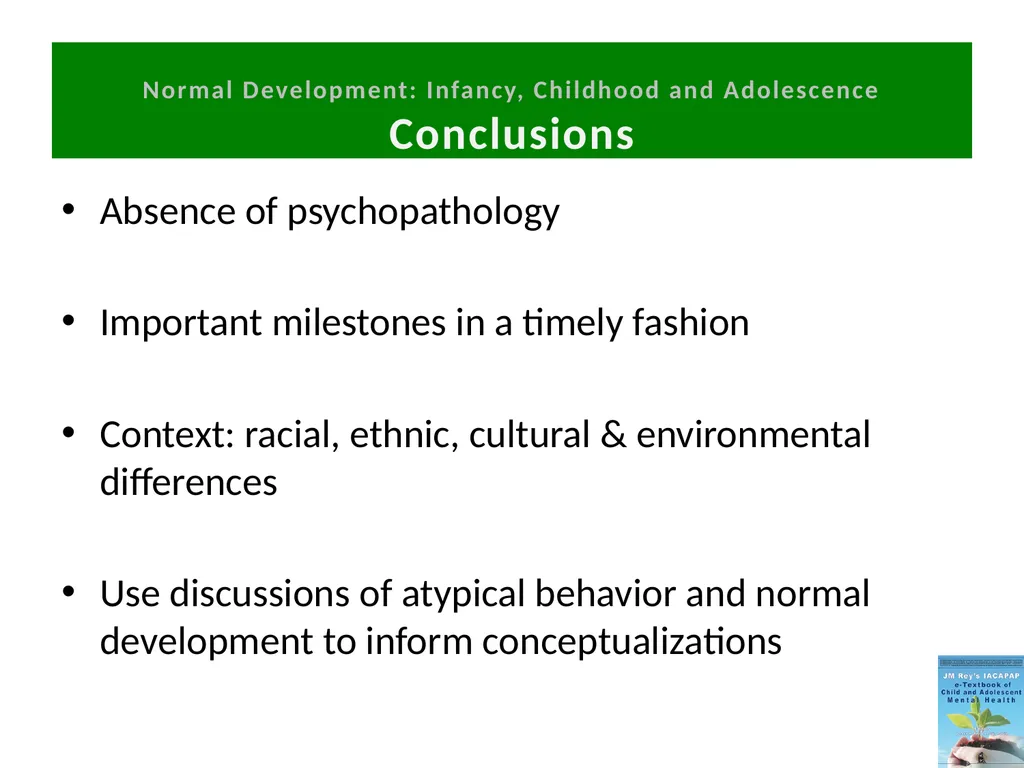
Conclusions Absence of psychopathology
Important milestones in a timely fashion
Context: racial, ethnic, cultural & environmental differences
Use discussions of atypical behavior and normal development to inform conceptualizations<br>
Important milestones in a timely fashion
Context: racial, ethnic, cultural & environmental differences
Use discussions of atypical behavior and normal development to inform conceptualizations<br>
32
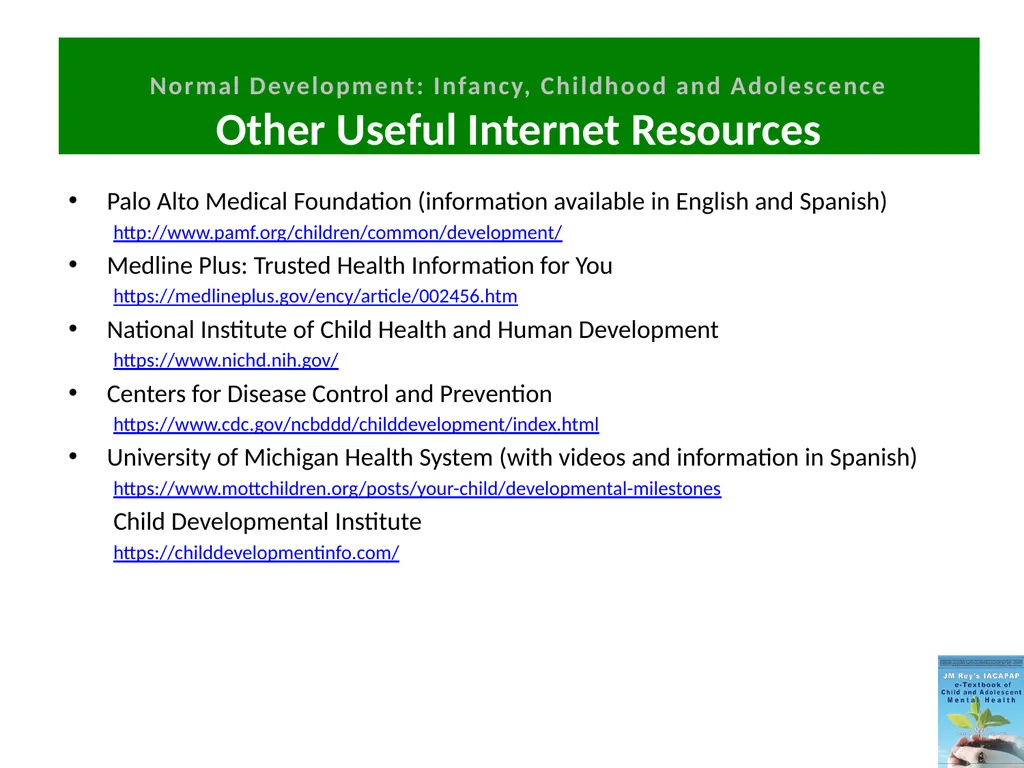
Palo Alto Medical Foundation (information available in English and Spanish)
http://www.pamf.org/children/common/development/
Medline Plus: Trusted Health Information for You
https://medlineplus.gov/ency/article/002456.htm
National Institute of Child Health and Human Development
https://www.nichd.nih.gov/
Centers for Disease Control and Prevention
https://www.cdc.gov/ncbddd/childdevelopment/index.html
University of Michigan Health System (with videos and information in Spanish)
https://www.mottchildren.org/posts/your-child/developmental-milestones
Child Developmental Institute
https://childdevelopmentinfo.com/ Normal Development: Infancy, Childhood and Adolescence Other Useful Internet Resources<br>
33
IACAPAP Thank You Slide Normal Development: Infancy, Childhood and Adolescence
Thank You!<br>