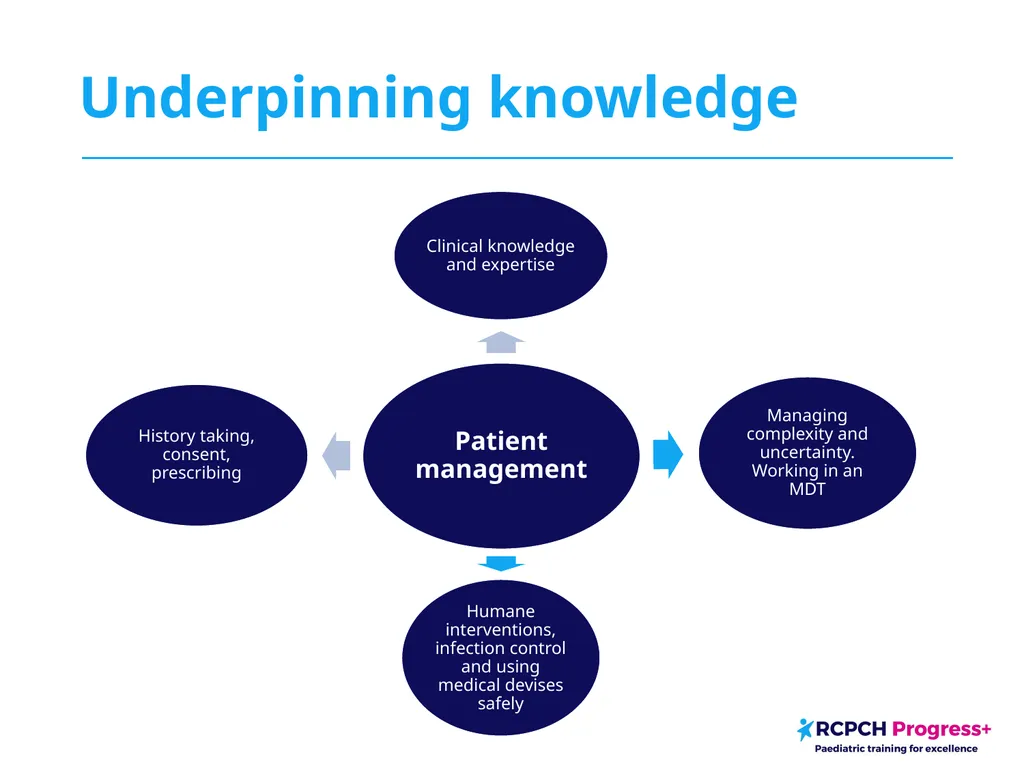
Domain 4: Patient Management Domain 4 Patient Management is our everyday practice. Aims to improve Patient Management by encouraging good practice: Resuscitation Management of the dying child Awareness of limitations MDT working Evidence
"Domain 4: Patient Management Domain 4 – Patient" is the property of its rightful owner. Permission is granted to
download and print the materials on this website for personal, non-commercial use only, and to display it
on your personal computer provided you do not modify the materials and that you retain all copyright
notices contained in the materials. By downloading content from our website, you accept the terms of this
agreement.
Presentation Transcript
01
Domain 4: Patient Management<br>
02
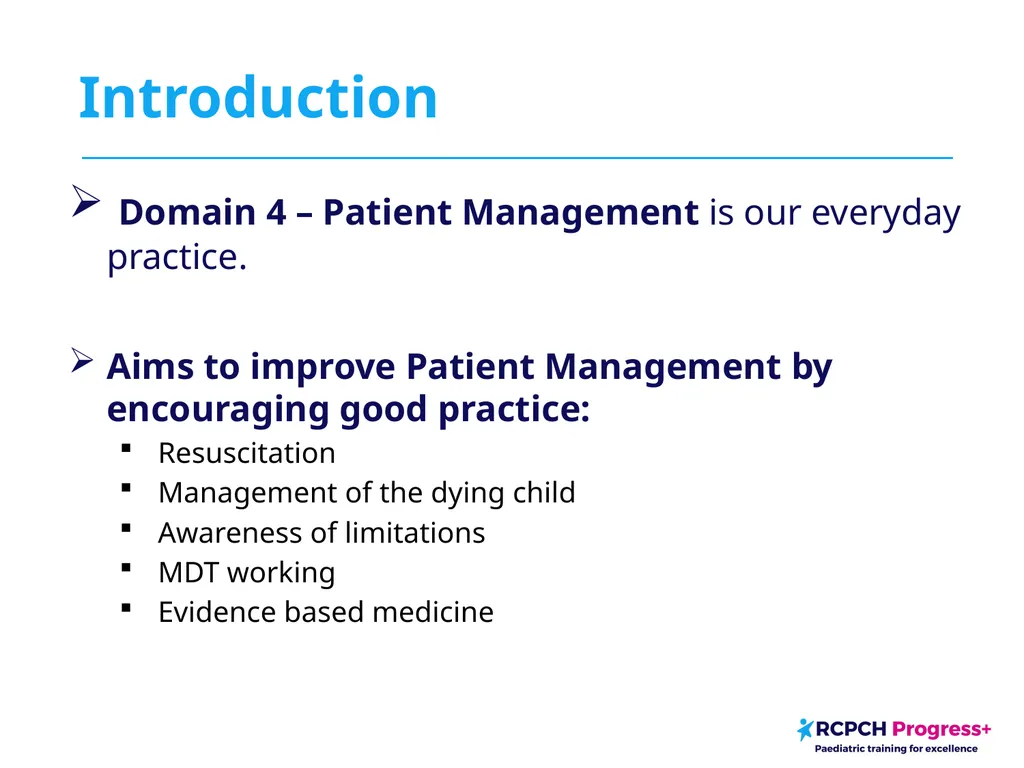
Domain 4 – Patient Management is our everyday practice.
Aims to improve Patient Management by encouraging good practice:
Resuscitation
Management of the dying child
Awareness of limitations
MDT working
Evidence based medicine Introduction<br>
03
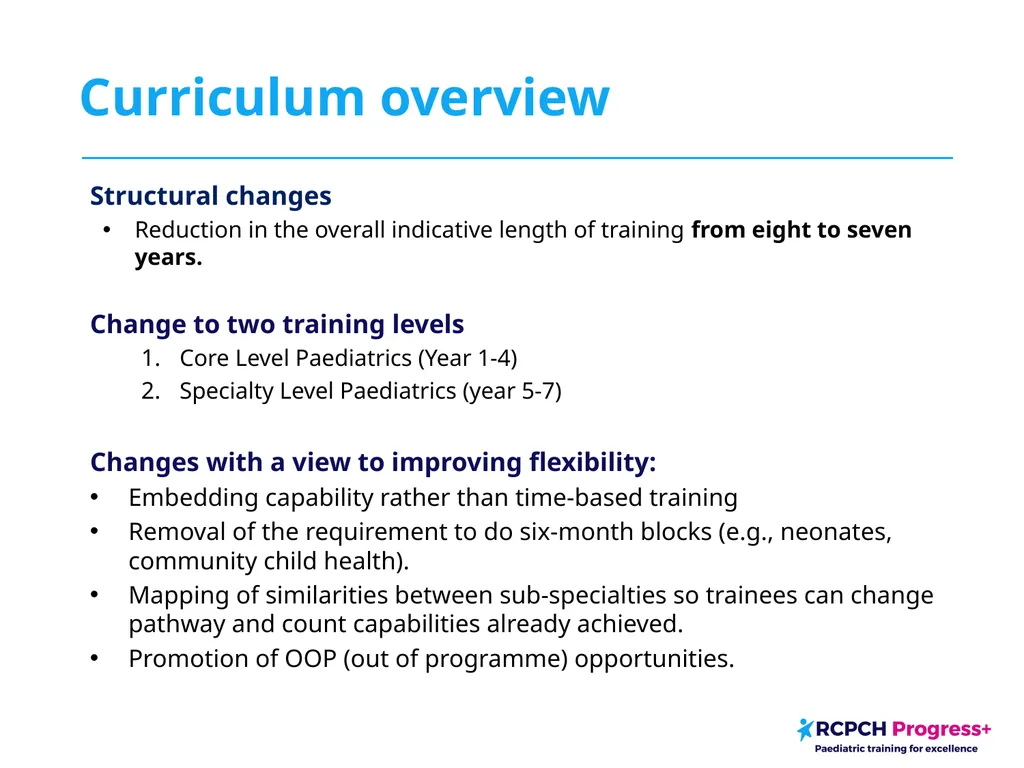
Structural changes
Reduction in the overall indicative length of training from eight to seven years.
Change to two training levels
Core Level Paediatrics (Year 1-4)
Specialty Level Paediatrics (year 5-7)
Changes with a view to improving flexibility:
Embedding capability rather than time-based training
Removal of the requirement to do six-month blocks (e.g., neonates, community child health).
Mapping of similarities between sub-specialties so trainees can change pathway and count capabilities already achieved.
Promotion of OOP (out of programme) opportunities. Curriculum overview<br>
04
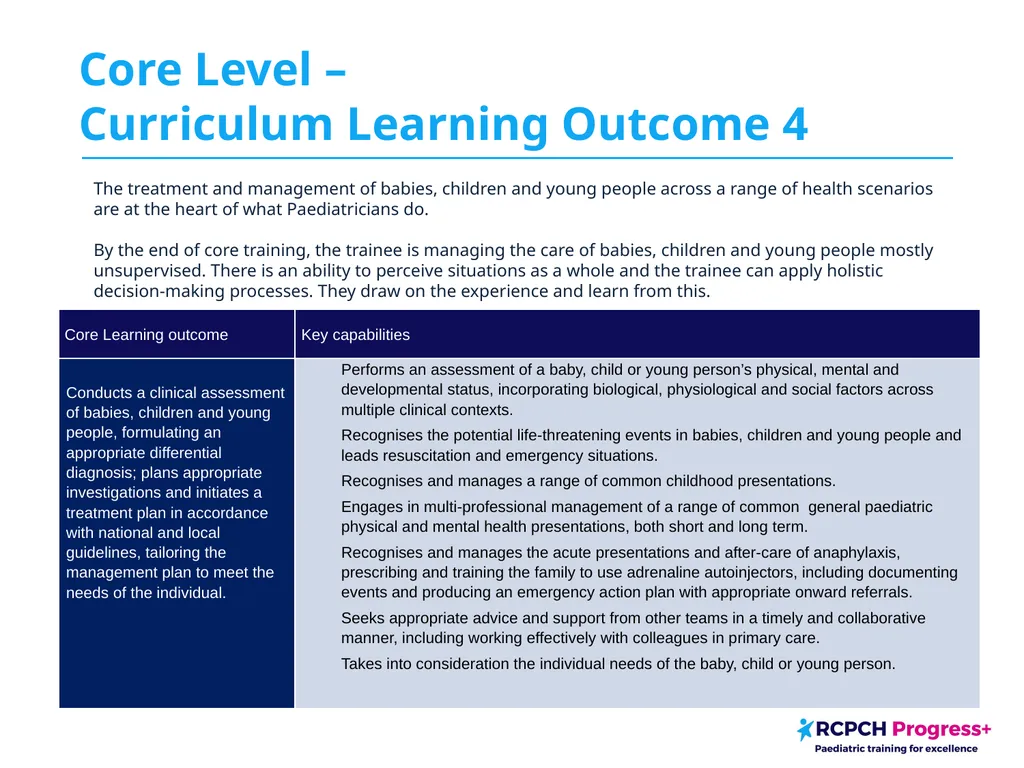
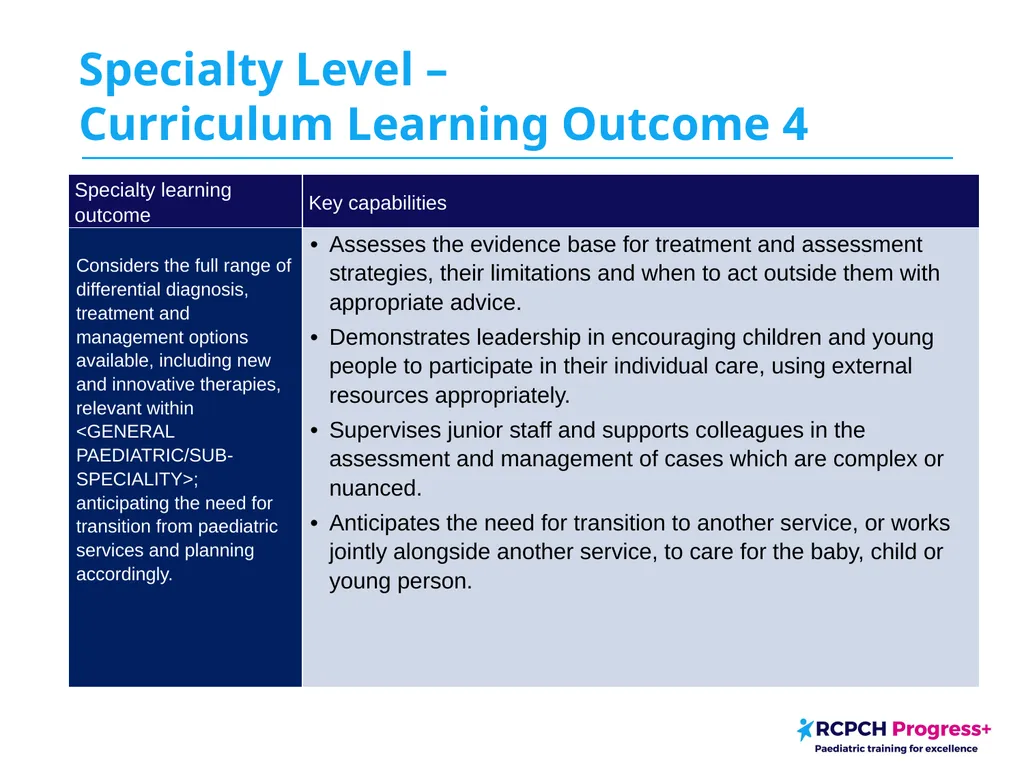
Core Level – Curriculum Learning Outcome 4 The treatment and management of babies, children and young people across a range of health scenarios are at the heart of what Paediatricians do.
By the end of core training, the trainee is managing the care of babies, children and young people mostly unsupervised. There is an ability to perceive situations as a whole and the trainee can apply holistic decision-making processes. They draw on the experience and learn from this.<br>
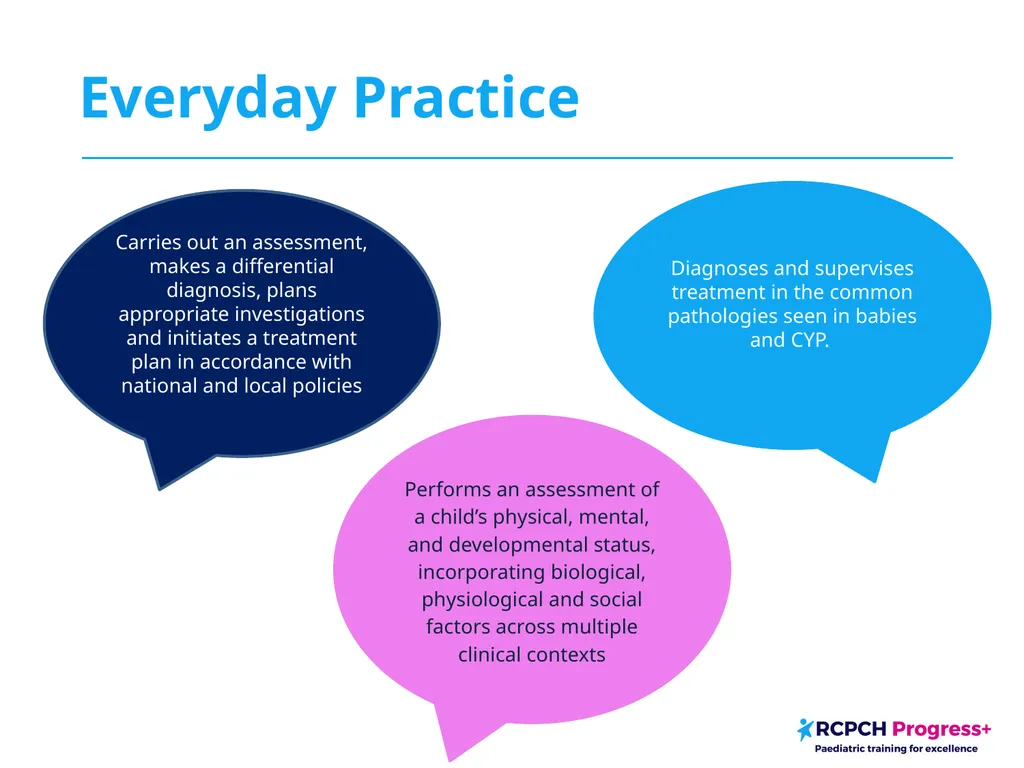
Everyday Practice Carries out an assessment, makes a differential diagnosis, plans appropriate investigations and initiates a treatment plan in accordance with national and local policies Diagnoses and supervises treatment in the common pathologies seen in babies and CYP. Performs an assessment of a child’s physical, mental, and developmental status, incorporating biological, physiological and social factors across multiple clinical contexts<br>
08
Resuscitation and the Acutely Unwell Child Recognises the life-threatening nature of some acute situations in CYP and knows when to call for help or seek personal support. Recognises common presentations which may indicate life-threatening pathology and require urgent action. Demonstrates the ability to provide and lead basic and advanced resuscitation, including advanced airway management with the use of airway adjuncts to the point of intubation. Advanced Paediatric life support
Neonatal Life support
Mini-cex/ CBD/ reflection after life threating cases<br>
09
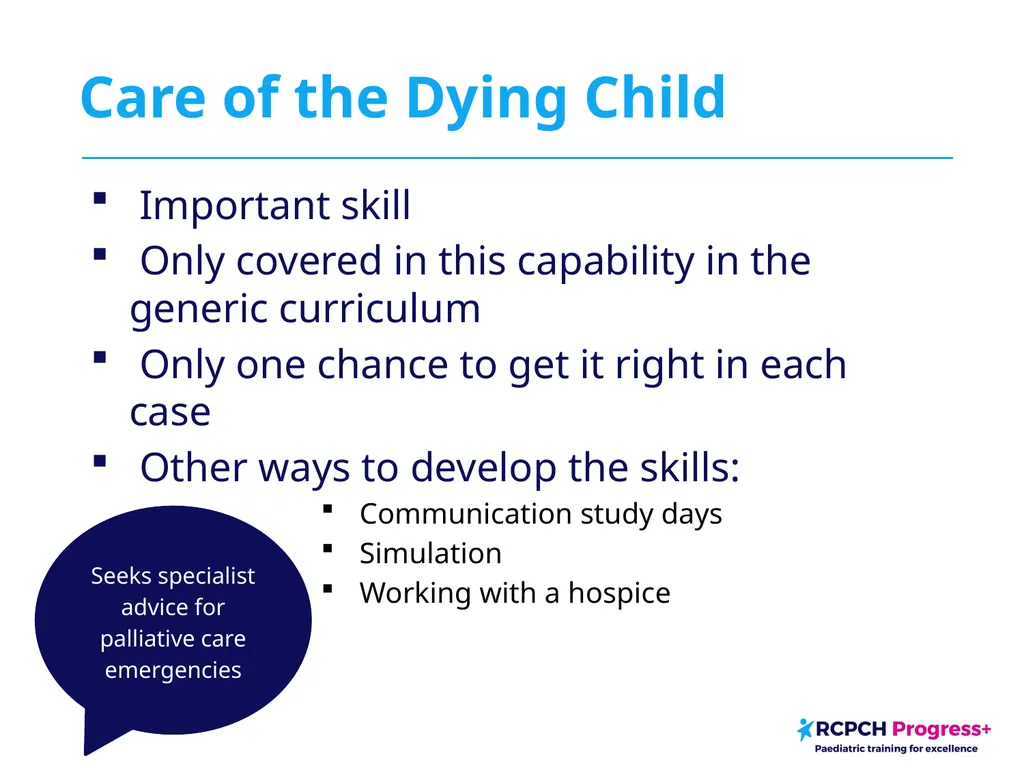
Important skill
Only covered in this capability in the generic curriculum
Only one chance to get it right in each case
Other ways to develop the skills:
Communication study days
Simulation
Working with a hospice Care of the Dying Child Seeks specialist advice for palliative care emergencies<br>
10
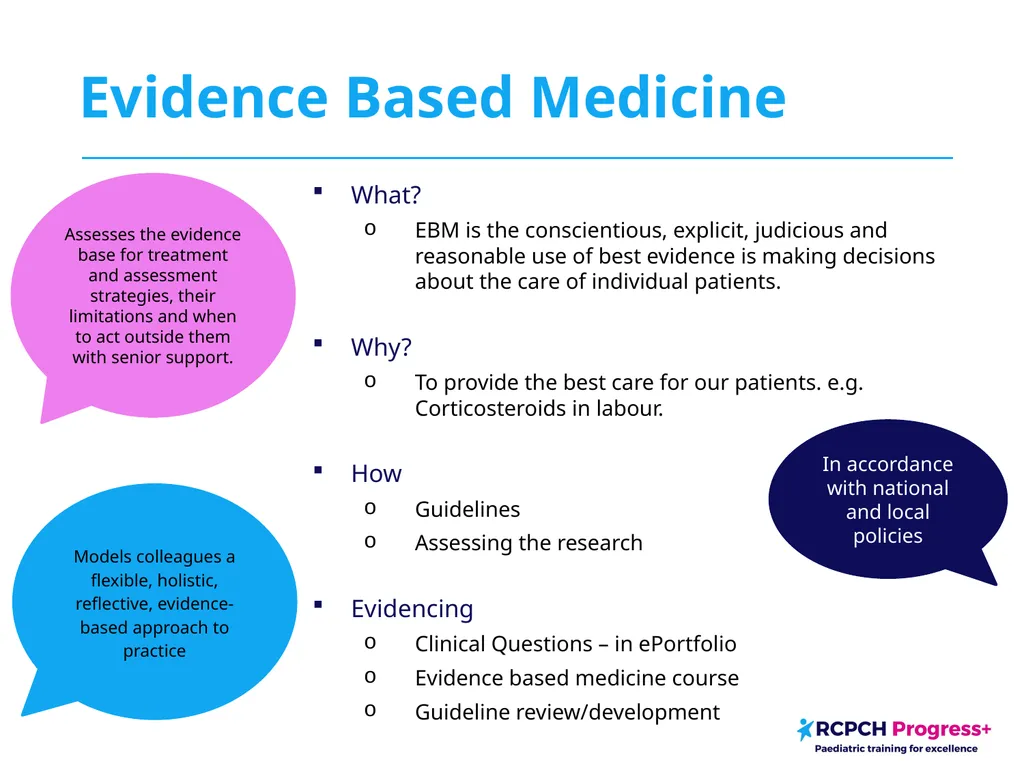
What?
EBM is the conscientious, explicit, judicious and reasonable use of best evidence is making decisions about the care of individual patients.
Why?
To provide the best care for our patients. e.g. Corticosteroids in labour.
How
Guidelines
Assessing the research
Evidencing
Clinical Questions – in ePortfolio
Evidence based medicine course
Guideline review/development Evidence Based Medicine In accordance with national and local policies Assesses the evidence base for treatment and assessment strategies, their limitations and when to act outside them with senior support. Models colleagues a flexible, holistic, reflective, evidence-based approach to practice<br>
11
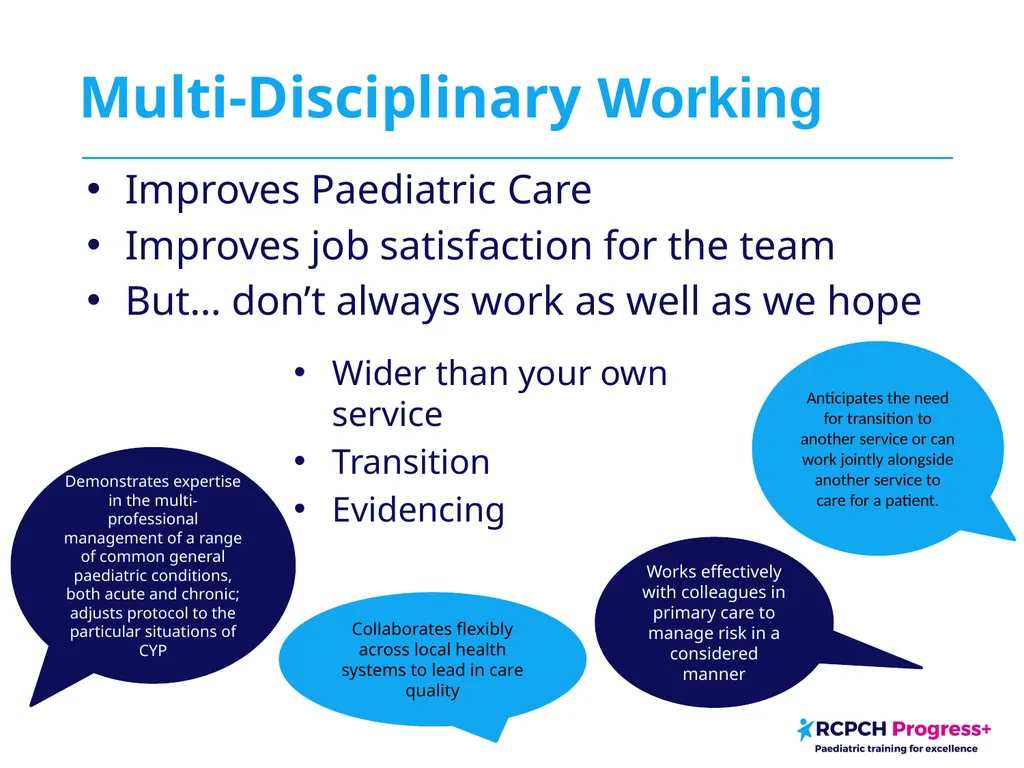
Improves Paediatric Care
Improves job satisfaction for the team
But… don’t always work as well as we hope Multi-Disciplinary Working Demonstrates expertise in the multi-professional management of a range of common general paediatric conditions, both acute and chronic; adjusts protocol to the particular situations of CYP Works effectively with colleagues in primary care to manage risk in a considered manner Anticipates the need for transition to another service or can work jointly alongside another service to care for a patient. Collaborates flexibly across local health systems to lead in care quality Wider than your own service
Transition
Evidencing<br>
12
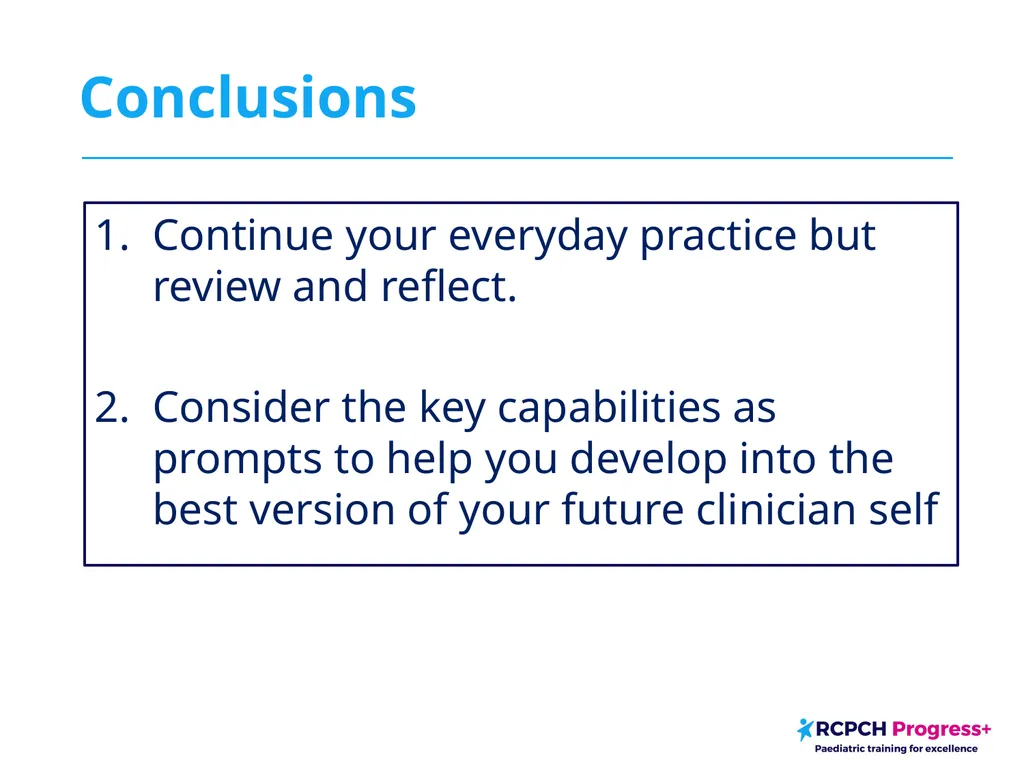
Continue your everyday practice but review and reflect.
Consider the key capabilities as prompts to help you develop into the best version of your future clinician self Conclusions<br>
13
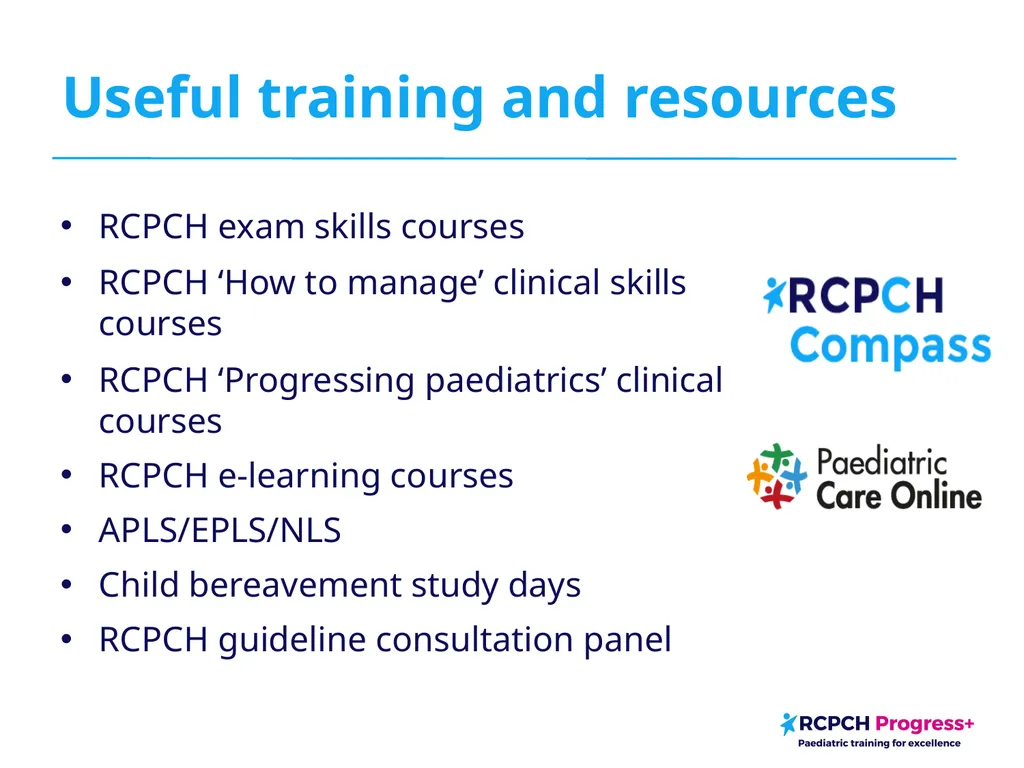
Useful training and resources RCPCH exam skills courses