DR. SUDHA KUMARI Assistant Professor DEPARTMENT OF VETERINARY MICROBIOLOGY BIHAR VETERINARY COLLEGE, PATNA -14 Bihar Animal Sciences University , Patna Theory (2nd year) Unit -1 General Systematic Veterinary Microbiology, dated 01122020
"DR. SUDHA KUMARI Assistant Professor DEPARTMENT OF" is the property of its rightful owner. Permission is granted to
download and print the materials on this website for personal, non-commercial use only, and to display it
on your personal computer provided you do not modify the materials and that you retain all copyright
notices contained in the materials. By downloading content from our website, you accept the terms of this
agreement.
Presentation Transcript
01
DR. SUDHA KUMARI
Assistant Professor
DEPARTMENT OF VETERINARY MICROBIOLOGY BIHAR VETERINARY COLLEGE, PATNA -14
Bihar Animal Sciences University , Patna Theory (2nd year) Unit -1
General & Systematic Veterinary Microbiology, dated 01/12/2020<br>
02
Virulence
Is defined as the degree of pathogenicity of a pathogen (bacteria, fungi, or viruses) and is determined by its ability to invade and multiply within the host.
Virulence determinants can range from surface/capsid proteins that determine cell/tissue tropism to small adapter proteins that alter cell-signaling cascades.<br>
03
Virulence of a virus also depends upon genetics, age, and overall health of the host.
And it would not be surprising to find that the microbiome (the mixture of commensal bacteria and viruses in the host) can have an impact on virulence.
In experimental situations, the route of inoculation or dose administered can have a major effect on virulence.
Thus the study of virulence determinants requires an understanding of the complex interactions between virus and host (and perhaps environment).<br>
04
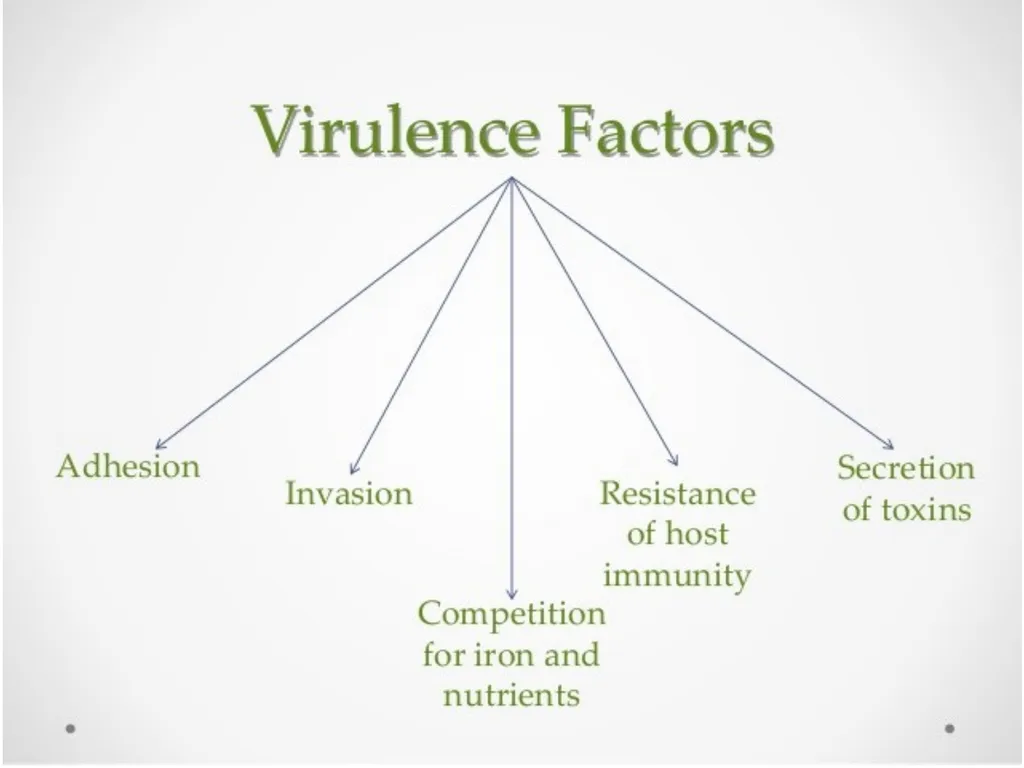
Methods by which bacteria cause disease
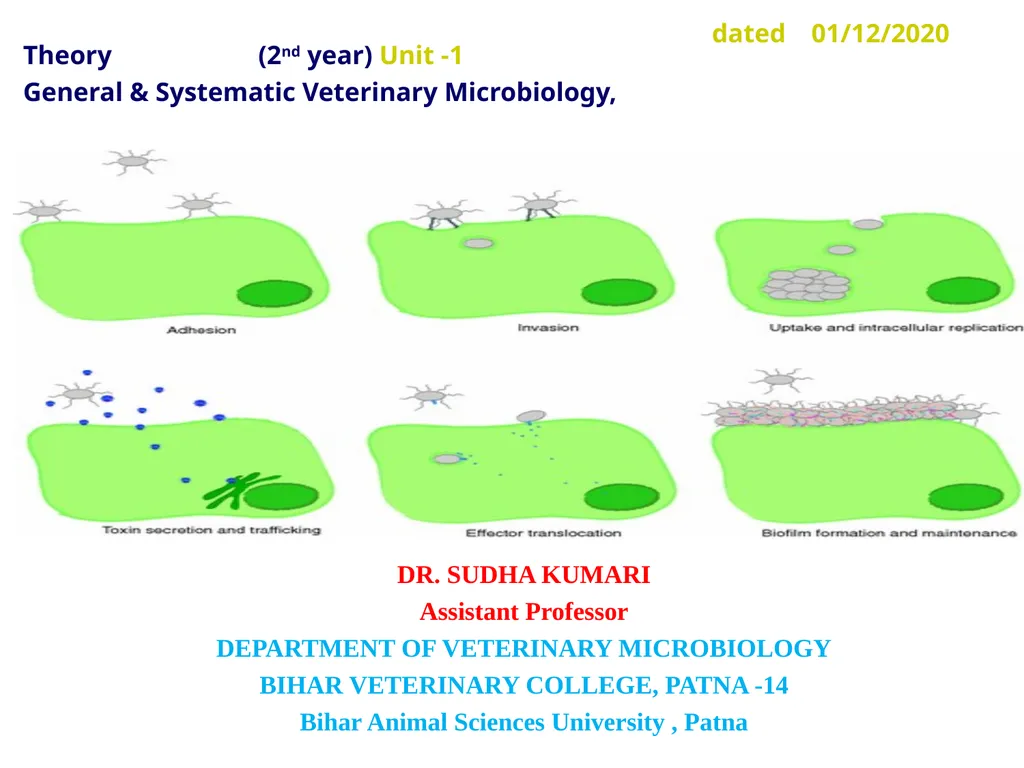
Adhesion
Many bacteria must first bind to host cell surfaces.
Many bacterial and host molecules that are involved in the adhesion of bacteria to host cells have been identified.
Often, the host cell receptors for bacteria are essential proteins for other functions.
Due to presence of mucous lining and of anti-microbial substances around some host cells, it is difficult for certain pathogens to establish direct contact-adhesion.<br>
05
Colonization
Some virulent bacteria produce special proteins that allow them to colonize parts of the host body.
Helicobacter pylori is able to survive in the acidic environment of the human stomach by producing the enzyme urease.
Colonization of the stomach lining by this bacterium can lead to gastric ulcers and cancer.
The virulence of various strains of Helicobacter pylori tends to correlate with the level of production of urease.<br>
06
Invasion
Invasion Some virulent bacteria produce proteins that either disrupt host cell membranes or stimulate their own endocytosis or macro-pinocytosis into host cells.
These virulence factors allow the bacteria to enter host cells and facilitate entry into the body across epithelial tissue layers at the body surface.
Immune response inhibitors
Many bacteria produce virulence factors that inhibit the host's immune system defenses. For example, a common bacterial strategy is to produce proteins that bind host antibodies.<br>
07
The polysaccharide capsule of Streptococcus pneumoniae inhibits phagocytosis of the bacterium by host immune cells.
Toxins
Many virulence factors are proteins made by bacteria that poison host cells and cause tissue damage.
For example, there are many food poisoning toxins produced by bacteria that can contaminate human and animal foods.
Some of these can remain in "spoiled" food even after cooking and cause illness when the contaminated food is consumed.
Other bacterial toxins are chemically altered and inactivated by the heat of cooking.<br>
08
1.Bacteremia is the simple presence of bacteria in the blood. Septicemia is the presence and multiplication of bacteria in the blood.
Septicemia is also known as blood poisoning.
2. Bacteremia is not as dangerous as Septicemia. Septicemia is a potentially life-threatening infection.
3. Less amount of bacteria are present in blood. Large amounts of Septicemia are present in the blood.
4. Toxins are not produced by Bacteremia but Toxins may be produced by bacteria. .<br>
09
5. Bacteremia usually causes no symptoms or it may produce mild fever but It shows symptoms like chills, fever, prostration, very fast respiration and/or heart rate.
6. It can resolve without treatment but Untreated septicemia can quickly progress to sepsis.
7.Rapidly removed from the bloodstream by the immune system in case of septicemia antibiotics will be used to treat the bacterial infection that is causing septicemia.<br>
10
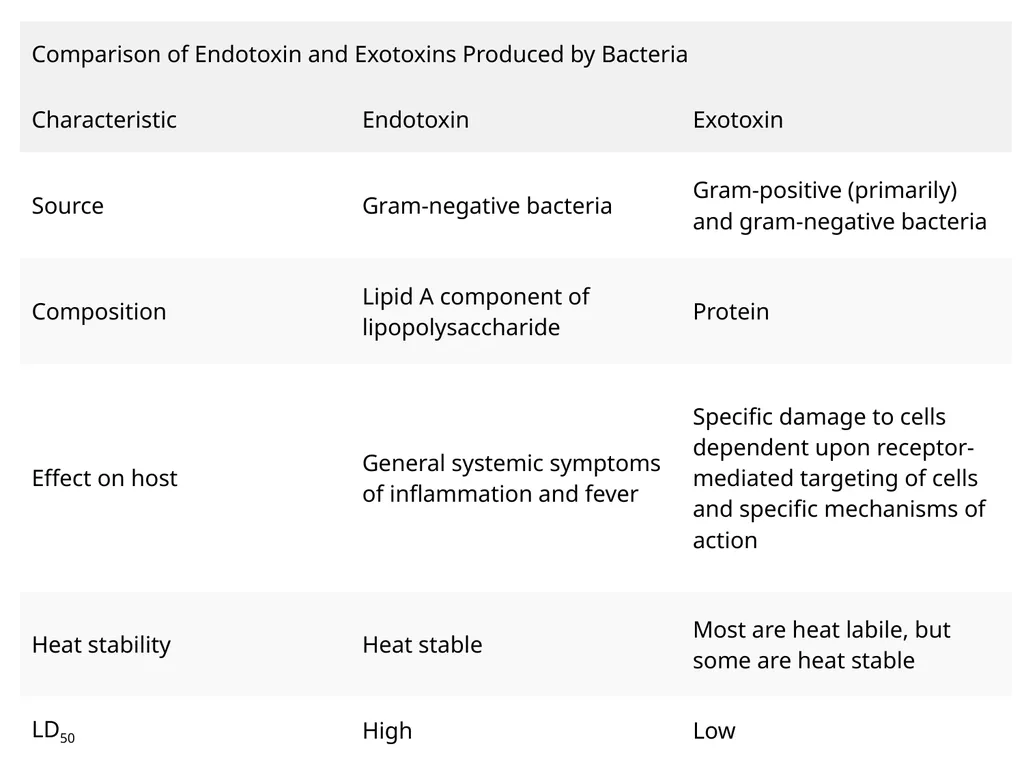
Bacterial toxins include endotoxin and exotoxins. Endotoxin is the lipid A component of the LPS of the gram-negative cell envelope.
Exotoxins are proteins secreted mainly by gram-positive bacteria, but also are secreted by gram-negative bacteria.
Toxins
In addition to exoenzymes, certain pathogens are able to produce toxins, biological poisons that assist in their ability to invade and cause damage to tissues.
The ability of a pathogen to produce toxins to cause damage to host cells is called toxigenicity.
Toxins can be categorized as endotoxins or exotoxins.<br>
11
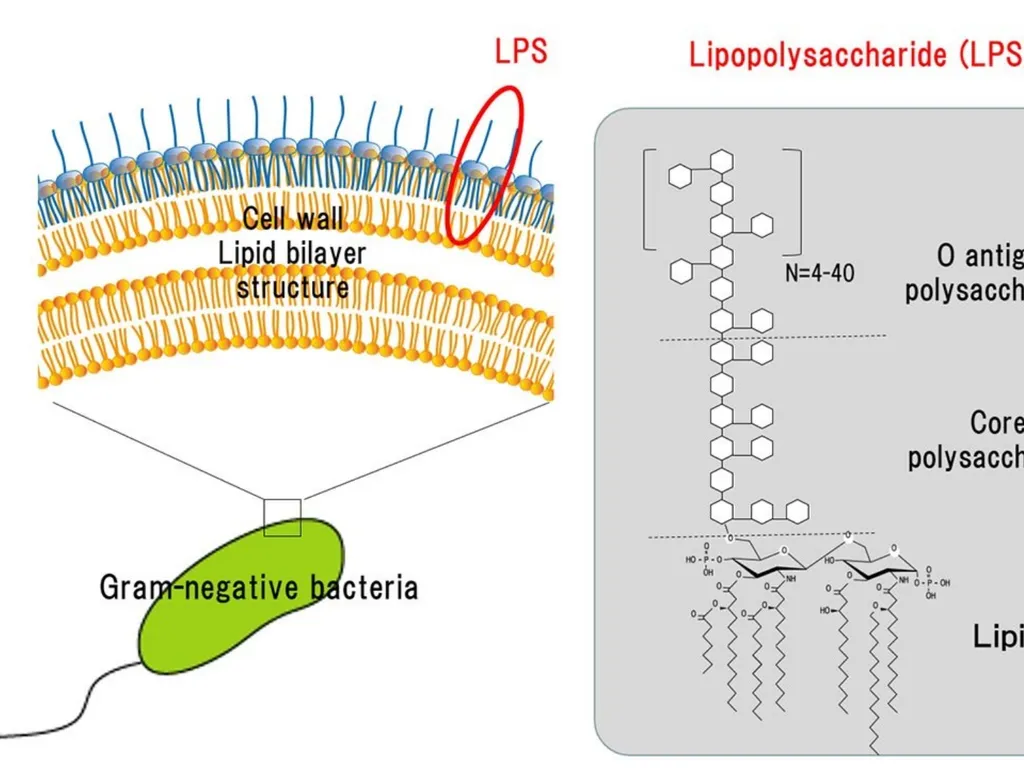
Lipopolysaccharide (LPS) found on the outer membrane of gram-negative bacteria is called endotoxin.
During infection and disease, gram-negative bacterial pathogens release endotoxin either when the cell dies, resulting in the disintegration of the membrane, or when the bacterium undergoes binary fission.
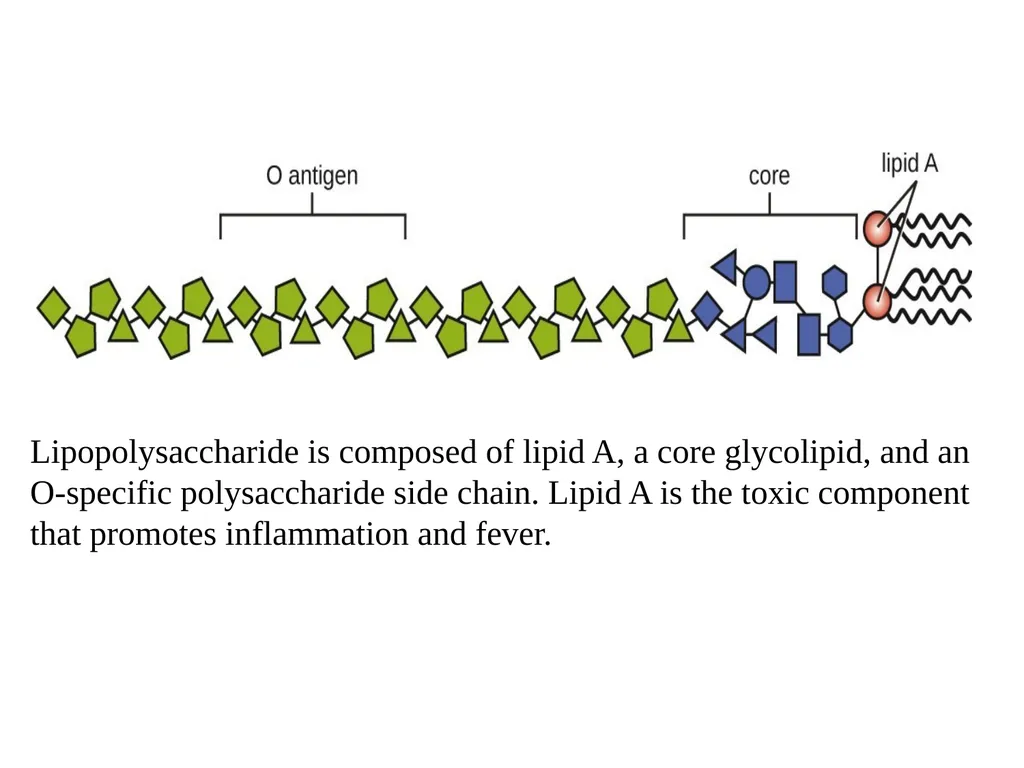
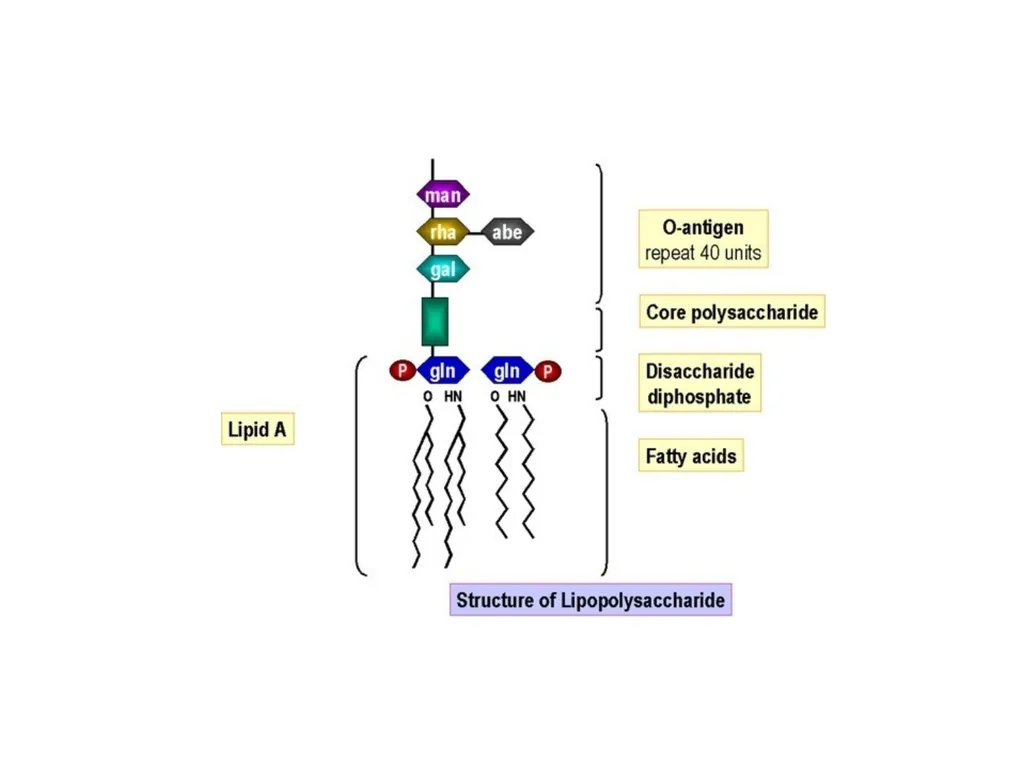
The lipid component of endotoxin, lipid A, is responsible for the toxic properties of the LPS molecule.
Lipid A is the toxic component that promotes inflammation and fever.<br>
12
Lipopolysaccharide is composed of lipid A, a core glycolipid, and an O-specific polysaccharide side chain. Lipid A is the toxic component that promotes inflammation and fever.<br>
13
Antitoxin
Antitoxin is an antibody with the ability to neutralize a specific toxin.
Antitoxins are produced by certain animals, plants, and bacteria in response to toxin exposure.
Although they are most effective in neutralizing toxins, they can also kill bacteria and other microorganisms.
Antitoxins are made within organisms, and can be injected into other organisms, including humans, to treat an infectious disease.
This procedure involves injecting an animal with a safe amount of a particular toxin.
The animal's body then makes the antitoxin needed to neutralize the toxin.<br>
14
Later, blood is withdrawn from the animal.
When the antitoxin is obtained from the blood, it is purified and injected into a human or other animal, inducing temporary passive immunity.
To prevent serum sickness, it is often best to use an antitoxin obtained from the same species.
e.g. use human antitoxin to treat humans<br>
15
Toxoid
A toxoid is an inactivated toxin whose toxicity has been suppressed either by chemical or heat treatment, while other properties, typically immunogenicity, are maintained.
Toxins are secreted by bacteria, whereas toxoids are altered form of toxins; toxoids are not secreted by bacteria.
A chemically modified toxin from a pathogenic microorganism, which is no longer toxic but is still antigenic and can be used as a vaccine.
Toxoid proteins are biologically inactivated forms of native toxins. The most often used toxoid is tetanus toxoid, but diphtheria-derived toxoids and other proteins are also used occasionally. These carrier proteins have been used frequently for pertussis and influenza vaccines.<br>