Enjeux de lOpen Access : le green OA, coûts et bénéfices Alma Swan Director of Advocacy, SPARC Europe Convenor, Enabling Open Scholarship Director, Key Perspectives Ltd Director, Infrastructure Services for Open Access Couperin Open Access
"Enjeux de l’Open Access : le green OA, coûts et" is the property of its rightful owner. Permission is granted to
download and print the materials on this website for personal, non-commercial use only, and to display it
on your personal computer provided you do not modify the materials and that you retain all copyright
notices contained in the materials. By downloading content from our website, you accept the terms of this
agreement.
Presentation Transcript
01
Enjeux de l’Open Access : le green OA, coûts et bénéfices Alma Swan
Director of Advocacy, SPARC Europe
Convenor, Enabling Open Scholarship
Director, Key Perspectives Ltd
Director, Infrastructure Services for Open Access Couperin Open Access Conference: Généraliser l’accès ouvert aux résultats de la recherche
Paris, 24/25 January 2013<br>
02
Les coûts et bénéfices Benefits:
Faster, more efficient, more effective research
Outreach to professional and practitioner communities
Outreach to the education community
Outreach to the business community
A better Knowledge Society
€€€ ? Costs:
Publisher adaptation
Author adaptation
€€€ ?<br>
03
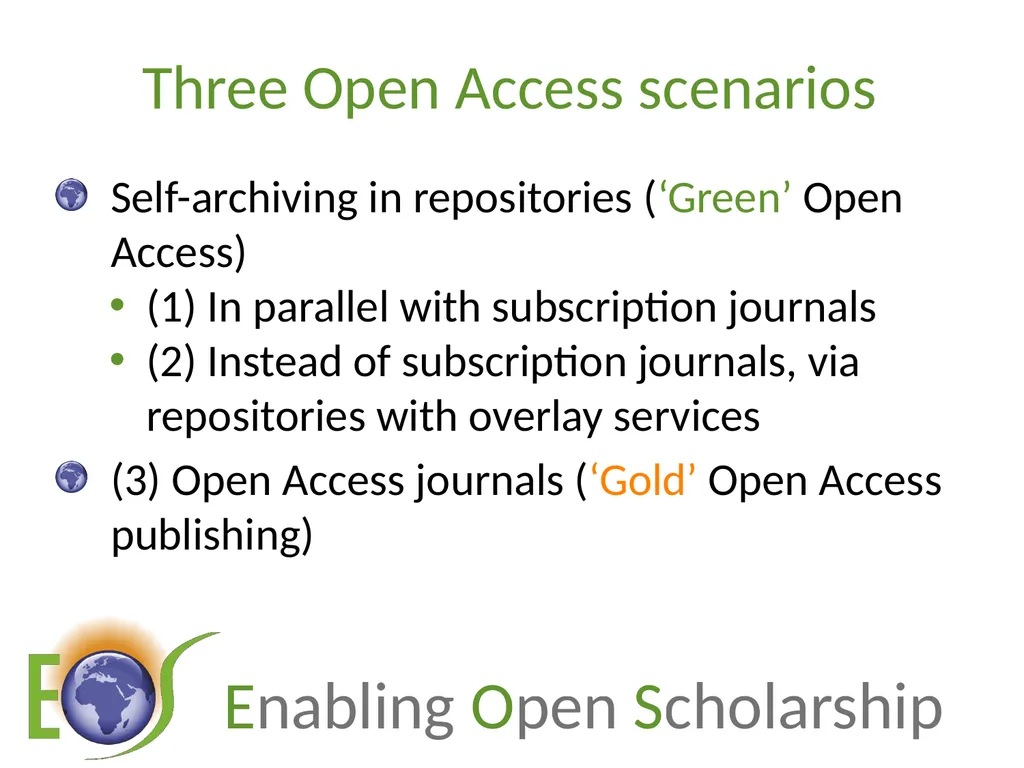
Three Open Access scenarios Self-archiving in repositories (‘Green’ Open Access)
(1) In parallel with subscription journals
(2) Instead of subscription journals, via repositories with overlay services
(3) Open Access journals (‘Gold’ Open Access publishing)<br>
04
Another dimension Worldwide versus unilateral OA
Worldwide = when all institutions (or nations) convert to OA
Unilateral = when only the test institution (or nation) converts to OA and the rest of the world continues with the current situation<br>
05
National models<br>
06
National pictures (worldwide OA) (Houghton et al, 2009, 2010)<br>
Three Open Access scenarios Self-archiving in repositories (‘Green’ Open Access)
(1) In parallel with subscription journals
(2) Instead of subscription journals, via repositories with overlay services
(3) Open Access journals (‘Gold’ Open Access publishing)<br>
10
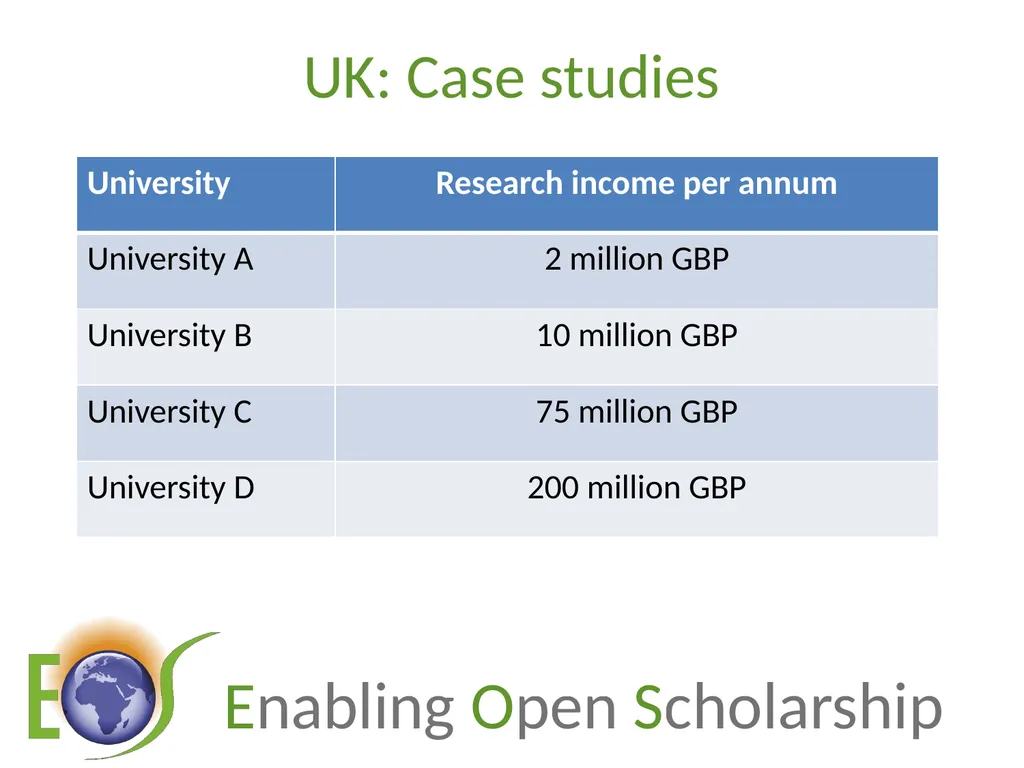
UK: Case studies<br>
11
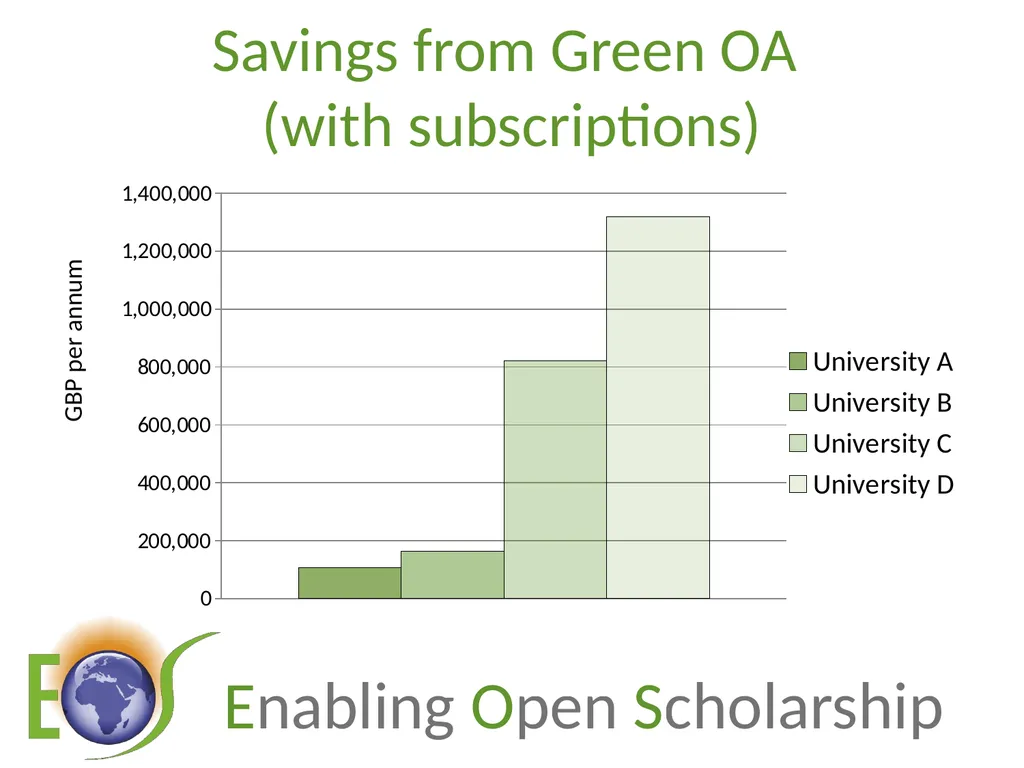
Savings from Green OA (with subscriptions) GBP per annum<br>
12
‘University UK’: Annual savings from OA GBP per annum<br>
13
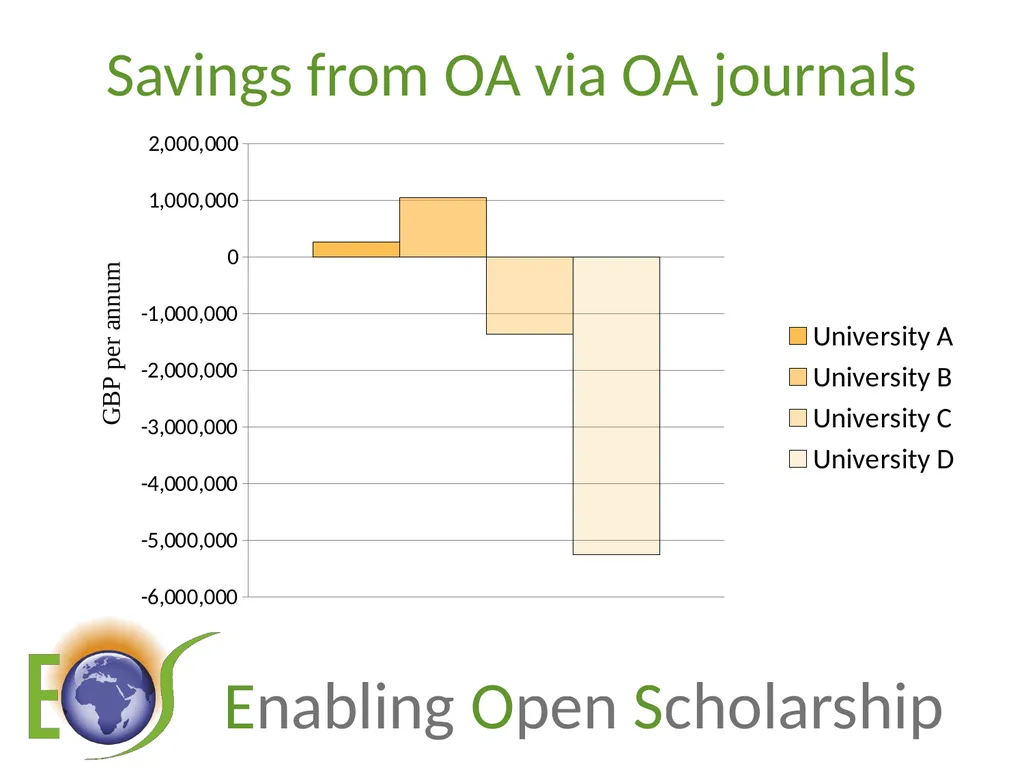
Savings from OA via OA journals<br>
14
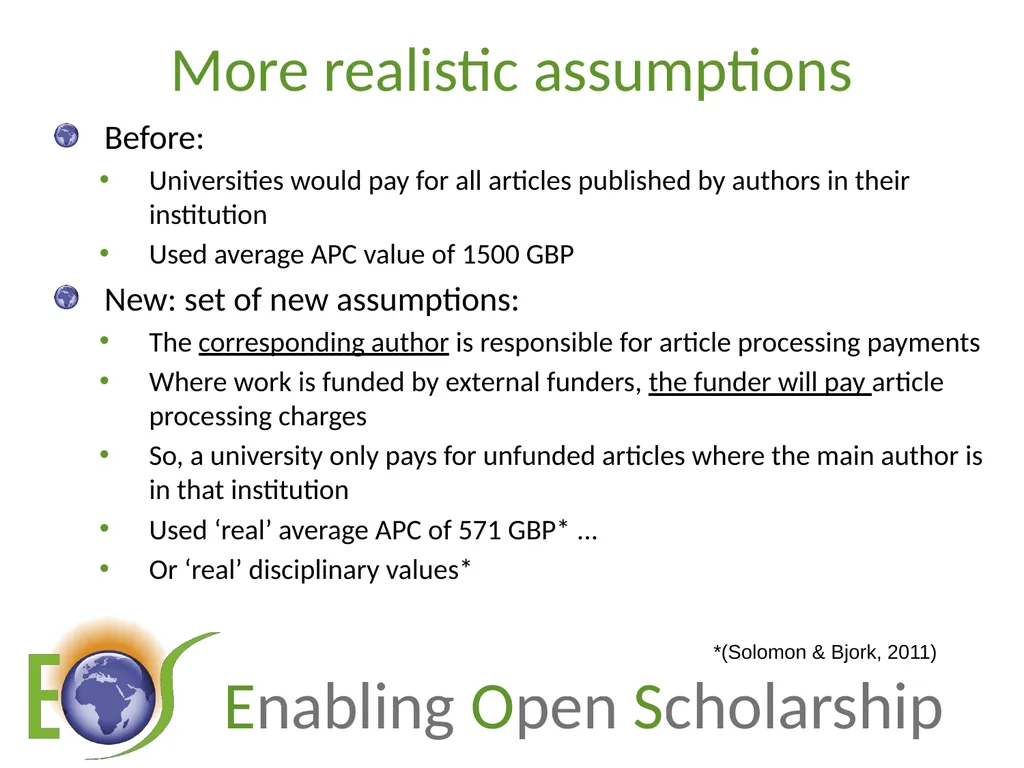
More realistic assumptions Before:
Universities would pay for all articles published by authors in their institution
Used average APC value of 1500 GBP
New: set of new assumptions:
The corresponding author is responsible for article processing payments
Where work is funded by external funders, the funder will pay article processing charges
So, a university only pays for unfunded articles where the main author is in that institution
Used ‘real’ average APC of 571 GBP* ...
Or ‘real’ disciplinary values* *(Solomon & Bjork, 2011)<br>
15
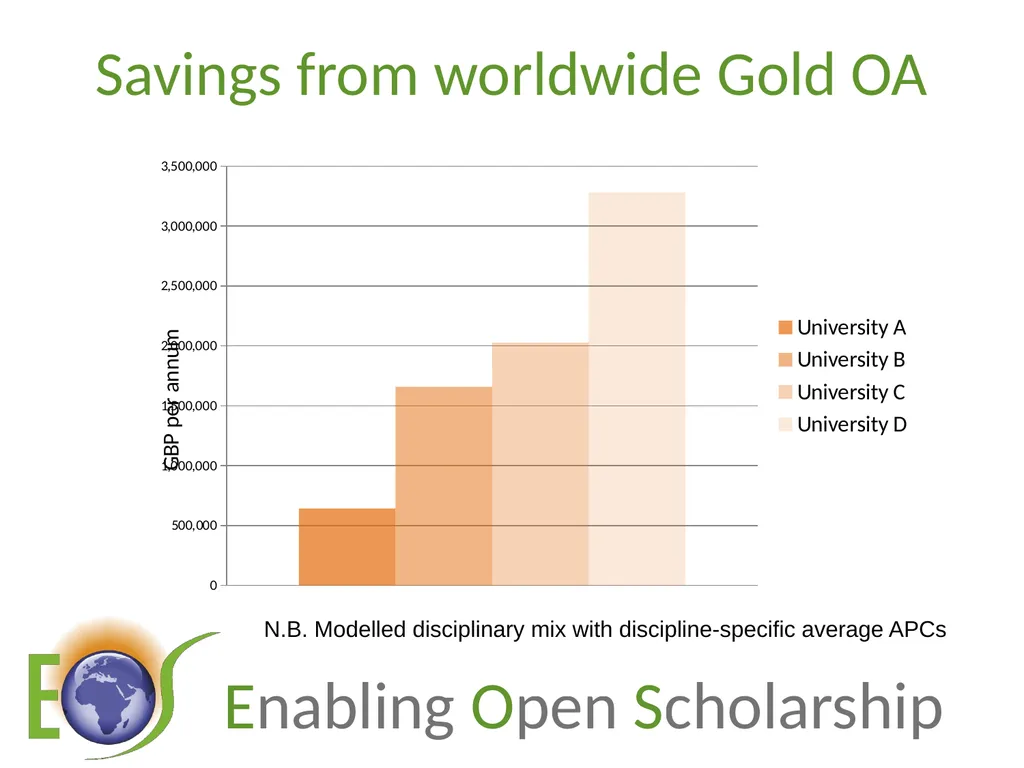
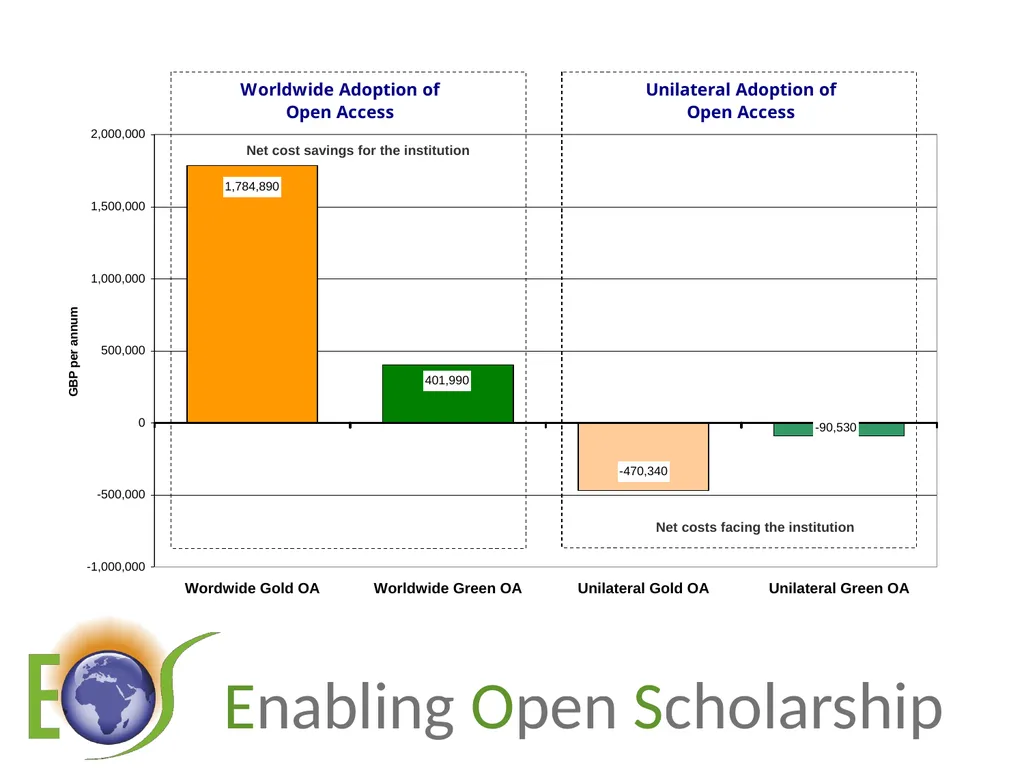
Savings from worldwide Gold OA N.B. Modelled disciplinary mix with discipline-specific average APCs<br>
16
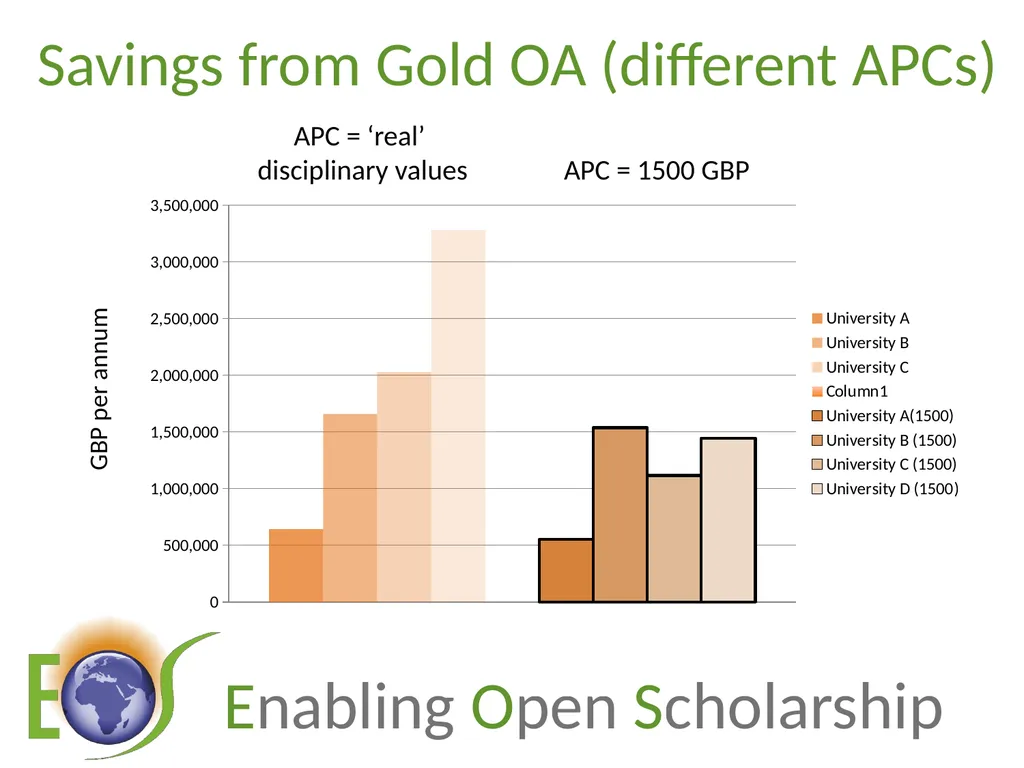
Savings from Gold OA (different APCs) APC = ‘real’
disciplinary values APC = 1500 GBP GBP per annum<br>
17
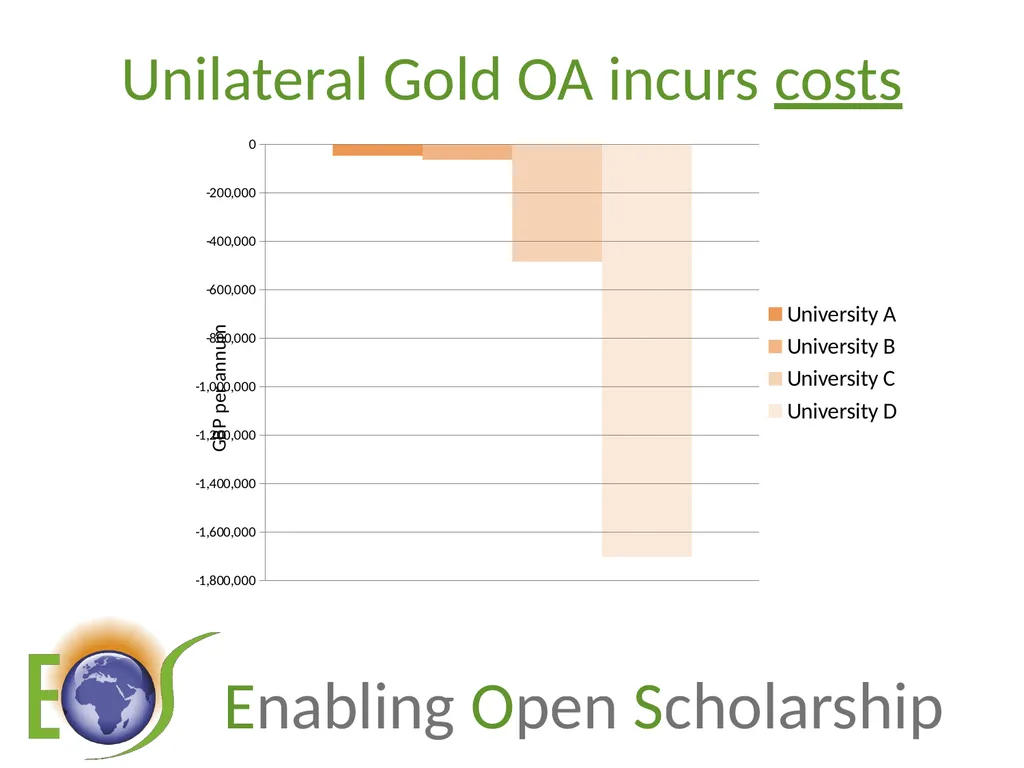
Unilateral Gold OA incurs costs<br>
18
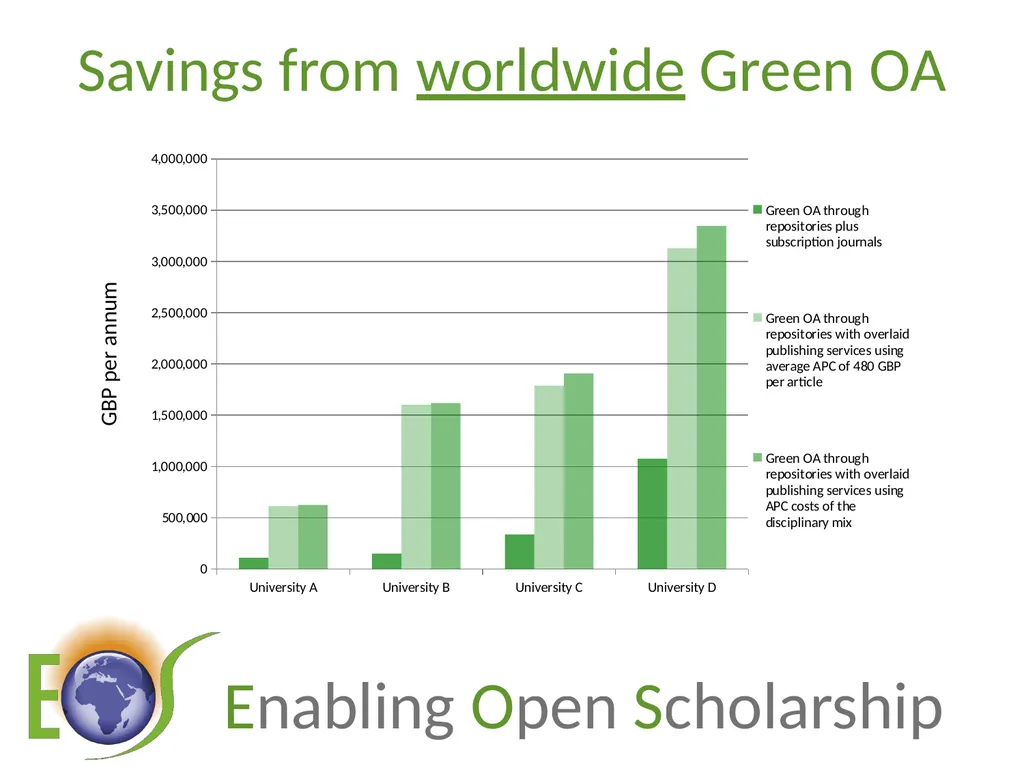
Savings from worldwide Green OA GBP per annum<br>
19
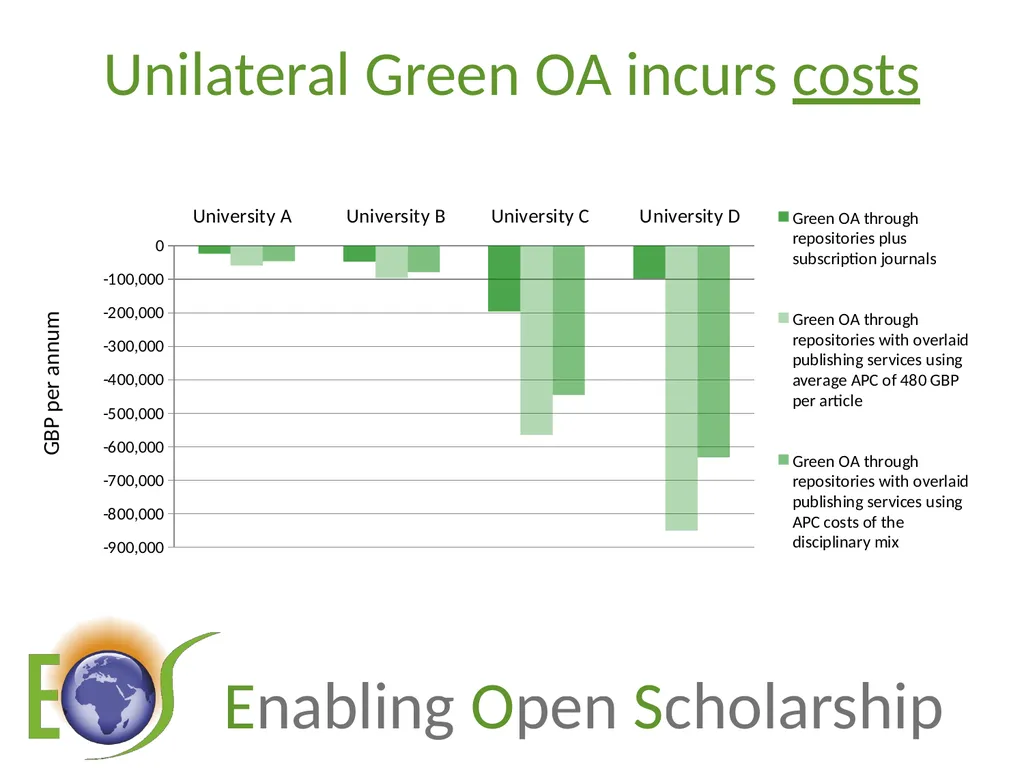
Unilateral Green OA incurs costs GBP per annum<br>
20
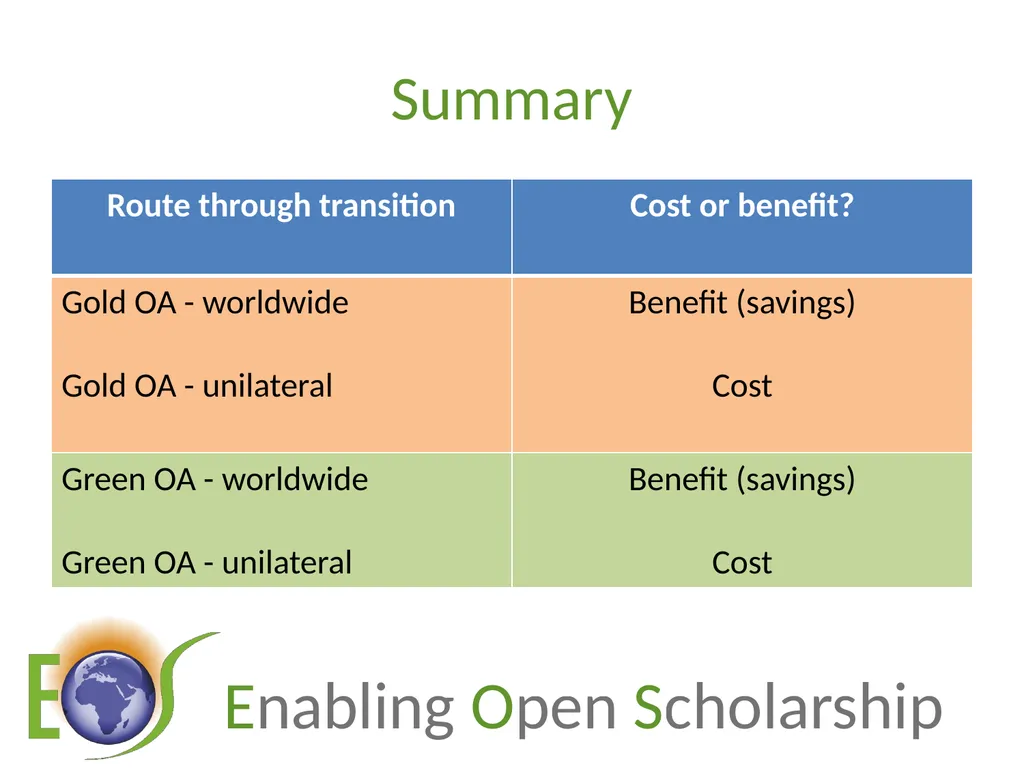
Summary<br>
21
National models<br>
22
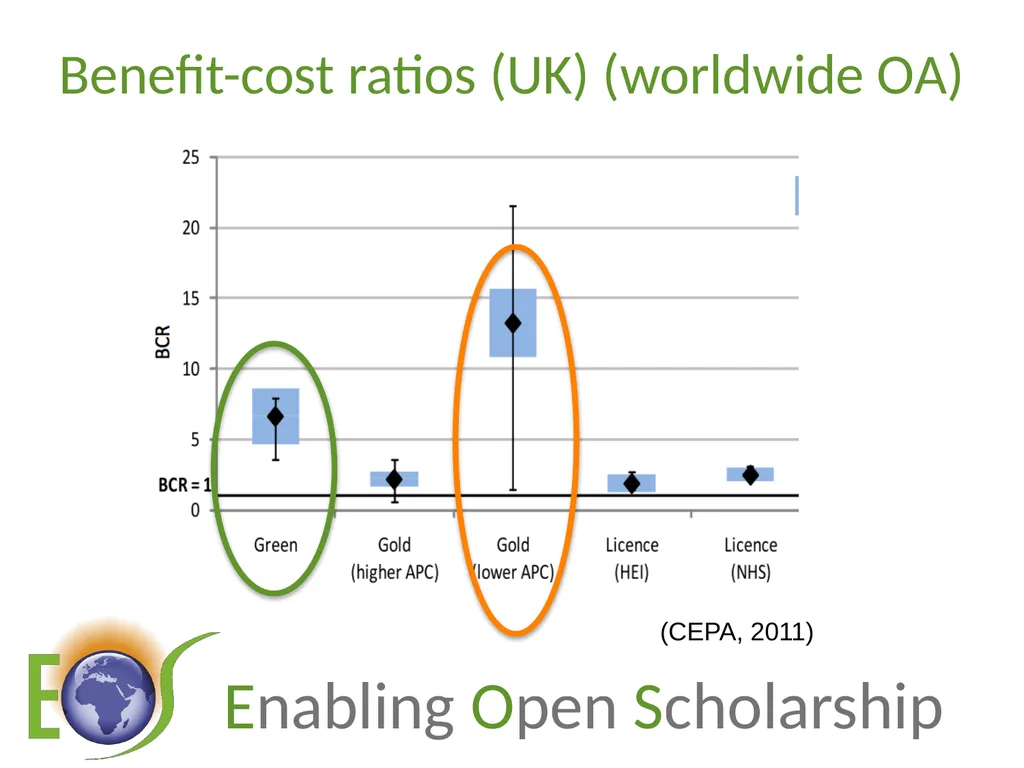
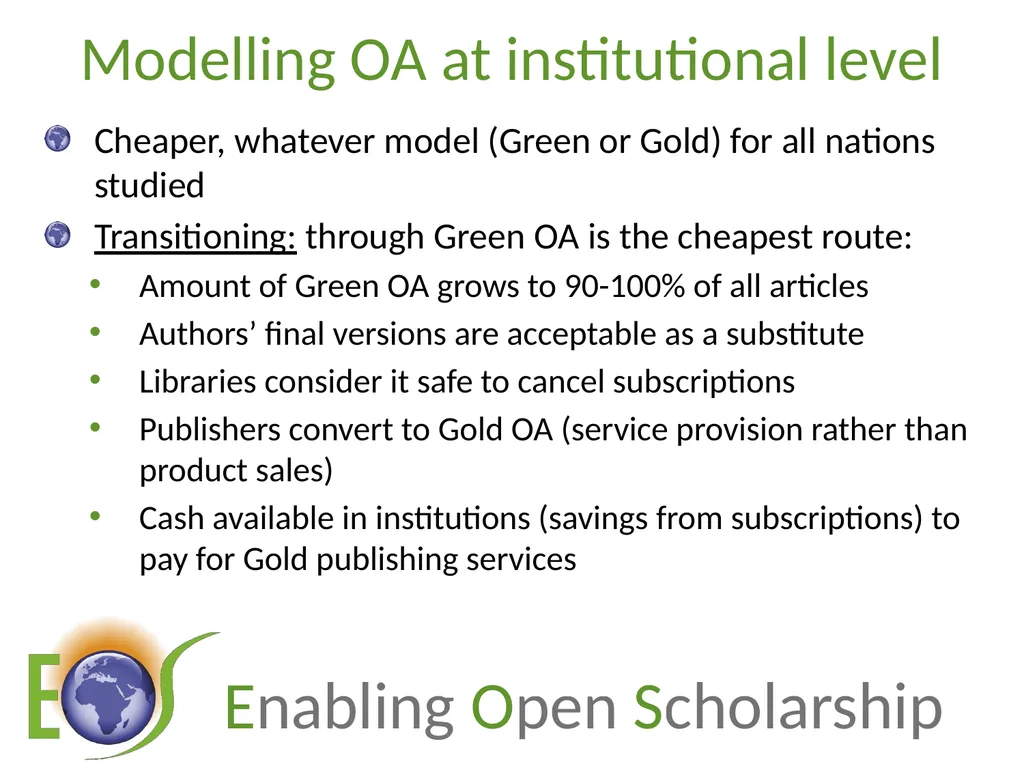
Modelling OA at institutional level Cheaper, whatever model (Green or Gold) for all nations studied
Transitioning: through Green OA is the cheapest route:
Amount of Green OA grows to 90-100% of all articles
Authors’ final versions are acceptable as a substitute
Libraries consider it safe to cancel subscriptions
Publishers convert to Gold OA (service provision rather than product sales)
Cash available in institutions (savings from subscriptions) to pay for Gold publishing services<br>