03
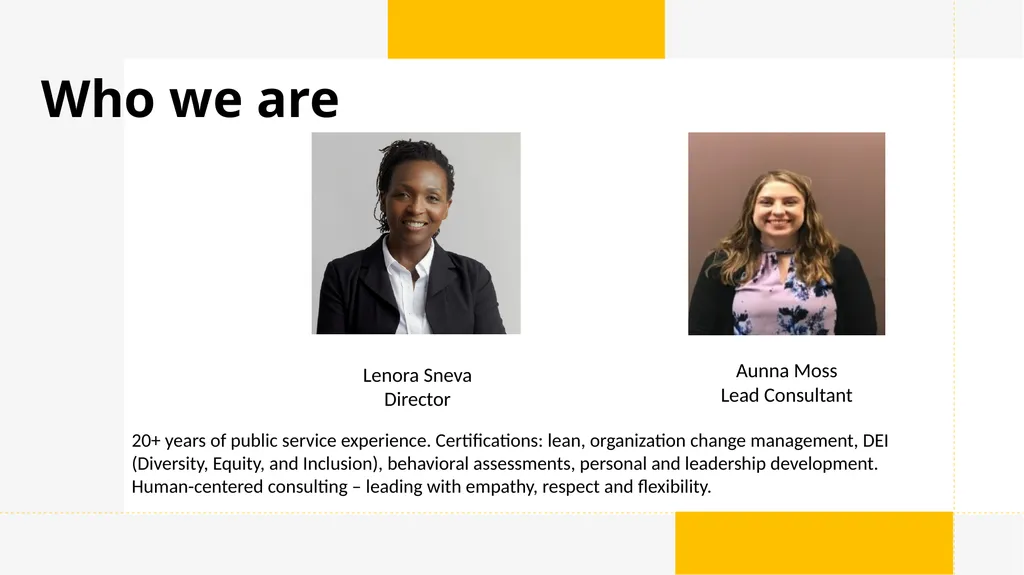
Who we are Lenora Sneva
Director Aunna Moss
Lead Consultant 20+ years of public service experience. Certifications: lean, organization change management, DEI (Diversity, Equity, and Inclusion), behavioral assessments, personal and leadership development. Human-centered consulting – leading with empathy, respect and flexibility.<br>
04
Icebreaker How would you feel if….
Your boss announced….
Your partner listed your house for sale….
Your best friend announced they were getting married….<br>
06
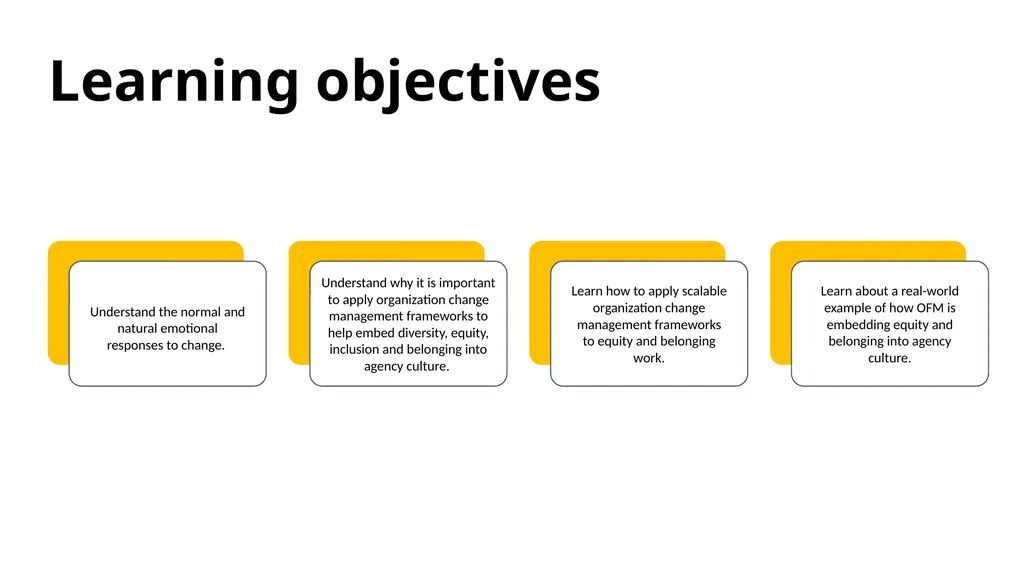
Learning objectives<br>
07
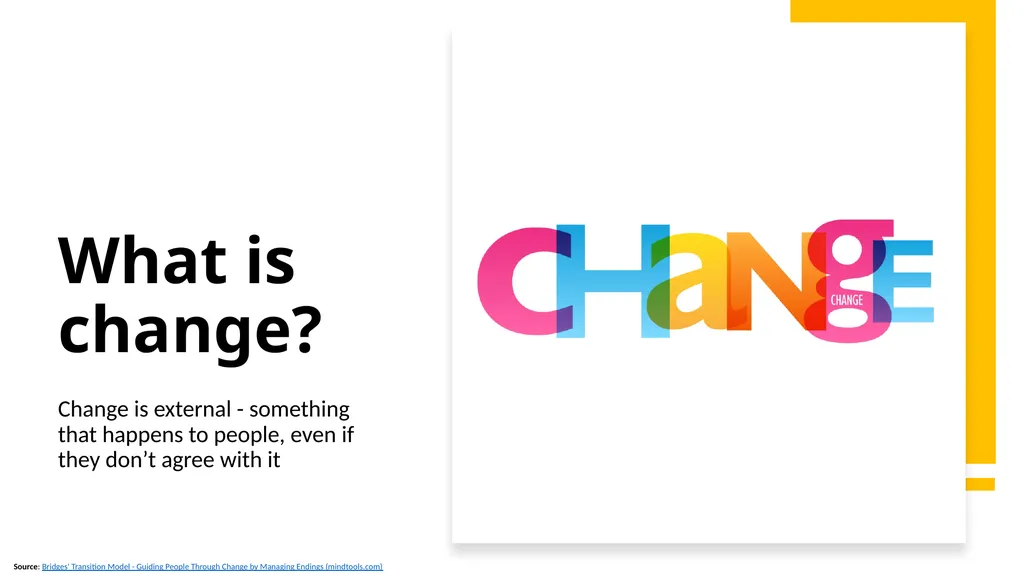
What is change? Change is external - something that happens to people, even if they don’t agree with it Source: Bridges' Transition Model - Guiding People Through Change by Managing Endings (mindtools.com)<br>
08
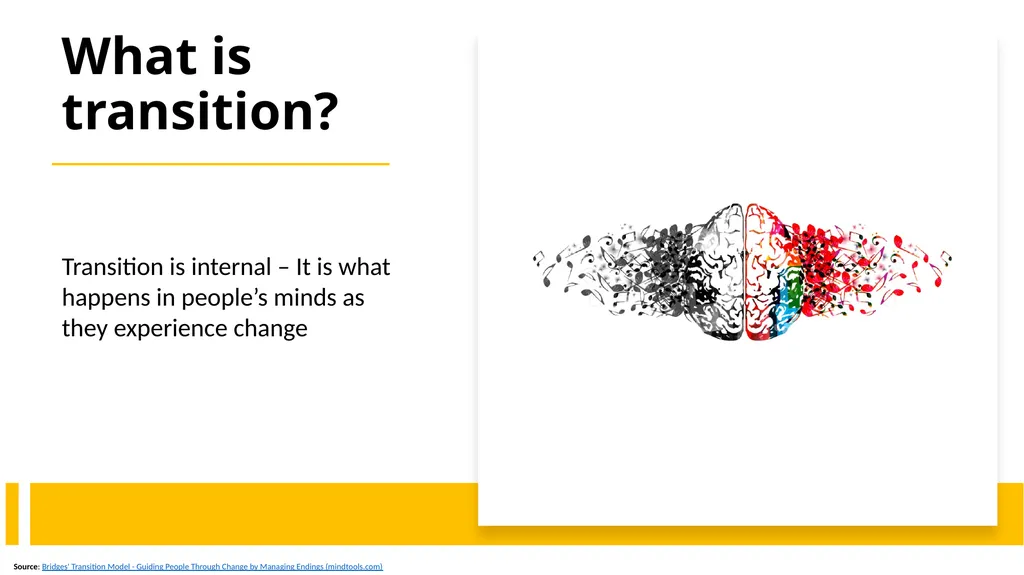
What is transition? Transition is internal – It is what happens in people’s minds as they experience change Source: Bridges' Transition Model - Guiding People Through Change by Managing Endings (mindtools.com)<br>
09
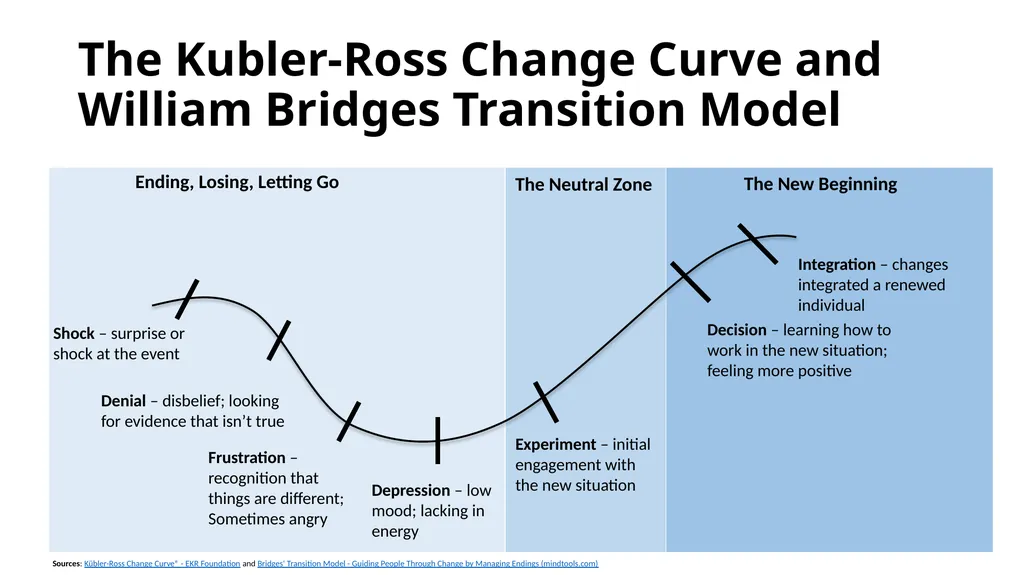
The Kubler-Ross Change Curve and William Bridges Transition Model Ending, Losing, Letting Go Shock – surprise or shock at the event Denial – disbelief; looking for evidence that isn’t true Frustration – recognition that things are different; Sometimes angry Depression – low mood; lacking in energy The Neutral Zone Experiment – initial engagement with the new situation The New Beginning Integration – changes integrated a renewed individual Decision – learning how to work in the new situation; feeling more positive Sources: Kübler-Ross Change Curve® - EKR Foundation and Bridges' Transition Model - Guiding People Through Change by Managing Endings (mindtools.com)<br>
10
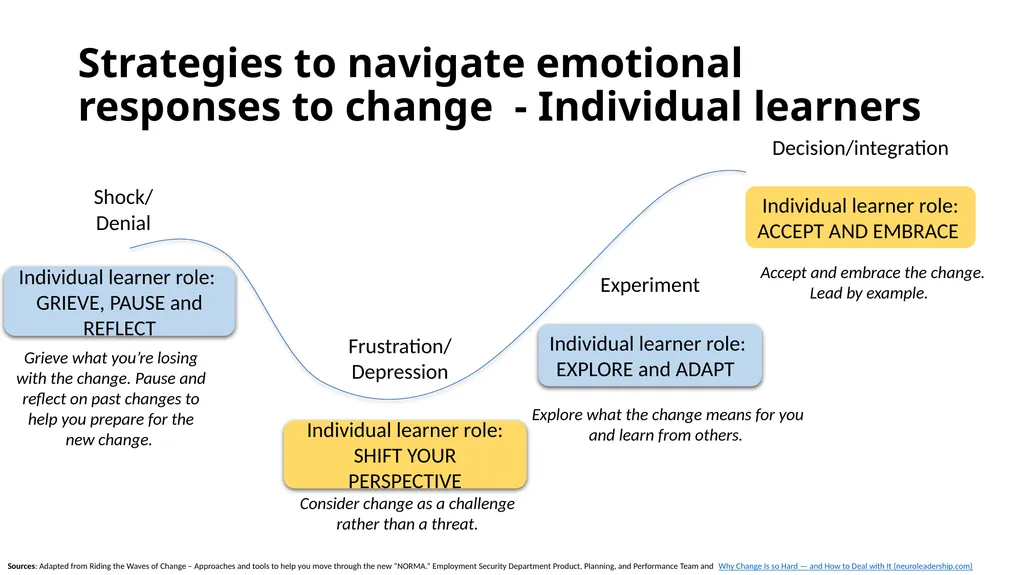
Strategies to navigate emotional �responses to change - Individual learners Shock/ Denial Individual learner role:
GRIEVE, PAUSE and REFLECT Grieve what you’re losing with the change. Pause and reflect on past changes to help you prepare for the new change. Frustration/ Depression Individual learner role:
SHIFT YOUR PERSPECTIVE Consider change as a challenge rather than a threat. Experiment Individual learner role:
EXPLORE and ADAPT Explore what the change means for you and learn from others. Decision/integration Individual learner role: ACCEPT AND EMBRACE Accept and embrace the change. Lead by example. Sources: Adapted from Riding the Waves of Change – Approaches and tools to help you move through the new “NORMA.” Employment Security Department Product, Planning, and Performance Team and Why Change Is so Hard — and How to Deal with It (neuroleadership.com)<br>
11
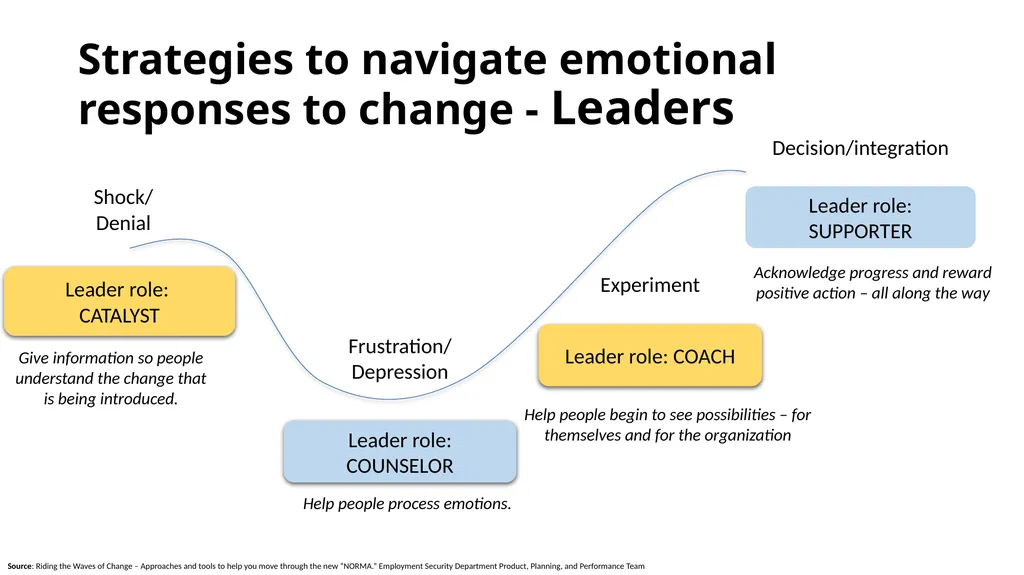
Strategies to navigate emotional �responses to change - Leaders Shock/ Denial Leader role:
CATALYST Give information so people understand the change that is being introduced. Frustration/ Depression Leader role: COUNSELOR Help people process emotions. Experiment Leader role: COACH Help people begin to see possibilities – for themselves and for the organization Decision/integration Leader role: SUPPORTER Acknowledge progress and reward positive action – all along the way Source: Riding the Waves of Change – Approaches and tools to help you move through the new “NORMA.” Employment Security Department Product, Planning, and Performance Team<br>
12
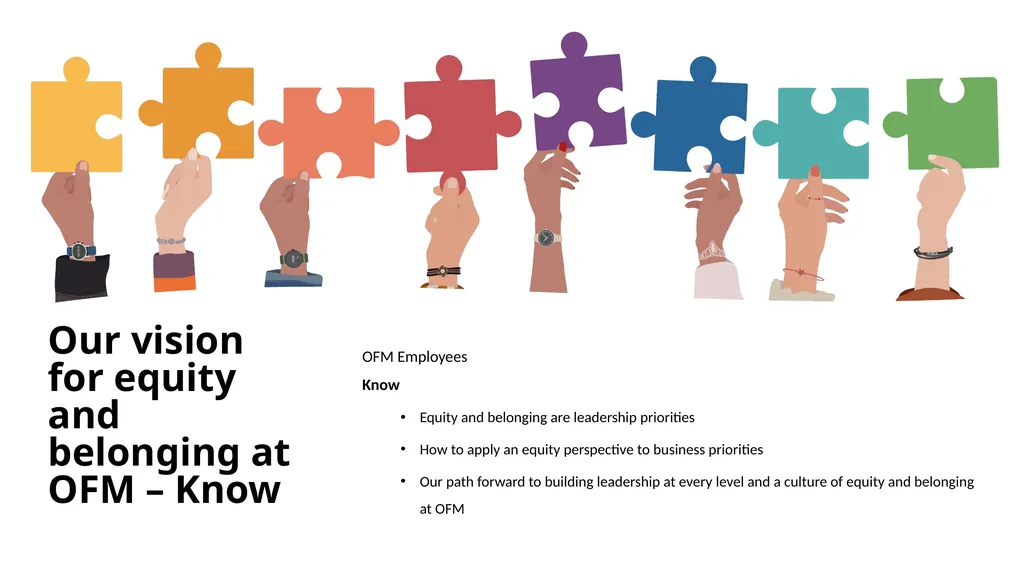
Our vision for equity and belonging at OFM – Know OFM Employees
Know
Equity and belonging are leadership priorities
How to apply an equity perspective to business priorities
Our path forward to building leadership at every level and a culture of equity and belonging at OFM<br>
13
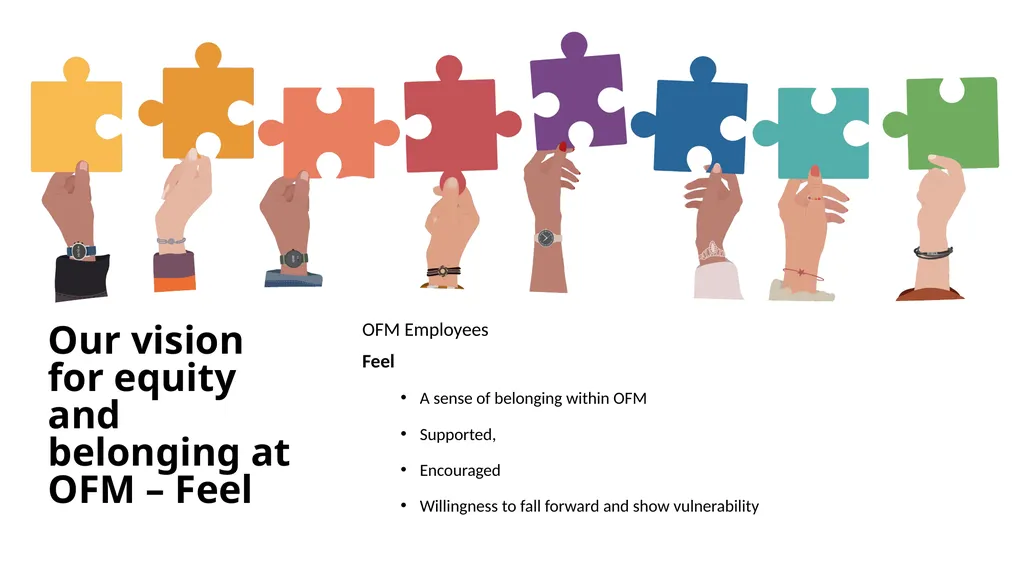
Our vision for equity and belonging at OFM – Feel OFM Employees
Feel
A sense of belonging within OFM
Supported,
Encouraged
Willingness to fall forward and show vulnerability<br>
14
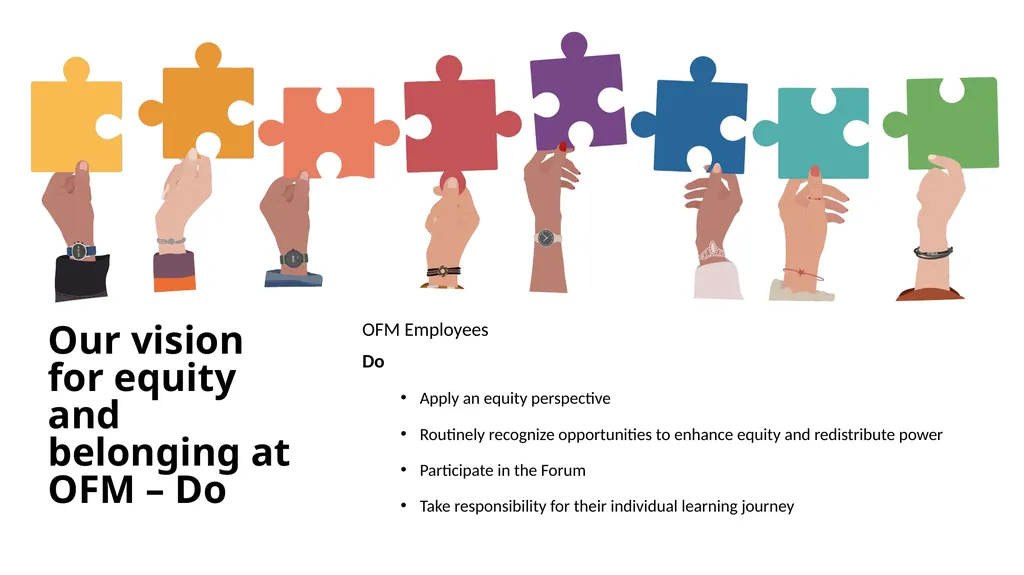
Our vision for equity and belonging at OFM – Do OFM Employees
Do
Apply an equity perspective
Routinely recognize opportunities to enhance equity and redistribute power
Participate in the Forum
Take responsibility for their individual learning journey<br>
15
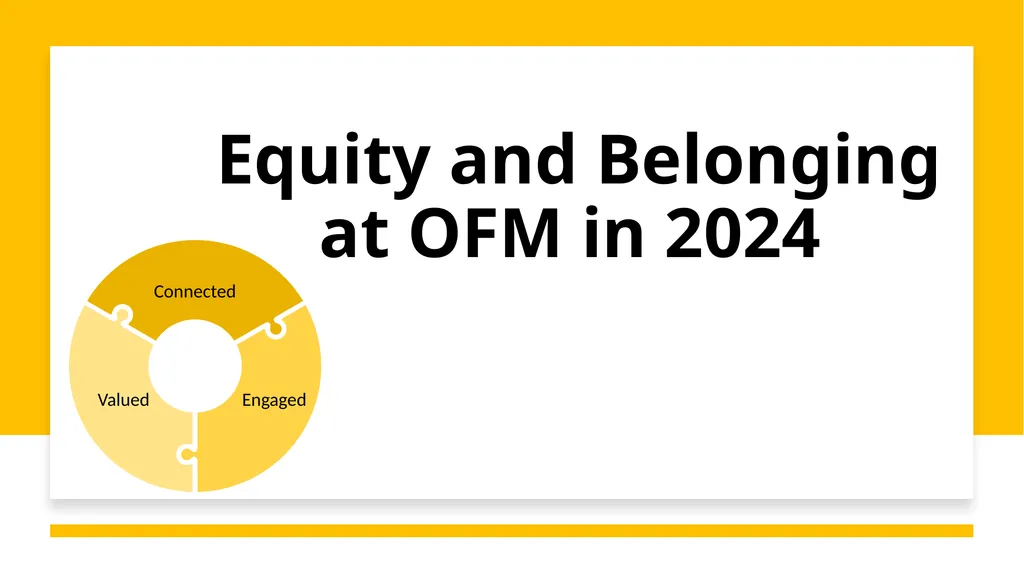
Equity and Belonging at OFM in 2024 Valued Engaged Connected<br>
16
Overview Gathered employee feedback
OFM DEI Foundations Training
2023 Employee Engagement Survey
2023 Respect and Inclusion Survey
Diversity, Equity and Belonging Retreat
Theme
Gaps in our equity and belonging efforts<br>
17
Our “why” All OFM employees understand how equity lives within our 2023-2025 strategic plan priorities
Equity work is a shared responsibility<br>
18
Equity and belonging principles Share power – who defines value and guides decision-making
Continually seek and apply feedback – iterative design and centering shared decision-making
Address questions and concerns as they arise – progress over perfection and psychological safety
Provide meeting materials at least 3 business days in advance – accessible and inclusive design<br>
19
Equity and belonging principles continued Provide meeting materials no more than 2 business days after each session – transparency and increased accessibility
Execute effective project management and organizational change management skills – human centeredness, fighting a sense of urgency
Ensure all attendees have the resources and support they need to fully participate –accessible language/communication, universal design<br>
20
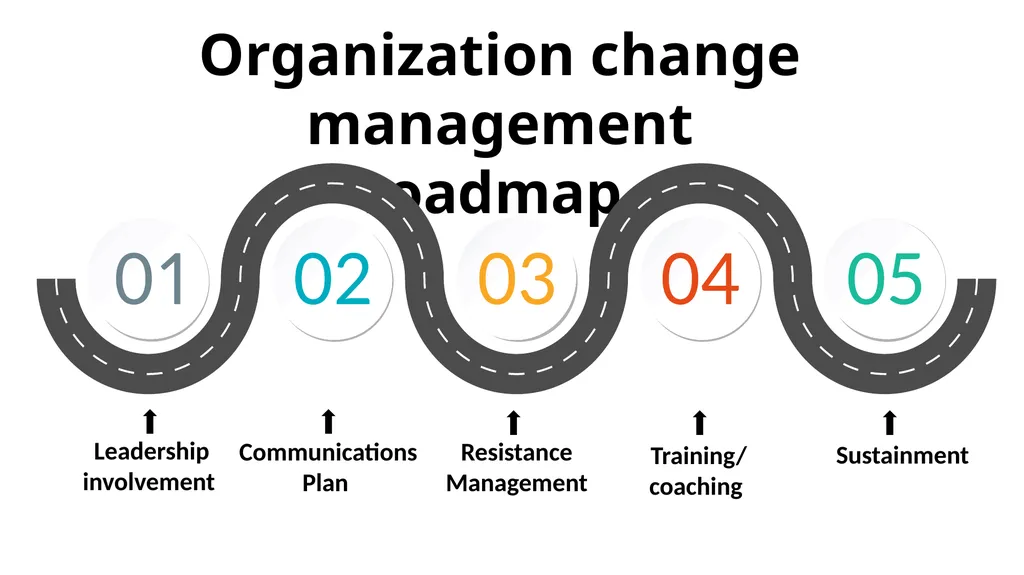
Organization change management roadmap Leadership involvement Communications Plan Resistance Management Training/
coaching Sustainment<br>
21
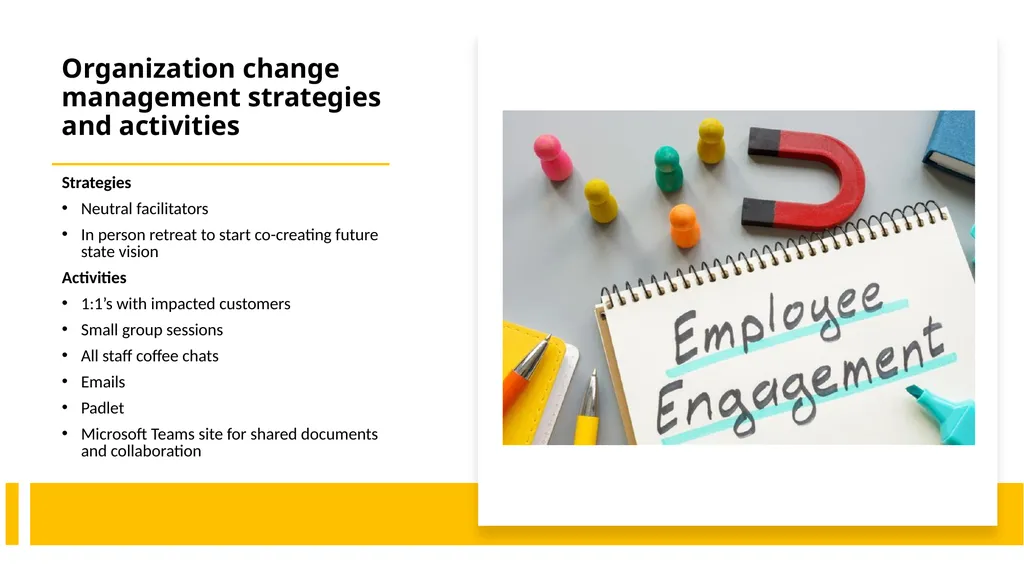
Organization change management strategies and activities Strategies
Neutral facilitators
In person retreat to start co-creating future state vision
Activities
1:1’s with impacted customers
Small group sessions
All staff coffee chats
Emails
Padlet
Microsoft Teams site for shared documents and collaboration<br>
22
Here at OFM, Equity work is a shared responsibility We have retired the DEI Council, and the work has evolved into shared responsibility frameworks.
The Forum – Provide opportunities to strengthen knowledge and skill in discussing equity and belonging
Equity and Belonging Advisory Team – Focus on HR policies, communications and data<br>
23
The Forum – General information Logistics
Virtual one-hour meetings once per month between April – November 2024
Purpose
Create opportunities for divisions to share how they are applying an equity perspective to their strategic priorities and how they are actioning employee engagement survey data
Create space for employees to share personal stories to enhance belonging
�Participants
Led by an OFM division. All OFM employees and GOV Affiliates are invited to participate.<br>
24
Lessons Learned - What worked well?�- What could be improved?<br>
25
2024 Equity and Belonging Roadmap Feb – May 2024
Cultural humility and leadership training Mar – Apr 2024
Supervisor coaching and discussions Apr – Nov 2024
The Forum Apr, Jul, and Nov 2024
Equity and Belonging Advisory Team Ongoing
PEAR – budget, hiring, and supplier diversity Every month
Business Resource Groups<br>
27
Reflections and closing OFM 3/7/2024 27<br>
28
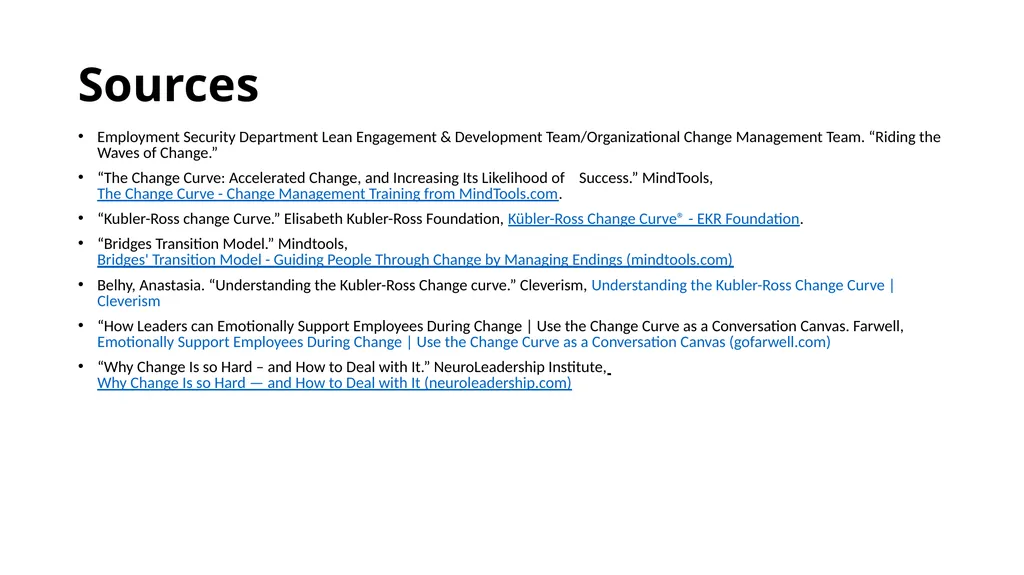
Sources Employment Security Department Lean Engagement & Development Team/Organizational Change Management Team. “Riding the Waves of Change.”
“The Change Curve: Accelerated Change, and Increasing Its Likelihood of Success.” MindTools, The Change Curve - Change Management Training from MindTools.com.
“Kubler-Ross change Curve.” Elisabeth Kubler-Ross Foundation, Kübler-Ross Change Curve® - EKR Foundation.
“Bridges Transition Model.” Mindtools, Bridges' Transition Model - Guiding People Through Change by Managing Endings (mindtools.com)
Belhy, Anastasia. “Understanding the Kubler-Ross Change curve.” Cleverism, Understanding the Kubler-Ross Change Curve | Cleverism
“How Leaders can Emotionally Support Employees During Change | Use the Change Curve as a Conversation Canvas. Farwell, Emotionally Support Employees During Change | Use the Change Curve as a Conversation Canvas (gofarwell.com)
“Why Change Is so Hard – and How to Deal with It.” NeuroLeadership Institute, Why Change Is so Hard — and How to Deal with It (neuroleadership.com)<br>