Factors Affecting the Length of Estrus Cycle Dr. D. Sengupta Assistant Professor Department of Veterinary Gynaecology Obstetrics Bihar Veterinary College, Patna- 14 Estrus Cyclicity: Following ovulation, the corpus luteum which forms
"Factors Affecting the Length of Estrus Cycle Dr." is the property of its rightful owner. Permission is granted to
download and print the materials on this website for personal, non-commercial use only, and to display it
on your personal computer provided you do not modify the materials and that you retain all copyright
notices contained in the materials. By downloading content from our website, you accept the terms of this
agreement.
Presentation Transcript
01
Factors Affecting the Length of Estrus Cycle Dr. D. Sengupta
Assistant Professor
Department of Veterinary Gynaecology & Obstetrics
Bihar Veterinary College, Patna- 14<br>
02
Estrus Cyclicity: Following ovulation, the corpus luteum which forms subsequently in the ovary is “removed” to permit a new ovarian cycle to begin. In this way, after a relatively short interval of time, a further opportunity is provided for the female to conceive. Exception- Dog<br>
03
Factors Governing the Length of Estrus Cyclicity Luteolysis and its Endocrine Control
Length of Follicular Phase
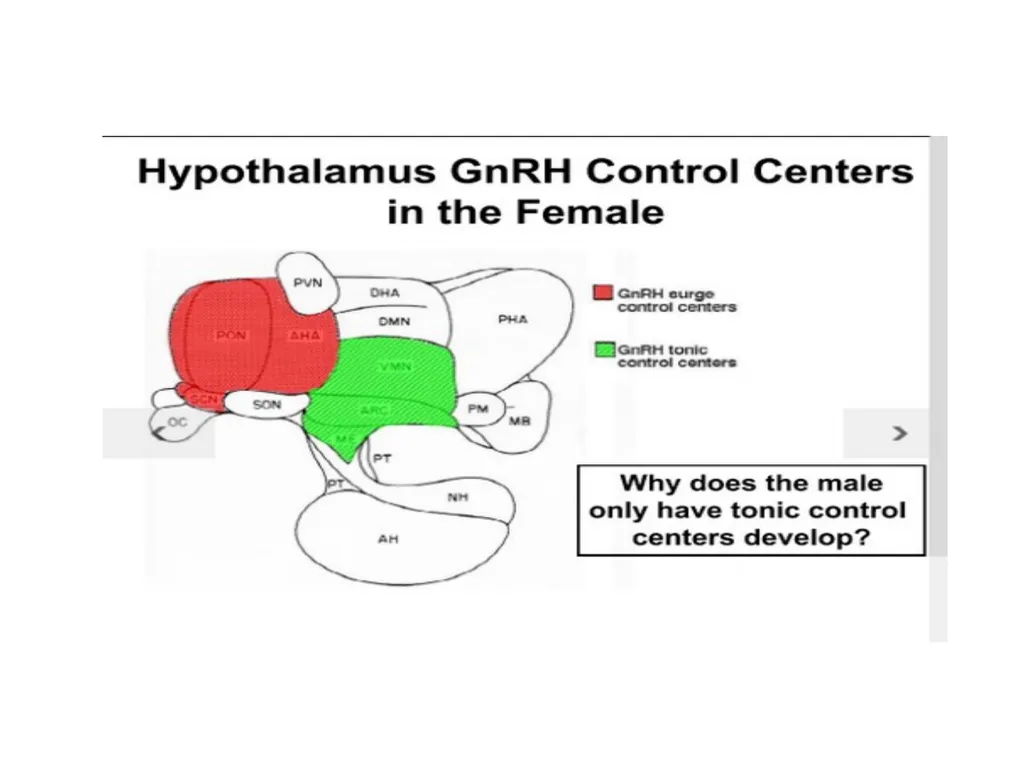
Endocrine Control of Tonic Center of Hypothalamus for GnRH Release
Pregnancy and Conception Failure<br>
04
Luteolysis and its Endocrine Control Luteolysis is the physiological apoptosis of the corpus luteum
In ruminants and swine this is mediated by Prostaglandin F2α (PGF2α)<br>
05
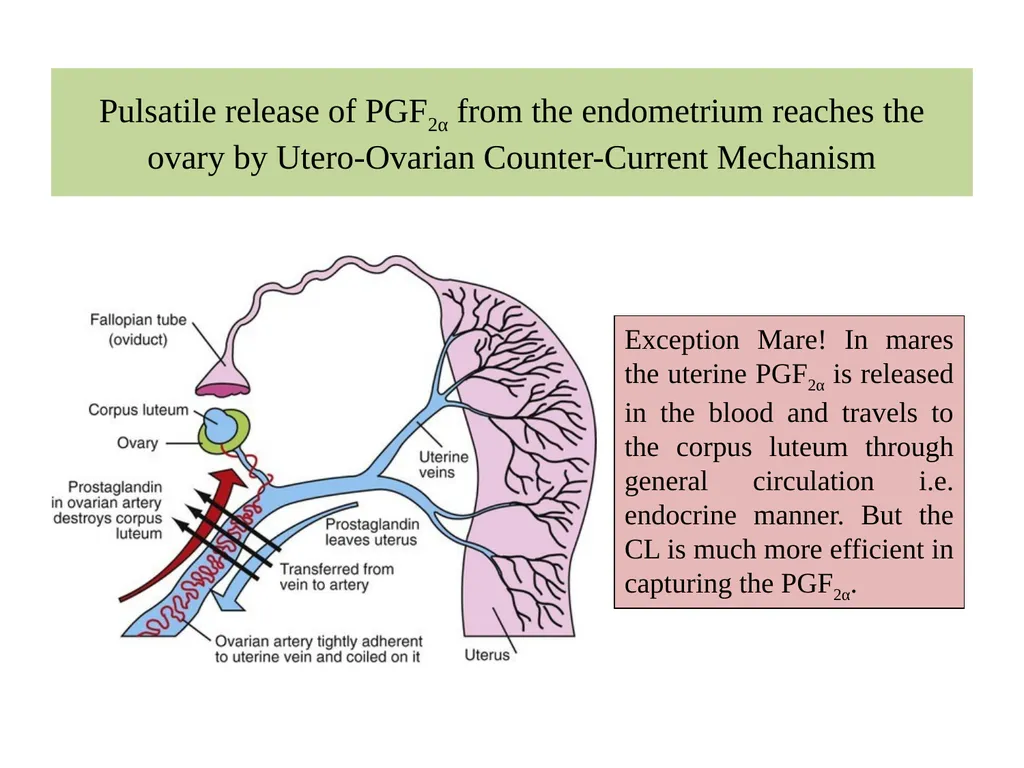
Pulsatile release of PGF2α from the endometrium reaches the ovary by Utero-Ovarian Counter-Current Mechanism Exception Mare! In mares the uterine PGF2α is released in the blood and travels to the corpus luteum through general circulation i.e. endocrine manner. But the CL is much more efficient in capturing the PGF2α.<br>
06
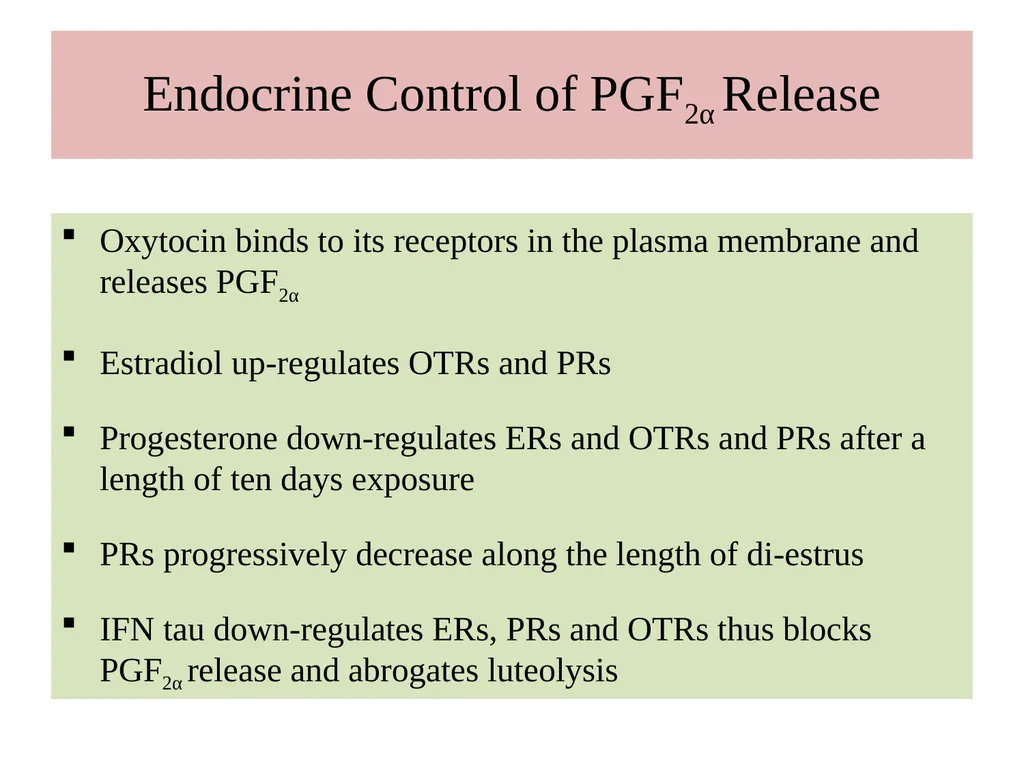
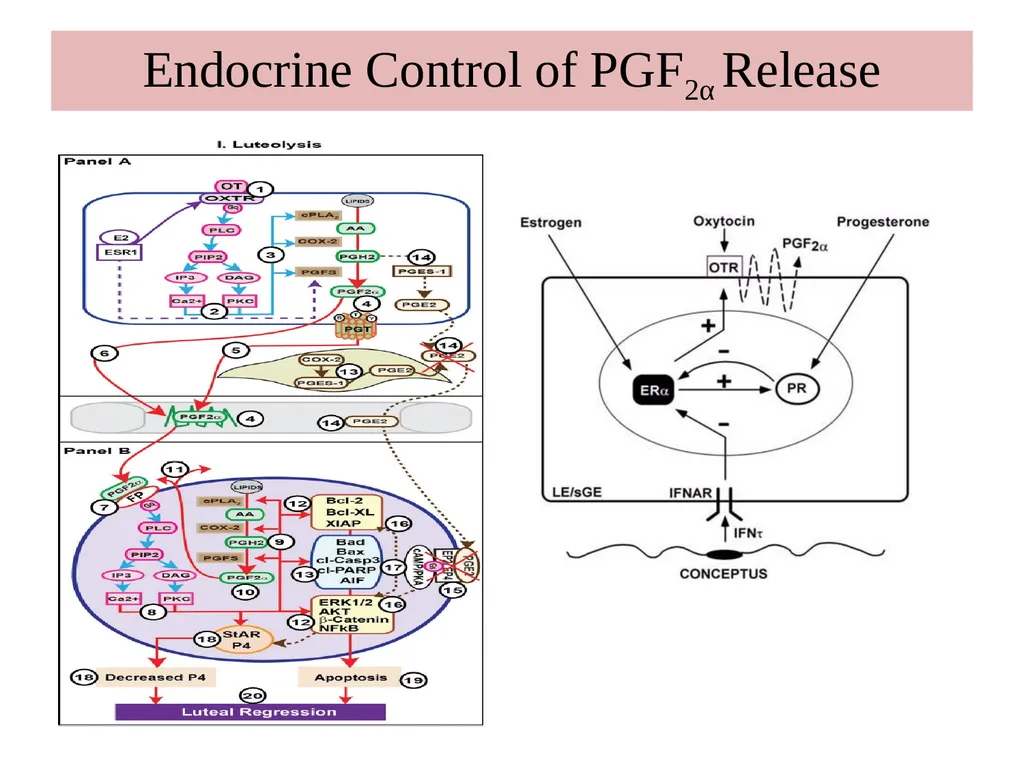
Endocrine Control of PGF2α Release Oxytocin binds to its receptors in the plasma membrane and releases PGF2α
Estradiol up-regulates OTRs and PRs
Progesterone down-regulates ERs and OTRs and PRs after a length of ten days exposure
PRs progressively decrease along the length of di-estrus
IFN tau down-regulates ERs, PRs and OTRs thus blocks PGF2α release and abrogates luteolysis<br>
07
Endocrine Control of PGF2α Release<br>
08
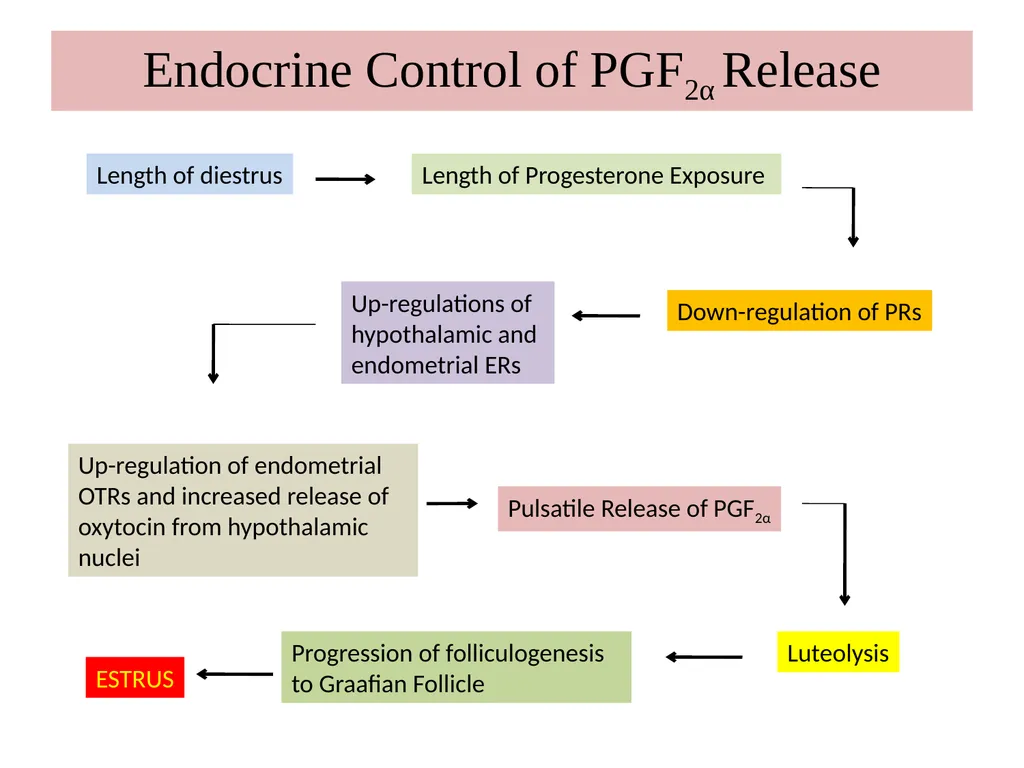
Endocrine Control of PGF2α Release Length of diestrus Length of Progesterone Exposure Down-regulation of PRs Up-regulations of hypothalamic and endometrial ERs Up-regulation of endometrial OTRs and increased release of oxytocin from hypothalamic nuclei Pulsatile Release of PGF2α Luteolysis Progression of folliculogenesis to Graafian Follicle ESTRUS<br>
09
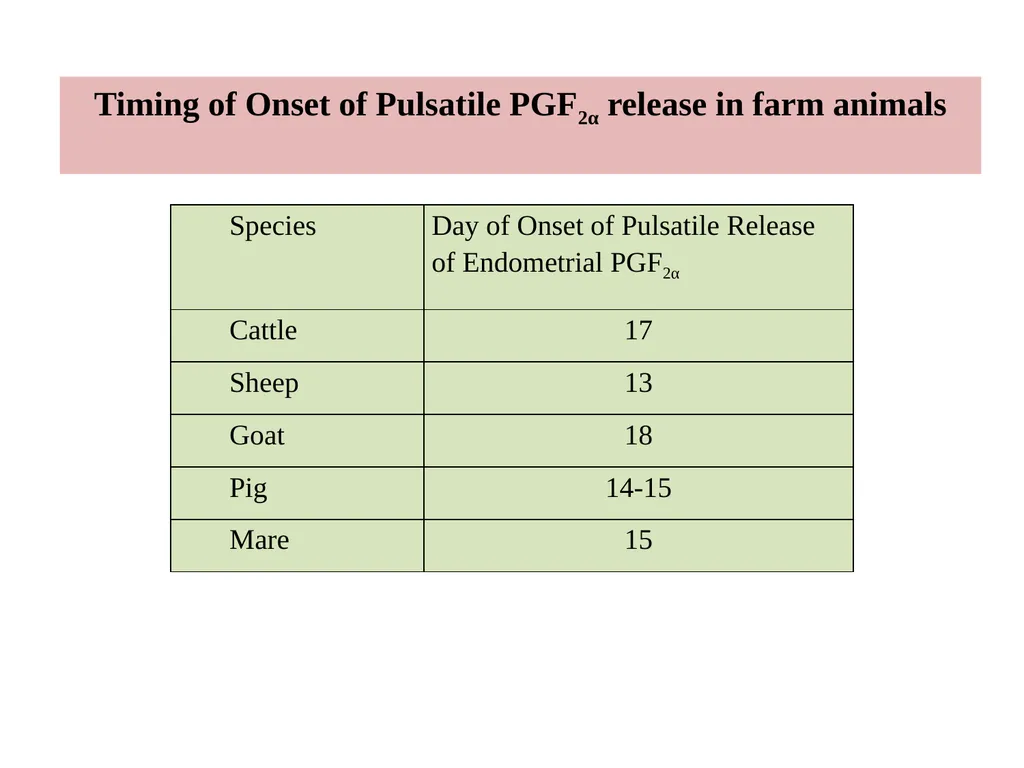
Timing of Onset of Pulsatile PGF2α release in farm animals<br>
10
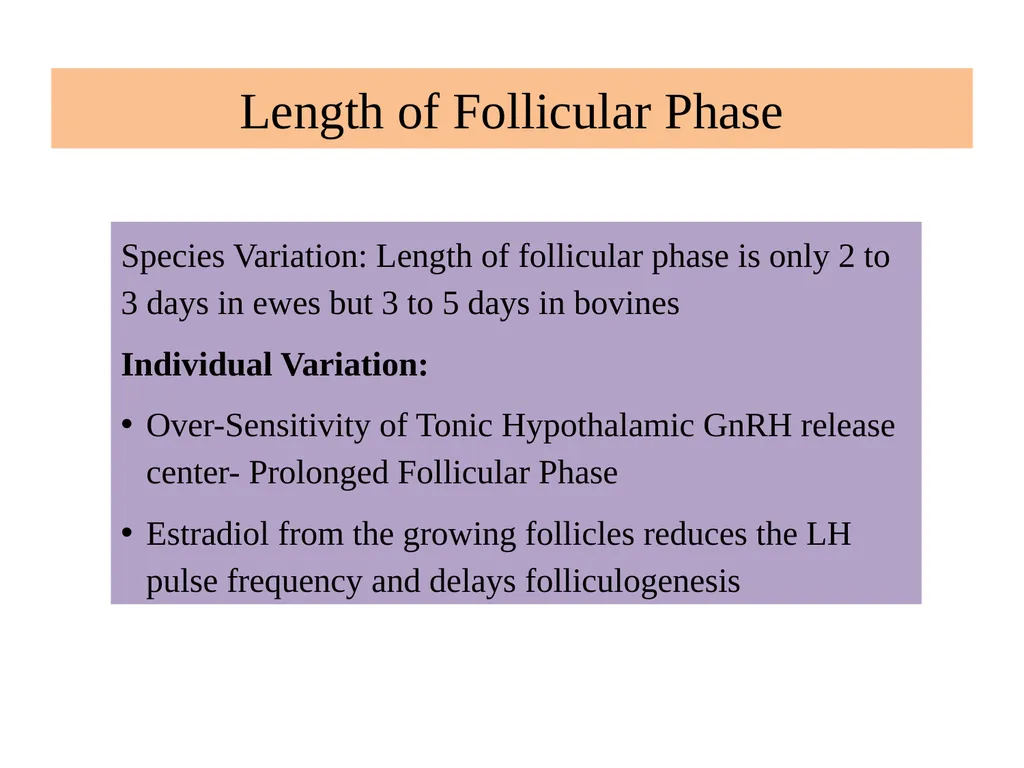
Length of Follicular Phase Species Variation: Length of follicular phase is only 2 to 3 days in ewes but 3 to 5 days in bovines
Individual Variation:
Over-Sensitivity of Tonic Hypothalamic GnRH release center- Prolonged Follicular Phase
Estradiol from the growing follicles reduces the LH pulse frequency and delays folliculogenesis<br>
11
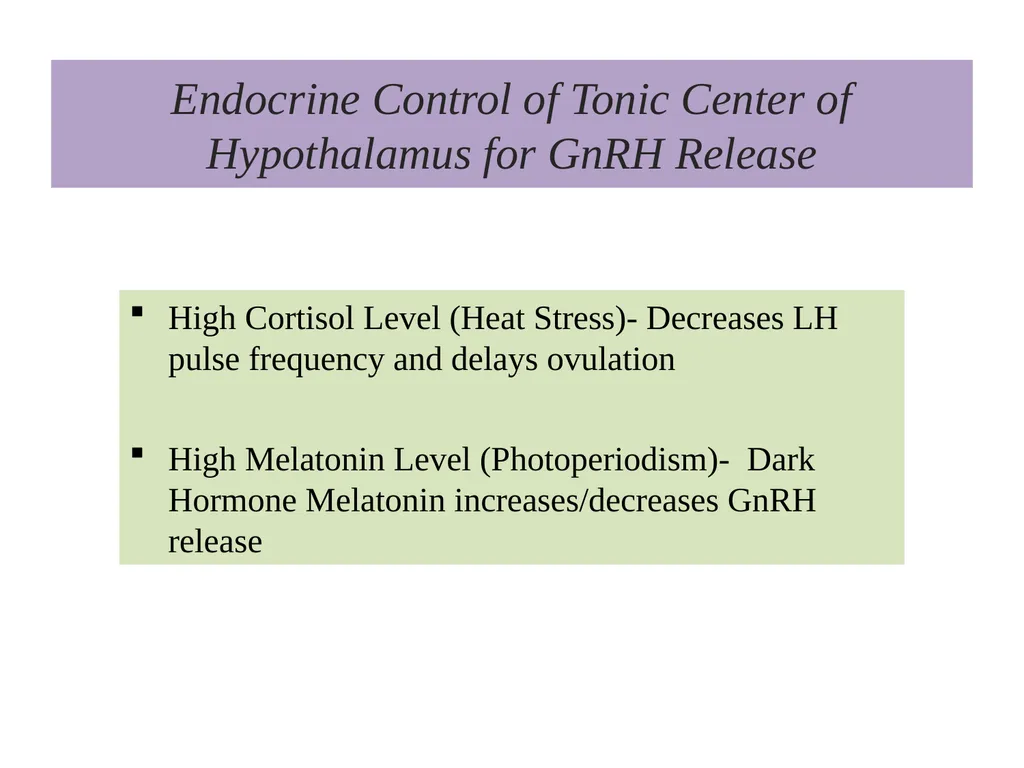
Endocrine Control of Tonic Center of Hypothalamus for GnRH Release High Cortisol Level (Heat Stress)- Decreases LH pulse frequency and delays ovulation
High Melatonin Level (Photoperiodism)- Dark Hormone Melatonin increases/decreases GnRH release<br>
12
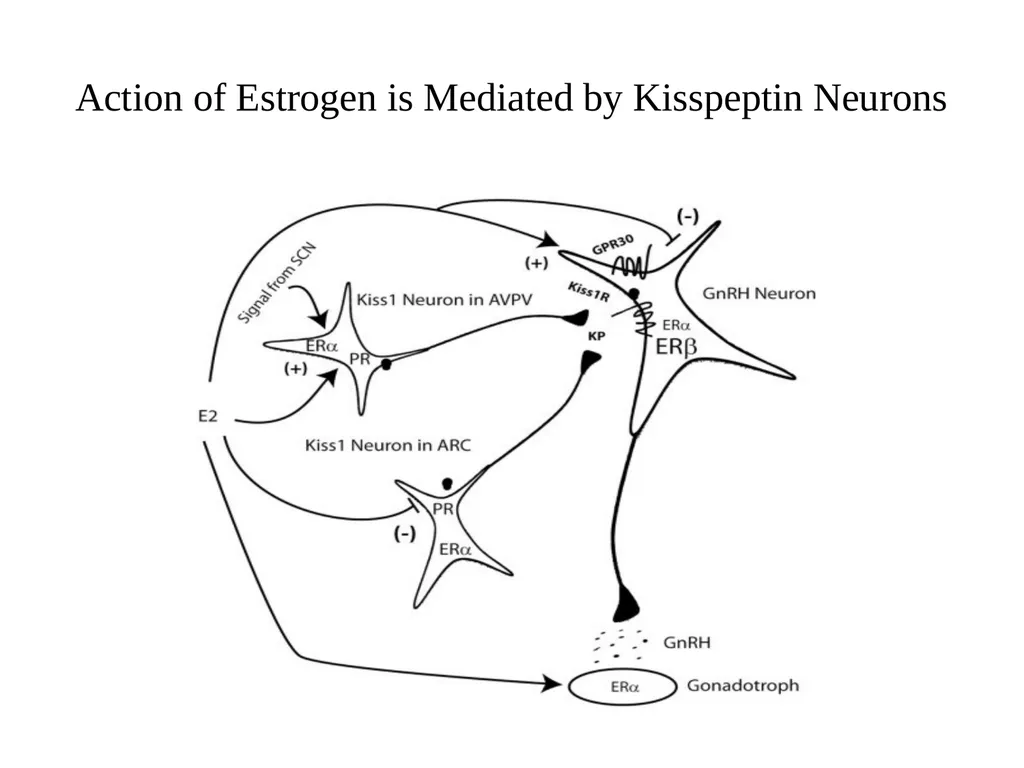
Action of Estrogen is Mediated by Kisspeptin Neurons<br>
13
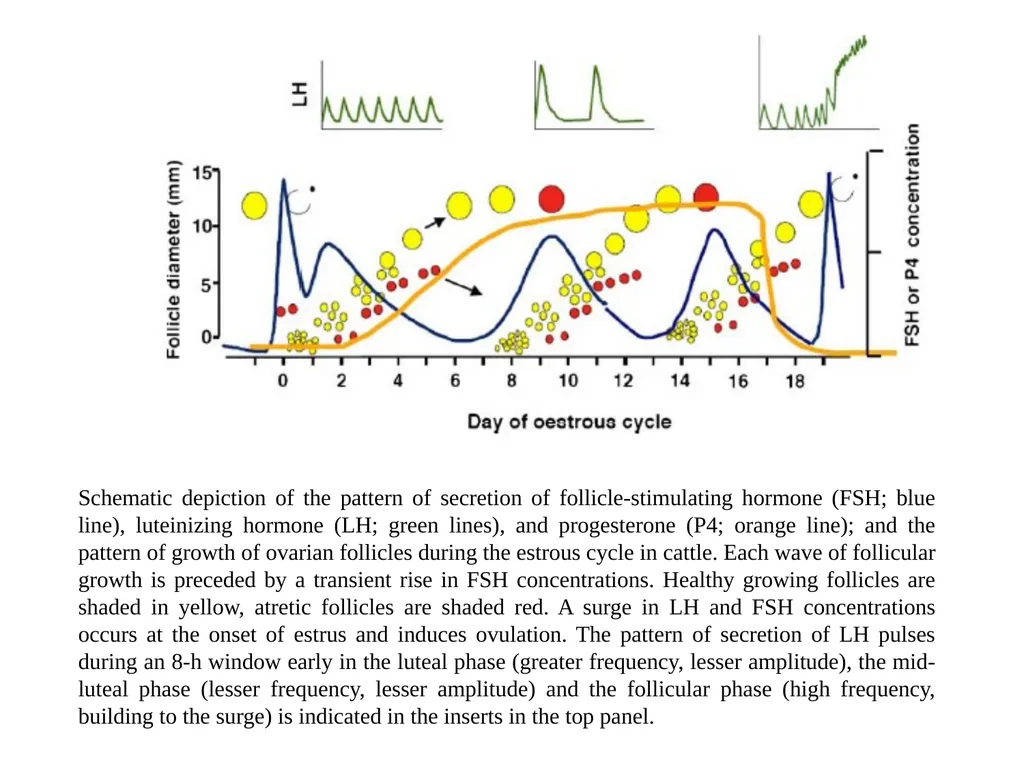
Schematic depiction of the pattern of secretion of follicle-stimulating hormone (FSH; blue line), luteinizing hormone (LH; green lines), and progesterone (P4; orange line); and the pattern of growth of ovarian follicles during the estrous cycle in cattle. Each wave of follicular growth is preceded by a transient rise in FSH concentrations. Healthy growing follicles are shaded in yellow, atretic follicles are shaded red. A surge in LH and FSH concentrations occurs at the onset of estrus and induces ovulation. The pattern of secretion of LH pulses during an 8-h window early in the luteal phase (greater frequency, lesser amplitude), the mid-luteal phase (lesser frequency, lesser amplitude) and the follicular phase (high frequency, building to the surge) is indicated in the inserts in the top panel.<br>
14
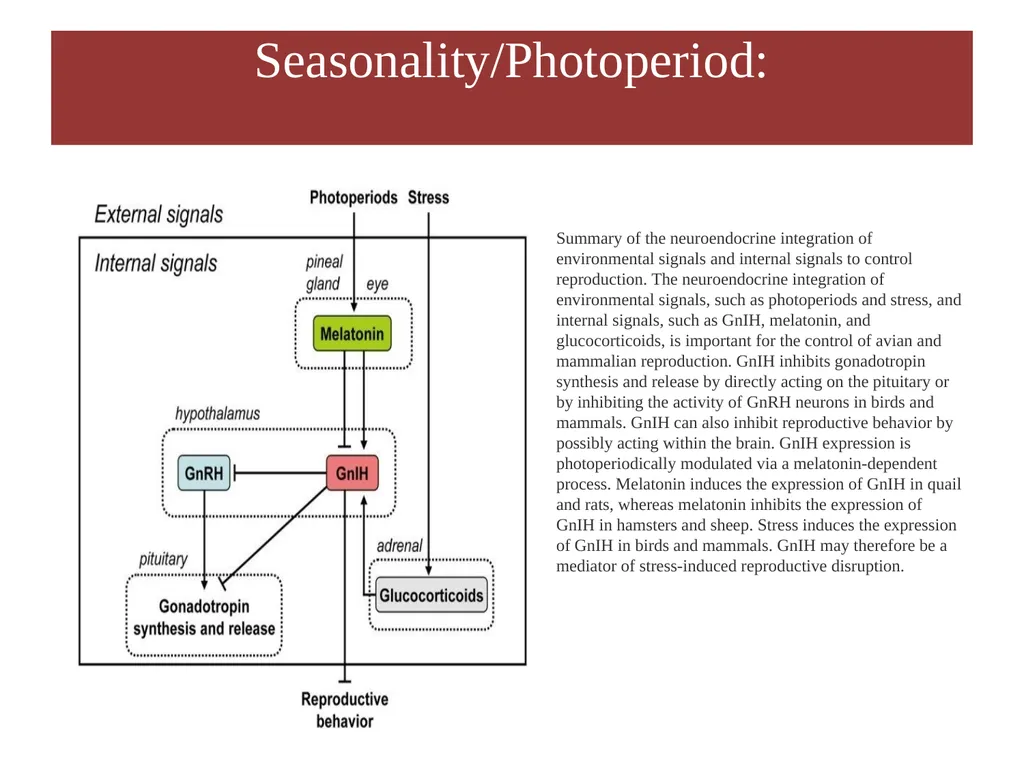
Seasonality/Photoperiod: Summary of the neuroendocrine integration of environmental signals and internal signals to control reproduction. The neuroendocrine integration of environmental signals, such as photoperiods and stress, and internal signals, such as GnIH, melatonin, and glucocorticoids, is important for the control of avian and mammalian reproduction. GnIH inhibits gonadotropin synthesis and release by directly acting on the pituitary or by inhibiting the activity of GnRH neurons in birds and mammals. GnIH can also inhibit reproductive behavior by possibly acting within the brain. GnIH expression is photoperiodically modulated via a melatonin-dependent process. Melatonin induces the expression of GnIH in quail and rats, whereas melatonin inhibits the expression of GnIH in hamsters and sheep. Stress induces the expression of GnIH in birds and mammals. GnIH may therefore be a mediator of stress-induced reproductive disruption.<br>
15
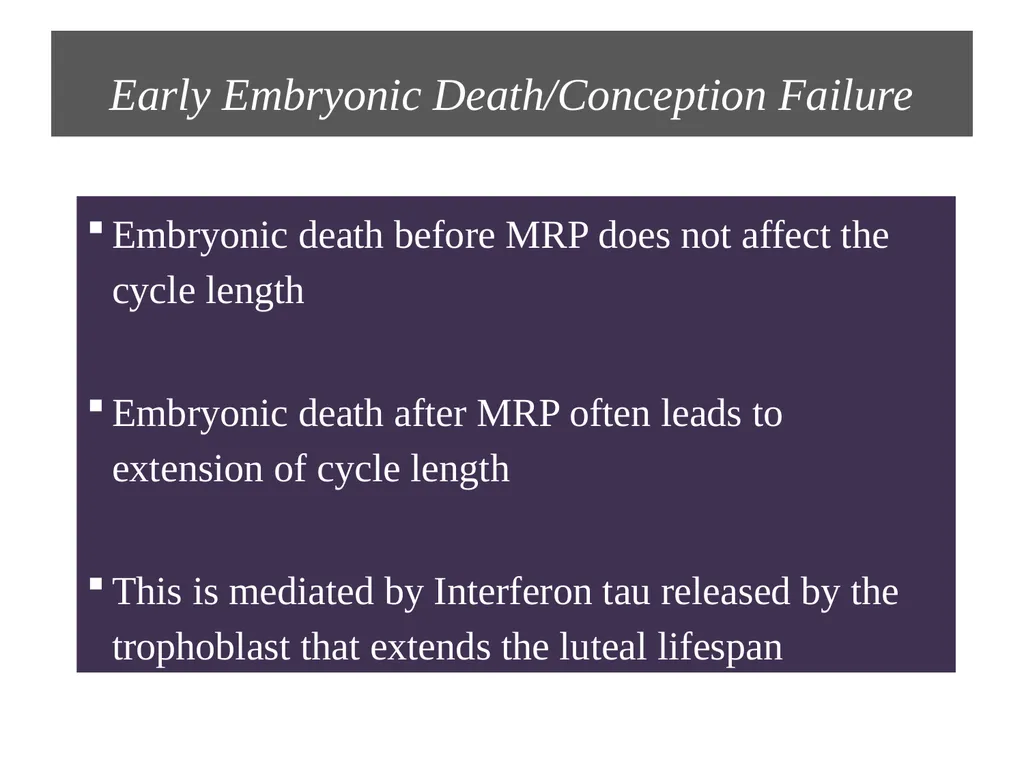
Early Embryonic Death/Conception Failure Embryonic death before MRP does not affect the cycle length
Embryonic death after MRP often leads to extension of cycle length
This is mediated by Interferon tau released by the trophoblast that extends the luteal lifespan<br>