
FASD Fetal Alcohol Spectrum Disorder Jennifer
SB
Published · 29 slides · 0 views

1 / 1


Description
FASD Fetal Alcohol Spectrum Disorder Jennifer Graham, Jessica Mercier-MacDonald Lisa Wells What is FASD Fetal Alcohol Spectrum Disorder is a term that describes a wide range of effects that can occur in an individual who was exposed to
Related Topics
Share
Embed code
Download this presentation From Below
"FASD Fetal Alcohol Spectrum Disorder Jennifer" is the property of its rightful owner. Permission is granted to download and print the materials on this website for personal, non-commercial use only, and to display it on your personal computer provided you do not modify the materials and that you retain all copyright notices contained in the materials. By downloading content from our website, you accept the terms of this agreement.
Presentation Transcript
01
FASD Fetal Alcohol Spectrum Disorder
Jennifer Graham, Jessica Mercier-MacDonald & Lisa Wells<br>
Jennifer Graham, Jessica Mercier-MacDonald & Lisa Wells<br>
02
What is FASD Fetal Alcohol Spectrum Disorder is a term that describes a wide range of effects that can occur in an individual who was exposed to alcohol during pregnancy.
FASD itself is not a diagnostic term, it encapsulates 4 specific medical diagnoses.
Fetal Alcohol Syndrome (FAS)
Partial Fetal Alcohol Syndrome (pFAS)
Alcohol Related Neurodevelopmental Disorder (ARND)
Alcohol Related Birth Defects (ARBD)<br>
FASD itself is not a diagnostic term, it encapsulates 4 specific medical diagnoses.
Fetal Alcohol Syndrome (FAS)
Partial Fetal Alcohol Syndrome (pFAS)
Alcohol Related Neurodevelopmental Disorder (ARND)
Alcohol Related Birth Defects (ARBD)<br>
03
Prevalence & Diagnosis Prevalence has remained consistent from 2006 to present as found through multiple provincial and national studies
Approximately 1 % of the population OR 9.1 / 1000 individuals
Multidisciplinary assessment
Early diagnosis is essential
FASD Center of Excellence
Maria.desroches@vitalitie.nb.ca
(506) 869 - 3572<br>
Approximately 1 % of the population OR 9.1 / 1000 individuals
Multidisciplinary assessment
Early diagnosis is essential
FASD Center of Excellence
Maria.desroches@vitalitie.nb.ca
(506) 869 - 3572<br>
04
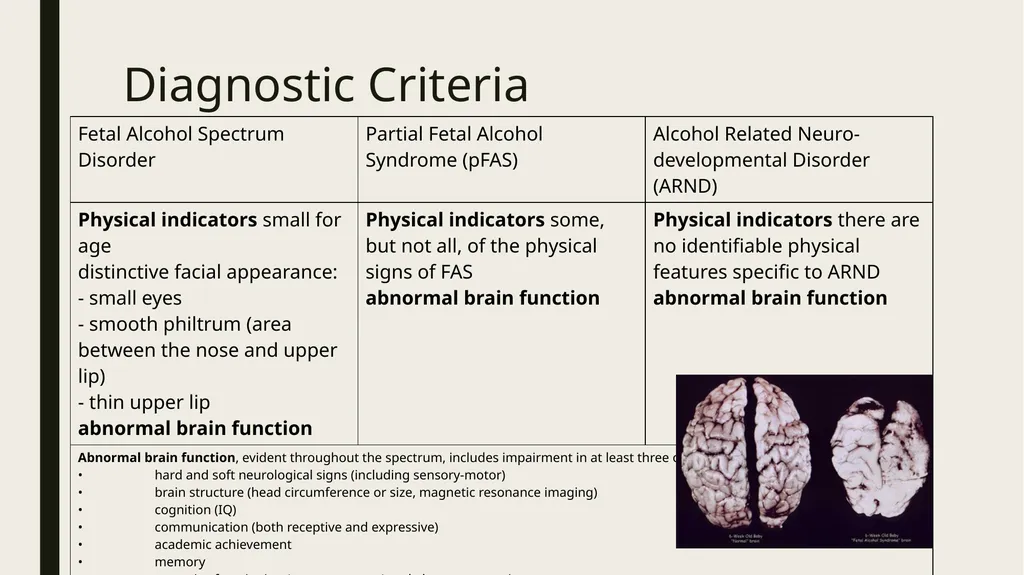
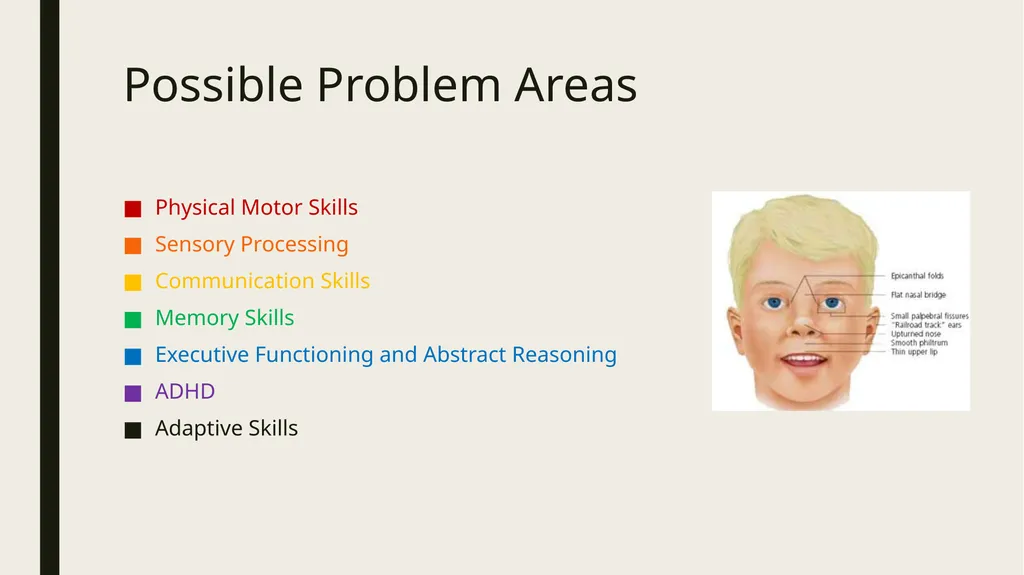
Diagnostic Criteria<br>
05
Possible Problem Areas Physical Motor Skills
Sensory Processing
Communication Skills
Memory Skills
Executive Functioning and Abstract Reasoning
ADHD
Adaptive Skills<br>
Sensory Processing
Communication Skills
Memory Skills
Executive Functioning and Abstract Reasoning
ADHD
Adaptive Skills<br>
06
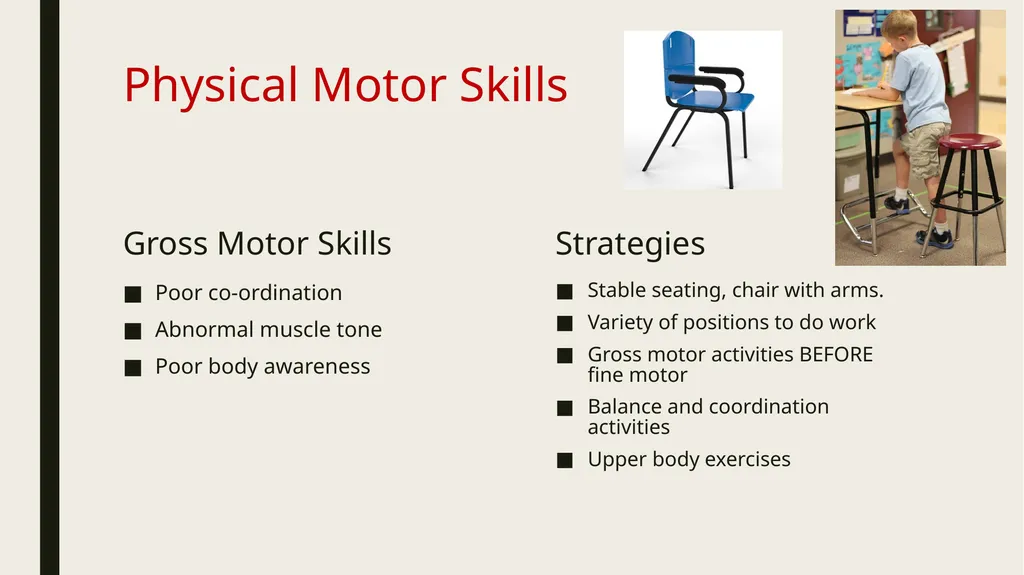
Physical Motor Skills Gross Motor Skills Poor co-ordination
Abnormal muscle tone
Poor body awareness Strategies Stable seating, chair with arms.
Variety of positions to do work
Gross motor activities BEFORE fine motor
Balance and coordination activities
Upper body exercises<br>
Abnormal muscle tone
Poor body awareness Strategies Stable seating, chair with arms.
Variety of positions to do work
Gross motor activities BEFORE fine motor
Balance and coordination activities
Upper body exercises<br>
07
Physical Motor Skills Fine Motor Skills immature grasp and manipulation patterns
decreased hand strength, low muscle tone, causing students to tire faster fine motor tremor
poor bilateral hand use
no established hand dominance Strategies Supportive seating
Extra time for writing with breaks
Reduce the amount of copying required
Keyboarding
Extra practice in printing (Multi-sensory approach for printing,)
Soft slide on pencil grippers/ weighted pencil for fine motor tremor
Gross motor activities BEFORE fine motor
Hand strengthening activities<br>
08
Sensory Processing Skills Due to the complex brain function od students with FASD these students misinterpret sensory information.
Some are bombarded by sensory information
Some seek out sensory stimulation
When setting up classroom:
Structure and routine are of the utmost importance
Less is best<br>
Some are bombarded by sensory information
Some seek out sensory stimulation
When setting up classroom:
Structure and routine are of the utmost importance
Less is best<br>
09
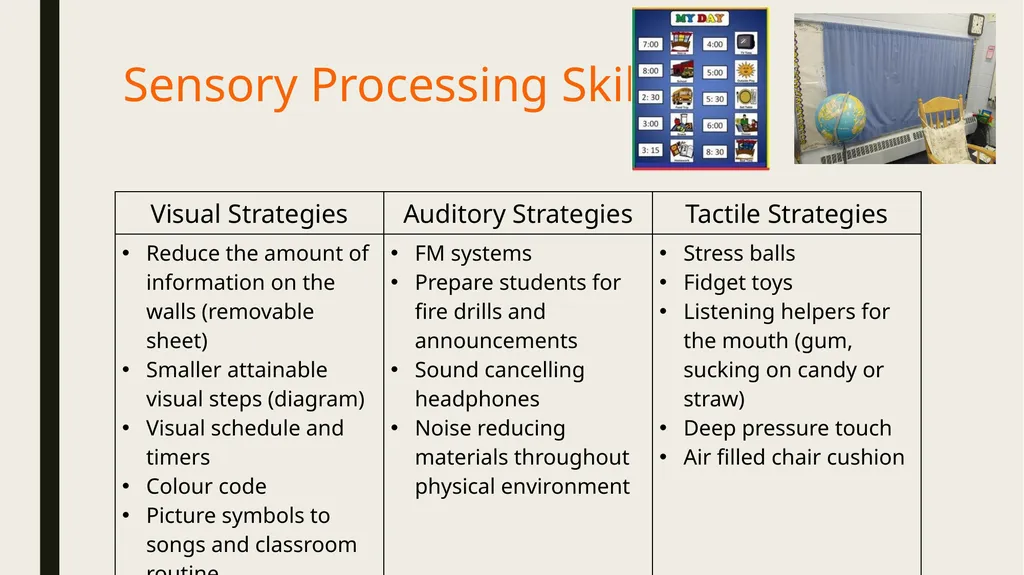
Sensory Processing Skills<br>
10
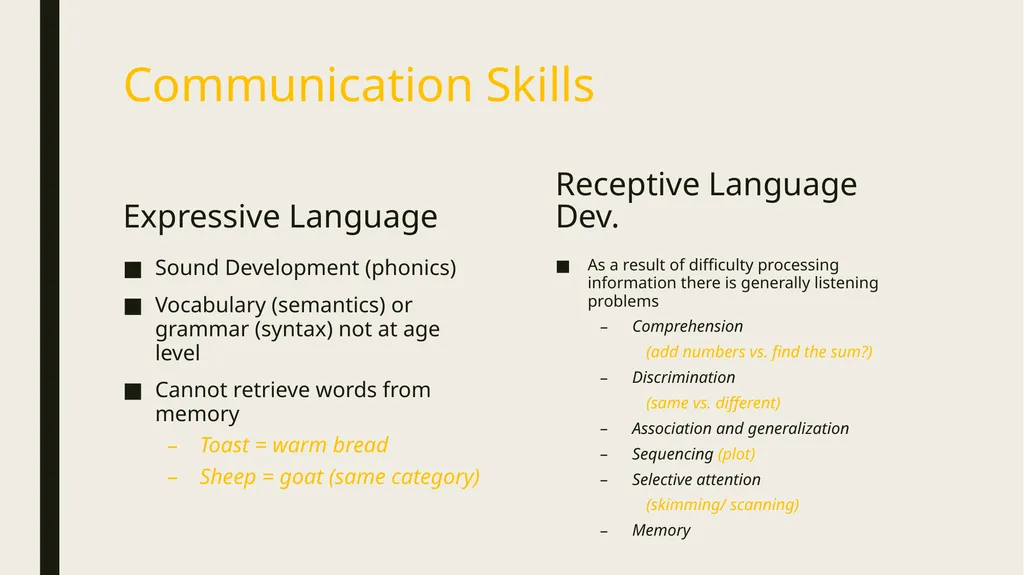
Communication Skills Expressive Language Sound Development (phonics)
Vocabulary (semantics) or grammar (syntax) not at age level
Cannot retrieve words from memory
Toast = warm bread
Sheep = goat (same category) Receptive Language Dev. As a result of difficulty processing information there is generally listening problems
Comprehension
(add numbers vs. find the sum?)
Discrimination
(same vs. different)
Association and generalization
Sequencing (plot)
Selective attention
(skimming/ scanning)
Memory<br>
11
Communication Skills
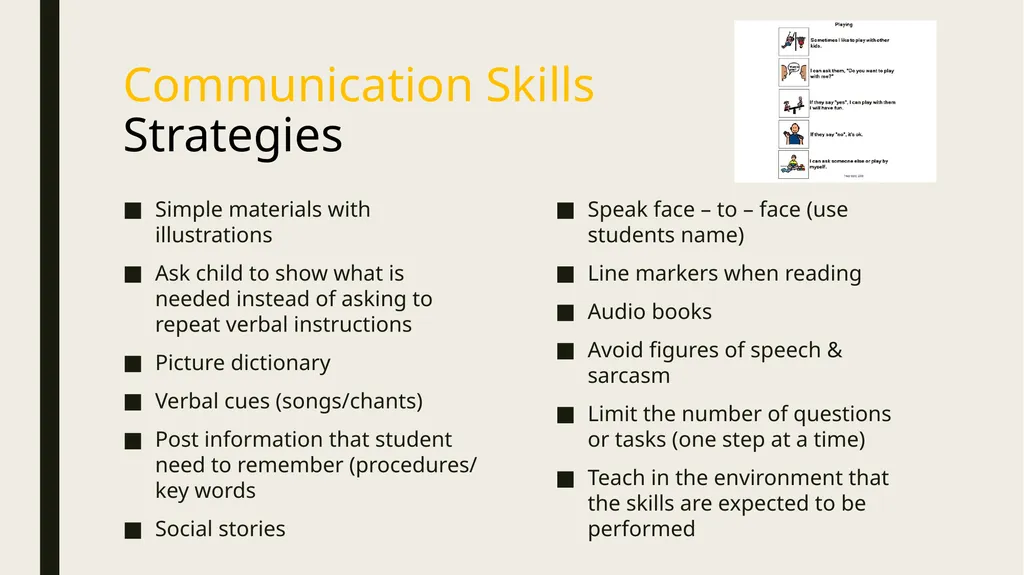
Strategies Simple materials with illustrations
Ask child to show what is needed instead of asking to repeat verbal instructions
Picture dictionary
Verbal cues (songs/chants)
Post information that student need to remember (procedures/ key words
Social stories Speak face – to – face (use students name)
Line markers when reading
Audio books
Avoid figures of speech & sarcasm
Limit the number of questions or tasks (one step at a time)
Teach in the environment that the skills are expected to be performed<br>
12
Memory Skills
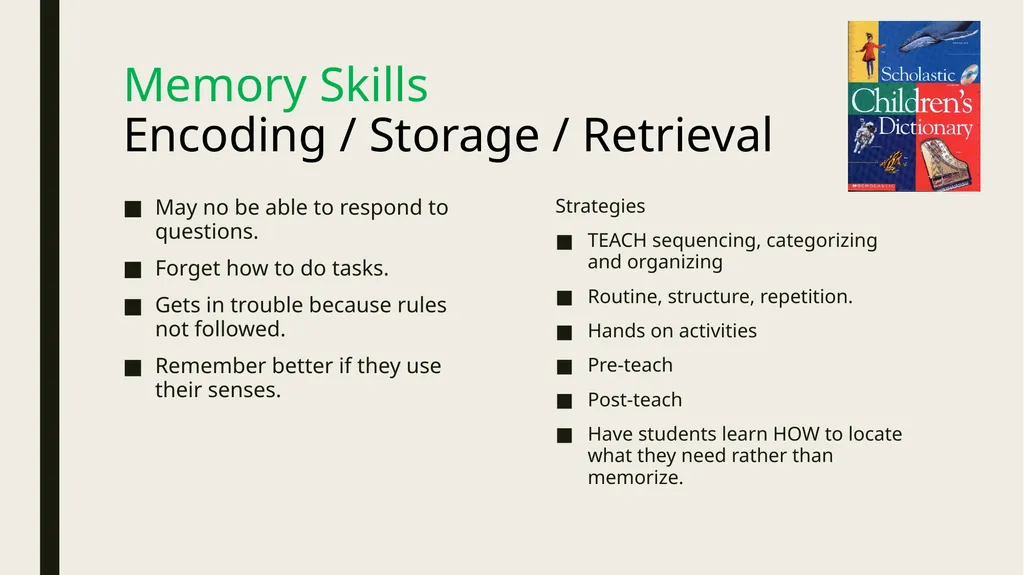
Encoding / Storage / Retrieval May no be able to respond to questions.
Forget how to do tasks.
Gets in trouble because rules not followed.
Remember better if they use their senses. Strategies
TEACH sequencing, categorizing and organizing
Routine, structure, repetition.
Hands on activities
Pre-teach
Post-teach
Have students learn HOW to locate what they need rather than memorize.<br>
13
Executive Functioning and Abstract Reasoning Higher-order cognitive processes including:
Inhibition
Flexibility of thinking
Working memory
Planning and predicting
Cause and effect
Judgment
Organization Behaviours
Stealing, lying, defiance
Not able to predict the consequences of behaviour
Easily manipulated by others
Difficulty making and keeping friends
Overly friendly and affectionate
Disorganized<br>
14
Executive Functioning and Abstract Reasoning: Strategies Take time to get to know student and understand how they think
Decide what is most important, and ignore the rest
Be as consistent as possible
Help students problem solve
Help students take another person’s point of view
Allow cooling down time
Anticipate and prevent problems<br>
Decide what is most important, and ignore the rest
Be as consistent as possible
Help students problem solve
Help students take another person’s point of view
Allow cooling down time
Anticipate and prevent problems<br>
15
ADHD: Strategies Teach self-talk to keep students focussed
Concrete reinforcements and reminders
Consequences for inappropriate behaviour need to be immediate
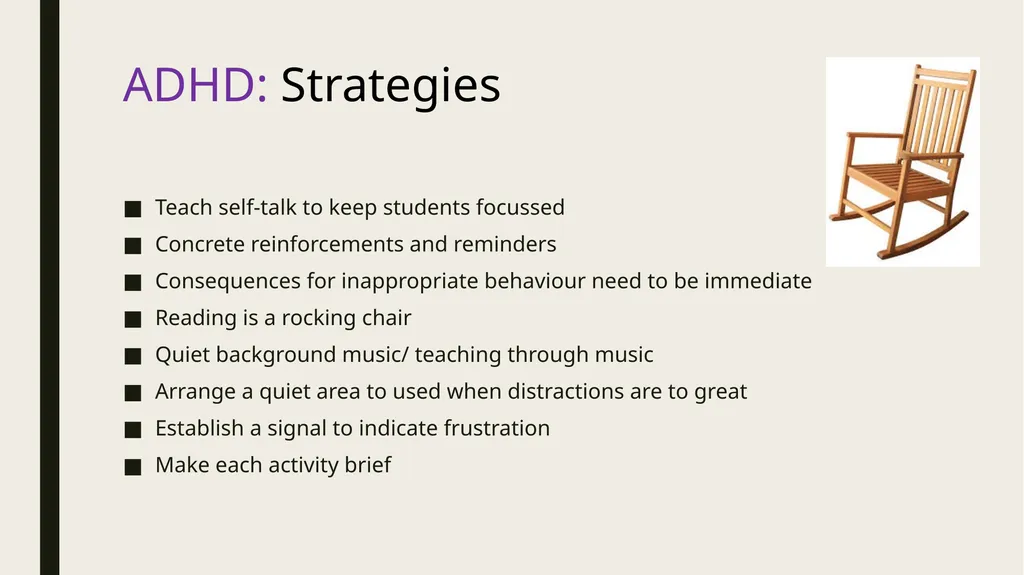
Reading is a rocking chair
Quiet background music/ teaching through music
Arrange a quiet area to used when distractions are to great
Establish a signal to indicate frustration
Make each activity brief<br>
16
Adaptive Skills Skills
Eating
Table manners
Basic hygiene
Clothing and dressing appropriately
Sense of direction
Knowing home address
Money management
Time The process of teaching adaptive skills
Modeling, role play
Guided practice
Use of consistent language (home and school)
Re-teach
Immediate feedback
Praise all successes<br>
17
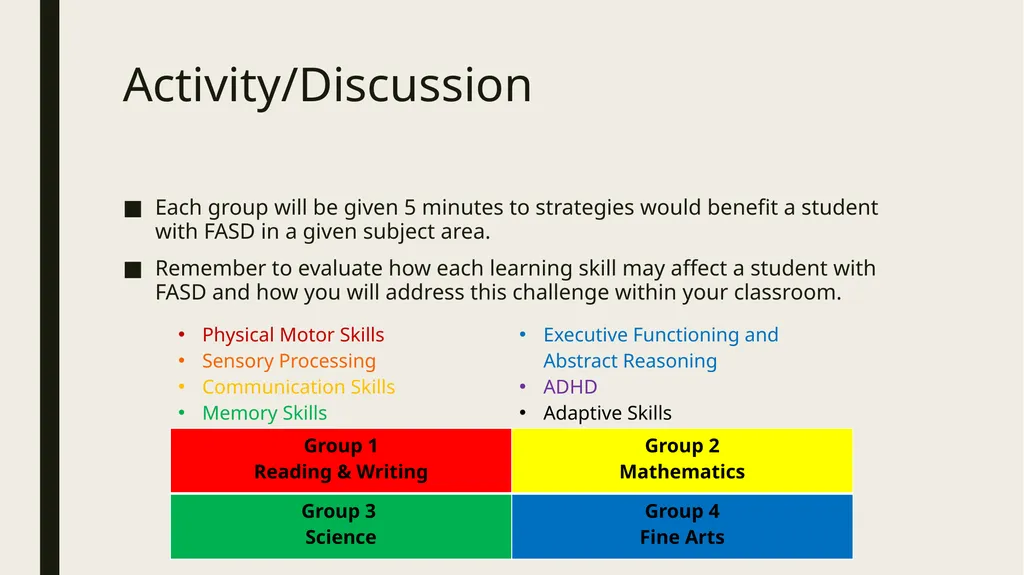
Activity/Discussion Each group will be given 5 minutes to strategies would benefit a student with FASD in a given subject area.
Remember to evaluate how each learning skill may affect a student with FASD and how you will address this challenge within your classroom.<br>
Remember to evaluate how each learning skill may affect a student with FASD and how you will address this challenge within your classroom.<br>
18
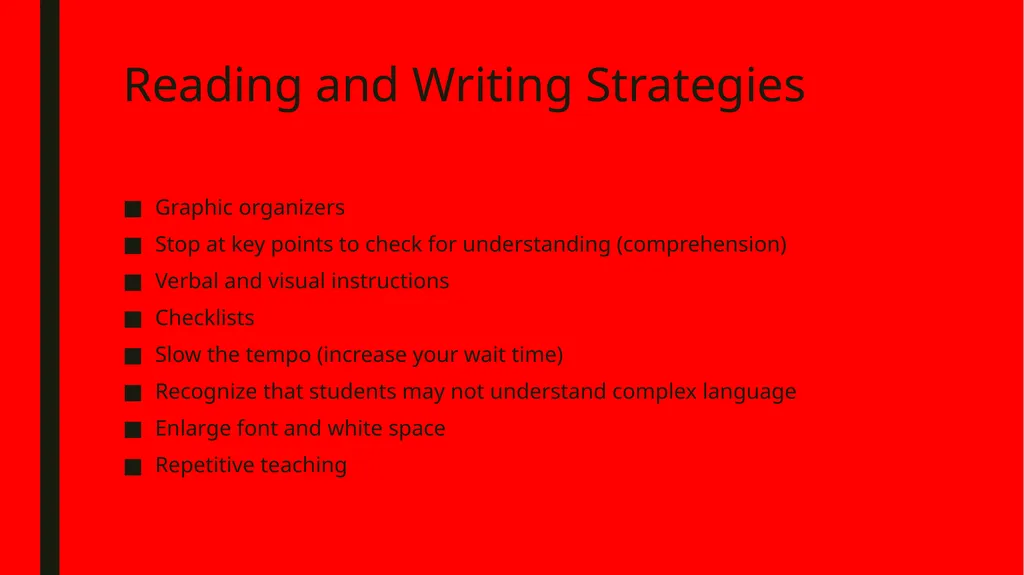
Reading and Writing Strategies Graphic organizers
Stop at key points to check for understanding (comprehension)
Verbal and visual instructions
Checklists
Slow the tempo (increase your wait time)
Recognize that students may not understand complex language
Enlarge font and white space
Repetitive teaching<br>
Stop at key points to check for understanding (comprehension)
Verbal and visual instructions
Checklists
Slow the tempo (increase your wait time)
Recognize that students may not understand complex language
Enlarge font and white space
Repetitive teaching<br>
19
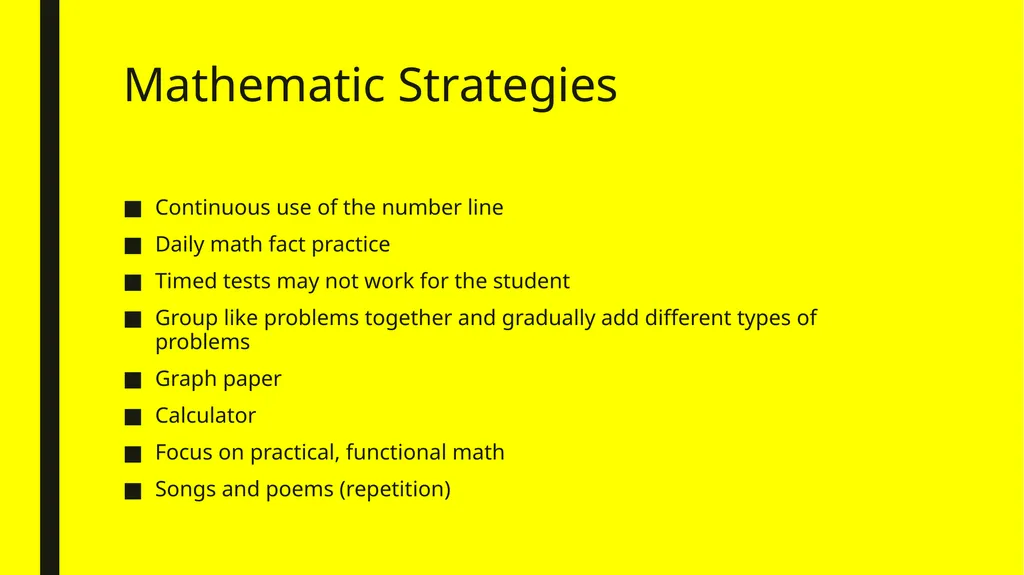
Mathematic Strategies Continuous use of the number line
Daily math fact practice
Timed tests may not work for the student
Group like problems together and gradually add different types of problems
Graph paper
Calculator
Focus on practical, functional math
Songs and poems (repetition)<br>
Daily math fact practice
Timed tests may not work for the student
Group like problems together and gradually add different types of problems
Graph paper
Calculator
Focus on practical, functional math
Songs and poems (repetition)<br>
20
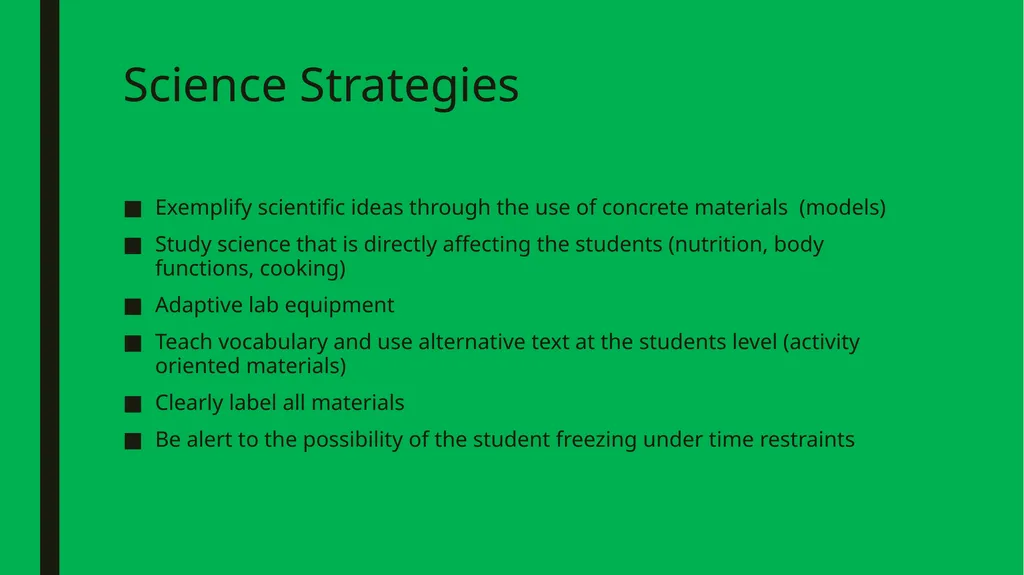
Science Strategies Exemplify scientific ideas through the use of concrete materials (models)
Study science that is directly affecting the students (nutrition, body functions, cooking)
Adaptive lab equipment
Teach vocabulary and use alternative text at the students level (activity oriented materials)
Clearly label all materials
Be alert to the possibility of the student freezing under time restraints<br>
21
Fine Arts Strategies Co-operative and group learning, foster student involvement
Connect to real world
Multi-sensory experiences
Direct teaching of social skills
Graphic organizer of key concepts
Use art to label and teach language of the tasks and the emotional context of the situation<br>
Connect to real world
Multi-sensory experiences
Direct teaching of social skills
Graphic organizer of key concepts
Use art to label and teach language of the tasks and the emotional context of the situation<br>
22
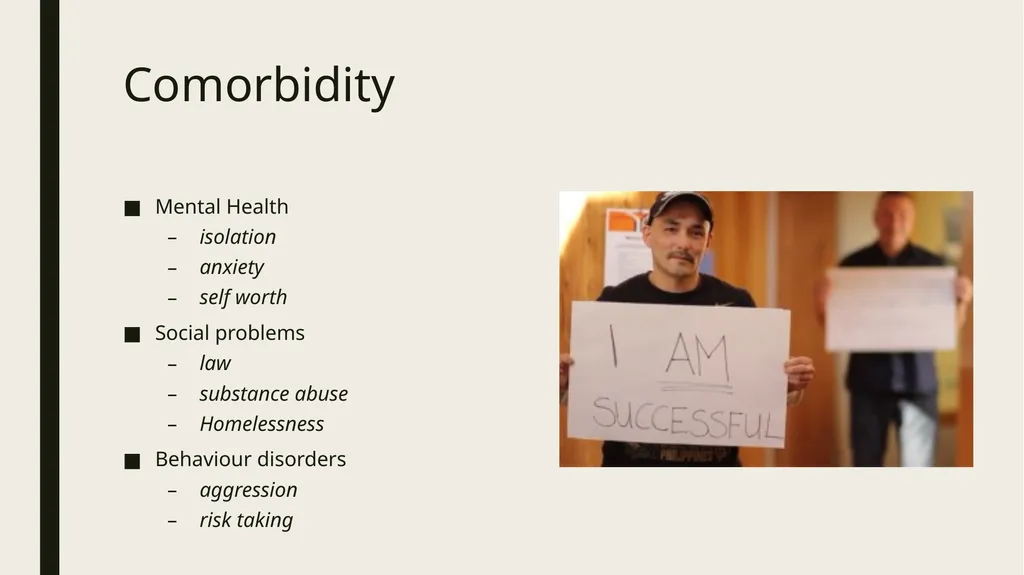
Comorbidity Mental Health
isolation
anxiety
self worth
Social problems
law
substance abuse
Homelessness
Behaviour disorders
aggression
risk taking<br>
isolation
anxiety
self worth
Social problems
law
substance abuse
Homelessness
Behaviour disorders
aggression
risk taking<br>
23
What students want teacher to know! Joe’s Ideas for school
Let me use the computer unless I want to write
Me talking and someone else writing works!
Talk less and show me more
Give me things to look at when you are teaching to help me remember
Make sure I am tuned in !!<br>
Let me use the computer unless I want to write
Me talking and someone else writing works!
Talk less and show me more
Give me things to look at when you are teaching to help me remember
Make sure I am tuned in !!<br>
24
www.youtube.com/watch?v=_Pe1acd0CHI
Tania Peterman on living with FADS<br>
Tania Peterman on living with FADS<br>
25
What parents want teachers to know! TEAM approach works best.
Plan for success!
Open communication (my child may not remember).
Acknowledge struggles.
Tell me of the success of the day, no matter how small.
Share resources.
Include my child in trips and extracurricular activities.
Teach other students tolerance.
I am doing the best I can.<br>
Plan for success!
Open communication (my child may not remember).
Acknowledge struggles.
Tell me of the success of the day, no matter how small.
Share resources.
Include my child in trips and extracurricular activities.
Teach other students tolerance.
I am doing the best I can.<br>
26
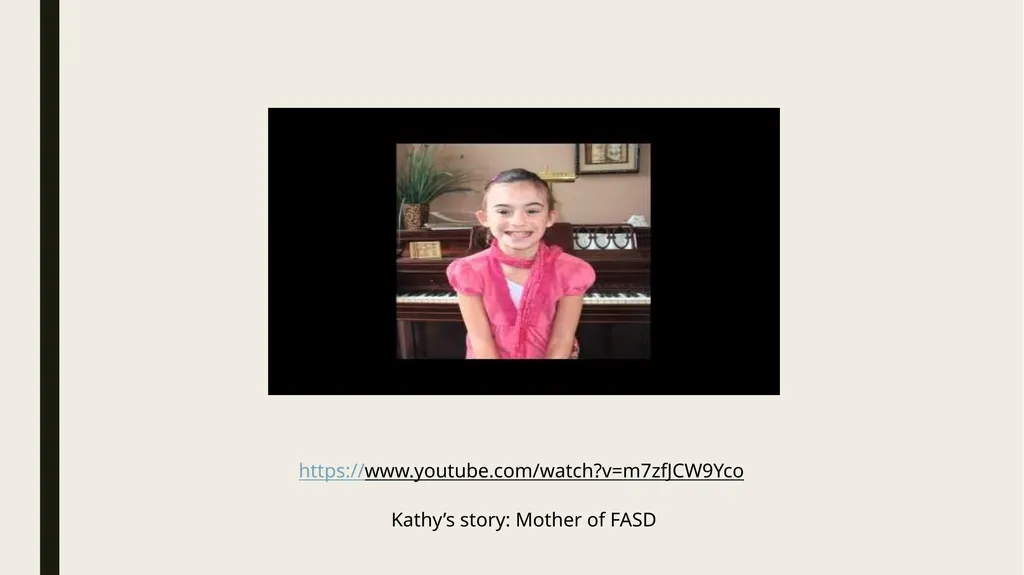
https://www.youtube.com/watch?v=m7zfJCW9Yco
Kathy’s story: Mother of FASD<br>
Kathy’s story: Mother of FASD<br>
27
What teachers need to know!! Collect information.
History.
Involve parents.
Ask questions.
Make a plan.
Evaluate the plan.
Make referrals.
Develop an individual education plan.<br>
History.
Involve parents.
Ask questions.
Make a plan.
Evaluate the plan.
Make referrals.
Develop an individual education plan.<br>
28
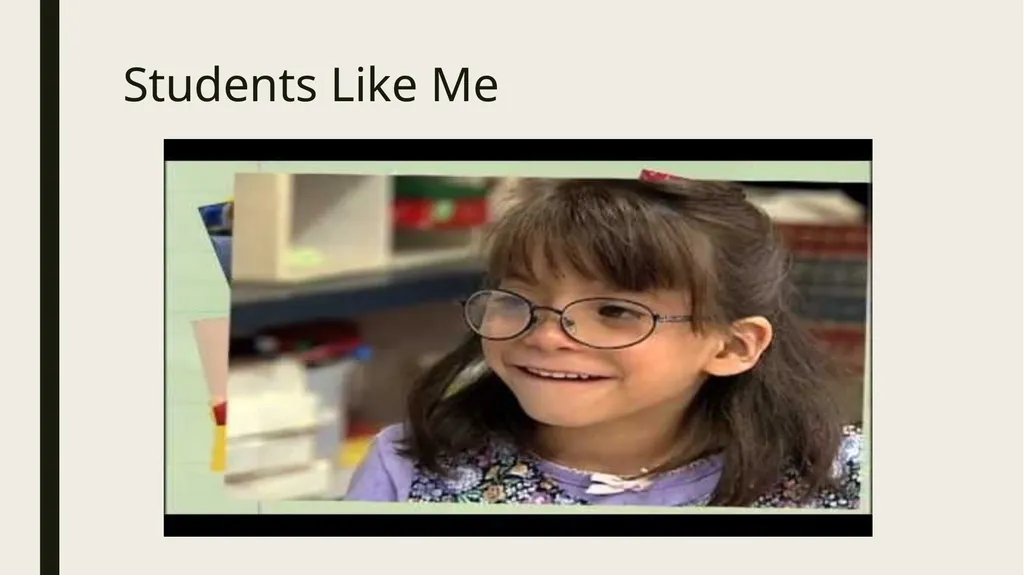
Students Like Me<br>
29
References Texts
Inclusion of Exceptional Learners in Canadian Schools By: Nancy Hutchinson
Chapter 5 (Pages 151 to 153)
What Educators Need to Know about Fetal Alcohol Spectrum Disorder
Healthy Child Manitoba (2009)
Tips for talking with Parents (Center for Disease Control, www,cdcgov/actearly)
Well Beings: A Guide to Health in Child Care By: Canadian Paediatric Society
Child and Adolescent Development: A Chronological Approach Bukatko Videos
“Students like Me” Episodes 1
Childbirth Media Centre
“Nicholas” / “Tania” / “Alcohol & Adoption”
Alcohol Free Pregnancy
“Kathy’s story” (a mother of FASD)
SAMHSA<br>