03
Benchmarks: ��Identify the relationship and division of powers between the federal government and state governments. ��Illustrate the lawmaking process at the local, state, and federal levels.��Differentiate between local, state, and federal governments’ obligations and services. Attn: Teachers, this PowerPoint, lesson plans, activities & worksheets are available @ Teachers Pay Teachers, $1.99 – Mr. Raymond’s Civics EOC Academy<br>
04
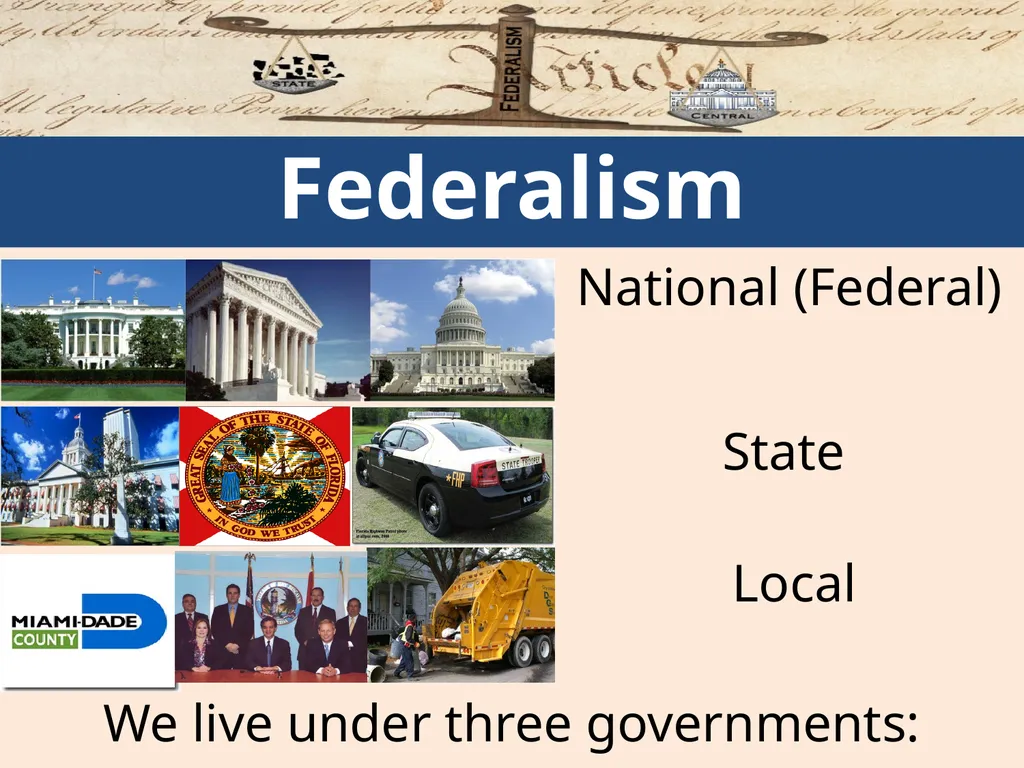
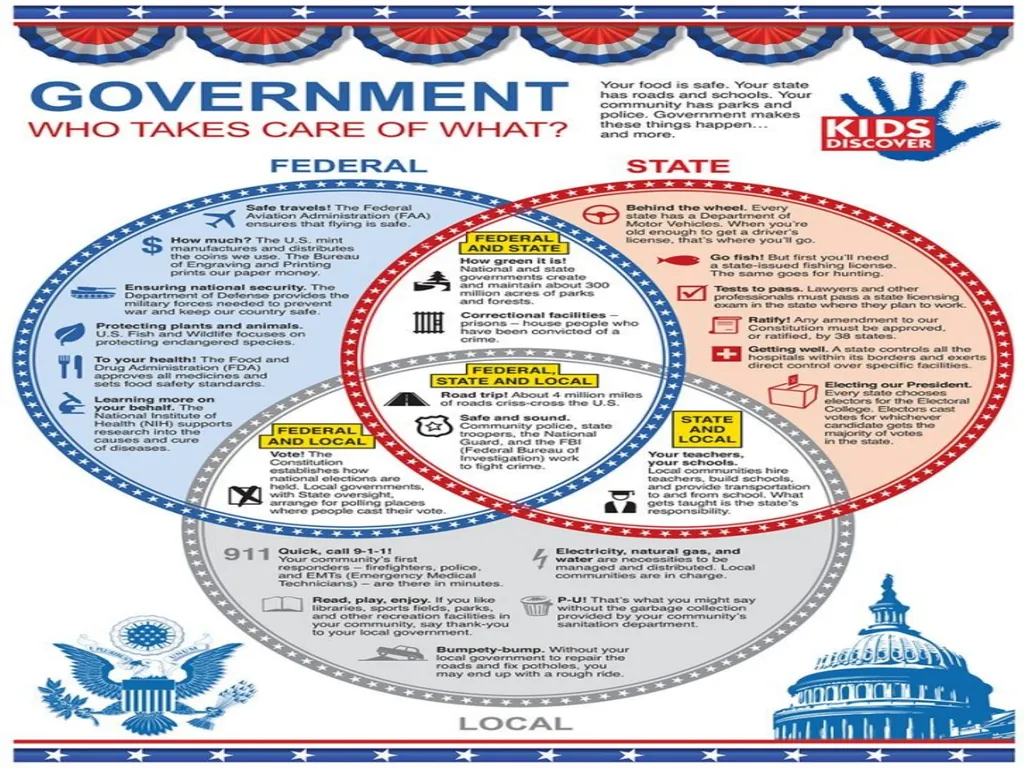
We live under three governments: Federalism National (Federal) State Local<br>
05
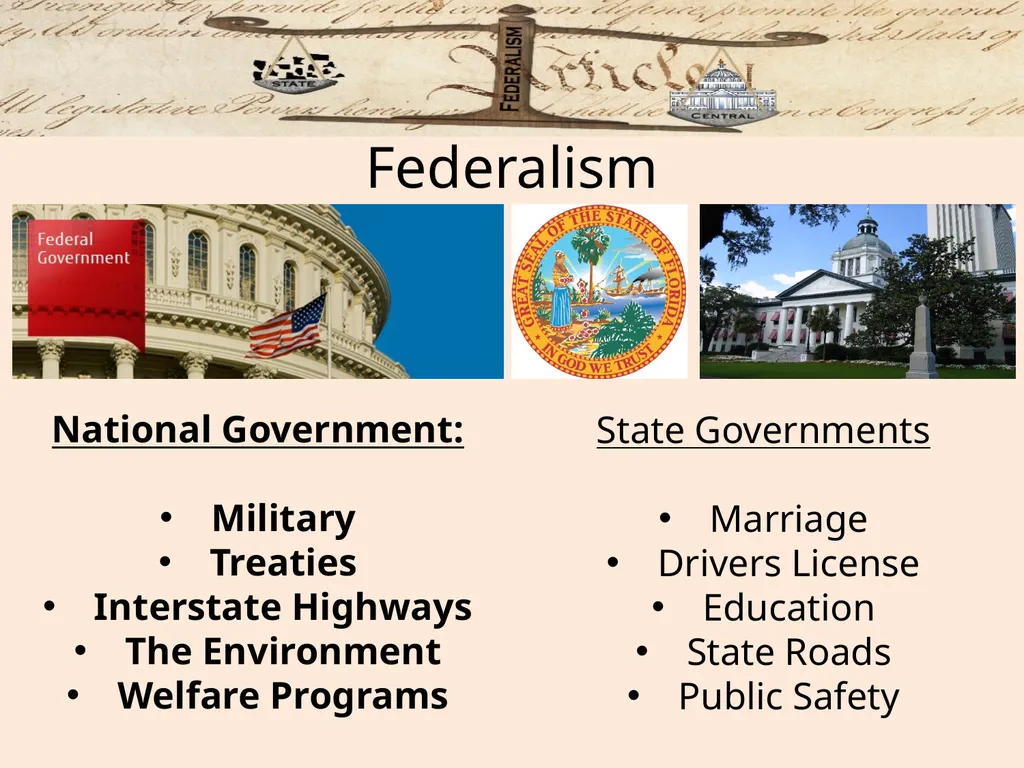
Federalism National Government:
Military
Treaties
Interstate Highways
The Environment
Welfare Programs State Governments
Marriage
Drivers License
Education
State Roads
Public Safety<br>
06
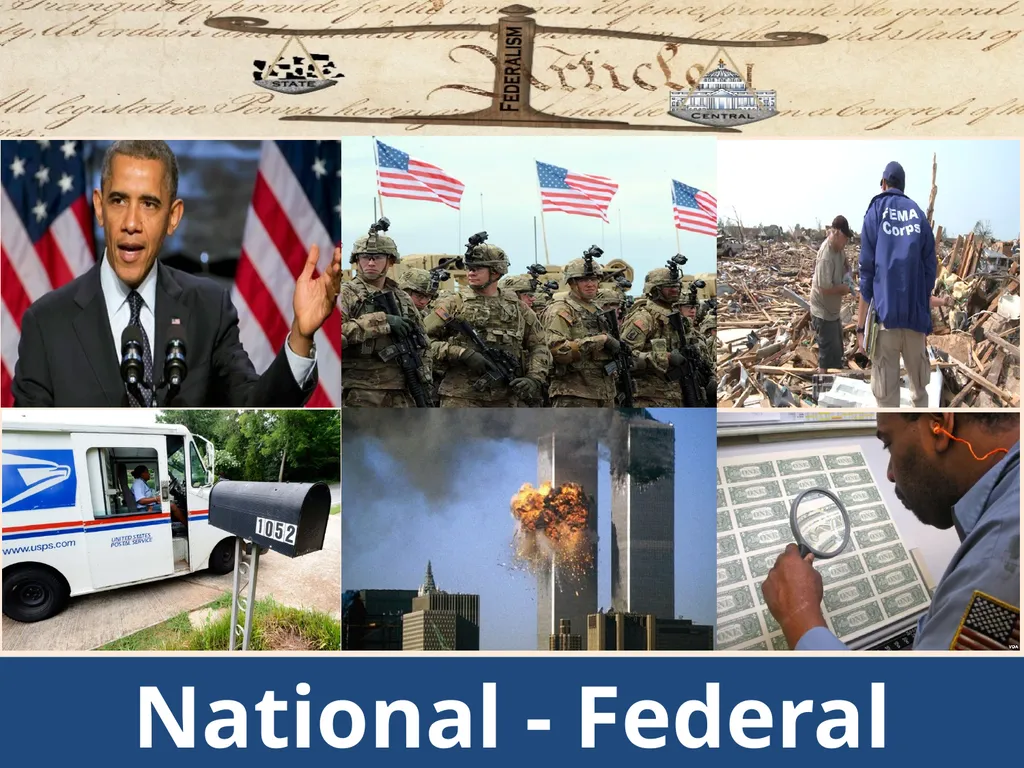
National - Federal<br>
09
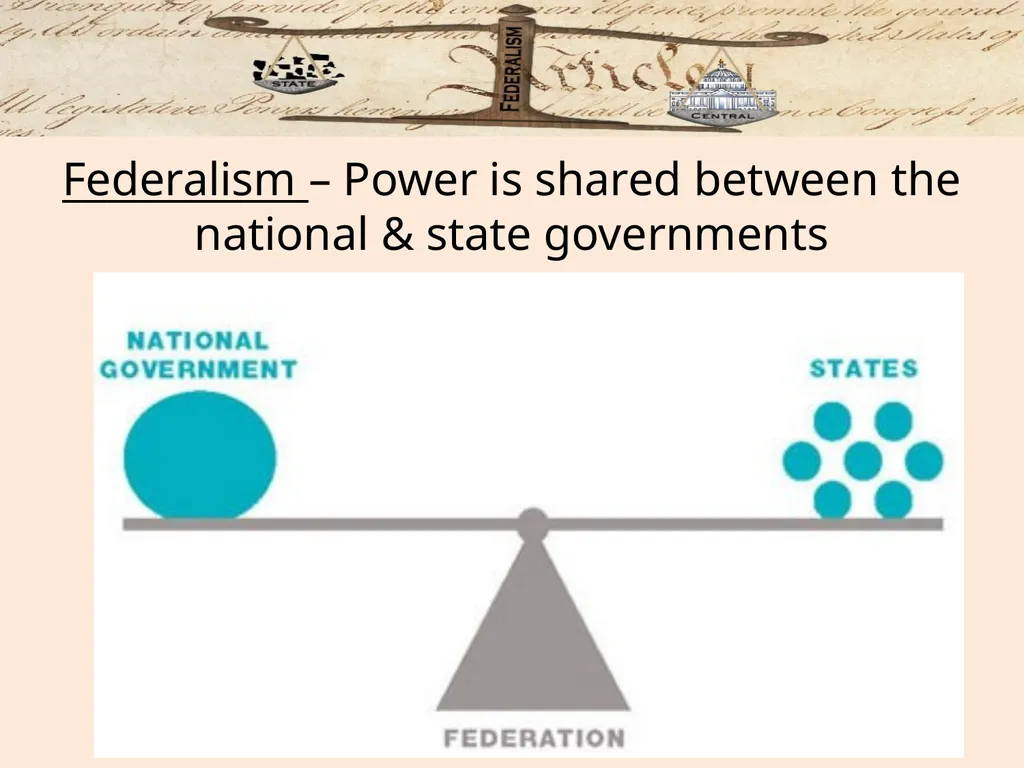
Federalism – Power is shared between the national & state governments<br>
10
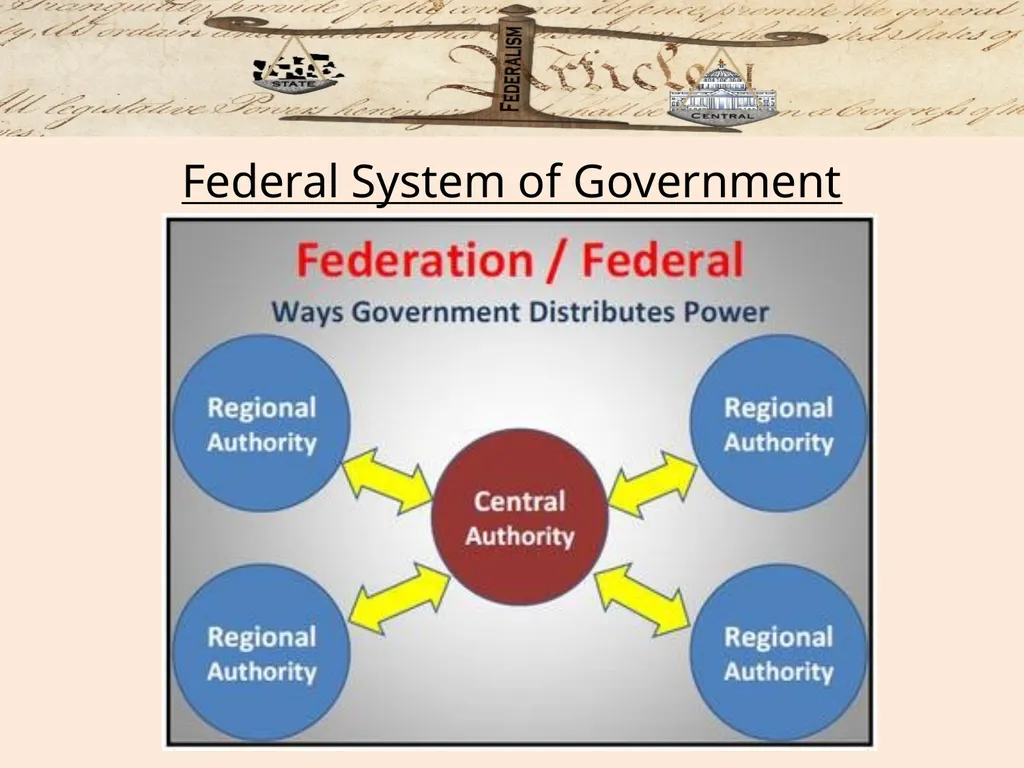
Federal System of Government<br>
11
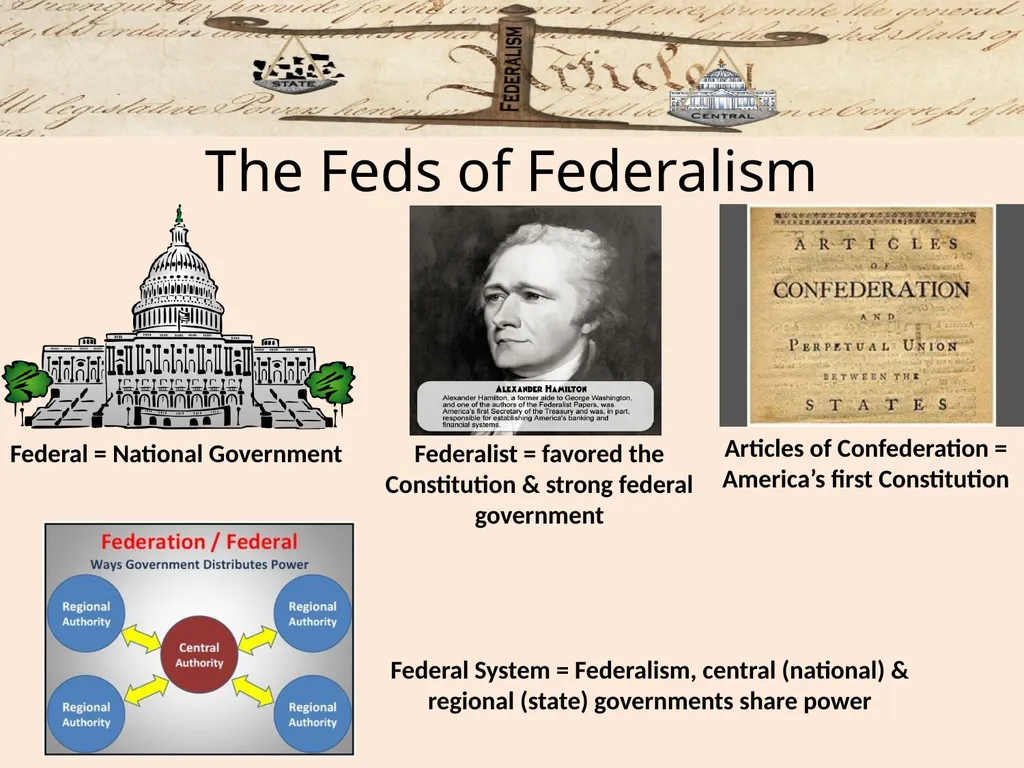
The Feds of Federalism Federal = National Government Federalist = favored the Constitution & strong federal government Articles of Confederation = America’s first Constitution Federal System = Federalism, central (national) & regional (state) governments share power<br>
12
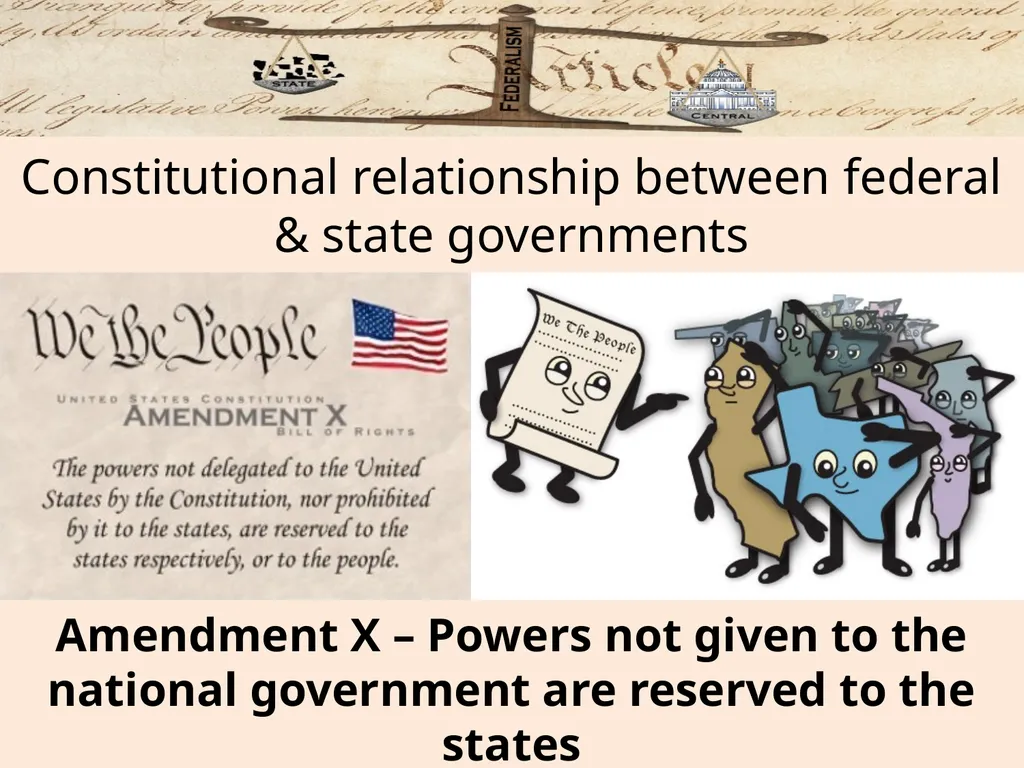
Constitutional relationship between federal & state governments Amendment X – Powers not given to the national government are reserved to the states<br>
13
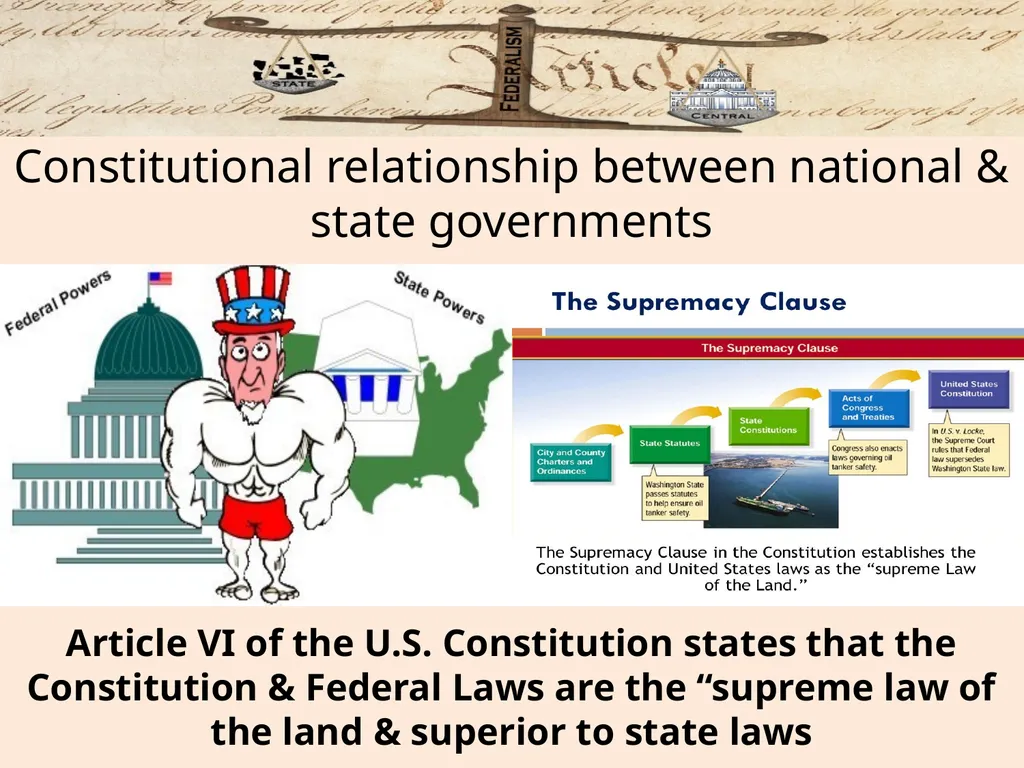
Constitutional relationship between national & state governments Article VI of the U.S. Constitution states that the Constitution & Federal Laws are the “supreme law of the land & superior to state laws<br>
14
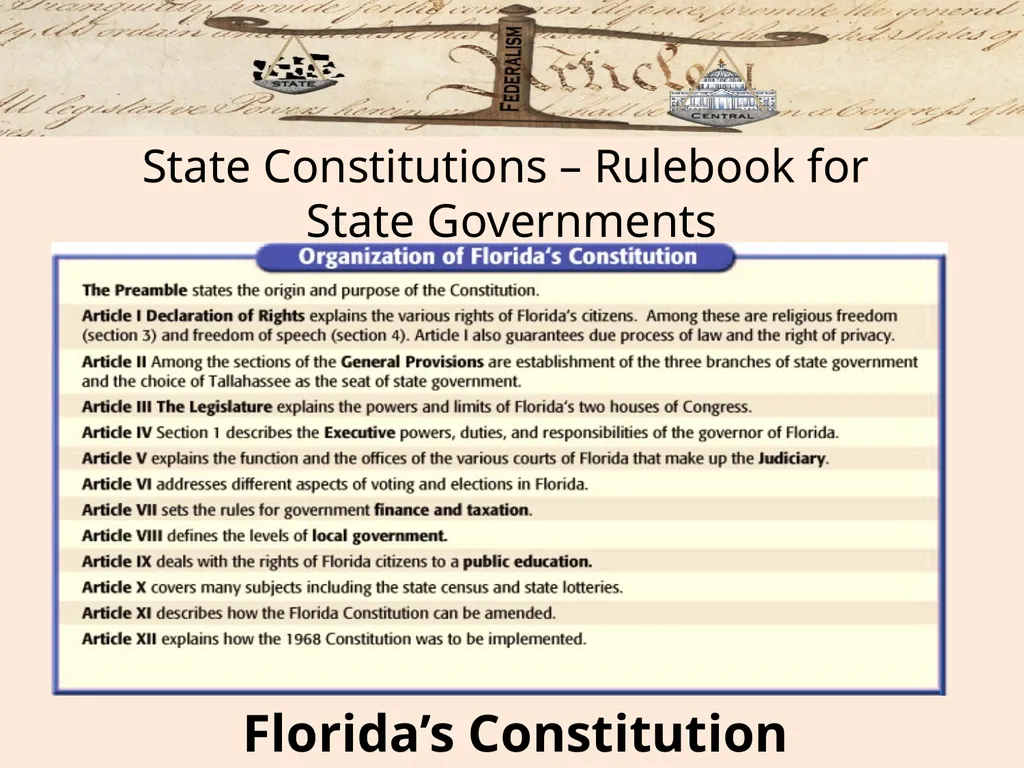
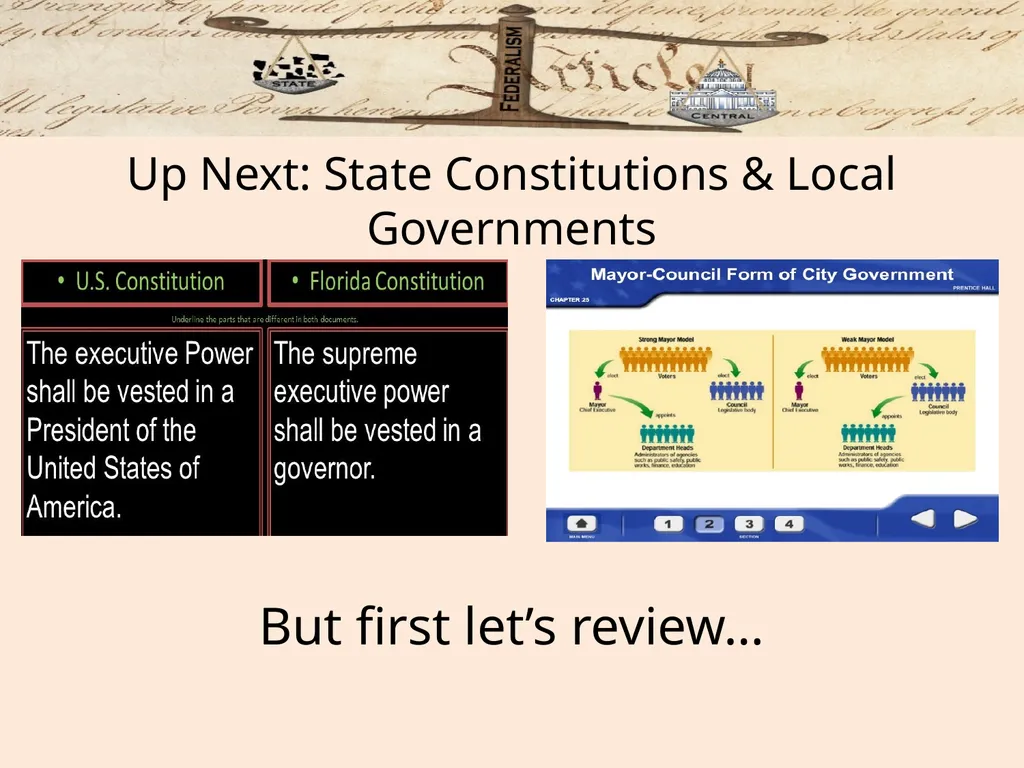
State Constitutions – Rulebook for �State Governments Florida’s Constitution<br>
15
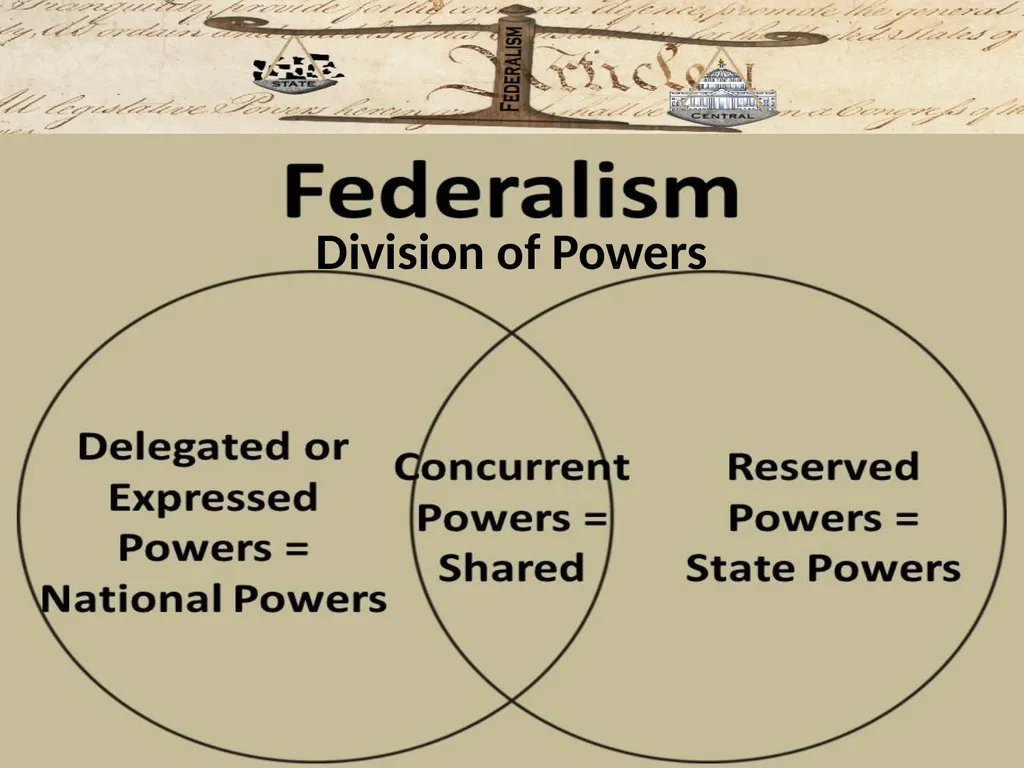
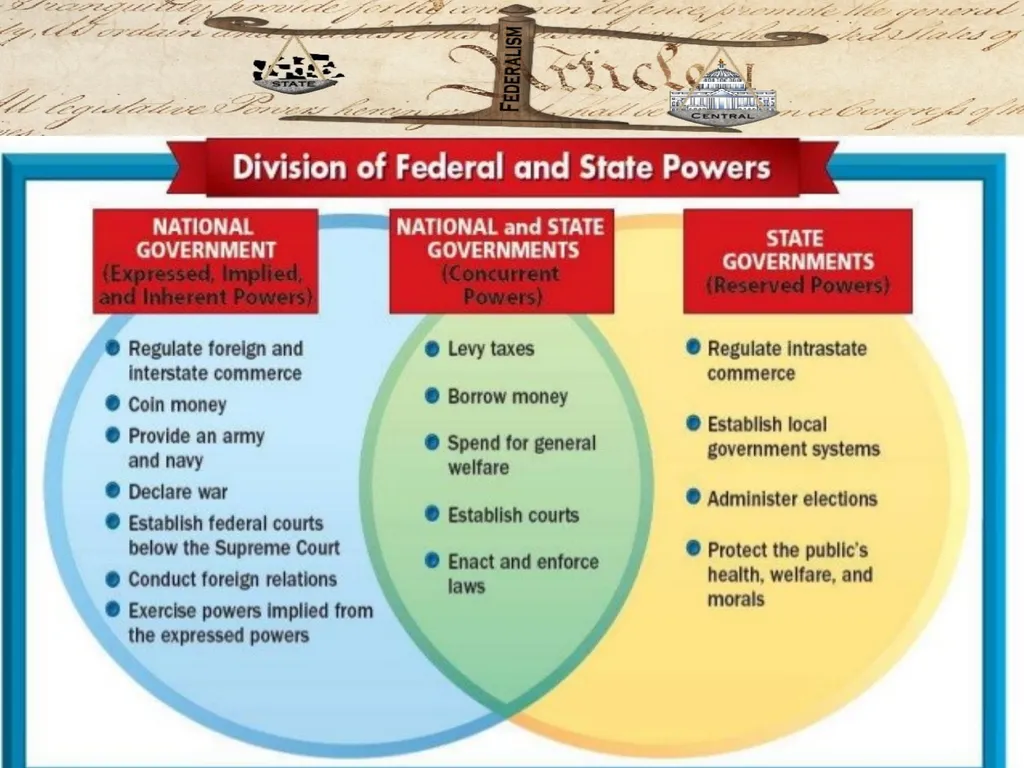
Division of Powers<br>
16
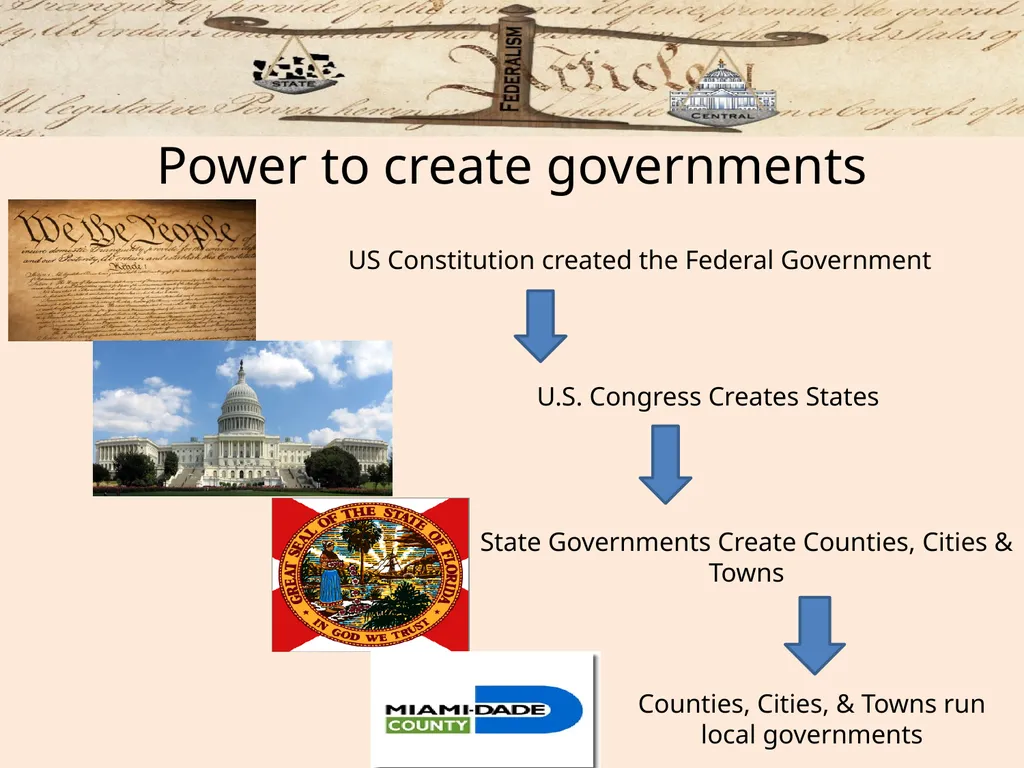
Power to create governments US Constitution created the Federal Government U.S. Congress Creates States State Governments Create Counties, Cities & Towns Counties, Cities, & Towns run local governments<br>
17
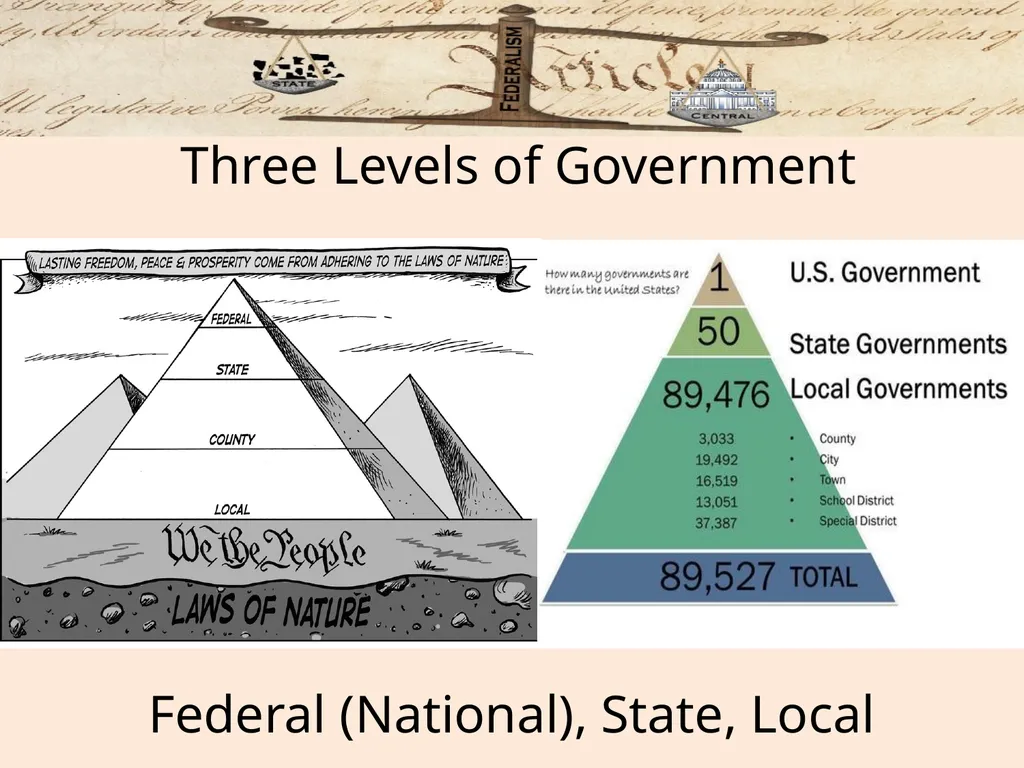
Three Levels of Government Federal (National), State, Local<br>
18
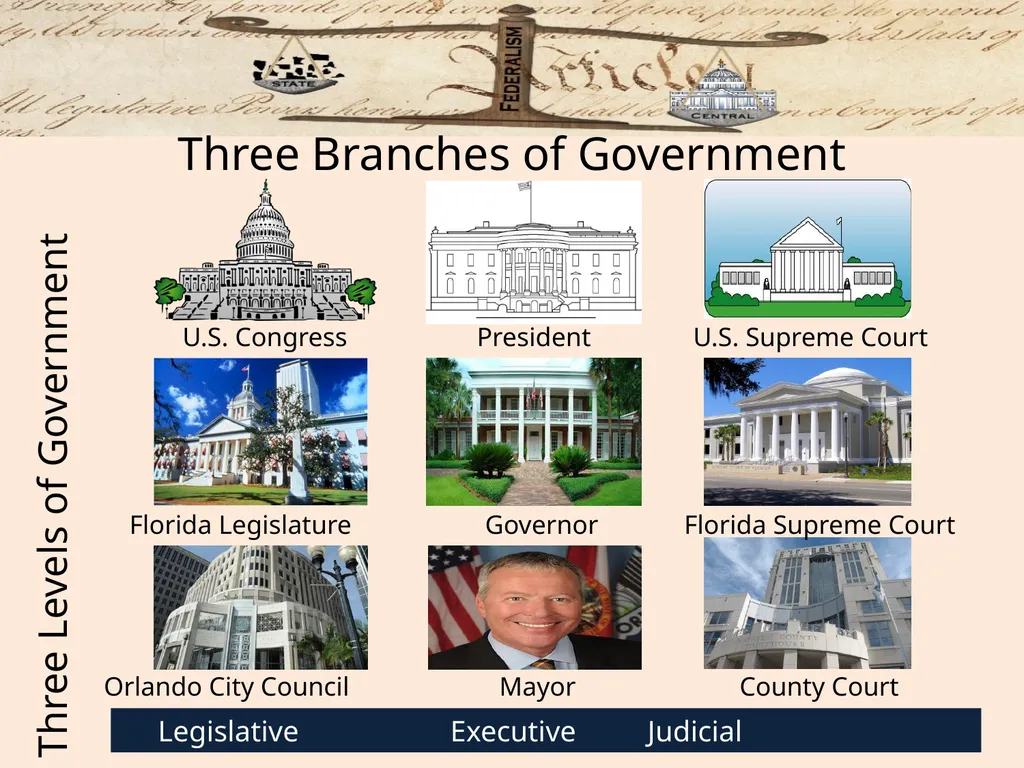
Three Branches of Government Legislative Executive Judicial U.S. Congress President U.S. Supreme Court Florida Legislature Governor Florida Supreme Court Orlando City Council Mayor County Court Three Levels of Government<br>
19
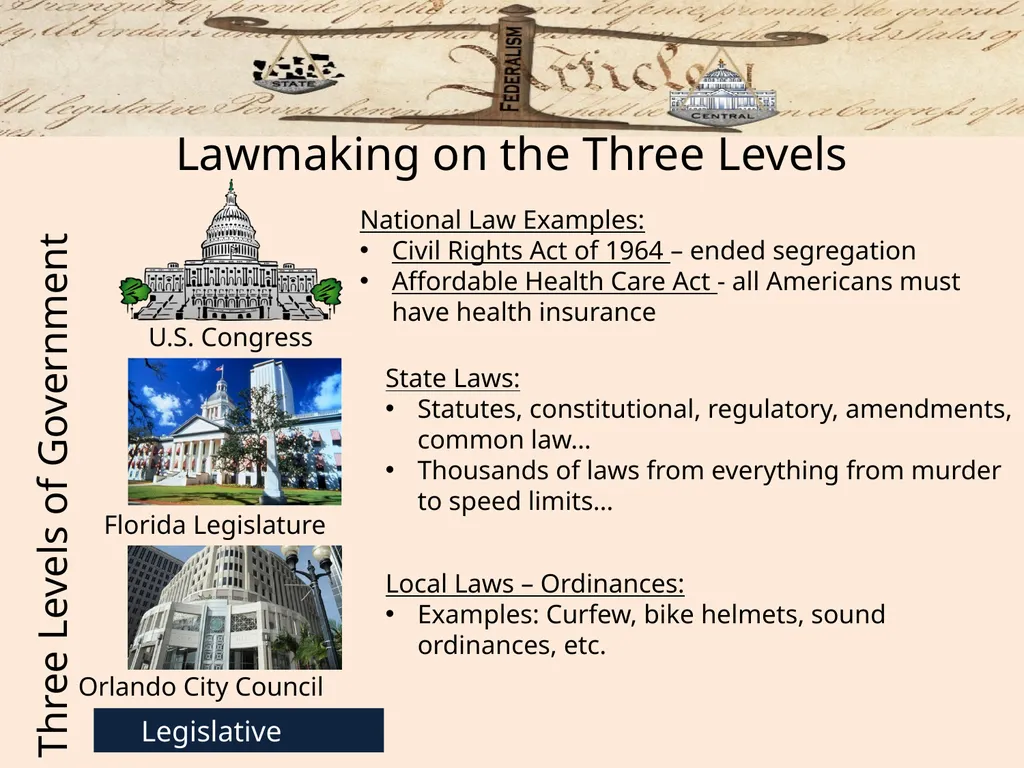
Lawmaking on the Three Levels Legislative U.S. Congress Florida Legislature Orlando City Council Three Levels of Government National Law Examples:
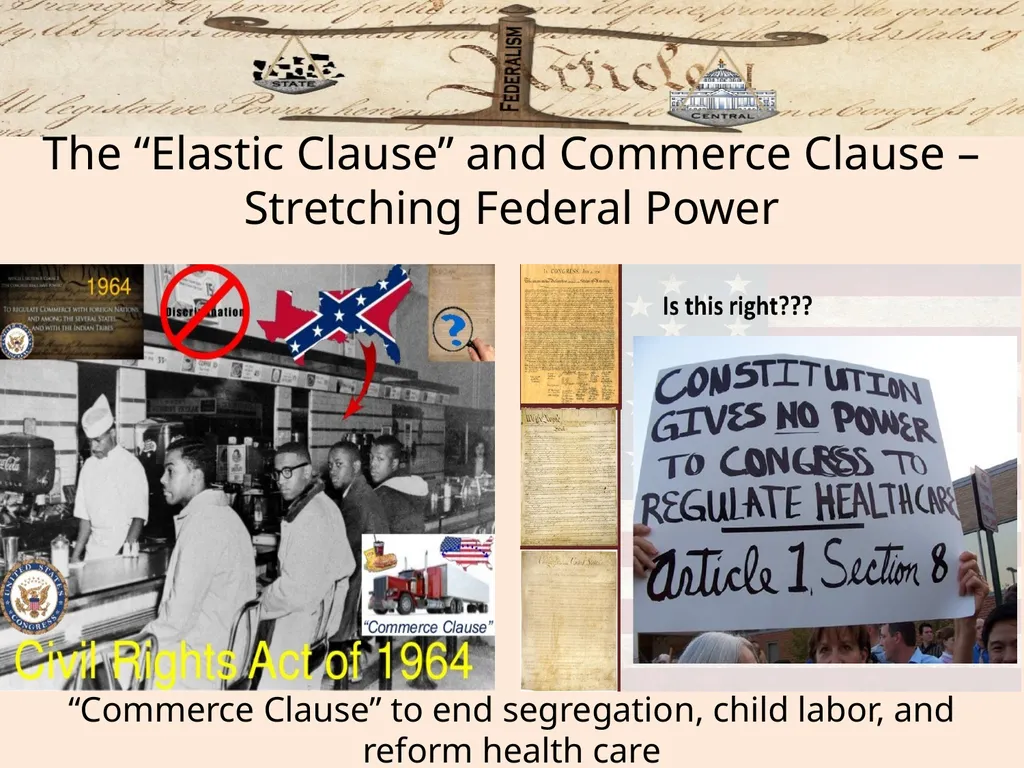
Civil Rights Act of 1964 – ended segregation
Affordable Health Care Act - all Americans must have health insurance State Laws:
Statutes, constitutional, regulatory, amendments, common law…
Thousands of laws from everything from murder to speed limits… Local Laws – Ordinances:
Examples: Curfew, bike helmets, sound ordinances, etc.<br>
20
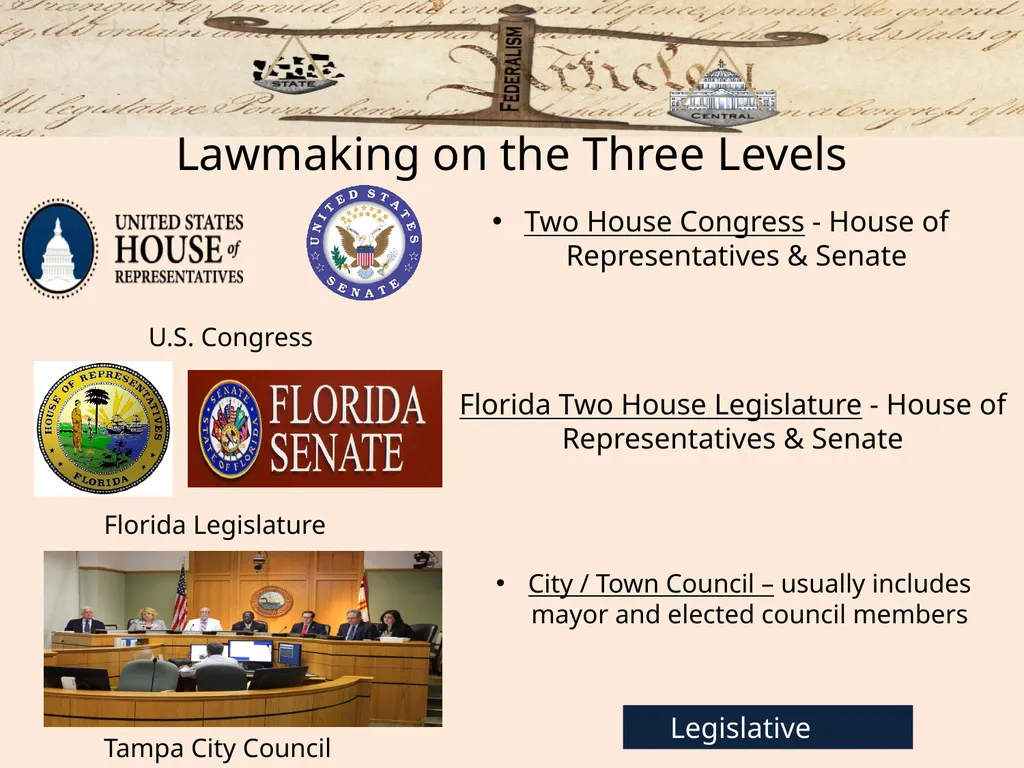
Lawmaking on the Three Levels Legislative U.S. Congress Florida Legislature Tampa City Council Two House Congress - House of Representatives & Senate Florida Two House Legislature - House of Representatives & Senate City / Town Council – usually includes mayor and elected council members<br>
21
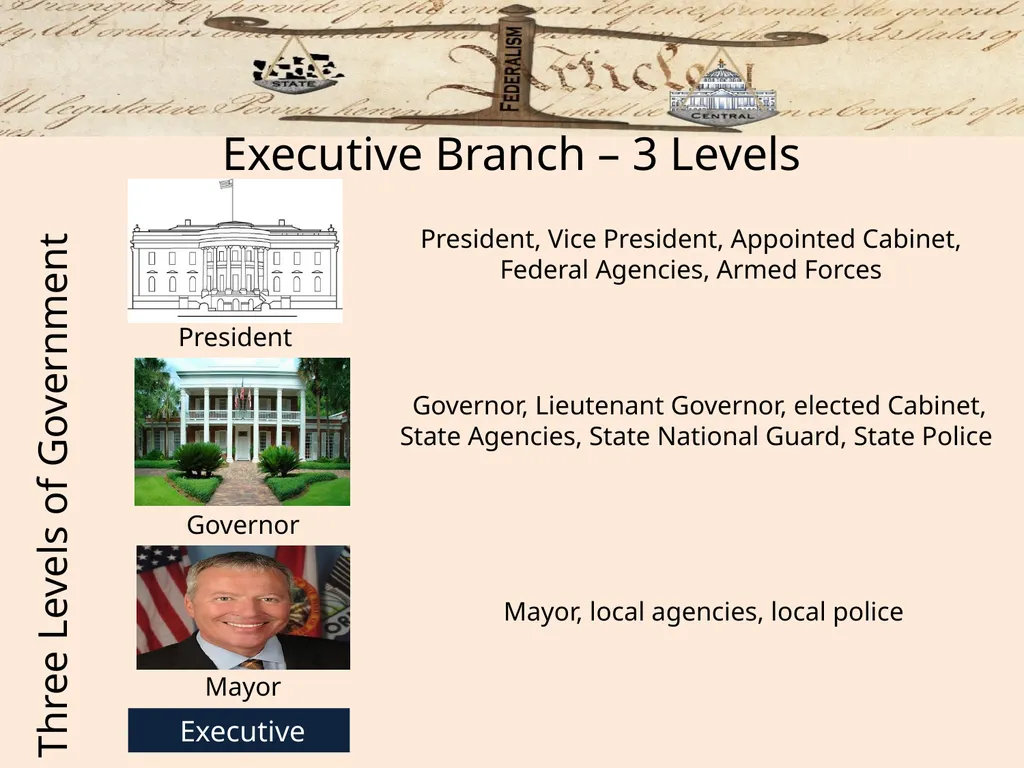
Executive Branch – 3 Levels Executive President Governor Mayor Three Levels of Government President, Vice President, Appointed Cabinet, Federal Agencies, Armed Forces Governor, Lieutenant Governor, elected Cabinet, State Agencies, State National Guard, State Police Mayor, local agencies, local police<br>
22
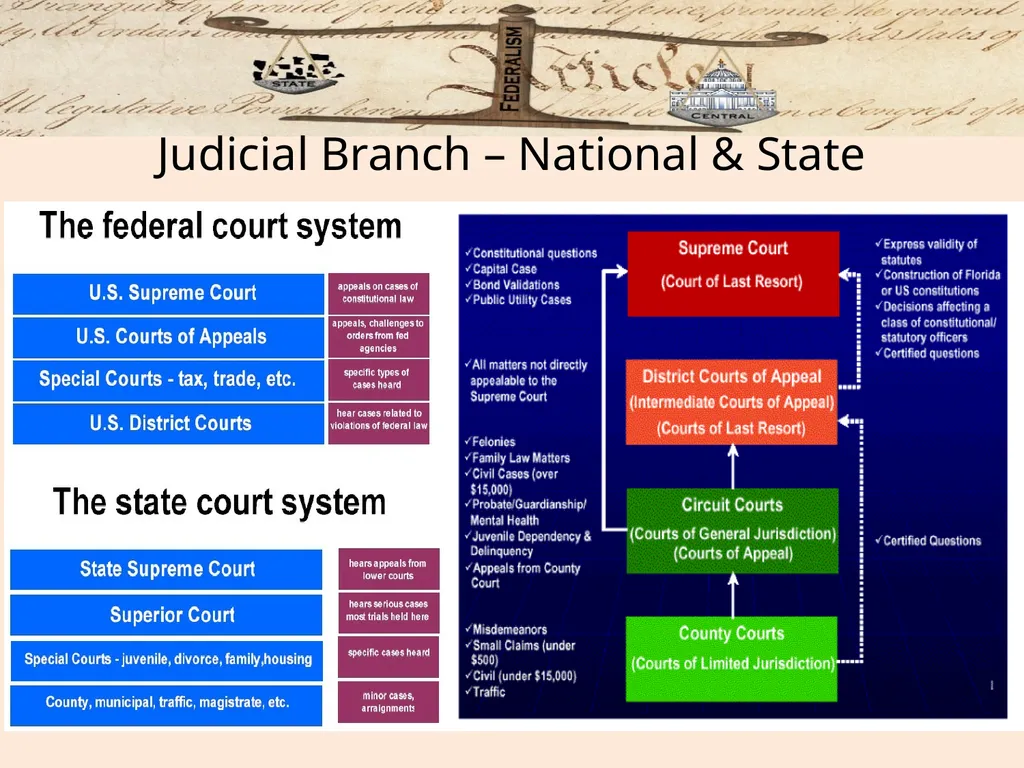
Judicial Branch – National & State<br>
23
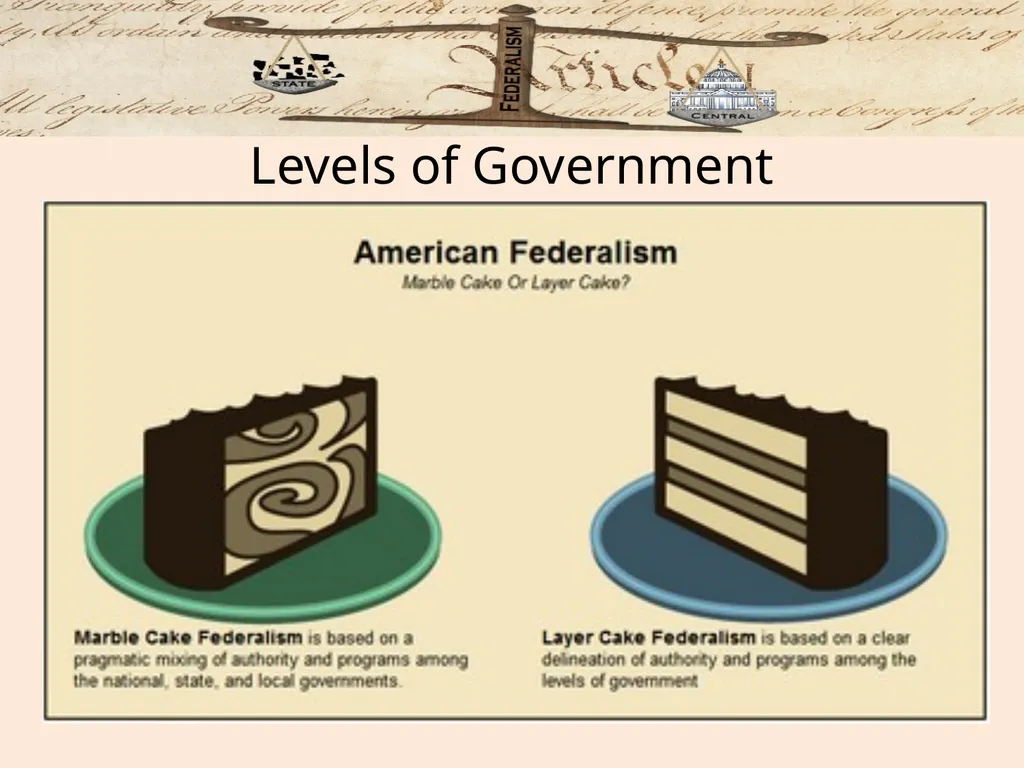
Levels of Government<br>
24
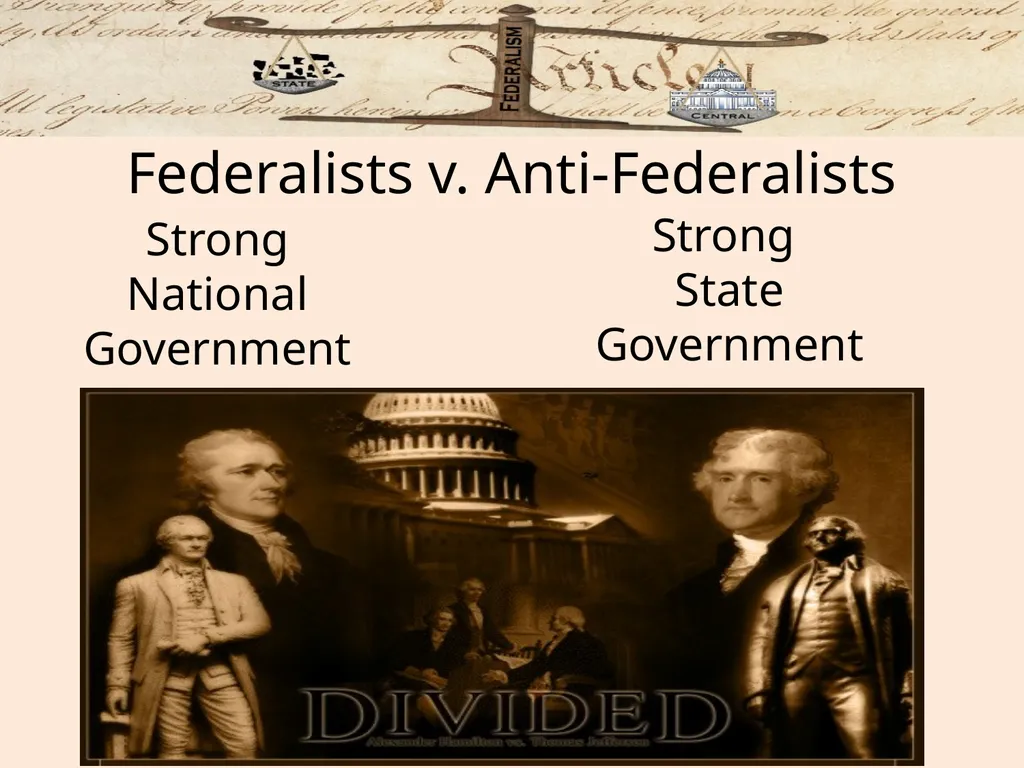
Federalists v. Anti-Federalists Strong National Government Strong
State Government<br>
25
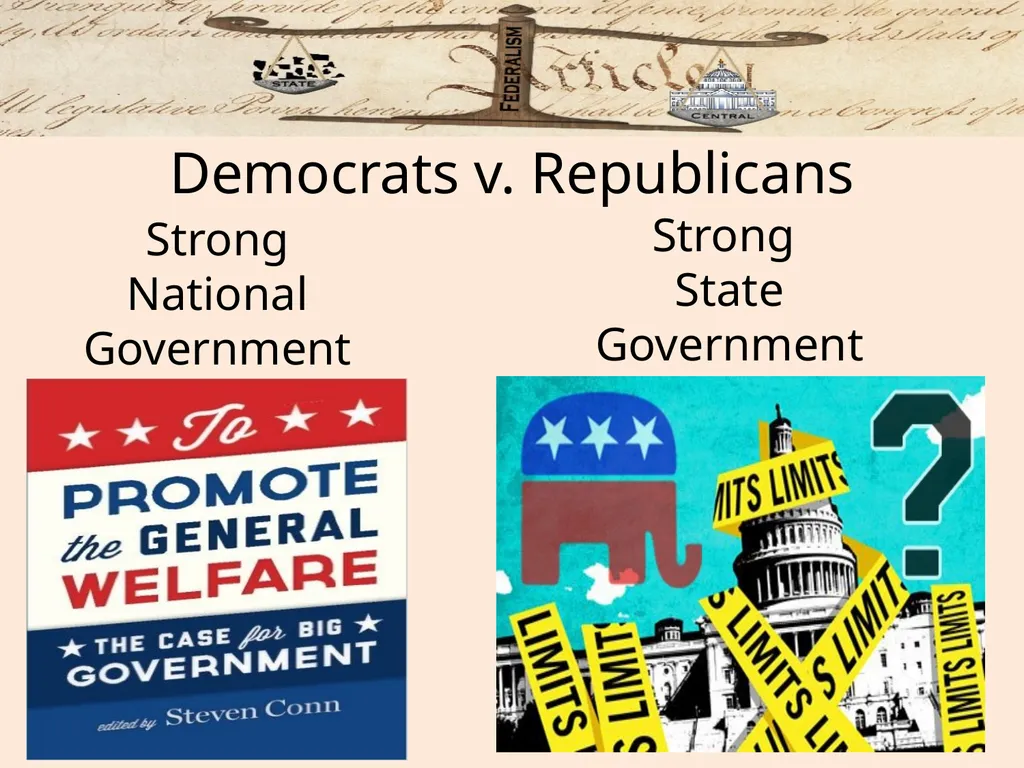
Democrats v. Republicans Strong National Government Strong
State Government<br>
26
Size of the national government in 1800 About 150 employees in 1800, today about 4 million<br>
27
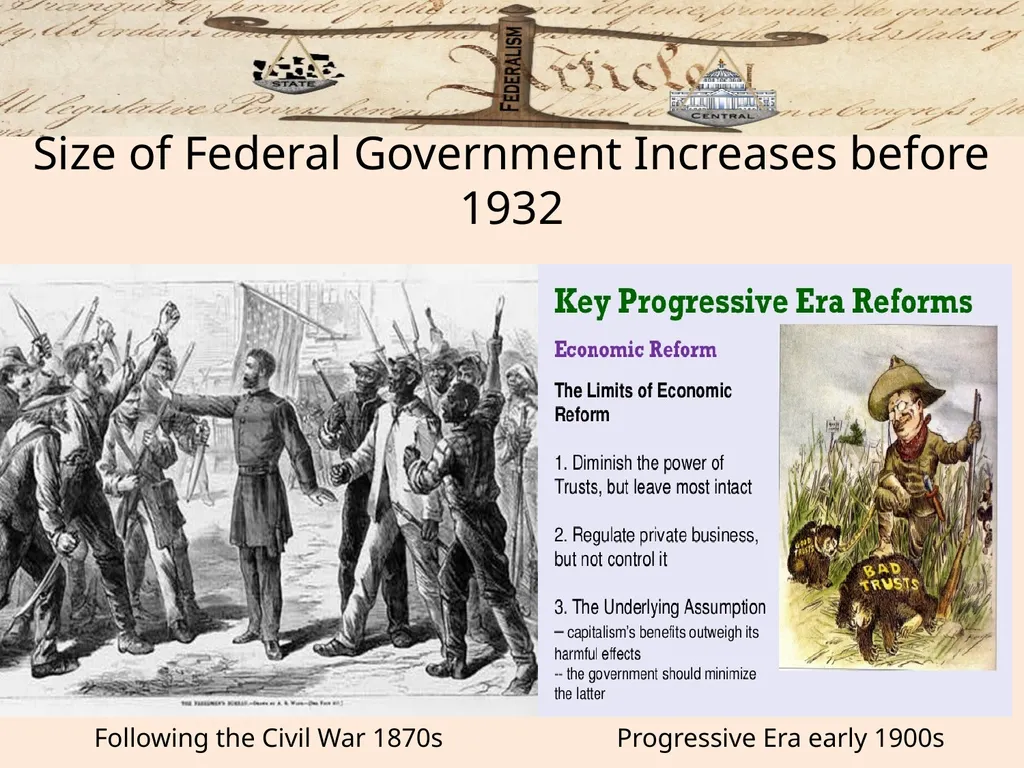
Size of Federal Government Increases before 1932 Following the Civil War 1870s Progressive Era early 1900s<br>
28
The New Deal under FDR 1932 - 1940 Following the Civil War 1870s Progressive Era early 1900s<br>
29
The “Elastic Clause” and Commerce Clause – Stretching Federal Power “Commerce Clause” to end segregation, child labor, and reform health care<br>
30
Up Next: State Constitutions & Local Governments But first let’s review…<br>
31
What do you call the system in which power is shared between the National and State governments? Federalism<br>
32
What are the three levels of government? National (Federal), State & Local<br>
33
What do you call powers that are shared between the federal & state governments? Concurrent<br>
34
What do you call powers that are left for the states? Reserved<br>
35
Which amendment reserved powers to the states? Amendment X<br>
36
Name one “concurrent” power? Power to tax, create courts, make & enforce laws, borrow $, provide for the general welfare…<br>
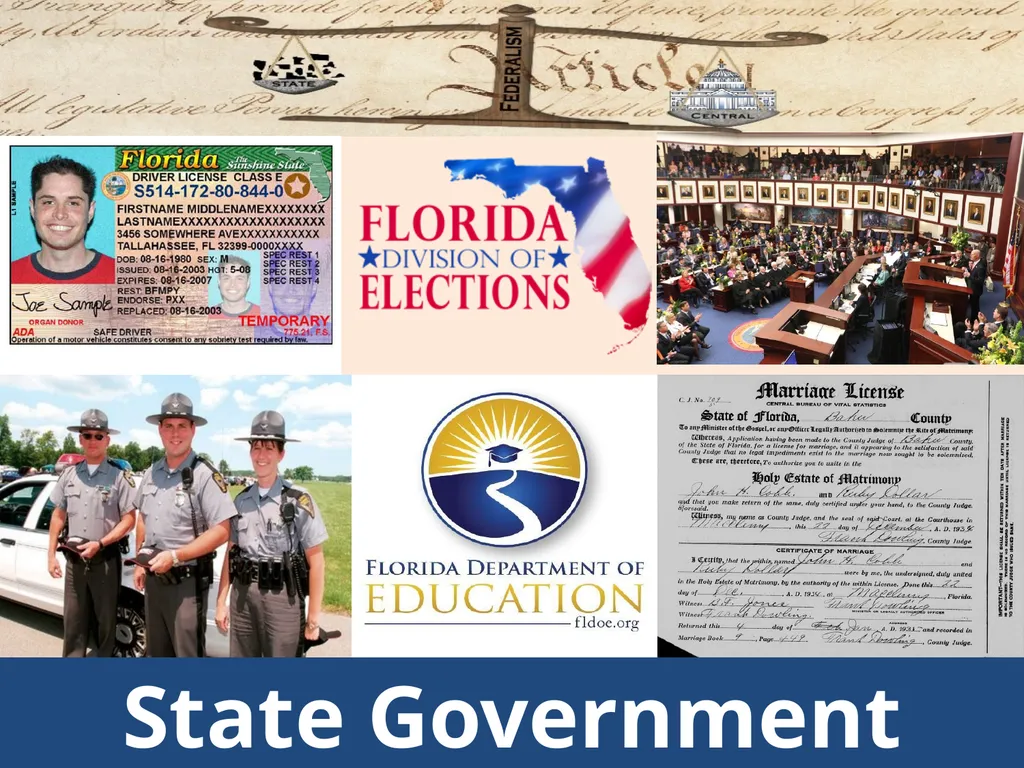
37
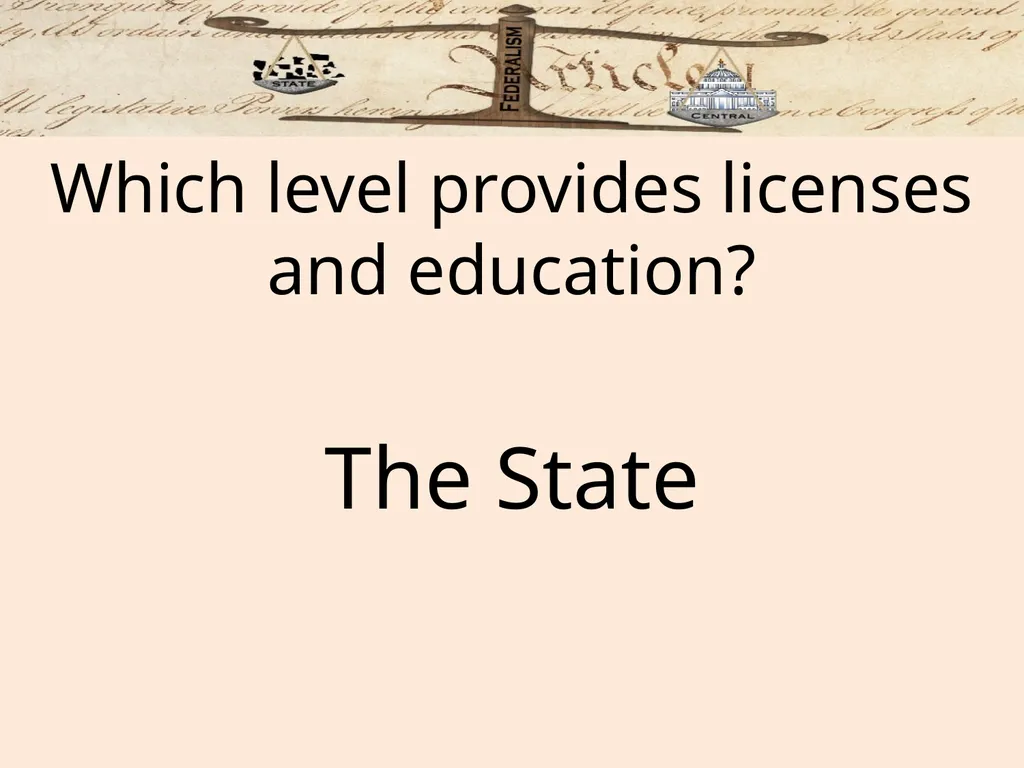
Which level provides licenses and education? The State<br>
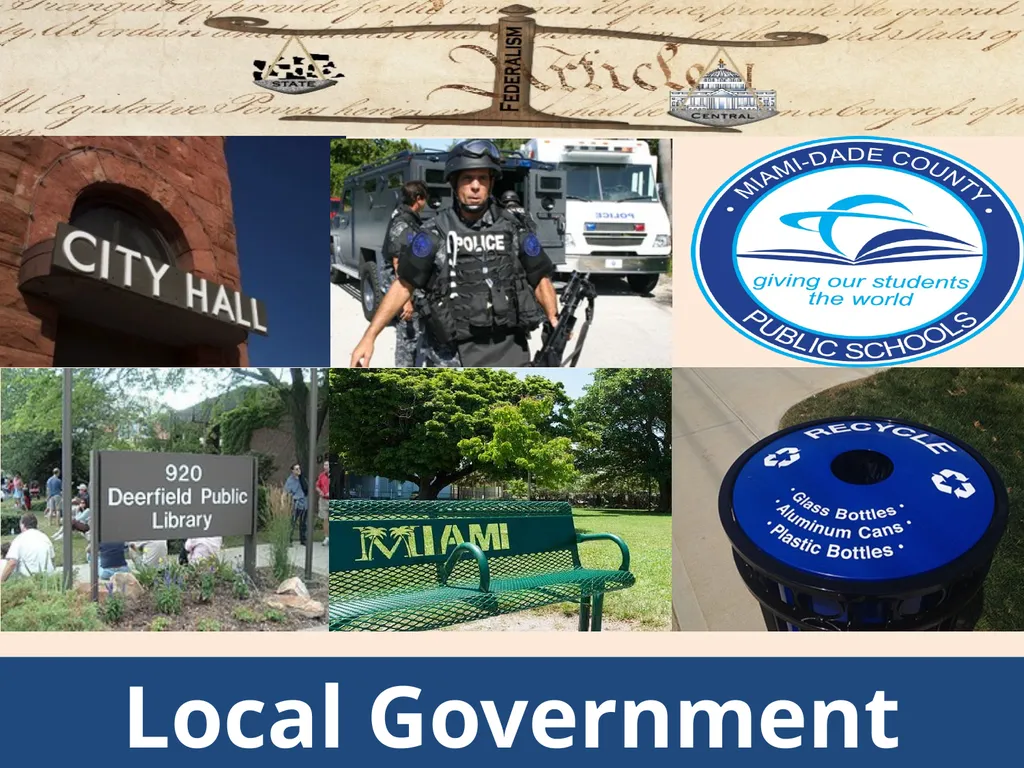
38
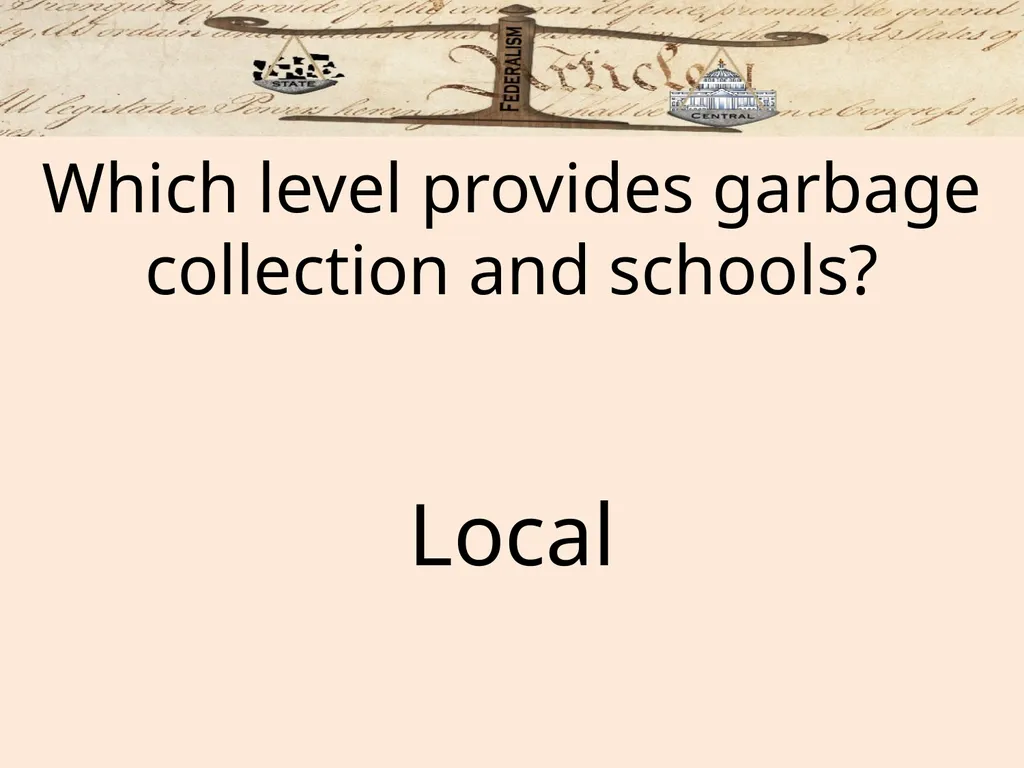
Which level provides garbage collection and schools? Local<br>
39
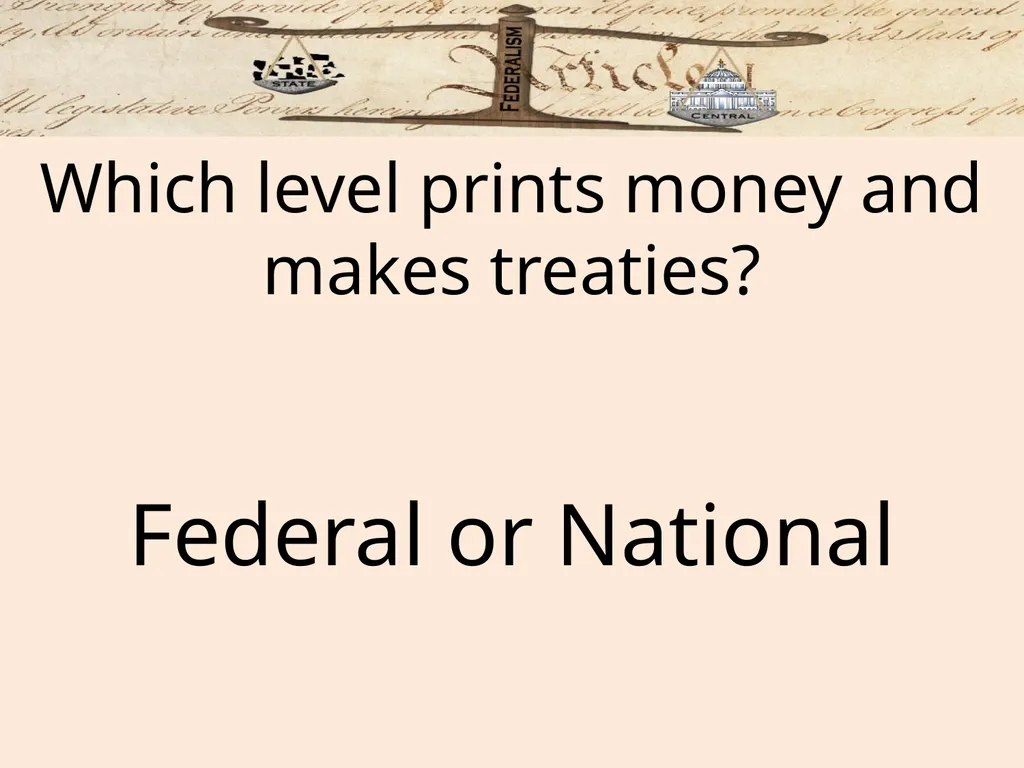
Which level prints money and makes treaties? Federal or National<br>
40
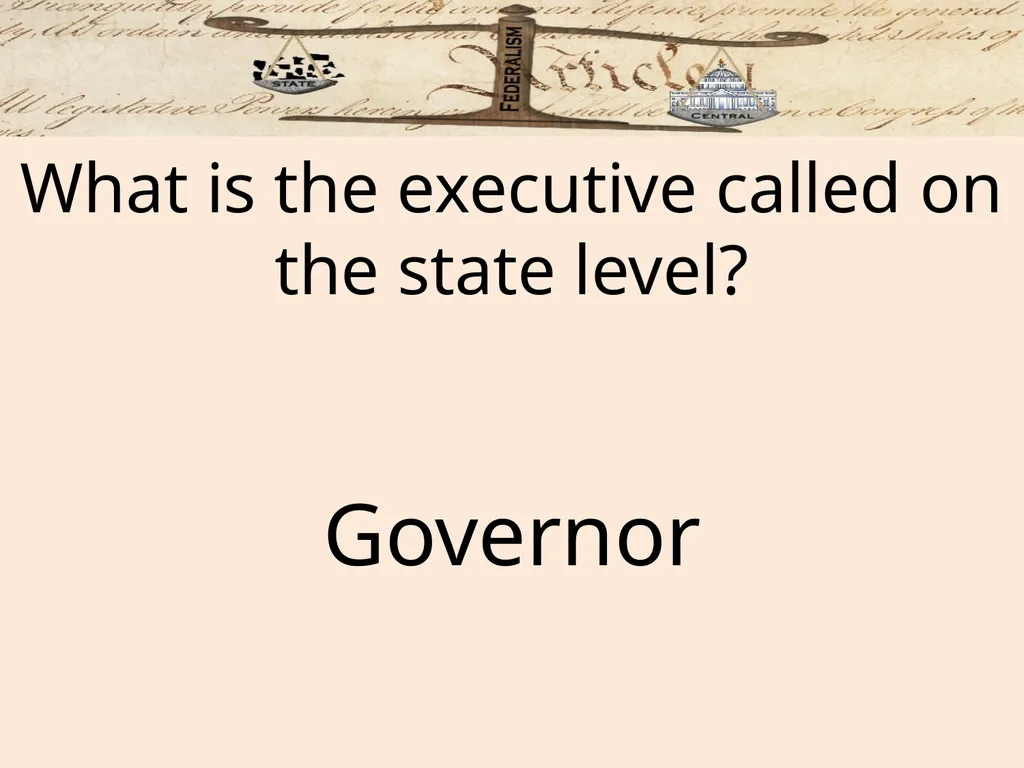
What is the executive called on the state level? Governor<br>
41
What is the executive called on the local level? Mayor<br>
42
What event & program is known for greatly increasing the size of the federal government? The Great Depression & FDR’s New Deal<br>
43
Thanks for watching!
Up Next: State Constitutions & Local Governments…
Be sure to subscribe Attn: Teachers – this PowerPoint, lesson plans, worksheets, etc. available @ Teachers Pay Teachers – Mr. Raymond’s Civics EOC Academy<br>