
Financial Literacy On Tap Thank you to our
MJ
Published · 42 slides · 0 views

1 / 1

Description
Financial Literacy On Tap Thank you to our Sponsors Financial Literacy On Tap Navigating Savings Credit for Your Present and Future The Mount Washington Valley Housing Coalition, Inc. (MWVHC) is a 501(c)(3) non-profit,
Related Topics
Share
Embed code
Download this presentation From Below
"Financial Literacy On Tap Thank you to our" is the property of its rightful owner. Permission is granted to download and print the materials on this website for personal, non-commercial use only, and to display it on your personal computer provided you do not modify the materials and that you retain all copyright notices contained in the materials. By downloading content from our website, you accept the terms of this agreement.
Presentation Transcript
01
Financial Literacy On Tap
Thank you to our Sponsors<br>
Thank you to our Sponsors<br>
02
Financial Literacy On Tap
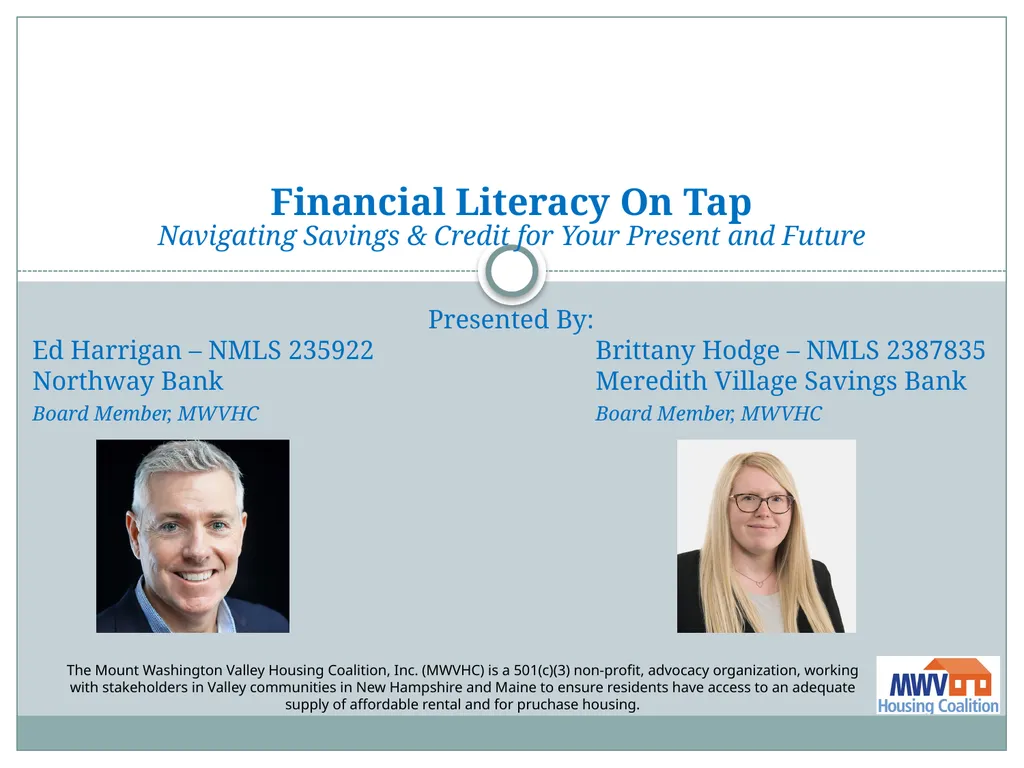
Navigating Savings & Credit for Your Present and Future The Mount Washington Valley Housing Coalition, Inc. (MWVHC) is a 501(c)(3) non-profit, advocacy organization, working with stakeholders in Valley communities in New Hampshire and Maine to ensure residents have access to an adequate supply of affordable rental and for pruchase housing. Presented By:
Ed Harrigan – NMLS 235922 Brittany Hodge – NMLS 2387835
Northway Bank Meredith Village Savings Bank
Board Member, MWVHC Board Member, MWVHC<br>
Ed Harrigan – NMLS 235922 Brittany Hodge – NMLS 2387835
Northway Bank Meredith Village Savings Bank
Board Member, MWVHC Board Member, MWVHC<br>
03
BEFORE WE GET STARTED The information presented in this presentation is for general information only, and is based on guidelines and practices generally accepted within the finance industry and is not intended to be all-inclusive. The Mount Washington Valley Housing Coalition makes no representations or warranties of any kind with respect to the accuracy, completeness or suitability for any purpose of the information contained in this presentation. Mount Washington Valley Housing Coalition expressly disclaims any and all warranties, express or implied, including without limitation warranties of merchantability and fitness for a particular purpose regarding these materials and this presentation. In no event will Mount Washington Valley Housing Coalition be liable for any direct, indirect, incidental, punitive or consequential damages of any kind with respect to the presentation or materials provided. All examples are hypothetical and are for illustrative purposes only. This presentation is not intended and should not be interpreted or relied upon as legal advice. We encourage you to seek advice from a qualified professional.<br>
04
Credit Management Setting yourself up for success….<br>
05
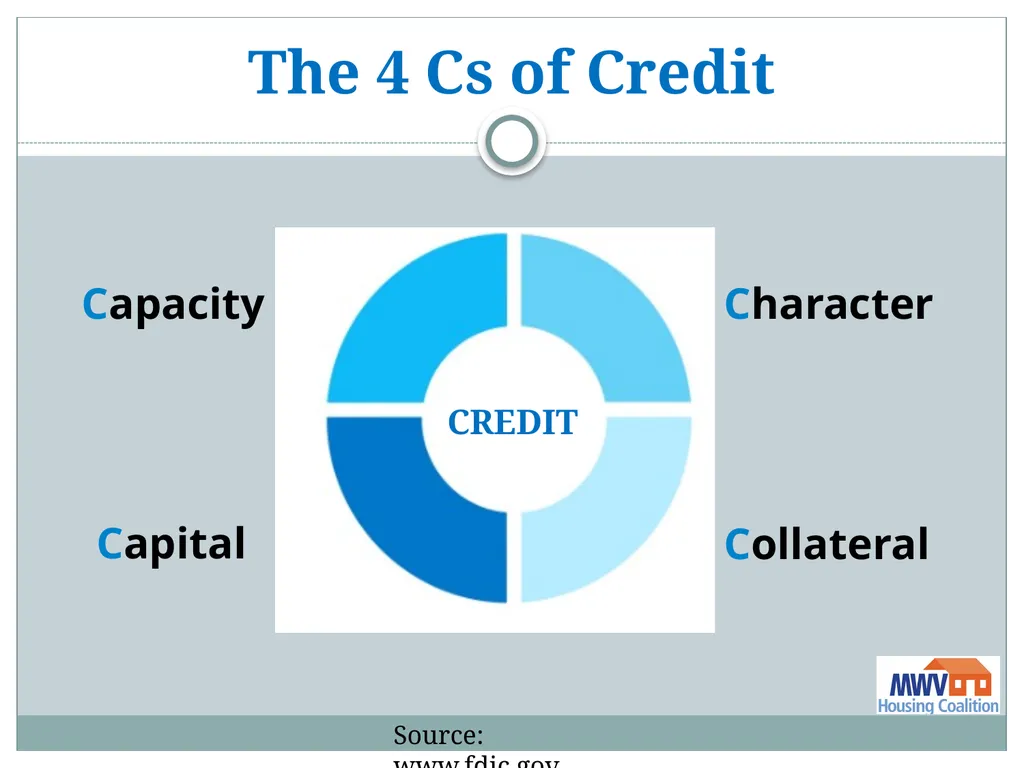
The 4 Cs of Credit Capacity Collateral Character Capital CREDIT Source: www.fdic.gov<br>
06
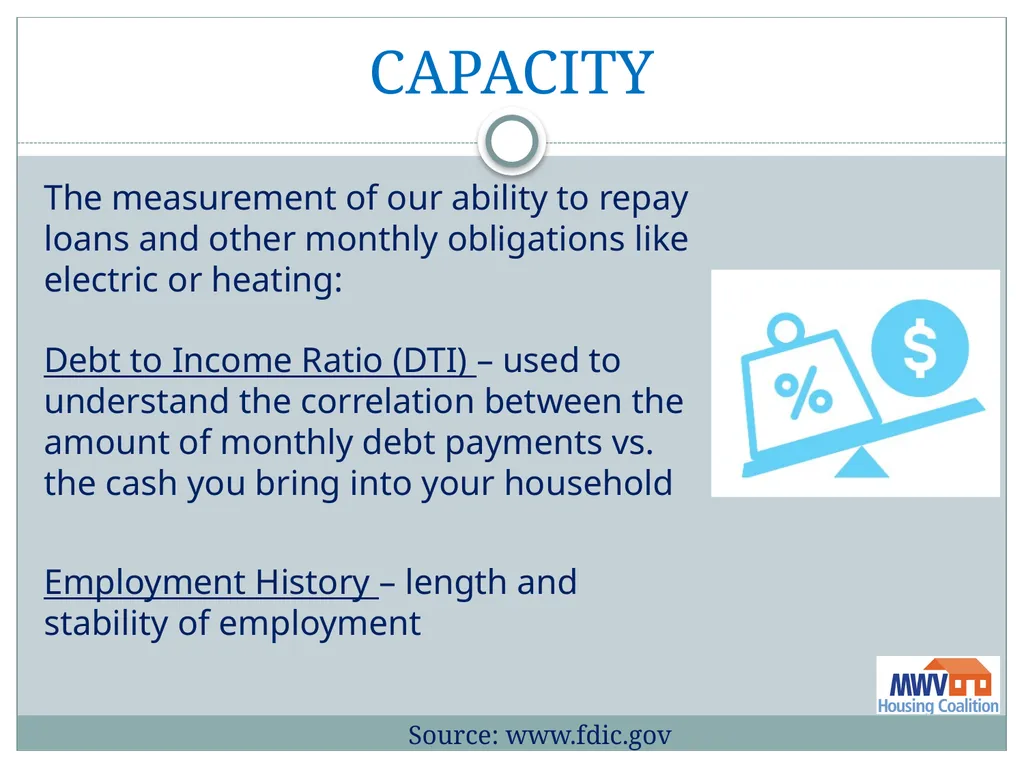
CAPACITY The measurement of our ability to repay loans and other monthly obligations like electric or heating:
Debt to Income Ratio (DTI) – used to understand the correlation between the amount of monthly debt payments vs. the cash you bring into your household
Employment History – length and stability of employment Source: www.fdic.gov<br>
Debt to Income Ratio (DTI) – used to understand the correlation between the amount of monthly debt payments vs. the cash you bring into your household
Employment History – length and stability of employment Source: www.fdic.gov<br>
07
CAPITAL Source: www.fdic.gov Your savings, investments and other assets -
Example:
When renting or buying a home, your ability to demonstrate that you have been able to save money over a period of time is an indicator of your ability to take on new payments or come up with a needed deposit or down payment.<br>
Example:
When renting or buying a home, your ability to demonstrate that you have been able to save money over a period of time is an indicator of your ability to take on new payments or come up with a needed deposit or down payment.<br>
08
COLLATERAL Source: www.fdic.gov An asset you own (or are buying) but have “pledged” as security for a loan or other financial obligation
Collateral could be an RV, boat, car, house, even cash on hand
Your asset may be forfeited if the terms of the loan/bond are not met<br>
Collateral could be an RV, boat, car, house, even cash on hand
Your asset may be forfeited if the terms of the loan/bond are not met<br>
09
CHARACTER Our Financial Reputation:
A review of credit and savings history as well as our financial stability (including income/job history), determining the likelihood of our future success when borrowing money or renting a home. Source: www.fdic.gov<br>
A review of credit and savings history as well as our financial stability (including income/job history), determining the likelihood of our future success when borrowing money or renting a home. Source: www.fdic.gov<br>
10
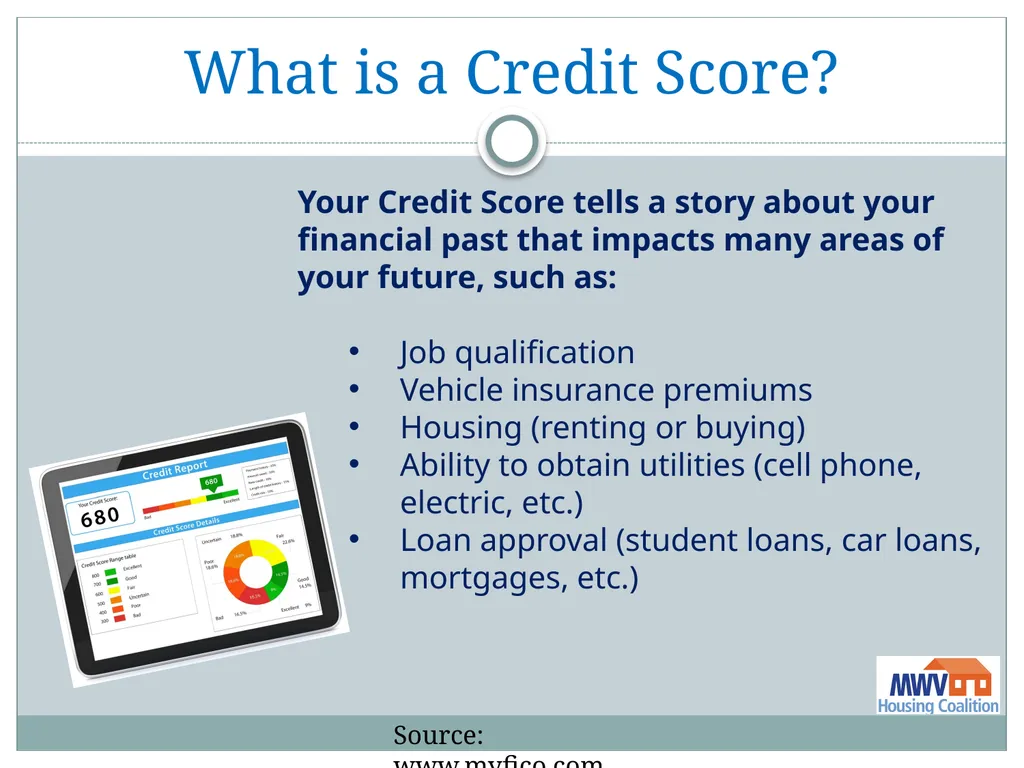
What is a Credit Score? Source: www.myfico.com Your Credit Score tells a story about your financial past that impacts many areas of your future, such as:
Job qualification
Vehicle insurance premiums
Housing (renting or buying)
Ability to obtain utilities (cell phone, electric, etc.)
Loan approval (student loans, car loans, mortgages, etc.)<br>
Job qualification
Vehicle insurance premiums
Housing (renting or buying)
Ability to obtain utilities (cell phone, electric, etc.)
Loan approval (student loans, car loans, mortgages, etc.)<br>
11
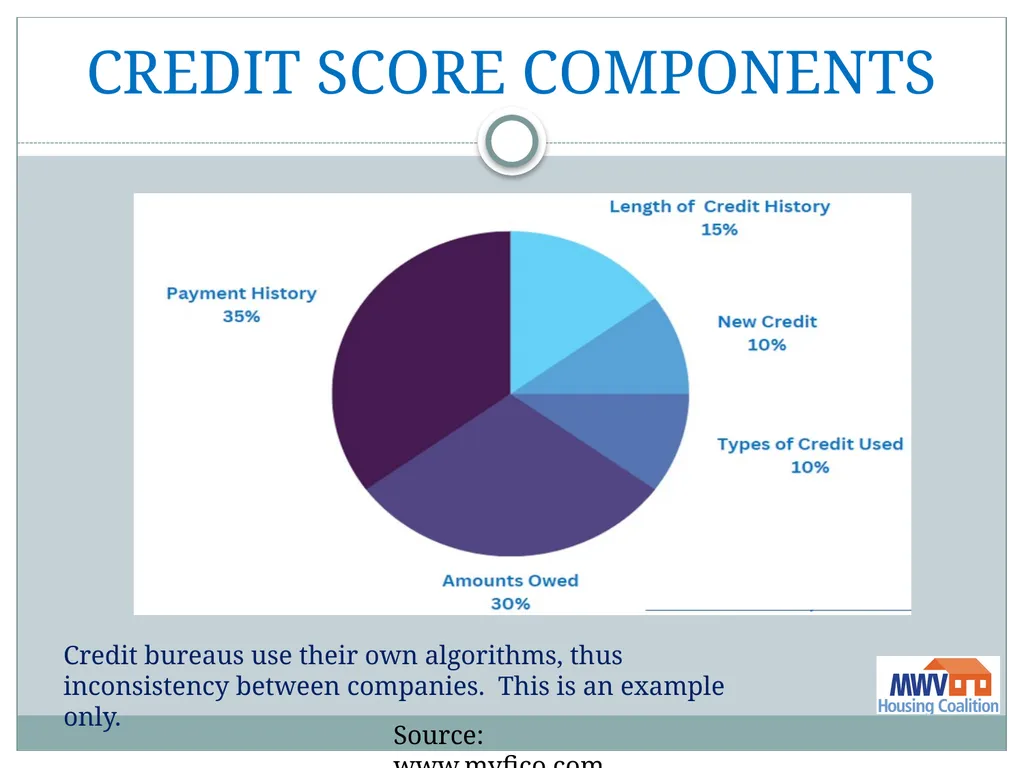
CREDIT SCORE COMPONENTS Source: www.myfico.com Credit bureaus use their own algorithms, thus inconsistency between companies. This is an example only.<br>
12
PAYMENT HISTORY Source: www.myfico.com How timely your payments have been over the length of your credit history.
Research shows that your track record of on-time payments tends to be the strongest predictor of the likelihood that you’ll pay all debts you have as agreed to. 35%<br>
Research shows that your track record of on-time payments tends to be the strongest predictor of the likelihood that you’ll pay all debts you have as agreed to. 35%<br>
13
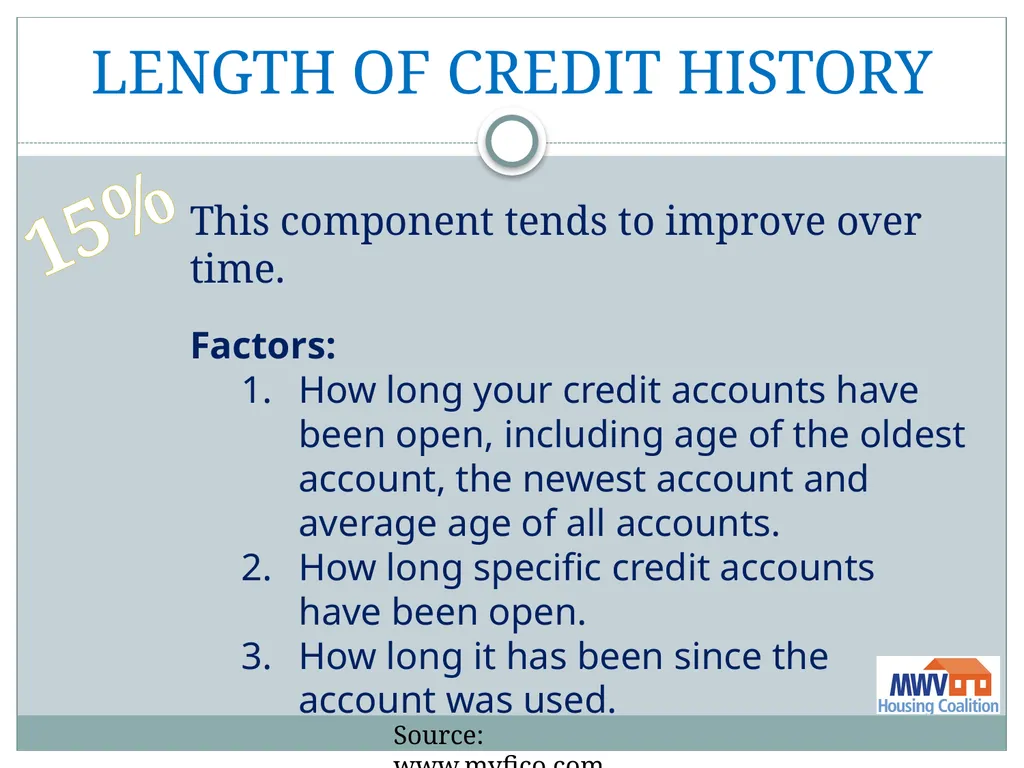
LENGTH OF CREDIT HISTORY Source: www.myfico.com This component tends to improve over time.
Factors:
How long your credit accounts have been open, including age of the oldest account, the newest account and average age of all accounts.
How long specific credit accounts have been open.
How long it has been since the account was used. 15%<br>
Factors:
How long your credit accounts have been open, including age of the oldest account, the newest account and average age of all accounts.
How long specific credit accounts have been open.
How long it has been since the account was used. 15%<br>
14
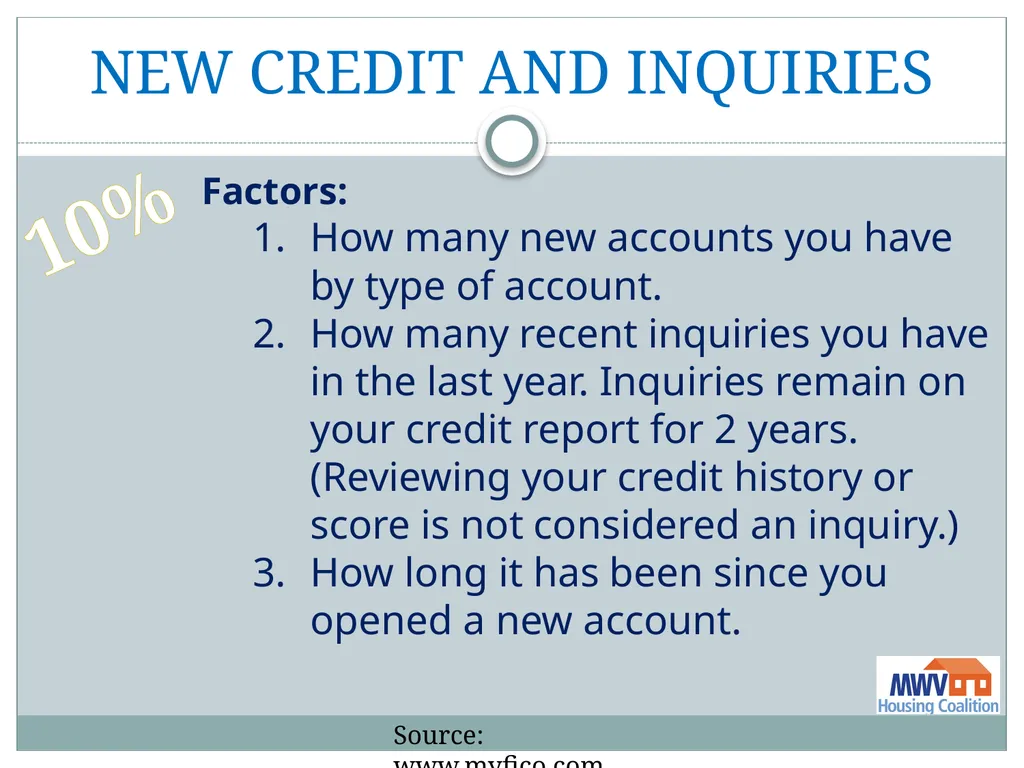
NEW CREDIT AND INQUIRIES Source: www.myfico.com Factors:
How many new accounts you have by type of account.
How many recent inquiries you have in the last year. Inquiries remain on your credit report for 2 years. (Reviewing your credit history or score is not considered an inquiry.)
How long it has been since you opened a new account. 10%<br>
How many new accounts you have by type of account.
How many recent inquiries you have in the last year. Inquiries remain on your credit report for 2 years. (Reviewing your credit history or score is not considered an inquiry.)
How long it has been since you opened a new account. 10%<br>
15
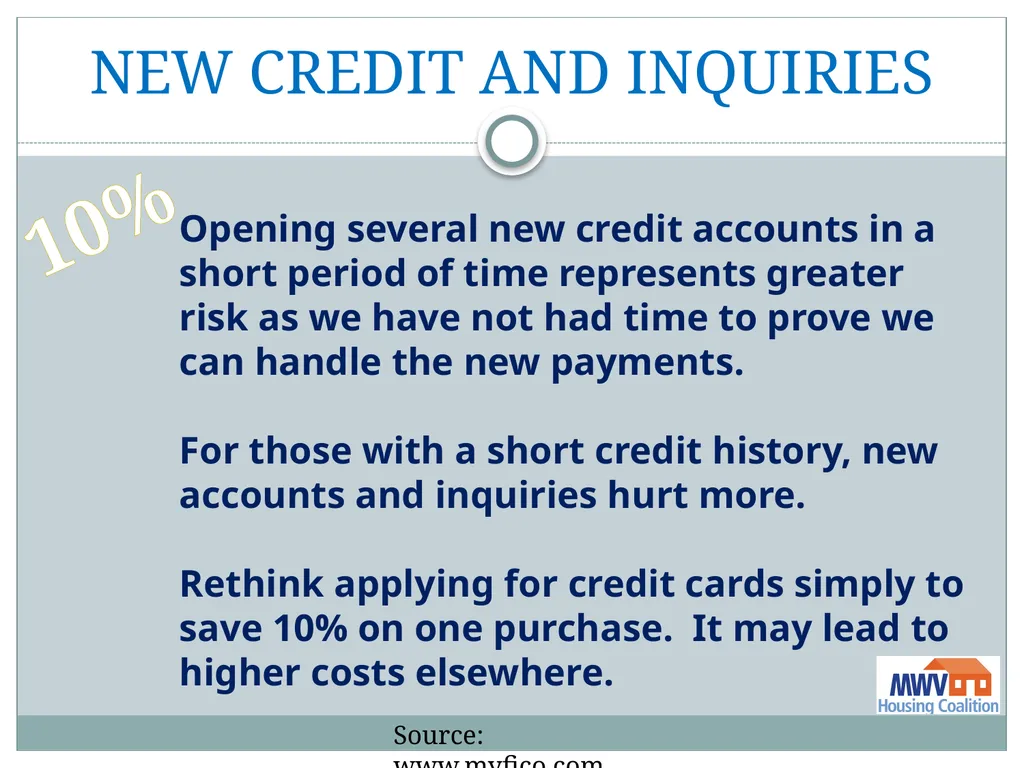
NEW CREDIT AND INQUIRIES Source: www.myfico.com Opening several new credit accounts in a short period of time represents greater risk as we have not had time to prove we can handle the new payments.
For those with a short credit history, new accounts and inquiries hurt more.
Rethink applying for credit cards simply to save 10% on one purchase. It may lead to higher costs elsewhere. 10%<br>
For those with a short credit history, new accounts and inquiries hurt more.
Rethink applying for credit cards simply to save 10% on one purchase. It may lead to higher costs elsewhere. 10%<br>
16
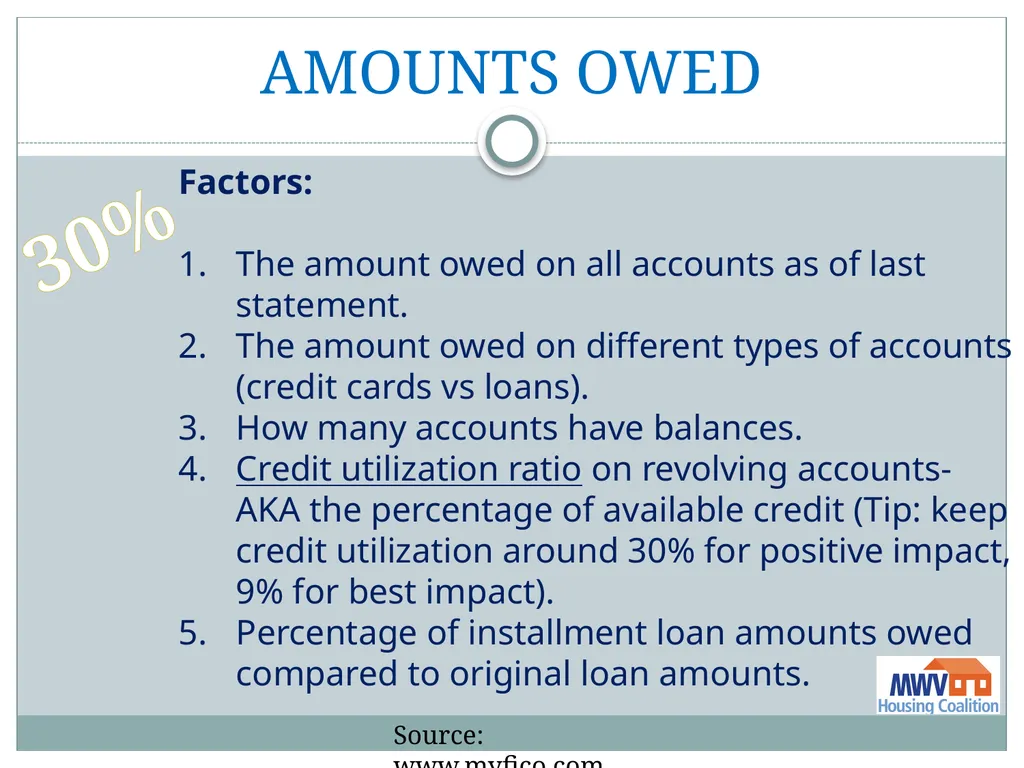
AMOUNTS OWED Source: www.myfico.com 30% Factors:
The amount owed on all accounts as of last statement.
The amount owed on different types of accounts (credit cards vs loans).
How many accounts have balances.
Credit utilization ratio on revolving accounts- AKA the percentage of available credit (Tip: keep credit utilization around 30% for positive impact, 9% for best impact).
Percentage of installment loan amounts owed compared to original loan amounts.<br>
17
JUMPSTARTING YOUR CREDIT Source: www.myfico.com Secured credit cards or loans are a great option to build credit independently. Joint Credit: Family members may give you the opportunity to add you as a joint user of their credit. This will help with your credit score.
Authorized Signer: This option will help your credit score with positive payment history, but will not always be helpful when applying for large purchases.<br>
Authorized Signer: This option will help your credit score with positive payment history, but will not always be helpful when applying for large purchases.<br>
18
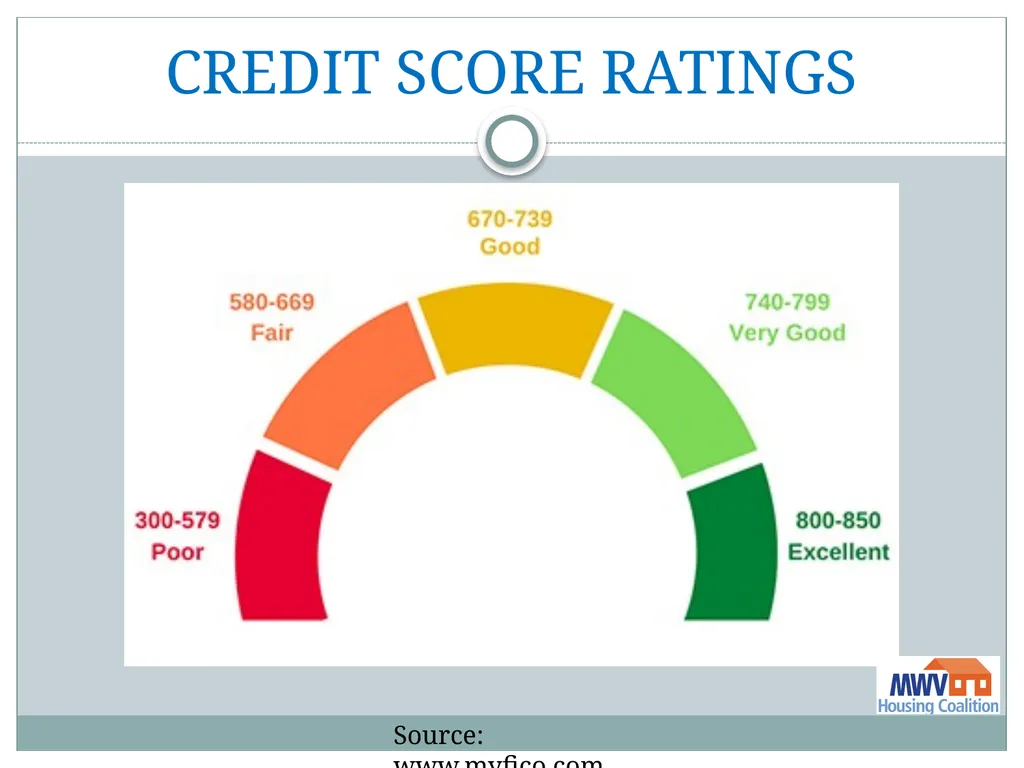
CREDIT SCORE RATINGS Source: www.myfico.com<br>
19
CHECKING YOUR REPORT Source: www.myfico.com Check your credit annually; doing so can help you pick up on fraud and resolve errors quickly.
You may obtain a free, non-scoring copy of your credit report from each of the three reporting agencies annually at:
www.annualcreditreport.com<br>
You may obtain a free, non-scoring copy of your credit report from each of the three reporting agencies annually at:
www.annualcreditreport.com<br>
20
CREDIT MYTH #1 “If I co-sign a loan I’m not responsible for the payment.”
Common misconception. Cosigners are as responsible for repayment of the debt as the primary borrower. The loan will report on your credit file and holds equal weight. The payment will count toward your debt ratio.<br>
Common misconception. Cosigners are as responsible for repayment of the debt as the primary borrower. The loan will report on your credit file and holds equal weight. The payment will count toward your debt ratio.<br>
21
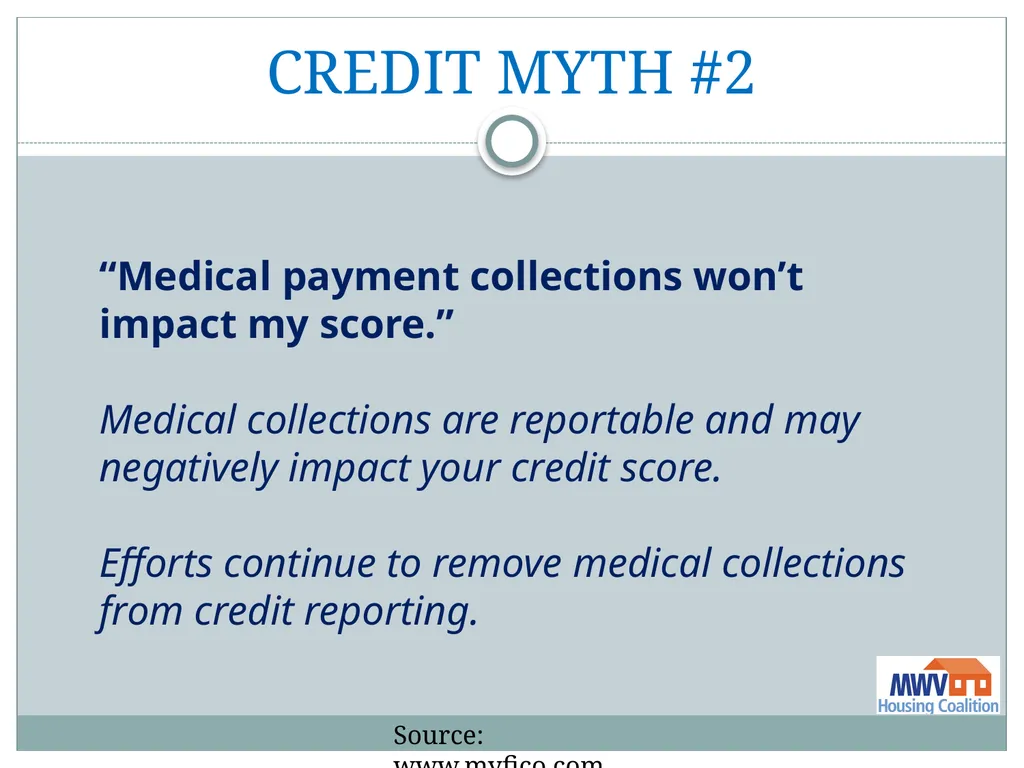
CREDIT MYTH #2 Source: www.myfico.com “Medical payment collections won’t impact my score.”
Medical collections are reportable and may negatively impact your credit score.
Efforts continue to remove medical collections from credit reporting.<br>
Medical collections are reportable and may negatively impact your credit score.
Efforts continue to remove medical collections from credit reporting.<br>
22
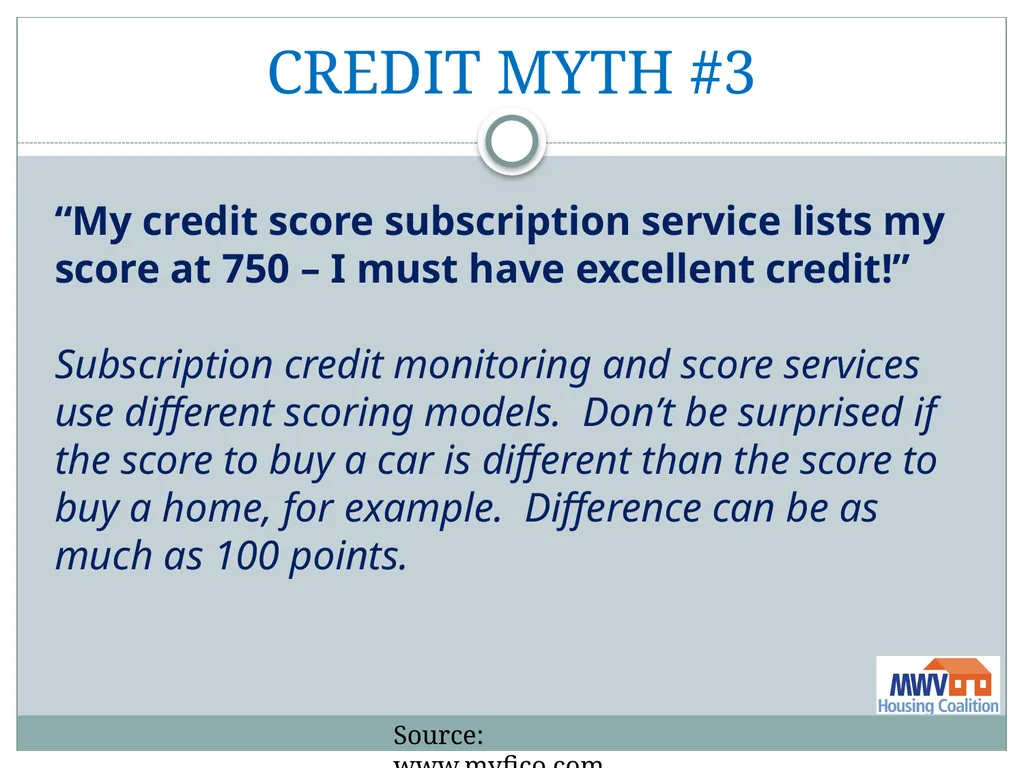
CREDIT MYTH #3 Source: www.myfico.com “My credit score subscription service lists my score at 750 – I must have excellent credit!”
Subscription credit monitoring and score services use different scoring models. Don’t be surprised if the score to buy a car is different than the score to buy a home, for example. Difference can be as much as 100 points.<br>
Subscription credit monitoring and score services use different scoring models. Don’t be surprised if the score to buy a car is different than the score to buy a home, for example. Difference can be as much as 100 points.<br>
23
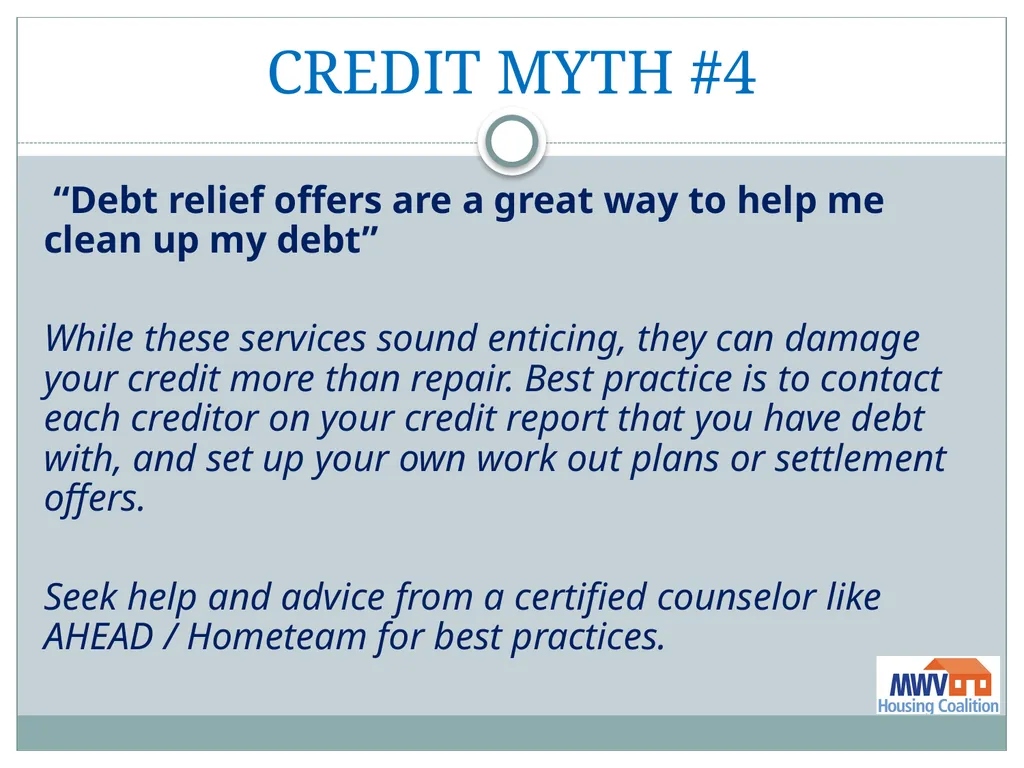
CREDIT MYTH #4 “Debt relief offers are a great way to help me clean up my debt”
While these services sound enticing, they can damage your credit more than repair. Best practice is to contact each creditor on your credit report that you have debt with, and set up your own work out plans or settlement offers.
Seek help and advice from a certified counselor like AHEAD / Hometeam for best practices.<br>
24
CREDIT MANAGEMENT Source: www.myfico.com Your credit score takes a long time to establish,
a short time to impact negatively,
and a long time to rebuild.<br>
a short time to impact negatively,
and a long time to rebuild.<br>
25
Financial Literacy On Tap
Thank you to our Sponsors<br>
Thank you to our Sponsors<br>
26
SAVING FOR SUCCESS Managing finances can be scary and complicated for many of us.
It means living within the means of income earned (take home pay), regardless of the level of that income.
To do this, it’s important to evaluate our earning and spending habits and make educated decisions about how we use our money.<br>
It means living within the means of income earned (take home pay), regardless of the level of that income.
To do this, it’s important to evaluate our earning and spending habits and make educated decisions about how we use our money.<br>
27
SAVING FOR SUCCESS Avoid overspending by planning your spending
Include a savings plan – no amount is too small
Have a savings and a checking account
Professional financial budgeting services are available. Consult with a coaching and counseling agency, accountant, or financial advisor.<br>
Include a savings plan – no amount is too small
Have a savings and a checking account
Professional financial budgeting services are available. Consult with a coaching and counseling agency, accountant, or financial advisor.<br>
28
SAVING FOR SUCCESS Start early: The earlier we start saving, the less we have to put away each pay period.
Plan ahead: We are never too young to open and start funding our savings plans.
Manage your bank accounts: Monitor your balances and any outstanding items to avoid overdrafts. Overdrafts lead to fees and negative credit reporting.<br>
Plan ahead: We are never too young to open and start funding our savings plans.
Manage your bank accounts: Monitor your balances and any outstanding items to avoid overdrafts. Overdrafts lead to fees and negative credit reporting.<br>
29
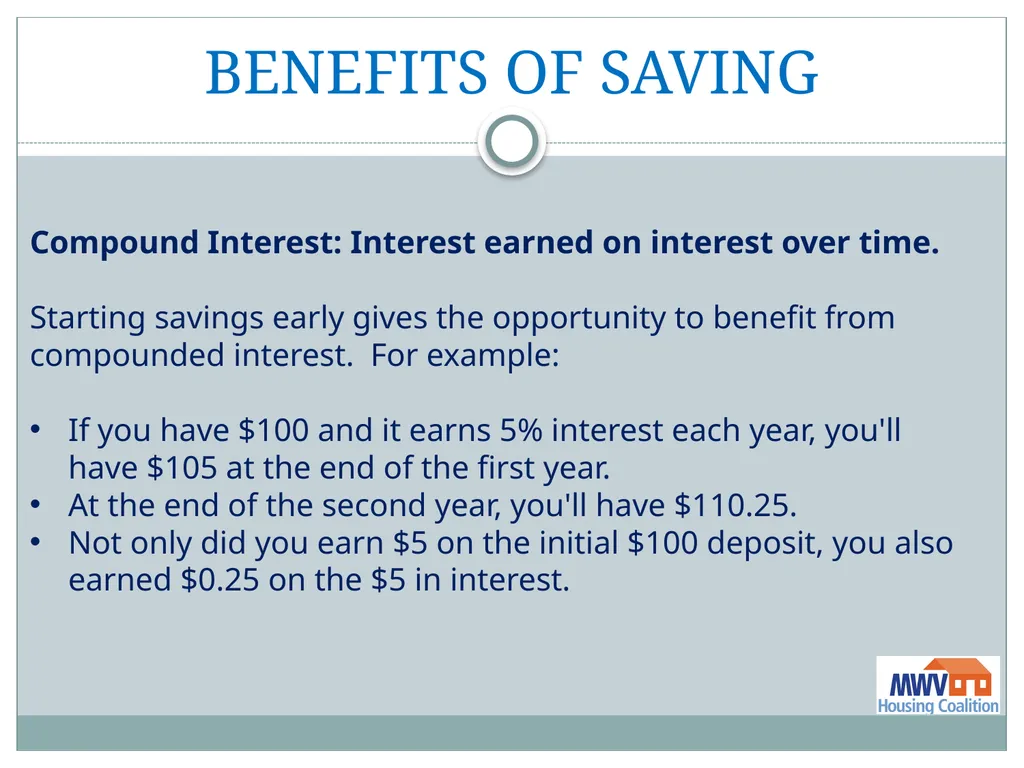
BENEFITS OF SAVING Compound Interest: Interest earned on interest over time.
Starting savings early gives the opportunity to benefit from compounded interest. For example:
If you have $100 and it earns 5% interest each year, you'll have $105 at the end of the first year.
At the end of the second year, you'll have $110.25.
Not only did you earn $5 on the initial $100 deposit, you also earned $0.25 on the $5 in interest.<br>
30
PAY YOURSELF FIRST Make savings a priority by budgeting for it along with your bills and other expenses. This will help to:
Have funds in an emergency
Save toward your goals
Improve your standard of living
Learn to manage money<br>
Have funds in an emergency
Save toward your goals
Improve your standard of living
Learn to manage money<br>
31
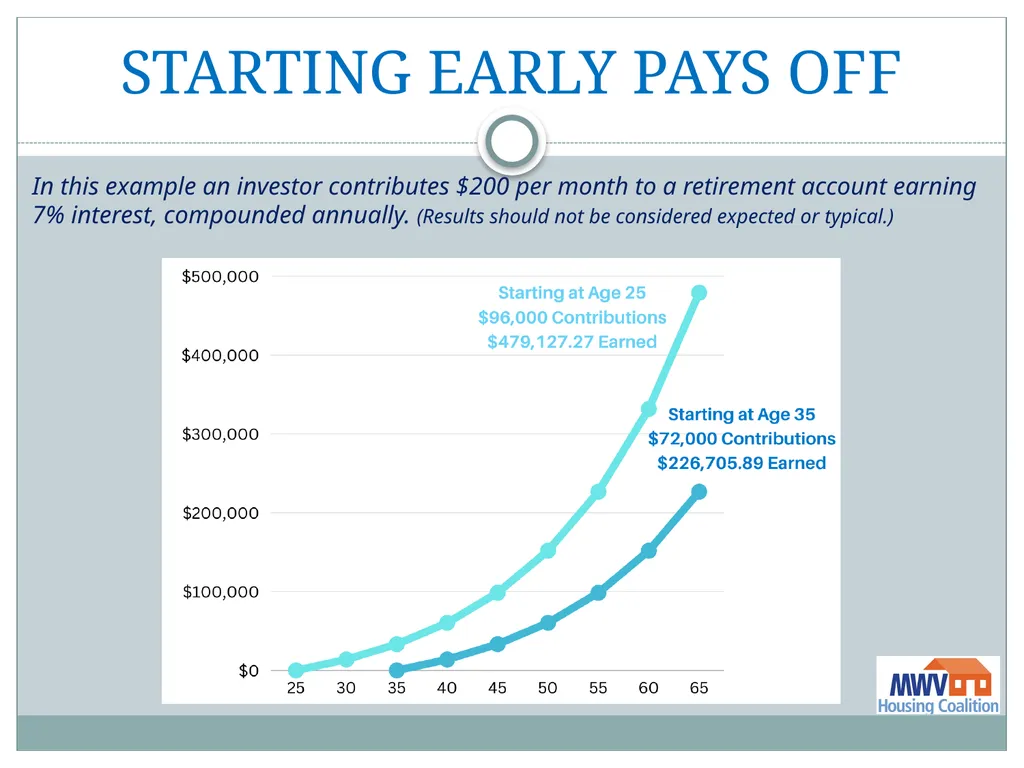
STARTING EARLY PAYS OFF In this example an investor contributes $200 per month to a retirement account earning 7% interest, compounded annually. (Results should not be considered expected or typical.)<br>
32
WHERE DOES THE MONEY GO? A common question asked by adults, especially during tough economic times.
If you find yourself asking this question, it is time to create a budget or review the budget you currently have in place.
It is never too late or to early to start your road to financial freedom.<br>
If you find yourself asking this question, it is time to create a budget or review the budget you currently have in place.
It is never too late or to early to start your road to financial freedom.<br>
33
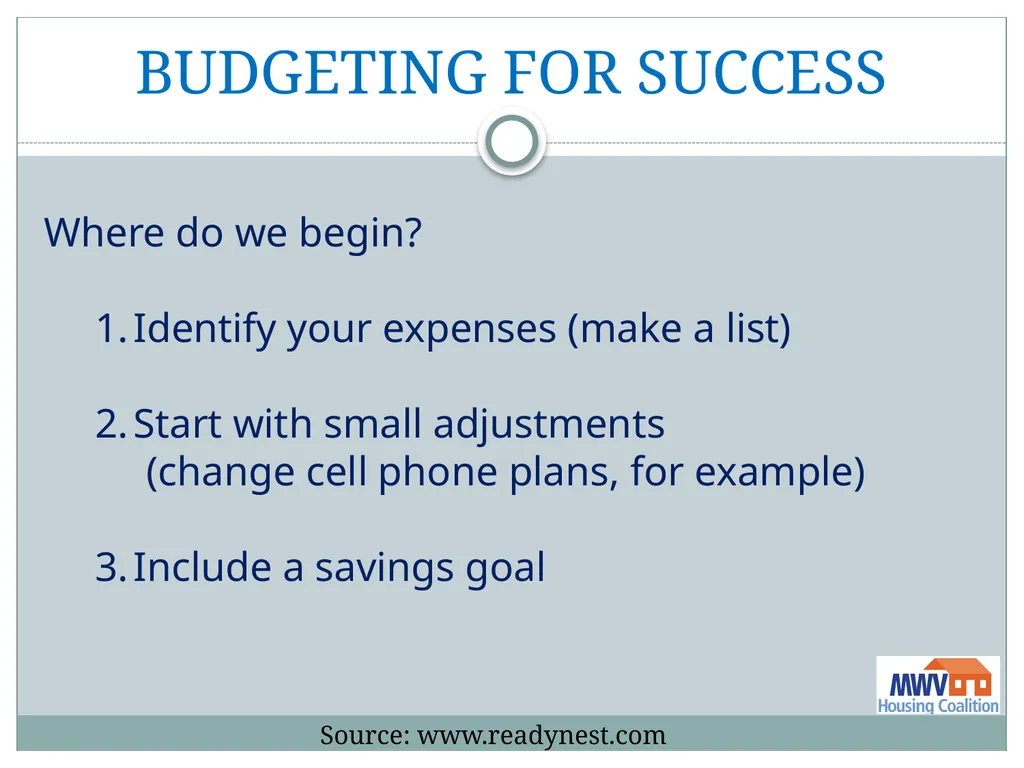
BUDGETING FOR SUCCESS Where do we begin?
Identify your expenses (make a list)
Start with small adjustments
(change cell phone plans, for example)
Include a savings goal Source: www.readynest.com<br>
Identify your expenses (make a list)
Start with small adjustments
(change cell phone plans, for example)
Include a savings goal Source: www.readynest.com<br>
34
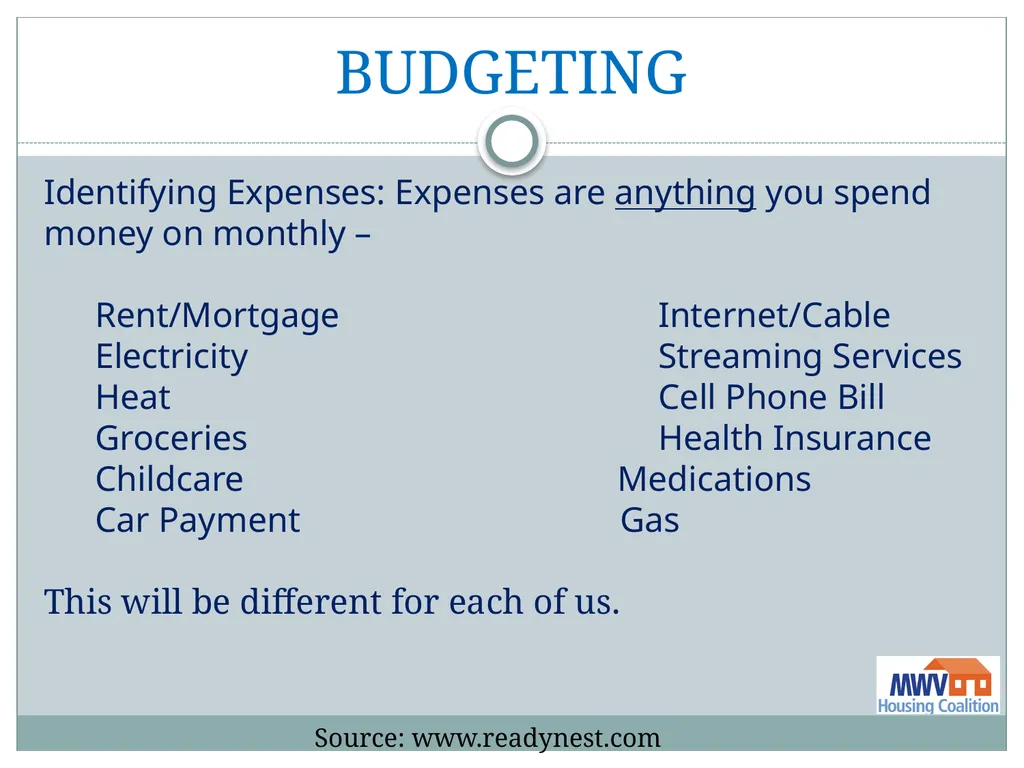
BUDGETING Identifying Expenses: Expenses are anything you spend money on monthly –
Rent/Mortgage Internet/Cable
Electricity Streaming Services
Heat Cell Phone Bill
Groceries Health Insurance
Childcare Medications
Car Payment Gas
This will be different for each of us. Source: www.readynest.com<br>
Rent/Mortgage Internet/Cable
Electricity Streaming Services
Heat Cell Phone Bill
Groceries Health Insurance
Childcare Medications
Car Payment Gas
This will be different for each of us. Source: www.readynest.com<br>
35
MAKING SIMPLE LOGICAL CHANGES Once you’ve identified your expenses and compared it to your take home pay, it’s time to analyze where changes may be made.
Be prepared and open to making some compromises. Source: www.readynest.com<br>
Be prepared and open to making some compromises. Source: www.readynest.com<br>
36
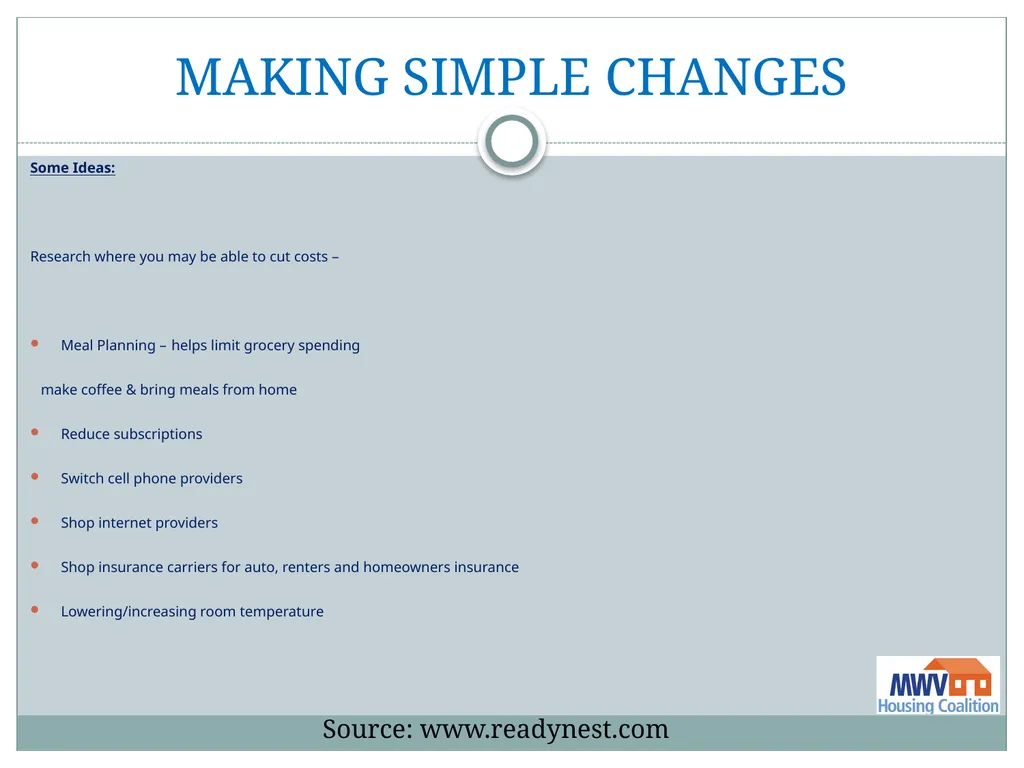
MAKING SIMPLE CHANGES Some Ideas:
Research where you may be able to cut costs –
Meal Planning – helps limit grocery spending
make coffee & bring meals from home
Reduce subscriptions
Switch cell phone providers
Shop internet providers
Shop insurance carriers for auto, renters and homeowners insurance
Lowering/increasing room temperature Source: www.readynest.com<br>
37
BUDGET FOR SAVINGS Pay Yourself First!
Savings can be as little as $5 a pay period. Any amount will grow when tended to regularly. Source: www.readynest.com<br>
Savings can be as little as $5 a pay period. Any amount will grow when tended to regularly. Source: www.readynest.com<br>
38
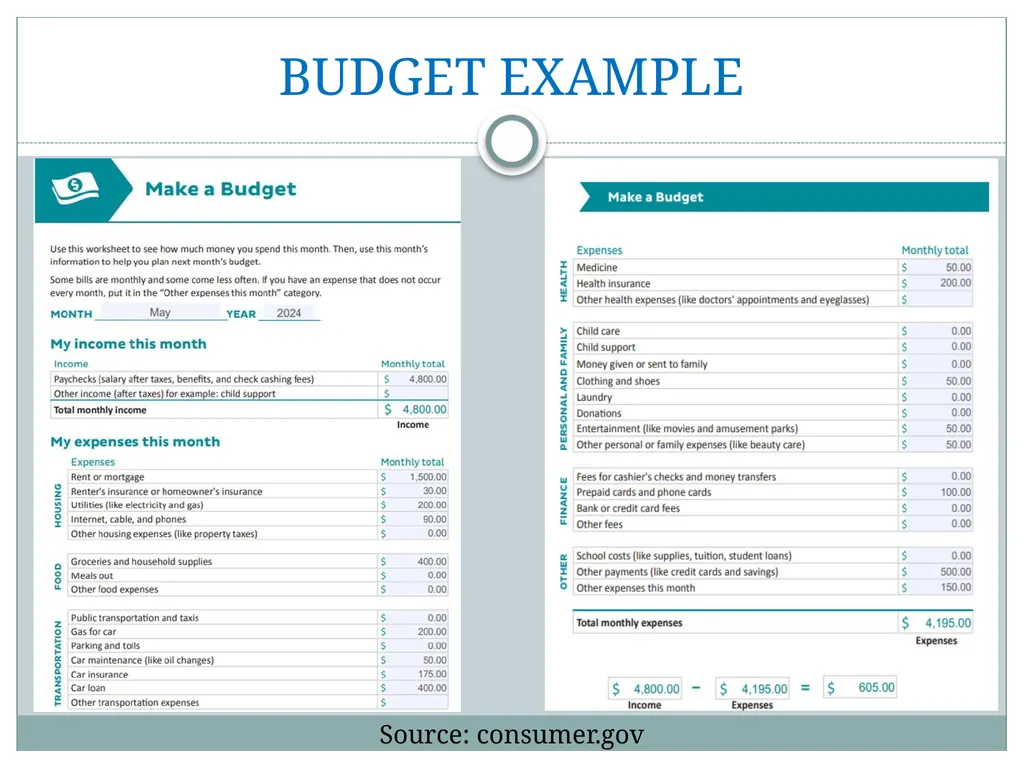
BUDGET EXAMPLE Source: consumer.gov<br>
39
EDUCATION PARTNERS Financial Coaching and Counseling:
www.homesahead.org/workshops
603-444-1377 or
800-974-1377 Online Homeownership Classes:
www.gonewhampshirehousing.com/education-and-resources
603-472-8623 or
800-640-7239<br>
www.homesahead.org/workshops
603-444-1377 or
800-974-1377 Online Homeownership Classes:
www.gonewhampshirehousing.com/education-and-resources
603-472-8623 or
800-640-7239<br>
40
WEB RESOURCES FDIC: Credit Reports and Scores
www.myfico.com/credit-education
Compound Interest Calculator
Annual Credit Report
Readynest
MGIC
Consumer.Gov<br>
www.myfico.com/credit-education
Compound Interest Calculator
Annual Credit Report
Readynest
MGIC
Consumer.Gov<br>
41
QUESTIONS Brittany Hodge – NMLS 2387835 Ed Harrigan – NMLS 235922
Meredith Village Savings Bank Northway Bank
603-528-7409 603-387-2139<br>
Meredith Village Savings Bank Northway Bank
603-528-7409 603-387-2139<br>
42
Financial Literacy On Tap
Thank you to our Sponsors<br>
Thank you to our Sponsors<br>