History of New Zealand Beef Farming 1814 Reverend Samuel Marsden imported cattle into New Zealand. These cattle were kept primarily for milk production rather than for meat. 1840s As more Europeans settled in New Zealand in the 1840s, more
"History of New Zealand Beef Farming 1814 Reverend" is the property of its rightful owner. Permission is granted to
download and print the materials on this website for personal, non-commercial use only, and to display it
on your personal computer provided you do not modify the materials and that you retain all copyright
notices contained in the materials. By downloading content from our website, you accept the terms of this
agreement.
Presentation Transcript
01
History of New Zealand Beef Farming<br>
02
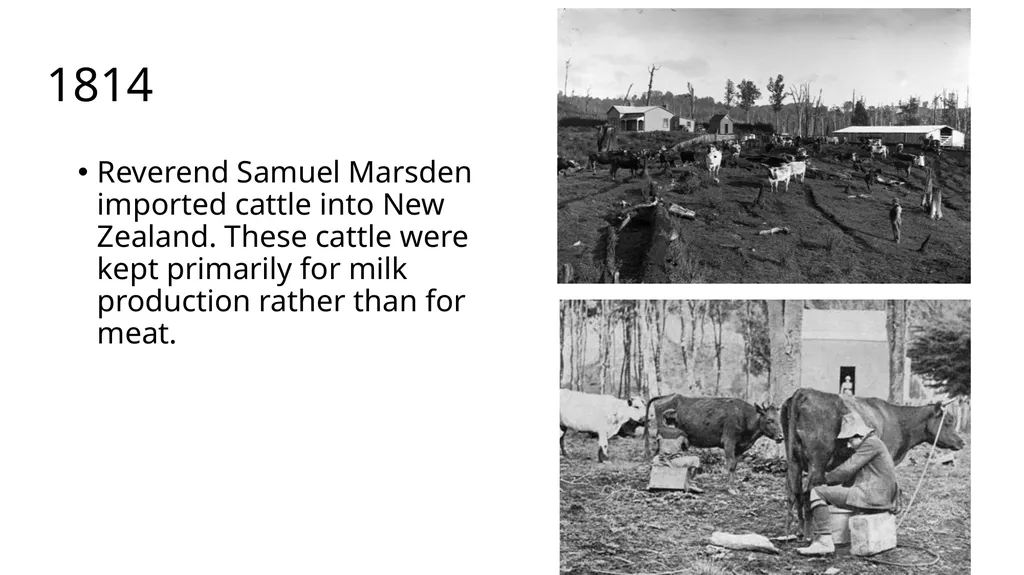
1814 Reverend Samuel Marsden imported cattle into New Zealand. These cattle were kept primarily for milk production rather than for meat.<br>
03
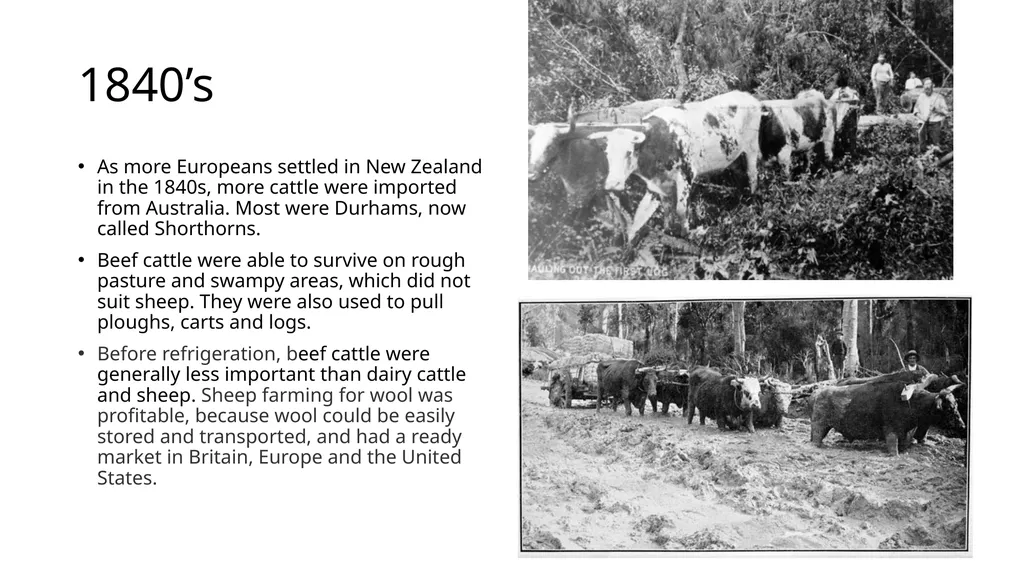
1840’s As more Europeans settled in New Zealand in the 1840s, more cattle were imported from Australia. Most were Durhams, now called Shorthorns.
Beef cattle were able to survive on rough pasture and swampy areas, which did not suit sheep. They were also used to pull ploughs, carts and logs.
Before refrigeration, beef cattle were generally less important than dairy cattle and sheep. Sheep farming for wool was profitable, because wool could be easily stored and transported, and had a ready market in Britain, Europe and the United States.<br>
04
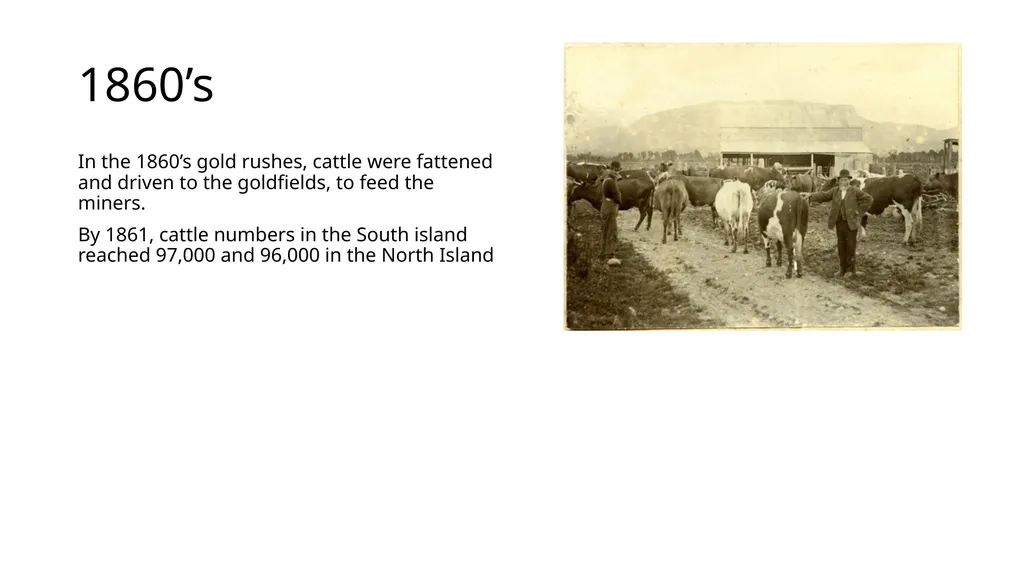
1860’s In the 1860’s gold rushes, cattle were fattened and driven to the goldfields, to feed the miners.
By 1861, cattle numbers in the South island reached 97,000 and 96,000 in the North Island<br>
05
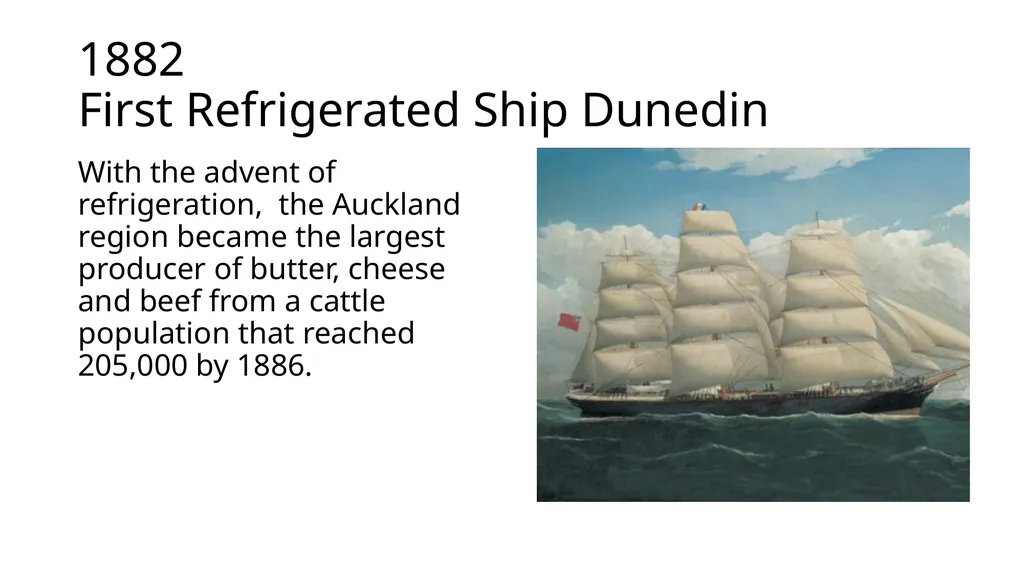
1882 First Refrigerated Ship Dunedin With the advent of refrigeration, the Auckland region became the largest producer of butter, cheese and beef from a cattle population that reached 205,000 by 1886.<br>
06
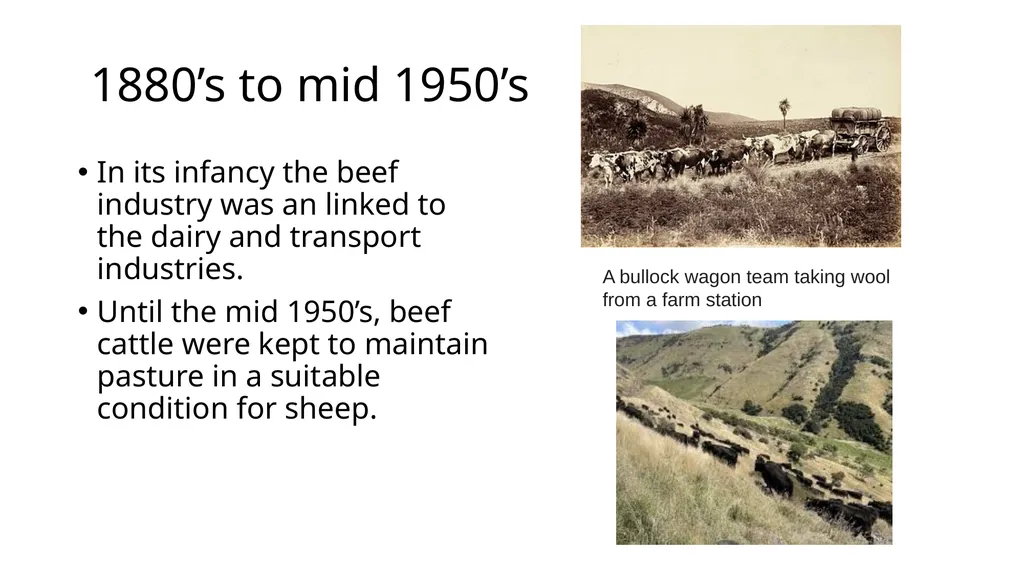
1880’s to mid 1950’s In its infancy the beef industry was an linked to the dairy and transport industries.
Until the mid 1950’s, beef cattle were kept to maintain pasture in a suitable condition for sheep. A bullock wagon team taking wool from a farm station<br>
07
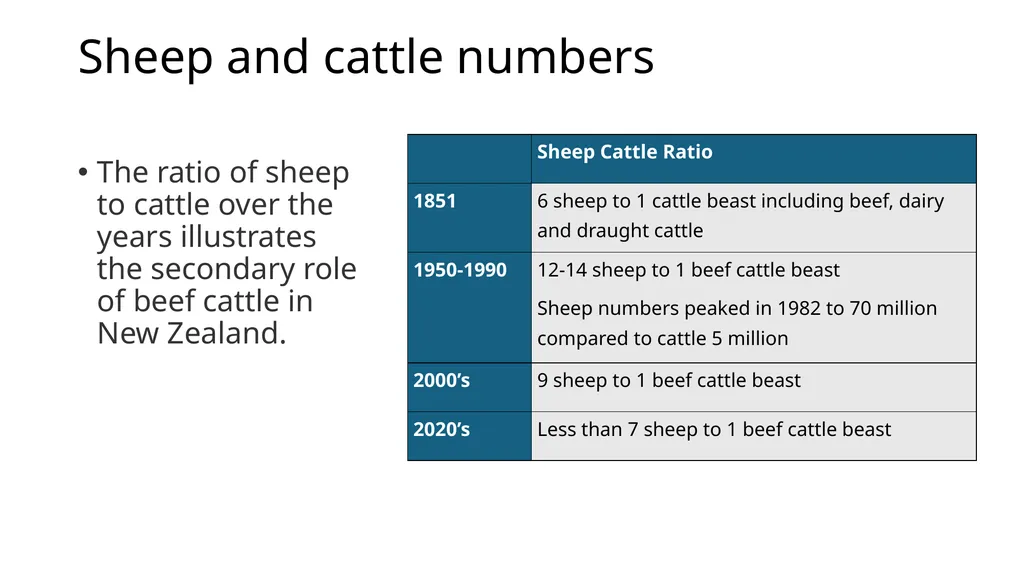
Sheep and cattle numbers The ratio of sheep to cattle over the years illustrates the secondary role of beef cattle in New Zealand.<br>
08
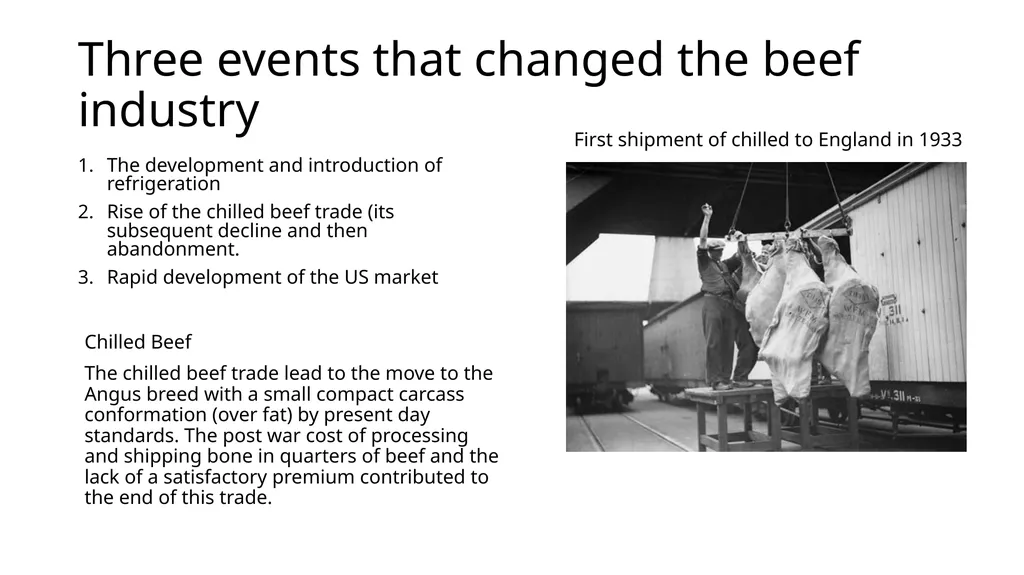
Three events that changed the beef industry The development and introduction of refrigeration
Rise of the chilled beef trade (its subsequent decline and then abandonment.
Rapid development of the US market Chilled Beef
The chilled beef trade lead to the move to the Angus breed with a small compact carcass conformation (over fat) by present day standards. The post war cost of processing and shipping bone in quarters of beef and the lack of a satisfactory premium contributed to the end of this trade. First shipment of chilled to England in 1933<br>
09
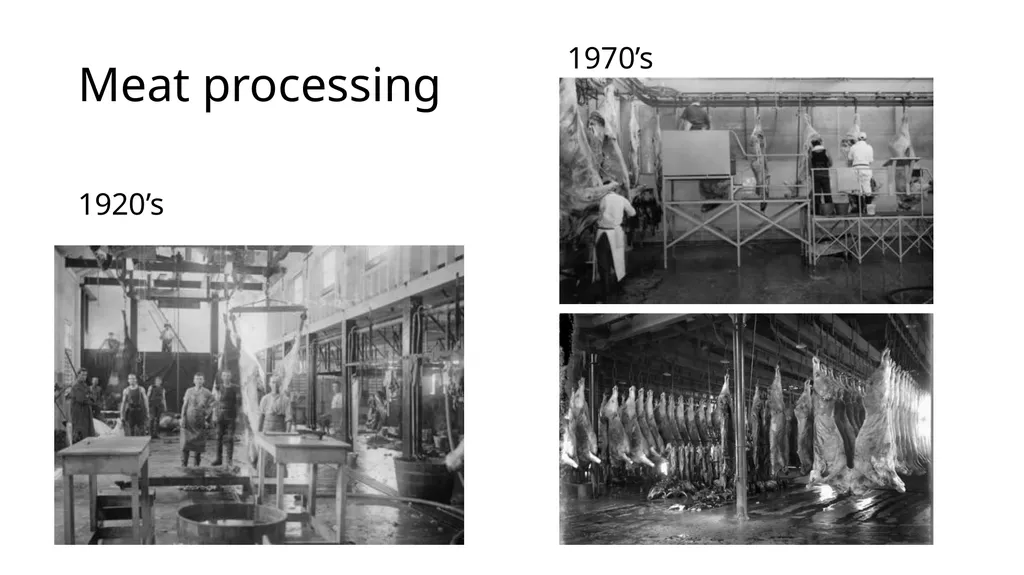
Meat processing 1920’s 1970’s<br>
10
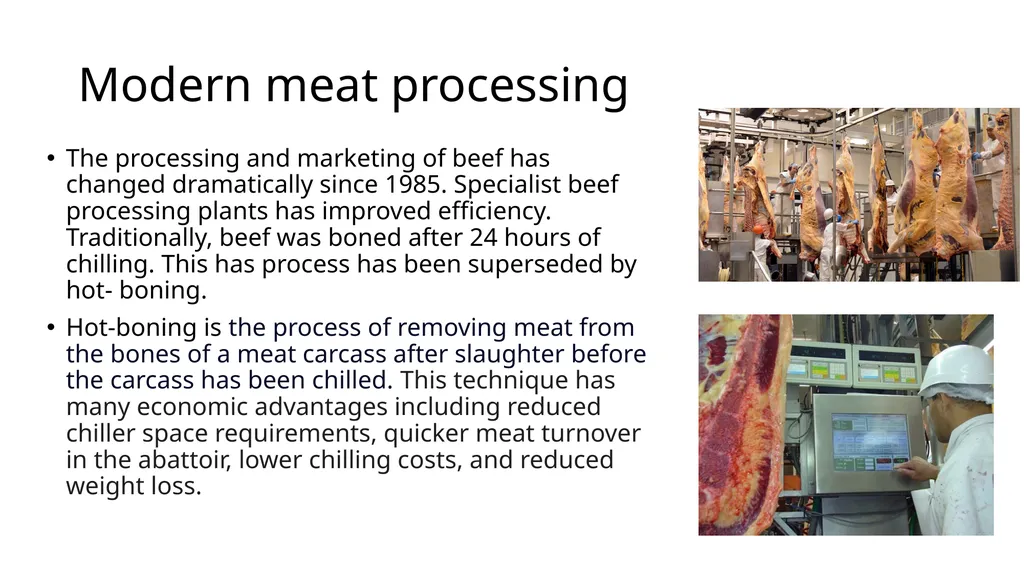
Modern meat processing The processing and marketing of beef has changed dramatically since 1985. Specialist beef processing plants has improved efficiency. Traditionally, beef was boned after 24 hours of chilling. This has process has been superseded by hot- boning.
Hot-boning is the process of removing meat from the bones of a meat carcass after slaughter before the carcass has been chilled. This technique has many economic advantages including reduced chiller space requirements, quicker meat turnover in the abattoir, lower chilling costs, and reduced weight loss.<br>
11
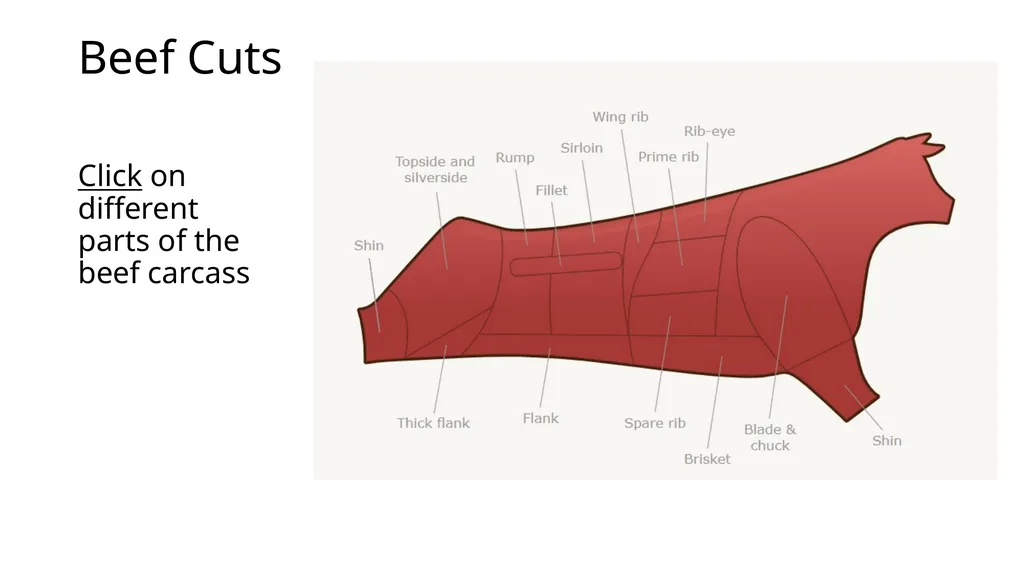
Beef Cuts Click on different parts of the beef carcass<br>