03
3.1 What is Ecology? (Pages 64-68) When biologists talk about life on a global scale, they use the term biosphere.
The biosphere consist of all life on Earth and all parts of the Earth on which life exists, including land, water, and the atmosphere.
Organisms in the biosphere interact with each other, and with their physical environment.
Ecology is the scientific study of such interactions.<br>
04
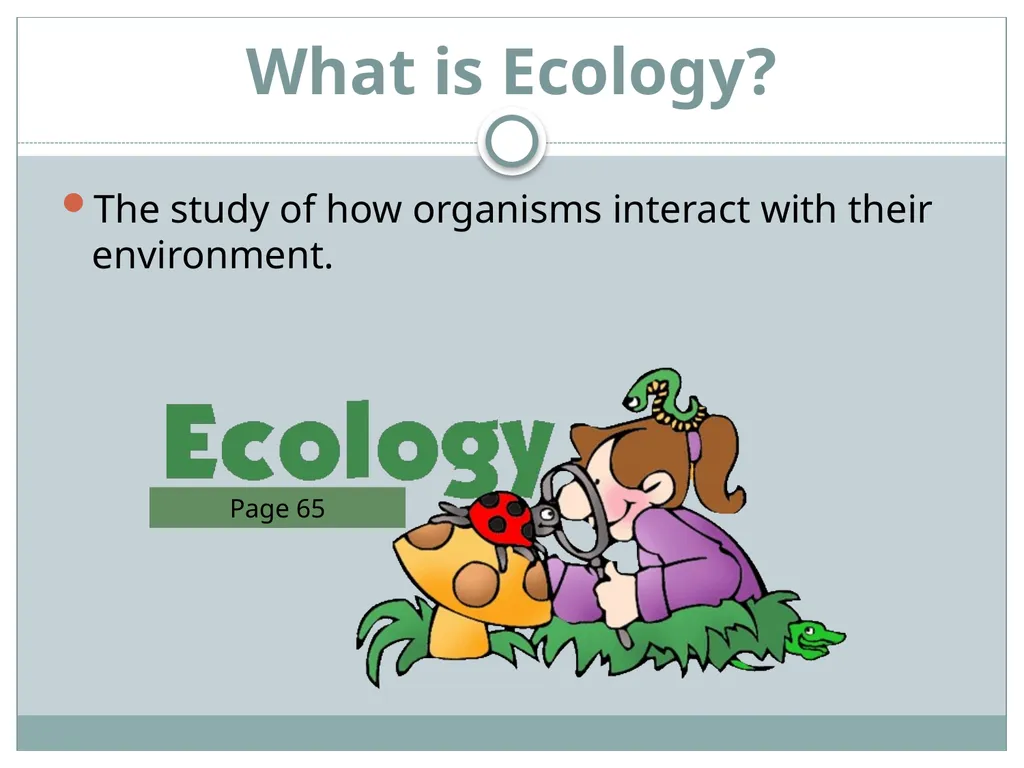
What is Ecology? The study of how organisms interact with their environment. Page 65<br>
05
Levels of Organization<br>
06
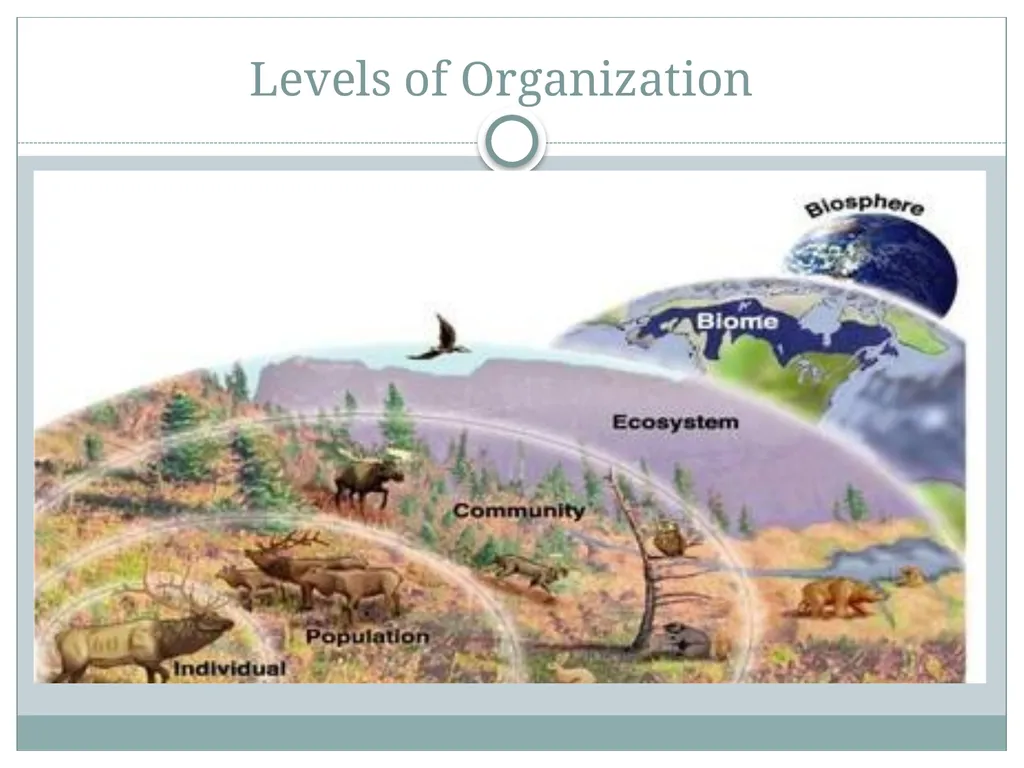
The kinds of questions that ecologists may ask about the living environment can vary, depending on the level at which the ecologist works. Levels of Organization<br>
08
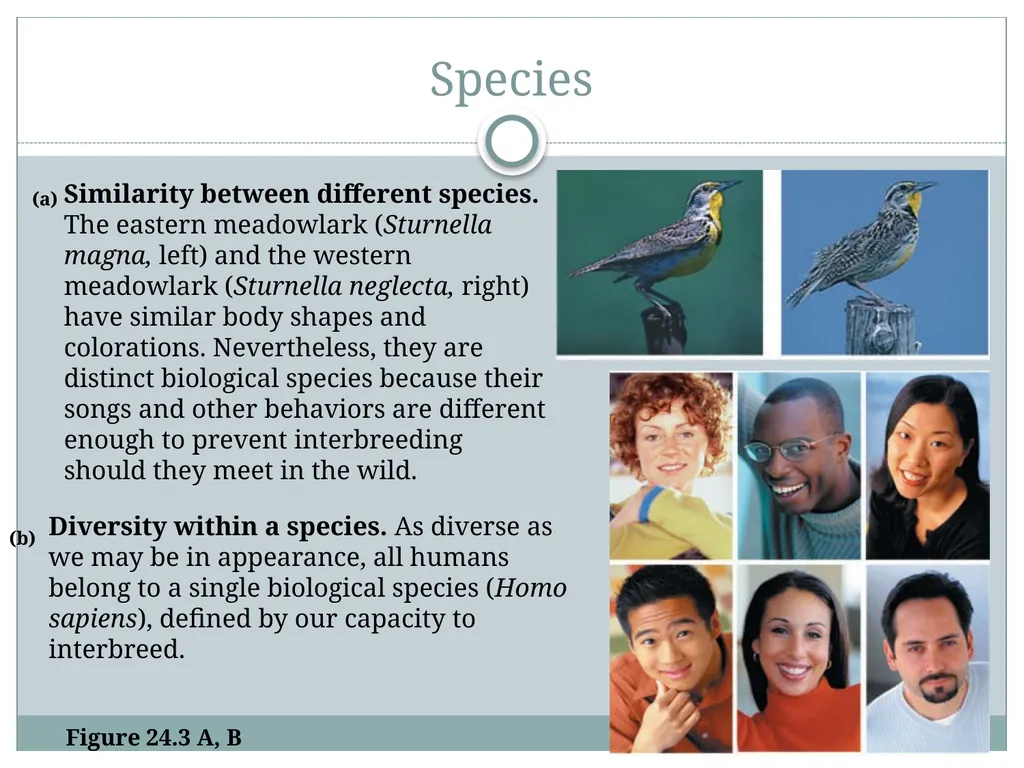
Individual Organism or species A species is a group of similar organisms that can breed and produce viable, fertile offspring but are unable to produce viable fertile offspring with members of other populations.<br>
10
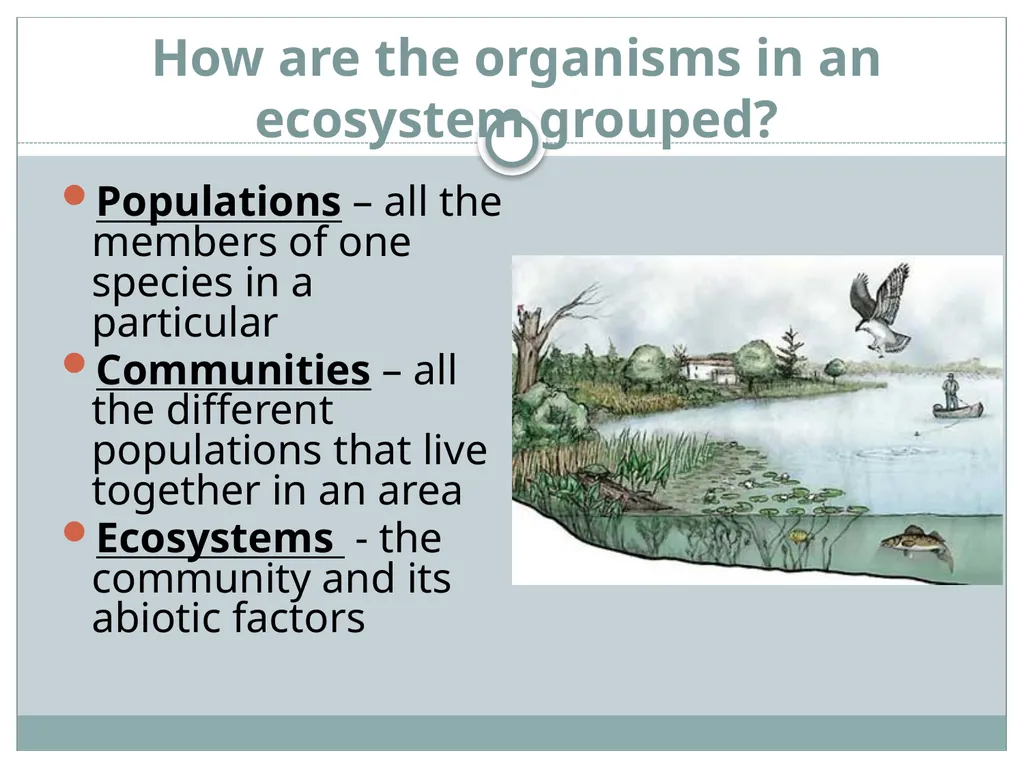
How are the organisms in an ecosystem grouped? Populations – all the members of one species in a particular
Communities – all the different populations that live together in an area
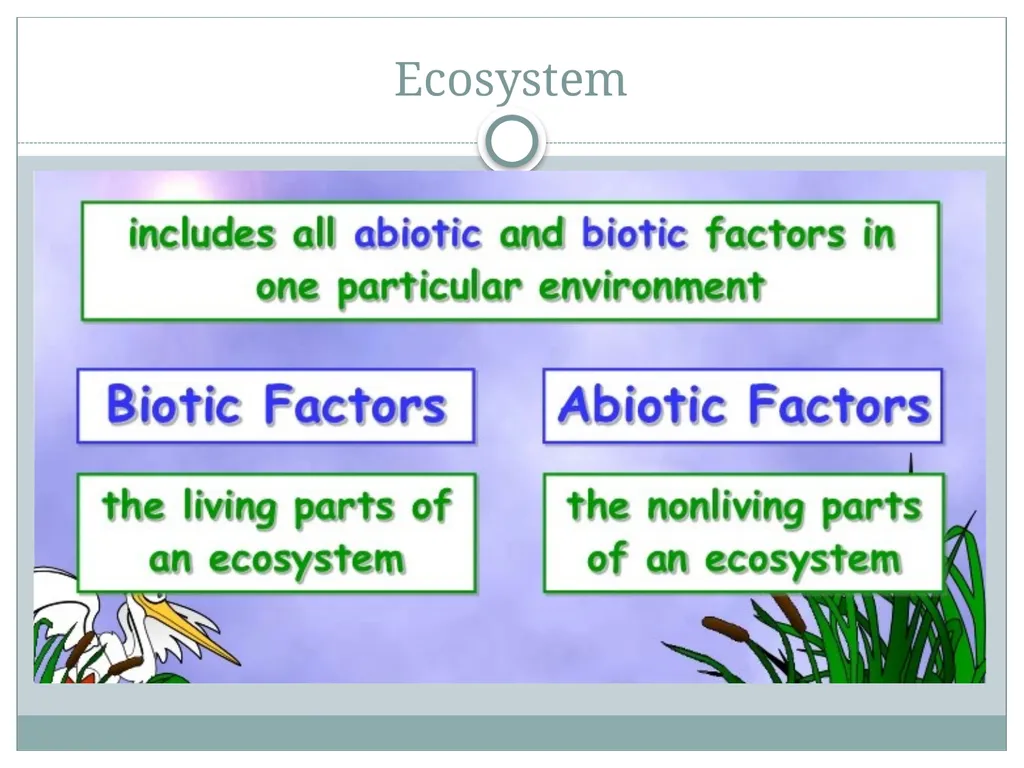
Ecosystems - the community and its abiotic factors<br>
11
How do organisms interact with one another? 4.2 Niches and Community Interactions (Pages 99-104)<br>
12
An organism obtains food, water, shelter, and other things it needs to live, grow, and reproduce from its surroundings. An organism will do all of this in its HABITAT (the general place where an organism lives). Page 99
A single ecosystem may contain several habitats.
Ex. A forest ecosystem - fungus will grow on the forest floor, and flicker birds build nests in the trees.
An organism will live in different habitats according to its specific needs for survival.<br>
13
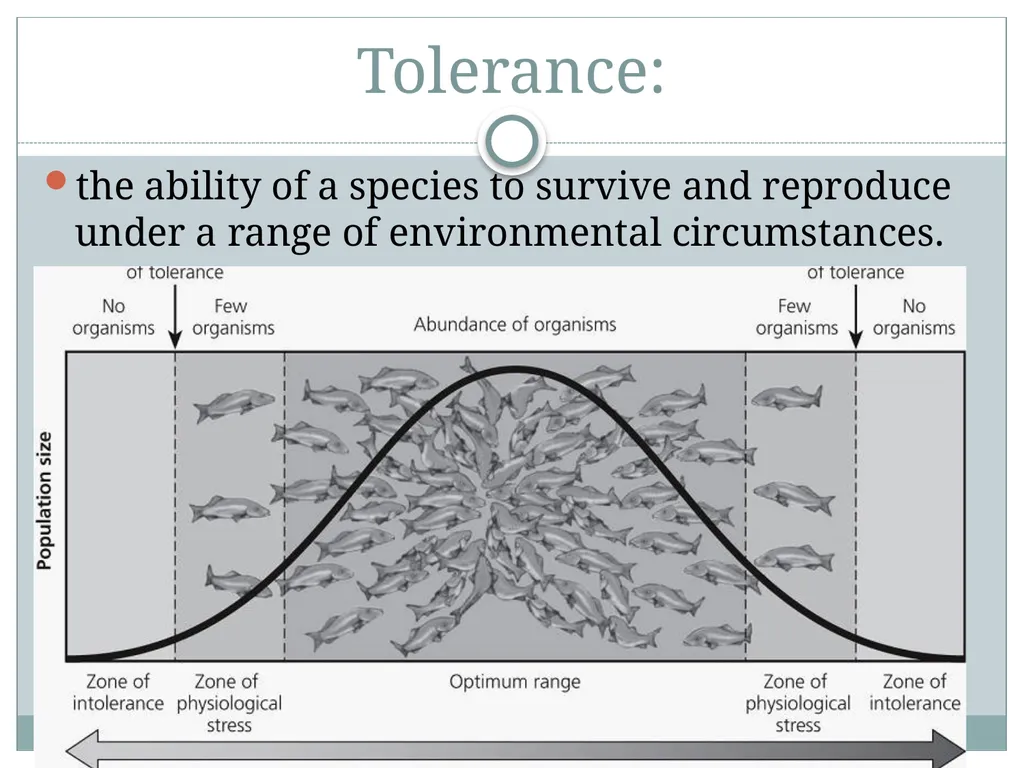
the ability of a species to survive and reproduce under a range of environmental circumstances. Tolerance:<br>
14
Every organism has its own adaptations that make it best suited for living in its ecosystem. Niche: an organism’s role or how it makes its living.
Includes what type of food it eats, how it gets this food, and which other species use the organism as food.
Also include when and how it reproduces and the physical conditions it uses to survive. A gila monster and a red-tailed hawk would have two different niches even though they live in the same desert ecosystem.<br>
15
An organism’s niche may include how it interacts with other organisms. The three major types of interactions among organisms are:
Competition
Predation/Herbivory
Symbiosis<br>
16
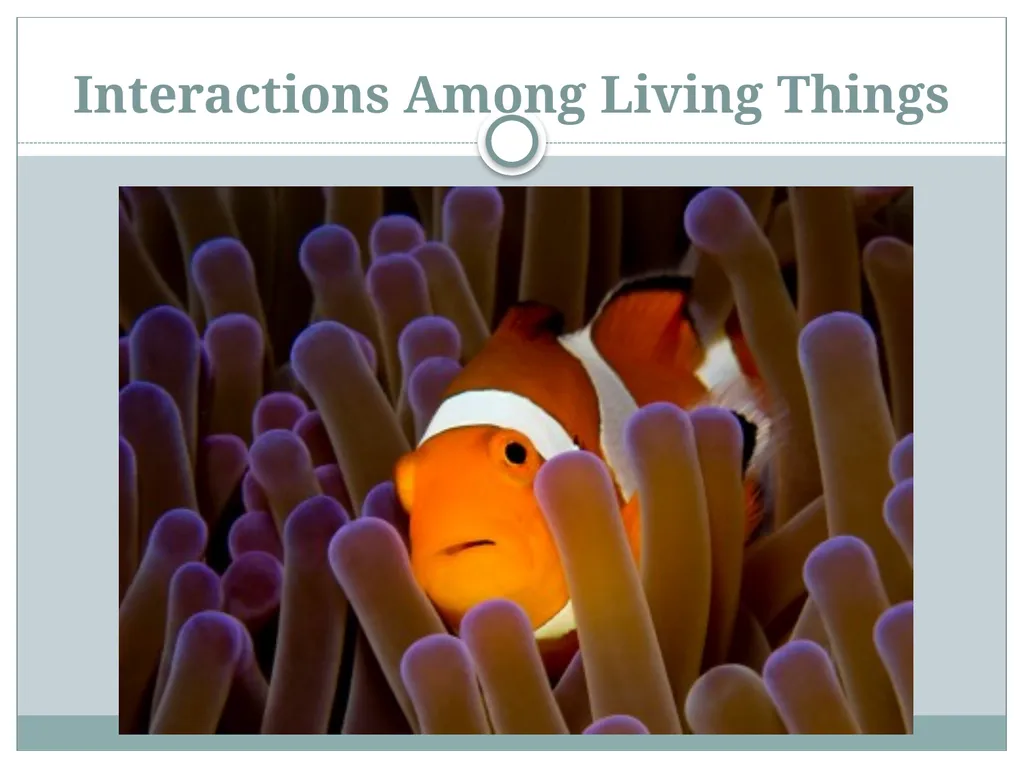
Interactions Among Living Things<br>
17
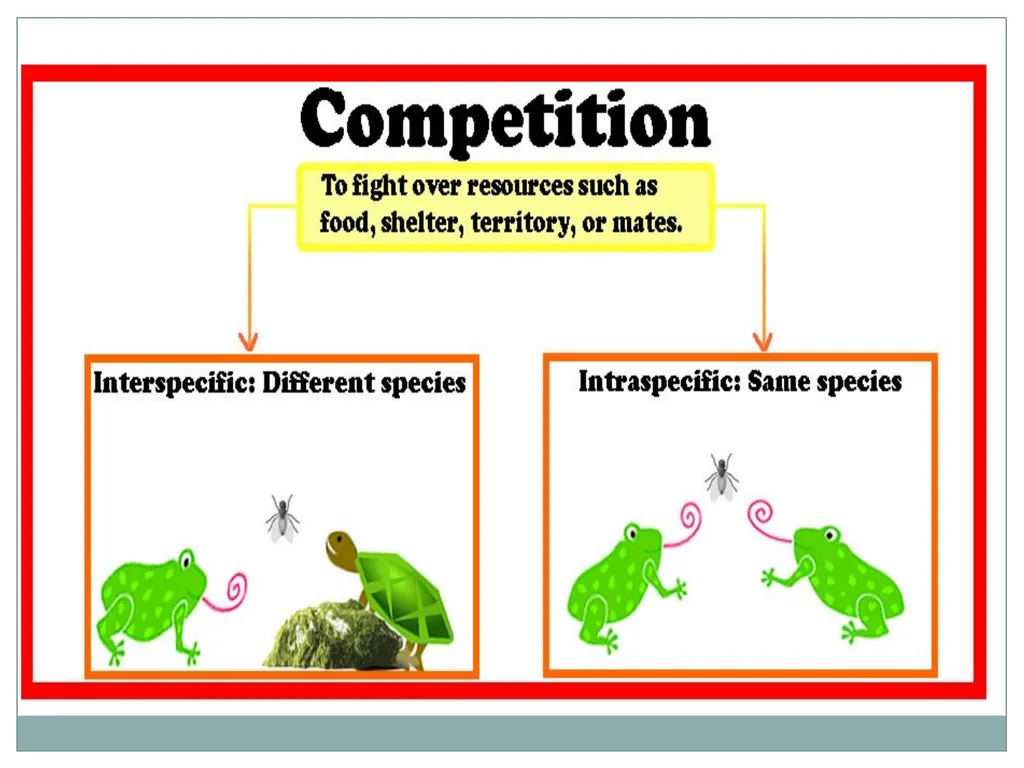
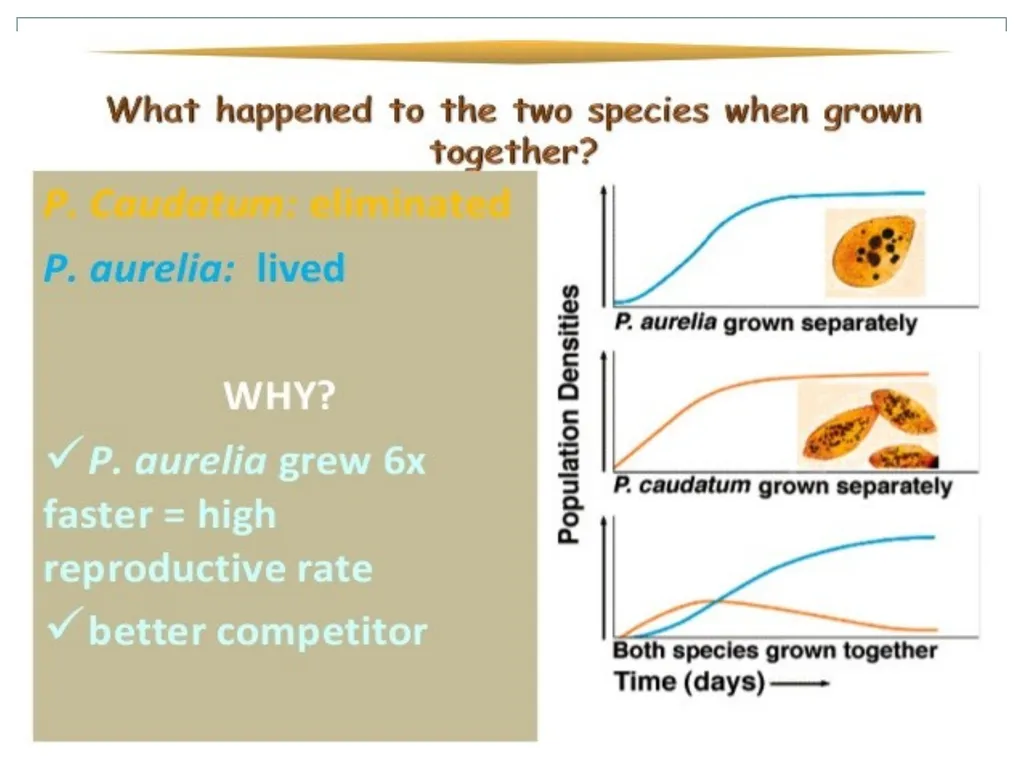
Competition The struggle between organisms to survive in a habitat with limited resources.
Will occur when organisms fight over limited food, water, and shelter
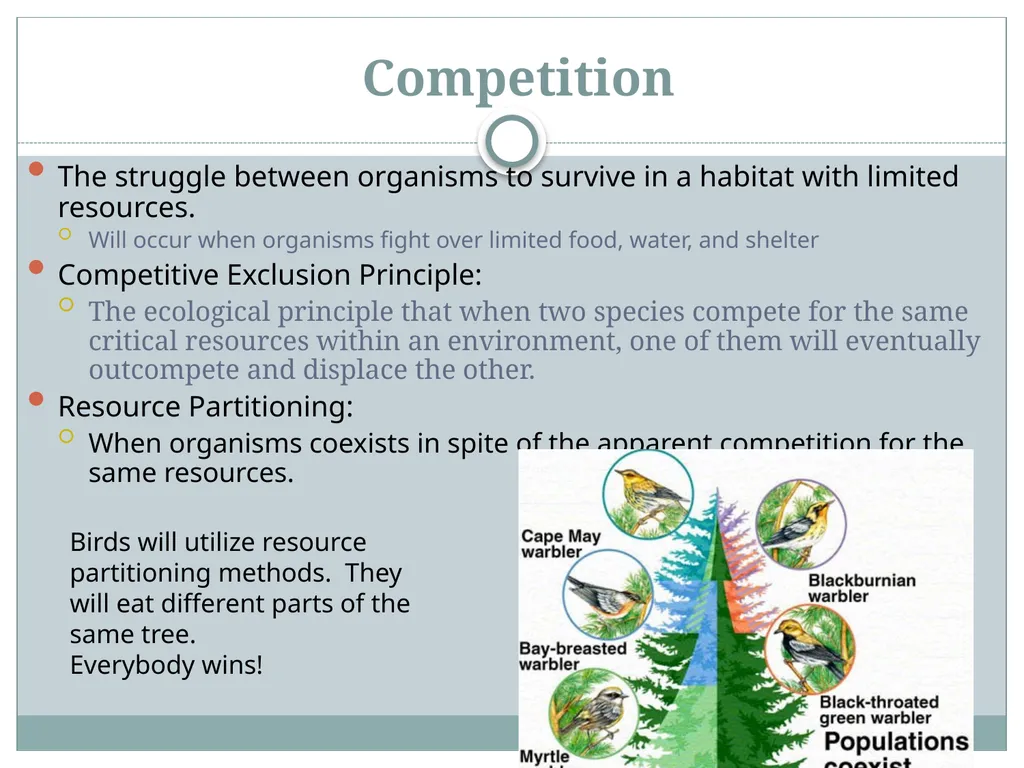
Competitive Exclusion Principle:
The ecological principle that when two species compete for the same critical resources within an environment, one of them will eventually outcompete and displace the other.
Resource Partitioning:
When organisms coexists in spite of the apparent competition for the same resources. Birds will utilize resource partitioning methods. They will eat different parts of the same tree.
Everybody wins!<br>
18
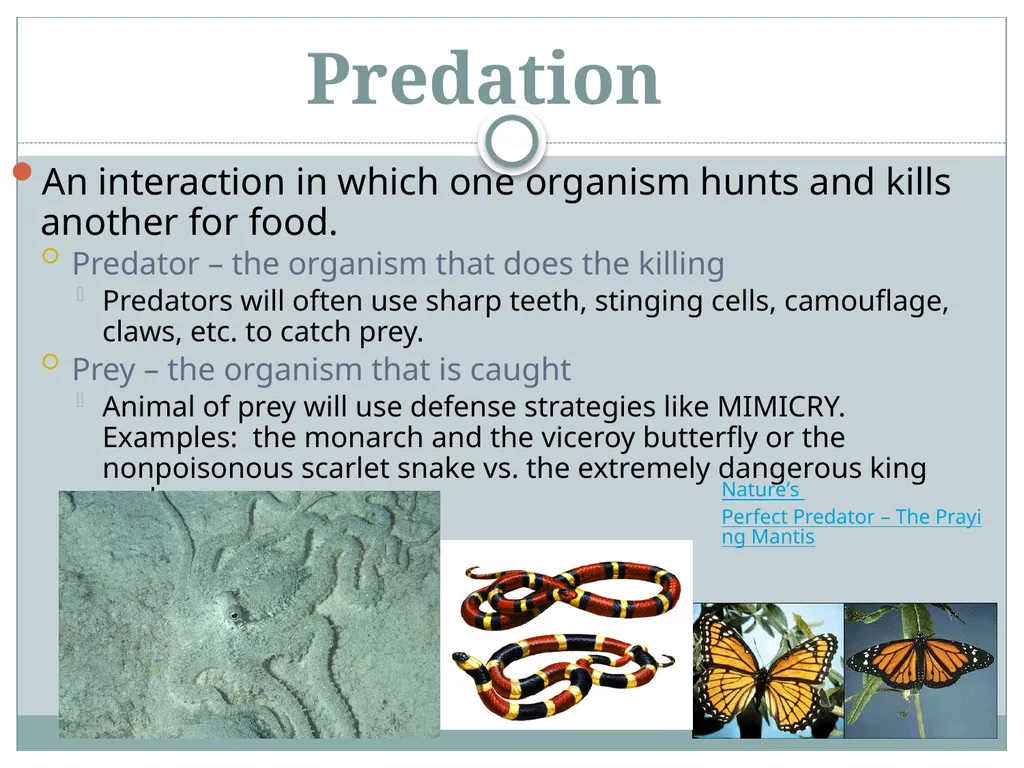
Predation An interaction in which one organism hunts and kills another for food.
Predator – the organism that does the killing
Predators will often use sharp teeth, stinging cells, camouflage, claws, etc. to catch prey.
Prey – the organism that is caught
Animal of prey will use defense strategies like MIMICRY. Examples: the monarch and the viceroy butterfly or the nonpoisonous scarlet snake vs. the extremely dangerous king snake Nature’s Perfect Predator – The Praying Mantis<br>
19
Herbivory: Herbivore – Plant Relationship Interaction between herbivores (plant eater) and plants (producer)
Herbivores can affect both the size and distribution of plant populations in a community and determine the places that certain plants can survive and grow.
Ex: white-tailed deer are eliminating their favorite food across US
Insects may destroy large number of crops
Animals eat seed/fruits and helping in their dispersal<br>
20
Keystone species help play a critical role in maintain the structure of ecosystems, environments, affecting organisms and help determine types and number of species in the community.
sea otters that help maintain the sea urchins’ population (so it doesn’t infest roots of Kelp)
beavers that help prevent big flooding through the dams they create.
Unfortunately, these keystone species have slowly been removed from their homes—beavers that are removed causes more flooding and damages to people’s homes in towns; also, oil spills that affect sea otter’s population causes more sea urchins to increase—or by human activities, making other species or plant life affect the environment around us in a unhelpful way. Keystone species<br>
21
Keystone species in Florida Everglades The American Alligator is a keystone species to the Florida Everglades.
They build “alligator holes” that don’t only provide themselves a home, but helps provide an important food and water source for many other animals during the drought/dry season (like a refuge for aquatic animals).
They keep their prey’s population at bay—if an alligator was taken out of a certain area where a few fish were swarming, soon those few fish will make their population increase, causing a huge infestation.
Finally, they alter the hydrology of wet areas in which they live, connecting existing water sources and separating others depending on their seasonal movement patterns.
Alligators are essential to the Everglades, they help maintain the balance of the environment and animal species; without them, certain unwanted species would increase, plant population could die out because of increased population, and etc.
Unfortunately, the American Alligator’s population is being affected by the amount of pythons that have lurked into their environment. These huge snakes can easily wrap around the alligator and squeeze them to death without giving them the chance to fight. They compete for prey as well, the more they eat, and the less the alligator gets the chance to hunt, causing them to starve.
Some people find these creatures dangerous and want them removed from their territory (such as lakes and ponds in homes), but the truth is that we are the ones that intruded into their territory and we should let them go about their business in the wild. Our selfish desires is what causing most of these keystone species’ (or other species in general) population to slowly die out.<br>
22
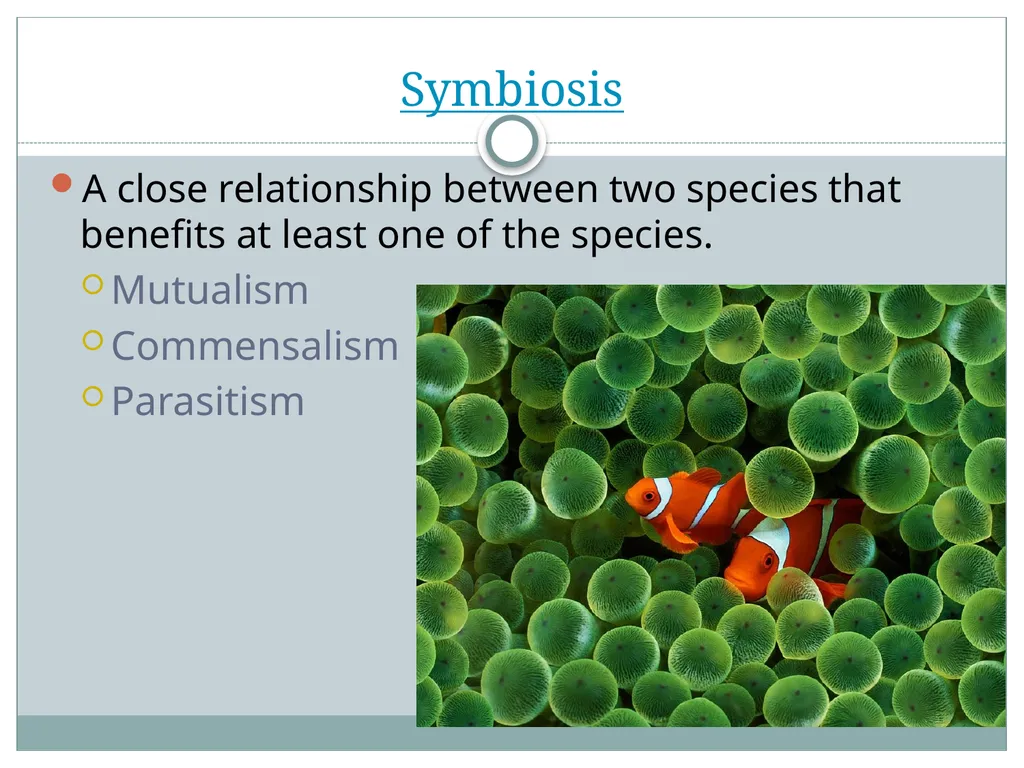
Symbiosis A close relationship between two species that benefits at least one of the species.
Mutualism
Commensalism
Parasitism<br>
23
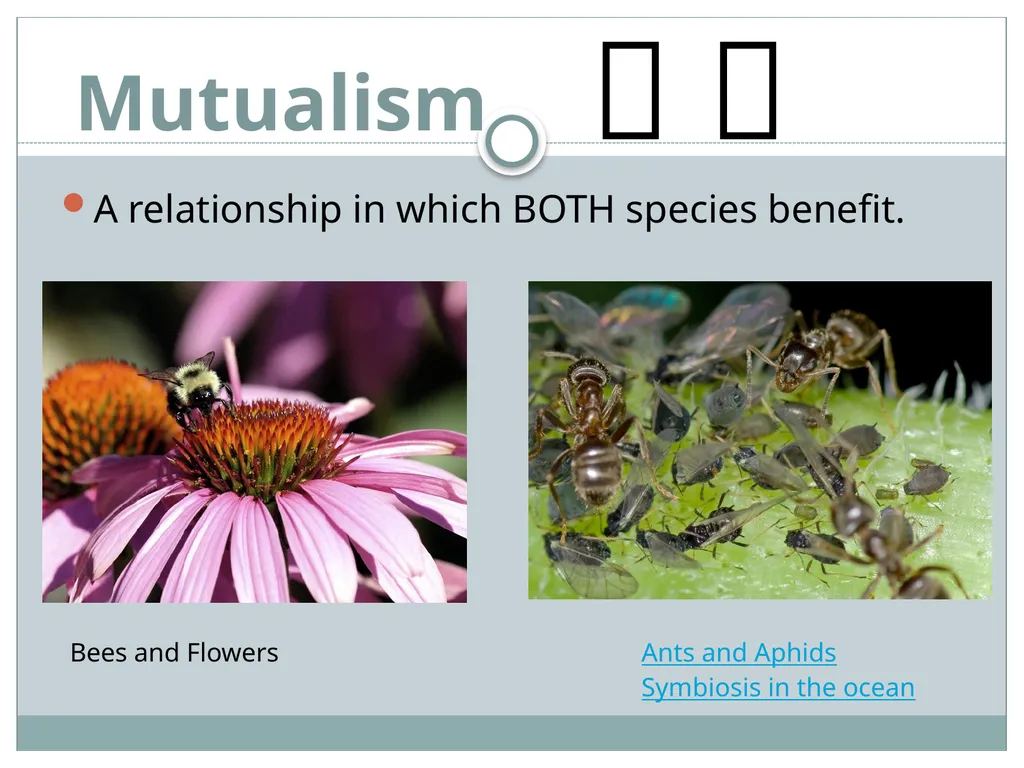
Mutualism A relationship in which BOTH species benefit. Bees and Flowers Ants and Aphids
Symbiosis in the ocean<br>
24
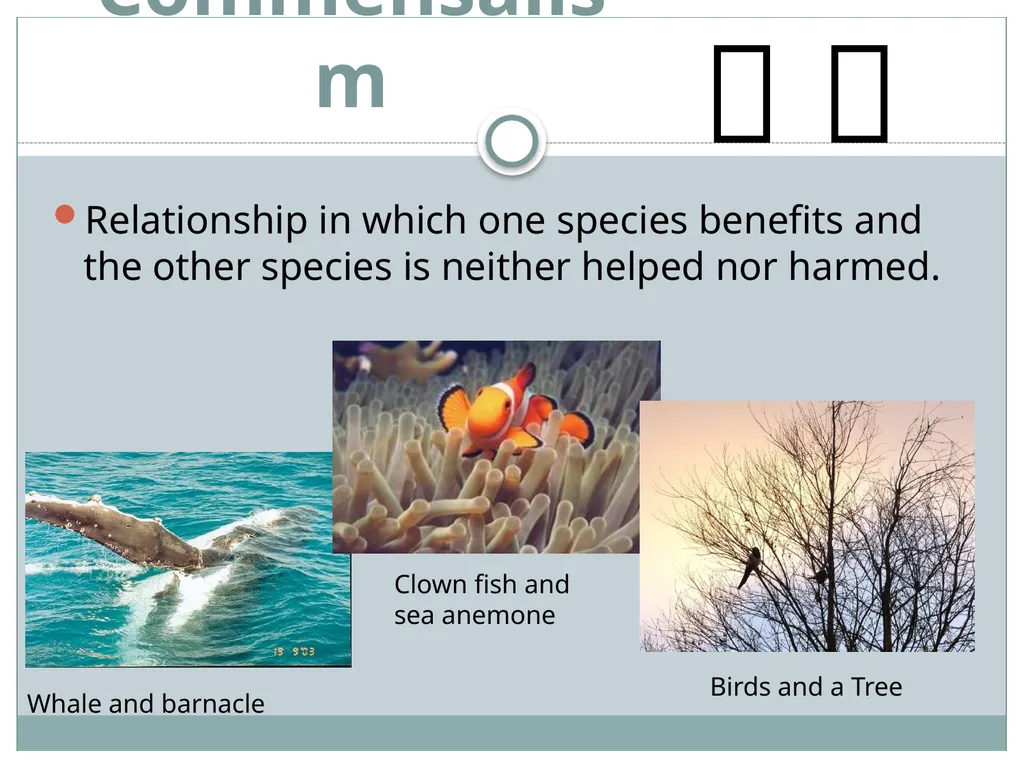
Commensalism Relationship in which one species benefits and the other species is neither helped nor harmed. Whale and barnacle Birds and a Tree Clown fish and sea anemone<br>
25
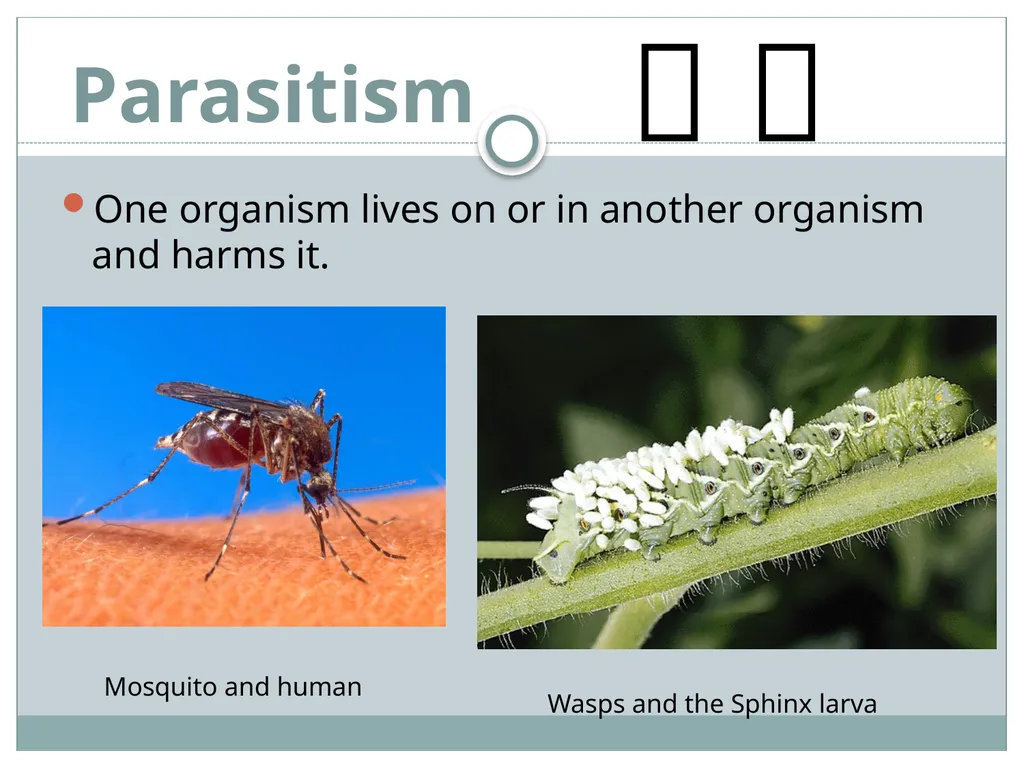
Parasitism One organism lives on or in another organism and harms it. Wasps and the Sphinx larva Mosquito and human<br>
26
Symbiosis Quiz Interaction: a vampire bat drinks a horse’s blood
Type of interaction? PARASITISM<br>
27
Symbiosis Quiz Interaction: bacteria living in a cow’s stomach to help them break down the cellulose in grass
Type of interaction? MUTUALISM<br>
28
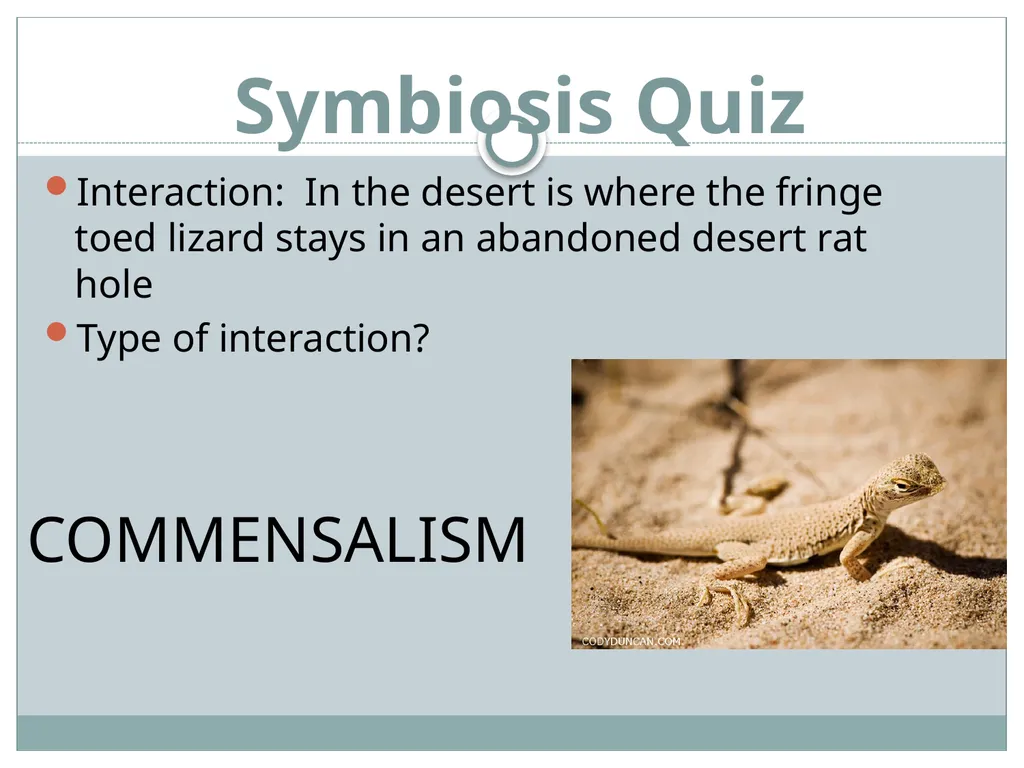
Symbiosis Quiz Interaction: In the desert is where the fringe toed lizard stays in an abandoned desert rat hole
Type of interaction? COMMENSALISM<br>
29
How do living and nonliving parts of the earth interact and affect the survival of organisms? Esssential Question:<br>
30
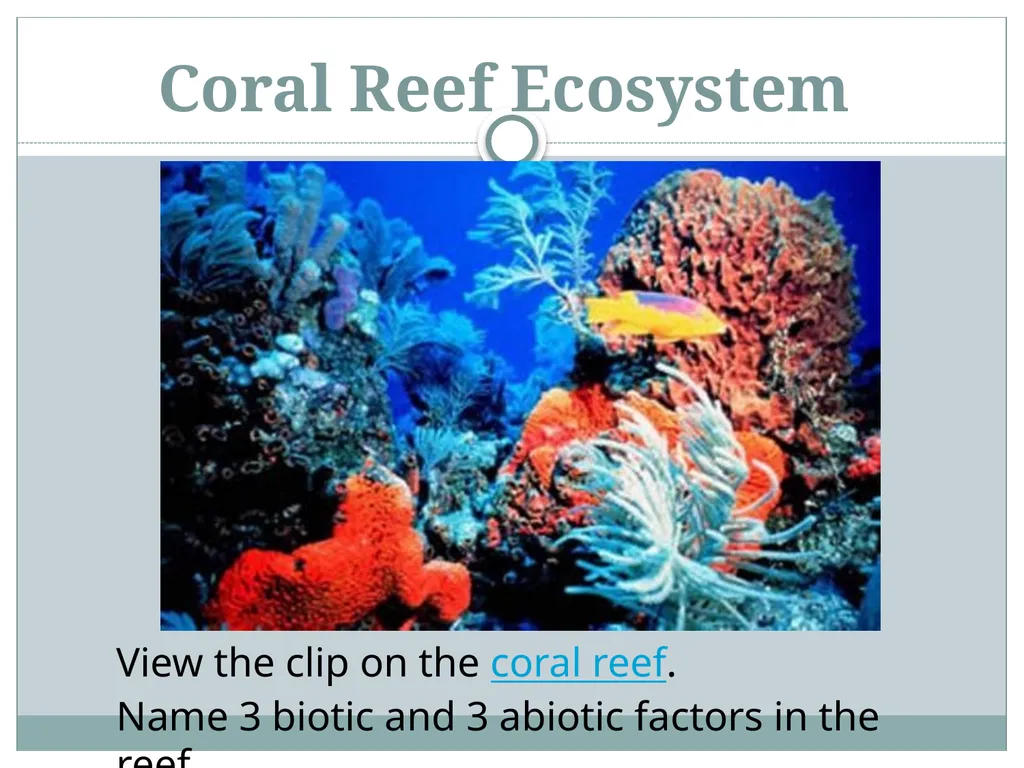
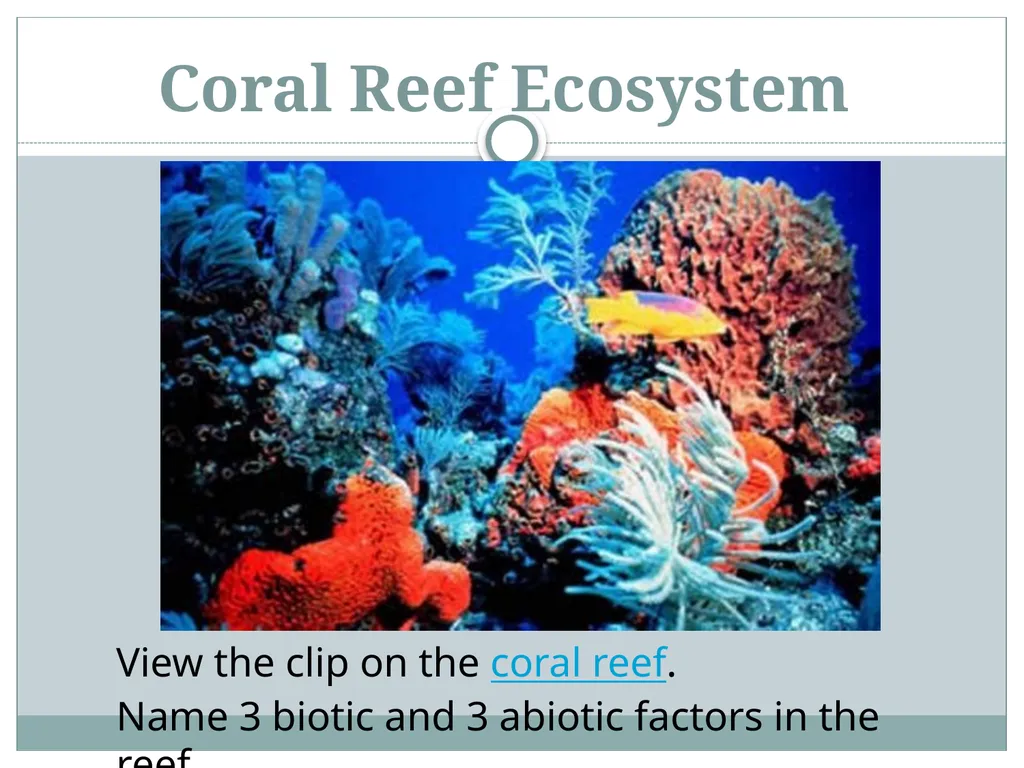
Coral Reef Ecosystem View the clip on the coral reef.
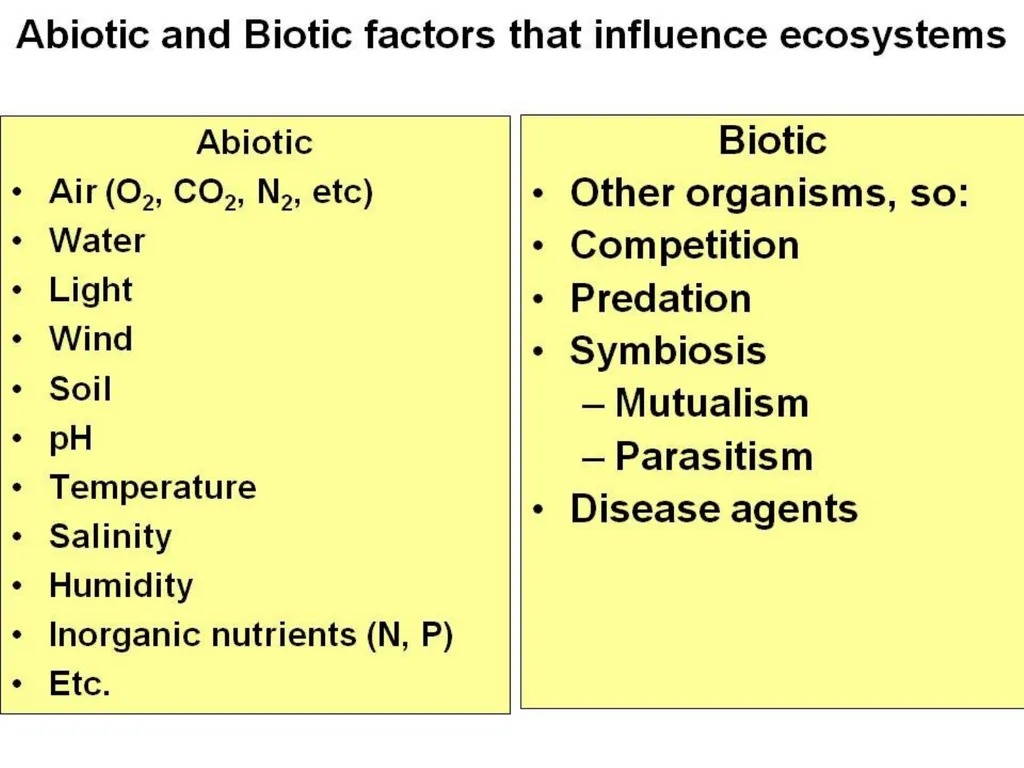
Name 3 biotic and 3 abiotic factors in the reef.<br>
31
https://www.youtube.com/watch?v=5d3qie3jbHk<br>