
LABORATORY SAFETY TRAINING UVU College of Science
SB
Published · 46 slides · 0 views

1 / 1

Description
LABORATORY SAFETY TRAINING UVU College of Science and Health Chemical Hygiene Coordinator Craig Moore Office: SB052b 801-863-5252 craig.mooreuvu.edu Why are we doing this? Because OSHA says we have to. Occupational Exposures to Hazardous
Related Topics
Share
Embed code
Download this presentation From Below
"LABORATORY SAFETY TRAINING UVU College of Science" is the property of its rightful owner. Permission is granted to download and print the materials on this website for personal, non-commercial use only, and to display it on your personal computer provided you do not modify the materials and that you retain all copyright notices contained in the materials. By downloading content from our website, you accept the terms of this agreement.
Presentation Transcript
01
LABORATORY SAFETY TRAINING UVU College of Science and Health<br>
02
Chemical Hygiene Coordinator Craig Moore
Office: SB052b
801-863-5252
craig.moore@uvu.edu<br>
Office: SB052b
801-863-5252
craig.moore@uvu.edu<br>
03
Why are we doing this? Because OSHA says we have to. Occupational Exposures to Hazardous Chemicals in the Laboratory
(29 CFR 1910.1450), “Laboratory Standard". A facility where: https://www.osha.gov/pls/oshaweb/owadisp.show_document?p_table=STANDARDS&p_id=10106 Chemical manipulations are carried out on a “laboratory scale” (easily handled by one person) Multiple chemical procedures or chemicals are used The procedures involved are not part of a production process, nor do they in any way simulate a production process “Protective laboratory practices and equipment” are available and in common use to minimize the potential for worker exposure to hazardous chemicals.<br>
(29 CFR 1910.1450), “Laboratory Standard". A facility where: https://www.osha.gov/pls/oshaweb/owadisp.show_document?p_table=STANDARDS&p_id=10106 Chemical manipulations are carried out on a “laboratory scale” (easily handled by one person) Multiple chemical procedures or chemicals are used The procedures involved are not part of a production process, nor do they in any way simulate a production process “Protective laboratory practices and equipment” are available and in common use to minimize the potential for worker exposure to hazardous chemicals.<br>
04
Elements of the Safety Program The goal of the Laboratory Safety Program is to minimize the risk of injury or illness to laboratory workers by ensuring that they have the training, information, support and equipment needed to work safely in the laboratory. Utah Valley University
College of Science & Health
Laboratory Safety Manual Utah Valley University
College of Science & Health
Chemical Hygiene Plan<br>
College of Science & Health
Laboratory Safety Manual Utah Valley University
College of Science & Health
Chemical Hygiene Plan<br>
05
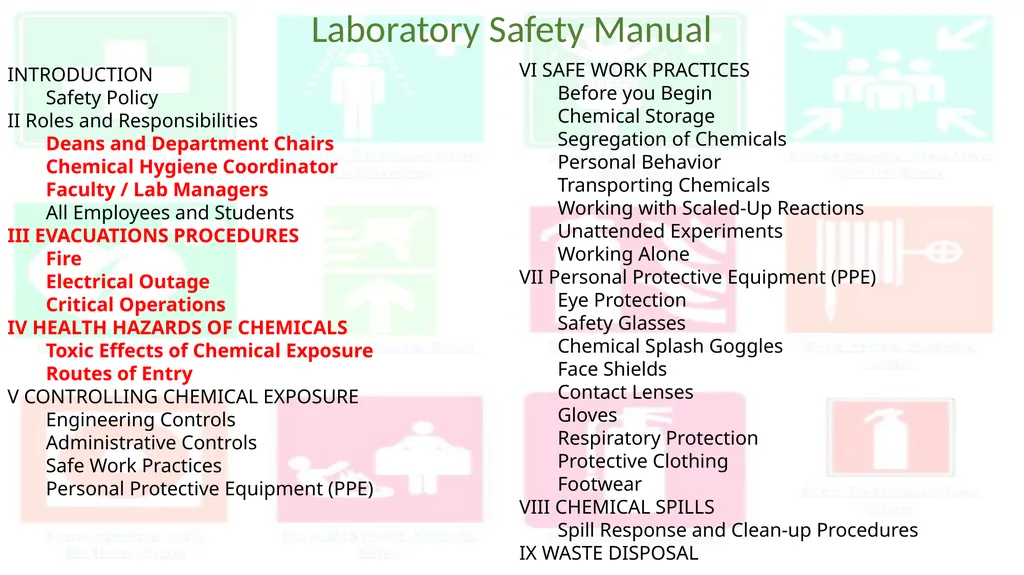
INTRODUCTION
Safety Policy
II Roles and Responsibilities
Deans and Department Chairs
Chemical Hygiene Coordinator
Faculty / Lab Managers
All Employees and Students
III EVACUATIONS PROCEDURES
Fire
Electrical Outage
Critical Operations
IV HEALTH HAZARDS OF CHEMICALS
Toxic Effects of Chemical Exposure
Routes of Entry
V CONTROLLING CHEMICAL EXPOSURE
Engineering Controls
Administrative Controls
Safe Work Practices
Personal Protective Equipment (PPE) VI SAFE WORK PRACTICES
Before you Begin
Chemical Storage
Segregation of Chemicals
Personal Behavior
Transporting Chemicals
Working with Scaled-Up Reactions
Unattended Experiments
Working Alone
VII Personal Protective Equipment (PPE)
Eye Protection
Safety Glasses
Chemical Splash Goggles
Face Shields
Contact Lenses
Gloves
Respiratory Protection
Protective Clothing
Footwear
VIII CHEMICAL SPILLS
Spill Response and Clean-up Procedures
IX WASTE DISPOSAL Laboratory Safety Manual<br>
06
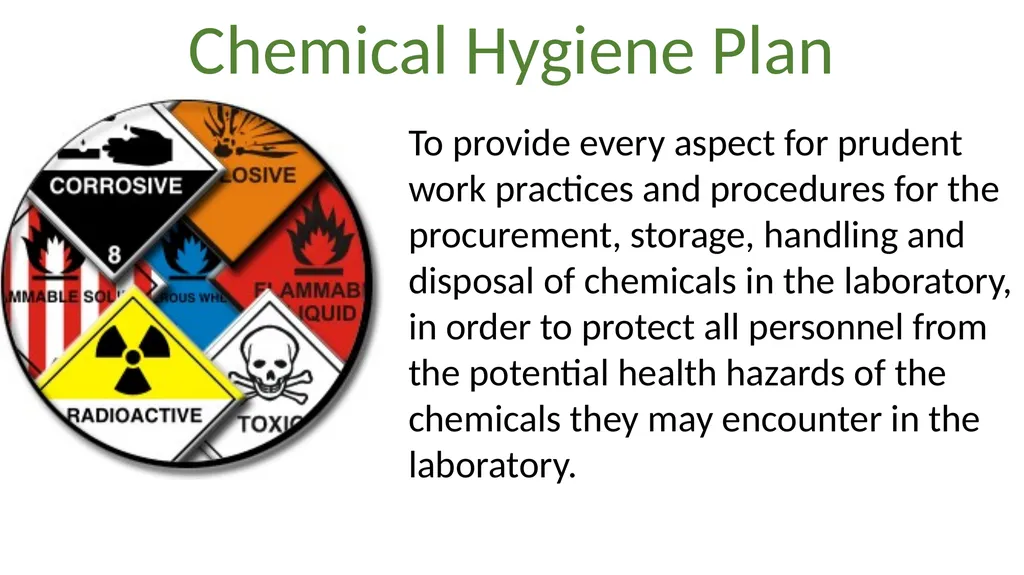
To provide every aspect for prudent work practices and procedures for the procurement, storage, handling and disposal of chemicals in the laboratory, in order to protect all personnel from the potential health hazards of the chemicals they may encounter in the laboratory. Chemical Hygiene Plan<br>
07
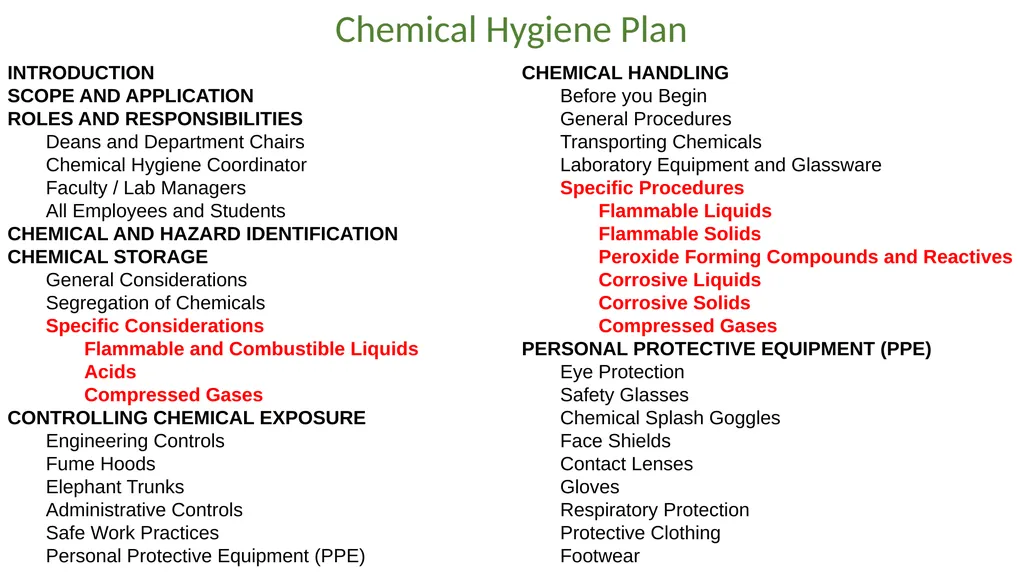
INTRODUCTION
SCOPE AND APPLICATION
ROLES AND RESPONSIBILITIES
Deans and Department Chairs
Chemical Hygiene Coordinator
Faculty / Lab Managers
All Employees and Students
CHEMICAL AND HAZARD IDENTIFICATION
CHEMICAL STORAGE
General Considerations
Segregation of Chemicals
Specific Considerations
Flammable and Combustible Liquids
Acids
Compressed Gases
CONTROLLING CHEMICAL EXPOSURE
Engineering Controls
Fume Hoods
Elephant Trunks
Administrative Controls
Safe Work Practices
Personal Protective Equipment (PPE) CHEMICAL HANDLING
Before you Begin
General Procedures
Transporting Chemicals
Laboratory Equipment and Glassware
Specific Procedures
Flammable Liquids
Flammable Solids
Peroxide Forming Compounds and Reactives
Corrosive Liquids
Corrosive Solids
Compressed Gases
PERSONAL PROTECTIVE EQUIPMENT (PPE)
Eye Protection
Safety Glasses
Chemical Splash Goggles
Face Shields
Contact Lenses
Gloves
Respiratory Protection
Protective Clothing
Footwear Chemical Hygiene Plan<br>
08
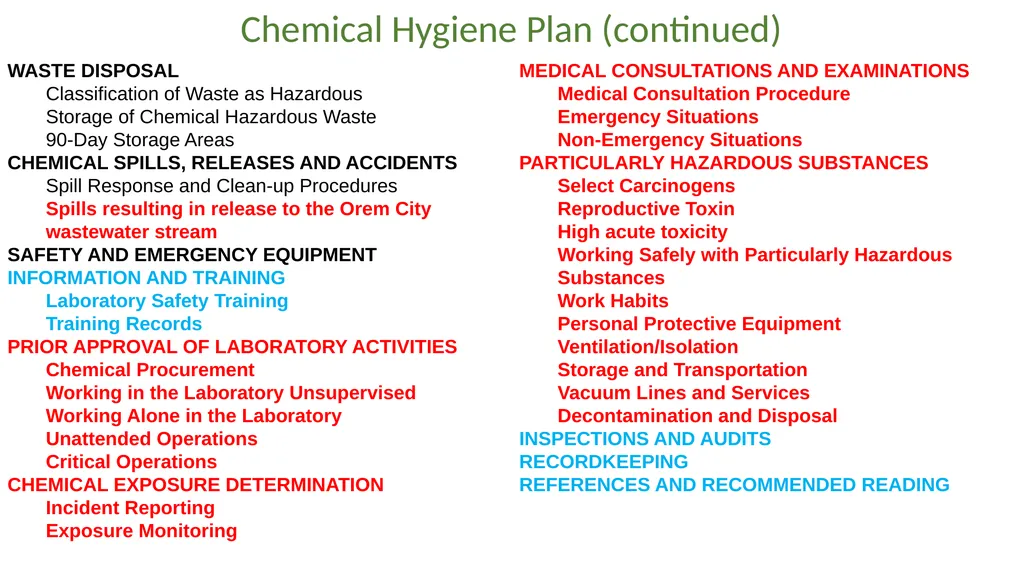
Chemical Hygiene Plan (continued) WASTE DISPOSAL
Classification of Waste as Hazardous
Storage of Chemical Hazardous Waste
90-Day Storage Areas
CHEMICAL SPILLS, RELEASES AND ACCIDENTS
Spill Response and Clean-up Procedures
Spills resulting in release to the Orem City wastewater stream
SAFETY AND EMERGENCY EQUIPMENT
INFORMATION AND TRAINING
Laboratory Safety Training
Training Records
PRIOR APPROVAL OF LABORATORY ACTIVITIES
Chemical Procurement
Working in the Laboratory Unsupervised
Working Alone in the Laboratory
Unattended Operations
Critical Operations
CHEMICAL EXPOSURE DETERMINATION
Incident Reporting
Exposure Monitoring MEDICAL CONSULTATIONS AND EXAMINATIONS
Medical Consultation Procedure
Emergency Situations
Non-Emergency Situations
PARTICULARLY HAZARDOUS SUBSTANCES
Select Carcinogens
Reproductive Toxin
High acute toxicity
Working Safely with Particularly Hazardous Substances
Work Habits
Personal Protective Equipment
Ventilation/Isolation
Storage and Transportation
Vacuum Lines and Services
Decontamination and Disposal
INSPECTIONS AND AUDITS
RECORDKEEPING
REFERENCES AND RECOMMENDED READING<br>
09
All UVU Faculty/Staff and Students Are to follow safe work practices, and if you are unsure of what is the correct/safe way to perform a task or a job, you are to ask your faculty mentor or lab manager Must immediately report all unsafe equipment or tools to your faculty mentor or lab manager. This includes reporting unsafe behavior of others, if they are approached and remain unwilling to correct their unsafe actions or conditions. Are to uphold the safe work practices the departments have established If injured on the job, or become ill, immediately inform your faculty mentor or lab manager.<br>
10
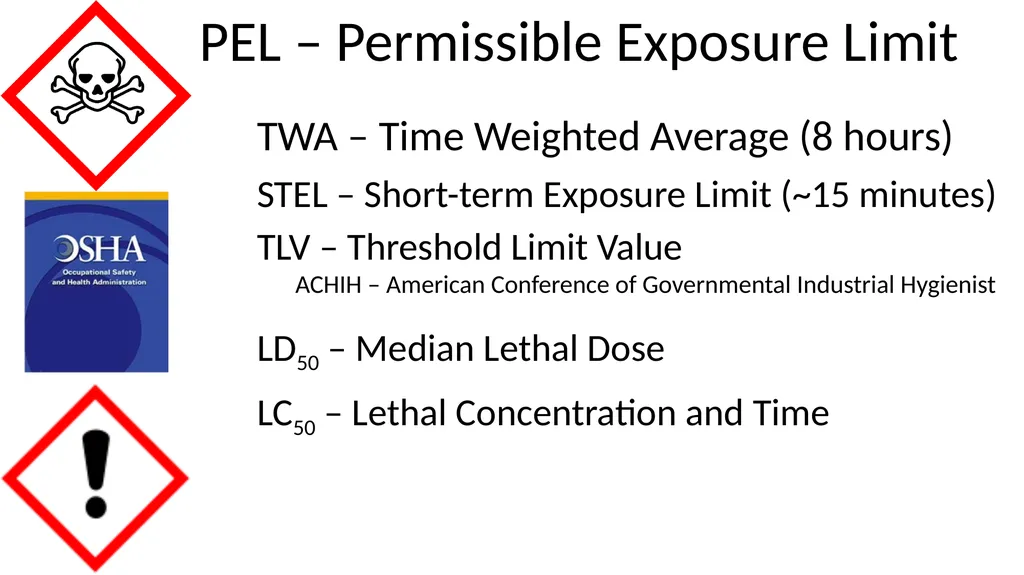
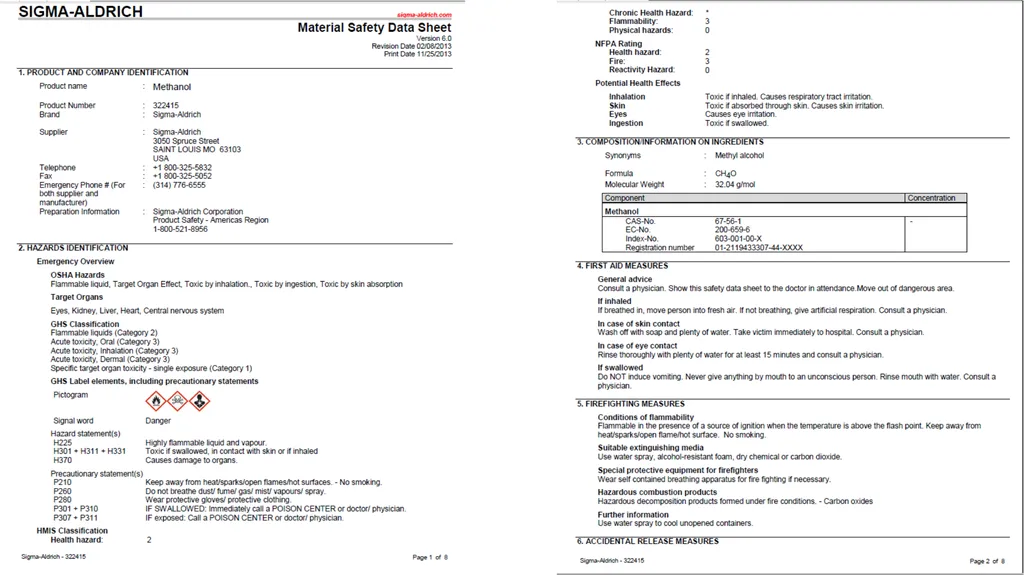
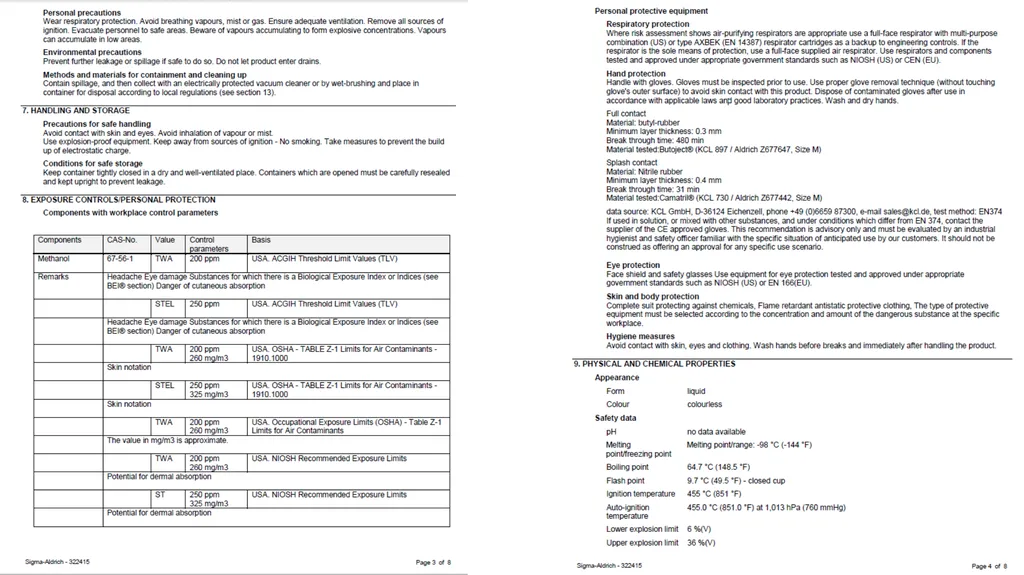
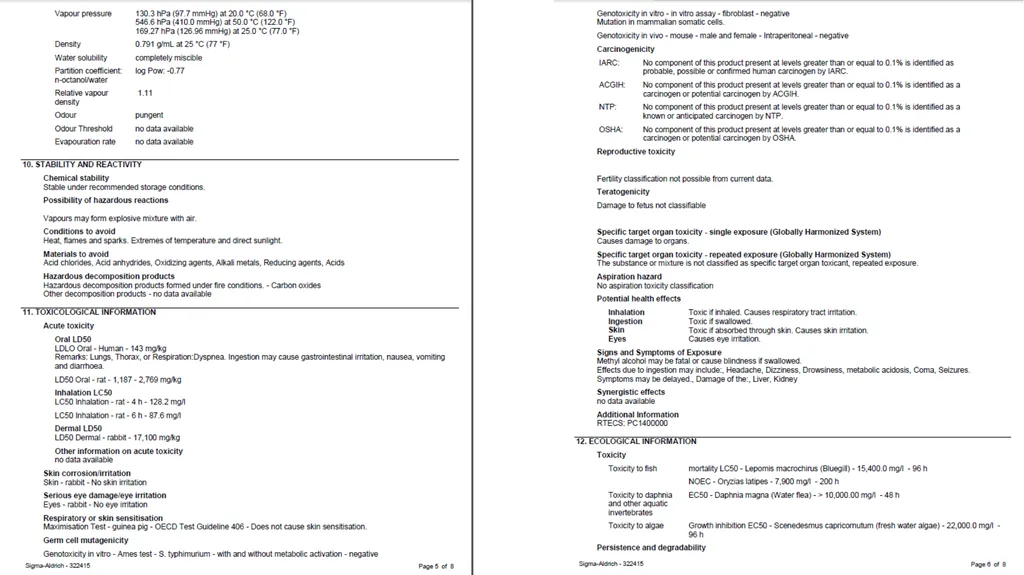
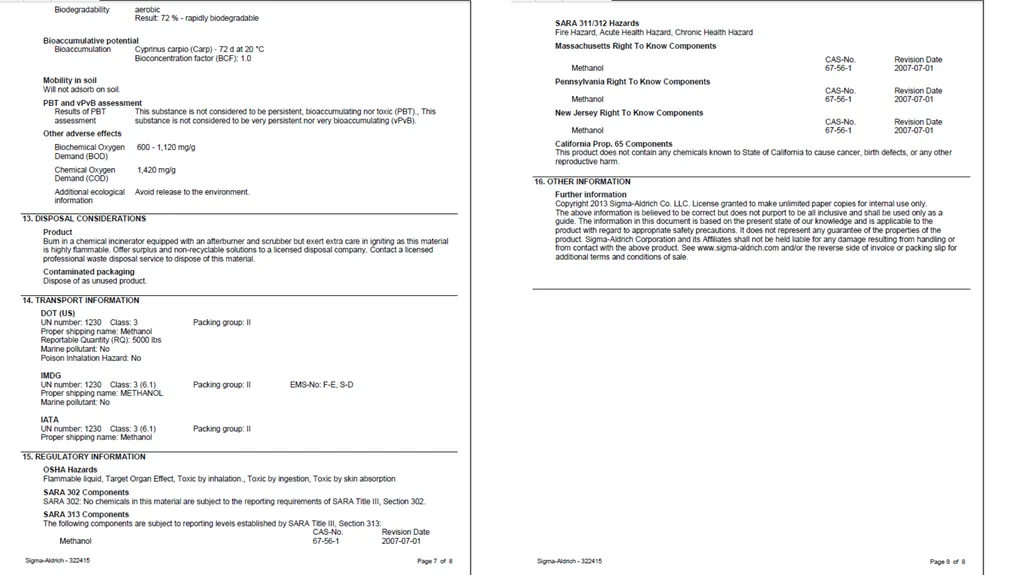
PEL – Permissible Exposure Limit TWA – Time Weighted Average (8 hours) STEL – Short-term Exposure Limit (~15 minutes) TLV – Threshold Limit Value
ACHIH – American Conference of Governmental Industrial Hygienist LD50 – Median Lethal Dose LC50 – Lethal Concentration and Time<br>
ACHIH – American Conference of Governmental Industrial Hygienist LD50 – Median Lethal Dose LC50 – Lethal Concentration and Time<br>
11
CONTROLLING CHEMICAL EXPOSURE Engineering Controls
Administrative Controls
Safe Work Practices
Personal Protective Equipment (PPE)<br>
Administrative Controls
Safe Work Practices
Personal Protective Equipment (PPE)<br>
12
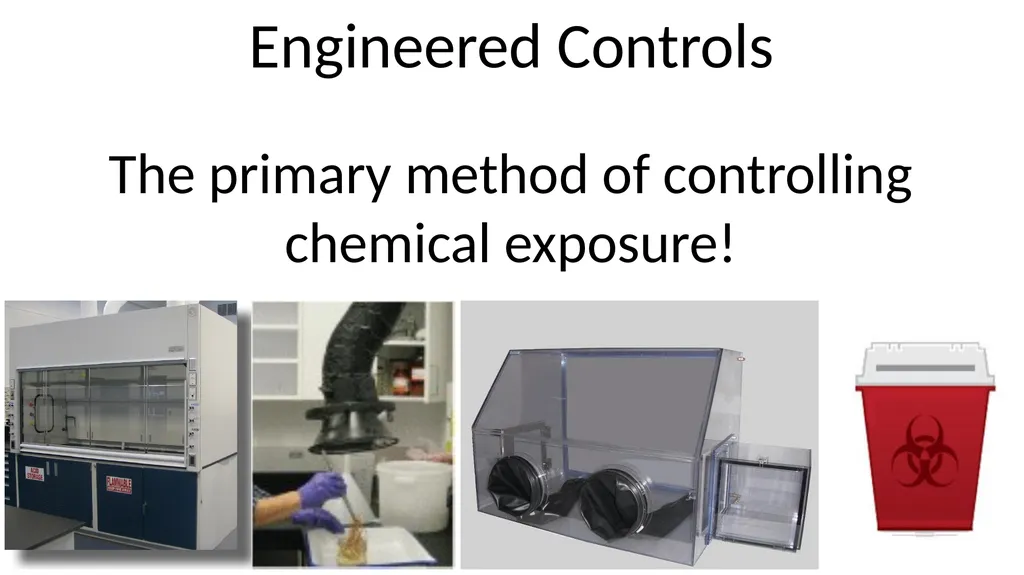
Engineered Controls The primary method of controlling chemical exposure!<br>
13
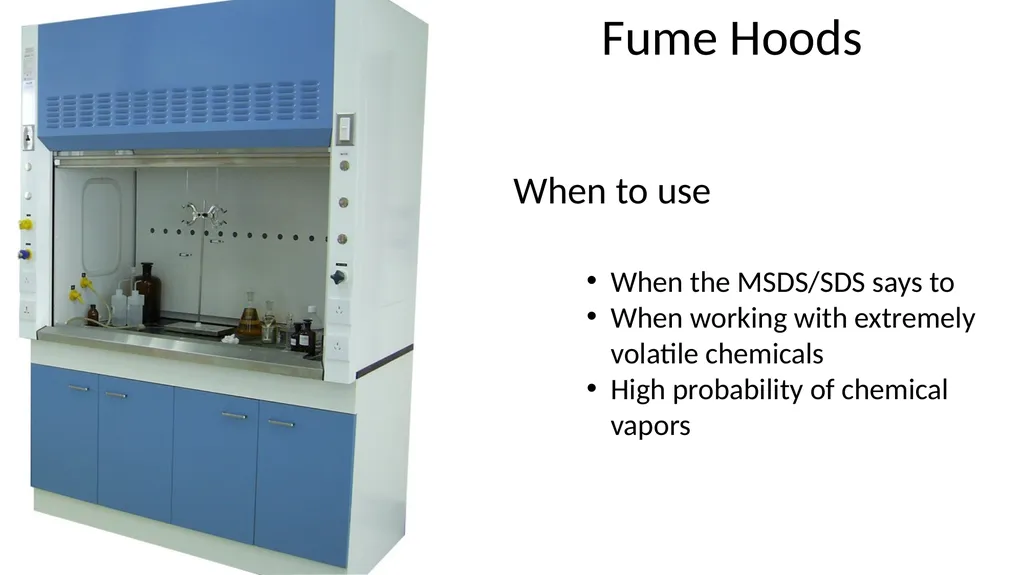
Fume Hoods When to use When the MSDS/SDS says to
When working with extremely volatile chemicals
High probability of chemical vapors<br>
When working with extremely volatile chemicals
High probability of chemical vapors<br>
14
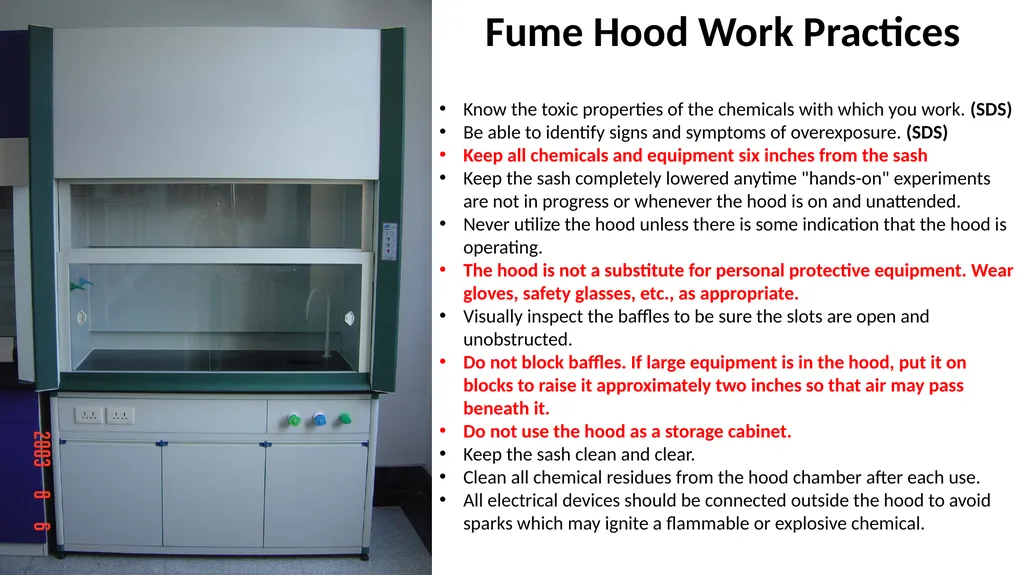
Fume Hood Work Practices Know the toxic properties of the chemicals with which you work. (SDS)
Be able to identify signs and symptoms of overexposure. (SDS)
Keep all chemicals and equipment six inches from the sash
Keep the sash completely lowered anytime "hands-on" experiments are not in progress or whenever the hood is on and unattended.
Never utilize the hood unless there is some indication that the hood is operating.
The hood is not a substitute for personal protective equipment. Wear gloves, safety glasses, etc., as appropriate.
Visually inspect the baffles to be sure the slots are open and unobstructed.
Do not block baffles. If large equipment is in the hood, put it on blocks to raise it approximately two inches so that air may pass beneath it.
Do not use the hood as a storage cabinet.
Keep the sash clean and clear.
Clean all chemical residues from the hood chamber after each use.
All electrical devices should be connected outside the hood to avoid sparks which may ignite a flammable or explosive chemical.<br>
15
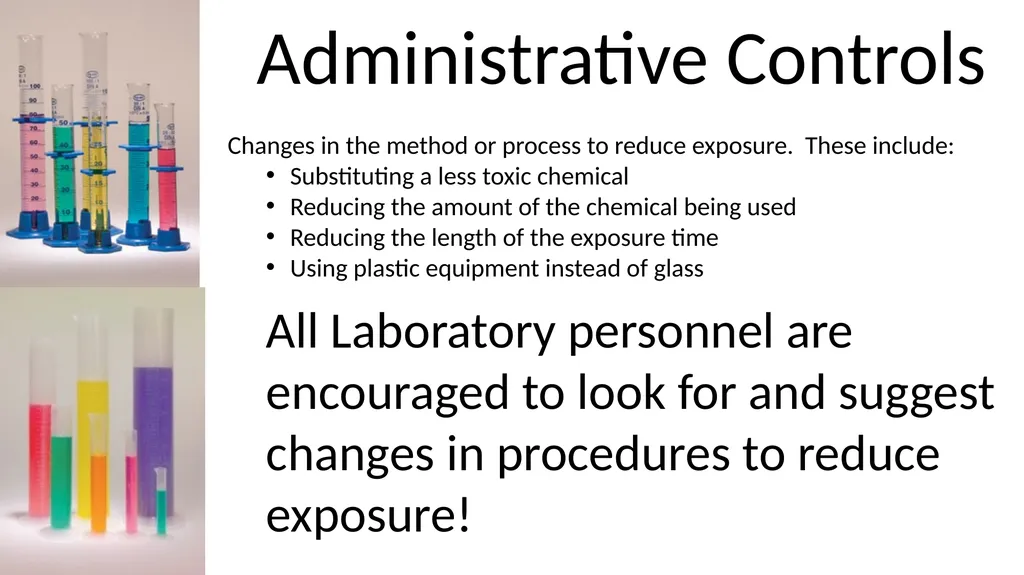
Administrative Controls Changes in the method or process to reduce exposure. These include:
Substituting a less toxic chemical
Reducing the amount of the chemical being used
Reducing the length of the exposure time
Using plastic equipment instead of glass All Laboratory personnel are encouraged to look for and suggest changes in procedures to reduce exposure!<br>
Substituting a less toxic chemical
Reducing the amount of the chemical being used
Reducing the length of the exposure time
Using plastic equipment instead of glass All Laboratory personnel are encouraged to look for and suggest changes in procedures to reduce exposure!<br>
16
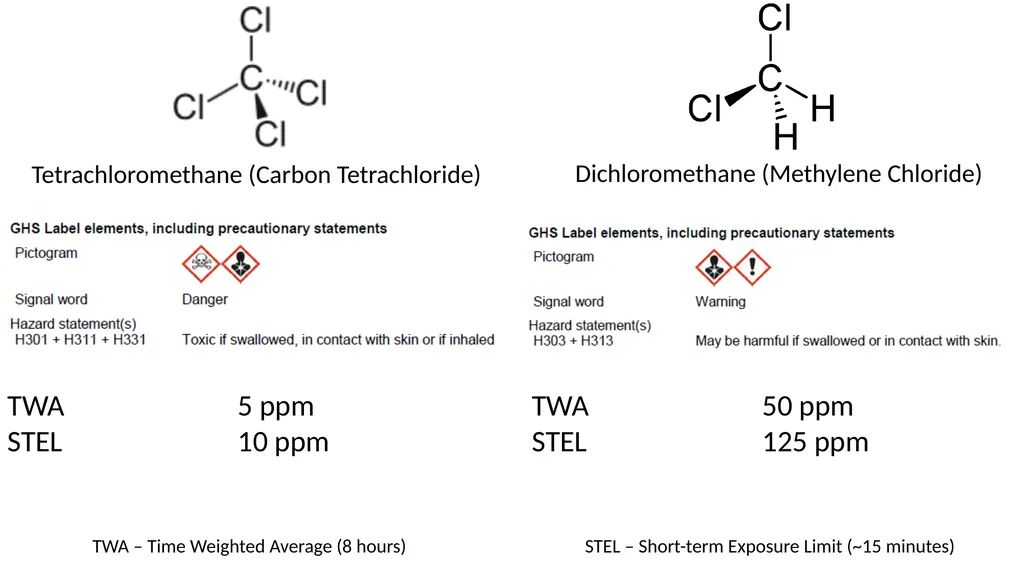
Tetrachloromethane (Carbon Tetrachloride) Dichloromethane (Methylene Chloride) TWA 50 ppm
STEL 125 ppm TWA 5 ppm
STEL 10 ppm TWA – Time Weighted Average (8 hours) STEL – Short-term Exposure Limit (~15 minutes)<br>
STEL 125 ppm TWA 5 ppm
STEL 10 ppm TWA – Time Weighted Average (8 hours) STEL – Short-term Exposure Limit (~15 minutes)<br>
17
SAFE WORK PRACTICES<br>
18
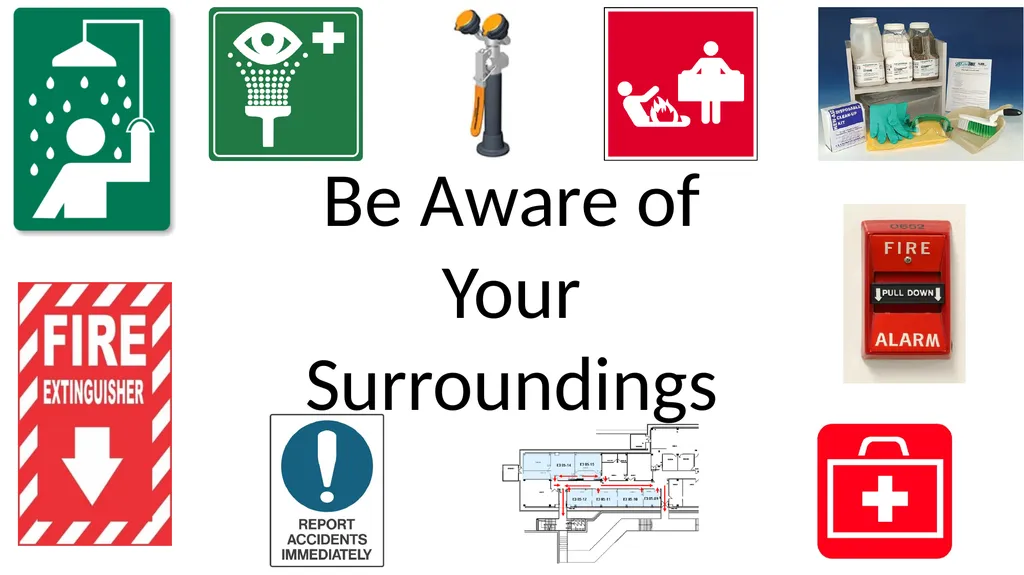
Be Aware of Your Surroundings<br>
19
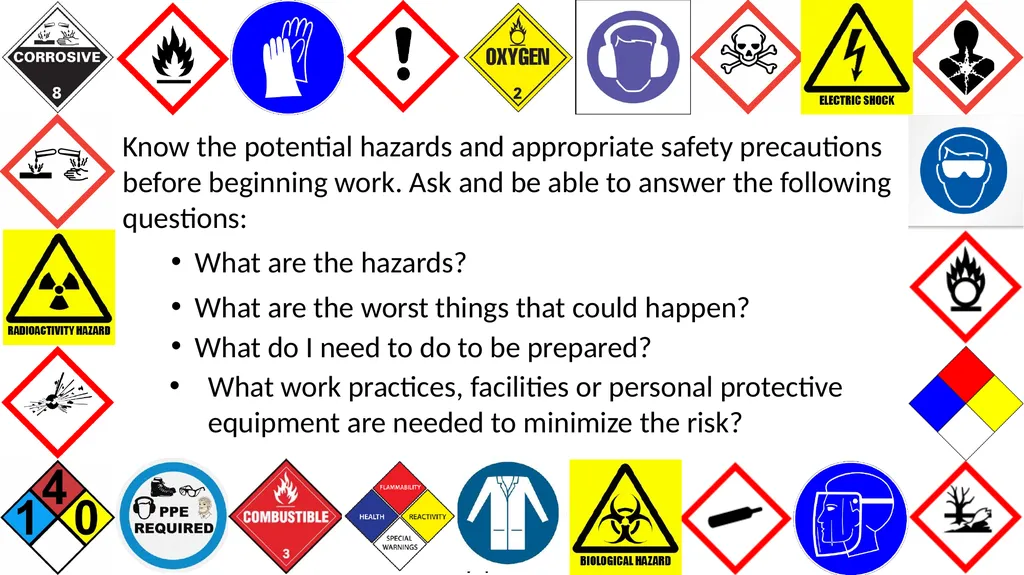
Know the potential hazards and appropriate safety precautions before beginning work. Ask and be able to answer the following questions: What are the hazards? What are the worst things that could happen? What do I need to do to be prepared? What work practices, facilities or personal protective equipment are needed to minimize the risk?<br>
20
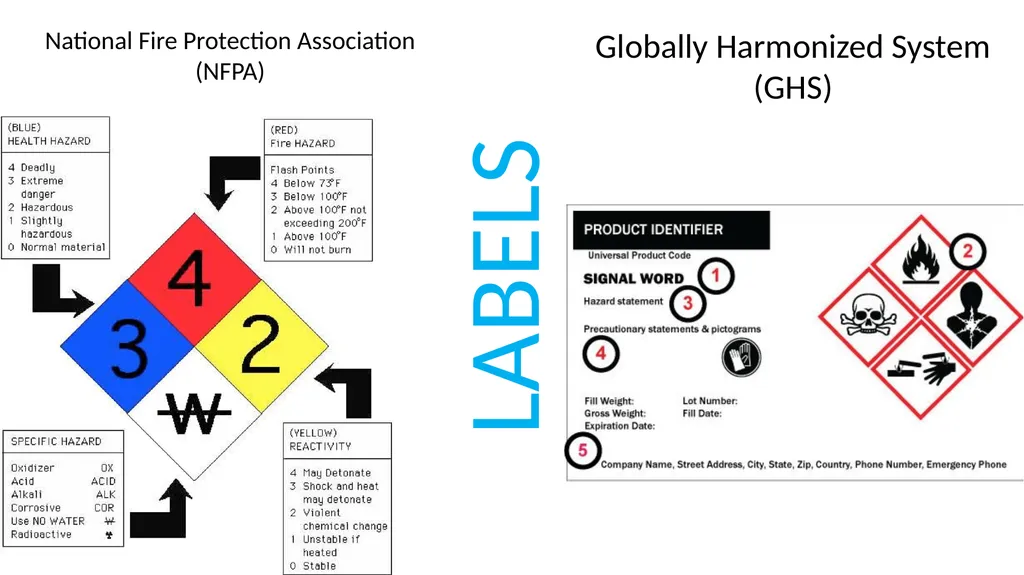
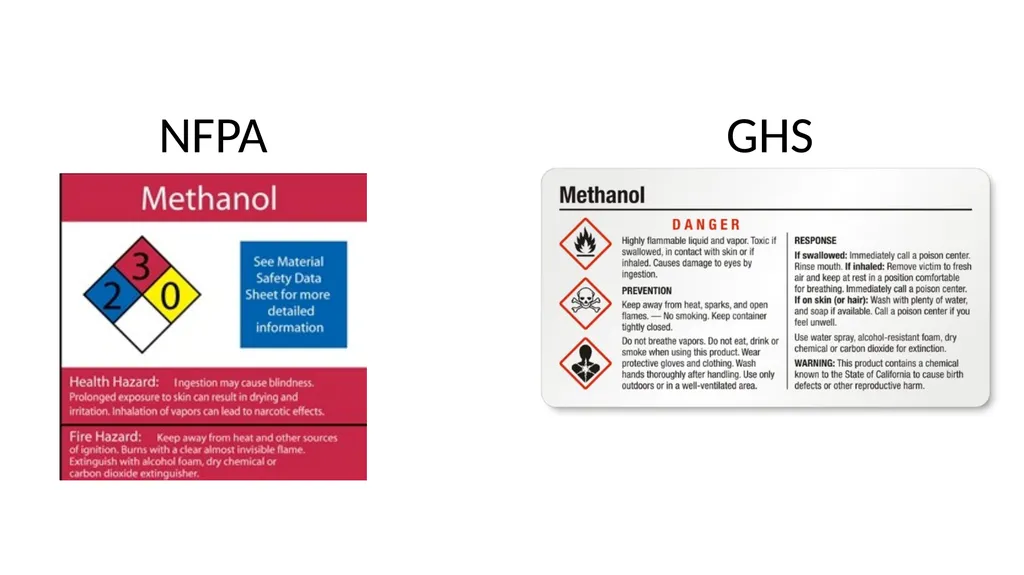
National Fire Protection Association
(NFPA) Globally Harmonized System
(GHS) LABELS<br>
(NFPA) Globally Harmonized System
(GHS) LABELS<br>
21
NFPA GHS<br>
22
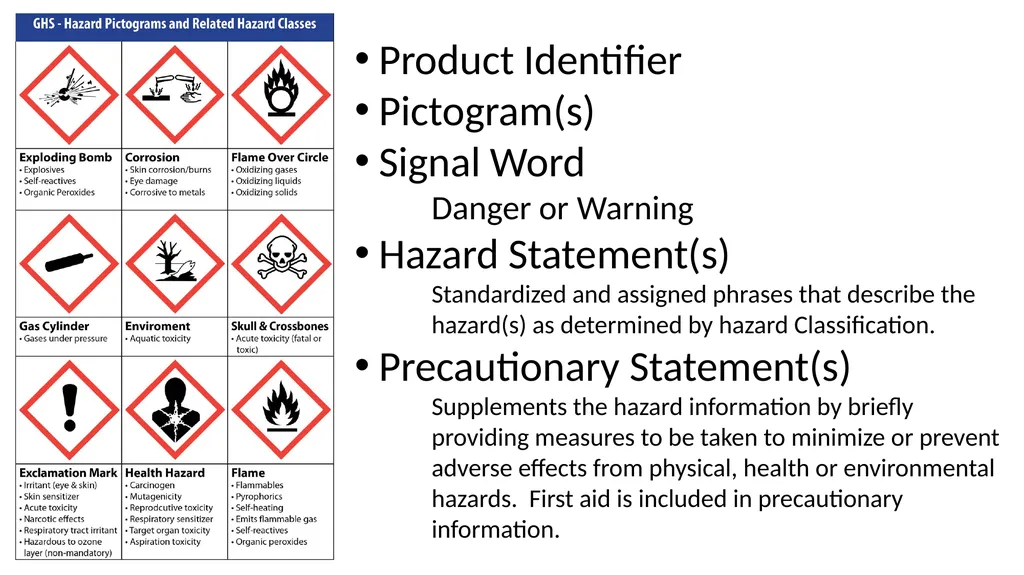
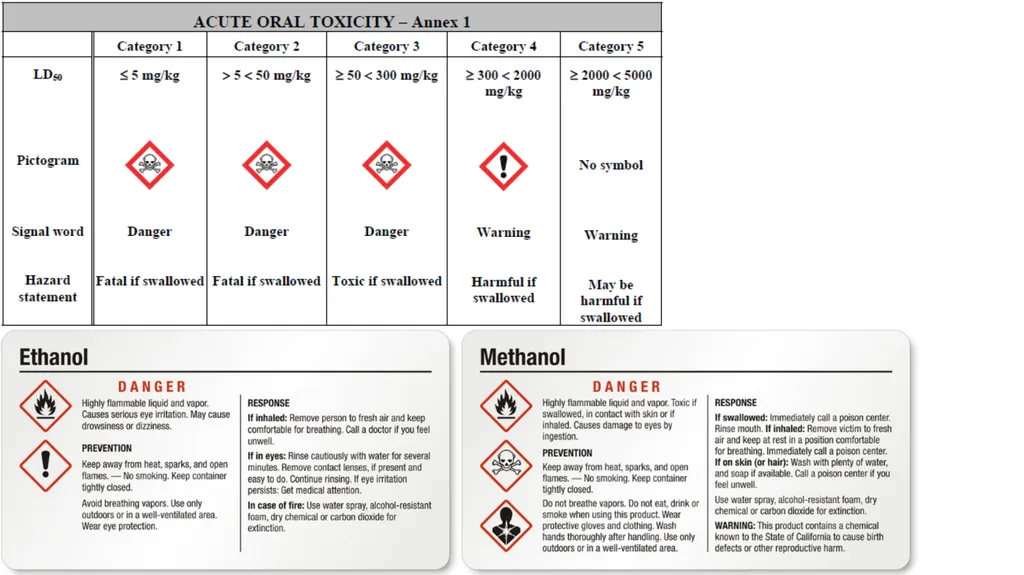
Product Identifier
Pictogram(s)
Signal Word
Danger or Warning
Hazard Statement(s)
Standardized and assigned phrases that describe the hazard(s) as determined by hazard Classification.
Precautionary Statement(s)
Supplements the hazard information by briefly providing measures to be taken to minimize or prevent adverse effects from physical, health or environmental hazards. First aid is included in precautionary information.<br>
23
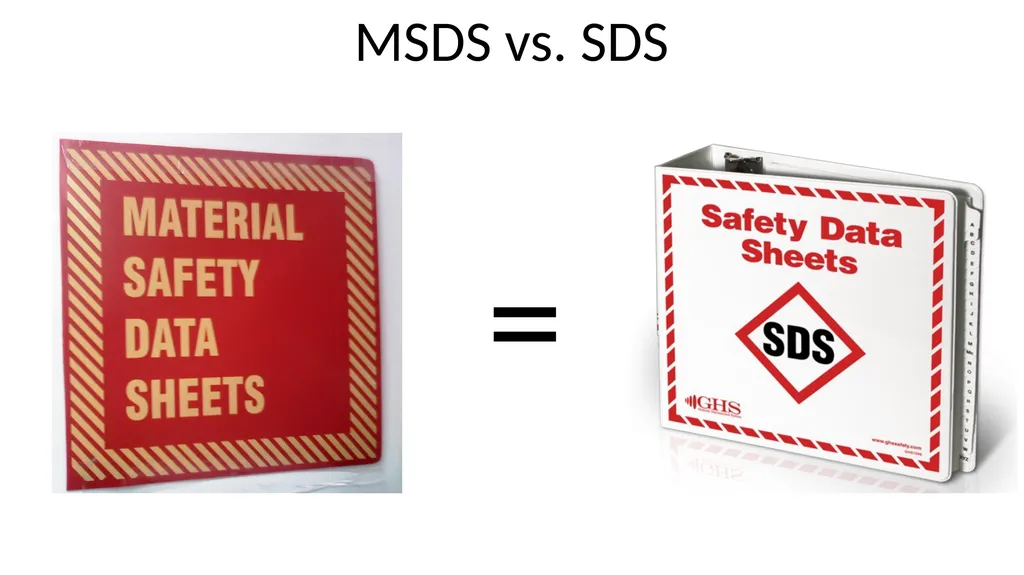
MSDS vs. SDS =<br>
24
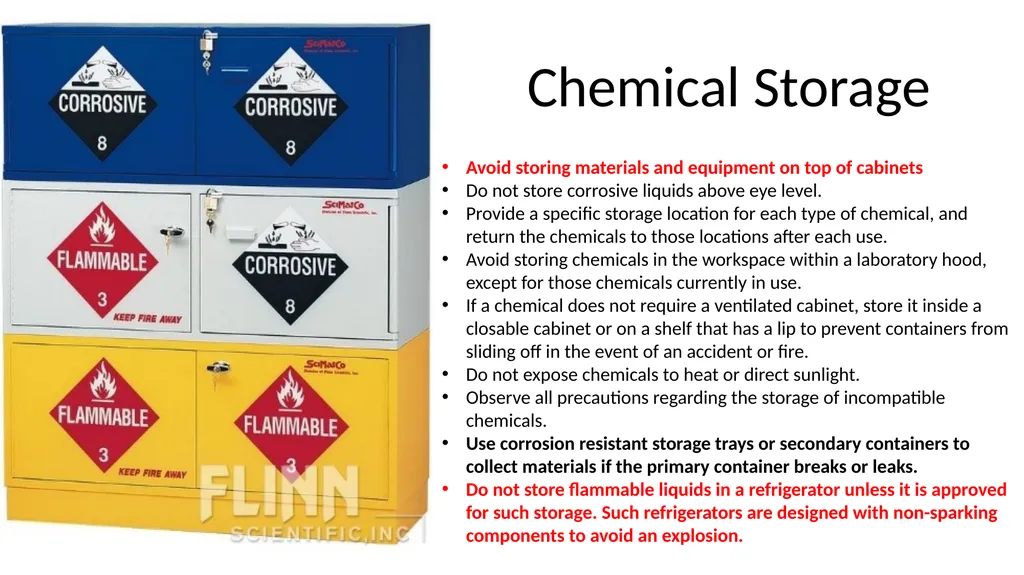
Avoid storing materials and equipment on top of cabinets
Do not store corrosive liquids above eye level.
Provide a specific storage location for each type of chemical, and return the chemicals to those locations after each use.
Avoid storing chemicals in the workspace within a laboratory hood, except for those chemicals currently in use.
If a chemical does not require a ventilated cabinet, store it inside a closable cabinet or on a shelf that has a lip to prevent containers from sliding off in the event of an accident or fire.
Do not expose chemicals to heat or direct sunlight.
Observe all precautions regarding the storage of incompatible chemicals.
Use corrosion resistant storage trays or secondary containers to collect materials if the primary container breaks or leaks.
Do not store flammable liquids in a refrigerator unless it is approved for such storage. Such refrigerators are designed with non-sparking components to avoid an explosion. Chemical Storage<br>
25
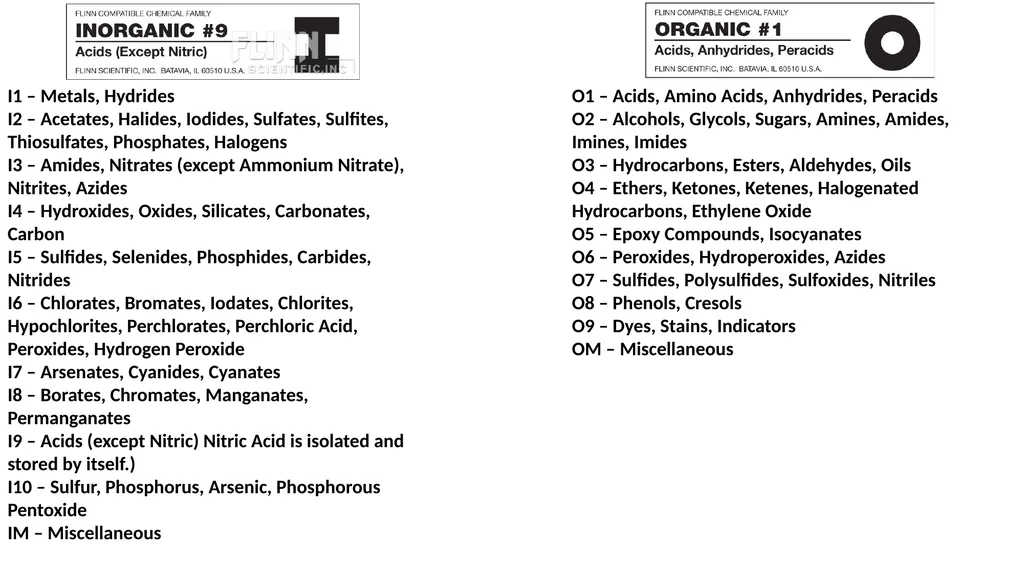
I1 – Metals, Hydrides
I2 – Acetates, Halides, Iodides, Sulfates, Sulfites,
Thiosulfates, Phosphates, Halogens
I3 – Amides, Nitrates (except Ammonium Nitrate),
Nitrites, Azides
I4 – Hydroxides, Oxides, Silicates, Carbonates, Carbon
I5 – Sulfides, Selenides, Phosphides, Carbides, Nitrides
I6 – Chlorates, Bromates, Iodates, Chlorites,
Hypochlorites, Perchlorates, Perchloric Acid,
Peroxides, Hydrogen Peroxide
I7 – Arsenates, Cyanides, Cyanates
I8 – Borates, Chromates, Manganates, Permanganates
I9 – Acids (except Nitric) Nitric Acid is isolated and stored by itself.)
I10 – Sulfur, Phosphorus, Arsenic, Phosphorous Pentoxide
IM – Miscellaneous O1 – Acids, Amino Acids, Anhydrides, Peracids
O2 – Alcohols, Glycols, Sugars, Amines, Amides, Imines, Imides
O3 – Hydrocarbons, Esters, Aldehydes, Oils
O4 – Ethers, Ketones, Ketenes, Halogenated
Hydrocarbons, Ethylene Oxide
O5 – Epoxy Compounds, Isocyanates
O6 – Peroxides, Hydroperoxides, Azides
O7 – Sulfides, Polysulfides, Sulfoxides, Nitriles
O8 – Phenols, Cresols
O9 – Dyes, Stains, Indicators
OM – Miscellaneous<br>
26
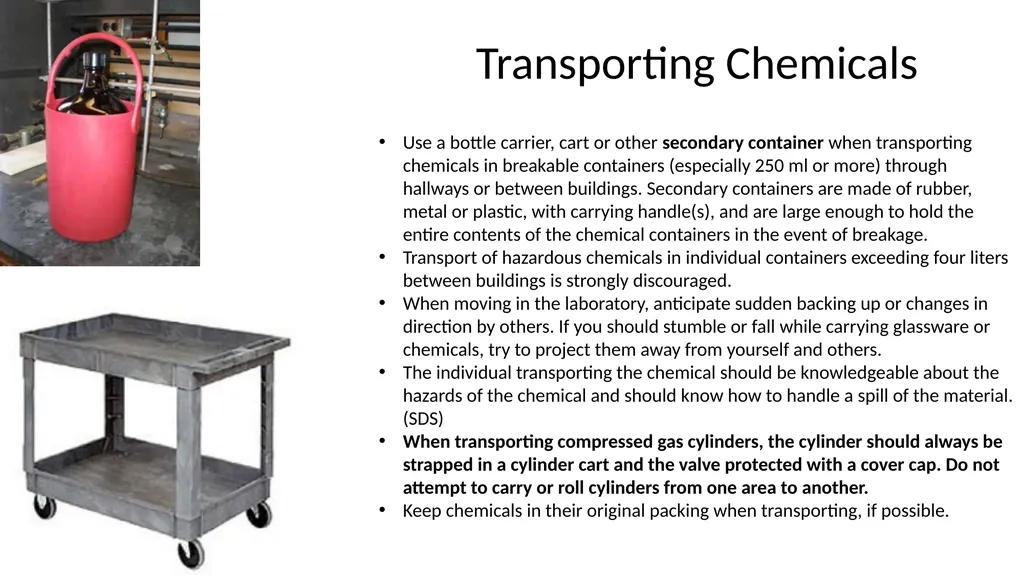
Use a bottle carrier, cart or other secondary container when transporting chemicals in breakable containers (especially 250 ml or more) through hallways or between buildings. Secondary containers are made of rubber, metal or plastic, with carrying handle(s), and are large enough to hold the entire contents of the chemical containers in the event of breakage.
Transport of hazardous chemicals in individual containers exceeding four liters between buildings is strongly discouraged.
When moving in the laboratory, anticipate sudden backing up or changes in direction by others. If you should stumble or fall while carrying glassware or chemicals, try to project them away from yourself and others.
The individual transporting the chemical should be knowledgeable about the hazards of the chemical and should know how to handle a spill of the material. (SDS)
When transporting compressed gas cylinders, the cylinder should always be strapped in a cylinder cart and the valve protected with a cover cap. Do not attempt to carry or roll cylinders from one area to another.
Keep chemicals in their original packing when transporting, if possible. Transporting Chemicals<br>
27
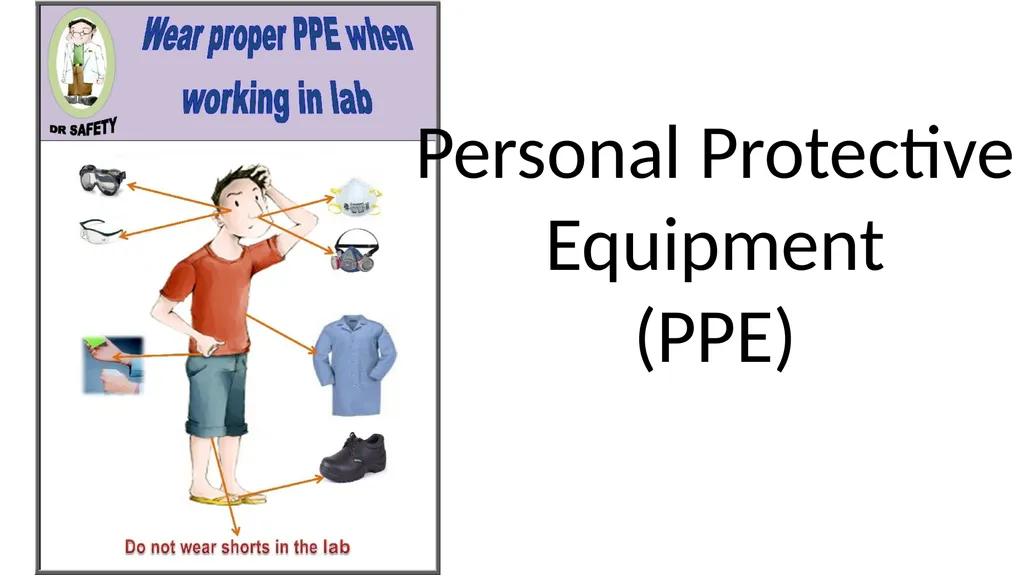
Personal Protective Equipment
(PPE)<br>
(PPE)<br>
28
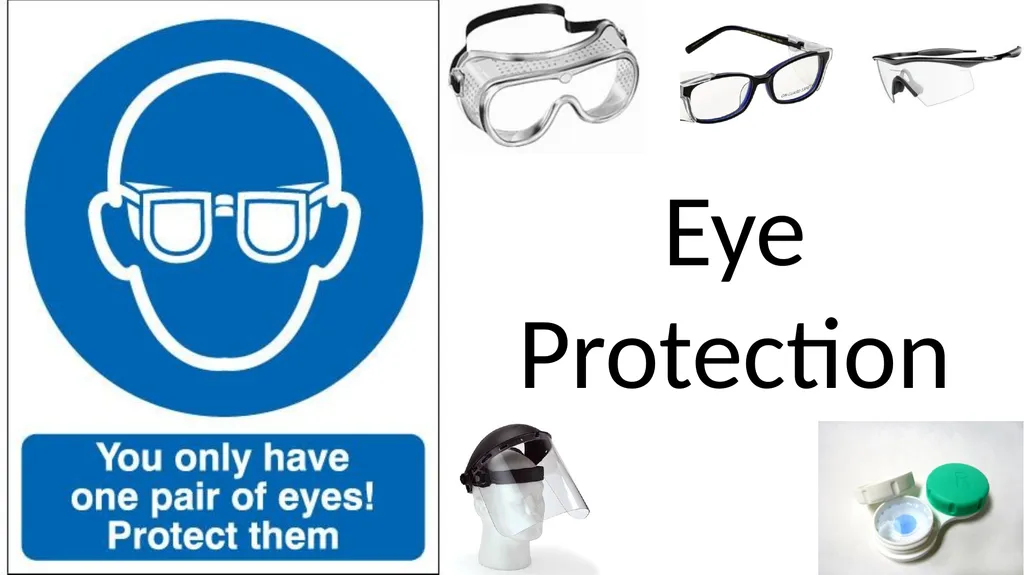
Eye Protection<br>
29
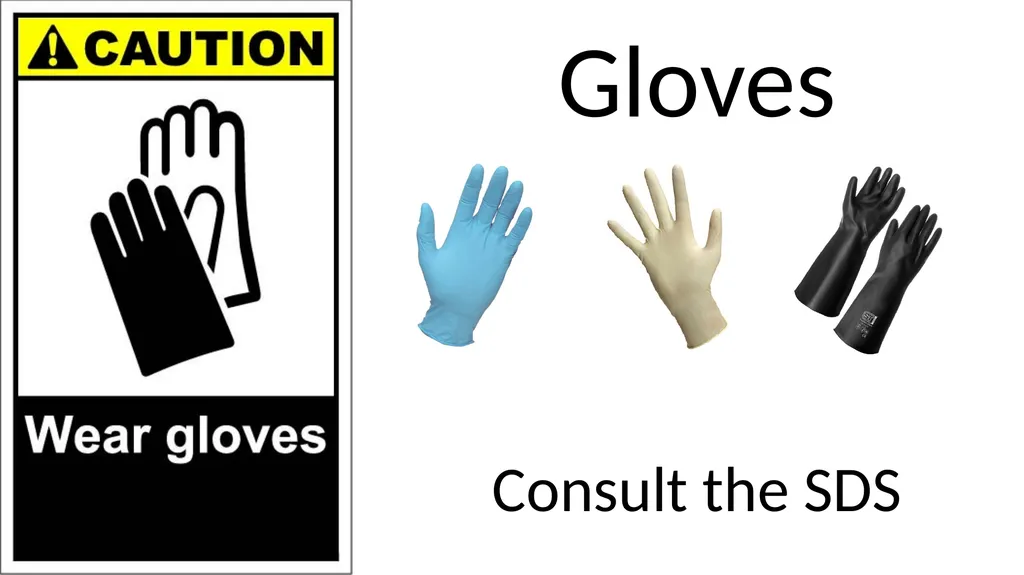
Gloves Consult the SDS<br>
30
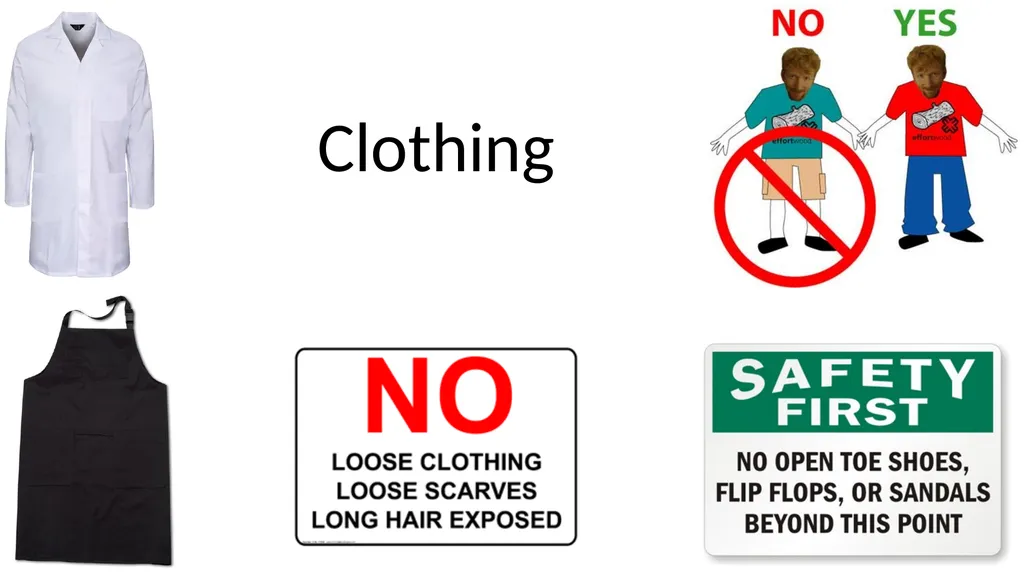
Clothing<br>
31
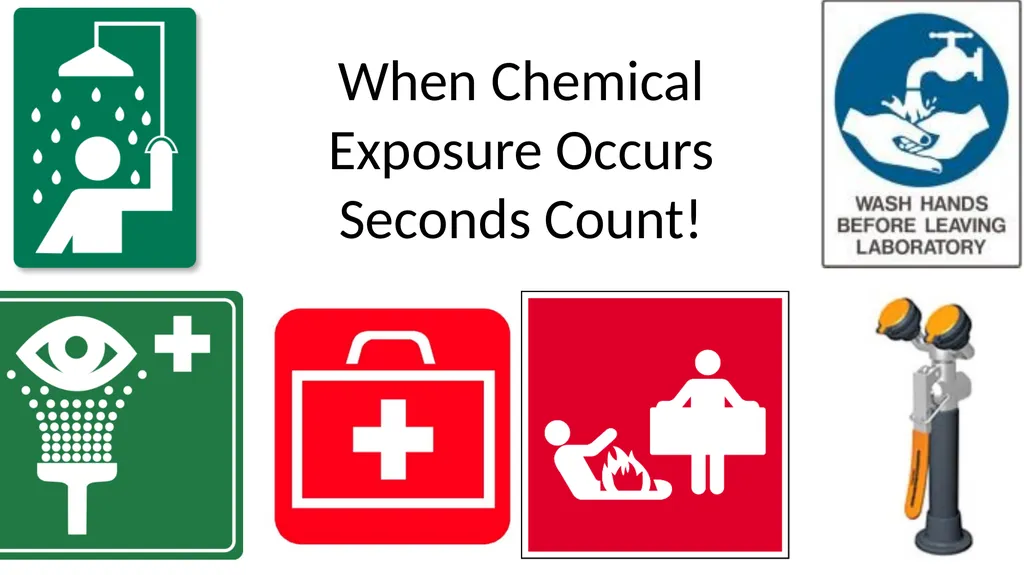
When Chemical Exposure Occurs
Seconds Count!<br>
Seconds Count!<br>
32
Chemicals on Skin or Clothing Immediately flush with water for no less than 15 minutes.
For larger spills, the safety shower should be used.
While rinsing, quickly remove all contaminated clothing or jewelry. Seconds count. Do not waste time because of modesty.
Use caution when removing pullover shirts or sweaters to prevent contamination of the eyes.
Check the Safety Data Sheet to determine if any delayed effects should be expected.
Discard contaminated clothing or launder them separately from other clothing. Leather garments or accessories cannot be decontaminated and should be discarded.
Do not use solvents to wash skin. They remove the natural protective oils from the skin and can cause irritation and inflammation. In some cases, washing with a solvent may facilitate absorption of a toxic chemical.
For flammable solids on skin, first brush off as much of the solid as possible, then proceed as described above.
Fill out an Incident Report!<br>
33
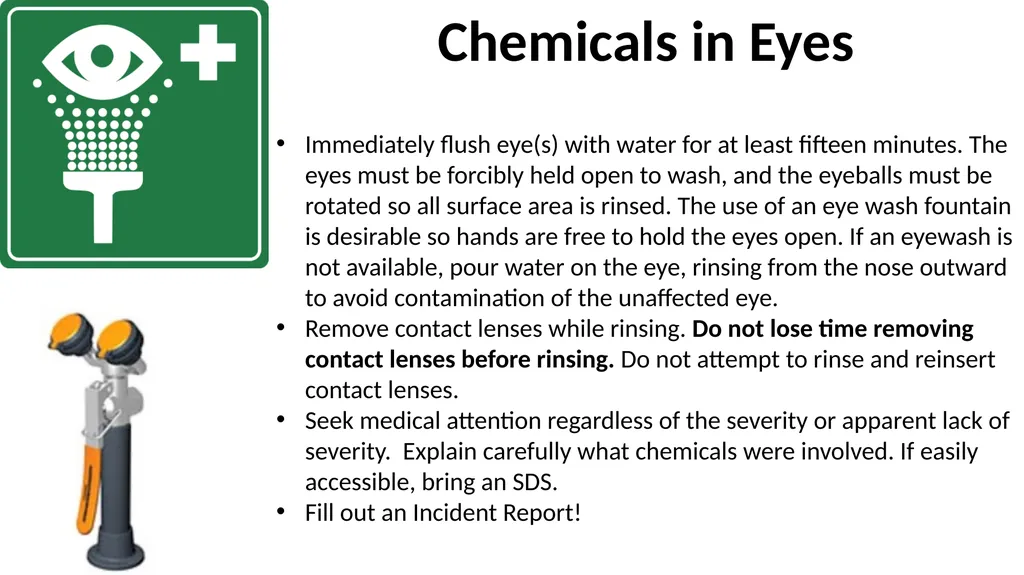
Chemicals in Eyes Immediately flush eye(s) with water for at least fifteen minutes. The eyes must be forcibly held open to wash, and the eyeballs must be rotated so all surface area is rinsed. The use of an eye wash fountain is desirable so hands are free to hold the eyes open. If an eyewash is not available, pour water on the eye, rinsing from the nose outward to avoid contamination of the unaffected eye.
Remove contact lenses while rinsing. Do not lose time removing contact lenses before rinsing. Do not attempt to rinse and reinsert contact lenses.
Seek medical attention regardless of the severity or apparent lack of severity. Explain carefully what chemicals were involved. If easily accessible, bring an SDS.
Fill out an Incident Report!<br>
34
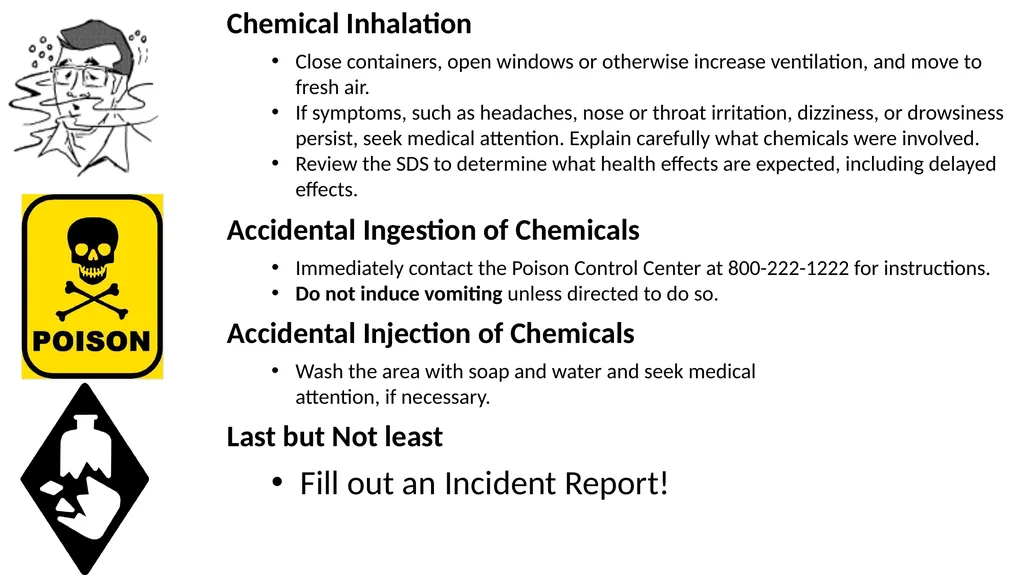
Chemical Inhalation Close containers, open windows or otherwise increase ventilation, and move to fresh air.
If symptoms, such as headaches, nose or throat irritation, dizziness, or drowsiness persist, seek medical attention. Explain carefully what chemicals were involved.
Review the SDS to determine what health effects are expected, including delayed effects. Accidental Ingestion of Chemicals Immediately contact the Poison Control Center at 800-222-1222 for instructions.
Do not induce vomiting unless directed to do so. Accidental Injection of Chemicals Wash the area with soap and water and seek medical attention, if necessary. Last but Not least Fill out an Incident Report!<br>
35
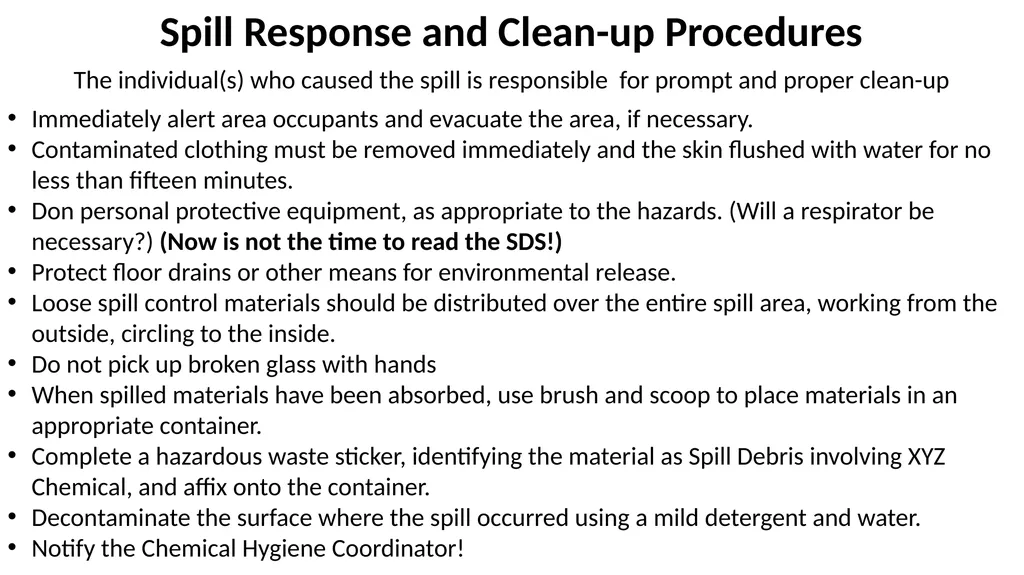
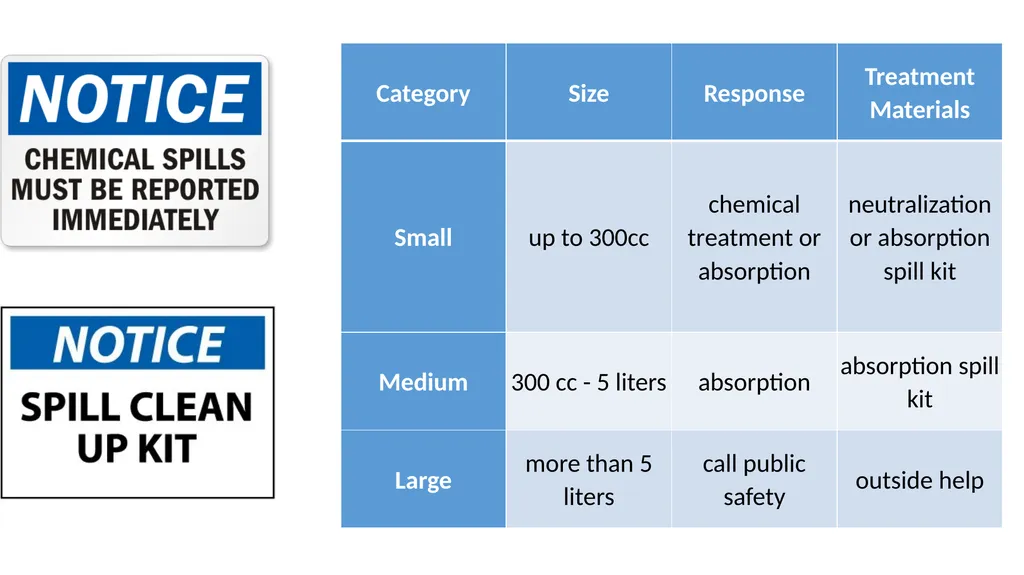
The individual(s) who caused the spill is responsible for prompt and proper clean-up Immediately alert area occupants and evacuate the area, if necessary.
Contaminated clothing must be removed immediately and the skin flushed with water for no less than fifteen minutes.
Don personal protective equipment, as appropriate to the hazards. (Will a respirator be necessary?) (Now is not the time to read the SDS!)
Protect floor drains or other means for environmental release.
Loose spill control materials should be distributed over the entire spill area, working from the outside, circling to the inside.
Do not pick up broken glass with hands
When spilled materials have been absorbed, use brush and scoop to place materials in an appropriate container.
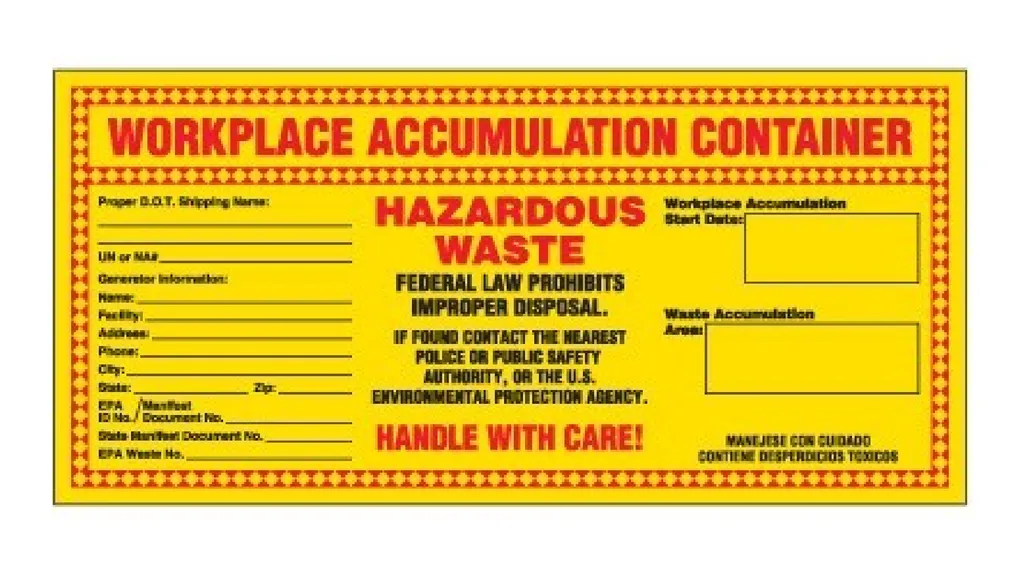
Complete a hazardous waste sticker, identifying the material as Spill Debris involving XYZ Chemical, and affix onto the container.
Decontaminate the surface where the spill occurred using a mild detergent and water.
Notify the Chemical Hygiene Coordinator! Spill Response and Clean-up Procedures<br>
36
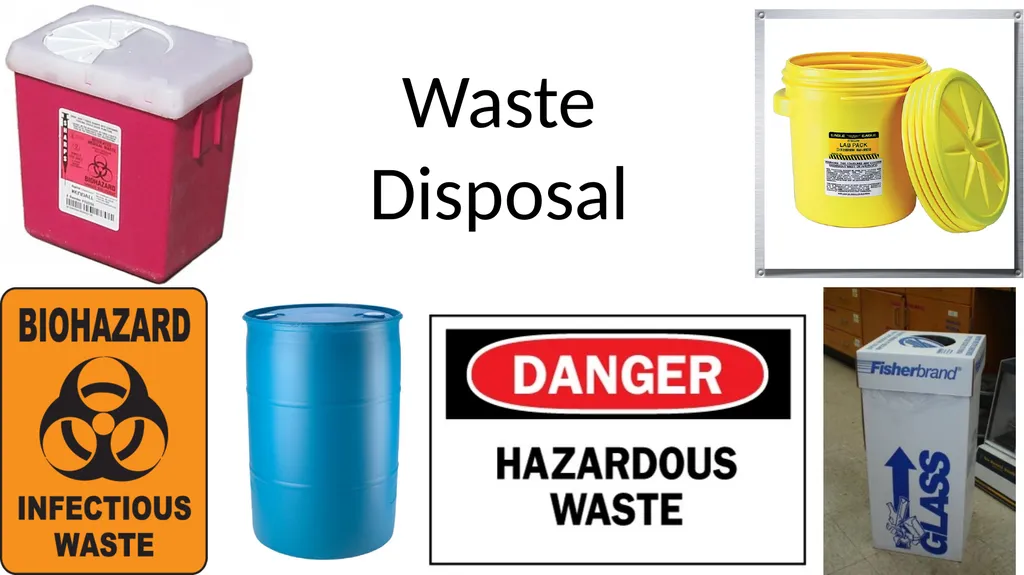
Waste Disposal<br>
37
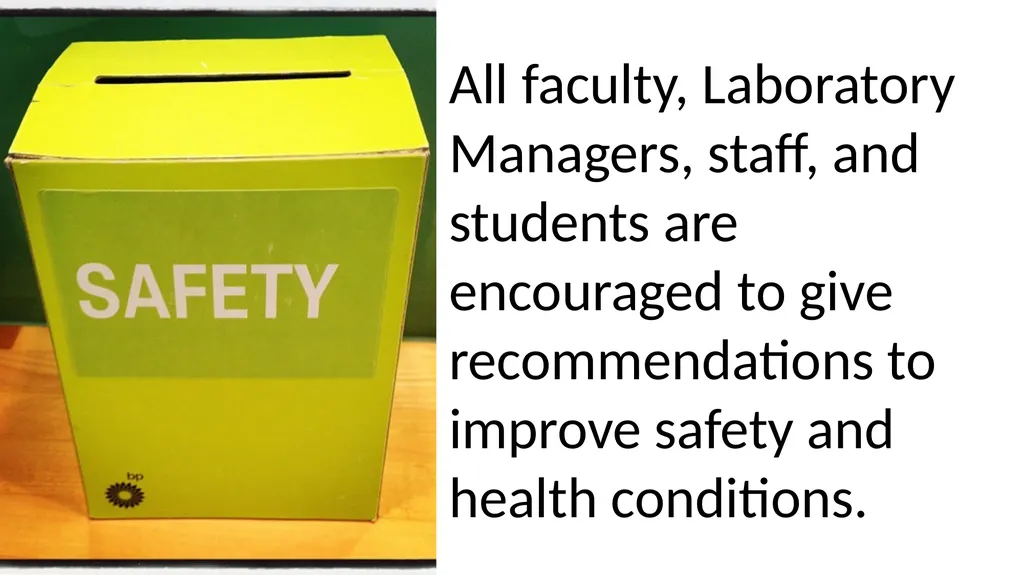
All faculty, Laboratory Managers, staff, and students are encouraged to give recommendations to improve safety and health conditions.<br>