Lecture-Part III Prof.Dr.Salwa Hameed Naser OBESITY METABOLIC CHANGES IN OBESITY The primary metabolic effects of obesity : dyslipidemias, glucose intolerance, insulin resistance expressed primarily in the liver, muscle, and adipose tissue.
"Lecture-Part III Prof.Dr.Salwa Hameed Naser" is the property of its rightful owner. Permission is granted to
download and print the materials on this website for personal, non-commercial use only, and to display it
on your personal computer provided you do not modify the materials and that you retain all copyright
notices contained in the materials. By downloading content from our website, you accept the terms of this
agreement.
Presentation Transcript
01
Lecture-Part III Prof.Dr.Salwa Hameed Naser OBESITY<br>
02
METABOLIC CHANGES IN OBESITY
The primary metabolic effects of obesity : dyslipidemias, glucose intolerance, insulin resistance expressed primarily in the liver, muscle, and adipose tissue.
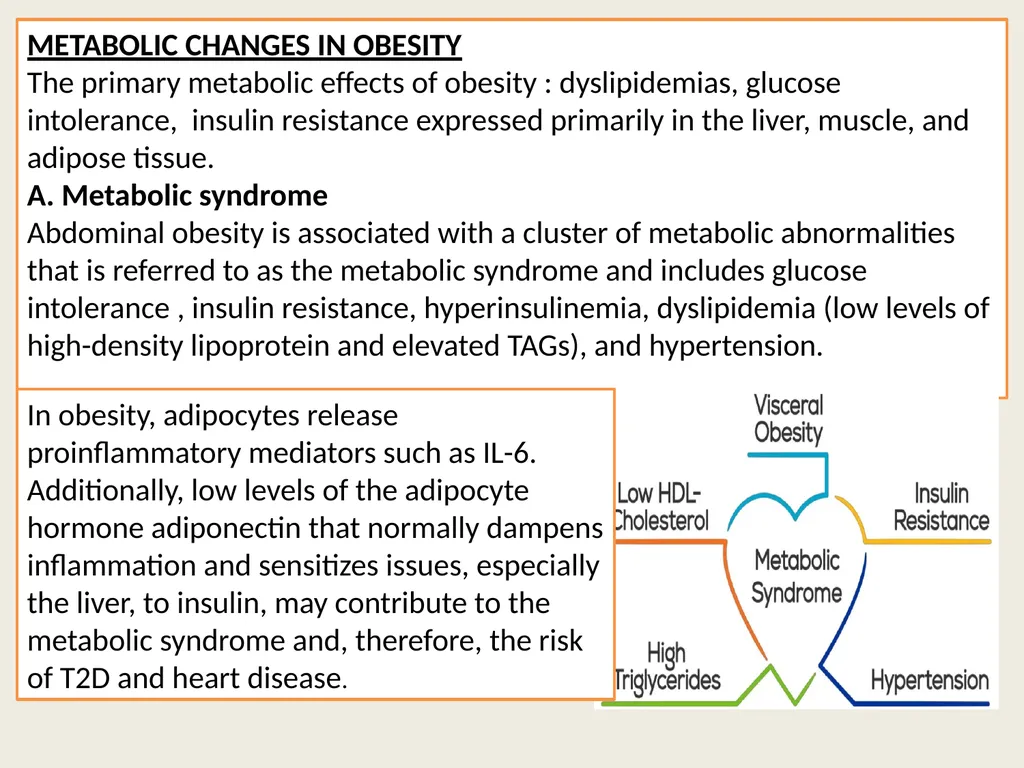
A. Metabolic syndrome
Abdominal obesity is associated with a cluster of metabolic abnormalities that is referred to as the metabolic syndrome and includes glucose intolerance , insulin resistance, hyperinsulinemia, dyslipidemia (low levels of high-density lipoprotein and elevated TAGs), and hypertension. In obesity, adipocytes release proinflammatory mediators such as IL-6. Additionally, low levels of the adipocyte hormone adiponectin that normally dampens inflammation and sensitizes issues, especially the liver, to insulin, may contribute to the metabolic syndrome and, therefore, the risk of T2D and heart disease.<br>
03
OBESITY AND HEALTH
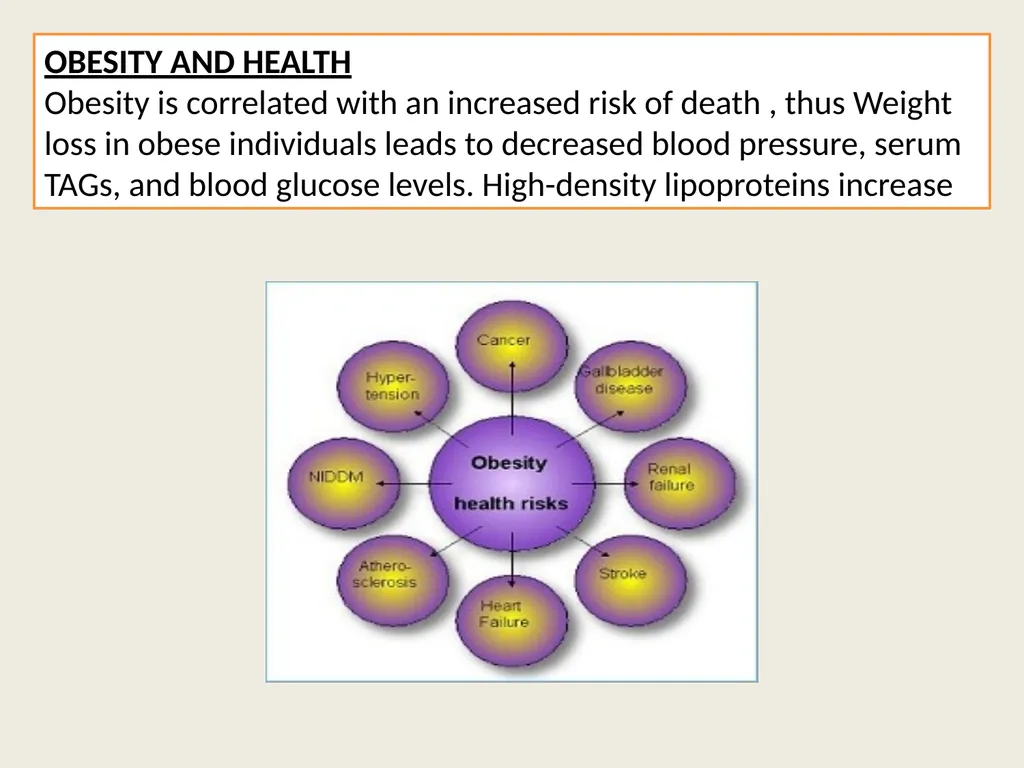
Obesity is correlated with an increased risk of death , thus Weight loss in obese individuals leads to decreased blood pressure, serum TAGs, and blood glucose levels. High-density lipoproteins increase<br>
04
WEIGHT REDUCTION
Weight reduction can help reduce the complications of obesity, including T2D and hypertension. To achieve weight reduction, the obese patient must decrease energy intake or increase energy expenditure, although decreasing energy intake is thought to contribute more to inducing weight loss.
Typically, a prescription for weight reduction combines dietary change; increased physical activity; and behavioral modification, which can include nutritional education and meal planning, recording and monitoring food intake through food diaries, modifying factors that lead to overeating, and relearning cues to satiety. Once weight loss is achieved, weight maintenance is a separate process that requires vigilance because the majority of patients regain weight after they stop their weight loss efforts.<br>
05
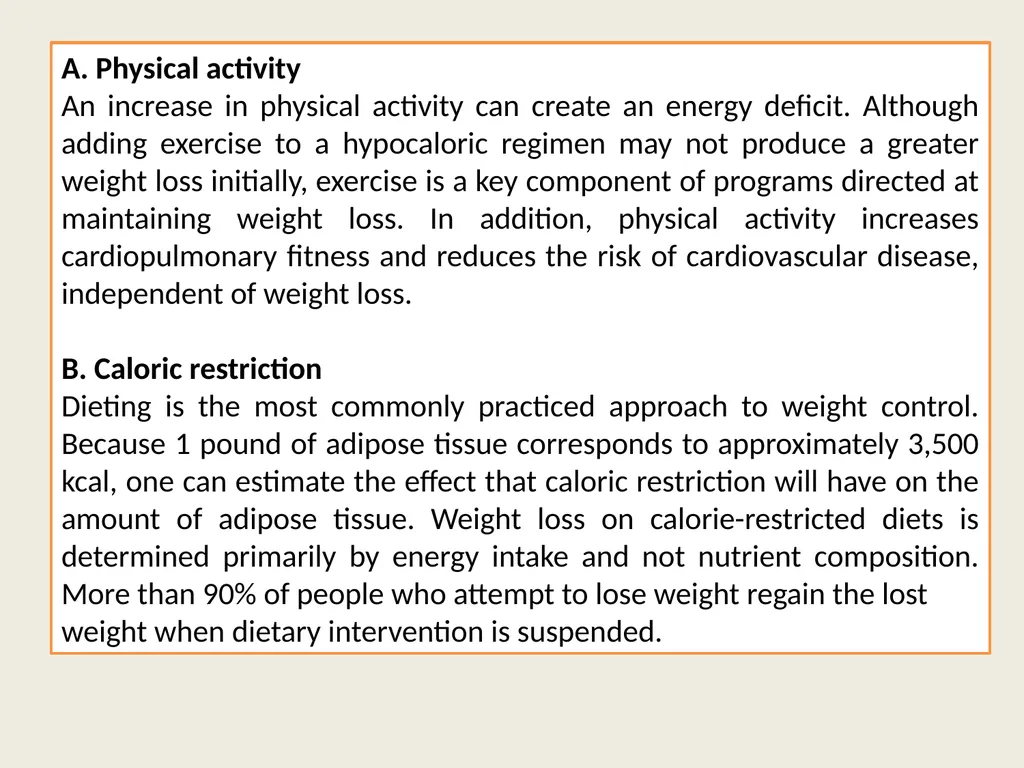
A. Physical activity
An increase in physical activity can create an energy deficit. Although adding exercise to a hypocaloric regimen may not produce a greater weight loss initially, exercise is a key component of programs directed at maintaining weight loss. In addition, physical activity increases cardiopulmonary fitness and reduces the risk of cardiovascular disease, independent of weight loss.
B. Caloric restriction
Dieting is the most commonly practiced approach to weight control. Because 1 pound of adipose tissue corresponds to approximately 3,500 kcal, one can estimate the effect that caloric restriction will have on the amount of adipose tissue. Weight loss on calorie-restricted diets is determined primarily by energy intake and not nutrient composition. More than 90% of people who attempt to lose weight regain the lost
weight when dietary intervention is suspended.<br>
06
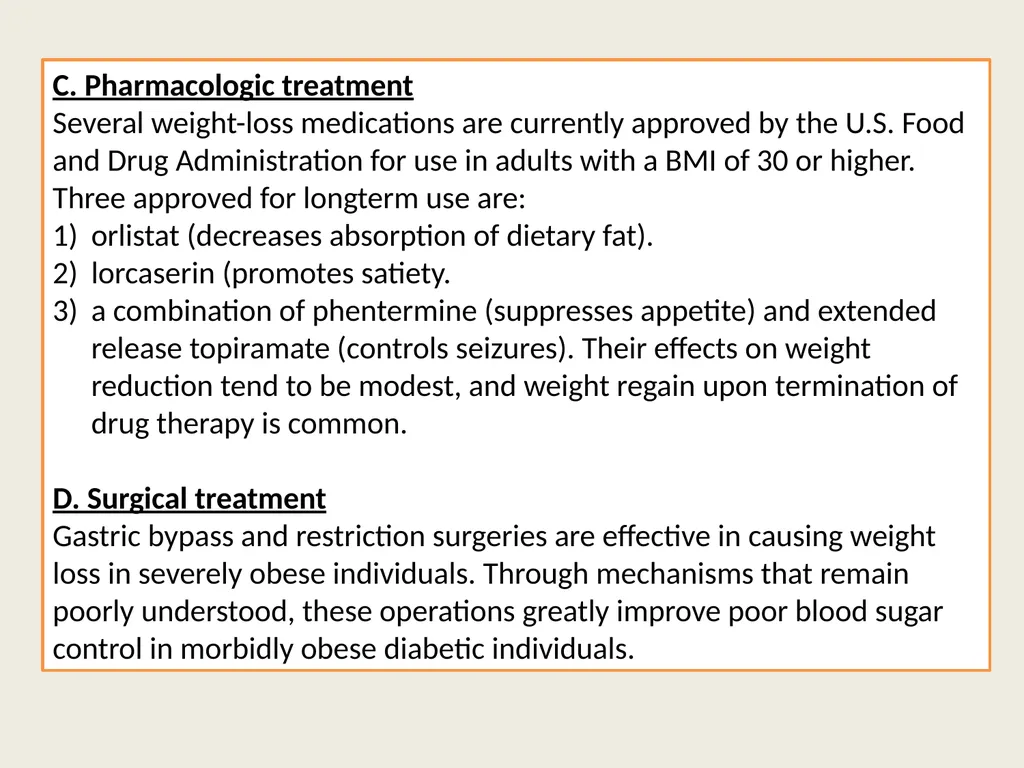
C. Pharmacologic treatment
Several weight-loss medications are currently approved by the U.S. Food and Drug Administration for use in adults with a BMI of 30 or higher. Three approved for longterm use are:
orlistat (decreases absorption of dietary fat).
lorcaserin (promotes satiety.
a combination of phentermine (suppresses appetite) and extended release topiramate (controls seizures). Their effects on weight reduction tend to be modest, and weight regain upon termination of drug therapy is common.
D. Surgical treatment
Gastric bypass and restriction surgeries are effective in causing weight loss in severely obese individuals. Through mechanisms that remain poorly understood, these operations greatly improve poor blood sugar control in morbidly obese diabetic individuals.<br>