Lecturer name: Dr. Jibril H. Yusuf https:tiu.edu.iq 2021 - 2022 TIU - Faculty of Applied Science Medical Analysis Department Classification of Epithelial Tissues Classification of Epithelial Tissues Epithelial tissues are classified by:
"Lecturer name: Dr. Jibril H. Yusuf" is the property of its rightful owner. Permission is granted to
download and print the materials on this website for personal, non-commercial use only, and to display it
on your personal computer provided you do not modify the materials and that you retain all copyright
notices contained in the materials. By downloading content from our website, you accept the terms of this
agreement.
Presentation Transcript
01
Lecturer name: Dr. Jibril H. Yusuf https://tiu.edu.iq/ 2021 - 2022 TIU - Faculty of Applied Science
Medical Analysis Department Classification of Epithelial Tissues<br>
02
Classification of Epithelial Tissues Epithelial tissues are classified by:
The number of cell layers
The cell shapes
The functions of the cells.<br>
03
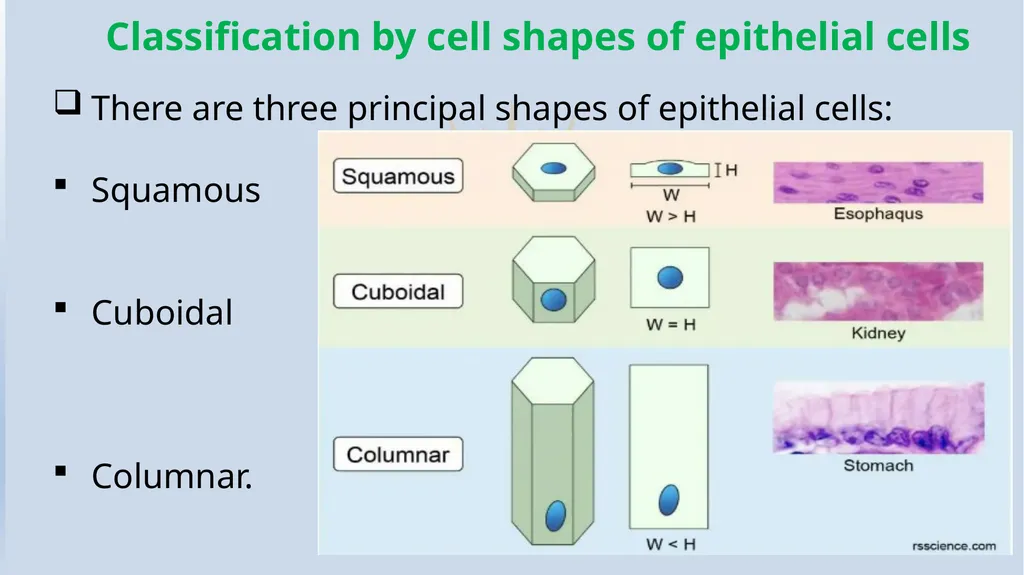
Classification by cell shapes of epithelial cells There are three principal shapes of epithelial cells:
Squamous
Cuboidal
Columnar.<br>
04
Squamous epithelium:
Squamous epithelial cells are flat and scale-like in appearance.
Smooth lining of the mouth, Esophagus, Alveoli of the lungs
Cuboidal epithelium:
Cuboidal epithelial cells are cube-like in appearance
They usually form ducts of secretory organs and glands.<br>
05
Columnar epithelium:
Are taller than their width, showing a column shape in appearance.
Columnar epithelia can be further classified into
Ciliated columnar epithelium
Glandular columnar epithelium.<br>
06
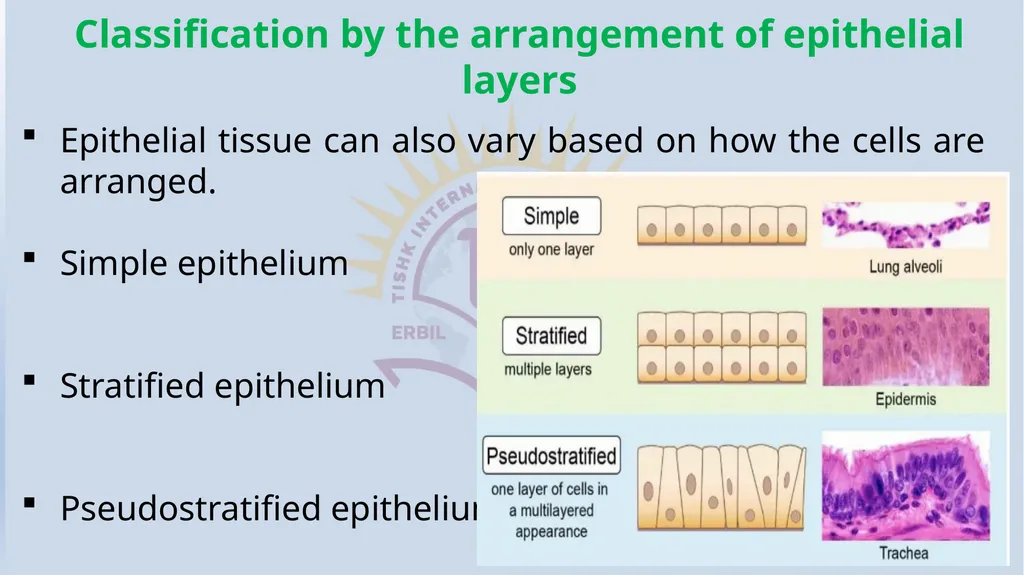
Classification by the arrangement of epithelial layers Epithelial tissue can also vary based on how the cells are arranged.
Simple epithelium
Stratified epithelium
Pseudostratified epithelium<br>
07
Simple epithelium: forms by only a single layer of cells.
Functions: Absorption and Filtration.
Examples are cells are:
Bronchi
Alveoli
Kidney tubules
Uterus
Body cavities
Stomach
Small intestine.<br>
08
Stratified epithelium: Is made up of more than one layer of cells.
Multilayered structures allow the stratified epithelia to withstand mechanical or chemical insult.
Examples:
Lining of the skin
Mouth
Esophagus
Sweat glands
Salivary glands
Mammary glands.<br>
09
Pseudostratified epithelium:
Is made up of closely packed cells that appear to be arranged in layers
Examples:
Are ciliated epithelial cells lining the trachea
Upper respiratory tract<br>
10
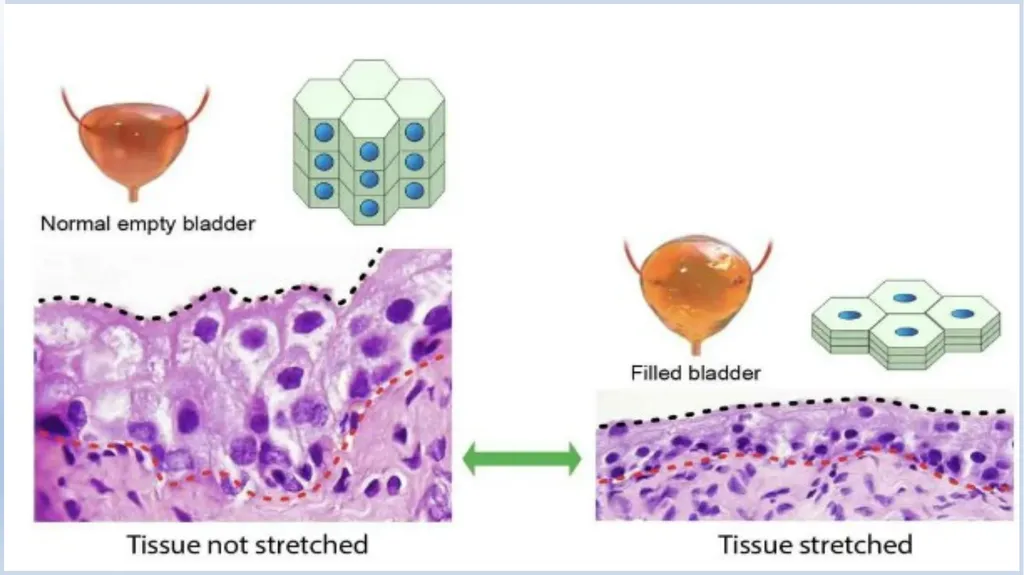
Classification based on specialized functions Some unique epithelial tissues are categorized and named by the particular functions they have:
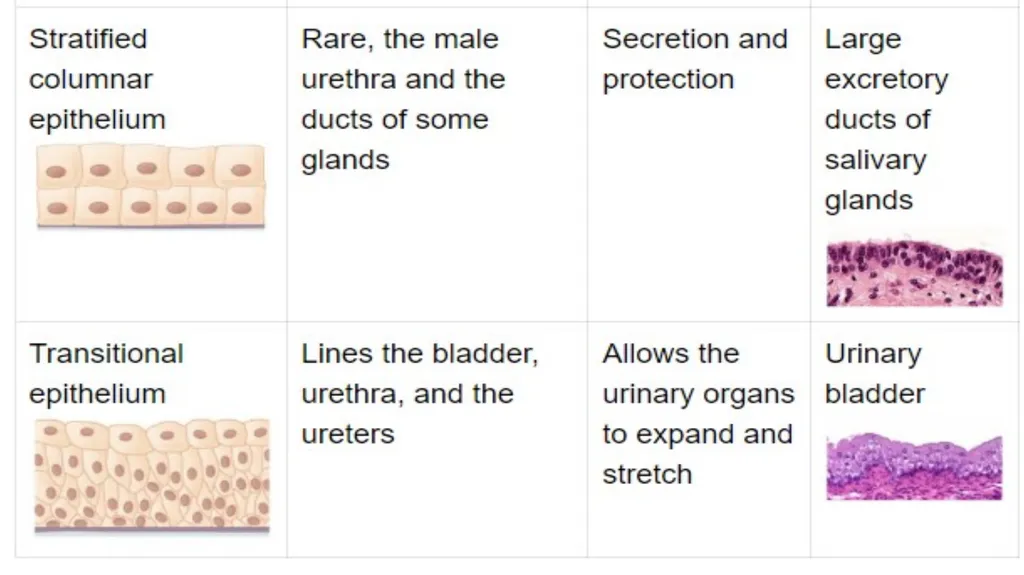
Transitional epithelium is made up of multilayers of cells that become flattened when stretched
Depending on the amount of tension on the epithelial tissues.
Examples:
Are the urothelium, which allows our bladder to expand.<br>
11
Glandular epithelium:
Forms various glands and is specialized to secrete substances.
They can produce hormones, enzymes, saliva, mucus, sweat, milk, body fluids, etc.
Glands are classified as
Endocrine
Exocrine.<br>
12
Exocrine glands:
Secrete their product into a duct.
Examples of exocrine glands are:
Salivary glands
Sweat glands
Mammary glands<br>
13
Endocrine glands:
Are ductless glands, and they release their product directly into the blood or intestinal fluid.
Examples of endocrine glands are:
The thyroid
Pineal gland
Pituitary gland
Ovaries
Testes
Adrenal glands.<br>
14
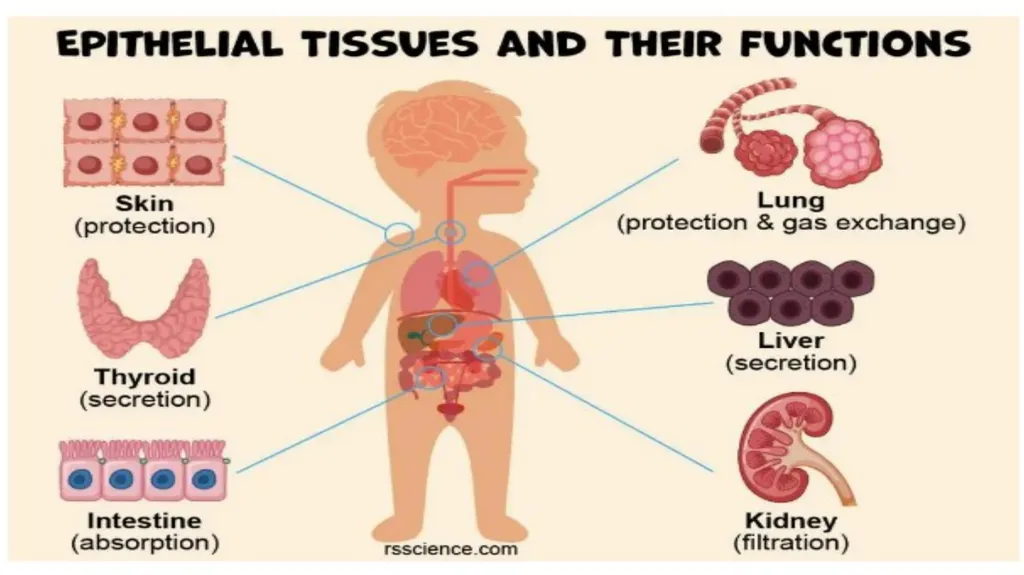
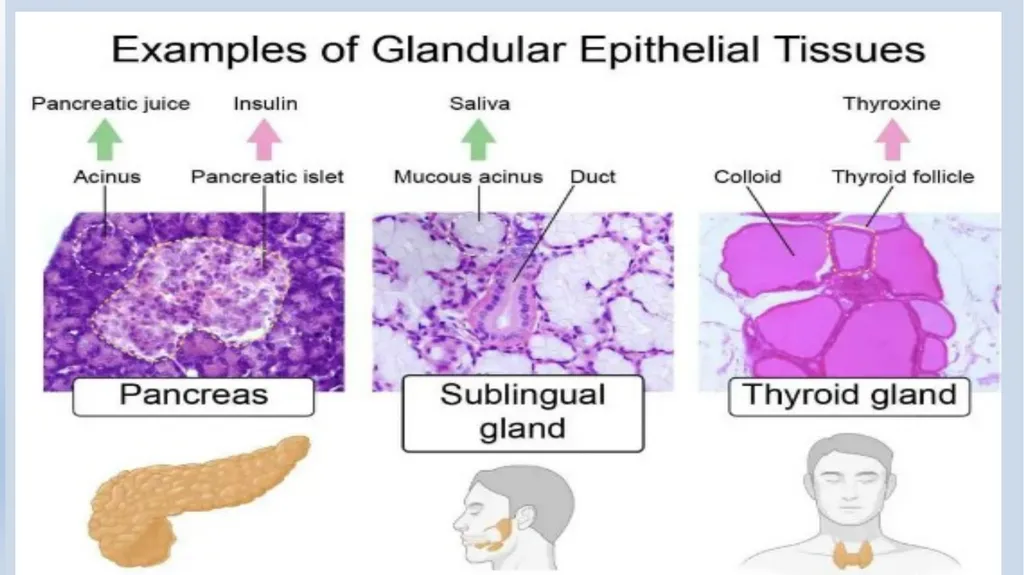
Examples of epithelial tissues that secrete essential substances for our body.
Pancreas has both exocrine and endocrine functions.
Pancreatic islets (endocrine) secrete insulin directly into the bloodstream to regulate blood sugar levels.
Acinar epithelium (exocrine) secrets the pancreatic juice
Through the pancreatic duct into the intestines to help food digestion.<br>
15
2. Sublingual glands.
Are a pair of salivary glands (exocrine) situated underneath the tongue.
They produce saliva in the mouth.
3. Thyroid (endocrine) is a butterfly-shaped gland that sits low on the front of the neck.
It secretes several thyroid hormones into the bloodstream.<br>
16
Mucous epithelium is also known as mucosa.
Lines our respiratory and digestive tracts, which constantly interact with the outside world.
Mucous epithelial tissues secrete gel-like mucus.
The mucus helps in lubrication, protection, and easy movement of materials.
It prevents tissues from drying.<br>
17
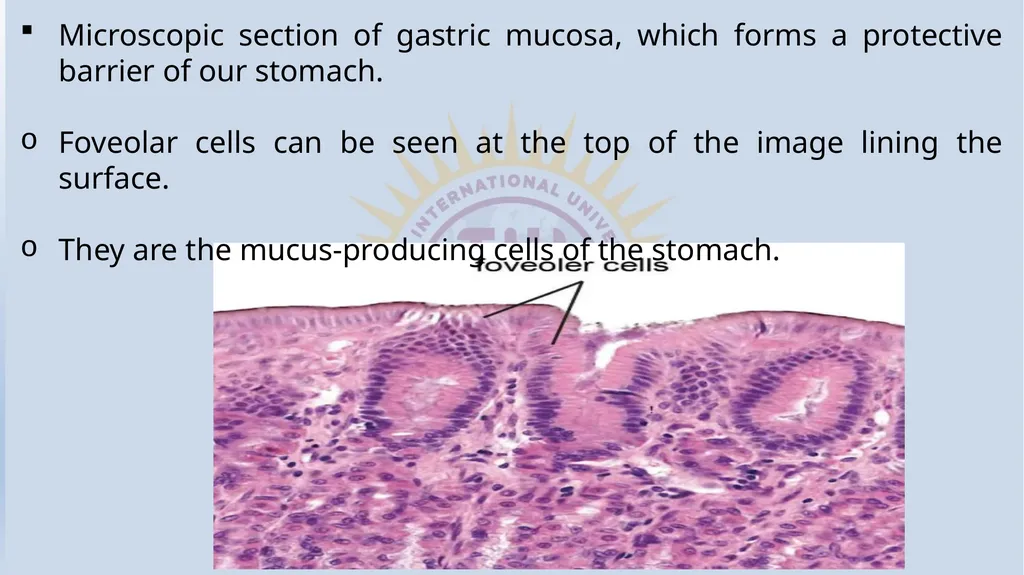
Microscopic section of gastric mucosa, which forms a protective barrier of our stomach.
Foveolar cells can be seen at the top of the image lining the surface.
They are the mucus-producing cells of the stomach.<br>
18
Serous epithelium lines the body cavities:
Such as the peritoneum (abdomen cavity), pleura (lung cavity), and pericardium (heart cavity).
It also surrounds the internal organs like the heart and lungs.
These cells secrete a lubricant fluid that prevents the frictions between organs
And body walls during movement, breathing, or heart beating.<br>
19
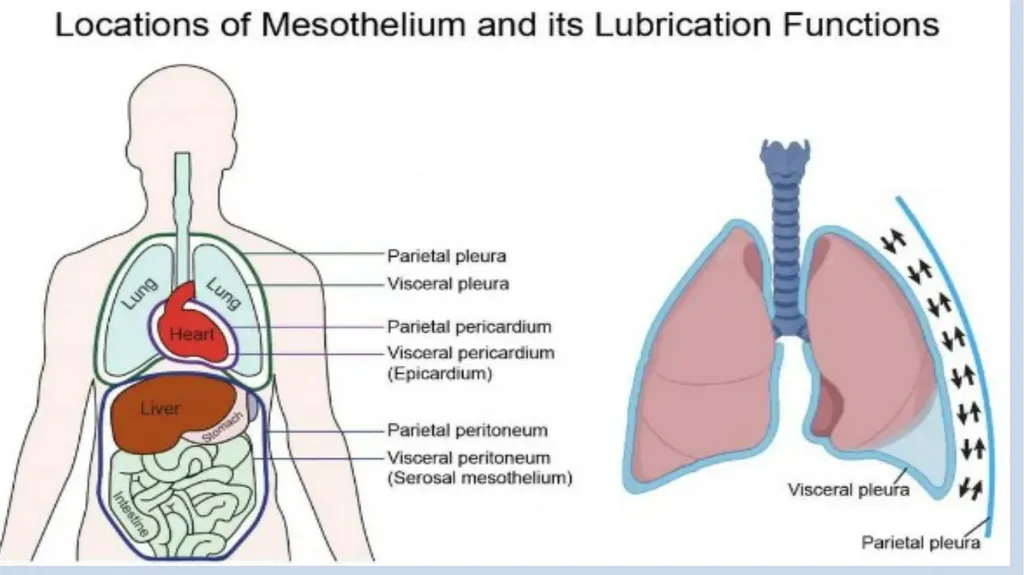
Mesothelium covers the body wall and the organs.
Mesothelial cells: Lining the cavities/body walls in these subdivisions are called parietal mesothelia,
While visceral mesothelia cover the organs. The size and location of our lungs change during each breath.
For this reason, the lubricant layer between the parietal pleura (mesothelia lining the chest cavity)
And visceral pleura (mesothelia covering the lungs) is critical to reduce the fraction and prevent injury.<br>
20
Olfactory epithelium is found inside the nasal cavity.
It contains olfactory receptor cells and involves in the sense of smell.
Olfactory receptor cells do so by specialized cilia extensions.
The cilia trap odor molecules you breathe in as they pass across the epithelial surface.
Stimuli triggered by these molecules are transmitted from the receptors to the olfactory bulb in your brain
Where your brain interprets the smell.<br>
21
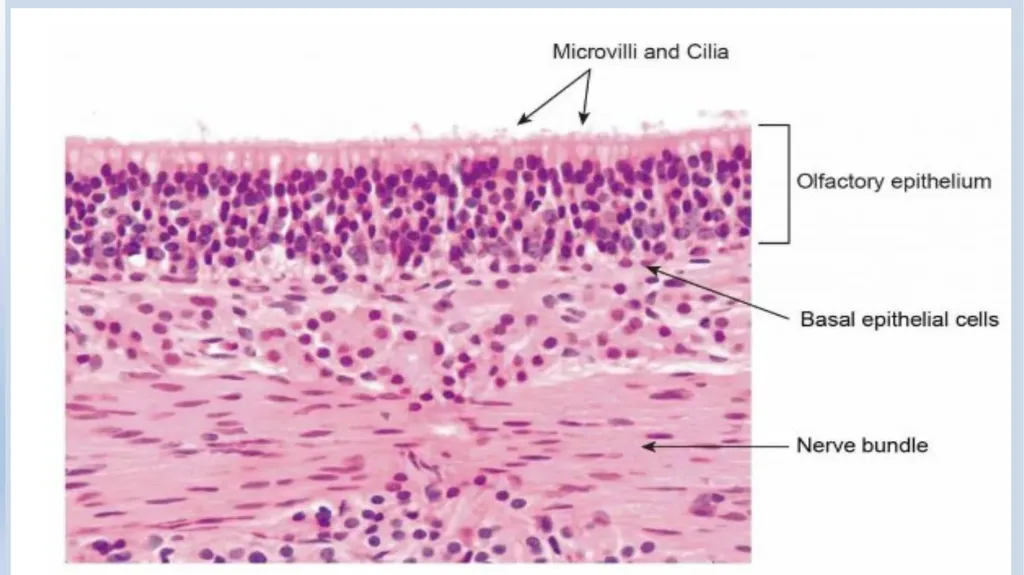
Microscopic section showing the olfactory epithelium with a meshwork of microvilli and olfactory cilia on the surface.
You can also see a nerve bundle under the olfactory epithelium.<br>
22
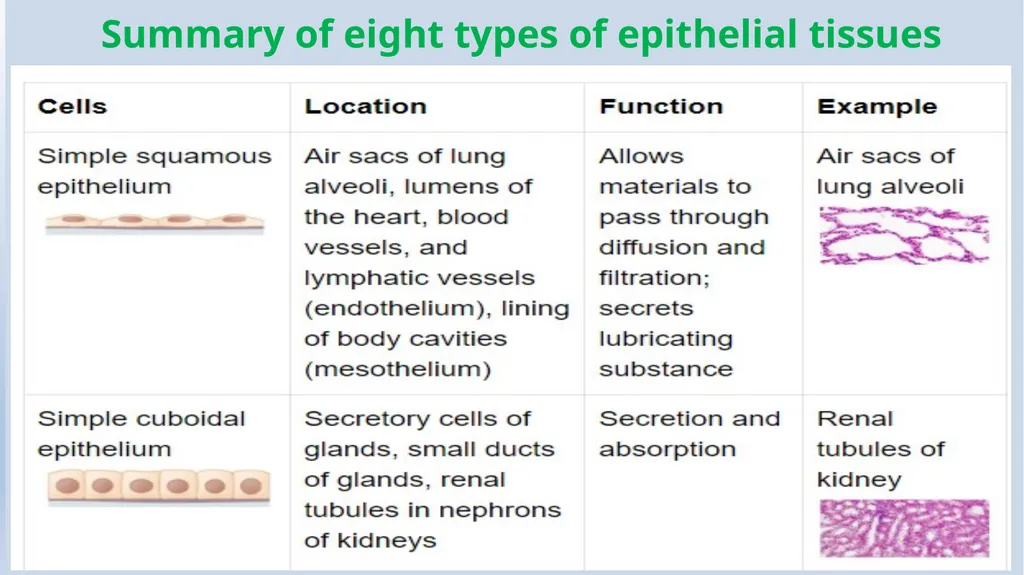
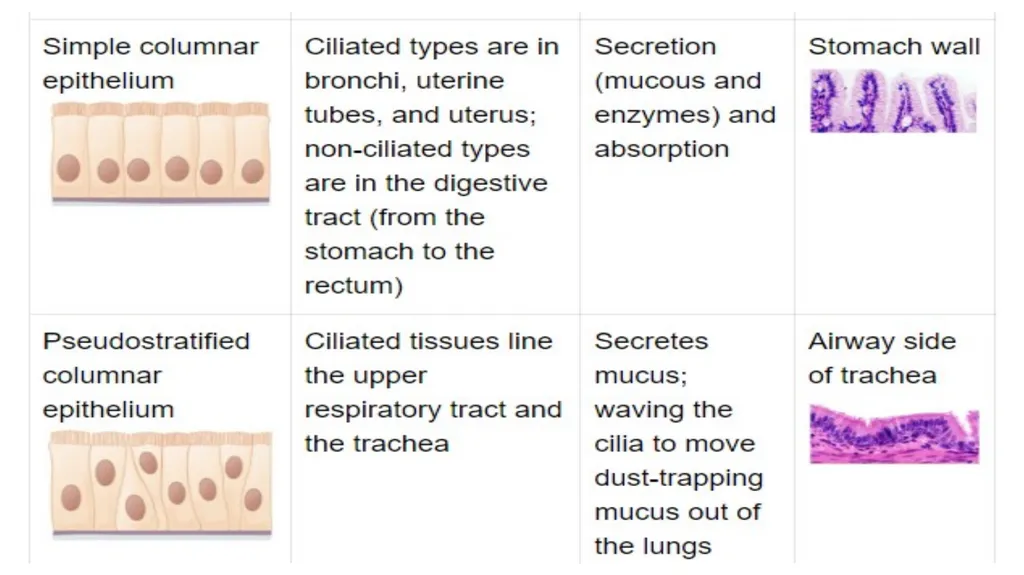
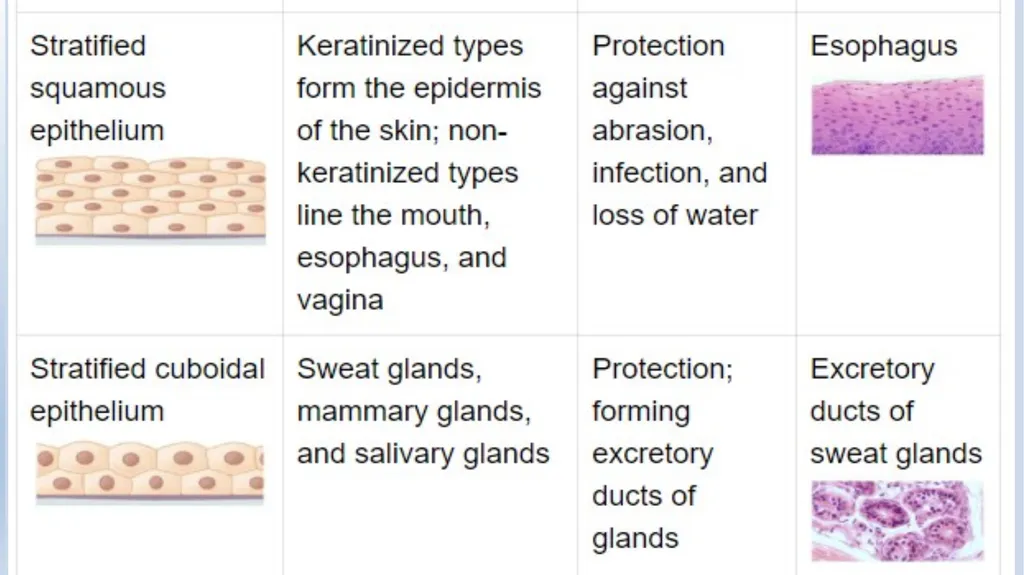
Summary of eight types of epithelial tissues<br>
23
Disorders of epithelial tissue In addition to certain types of cancers, some other disorders or conditions that can affect the epithelial tissues include: