LESSON NINE YOUR STARTER: WHAT HAPPENS IN ACT 3, SCENE 4? TODAYS KEY QUESTIONS: Can I read, understand and respond to texts? Can I consider the social and historical context of Macbeth and discuss its significance? Can I analyse the
"LESSON NINE YOUR STARTER: WHAT HAPPENS IN ACT 3," is the property of its rightful owner. Permission is granted to
download and print the materials on this website for personal, non-commercial use only, and to display it
on your personal computer provided you do not modify the materials and that you retain all copyright
notices contained in the materials. By downloading content from our website, you accept the terms of this
agreement.
Presentation Transcript
01
LESSON NINE<br>
02
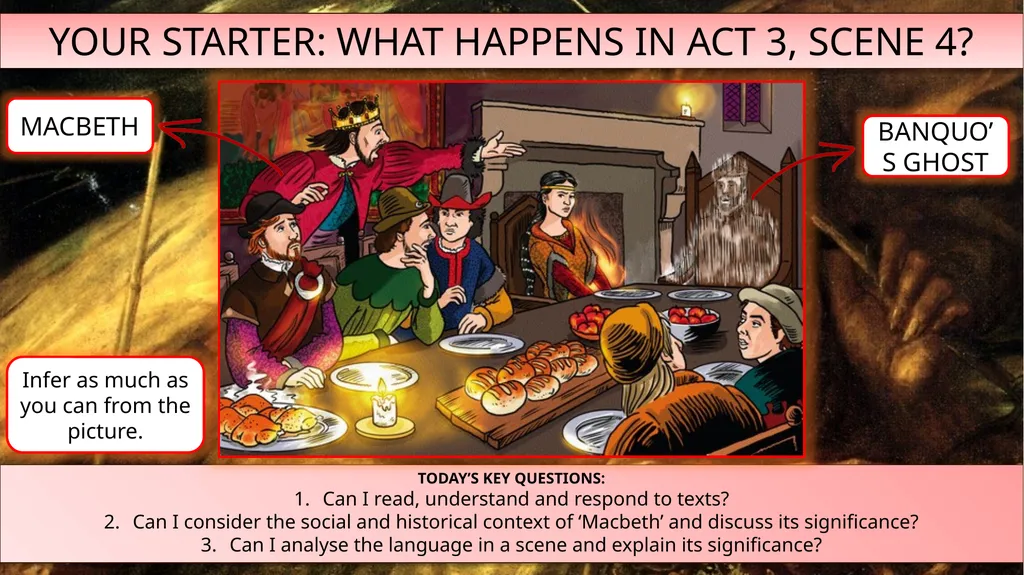
YOUR STARTER: WHAT HAPPENS IN ACT 3, SCENE 4? TODAY’S KEY QUESTIONS:
Can I read, understand and respond to texts?
Can I consider the social and historical context of ‘Macbeth’ and discuss its significance?
Can I analyse the language in a scene and explain its significance? MACBETH BANQUO’S GHOST Infer as much as you can from the picture.<br>
03
COMPREHENSION QUESTIONS: ACT 3, SCENE 4 TODAY’S KEY QUESTIONS:
Can I read, understand and respond to texts?
Can I consider the social and historical context of ‘Macbeth’ and discuss its significance?
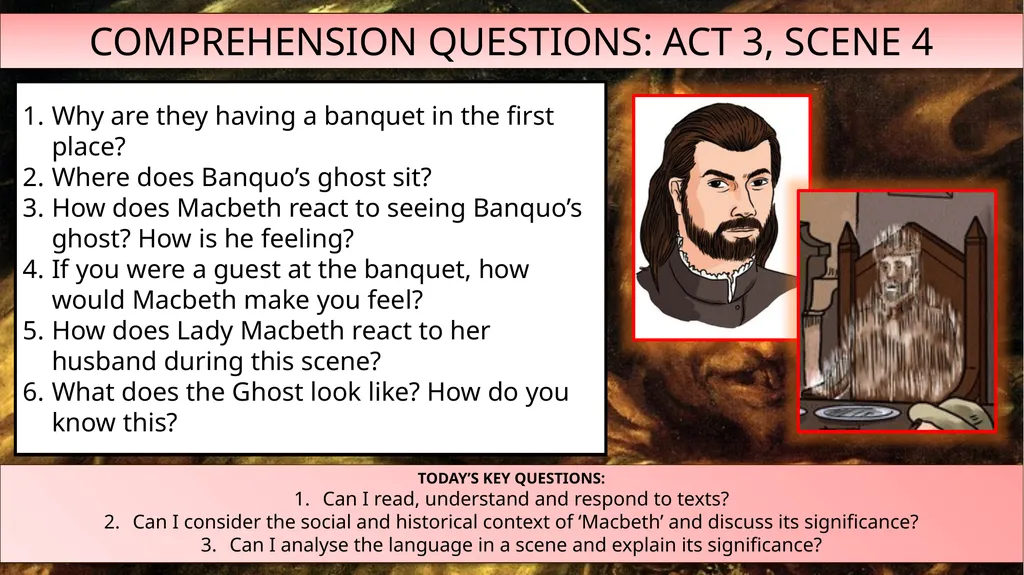
Can I analyse the language in a scene and explain its significance? Why are they having a banquet in the first place?
Where does Banquo’s ghost sit?
How does Macbeth react to seeing Banquo’s ghost? How is he feeling?
If you were a guest at the banquet, how would Macbeth make you feel?
How does Lady Macbeth react to her husband during this scene?
What does the Ghost look like? How do you know this?<br>
04
YOUR TASK: EXPLODE YOUR QUOTATION TODAY’S KEY QUESTIONS:
Can I read, understand and respond to texts?
Can I consider the social and historical context of ‘Macbeth’ and discuss its significance?
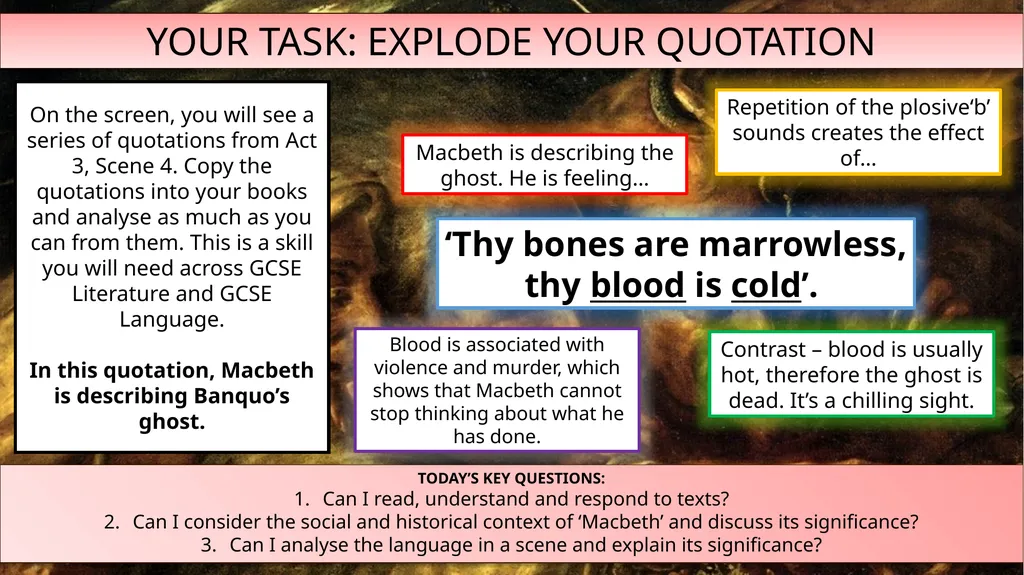
Can I analyse the language in a scene and explain its significance? ‘Thy bones are marrowless,
thy blood is cold’. On the screen, you will see a series of quotations from Act 3, Scene 4. Copy the quotations into your books and analyse as much as you can from them. This is a skill you will need across GCSE Literature and GCSE Language.
In this quotation, Macbeth is describing Banquo’s ghost. Contrast – blood is usually hot, therefore the ghost is dead. It’s a chilling sight. Blood is associated with violence and murder, which shows that Macbeth cannot stop thinking about what he has done. Macbeth is describing the ghost. He is feeling… Repetition of the plosive‘b’ sounds creates the effect of…<br>
05
YOUR TASK: EXPLODE YOUR QUOTATION TODAY’S KEY QUESTIONS:
Can I read, understand and respond to texts?
Can I consider the social and historical context of ‘Macbeth’ and discuss its significance?
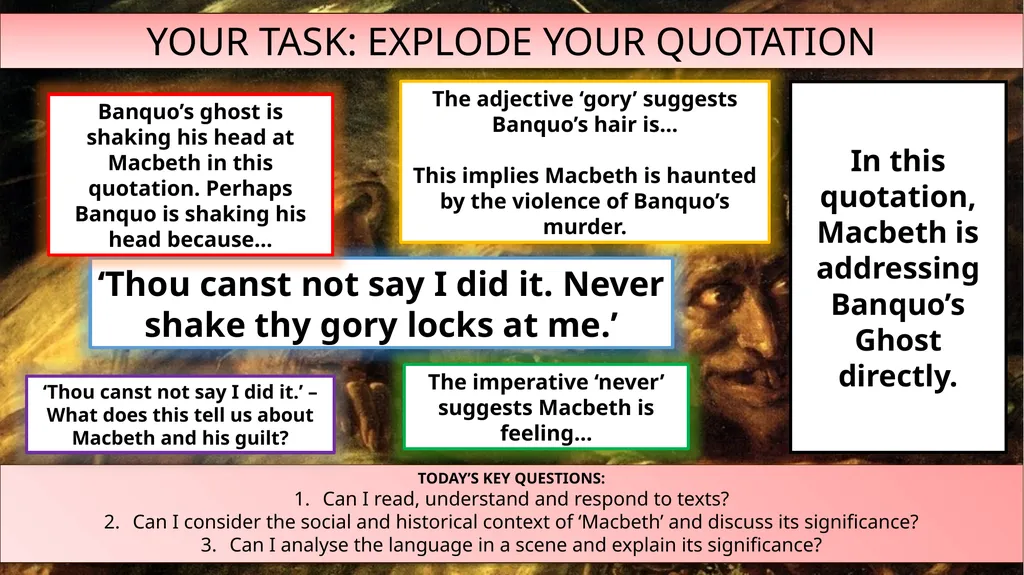
Can I analyse the language in a scene and explain its significance? ‘Thou canst not say I did it. Never
shake thy gory locks at me.’ The imperative ‘never’ suggests Macbeth is feeling… ‘Thou canst not say I did it.’ – What does this tell us about Macbeth and his guilt? Banquo’s ghost is shaking his head at Macbeth in this quotation. Perhaps Banquo is shaking his head because… The adjective ‘gory’ suggests Banquo’s hair is…
This implies Macbeth is haunted by the violence of Banquo’s murder. In this quotation, Macbeth is addressing Banquo’s Ghost directly.<br>
06
YOUR TASK: EXPLODE YOUR QUOTATION TODAY’S KEY QUESTIONS:
Can I read, understand and respond to texts?
Can I consider the social and historical context of ‘Macbeth’ and discuss its significance?
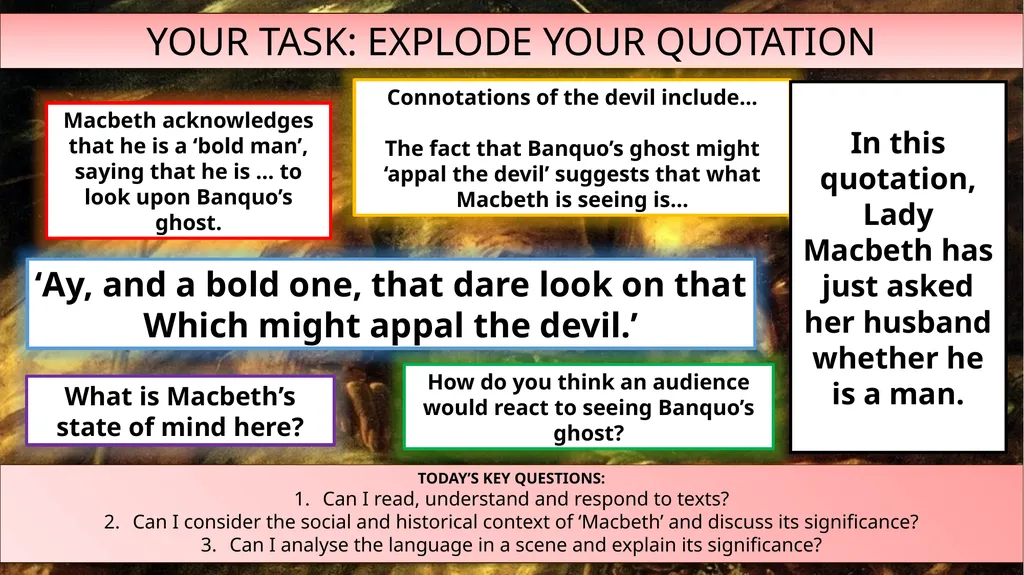
Can I analyse the language in a scene and explain its significance? ‘Ay, and a bold one, that dare look on that
Which might appal the devil.’ How do you think an audience would react to seeing Banquo’s ghost? What is Macbeth’s state of mind here? Macbeth acknowledges that he is a ‘bold man’, saying that he is … to look upon Banquo’s ghost. Connotations of the devil include…
The fact that Banquo’s ghost might ‘appal the devil’ suggests that what Macbeth is seeing is… In this quotation, Lady Macbeth has just asked her husband whether he is a man.<br>
07
YOUR TASK: EXPLODE YOUR QUOTATION TODAY’S KEY QUESTIONS:
Can I read, understand and respond to texts?
Can I consider the social and historical context of ‘Macbeth’ and discuss its significance?
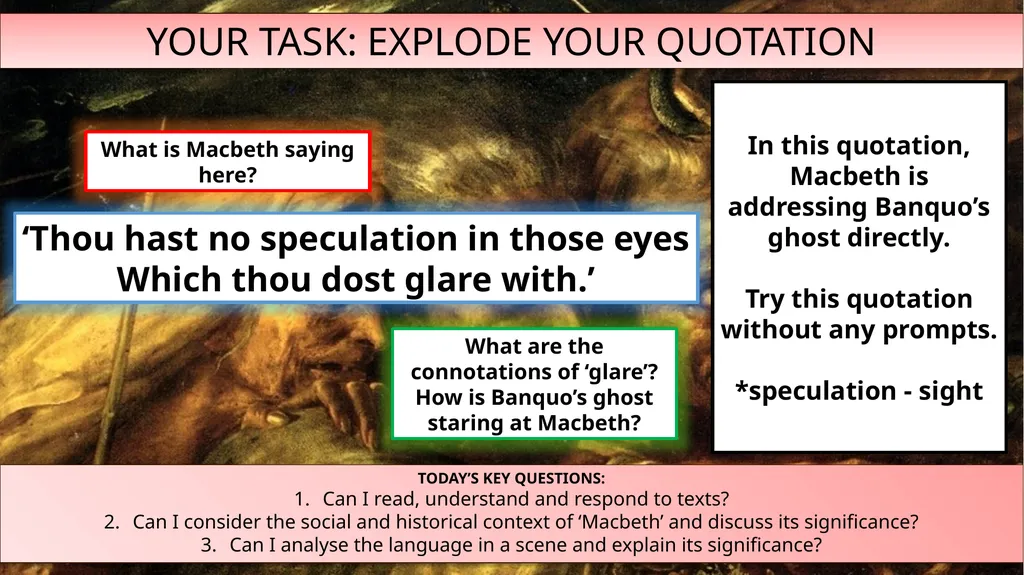
Can I analyse the language in a scene and explain its significance? ‘Thou hast no speculation in those eyes
Which thou dost glare with.’ In this quotation, Macbeth is addressing Banquo’s ghost directly.
Try this quotation without any prompts.
*speculation - sight What are the connotations of ‘glare’? How is Banquo’s ghost staring at Macbeth? What is Macbeth saying here?<br>
08
YOUR TASK: EXPLODE YOUR QUOTATION TODAY’S KEY QUESTIONS:
Can I read, understand and respond to texts?
Can I consider the social and historical context of ‘Macbeth’ and discuss its significance?
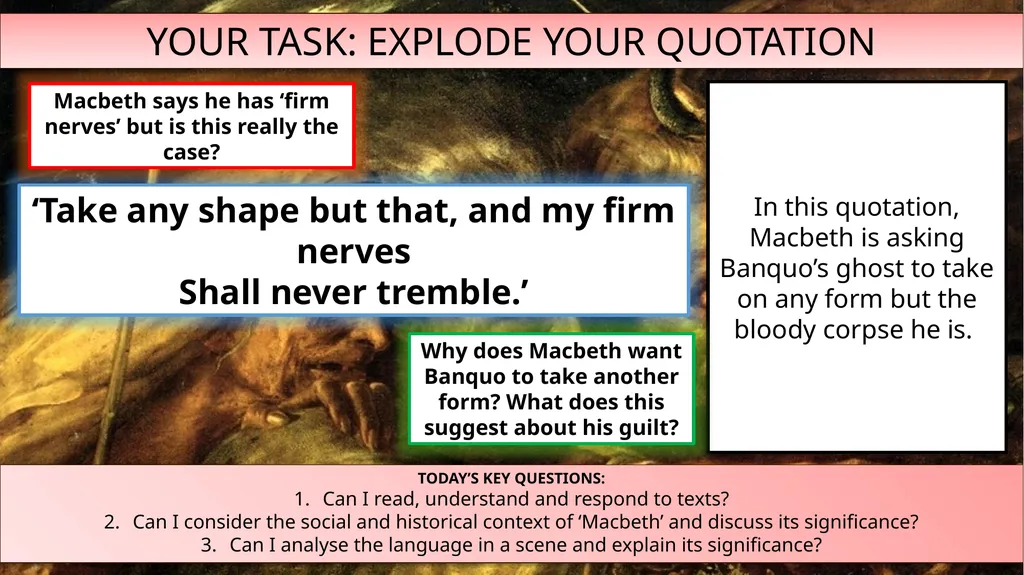
Can I analyse the language in a scene and explain its significance? ‘Take any shape but that, and my firm nerves
Shall never tremble.’ In this quotation, Macbeth is asking Banquo’s ghost to take on any form but the bloody corpse he is. Why does Macbeth want Banquo to take another form? What does this suggest about his guilt? Macbeth says he has ‘firm nerves’ but is this really the case?<br>
09
FURTHER ANALYSIS TODAY’S KEY QUESTIONS:
Can I read, understand and respond to texts?
Can I consider the social and historical context of ‘Macbeth’ and discuss its significance?
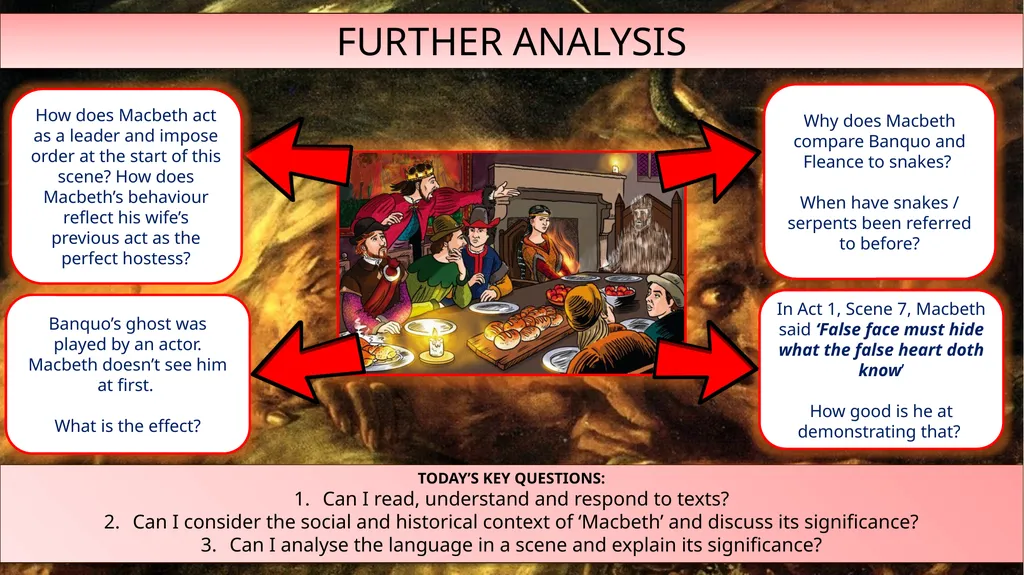
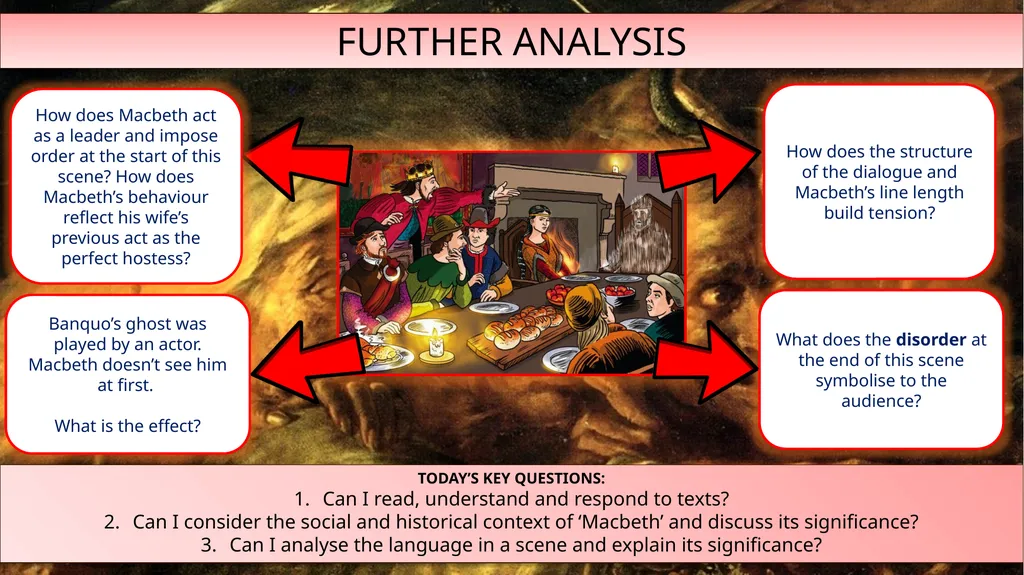
Can I analyse the language in a scene and explain its significance? How does Macbeth act as a leader and impose order at the start of this scene? How does Macbeth’s behaviour reflect his wife’s previous act as the perfect hostess? Banquo’s ghost was played by an actor. Macbeth doesn’t see him at first.
What is the effect? Why does Macbeth compare Banquo and Fleance to snakes?
When have snakes / serpents been referred to before? In Act 1, Scene 7, Macbeth said ‘False face must hide what the false heart doth know’
How good is he at demonstrating that?<br>
10
YOUR TASK TODAY’S KEY QUESTIONS:
Can I read, understand and respond to texts?
Can I consider the social and historical context of ‘Macbeth’ and discuss its significance?
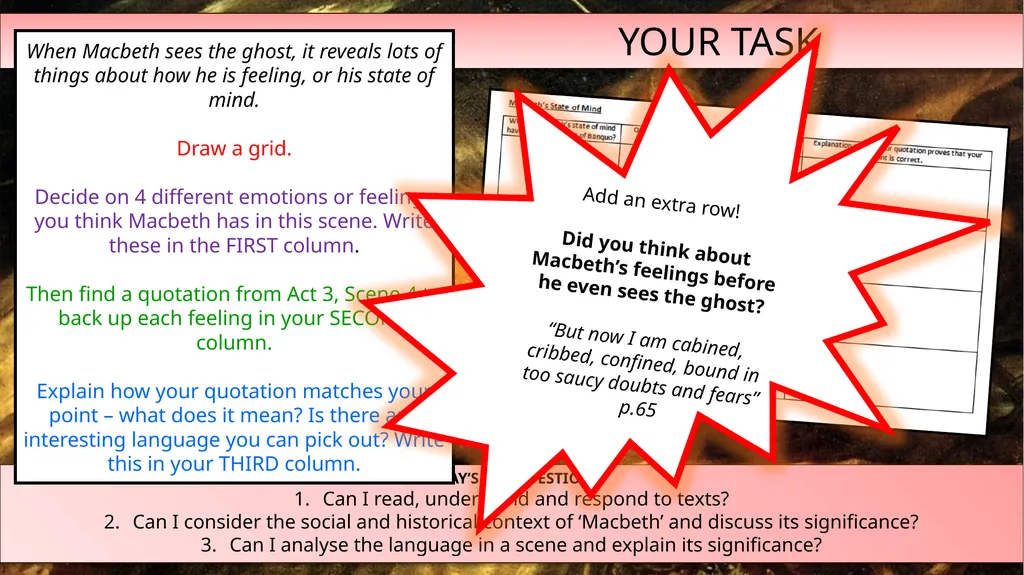
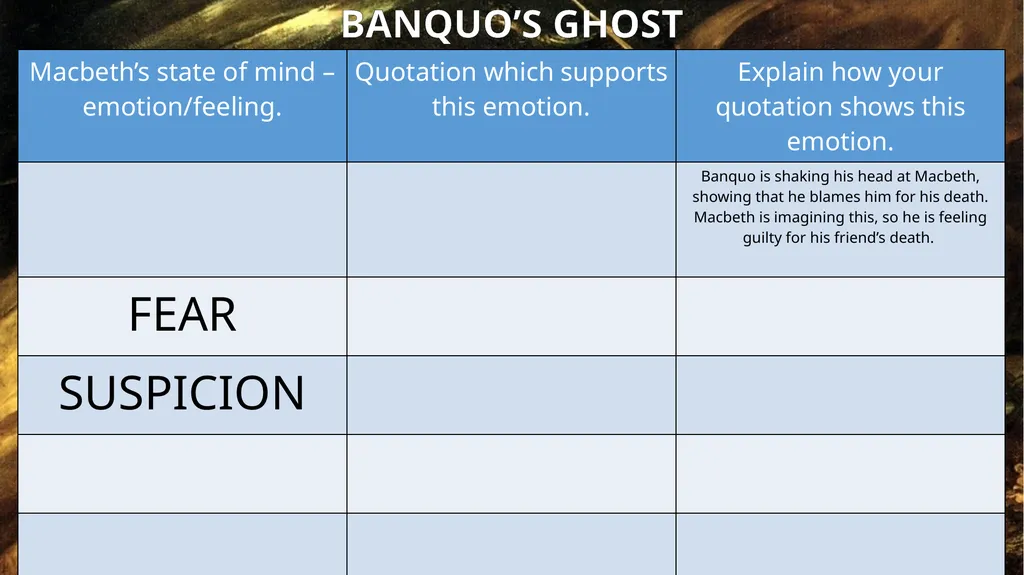
Can I analyse the language in a scene and explain its significance? When Macbeth sees the ghost, it reveals lots of things about how he is feeling, or his state of mind.
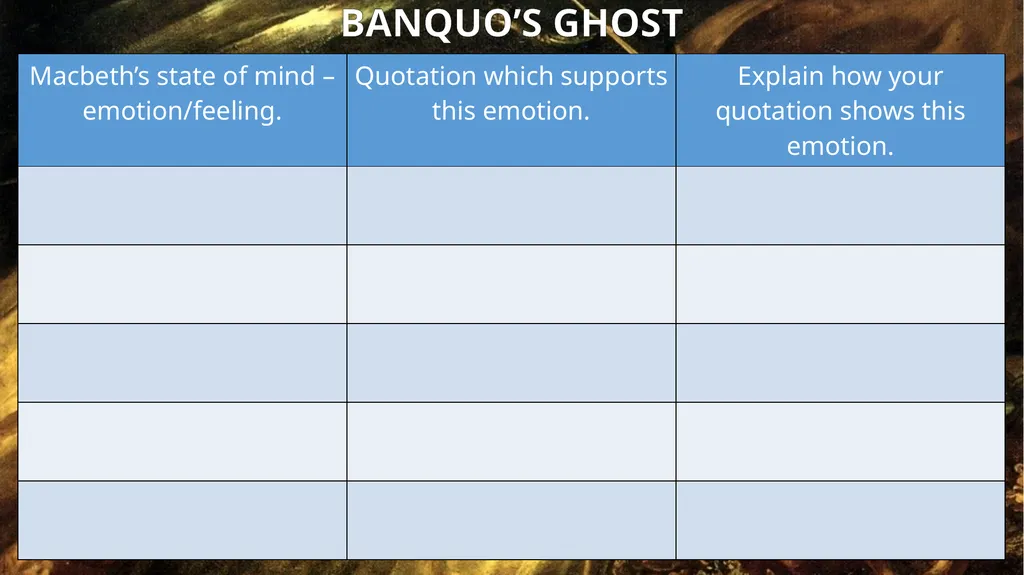
Draw a grid.
Decide on 4 different emotions or feelings you think Macbeth has in this scene. Write these in the FIRST column.
Then find a quotation from Act 3, Scene 4 to back up each feeling in your SECOND column.
Explain how your quotation matches your point – what does it mean? Is there any interesting language you can pick out? Write this in your THIRD column. Add an extra row!
Did you think about Macbeth’s feelings before he even sees the ghost?
“But now I am cabined, cribbed, confined, bound in too saucy doubts and fears” p.65<br>
11
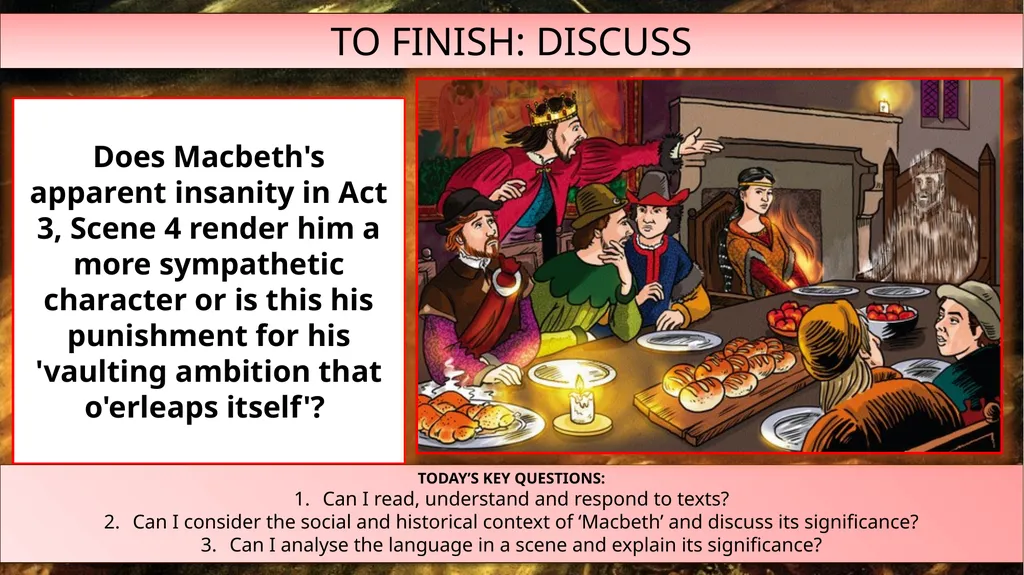
Does Macbeth's apparent insanity in Act 3, Scene 4 render him a more sympathetic character or is this his punishment for his 'vaulting ambition that o'erleaps itself'? TO FINISH: DISCUSS TODAY’S KEY QUESTIONS:
Can I read, understand and respond to texts?
Can I consider the social and historical context of ‘Macbeth’ and discuss its significance?
Can I analyse the language in a scene and explain its significance?<br>
12
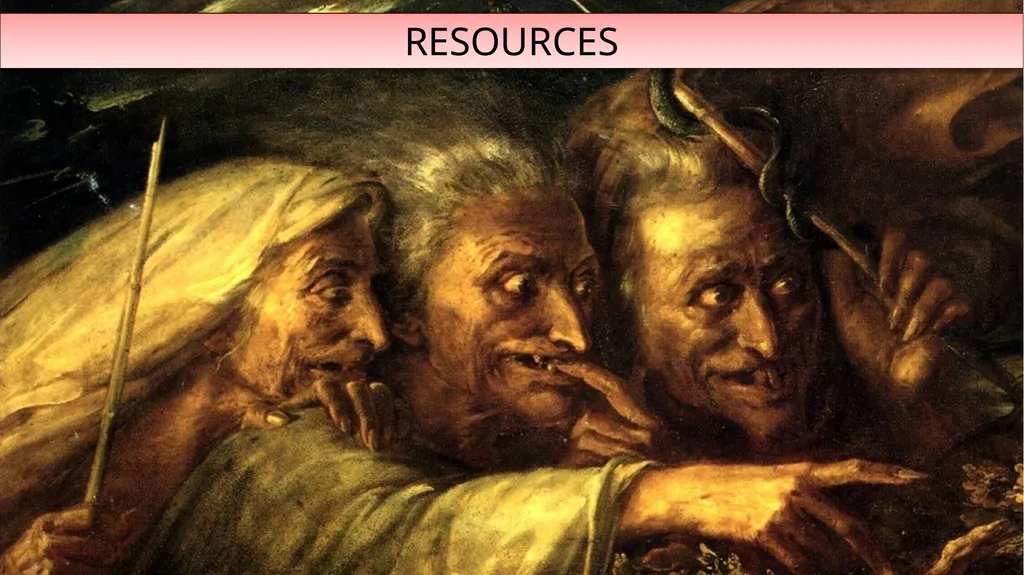
RESOURCES<br>
13
FURTHER ANALYSIS TODAY’S KEY QUESTIONS:
Can I read, understand and respond to texts?
Can I consider the social and historical context of ‘Macbeth’ and discuss its significance?
Can I analyse the language in a scene and explain its significance? How does Macbeth act as a leader and impose order at the start of this scene? How does Macbeth’s behaviour reflect his wife’s previous act as the perfect hostess? Banquo’s ghost was played by an actor. Macbeth doesn’t see him at first.
What is the effect? How does the structure of the dialogue and Macbeth’s line length build tension? What does the disorder at the end of this scene symbolise to the audience?<br>