04
The unit of analysis in FAP Functional Analytic Psychotherapy (FAP; Kohlenberg & Tsai, 1991; Tsai, Kohlenberg, Kanter, Kohlenberg, Follette, & Callaghan, 2008)
A contextual behavioral approach to psychotherapy focused on contingent responding in the context of an intimate therapeutic relationship (Follette, Callaghan, & Naugle, 1996)
In particular, there is promising evidence for the use of reinforcement of behavioral improvements (Singh & O’Brien, 2018)<br>
05
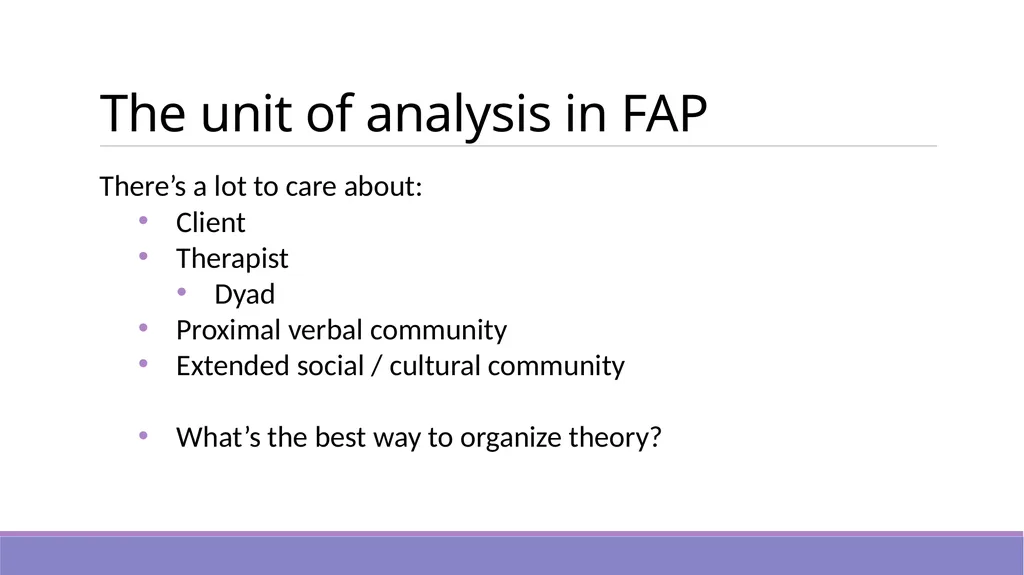
The unit of analysis in FAP There’s a lot to care about:
Client
Therapist
Dyad
Proximal verbal community
Extended social / cultural community
What’s the best way to organize theory?<br>
06
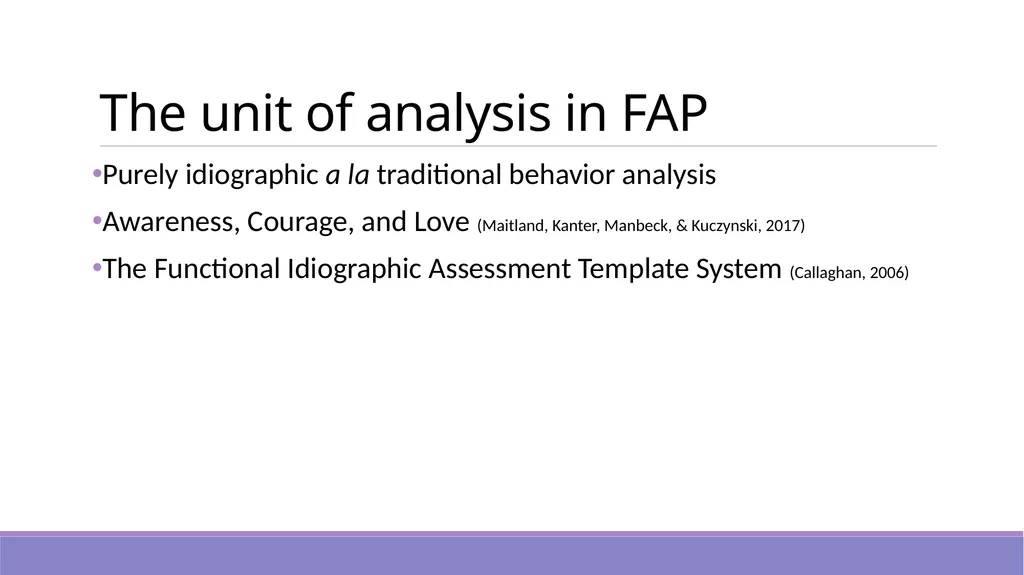
Purely idiographic a la traditional behavior analysis
Awareness, Courage, and Love (Maitland, Kanter, Manbeck, & Kuczynski, 2017)
The Functional Idiographic Assessment Template System (Callaghan, 2006) The unit of analysis in FAP<br>
07
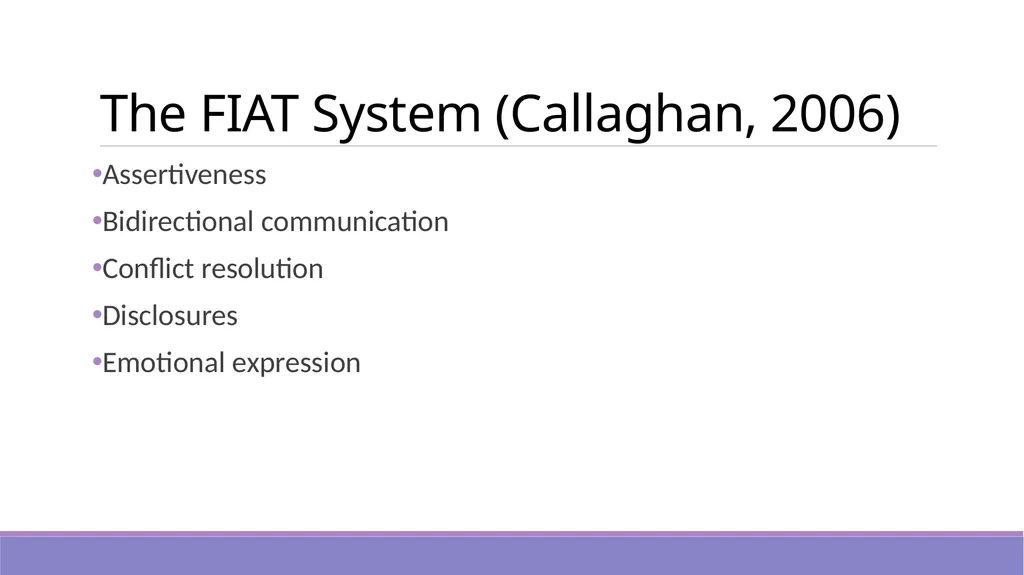
The FIAT System (Callaghan, 2006) Assertiveness
Bidirectional communication
Conflict resolution
Disclosures
Emotional expression<br>
08
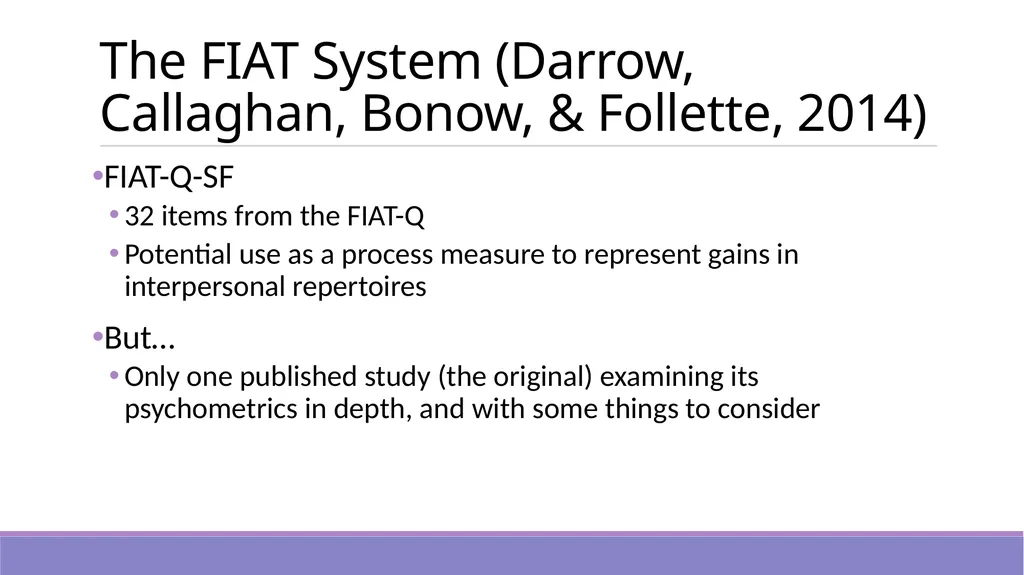
FIAT-Q-SF
32 items from the FIAT-Q
Potential use as a process measure to represent gains in interpersonal repertoires
But…
Only one published study (the original) examining its psychometrics in depth, and with some things to consider The FIAT System (Darrow, Callaghan, Bonow, & Follette, 2014)<br>
09
The Present Study “…the current results must be reproduced in a test-retest sample with less participant attrition before a strong conclusion can be drawn” (Darrow, Bonow, Callaghan, & Follette, 2014, pp. 13)<br>
10
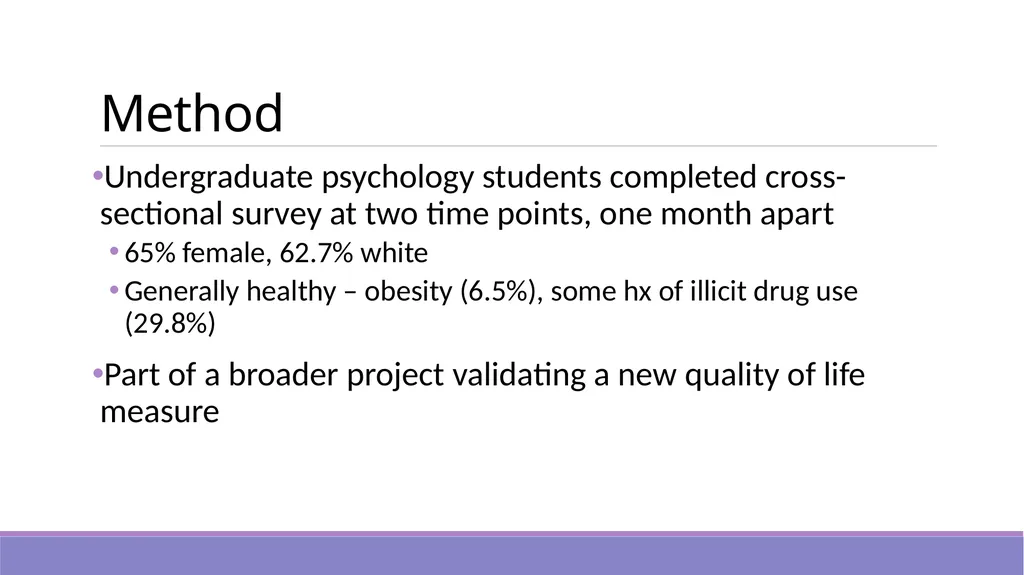
Method Undergraduate psychology students completed cross-sectional survey at two time points, one month apart
65% female, 62.7% white
Generally healthy – obesity (6.5%), some hx of illicit drug use (29.8%)
Part of a broader project validating a new quality of life measure<br>
11
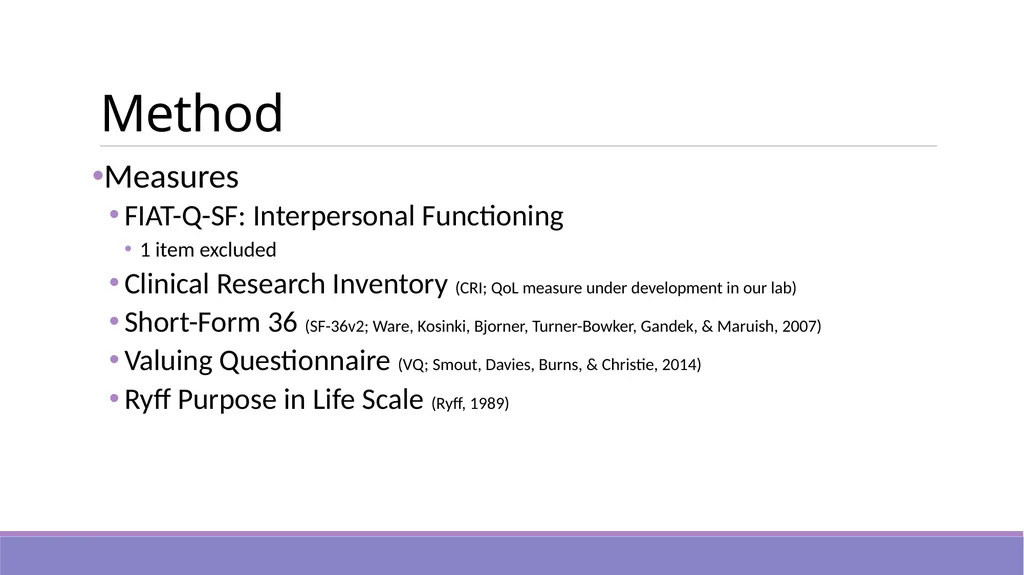
Method Measures
FIAT-Q-SF: Interpersonal Functioning
1 item excluded
Clinical Research Inventory (CRI; QoL measure under development in our lab)
Short-Form 36 (SF-36v2; Ware, Kosinki, Bjorner, Turner-Bowker, Gandek, & Maruish, 2007)
Valuing Questionnaire (VQ; Smout, Davies, Burns, & Christie, 2014)
Ryff Purpose in Life Scale (Ryff, 1989)<br>
12
Results Time 1 = Ran 645, data cleaning 640
Time 2 = Ran 569, data cleaning 526<br>
13
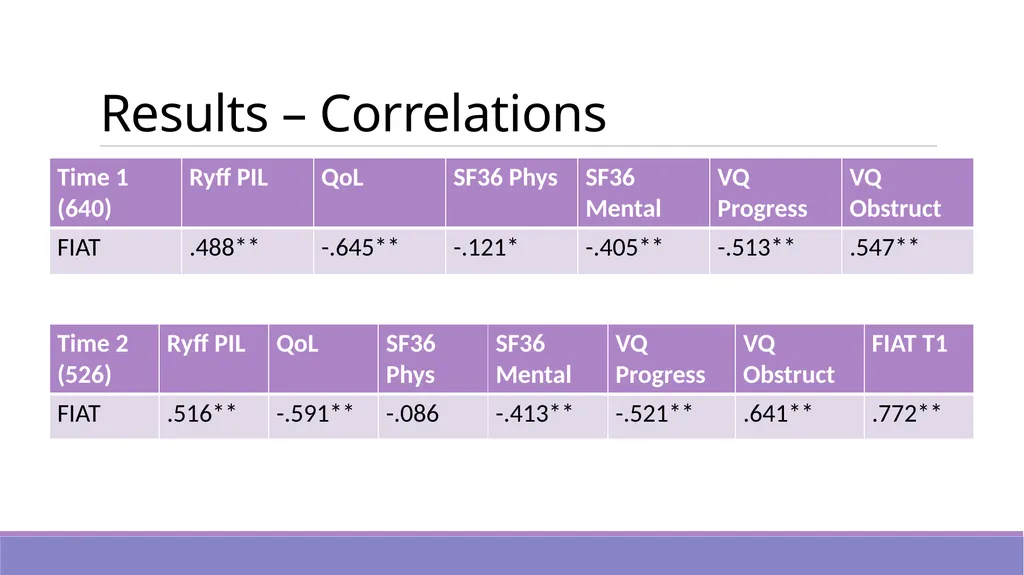
Results – Correlations<br>
14
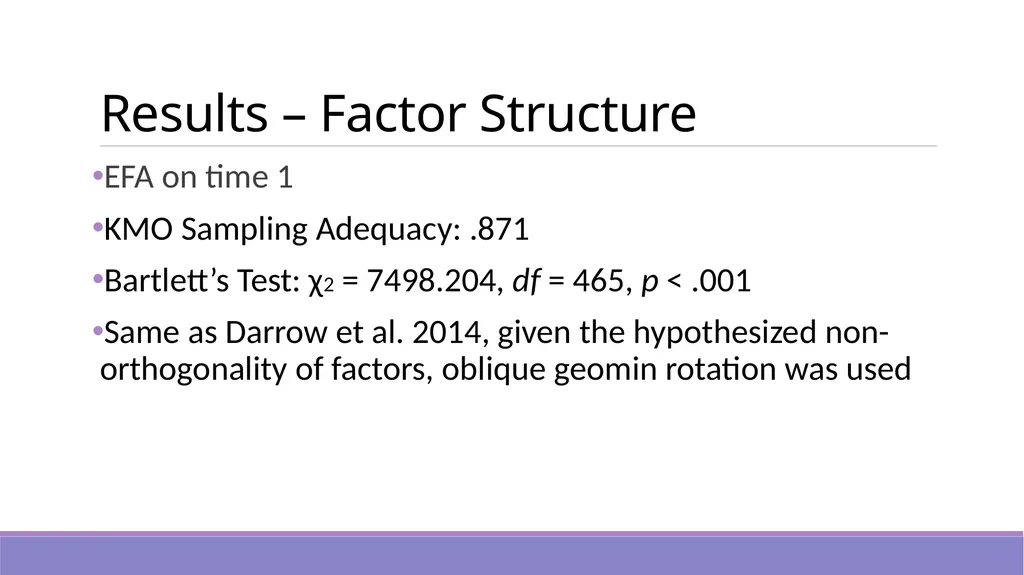
Results – Factor Structure EFA on time 1
KMO Sampling Adequacy: .871
Bartlett’s Test: χ2 = 7498.204, df = 465, p < .001
Same as Darrow et al. 2014, given the hypothesized non-orthogonality of factors, oblique geomin rotation was used<br>
15
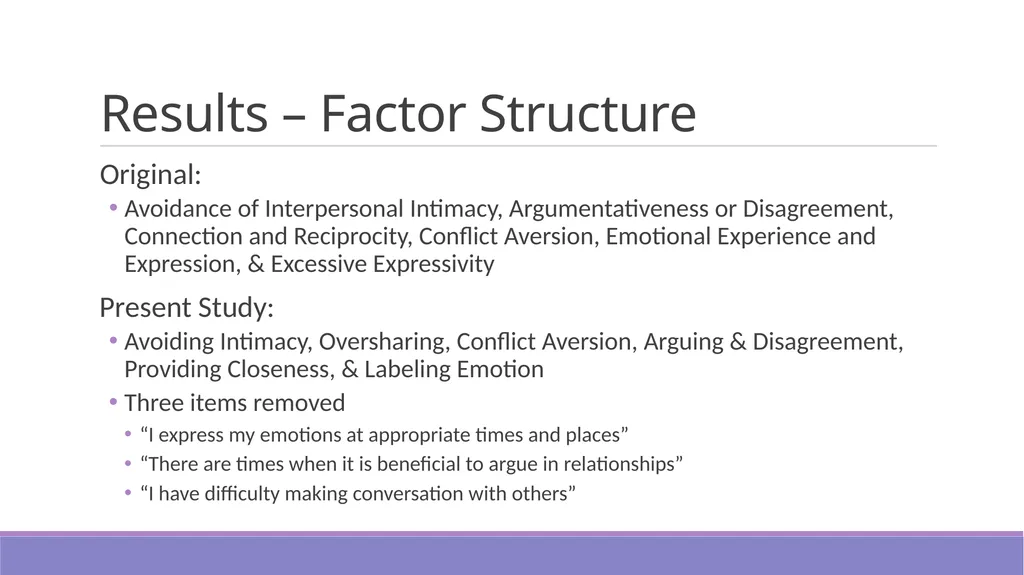
Results – Factor Structure Original:
Avoidance of Interpersonal Intimacy, Argumentativeness or Disagreement, Connection and Reciprocity, Conflict Aversion, Emotional Experience and Expression, & Excessive Expressivity Present Study:
Avoiding Intimacy, Oversharing, Conflict Aversion, Arguing & Disagreement, Providing Closeness, & Labeling Emotion
Three items removed
“I express my emotions at appropriate times and places”
“There are times when it is beneficial to argue in relationships”
“I have difficulty making conversation with others”<br>
16
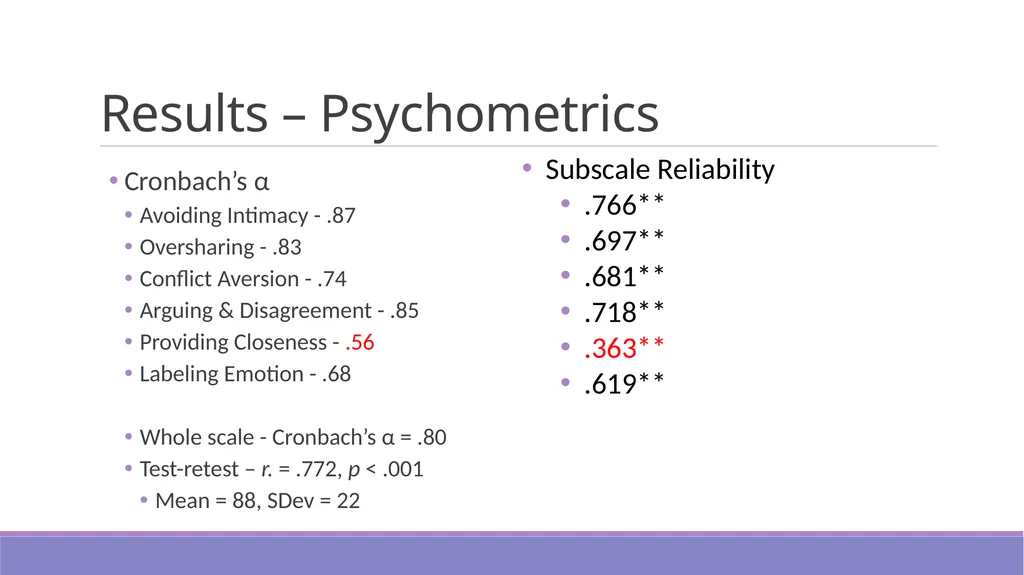
Results – Psychometrics Cronbach’s α
Avoiding Intimacy - .87
Oversharing - .83
Conflict Aversion - .74
Arguing & Disagreement - .85
Providing Closeness - .56
Labeling Emotion - .68
Whole scale - Cronbach’s α = .80
Test-retest – r. = .772, p < .001
Mean = 88, SDev = 22 Subscale Reliability
.766**
.697**
.681**
.718**
.363**
.619**<br>
17
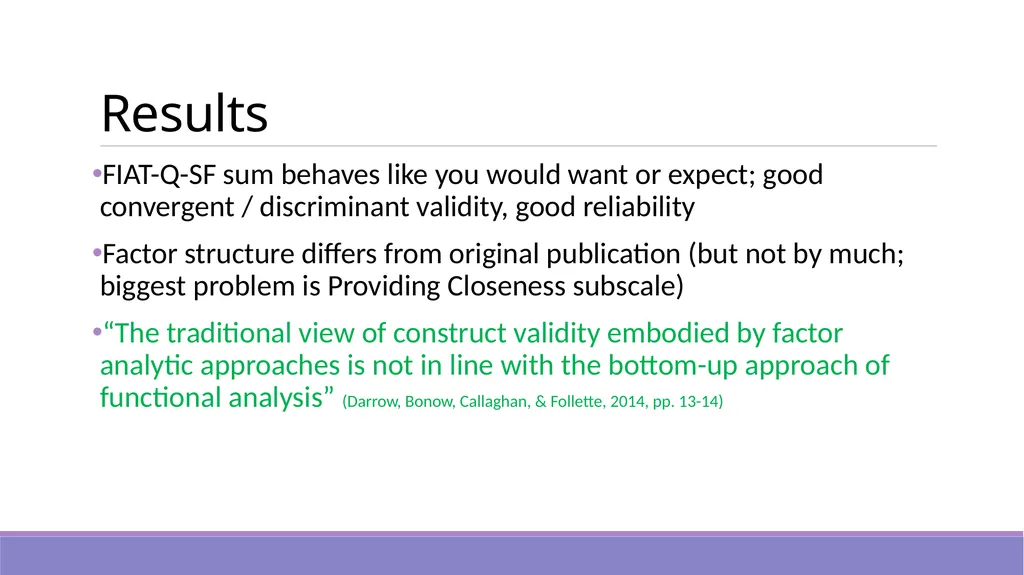
Results FIAT-Q-SF sum behaves like you would want or expect; good convergent / discriminant validity, good reliability
Factor structure differs from original publication (but not by much; biggest problem is Providing Closeness subscale)
“The traditional view of construct validity embodied by factor analytic approaches is not in line with the bottom-up approach of functional analysis” (Darrow, Bonow, Callaghan, & Follette, 2014, pp. 13-14)<br>
18
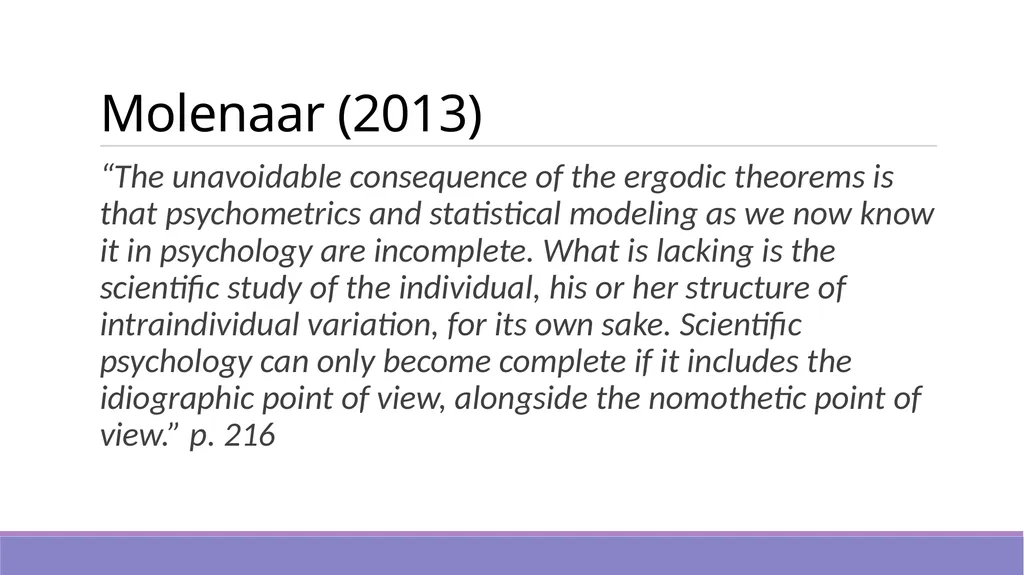
Molenaar (2013) “The unavoidable consequence of the ergodic theorems is that psychometrics and statistical modeling as we now know it in psychology are incomplete. What is lacking is the scientific study of the individual, his or her structure of intraindividual variation, for its own sake. Scientific psychology can only become complete if it includes the idiographic point of view, alongside the nomothetic point of view.” p. 216<br>
19
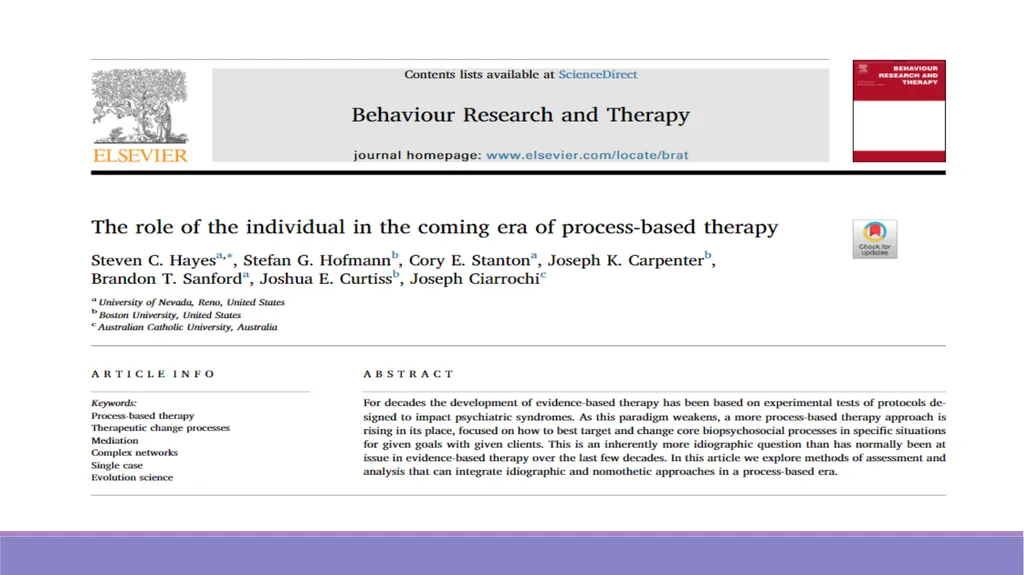
A way forward: FAP and PBT Process-Based Therapy (PBT; Hayes & Hofmann, 2017; Hofmann & Hayes, 2018)
“What core biopsychosocial processes should be targeted with this client given this goal in this situation, and how can they most efficiently and effectively be changed?” (Hofmann & Hayes, 2018, p. 38)<br>
20
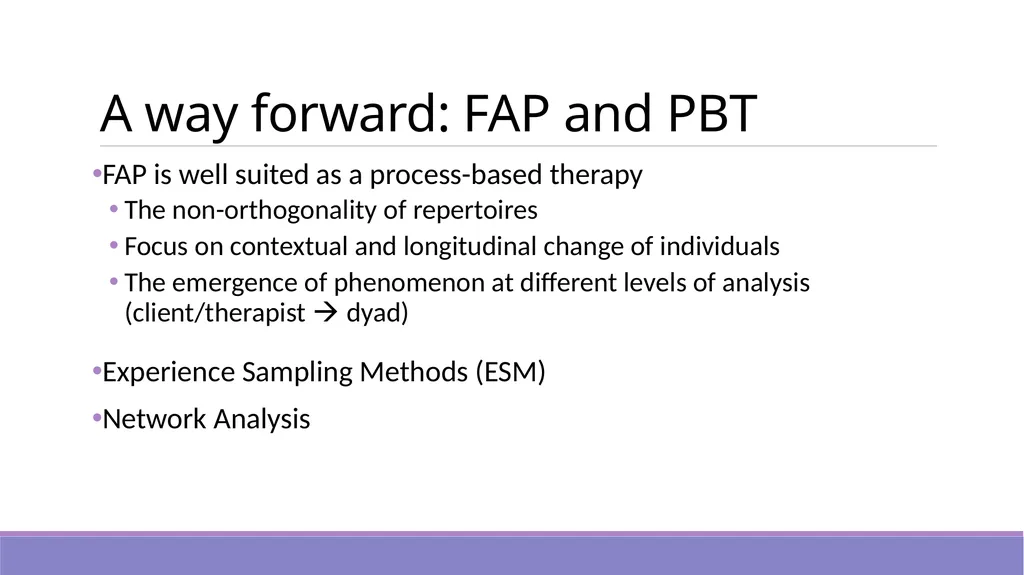
A way forward: FAP and PBT FAP is well suited as a process-based therapy
The non-orthogonality of repertoires
Focus on contextual and longitudinal change of individuals
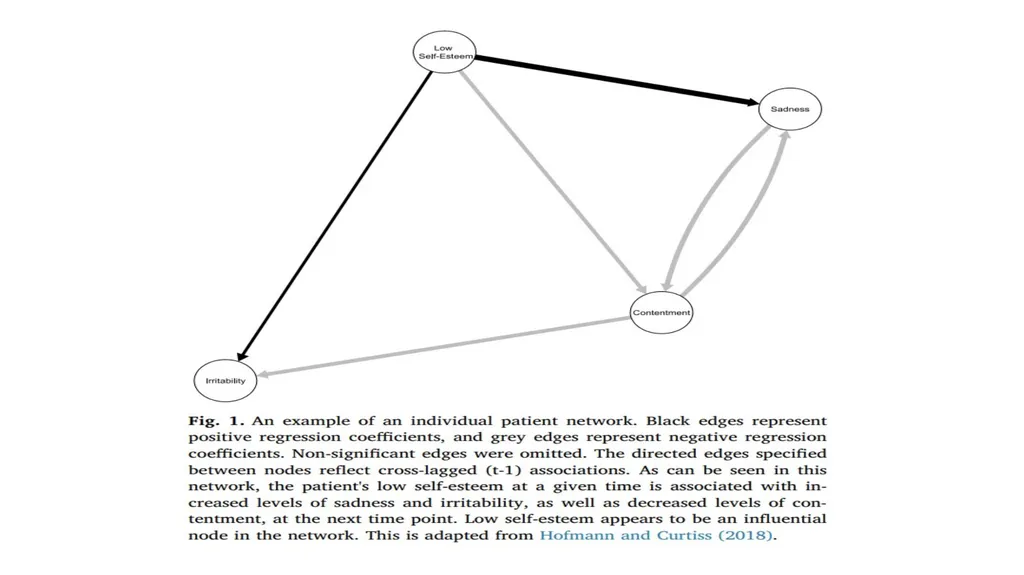
The emergence of phenomenon at different levels of analysis (client/therapist dyad) Experience Sampling Methods (ESM)
Network Analysis<br>
21
Next steps Ongoing study (cross sectional, will include CFA of the FIAT-Q-SF, examine new FIAT measure with item changes)
Ideas: Daily diary / EMA, group tx<br>
22
Thank You! Cory Stanton, M.S.
Doctoral Student, Clinical Psychology
corystanton@Nevada.unr.edu<br>