
November 3, 2021 Philip A. Chan, MD, MS Medical
TF
Published · 46 slides · 0 views

1 / 1

Description
November 3, 2021 Philip A. Chan, MD, MS Medical Consultant, Division of STD Prevention Centers for Disease Control and Prevention Disclosures No commercial conflicts of interest NNPTC.org Follow us on Twitter: NNPTC This curriculum is
Related Topics
Share
Embed code
Download this presentation From Below
"November 3, 2021 Philip A. Chan, MD, MS Medical" is the property of its rightful owner. Permission is granted to download and print the materials on this website for personal, non-commercial use only, and to display it on your personal computer provided you do not modify the materials and that you retain all copyright notices contained in the materials. By downloading content from our website, you accept the terms of this agreement.
Presentation Transcript
01
November 3, 2021 Philip A. Chan, MD, MS
Medical Consultant, Division of STD Prevention
Centers for Disease Control and Prevention<br>
Medical Consultant, Division of STD Prevention
Centers for Disease Control and Prevention<br>
02
Disclosures No commercial conflicts of interest<br>
03
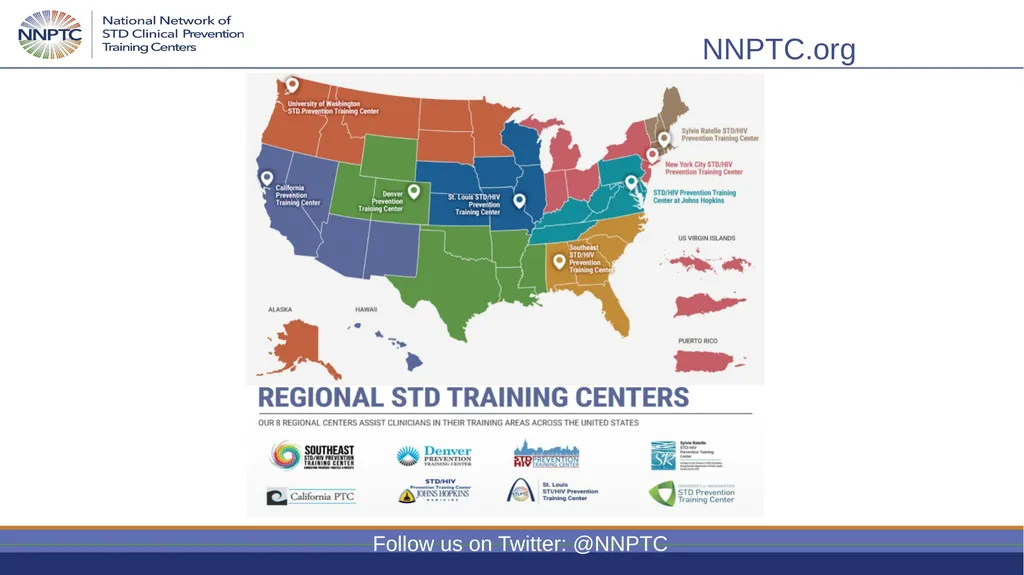
NNPTC.org Follow us on Twitter: @NNPTC<br>
04
This curriculum is funded by the U.S. Centers for Disease Control and Prevention (CDC) and developed by the University of Washington STD Prevention Training Center as part of the National Network of STD Prevention Training Centers (NNPTC).<br>
05
STDCCN.org<br>
06
Goals Share updates included in the 2021 STI Treatment Guidelines
Discuss the rationale for these updates
Align public health practice with updated guidelines<br>
Discuss the rationale for these updates
Align public health practice with updated guidelines<br>
07
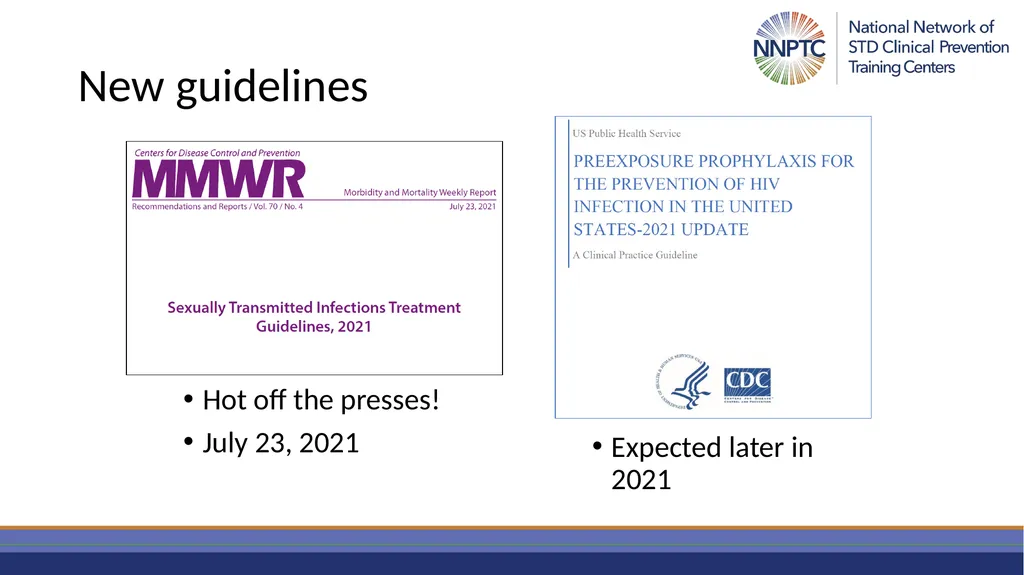
New guidelines Expected later in 2021 Hot off the presses!
July 23, 2021<br>
July 23, 2021<br>
08
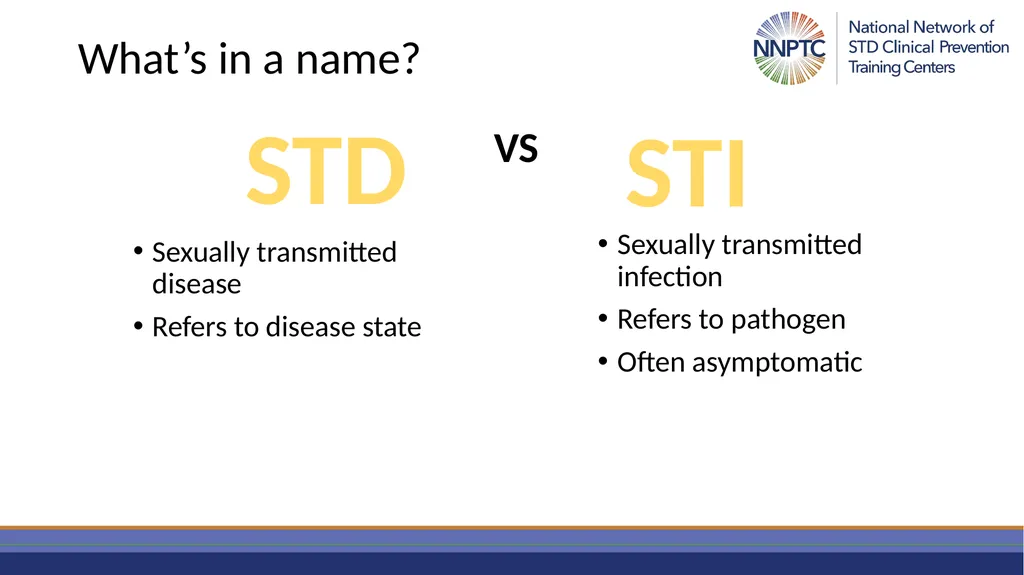
What’s in a name? Sexually transmitted disease
Refers to disease state Sexually transmitted infection
Refers to pathogen
Often asymptomatic STI STD VS<br>
Refers to disease state Sexually transmitted infection
Refers to pathogen
Often asymptomatic STI STD VS<br>
09
Key
Question
Development CDC Staff
+
Subject Matter
Expert Systematic
Review of
Evidence Tables of evidence
Background papers Guidelines
3-day Meeting
June 2019 Answer the “Key
Questions” Quality
of the evidence
(USPSTF) Identify critical gaps
in knowledge
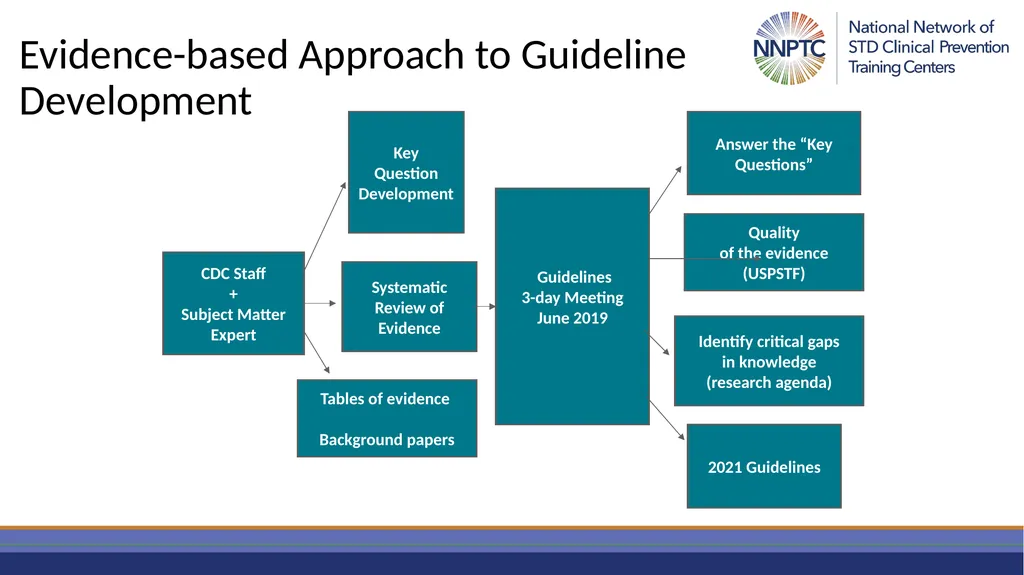
(research agenda) 2021 Guidelines Evidence-based Approach to Guideline Development<br>
10
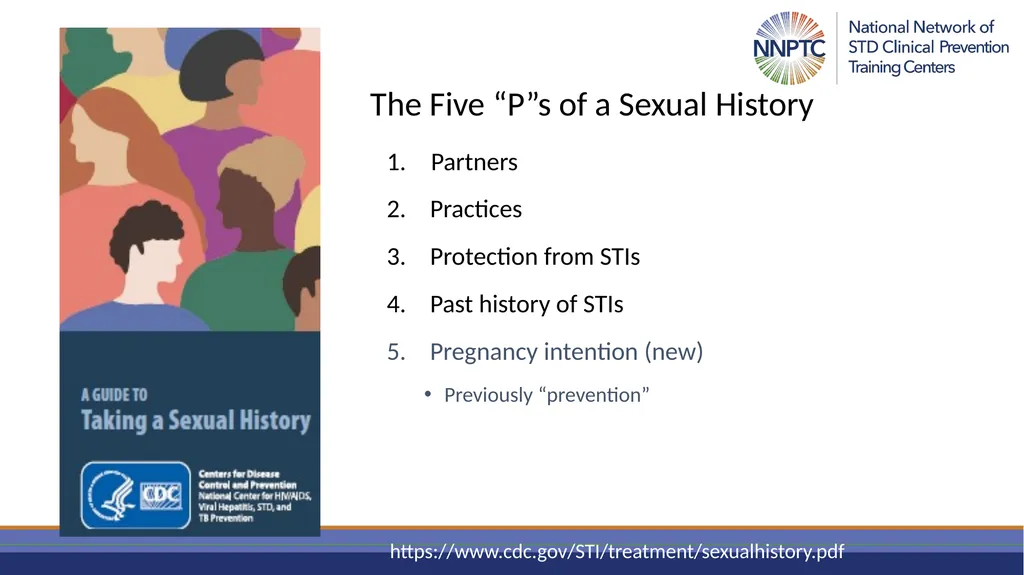
The Five “P”s of a Sexual History Partners
Practices
Protection from STIs
Past history of STIs
Pregnancy intention (new)
Previously “prevention” https://www.cdc.gov/STI/treatment/sexualhistory.pdf<br>
Practices
Protection from STIs
Past history of STIs
Pregnancy intention (new)
Previously “prevention” https://www.cdc.gov/STI/treatment/sexualhistory.pdf<br>
11
Screening<br>
12
STI Screening: Non-Pregnant Cis-Women
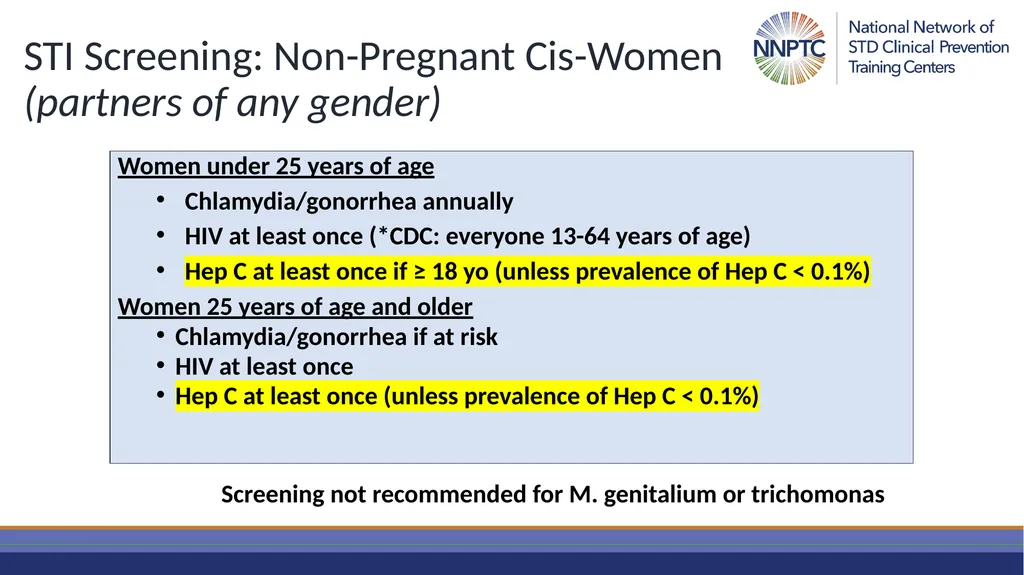
(partners of any gender) Women under 25 years of age
Chlamydia/gonorrhea annually
HIV at least once (*CDC: everyone 13-64 years of age)
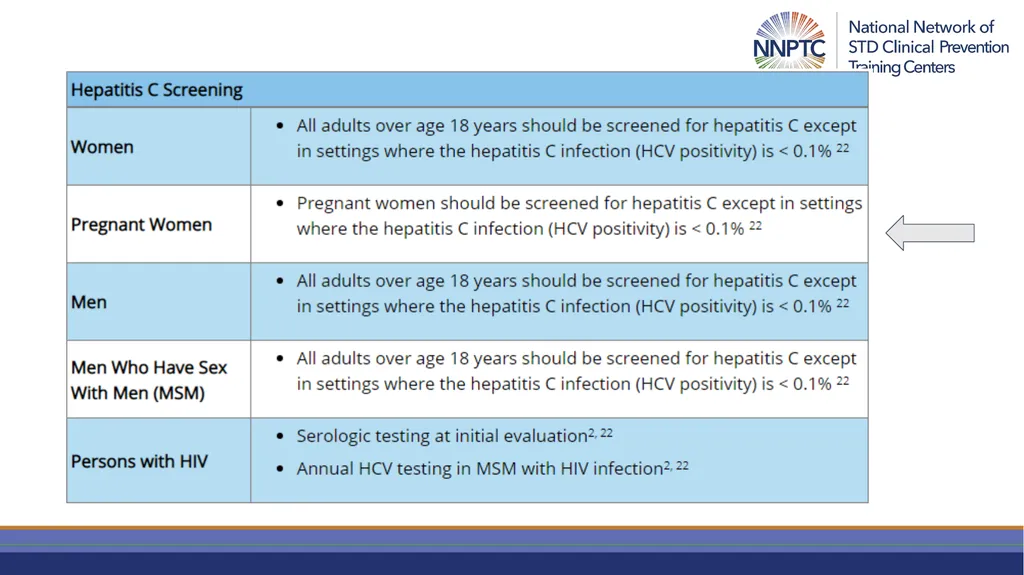
Hep C at least once if ≥ 18 yo (unless prevalence of Hep C < 0.1%)
Women 25 years of age and older
Chlamydia/gonorrhea if at risk
HIV at least once
Hep C at least once (unless prevalence of Hep C < 0.1%) Screening not recommended for M. genitalium or trichomonas<br>
13
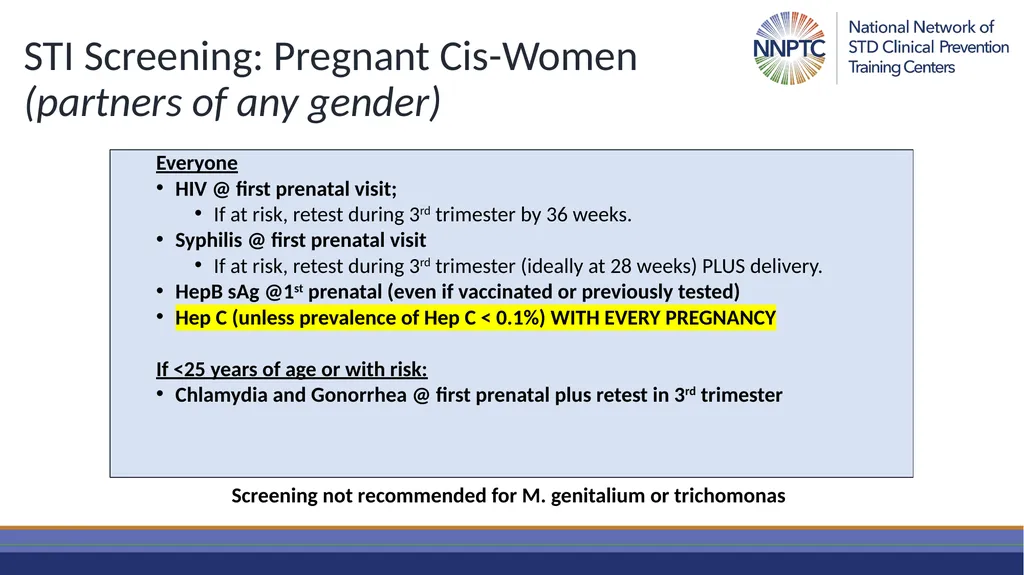
STI Screening: Pregnant Cis-Women
(partners of any gender) Everyone
HIV @ first prenatal visit;
If at risk, retest during 3rd trimester by 36 weeks.
Syphilis @ first prenatal visit
If at risk, retest during 3rd trimester (ideally at 28 weeks) PLUS delivery.
HepB sAg @1st prenatal (even if vaccinated or previously tested)
Hep C (unless prevalence of Hep C < 0.1%) WITH EVERY PREGNANCY
If <25 years of age or with risk:
Chlamydia and Gonorrhea @ first prenatal plus retest in 3rd trimester Screening not recommended for M. genitalium or trichomonas<br>
14
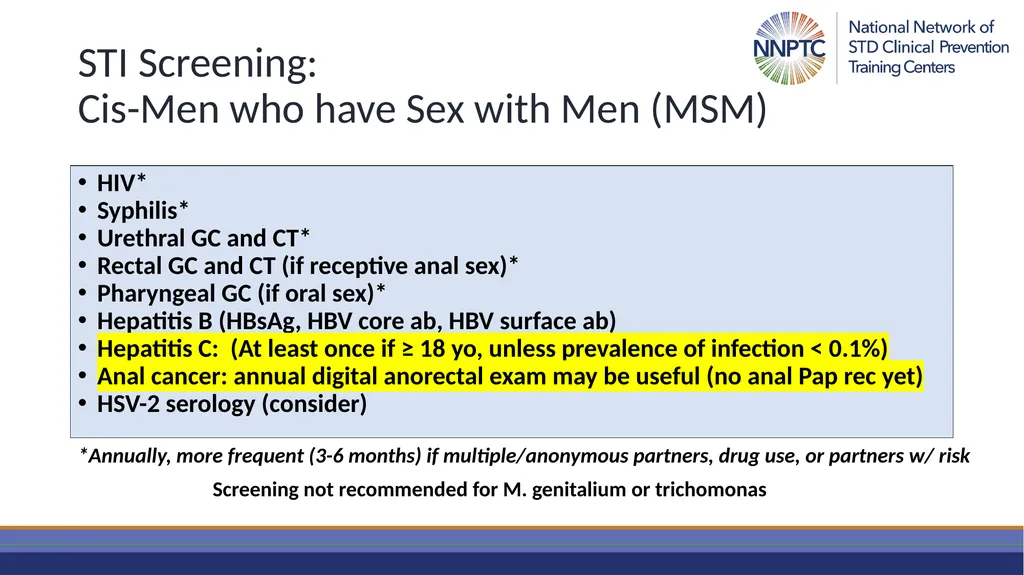
STI Screening:
Cis-Men who have Sex with Men (MSM) *Annually, more frequent (3-6 months) if multiple/anonymous partners, drug use, or partners w/ risk HIV*
Syphilis*
Urethral GC and CT*
Rectal GC and CT (if receptive anal sex)*
Pharyngeal GC (if oral sex)*
Hepatitis B (HBsAg, HBV core ab, HBV surface ab)
Hepatitis C: (At least once if ≥ 18 yo, unless prevalence of infection < 0.1%)
Anal cancer: annual digital anorectal exam may be useful (no anal Pap rec yet)
HSV-2 serology (consider) Screening not recommended for M. genitalium or trichomonas<br>
15
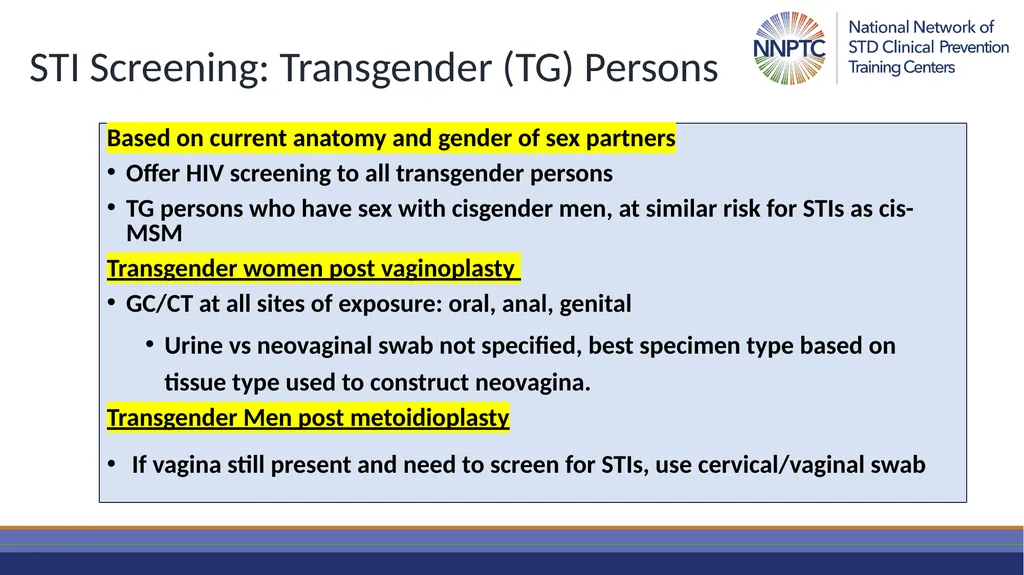
STI Screening: Transgender (TG) Persons Based on current anatomy and gender of sex partners
Offer HIV screening to all transgender persons
TG persons who have sex with cisgender men, at similar risk for STIs as cis-MSM
Transgender women post vaginoplasty
GC/CT at all sites of exposure: oral, anal, genital
Urine vs neovaginal swab not specified, best specimen type based on tissue type used to construct neovagina.
Transgender Men post metoidioplasty
If vagina still present and need to screen for STIs, use cervical/vaginal swab<br>
16
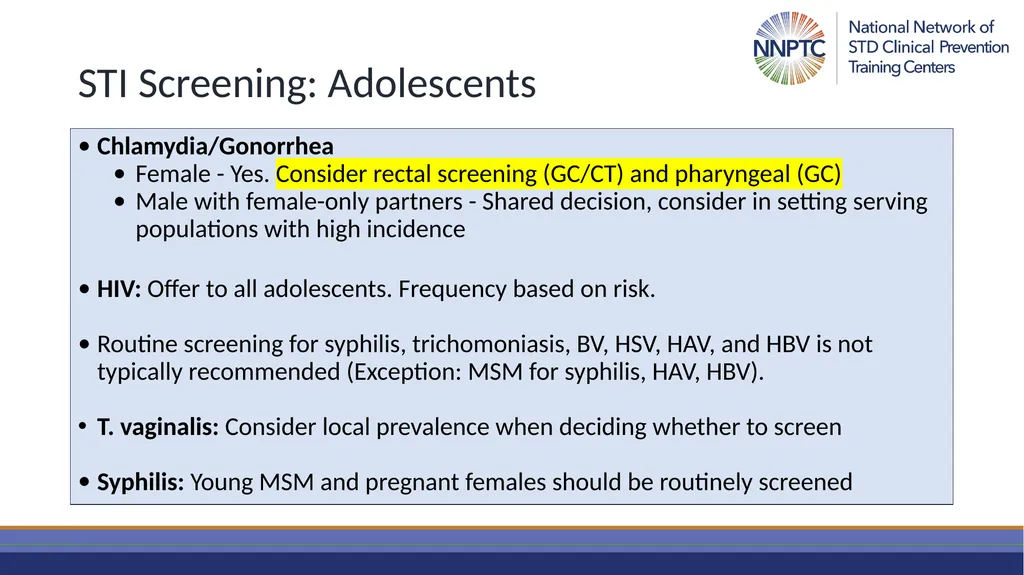
Chlamydia/Gonorrhea
Female - Yes. Consider rectal screening (GC/CT) and pharyngeal (GC)
Male with female-only partners - Shared decision, consider in setting serving populations with high incidence
HIV: Offer to all adolescents. Frequency based on risk.
Routine screening for syphilis, trichomoniasis, BV, HSV, HAV, and HBV is not typically recommended (Exception: MSM for syphilis, HAV, HBV).
T. vaginalis: Consider local prevalence when deciding whether to screen
Syphilis: Young MSM and pregnant females should be routinely screened STI Screening: Adolescents<br>
17
All persons in juvenile and adult correctional facilities:
HIV
HAV and HBV
HCV, depending on local prevalence and the person’s vaccination status
Vaccination for HAV and HBV should be offered if the person is susceptible
Females aged ≤35 years: Chlamydia and Gonorrhea , Trichomonas - opt-out
Cervical Cancer Screening if indicated,
Males aged <30 years: Chlamydia and Gonorrhea.
What about Syphilis? based on local area and institutional prevalence of early (primary, secondary, or early latent) infectious syphilis. STI Screening: Corrections<br>
18
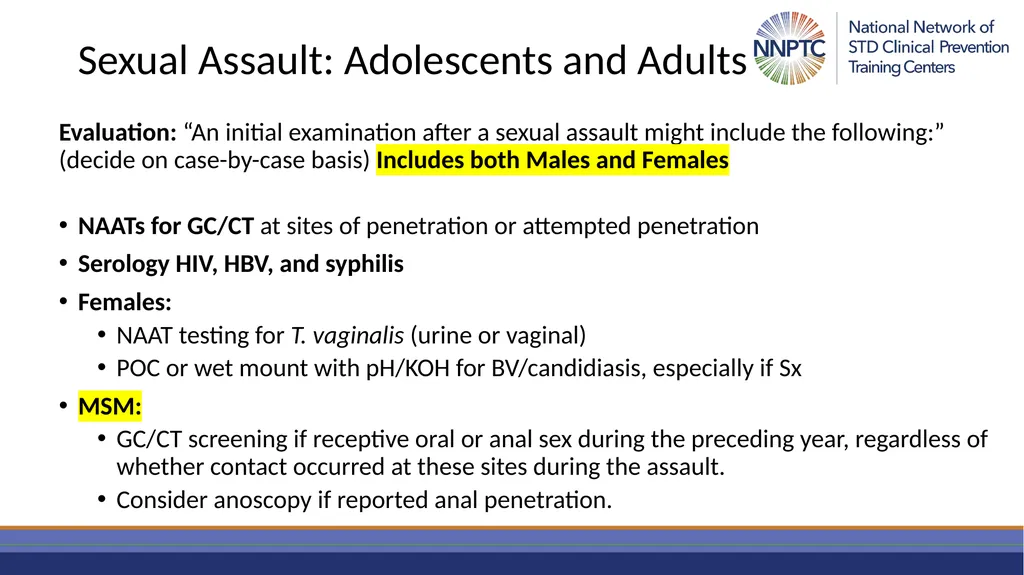
Sexual Assault: Adolescents and Adults Evaluation: “An initial examination after a sexual assault might include the following:” (decide on case-by-case basis) Includes both Males and Females
NAATs for GC/CT at sites of penetration or attempted penetration
Serology HIV, HBV, and syphilis
Females:
NAAT testing for T. vaginalis (urine or vaginal)
POC or wet mount with pH/KOH for BV/candidiasis, especially if Sx
MSM:
GC/CT screening if receptive oral or anal sex during the preceding year, regardless of whether contact occurred at these sites during the assault.
Consider anoscopy if reported anal penetration.<br>
19
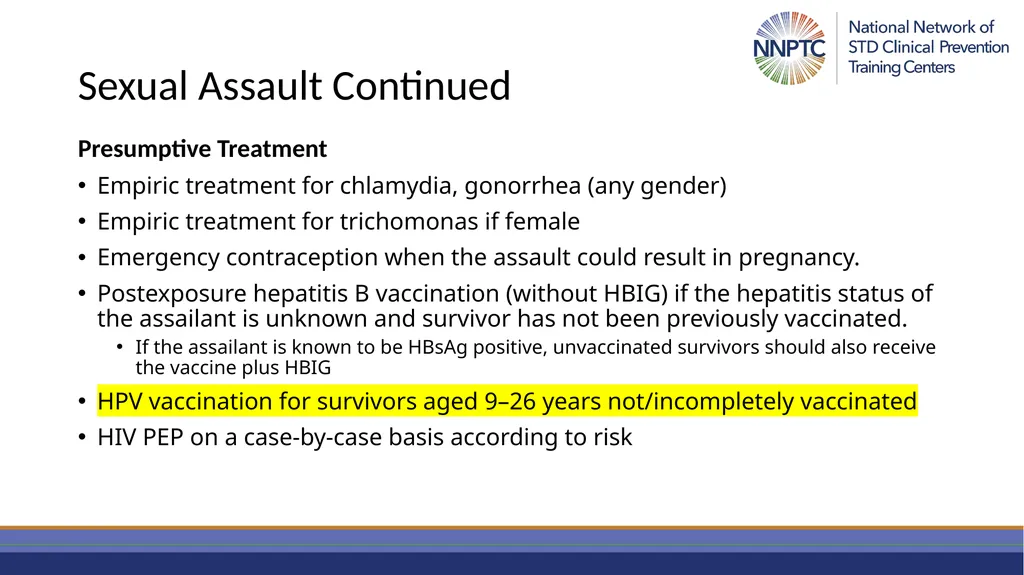
Sexual Assault Continued Presumptive Treatment
Empiric treatment for chlamydia, gonorrhea (any gender)
Empiric treatment for trichomonas if female
Emergency contraception when the assault could result in pregnancy.
Postexposure hepatitis B vaccination (without HBIG) if the hepatitis status of the assailant is unknown and survivor has not been previously vaccinated.
If the assailant is known to be HBsAg positive, unvaccinated survivors should also receive the vaccine plus HBIG
HPV vaccination for survivors aged 9–26 years not/incompletely vaccinated
HIV PEP on a case-by-case basis according to risk<br>
20
Chlamydia<br>
21
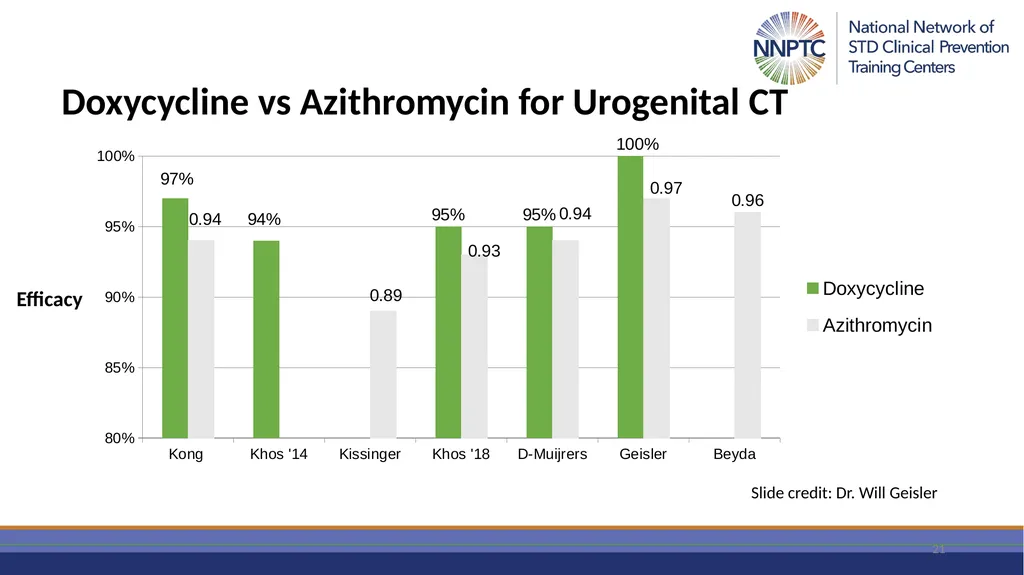
Doxycycline vs Azithromycin for Urogenital CT Efficacy Slide credit: Dr. Will Geisler 21<br>
22
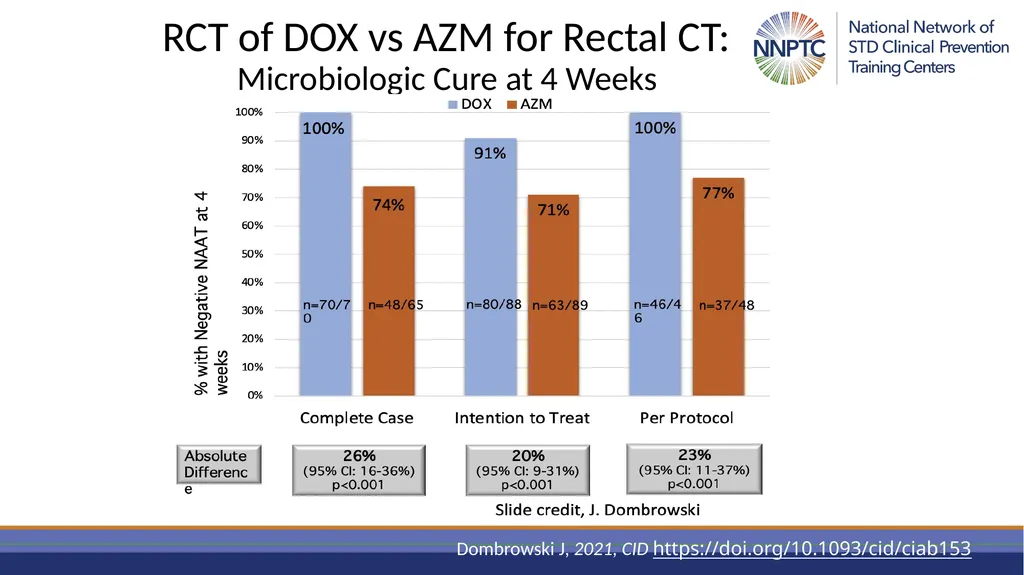
RCT of DOX vs AZM for Rectal CT:
Microbiologic Cure at 4 Weeks 22 Dombrowski J, 2021, CID https://doi.org/10.1093/cid/ciab153<br>
23
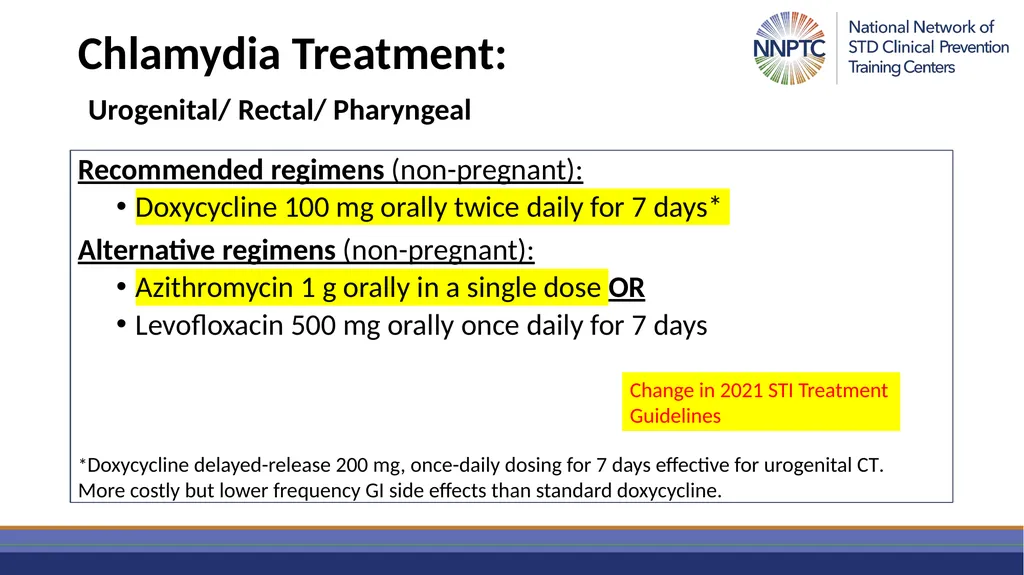
Chlamydia Treatment:
Urogenital/ Rectal/ Pharyngeal Recommended regimens (non-pregnant):
Doxycycline 100 mg orally twice daily for 7 days*
Alternative regimens (non-pregnant):
Azithromycin 1 g orally in a single dose OR
Levofloxacin 500 mg orally once daily for 7 days *Doxycycline delayed-release 200 mg, once-daily dosing for 7 days effective for urogenital CT.
More costly but lower frequency GI side effects than standard doxycycline. Change in 2021 STI Treatment Guidelines<br>
24
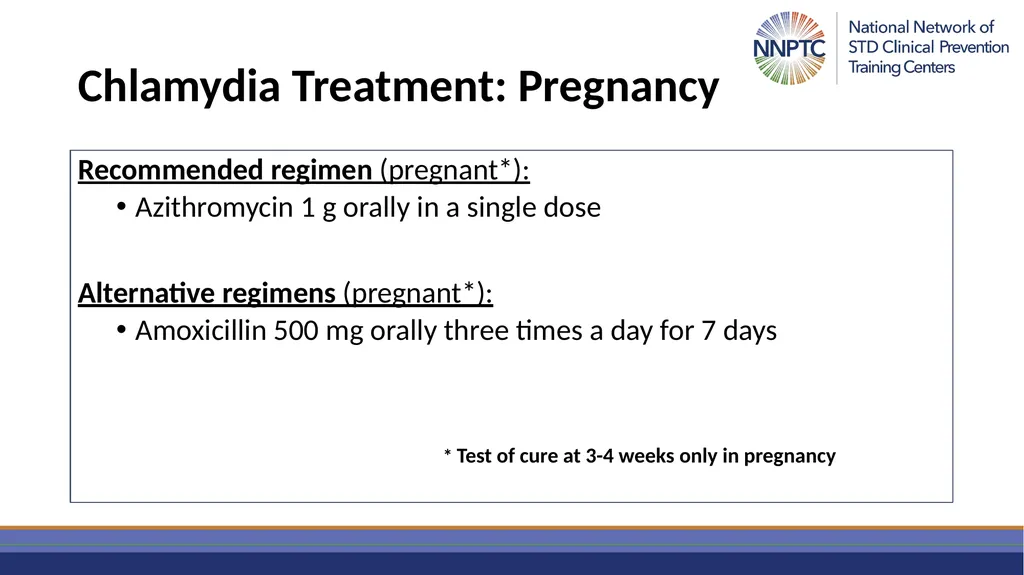
Chlamydia Treatment: Pregnancy Recommended regimen (pregnant*):
Azithromycin 1 g orally in a single dose
Alternative regimens (pregnant*):
Amoxicillin 500 mg orally three times a day for 7 days * Test of cure at 3-4 weeks only in pregnancy<br>
Azithromycin 1 g orally in a single dose
Alternative regimens (pregnant*):
Amoxicillin 500 mg orally three times a day for 7 days * Test of cure at 3-4 weeks only in pregnancy<br>
25
Gonorrhea<br>
26
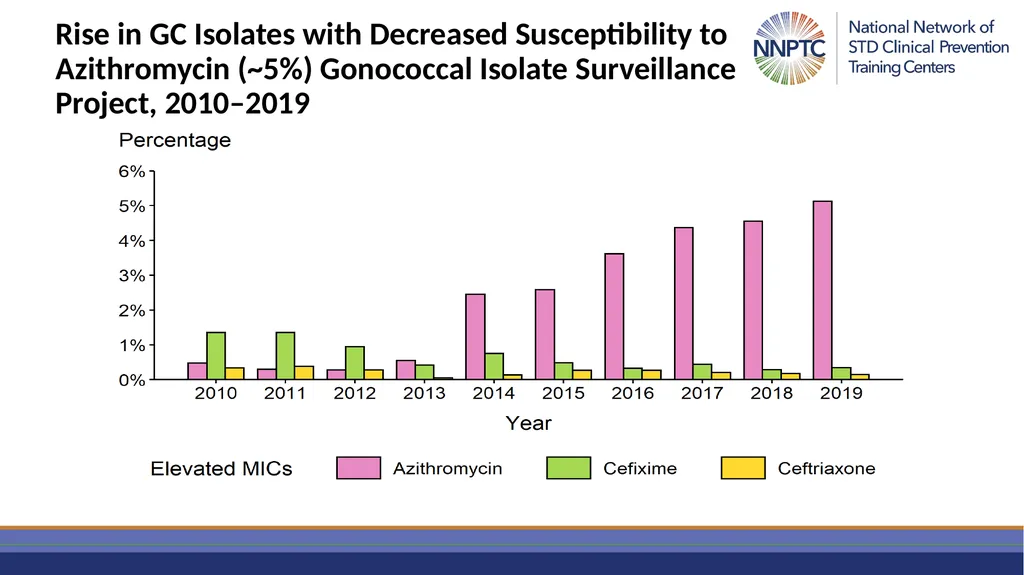
Rise in GC Isolates with Decreased Susceptibility to Azithromycin (~5%) Gonococcal Isolate Surveillance Project, 2010–2019<br>
27
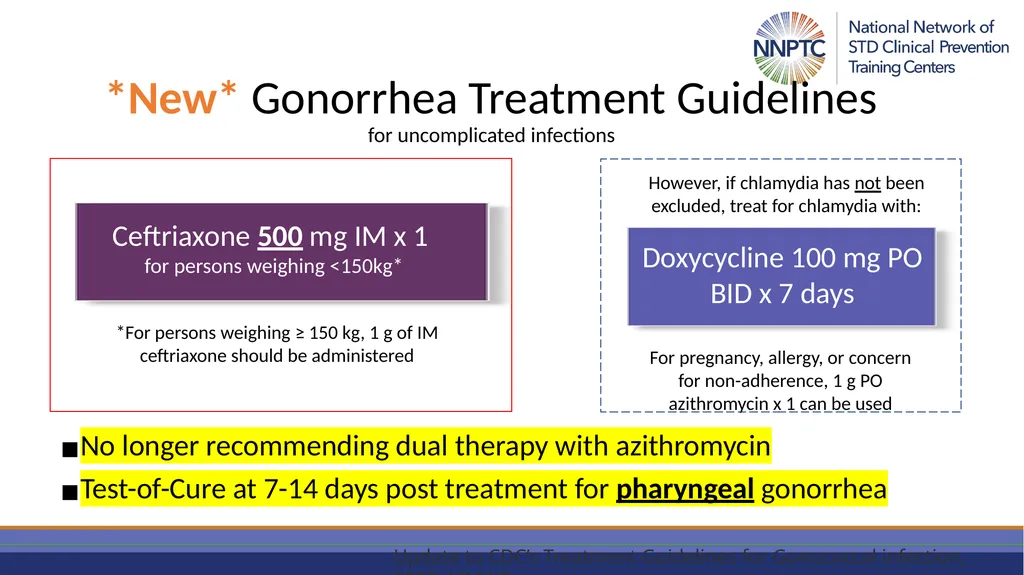
*New* Gonorrhea Treatment Guidelines
for uncomplicated infections No longer recommending dual therapy with azithromycin
Test-of-Cure at 7-14 days post treatment for pharyngeal gonorrhea *For persons weighing ≥ 150 kg, 1 g of IM ceftriaxone should be administered Update to CDC’s Treatment Guidelines for Gonococcal infection, 2020; MMWR However, if chlamydia has not been excluded, treat for chlamydia with: For pregnancy, allergy, or concern for non-adherence, 1 g PO azithromycin x 1 can be used<br>
Test-of-Cure at 7-14 days post treatment for pharyngeal gonorrhea *For persons weighing ≥ 150 kg, 1 g of IM ceftriaxone should be administered Update to CDC’s Treatment Guidelines for Gonococcal infection, 2020; MMWR However, if chlamydia has not been excluded, treat for chlamydia with: For pregnancy, allergy, or concern for non-adherence, 1 g PO azithromycin x 1 can be used<br>
28
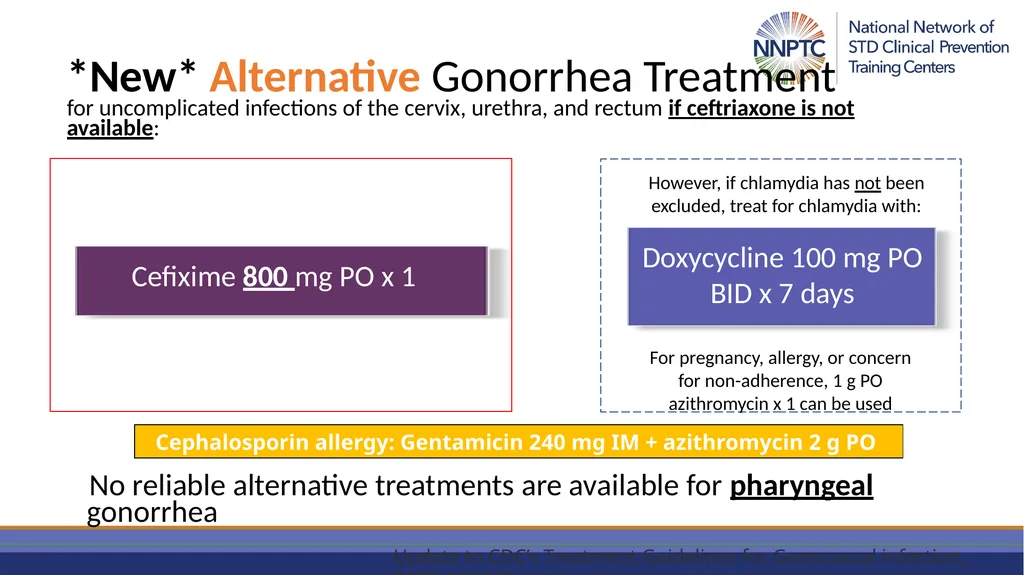
*New* Alternative Gonorrhea Treatment
for uncomplicated infections of the cervix, urethra, and rectum if ceftriaxone is not available: No reliable alternative treatments are available for pharyngeal gonorrhea Update to CDC’s Treatment Guidelines for Gonococcal infection, 2020; MMWR Cephalosporin allergy: Gentamicin 240 mg IM + azithromycin 2 g PO However, if chlamydia has not been excluded, treat for chlamydia with: For pregnancy, allergy, or concern for non-adherence, 1 g PO azithromycin x 1 can be used<br>
29
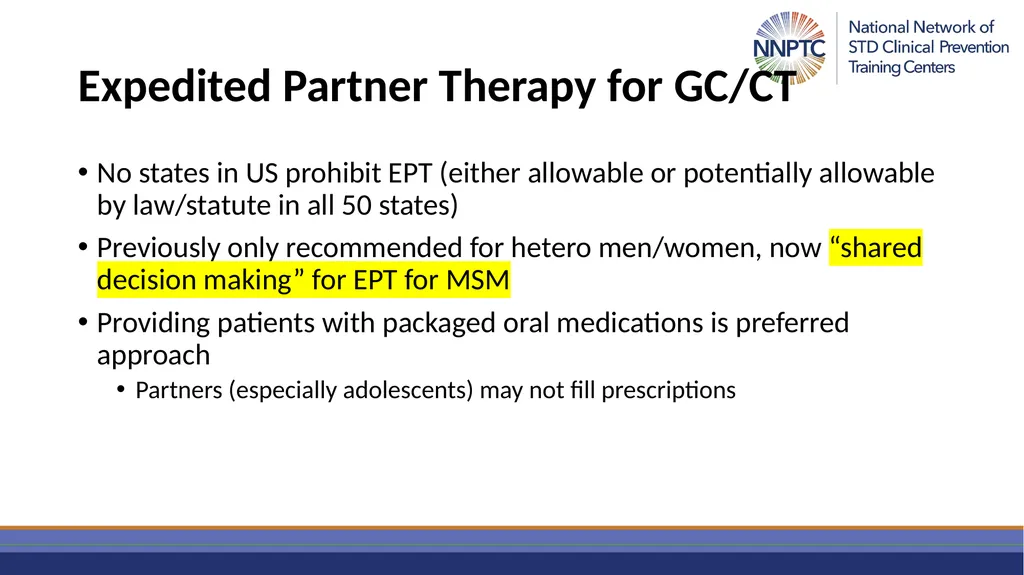
Expedited Partner Therapy for GC/CT No states in US prohibit EPT (either allowable or potentially allowable by law/statute in all 50 states)
Previously only recommended for hetero men/women, now “shared decision making” for EPT for MSM
Providing patients with packaged oral medications is preferred approach
Partners (especially adolescents) may not fill prescriptions<br>
Previously only recommended for hetero men/women, now “shared decision making” for EPT for MSM
Providing patients with packaged oral medications is preferred approach
Partners (especially adolescents) may not fill prescriptions<br>
30
Mycoplasma genitalium<br>
31
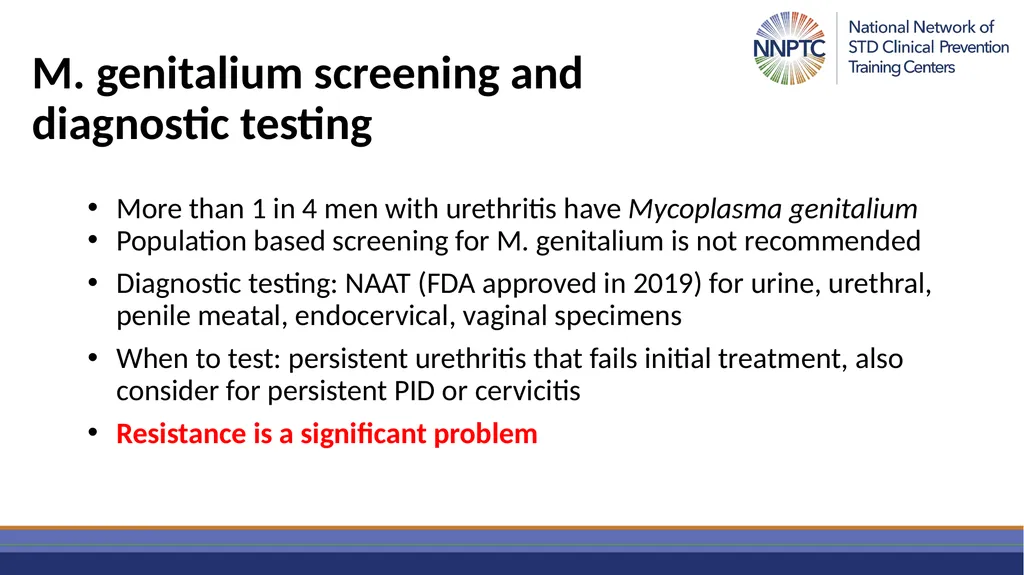
M. genitalium screening and
diagnostic testing More than 1 in 4 men with urethritis have Mycoplasma genitalium
Population based screening for M. genitalium is not recommended
Diagnostic testing: NAAT (FDA approved in 2019) for urine, urethral, penile meatal, endocervical, vaginal specimens
When to test: persistent urethritis that fails initial treatment, also consider for persistent PID or cervicitis
Resistance is a significant problem<br>
32
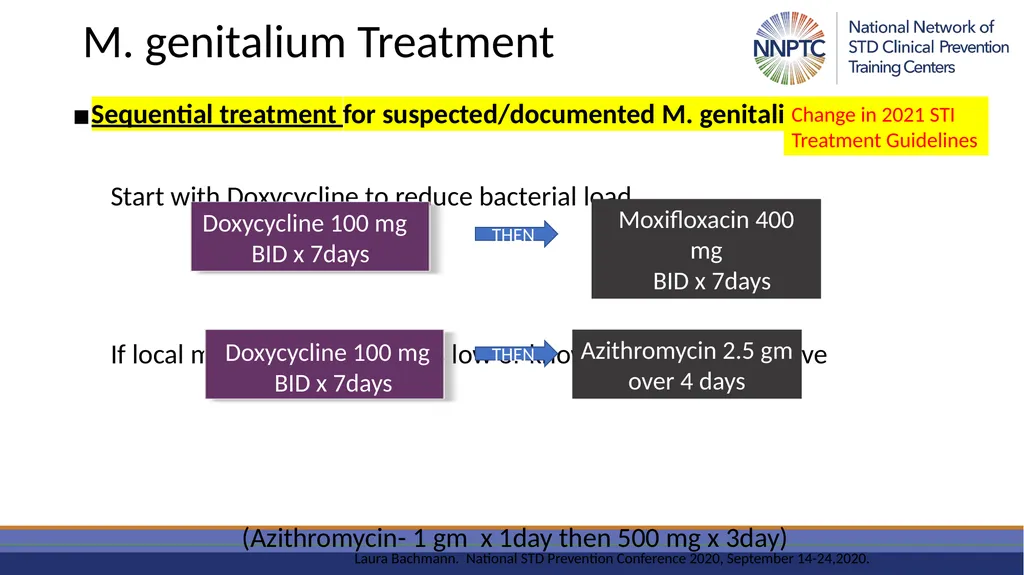
M. genitalium Treatment Sequential treatment for suspected/documented M. genitalium
Start with Doxycycline to reduce bacterial load
If local macrolide resistance is low or known macrolide sensitive
(Azithromycin- 1 gm x 1day then 500 mg x 3day) Change in 2021 STI Treatment Guidelines Laura Bachmann. National STD Prevention Conference 2020, September 14-24,2020. Moxifloxacin 400 mg
BID x 7days THEN Azithromycin 2.5 gm over 4 days THEN<br>
33
Syphilis<br>
34
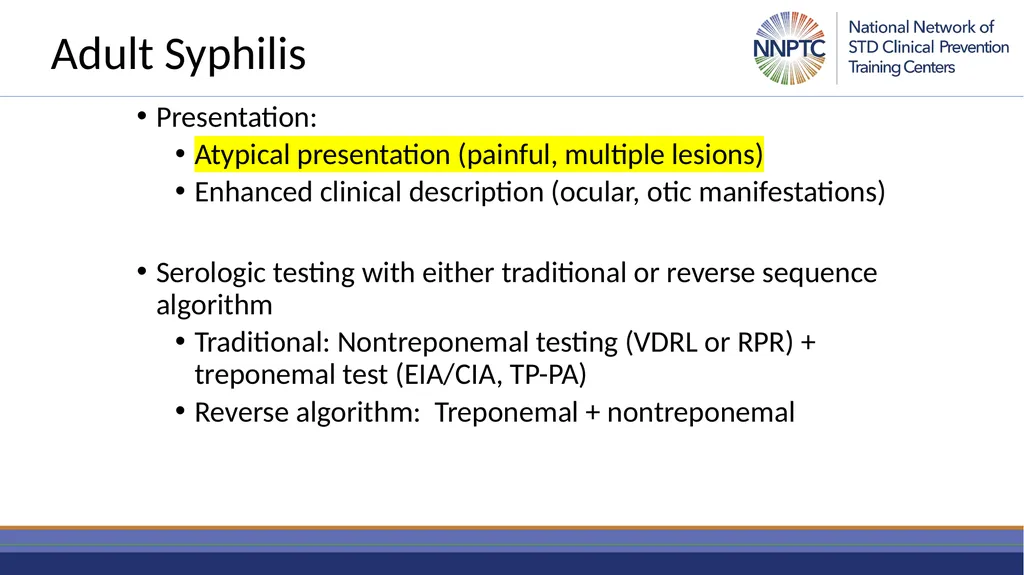
Adult Syphilis Presentation:
Atypical presentation (painful, multiple lesions)
Enhanced clinical description (ocular, otic manifestations)
Serologic testing with either traditional or reverse sequence algorithm
Traditional: Nontreponemal testing (VDRL or RPR) + treponemal test (EIA/CIA, TP-PA)
Reverse algorithm: Treponemal + nontreponemal<br>
35
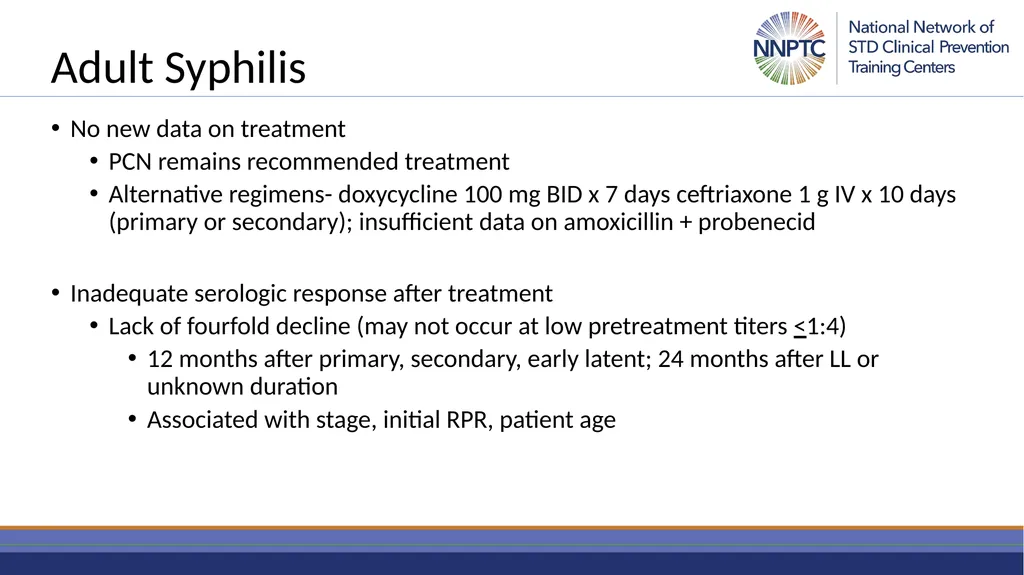
Adult Syphilis No new data on treatment
PCN remains recommended treatment
Alternative regimens- doxycycline 100 mg BID x 7 days ceftriaxone 1 g IV x 10 days (primary or secondary); insufficient data on amoxicillin + probenecid
Inadequate serologic response after treatment
Lack of fourfold decline (may not occur at low pretreatment titers <1:4)
12 months after primary, secondary, early latent; 24 months after LL or unknown duration
Associated with stage, initial RPR, patient age<br>
36
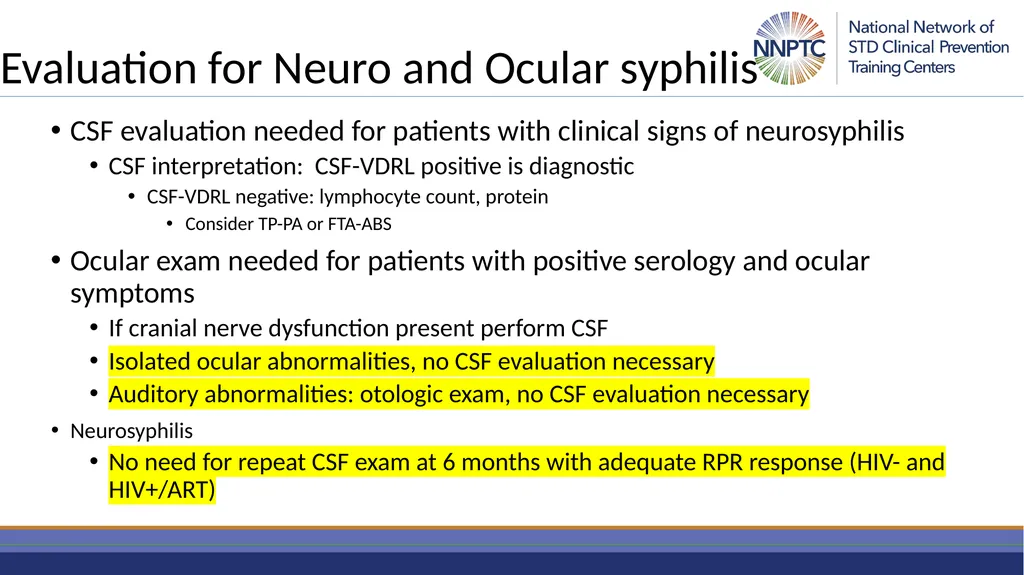
Evaluation for Neuro and Ocular syphilis CSF evaluation needed for patients with clinical signs of neurosyphilis
CSF interpretation: CSF-VDRL positive is diagnostic
CSF-VDRL negative: lymphocyte count, protein
Consider TP-PA or FTA-ABS
Ocular exam needed for patients with positive serology and ocular symptoms
If cranial nerve dysfunction present perform CSF
Isolated ocular abnormalities, no CSF evaluation necessary
Auditory abnormalities: otologic exam, no CSF evaluation necessary
Neurosyphilis
No need for repeat CSF exam at 6 months with adequate RPR response (HIV- and HIV+/ART)<br>
37
Other<br>
38
Lewis et al, STD 2021;48(4): 232-237 2018 Trichomonas Epidemiology Prevalent infections: 2.6 million
Incident infections: 6.9 million<br>
Incident infections: 6.9 million<br>
39
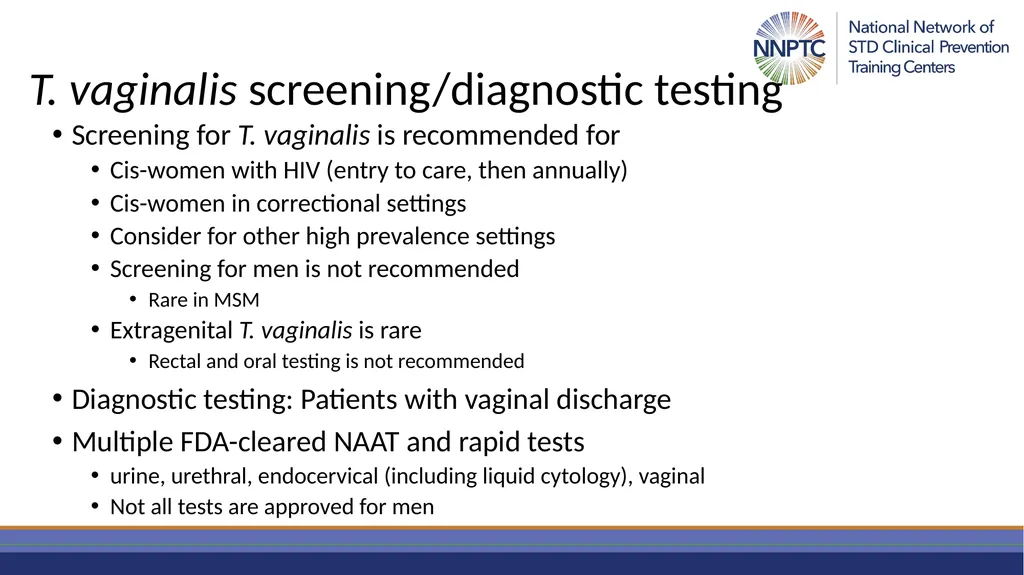
T. vaginalis screening/diagnostic testing Screening for T. vaginalis is recommended for
Cis-women with HIV (entry to care, then annually)
Cis-women in correctional settings
Consider for other high prevalence settings
Screening for men is not recommended
Rare in MSM
Extragenital T. vaginalis is rare
Rectal and oral testing is not recommended
Diagnostic testing: Patients with vaginal discharge
Multiple FDA-cleared NAAT and rapid tests
urine, urethral, endocervical (including liquid cytology), vaginal
Not all tests are approved for men<br>
40
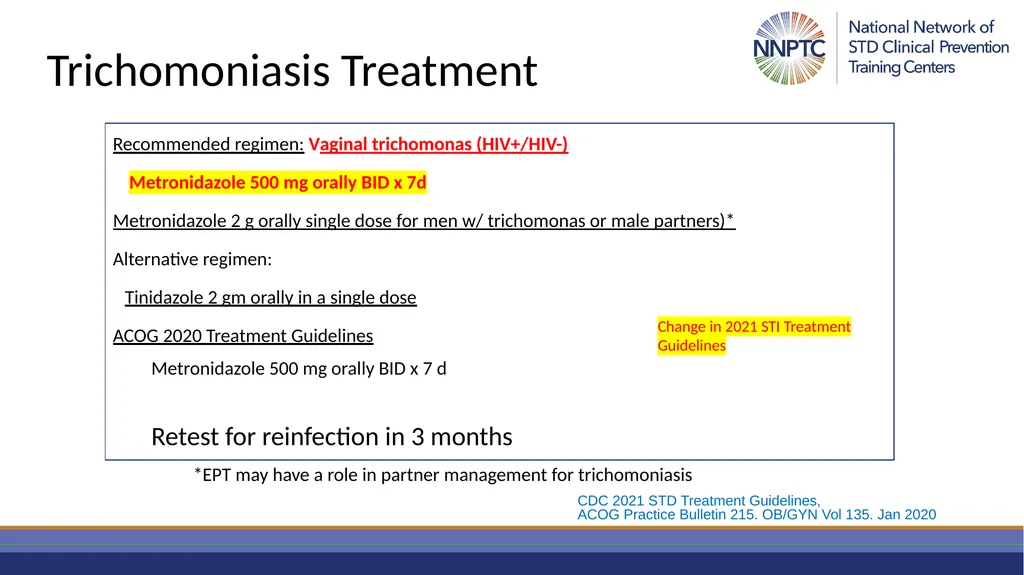
Trichomoniasis Treatment Recommended regimen: Vaginal trichomonas (HIV+/HIV-)
Metronidazole 500 mg orally BID x 7d
Metronidazole 2 g orally single dose for men w/ trichomonas or male partners)*
Alternative regimen:
Tinidazole 2 gm orally in a single dose
ACOG 2020 Treatment Guidelines
Metronidazole 500 mg orally BID x 7 d
Retest for reinfection in 3 months CDC 2021 STD Treatment Guidelines,
ACOG Practice Bulletin 215. OB/GYN Vol 135. Jan 2020 Change in 2021 STI Treatment Guidelines *EPT may have a role in partner management for trichomoniasis<br>
41
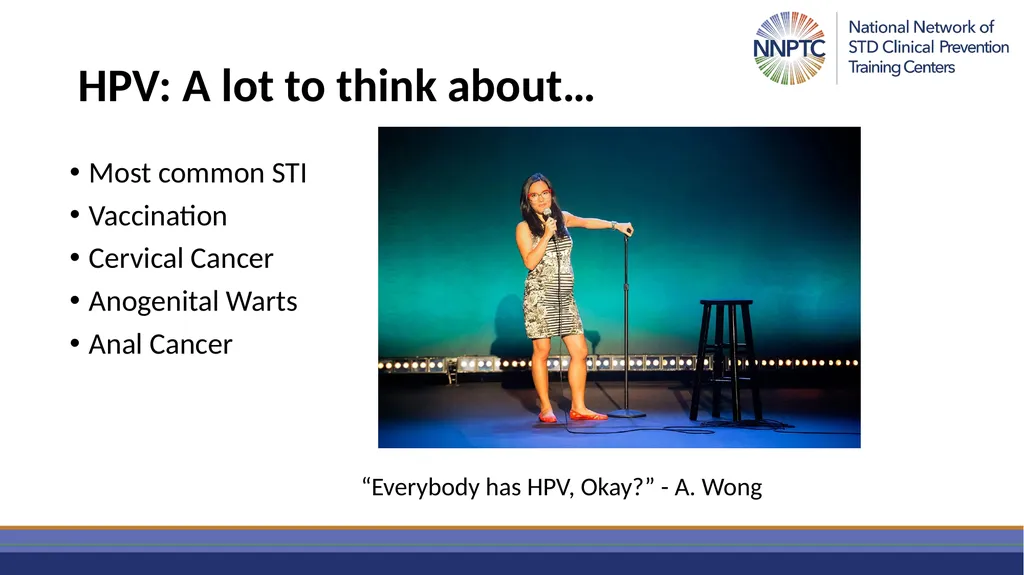
HPV: A lot to think about… Most common STI
Vaccination
Cervical Cancer
Anogenital Warts
Anal Cancer “Everybody has HPV, Okay?” - A. Wong<br>
Vaccination
Cervical Cancer
Anogenital Warts
Anal Cancer “Everybody has HPV, Okay?” - A. Wong<br>
42
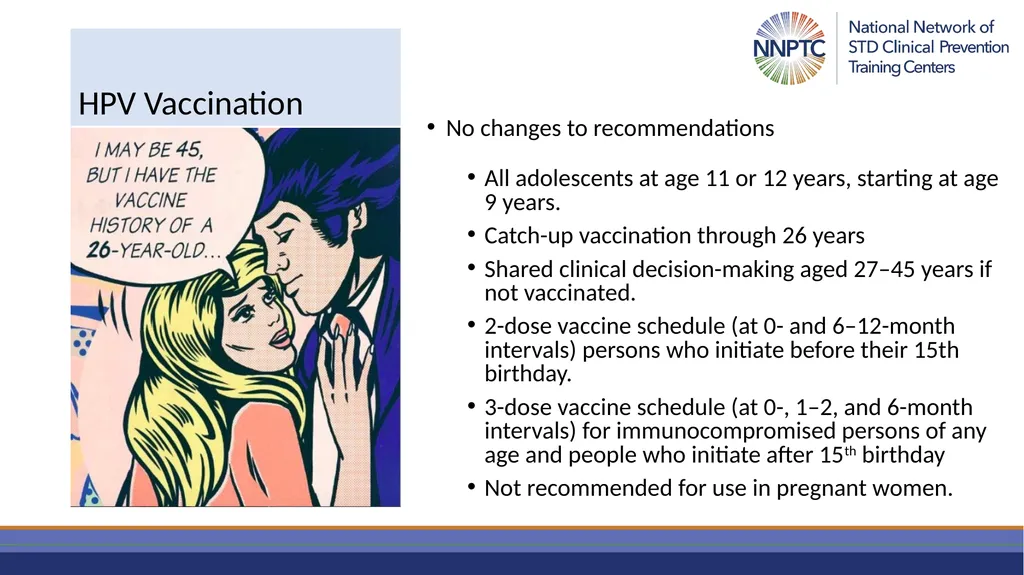
HPV Vaccination No changes to recommendations
All adolescents at age 11 or 12 years, starting at age 9 years.
Catch-up vaccination through 26 years
Shared clinical decision-making aged 27–45 years if not vaccinated.
2-dose vaccine schedule (at 0- and 6–12-month intervals) persons who initiate before their 15th birthday.
3-dose vaccine schedule (at 0-, 1–2, and 6-month intervals) for immunocompromised persons of any age and people who initiate after 15th birthday
Not recommended for use in pregnant women.<br>
43
Viral Hepatitis<br>
44
Viral Hepatitis: Prevention HBV and HAV vaccination recommended for all adolescents and young adults who have not previously received the vaccine series during childhood.<br>
45
Hepatitis A (no changes) Diagnostic Considerations
Requires serologic testing.
IgM antibody to HAV is diagnostic of acute HAV infection.
Total anti-HAV positivity indicates immunity to HAV infection but does not differentiate current from previous HAV infection.
might be positive after hepatitis A vaccination.
Treatment
Acute HAV infection usually require only supportive care, with no restrictions in diet or activity.
Hospitalization?
Dehydration because of nausea and vomiting
Signs or symptoms of acute liver failure.<br>
46
Hepatitis B<br>
47
Hepatitis B Diagnosis: based on serology
Treatment
No therapy for acute HBV infection; treatment is supportive.
Chronic HBV – refer to speciatlist Therapeutic agents approved by FDA for treatment of chronic HBV infection can achieve sustained suppression of HBV replication and remission of liver disease<br>
Treatment
No therapy for acute HBV infection; treatment is supportive.
Chronic HBV – refer to speciatlist Therapeutic agents approved by FDA for treatment of chronic HBV infection can achieve sustained suppression of HBV replication and remission of liver disease<br>
48
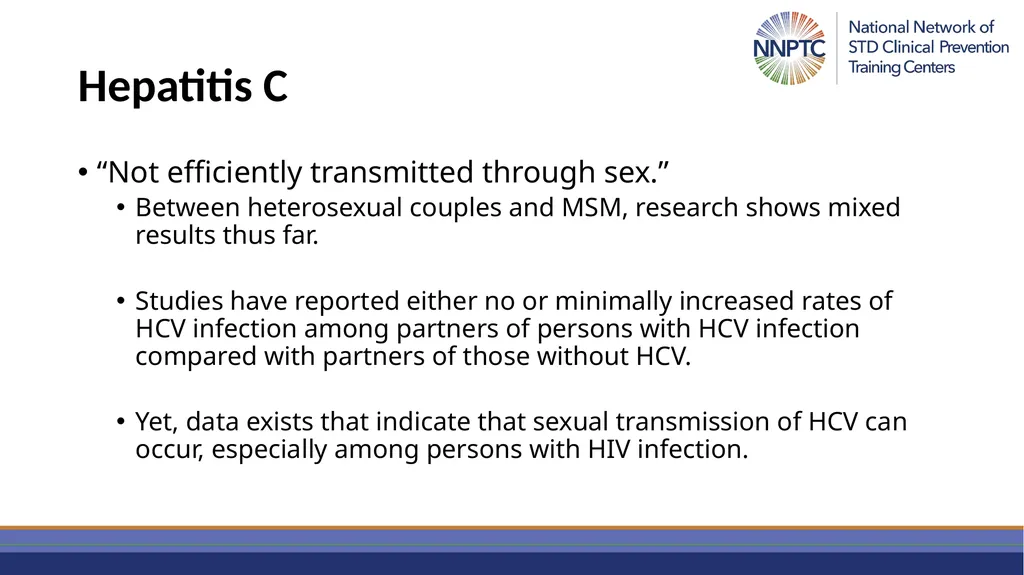
Hepatitis C “Not efficiently transmitted through sex.”
Between heterosexual couples and MSM, research shows mixed results thus far.
Studies have reported either no or minimally increased rates of HCV infection among partners of persons with HCV infection compared with partners of those without HCV.
Yet, data exists that indicate that sexual transmission of HCV can occur, especially among persons with HIV infection.<br>
49
Hepatitis C Diagnosis
Antibody to HCV followed by HCV RNA NAAT
Antibody to HCV remains positive after spontaneously resolving or successful treatment; use HCV RNA to test for reinfection
Treatment and additional testing
Consult existing guidelines (HCVguidelines.org) and with hepatitis specialists, as needed.
If HIV and HBV infection status is unknown tested for these infections.
Persons without previous exposure to HAV or HBV should be vaccinated.<br>
50
Still Have Questions?
stitxguidelines@cdc.gov Download the mobile-friendly solution instructions in the resources section of your registration<br>
stitxguidelines@cdc.gov Download the mobile-friendly solution instructions in the resources section of your registration<br>