Online Course on Constitution of India Citizenship in India Why Citizenship is Important Citizenship is Legal Membership of Nation States Context Outsiders: Alien, enemy, migrant, illegal migrant, refugee etc. Citizenship is Promise of
"Online Course on Constitution of India Citizenship" is the property of its rightful owner. Permission is granted to
download and print the materials on this website for personal, non-commercial use only, and to display it
on your personal computer provided you do not modify the materials and that you retain all copyright
notices contained in the materials. By downloading content from our website, you accept the terms of this
agreement.
Presentation Transcript
01
Online Course on Constitution of India Citizenship in India<br>
02
Why Citizenship is Important Citizenship is Legal Membership of Nation States
Context Outsiders: Alien, enemy, migrant, illegal migrant, refugee etc.
Citizenship is Promise of Equality and integration within a political community<br>
03
How Political Community comes into Being? When People agree to live together within a framework of mutually agreed Rules, consenting to a Sovereign Political Authority.
Constitution reflects the Mutually Agreed Rules- It is a sacred covenant & a Social Contract.
Political Authority means Power to Enforce these Rules.<br>
04
What is the Legal Implications of Citizenship? Citizenship is seen in terms of Legal/formal Status of Individuals.
It means having Nationality i.e. Membership of Nation State
Nation State is Largely a 20th century concept.
Citizenship is bundle of Rights: Article 19, Right to Vote, Right to Hold Positions
Citizenship also imposes Duties- Article 51A<br>
05
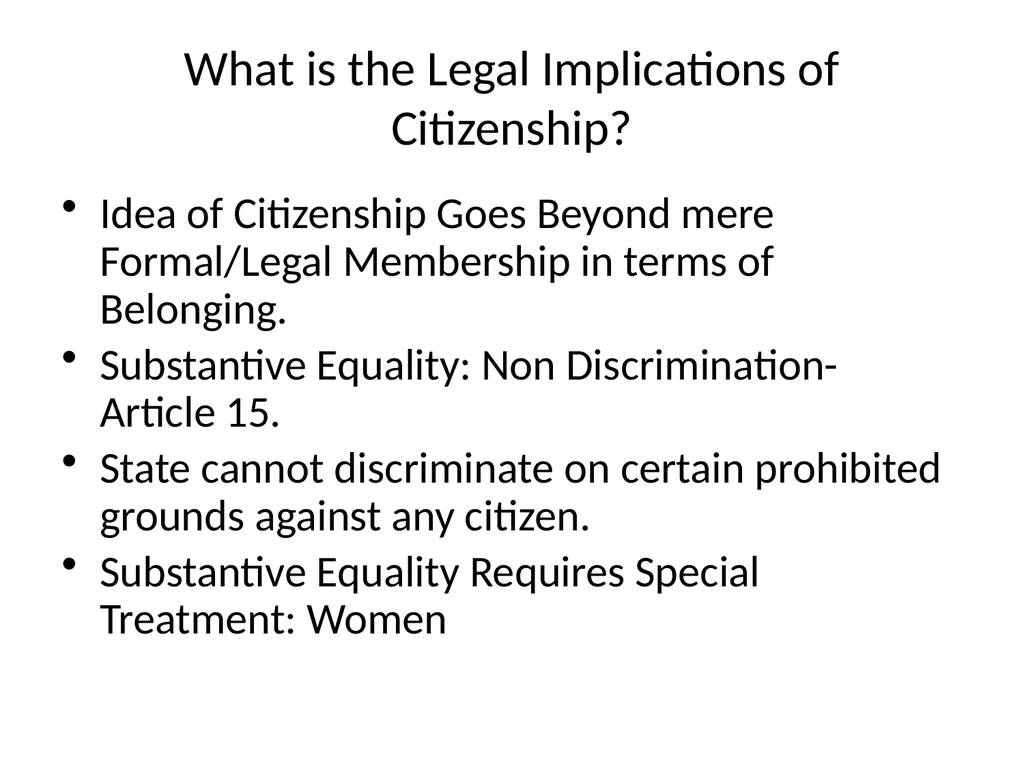
What is the Legal Implications of Citizenship? Idea of Citizenship Goes Beyond mere Formal/Legal Membership in terms of Belonging.
Substantive Equality: Non Discrimination- Article 15.
State cannot discriminate on certain prohibited grounds against any citizen.
Substantive Equality Requires Special Treatment: Women<br>
06
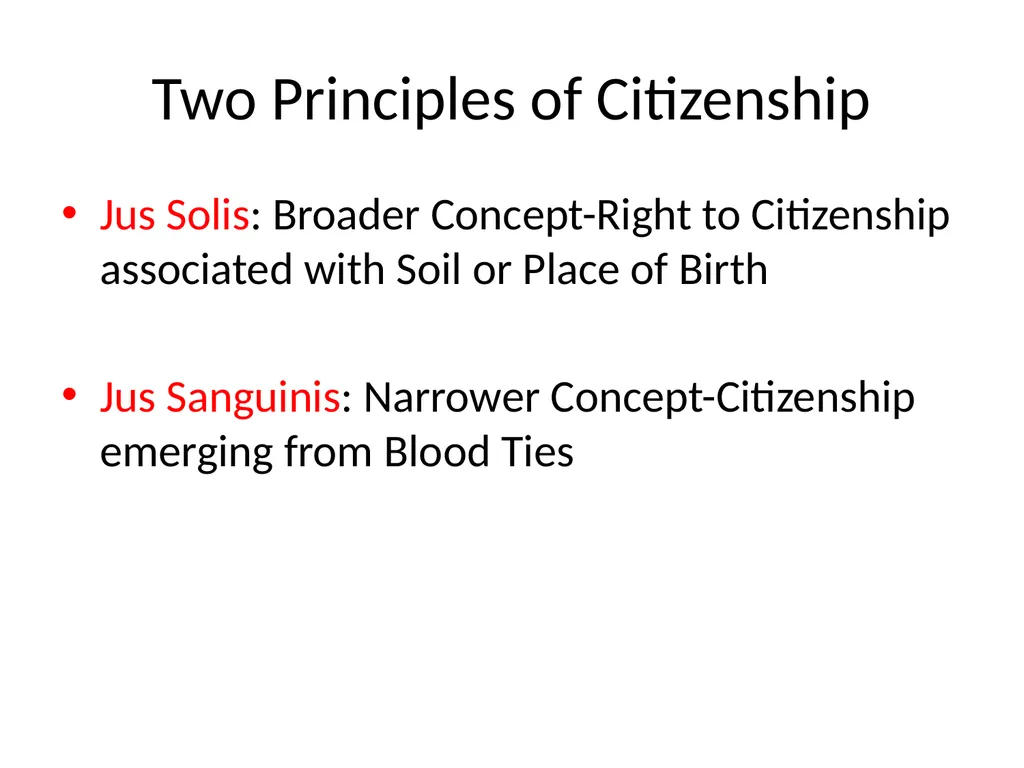
Two Principles of Citizenship Jus Solis: Broader Concept-Right to Citizenship associated with Soil or Place of Birth
Jus Sanguinis: Narrower Concept-Citizenship emerging from Blood Ties<br>
07
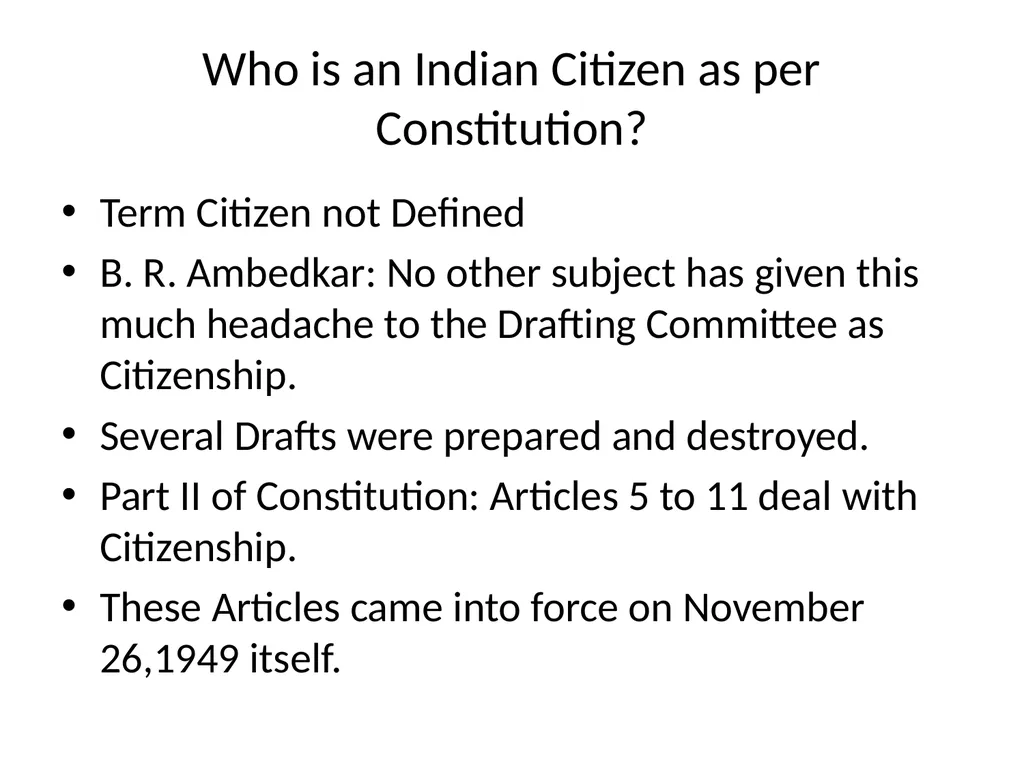
Who is an Indian Citizen as per Constitution? Term Citizen not Defined
B. R. Ambedkar: No other subject has given this much headache to the Drafting Committee as Citizenship.
Several Drafts were prepared and destroyed.
Part II of Constitution: Articles 5 to 11 deal with Citizenship.
These Articles came into force on November 26,1949 itself.<br>
08
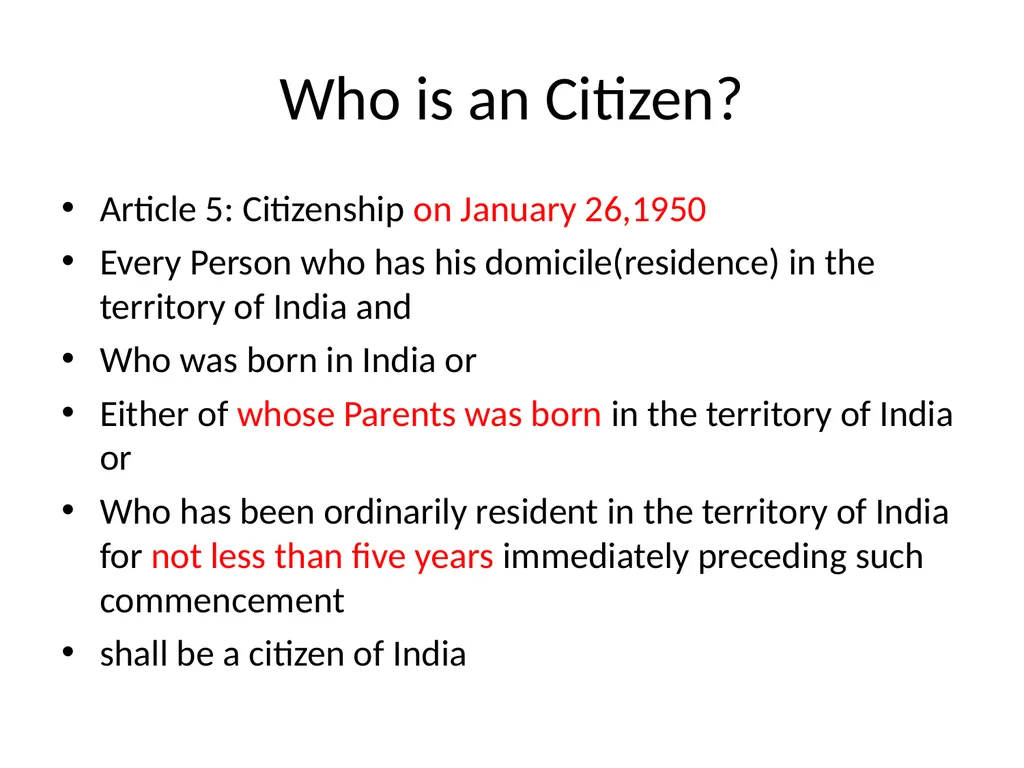
Who is an Citizen? Article 5: Citizenship on January 26,1950
Every Person who has his domicile(residence) in the territory of India and
Who was born in India or
Either of whose Parents was born in the territory of India or
Who has been ordinarily resident in the territory of India for not less than five years immediately preceding such commencement
shall be a citizen of India<br>
09
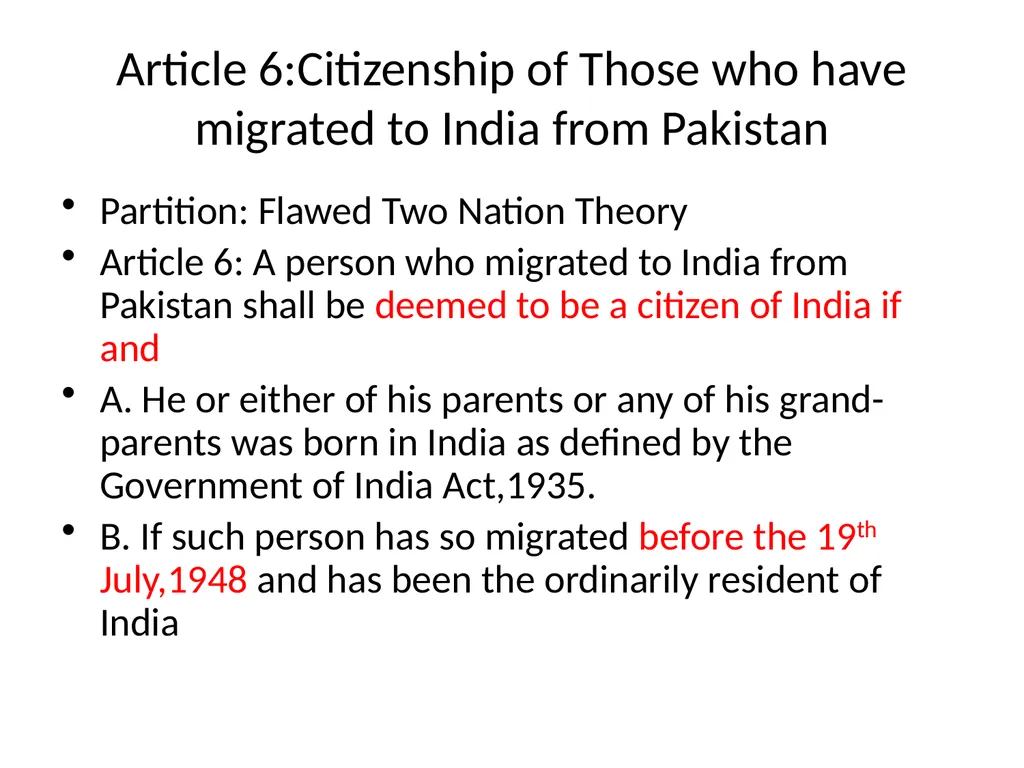
Article 6:Citizenship of Those who have migrated to India from Pakistan Partition: Flawed Two Nation Theory
Article 6: A person who migrated to India from Pakistan shall be deemed to be a citizen of India if and
A. He or either of his parents or any of his grand-parents was born in India as defined by the Government of India Act,1935.
B. If such person has so migrated before the 19th July,1948 and has been the ordinarily resident of India<br>
10
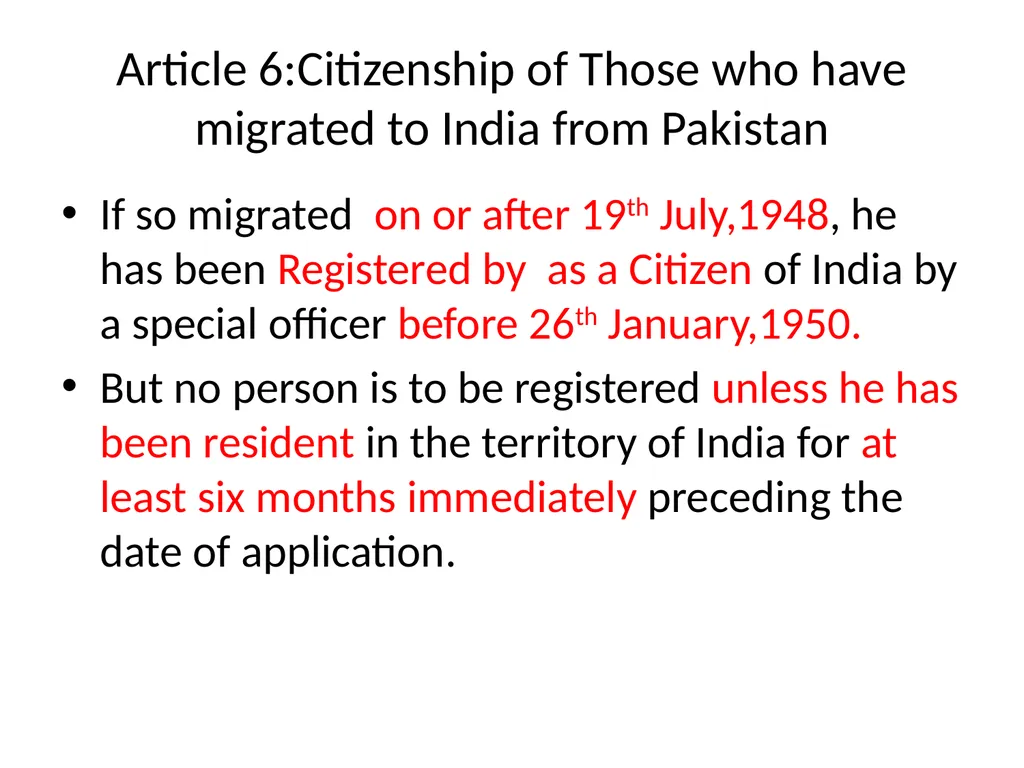
Article 6:Citizenship of Those who have migrated to India from Pakistan If so migrated on or after 19th July,1948, he has been Registered by as a Citizen of India by a special officer before 26th January,1950.
But no person is to be registered unless he has been resident in the territory of India for at least six months immediately preceding the date of application.<br>
11
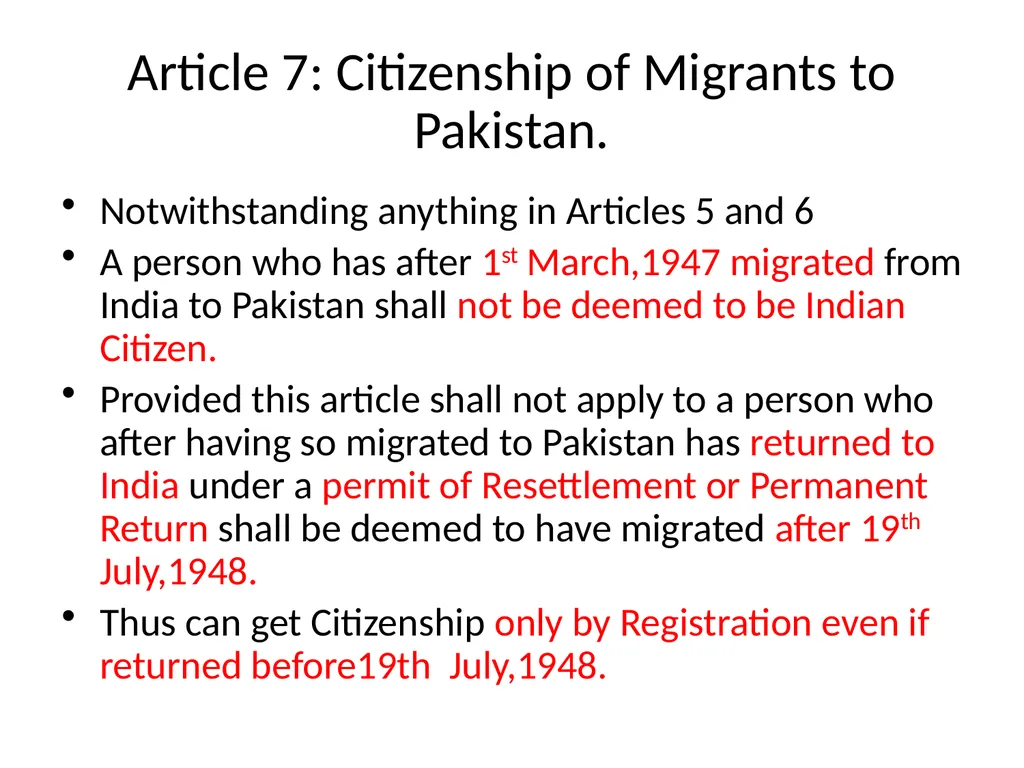
Article 7: Citizenship of Migrants to Pakistan. Notwithstanding anything in Articles 5 and 6
A person who has after 1st March,1947 migrated from India to Pakistan shall not be deemed to be Indian Citizen.
Provided this article shall not apply to a person who after having so migrated to Pakistan has returned to India under a permit of Resettlement or Permanent Return shall be deemed to have migrated after 19th July,1948.
Thus can get Citizenship only by Registration even if returned before19th July,1948.<br>
12
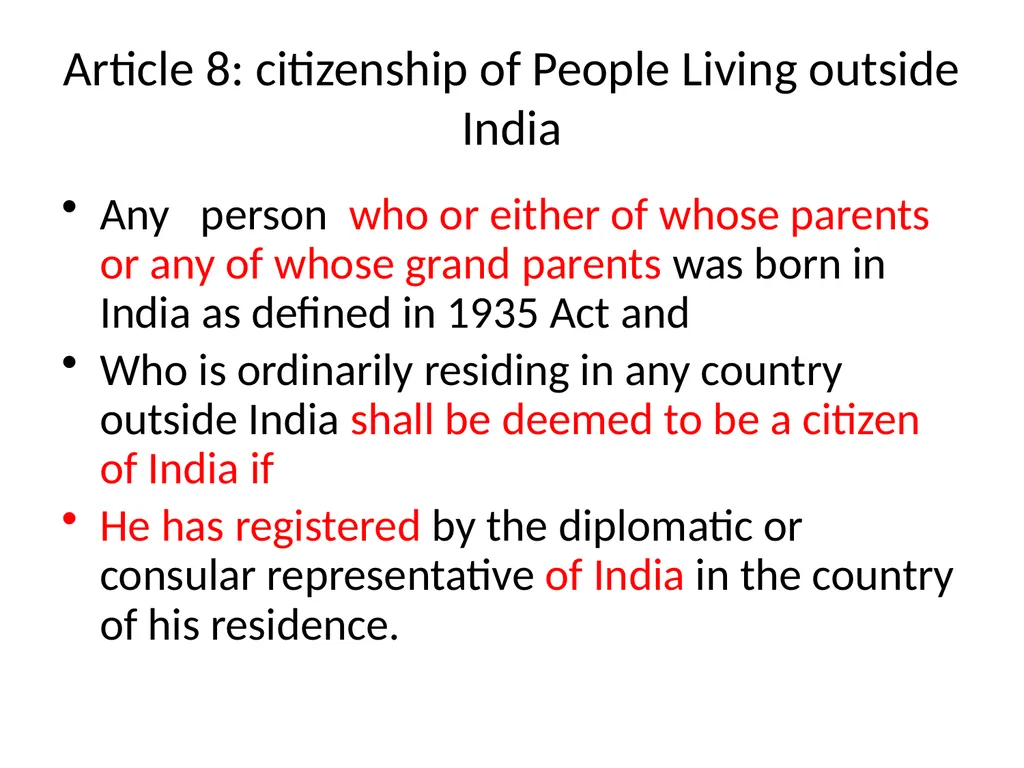
Article 8: citizenship of People Living outside India Any person who or either of whose parents or any of whose grand parents was born in India as defined in 1935 Act and
Who is ordinarily residing in any country outside India shall be deemed to be a citizen of India if
He has registered by the diplomatic or consular representative of India in the country of his residence.<br>
13
Article 9:Loss of Citizenship If he voluntarily acquired citizenship of Foreign country.<br>
14
Article 11:Parliament to Regulate Citizenship Article 11: Parliament given full authority to regulate citizenship with respect to acquisition and termination of citizenship and all matters relating to citizenship.
Citizenship Central Subject: Entry No 17 of Union List.
Citizenship Act,1955
Amendments in 1986,1992,2003,2005,2015 and 2019
States Have No Role: Assembly Resolutions Against CAA<br>
15
Section 3, Citizenship Act,1955 Citizenship by Birth
For every person born in India after the 26th January,1950 and before July 1,1987.
After July 1,1987 before the commencement of Citizenship Amendment Act,2003, either of whose parents was citizen of India at the time of his birth.
CAA,2003 received Presidential assent on 7th January,2004 and is called CAA,2004( 6 of 2004)<br>
16
What Did we Learn today? Citizenship: State centric concept
Citizenship: Bundle of Rights
Jus Soli & Jus Sanguinis
Who is an Indian Citizen?
Next Lecture<br>
17
Disclaimer The views which have been expressed by the speaker in the lecture are his personal views.<br>