Pain Lab 3 Analgesic From PNS to CNS From CNS to PNS Skeletal muscle smooth muscle, cardiac muscle, and glands The main function is to connect CNS to the limbs and organs. Consists : A- nerves B- ganglia Outside of the CNS Sensory or
"Pain Lab #3 Analgesic From PNS to CNS From CNS" is the property of its rightful owner. Permission is granted to
download and print the materials on this website for personal, non-commercial use only, and to display it
on your personal computer provided you do not modify the materials and that you retain all copyright
notices contained in the materials. By downloading content from our website, you accept the terms of this
agreement.
Presentation Transcript
01
Pain Lab #3 Analgesic<br>
02
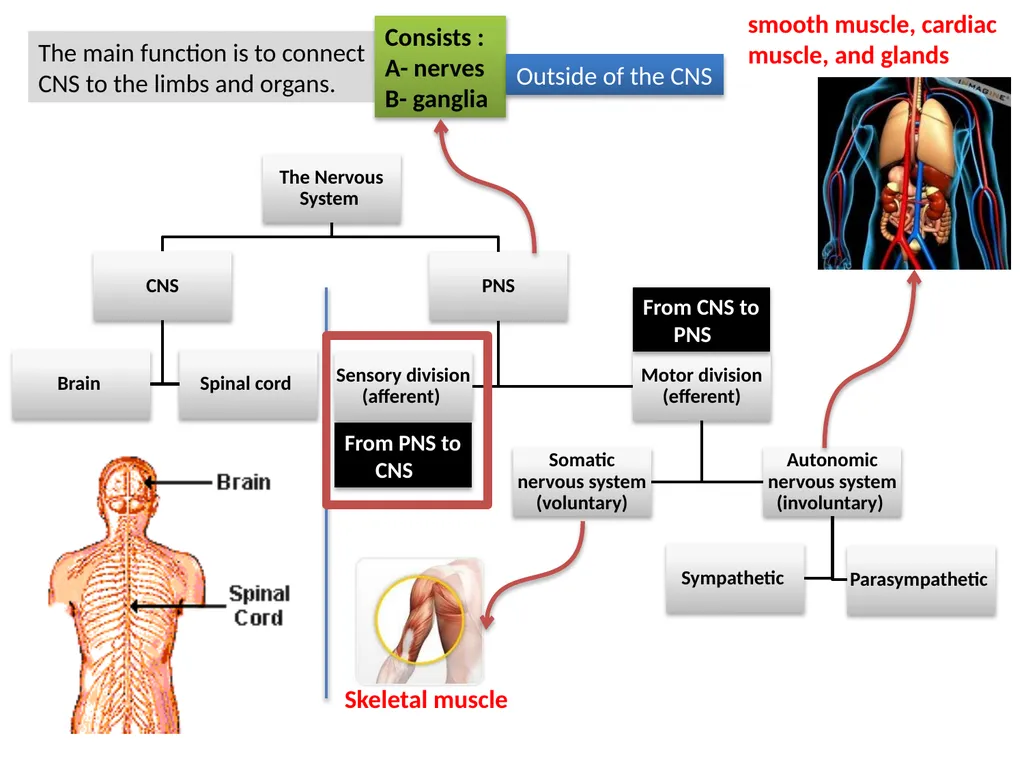
From PNS to CNS From CNS to PNS Skeletal muscle smooth muscle, cardiac muscle, and glands The main function is to connect CNS to the limbs and organs. Consists :
A- nerves
B- ganglia Outside of the CNS<br>
03
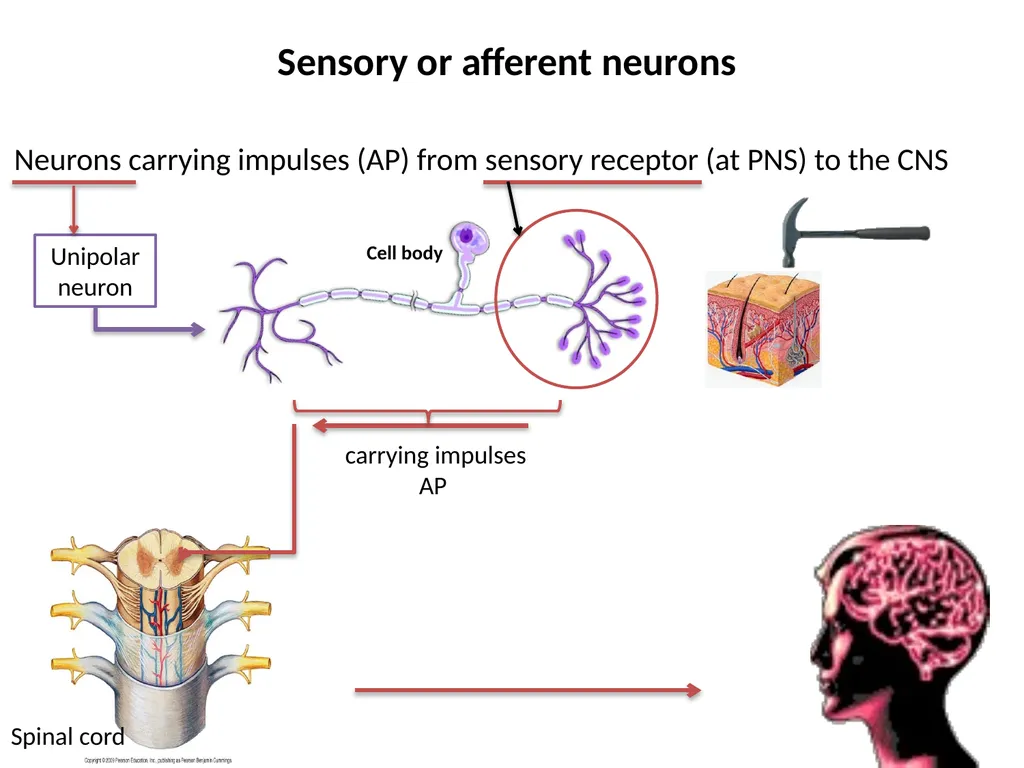
Sensory or afferent neurons Neurons carrying impulses (AP) from sensory receptor (at PNS) to the CNS Unipolar neuron carrying impulses
AP Cell body Spinal cord<br>
04
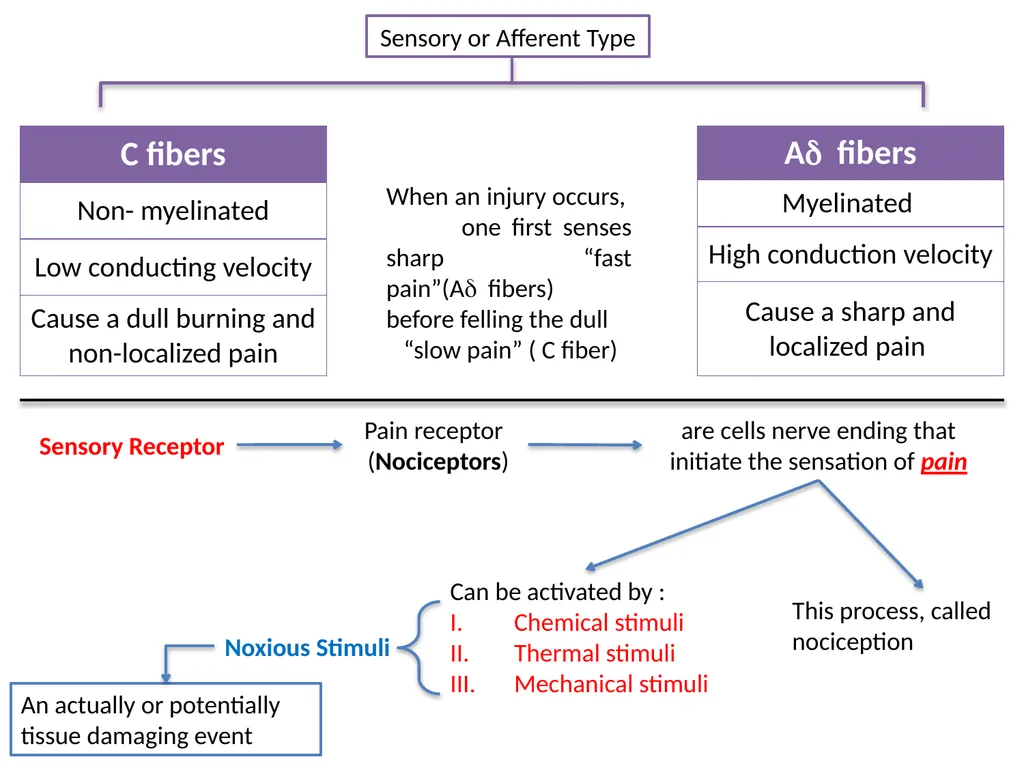
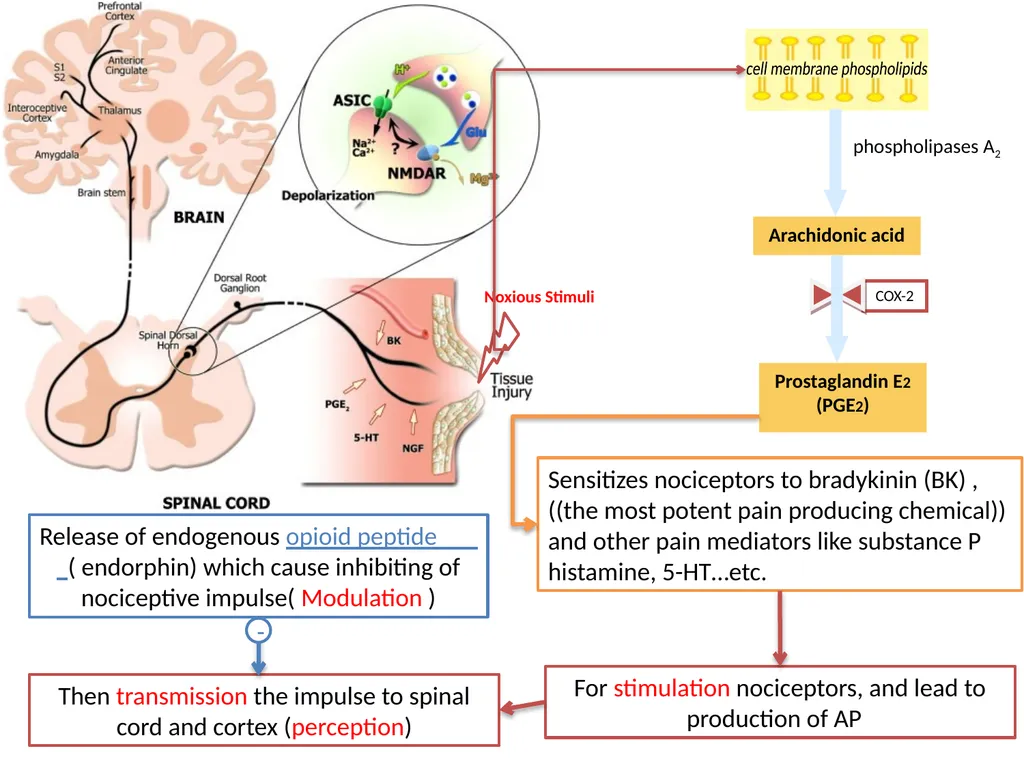
Sensory or Afferent Type When an injury occurs, one first senses sharp “fast pain”(A fibers) before felling the dull “slow pain” ( C fiber) Sensory Receptor Pain receptor
(Nociceptors) are cells nerve ending that initiate the sensation of pain This process, called nociception Can be activated by :
Chemical stimuli
Thermal stimuli
Mechanical stimuli Noxious Stimuli An actually or potentially tissue damaging event<br>
05
Arachidonic acid COX-2 phospholipases A2 Prostaglandin E2 (PGE2) Sensitizes nociceptors to bradykinin (BK) , ((the most potent pain producing chemical)) and other pain mediators like substance P histamine, 5-HT…etc. For stimulation nociceptors, and lead to production of AP Noxious Stimuli Release of endogenous opioid peptide ( endorphin) which cause inhibiting of nociceptive impulse( Modulation ) Then transmission the impulse to spinal cord and cortex (perception) -<br>
06
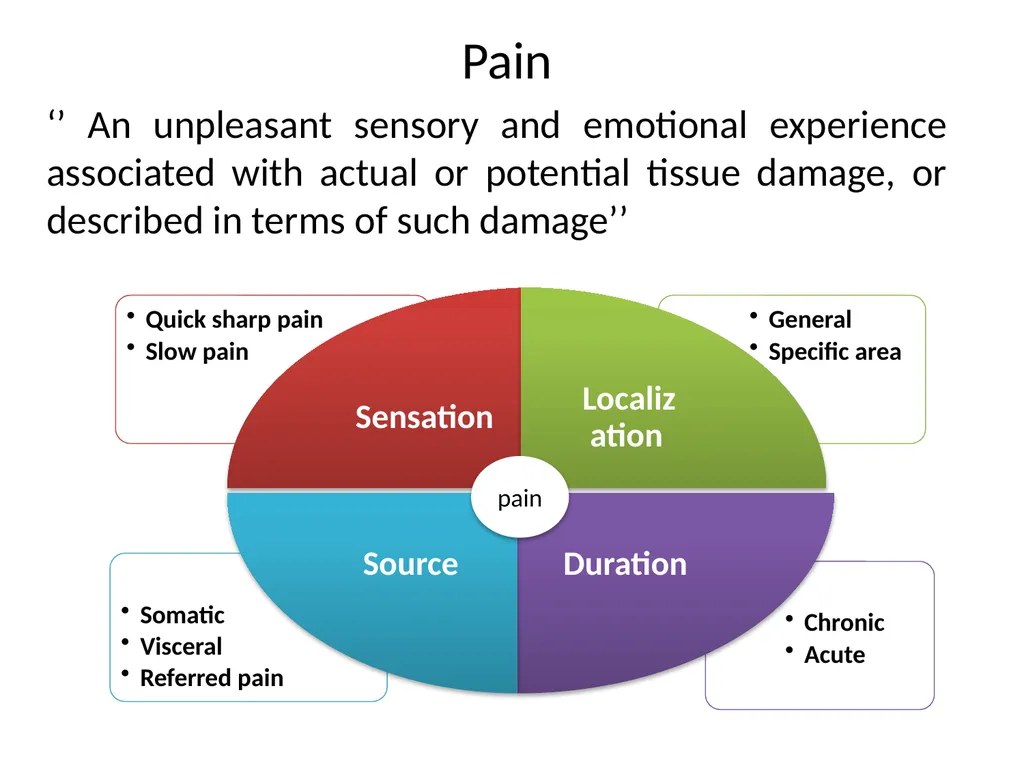
Pain ‘’ An unpleasant sensory and emotional experience associated with actual or potential tissue damage, or described in terms of such damage’’ pain<br>
07
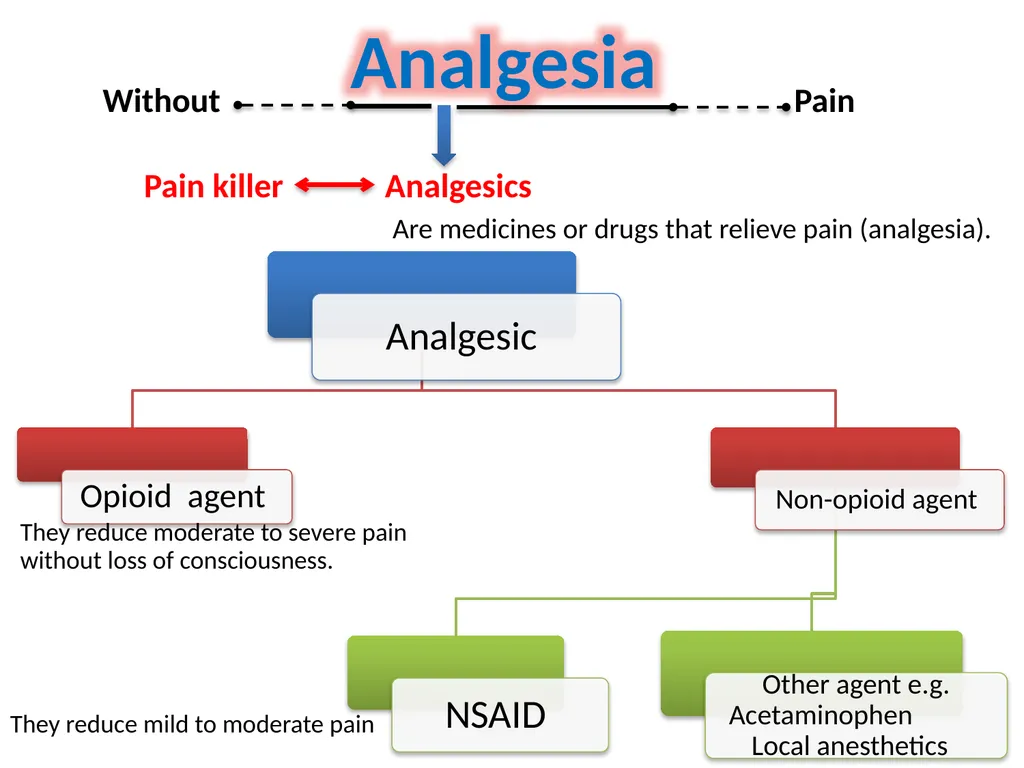
Analgesia Without Pain Analgesics
Are medicines or drugs that relieve pain (analgesia). Pain killer They reduce moderate to severe pain without loss of consciousness. They reduce mild to moderate pain<br>
08
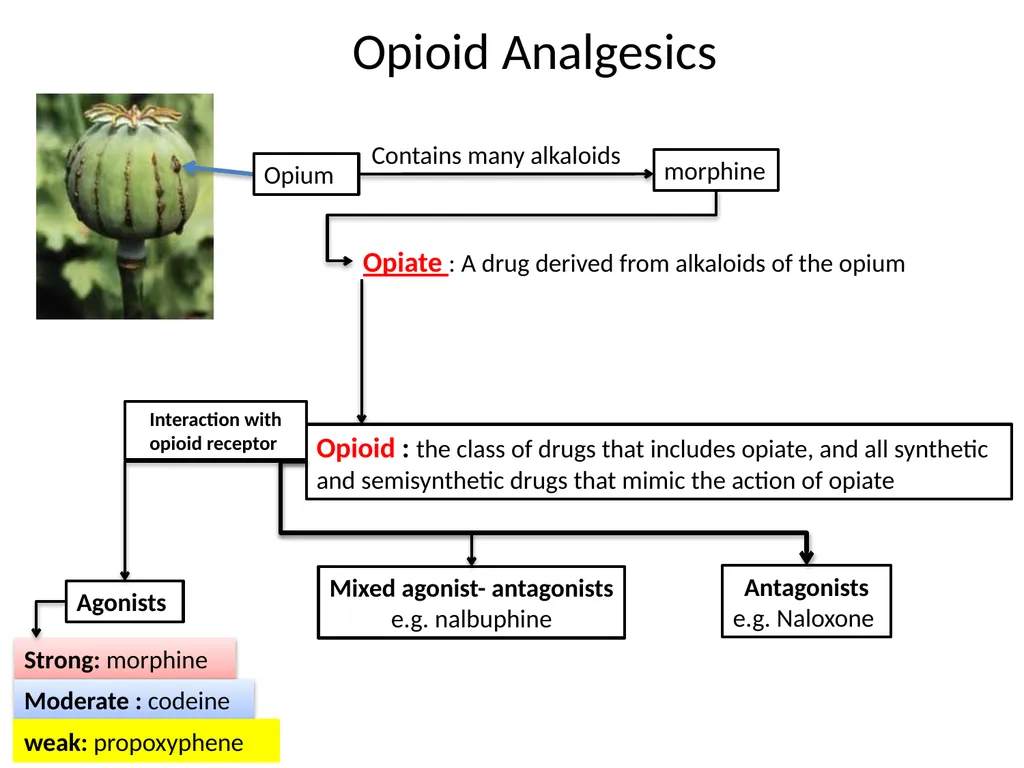
Opioid Analgesics Opium Contains many alkaloids morphine Opiate : A drug derived from alkaloids of the opium Opioid : the class of drugs that includes opiate, and all synthetic and semisynthetic drugs that mimic the action of opiate Agonists Mixed agonist- antagonists
e.g. nalbuphine Antagonists
e.g. Naloxone Strong: morphine Moderate : codeine weak: propoxyphene Interaction with opioid receptor<br>
09
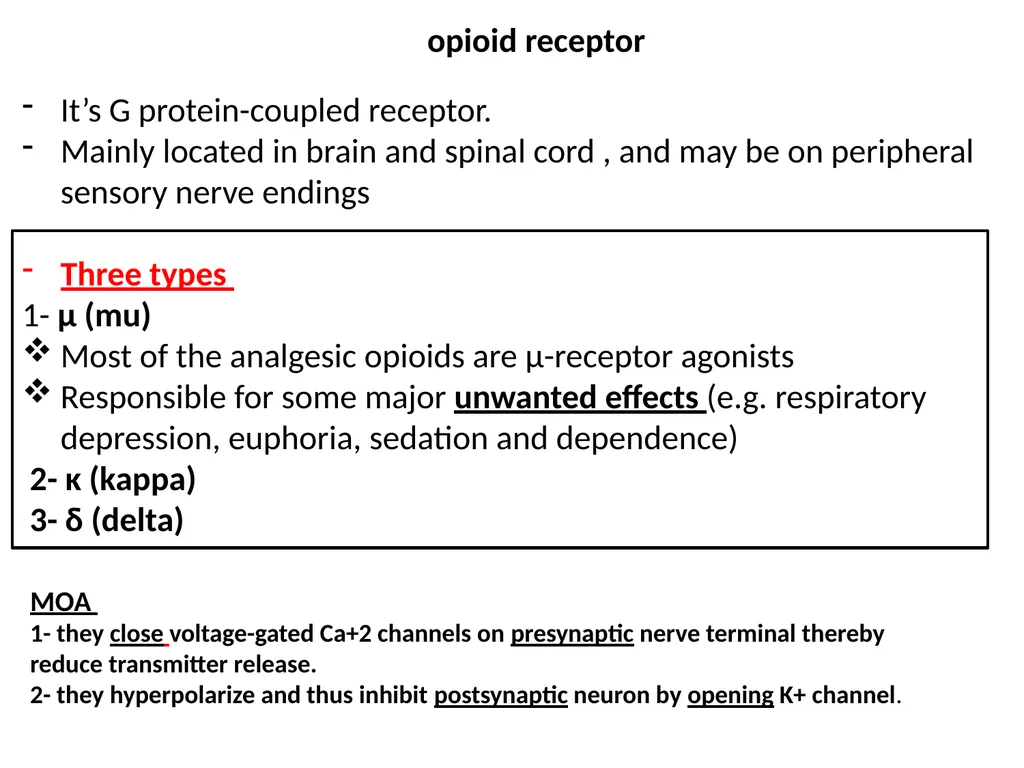
opioid receptor It’s G protein-coupled receptor.
Mainly located in brain and spinal cord , and may be on peripheral sensory nerve endings
Three types
1- μ (mu)
Most of the analgesic opioids are μ-receptor agonists
Responsible for some major unwanted effects (e.g. respiratory depression, euphoria, sedation and dependence)
2- κ (kappa)
3- δ (delta) MOA
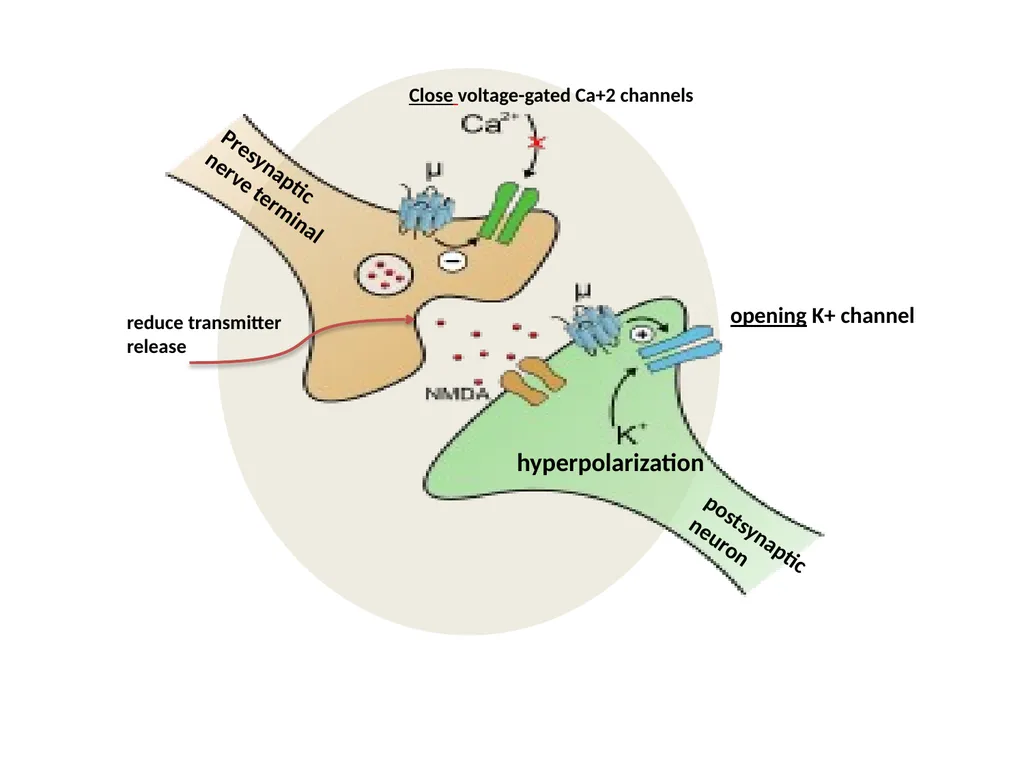
1- they close voltage-gated Ca+2 channels on presynaptic nerve terminal thereby reduce transmitter release.
2- they hyperpolarize and thus inhibit postsynaptic neuron by opening K+ channel.<br>
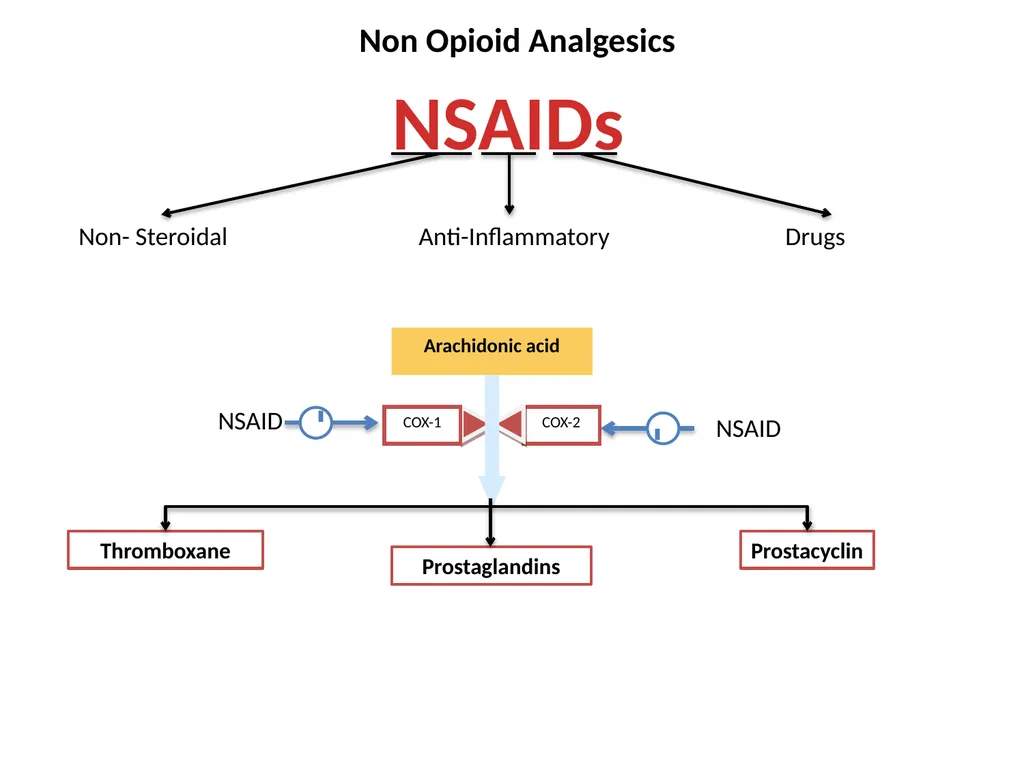
Non Opioid Analgesics NSAIDs Non- Steroidal Drugs Anti-Inflammatory NSAID NSAID<br>
12
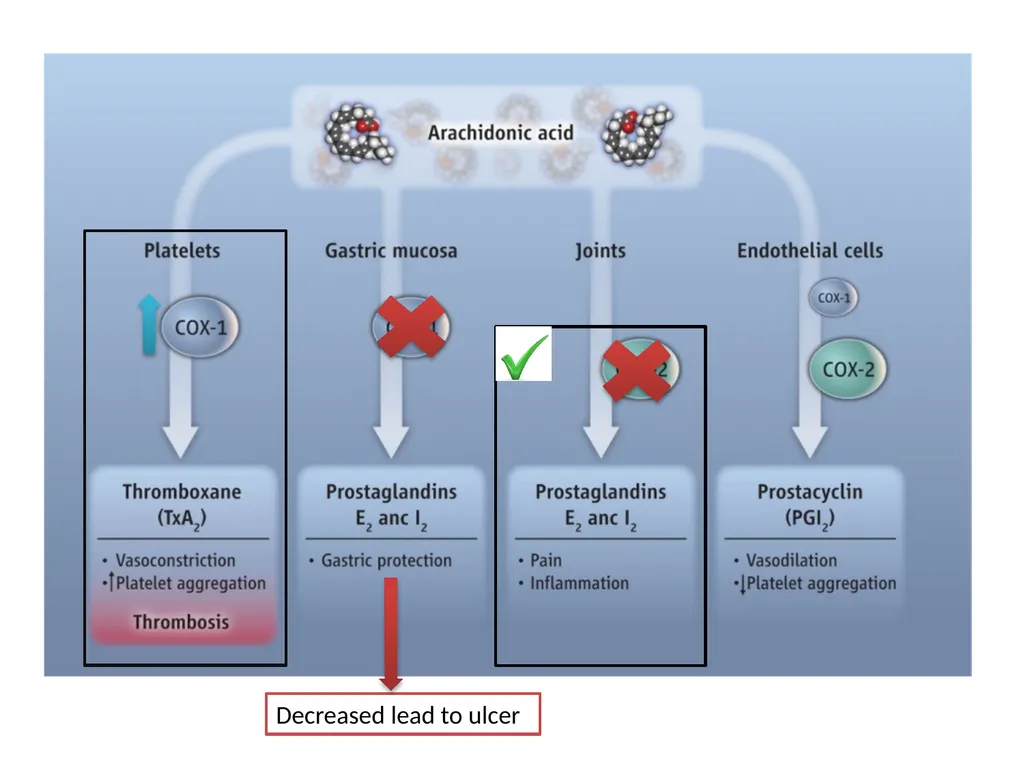
Decreased lead to ulcer<br>
13
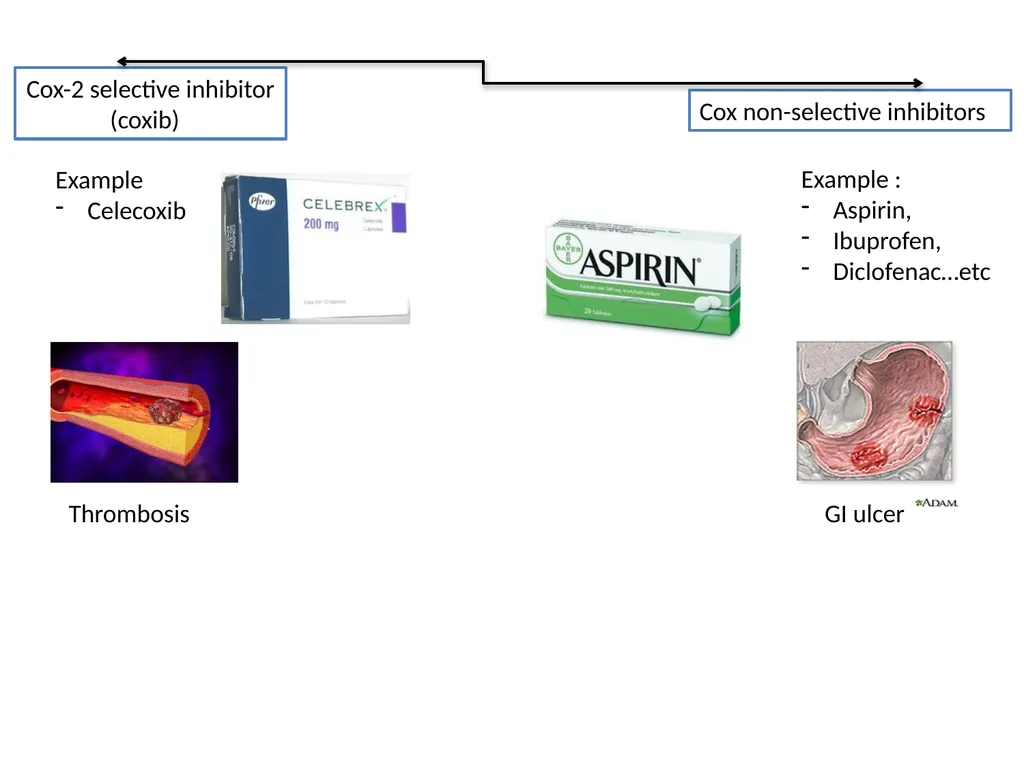
Cox non-selective inhibitors Cox-2 selective inhibitor
(coxib) Example :
Aspirin,
Ibuprofen,
Diclofenac…etc Example
Celecoxib Thrombosis GI ulcer<br>
14
LAB WORK Objective :
To show the analgesic effects of different analgesics using different methods.
Writhing test.
Hot plate method.<br>
15
Writhing test Principle:
Pain is induced by injection of noxious chemical as Acetic acid 0.1% at volume 0.3 ml.
Writhing means stretching behavior of the abdominal and at least one hind limb.<br>
16
Procedure:
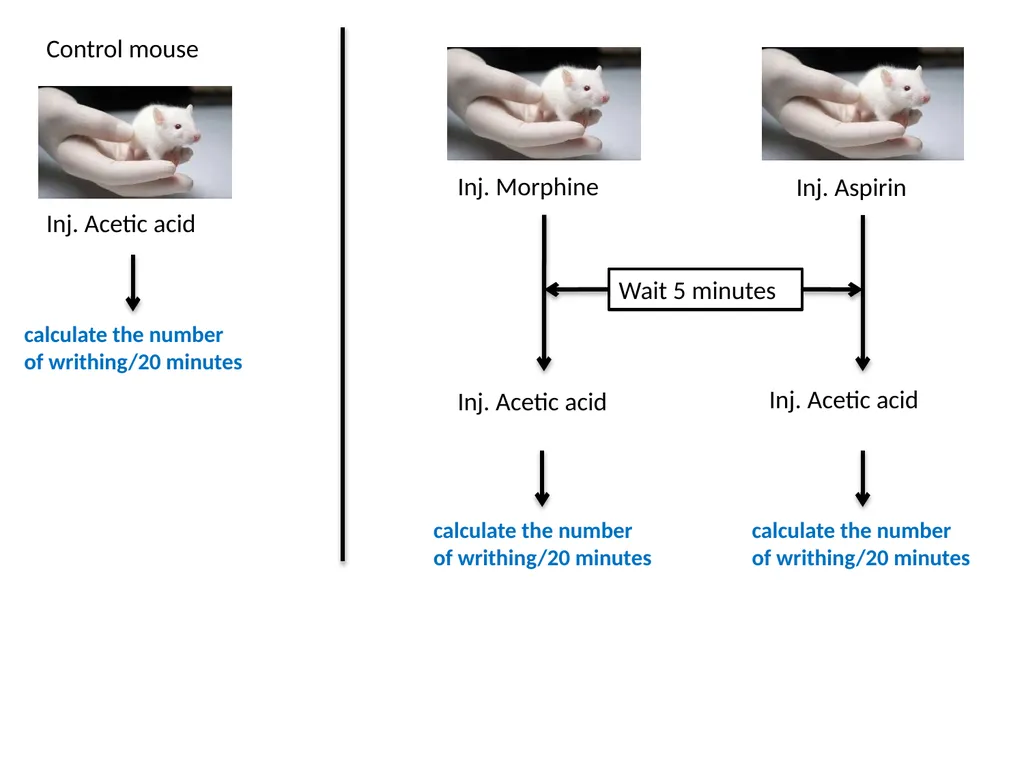
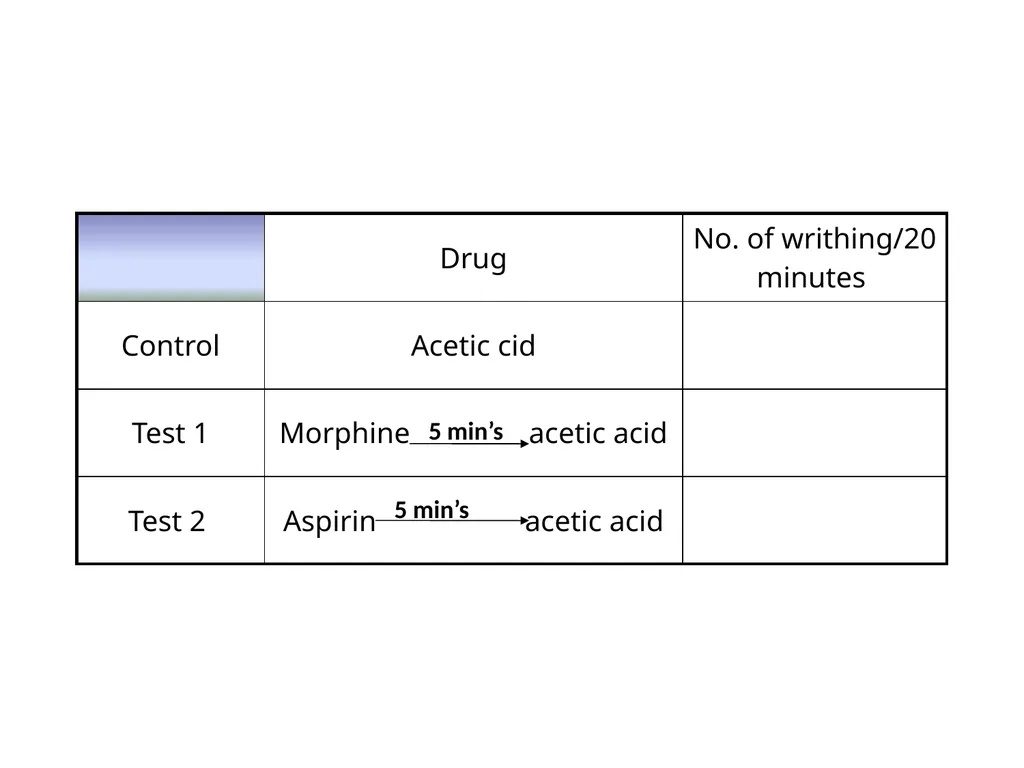
1.First inject the mouse with acetic acid and calculate the number of writhing/20 minutes and this will be control test.
2.Inject the second animal with aspirin and inject the third one with morphine.
3.After 5 minutes inject the animals with acetic acid then calculate the number of writhing/20 minutes.<br>
17
Inj. Acetic acid calculate the number of writhing/20 minutes Control mouse Inj. Morphine Inj. Aspirin Wait 5 minutes Inj. Acetic acid Inj. Acetic acid calculate the number of writhing/20 minutes calculate the number of writhing/20 minutes<br>
18
5 min’s 5 min’s<br>
19
Procedure:
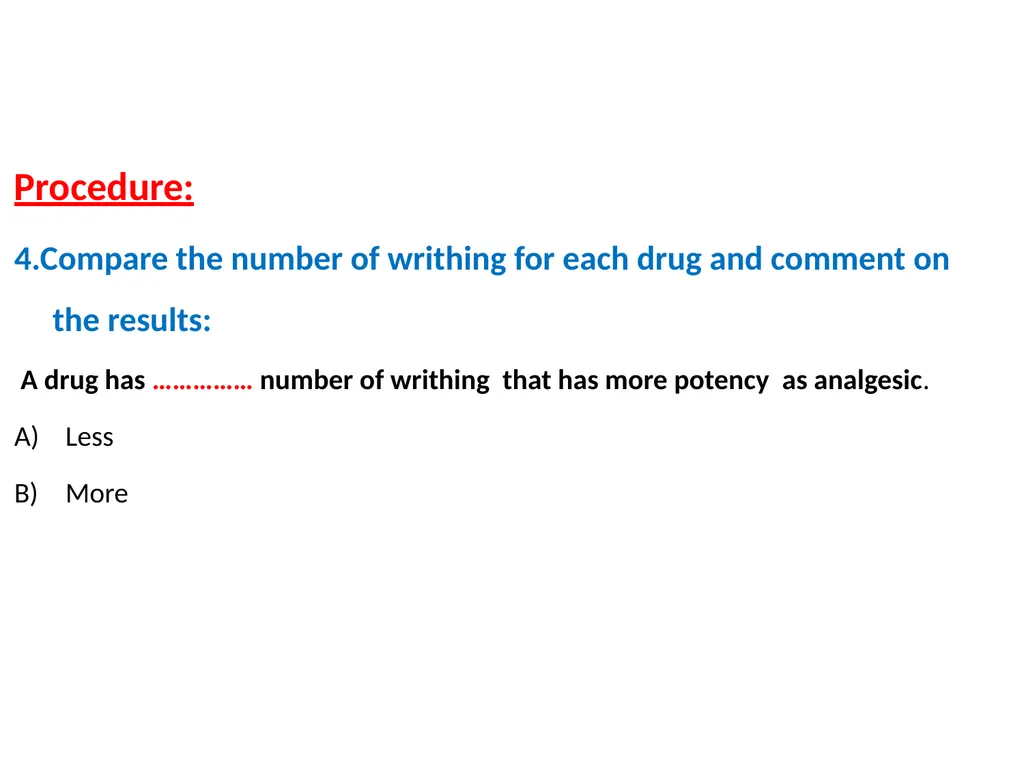
4.Compare the number of writhing for each drug and comment on the results:
A drug has …………… number of writhing that has more potency as analgesic.
Less
More<br>
20
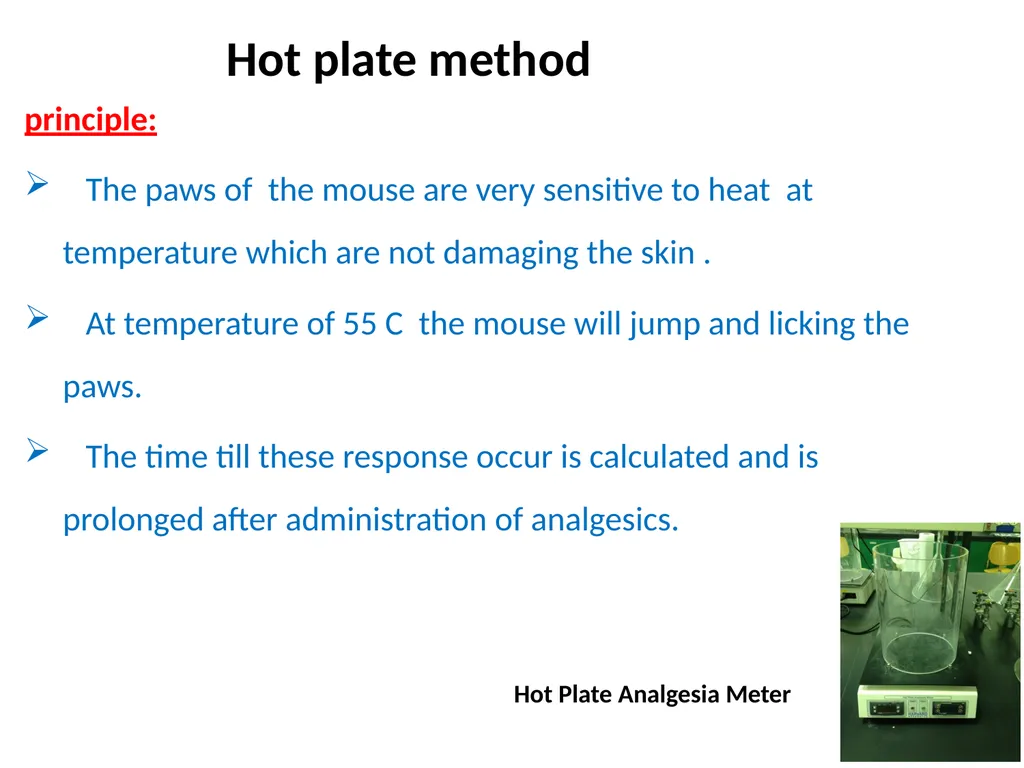
Hot plate method principle:
The paws of the mouse are very sensitive to heat at temperature which are not damaging the skin .
At temperature of 55 C the mouse will jump and licking the paws.
The time till these response occur is calculated and is prolonged after administration of analgesics. Hot Plate Analgesia Meter<br>
21
Procedure:
Put the mouse on the hot plate and record the time taken in order to jump or licking the fore paws.
Record the time in seconds this is the control time.
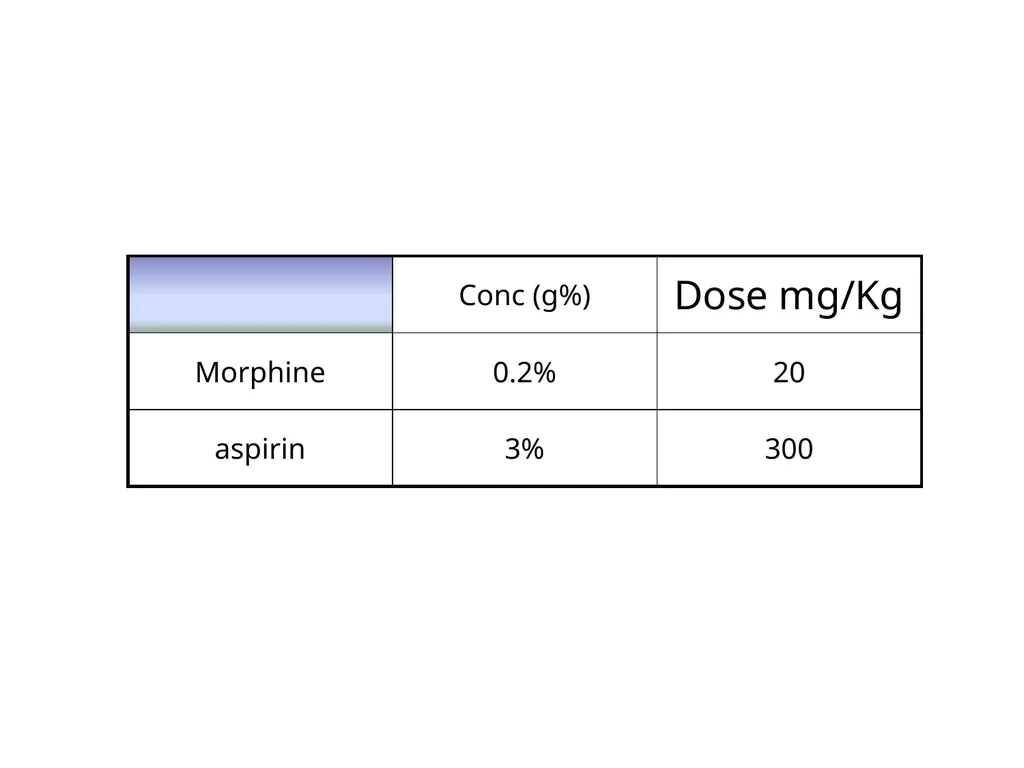
Weight the animal and calculate the dose of Morphine and Aspirin
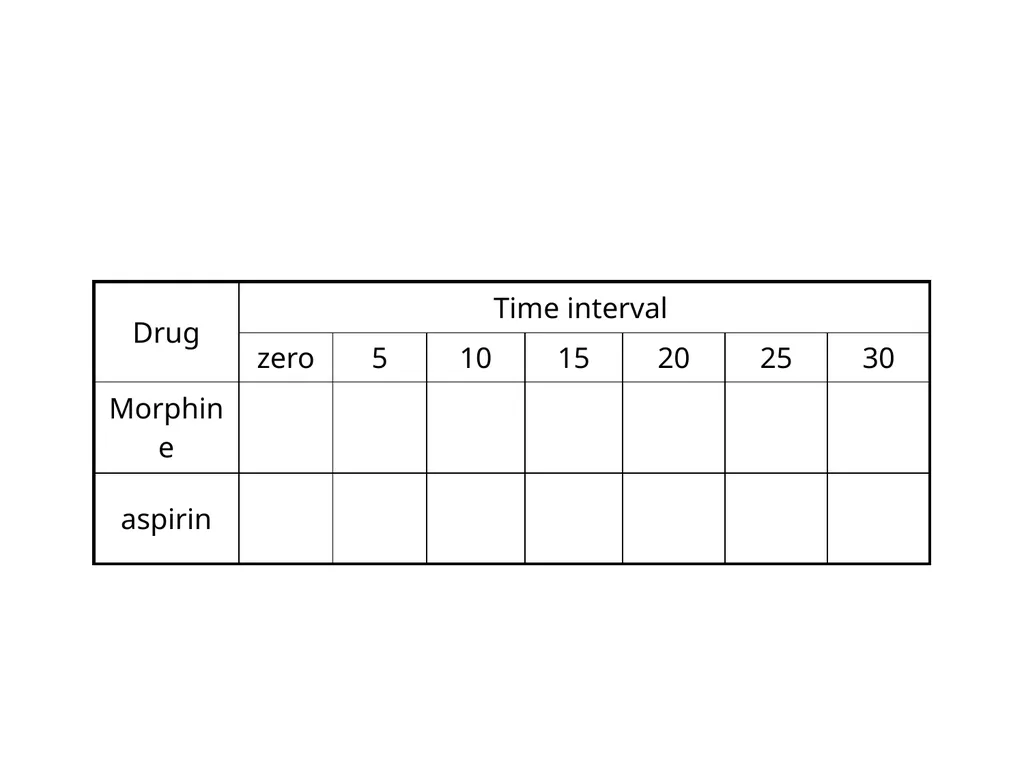
At 5 min’s interval ( for 30 min’s ) place the animal on the hot plate and record the time to see the response .
Compare the time need to see the response the drug with longer time is more potent as analgesic.<br>