Presented by: Mike Fitch, Creator of Animal Flow President of Global Bodyweight Training AFPA October 2014 PROGRESSIVE BODYWEIGHT TRAINING: Accumulative and Regressive Techniques Bodyweight Training: Newest fitness trend? Or oldest
"Presented by: Mike Fitch, Creator of Animal Flow &" is the property of its rightful owner. Permission is granted to
download and print the materials on this website for personal, non-commercial use only, and to display it
on your personal computer provided you do not modify the materials and that you retain all copyright
notices contained in the materials. By downloading content from our website, you accept the terms of this
agreement.
Presentation Transcript
01
Presented by:
Mike Fitch,
Creator of Animal Flow &
President of Global Bodyweight Training AFPA October 2014 PROGRESSIVE BODYWEIGHT TRAINING:
Accumulative and
Regressive Techniques<br>
02
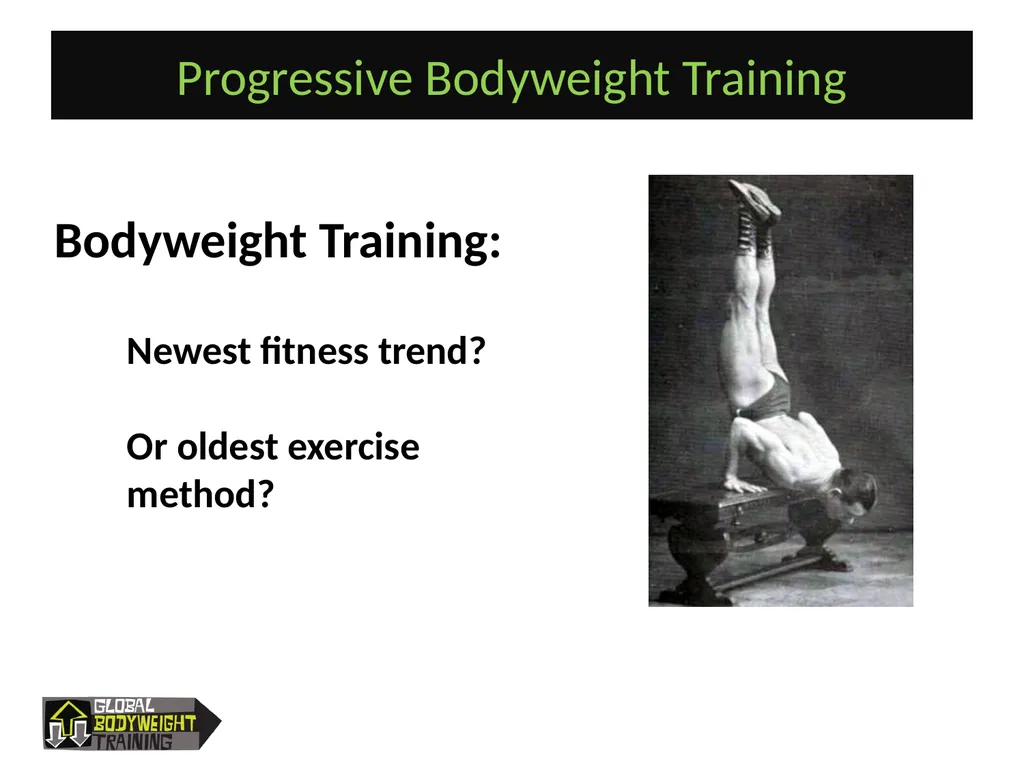
Bodyweight Training: Newest fitness trend?
Or oldest exercise method? Progressive Bodyweight Training<br>
03
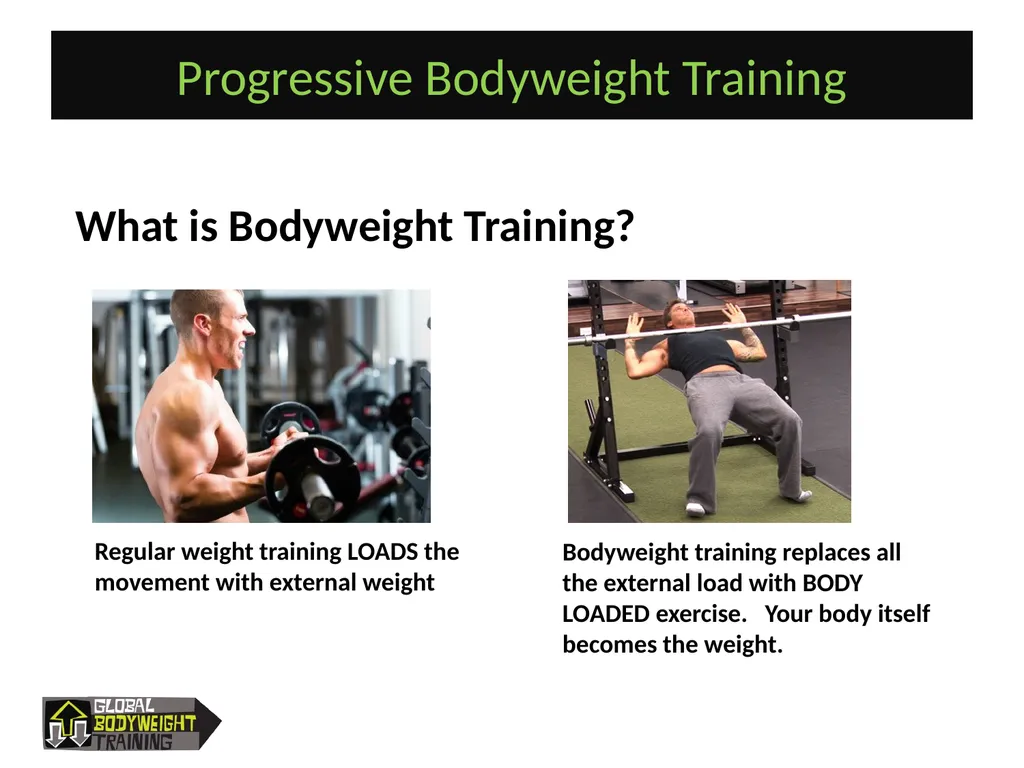
Progressive Bodyweight Training What is Bodyweight Training? Regular weight training LOADS the movement with external weight Bodyweight training replaces all the external load with BODY LOADED exercise. Your body itself becomes the weight.<br>
04
Progressive Bodyweight Training Common Exercise Variables Sets (increase for total volume of workout)
Reps (increase/decrease with goals)
Tempo (adjust to elicit more muscular endurance or power performance)
Rest (alter to match the rest of the sets)
Intensity (or amount of weight) We manipulate these variables to achieve specific goals.<br>
05
Progressive Bodyweight Training Bodyweight Training Variables The INTENSITY or load (our bodyweight) is now constant. To increase the CHALLENGE, we can:
Increase % of body load
Alter the resistance arm
Add complexity
Create asymetrical load<br>
06
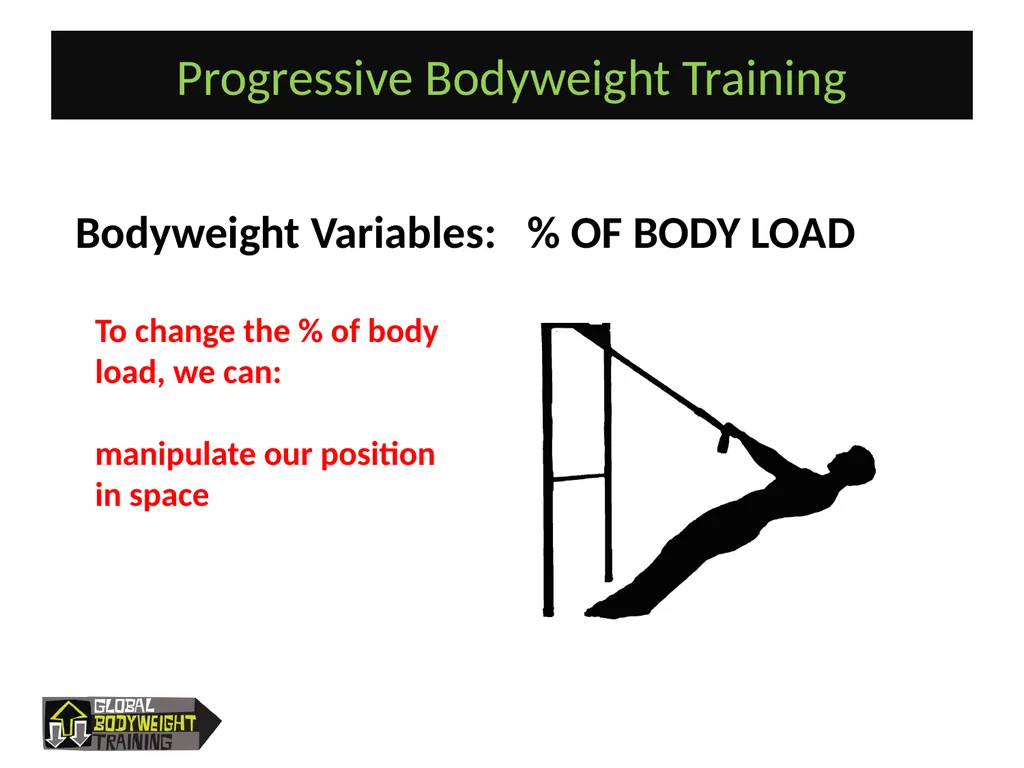
Progressive Bodyweight Training Bodyweight Variables: % OF BODY LOAD To change the % of body load, we can:
manipulate our position in space<br>
07
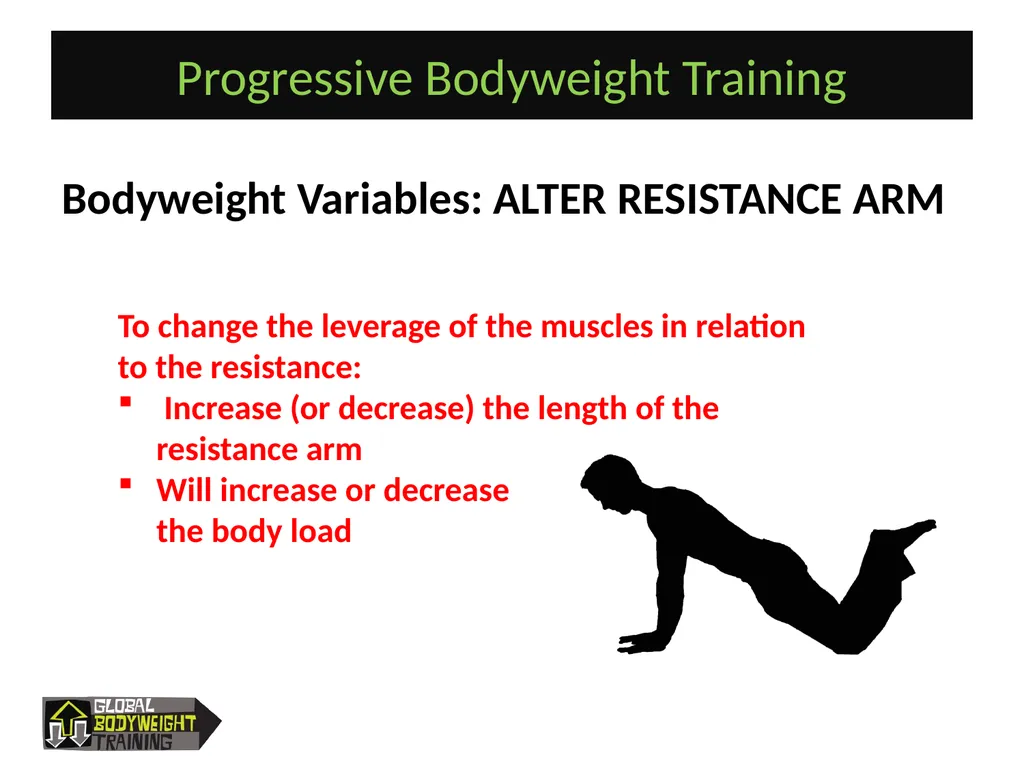
Progressive Bodyweight Training Bodyweight Variables: ALTER RESISTANCE ARM To change the leverage of the muscles in relation to the resistance:
Increase (or decrease) the length of the resistance arm
Will increase or decrease
the body load<br>
08
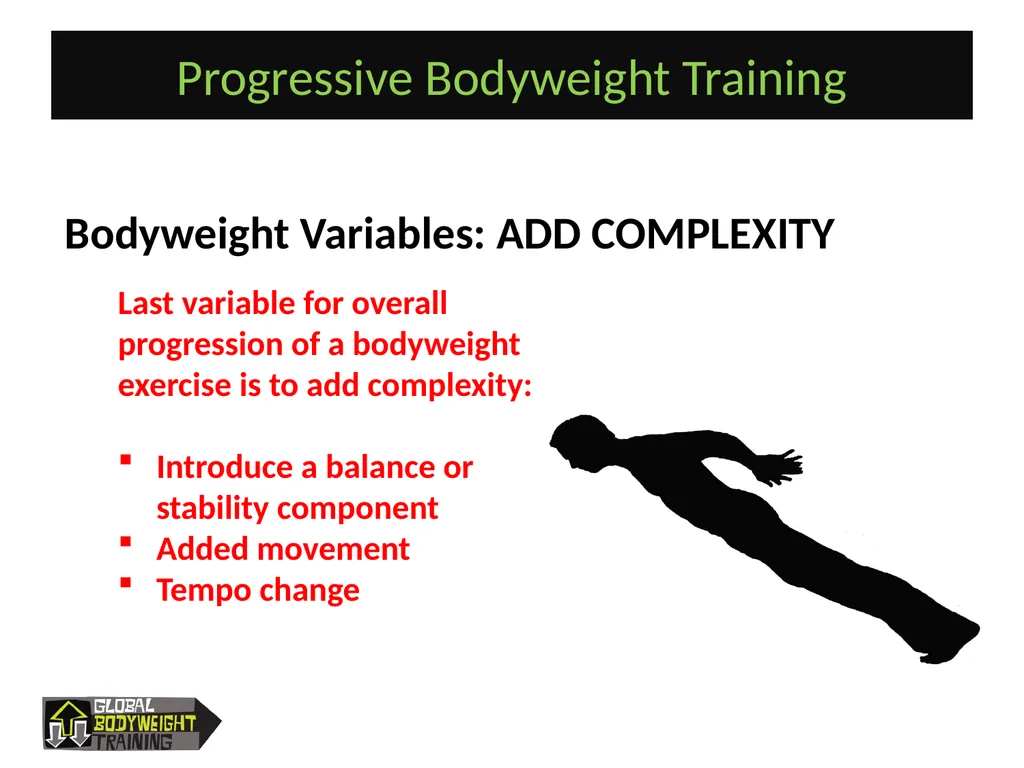
Progressive Bodyweight Training Bodyweight Variables: ADD COMPLEXITY Last variable for overall progression of a bodyweight exercise is to add complexity:
Introduce a balance or stability component
Added movement
Tempo change<br>
09
Progressive Bodyweight Training Bodyweight Variables:
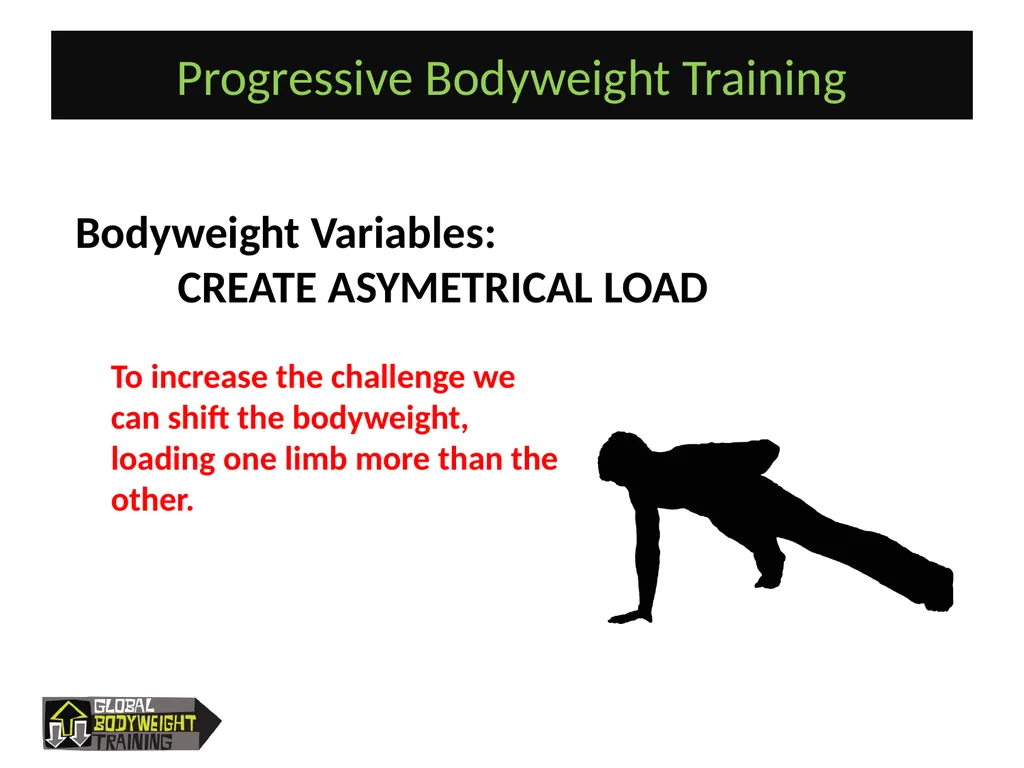
CREATE ASYMETRICAL LOAD To increase the challenge we can shift the bodyweight, loading one limb more than the other.<br>
10
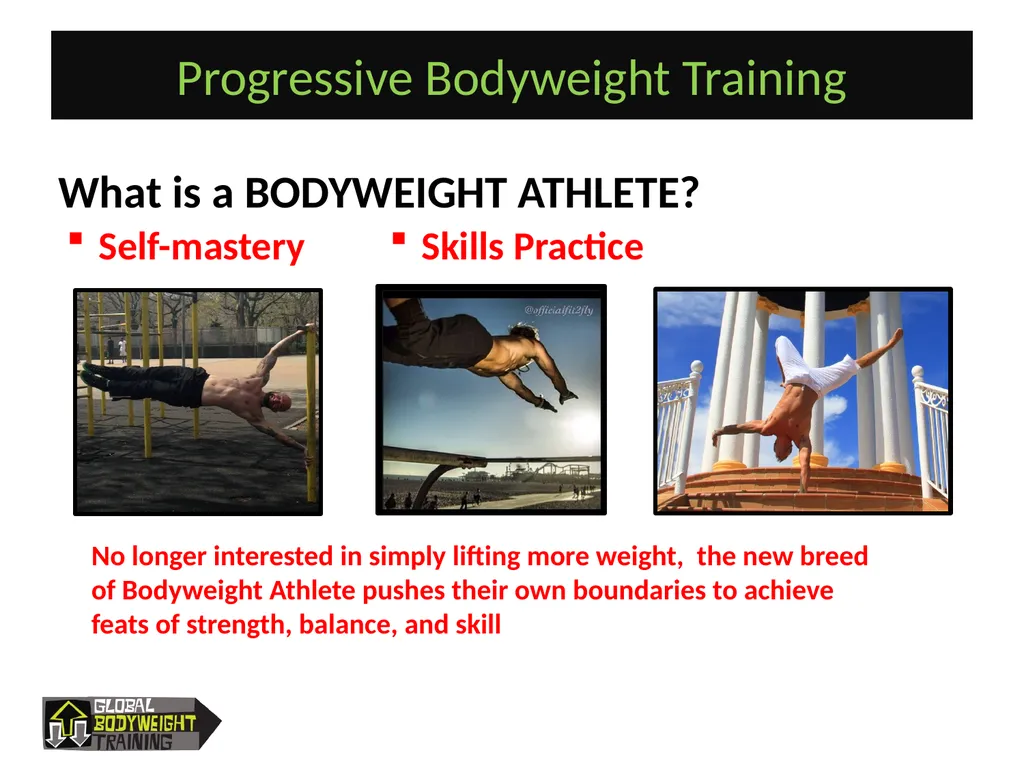
Progressive Bodyweight Training What is a BODYWEIGHT ATHLETE? Self-mastery No longer interested in simply lifting more weight, the new breed of Bodyweight Athlete pushes their own boundaries to achieve feats of strength, balance, and skill Skills Practice<br>
11
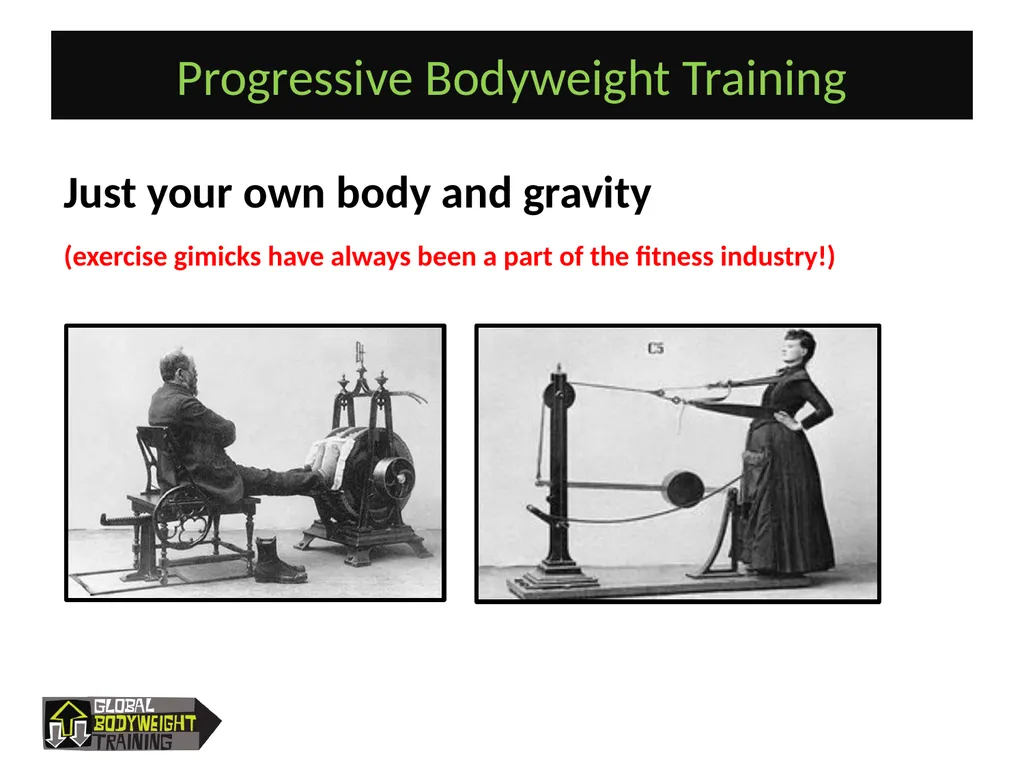
Progressive Bodyweight Training Just your own body and gravity (exercise gimicks have always been a part of the fitness industry!)<br>
12
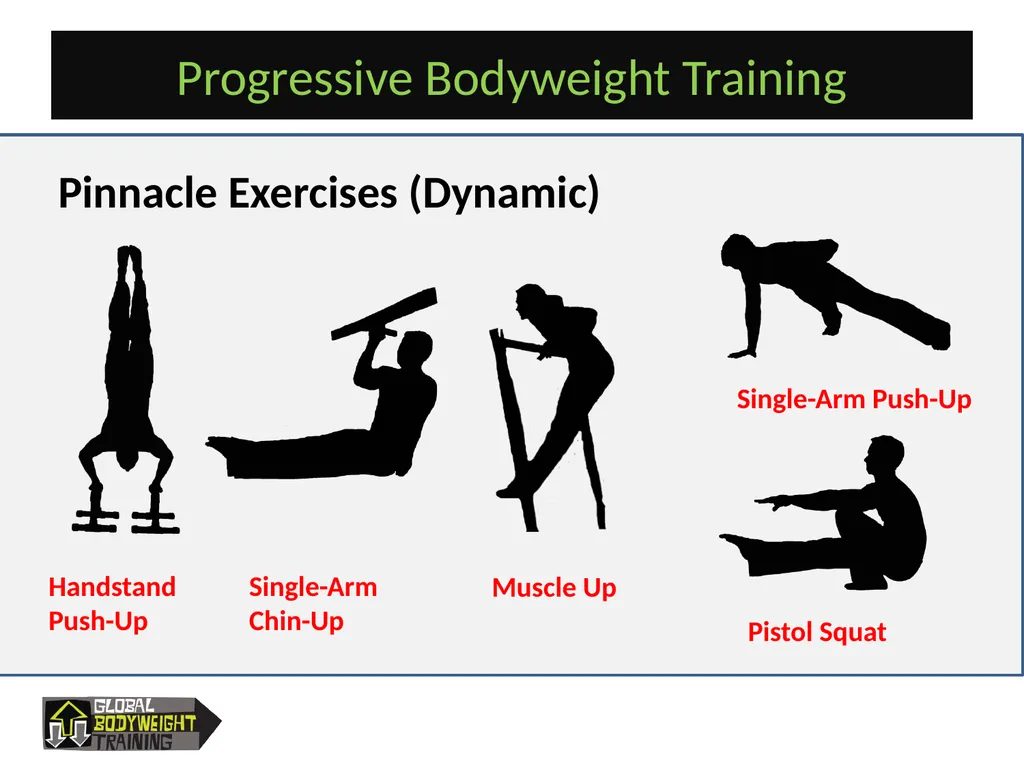
Progressive Bodyweight Training Pinnacle Exercises (Dynamic) Muscle Up Handstand
Push-Up Single-Arm Chin-Up Single-Arm Push-Up Pistol Squat<br>
13
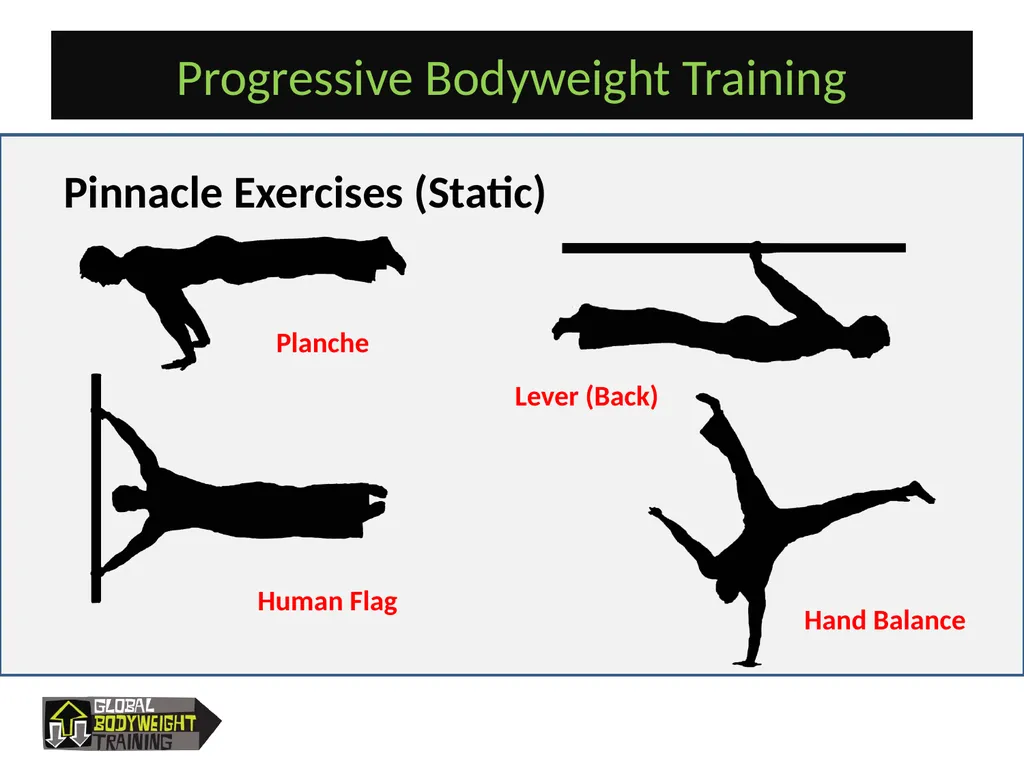
Progressive Bodyweight Training Pinnacle Exercises (Static) Lever (Back) Hand Balance Human Flag Planche<br>
14
Progressive Bodyweight Training How do we get to the Pinnacle Exercises? SKILL:
“competent excellence in performance; expertness; dexterity”
HIGHER NEURAL LOAD:
requires increased levels of motor control at the conscious and reflexive level<br>
15
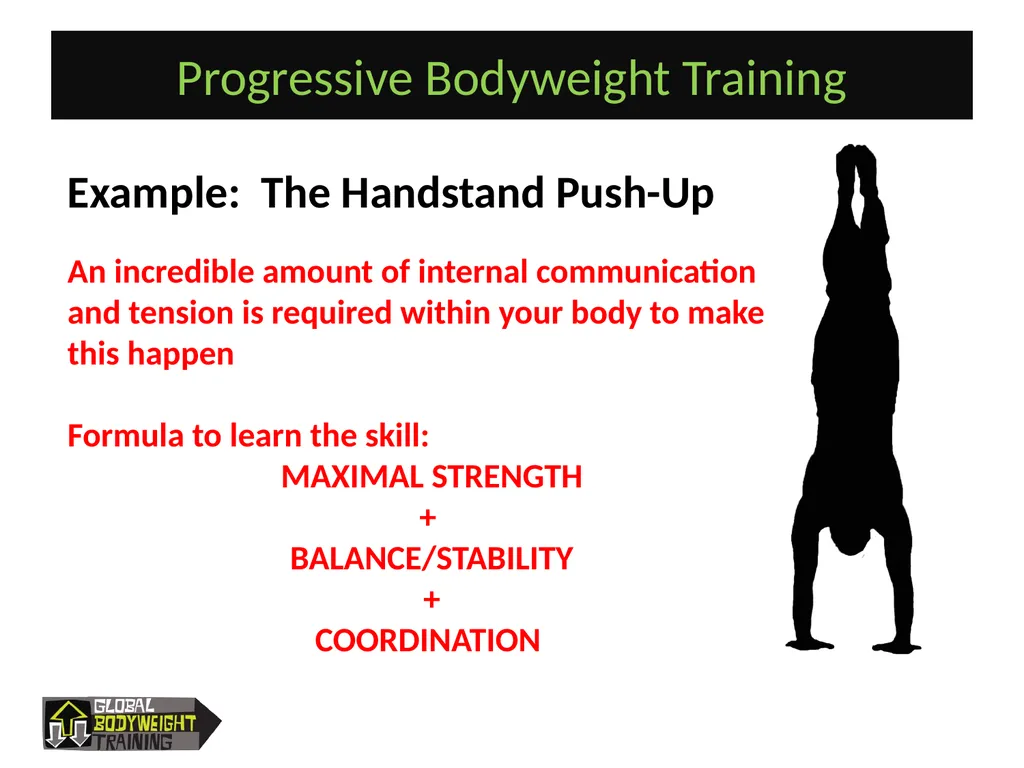
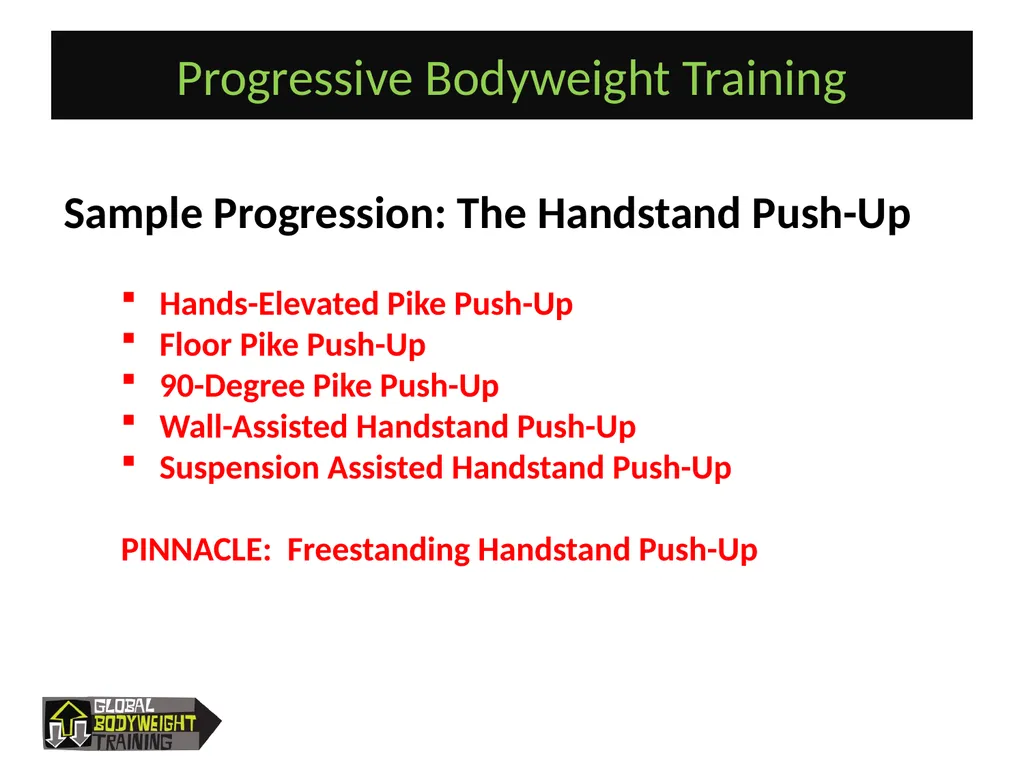
Progressive Bodyweight Training Example: The Handstand Push-Up An incredible amount of internal communication and tension is required within your body to make this happen
Formula to learn the skill:
MAXIMAL STRENGTH
+
BALANCE/STABILITY
+
COORDINATION<br>
16
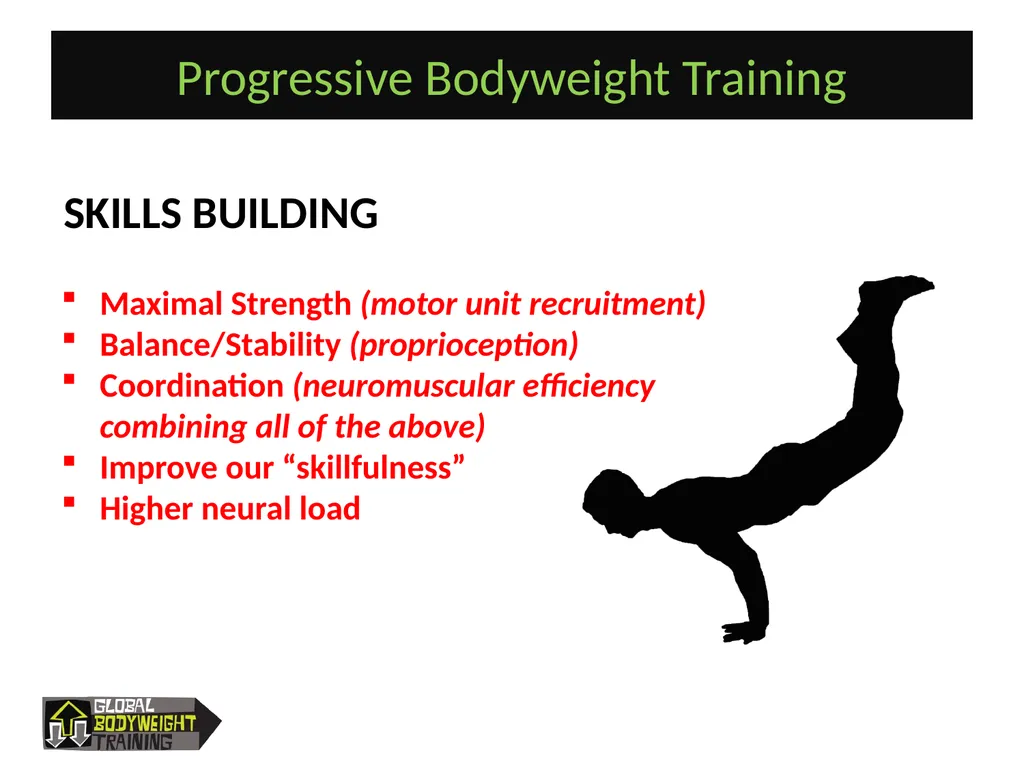
Progressive Bodyweight Training SKILLS BUILDING Maximal Strength (motor unit recruitment)
Balance/Stability (proprioception)
Coordination (neuromuscular efficiency combining all of the above)
Improve our “skillfulness”
Higher neural load<br>