Primary Results of the ENRICH-AF Trial NCT03950076 August 29, 2026 Ashkan Shoamanesh, Mukul Sharma, Aristeidis Katsanos, Rustam Al-Shahi Salman, Joan Marti-Fabregas, Dar Dowlatshahi, Robin Lemmens, Nevine El Nahas, Wadea Tarhuni, Denis
"Primary Results of the ENRICH-AF Trial NCT03950076" is the property of its rightful owner. Permission is granted to
download and print the materials on this website for personal, non-commercial use only, and to display it
on your personal computer provided you do not modify the materials and that you retain all copyright
notices contained in the materials. By downloading content from our website, you accept the terms of this
agreement.
Presentation Transcript
01
Primary Results of the ENRICH-AF Trial
NCT03950076 August 29, 2026 Ashkan Shoamanesh, Mukul Sharma, Aristeidis Katsanos, Rustam Al-Shahi Salman, Joan Marti-Fabregas, Dar Dowlatshahi, Robin Lemmens, Nevine El Nahas, Wadea Tarhuni, Denis Xavier, Jeyaraj Pandian, Sanjib K. Sharma, Matthias Endres, Hans-Christoph Diener, Georgios Tsivgoulis, Danilo Toni, H Asita de Silva, David J. Seiffge, Xin Cheng, Xin Du, Robert Mikulik, Scott E. Kasner, Jose Ferro, Ronny Beer, Hanne Christensen, Zuzana Gdovinova, Carlos S. Kase, Oscar R. Benavente, Jeff S. Healey, Tal Anjum, Carlos Molina, Luciana Catanese, Alexander Benz, Stefan H. Hohnloser, Kevin Sheth, Lizhen Xu, Angela Wang, Kevin W. Reeh, Amanda Taylor, Cathy Zi Li Chen, Martin Unverdorben, and
Robert G. Hart, on behalf of the ENRICH-AF Investigators EdoxabaN foR IntraCranial Hemorrhage survivors with Atrial Fibrillation: An international, investigator-initiated, prospective randomized open-label blinded end-point (PROBE) trial<br>
02
Disclosures The ENRICH-AF trial was an investigator-initiated study supported by grants-in-aid from Daiichi Sankyo Ltd and the Population Health Research Institute<br>
03
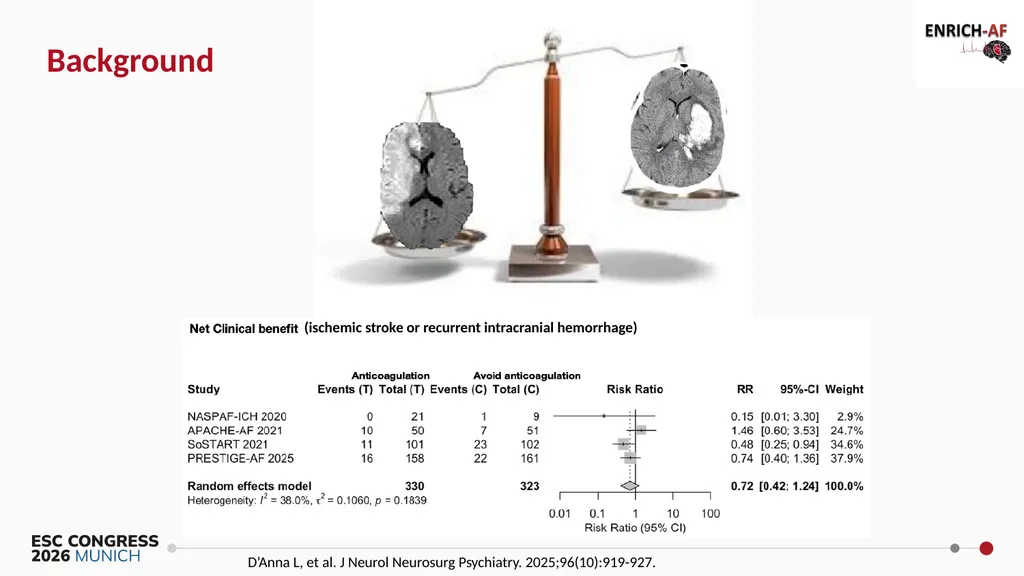
Background D’Anna L, et al. J Neurol Neurosurg Psychiatry. 2025;96(10):919-927. (ischemic stroke or recurrent intracranial hemorrhage)<br>
04
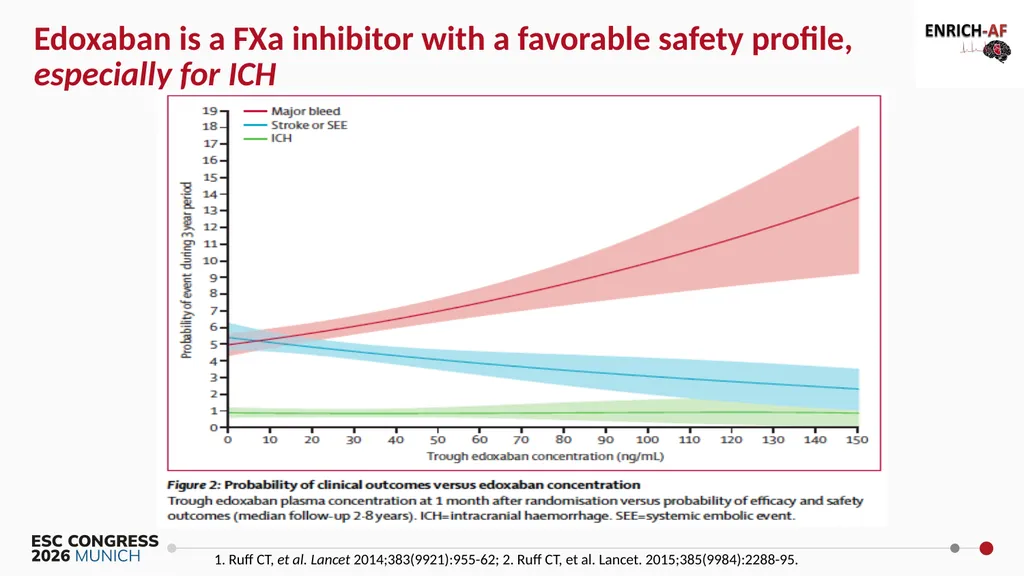
Edoxaban is a FXa inhibitor with a favorable safety profile, especially for ICH 1. Ruff CT, et al. Lancet 2014;383(9921):955-62; 2. Ruff CT, et al. Lancet. 2015;385(9984):2288-95.<br>
05
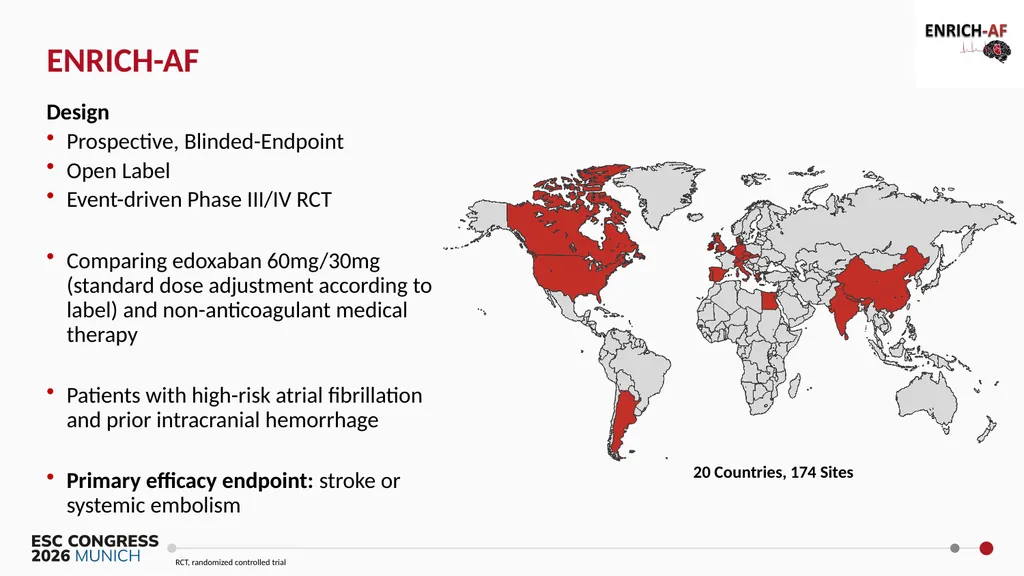
ENRICH-AF Design
Prospective, Blinded-Endpoint
Open Label
Event-driven Phase III/IV RCT
Comparing edoxaban 60mg/30mg (standard dose adjustment according to label) and non-anticoagulant medical therapy
Patients with high-risk atrial fibrillation and prior intracranial hemorrhage
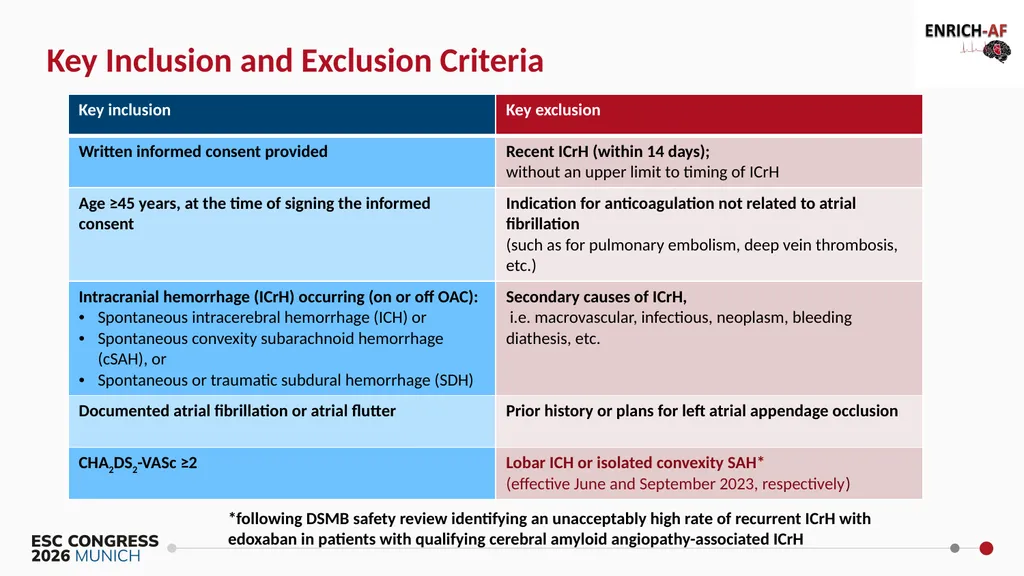
Key Inclusion and Exclusion Criteria *following DSMB safety review identifying an unacceptably high rate of recurrent ICrH with edoxaban in patients with qualifying cerebral amyloid angiopathy-associated ICrH<br>
07
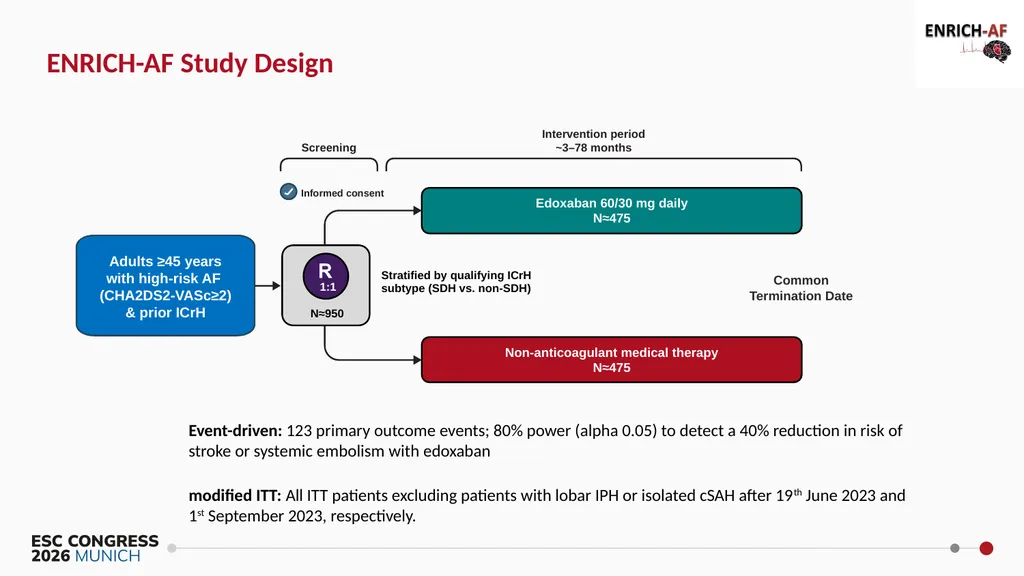
Common
Termination Date ENRICH-AF Study Design Stratified by qualifying ICrH subtype (SDH vs. non-SDH) Event-driven: 123 primary outcome events; 80% power (alpha 0.05) to detect a 40% reduction in risk of stroke or systemic embolism with edoxaban
modified ITT: All ITT patients excluding patients with lobar IPH or isolated cSAH after 19th June 2023 and 1st September 2023, respectively.<br>
08
Results<br>
09
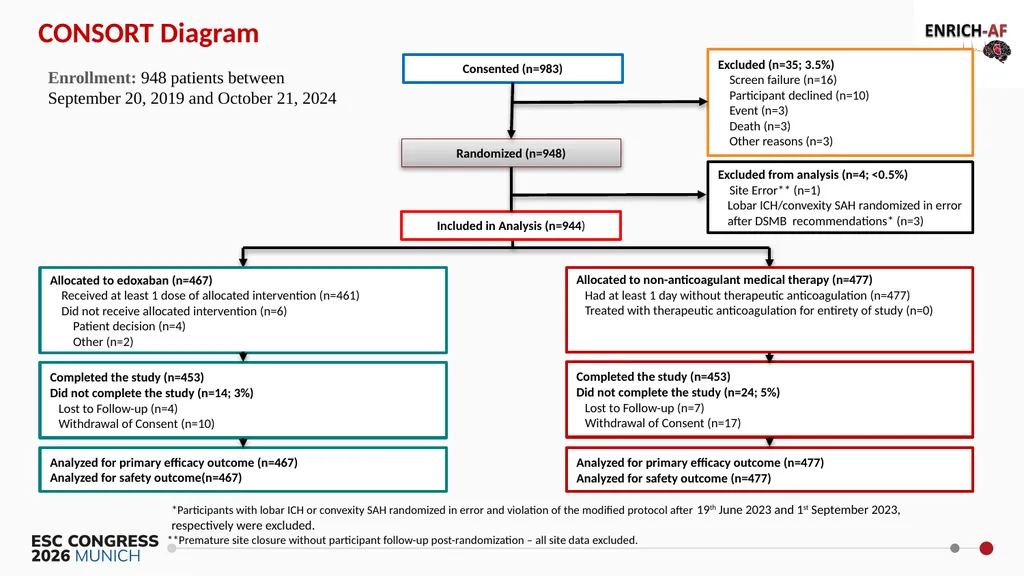
Consented (n=983) Randomized (n=948) Excluded (n=35; 3.5%)
Screen failure (n=16)
Participant declined (n=10)
Event (n=3)
Death (n=3)
Other reasons (n=3) Included in Analysis (n=944) Excluded from analysis (n=4; <0.5%)
Site Error** (n=1)
Lobar ICH/convexity SAH randomized in error after DSMB recommendations* (n=3) Allocated to edoxaban (n=467)
Received at least 1 dose of allocated intervention (n=461)
Did not receive allocated intervention (n=6)
Patient decision (n=4)
Other (n=2) Allocated to non-anticoagulant medical therapy (n=477)
Had at least 1 day without therapeutic anticoagulation (n=477)
Treated with therapeutic anticoagulation for entirety of study (n=0) Completed the study (n=453)
Did not complete the study (n=14; 3%)
Lost to Follow-up (n=4)
Withdrawal of Consent (n=10) Completed the study (n=453)
Did not complete the study (n=24; 5%)
Lost to Follow-up (n=7)
Withdrawal of Consent (n=17) Analyzed for primary efficacy outcome (n=467)
Analyzed for safety outcome(n=467) *Participants with lobar ICH or convexity SAH randomized in error and violation of the modified protocol after 19th June 2023 and 1st September 2023, respectively were excluded.
**Premature site closure without participant follow-up post-randomization – all site data excluded. Analyzed for primary efficacy outcome (n=477)
Analyzed for safety outcome (n=477) CONSORT Diagram Enrollment: 948 patients between September 20, 2019 and October 21, 2024<br>
10
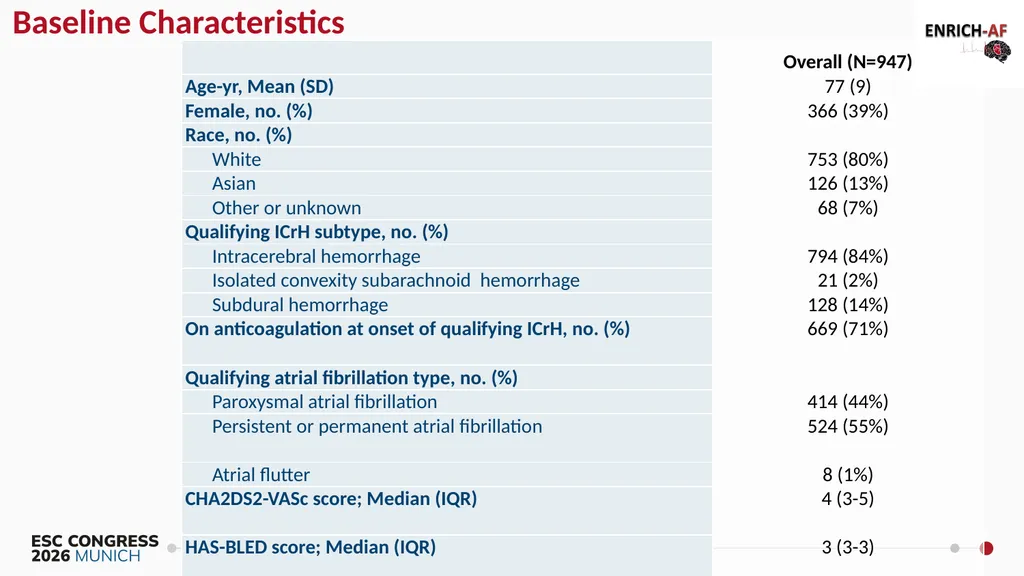
Baseline Characteristics<br>
11
Primary Results<br>
12
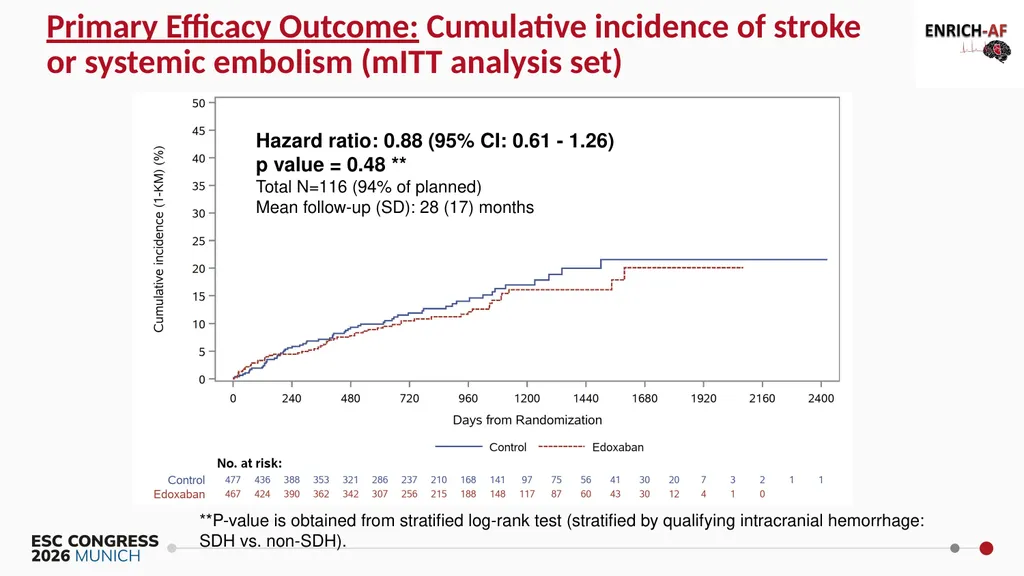
Primary Efficacy Outcome: Cumulative incidence of stroke or systemic embolism (mITT analysis set) Hazard ratio: 0.88 (95% CI: 0.61 - 1.26)
p value = 0.48 **
Total N=116 (94% of planned)
Mean follow-up (SD): 28 (17) months **P-value is obtained from stratified log-rank test (stratified by qualifying intracranial hemorrhage: SDH vs. non-SDH).<br>
13
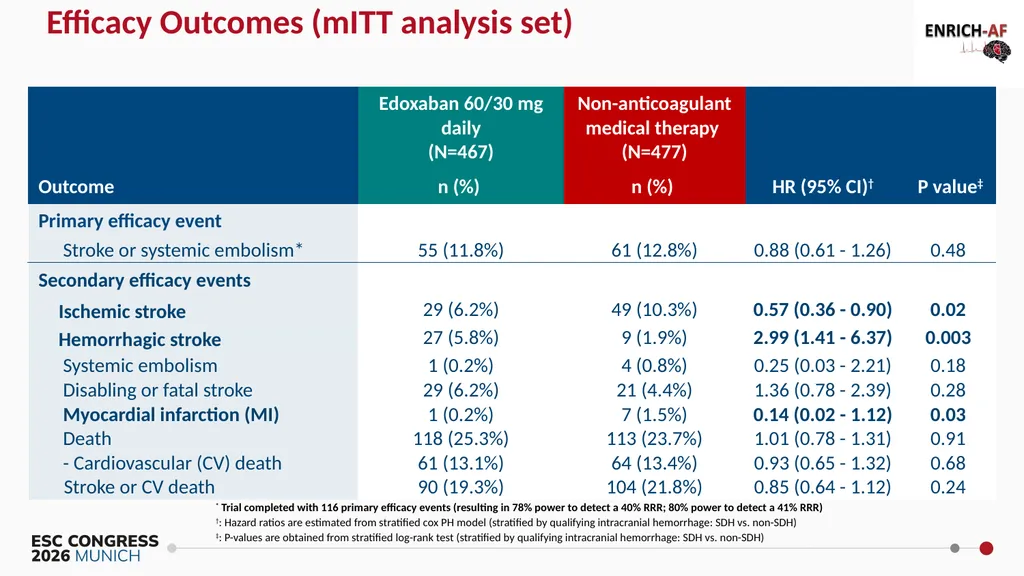
Efficacy Outcomes (mITT analysis set) * Trial completed with 116 primary efficacy events (resulting in 78% power to detect a 40% RRR; 80% power to detect a 41% RRR)
†: Hazard ratios are estimated from stratified cox PH model (stratified by qualifying intracranial hemorrhage: SDH vs. non-SDH)
‡: P-values are obtained from stratified log-rank test (stratified by qualifying intracranial hemorrhage: SDH vs. non-SDH)<br>
14
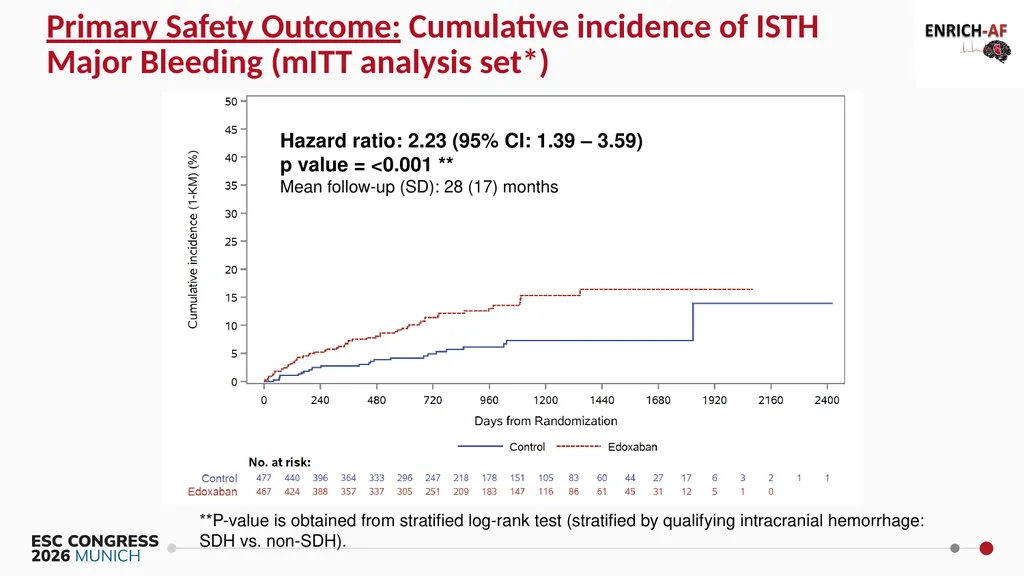
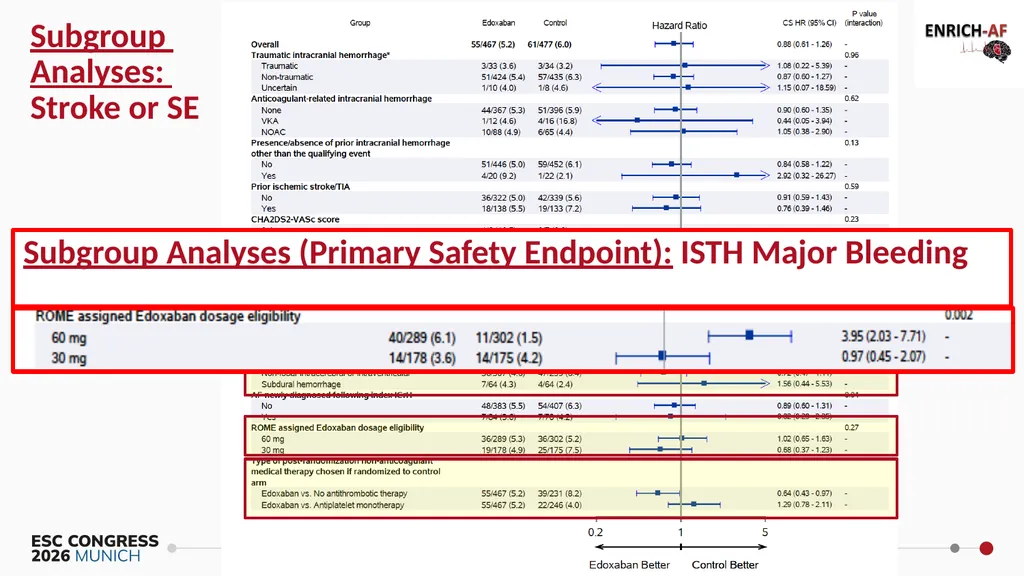
Primary Safety Outcome: Cumulative incidence of ISTH Major Bleeding (mITT analysis set*) **P-value is obtained from stratified log-rank test (stratified by qualifying intracranial hemorrhage: SDH vs. non-SDH). Hazard ratio: 2.23 (95% CI: 1.39 – 3.59)
p value = <0.001 **
Mean follow-up (SD): 28 (17) months<br>
15
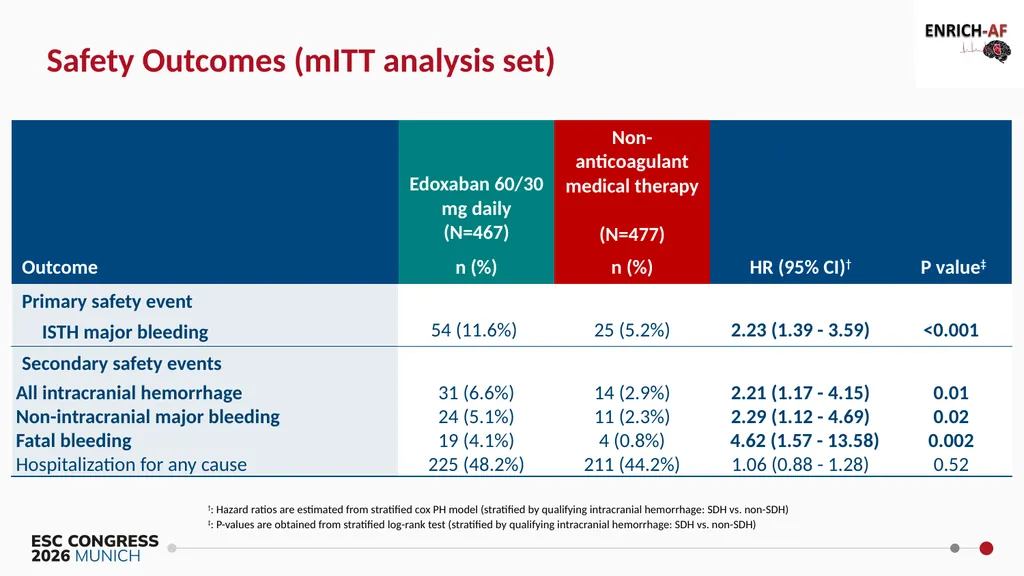
Safety Outcomes (mITT analysis set) †: Hazard ratios are estimated from stratified cox PH model (stratified by qualifying intracranial hemorrhage: SDH vs. non-SDH)
‡: P-values are obtained from stratified log-rank test (stratified by qualifying intracranial hemorrhage: SDH vs. non-SDH)<br>
16
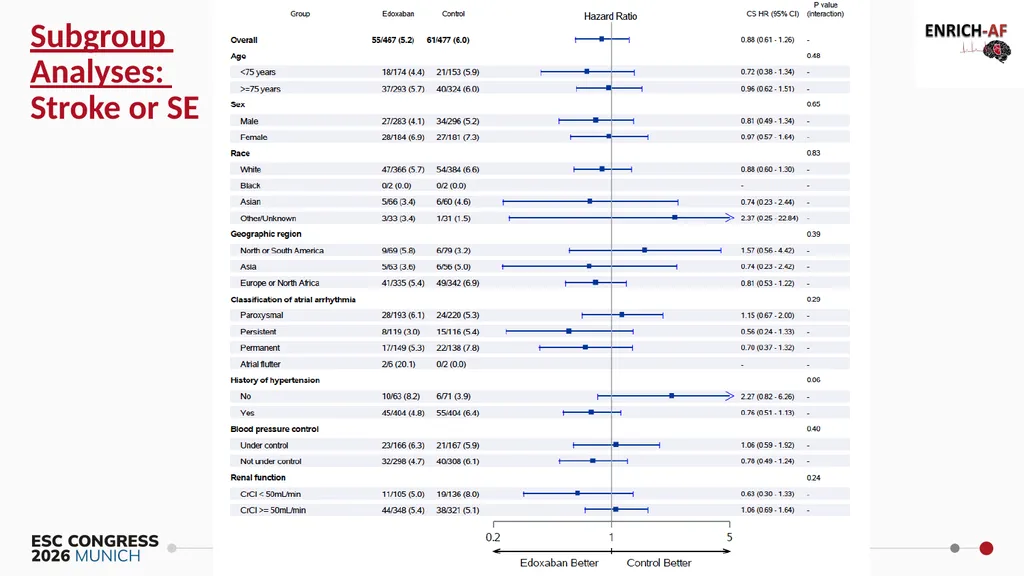
Subgroup
Analyses:
Stroke or SE<br>
17
Subgroup Analyses (Primary Safety Endpoint): ISTH Major Bleeding Subgroup
Analyses:
Stroke or SE<br>
18
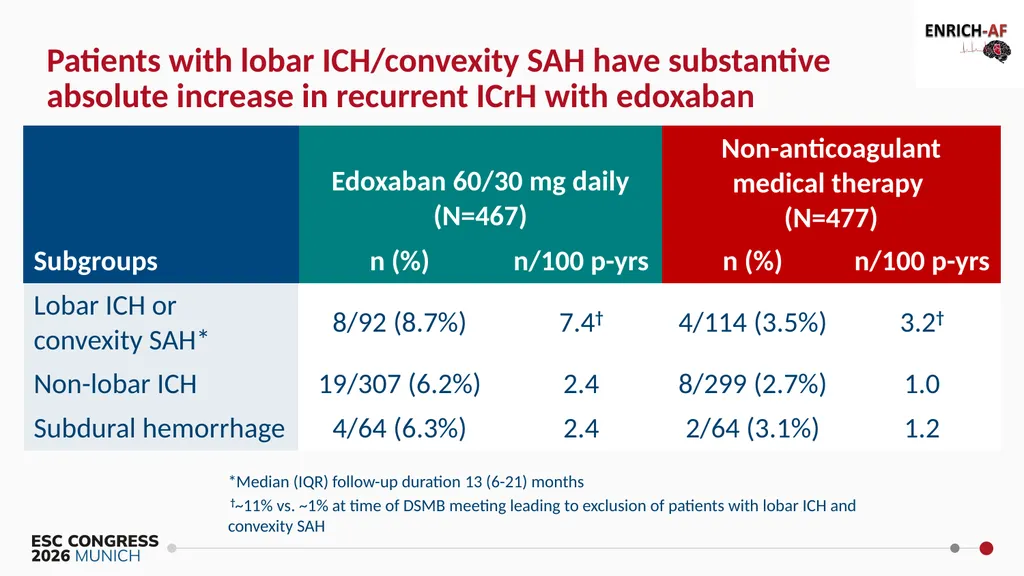
Patients with lobar ICH/convexity SAH have substantive absolute increase in recurrent ICrH with edoxaban *Median (IQR) follow-up duration 13 (6-21) months
†~11% vs. ~1% at time of DSMB meeting leading to exclusion of patients with lobar ICH and convexity SAH<br>
19
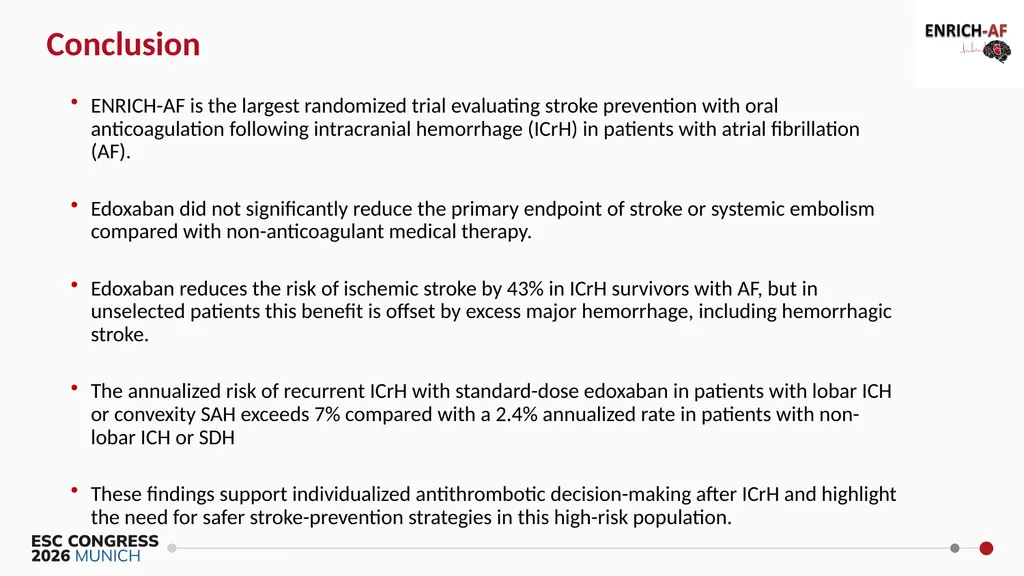
Conclusion ENRICH-AF is the largest randomized trial evaluating stroke prevention with oral anticoagulation following intracranial hemorrhage (ICrH) in patients with atrial fibrillation (AF).
Edoxaban did not significantly reduce the primary endpoint of stroke or systemic embolism compared with non-anticoagulant medical therapy.
Edoxaban reduces the risk of ischemic stroke by 43% in ICrH survivors with AF, but in unselected patients this benefit is offset by excess major hemorrhage, including hemorrhagic stroke.
The annualized risk of recurrent ICrH with standard-dose edoxaban in patients with lobar ICH or convexity SAH exceeds 7% compared with a 2.4% annualized rate in patients with non-lobar ICH or SDH
These findings support individualized antithrombotic decision-making after ICrH and highlight the need for safer stroke-prevention strategies in this high-risk population.<br>
20
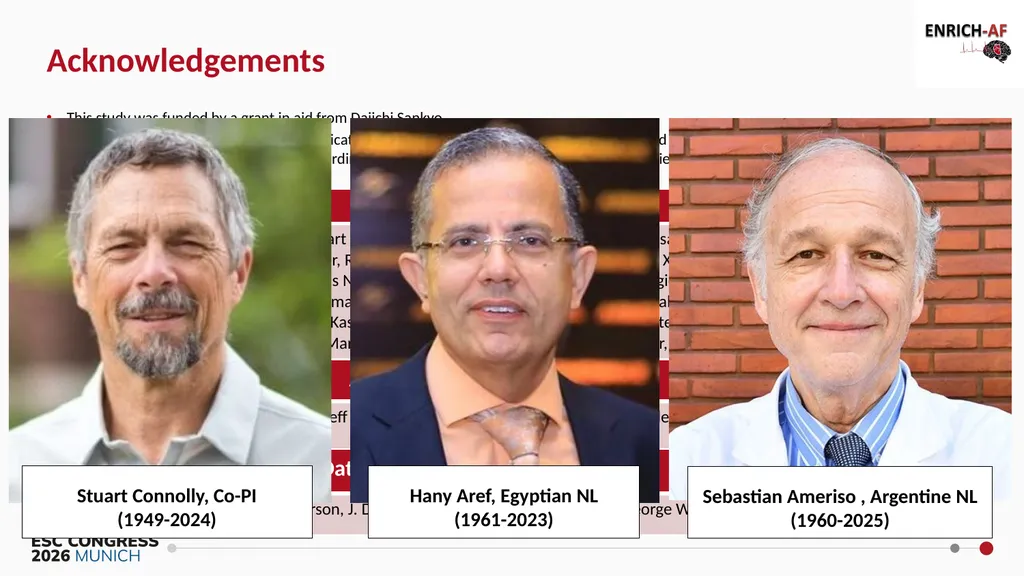
Acknowledgements This study was funded by a grant in aid from Daiichi Sankyo
We Thank the Steering Committee, Adjudication Committee and Data Safety Monitoring Board members, the study operations team, the investigators, the study site coordinators and especially the patients and their families who made this study possible Stuart Connolly, Co-PI
(1949-2024) Hany Aref, Egyptian NL
(1961-2023) Sebastian Ameriso , Argentine NL
(1960-2025)<br>