
Principles of Toxicology All substances are
PM
Published · 107 slides · 0 views

1 / 1







Description
Principles of Toxicology All substances are poisons; the right dose differentiates a poisons from a remedy. Dose determines toxicity. Contents of Unit 5 Definition and basic knowledge of acute, subacute and chronic toxicity. Definition
Related Topics
Share
Embed code
Download this presentation From Below
"Principles of Toxicology All substances are" is the property of its rightful owner. Permission is granted to download and print the materials on this website for personal, non-commercial use only, and to display it on your personal computer provided you do not modify the materials and that you retain all copyright notices contained in the materials. By downloading content from our website, you accept the terms of this agreement.
Presentation Transcript
01
Principles of Toxicology All substances are poisons; the right dose differentiates a poisons from a remedy.
“Dose determines toxicity.”<br>
“Dose determines toxicity.”<br>
02
Contents of Unit 5 Definition and basic knowledge of acute, subacute and chronic toxicity.
Definition and basic knowledge of genotoxicity, carcinogenicity, teratogenicity and mutagenicity
General principles of treatment of poisoning
Clinical symptoms and management of barbiturates, morphine, organophosphosphorus compound and lead, mercury and arsenic poisoning.
Chrono pharmacology
a. Definition of rhythm and cycles.
b. Biological clock and their significance leading to chronotherapy.<br>
03
INTRODUCTION Toxicity : Any toxic (adverse) effect that a chemical or physical agent might produce within a living organism.
Toxicology is the study of adverse effects of chemicals on living systems, including:
Mechanisms of action and exposure to chemicals as a cause of acute and chronic illness.
Understanding physiology and pharmacology by using toxic agents as chemical probes.
Recognition, identification, quantification of hazards from occupational exposure to chemicals.
Discovery of new drugs and pesticides.
Development of standards and regulations to protect humans and the environment from adverse effects of chemicals.<br>
04
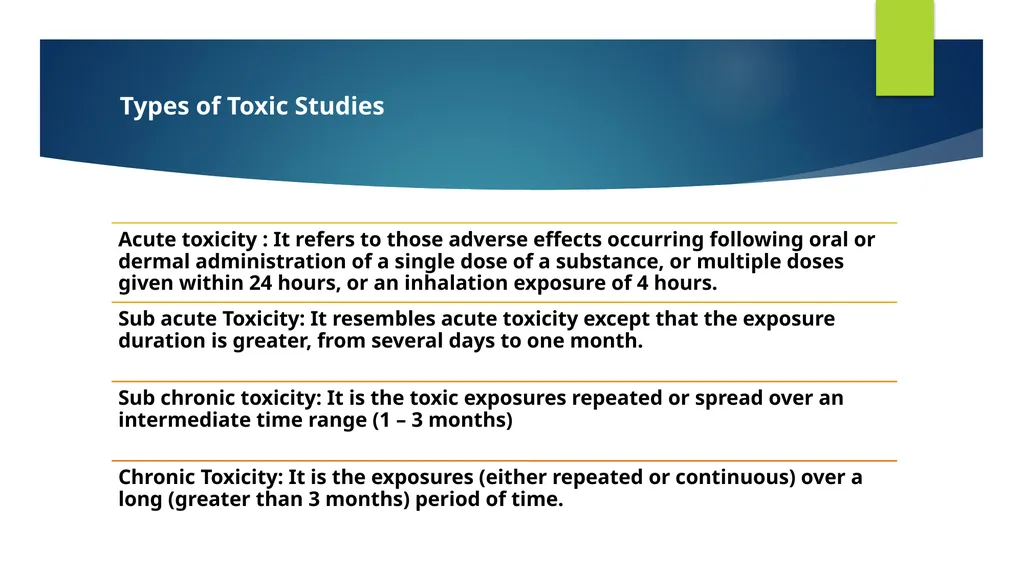
Types of Toxic Studies<br>
05
DOSE–RESPONSE RELATIONSHIP:
RISK ASSESSMENT<br>
06
Dose-response Relationships Graded dose-response relationships:
a Graded dose-response relationship describes a drug effect which increases in proportion to increasing drug dose.
A graded response to a drug is seen in an individual, and increases with dose.
Graded dose-response graphs plot the response to a drug against its concentration
Quantal dose-response relationships:
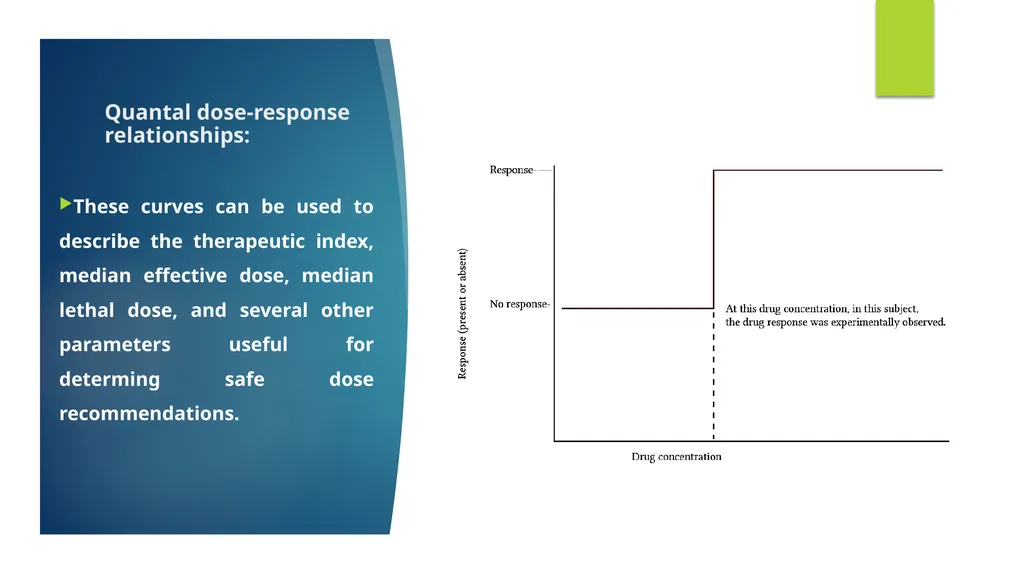
Quantal dose-response relationship describes a drug effect which is binary (either present or absent).
A quantal response to a drug is observed in a population, and is either present or absent in any single individual.
Quantal dose-response graphs plot the rate of an outcome occurrence in a population against the drug dose.<br>
07
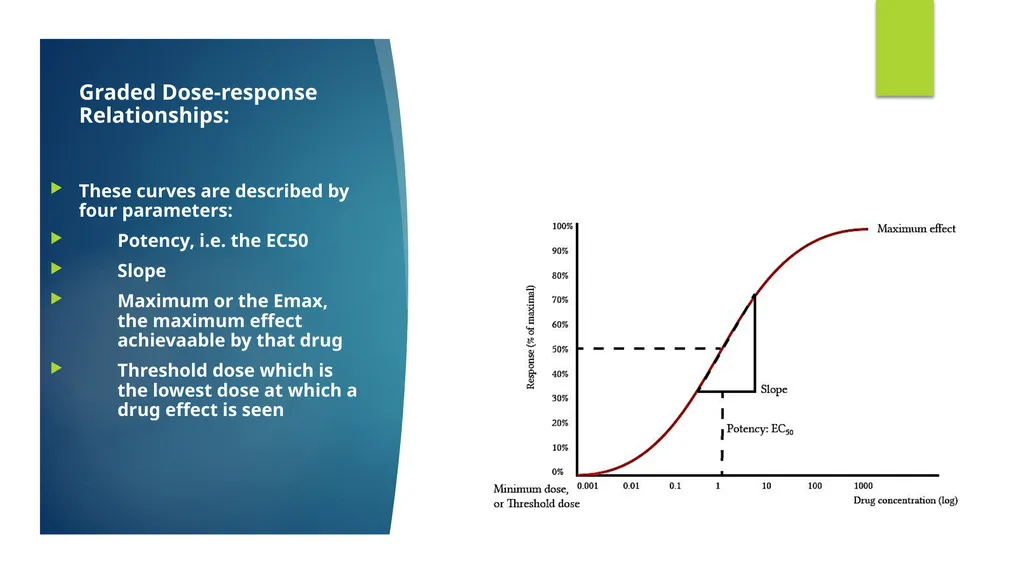
Graded Dose-response Relationships: These curves are described by four parameters:
Potency, i.e. the EC50
Slope
Maximum or the Emax, the maximum effect achievaable by that drug
Threshold dose which is the lowest dose at which a drug effect is seen<br>
Potency, i.e. the EC50
Slope
Maximum or the Emax, the maximum effect achievaable by that drug
Threshold dose which is the lowest dose at which a drug effect is seen<br>
08
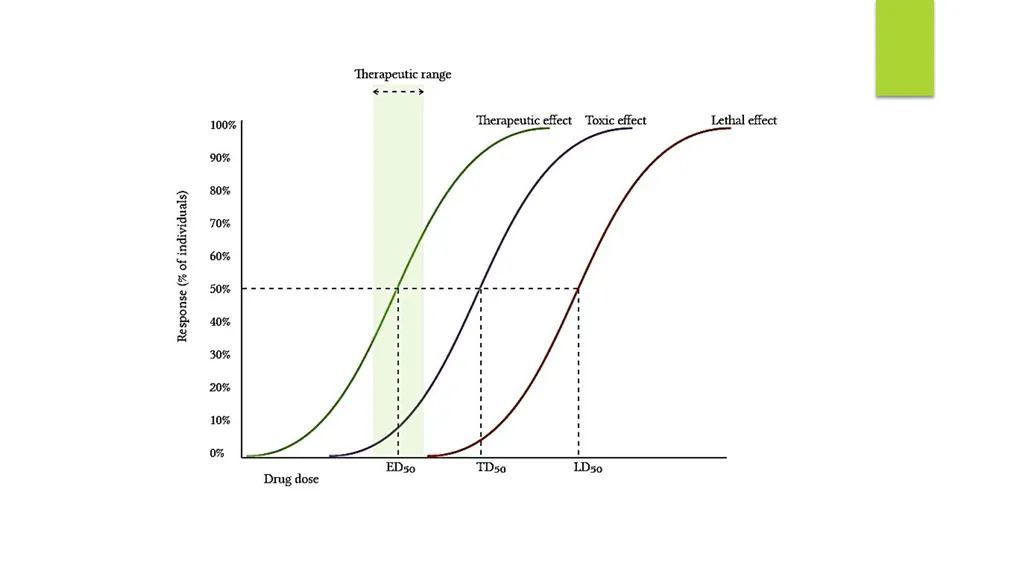
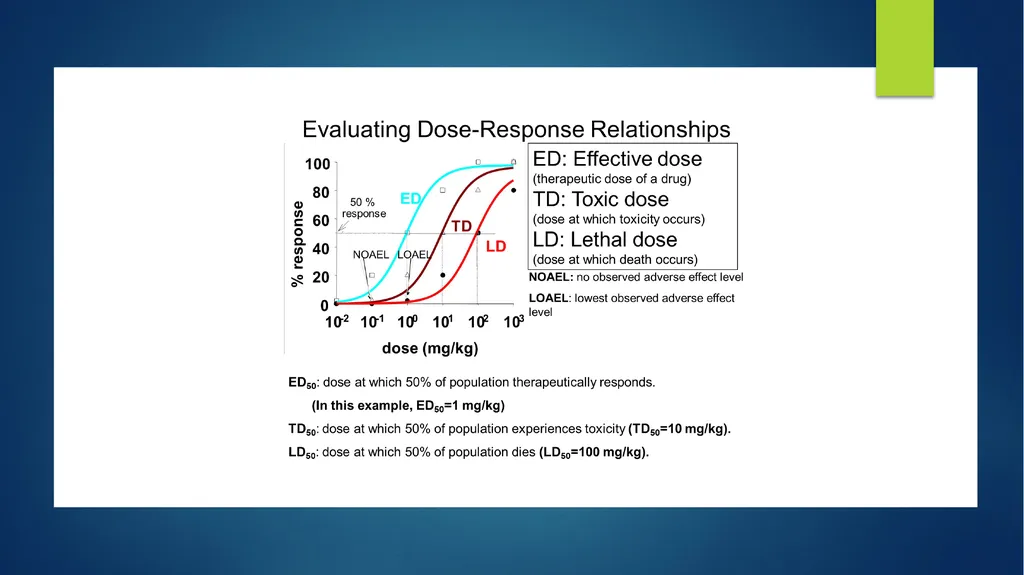
Quantal dose-response relationships: These curves can be used to describe the therapeutic index, median effective dose, median lethal dose, and several other parameters useful for determing safe dose recommendations.<br>
09
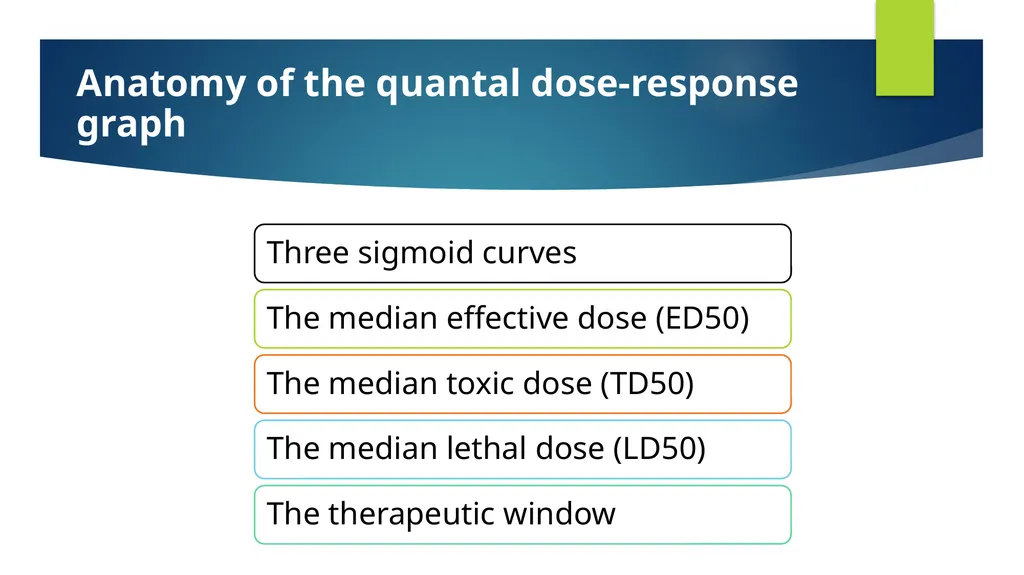
Anatomy of the quantal dose-response graph<br>
10
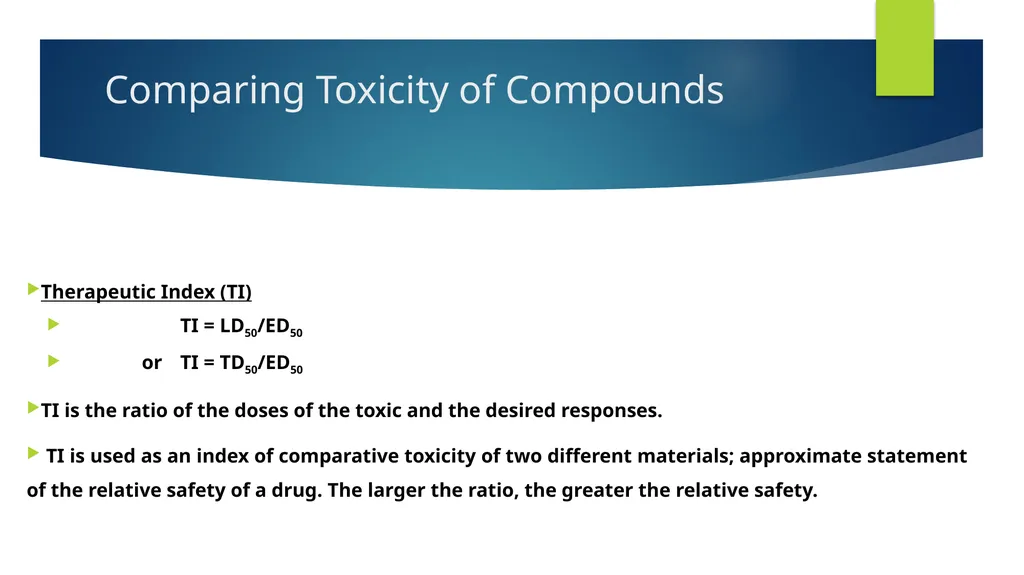
Therapeutic Index (TI)
TI = LD50/ED50
or TI = TD50/ED50
TI is the ratio of the doses of the toxic and the desired responses.
TI is used as an index of comparative toxicity of two different materials; approximate statement of the relative safety of a drug. The larger the ratio, the greater the relative safety. Comparing Toxicity of Compounds<br>
11
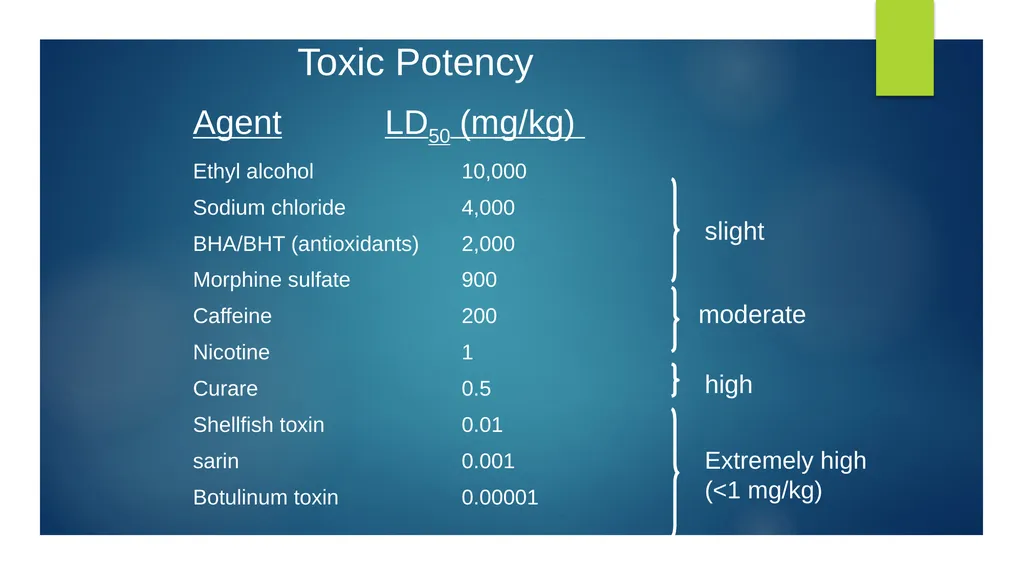
Toxic Potency Agent LD50 (mg/kg)
Ethyl alcohol 10,000
Sodium chloride 4,000
BHA/BHT (antioxidants) 2,000
Morphine sulfate 900
Caffeine 200
Nicotine 1
Curare 0.5
Shellfish toxin 0.01
sarin 0.001
Botulinum toxin 0.00001 slight moderate high Extremely high (<1 mg/kg)<br>
Ethyl alcohol 10,000
Sodium chloride 4,000
BHA/BHT (antioxidants) 2,000
Morphine sulfate 900
Caffeine 200
Nicotine 1
Curare 0.5
Shellfish toxin 0.01
sarin 0.001
Botulinum toxin 0.00001 slight moderate high Extremely high (<1 mg/kg)<br>
12
TYPES OF TOXIC REACTIONS Toxic effects of drugs may be classified as
Pharmacological &
pathological, or genotoxic (alterations of DNA), and their incidence and seriousness are related, at least over some range, to the concentration of the toxic chemical in the body.
Pharmacological Toxicity is excessive depression of the central nervous system (CNS) by barbiturates;
A Pathological Effect- hepatic injury produced by acetaminophen;
Genotoxic Effect- a neoplasm produced by a nitrogen mustard<br>
13
Continued If the concentration of chemical in the tissues does not exceed a critical level, the effects usually will be reversible.
The pharmacological effects usually disappear when the concentration of drug or chemical in the tissues is decreased by biotransformation or excretion from the body. Pathological and genotoxic effects may be repaired.
If these effects are severe, death may ensue within a short time; if more subtle damage to DNA is not repaired, cancer may appear in a few months or years in laboratory animals or in a decade or more in humans.<br>
14
Local versus Systemic Toxicity Local toxicity occurs at the site of first contact between the biological system and the toxicant.
Systemic toxicity requires absorption and distribution of the toxicant.
Tetraethyl lead- injures skin at the site of contact and deleteriously affects the CNS after it is absorbed into the circulation.
The target organ of toxicity is not necessarily the site of accumulation of the chemical. For example, lead is concentrated in bone, but its primary toxic action is on soft tissues.<br>
15
Reversible and Irreversible Toxic Effects The effects of drugs on humans, whenever possible, must be reversible; otherwise, the drugs would be prohibitively toxic.
If a chemical produces injury to a tissue, the capacity of the tissue to regenerate or recover largely will determine the reversibility of the effect.
Injuries to a tissue such as liver, which has a high capacity to regenerate, usually are reversible; injury to the CNS is largely irreversible because the highly differentiated neurons of the brain have a more limited capacity to divide and regenerate.<br>
16
Delayed Toxicity Most toxic effects of drugs occur at a predictable (usually short) time after administration.
However, such is not always the case.
For example, aplastic anaemia caused by chloramphenicol may appear weeks after the drug has been discontinued.
Carcinogenic effects of chemicals usually have a long latency period: 20–30 years may pass before tumors are observed.
Because such delayed effects cannot be assessed during any reasonable period of initial evaluation of a chemical, there is an urgent need for reliably predictive short-term tests for such toxicity, as well as for systematic surveillance of the long-term effects of marketed drugs and other chemicals<br>
17
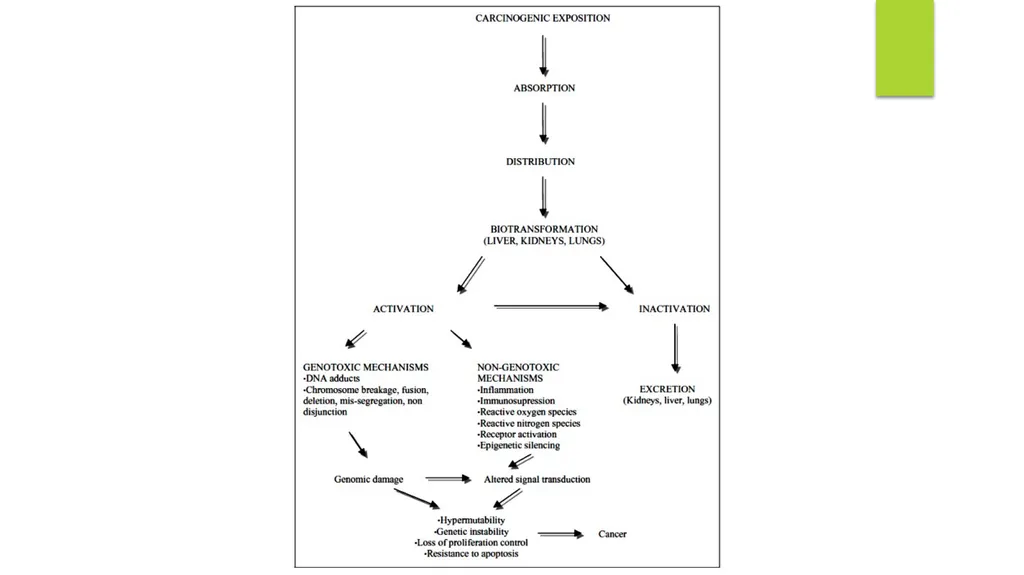
Chemical carcinogens Chemical carcinogens are classified as genotoxic or nongenotoxic.
Genotoxic carcinogens interact with DNA; nongenotoxic carcinogens do not.
Chemical carcinogenesis is a multistep process.
Most genotoxic carcinogens are themselves unreactive (procarcinogens or proximate carcinogens) but are converted to primary or ultimate carcinogens in the body.
The drug-metabolizing enzymes often convert the proximate carcinogens to reactive electrophilic intermediates .
These reactive intermediates can interact with DNA to produce a mutation.
Such interaction of the ultimate carcinogen with DNA in a cell is thought to be the initial step in chemical carcinogenesis.
The DNA may revert to normal if DNA repair mechanisms operate successfully; if not, the transformed cell may grow into a tumor that becomes apparent clinically.<br>
18
Nongenotoxic carcinogens, or promoters, do not produce tumors alone but do potentiate the effects of genotoxic carcinogens.
The time from initiation to the development of a tumor probably depends on the presence of such promoters; for many human tumors, the latent period is 15–45 years<br>
The time from initiation to the development of a tumor probably depends on the presence of such promoters; for many human tumors, the latent period is 15–45 years<br>
19
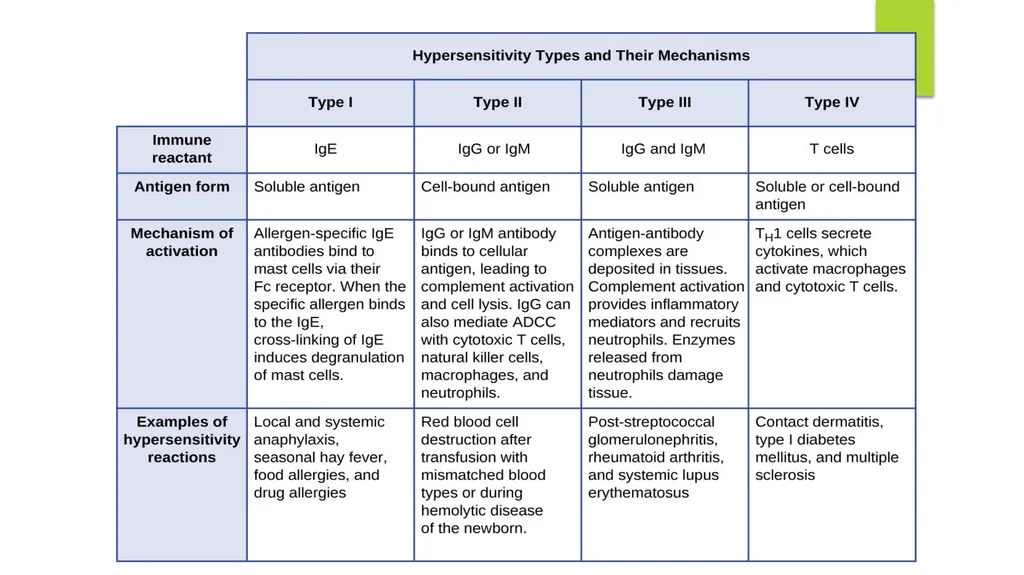
Allergic Reactions It is an immunologically mediated reaction producing stereotype symptoms which are unrelated to the pharmacodynamic profile of the drug.
The symptoms may appear even with much smaller doses and have a different time course of onset and duration. This is also called drug hyperensitivity; but does not refer to increased response which is called super sensitivity.
The target organs primarily affected in drug allergy are skin, airways, blood vessels, blood cells and gastrointestinal tract.<br>
20
Continued…… For a low-molecular-weight chemical to cause an allergic reaction, it or its metabolic product usually acts as a hapten, combining with an endogenous protein to form an antigenic complex.
Such antigens induce the synthesis of antibodies, usually after a latent period of at least 1–2 weeks. Subsequent exposure of the organism to the chemical results in an antigen–antibody interaction that provokes the typical manifestations of allergy.<br>
Such antigens induce the synthesis of antibodies, usually after a latent period of at least 1–2 weeks. Subsequent exposure of the organism to the chemical results in an antigen–antibody interaction that provokes the typical manifestations of allergy.<br>
21
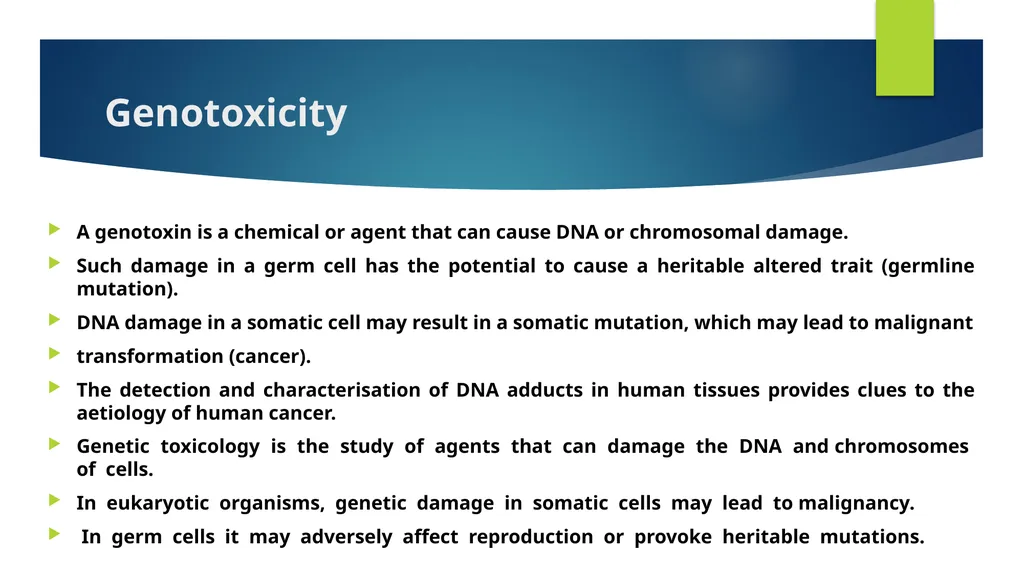
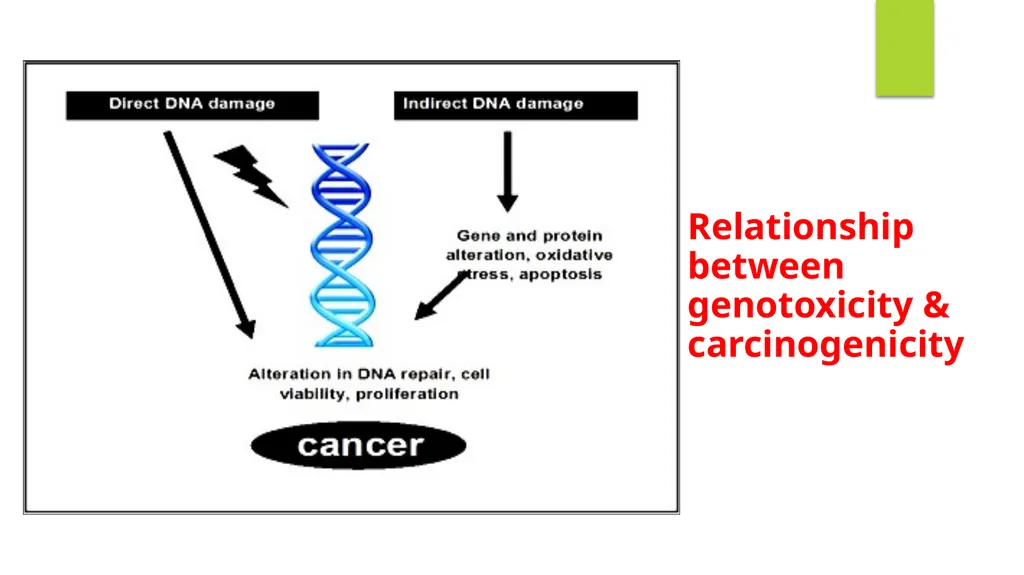
Genotoxicity A genotoxin is a chemical or agent that can cause DNA or chromosomal damage.
Such damage in a germ cell has the potential to cause a heritable altered trait (germline mutation).
DNA damage in a somatic cell may result in a somatic mutation, which may lead to malignant
transformation (cancer).
The detection and characterisation of DNA adducts in human tissues provides clues to the aetiology of human cancer.
Genetic toxicology is the study of agents that can damage the DNA and chromosomes of cells.
In eukaryotic organisms, genetic damage in somatic cells may lead to malignancy.
In germ cells it may adversely affect reproduction or provoke heritable mutations.<br>
22
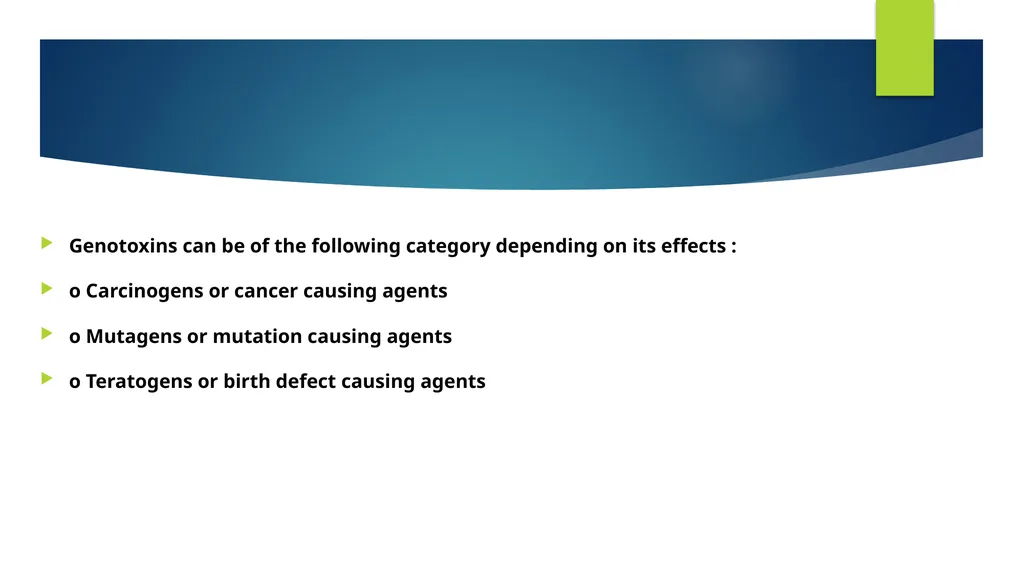
Genotoxins can be of the following category depending on its effects :
o Carcinogens or cancer causing agents
o Mutagens or mutation causing agents
o Teratogens or birth defect causing agents<br>
o Carcinogens or cancer causing agents
o Mutagens or mutation causing agents
o Teratogens or birth defect causing agents<br>
23
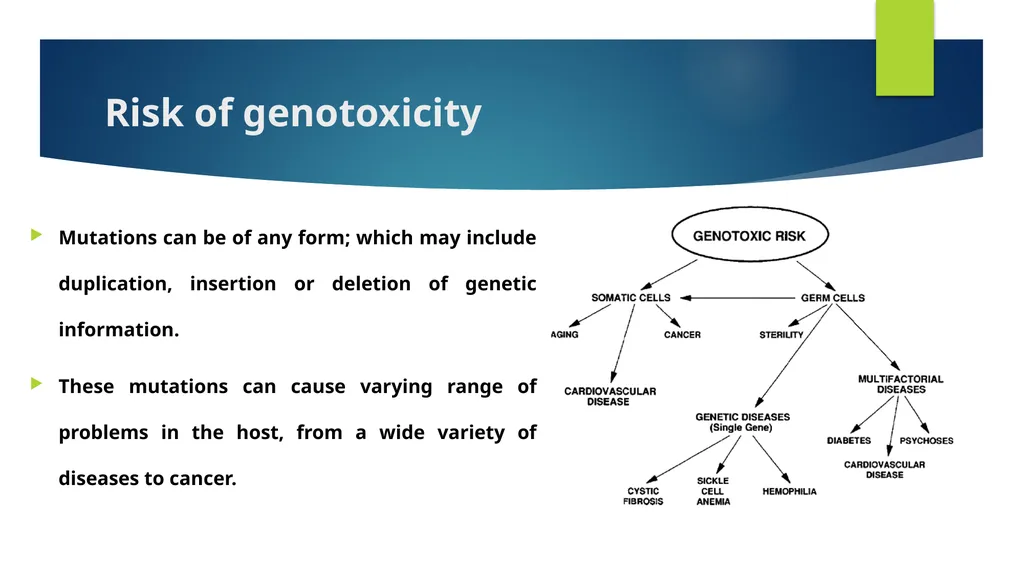
Risk of genotoxicity Mutations can be of any form; which may include duplication, insertion or deletion of genetic information.
These mutations can cause varying range of problems in the host, from a wide variety of diseases to cancer.<br>
These mutations can cause varying range of problems in the host, from a wide variety of diseases to cancer.<br>
24
Importance of genotoxicity studies Genotoxicity studies can be defined as various in-vitro and in-vivo tests designed to identify any substance or compounds which may induce damage to genetic material either directly or indirectly by various mechanisms.
These tests should enable the identification of hazard with respect to DNA damage and fixation
Genetic change play only a part in the complex process of heritable effects and malignancy which include the fixation of the damage to the DNA by gene mutation or large scale chromosomal damage or recombination or numerical chromosomal changes.
These tests play an important role in predicting if the compound have the potential to cause genotoxicity and carcinogenicity by testing them positive.
As a part of safety evaluation process, regulatory authorities all over the globe require information on the genotoxic potential of the new drugs.
Genotoxicity is usually evaluated along with other toxicological end points during the safety assessment<br>
25
Relationship between genotoxicity & carcinogenicity<br>
26
Mechanism of genotoxicity The damage to the genetic material is caused by the interactions of the genotoxic substance with the DNA structure and sequence.
These genotoxic substance interact at a specific location or base sequence of the DNA structure causing lesions, breakage, fusion, deletion, mis-segregation or non- non-disjunction leading to damage and mutation.
For example, in its high-valent oxidation state the transition metal chromium interacts with the DNA so that DNA lesions occur leading to carcinogenesis.<br>
27
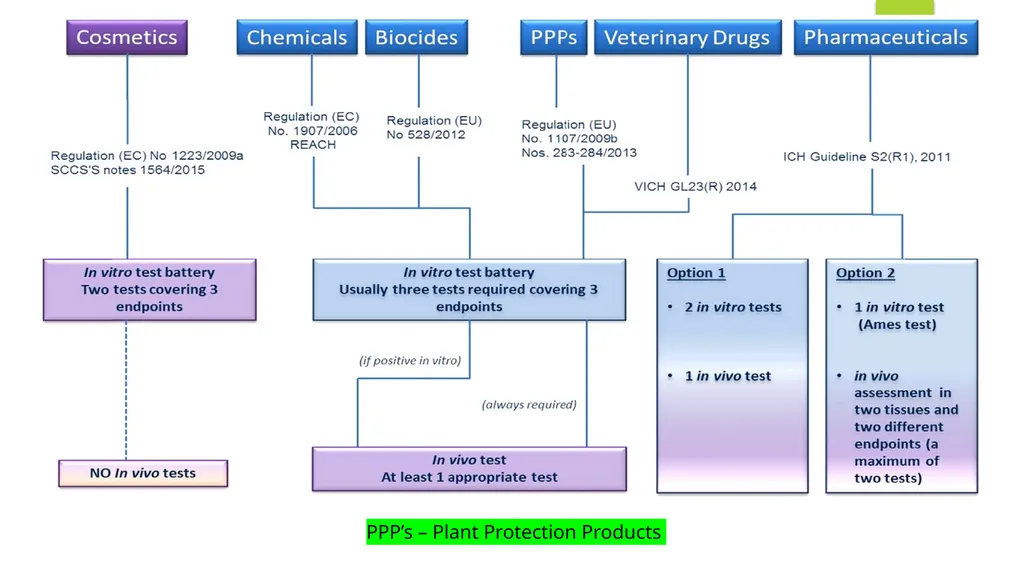
Standard Test Battery For Genotoxicity It also allows the detection of a drug’s potential to cause genotoxicity even in the early stage of drug development.
They are designed in such a way that it can be more sensitive to damage so as to enhance the identification of hazard.
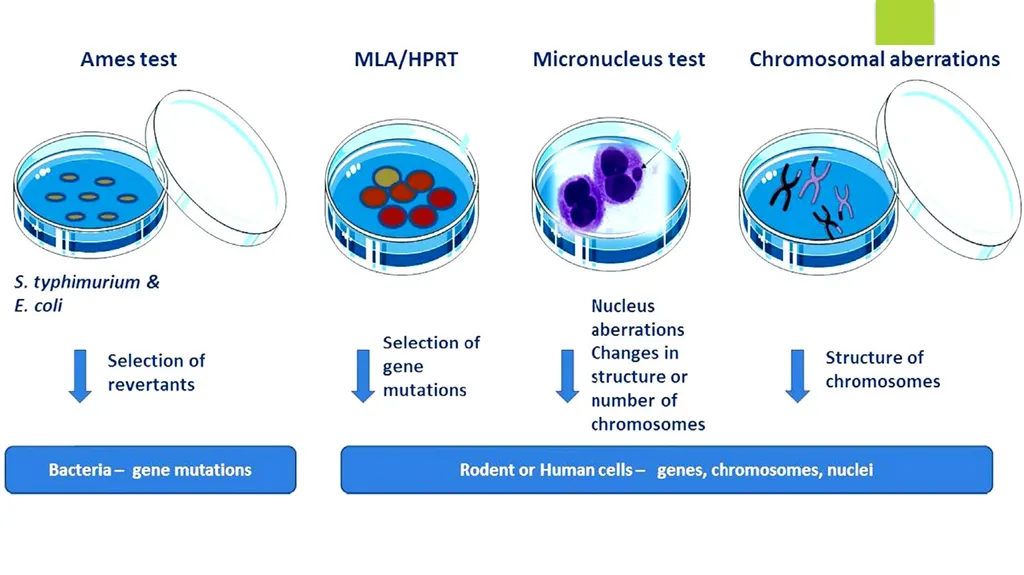
In-Vitro testing methods
Bacterial reverse mutation test which is otherwise called as Ames test whose endpoint is the gene mutations in the bacterial cell
Mammalian chromosome aberration test with the end point of chromosome aberration
Mammalian cell gene mutation test or the mouse lymphoma test whose end point is the gene mutations<br>
28
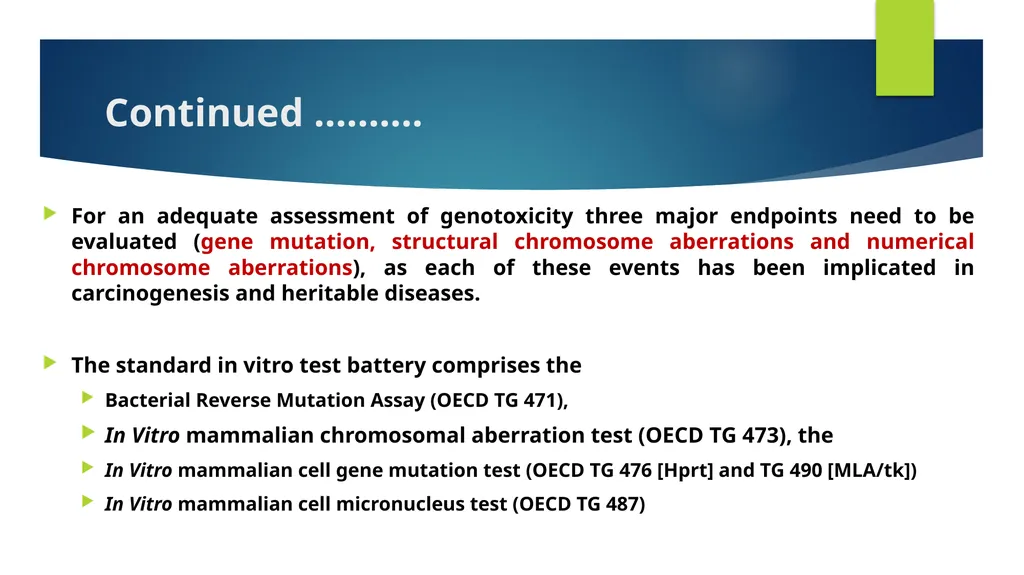
Continued ………. For an adequate assessment of genotoxicity three major endpoints need to be evaluated (gene mutation, structural chromosome aberrations and numerical chromosome aberrations), as each of these events has been implicated in carcinogenesis and heritable diseases.
The standard in vitro test battery comprises the
Bacterial Reverse Mutation Assay (OECD TG 471),
In Vitro mammalian chromosomal aberration test (OECD TG 473), the
In Vitro mammalian cell gene mutation test (OECD TG 476 [Hprt] and TG 490 [MLA/tk])
In Vitro mammalian cell micronucleus test (OECD TG 487)<br>
29
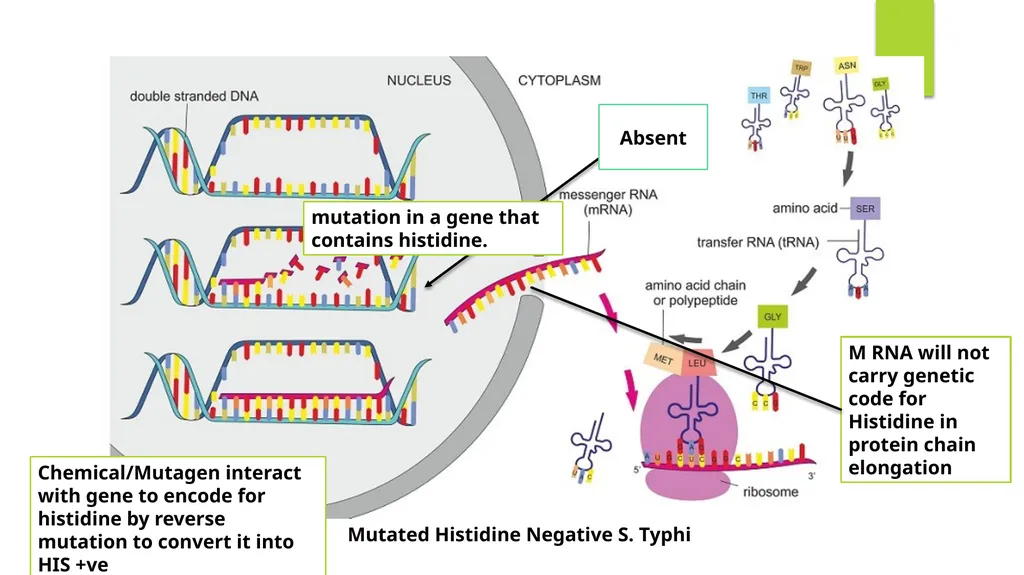
AMES TEST/ bacterial reverse mutation assay This test uses various strains of bacteria that may carry a mutation. One of the commonly used strains of bacteria is Salmonella typhimurium.
It carries a mutation in a gene that contains histidine. It loses its ability to mix histidine; a particular type of amino acid, by using the ingredients of the culture media. They are his strain and they need histidine in growth media.
Once you put His-salmonella in a medium that has certain chemicals, it will react with the medium thereby causing histidine encoding gene mutation. Hence, it regains the ability to blend histidine causing a reverse mutation.
Reverse mutation is made possible because of the chemical mutagen. Hence, it is safe to say that the Ames test determines the mutagenic property of a variety of chemicals Reverse mutations are defined as mutations that fully or partially restore the activity of a mutant gene<br>
30
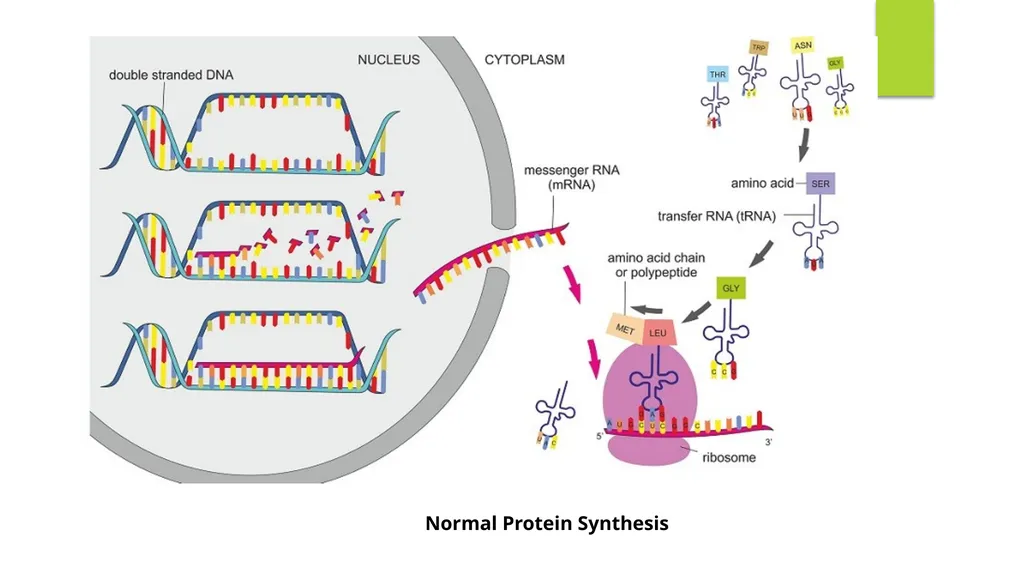
Normal Protein Synthesis<br>
31
Mutated Histidine Negative S. Typhi Absent mutation in a gene that contains histidine. M RNA will not carry genetic code for Histidine in protein chain elongation Chemical/Mutagen interact with gene to encode for histidine by reverse mutation to convert it into HIS +ve<br>
32
PPP’s – Plant Protection Products<br>
33
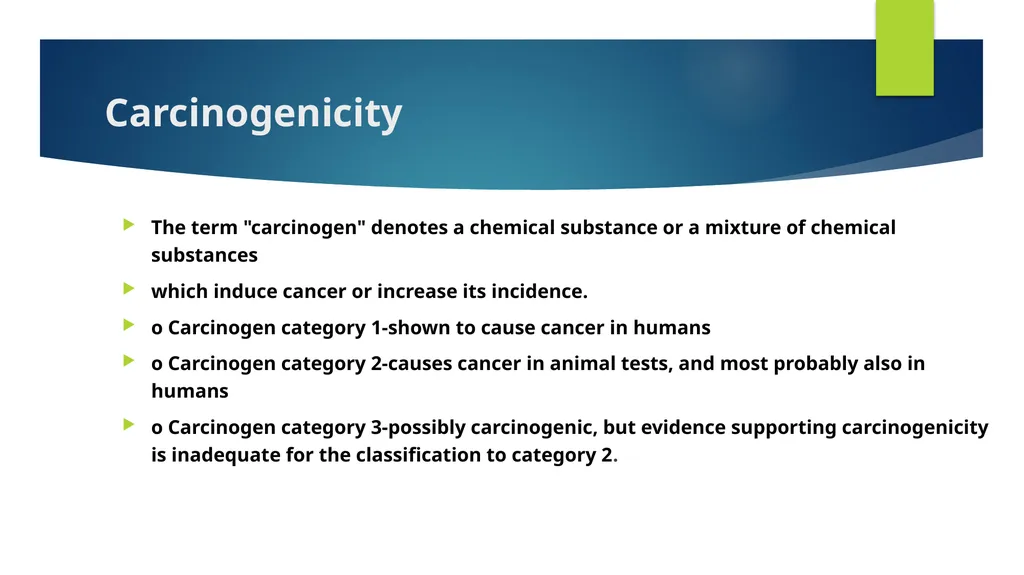
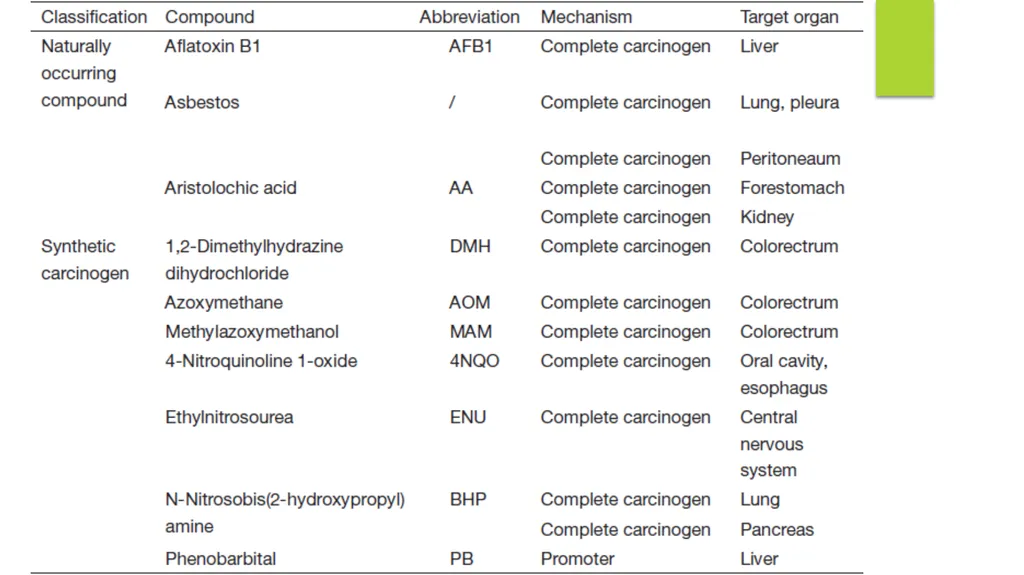
Carcinogenicity The term "carcinogen" denotes a chemical substance or a mixture of chemical substances
which induce cancer or increase its incidence.
o Carcinogen category 1-shown to cause cancer in humans
o Carcinogen category 2-causes cancer in animal tests, and most probably also in humans
o Carcinogen category 3-possibly carcinogenic, but evidence supporting carcinogenicity is inadequate for the classification to category 2.<br>
34
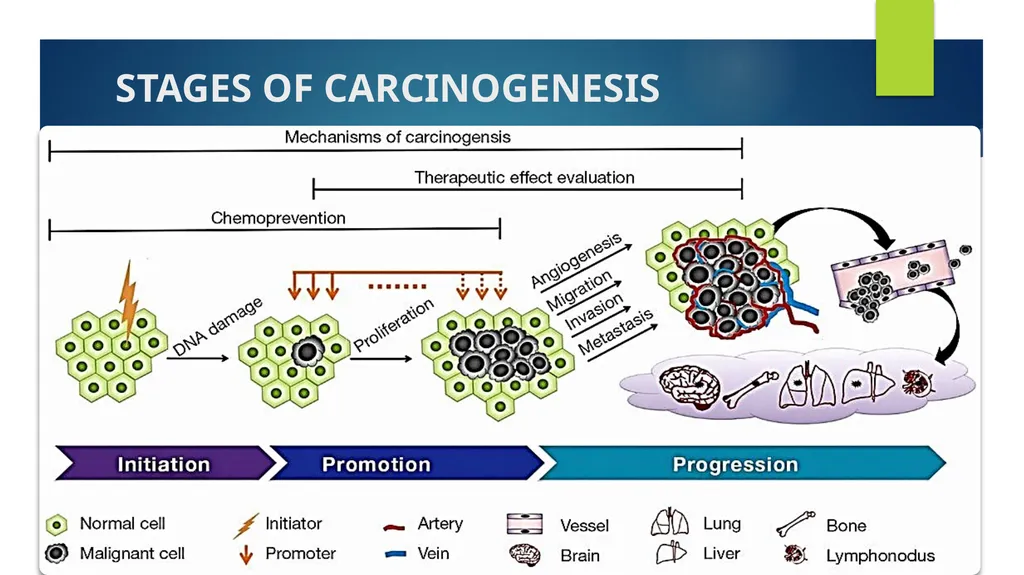
STAGES OF CARCINOGENESIS<br>
35
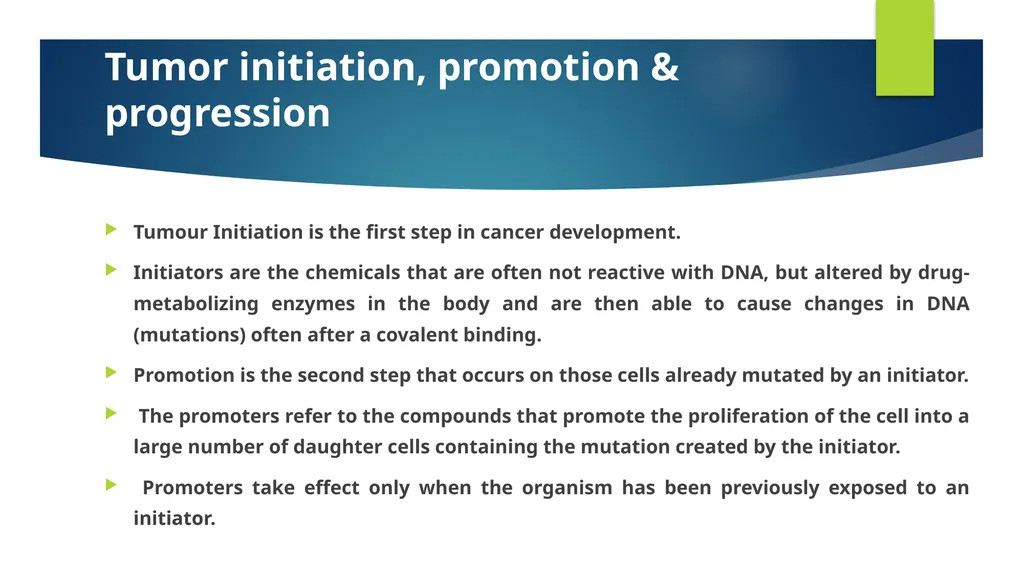
Tumor initiation, promotion & progression Tumour Initiation is the first step in cancer development.
Initiators are the chemicals that are often not reactive with DNA, but altered by drug-metabolizing enzymes in the body and are then able to cause changes in DNA (mutations) often after a covalent binding.
Promotion is the second step that occurs on those cells already mutated by an initiator.
The promoters refer to the compounds that promote the proliferation of the cell into a large number of daughter cells containing the mutation created by the initiator.
Promoters take effect only when the organism has been previously exposed to an initiator.<br>
36
The third step progression refers to the serial transformations from a benign tumor to a neoplasm and to malignancy.
This karyotypic change is coupled with an increased growth rate, invasiveness, metastasis and alterations in biochemistry and morphology due to the continuing mutations or genetic instability.
Once this step is triggered, progression is irreversible.<br>
This karyotypic change is coupled with an increased growth rate, invasiveness, metastasis and alterations in biochemistry and morphology due to the continuing mutations or genetic instability.
Once this step is triggered, progression is irreversible.<br>
37
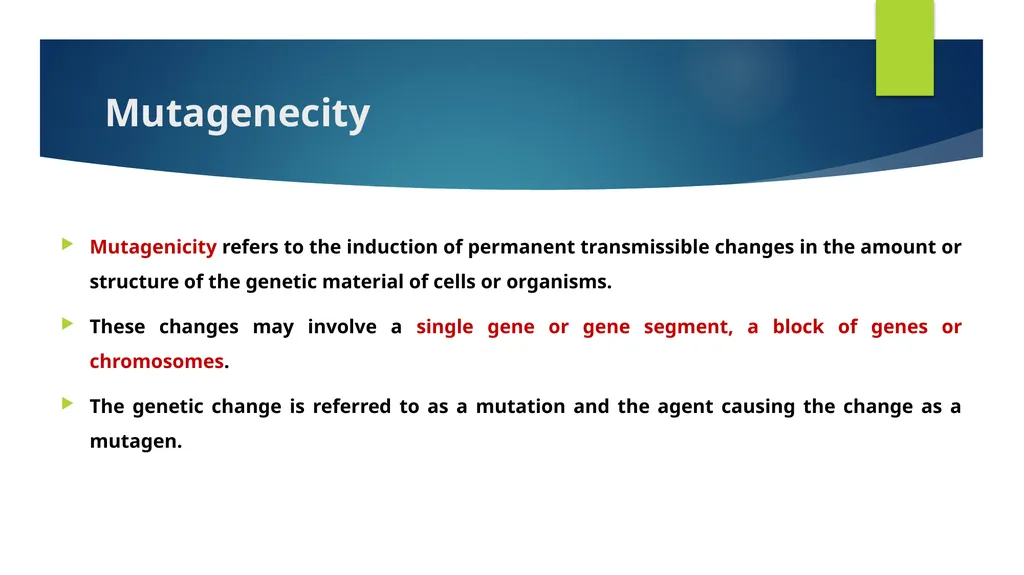
Mutagenecity Mutagenicity refers to the induction of permanent transmissible changes in the amount or structure of the genetic material of cells or organisms.
These changes may involve a single gene or gene segment, a block of genes or chromosomes.
The genetic change is referred to as a mutation and the agent causing the change as a mutagen.<br>
These changes may involve a single gene or gene segment, a block of genes or chromosomes.
The genetic change is referred to as a mutation and the agent causing the change as a mutagen.<br>
38
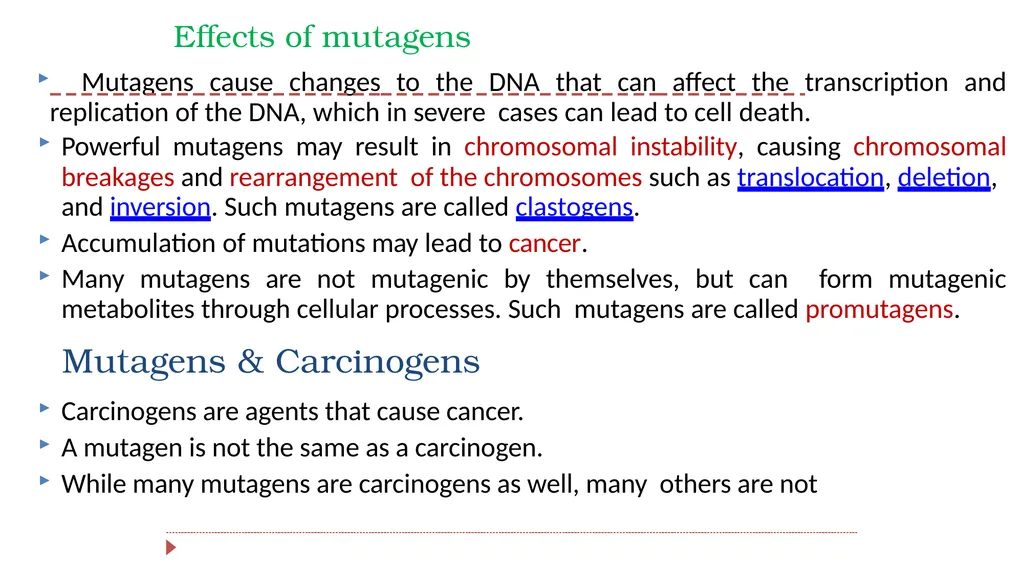
Effects of mutagens Mutagens cause changes to the DNA that can affect the transcription and replication of the DNA, which in severe cases can lead to cell death.
Powerful mutagens may result in chromosomal instability, causing chromosomal breakages and rearrangement of the chromosomes such as translocation, deletion,
and inversion. Such mutagens are called clastogens.
Accumulation of mutations may lead to cancer.
Many mutagens are not mutagenic by themselves, but can form mutagenic metabolites through cellular processes. Such mutagens are called promutagens.
Carcinogens are agents that cause cancer.
A mutagen is not the same as a carcinogen.
While many mutagens are carcinogens as well, many others are not Mutagens & Carcinogens<br>
39
Types of mutagens
Physical mutagen
Chemical mutagen
Biological mutagen<br>
Physical mutagen
Chemical mutagen
Biological mutagen<br>
40
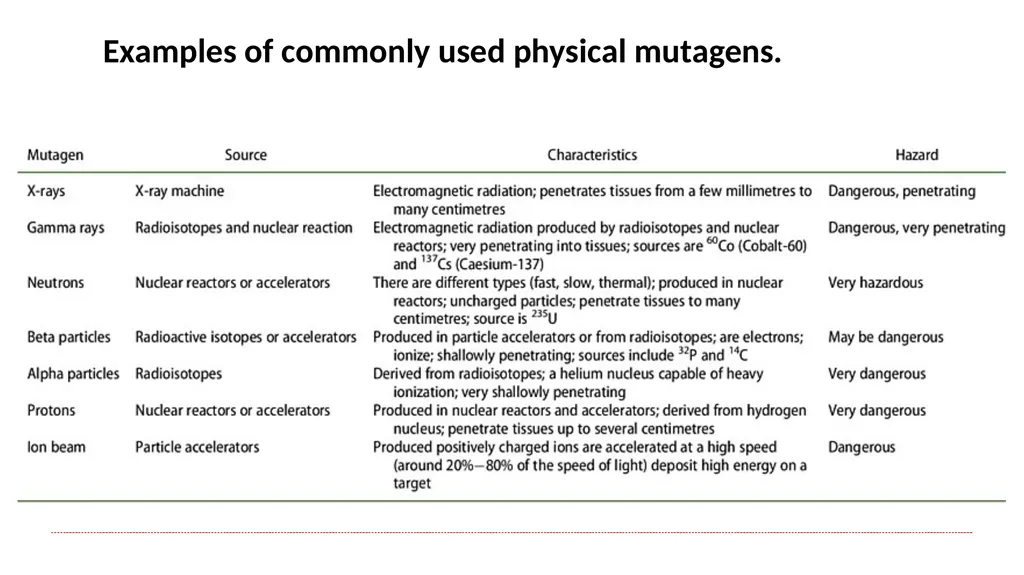
Examples of commonly used physical mutagens.<br>
41
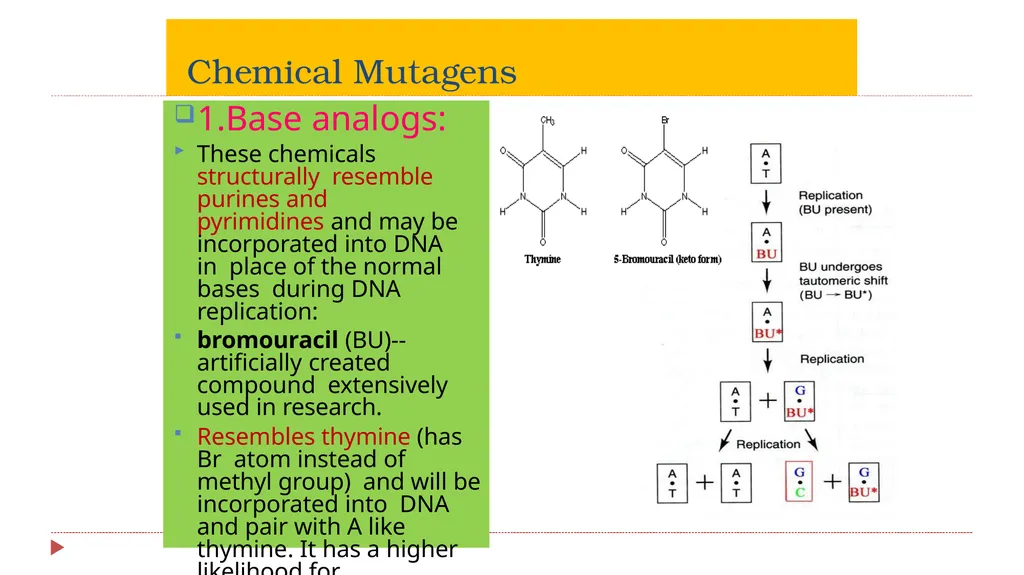
Chemical Mutagens 1.Base analogs:
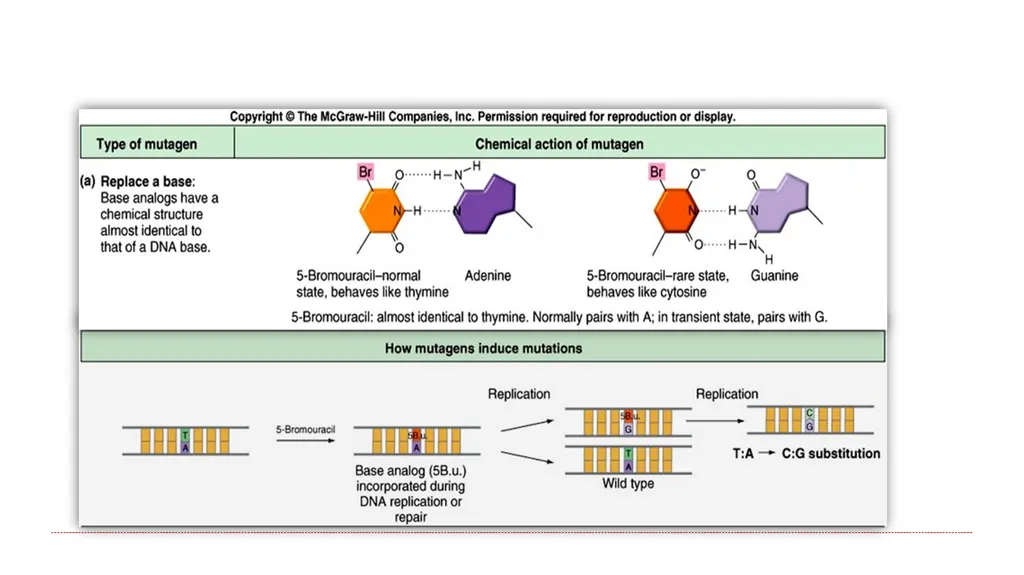
These chemicals structurally resemble purines and pyrimidines and may be incorporated into DNA in place of the normal bases during DNA replication:
bromouracil (BU)-- artificially created compound extensively used in research.
Resembles thymine (has Br atom instead of methyl group) and will be incorporated into DNA and pair with A like thymine. It has a higher likelihood for tautomerization to the enol form (BU*)<br>
42
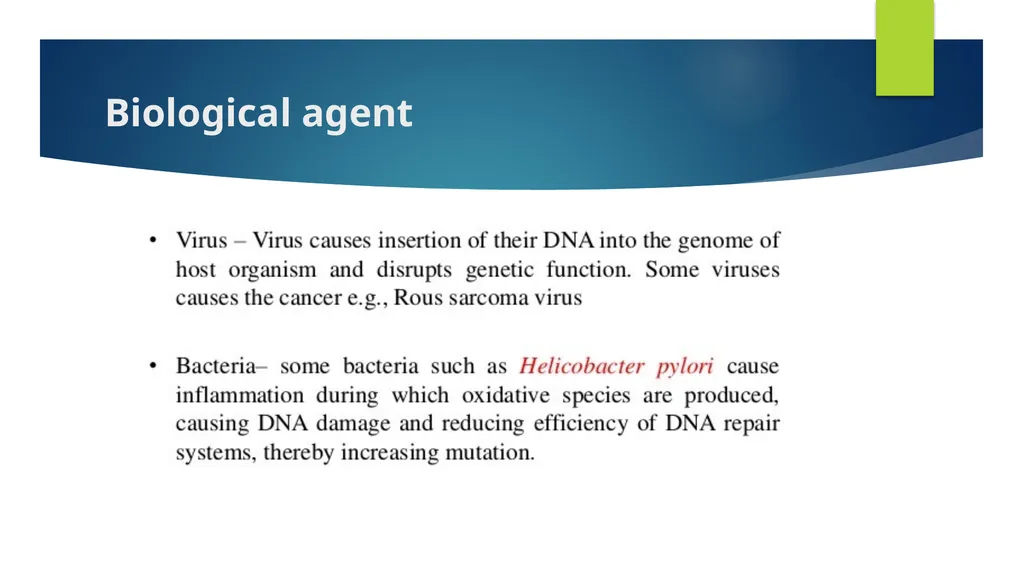
Biological agent<br>
43
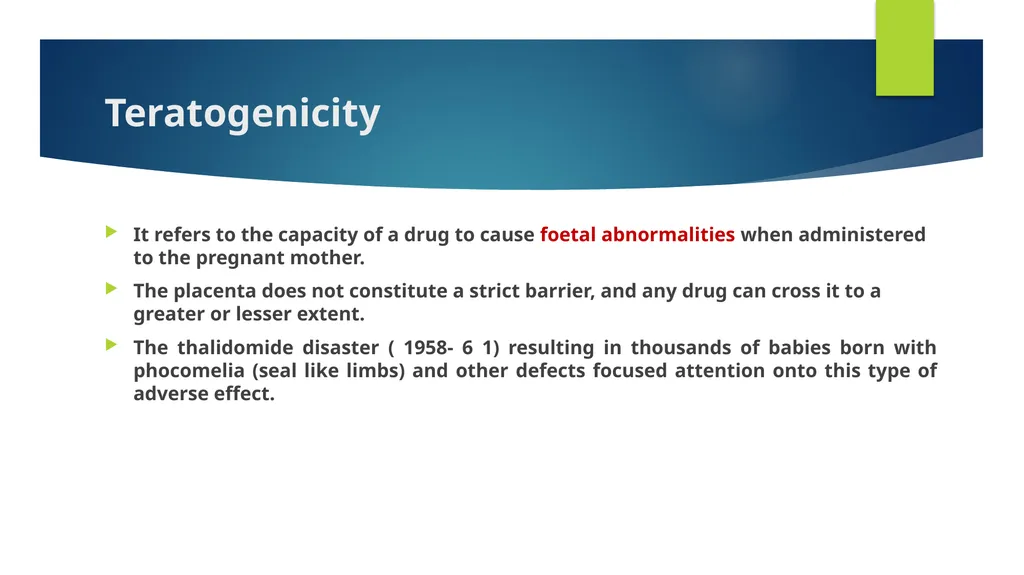
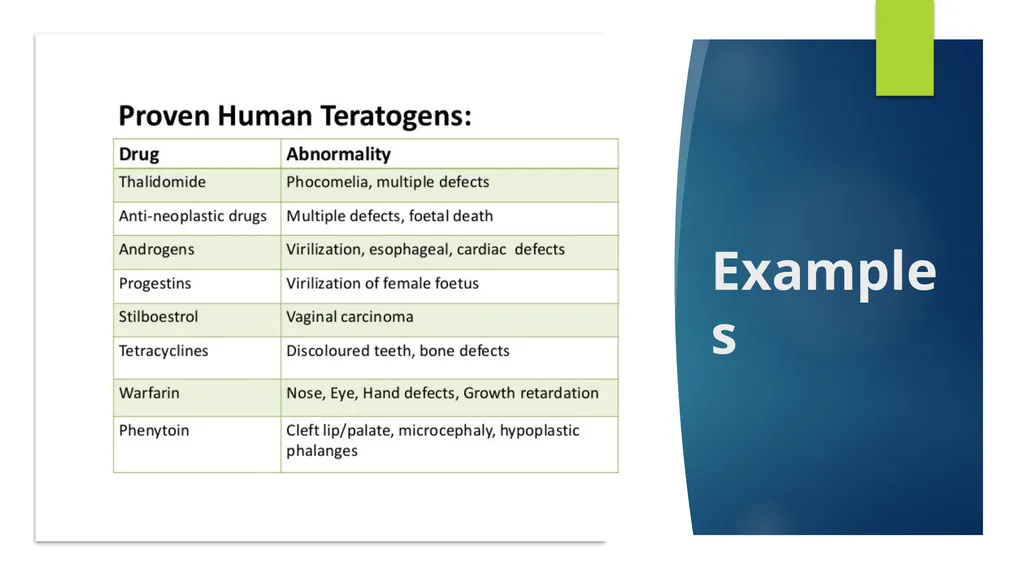
Teratogenicity It refers to the capacity of a drug to cause foetal abnormalities when administered to the pregnant mother.
The placenta does not constitute a strict barrier, and any drug can cross it to a greater or lesser extent.
The thalidomide disaster ( 1958- 6 1) resulting in thousands of babies born with phocomelia (seal like limbs) and other defects focused attention onto this type of adverse effect.<br>
The placenta does not constitute a strict barrier, and any drug can cross it to a greater or lesser extent.
The thalidomide disaster ( 1958- 6 1) resulting in thousands of babies born with phocomelia (seal like limbs) and other defects focused attention onto this type of adverse effect.<br>
44
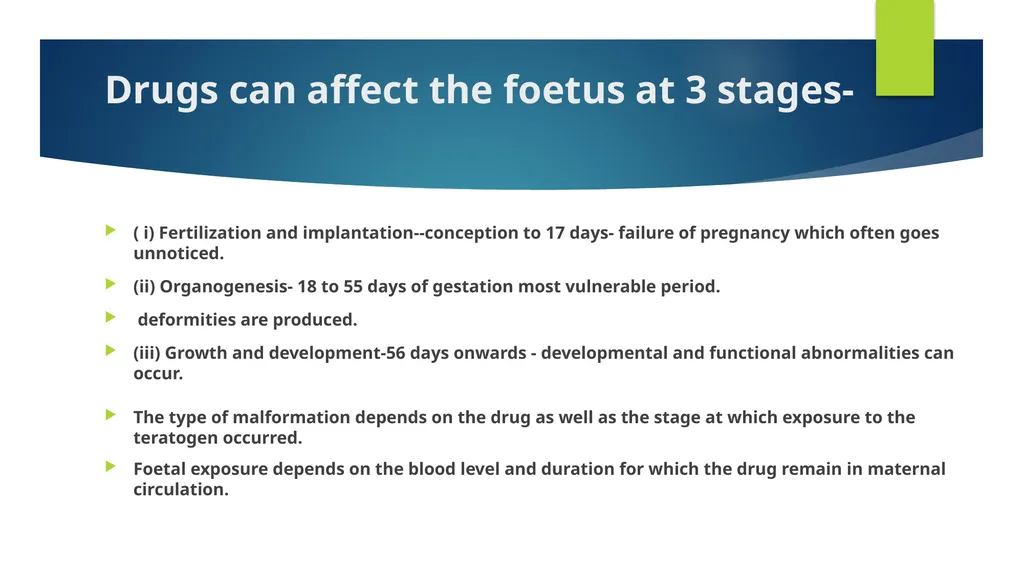
Drugs can affect the foetus at 3 stages- ( i) Fertilization and implantation--conception to 17 days- failure of pregnancy which often goes unnoticed.
(ii) Organogenesis- 18 to 55 days of gestation most vulnerable period.
deformities are produced.
(iii) Growth and development-56 days onwards - developmental and functional abnormalities can occur.
The type of malformation depends on the drug as well as the stage at which exposure to the teratogen occurred.
Foetal exposure depends on the blood level and duration for which the drug remain in maternal circulation.<br>
45
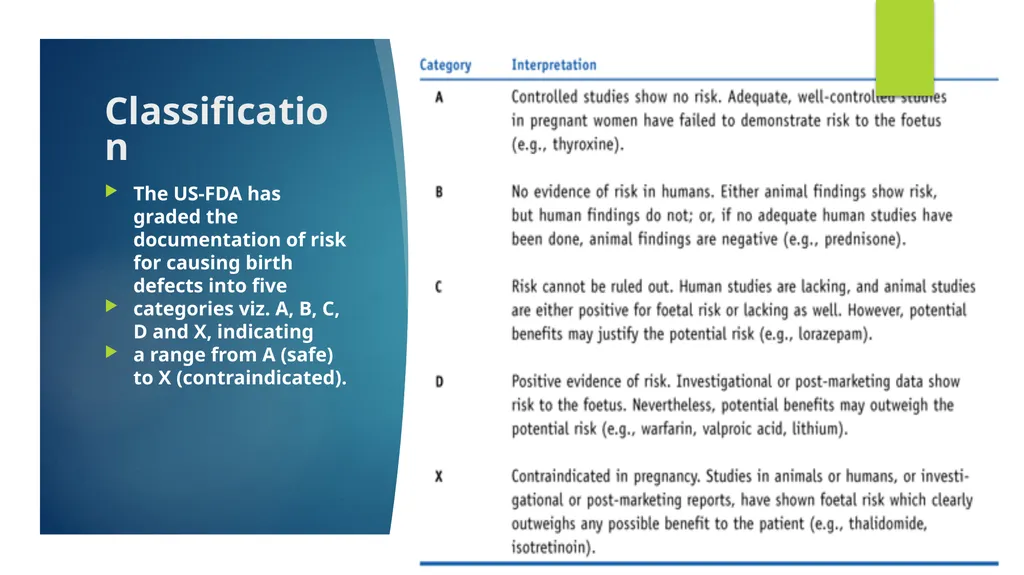
Classification The US-FDA has graded the documentation of risk for causing birth defects into five
categories viz. A, B, C, D and X, indicating
a range from A (safe) to X (contraindicated).<br>
categories viz. A, B, C, D and X, indicating
a range from A (safe) to X (contraindicated).<br>
46
Examples<br>
47
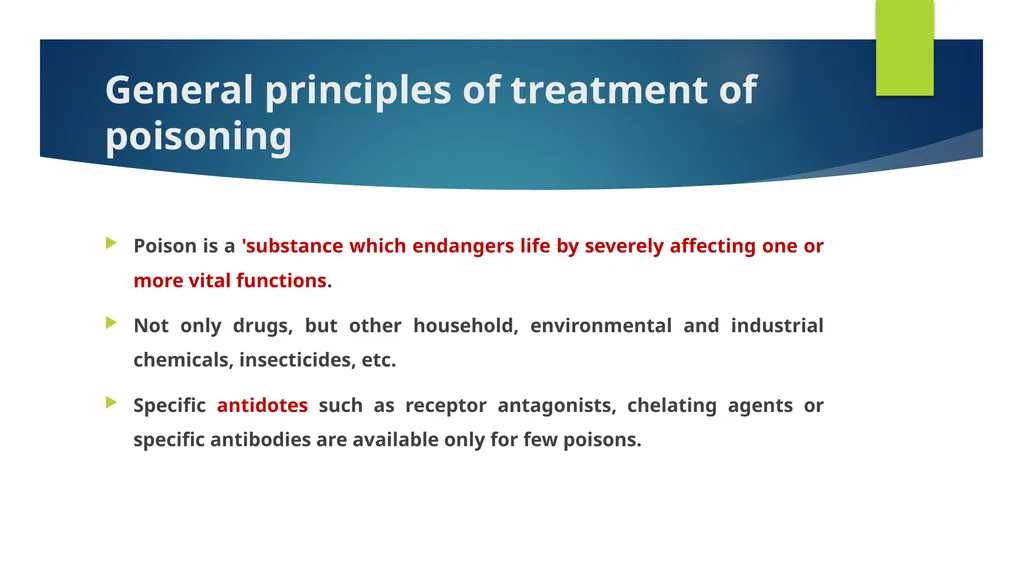
General principles of treatment of poisoning Poison is a 'substance which endangers life by severely affecting one or more vital functions.
Not only drugs, but other household, environmental and industrial chemicals, insecticides, etc.
Specific antidotes such as receptor antagonists, chelating agents or specific antibodies are available only for few poisons.<br>
Not only drugs, but other household, environmental and industrial chemicals, insecticides, etc.
Specific antidotes such as receptor antagonists, chelating agents or specific antibodies are available only for few poisons.<br>
48
The general detoxification and supportive measures are: 1. Resuscitation and maintenance of vital functions
a. Ensure patent airway, adequate ventilation by artificial respiration
b. Maintain blood pressure and heart beat by fluid and crystalloid infusion. pressor agents, cardiac stimulants.
c. Prevent and manage seizures (with i.v. Lorazepam)
d. Maintain body temperature.
e. Maintain blood sugar level by dextrose infusion.<br>
49
2. Termination of exposure {decontamination) It is done by removing the patient to fresh air (for inha led poisons), removing contaminated clothing and washing the skin and eyes (for poisons entering from the surface), induction of emesis with syrup ipecac or gastric lavage (for ingested poisons).<br>
50
3. Prevention of absorption of ingested
poisons A suspension of 20-40 g ( or I g/ kg body weight) of activated charcoal, which has large surface area and can adsorb many chemicals, should be administered in 200 ml of water.
4 . Hastening elimination of the poison
By inducing diuresis (furosemide, mannitol) or altering urinary pH (alkalinization for acidic drugs. e.g. barbiturates. aspirin).<br>
4 . Hastening elimination of the poison
By inducing diuresis (furosemide, mannitol) or altering urinary pH (alkalinization for acidic drugs. e.g. barbiturates. aspirin).<br>
51
Lead, Mercury And Arsenic poisoning.<br>
52
Lead Poisoning Through natural occurrence and its industrial use, lead is ubiquitous in the environment.
ACUTE LEAD POISONING
Acute lead poisoning is relatively infrequent and follows ingestion of acid-soluble lead compounds or inhalation of lead vapours.
Local actions in the mouth produce marked thirst, and a metallic taste. Nausea, abdominal pain, and vomiting ensue.
CHRONIC LEAD POISONING
Signs and symptoms of plumbism (lead poisoning) include GI, neuromuscular, CNS, hematological, renal, and other disturbances, occurring separately or in combination.<br>
53
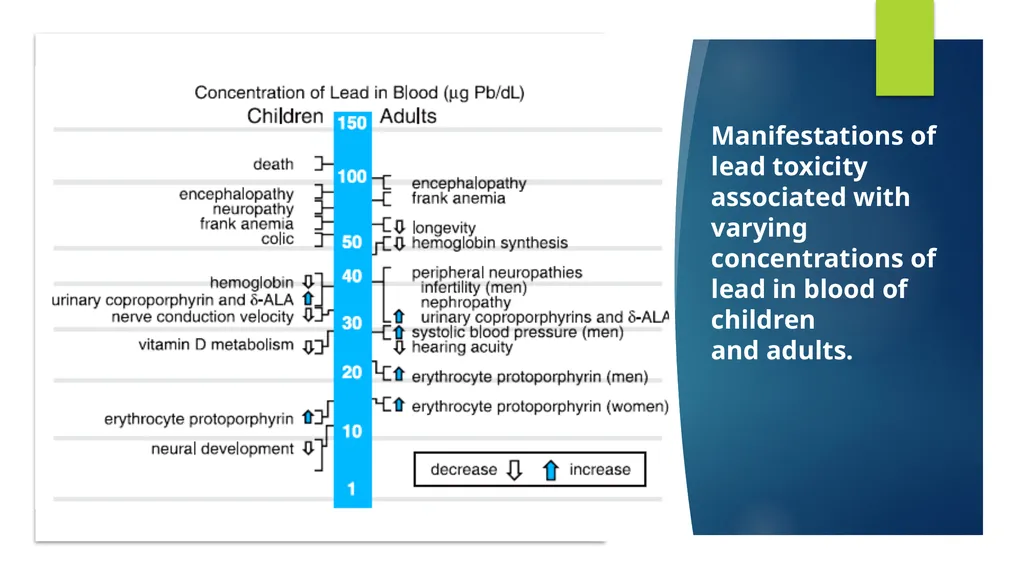
Manifestations of lead toxicity associated with varying concentrations of lead in blood of children
and adults.<br>
54
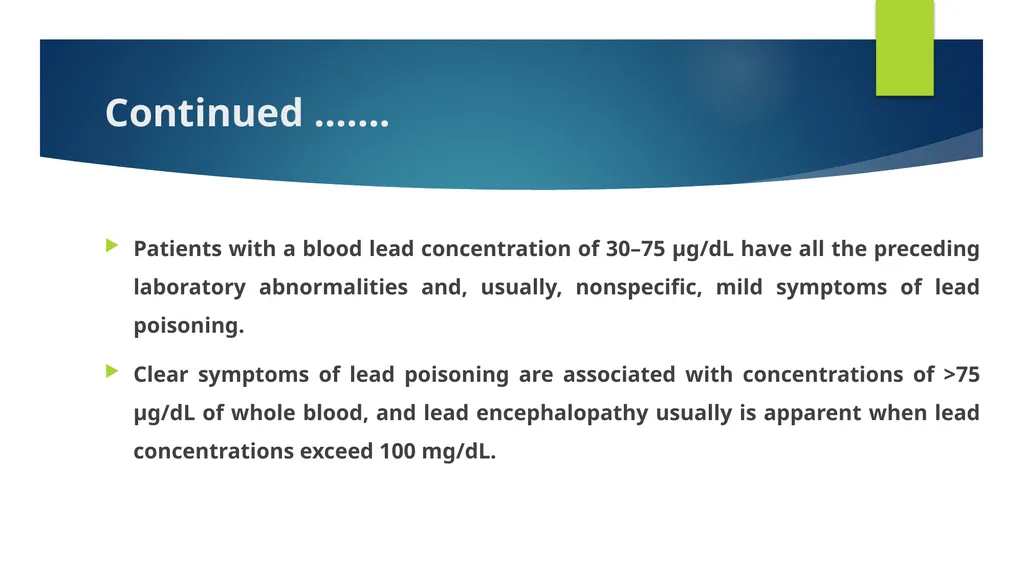
Continued ……. Patients with a blood lead concentration of 30–75 μg/dL have all the preceding laboratory abnormalities and, usually, nonspecific, mild symptoms of lead poisoning.
Clear symptoms of lead poisoning are associated with concentrations of >75 μg/dL of whole blood, and lead encephalopathy usually is apparent when lead concentrations exceed 100 mg/dL.<br>
Clear symptoms of lead poisoning are associated with concentrations of >75 μg/dL of whole blood, and lead encephalopathy usually is apparent when lead concentrations exceed 100 mg/dL.<br>
55
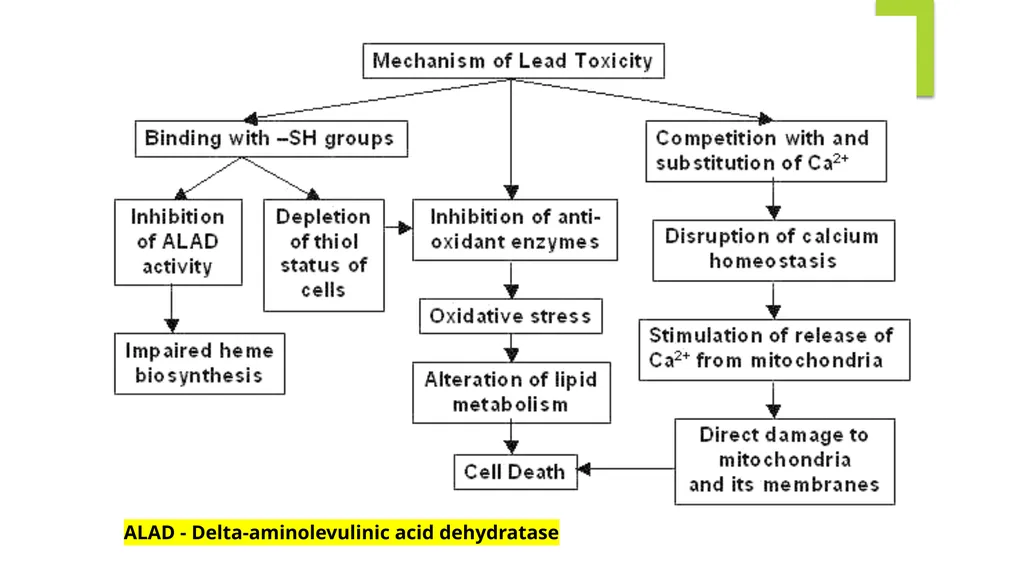
ALAD - Delta-aminolevulinic acid dehydratase<br>
56
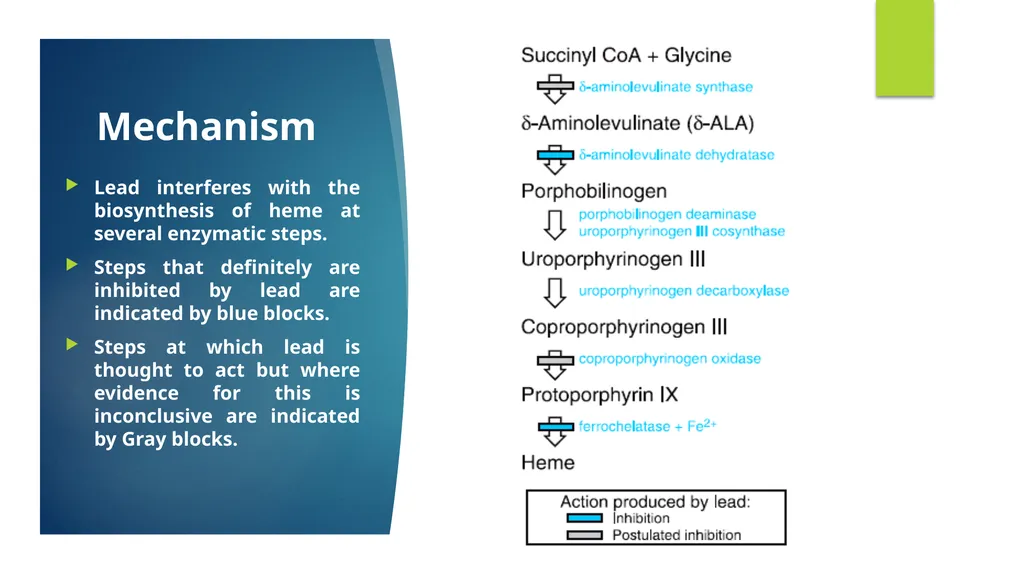
Mechanism Lead interferes with the biosynthesis of heme at several enzymatic steps.
Steps that definitely are inhibited by lead are indicated by blue blocks.
Steps at which lead is thought to act but where evidence for this is inconclusive are indicated by Gray blocks.<br>
Steps that definitely are inhibited by lead are indicated by blue blocks.
Steps at which lead is thought to act but where evidence for this is inconclusive are indicated by Gray blocks.<br>
57
TREATMENT OF LEAD POISONING Initial treatment of the acute phase of lead intoxication involves supportive measures.
Seizures are treated with diazepam or phenytoin,fluid and electrolyte balances must be maintained, and cerebral edema is treated with mannitol and dexamethasone or controlled hyperventilation.
The concentration of lead in blood should be determined or at least a blood sample obtained for analysis prior to initiation of chelation therapy.
Chelation therapy is indicated in symptomatic patients or in patients with a blood lead concentration in excess of 50–60 μg/dL (about 2.5 mM).
Four chelators are employed: edetate calcium disodium (CaNa2EDTA), dimercaprol, D-penicillamine, and succimer (2,3–dimercaptosuccinic acid [DMSA], CHEMET). CaNa2EDTA and dimercaprol usually are used in combination for lead toxicity.
Chelation therapy will promote excretion of the inorganic lead produced from the metabolism of organic lead,<br>
58
Mercury poisoning 3 major chemical forms of the metal must be distinguished:
mercury vapor (elemental mercury),
Salts Of Mercury
Organic Mercurials
The main uses of inorganic mercury today are in chloralkali production, the manufacture of electronics, plastics, fungicides, and germicides, and the formulation of amalgams in dentistry
Mercuric salts still are employed widely in industry, and industrial discharge into rivers has introduced mercury into the environment
Major incidents of human poisoning from the inadvertent consumption of mercury-treated seed grain have occurred in Iraq, Pakistan, Ghana, and Guatemala. The most catastrophic incident occurred in Iraq in 1972, when treated grain was ground into flour and made into bread, hospitalizing 6530 and killing 500<br>
59
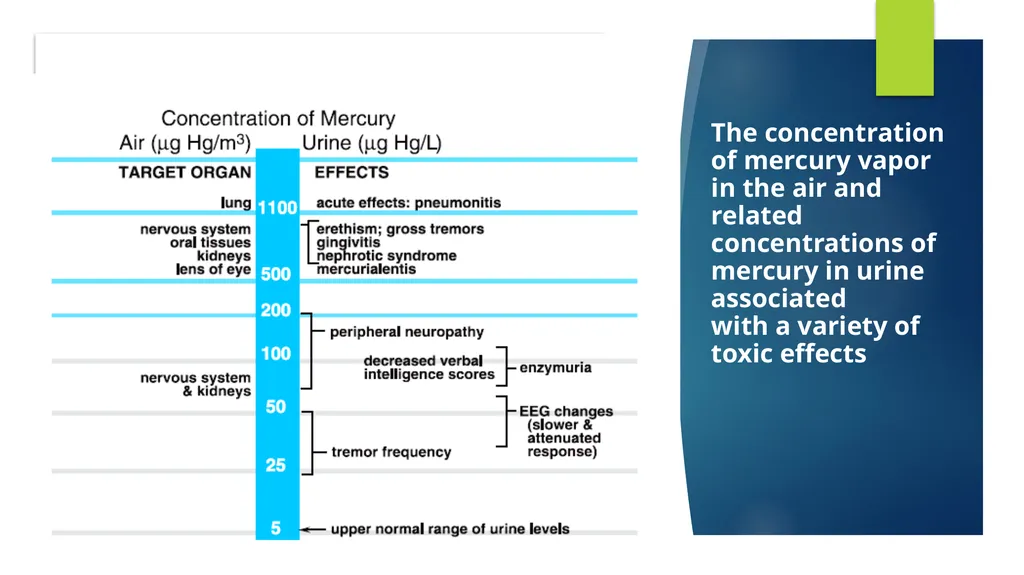
The concentration of mercury vapor in the air and related concentrations of mercury in urine associated
with a variety of toxic effects<br>
60
DIAGNOSIS OF MERCURY POISONING The upper limit of a nontoxic concentration of mercury in blood generally is considered to be 3–4 mg/dL (0.15–0.20 mM).
A concentration of mercury in blood >4 mg/dL (0.20 μM) is unexpected in normal, healthy adults and suggests the need for environmental evaluation and medical examination to assess the possibility of adverse health effects.
Hair is rich in -SH groups, and the concentration of mercury in hair is about 300 times that in blood.
Human hair grows about 20 cm/year, and a history of exposure may be obtained by analysis of different segments of hair.<br>
61
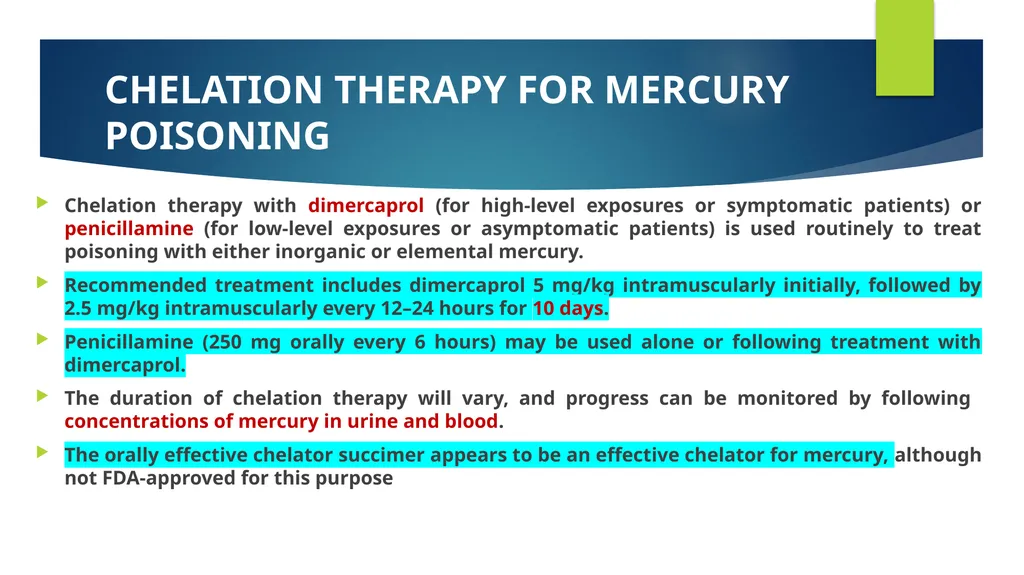
CHELATION THERAPY FOR MERCURY POISONING Chelation therapy with dimercaprol (for high-level exposures or symptomatic patients) or penicillamine (for low-level exposures or asymptomatic patients) is used routinely to treat poisoning with either inorganic or elemental mercury.
Recommended treatment includes dimercaprol 5 mg/kg intramuscularly initially, followed by 2.5 mg/kg intramuscularly every 12–24 hours for 10 days.
Penicillamine (250 mg orally every 6 hours) may be used alone or following treatment with dimercaprol.
The duration of chelation therapy will vary, and progress can be monitored by following concentrations of mercury in urine and blood.
The orally effective chelator succimer appears to be an effective chelator for mercury, although not FDA-approved for this purpose<br>
62
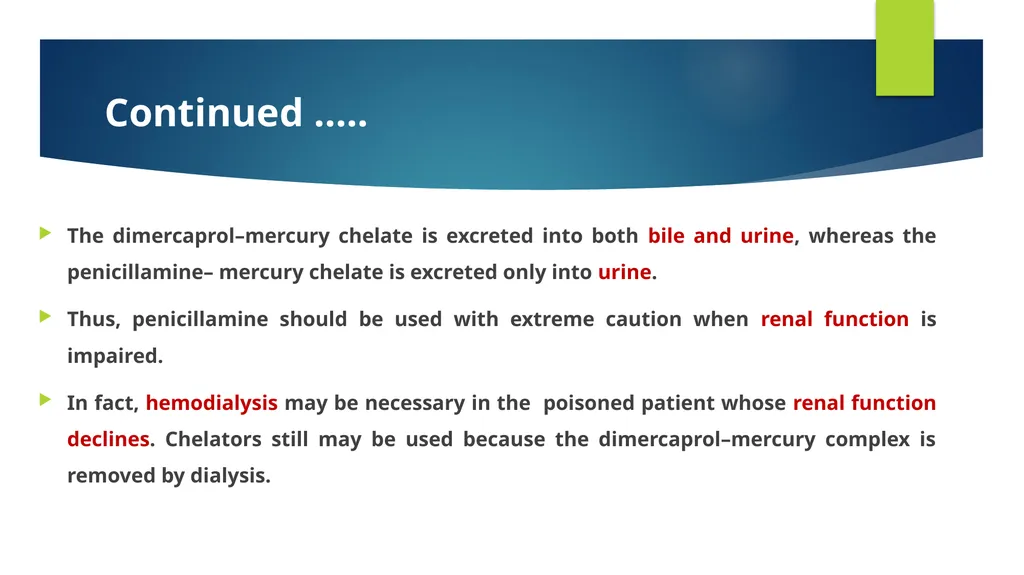
Continued ….. The dimercaprol–mercury chelate is excreted into both bile and urine, whereas the penicillamine– mercury chelate is excreted only into urine.
Thus, penicillamine should be used with extreme caution when renal function is impaired.
In fact, hemodialysis may be necessary in the poisoned patient whose renal function declines. Chelators still may be used because the dimercaprol–mercury complex is removed by dialysis.<br>
Thus, penicillamine should be used with extreme caution when renal function is impaired.
In fact, hemodialysis may be necessary in the poisoned patient whose renal function declines. Chelators still may be used because the dimercaprol–mercury complex is removed by dialysis.<br>
63
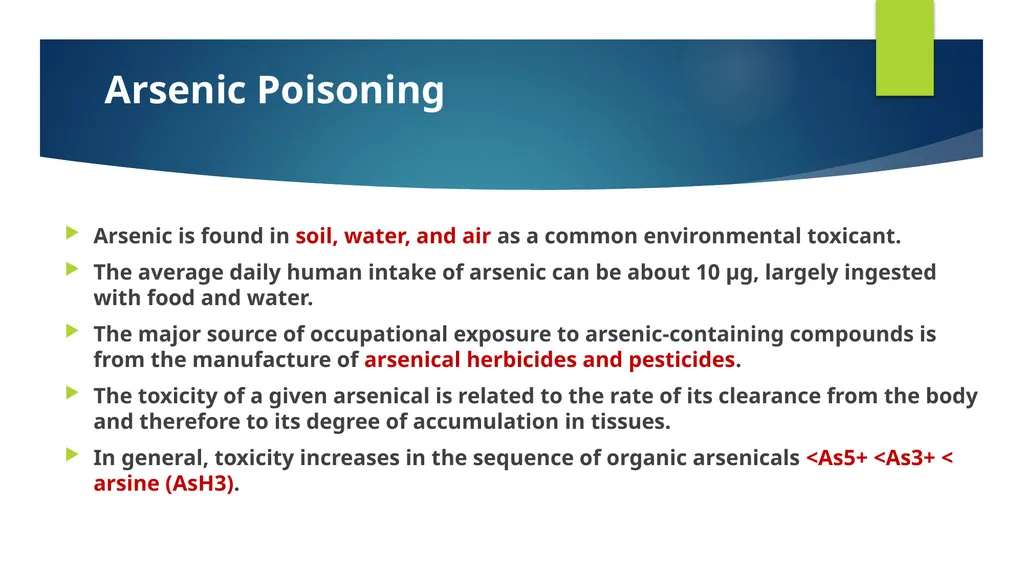
Arsenic Poisoning Arsenic is found in soil, water, and air as a common environmental toxicant.
The average daily human intake of arsenic can be about 10 μg, largely ingested with food and water.
The major source of occupational exposure to arsenic-containing compounds is from the manufacture of arsenical herbicides and pesticides.
The toxicity of a given arsenical is related to the rate of its clearance from the body and therefore to its degree of accumulation in tissues.
In general, toxicity increases in the sequence of organic arsenicals <As5+ <As3+ < arsine (AsH3).<br>
64
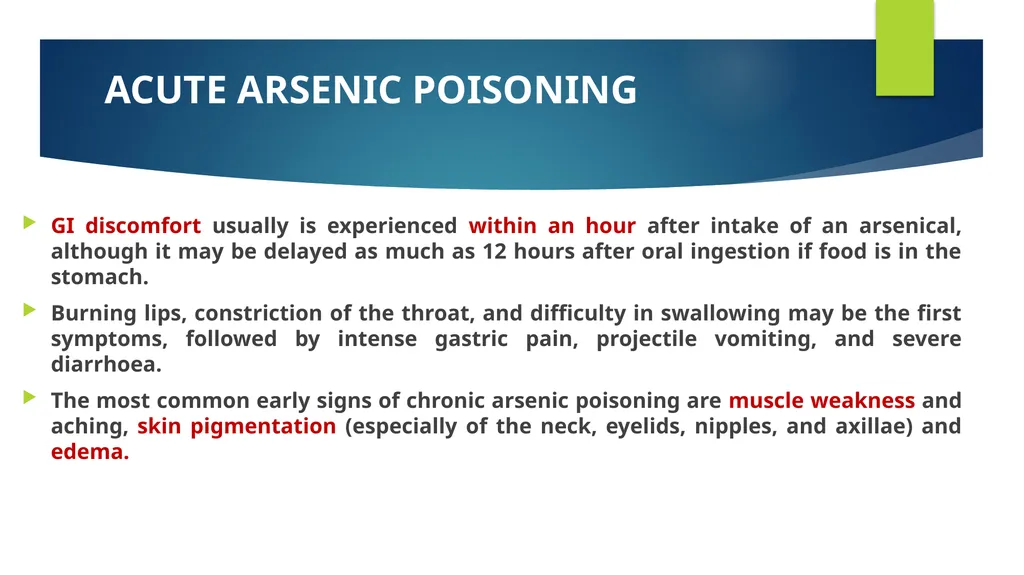
ACUTE ARSENIC POISONING GI discomfort usually is experienced within an hour after intake of an arsenical, although it may be delayed as much as 12 hours after oral ingestion if food is in the stomach.
Burning lips, constriction of the throat, and difficulty in swallowing may be the first symptoms, followed by intense gastric pain, projectile vomiting, and severe diarrhoea.
The most common early signs of chronic arsenic poisoning are muscle weakness and aching, skin pigmentation (especially of the neck, eyelids, nipples, and axillae) and edema.<br>
65
CHELATION THERAPY FOR ARSENIC POISONING Chelation therapy often is begun with dimercaprol (3–4 mg/kg intramuscularly every 4–12 hours) until abdominal symptoms subside and charcoal (if given initially) is passed in the faeces.
Oral treatment with penicillamine then may be substituted for dimercaprol and continued for 4 days.
Penicillamine is given in 4 divided doses to a maximum of 2 g/day.
Succimer (2,3- dimercaptosuccinic acid), a derivative of dimercaprol, is efficacious in the treatment of arsenic poisoning but is FDA-approved only for lead chelation in children.<br>
66
Barbiturates, Morphine, Organophosphosphorus compound<br>
67
Barbiturates Poisoning Barbiturates are a class of sedative-hypnotic drugs. They are commonly used as antiepileptics (phenobarbital) and for the induction of general anaesthesia (thiopental).
Common barbiturates include the following:
Methohexital and thiopental are used as anesthetics.
Phenobarbital and primidone are used in the treatment of seizures.
Butalbital, in combination with other medications, is used for headaches and muscle-pain<br>
Common barbiturates include the following:
Methohexital and thiopental are used as anesthetics.
Phenobarbital and primidone are used in the treatment of seizures.
Butalbital, in combination with other medications, is used for headaches and muscle-pain<br>
68
Continued……… Barbiturates act on GABA-A receptors by increasing the amount of time the chloride ion channel is opened, which increases the affinity of the receptor for GABA.
GABA is the primary inhibitory neurotransmitter of the central nervous system which acts to reduce neuronal activity.
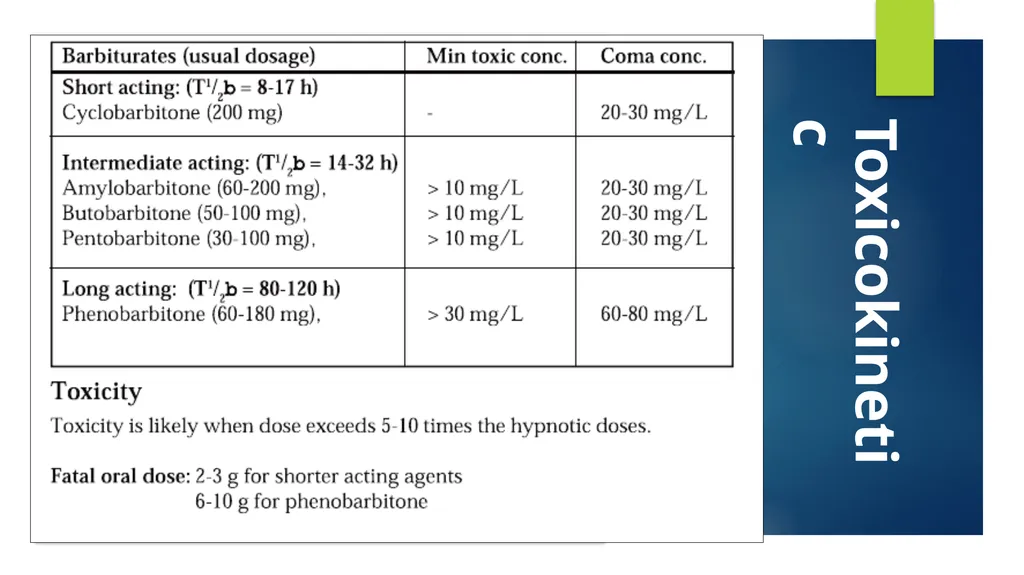
The toxic dose of barbiturates varies.
An oral dose of one gram for most barbiturates can cause significant poisoning in an adult.
Fatal cases of ingestion have occurred with doses ranging between 2.0 and 10.0 grams; the usual lethal blood level ranges from 40 to 80 mcg/mL.<br>
69
Toxicokinetic<br>
70
Continued ……… Barbiturates have various onsets of action, durations, half-lives, and toxic levels, depending on the lipid solubility and rate of metabolic inactivation.
The onset of action for oral administration ranges from 20 to 60 minutes, and intravenous administration can range from almost immediate to 5 minutes.
Barbiturates easily cross the placenta and are excreted into breast milk.<br>
The onset of action for oral administration ranges from 20 to 60 minutes, and intravenous administration can range from almost immediate to 5 minutes.
Barbiturates easily cross the placenta and are excreted into breast milk.<br>
71
Symptoms of barbiturate toxicity Common Symptoms- include difficulty thinking, decreased level of consciousness, bradycardia or rapid and weak pulse, poor coordination, vertigo, nausea, muscle weakness, thirst, decreased temperature, and dilated or contracted pupils.
Fatal cases are marked by coma, hypotension (low blood pressure), and respiratory depression (decreased efforts to breathe).
Pulmonary edema is another complication associated with barbiturate toxicity and contributing to respiratory depression and death.<br>
Fatal cases are marked by coma, hypotension (low blood pressure), and respiratory depression (decreased efforts to breathe).
Pulmonary edema is another complication associated with barbiturate toxicity and contributing to respiratory depression and death.<br>
72
Evaluation It includes a qualitative assessment of the amount of drug taken with a plasma or urine screening test.
Plasma barbiturate concentration and ingested dose have been implicated as the most important correlates of toxicity.
Immunoassays (EIA) can provide a cost-effective and sensitive method to detect barbiturates and other substances that may be in the body.
Another method often used is gas chromatography/mass spectrometry (GC/MS) which can further identify and confirm the presence of a particular barbiturate.<br>
73
Treatment / Management Treatment of barbiturate toxicity remains supportive as there is no specific antidote for overdose.
The first step in treatment, as with any overdose, is assessing the patient’s airway, breathing, and circulation: mechanical ventilation may become necessary.
During recovery, the patient should receive counselling about the dangers of barbiturate misuse.
Long-term barbiturate use can cause tolerance and physical dependence.
Therefore, withdrawal symptoms can occur with abrupt discontinuation.
Other options for managing barbiturate toxicity include forced alkaline diuresis and hemodialysis for severe cases.
Bemegride (Megimide) is a central nervous system stimulant that increases respiration and can be used as a treatment for depressant toxicity.<br>
74
Morphine The term opioid refers broadly to all compounds related to opium, a natural product derived from the poppy.
Opiates are drugs derived from opium and include the natural products morphine, codeine, and thebaine, and many semisynthetic derivatives.
Endogenous opioid peptides, or endorphins, are the naturally occurring ligands for opioid receptors.
The term narcotic referred to any drug that induced sleep, but it now is associated with opioids.<br>
75
Morphine Action Analgesia -Morphine-like drugs produce analgesia, drowsiness, changes in mood, and mental clouding. The analgesia occurs without loss of consciousness.
Mood Alterations and Rewarding Properties - The mechanisms by which opioids produce euphoria &other mood alterations
MIOSIS - Morphine and most m and k agonists cause constriction of the pupil by an excitatory action on the parasympathetic nerve innervating the pupil
CONVULSIONS - In animals, high doses of morphine and related opioids produce convulsions.
RESPIRATION - Morphine-like opioids depress respiration at least partly by a direct effect on the brainstem respiratory centres<br>
76
COUGH - Morphine and related opioids also depress the cough reflex, at least partly by direct action on a cough centre in the medulla
NAUSEANT AND EMETIC EFFECTS - Nausea and vomiting produced by morphine-like drugs are caused by direct stimulation of the chemoreceptor trigger zone in the area postrema of the medulla
CARDIOVASCULAR SYSTEM - In therapeutic doses of morphine-like opioids have no major effect on blood pressure or cardiac rate and rhythm. Such doses do produce peripheral vasodilation, reduced peripheral resistance- hypotension and fainting may occur.<br>
77
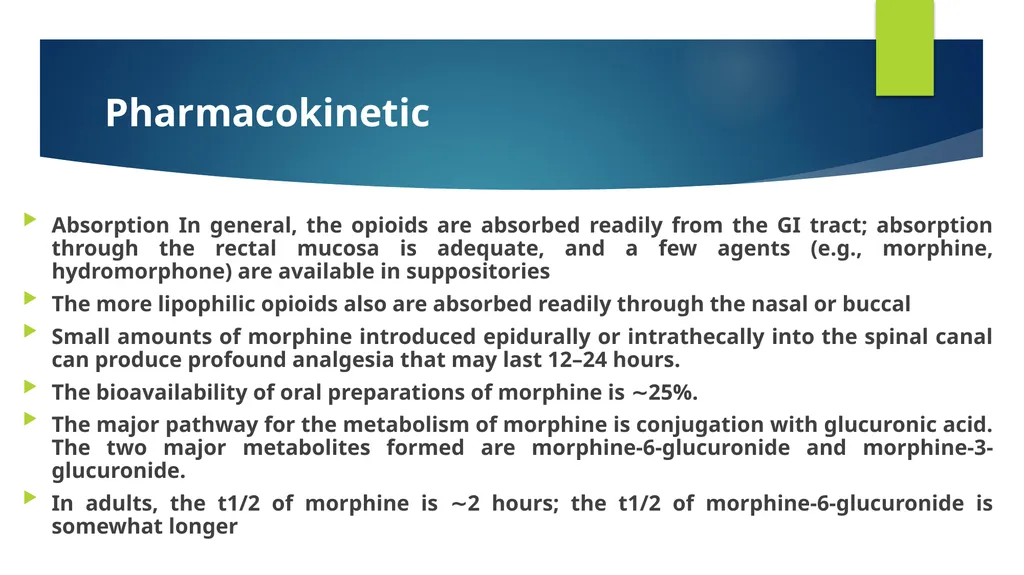
Pharmacokinetic Absorption In general, the opioids are absorbed readily from the GI tract; absorption through the rectal mucosa is adequate, and a few agents (e.g., morphine, hydromorphone) are available in suppositories
The more lipophilic opioids also are absorbed readily through the nasal or buccal
Small amounts of morphine introduced epidurally or intrathecally into the spinal canal can produce profound analgesia that may last 12–24 hours.
The bioavailability of oral preparations of morphine is ∼25%.
The major pathway for the metabolism of morphine is conjugation with glucuronic acid. The two major metabolites formed are morphine-6-glucuronide and morphine-3-glucuronide.
In adults, the t1/2 of morphine is ∼2 hours; the t1/2 of morphine-6-glucuronide is somewhat longer<br>
78
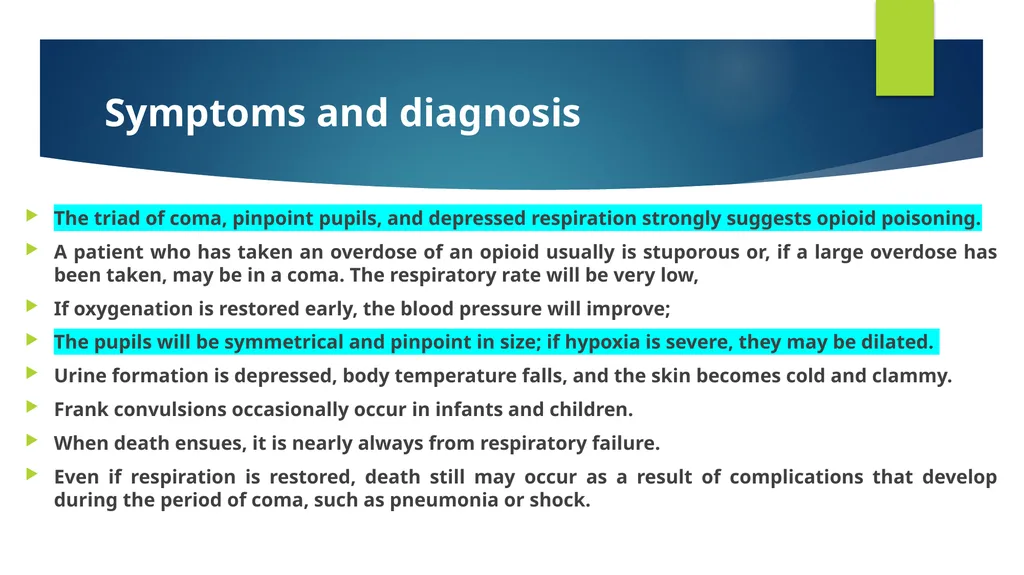
Symptoms and diagnosis The triad of coma, pinpoint pupils, and depressed respiration strongly suggests opioid poisoning.
A patient who has taken an overdose of an opioid usually is stuporous or, if a large overdose has been taken, may be in a coma. The respiratory rate will be very low,
If oxygenation is restored early, the blood pressure will improve;
The pupils will be symmetrical and pinpoint in size; if hypoxia is severe, they may be dilated.
Urine formation is depressed, body temperature falls, and the skin becomes cold and clammy.
Frank convulsions occasionally occur in infants and children.
When death ensues, it is nearly always from respiratory failure.
Even if respiration is restored, death still may occur as a result of complications that develop during the period of coma, such as pneumonia or shock.<br>
79
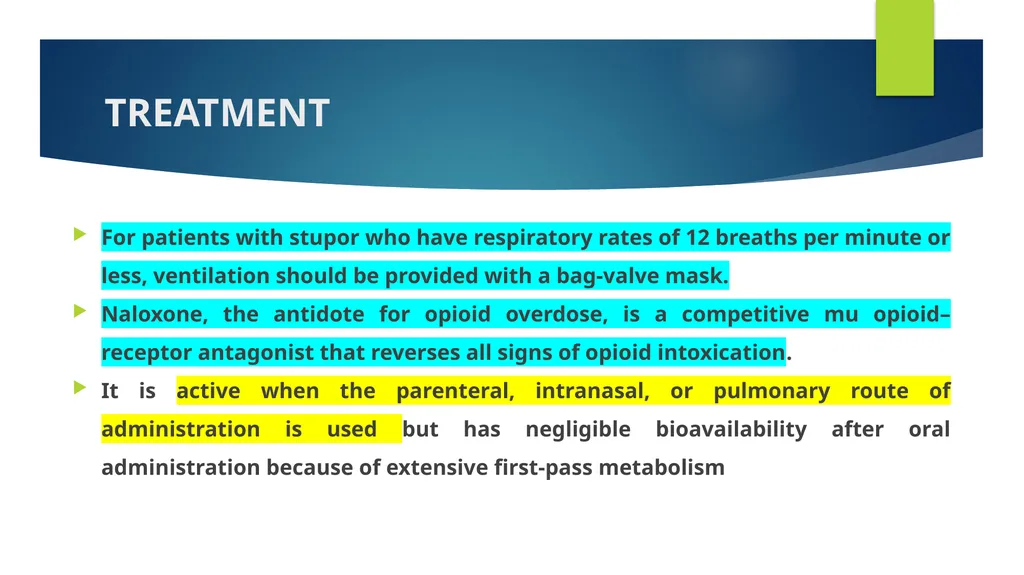
TREATMENT For patients with stupor who have respiratory rates of 12 breaths per minute or less, ventilation should be provided with a bag-valve mask.
Naloxone, the antidote for opioid overdose, is a competitive mu opioid–receptor antagonist that reverses all signs of opioid intoxication.
It is active when the parenteral, intranasal, or pulmonary route of administration is used but has negligible bioavailability after oral administration because of extensive first-pass metabolism<br>
80
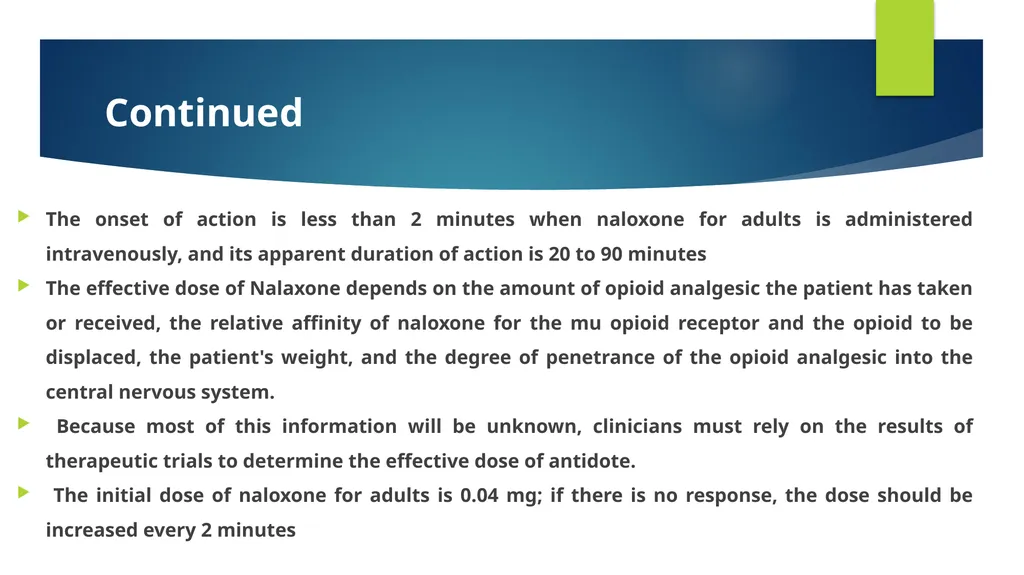
Continued The onset of action is less than 2 minutes when naloxone for adults is administered intravenously, and its apparent duration of action is 20 to 90 minutes
The effective dose of Nalaxone depends on the amount of opioid analgesic the patient has taken or received, the relative affinity of naloxone for the mu opioid receptor and the opioid to be displaced, the patient's weight, and the degree of penetrance of the opioid analgesic into the central nervous system.
Because most of this information will be unknown, clinicians must rely on the results of therapeutic trials to determine the effective dose of antidote.
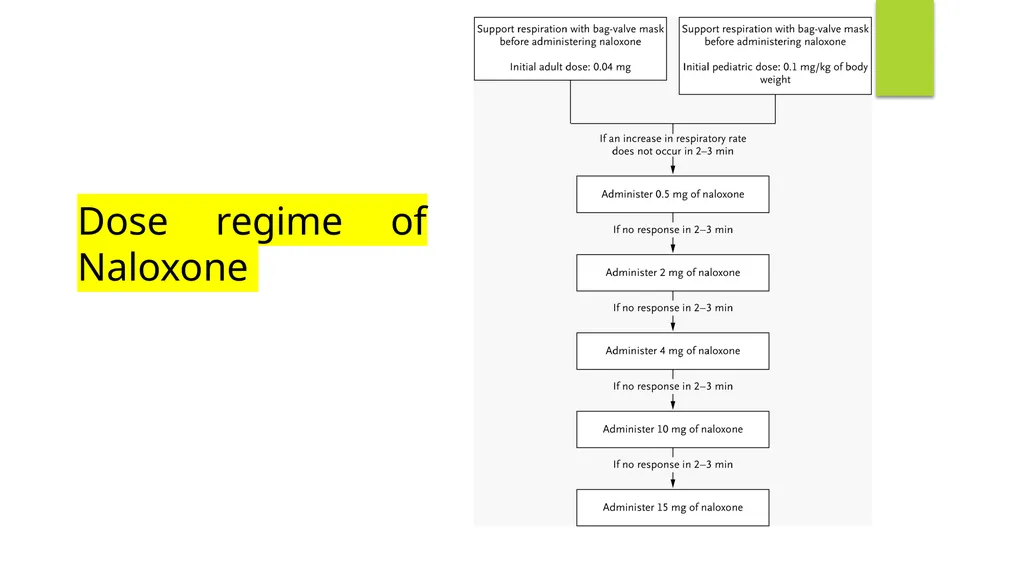
The initial dose of naloxone for adults is 0.04 mg; if there is no response, the dose should be increased every 2 minutes<br>
81
Dose regime of Naloxone<br>
82
Organophosphosphorus (OP)compound poisoning ACETYLCHOLINESTERASE INHIBITORS
Acetylcholinesterase (AChE) terminates the action of acetylcholine (ACh) at the junctions of the various cholinergic nerve endings with their effector organs or postsynaptic sites.
AChE inhibitors may be divided into three groups:
Noncovalent or “Reversible” Inhibitors,
Carbamoylating Inhibitors
Organophosphorus Compounds<br>
83
Organophosphorus Compounds : Action It produces virtually irreversible inactivation of AChE and other esterases by alkylphosphorylation.
Its high lipid solubility, low molecular weight, and volatility facilitate inhalation, transdermal absorption, and penetration into the CNS.
After desulfuration, the insecticides in current use form the dimethoxy or diethoxyphosphoryl enzyme.<br>
Its high lipid solubility, low molecular weight, and volatility facilitate inhalation, transdermal absorption, and penetration into the CNS.
After desulfuration, the insecticides in current use form the dimethoxy or diethoxyphosphoryl enzyme.<br>
84
Continued …….. Malathion, parathion, and methylparathion have been popular insecticides.
Acute and chronic toxicity has limited the use of parathion and methylparathion, and potentially less hazardous compounds have replaced them.
Lipid-soluble organophosphorus agents also are well absorbed through the skin, and the volatile agents are transferred readily across the alveolar membrane.<br>
85
Continued …….. Organophosphorus anti-ChE agents with the highest risk of toxicity are highly lipid-soluble liquids; many have high vapor pressures.
Agents used as agricultural insecticides (e.g., diazinon,malathion) generally are dispersed as aerosols or dusts that are absorbed rapidly through the skin and mucous membranes following contact with moisture, by the lungs after inhalation, and by the GI tract after ingestion.
Absorbed organophosphorus compounds are hydrolyzed by plasma and liver esterases to the corresponding phosphoric and phosphonic acids, which are excreted in the urine.<br>
86
Toxicity Profile of OP After local exposure to vapors or aerosols or after their inhalation, ocular and respiratory effects generally appear first. Ocular manifestations include marked miosis, ocular pain, conjunctival congestion, diminished vision, ciliary spasm, and brow ache.
GI symptoms occur earliest after ingestion and include anorexia, nausea and vomiting, abdominal cramps, and diarrhea.
With percutaneous absorption of liquid, localized sweating and muscle fasciculations in the immediate vicinity are generally the earliest symptoms.
Severe intoxication is manifested by extreme salivation, involuntary defecation and urination, sweating, lacrimation, penile erection, bradycardia, and hypotension.
Nicotinic actions at the neuromuscular junctions of skeletal muscle usually consist of fatigability and generalized weakness, involuntary twitchings, scattered fasciculations, and eventually severe weakness and paralysis. The most serious consequence is paralysis of the respiratory muscles.
The broad spectrum of effects of acute AChE inhibition on the CNS includes confusion, ataxia, slurred speech, loss of reflexes,<br>
87
Diagnosis The diagnosis of severe, acute anti-ChE intoxication is made readily from the history of exposure and the characteristic signs and symptoms.
In suspected cases of milder, acute, or chronic intoxication, determination of the ChE activities in erythrocytes and plasma generally will establish the diagnosis.
Although these values vary considerably in the normal population, they usually are depressed well below the normal range before symptoms are evident.<br>
88
Treatment Atropine in sufficient dosage effectively antagonizes the actions at muscarinic receptor sites,and to a moderate extent, at peripheral ganglionic and central sites.
Atropine should be given in doses sufficient to cross the blood–brain barrier.
Following an initial injection of 2–4 mg (intravenously if possible, otherwise intramuscularly), 2 mg should be given every 5–10 minutes until muscarinic symptoms disappear, if they reappear, or until signs of atropine toxicity appear.
More than 200 mg may be required on the first day.
A mild degree of atropine block should then be maintained for as long as symptoms are evident.
Atropine is virtually without effect against the peripheral neuromuscular compromise, which may be reversed by pralidoxime (2-PAM), a cholinesterase reactivator.
AChE reactivators are beneficial in the therapy of organophosphorus anti-ChE intoxication, but their use is supplemental to the administration of atropine<br>
89
General supportive measures General supportive measures are important, including:
(1) termination of exposure, by removal of the patient or application of a gas mask if the atmosphere remains contaminated, removal and destruction of contaminated clothing, copious washing of contaminated skin or mucous membranes with water, or gastric lavage;
(2) maintenance of a patent airway;
(3) artificial respiration, if required;
(4) administration of oxygen;
(5) alleviation of persistent convulsions with diazepam (5–10 mg, intravenously); and
(6) treatment of shock<br>
90
Chronopharmacology is the science
concerned with the variations in the
pharmacological actions of various drugs<br>
91
Introduction Chronopharmacology aims at the use of biological rhythms in the clinical treatment so as to enhance both effectiveness and tolerance and minimize the side effects of a drug by determining the best biological time for its administration
It is further subdivided into
Chronotherapeutics,
Chronokinetics,
Chronesthesy,
Chronergy and
Chronotoxicity<br>
It is further subdivided into
Chronotherapeutics,
Chronokinetics,
Chronesthesy,
Chronergy and
Chronotoxicity<br>
92
Definition Chronotherapeutics - science that aims to increase the efficiency and safety of medications by proportioning their concentrations during the 24 hours in synchrony with biological rhythm determinants of disease.
Chronokinetics - deals with the study of the temporal changes in the absorption, distribution, metabolism and elimination due to time of administration of the drug.
Chronesthesy is the study of circadian or other systemic changes in the susceptibility and sensitivity of the target system to a drug.<br>
93
Continued ….. Chronergy is the study of rhythmic difference in effects of a drug on the organism as a whole which includes both desired and undesired effects
Chronotoxicity is the study of the toxic effects of drugs on the organism, which is undesirable and affects the rhythmic system.<br>
Chronotoxicity is the study of the toxic effects of drugs on the organism, which is undesirable and affects the rhythmic system.<br>
94
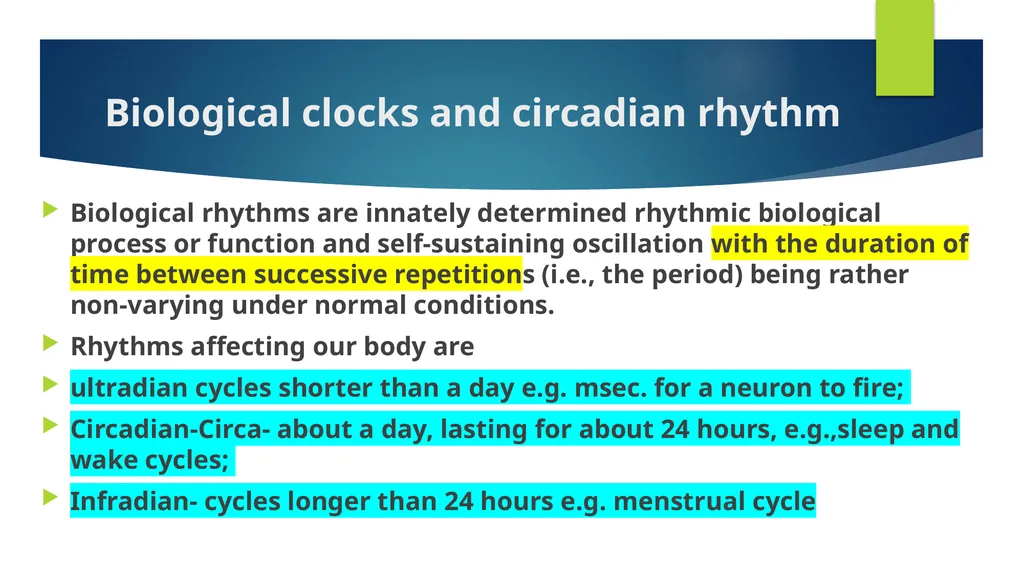
Biological clocks and circadian rhythm Biological rhythms are innately determined rhythmic biological process or function and self-sustaining oscillation with the duration of time between successive repetitions (i.e., the period) being rather non-varying under normal conditions.
Rhythms affecting our body are
ultradian cycles shorter than a day e.g. msec. for a neuron to fire;
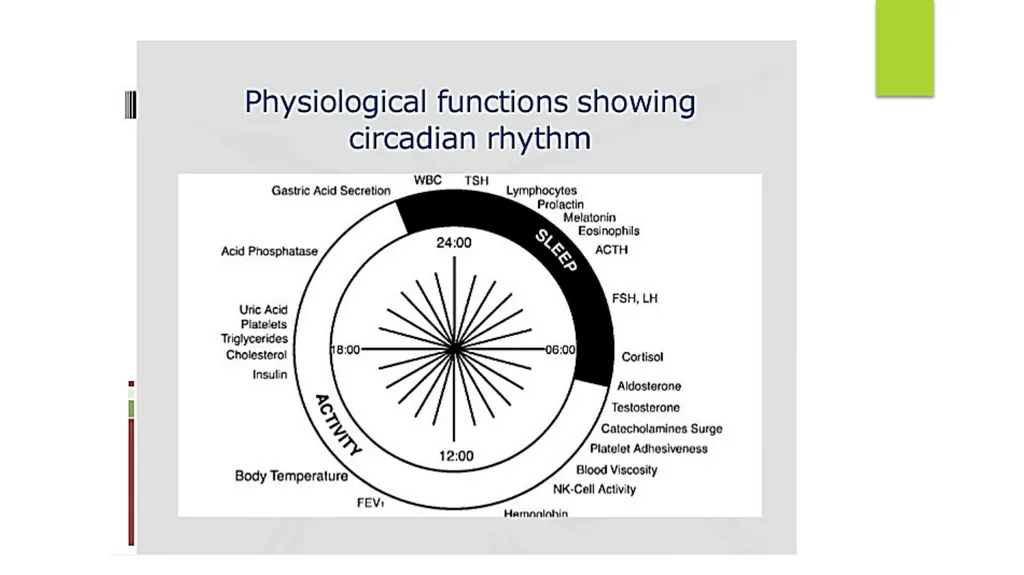
Circadian-Circa- about a day, lasting for about 24 hours, e.g.,sleep and wake cycles;
Infradian- cycles longer than 24 hours e.g. menstrual cycle<br>
Rhythms affecting our body are
ultradian cycles shorter than a day e.g. msec. for a neuron to fire;
Circadian-Circa- about a day, lasting for about 24 hours, e.g.,sleep and wake cycles;
Infradian- cycles longer than 24 hours e.g. menstrual cycle<br>
95
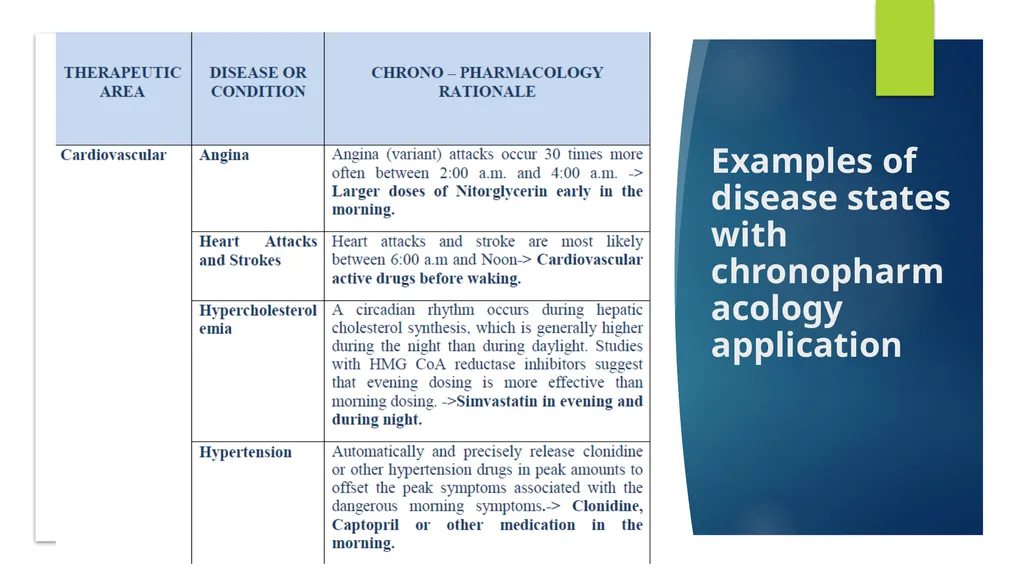
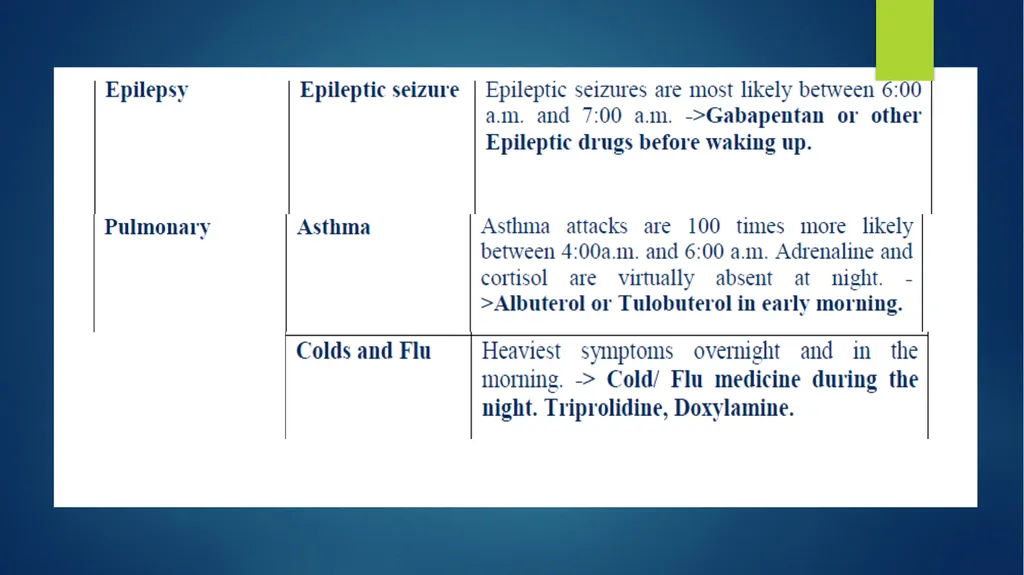
Examples of disease states with chronopharmacology application<br>
96
Thank you !!!!!!!!!<br>