
Promoting Fetal & Maternal Health By: Assist.Prof
PM
Published · 45 slides · 0 views

1 / 1



Description
Promoting Fetal Maternal Health By: Assist.Prof Dr.Hawraa Hussein Ghafel MCH Departement Content of the lecture Objectives National Health Goals Nursing process : Assessment ,Diagnosis and planning Health Promotion During Pregnancy Self
Related Topics
Share
Embed code
Download this presentation From Below
"Promoting Fetal & Maternal Health By: Assist.Prof" is the property of its rightful owner. Permission is granted to download and print the materials on this website for personal, non-commercial use only, and to display it on your personal computer provided you do not modify the materials and that you retain all copyright notices contained in the materials. By downloading content from our website, you accept the terms of this agreement.
Presentation Transcript
01
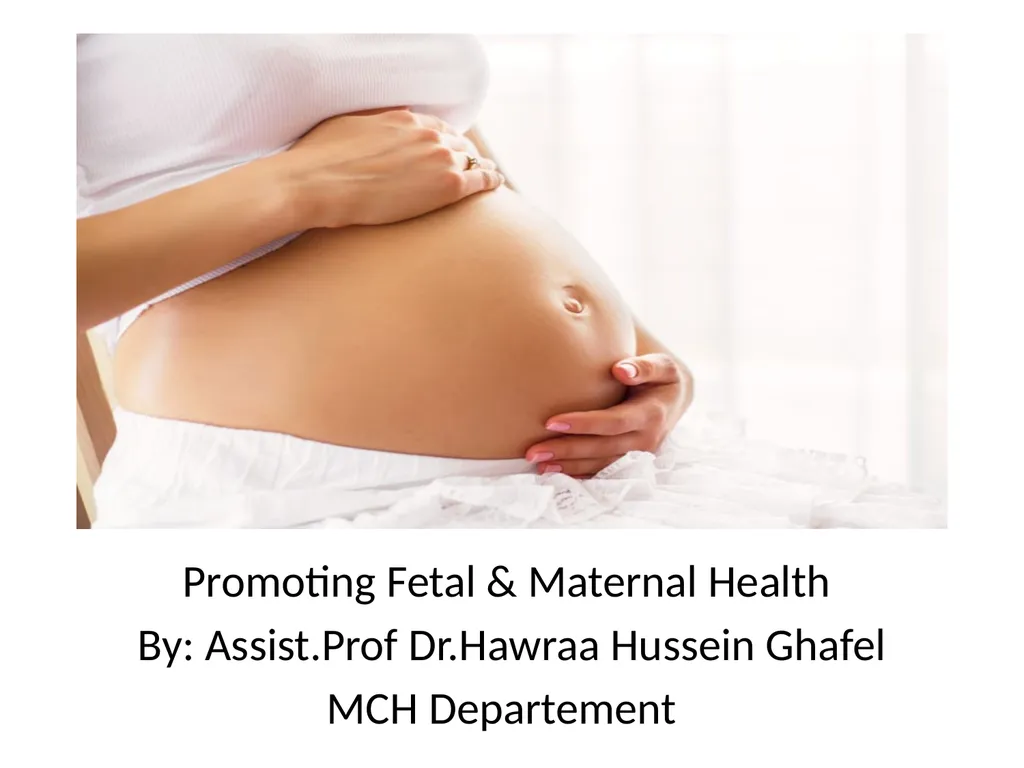
Promoting Fetal & Maternal Health
By: Assist.Prof Dr.Hawraa Hussein Ghafel
MCH Departement<br>
By: Assist.Prof Dr.Hawraa Hussein Ghafel
MCH Departement<br>
02
Content of the lecture Objectives
National Health Goals
Nursing process : Assessment ,Diagnosis and planning
Health Promotion During Pregnancy
Self – Care Needs
Discomforts of Early Pregnancy: The First Trimester
Discomforts of Middle to Late Pregnancy
Preventing fetal exposure to teratogens
Effects of Teratogens on a Fetus
Teratogenic Maternal Infections
Pregnancy Risk Categories of Drugs
Teratogenicity of Cigarettes
Environmental Teratogens
Teratogenic Maternal Stress<br>
03
Objectives After mastering the contents of this lecture, students should be able to:
1. Describe health behaviors important for a healthy pregnancy
outcome.
2. Identify National Health Goals related to a healthy pregnancy
lifestyle that nurses can help the nation achieve.
3. Use critical thinking to analyze ways to promote both individualized and family-centered prenatal care.
4. Assess a woman for healthy practices and concerns during
pregnancy.
5. Formulate nursing diagnoses related to a healthy pregnancy.<br>
04
Objectives 6. Identify expected outcomes to promote a healthy pregnancy such as encouraging daily exercise.
7. Plan health-promotion strategies to limit exposure to teratogens or reduce the minor discomforts of pregnancy.
8. Implement nursing care to promote positive health practices during pregnancy.
9. Evaluate outcomes for achievement and effectiveness of care.
10. Identify areas of prenatal care that could benefit from additional nursing research or the application of evidence-based practice.
11. Integrate knowledge of health-promotion strategies with the nursing process to achieve quality maternal and child health nursing care.<br>
05
National Health Goals • Increase pregnant women who receive early and adequate prenatal care
• Increase pregnant women who abstain from illicit drugs during pregnancy.
• Increase pregnant women who abstain from cigarette smoking during pregnancy.
• Increase pregnant women who abstain from alcohol during pregnancy.
• Increase pregnant women who abstain from binge drinking during pregnancy<br>
06
Nursing process Nursing process for health promotion of a fetus and mother<br>
07
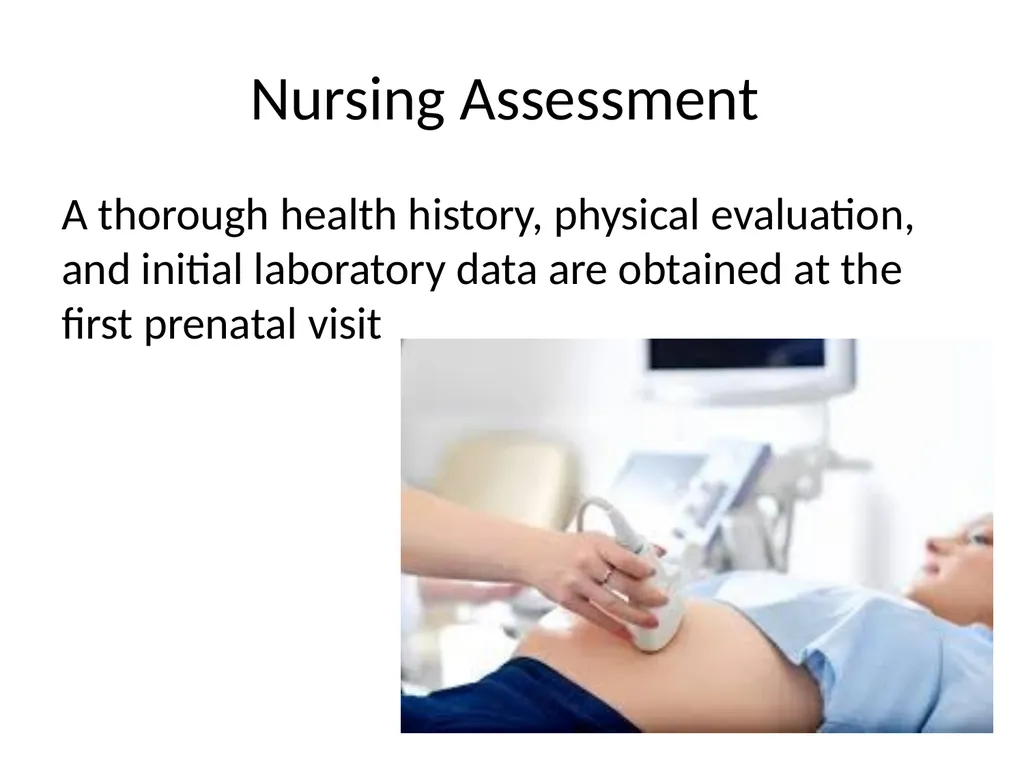
Nursing Assessment A thorough health history, physical evaluation, and initial laboratory data are obtained at the first prenatal visit<br>
08
Nursing Diagnosis Examples of nursing diagnoses related to health promotion of the pregnant woman and fetus are:
• Health-seeking behaviors related to interest in maintaining optimal health during pregnancy
• Anxiety related to minor discomforts of pregnancy
• Risk for deficient fluid volume related to nausea and vomiting of pregnancy
• Disturbed body image related to change of appearance with pregnancy<br>
• Health-seeking behaviors related to interest in maintaining optimal health during pregnancy
• Anxiety related to minor discomforts of pregnancy
• Risk for deficient fluid volume related to nausea and vomiting of pregnancy
• Disturbed body image related to change of appearance with pregnancy<br>
09
Nursing Diagnosis • Risk for altered sexuality patterns related to fear of harming fetus during pregnancy
• Disturbed sleep pattern related to frequent need to empty bladder during night
• Risk for fetal injury related to maternal cigarette smoking<br>
• Disturbed sleep pattern related to frequent need to empty bladder during night
• Risk for fetal injury related to maternal cigarette smoking<br>
10
Nursing planning helping a woman plan to avoid teratogens is
difficult because a total change in lifestyle, such as not smoking, not drinking alcohol, or changing a work environment, may be involved. Fortunately, most women are highly motivated to have a healthy baby.<br>
difficult because a total change in lifestyle, such as not smoking, not drinking alcohol, or changing a work environment, may be involved. Fortunately, most women are highly motivated to have a healthy baby.<br>
11
The purposes of prenatal care are to: Establish a baseline of present health
Determine the gestational age of the fetus
Monitor fetal development and maternal well being
Identify women at risk for complications
Minimize the risk of possible complications by anticipating and preventing problems before they occur
Provide time for education about pregnancy, lactation, and newborn care<br>
12
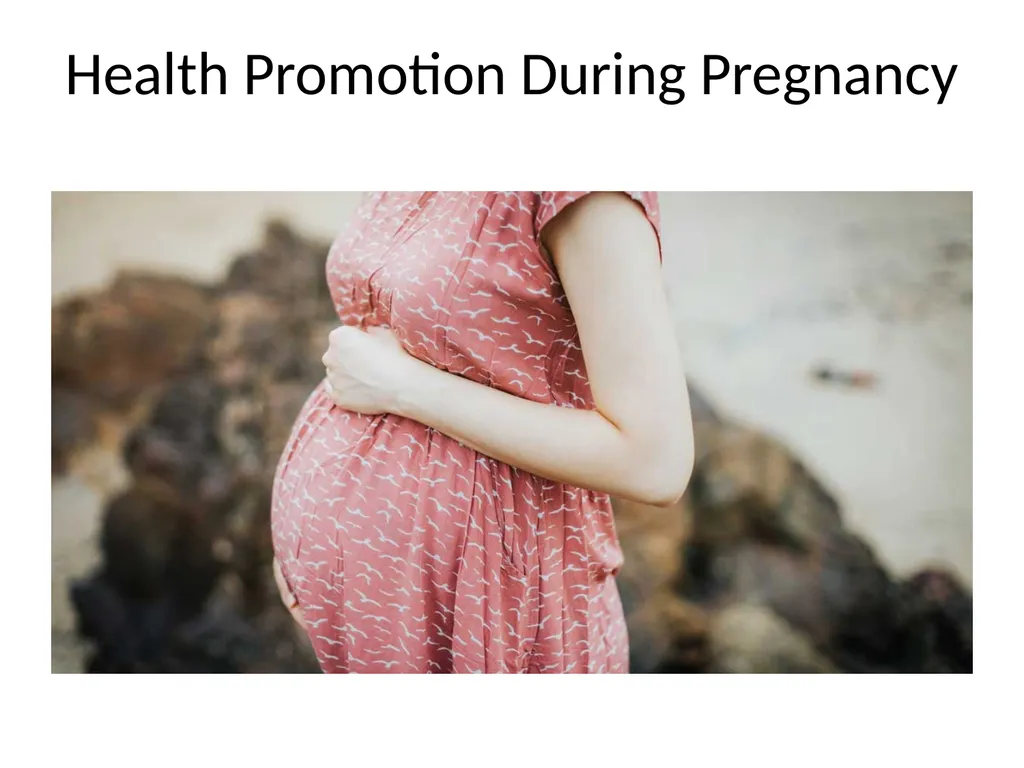
Health Promotion During Pregnancy<br>
13
Self-Care Needs Because pregnancy is not an illness, few special care measures other than common sense about self-care are required. Many women, however, have heard different warnings about what they should or should not do during pregnancy, so they may need some help separating fact from fiction so that they can enjoy their pregnancy unhampered by unnecessary restrictions.<br>
14
Self –Care Needs Bathing
Dental care
Perineal Hygiene
Clothing
Exercise
Sleep
Employment
Travel<br>
Dental care
Perineal Hygiene
Clothing
Exercise
Sleep
Employment
Travel<br>
15
Bathing At one time, tub baths were restricted during pregnancy because it was feared that bath water would enter the vagina
and cervix and contaminate the uterine contents. Further, it
was believed that hot water touching the abdomen might initiate labor. Because the vagina normally is in a closed position, however, the danger of tub bath water entering the
cervix is minimal.
During pregnancy, sweating tends to increase because a woman excretes waste products for herself
and a fetus. She also has an increase in vaginal discharge. For
these reasons, daily tub baths or showers are now recommended.<br>
16
Dental care Gingival tissue tends to hypertrophy during pregnancy. Unless a pregnant woman brushes her teeth well, pockets of plaque form readily between the enlarged gumline and teeth. In addition to stressing brushing, encourage pregnant women to see their dentists regularly for routine examination and cleaning because 9 months is a long time to be without preventive dental care.<br>
17
Perineal Hygiene Most women have an increased vaginal discharge during pregnancy and may desire to cleanse with a douche. Douching is contraindicated during pregnancy. The force of
the irrigating fluid could cause it to enter the cervix and lead to infection. In addition, douching alters the pH of the vagina, leading to an increased risk of bacterial growth<br>
the irrigating fluid could cause it to enter the cervix and lead to infection. In addition, douching alters the pH of the vagina, leading to an increased risk of bacterial growth<br>
18
Clothing Women have a multitude of clothing options to wear during a pregnancy. Recommend loose-fitting, comfortable garments. Caution women to avoid tight-fitting items such as garters,
girdles with panty legs, and knee-high stockings during pregnancy. These items impede lower-extremity circulation. Suggest wearing shoes with a moderate to low heel to minimize pelvic tilt and possible backache.<br>
girdles with panty legs, and knee-high stockings during pregnancy. These items impede lower-extremity circulation. Suggest wearing shoes with a moderate to low heel to minimize pelvic tilt and possible backache.<br>
19
Exercise Extreme exercise has been associated with lower birth weight but moderate exercise is healthy during pregnancy. It can help prevent circulatory stasis in the lower extremities.
The average, well-nourished women should exercise during pregnancy a minimum of 3 times weekly for 30 consecutive minutes
Avoid activities that require jumping, jarring motions, or rapid changes in direction such as jogging, because your joints may be unstable<br>
The average, well-nourished women should exercise during pregnancy a minimum of 3 times weekly for 30 consecutive minutes
Avoid activities that require jumping, jarring motions, or rapid changes in direction such as jogging, because your joints may be unstable<br>
20
Sleep The optimal condition for body growth occurs when growth hormone secretion is at its highest level—that is, during sleep. This, plus the overall increased metabolic demand of pregnancy, appears to be the physiologic reason that pregnant women need an increased amount of sleep or at least need rest to build new body cells during pregnancy.<br>
21
Sleep Late in pregnancy, a woman often finds herself awakened from sleep at short, frequent intervals by the activity of her fetus. To obtain enough sleep and rest during pregnancy, most pregnant women need a rest period during the afternoon as well as a full night of sleep. A good resting or sleeping position is a modified Sims’ position This position puts the weight of the fetus on the bed, not on the woman, and allows good circulation in lower extremities<br>
22
Employment Changes in public assistance laws that encourage women to seek employment have led to more women working during pregnancy than ever before. Unless a woman’s job involves exposure to toxic substances, lifting heavy objects, other kinds of excessive physical strain, long periods of standing or sitting, or having to maintain body balance, there are few reasons a woman cannot continue to work throughout pregnanc<br>
23
Travel Early in a normal pregnancy, there
are no restrictions. If a woman is susceptible to motion sickness, advise her not to take any medication for this unless it is specifically prescribed or approved by her physician or
nurse-midwife. Suggest that she use a “sea-sick” wrist or acupuncture band instead. Late in pregnancy, travel plans should take into consideration the possibility of early labor,
requiring birth at a strange setting where a woman’s obstetric history will be unknown.<br>
24
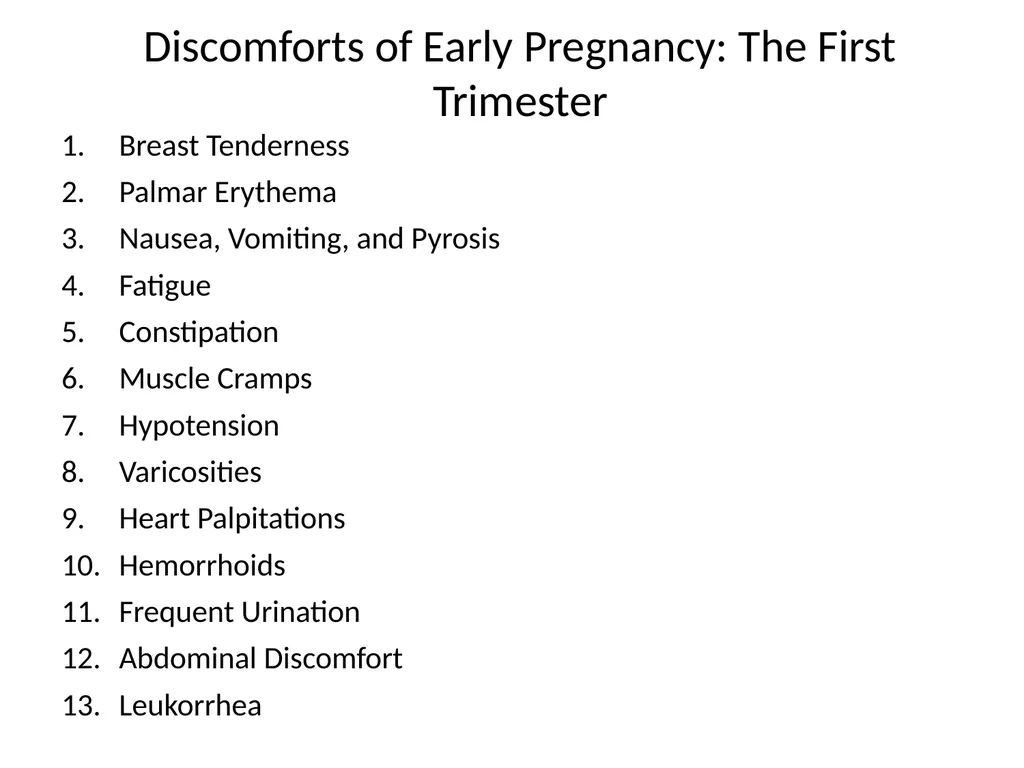
Discomforts of Early Pregnancy: The First Trimester Breast Tenderness
Palmar Erythema
Nausea, Vomiting, and Pyrosis
Fatigue
Constipation
Muscle Cramps
Hypotension
Varicosities
Heart Palpitations
Hemorrhoids
Frequent Urination
Abdominal Discomfort
Leukorrhea<br>
Palmar Erythema
Nausea, Vomiting, and Pyrosis
Fatigue
Constipation
Muscle Cramps
Hypotension
Varicosities
Heart Palpitations
Hemorrhoids
Frequent Urination
Abdominal Discomfort
Leukorrhea<br>
25
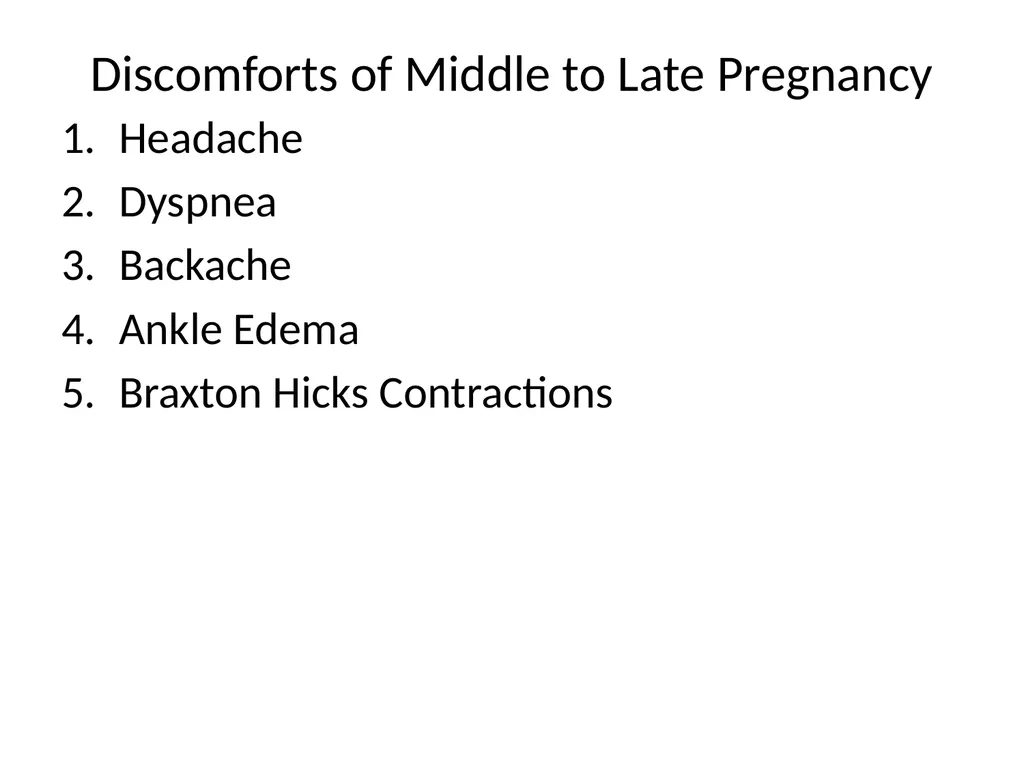
Discomforts of Middle to Late Pregnancy Headache
Dyspnea
Backache
Ankle Edema
Braxton Hicks Contractions<br>
Dyspnea
Backache
Ankle Edema
Braxton Hicks Contractions<br>
26
Preventing fetal exposure to teratogens A teratogen is any factor, chemical or physical, that adversely affects the fertilized ovum, embryo, or fetus. At one time, it was assumed that a fetus in utero was protected from chemical or physical injury by the presence of the amniotic fluid and by the absence of any direct placental exchange between mother and fetus.<br>
27
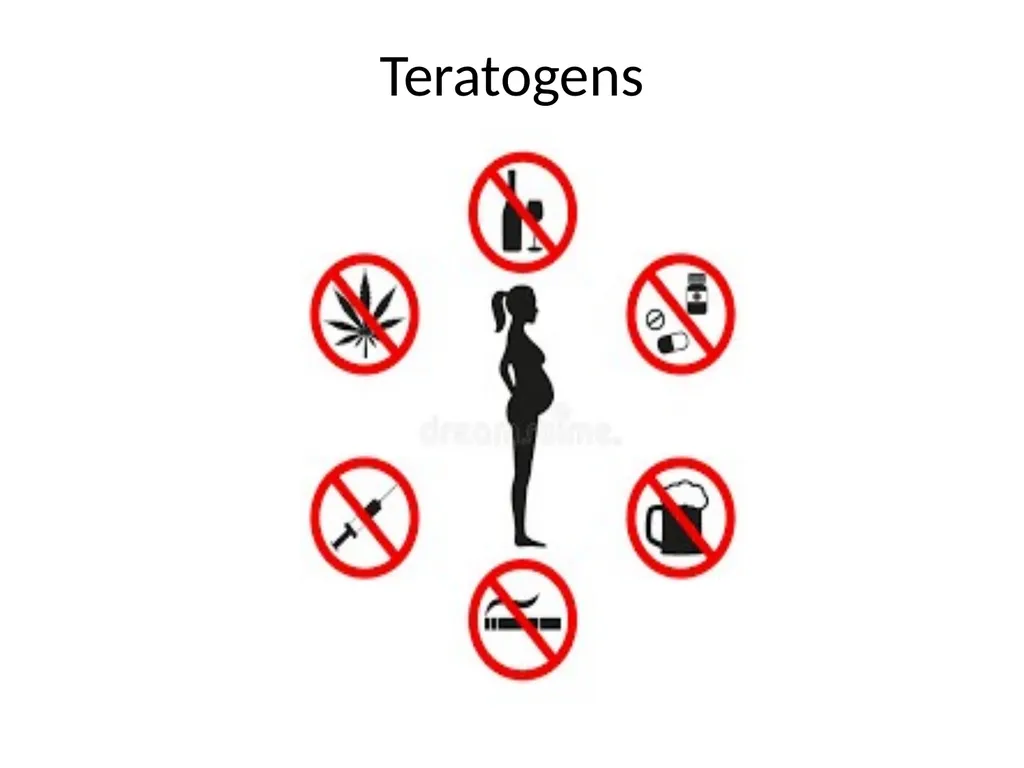
Teratogens<br>
28
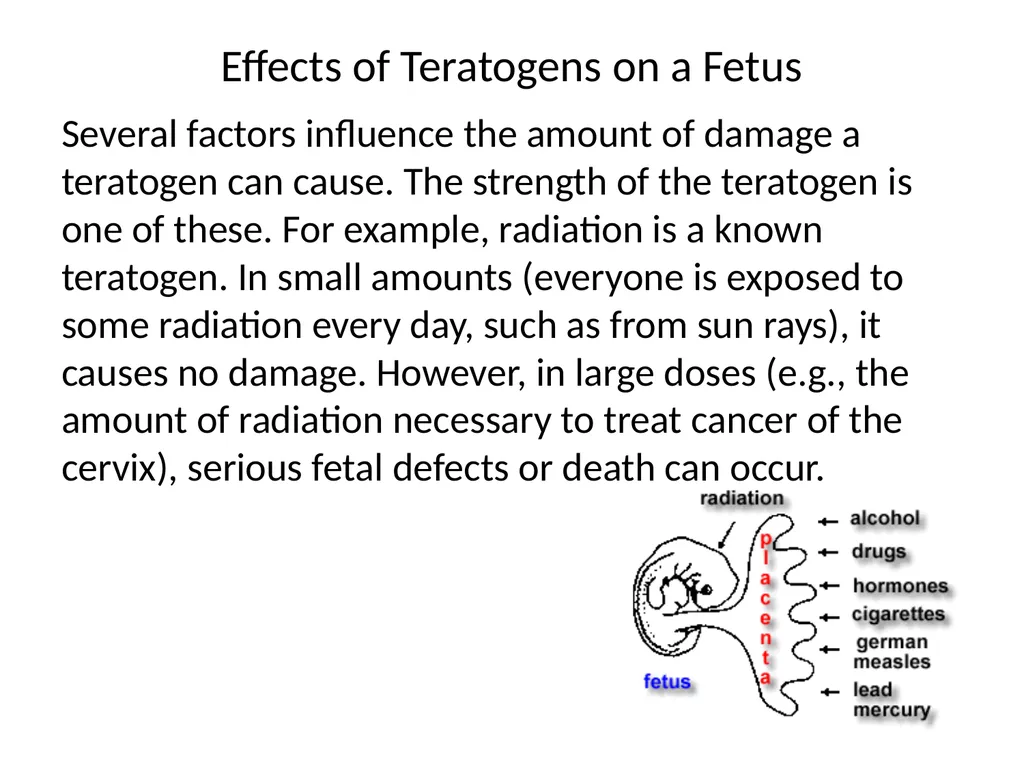
Effects of Teratogens on a Fetus Several factors influence the amount of damage a teratogen can cause. The strength of the teratogen is one of these. For example, radiation is a known teratogen. In small amounts (everyone is exposed to some radiation every day, such as from sun rays), it causes no damage. However, in large doses (e.g., the amount of radiation necessary to treat cancer of the cervix), serious fetal defects or death can occur.<br>
29
Teratogenic Maternal Infections Toxoplasmosis
Cytomegalovirus
Rubella
Herpes Simplex Virus (Genital Herpes Infection)
Potentially Teratogenic Vaccines
Teratogenic Drugs
Teratogenicity of Alcohol<br>
Cytomegalovirus
Rubella
Herpes Simplex Virus (Genital Herpes Infection)
Potentially Teratogenic Vaccines
Teratogenic Drugs
Teratogenicity of Alcohol<br>
30
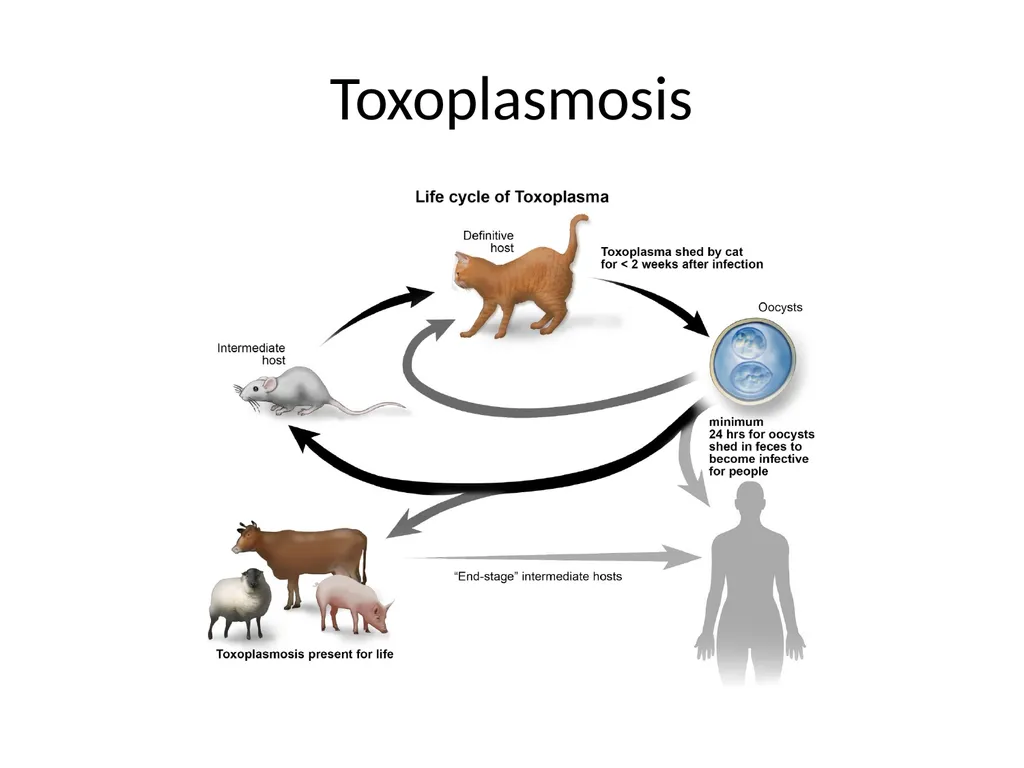
Toxoplasmosis A woman experiences almost no symptoms
of the disease except for a few days of malaise and posterior cervical lymphadenopathy. Even in light of these mild symptoms,
if the infection crosses the placenta, the infant may be born
with central nervous system damage, hydrocephalus, microcephaly, intracerebral calcification, and retinal deformities. If the diagnosis is established by serum analysis during pregnancy, therapy with sulfonamides may be prescribed.
However, the prevention of fetal deformities is uncertain, and
sulfa may lead to increased bilirubin levels in the newborn.
Pyrimethamine, an antiprotozoal agent, may also be used. This
drug is an antifolic acid drug, so it is administered with caution early in pregnancy to prevent reducing folic acid levels<br>
31
Toxoplasmosis<br>
32
Cytomegalovirus Cytomegalovirus (CMV), a member of the herpes virus family, is another teratogen that can cause extensive damage to a
fetus while causing few symptoms in a woman
It is transmitted from person to person by droplet infection such as occurs with sneezing. If a woman acquires a primary CMV infection during pregnancy and the virus crosses
the placenta, the infant may be born severely neurologically
challenged (hydrocephalus, microcephaly, spasticity) or with
eye damage (optic atrophy, chorioretinitis), hearing impairment, or chronic liver disease.<br>
33
Rubella The rubella virus usually causes only a mild rash and mild
systemic illness in a woman, but the teratogenic effects on a
fetus can be devastating .
Fetal damage from maternal infection with rubella (German measles)
includes hearing impairment, cognitive and motor challenges, cataracts, cardiac defects (most commonly patent
ductus arteriosus and pulmonary stenosis), intrauterine
growth restriction (IUGR), thrombocytopenic purpura, and
dental and facial clefts, such as cleft lip and palate.<br>
34
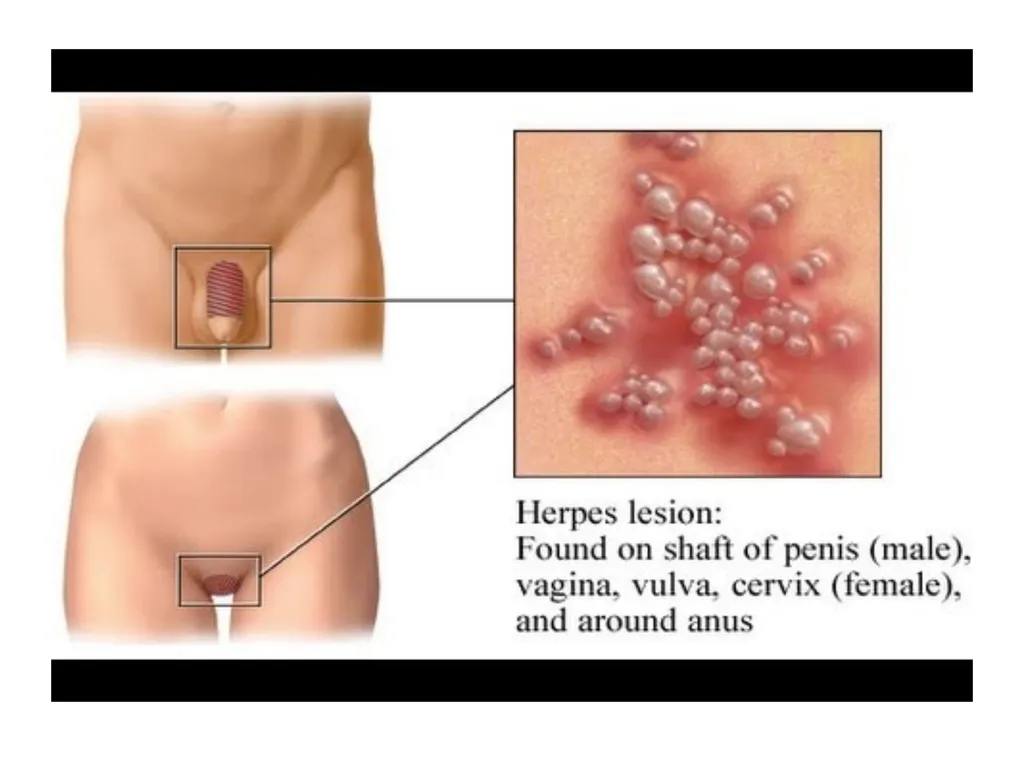
Herpes Simplex Virus (Genital Herpes Infection) The first time a woman contracts a genital herpes infection, systemic involvement occurs. The virus spreads into the bloodstream (viremia) and crosses the placenta to a fetus posing substantial fetal risk.
If the infection takes place in the first trimester, severe
congenital anomalies or spontaneous miscarriage may occur.
If the infection occurs during the second or third trimester,
there is a high incidence of premature birth, intrauterine
growth restriction, and continuing infection of the newborn
at birth.<br>
35
Potentially Teratogenic Vaccines Live virus vaccines, such as measles, HPV, mumps, rubella, and poliomyelitis (Sabin type), are contraindicated during pregnancy because they may transmit the viral infection to a
Fetus.
in routine immunization programs to make sure that adolescents about to be vaccinated are not pregnant<br>
Fetus.
in routine immunization programs to make sure that adolescents about to be vaccinated are not pregnant<br>
36
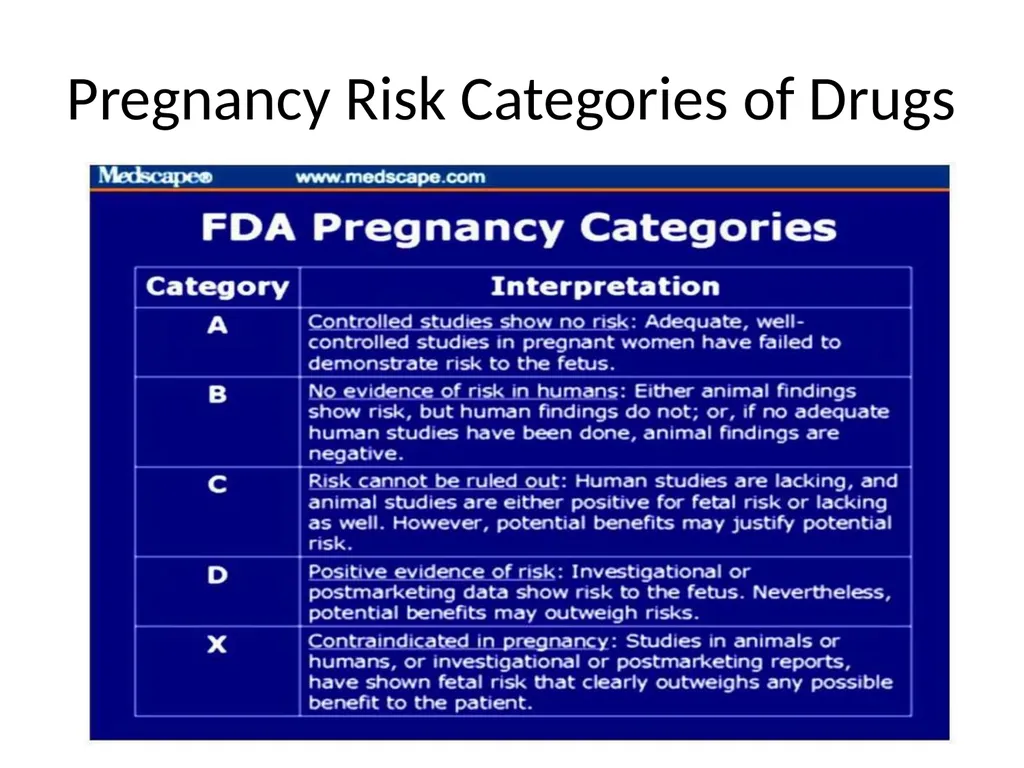
Pregnancy Risk Categories of Drugs<br>
37
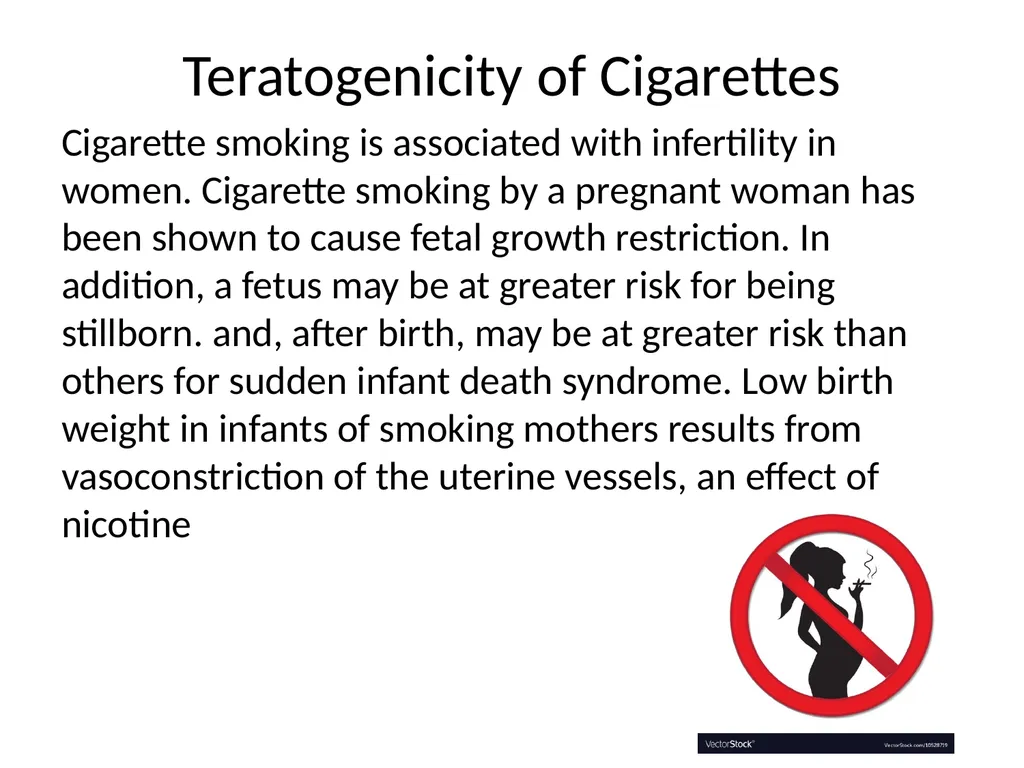
Teratogenicity of Cigarettes Cigarette smoking is associated with infertility in women. Cigarette smoking by a pregnant woman has been shown to cause fetal growth restriction. In addition, a fetus may be at greater risk for being stillborn. and, after birth, may be at greater risk than others for sudden infant death syndrome. Low birth weight in infants of smoking mothers results from vasoconstriction of the uterine vessels, an effect of nicotine<br>
38
Environmental Teratogens Teratogens from environmental sources can be as damaging to a fetus as those that are directly or deliberately ingested. Women can be exposed through contact at home or at work sites<br>
39
Metal and Chemical Hazards Pesticides and carbon monoxide such as from automobile exhaust should be avoided as these are examples of chemical teratogens. Arsenic, a byproduct of copper and lead smelting, used in pesticides, paints, and leather processing; formaldehyde, used in paper manufacturing; and mercury, used in the manufacture of electrical apparatuses and found in swordfish and tuna fish, are all teratogens that can be contacted at work sites. Lead poisoning generally is considered a problem of young
children eating lead-based paint chips, but it also can be a fetal
hazard<br>
children eating lead-based paint chips, but it also can be a fetal
hazard<br>
40
Radiation Rapidly growing cells are extremely vulnerable to destruction by radiation. That makes radiation a potent teratogen to unborn children because of their high proportion of rapidly
growing cells. Radiation produces a range of malformations depending on the stage of development of the embryo or fetus and the strength and length of exposure.<br>
growing cells. Radiation produces a range of malformations depending on the stage of development of the embryo or fetus and the strength and length of exposure.<br>
41
Radiation If the exposure occurs before implantation, the growing zygote apparently is killed. If the zygote is not killed, it survives apparently unharmed. The most damaging time for exposure and subsequent damage is from implantation to 6 weeks after conception<br>
42
Hyperthermia and Hypothermia Hyperthermia to a fetus can be detrimental to growth because it interferes with cell metabolism. This can occur from the use of saunas, hot tubs, or tanning beds, from a work environment next to a furnace, such as in welding or steel making, or from a high maternal fever early in pregnancy (4–6weeks). The effect of hypothermia on pregnancy is not well known.
Because the uterus is an internal organ, a woman’s body temperature would have to be lowered significantly before a great deal of fetal temperature change would result.<br>
Because the uterus is an internal organ, a woman’s body temperature would have to be lowered significantly before a great deal of fetal temperature change would result.<br>
43
Teratogenic Maternal Stress long-term, extreme stress, not of the normal anxiety of pregnancy. Illness
or death of one’s partner, difficulty with relatives, marital discord, and illness or death of another child are examples of stressful situations that might provoke excessive anxiety.
Helping a woman resolve these complex problems during pregnancy is not easy. If maternal stress is severe, however, securing counseling is as important as ensuring good physical care.<br>