Psychosis in older adults Tier 3 Psychosis What is psychosis? Some loss of contact with reality. This might involve hallucinations or delusions (NHS) Hallucinations hearing voices seeing things sensation that someone is touching
"Psychosis in older adults Tier 3 Psychosis What is" is the property of its rightful owner. Permission is granted to
download and print the materials on this website for personal, non-commercial use only, and to display it
on your personal computer provided you do not modify the materials and that you retain all copyright
notices contained in the materials. By downloading content from our website, you accept the terms of this
agreement.
Presentation Transcript
01
Psychosis in older adults Tier 3<br>
02
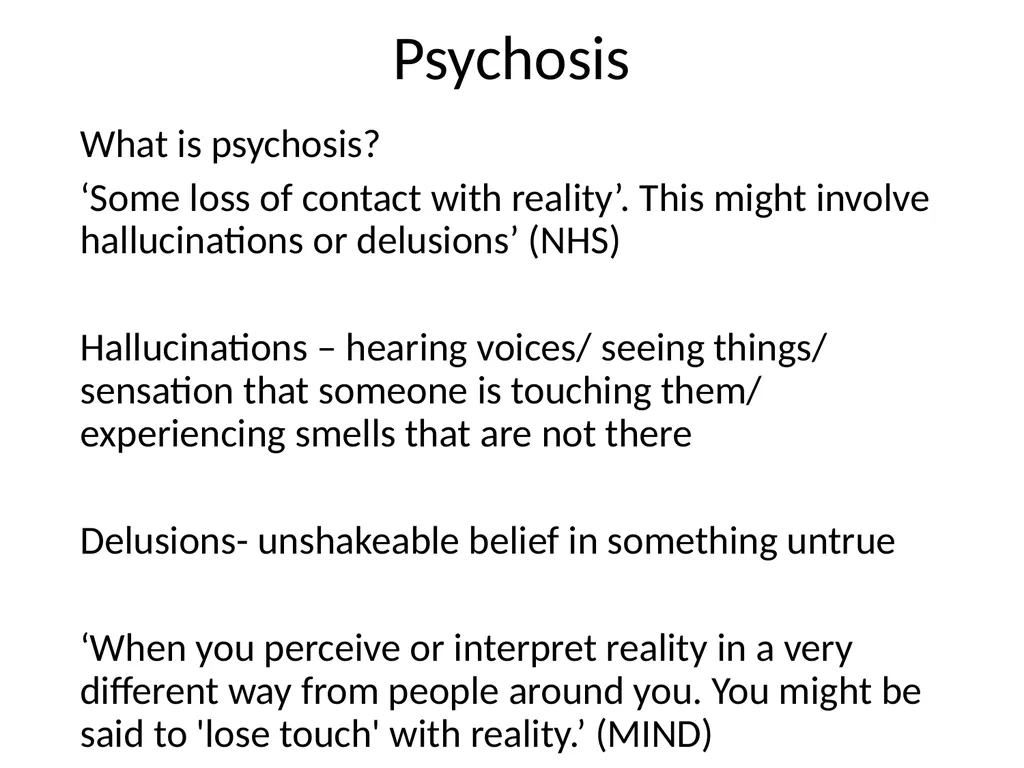
Psychosis What is psychosis?
‘Some loss of contact with reality’. This might involve hallucinations or delusions’ (NHS)
Hallucinations – hearing voices/ seeing things/ sensation that someone is touching them/ experiencing smells that are not there
Delusions- unshakeable belief in something untrue
‘When you perceive or interpret reality in a very different way from people around you. You might be said to 'lose touch' with reality.’ (MIND)<br>
03
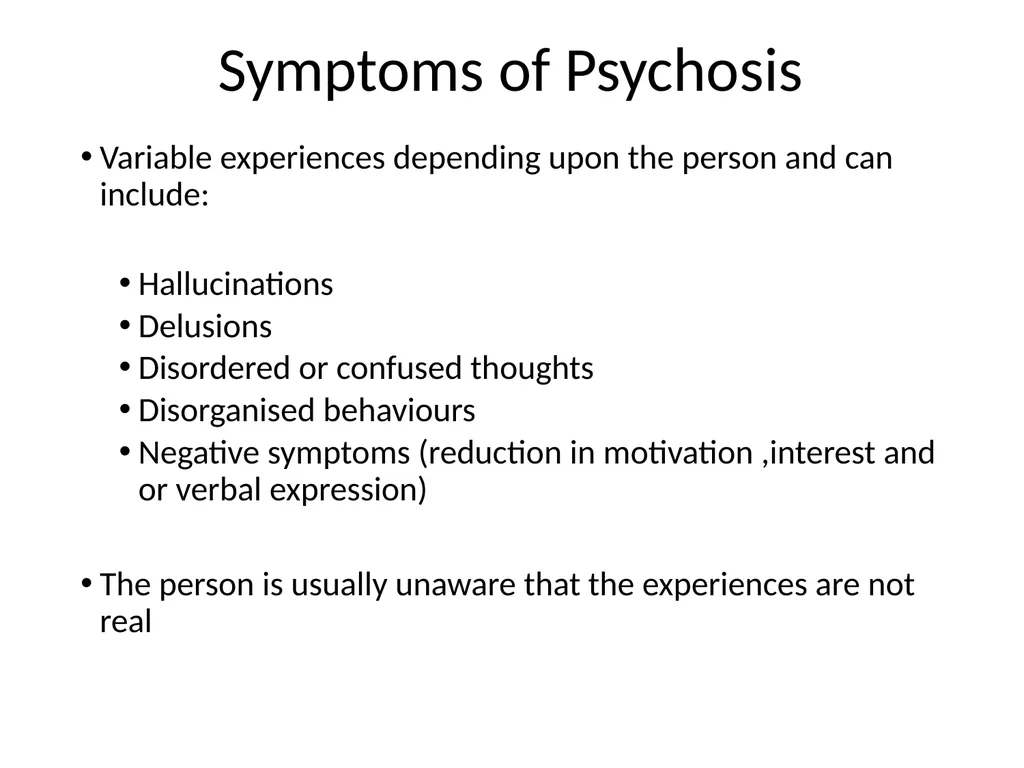
Symptoms of Psychosis Variable experiences depending upon the person and can include:
Hallucinations
Delusions
Disordered or confused thoughts
Disorganised behaviours
Negative symptoms (reduction in motivation ,interest and or verbal expression)
The person is usually unaware that the experiences are not real<br>
04
Psychosis in older adults Psychosis in older adults is:
Common
Has varied aetiology
Older adults with psychosis have varied presentations
Prognosis is different to younger adults with psychosis
Associated morbidity and mortality is high
Higher rate of adverse effects from treatment<br>
05
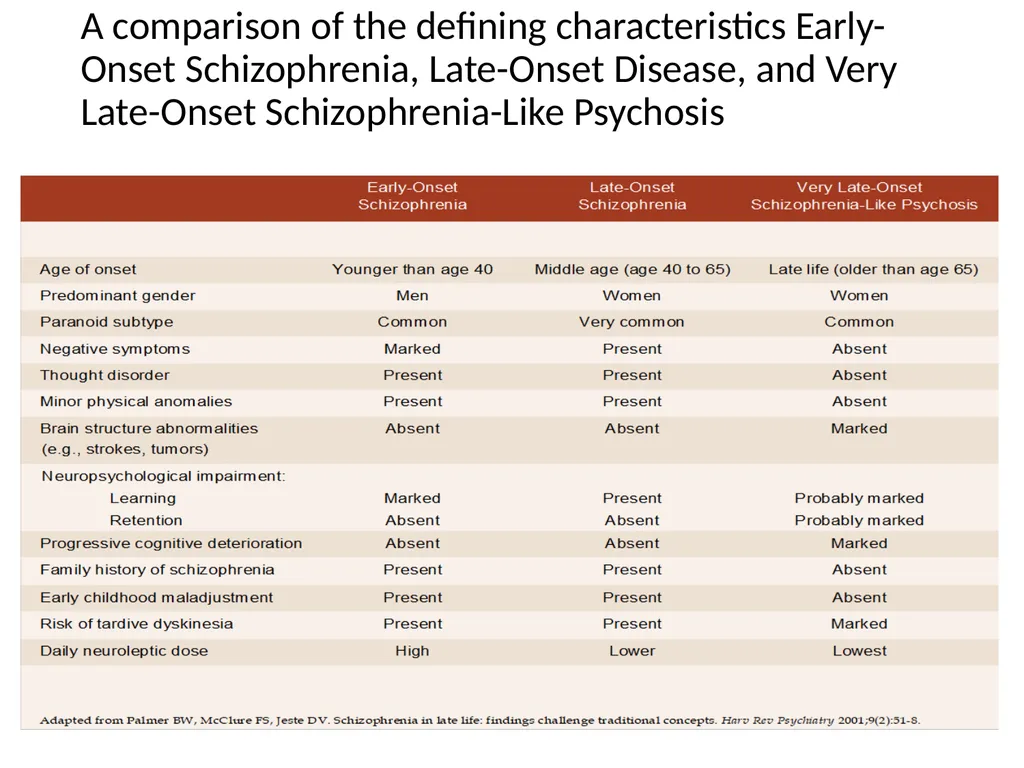
A comparison of the defining characteristics Early-Onset Schizophrenia, Late-Onset Disease, and Very Late-Onset Schizophrenia-Like Psychosis<br>
06
Causes of psychosis in older adults Secondary to Medical or ‘Organic’ causes:
Delirium
Neuropsychiatric conditions (e.g. stroke, MS, epilepsy, encephalitis)
Certain prescribed medications
Alcohol and drug misuse/ withdrawals
Dementia
Alzheimer’s
Lewy body
Vascular
Primary psychiatric causes
Schizophrenia
Very-late onset schizophrenia like psychosis (VLOSLP)
Delusional disorder
Schizoaffective
Depression
Bipolar affective disorder<br>
07
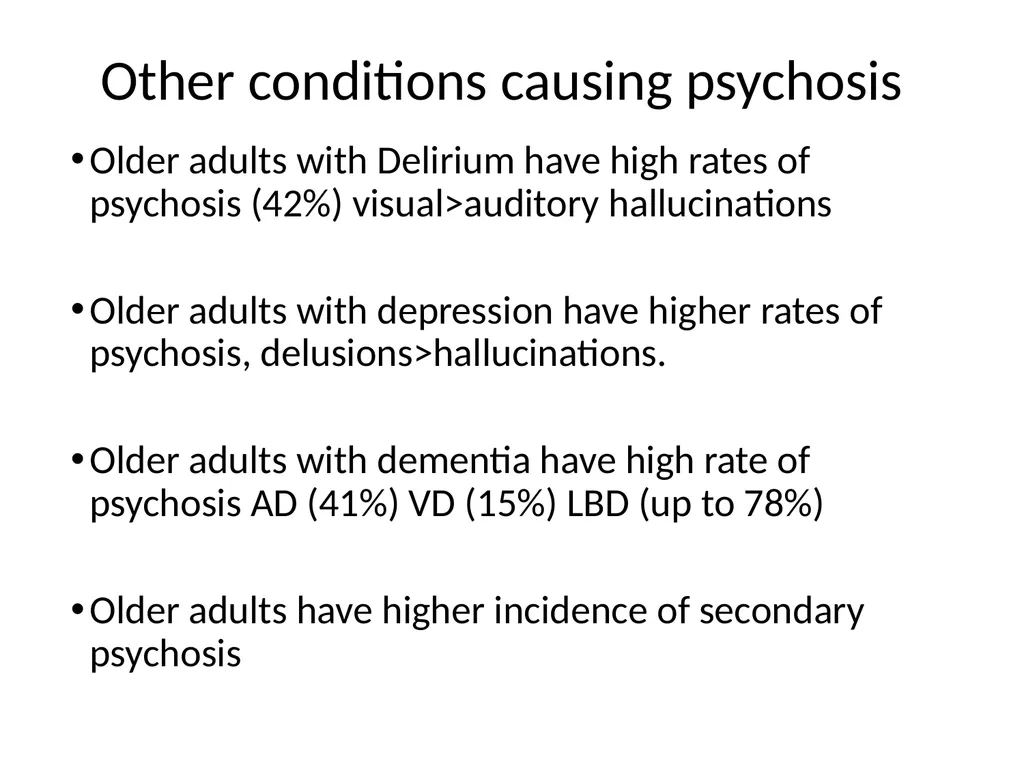
Other conditions causing psychosis Older adults with Delirium have high rates of psychosis (42%) visual>auditory hallucinations
Older adults with depression have higher rates of psychosis, delusions>hallucinations.
Older adults with dementia have high rate of psychosis AD (41%) VD (15%) LBD (up to 78%)
Older adults have higher incidence of secondary psychosis<br>
08
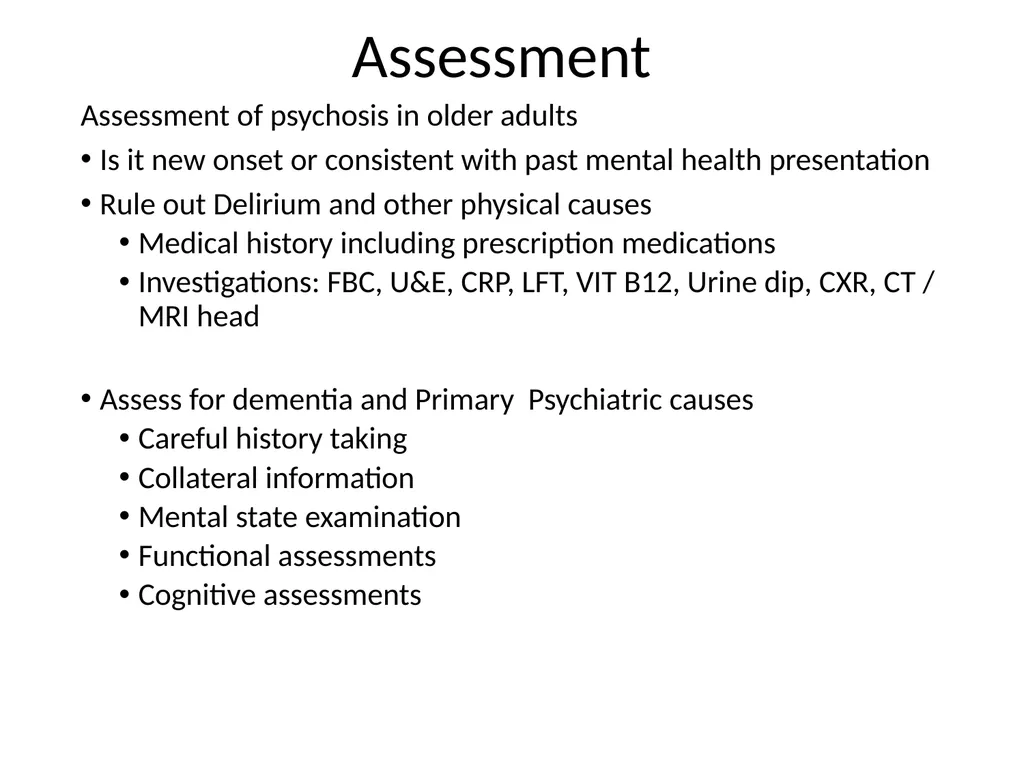
Assessment Assessment of psychosis in older adults
Is it new onset or consistent with past mental health presentation
Rule out Delirium and other physical causes
Medical history including prescription medications
Investigations: FBC, U&E, CRP, LFT, VIT B12, Urine dip, CXR, CT / MRI head
Assess for dementia and Primary Psychiatric causes
Careful history taking
Collateral information
Mental state examination
Functional assessments
Cognitive assessments<br>
09
Very late Onset Schizophrenia like Psychosis (VLOSP) More likely to have
Persecutory and misidentification delusions
Partition delusions
3rd person, running commentary and accusatory or abusive auditory hallucinations
Visual, tactile and olfactory hallucinations
Less likely to have
Formal thought disorder
Affective flattening or blunting
Family history
VLOSLP tends to occurs more in Females than Males and they often have hearing impairment
It is worth encouraging them to have treatment with low dose of atypical antipsychotics as it can be effective and improve their quality of life<br>
10
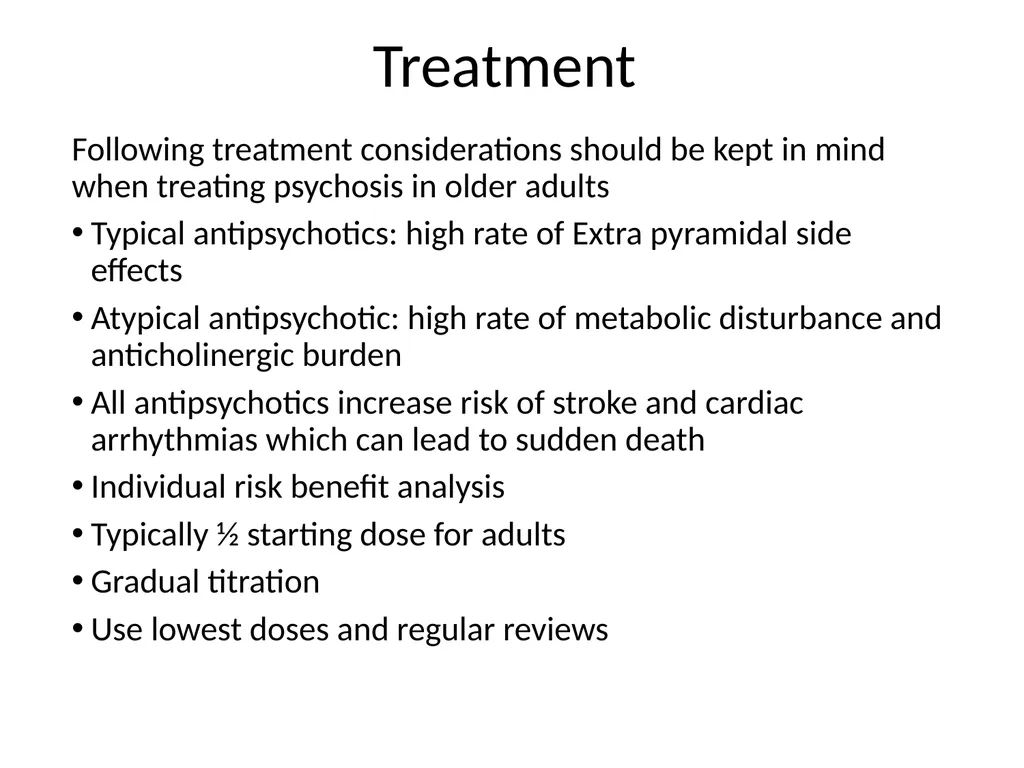
Treatment Following treatment considerations should be kept in mind when treating psychosis in older adults
Typical antipsychotics: high rate of Extra pyramidal side effects
Atypical antipsychotic: high rate of metabolic disturbance and anticholinergic burden
All antipsychotics increase risk of stroke and cardiac arrhythmias which can lead to sudden death
Individual risk benefit analysis
Typically ½ starting dose for adults
Gradual titration
Use lowest doses and regular reviews<br>
11
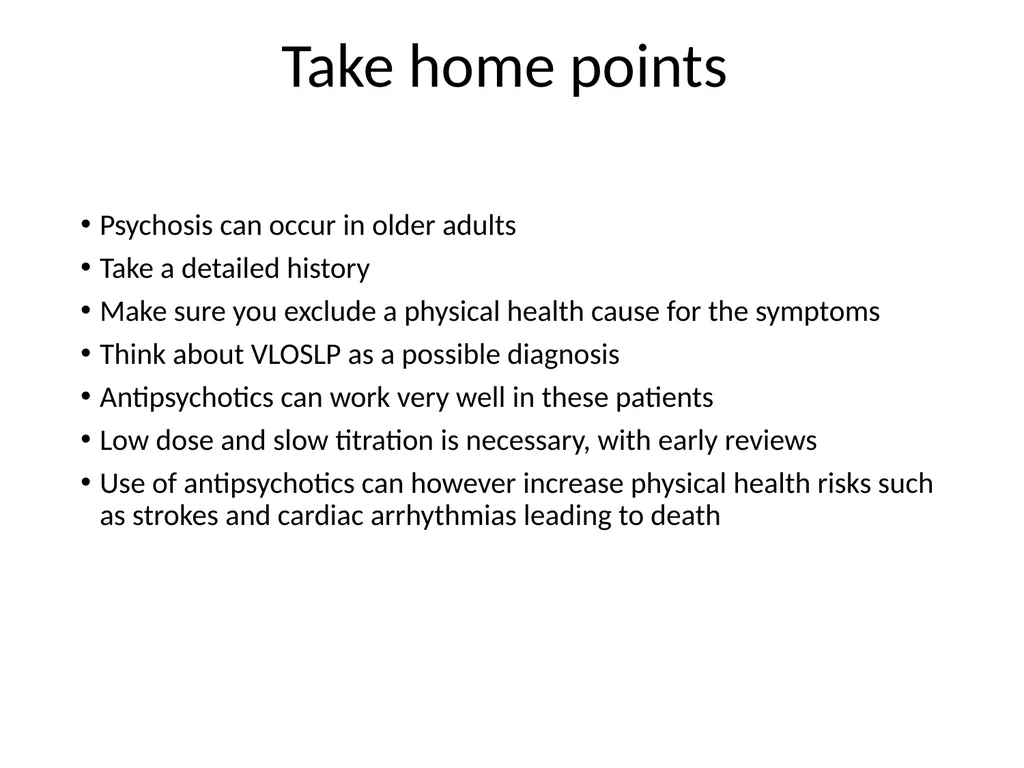
Take home points Psychosis can occur in older adults
Take a detailed history
Make sure you exclude a physical health cause for the symptoms
Think about VLOSLP as a possible diagnosis
Antipsychotics can work very well in these patients
Low dose and slow titration is necessary, with early reviews
Use of antipsychotics can however increase physical health risks such as strokes and cardiac arrhythmias leading to death<br>
12
References and Resources https://www.ncbi.nlm.nih.gov/pmc/articles/PMC181181/
MPC_04_04 Other People Tell Me I'm Seeing Things | Other People Tell Me I'm Seeing Things (mindedforfamilies.org.uk)
This is an easy to access website for older adults and their families which has good advice about symptoms and treatment of hallucinations in older adults<br>