Raghuraman Balasubramanian, Vinay Gangadhar, Ziliang Guo, Chen-Han Ho, Cherin Joseph, Jaikrishnan Menon, Mario Paulo Drumond, Robin Paul, Sharath Prasad, Pradip Valathol, and Karthikeyan Sankaralingam Vertical Research Group University of
"Raghuraman Balasubramanian, Vinay Gangadhar," is the property of its rightful owner. Permission is granted to
download and print the materials on this website for personal, non-commercial use only, and to display it
on your personal computer provided you do not modify the materials and that you retain all copyright
notices contained in the materials. By downloading content from our website, you accept the terms of this
agreement.
Presentation Transcript
01
Raghuraman Balasubramanian, Vinay Gangadhar, Ziliang Guo, Chen-Han Ho, Cherin Joseph, Jaikrishnan Menon, Mario Paulo Drumond*, Robin Paul, Sharath Prasad, Pradip Valathol, and Karthikeyan Sankaralingam
Vertical Research Group
University of Wisconsin – Madison, US
*École polytechnique fédérale de Lausanne, Switzerland Enabling GPGPU Low-Level Hardware Explorations with MIAOW: An Open-Source RTL Implementation of a GPGPU www.miaowgpu.org<br>
02
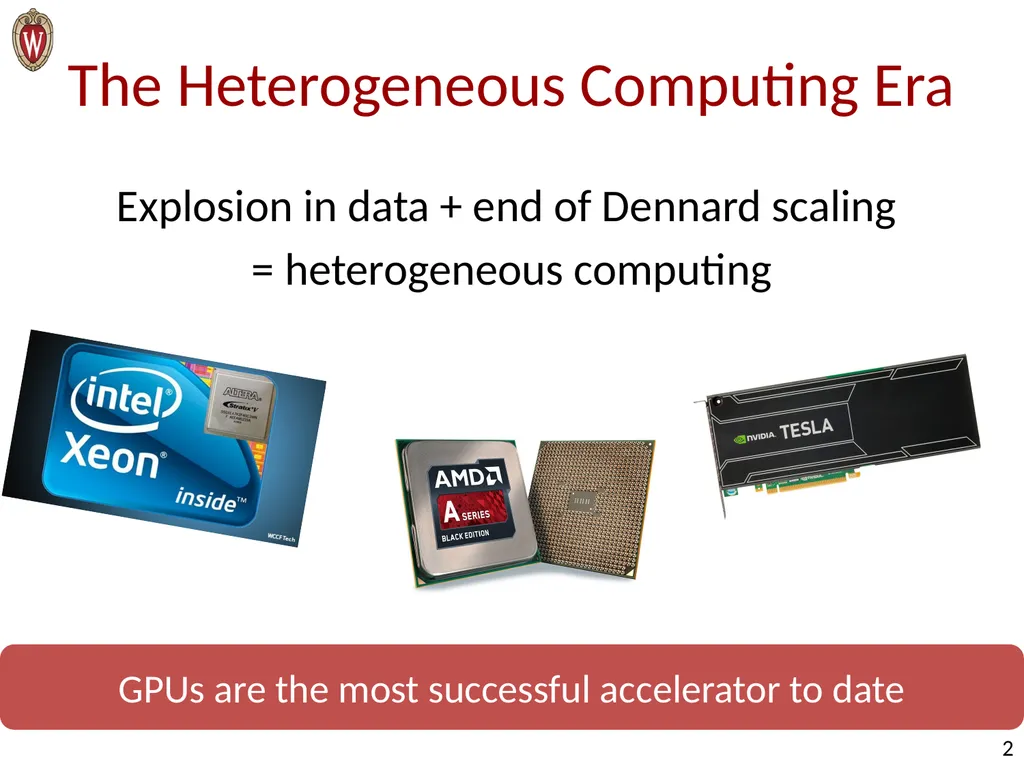
The Heterogeneous Computing Era Explosion in data + end of Dennard scaling
= heterogeneous computing 2 GPUs are the most successful accelerator to date<br>
03
GPU research Its exciting to do research on GPUs right now
Many new applications
But how do we model GPUs?
Today: mainly on software simulators
What can simulators tell us?
Where is the critical path?
Area? Power?
Can we relax circuit constraints? 3 Need more detailed models moving forward<br>
04
Open Source Hardware Game changing in computer architecture education
At least in my education
Useful for researchers
Better, more detailed models
Slowly becoming mainstream 4 Still, no Open Source GPUs… until now<br>
05
MIAOW – An open source GPGPU MIAOW is a credible GPGPU implementation
Compatible with AMD Southern Islands ISA
Similar design and performance to industry state-of-art
Flexible and Extendable
MIAOW is useful as a research tool
MIOAW’s hardware design is Open Source
Contributes to changing hardware landscape 5 * Frequency, Physical Design, Area goals relaxed<br>
06
Overview Introduction
MIAOW Technical Overview
Is MIAOW realistic?
Is MIAOW useful?
Development and Lessons Learned 6<br>
07
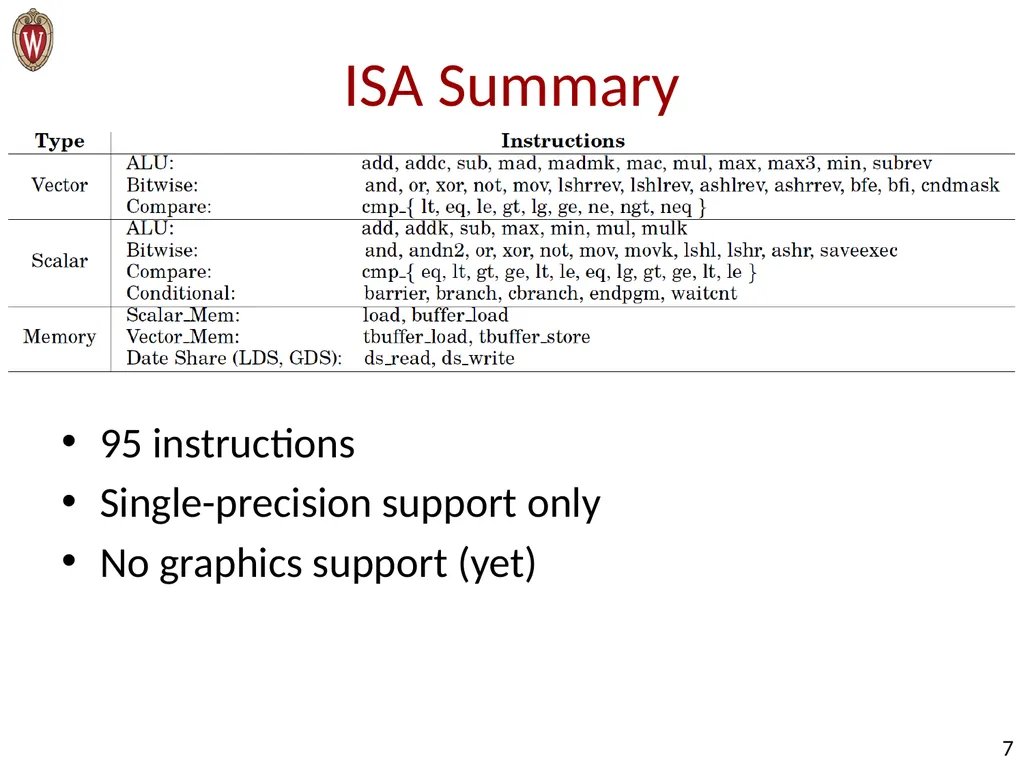
ISA Summary 95 instructions
Single-precision support only
No graphics support (yet) 7<br>
08
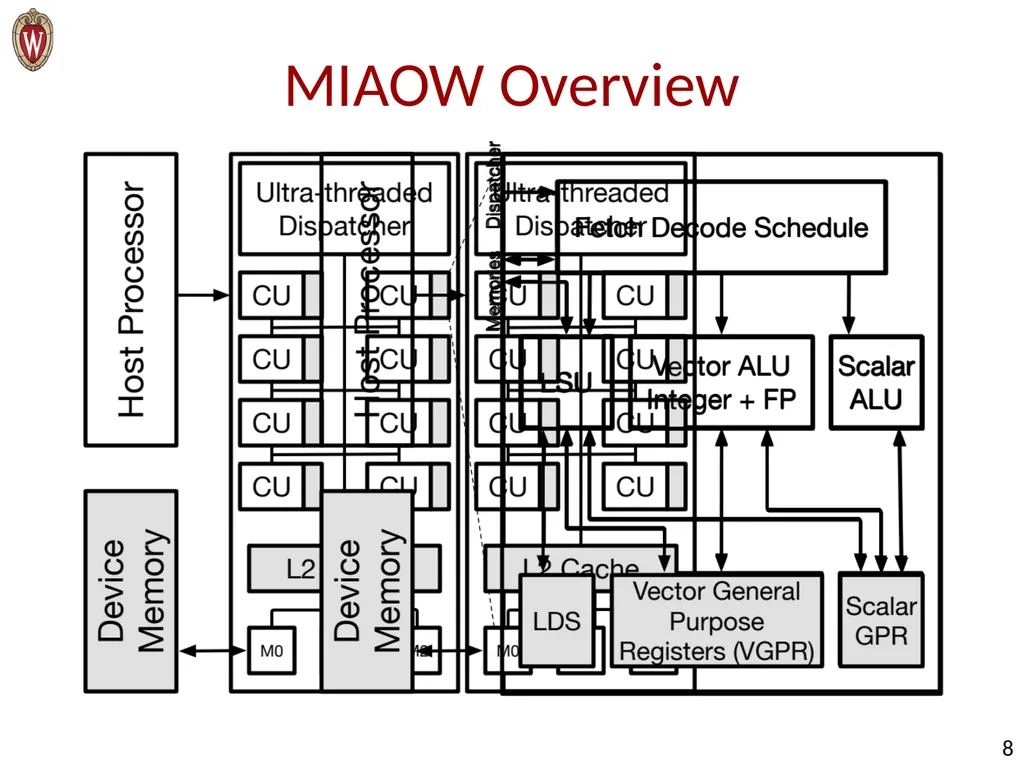
MIAOW Overview 8<br>
09
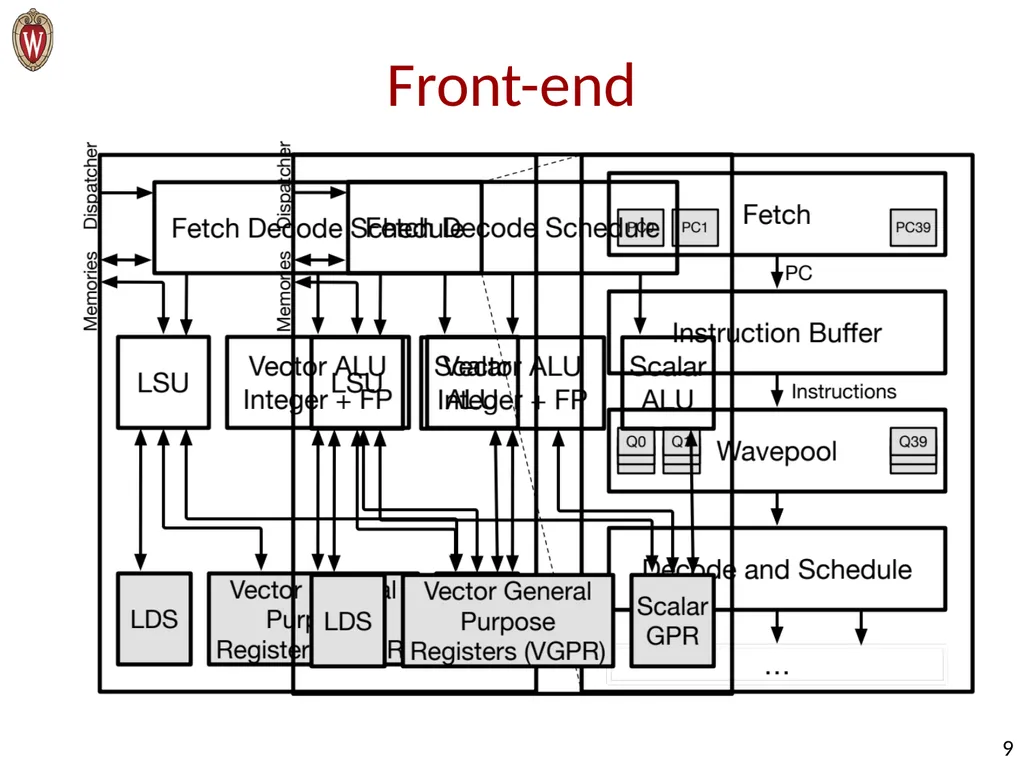
Front-end 9<br>
10
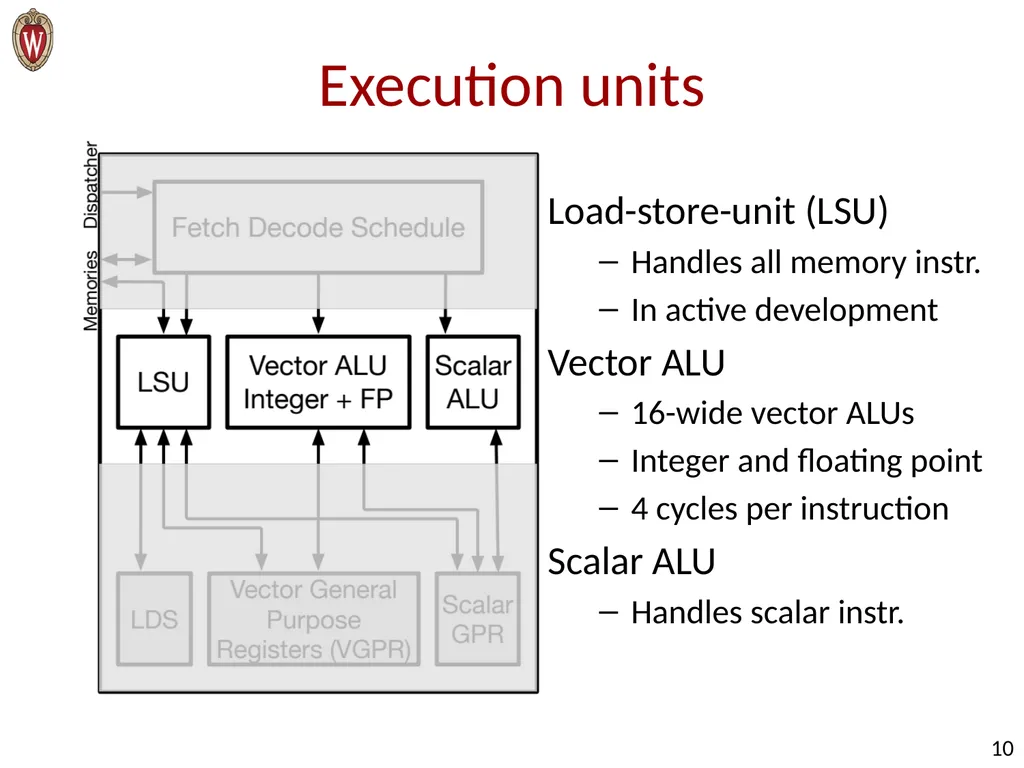
Execution units Load-store-unit (LSU)
Handles all memory instr.
In active development
Vector ALU
16-wide vector ALUs
Integer and floating point
4 cycles per instruction
Scalar ALU
Handles scalar instr. 10<br>
11
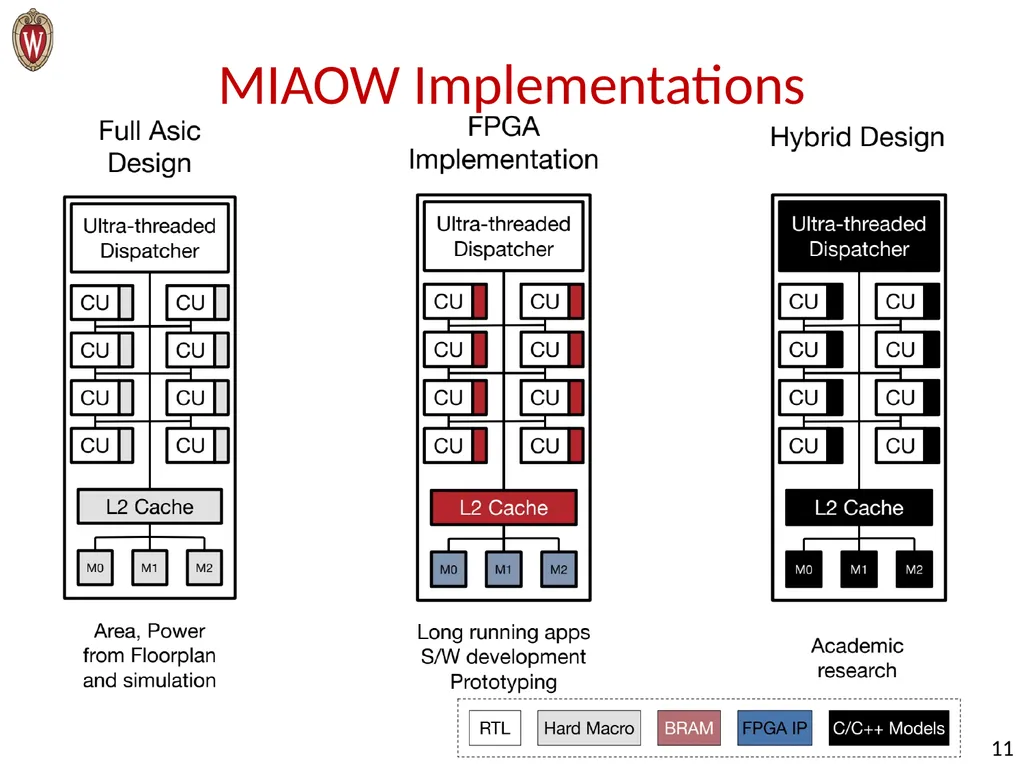
MIAOW Implementations 11<br>
12
Overview Introduction
MIAOW Technical Overview
Is MIAOW realistic?
Is MIAOW useful?
Development and Lessons Learned 12<br>
13
A word on realism Area, Frequency, Performance, Power goals are relaxed
We are not trying to compete with AMD or NVIDIA
MIAOW should represent trade-offs faced by GPUs
Ideally, researchers would observe similar trends in both 13<br>
14
Methodology Area and Power from Synopsis synthesis
Using single-ported SRAM register file
All synthesis using 32nm low-power models
Performance from Multi2sim OpenCL benchmarks
Compared number of execution cycles 14<br>
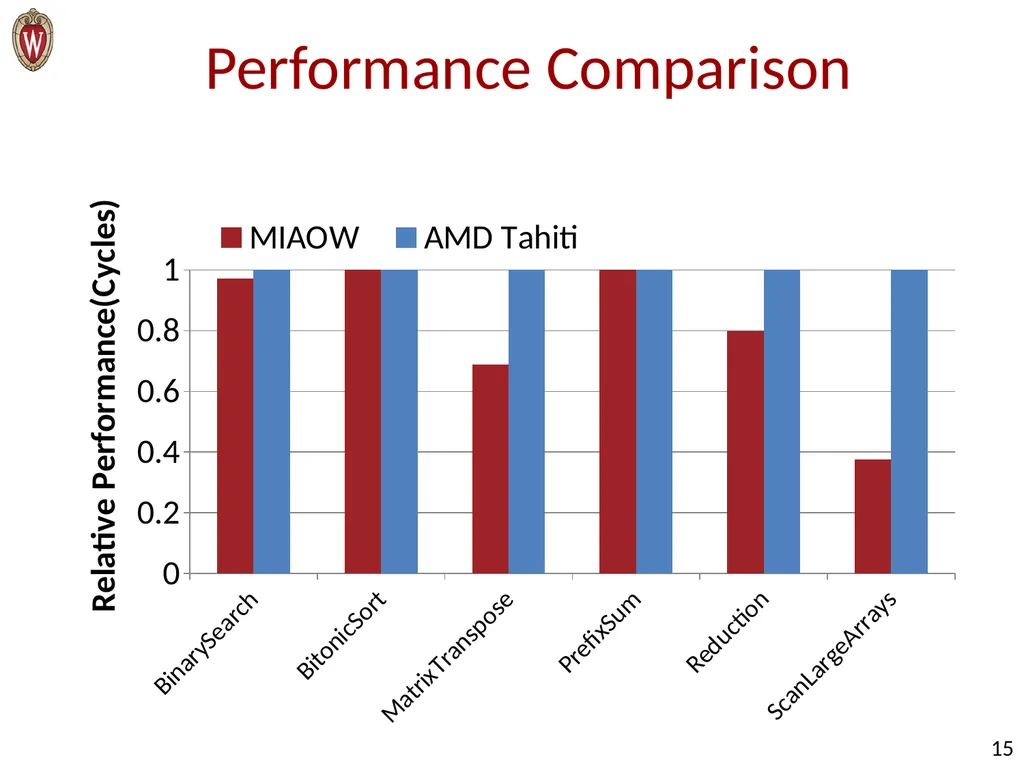
15
Performance Comparison 15<br>
16
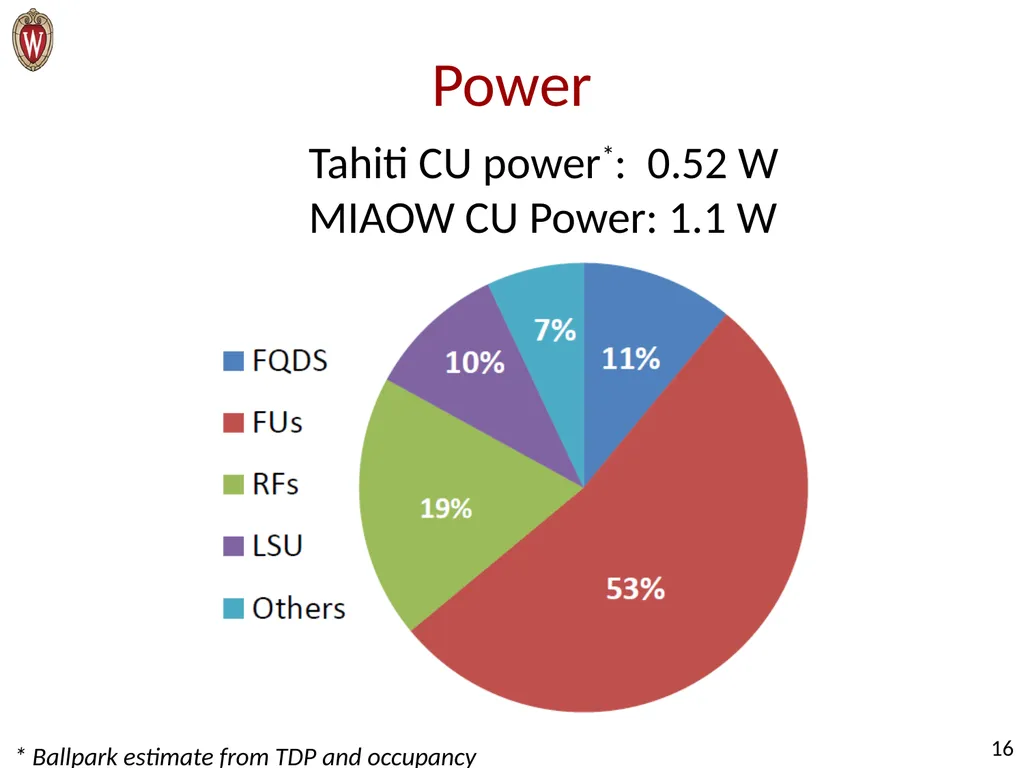
Power 16 Tahiti CU power*: 0.52 W
MIAOW CU Power: 1.1 W * Ballpark estimate from TDP and occupancy<br>
17
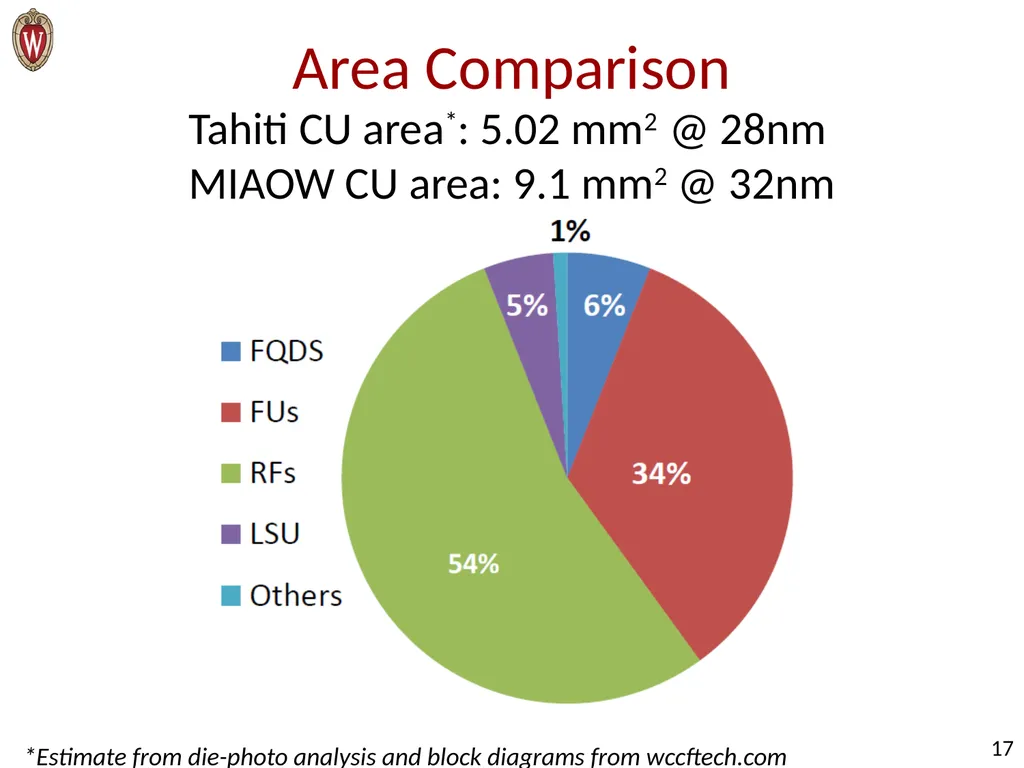
Area Comparison 17 Tahiti CU area*: 5.02 mm2 @ 28nm
MIAOW CU area: 9.1 mm2 @ 32nm *Estimate from die-photo analysis and block diagrams from wccftech.com<br>
18
Overview Introduction
MIAOW Technical Overview
Is MIAOW realistic?
Is MIAOW useful?
Development and Lessons Learned 18<br>
Easily extendable to add additional instructions 19<br>
20
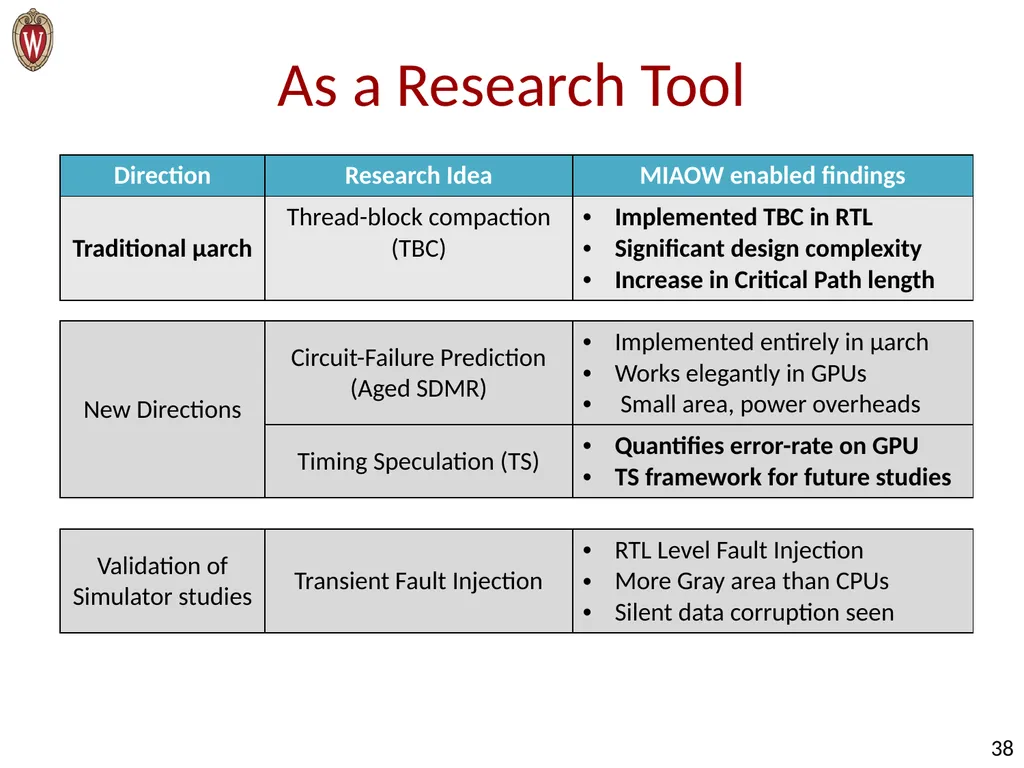
MIAOW as a Research tool Physical Design Perspective of traditional research:
Thread block compaction
iGPU
New research:
Sampling DMR on GPUs
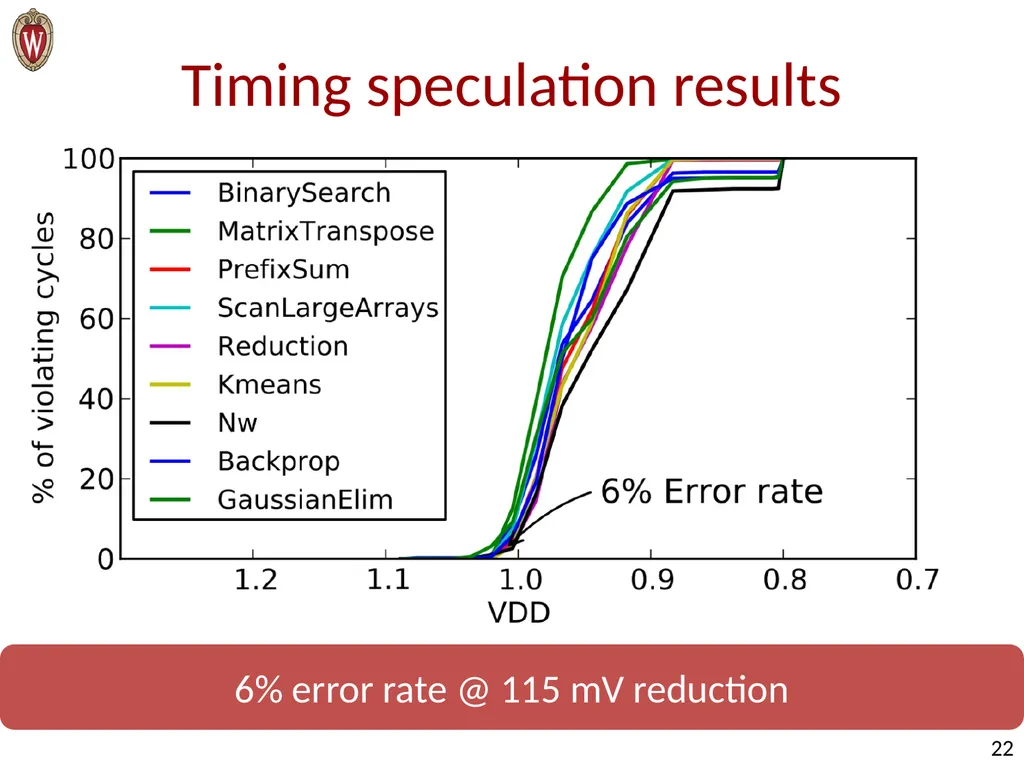
Timing Speculation
Timing Speculation today, more on the paper 20<br>
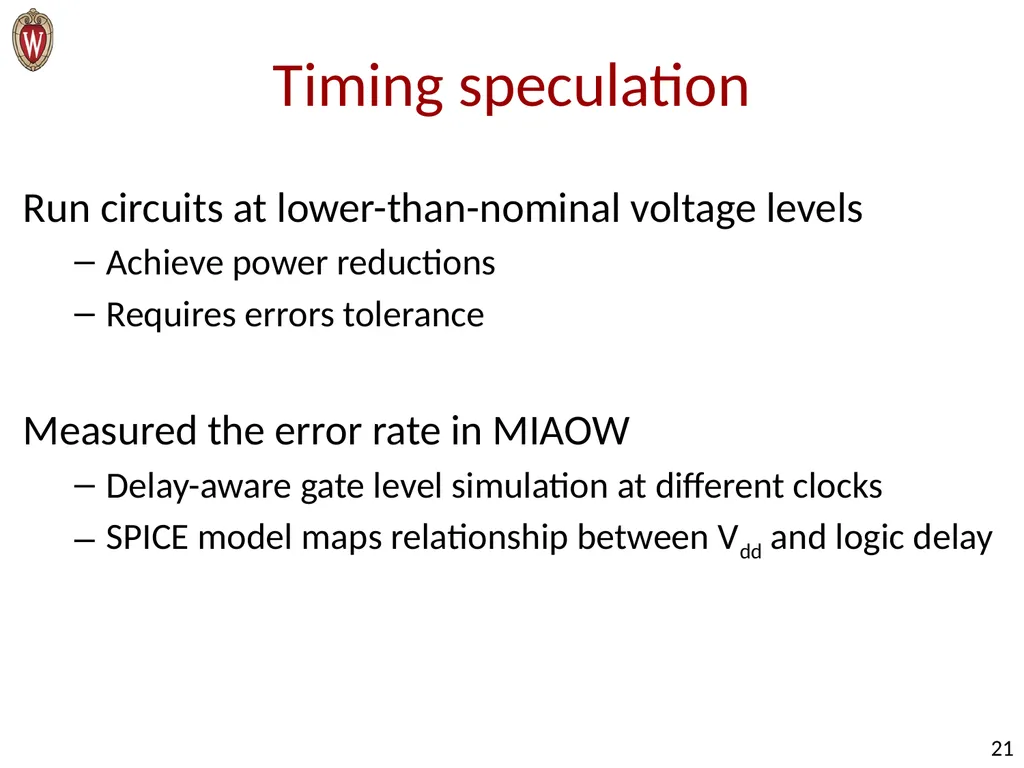
21
Timing speculation Run circuits at lower-than-nominal voltage levels
Achieve power reductions
Requires errors tolerance
Measured the error rate in MIAOW
Delay-aware gate level simulation at different clocks
SPICE model maps relationship between Vdd and logic delay 21<br>
Overview Introduction
MIAOW Technical Overview
Is MIAOW realistic?
Is MIAOW useful?
Development and Lessons Learned 23<br>
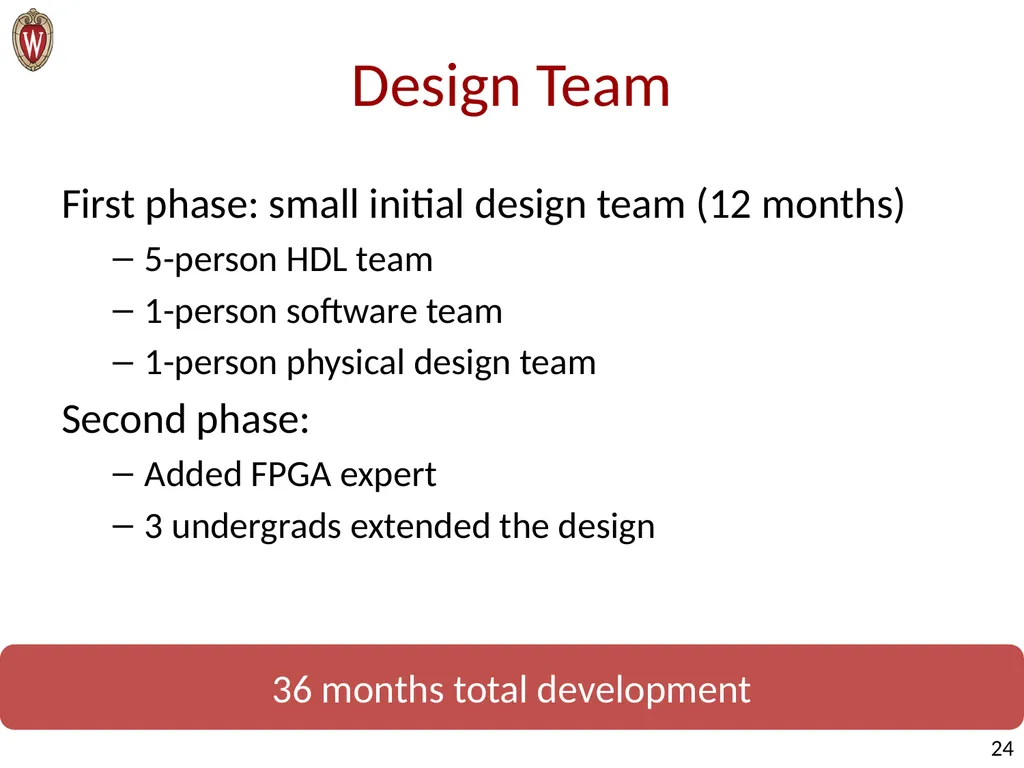
24
Design Team First phase: small initial design team (12 months)
5-person HDL team
1-person software team
1-person physical design team
Second phase:
Added FPGA expert
3 undergrads extended the design 24 36 months total development<br>
25
Lessons Learned It was surprising this was doable!
Microarchitecture design, HDL, verification not tedious
Less tedious than working with simulators
The devil is in the details
The more you verify, the harder it is to debug
Late design changes are very painful to implement
Software toolchain being available was great
FPGA tools are still quite tedious to use 25<br>
26
MIAOW is open source! We want the community to come help us
Help build critical mass on OSH
Many ways to make MIAOW better
Physical design
End-to-end open source software stack
Many things to optimize 26<br>
27
Conclusion MIAOW is transformative for GPU research
Detailed model for GPGPU microarchitecture
MIAOW is a big step for Open Source hardware
Towards first Open Source silicon GPU chip 27<br>
28
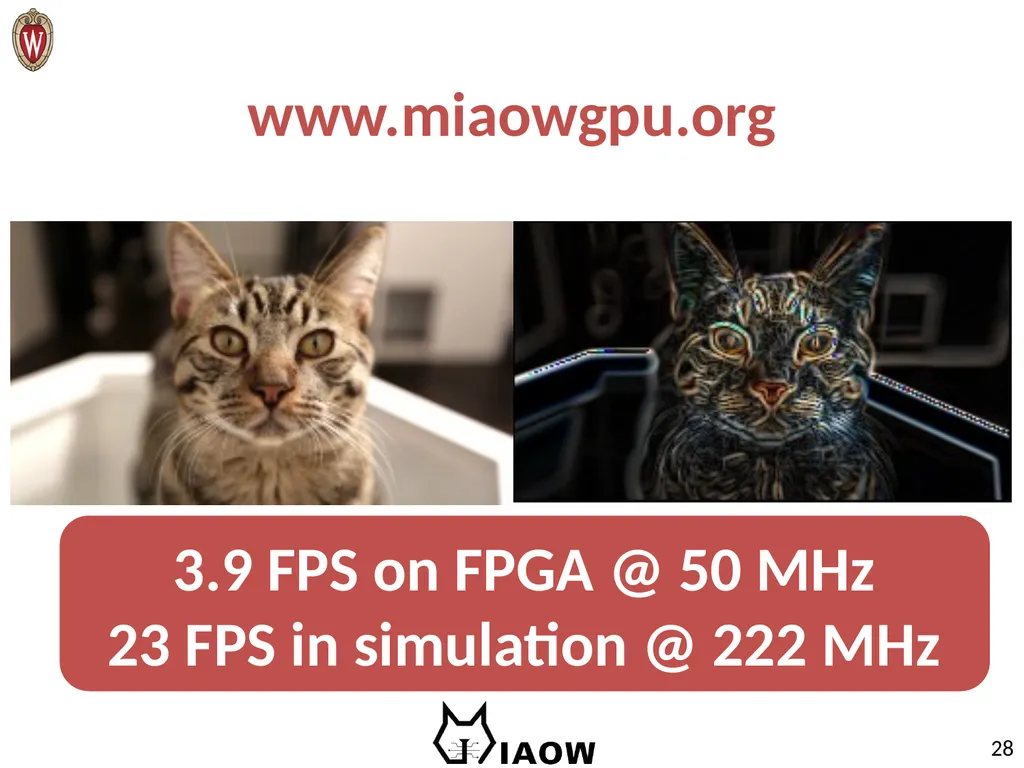
www.miaowgpu.org 28 3.9 FPS on FPGA @ 50 MHz 23 FPS in simulation @ 222 MHz<br>
29
29 Back Up Slides<br>
30
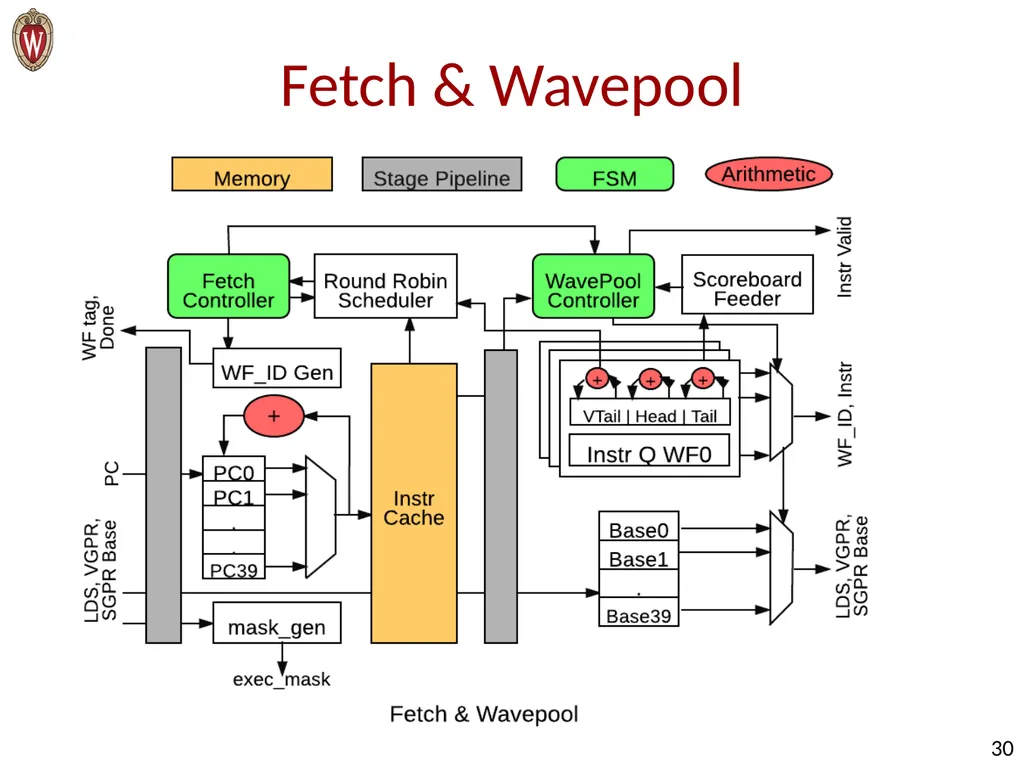
Fetch & Wavepool 30<br>
31
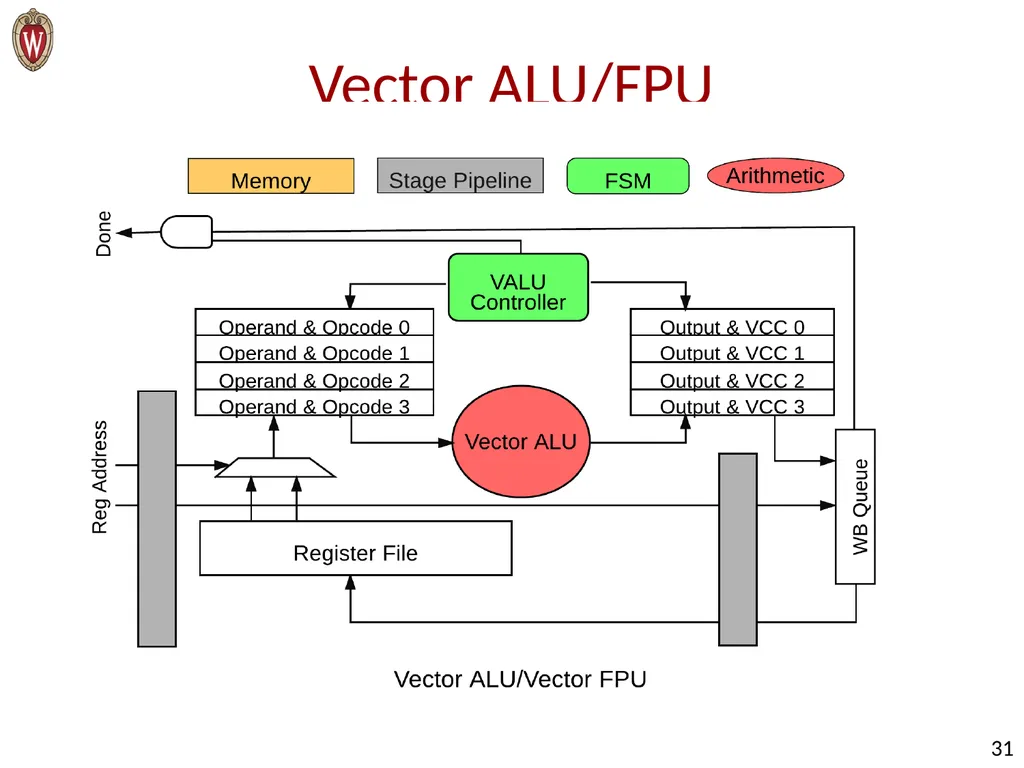
Vector ALU/FPU 31<br>
32
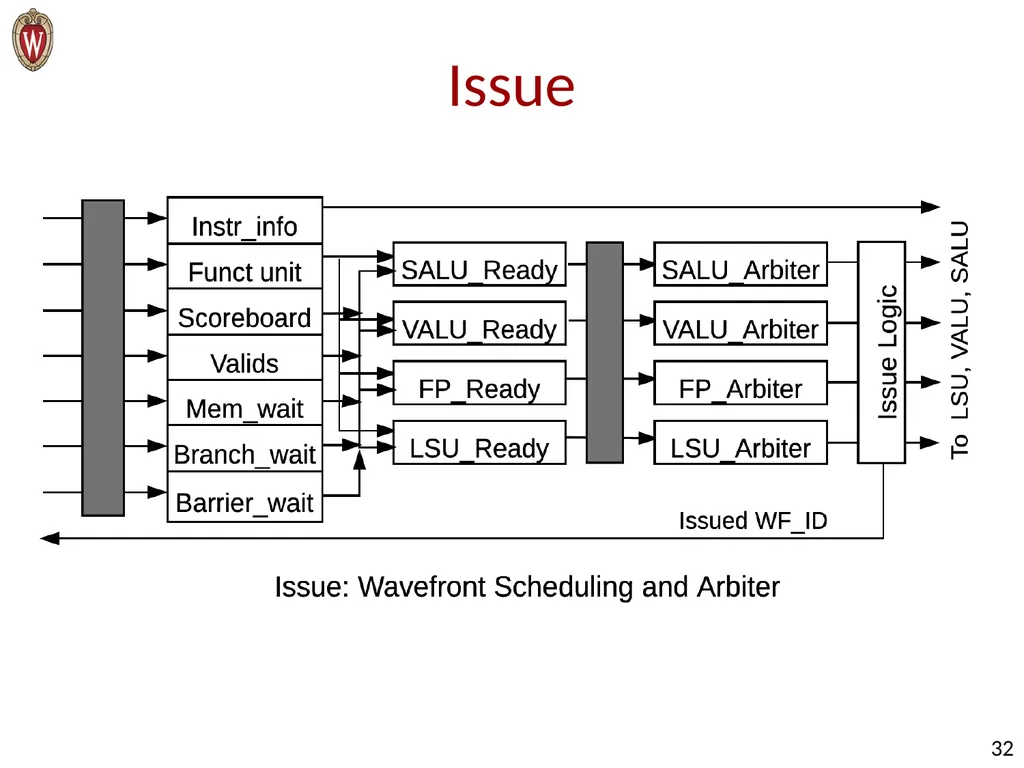
Issue 32<br>
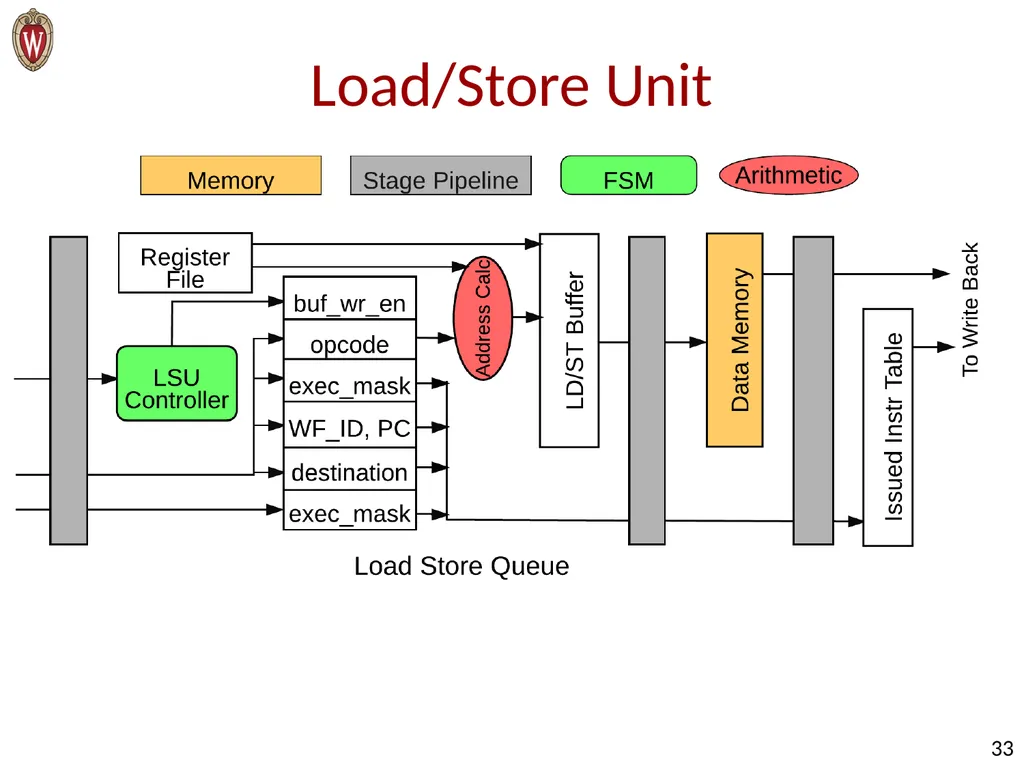
33
Load/Store Unit 33<br>
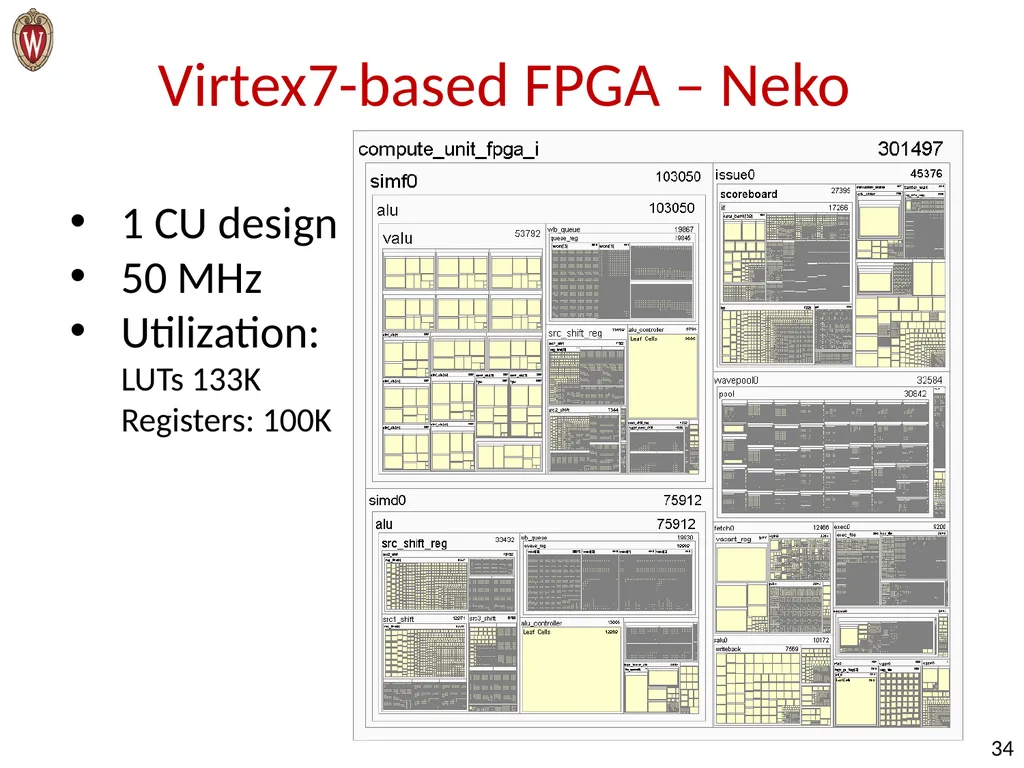
34
Virtex7-based FPGA – Neko 34 1 CU design
50 MHz
Utilization:
LUTs 133K Registers: 100K<br>