
Relationships, Health and Sex Education in
TG
Published · 30 slides · 0 views

1 / 1

Description
Relationships, Health and Sex Education in Moorfield Primary School Vibrant, Loving, Proud Our School Values are fundamental in everything that we do here at Moorfield. PRIDE PERSEVERENCE RESPECT INTEGRITY DETERMINATION EMPATHY DEFINITION
Related Topics
Share
Embed code
Download this presentation From Below
"Relationships, Health and Sex Education in" is the property of its rightful owner. Permission is granted to download and print the materials on this website for personal, non-commercial use only, and to display it on your personal computer provided you do not modify the materials and that you retain all copyright notices contained in the materials. By downloading content from our website, you accept the terms of this agreement.
Presentation Transcript
01
Relationships, Health and Sex Education in Moorfield Primary School<br>
02
Vibrant, Loving, Proud Our School Values are fundamental in everything that we do here at Moorfield.
PRIDE
PERSEVERENCE
RESPECT
INTEGRITY
DETERMINATION
EMPATHY<br>
PRIDE
PERSEVERENCE
RESPECT
INTEGRITY
DETERMINATION
EMPATHY<br>
03
DEFINITION Relationships, Sex and Health Education is about the emotional, social and cultural development of pupils, and involves learning about personal relationships, sexual health, sexuality, healthy lifestyles, diversity and personal identity.<br>
04
RSE at Moorfield From 2020, guidance from the department of education for Relationships Education, Relationships and Sex Education (RSE) and Health Education became mandatory for all schools.
Our child-centred approach to RSE at Moorfield offers opportunities to teach DFE guidance on Relationships Education and Relationships and Sex Education in age-appropriate ways.<br>
Our child-centred approach to RSE at Moorfield offers opportunities to teach DFE guidance on Relationships Education and Relationships and Sex Education in age-appropriate ways.<br>
05
Overview Most of PSHE Education became compulsory for all schools in September 2020. This covers Relationships Education at Key stages 1 and 2, Relationships and sex education (RSE) at Key stages 3 and 4 and Health Education from Key stage 1 to 4.
The pandemic delayed full implementation but from September 2021 schools must cover everything outlined in statutory ‘RSHE’ guidance. This is a great opportunity to make sure all children and young people benefit.
The Department of Education statutory guidance for Health Education, Relationships Education and RSE outlines what schools must cover.<br>
06
This covers broad areas of particular relevance and concern to children and young people today. It should ensure that every child is guaranteed a PSHE education that covers mental health and wellbeing, physical health (including healthy lifestyles and first aid) and learning about safe, healthy relationships, including understanding consent and negotiating life online.
The statutory requirements do not extend to sex education at KS1 and 2 (beyond the biological /reproductive aspects schools are already required to cover in science).
However, the Department for Education ‘continues to recommend that all primary schools should have a sex education programme tailored to the age and the physical and emotional maturity of the pupils.’<br>
07
Right to Withdraw Parents have the right to withdraw their children from the non-statutory component of sex education in Year 6. This is where sexual intercourse is taught discretely as part of the physical aspect within our ‘Growing and Changing’.<br>
08
INTENT Moorfield Primary School aims to provide a suitable programme that follows the statutory need to include RSHE into their curriculum from September 2020. It is our intent to provide all children with a broad and balanced curriculum which enables our children to become successful learners, healthy, confident independent persons and active responsible members of society . The school’s aspirations for our children to develop as courteous, generous, tolerant, well-rounded and well-educated citizens, who can contribute to a fairer society now and in the future are at the centre of everything we do. We strive to do this by helping them through their physical, emotional and moral development and helping them to understand themselves, respect others and form and sustain healthy relationships.
This will be implemented by creating a programme of study that is appropriate for our school and all our children . The three main core themes of our PSHE programme of study focus on Relationships, Living in the wider world and Health and well-being and prepare them for the opportunities, responsibilities and experiences of life growing up in today’s world.<br>
This will be implemented by creating a programme of study that is appropriate for our school and all our children . The three main core themes of our PSHE programme of study focus on Relationships, Living in the wider world and Health and well-being and prepare them for the opportunities, responsibilities and experiences of life growing up in today’s world.<br>
09
IMPLEMENTATION At Moorfield, PSHE education is delivered within a whole school approach which includes: discrete lessons, whole school assembly delivery, teaching PSHE through and in other subjects, PSHE activities and school events, pastoral care and guidance, outside visits/ residentials and through outside agencies/visitors, who support with other learning opportunities across the curriculum. We follow ‘The PSHE Association’ scheme of work to teach our discrete lessons, as well as bespoke therapeutic drama sessions. The programme is aligned with the National Curriculum (Citizenship, PSHE Education), covering EYFS, key stage 1 and key stage 2. Our teachers provide learning opportunities matched to the individual needs of all children including those with special educational needs and disabilities. PSHE is taught inclusively to all children regardless of their race, religion and gender, whilst at the same time addressing the need for equal opportunity.
The PSHE curriculum is in line with the single equality duty policy. Staff will ensure that no judgement will be passed on the lifestyles and choices made by others. If a safeguarding issue is raised, staff are required to follow the correct safeguarding procedure and safeguarding policy.<br>
The PSHE curriculum is in line with the single equality duty policy. Staff will ensure that no judgement will be passed on the lifestyles and choices made by others. If a safeguarding issue is raised, staff are required to follow the correct safeguarding procedure and safeguarding policy.<br>
10
IMPACT
What our children achieve Consistent coverage of our sequenced and balanced curriculum gives pupils the knowledge, skills, and attributes they need to keep themselves healthy and safe and to prepare them for life and work in modern Britain. Personal, Social, Health and Economic (PSHE) education is a school subject through which pupils develop the knowledge, skills and attributes they need to manage their lives, now and in the future. We strive to ensure that by the end of their time with us at Moorfield each child will:
Recognise and apply the British Values Be able to recognise, understand and manage their own emotions • Understand who they can rely on and ask for support. • Look after their own mental health and ask for support where necessary. • Be on their way to maintaining a healthy lifestyle.
Recognise differences and have an understanding of diversity. Apply learnt skills in real life situations • Demonstrate self-confidence and self-esteem. • Have developed and maintained healthy relationships with peers and adults. • Understand the physical aspects involved in the teaching of RSE at the level appropriate to them as an individual. • Show respect to themselves and others.<br>
11
THE PURPOSE The aims of Relationship, Sex and Health Education (RSHE) at Moorfield Primary School are to :
Provide a framework in which sensitive discussions can take place.
Help pupils develop feelings of dignity, self-worth, self-respect, confidence and empathy.
Prepare pupils for puberty and give them an understanding of sexual development and the importance of health and hygiene.
Create a positive culture around issues of sexuality and relationships.
Teach pupils the correct vocabulary to describe themselves and their bodies.<br>
12
WHAT IS COVERED?<br>
13
AUTUMN TERM RELATIONSHIPS<br>
14
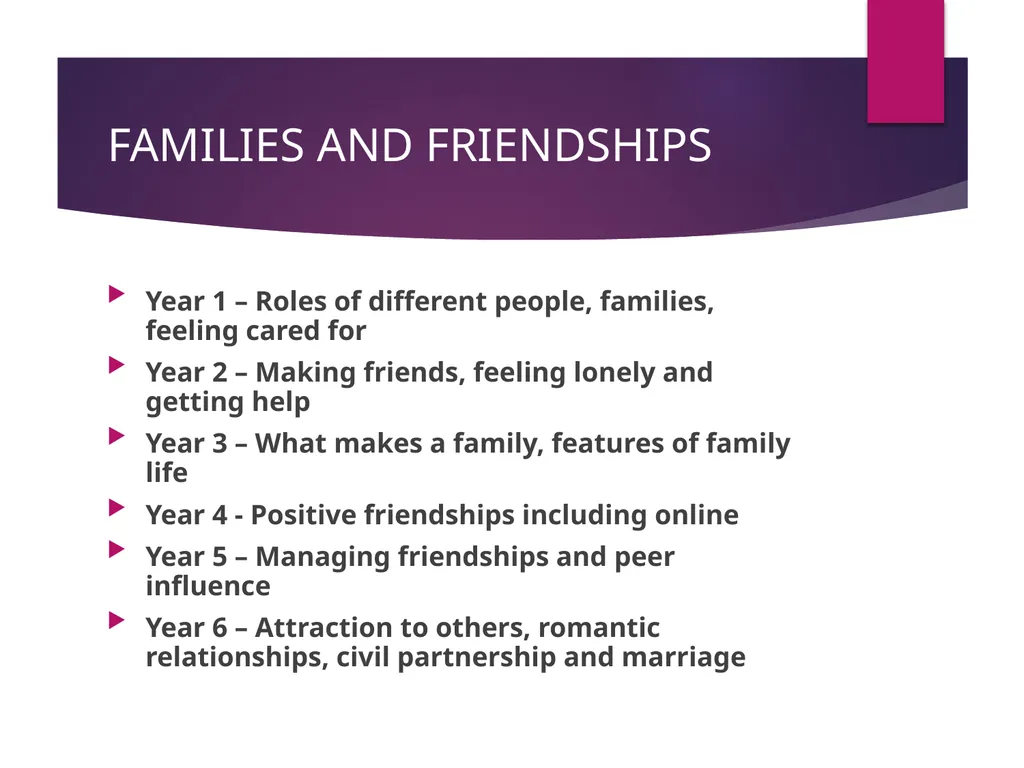
FAMILIES AND FRIENDSHIPS Year 1 – Roles of different people, families, feeling cared for
Year 2 – Making friends, feeling lonely and getting help
Year 3 – What makes a family, features of family life
Year 4 - Positive friendships including online
Year 5 – Managing friendships and peer influence
Year 6 – Attraction to others, romantic relationships, civil partnership and marriage<br>
Year 2 – Making friends, feeling lonely and getting help
Year 3 – What makes a family, features of family life
Year 4 - Positive friendships including online
Year 5 – Managing friendships and peer influence
Year 6 – Attraction to others, romantic relationships, civil partnership and marriage<br>
15
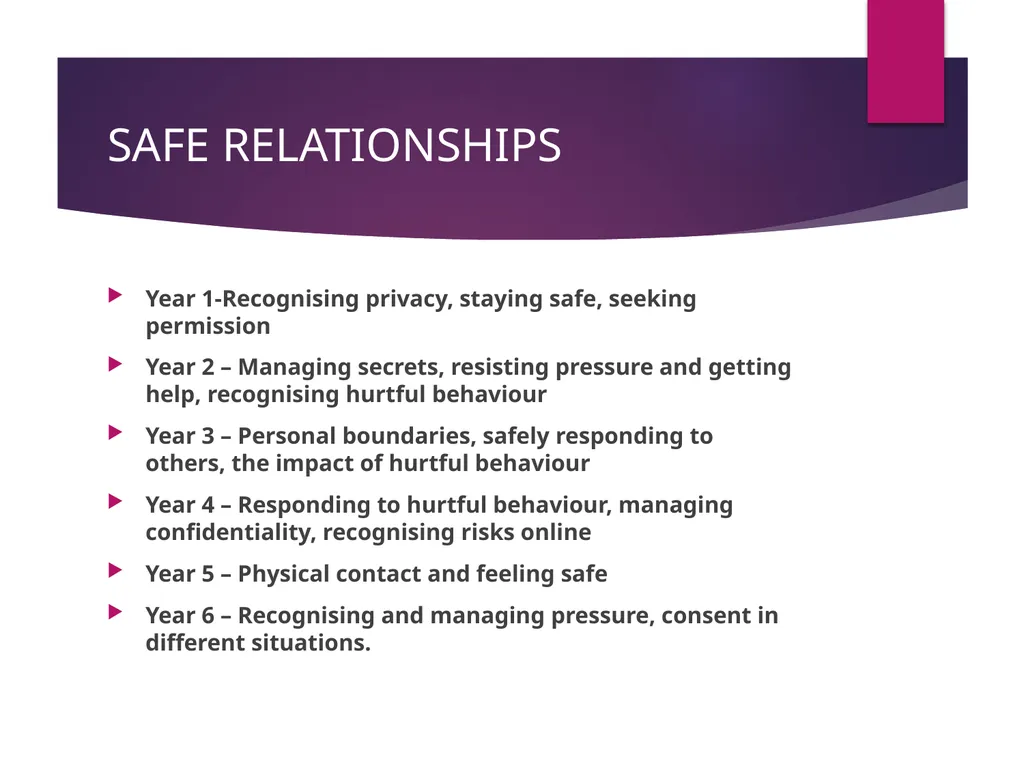
SAFE RELATIONSHIPS Year 1-Recognising privacy, staying safe, seeking permission
Year 2 – Managing secrets, resisting pressure and getting help, recognising hurtful behaviour
Year 3 – Personal boundaries, safely responding to others, the impact of hurtful behaviour
Year 4 – Responding to hurtful behaviour, managing confidentiality, recognising risks online
Year 5 – Physical contact and feeling safe
Year 6 – Recognising and managing pressure, consent in different situations.<br>
16
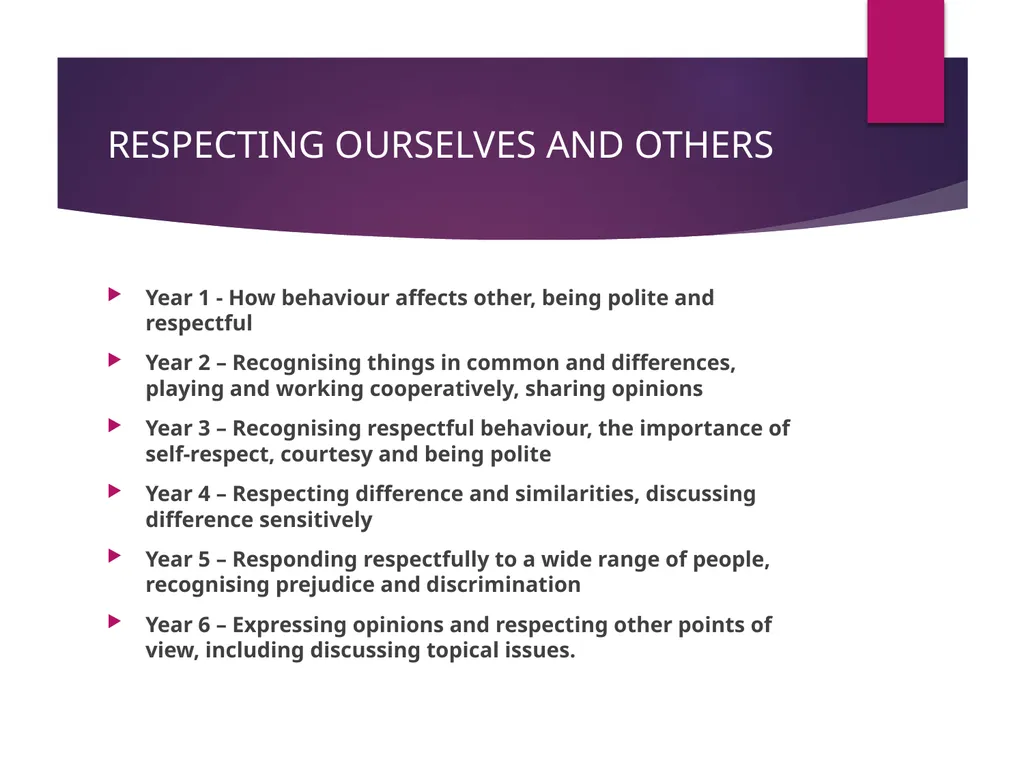
RESPECTING OURSELVES AND OTHERS Year 1 - How behaviour affects other, being polite and respectful
Year 2 – Recognising things in common and differences, playing and working cooperatively, sharing opinions
Year 3 – Recognising respectful behaviour, the importance of self-respect, courtesy and being polite
Year 4 – Respecting difference and similarities, discussing difference sensitively
Year 5 – Responding respectfully to a wide range of people, recognising prejudice and discrimination
Year 6 – Expressing opinions and respecting other points of view, including discussing topical issues.<br>
17
SPRING TERM LIVING IN THE WIDER WORLD<br>
18
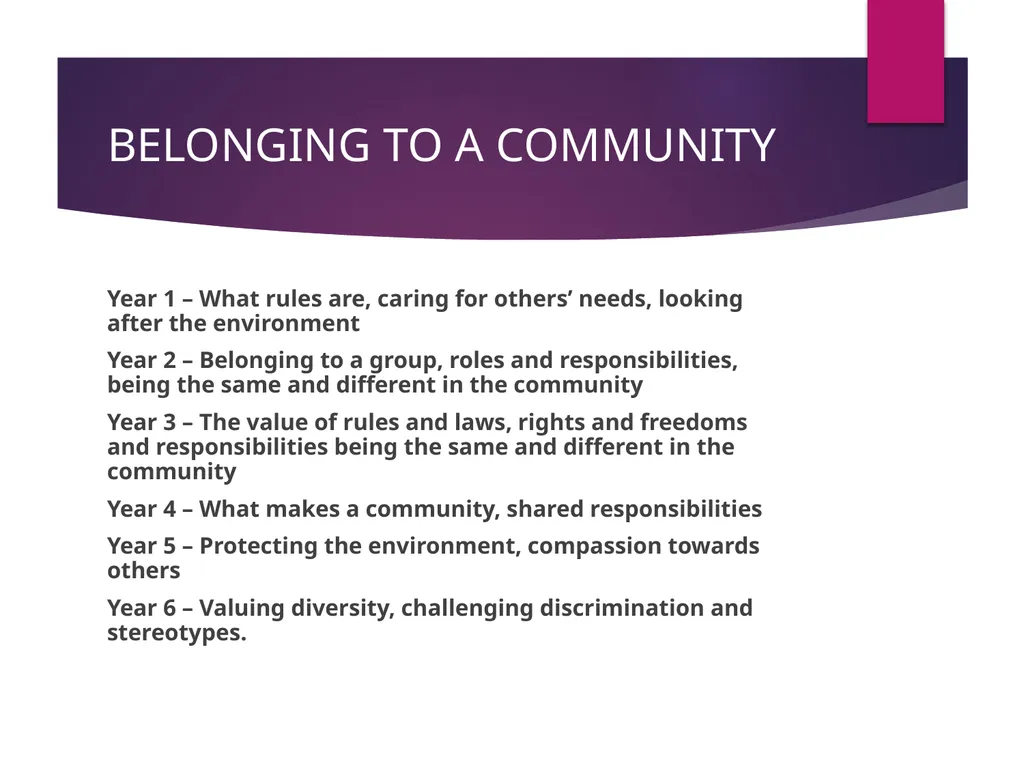
BELONGING TO A COMMUNITY Year 1 – What rules are, caring for others’ needs, looking after the environment
Year 2 – Belonging to a group, roles and responsibilities, being the same and different in the community
Year 3 – The value of rules and laws, rights and freedoms and responsibilities being the same and different in the community
Year 4 – What makes a community, shared responsibilities
Year 5 – Protecting the environment, compassion towards others
Year 6 – Valuing diversity, challenging discrimination and stereotypes.<br>
19
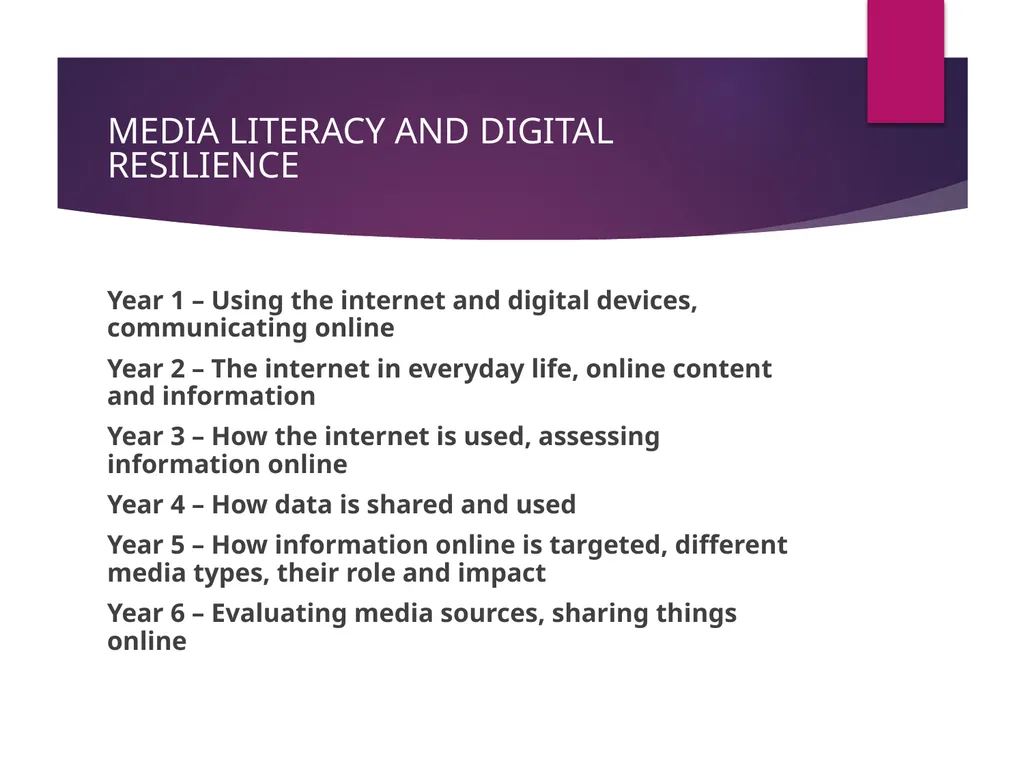
MEDIA LITERACY AND DIGITAL RESILIENCE Year 1 – Using the internet and digital devices, communicating online
Year 2 – The internet in everyday life, online content and information
Year 3 – How the internet is used, assessing information online
Year 4 – How data is shared and used
Year 5 – How information online is targeted, different media types, their role and impact
Year 6 – Evaluating media sources, sharing things online<br>
20
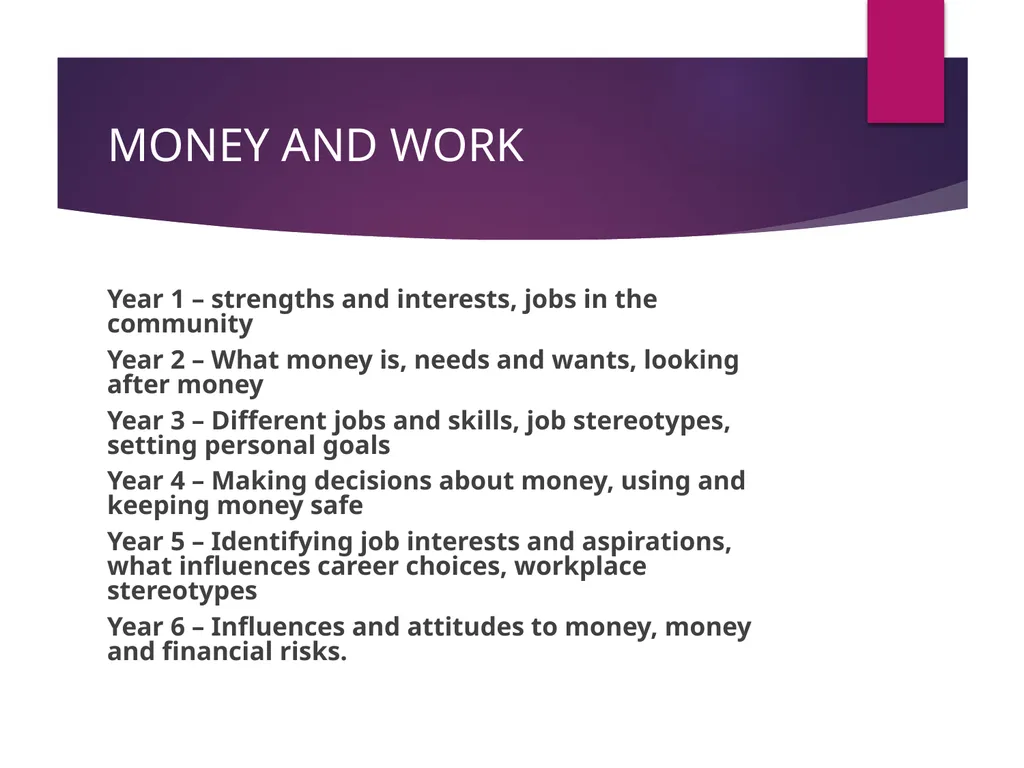
MONEY AND WORK Year 1 – strengths and interests, jobs in the community
Year 2 – What money is, needs and wants, looking after money
Year 3 – Different jobs and skills, job stereotypes, setting personal goals
Year 4 – Making decisions about money, using and keeping money safe
Year 5 – Identifying job interests and aspirations, what influences career choices, workplace stereotypes
Year 6 – Influences and attitudes to money, money and financial risks.<br>
21
SUMMER TERM HEALTH AND WELLBEING<br>
22
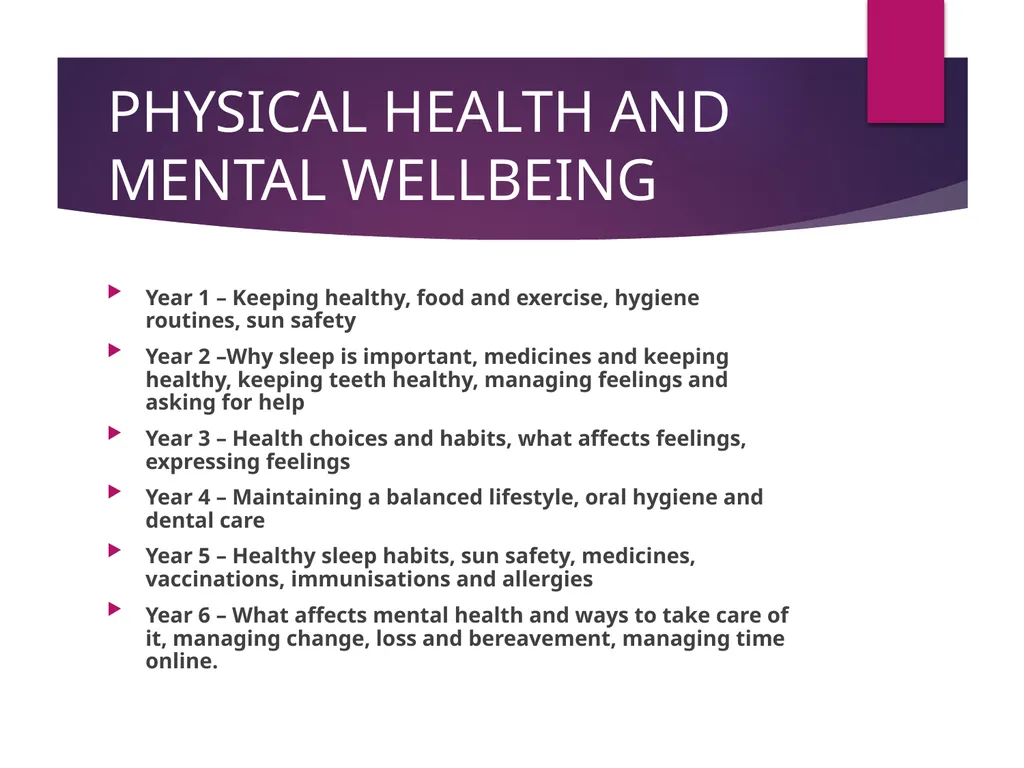
PHYSICAL HEALTH AND MENTAL WELLBEING Year 1 – Keeping healthy, food and exercise, hygiene routines, sun safety
Year 2 –Why sleep is important, medicines and keeping healthy, keeping teeth healthy, managing feelings and asking for help
Year 3 – Health choices and habits, what affects feelings, expressing feelings
Year 4 – Maintaining a balanced lifestyle, oral hygiene and dental care
Year 5 – Healthy sleep habits, sun safety, medicines, vaccinations, immunisations and allergies
Year 6 – What affects mental health and ways to take care of it, managing change, loss and bereavement, managing time online.<br>
23
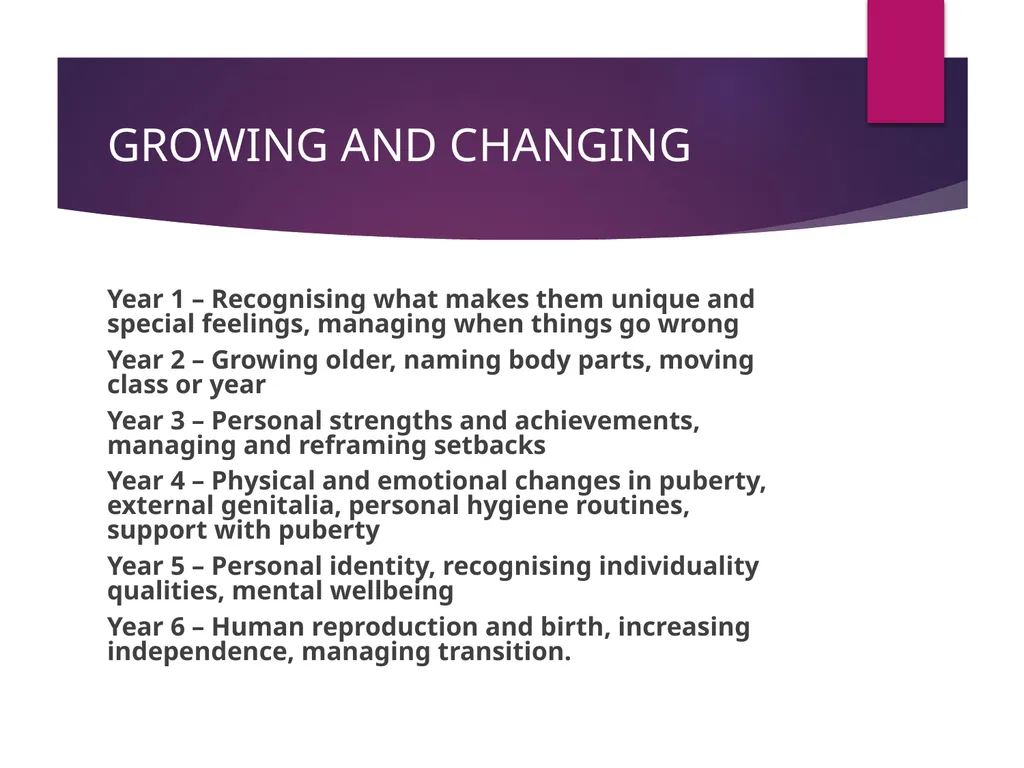
GROWING AND CHANGING Year 1 – Recognising what makes them unique and special feelings, managing when things go wrong
Year 2 – Growing older, naming body parts, moving class or year
Year 3 – Personal strengths and achievements, managing and reframing setbacks
Year 4 – Physical and emotional changes in puberty, external genitalia, personal hygiene routines, support with puberty
Year 5 – Personal identity, recognising individuality qualities, mental wellbeing
Year 6 – Human reproduction and birth, increasing independence, managing transition.<br>
24
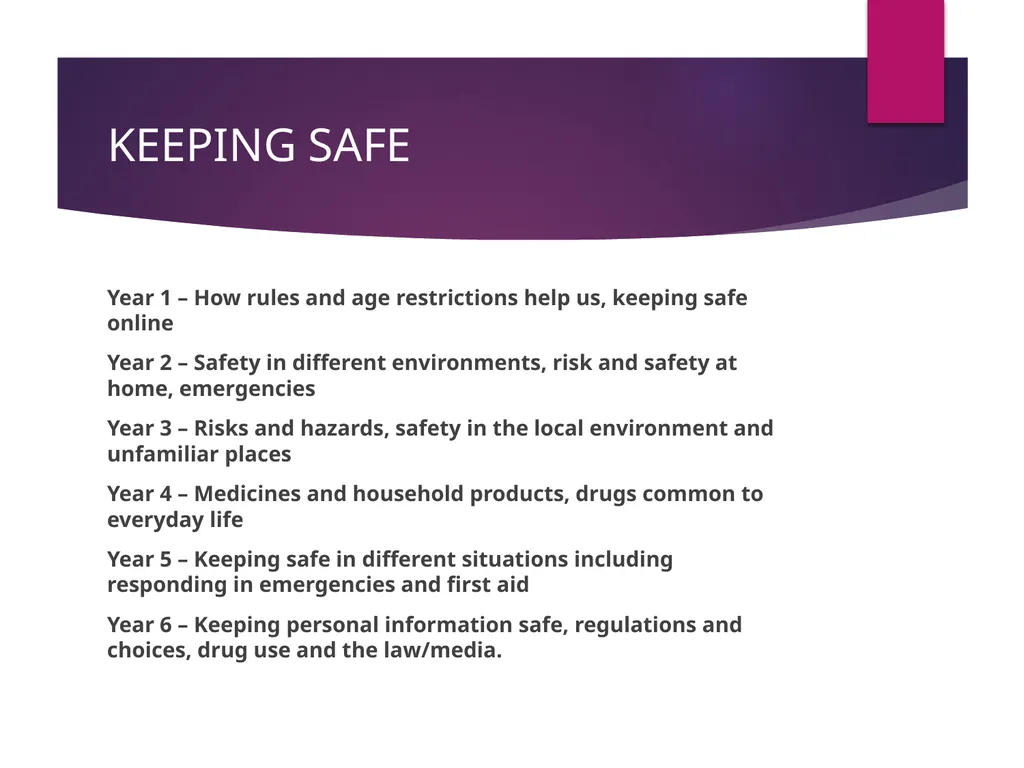
KEEPING SAFE Year 1 – How rules and age restrictions help us, keeping safe online
Year 2 – Safety in different environments, risk and safety at home, emergencies
Year 3 – Risks and hazards, safety in the local environment and unfamiliar places
Year 4 – Medicines and household products, drugs common to everyday life
Year 5 – Keeping safe in different situations including responding in emergencies and first aid
Year 6 – Keeping personal information safe, regulations and choices, drug use and the law/media.<br>
25
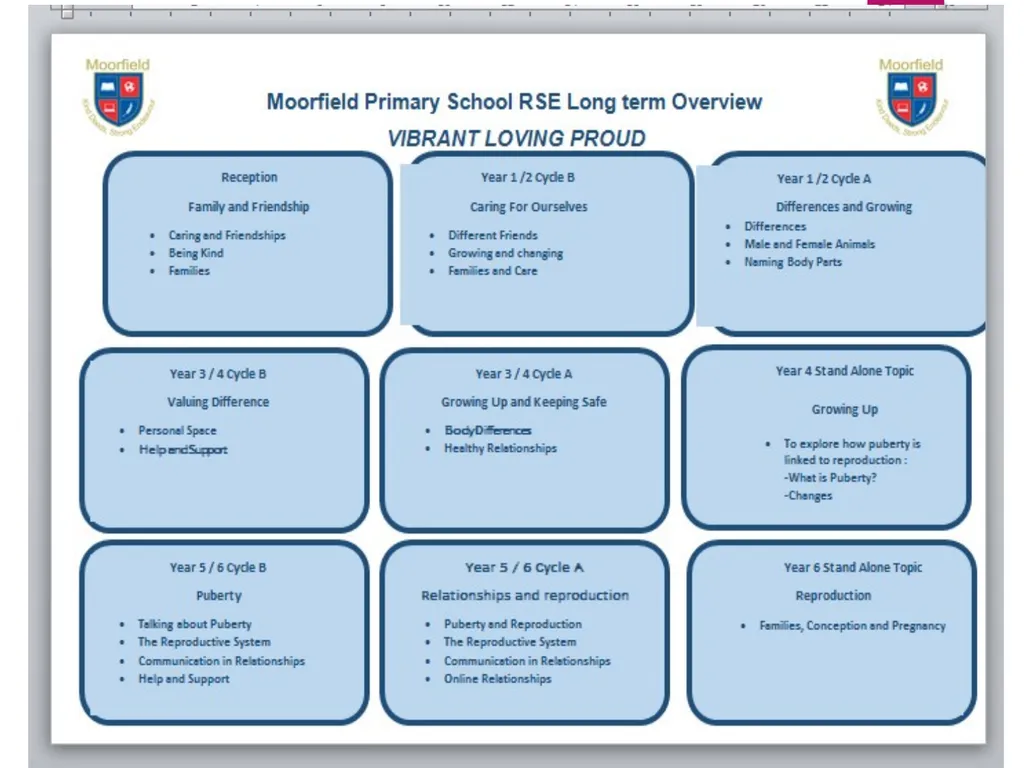
CHRISTOPHER WINTERS MOORFIELD PRIMARY SCHOOL RSE LONG TERM OVERVIEW<br>
26
Year 6
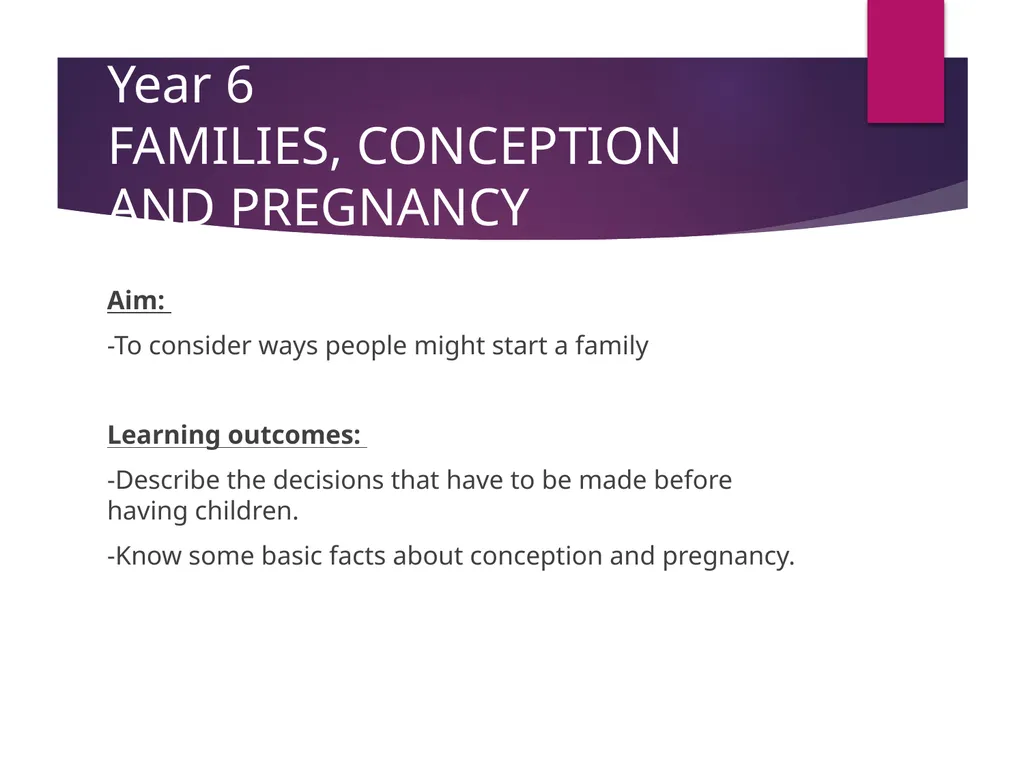
FAMILIES, CONCEPTION AND PREGNANCY Aim:
-To consider ways people might start a family
Learning outcomes:
-Describe the decisions that have to be made before having children.
-Know some basic facts about conception and pregnancy.<br>
-To consider ways people might start a family
Learning outcomes:
-Describe the decisions that have to be made before having children.
-Know some basic facts about conception and pregnancy.<br>
27
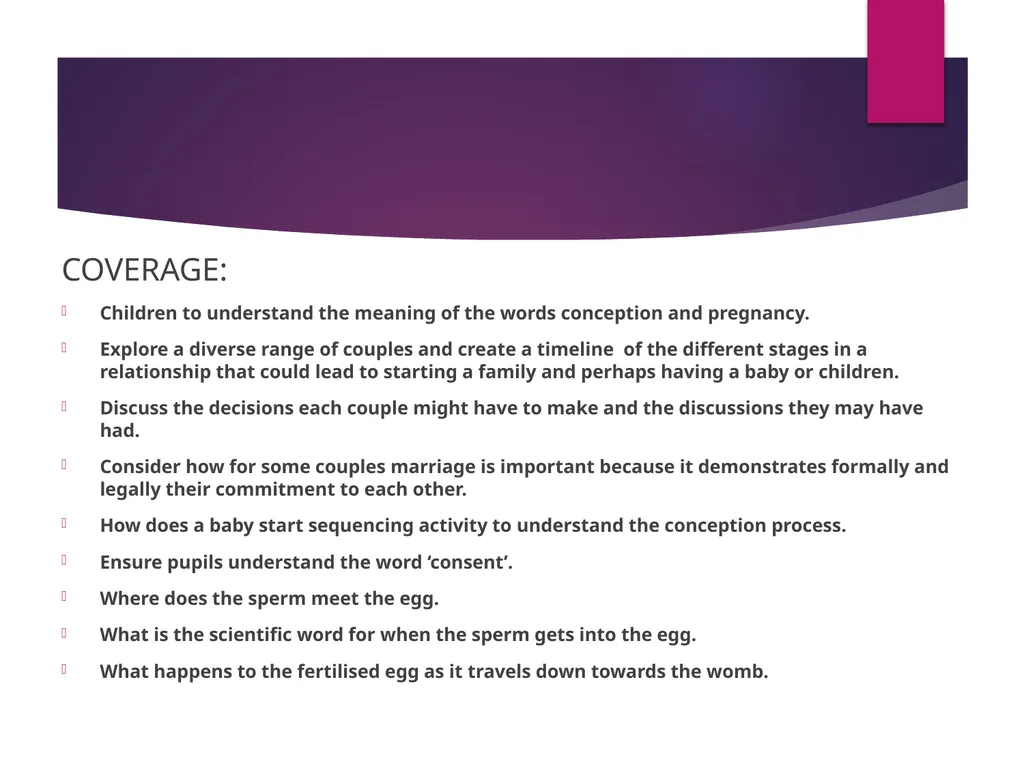
COVERAGE:
Children to understand the meaning of the words conception and pregnancy.
Explore a diverse range of couples and create a timeline of the different stages in a relationship that could lead to starting a family and perhaps having a baby or children.
Discuss the decisions each couple might have to make and the discussions they may have had.
Consider how for some couples marriage is important because it demonstrates formally and legally their commitment to each other.
How does a baby start sequencing activity to understand the conception process.
Ensure pupils understand the word ‘consent’.
Where does the sperm meet the egg.
What is the scientific word for when the sperm gets into the egg.
What happens to the fertilised egg as it travels down towards the womb.<br>
28
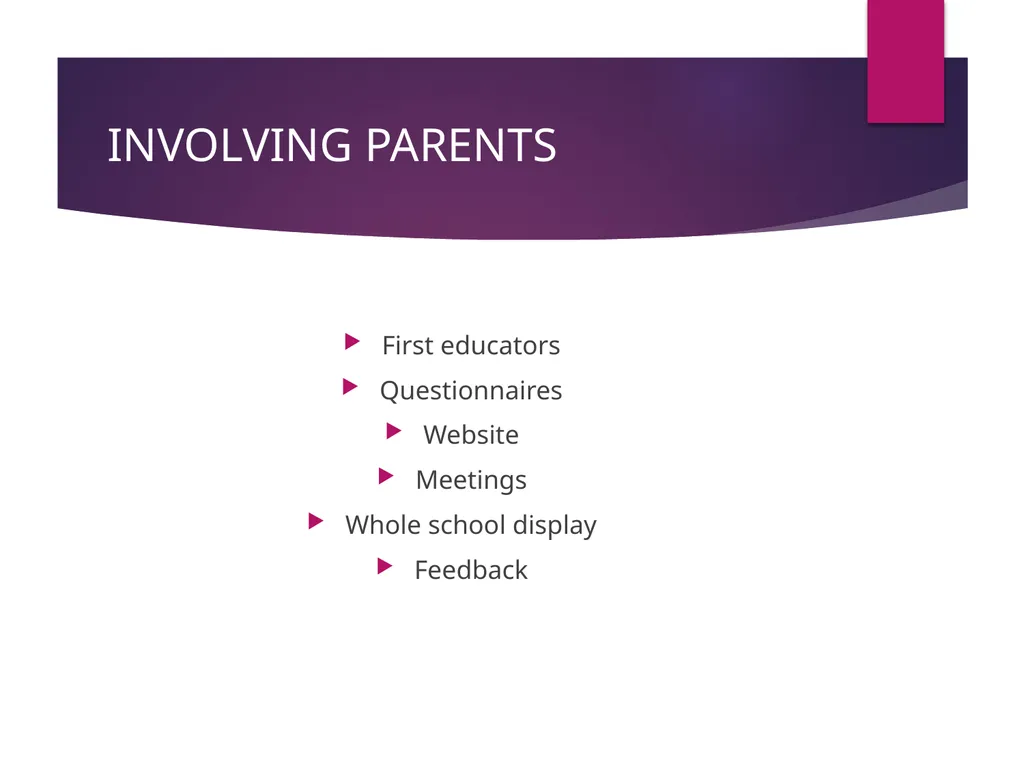
INVOLVING PARENTS First educators
Questionnaires
Website
Meetings
Whole school display
Feedback<br>
Questionnaires
Website
Meetings
Whole school display
Feedback<br>
29
THANK
YOU<br>
YOU<br>