Rosie Reveres Flying Machine Virtual Field Trip Welcome Ms. Cathy and Ms. Erin Rosie Reveres Flying Machine Pre-Test Read Rosie Revere Engineer from space Explore with forces Look at the Engineering Design Process Plan how to build a
"Rosie Revere’s Flying Machine Virtual Field Trip" is the property of its rightful owner. Permission is granted to
download and print the materials on this website for personal, non-commercial use only, and to display it
on your personal computer provided you do not modify the materials and that you retain all copyright
notices contained in the materials. By downloading content from our website, you accept the terms of this
agreement.
Presentation Transcript
01
Rosie Revere’s Flying Machine
Virtual Field Trip<br>
02
Welcome Ms. Cathy and Ms. Erin
Rosie Revere’s Flying Machine
Pre-Test
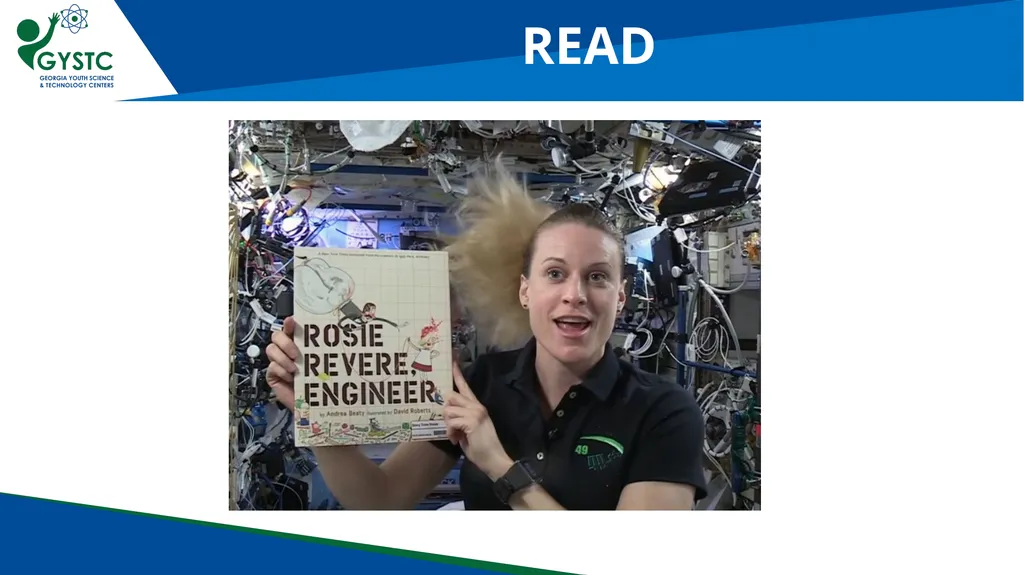
Read “Rosie Revere Engineer” from space
Explore with forces Look at the Engineering Design Process
Plan how to build a straw rocket
Build a straw rocket
Test your straw rocket
Redesign your straw rocket and retest
Discuss a STEM Scientist “Engineer”
Post-Test<br>
03
Pre Test What is an example of a force?
A magnet pulling on a nail
A brother pushing his sister to the ground
A book sitting on a desk
All of the above<br>
04
Pre Test When forces are balanced:
An object moves
An object stays in the same place
An object begins to bounce
An object will at first stay in the same place, and
then eventually begin to move.<br>
05
Pre Test 3. When you do an engineering project:
a) you must use expensive materials in your design
b) You can use things that you have on hand to
represent other materials for your design.
c) It is best to order a kit especially for the idea that
you want to test.
d) Engineers only sketch ideas, not test them, so you
don’t need materials.<br>
06
Pre Test What is the main difference in a scientist and an
Engineer?
Scientists study questions about nature and
engineers design something to solve a problem.
Scientists work with living things and engineers
work with non-living things.
c) Scientists wear lab coats and engineers wear suits
d) Nothing, they are both the same job.<br>
07
Pre Test Have you ever thought about being an engineer?
Yes
No
Maybe<br>
08
READ<br>
09
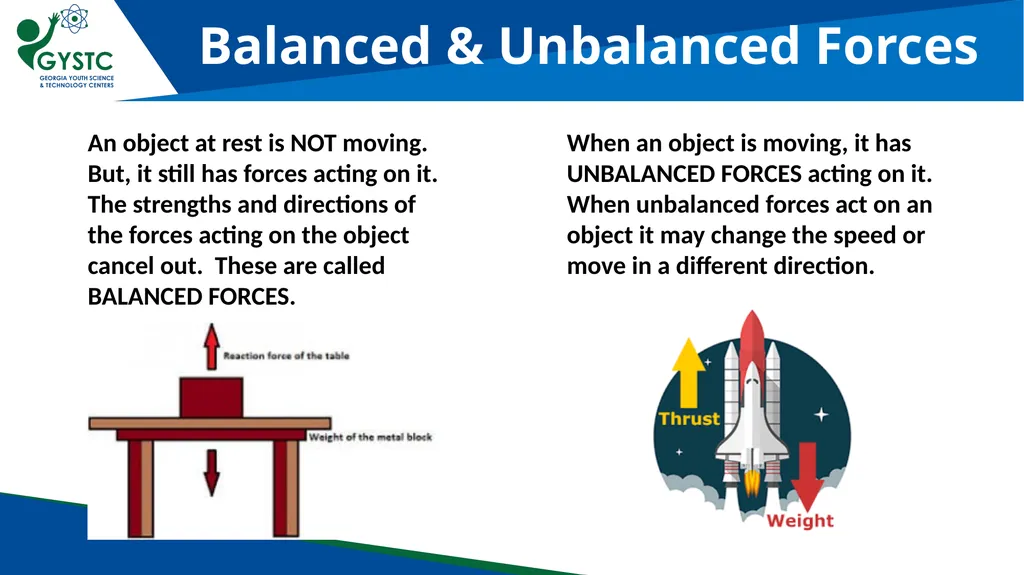
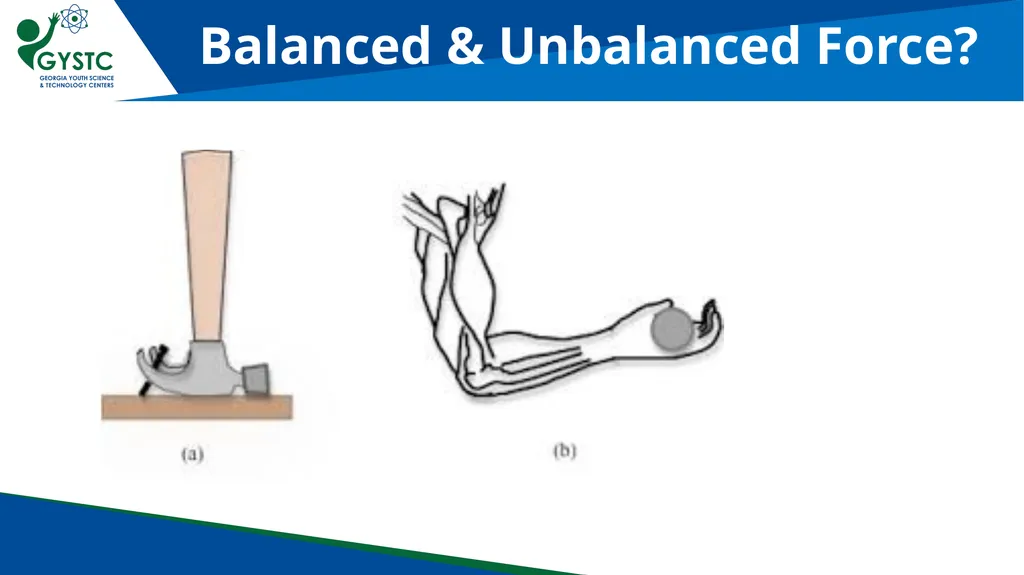
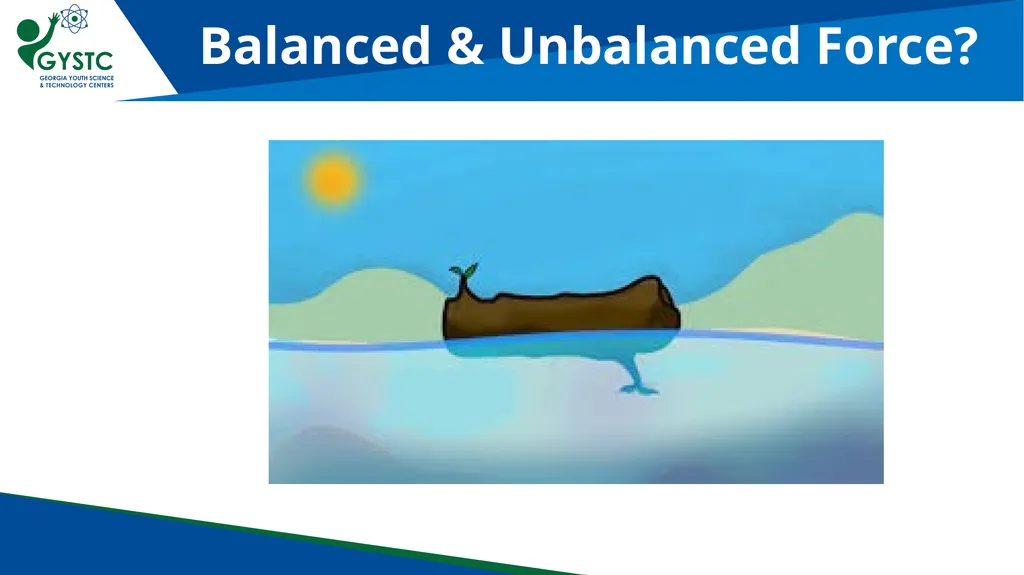
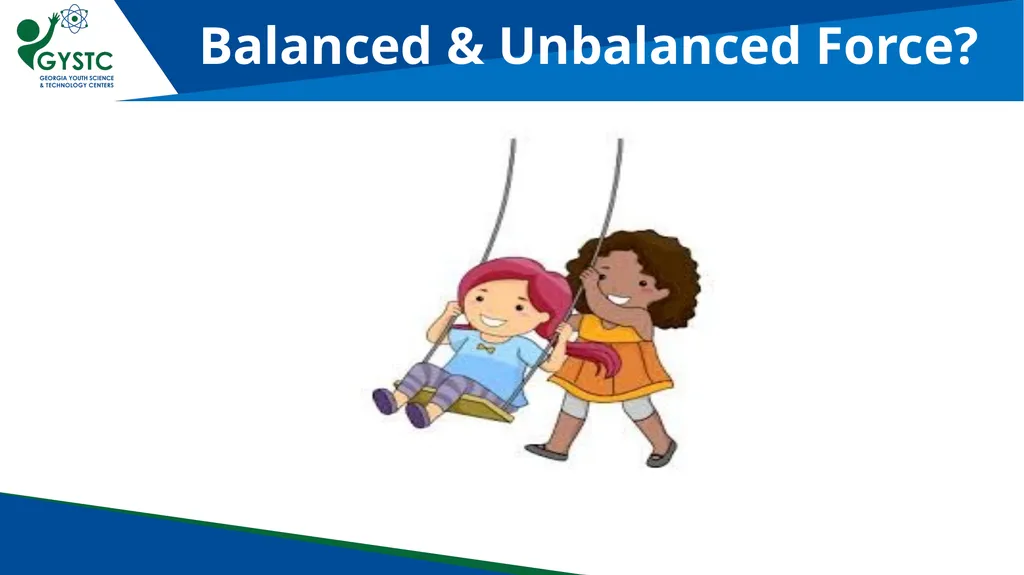
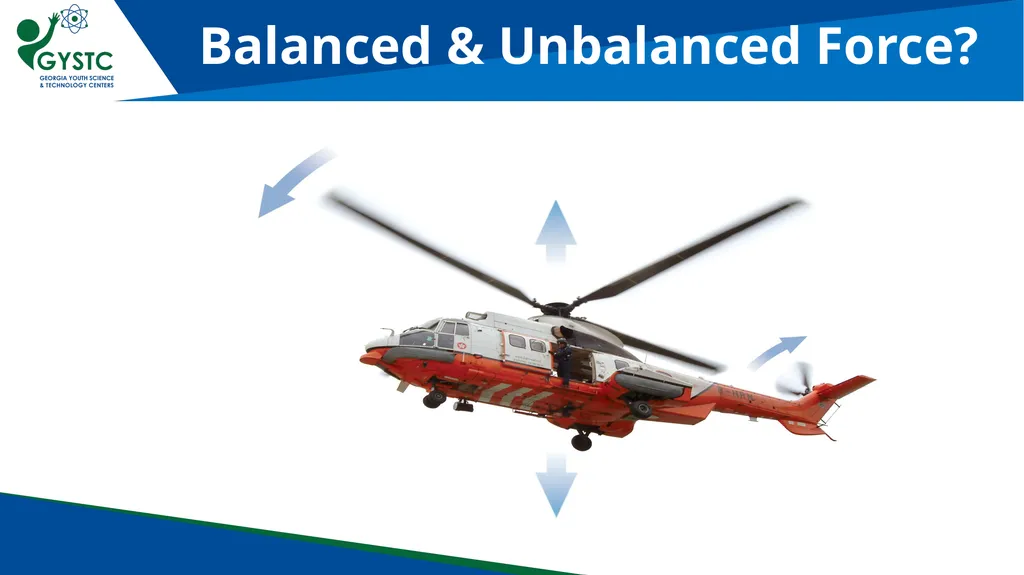
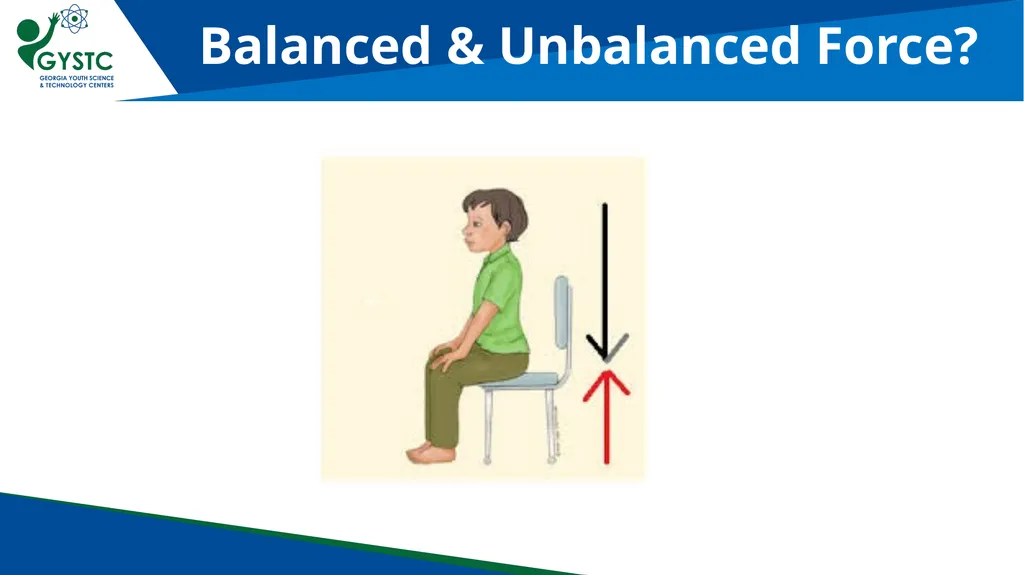
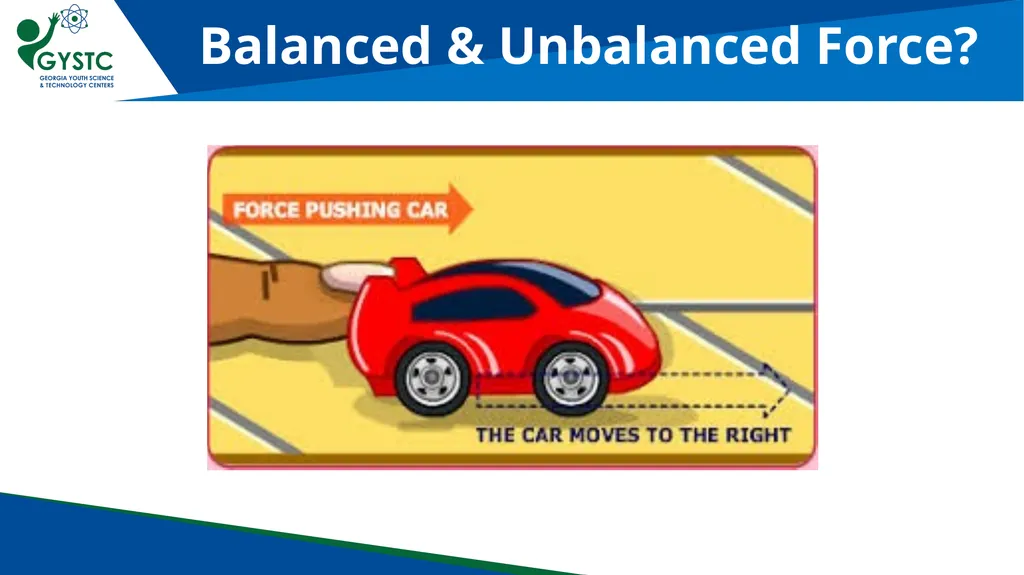
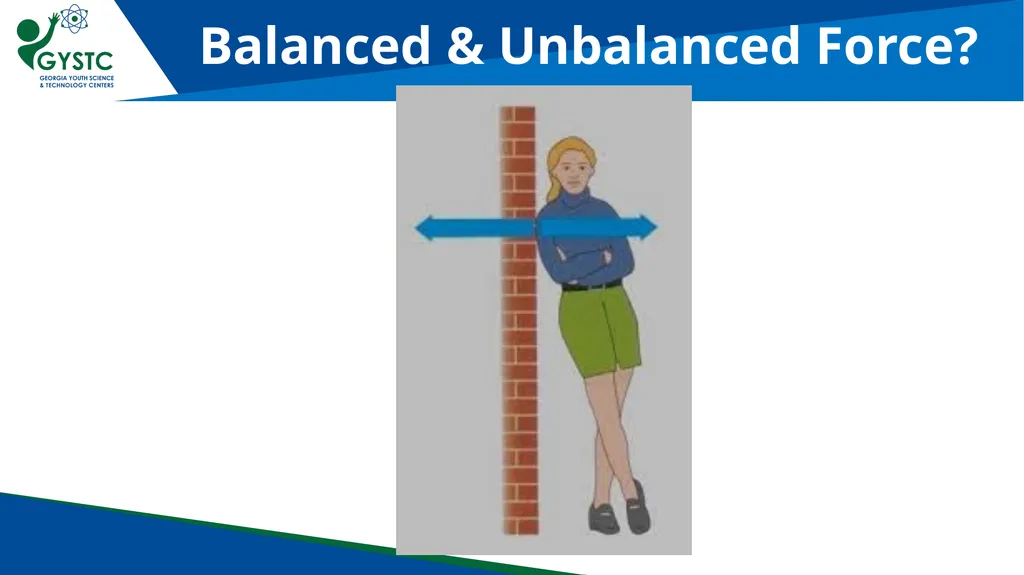
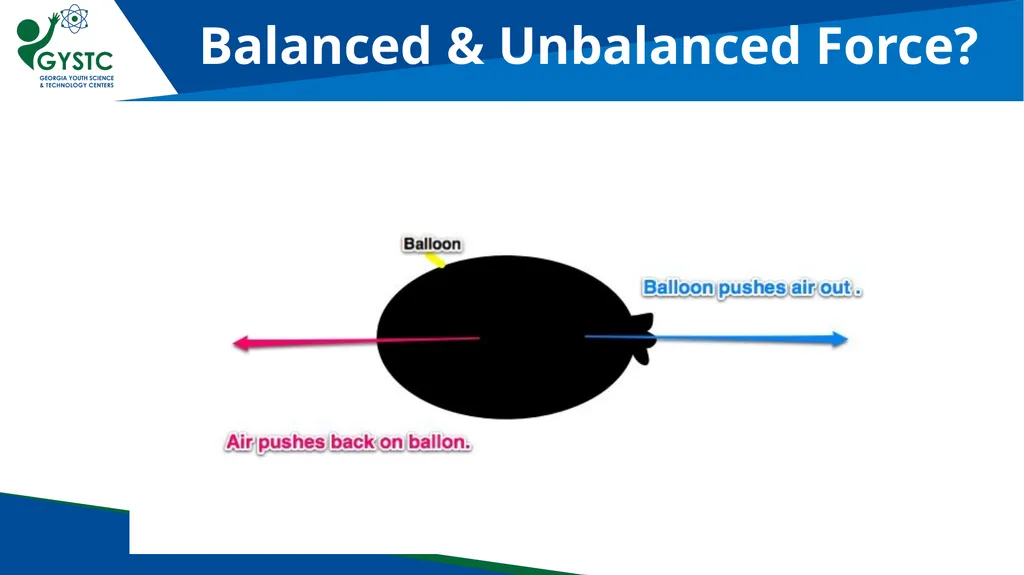
Balanced & Unbalanced Forces An object at rest is NOT moving. But, it still has forces acting on it. The strengths and directions of the forces acting on the object cancel out. These are called BALANCED FORCES. When an object is moving, it has UNBALANCED FORCES acting on it. When unbalanced forces act on an object it may change the speed or move in a different direction.<br>
10
Balanced & Unbalanced Force?<br>
11
Balanced & Unbalanced Force?<br>
12
Balanced & Unbalanced Force?<br>
13
Balanced & Unbalanced Force?<br>
14
Balanced & Unbalanced Force?<br>
15
Balanced & Unbalanced Force?<br>
16
Balanced & Unbalanced Force?<br>
17
Balanced & Unbalanced Force?<br>
18
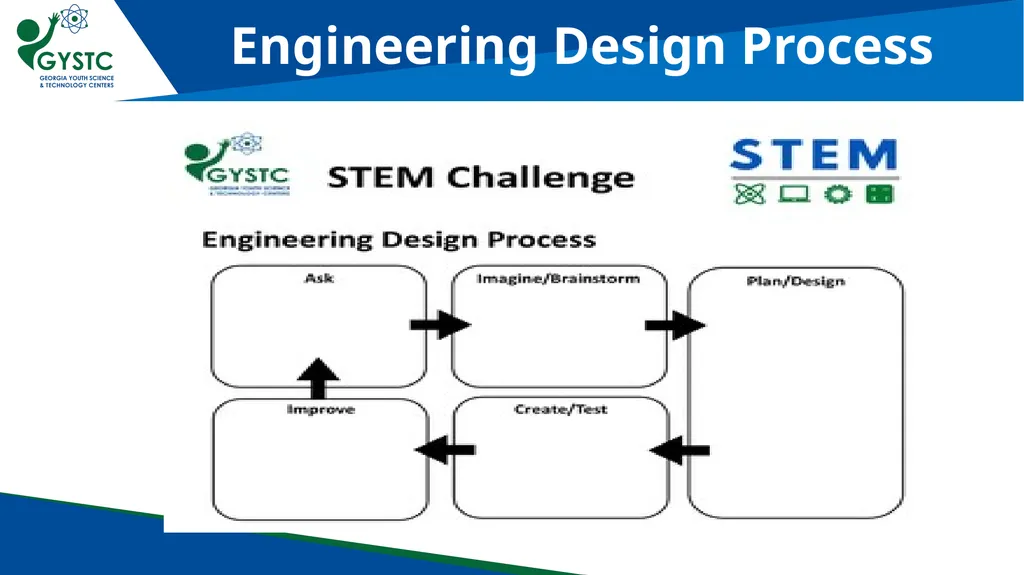
Engineering Design Process<br>
19
Ask Your challenge is to design a flying machine for Rosie
Revere using the materials provided. Your flying machine
should be able to fly down the zip line. Materials:
Balloon
Straw
Tape
String for zipline<br>
20
Imagine/ Brainstorm If the balloon acts as an engine of a rocket, which way
will the balloon go if air pushes out the open end of it?
Where would you need to tape your balloon (engine)
to your straw (rocket) for it to go the farthest?
What is your vision of your flying machine?<br>
21
Plan/ Design/Create/Test Let’s begin building our flying machine
and testing our flying machines.<br>
22
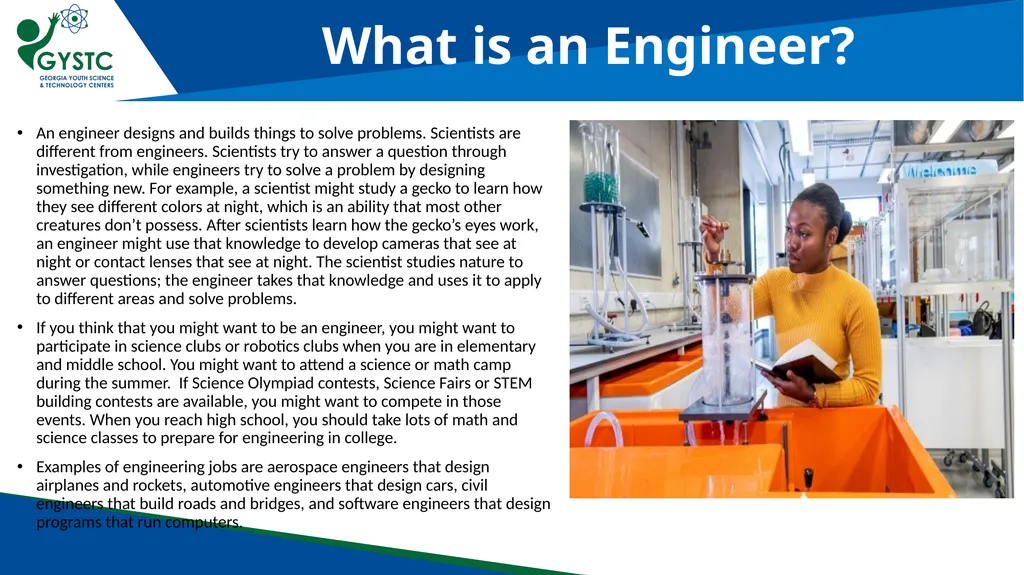
What is an Engineer? An engineer designs and builds things to solve problems. Scientists are different from engineers. Scientists try to answer a question through investigation, while engineers try to solve a problem by designing something new. For example, a scientist might study a gecko to learn how they see different colors at night, which is an ability that most other creatures don’t possess. After scientists learn how the gecko’s eyes work, an engineer might use that knowledge to develop cameras that see at night or contact lenses that see at night. The scientist studies nature to answer questions; the engineer takes that knowledge and uses it to apply to different areas and solve problems.
If you think that you might want to be an engineer, you might want to participate in science clubs or robotics clubs when you are in elementary and middle school. You might want to attend a science or math camp during the summer. If Science Olympiad contests, Science Fairs or STEM building contests are available, you might want to compete in those events. When you reach high school, you should take lots of math and science classes to prepare for engineering in college.
Examples of engineering jobs are aerospace engineers that design airplanes and rockets, automotive engineers that design cars, civil engineers that build roads and bridges, and software engineers that design programs that run computers.<br>
23
Post Test 1. What is an example of a force?
a) A magnet pulling on a nail
b) A brother pushing his sister to the ground
c) A book sitting on a desk
d) All of the above<br>
24
Post Test 2. When two forces are balanced:
An object moves
An object stays in the same place
An object begins to bounce
An object will at first stay in the same place, and
then eventually begin to move<br>
25
Post Test When you do an engineering project:
You must use expensive materials in your design
You can use things that you have on hand to represent
other materials for your design
c) It is best to order a kit especially for the idea that you
want to test
d) Engineers only sketch ideas, not test them, so you
don’t need materials.<br>
26
Post Test What is the MAIN difference in a scientist and
an engineer?
Scientists study questions about nature and engineers
design something to solve a problem
b) Scientists work with living things and engineers
work with non-living things.
c) Scientists wear lab coats and engineers wear suits
d) Nothing, they are both titles for the same job.<br>
27
Post Test Now that you know what an engineer does, would
you consider being an engineer?
Yes
No
Maybe<br>