Shooting the Poop: More than Good Housekeeping? by Kylee Grenis, Laurel C. Cepero, and Mayra C. Vidal Department of Biological Sciences University of Denver, Denver, CO NATIONAL CENTER FOR CASE STUDY TEACHING IN SCIENCE Perils of
"Shooting the Poop: More than Good Housekeeping? by" is the property of its rightful owner. Permission is granted to
download and print the materials on this website for personal, non-commercial use only, and to display it
on your personal computer provided you do not modify the materials and that you retain all copyright
notices contained in the materials. By downloading content from our website, you accept the terms of this
agreement.
Presentation Transcript
01
Shooting the Poop: More than Good Housekeeping? by
Kylee Grenis, Laurel C. Cepero, and Mayra C. Vidal
Department of Biological Sciences
University of Denver, Denver, CO NATIONAL CENTER FOR CASE STUDY TEACHING IN SCIENCE<br>
02
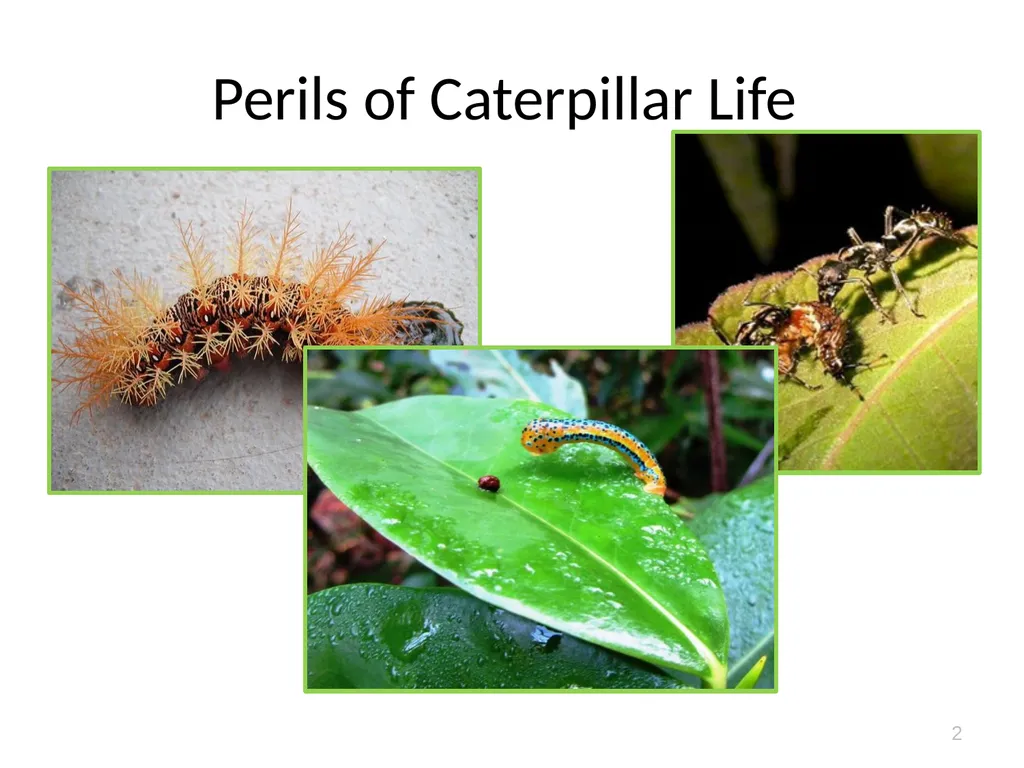
Perils of Caterpillar Life 2<br>
03
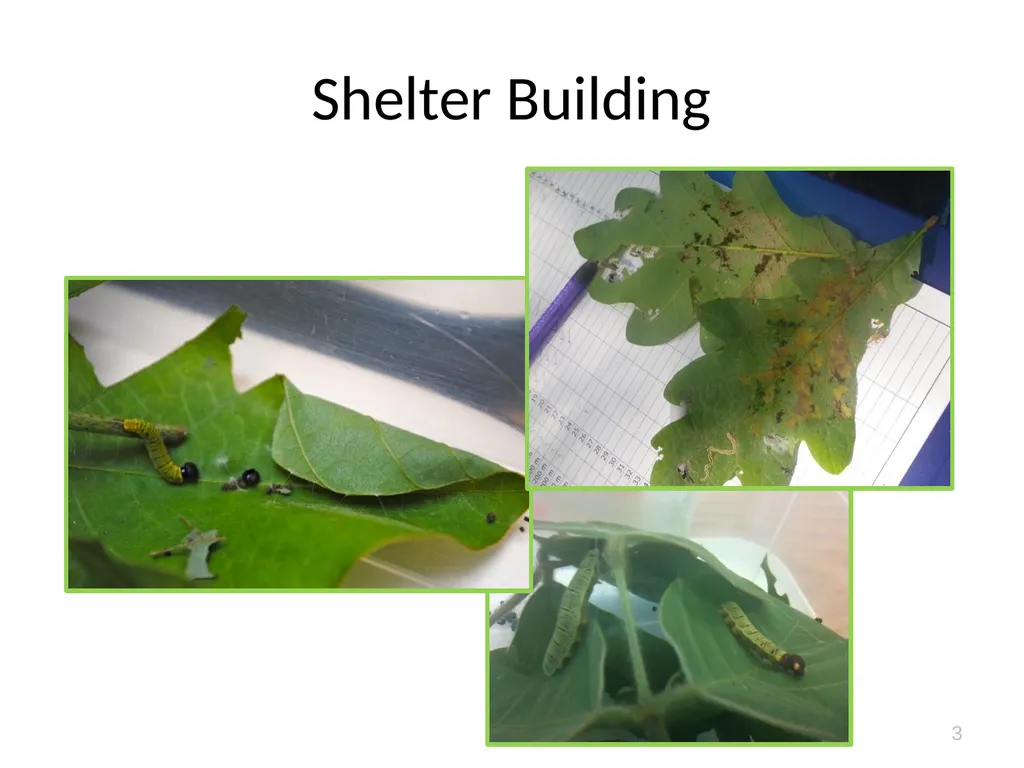
Shelter Building 3<br>
04
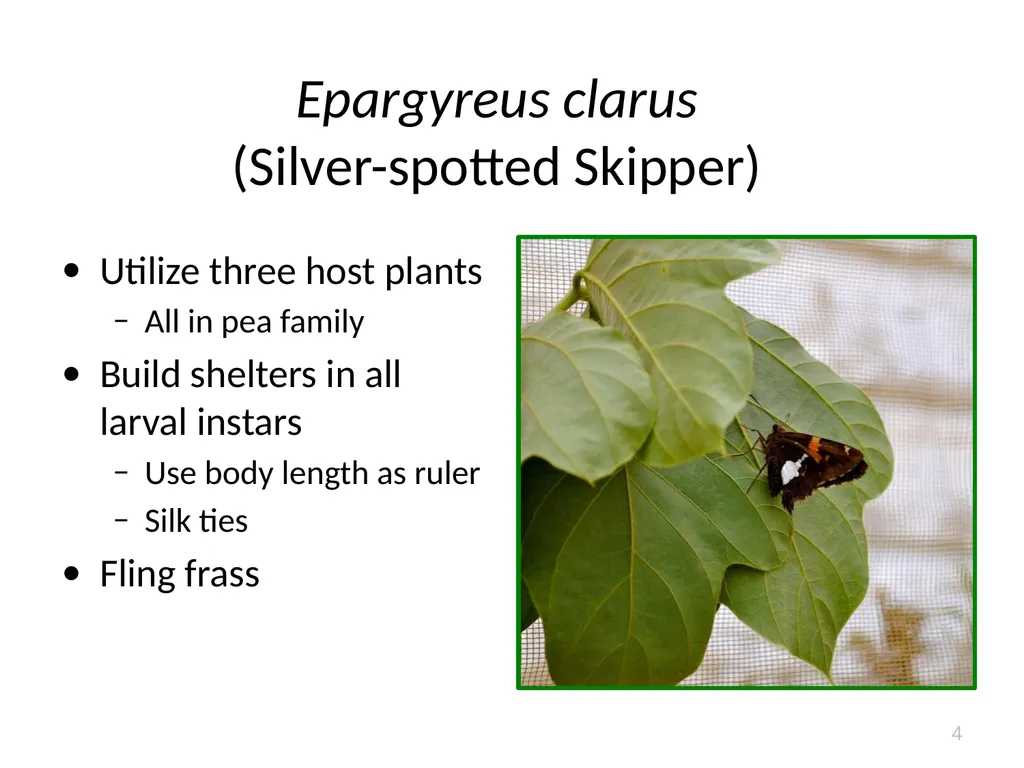
Epargyreus clarus (Silver-spotted Skipper) Utilize three host plants
All in pea family
Build shelters in all larval instars
Use body length as ruler
Silk ties
Fling frass 4<br>
05
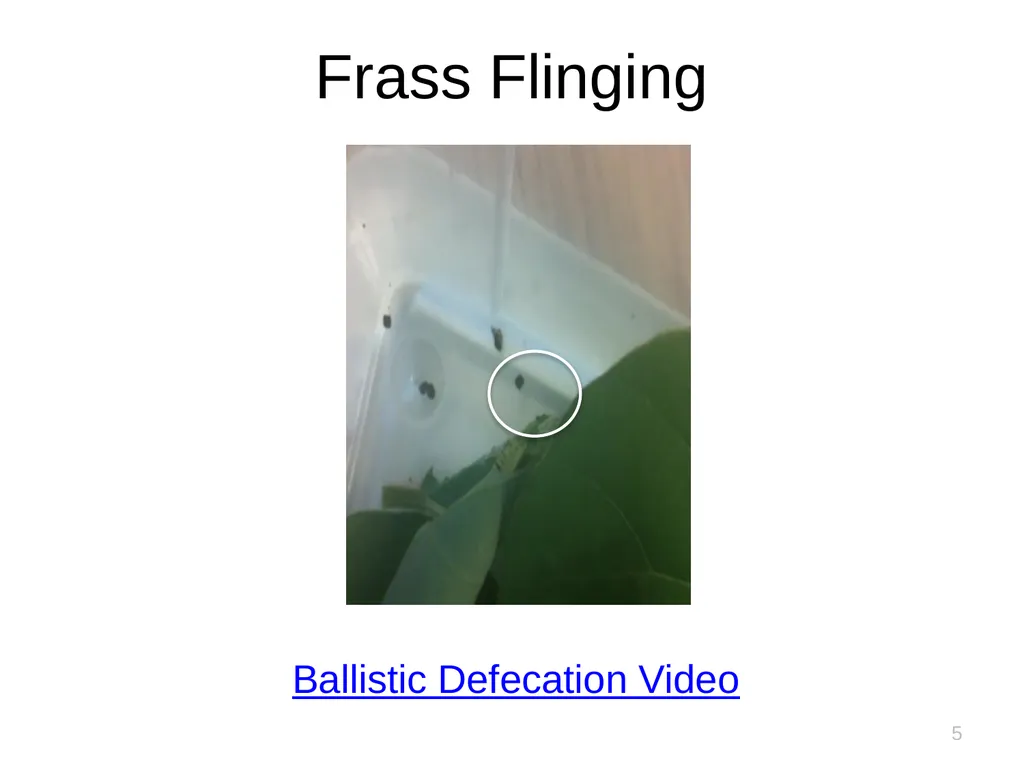
Frass Flinging Ballistic Defecation Video 5<br>
06
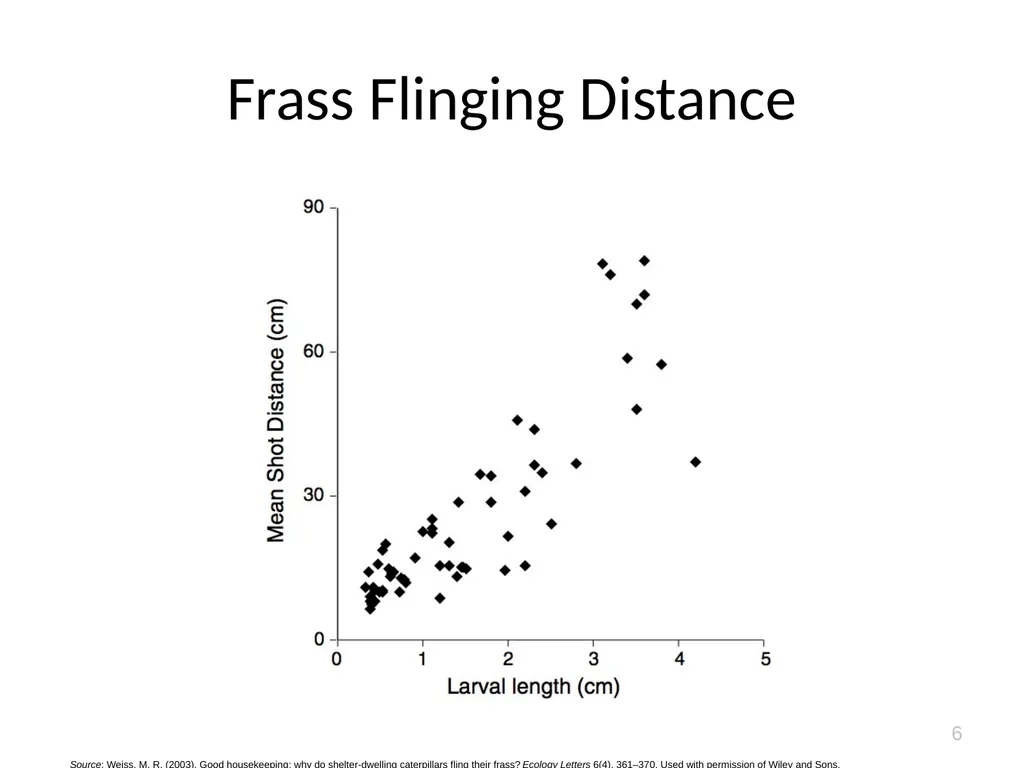
Frass Flinging Distance 6 Source: Weiss, M. R. (2003). Good housekeeping: why do shelter-dwelling caterpillars fling their frass? Ecology Letters 6(4), 361–370. Used with permission of Wiley and Sons.<br>
07
Why do caterpillars fling their frass? 1. Come up with an adaptive hypothesis to explain this behavior
2. How would you test this hypothesis? 7<br>
08
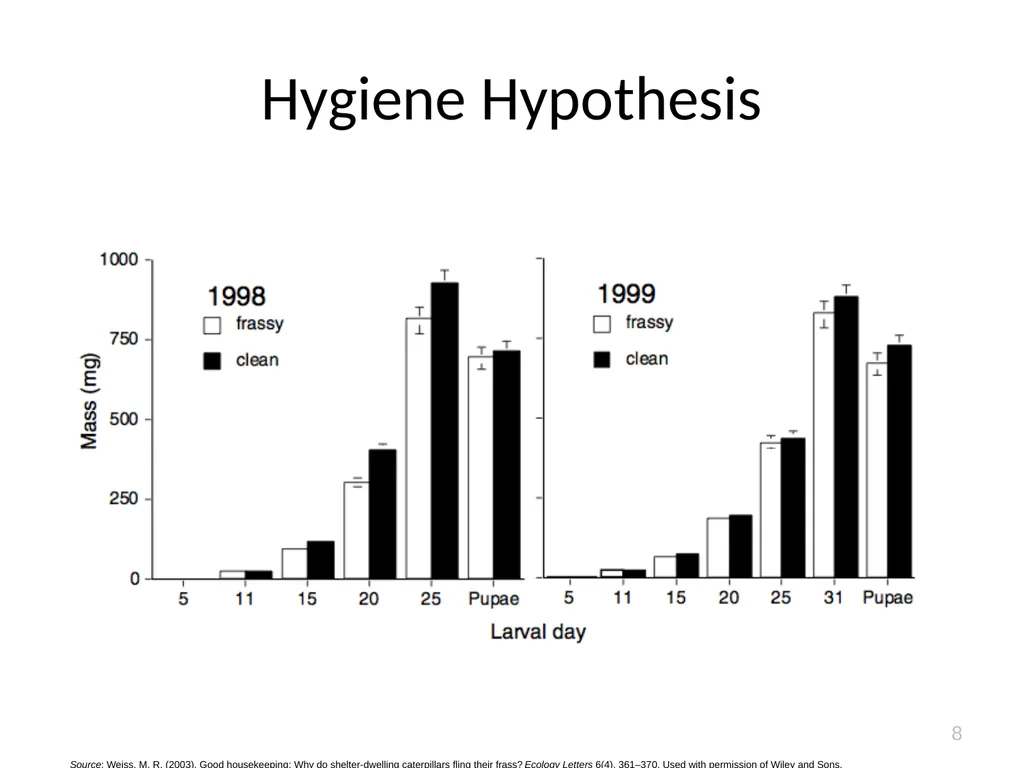
Hygiene Hypothesis 8 Source: Weiss, M. R. (2003). Good housekeeping: Why do shelter-dwelling caterpillars fling their frass? Ecology Letters 6(4), 361–370. Used with permission of Wiley and Sons.<br>
09
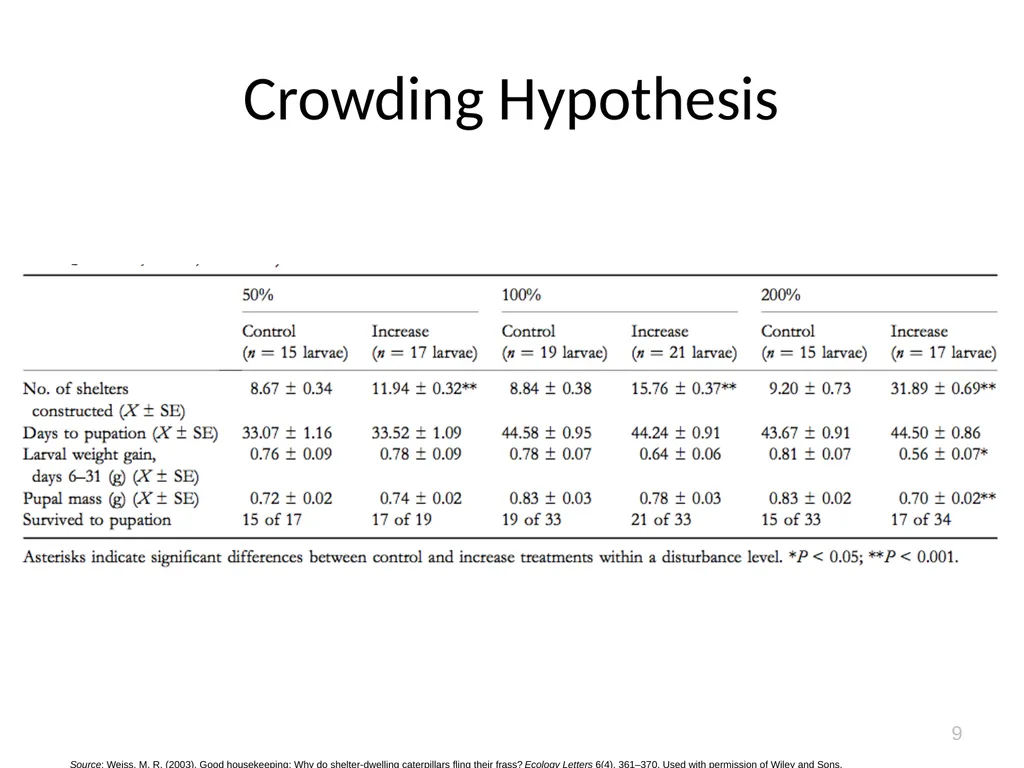
Crowding Hypothesis 9 Source: Weiss, M. R. (2003). Good housekeeping: Why do shelter-dwelling caterpillars fling their frass? Ecology Letters 6(4), 361–370. Used with permission of Wiley and Sons.<br>
10
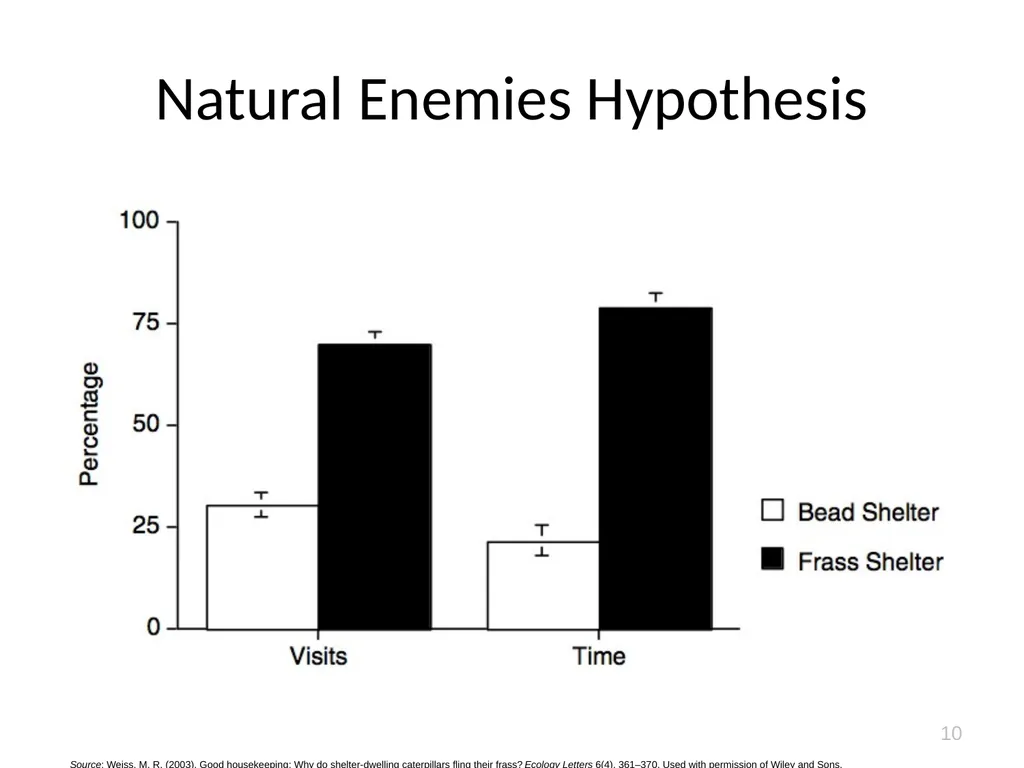
Natural Enemies Hypothesis 10 Source: Weiss, M. R. (2003). Good housekeeping: Why do shelter-dwelling caterpillars fling their frass? Ecology Letters 6(4), 361–370. Used with permission of Wiley and Sons.<br>
11
Meet the Scientist Dr. Martha R. Weiss My research focuses on the role of behavior, by both plants and insects, in mediating interactions among the two groups of organisms. The sensory and behavioral attributes of insects, including vision, taste, smell, and touch, as well as a capacity to learn and remember, ultimately shape the insects' ability to interact with and exert selection on plants and on other insects. Similarly, the active behavior of plants allows them to take advantage of insects' sensory and behavioral capabilities. 11<br>
12
Image Credits Slide 1 Description: Caterpillar cartoon. Credit: Alice Vacca Clearance: Licensed from Fotolia, ID#79041625.
Slide 2 (left) Description: Photo of dead caterpillar. Credit: Teles Source: Wikimedia Commons, https://commons.wikimedia.org/wiki/File:Dead_caterpillar.JPG Clearance: Public domain.
Slide 2 (right) Description: Photo of ants and caterpillar. Credit: Paulo Oliveira Clearance: Used with permission.
Slide 2 (center) Description: Photo of caterpillar on wet leaf. Source: Wikimedia Commons, https://commons.wikimedia.org/wiki/File:Dysphania_percota_caterpillar.jpg Credit: AshLin Clearance: Used in accordance with CC BY-SA 3.0.
Slide 3 (left) Description: Photo of shelter building silver spotted skipper. Credit: Laurel C. Cepero, case author.
Slide 3 (right, top) Description: Photo of an opened oak leaf shelter. Credit: Kylee Grenis, case author. 12 Slide 3 (right, bottom) Description: Photo of shelter building silver spotted skipper. Credit: Laurel C. Cepero, case author.
Slide 4 Description: Photo of Epargyraeus clarus adult Credit: Laurel C. Cepero, case author.
Slide 5 Description: Image capture from video of frass flinging. Credit: Kylee Grenis, case author. Source: https://youtu.be/hIwhUwXk4yo
Slides 6, 8, 9 10 Description: Figures and tables from Weiss paper. Credit: M.R. Weiss. Source: Good housekeeping: Why do shelter-dwelling caterpillars fling their frass? Ecology Letters 6(4), 361–370. Clearance: Used with permission of Wiley and Sons.
Slide 11 Description: Photo of Dr. Weiss. Source: http://www.weisslab.org/people.html Clearance: Used with permission.<br>