Special Olympics Lions Clubs International Opening Eyes Introduces: Eye-Connect: Looking into our Eyes Series 1 Nutrition and Eye Health How Foods You Eat Affect Eye Health People may believe that decreasing eyesight is a natural result of
"Special Olympics Lions Clubs International Opening" is the property of its rightful owner. Permission is granted to
download and print the materials on this website for personal, non-commercial use only, and to display it
on your personal computer provided you do not modify the materials and that you retain all copyright
notices contained in the materials. By downloading content from our website, you accept the terms of this
agreement.
Presentation Transcript
01
Special Olympics Lions Clubs International Opening Eyes Introduces: Eye-Connect: Looking into our Eyes Series 1<br>
02
Nutrition and Eye Health<br>
03
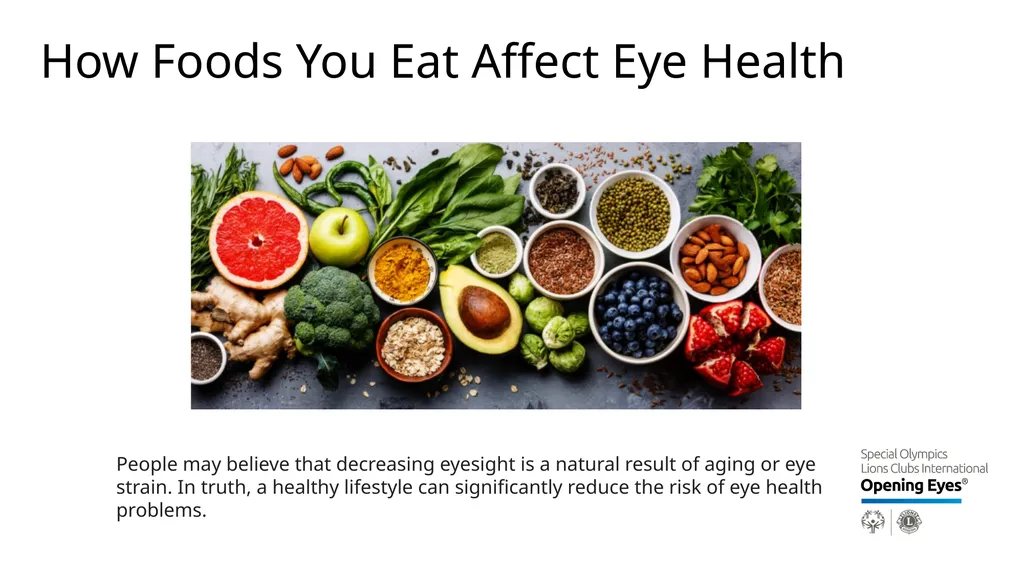
How Foods You Eat Affect Eye Health People may believe that decreasing eyesight is a natural result of aging or eye strain. In truth, a healthy lifestyle can significantly reduce the risk of eye health problems.<br>
04
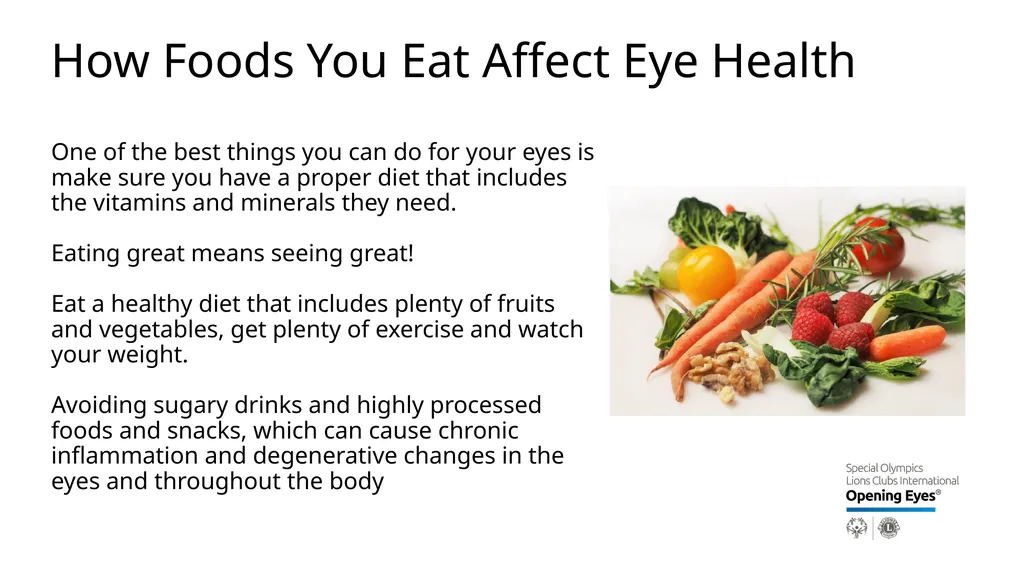
One of the best things you can do for your eyes is make sure you have a proper diet that includes the vitamins and minerals they need. Eating great means seeing great! Eat a healthy diet that includes plenty of fruits and vegetables, get plenty of exercise and watch your weight. Avoiding sugary drinks and highly processed foods and snacks, which can cause chronic inflammation and degenerative changes in the eyes and throughout the body How Foods You Eat Affect Eye Health<br>
05
Vitamin A plays an important role in vision It helps protect the surface of the eye which help prevent eye infections.
We’ve all heard how carrots help eyesight because they have Vitamin A. It’s true!
It helps reduce the progression of macular degeneration, a cause of blindness.
Vitamin A is found in sweet potatoes, spinach, and kale.
It’s in also in eggs, beef, milk, and cheese. Vitamin A plays a crucial role in vision by maintaining a clear cornea, which is the outside covering of your eye.
This vitamin is also a component of rhodopsin, a protein in your eyes that allows you to see in low light conditions (1).
Vitamin A deficiency is rare in developed countries, but if unaddressed can lead to a serious condition called xerophthalmia.
Xerophthalmia is a progressive eye disease which begins with night blindness. If vitamin A deficiency continues, your tear ducts and eyes can dry out. Eventually, your cornea softens, resulting in irreversible blindness (1, 2).
Vitamin A may also help protect against other eye afflictions. Some studies suggest that diets high in vitamin A may be associated with a reduced risk of cataracts and age-related macular degeneration (AMD) (3Trusted Source, 4Trusted Source, 5Trusted Source, 6Trusted Source).
For general eye health, vitamin-A-rich foods are recommended over supplements. Sweet potatoes are an excellent source, as are leafy green vegetables, pumpkins and bell peppers (1).
Summary Severe
vitamin A deficiency can lead to xerophthalmia, a serious condition that can
result in blindness. In some studies, high amounts of vitamin A intake were
associated with a reduced risk of cataracts and age-related macular
degeneration.
2<br>
06
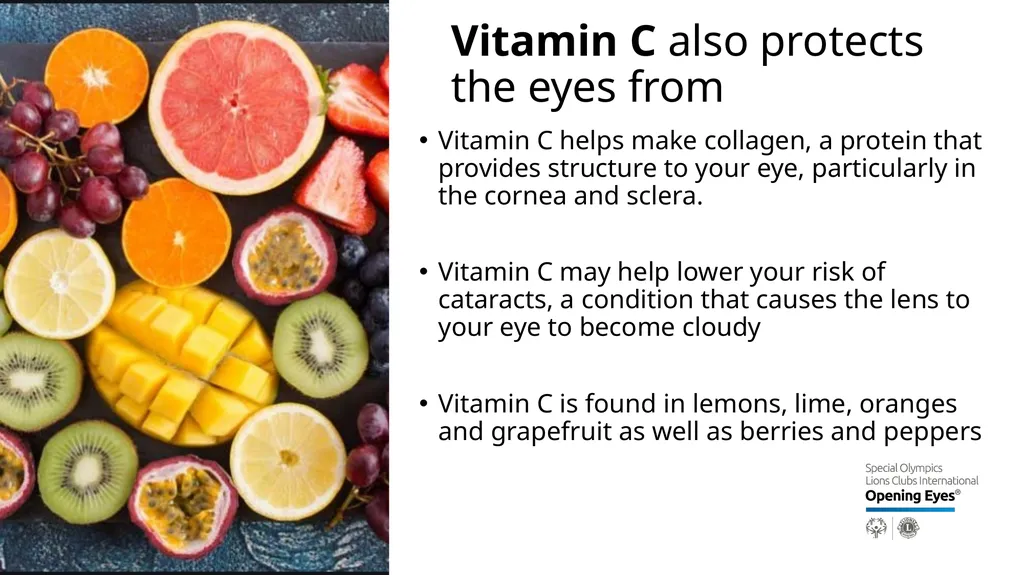
Vitamin C helps make collagen, a protein that provides structure to your eye, particularly in the cornea and sclera.
Vitamin C may help lower your risk of cataracts, a condition that causes the lens to your eye to become cloudy
Vitamin C is found in lemons, lime, oranges and grapefruit as well as berries and peppers Vitamin C also protects the eyes from<br>
07
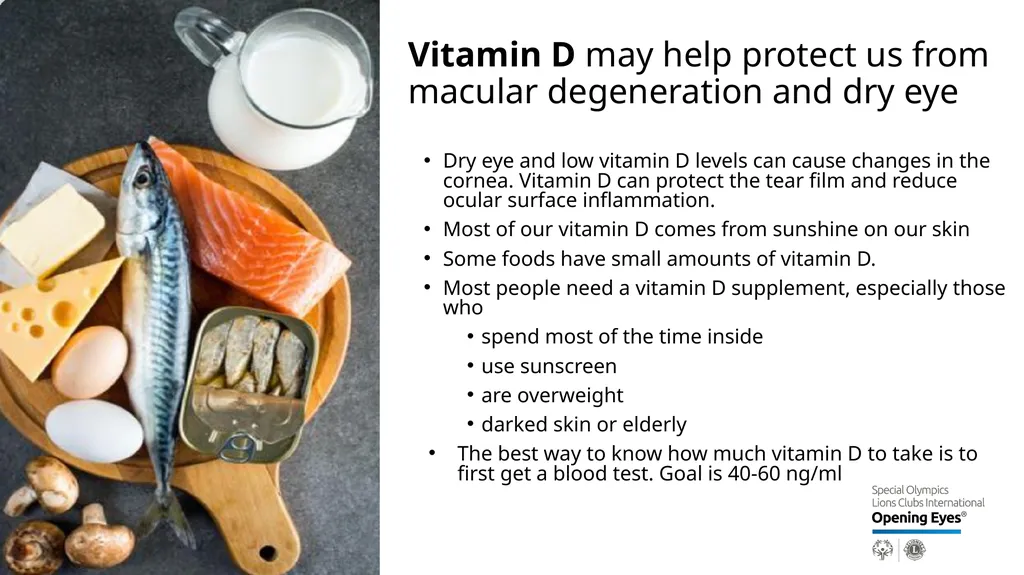
Dry eye and low vitamin D levels can cause changes in the cornea. Vitamin D can protect the tear film and reduce ocular surface inflammation.
Most of our vitamin D comes from sunshine on our skin
Some foods have small amounts of vitamin D.
Most people need a vitamin D supplement, especially those who
spend most of the time inside
use sunscreen
are overweight
darked skin or elderly
The best way to know how much vitamin D to take is to first get a blood test. Goal is 40-60 ng/ml Vitamin D may help protect us from macular degeneration and dry eye<br>
08
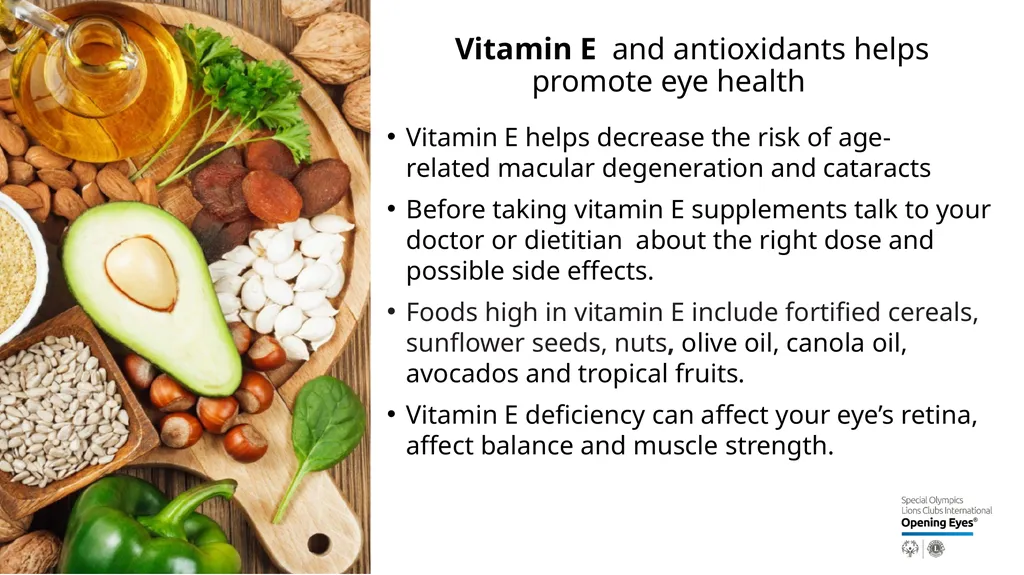
Vitamin E helps decrease the risk of age-related macular degeneration and cataracts
Before taking vitamin E supplements talk to your doctor or dietitian about the right dose and possible side effects.
Foods high in vitamin E include fortified cereals, sunflower seeds, nuts, olive oil, canola oil, avocados and tropical fruits.
Vitamin E deficiency can affect your eye’s retina, affect balance and muscle strength. Vitamin E and antioxidants helps promote eye health<br>
09
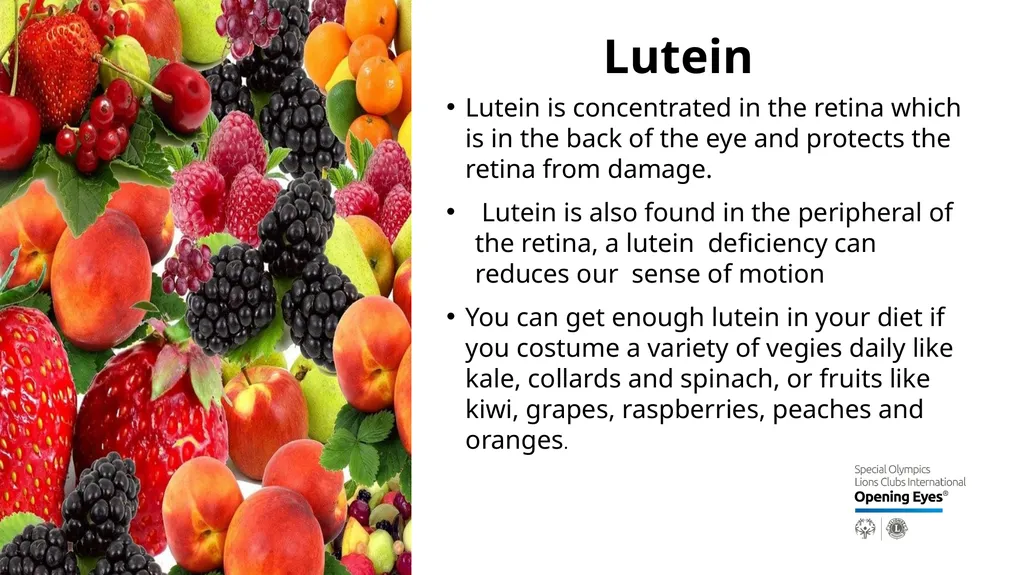
Lutein Lutein is concentrated in the retina which is in the back of the eye and protects the retina from damage.
Lutein is also found in the peripheral of the retina, a lutein deficiency can reduces our sense of motion
You can get enough lutein in your diet if you costume a variety of vegies daily like kale, collards and spinach, or fruits like kiwi, grapes, raspberries, peaches and oranges.<br>
10
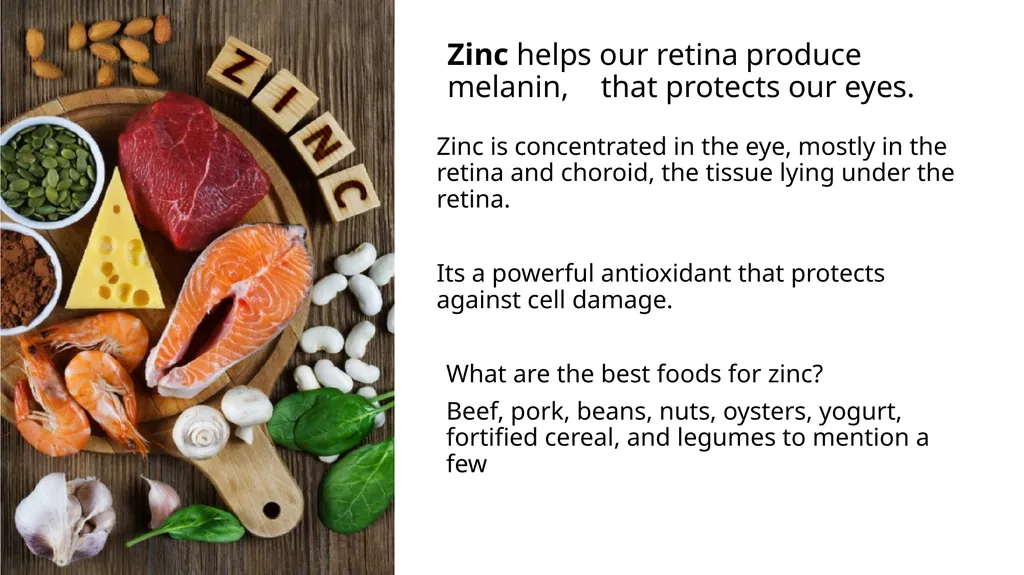
Zinc is concentrated in the eye, mostly in the retina and choroid, the tissue lying under the retina.
Its a powerful antioxidant that protects against cell damage.
What are the best foods for zinc?
Beef, pork, beans, nuts, oysters, yogurt, fortified cereal, and legumes to mention a few Zinc helps our retina produce melanin, that protects our eyes.<br>
11
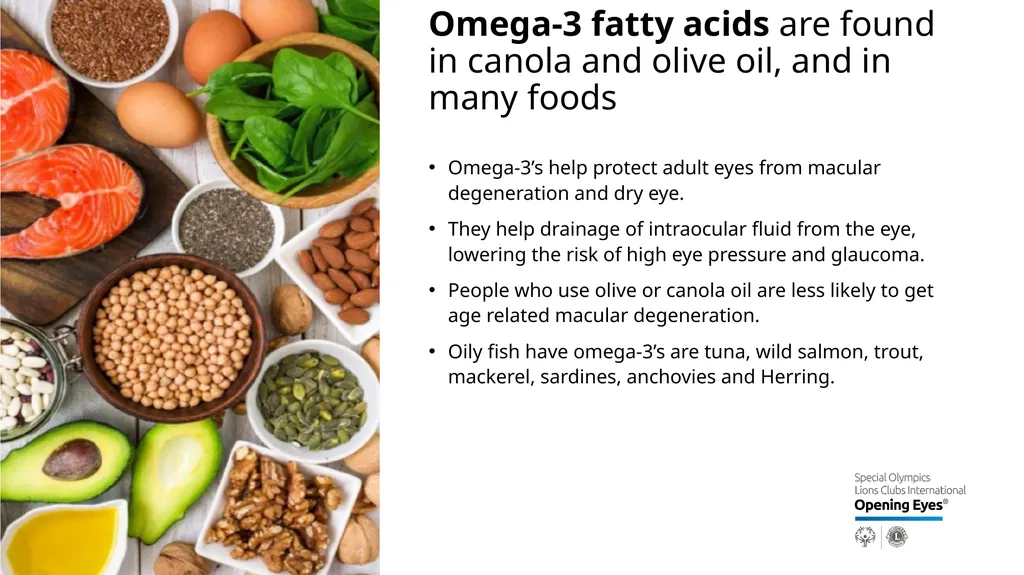
Omega-3 fatty acids are found in canola and olive oil, and in many foods Omega-3’s help protect adult eyes from macular degeneration and dry eye.
They help drainage of intraocular fluid from the eye, lowering the risk of high eye pressure and glaucoma.
People who use olive or canola oil are less likely to get age related macular degeneration.
Oily fish have omega-3’s are tuna, wild salmon, trout, mackerel, sardines, anchovies and Herring.<br>
12
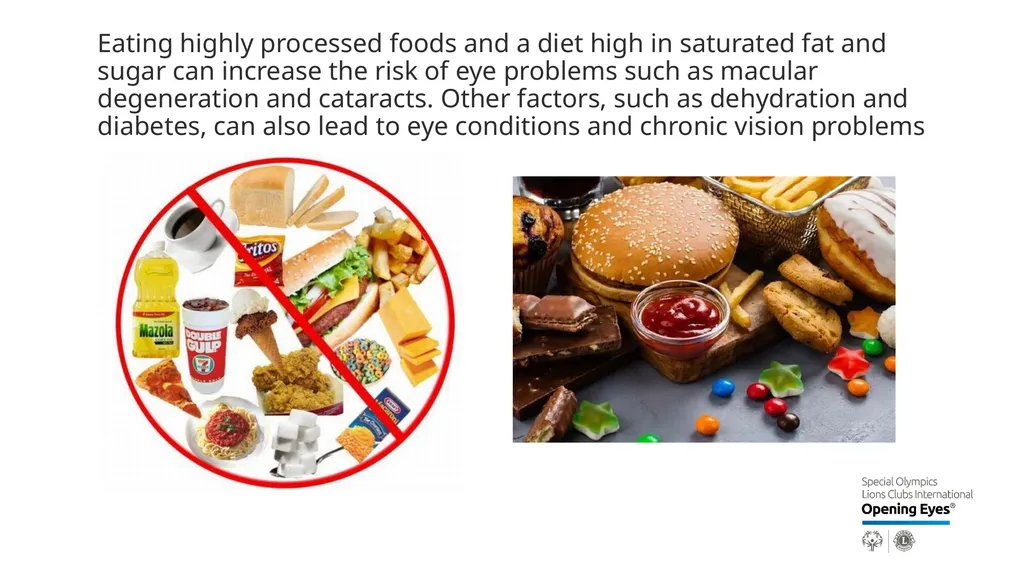
Eating highly processed foods and a diet high in saturated fat and sugar can increase the risk of eye problems such as macular degeneration and cataracts. Other factors, such as dehydration and diabetes, can also lead to eye conditions and chronic vision problems<br>