
Supporting your child’s mental health and
CP
Published · 39 slides · 0 views

1 / 1



Description
Supporting your childs mental health and wellbeing during Year 10 11 Geraldine Brice Senior Mental Health Practitioner School Link Aims of todays session Awareness of the school link role within Wigan To develop your understanding of
Related Topics
Share
Embed code
Download this presentation From Below
"Supporting your child’s mental health and" is the property of its rightful owner. Permission is granted to download and print the materials on this website for personal, non-commercial use only, and to display it on your personal computer provided you do not modify the materials and that you retain all copyright notices contained in the materials. By downloading content from our website, you accept the terms of this agreement.
Presentation Transcript
01
Supporting your child’s
mental health and wellbeing
during Year 10 &11 Geraldine Brice
Senior Mental Health Practitioner School Link<br>
mental health and wellbeing
during Year 10 &11 Geraldine Brice
Senior Mental Health Practitioner School Link<br>
02
Aims of todays session Awareness of the school link role within Wigan
To develop your understanding of anxiety, stress factors and regulating emotions.
To support you to identify signs and symptoms of stress and anxiety.
To provide an overview of healthy habits which can support your child’s mental health and wellbeing during Year 10/11.
To provide you with resources and practical tips to support yourself and your child during Year 10/11.
To inform you of the support available through school in Year 10/11.<br>
03
We are now going to do a test For the next 10 minutes you will be given a page of a GCSE paper to complete. We would kindly ask that you work through this in silence and do not speak to the person next to you.<br>
04
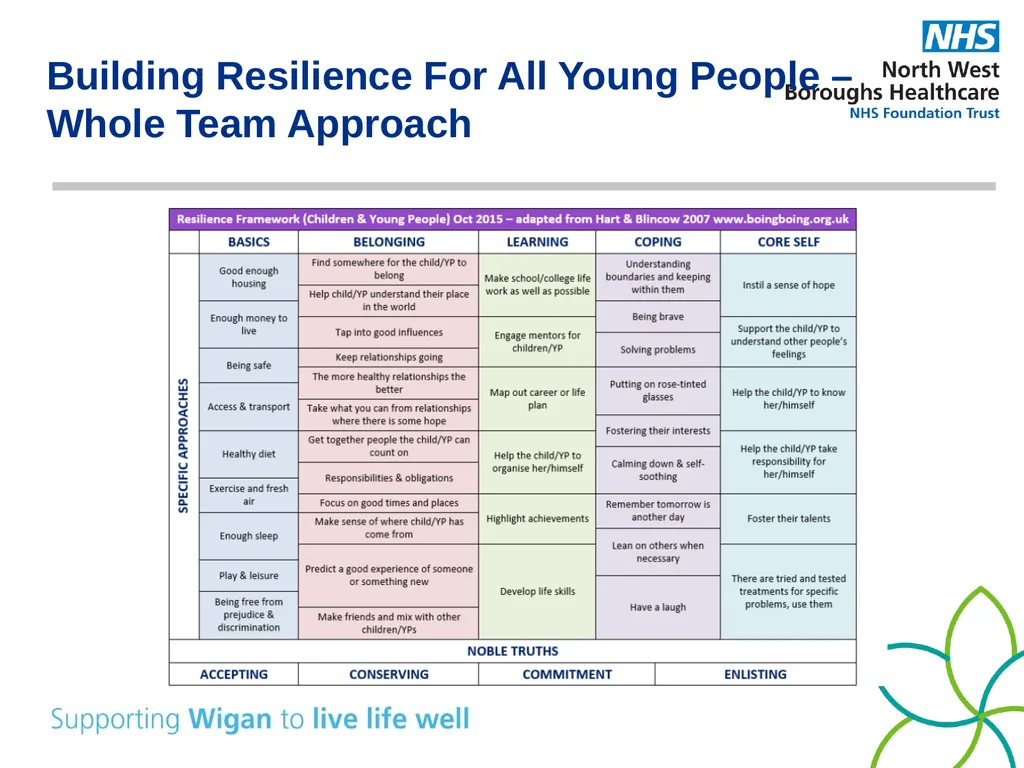
Building Resilience For All Young People – Whole Team Approach<br>
05
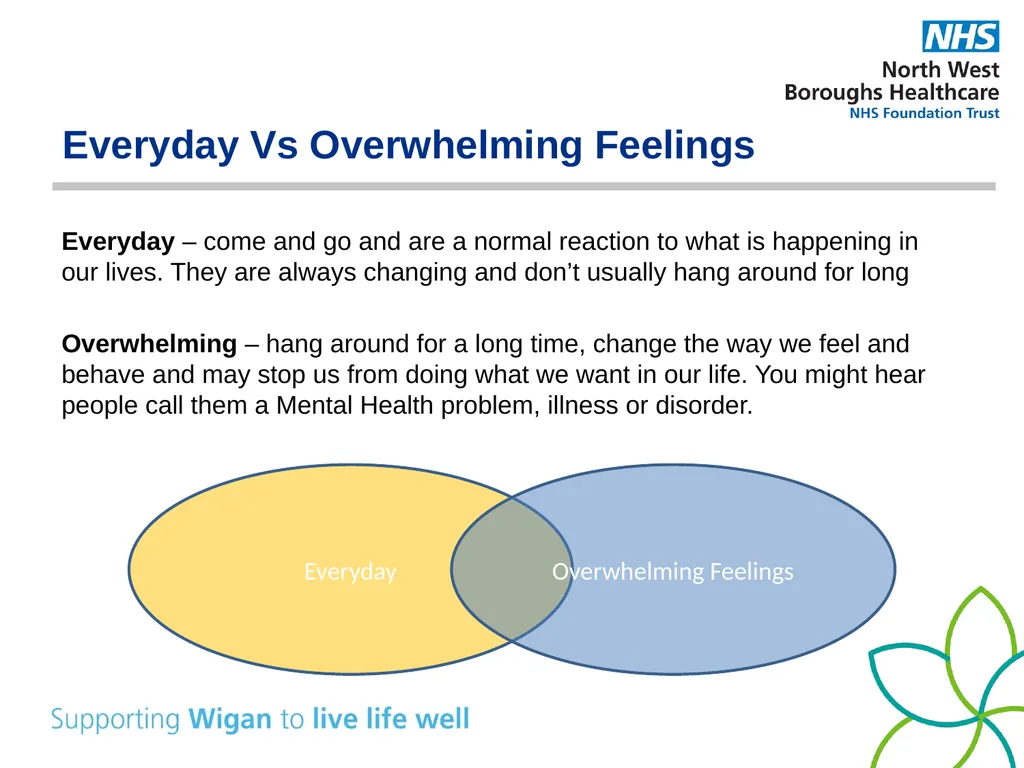
Everyday Vs Overwhelming Feelings Everyday – come and go and are a normal reaction to what is happening in our lives. They are always changing and don’t usually hang around for long
Overwhelming – hang around for a long time, change the way we feel and behave and may stop us from doing what we want in our life. You might hear people call them a Mental Health problem, illness or disorder.<br>
Overwhelming – hang around for a long time, change the way we feel and behave and may stop us from doing what we want in our life. You might hear people call them a Mental Health problem, illness or disorder.<br>
06
Mental Health https://www.youtube.com/watch?v=DxIDKZHW3-E<br>
07
Self Esteem? Young people with low self-esteem can find it very hard to cope with pressures from school, peers and society. The teenage, and increasingly pre-teen years can be very stressful as youngsters are expected to achieve good grades, look a certain way and be successful or popular.
Children and young people with low self-esteem are more at risk of developing depression, anxiety, self-harming and other mental health problems as they grow up, and will often find the ups and downs of life in general harder to get through.<br>
Children and young people with low self-esteem are more at risk of developing depression, anxiety, self-harming and other mental health problems as they grow up, and will often find the ups and downs of life in general harder to get through.<br>
08
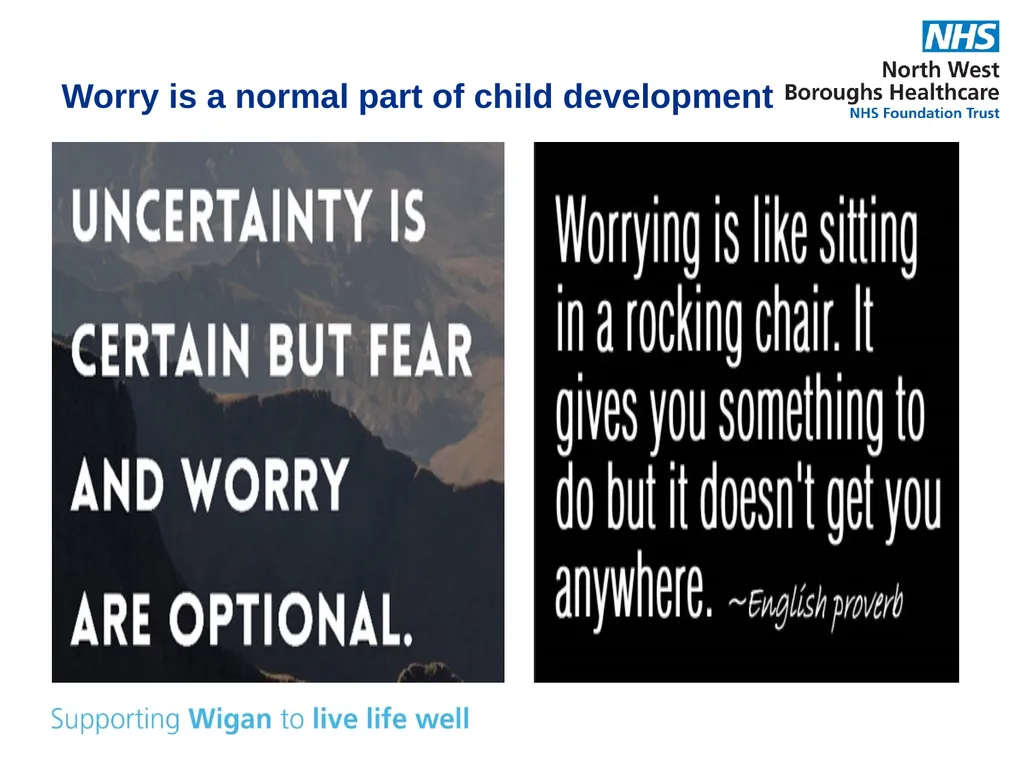
Worry is a normal part of child development<br>
09
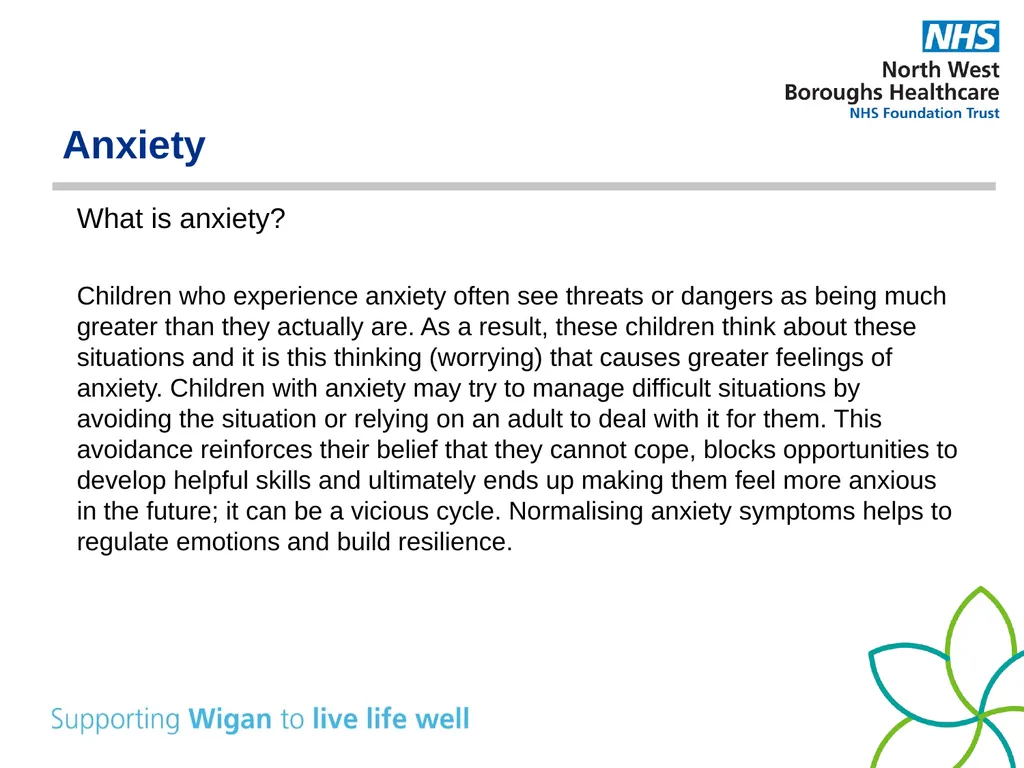
Anxiety What is anxiety?
Children who experience anxiety often see threats or dangers as being much greater than they actually are. As a result, these children think about these situations and it is this thinking (worrying) that causes greater feelings of anxiety. Children with anxiety may try to manage difficult situations by avoiding the situation or relying on an adult to deal with it for them. This avoidance reinforces their belief that they cannot cope, blocks opportunities to develop helpful skills and ultimately ends up making them feel more anxious in the future; it can be a vicious cycle. Normalising anxiety symptoms helps to regulate emotions and build resilience.<br>
Children who experience anxiety often see threats or dangers as being much greater than they actually are. As a result, these children think about these situations and it is this thinking (worrying) that causes greater feelings of anxiety. Children with anxiety may try to manage difficult situations by avoiding the situation or relying on an adult to deal with it for them. This avoidance reinforces their belief that they cannot cope, blocks opportunities to develop helpful skills and ultimately ends up making them feel more anxious in the future; it can be a vicious cycle. Normalising anxiety symptoms helps to regulate emotions and build resilience.<br>
10
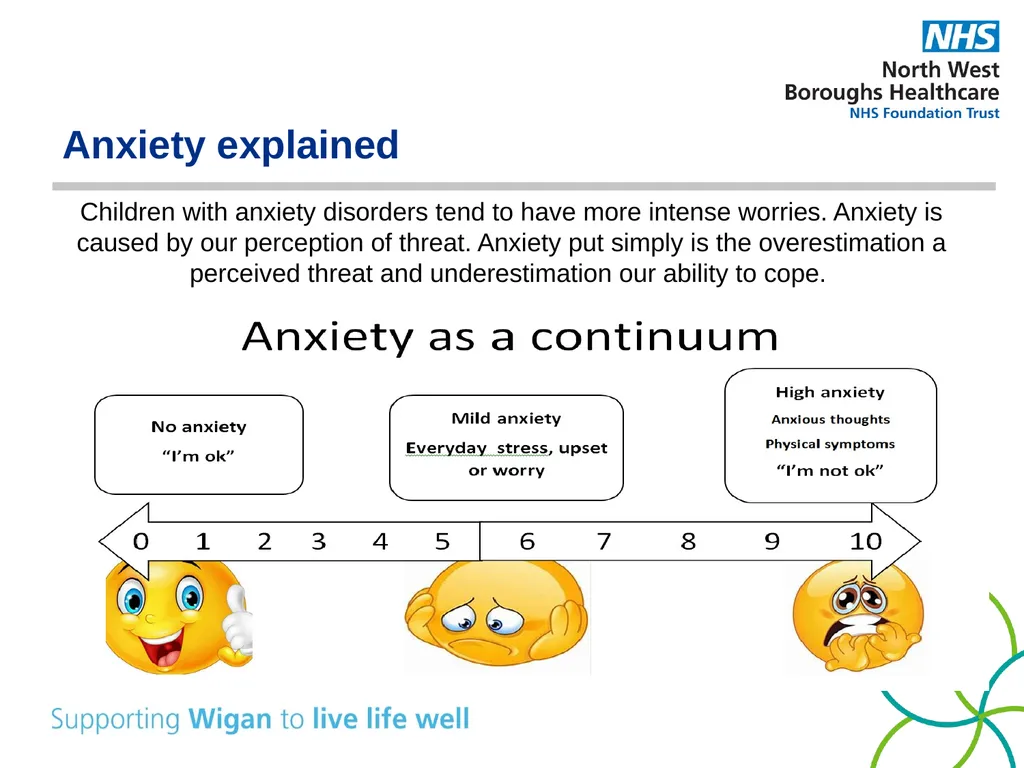
Anxiety explained Children with anxiety disorders tend to have more intense worries. Anxiety is caused by our perception of threat. Anxiety put simply is the overestimation a perceived threat and underestimation our ability to cope.<br>
11
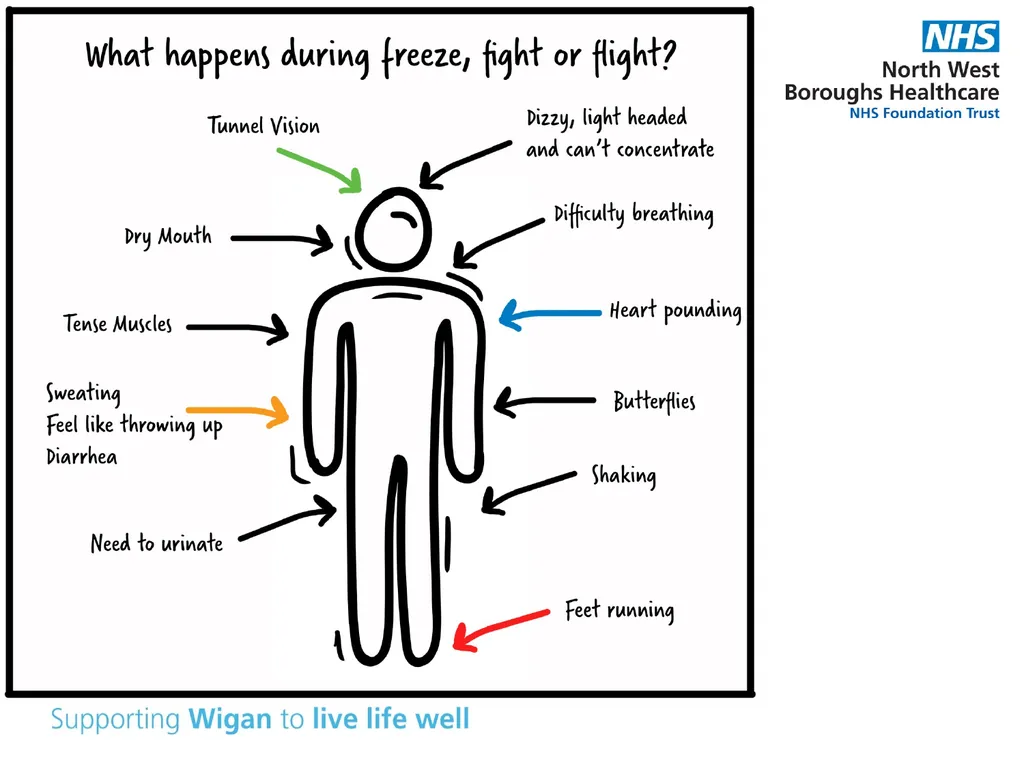
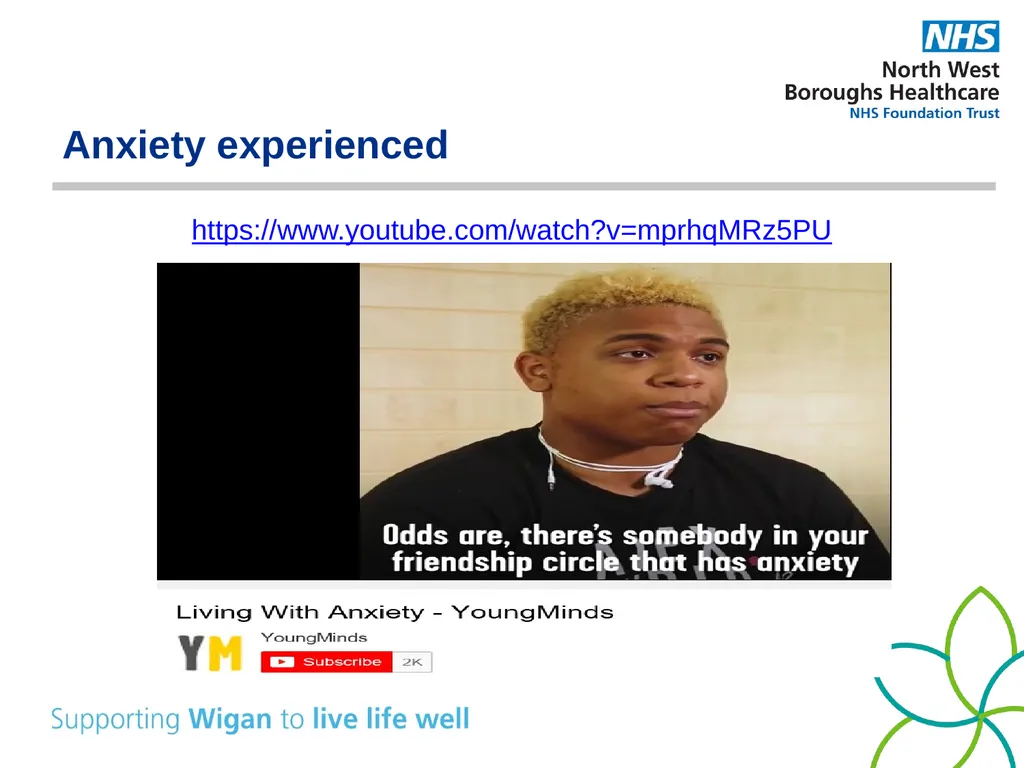
Anxiety experienced https://www.youtube.com/watch?v=mprhqMRz5PU<br>
12
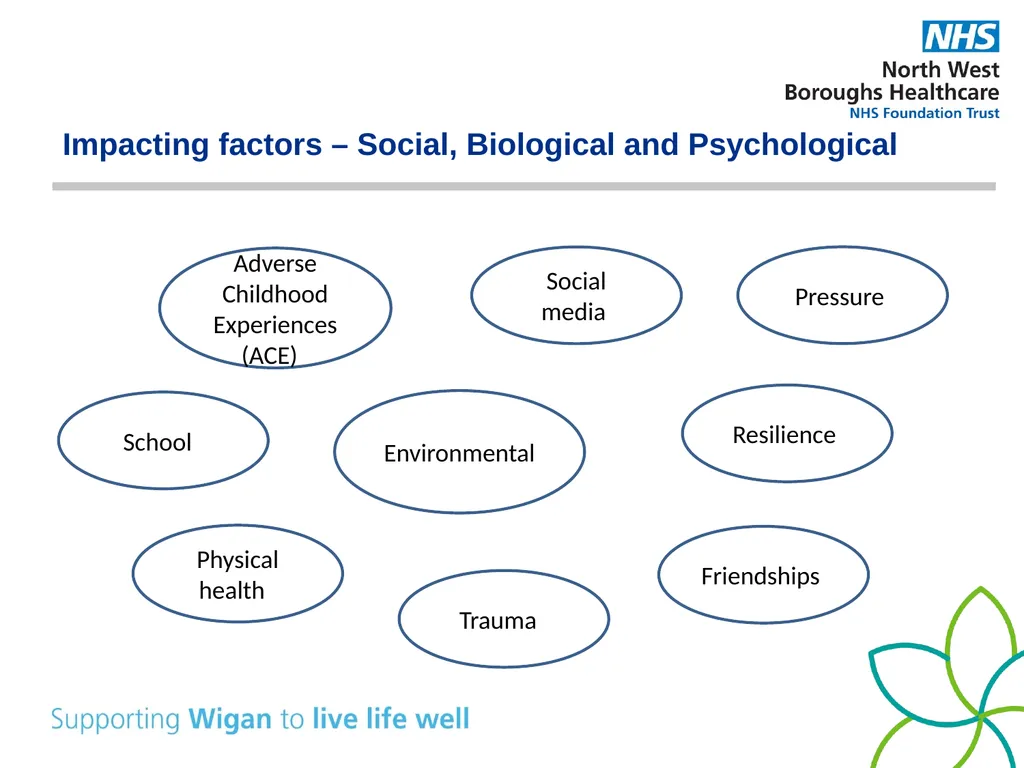
Impacting factors – Social, Biological and Psychological Social media Environmental Pressure Friendships Trauma Adverse Childhood Experiences (ACE) Resilience School Physical health<br>
13
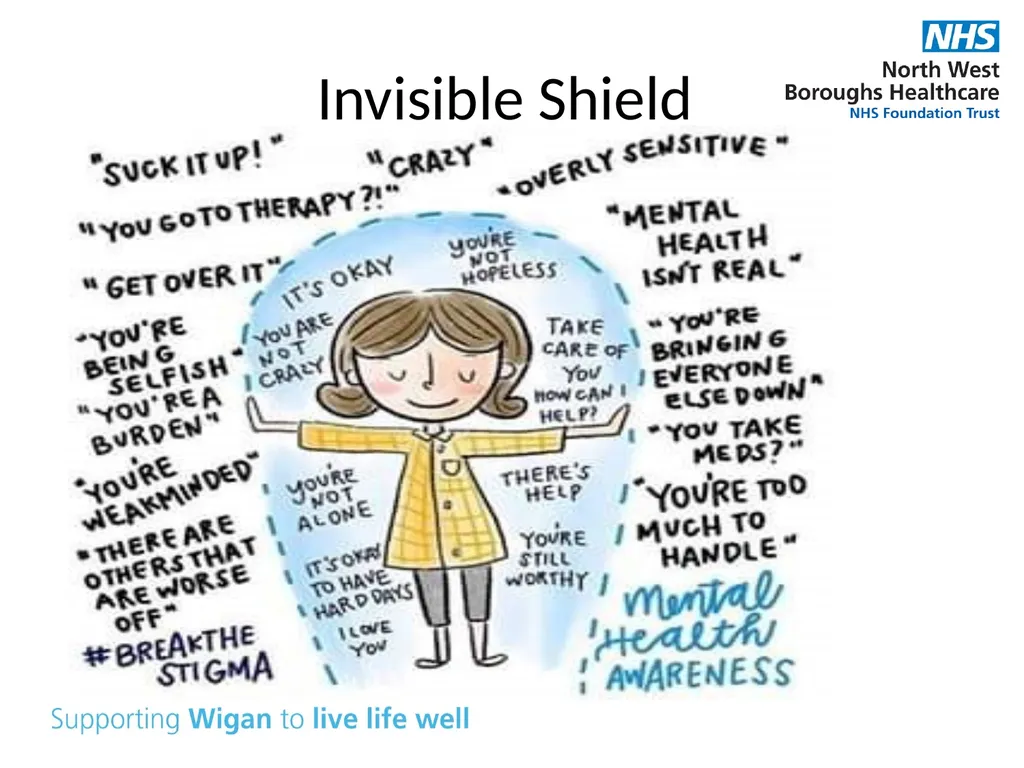
Invisible Shield<br>
14
Analogy of how adults can validate children’s emotions Coffee filter – the adult tries to identify the child’s painful emotions, contains them, and then gives them back, filtered, understandable and bearable i.e. validated<br>
15
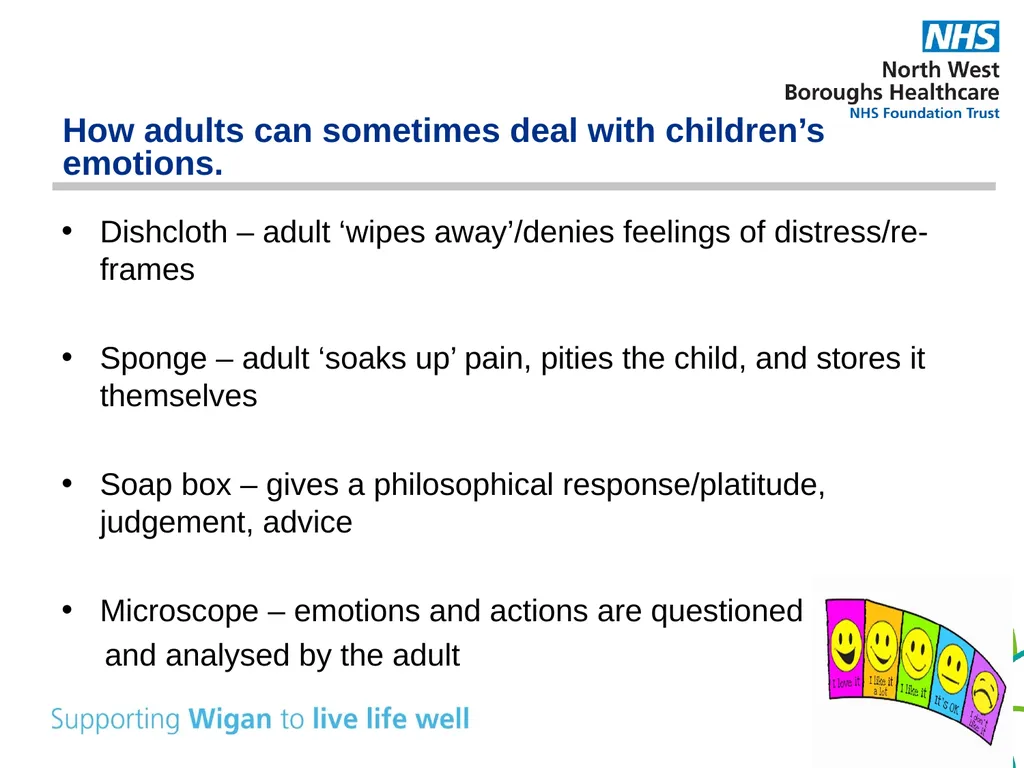
How adults can sometimes deal with children’s emotions. Dishcloth – adult ‘wipes away’/denies feelings of distress/re-frames
Sponge – adult ‘soaks up’ pain, pities the child, and stores it themselves
Soap box – gives a philosophical response/platitude, judgement, advice
Microscope – emotions and actions are questioned
and analysed by the adult<br>
Sponge – adult ‘soaks up’ pain, pities the child, and stores it themselves
Soap box – gives a philosophical response/platitude, judgement, advice
Microscope – emotions and actions are questioned
and analysed by the adult<br>
16
Impact of exams on our mental health Exam stress describes the emotional, physiological and behavioural responses caused by an imminent test or exam. It can be related to negative previous experience of exams, poor preparation, worry about failure, or pressure to perform. For children and young people who are generally anxious, the experience of taking exams can be threatening and could lead to unmanageable increases in anxiety levels.
(Reference: Anna Freud Centre)<br>
(Reference: Anna Freud Centre)<br>
17
Top tips to help with exam stress Encourage your child to take care of themselves by eating the right kind of foods, drinking water and getting enough sleep. For teenagers 8 – 10 hours sleep is essential as tiredness can impair concentration and increase anxiety.
Provide reassurance by reminding your child of past/current successes and give giving them the opportunity to say how they are feeling.
Support them to develop a realistic revision timetable and encourage them to take regular breaks.
Promote regular exercise to get rid of physical tension. Improved blood flow to the brain can improve a young persons ability to think clearly, learn, concentrate and remember.
Encourage relaxation techniques such as controlled breathing and mindfulness.<br>
18
Parent ‘GCSES’ during Year 10/11 Good enough relationships at home
Chill out time
Success reminders
Encourage effort and exercise
Sleep<br>
Chill out time
Success reminders
Encourage effort and exercise
Sleep<br>
19
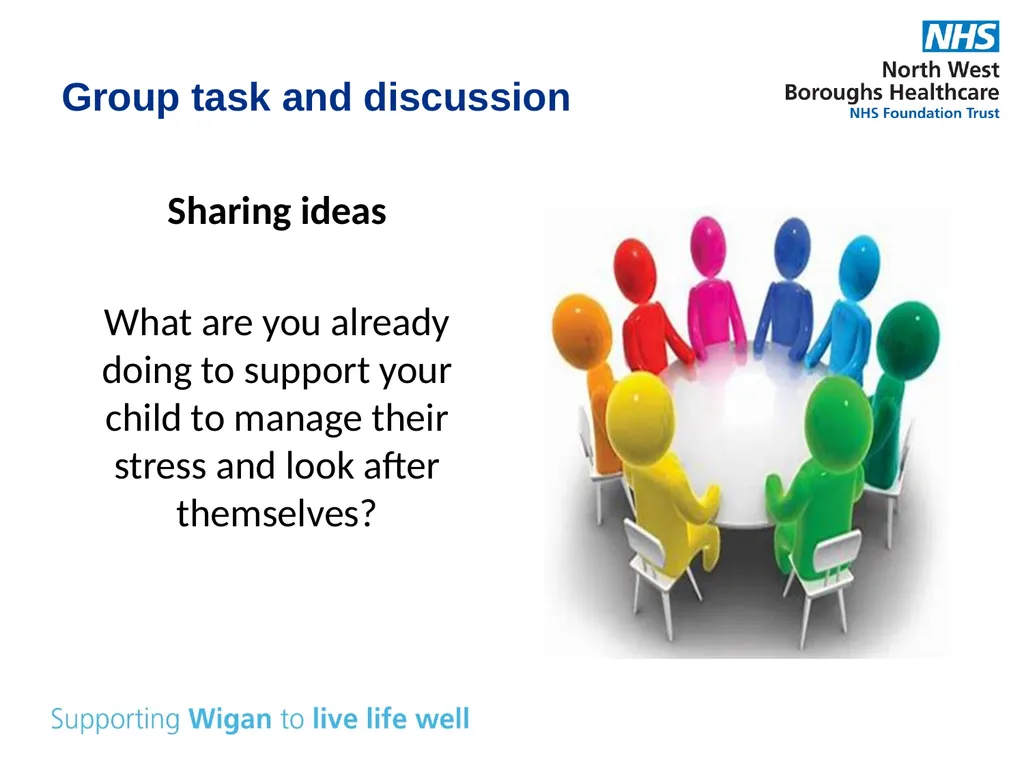
Group task and discussion Sharing ideas
What are you already doing to support your child to manage their stress and look after themselves?<br>
What are you already doing to support your child to manage their stress and look after themselves?<br>
20
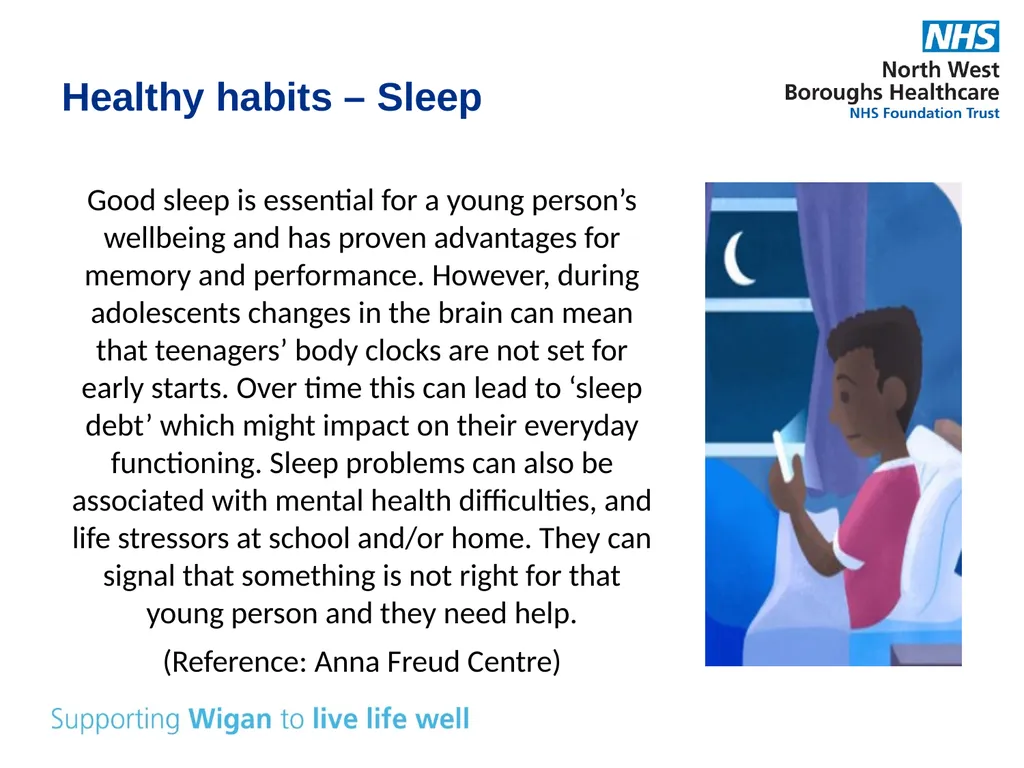
Healthy habits – Sleep Good sleep is essential for a young person’s wellbeing and has proven advantages for memory and performance. However, during adolescents changes in the brain can mean that teenagers’ body clocks are not set for early starts. Over time this can lead to ‘sleep debt’ which might impact on their everyday functioning. Sleep problems can also be associated with mental health difficulties, and life stressors at school and/or home. They can signal that something is not right for that young person and they need help.
(Reference: Anna Freud Centre)<br>
(Reference: Anna Freud Centre)<br>
21
How to help with sleep Ask them how they slept and keep an eye out for any changes to their sleep pattern.
Advise them to cut out any after school napping.
Avoid stimulants such as caffeine, nicotine and energy drinks after 4pm.
Exercise: Even 10 minutes can drastically improve sleep quality. But avoid strenuous workouts close to bedtime.
Avoid heavy foods before bed. Arrange meal times before 7pm if possible.
Make sure that their sleep environment supports sleep. Encourage them not to keep their phones by the side of their bed and to put their phones away before 9pm. Downtime setting (IPhone).
Encourage them out of their rooms: Exposure to sunlight during the day helps to maintain a healthy sleep-wake cycle.
Support them to establish a regular relaxing bedtime routine.<br>
22
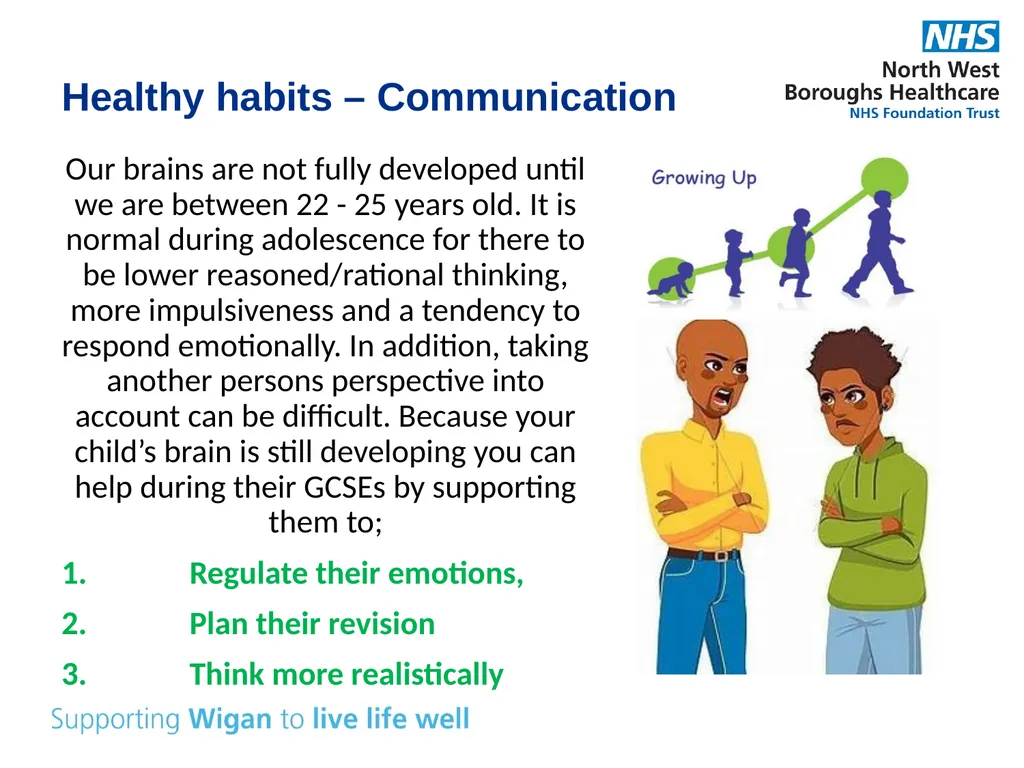
Healthy habits – Communication Our brains are not fully developed until we are between 22 - 25 years old. It is normal during adolescence for there to be lower reasoned/rational thinking, more impulsiveness and a tendency to respond emotionally. In addition, taking another persons perspective into account can be difficult. Because your child’s brain is still developing you can help during their GCSEs by supporting them to;
Regulate their emotions,
Plan their revision
Think more realistically<br>
Regulate their emotions,
Plan their revision
Think more realistically<br>
23
Healthy habits – Regulate : Relate : Reason Step (1) Empathy “Connect before correct” – Recognise all emotions as being natural, normal and not a matter of choice. Take on the child’s perspective.
Step (2) Validate and label their feelings Be present, take notice and really listen. “You appear to be feeling angry, It’s understandable that you might feel angry given how much pressure you are under. I sometimes feel angry when I am under pressure too”.
Step (3) Set limits “You are angry that I’ve taken your phone. We agreed that I would take your phone away when you are trying to revise because it helps you to stay focused. Shouting at me is not ok. I will keep your phone safe and you can have it back in one hour”.
Step (4) Problem solving Next time you are feeling like this what can you do? What options do you have? What is the best option? What do you need to do to give this a try?<br>
24
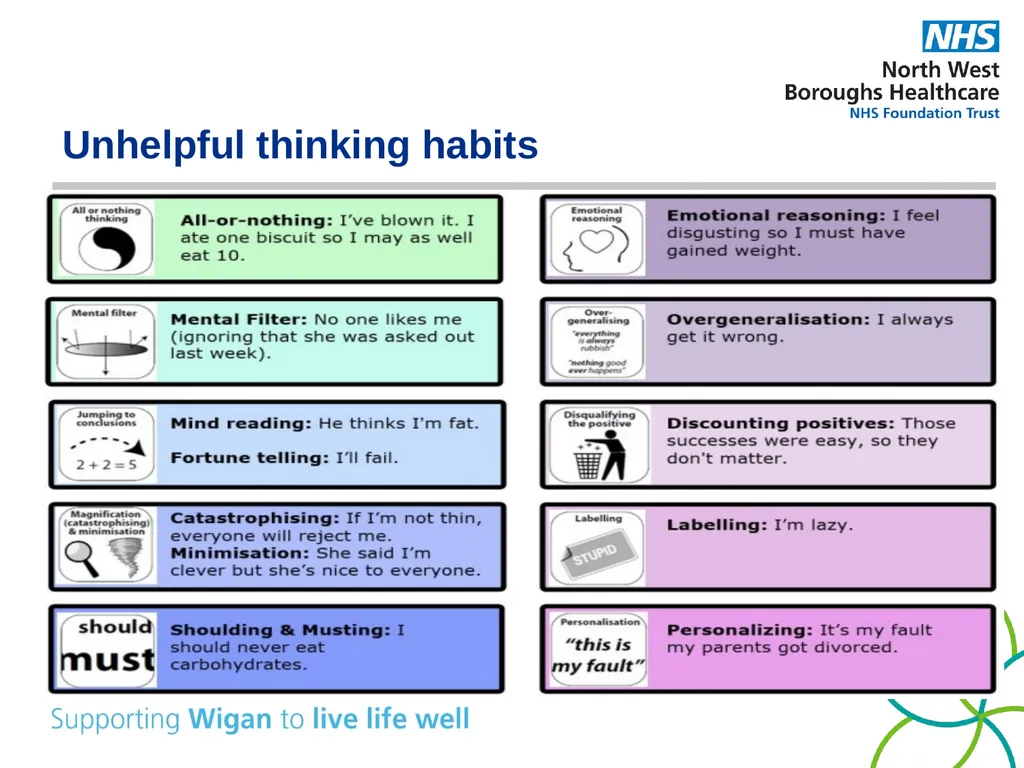
Unhelpful thinking Over the years, we tend to get into unhelpful thinking habits. Once you can identify your unhelpful thinking styles, you can start to notice them – they very often occur just before and during distressing situations. Once you can notice them, then that can help you to challenge or distance yourself from those thoughts, and see the situation in a different and more helpful way.<br>
25
Unhelpful thinking habits<br>
26
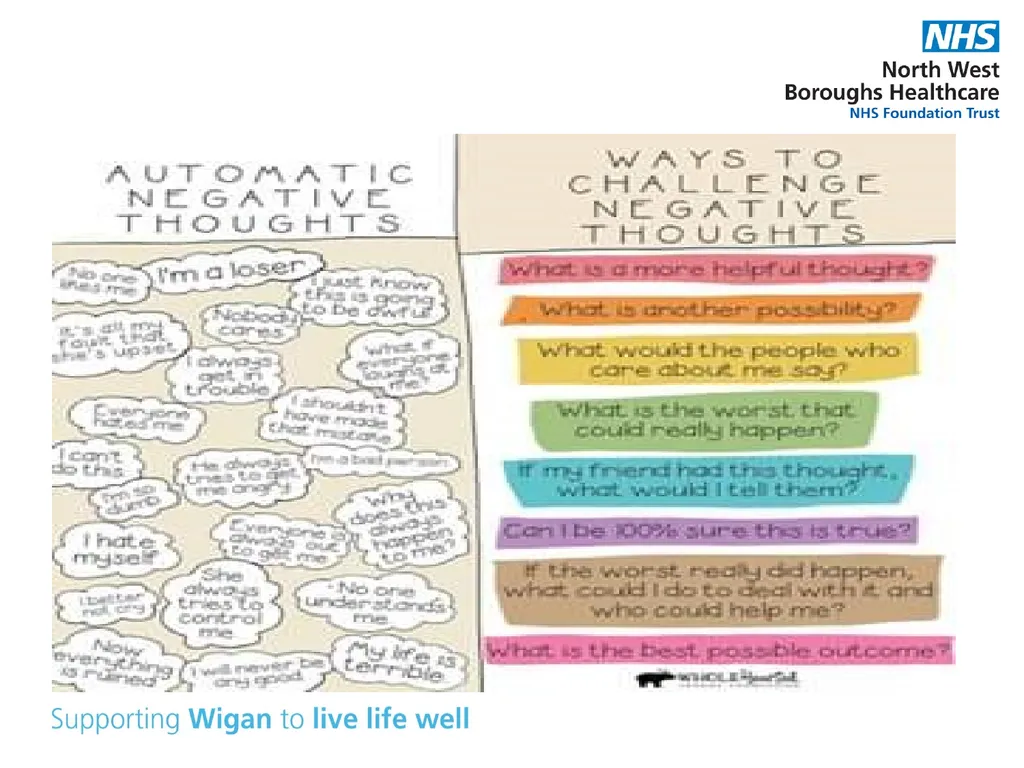
Healthy habits – challenging unhelpful thoughts If you notice you or your child worrying you can help to challenge negative predictions by asking;
What is your evidence for and against this thought?
What’s the worst thing that will happen and could you do to cope if that happened?
What’s the best thing that could happen?
Now we’ve considered this, what’s the most likely thing that will happen?
What are the consequences of worrying about this?
What’s a more helpful way to view the situation? What advice would you give to a friend who had this worry?
Is there a more balanced thought to replace your worry?<br>
27
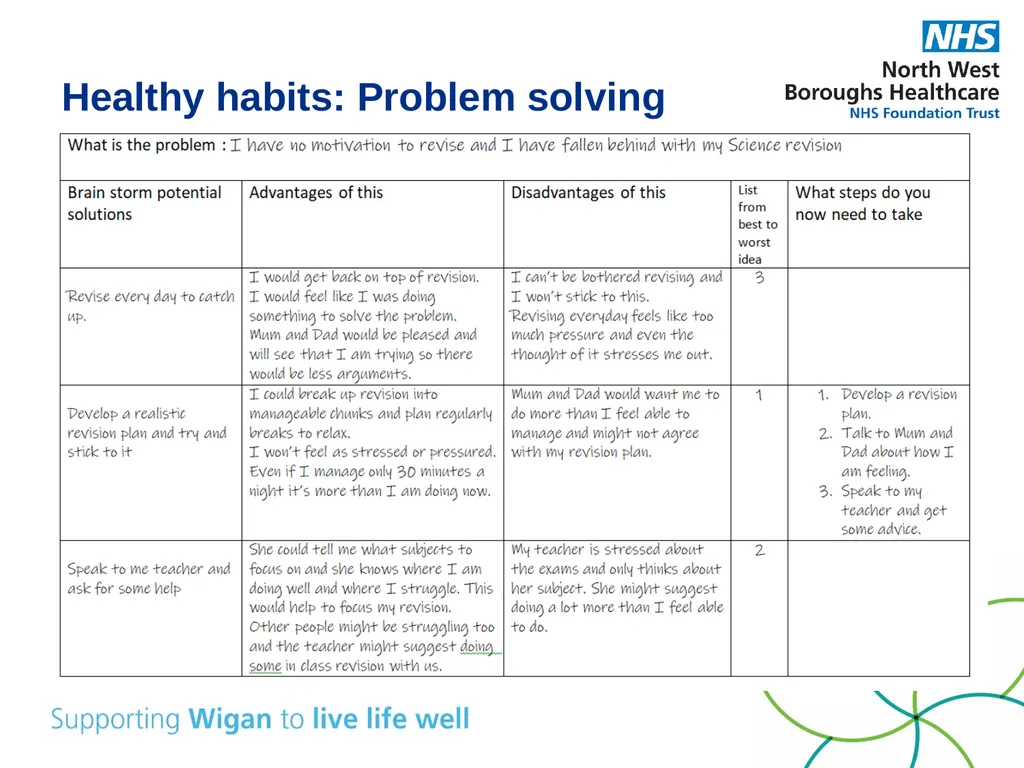
Healthy habits: Problem solving<br>
28
Healthy habits - Home as their safe space Be available Actively listening when they are trying to tell you how they feel.
Respond sensitively Even if you think they are being unreasonable or you disagree with what they are saying. Take into account your own stress and frustration.
Accept their feelings Validate how difficult they are finding things and ask how you can help.
Cooperative enabling Agree a realistic goals and recognise their effort and encourage them to look after themselves by having opportunities to relax, access hobbies/interests and spend time with friends.
Promoting family membership Spend time as a family watching television, going for walks, eating together etc.<br>
29
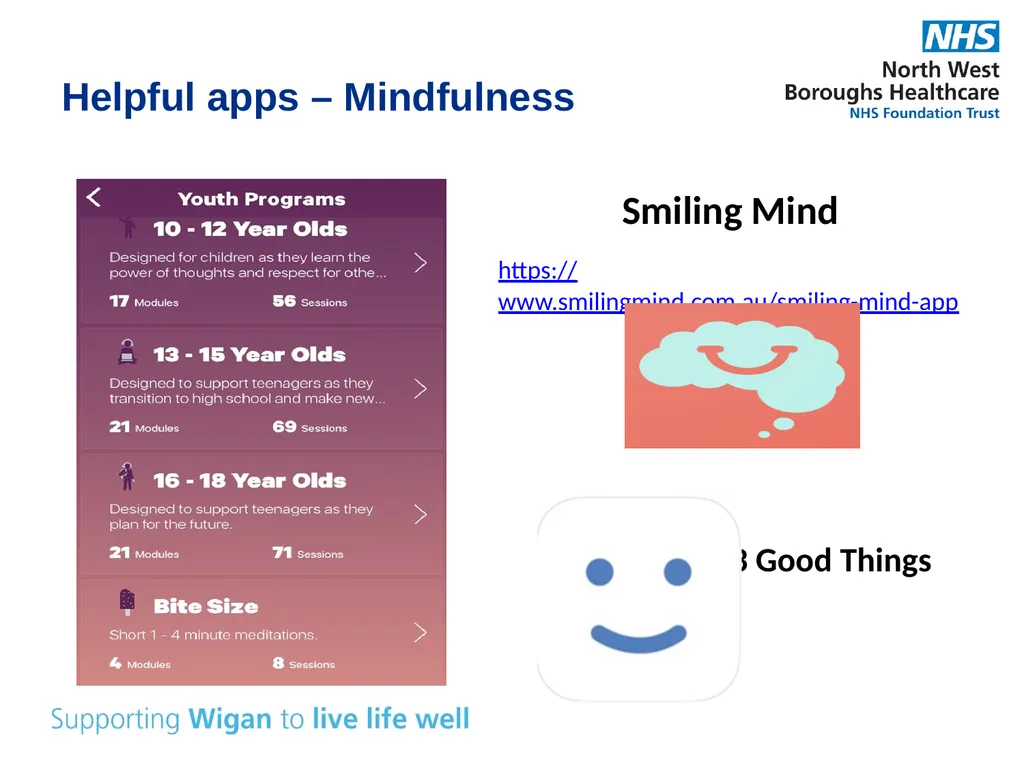
Helpful apps – Mindfulness Smiling Mind
https://www.smilingmind.com.au/smiling-mind-app
3 Good Things<br>
https://www.smilingmind.com.au/smiling-mind-app
3 Good Things<br>
30
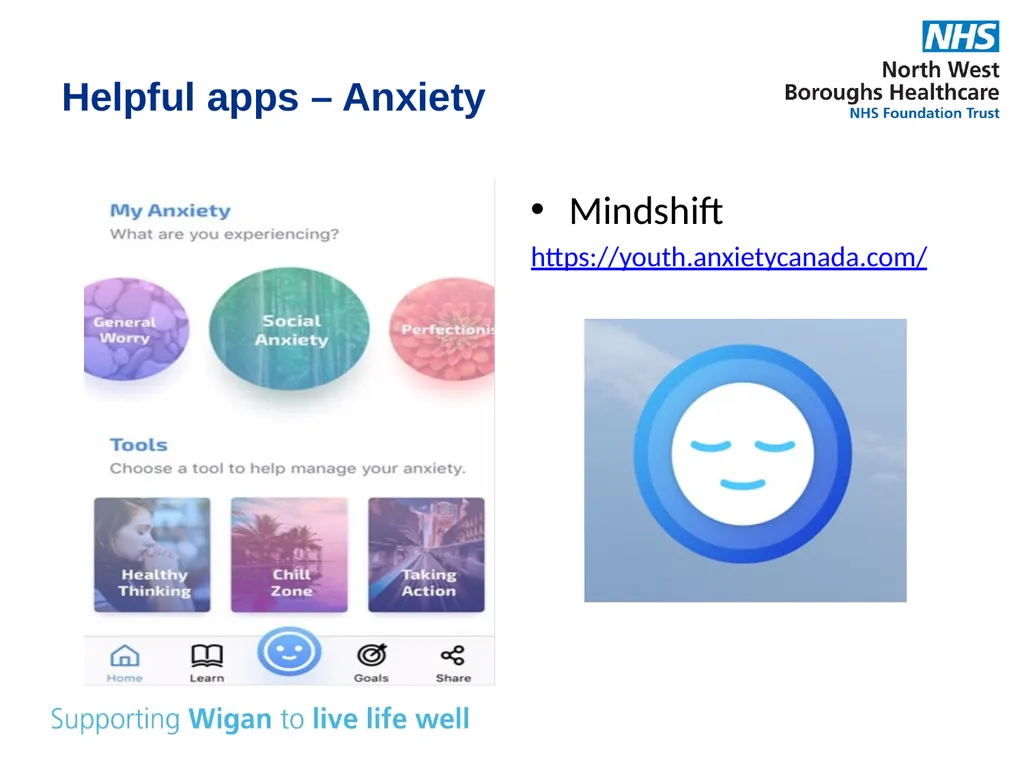
Helpful apps – Anxiety Mindshift
https://youth.anxietycanada.com/<br>
https://youth.anxietycanada.com/<br>
31
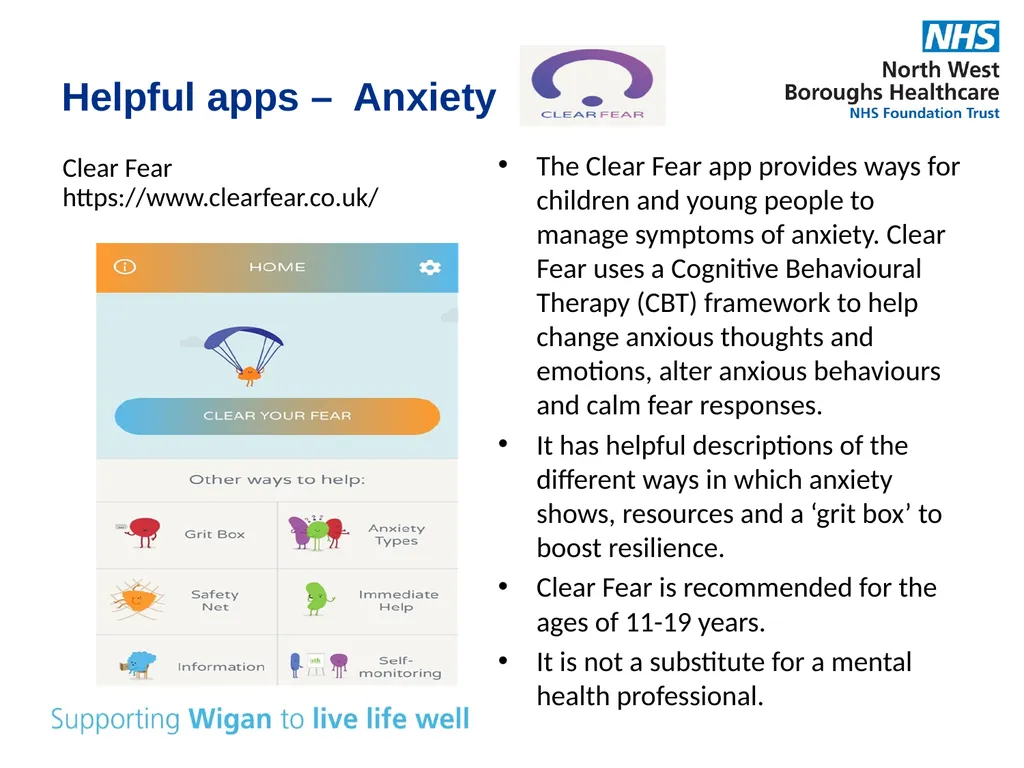
Helpful apps – Anxiety Clear Fear https://www.clearfear.co.uk/ The Clear Fear app provides ways for children and young people to manage symptoms of anxiety. Clear Fear uses a Cognitive Behavioural Therapy (CBT) framework to help change anxious thoughts and emotions, alter anxious behaviours and calm fear responses.
It has helpful descriptions of the different ways in which anxiety shows, resources and a ‘grit box’ to boost resilience.
Clear Fear is recommended for the ages of 11-19 years.
It is not a substitute for a mental health professional.<br>
It has helpful descriptions of the different ways in which anxiety shows, resources and a ‘grit box’ to boost resilience.
Clear Fear is recommended for the ages of 11-19 years.
It is not a substitute for a mental health professional.<br>
32
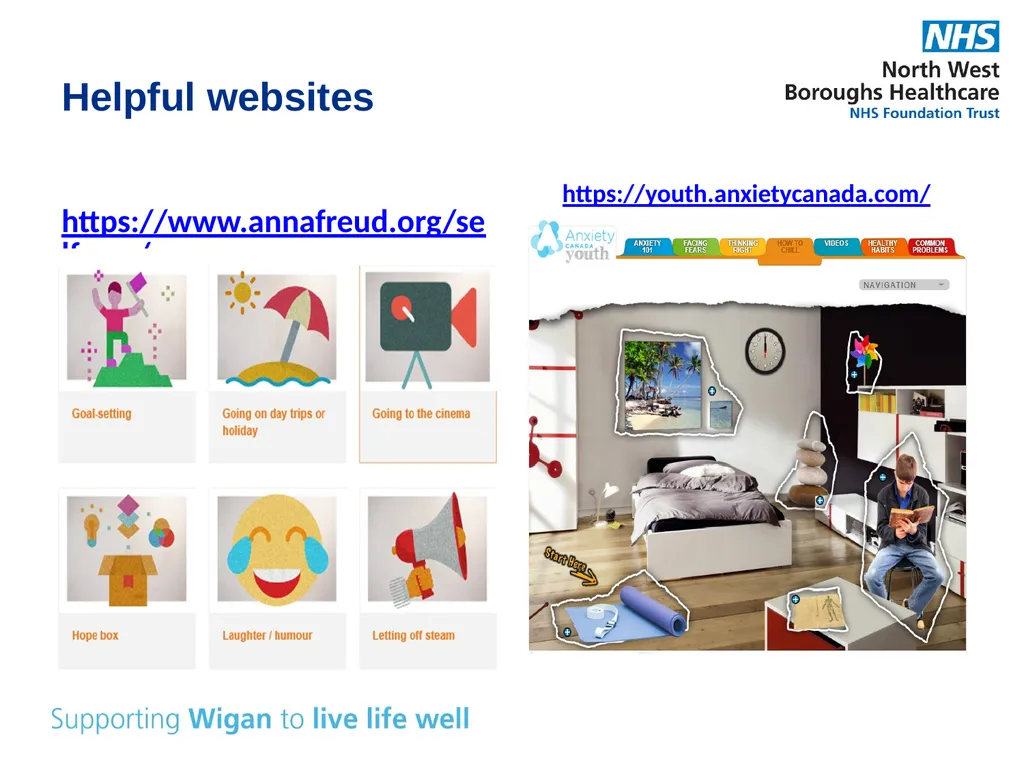
Helpful websites https://www.annafreud.org/selfcare/ https://youth.anxietycanada.com/<br>
33
Resources for your child https://www.annafreud.org/selfcare/
https://riseabove.org.uk/topic/my-mind/
https://youth.anxietycanada.com/
https://www.moodjuice.scot.nhs.uk/ https://www.getselfhelp.co.uk/
https://www.therapistaid.com/
https://beaconhouse.org.uk/
https://www.anxietyuk.org.uk/
https://youngminds.org.uk/<br>
https://riseabove.org.uk/topic/my-mind/
https://youth.anxietycanada.com/
https://www.moodjuice.scot.nhs.uk/ https://www.getselfhelp.co.uk/
https://www.therapistaid.com/
https://beaconhouse.org.uk/
https://www.anxietyuk.org.uk/
https://youngminds.org.uk/<br>
34
Resources for you https://www.relate.org.uk/relationship-help/help-family-life-and-parenting/parenting-teenagers
Booking line for telephone or webcam counselling 0300 003 0396
https://youngminds.org.uk/find-help/for-parents/parents-helpline/
Call us for free Mon-Fri from 9.30am to 4pm – available in England, Scotland, Wales and Northern Ireland. 0808 802 5544
https://www.annafreud.org/media/7223/secondary-parents-leaflet-final-proofed.pdf
http://www.selfhelpguides.ntw.nhs.uk/penninecare/
https://www.cci.health.wa.gov.au/Resources/Looking-After-Yourself<br>
35
Final thoughts…. We are all trying our best! Thank you for coming today and listening to our presentation<br>