
TBI and the VA: A Patient Centered Care Approach
KB
Published · 31 slides · 0 views

1 / 1


Description
TBI and the VA: A Patient Centered Care Approach Sandra Hall MSWL, BSNRN,HNB-BC Melissa Hall, LGSWMSSW Terry Gee, MS, PT Hershel Woody Williams VA Medical Center The History of the Polytrauma System of Care (PSC) In 2005 the Veterans
Related Topics
Share
Embed code
Download this presentation From Below
"TBI and the VA: A Patient Centered Care Approach" is the property of its rightful owner. Permission is granted to download and print the materials on this website for personal, non-commercial use only, and to display it on your personal computer provided you do not modify the materials and that you retain all copyright notices contained in the materials. By downloading content from our website, you accept the terms of this agreement.
Presentation Transcript
01
TBI and the VA:
A Patient Centered Care Approach Sandra Hall MSW/L, BSN/RN,HNB-BC
Melissa Hall, LGSW/MSSW
Terry Gee, MS, PT
Hershel “Woody” Williams VA Medical Center<br>
Melissa Hall, LGSW/MSSW
Terry Gee, MS, PT
Hershel “Woody” Williams VA Medical Center<br>
02
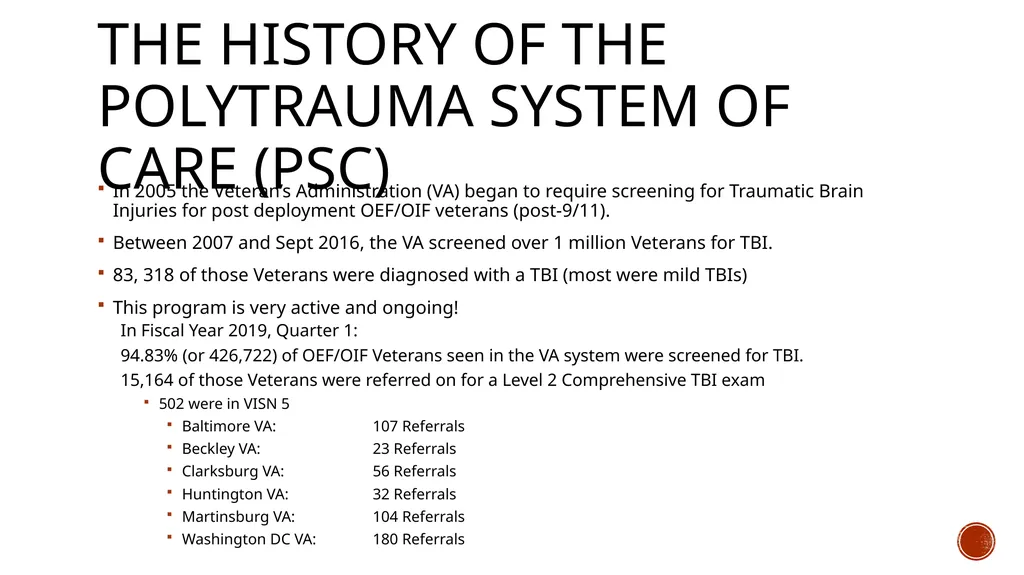
The History of the
Polytrauma System of Care (PSC) In 2005 the Veteran’s Administration (VA) began to require screening for Traumatic Brain Injuries for post deployment OEF/OIF veterans (post-9/11).
Between 2007 and Sept 2016, the VA screened over 1 million Veterans for TBI.
83, 318 of those Veterans were diagnosed with a TBI (most were mild TBIs)
This program is very active and ongoing!
In Fiscal Year 2019, Quarter 1:
94.83% (or 426,722) of OEF/OIF Veterans seen in the VA system were screened for TBI.
15,164 of those Veterans were referred on for a Level 2 Comprehensive TBI exam
502 were in VISN 5
Baltimore VA: 107 Referrals
Beckley VA: 23 Referrals
Clarksburg VA: 56 Referrals
Huntington VA: 32 Referrals
Martinsburg VA: 104 Referrals
Washington DC VA: 180 Referrals<br>
03
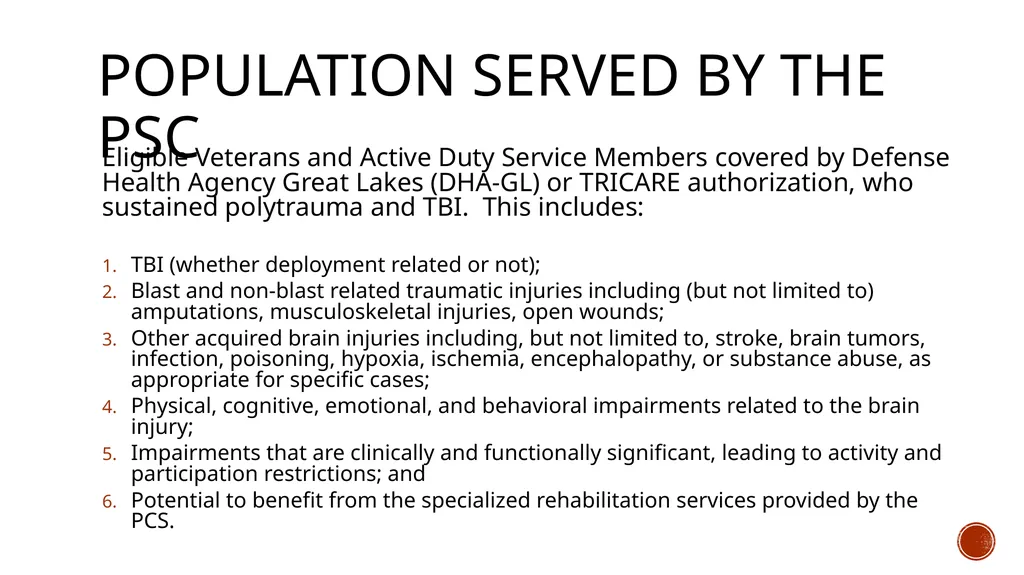
Population served by the PSc Eligible Veterans and Active Duty Service Members covered by Defense Health Agency Great Lakes (DHA-GL) or TRICARE authorization, who sustained polytrauma and TBI. This includes:
TBI (whether deployment related or not);
Blast and non-blast related traumatic injuries including (but not limited to) amputations, musculoskeletal injuries, open wounds;
Other acquired brain injuries including, but not limited to, stroke, brain tumors, infection, poisoning, hypoxia, ischemia, encephalopathy, or substance abuse, as appropriate for specific cases;
Physical, cognitive, emotional, and behavioral impairments related to the brain injury;
Impairments that are clinically and functionally significant, leading to activity and participation restrictions; and
Potential to benefit from the specialized rehabilitation services provided by the PCS.<br>
04
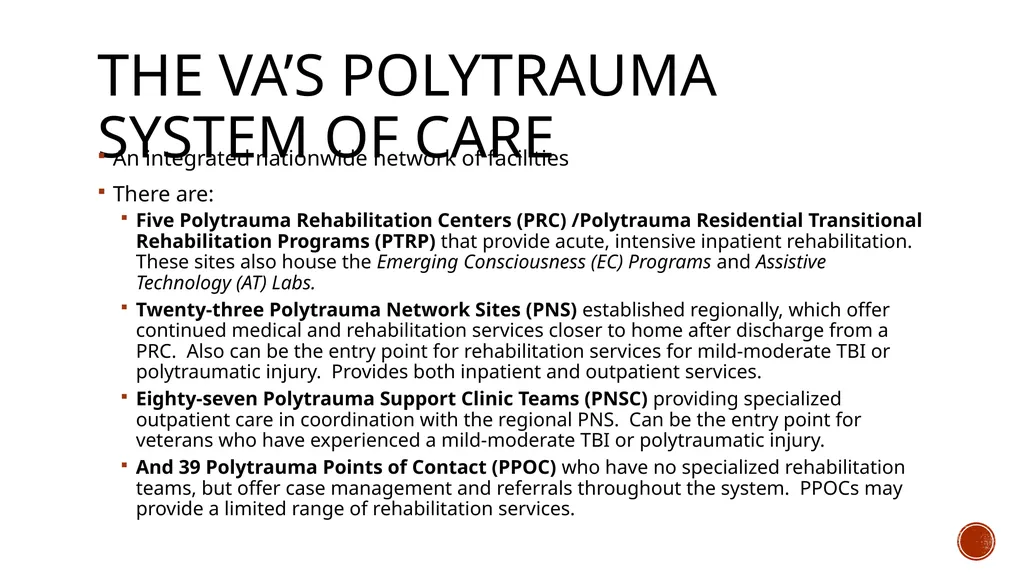
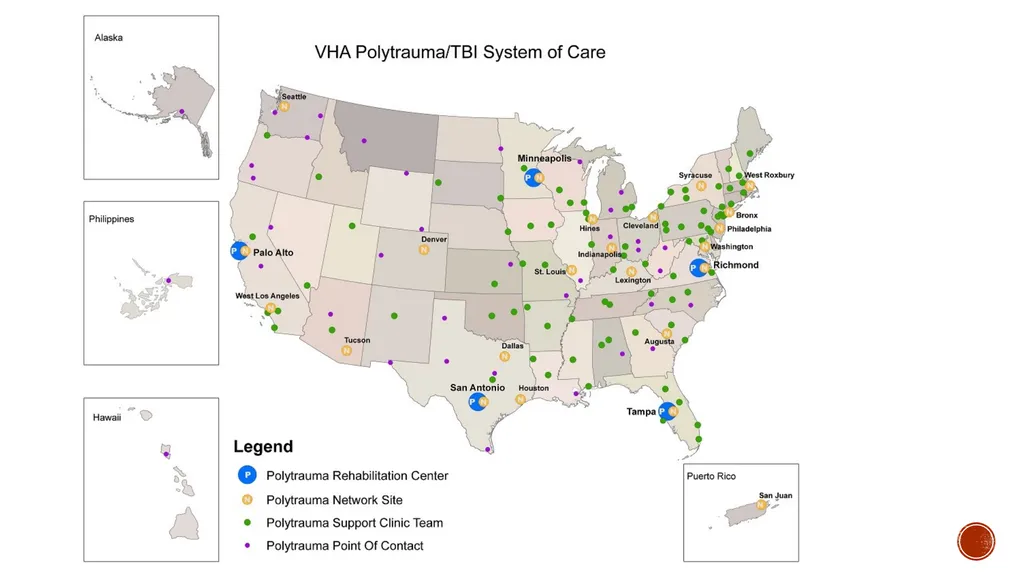
The VA’s Polytrauma System of Care An integrated nationwide network of facilities
There are:
Five Polytrauma Rehabilitation Centers (PRC) /Polytrauma Residential Transitional Rehabilitation Programs (PTRP) that provide acute, intensive inpatient rehabilitation. These sites also house the Emerging Consciousness (EC) Programs and Assistive Technology (AT) Labs.
Twenty-three Polytrauma Network Sites (PNS) established regionally, which offer continued medical and rehabilitation services closer to home after discharge from a PRC. Also can be the entry point for rehabilitation services for mild-moderate TBI or polytraumatic injury. Provides both inpatient and outpatient services.
Eighty-seven Polytrauma Support Clinic Teams (PNSC) providing specialized outpatient care in coordination with the regional PNS. Can be the entry point for veterans who have experienced a mild-moderate TBI or polytraumatic injury.
And 39 Polytrauma Points of Contact (PPOC) who have no specialized rehabilitation teams, but offer case management and referrals throughout the system. PPOCs may provide a limited range of rehabilitation services.<br>
05
VHA Polytrauma/TBI System of Care<br>
06
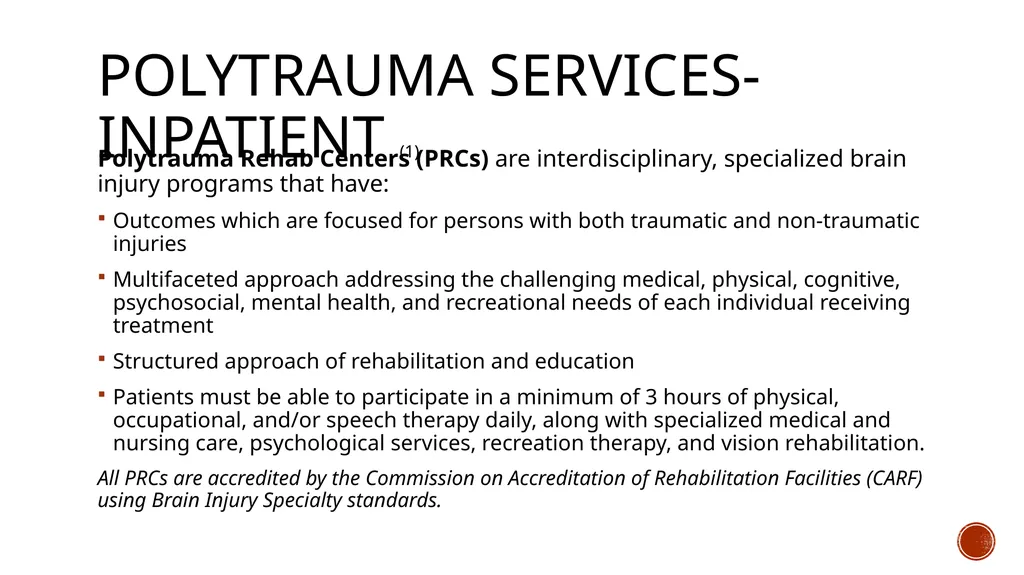
Polytrauma Services-Inpatient (1) Polytrauma Rehab Centers (PRCs) are interdisciplinary, specialized brain injury programs that have:
Outcomes which are focused for persons with both traumatic and non-traumatic injuries
Multifaceted approach addressing the challenging medical, physical, cognitive, psychosocial, mental health, and recreational needs of each individual receiving treatment
Structured approach of rehabilitation and education
Patients must be able to participate in a minimum of 3 hours of physical, occupational, and/or speech therapy daily, along with specialized medical and nursing care, psychological services, recreation therapy, and vision rehabilitation.
All PRCs are accredited by the Commission on Accreditation of Rehabilitation Facilities (CARF) using Brain Injury Specialty standards.<br>
07
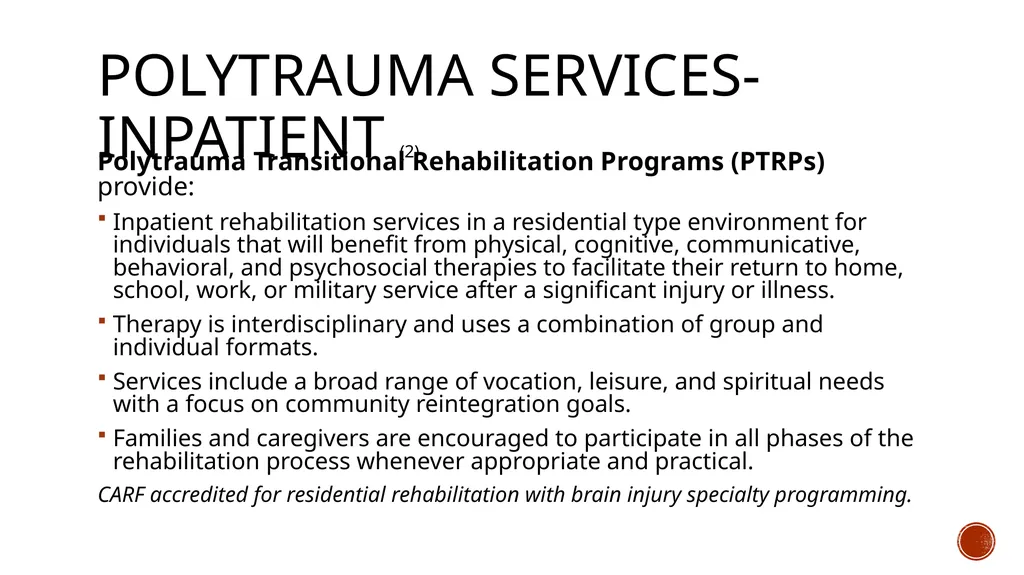
Polytrauma Services-Inpatient (2) Polytrauma Transitional Rehabilitation Programs (PTRPs) provide:
Inpatient rehabilitation services in a residential type environment for individuals that will benefit from physical, cognitive, communicative, behavioral, and psychosocial therapies to facilitate their return to home, school, work, or military service after a significant injury or illness.
Therapy is interdisciplinary and uses a combination of group and individual formats.
Services include a broad range of vocation, leisure, and spiritual needs with a focus on community reintegration goals.
Families and caregivers are encouraged to participate in all phases of the rehabilitation process whenever appropriate and practical.
CARF accredited for residential rehabilitation with brain injury specialty programming.<br>
08
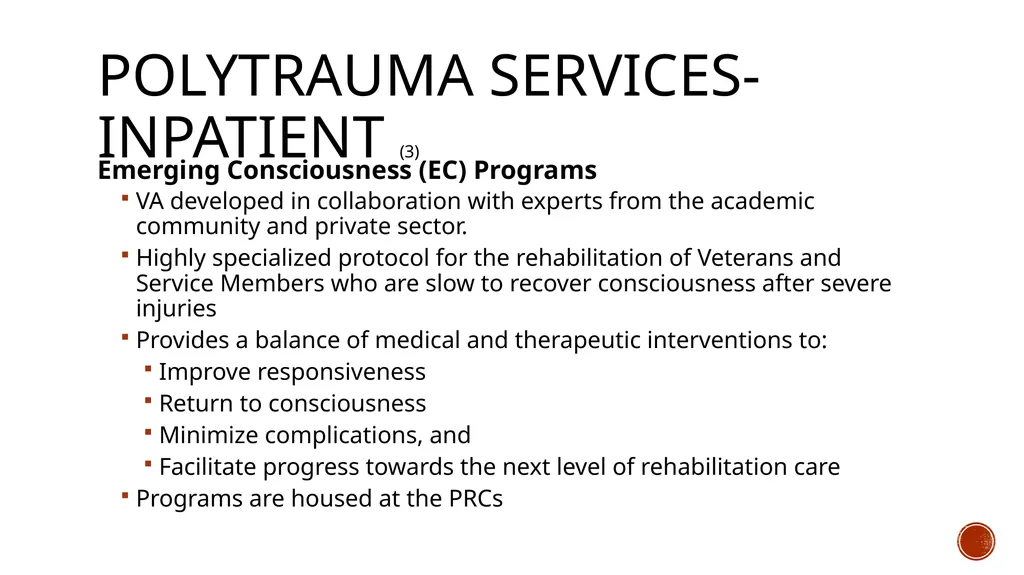
Polytrauma Services-inpatient (3) Emerging Consciousness (EC) Programs
VA developed in collaboration with experts from the academic community and private sector.
Highly specialized protocol for the rehabilitation of Veterans and Service Members who are slow to recover consciousness after severe injuries
Provides a balance of medical and therapeutic interventions to:
Improve responsiveness
Return to consciousness
Minimize complications, and
Facilitate progress towards the next level of rehabilitation care
Programs are housed at the PRCs<br>
09
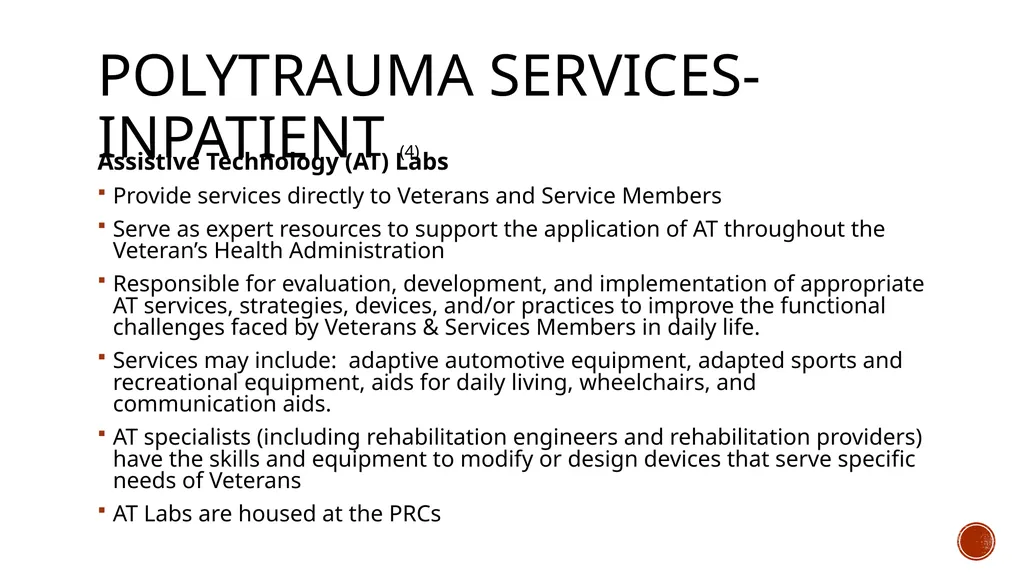
Polytrauma Services-inpatient (4) Assistive Technology (AT) Labs
Provide services directly to Veterans and Service Members
Serve as expert resources to support the application of AT throughout the Veteran’s Health Administration
Responsible for evaluation, development, and implementation of appropriate AT services, strategies, devices, and/or practices to improve the functional challenges faced by Veterans & Services Members in daily life.
Services may include: adaptive automotive equipment, adapted sports and recreational equipment, aids for daily living, wheelchairs, and communication aids.
AT specialists (including rehabilitation engineers and rehabilitation providers) have the skills and equipment to modify or design devices that serve specific needs of Veterans
AT Labs are housed at the PRCs<br>
10
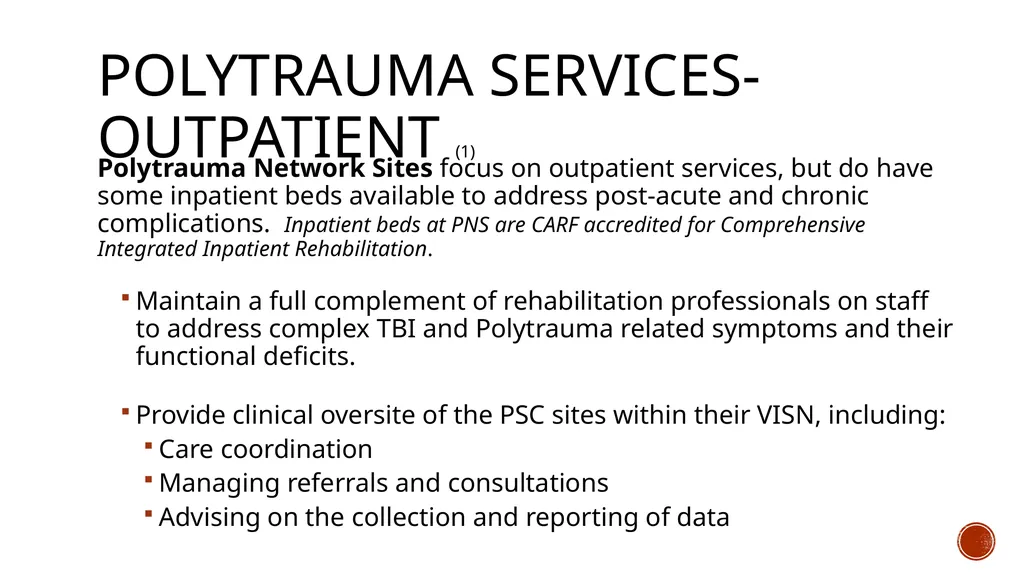
Polytrauma Services-Outpatient (1) Polytrauma Network Sites focus on outpatient services, but do have some inpatient beds available to address post-acute and chronic complications. Inpatient beds at PNS are CARF accredited for Comprehensive Integrated Inpatient Rehabilitation.
Maintain a full complement of rehabilitation professionals on staff to address complex TBI and Polytrauma related symptoms and their functional deficits.
Provide clinical oversite of the PSC sites within their VISN, including:
Care coordination
Managing referrals and consultations
Advising on the collection and reporting of data<br>
11
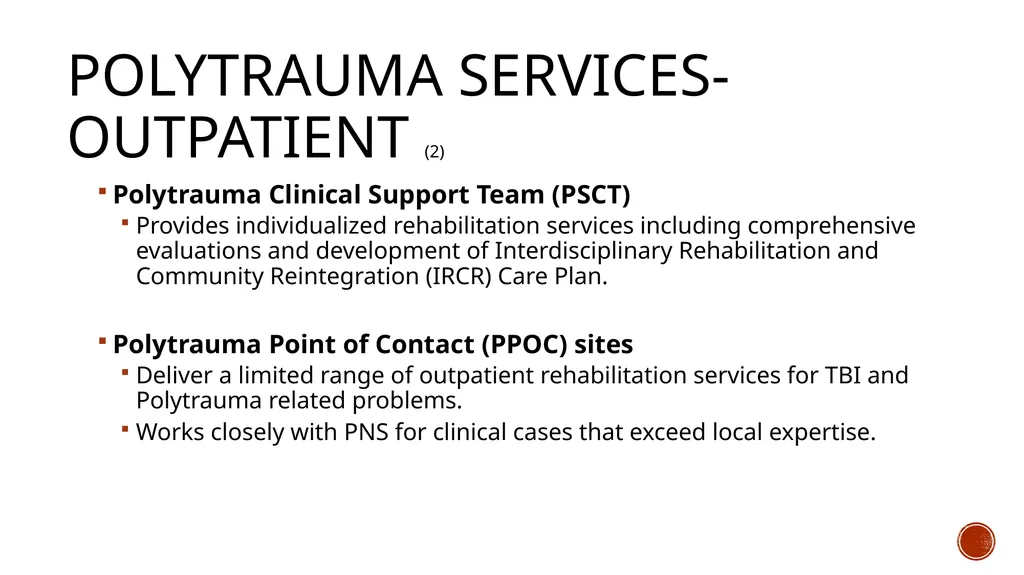
Polytrauma Services-Outpatient (2) Polytrauma Clinical Support Team (PSCT)
Provides individualized rehabilitation services including comprehensive evaluations and development of Interdisciplinary Rehabilitation and Community Reintegration (IRCR) Care Plan.
Polytrauma Point of Contact (PPOC) sites
Deliver a limited range of outpatient rehabilitation services for TBI and Polytrauma related problems.
Works closely with PNS for clinical cases that exceed local expertise.<br>
12
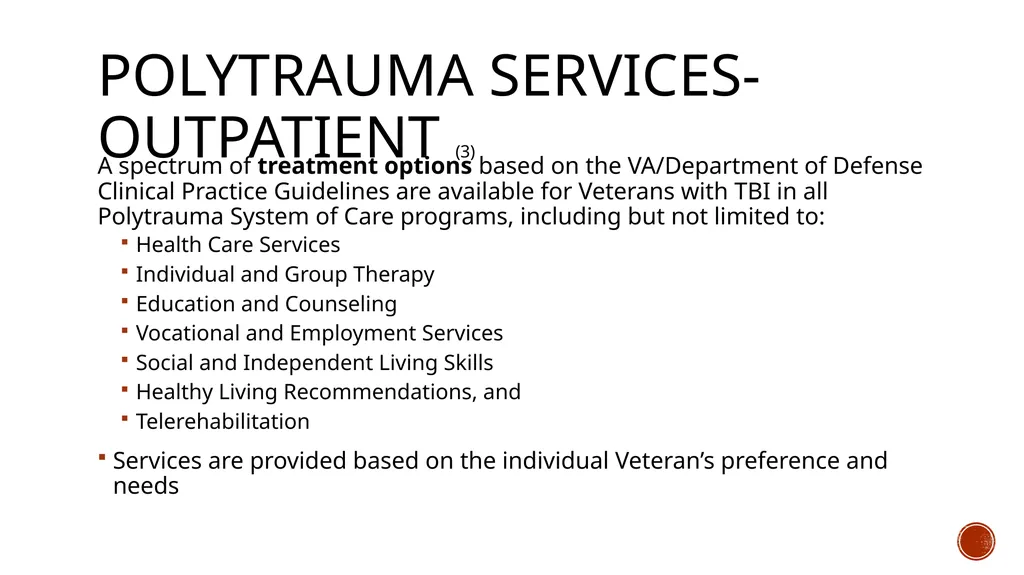
Polytrauma Services-Outpatient (3) A spectrum of treatment options based on the VA/Department of Defense Clinical Practice Guidelines are available for Veterans with TBI in all Polytrauma System of Care programs, including but not limited to:
Health Care Services
Individual and Group Therapy
Education and Counseling
Vocational and Employment Services
Social and Independent Living Skills
Healthy Living Recommendations, and
Telerehabilitation
Services are provided based on the individual Veteran’s preference and needs<br>
Health Care Services
Individual and Group Therapy
Education and Counseling
Vocational and Employment Services
Social and Independent Living Skills
Healthy Living Recommendations, and
Telerehabilitation
Services are provided based on the individual Veteran’s preference and needs<br>
13
VISN 5: What’s LOCAL?<br>
14
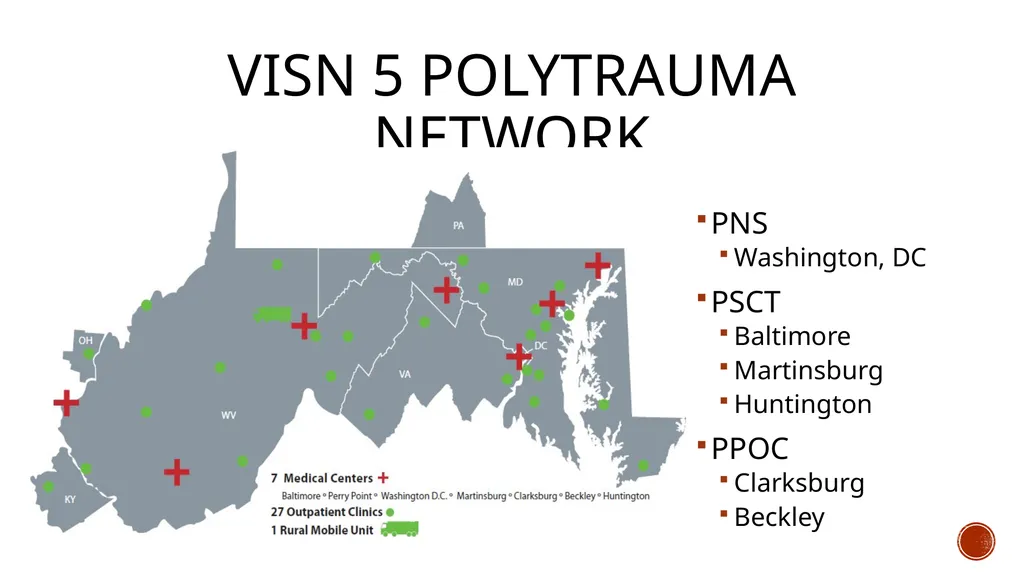
VISN 5 Polytrauma Network PNS
Washington, DC
PSCT
Baltimore
Martinsburg
Huntington
PPOC
Clarksburg
Beckley<br>
Washington, DC
PSCT
Baltimore
Martinsburg
Huntington
PPOC
Clarksburg
Beckley<br>
15
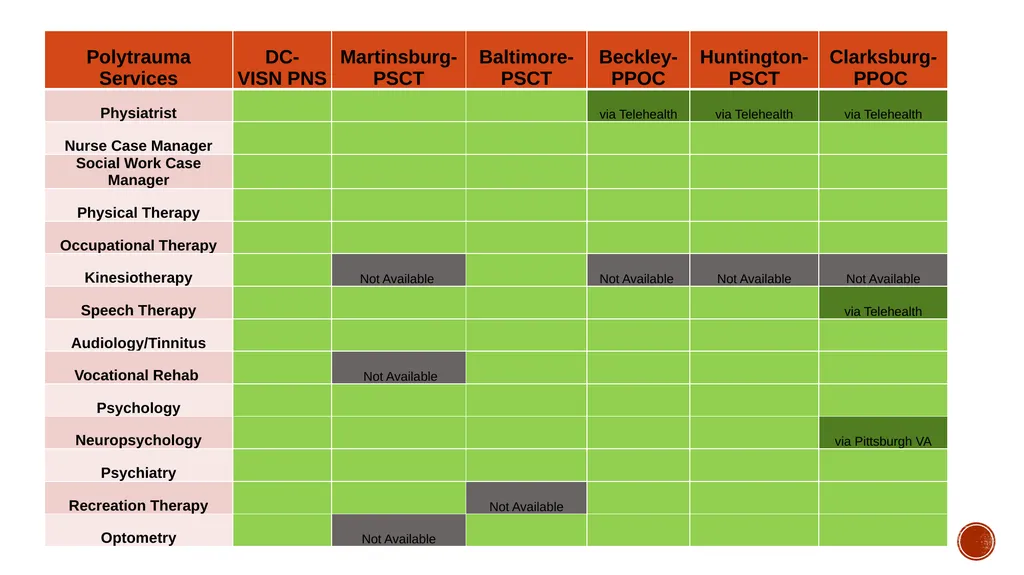
Polytrauma Services in VISN 5<br>
16
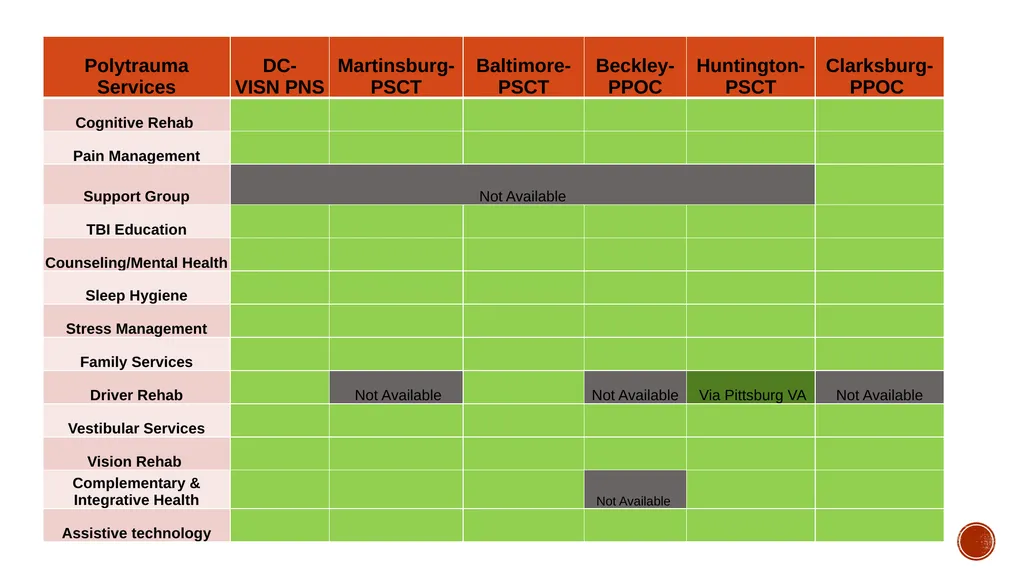
Polytrauma Services in VISN 5, Cont.<br>
17
Specialty Treatment:
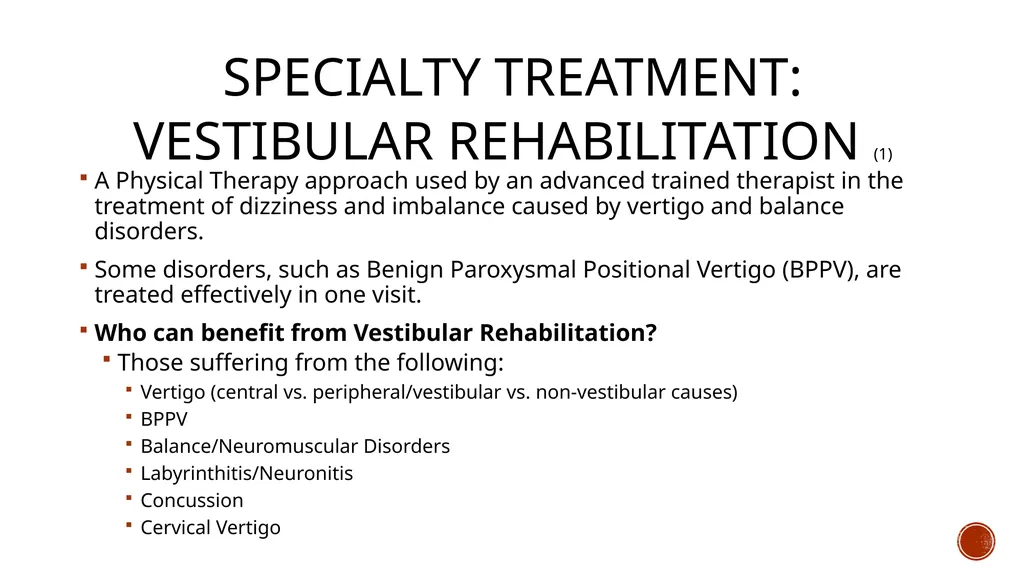
Vestibular Rehabilitation (1) A Physical Therapy approach used by an advanced trained therapist in the treatment of dizziness and imbalance caused by vertigo and balance disorders.
Some disorders, such as Benign Paroxysmal Positional Vertigo (BPPV), are treated effectively in one visit.
Who can benefit from Vestibular Rehabilitation?
Those suffering from the following:
Vertigo (central vs. peripheral/vestibular vs. non-vestibular causes)
BPPV
Balance/Neuromuscular Disorders
Labyrinthitis/Neuronitis
Concussion
Cervical Vertigo<br>
18
Specialty Treatment:
Vestibular Rehabilitation (2) Vestibular Treatment may include:
Canalith Repositioning Maneuvers
To treat BPPV
Vestibular Ocular Reflex (VOR) retraining exercises
Stabilize gaze which leads to improved visual acuity
decreases vertigo-like sensations during head movement
Reduces loss of balance episodes
Exam assists in the prescription of specific vestibular exercises for the individual
Balance and Proprioceptive exercise
Emphasize reducing fall risk
Improves coordination and balance reactions
Huntington VAMC utilizes Computerized Dynamic Posturography and Computerized Dynamic Vision assessment and treatment that enhance the quality of intervention implementation.<br>
19
Specialty Treatment:
Vestibular Rehabilitation (3)<br>
20
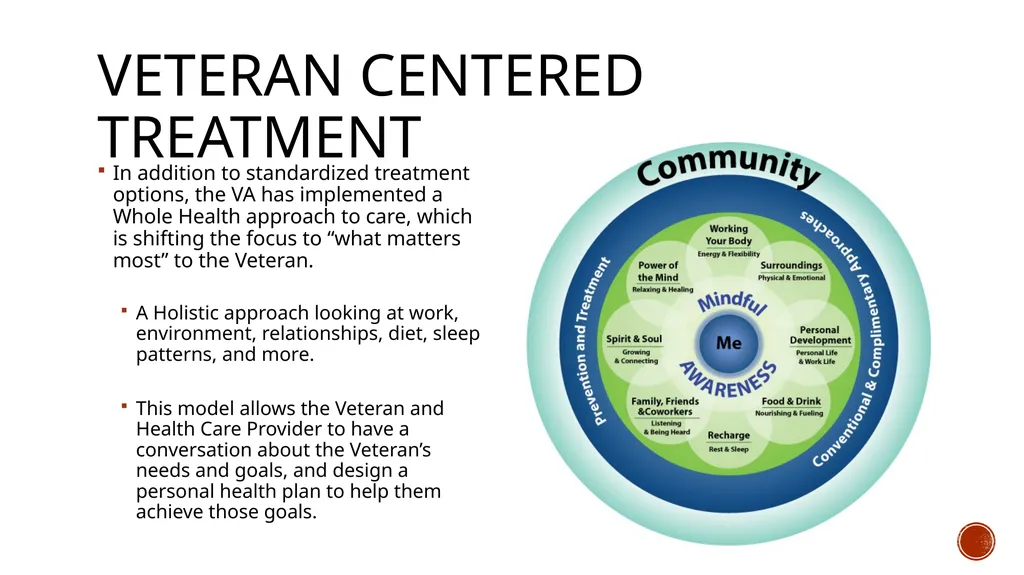
Veteran Centered Treatment In addition to standardized treatment options, the VA has implemented a Whole Health approach to care, which is shifting the focus to “what matters most” to the Veteran.
A Holistic approach looking at work, environment, relationships, diet, sleep patterns, and more.
This model allows the Veteran and Health Care Provider to have a conversation about the Veteran’s needs and goals, and design a personal health plan to help them achieve those goals.<br>
A Holistic approach looking at work, environment, relationships, diet, sleep patterns, and more.
This model allows the Veteran and Health Care Provider to have a conversation about the Veteran’s needs and goals, and design a personal health plan to help them achieve those goals.<br>
21
Complementary & Integrative Health (1)<br>
22
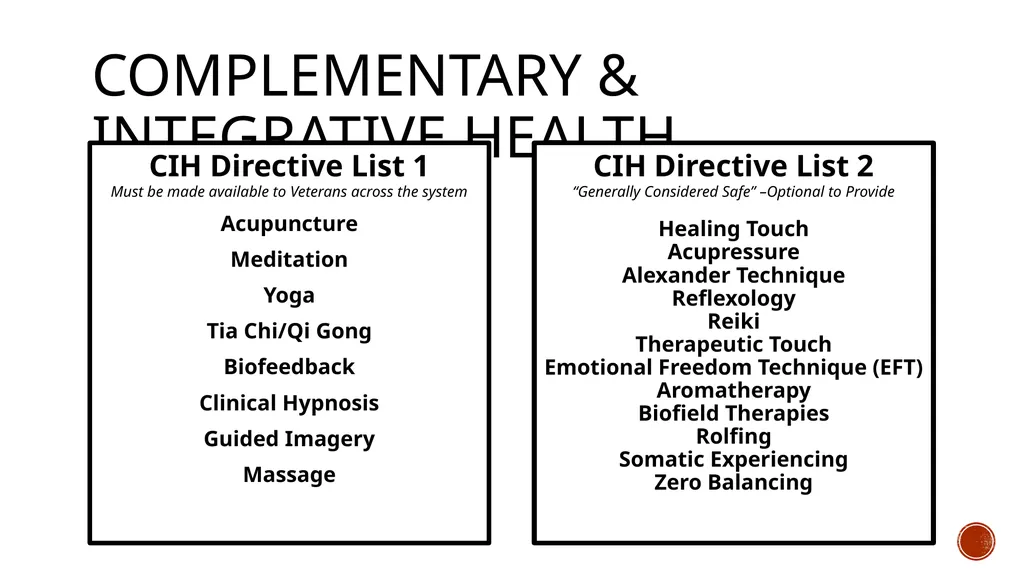
Complementary & Integrative Health (2) CIH Directive List 1
Must be made available to Veterans across the system
Acupuncture
Meditation
Yoga
Tia Chi/Qi Gong
Biofeedback
Clinical Hypnosis
Guided Imagery
Massage CIH Directive List 2
“Generally Considered Safe” –Optional to Provide
Healing Touch
Acupressure
Alexander Technique
Reflexology
Reiki
Therapeutic Touch
Emotional Freedom Technique (EFT)
Aromatherapy
Biofield Therapies
Rolfing
Somatic Experiencing
Zero Balancing<br>
23
Technology-Bridging the Gap
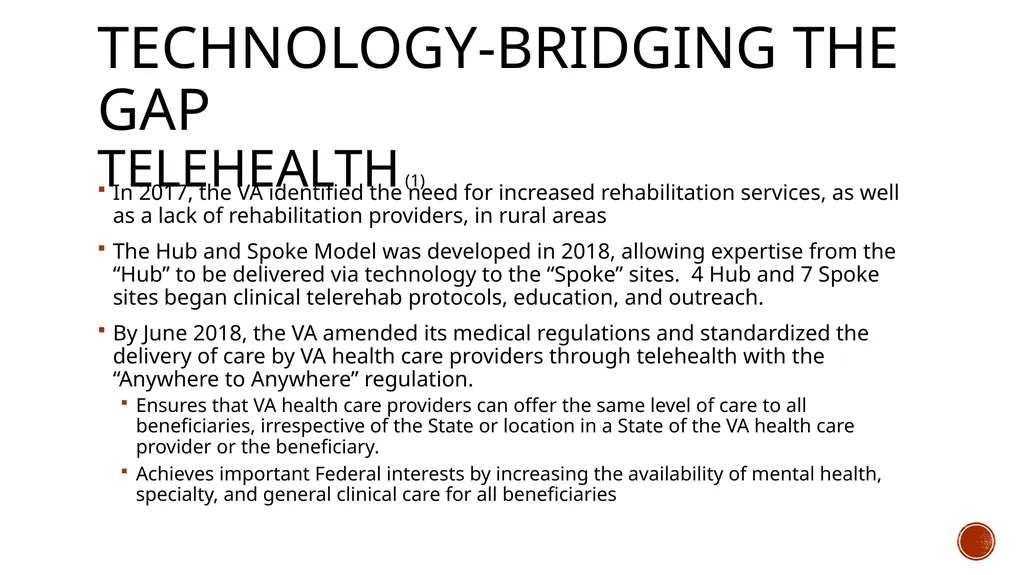
Telehealth (1) In 2017, the VA identified the need for increased rehabilitation services, as well as a lack of rehabilitation providers, in rural areas
The Hub and Spoke Model was developed in 2018, allowing expertise from the “Hub” to be delivered via technology to the “Spoke” sites. 4 Hub and 7 Spoke sites began clinical telerehab protocols, education, and outreach.
By June 2018, the VA amended its medical regulations and standardized the delivery of care by VA health care providers through telehealth with the “Anywhere to Anywhere” regulation.
Ensures that VA health care providers can offer the same level of care to all beneficiaries, irrespective of the State or location in a State of the VA health care provider or the beneficiary.
Achieves important Federal interests by increasing the availability of mental health, specialty, and general clinical care for all beneficiaries<br>
24
Technology-Bridging the Gap
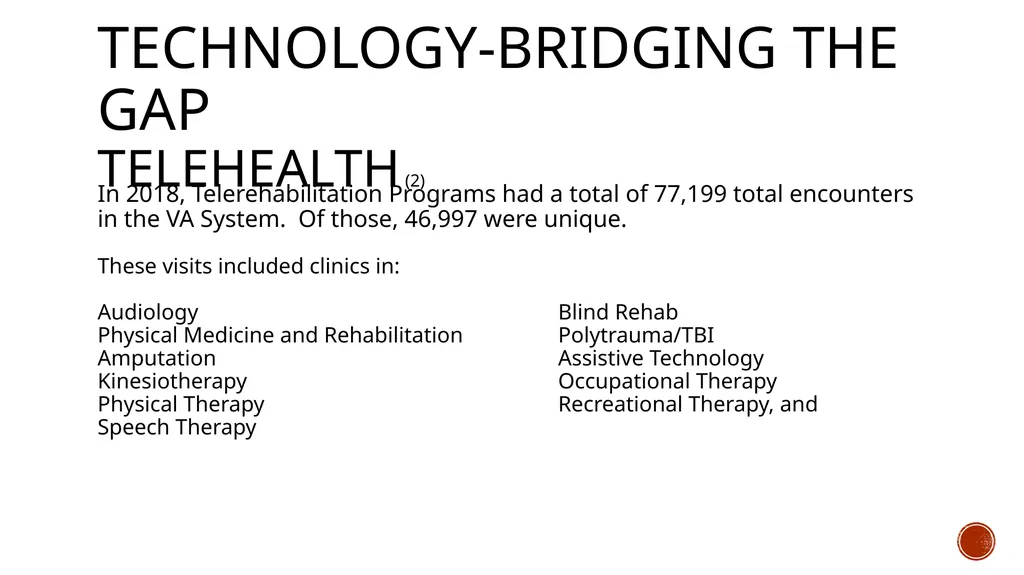
Telehealth (2) In 2018, Telerehabilitation Programs had a total of 77,199 total encounters in the VA System. Of those, 46,997 were unique.
These visits included clinics in:
Audiology Blind Rehab
Physical Medicine and Rehabilitation Polytrauma/TBI
Amputation Assistive Technology
Kinesiotherapy Occupational Therapy
Physical Therapy Recreational Therapy, and
Speech Therapy<br>
These visits included clinics in:
Audiology Blind Rehab
Physical Medicine and Rehabilitation Polytrauma/TBI
Amputation Assistive Technology
Kinesiotherapy Occupational Therapy
Physical Therapy Recreational Therapy, and
Speech Therapy<br>
25
Technology-Bridging the Gap
Telehealth (3)<br>
26
Technology-Bridging the Gap
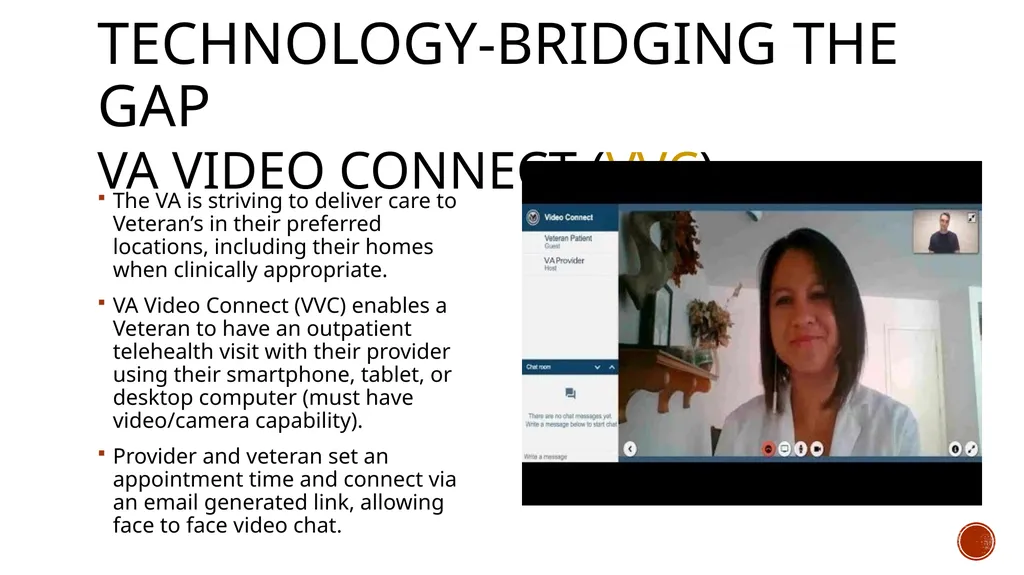
VA Video Connect (VVC) The VA is striving to deliver care to Veteran’s in their preferred locations, including their homes when clinically appropriate.
VA Video Connect (VVC) enables a Veteran to have an outpatient telehealth visit with their provider using their smartphone, tablet, or desktop computer (must have video/camera capability).
Provider and veteran set an appointment time and connect via an email generated link, allowing face to face video chat.<br>
27
Technology-Bridging the Gap
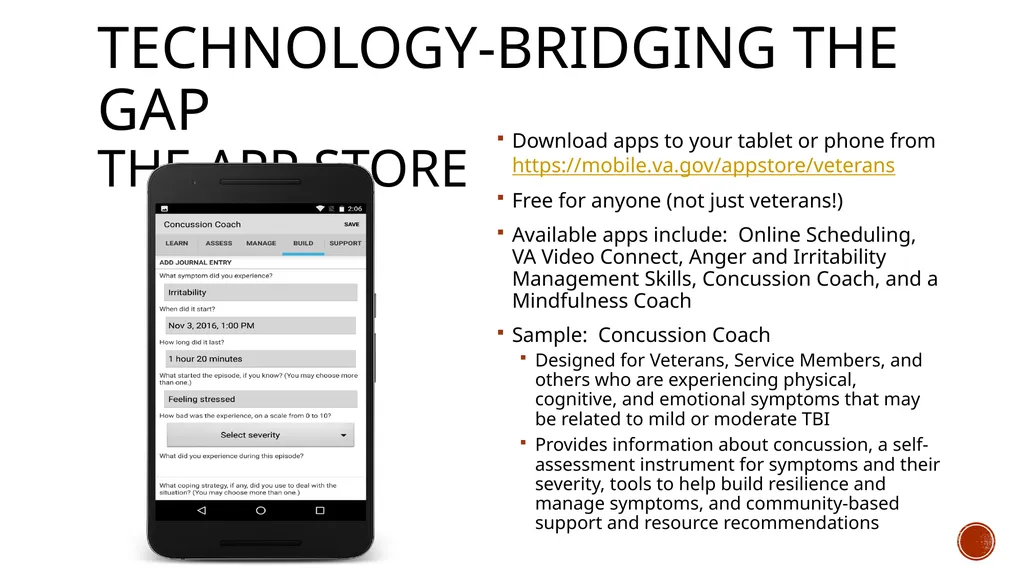
The App Store Download apps to your tablet or phone from https://mobile.va.gov/appstore/veterans
Free for anyone (not just veterans!)
Available apps include: Online Scheduling, VA Video Connect, Anger and Irritability Management Skills, Concussion Coach, and a Mindfulness Coach
Sample: Concussion Coach
Designed for Veterans, Service Members, and others who are experiencing physical, cognitive, and emotional symptoms that may be related to mild or moderate TBI
Provides information about concussion, a self-assessment instrument for symptoms and their severity, tools to help build resilience and manage symptoms, and community-based support and resource recommendations<br>
28
Polytrauma-Case Management (1)<br>
29
Polytrauma-Case Management (2)<br>
30
Questions and Comments?<br>
31
Contact Us Sandra Hall, MSW/L, BSN/RN, HNC-BC
Polytrauma/TBI/Amputee Case Manager
304-429-6741 x 2772
Melissa Hall, LGSW/MSSW
Polytrauma/TBI/Amputee Social Work Case Manager
304-429-6741 x 2848
Terry Gee, MS, PT
Polytrauma/TBI Vestibular Therapist
304-429-6741 x 3782<br>
Polytrauma/TBI/Amputee Case Manager
304-429-6741 x 2772
Melissa Hall, LGSW/MSSW
Polytrauma/TBI/Amputee Social Work Case Manager
304-429-6741 x 2848
Terry Gee, MS, PT
Polytrauma/TBI Vestibular Therapist
304-429-6741 x 3782<br>