04
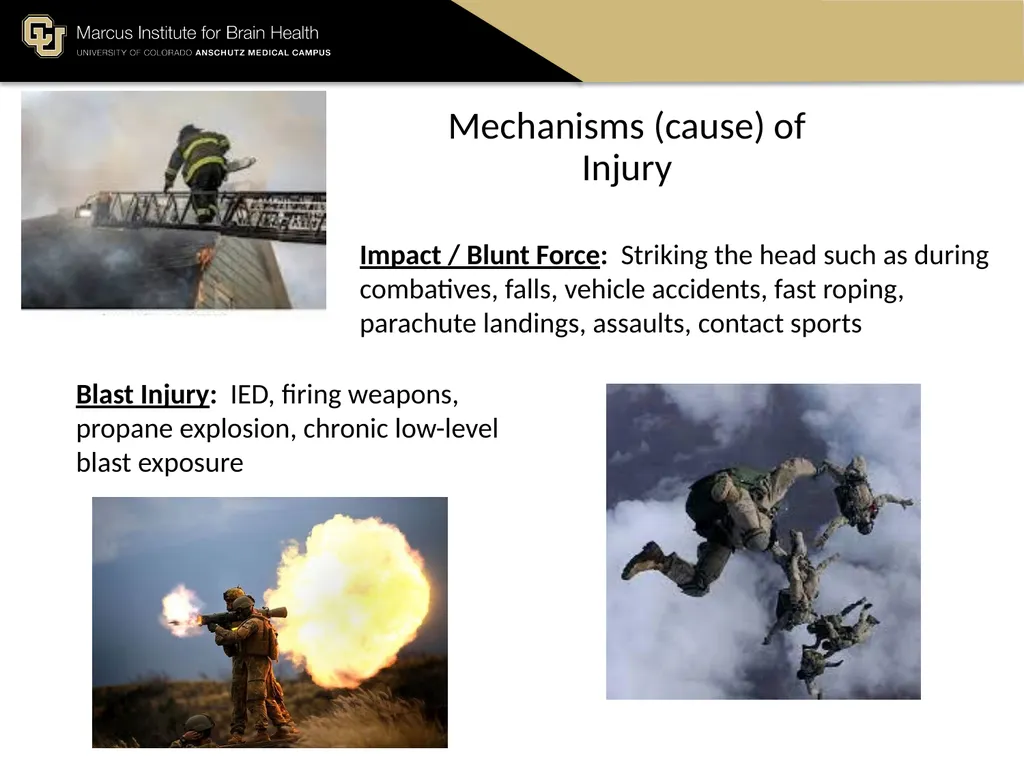
Mechanisms (cause) of Injury Impact / Blunt Force: Striking the head such as during combatives, falls, vehicle accidents, fast roping, parachute landings, assaults, contact sports Blast Injury: IED, firing weapons, propane explosion, chronic low-level blast exposure<br>
05
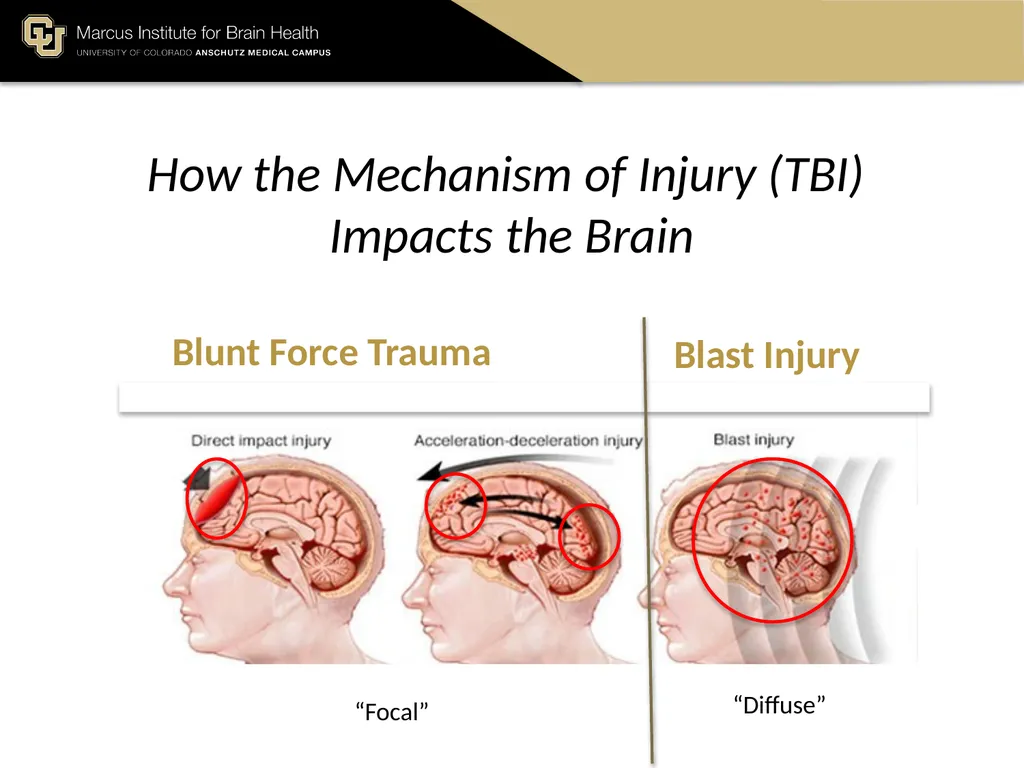
How the Mechanism of Injury (TBI) �Impacts the Brain Blunt Force Trauma Blast Injury “Diffuse” “Focal”<br>
06
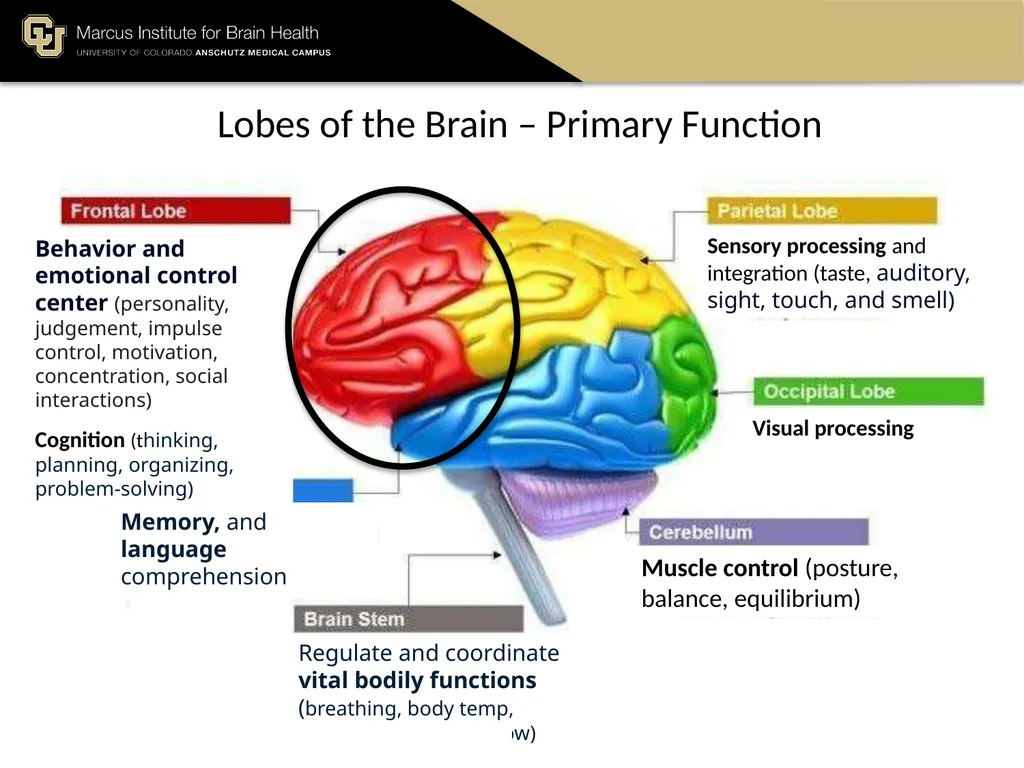
Lobes of the Brain – Primary Function Memory, and language comprehension Behavior and emotional control center (personality, judgement, impulse control, motivation, concentration, social interactions)
Cognition (thinking, planning, organizing, problem-solving) Regulate and coordinate vital bodily functions (breathing, body temp, digestion, sleep, swallow) Sensory processing and integration (taste, auditory, sight, touch, and smell) Visual processing Muscle control (posture, balance, equilibrium)<br>
07
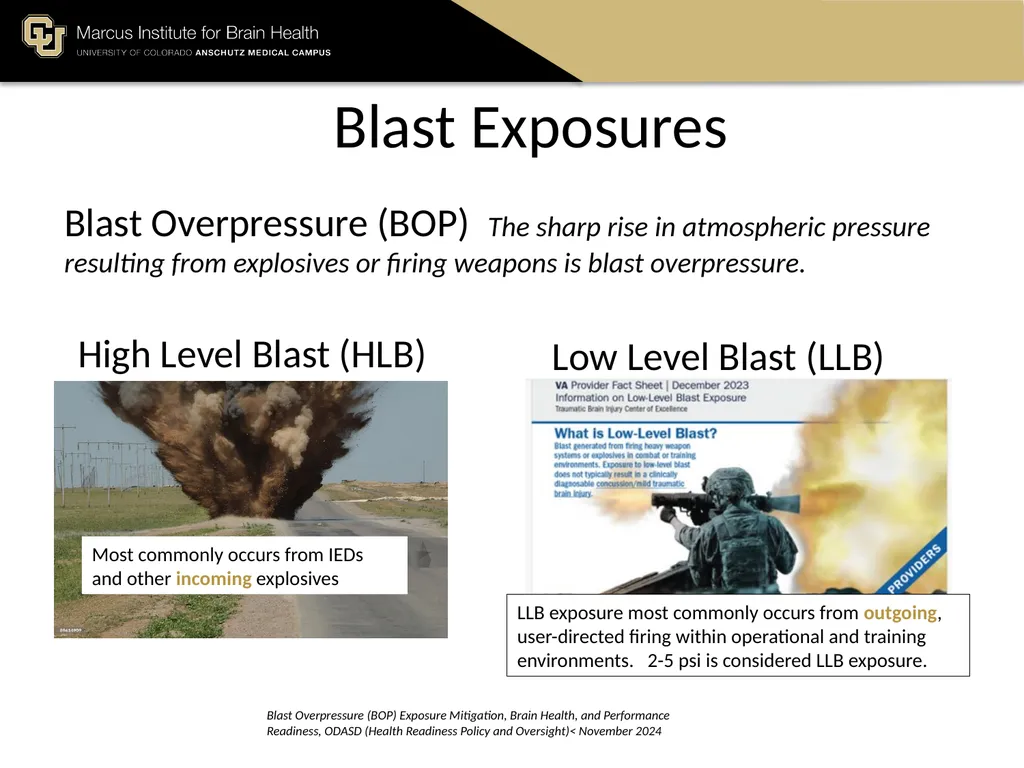
High Level Blast (HLB) Blast Overpressure (BOP) Exposure Mitigation, Brain Health, and Performance Readiness, ODASD (Health Readiness Policy and Oversight)< November 2024 Most commonly occurs from IEDs and other incoming explosives Blast Overpressure (BOP) The sharp rise in atmospheric pressure resulting from explosives or firing weapons is blast overpressure. Blast Exposures LLB exposure most commonly occurs from outgoing, user-directed firing within operational and training environments. 2-5 psi is considered LLB exposure. Low Level Blast (LLB)<br>
08
Potential impacts to the brain:
Diffuse Axonal Injury (shearing of connecting fibers in the brain)
Neuroinflammation (impacting the lining of blood vessels making them more fragile)
Damage to Blood Vessels (brain is a highly vascularized organ)
Common Symptoms: memory problems, concentration difficulties, changes in mood / behavior, headaches, tinnitus, dizziness
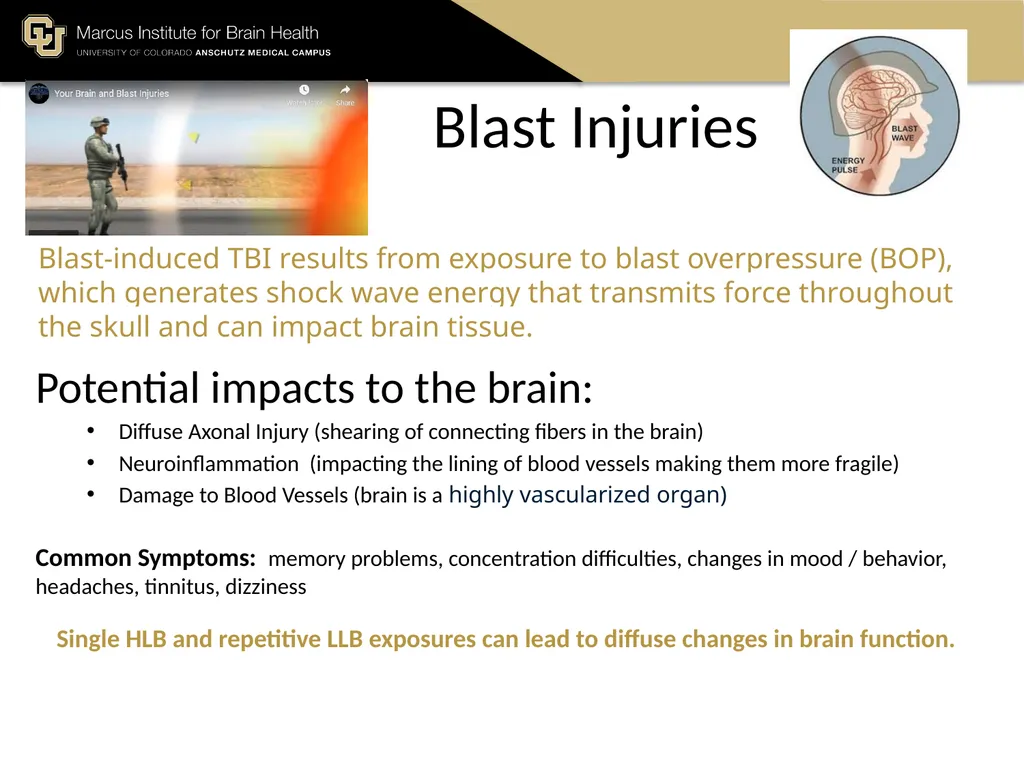
Single HLB and repetitive LLB exposures can lead to diffuse changes in brain function. Blast-induced TBI results from exposure to blast overpressure (BOP), which generates shock wave energy that transmits force throughout the skull and can impact brain tissue. Blast Injuries<br>
09
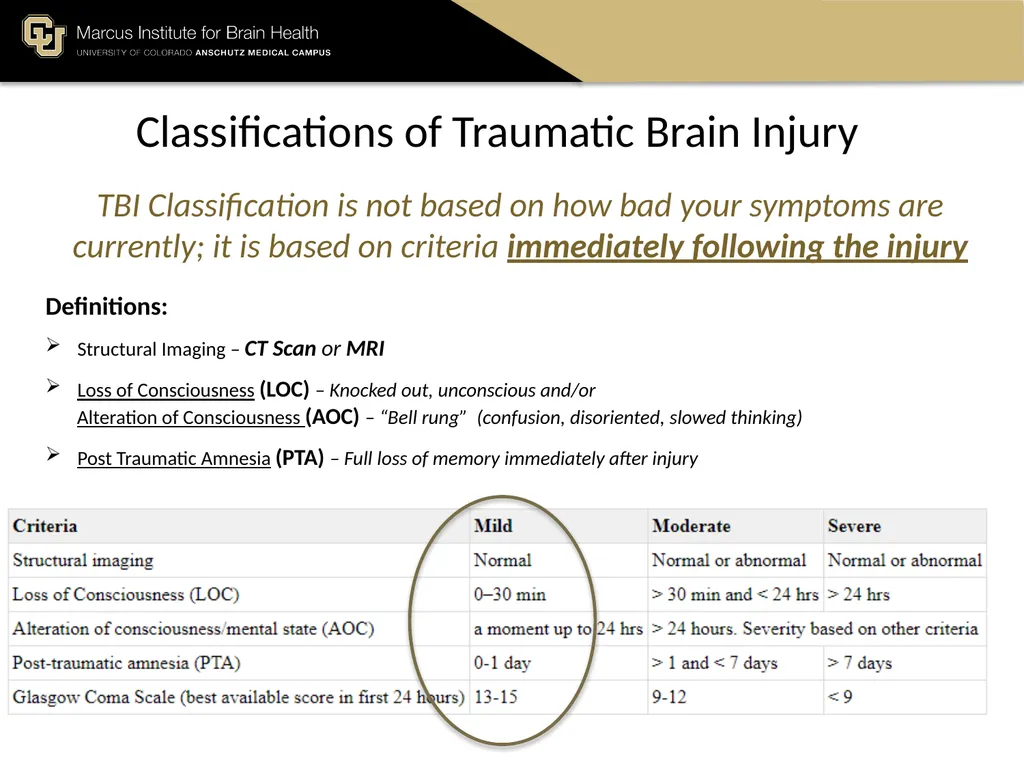
Classifications of Traumatic Brain Injury Definitions:
Structural Imaging – CT Scan or MRI
Loss of Consciousness (LOC) – Knocked out, unconscious and/or
Alteration of Consciousness (AOC) – “Bell rung” (confusion, disoriented, slowed thinking)
Post Traumatic Amnesia (PTA) – Full loss of memory immediately after injury TBI Classification is not based on how bad your symptoms are currently; it is based on criteria immediately following the injury<br>
10
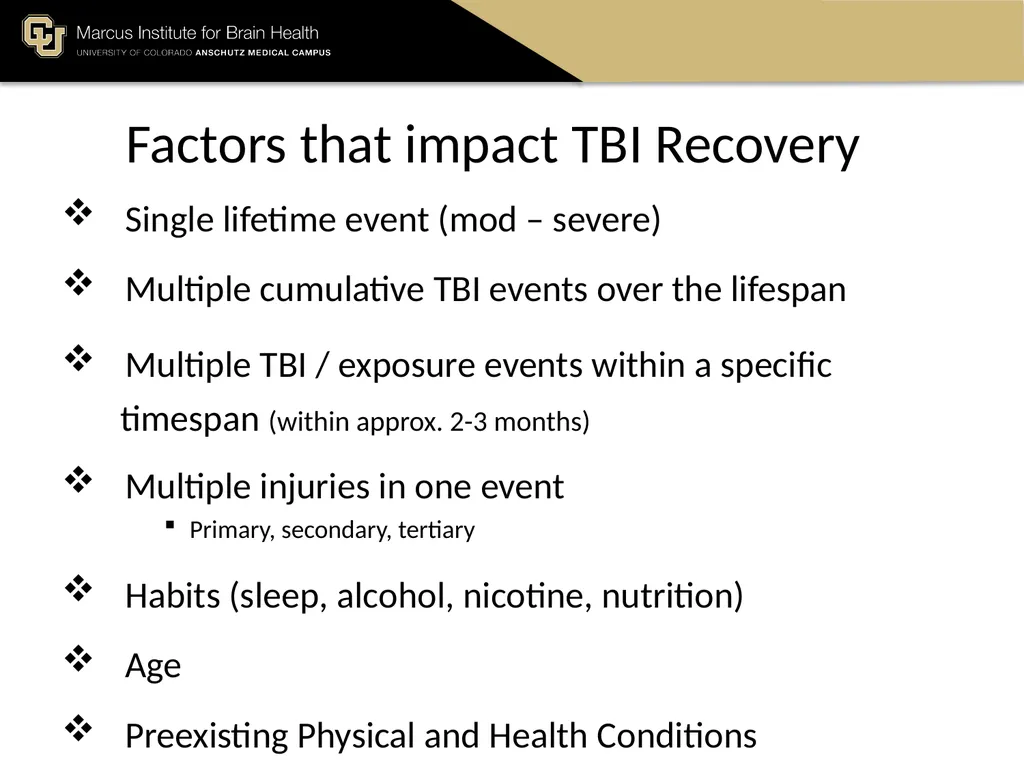
Factors that impact TBI Recovery Single lifetime event (mod – severe)
Multiple cumulative TBI events over the lifespan
Multiple TBI / exposure events within a specific
timespan (within approx. 2-3 months)
Multiple injuries in one event
Primary, secondary, tertiary
Habits (sleep, alcohol, nicotine, nutrition)
Age
Preexisting Physical and Health Conditions<br>
11
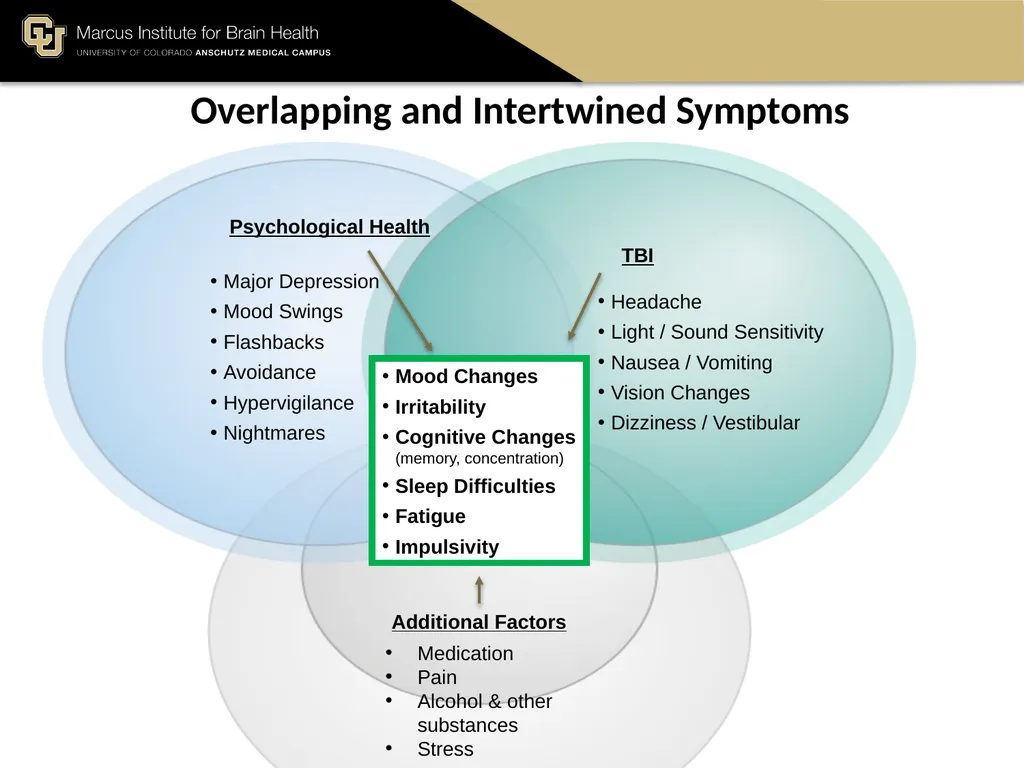
Overlapping and Intertwined Symptoms Medication
Pain
Alcohol & other substances
Stress Psychological Health Additional Factors<br>
12
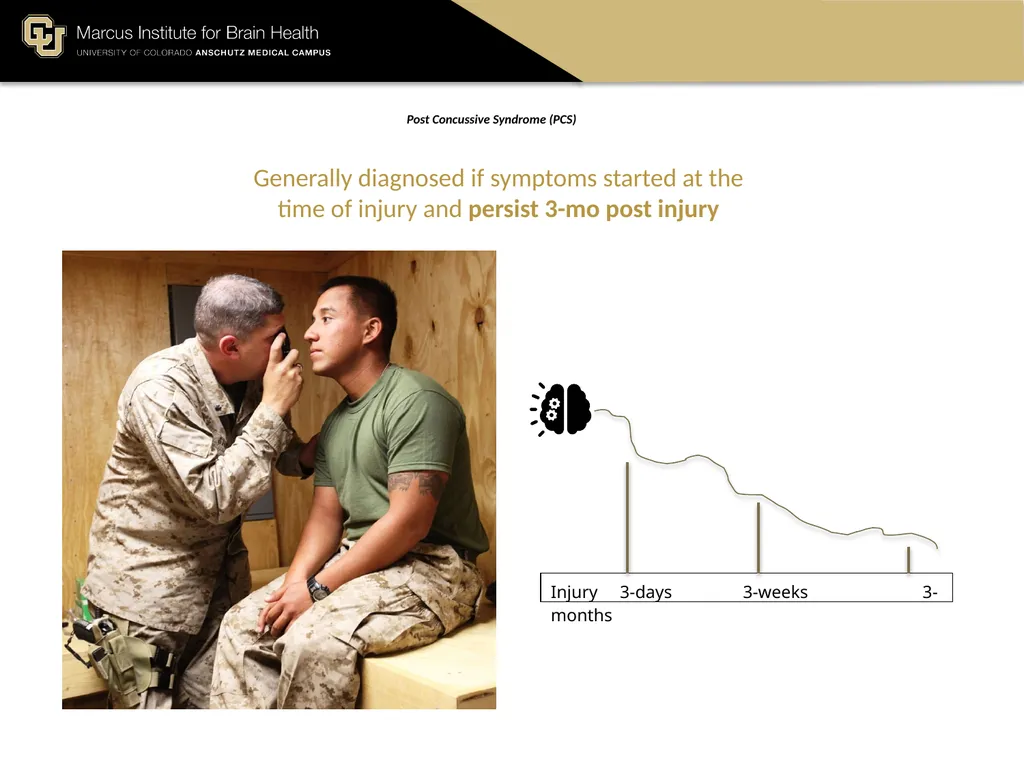
Post Concussive Syndrome (PCS) Generally diagnosed if symptoms started at the time of injury and persist 3-mo post injury Injury 3-days 3-weeks 3-months<br>
13
Recovery Concepts Neuroplasticity
Interdisciplinary Team Treatment Approach at MIBH Discipline Roles
Crossover / Communication<br>
14
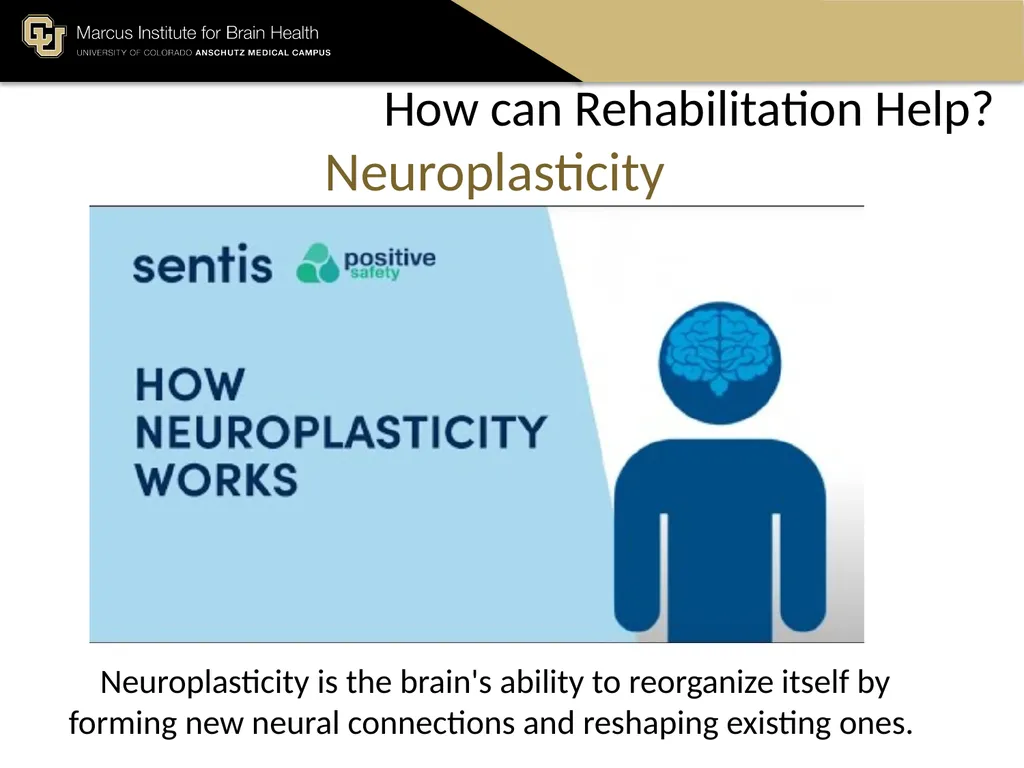
Neuroplasticity Neuroplasticity is the brain's ability to reorganize itself by forming new neural connections and reshaping existing ones. How can Rehabilitation Help?<br>
15
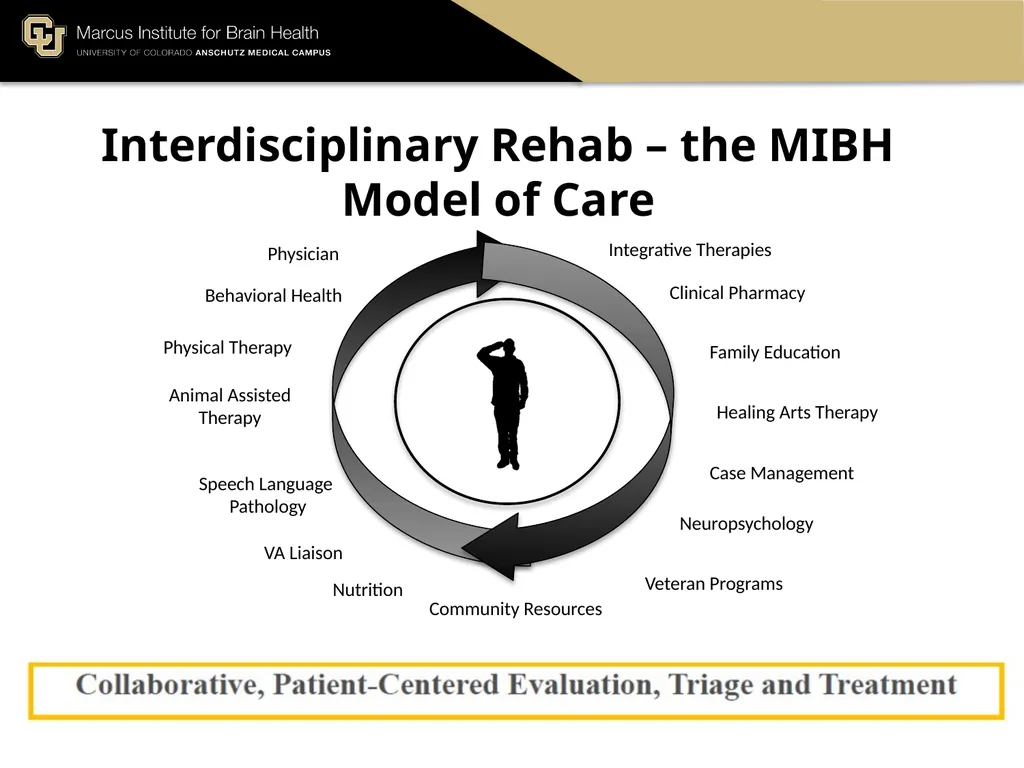
15 Physical Therapy Healing Arts Therapy Physician Clinical Pharmacy Neuropsychology Speech Language
Pathology Behavioral Health Integrative Therapies Interdisciplinary Rehab – the MIBH Model of Care Case Management Animal Assisted Therapy Nutrition VA Liaison Community Resources Family Education Veteran Programs<br>
16
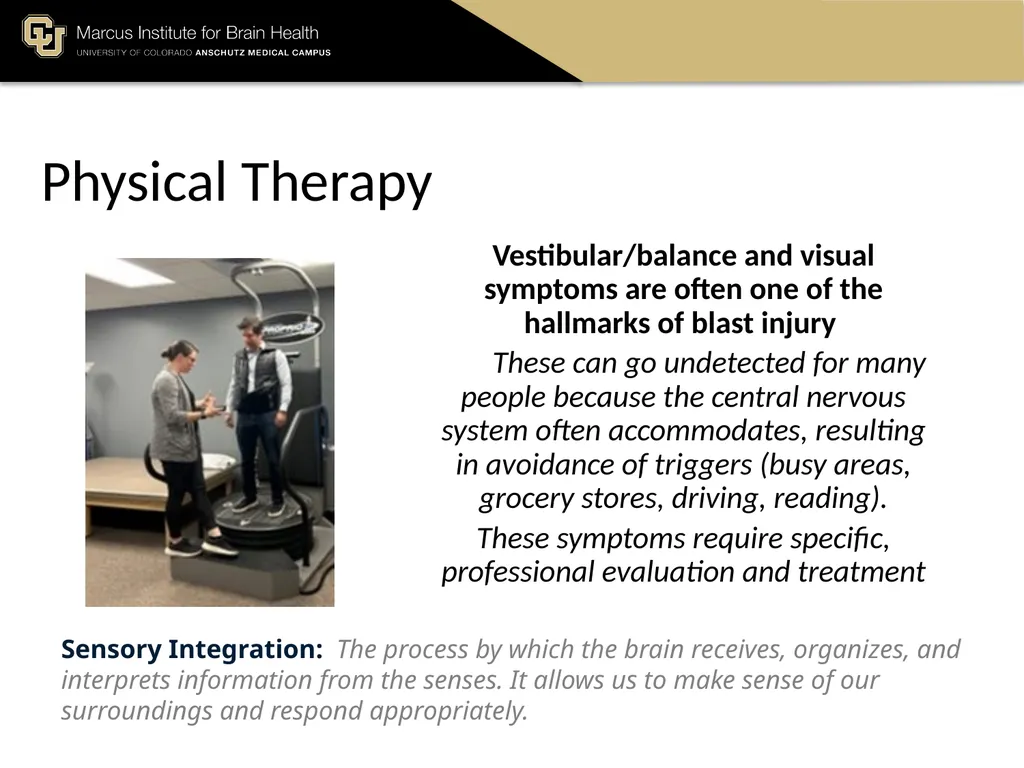
Physical Therapy Vestibular/balance and visual symptoms are often one of the hallmarks of blast injury
These can go undetected for many people because the central nervous system often accommodates, resulting in avoidance of triggers (busy areas, grocery stores, driving, reading).
These symptoms require specific, professional evaluation and treatment Sensory Integration: The process by which the brain receives, organizes, and interprets information from the senses. It allows us to make sense of our surroundings and respond appropriately.<br>
17
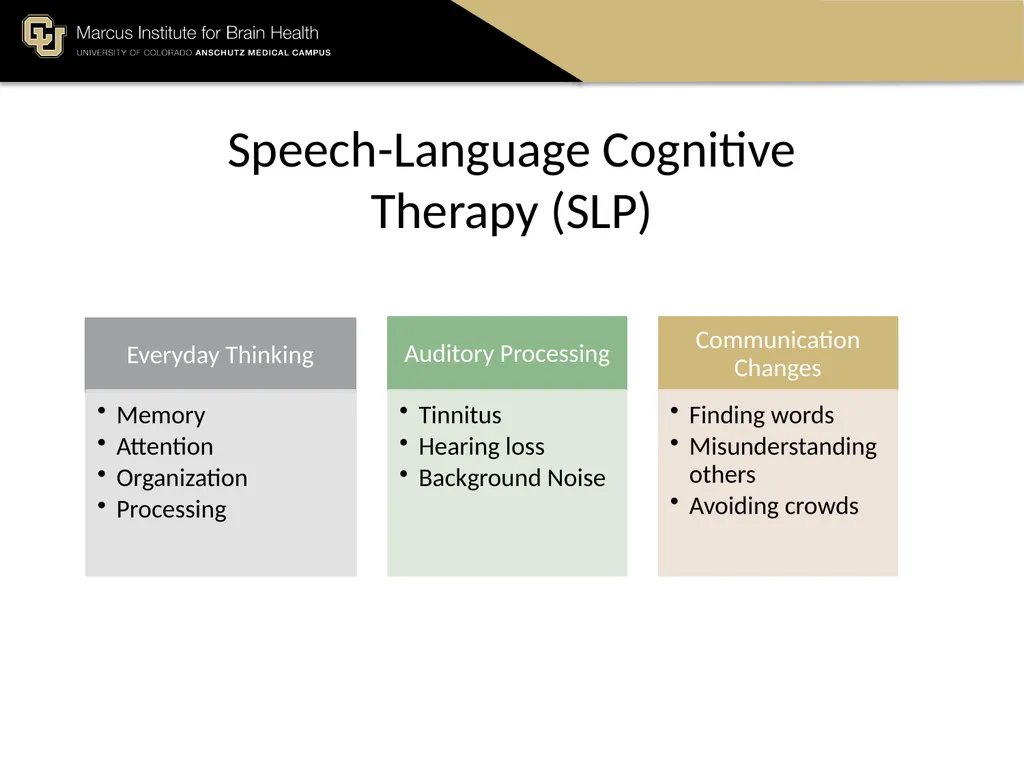
Speech-Language Cognitive Therapy (SLP)<br>
18
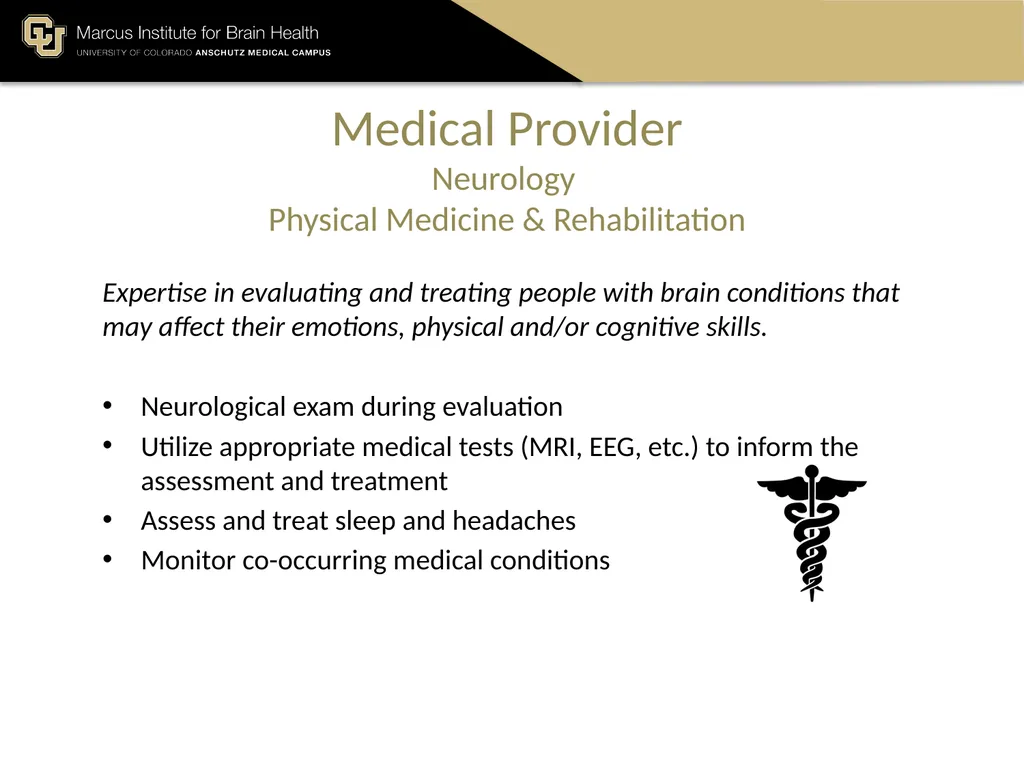
Expertise in evaluating and treating people with brain conditions that may affect their emotions, physical and/or cognitive skills.
Neurological exam during evaluation
Utilize appropriate medical tests (MRI, EEG, etc.) to inform the assessment and treatment
Assess and treat sleep and headaches
Monitor co-occurring medical conditions Medical Provider
Neurology
Physical Medicine & Rehabilitation<br>
19
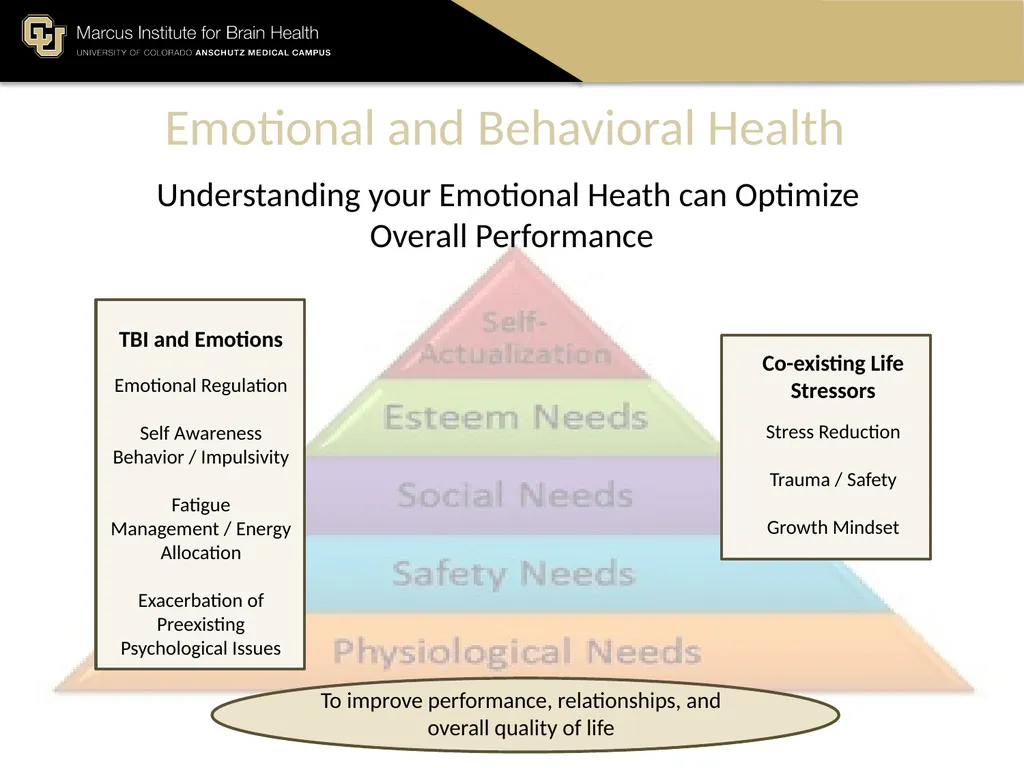
Emotional and Behavioral Health TBI and Emotions
Emotional Regulation
Self Awareness Behavior / Impulsivity
Fatigue Management / Energy Allocation
Exacerbation of Preexisting Psychological Issues To improve performance, relationships, and overall quality of life Understanding your Emotional Heath can Optimize
Overall Performance Co-existing Life Stressors
Stress Reduction
Trauma / Safety
Growth Mindset<br>
20
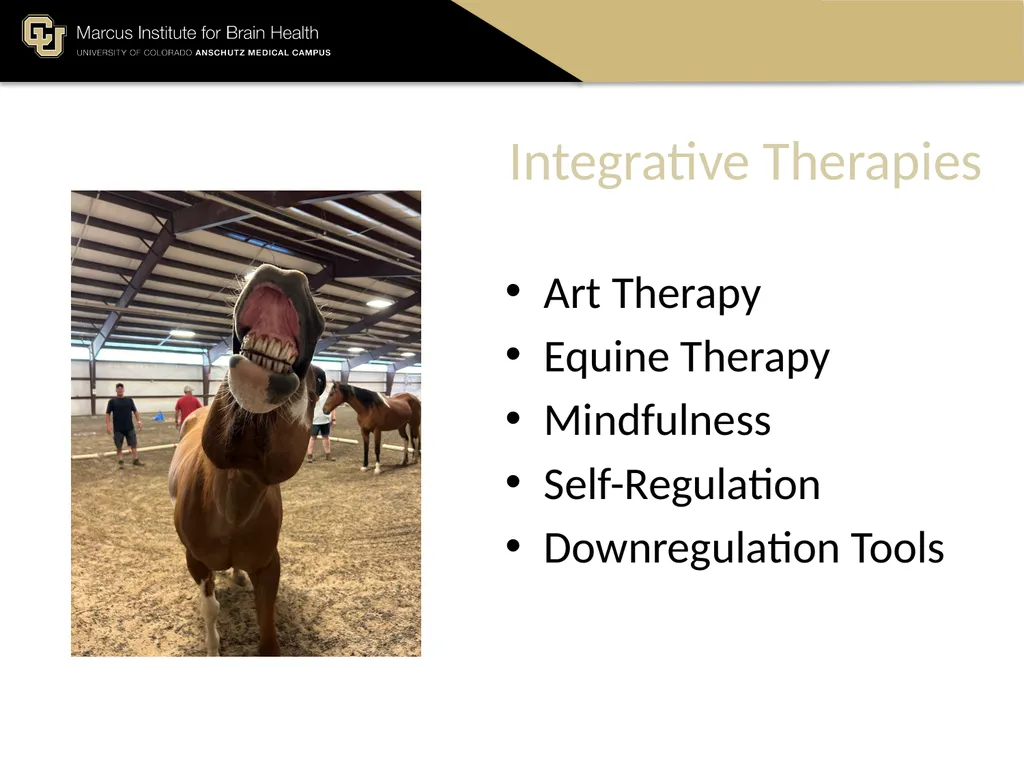
Integrative Therapies Art Therapy
Equine Therapy
Mindfulness
Self-Regulation
Downregulation Tools<br>
21
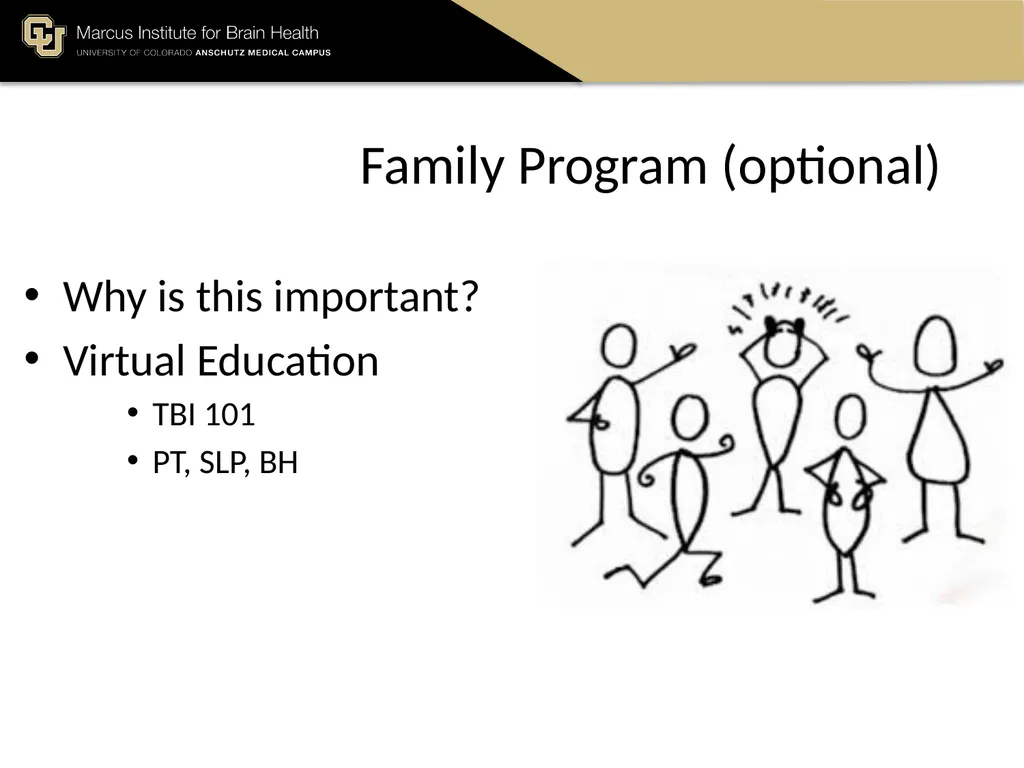
Family Program (optional) Why is this important?
Virtual Education
TBI 101
PT, SLP, BH<br>
22
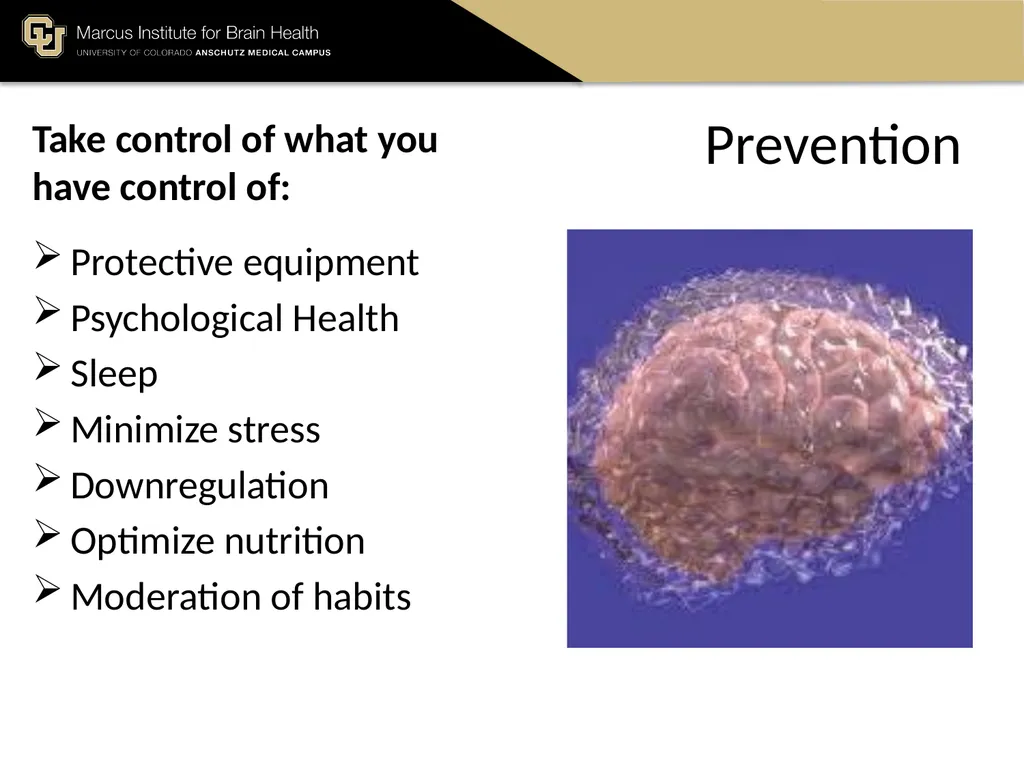
Prevention Take control of what you have control of:
Protective equipment
Psychological Health
Sleep
Minimize stress
Downregulation
Optimize nutrition
Moderation of habits<br>
23
Tina Fanello, LCSW
MIBH Associate Director of Clinical Operations
tina.fanello@cuanschutz.edu<br>